
Feeling snowed under at work is a familiar weight for many professionals, whether in India or across the globe. You are not alone in this. The path to reducing job stress starts with acknowledging its presence, then learning immediate ways to cope and building long-term resilience for a healthier work life.
Recognising the Weight of Workplace Stress
Workplace stress can feel like a silent burden, something we are expected to handle without complaint. The constant pressure from deadlines, long hours, and team dynamics takes a real toll on our mental and physical well-being. It is more than just a bad day; it is a persistent feeling of being overloaded that can lead to anxiety and irritability.
This is a widespread challenge. In India, a significant 30% of employees report feeling stressed daily. This personal struggle has a large economic impact, with poor mental health costing Indian employers an estimated ₹1.1 lakh crore (about $14 billion) annually due to low productivity and high turnover. You can discover more insights about this workplace stress epidemic and its financial costs.
The True Cost of Unchecked Stress
When stress is left unmanaged, it can develop into more serious challenges like burnout or worsen conditions such as anxiety and depression. Burnout is a state of complete emotional, physical, and mental exhaustion. It can leave you feeling cynical about your job and disconnected from your team.
The costs of this stress are often visible in business performance, as this infographic highlights.
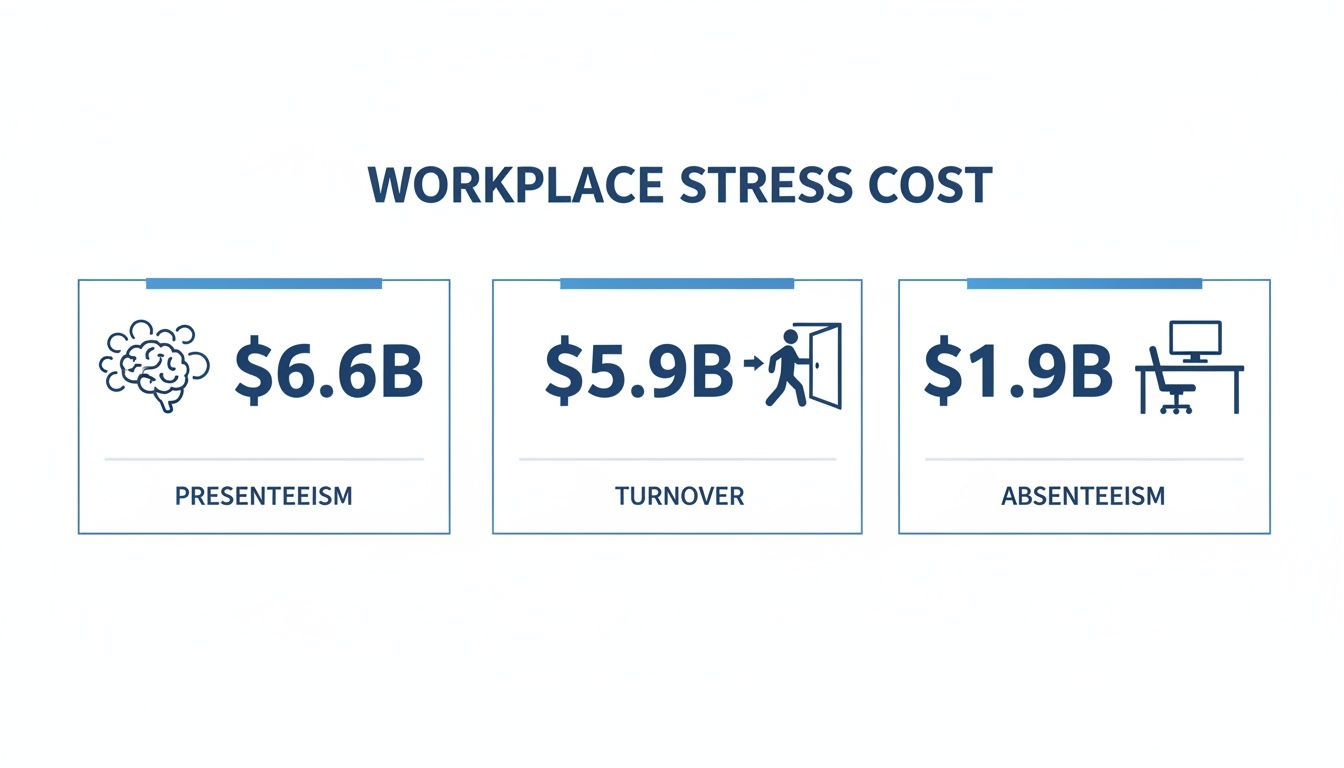
As you can see, the largest hidden cost is presenteeism—when people are at work but too mentally drained to be productive. It’s a powerful reminder that our well-being is essential for effective work.
Shifting from Surviving to Thriving
Learning how to reduce job stress is about more than just getting through the day. It is about developing skills for genuine well-being, happiness, and resilience. This journey begins with self-compassion and understanding that seeking support through therapy or counselling is a sign of strength.
Acknowledging the weight of workplace stress is the first, most crucial step toward lightening the load. It opens the door to self-compassion, resilience, and the pursuit of a healthier, more fulfilling professional life.
Once you can recognise the signs, you can start taking small, meaningful steps. This guide offers practical tools not just to cope, but to truly begin thriving again.
Your Toolkit for In-the-Moment Stress Relief
When work pressure suddenly increases, you need strategies that help right away. We have all faced an unexpected deadline or a difficult conversation. This toolkit is designed for those moments, helping you find your center whether you are in a busy office or working from home.

These techniques are not about ignoring stressors but about managing your immediate reaction to them. Interrupting the automatic anxiety response gives you space to respond thoughtfully. It is a key skill for navigating a tough day and building long-term resilience.
Master the Three-Minute Mindfulness Break
When you feel tension building, one of the simplest things you can do is pause and breathe. A short mindfulness exercise can pull you out of stressful thoughts and ground you in the present. You do not need any special equipment; your desk chair will do just fine.
Here’s a simple exercise to try now:
- First Minute: Settle In. Sit comfortably with your feet on the floor and your back straight. Notice the feeling of your feet on the ground and your hands in your lap.
- Second Minute: Focus on Your Breath. Shift your attention to your breathing without trying to change it. Simply observe the natural rhythm of each inhale and exhale.
- Third Minute: Expand Your Awareness. Widen your focus to your entire body, noticing any areas of tightness without judgment. When you're ready, slowly open your eyes.
This short break helps activate your body's relaxation response, slowing your heart rate. Making this a habit can significantly improve how you handle high-pressure moments.
Ground Yourself with the 5-4-3-2-1 Technique
Anxiety often pulls our minds into worrying about the future or replaying the past. The 5-4-3-2-1 technique brings you back to the present moment by engaging your senses. It is discreet and can be done anywhere.
This method works by forcing your brain to switch from abstract worries to concrete, external observations. It’s an immediate anchor when you feel emotionally adrift, breaking the anxious chatter in your head.
Simply pause and silently identify:
- Five things you can see: Look around and name five objects, like your keyboard, a plant, or a pen.
- Four things you can feel: Notice physical sensations, such as the texture of your chair or the warmth of your mug.
- Three things you can hear: Listen for three distinct sounds, like the hum of your computer or distant traffic.
- Two things you can smell: Tune into your sense of smell, perhaps noticing the aroma of coffee.
- One thing you can taste: Focus on one taste, such as the lingering flavor of your last meal.
This sensory exercise is very effective for cutting through acute stress and resetting your mind.
Embrace Structured Worry Time
If worry feels like a constant drain on your mental energy, try scheduling time for it. This may sound counterintuitive, but containing your worries to a specific time can keep them from taking over your day.
Set aside a 15-minute "worry window" each day, perhaps at the end of your workday. During this time, allow yourself to think through your anxieties and write them down. When the time is up, consciously put those worries aside until your next scheduled slot, restoring a sense of control.
Building Long-Term Resilience to Workplace Pressures
While immediate relief techniques are helpful, building long-term resilience is key to managing chronic stress. This involves creating sustainable habits and mental frameworks that protect you from burnout. It is a proactive strategy for cultivating a healthier relationship with your work.
Think of it as becoming a better navigator of pressure, not immune to it. By weaving these strategies into your daily life, you build a strong foundation for lasting mental well-being.

Establish Clear Boundaries, Especially When Working Remotely
In today's always-on culture, the lines between professional and personal life have blurred, especially for remote workers. Setting firm boundaries is a vital act of self-preservation that fuels long-term productivity and happiness. Your mind needs time to fully switch off and recharge.
This is a particular challenge for younger professionals in India. A recent study found that 41% of employees under 35 report daily workplace stress. While remote work offers flexibility, it has also been linked to increased loneliness for this group. You can learn more about the daily stress challenges young Indian employees face.
Create a simple ‘closing ceremony’ for your workday to signal to your brain that it is time to disconnect.
Your end-of-day ritual could include:
- Tidying your desk for a sense of closure.
- Making tomorrow's to-do list to clear your mind.
- Changing your clothes to physically shift into personal time.
- Saying a phrase aloud, like "Work is done for the day."
Reframe Negative Thoughts with Compassion
Under pressure, our minds can fall into unhelpful thought patterns, fueling anxiety and self-doubt. Cognitive reframing helps you challenge these automatic negative thoughts and replace them with more balanced ones. The goal is to view challenges from a more helpful perspective, shifting from self-criticism to self-compassion.
This practice is a cornerstone of mental resilience, helping you bounce back from setbacks. To protect your well-being, it's important to understand how to avoid burnout at work.
Take a look at how you can actively shift your internal dialogue.
Mindset Shifts for Building Workplace Resilience
This table shows how to turn common stress-inducing thoughts into resilience-building alternatives.
| Stress-Inducing Mindset | Resilience-Building Mindset | A Practical Example |
|---|---|---|
| "I've failed." | "I made a mistake. What's the lesson here?" | Instead of dwelling on a typo in a report, you focus on implementing a new proofreading step. |
| "They think I'm incompetent." | "This feedback is a chance to grow." | Your manager suggests a better way to structure presentations. You see it as helpful coaching, not criticism. |
| "I'll never get this all done." | "I'll start with the most important task." | Faced with ten emails, you identify the one that unblocks a colleague and tackle it first. |
| "This is impossible." | "This is tough. I'll break it down." | A big project feels daunting, so you map out the first three small, achievable steps. |
By consciously practicing these shifts, you train your brain to respond to challenges with flexibility and optimism.
Connect with Your Values for Deeper Meaning
Sometimes, job stress stems from a disconnect between daily tasks and what you truly value. When work feels meaningless, small hurdles can become exhausting, contributing to anxiety or even feelings of depression. Reconnecting with your personal values can bring a much-needed sense of purpose back into your professional life.
Building resilience is less about toughening up and more about becoming more flexible and compassionate with yourself. It's about progress, not perfection.
Take a moment to identify your core values, such as creativity, helping others, or continuous learning. Look for small ways to align your work with them. This connection is a powerful defense against burnout, and professional counselling or therapy can be an excellent space to explore this further.
Navigating Difficult Workplace Dynamics
Much of our job stress comes not from tasks, but from our interactions with people. Difficult relationships and unclear communication can be draining. Learning to manage these interpersonal challenges is essential for protecting your mental health and well-being.
This is not about changing who you are, but about equipping yourself with tools for better communication. These small, consistent efforts can significantly reduce daily anxiety and improve your work life.

Mastering Constructive Communication
Poor communication is a major source of workplace stress, leading to misunderstandings and frustration. In India, this is a significant issue, with 80% of workers reporting that poor communication adds to their stress. You can read the full research about these workplace stress statistics in India.
The key to better communication is a mix of clarity and compassion. When giving feedback, focus on the behavior, not the person. Instead of saying, "You're always late," try framing it as, "When the report is delayed, it affects our team's timeline. How can we ensure it's submitted on time?"
When receiving feedback, listen without becoming defensive. Take a breath, thank the person for their input, and ask for specific examples if needed. This approach builds mutual respect and contributes to a low-stress work culture.
Setting Boundaries with Grace and Firmness
A fast track to burnout is the inability to say "no." We often worry about appearing unhelpful, but overloading your schedule is unsustainable. Learning to set boundaries is a core professional responsibility.
A polite but firm "no" is often sufficient. Here are a few phrases you can adapt:
- When your plate is full: "Thank you for thinking of me. My schedule is full right now, so I can't give this the attention it deserves."
- When you need to clarify priorities: "I can help with that. Could you help me understand if this is a higher priority than my current task?"
- When the timing is off: "This looks interesting. I'm focused on another project right now but can look at this next week."
These phrases help you protect your time and energy while remaining professional and collaborative.
Navigating difficult dynamics isn’t about winning arguments; it's about preserving your peace. Clear communication and firm boundaries are your best tools for creating a psychologically safe space for yourself at work.
Dealing with Conflict and Office Politics
Disagreements are a natural part of work. The goal is not to avoid conflict but to manage it with integrity. When a conflict arises, try to address it directly and privately with the person involved.
Use "I" statements to explain how their actions affect you. For instance, "I feel frustrated when I'm interrupted during meetings" is more constructive than "You always interrupt me." For more guidance, a step-by-step guide to conflict resolution in the workplace can provide a helpful framework.
Fostering Psychological Safety for Everyone
Everyone plays a role in creating a psychologically safe environment. This means building a culture where people feel safe to speak up, share ideas, and admit mistakes without fear of blame. This sense of safety is a powerful antidote to stress and anxiety.
Small, everyday actions make a big difference. Actively listen to colleagues, give credit where it's due, and offer support to those who are struggling. These behaviors build the trust and resilience that can transform a workplace from a source of stress into a source of support.
Knowing When to Seek Professional Support
While the techniques we've discussed are great first steps, it is important to recognize when you might need more support. Acknowledging that you need help is a proactive and courageous step toward protecting your well-being.
Sometimes, the weight of workplace stress is too much to manage alone. Reaching out to a therapist or counsellor is a sign of strength and self-awareness. A trained professional offers a confidential space to explore what you're experiencing and build a personalized plan.
Are You Dealing with Stress, Anxiety, or Burnout?
Understanding what you are feeling is the first step. Though often used interchangeably, these terms describe different experiences. Identifying your experience can help you find the right kind of support.
- Job Stress: This is typically linked to a specific, short-term pressure, like a project deadline. You feel overwhelmed, but there is a sense of relief once the stressor is gone.
- Anxiety: This is a more persistent feeling of worry or dread that doesn't go away when you leave work. It can affect your sleep and ability to relax, even without an obvious cause.
- Burnout: This is a state of total emotional, physical, and mental exhaustion from chronic stress. It is characterized by deep cynicism, emotional detachment from work, and a sense of ineffectiveness.
A Gentle Self-Check-in
It can be hard to know when a "tough week" has become something more. This list is informational, not a diagnostic tool, but it can help you reflect on how you've been feeling.
Over the past few weeks, have you consistently noticed any of the following?
- Changes in Sleep: Difficulty falling asleep, waking up frequently, or sleeping more than usual?
- Shifts in Mood: Persistent irritability, low mood, or loss of interest in activities you once enjoyed?
- Physical Symptoms: More frequent headaches, stomach issues, or unexplained aches and pains?
- Cognitive Difficulties: Trouble concentrating, making decisions, or remembering things?
- Social Withdrawal: Avoiding colleagues, friends, or family?
- Loss of Motivation: Feeling that your work requires a monumental effort?
- Increased Negativity: A cynical or pessimistic outlook on your job and future?
If several of these resonate with you, it could be a sign that your usual coping strategies are overloaded. This is a normal experience, and it may be a good time to speak with a professional.
The Real Benefits of Therapy and Counselling
The idea of therapy can feel intimidating, but it is a powerful tool for your long-term mental health. A therapist provides a safe, non-judgmental space to explore your thoughts and feelings. They are trained to help you identify unhelpful patterns that contribute to stress, anxiety, or feelings of depression.
Therapy isn't about "fixing" you because you're broken. It's about giving you new tools, a fresh perspective, and the emotional resilience to handle life’s challenges with more confidence and calm.
In counselling, you can learn practical, evidence-based skills to manage workplace stress. A good therapist can help you communicate more effectively, set healthier boundaries, and reconnect with your values. This support can equip you with a lifelong toolkit for building genuine resilience and finding more balance.
Where Do You Go From Here?
Managing job stress is an ongoing practice, not a one-time fix. It is a commitment to noticing pressure, using tools to ground yourself, and building habits that foster resilience. You now have strategies to set boundaries, communicate better, and recognize when you may need support.
Remember, you do not have to change everything at once. Simply pick one thing from this guide that resonates with you. It could be a three-minute breathing exercise or a "shut down" ritual at the end of your day. The goal is steady progress, not perfection.
Taking care of your mental well-being isn't a perk; it's the bedrock of a sustainable and meaningful career. Every small, kind act you do for yourself builds a stronger, more capable you.
You are not on this journey alone. If the burden of workplace stress, anxiety, or what feels like depression becomes too heavy, resources like therapy and counselling are available to help. Reaching out is a profound act of strength, and every small step you take is a win for your health and happiness.
Got Questions About Job Stress? We’ve Got Answers.
Navigating stress at work can bring up many questions. It is completely normal to seek clarity. Let's address some of the most common concerns about managing well-being on the job.
Is This Just Stress, or Am I Burnt Out?
It can be hard to distinguish between a tough week and something more serious. Normal workplace stress is often temporary and tied to a specific deadline or project. You feel the pressure, but you know it will eventually ease.
Burnout is a deeper state of physical and emotional exhaustion. It involves feeling drained, cynical about your job, and seeing your performance decline over time. If you are constantly exhausted and feel detached from your work, it may be a sign of burnout and an indication that dedicated support could be beneficial.
Are Wellness Apps Enough, or Do I Need Therapy?
Wellness apps can be a great starting point. They are useful for quick guided meditations or tracking your mood. They definitely have a place in a well-being toolkit.
However, they are not a substitute for professional counselling or therapy. An app is like a first-aid kit, whereas therapy is like seeing a specialist for a recurring issue. For chronic anxiety, deep-seated stress, or burnout, a therapist provides a personalized plan in a confidential setting.
How Do I Even Begin to Talk to My Manager About This?
Discussing stress with your boss can feel daunting due to fears of being seen as incapable. The key is to frame the conversation around your work and potential solutions. This approach is collaborative rather than a complaint.
Instead of saying, "I'm so burnt out," try something more constructive like, "I'm finding it tough to keep up with the current project timelines and my regular tasks. Could we sit down and reprioritise things so I can focus on what's most critical right now?"
This opens the door for a practical discussion. If speaking to your manager feels uncomfortable, remember that HR departments or Employee Assistance Programs (EAPs) are there to provide confidential guidance.
Feeling overwhelmed isn’t a sign of weakness; it’s a signal that it’s time to get some support. At DeTalks, we connect you with qualified professionals who get it. They can help you manage job stress, build resilience, and rediscover your balance. Take a confidential assessment and find a therapist who’s right for you by visiting https://detalks.com.
Leave a Reply