Author: DeTalks

  • Depression Treatment Online: Hope & Support from Home

    Depression Treatment Online: Hope & Support from Home

    Feeling overwhelmed is a natural part of life, but you don't have to navigate it alone. Exploring depression treatment online is a courageous first step toward feeling better, offering professional support in a space where you feel safe and comfortable.

    Finding Support from the Comfort of Your Home

    Taking the first step toward mental well-being requires courage, and it's a journey where you deserve to feel supported. Life's challenges, like workplace stress, burnout, or persistent feelings of sadness and anxiety, can feel isolating. Simply acknowledging these feelings is an act of self-awareness.

    Fortunately, technology makes getting professional help more accessible than ever. Online therapy provides a confidential space to explore your thoughts and feelings with a trained professional, right from your home. This removes practical barriers like travel and scheduling, allowing you to focus on your well-being.

    A Path Toward Resilience and Well-Being

    Online counselling is about more than managing difficult moments; it's about building a stronger, more resilient you. The process focuses on developing practical skills to navigate life's ups and downs with greater confidence. It's a journey toward rediscovering a sense of purpose and joy.

    Therapists often draw from positive psychology to help you focus on your strengths, cultivate resilience, and foster happiness. You might learn skills like self-compassion or mindfulness, which are tools for lasting well-being.

    "The curious paradox is that when I accept myself just as I am, then I can change." – Carl Rogers

    This quote captures the essence of healing: it begins with self-acceptance. Therapy offers a judgment-free space to explore who you are, fostering the self-compassion needed for growth and helping you understand that your struggles don't define you.

    What to Expect from This Guide

    This guide will walk you through the world of online depression treatment in a clear, straightforward way. We'll cover what online therapy looks like, the types of services available, and how to find a professional who feels right for you. Our goal is to empower you to make an informed choice for your mental health.

    We will explore these key areas:

    • Understanding Online Therapy: What is it, and how does it help with challenges like anxiety and depression?
    • Building Resilience: Practical ways to cope with workplace stress and other life challenges.
    • The Role of Assessments: How certain tools offer useful insights, remembering they are informational, not diagnostic.
    • Finding Your Path: How to choose a therapist and begin your journey toward greater happiness and balance.

    Think of this guide as a supportive companion on your path to well-being. It's designed to give you the knowledge and confidence to take a meaningful step toward a healthier life.

    What Online Depression Treatment Really Means

    A person sitting comfortably at home and using a laptop for an online therapy session, looking calm and engaged.

    So, what does depression treatment online actually involve? It means having professional mental health support that fits into your life, whether you're at home, at work, or traveling.

    This approach removes the hassle of travel and waiting rooms, creating a direct, private connection to a qualified therapist through your device. This is structured, professional counselling designed to help you address real challenges. Whether it's a low mood, feelings of anxiety, or workplace stress, online therapy offers a dedicated space to learn practical coping skills with an expert's guidance.

    The Core of Online Counselling

    At its heart, online therapy is a partnership built on a trusting relationship with your counsellor. Together, you can explore thought and behavior patterns that may contribute to feelings of depression.

    The process is collaborative and tailored to you. A therapist might use methods like Cognitive Behavioural Therapy (CBT) to help reframe unhelpful thoughts or teach mindfulness to manage stress. The goal is to equip you with tools to enhance your overall well-being and build lasting resilience.

    Online therapy offers more than just a listening ear; it provides a structured framework for personal growth, helping you build self-compassion and develop the strength to navigate life's challenges with greater confidence.

    This framework supports sustainable change by helping you understand the connections between your thoughts, feelings, and actions. This empowers you to make conscious choices that lead to a healthier, more fulfilling life.

    Making Support Accessible in India

    Online therapy is transforming accessibility, especially in India, where an estimated 56 million people are affected by depression. Digital platforms bridge this gap by offering a convenient and often more affordable alternative to traditional therapy. You can learn more about the role of online therapy in India and its growing impact.

    Online therapy effectively removes common barriers to getting help:

    • Geographical Distance: Connect with a skilled therapist from anywhere, whether in a major city or a remote town.
    • Scheduling Conflicts: Flexible scheduling, including evenings and weekends, accommodates busy lives.
    • Privacy and Comfort: Discussing personal matters from a safe space can make it easier to open up and reduce stigma.

    Building Resilience and Well-Being

    The journey of online therapy is not just about managing challenges; it’s about actively cultivating positive mental health. This means shifting focus from merely surviving to truly thriving. A key part of this is developing resilienceβ€”the ability to bounce back from life's difficulties.

    Your therapist can help you recognize your strengths and values, fostering self-compassion and teaching you to be kind to yourself. This process lays a foundation for long-term emotional well-being and a life filled with meaning. It's important to remember that any online assessments are informational tools to start a conversation, not a substitute for a professional diagnosis.

    Exploring Different Online Therapy Formats

    Online therapy offers a range of approaches designed to fit your needs and comfort level. The goal is to find a communication style that feels natural and allows you to be open with your therapist.

    For some, the direct connection of a video call feels most like traditional therapy. For others who experience anxiety with live conversation, text-based therapy provides space to reflect and write. Let's explore these formats.

    Comparing Online Therapy Formats

    Choosing the right format can significantly impact your experience. Here’s a comparison of common online therapy methods to help you decide what works best for you.

    Therapy Format How It Works Best For Considerations
    Live Video/Voice Calls Scheduled, real-time sessions with a therapist via secure video or voice chat. It’s a direct, face-to-face conversation. Building a strong therapist relationship, picking up on non-verbal cues, and having a structured, dedicated appointment time. Requires a private space and a stable internet connection. Can feel intense for those anxious about live interaction.
    Text & Messaging Therapy You send messages (text, audio, or video clips) to your therapist anytime. They reply at scheduled times. It's asynchronous. People with busy schedules, those who express themselves better in writing, or anyone needing ongoing, in-the-moment support. Lacks the immediacy of a live chat and misses non-verbal cues. The connection can feel less personal for some.

    Ultimately, there is no single "best" formatβ€”only the one that is best for you. Your choice shapes your interaction, so consider what would make you feel most supported.

    The Therapeutic Techniques Behind the Screen

    The format is the how, but the therapeutic technique is the what. Online therapists use the same evidence-based methods as in-person clinicians to help you navigate depression and anxiety.

    One of the most widely used methods is Cognitive Behavioural Therapy (CBT). CBT helps you identify, challenge, and change unhelpful thought patterns and behaviors. For example, you might work with your therapist to reframe an automatic negative thought into a more constructive one.

    Evidence shows these structured online methods deliver real results.
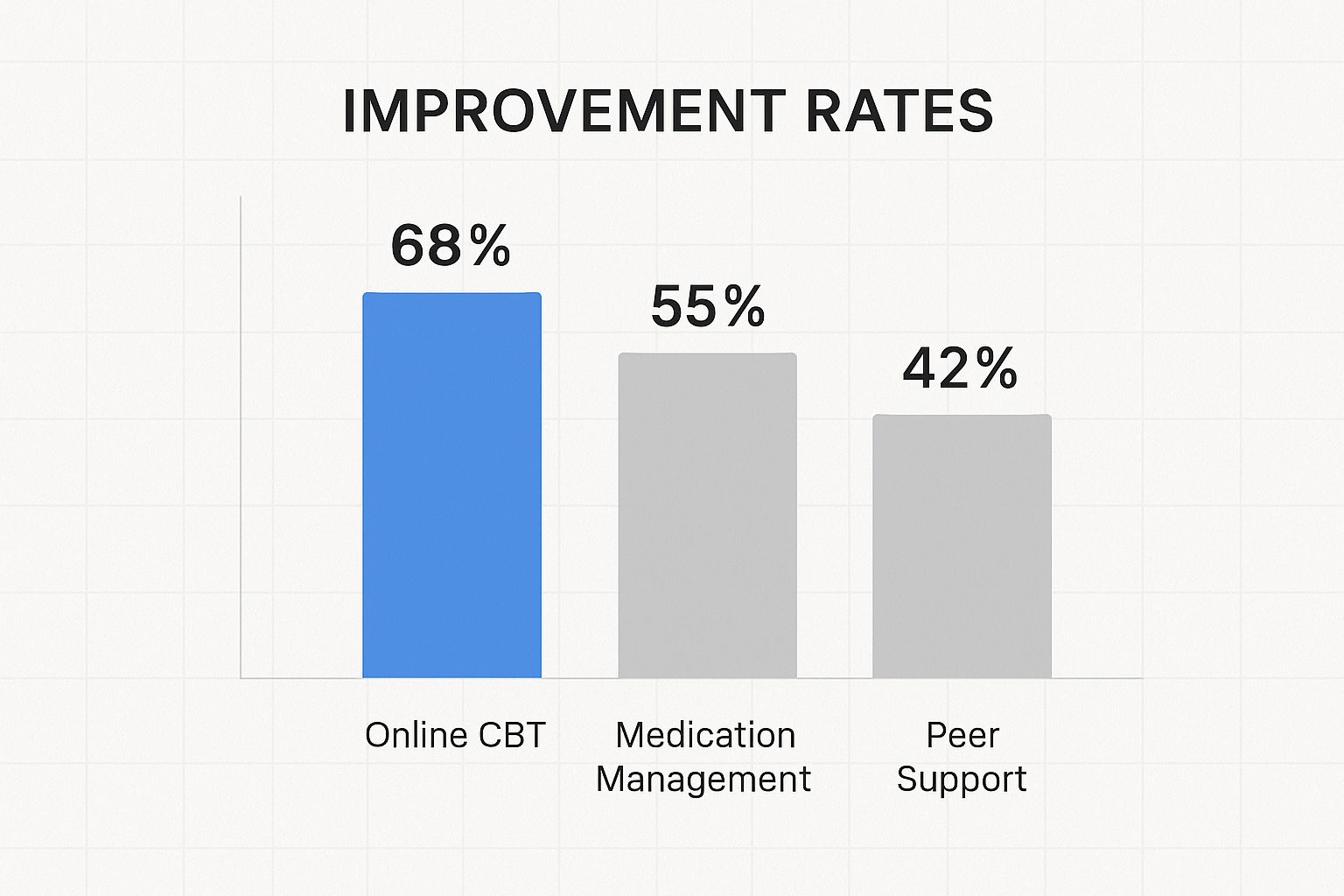
    A bar chart comparing the improvement rates of Online CBT (68%), Medication Management (55%), and Peer Support (42%) for depression treatment.

    As you can see, structured therapy like online CBT often leads to significant improvements for people seeking support.

    Therapists also integrate other powerful techniques during online counselling, including:

    • Mindfulness-Based Practices: These teach you to stay in the present moment without judgment, such as through guided breathing exercises.
    • Psychodynamic Therapy: This approach explores how past experiences may shape your present feelings, leading to self-awareness.
    • Positive Psychology Interventions: This technique focuses on building your strengths and practicing gratitude to cultivate resilience.

    A quick reminder: any assessments your therapist uses are informational tools to guide your sessions. They are not a formal diagnosis but a compass to point you in the right direction.

    The Rise of Digital Mental Health Support

    A person smiling while participating in an online therapy session on their tablet, feeling supported and understood.

    The conversation around mental health in India is changing for the better as stigma fades. More people now recognize that caring for emotional well-being is a sign of strength.

    Technology has been a major driver of this shift, breaking down barriers that made professional help feel out of reach. With online platforms, a meaningful conversation with a qualified therapist is now just a click away. Choosing depression treatment online is a modern, practical way to invest in yourself.

    Overcoming Traditional Barriers with Technology

    For years, accessing mental health support involved overcoming many obstacles. Finding a nearby therapist, scheduling appointments, and managing social anxiety were common challenges.

    Online therapy eliminates these problems. It allows you to connect with a professional from your own space, making it easier to attend sessions consistently. This convenience lets you focus on what truly matters: your healing journey.

    Online therapy creates a bridge to support, ensuring that compassionate, professional care is available to anyone, regardless of their location or circumstances. It democratises access to well-being.

    This accessibility is especially helpful when dealing with depression or anxiety, as it brings support directly to you. This makes taking that crucial first step feel much more manageable.

    A Growing Acceptance and a Strong Legal Framework

    The shift to digital mental healthcare is supported by a strong foundation. The online mental health market in India was valued at USD 133.47 million and is expected to reach USD 451.73 million by 2033, showing a growing demand for accessible teletherapy.

    India's Mental Healthcare Act, 2017, gives every person the right to access mental healthcare with dignity. This legislation gives online therapy legitimacy, assuring you receive recognized, professional support. This blend of social acceptance and legal backing confirms that online counselling is an effective path for managing workplace stress or building emotional resilience. Technologies like voice software in healthcare are also improving support services behind the scenes.

    Empowering You on Your Journey

    Ultimately, the rise of digital mental health is about putting you in control. It empowers you to find a therapist and therapy style that fits your life, where you can focus on building positive habits like managing stress and cultivating self-compassion.

    Remember that online assessments are conversation starters, providing initial insights to discuss with a professional. They are not a formal diagnosis. Real, effective help is closer than ever, and choosing online support is a powerful step toward a healthier, more balanced life.

    How to Choose the Right Online Therapist
    A diverse group of professional therapists' profile pictures arranged in a grid, conveying choice and accessibility.

    Finding a therapist you connect with is one of the most important parts of your therapy journey. This therapeutic relationship creates a safe space to open up and begin healing. A good online counsellor brings expertise, empathy, and understanding to your sessions.

    This connection is vital for successful depression treatment online. When you feel seen and heard, you are more likely to build the trust needed for real progress. Choosing a therapist is a personal decision, so take your time to find someone who feels right for you.

    Look for the Right Qualifications and Specialisations

    First, ensure your therapist is properly qualified with credentials like a Master’s degree in psychology or social work. Reputable platforms like DeTalks simplify this by vetting all therapists in their network.

    Consider their specializations. Finding a professional with experience in what you're facingβ€”whether it's depression, anxiety, or workplace stressβ€”can make a significant difference. Reading their profiles can help you see if their expertise aligns with your needs.

    Understanding Their Therapeutic Approach

    Every therapist has a unique style or therapeutic approach. Some use Cognitive Behavioural Therapy (CBT) to reframe thoughts, while others use mindfulness to build resilience. The most important thing is finding an approach that resonates with you.

    Think about what you hope to achieve in your sessions. Are you looking for practical strategies or a deeper exploration of your past? Answering this will help you find a therapist whose methods align with your goals for improving your well-being.

    The goal isn’t to find a perfect therapist, but to find a therapist who is perfect for youβ€”someone whose approach makes you feel supported, understood, and hopeful about the journey ahead.

    This mindset transforms the search from a task into an empowering choice. You are selecting a partner for your mental health journey.

    Use the Initial Consultation Wisely

    Most platforms offer an initial consultation, which is a great opportunity to see if a therapist is a good fit. Use this low-pressure meeting to ask questions and get a feel for their communication style.

    Here are a few questions you might ask:

    • What is your experience helping people with challenges like mine?
    • Could you explain your therapeutic approach in simple terms?
    • What can I expect in our first few sessions together?

    It's okay if the first person you speak with isn't the right one. Trust your intuition. Finding the right therapeutic relationship is a crucial step toward building resilience and finding a path to greater self-compassion and happiness. Remember, assessments are for guidance, not diagnosis.

    Your Next Steps Toward a Healthier Mind

    Taking the first step is a powerful act of self-care. Choosing depression treatment online is a courageous decision to prioritize your well-being.

    The path to feeling better is personal, and the goal is not an overnight fix. It’s about gradually building skills to support your long-term mental health. Online therapy offers a supportive space to learn and practice these skills at your own pace.

    Embracing a Path of Self-Compassion

    As you begin, remember to be kind to yourself. Progress isn't always linear, and some days will be harder than others.

    Celebrate small wins, like showing up for a session or trying a new coping technique. These moments are the building blocks of resilience. Online counselling provides a non-judgmental space to explore your feelings and understand that struggling with anxiety or workplace stress is part of being human.

    True well-being comes not from the absence of problems, but from the confidence that you have the tools to handle them. Online therapy is about empowering you with those very tools.

    This sense of empowerment is at the core of therapy. It helps shift your perspective from feeling overwhelmed to feeling capable and ready to navigate life's challenges.

    The Growing Accessibility of Online Support

    If you're considering online support, you are not alone. In India, technology has made seeking mental health help more accessible and accepted than ever.

    One survey showed that about 61% of female and 55% of male respondents have used digital wellness tools. You can learn more about technology's role in mental health statistics to see how it's improving access to support. This growing acceptance means quality care is within reach for many. Platforms like DeTalks offer a safe starting point to browse professionals and find someone you connect with.

    Remember, any initial questionnaires or assessments are simply tools to start the conversation, not a final diagnosis. Taking this step is an act of hope and an investment in your happiness and a more resilient life.

    Frequently Asked Questions About Online Therapy

    It's normal to have questions when considering online therapy. You're taking an important step, and you deserve to feel clear about how it works. Here are answers to some common queries to help you feel more empowered.

    Is Online Therapy as Effective as In-Person Therapy?

    Yes, for many people, research shows that online therapy is just as effective as in-person sessions, especially for mild to moderate depression and anxiety.

    Therapeutic methods like Cognitive Behavioural Therapy (CBT) translate well to a digital format. The success of counselling depends on your connection with the therapist, which is entirely possible to build online. For more answers, you can check out Buddypro's FAQ section.

    How Is My Privacy Protected in Online Counselling?

    Reputable platforms use bank-level encryption and secure technology to ensure your conversations remain confidential. Therapists are also bound by the same strict professional codes of confidentiality as in a physical office.

    To protect your privacy, find a quiet space for your sessions where you won't be interrupted.

    Choosing a platform that is upfront and transparent about its privacy policies is crucial. It lets you relax and focus on what truly matters: your journey toward building resilience and self-compassion, without a second thought about your data.

    What Should I Expect from My First Session?

    Your first session is a low-pressure conversation for you and your therapist to get to know each other. You'll discuss what brought you to therapy, the challenges you're facing (like workplace stress), and your goals.

    Your therapist will ask about your background to better understand your situation. This is also your time to ask them questions and see if their approach feels like a good fit. The goal is to create a safe foundation to build upon. Remember, any initial screening tools are informational and not a formal diagnosis.


    Ready to take the next step in a supportive, confidential space? At DeTalks, you can connect with qualified professionals who can help you navigate life's challenges and build a path toward greater well-being. Explore our network of therapists and begin your journey today at https://detalks.com.

  • Cognitive Behavioral Therapy for OCD: A Guide to Finding Relief

    Cognitive Behavioral Therapy for OCD: A Guide to Finding Relief

    Cognitive Behavioral Therapy, or CBT, is a practical, hands-on approach to therapy. It's designed to help you recognize and change the patterns of thinking and behavior that can keep you feeling stuck. Think of it as a training program for your mind, giving you real-world tools to manage difficult feelings and build long-term resilience.

    Your Path Forward Starts with Understanding

    Living with Obsessive-Compulsive Disorder (OCD) can feel like a constant internal struggle. The intrusive thoughts (obsessions) and the strong urge to perform certain actions (compulsions) can be exhausting and cause a great deal of anxiety. If this sounds familiar, please know you're not alone, and there is a proven path toward feeling better.

    This guide will walk you through Cognitive Behavioral Therapy (CBT), a structured and supportive type of counselling. Unlike therapies focused only on the past, CBT addresses the here-and-now. It helps you untangle the cycles of thoughts, feelings, and actions that fuel OCD.

    The Connection Between Thoughts and Actions

    At its heart, CBT is based on a simple but powerful idea: your thoughts, feelings, and actions are all connected. When you change one, the others often follow.

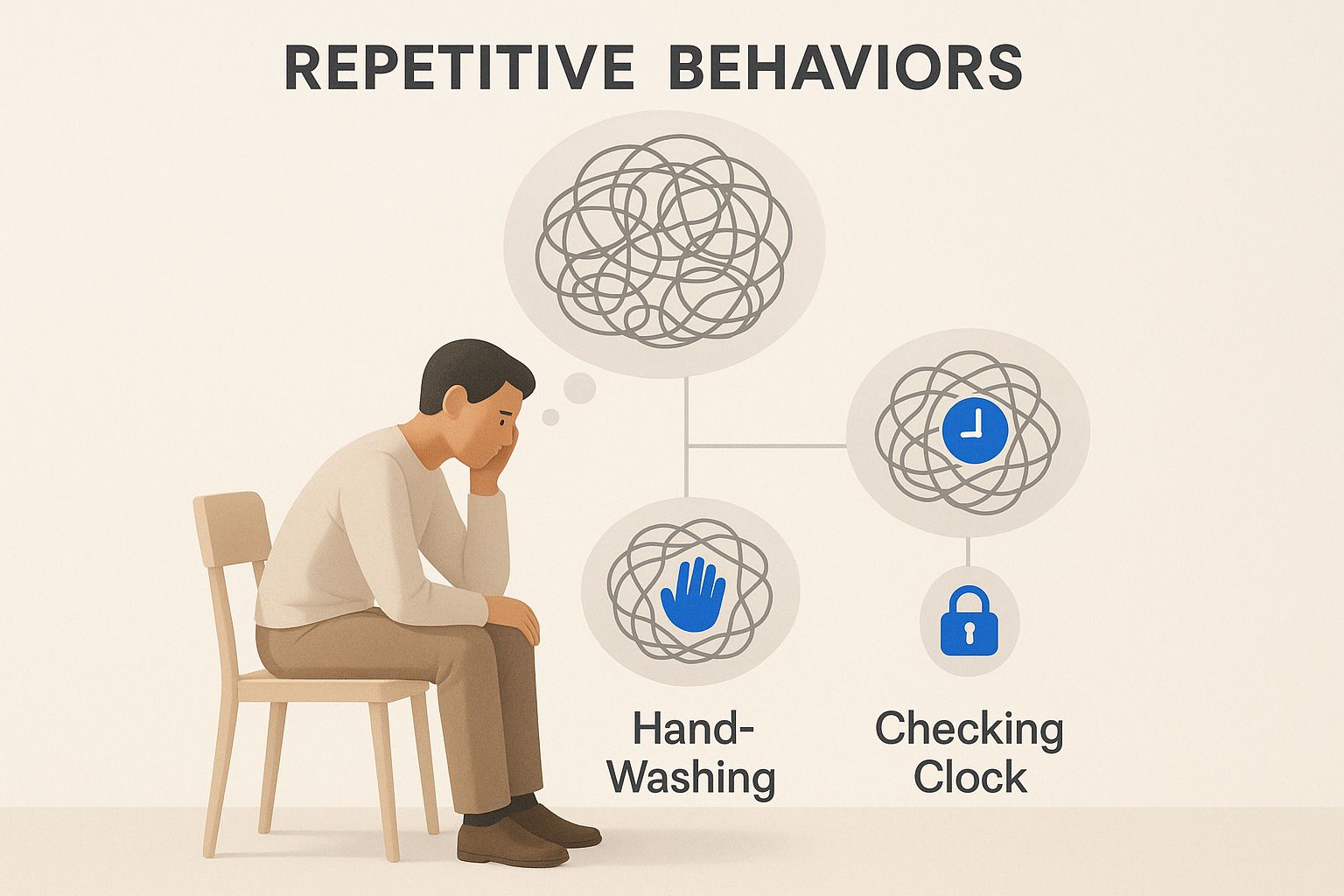
    For example, an obsessive thought like, "My hands are contaminated," can trigger a feeling of intense anxiety. This anxiety might then drive a compulsive action, such as repeated handwashing. CBT teaches you how to step into that cycle and gently break it.

    Cognitive Behavioral Therapy isn't about eliminating unwanted thoughtsβ€”it’s about changing how you relate to them. It shows you that you have a choice in how you respond, which is the first step toward managing OCD.

    Why CBT Is the Recommended Approach

    CBT's success is supported by years of research. A specific type, called Exposure and Response Prevention (ERP), is known as the most effective therapy for OCD. In India, where OCD affects a significant part of the population, this therapy offers a structured path forward. For more details, you can read about OCD's prevalence and treatment in India.

    What makes this type of therapy so helpful?

    • It’s skill-based: You learn practical techniques you can use for the rest of your life to support your well-being.
    • It’s a partnership: You and your therapist work as a team, setting goals at a pace that feels comfortable for you.
    • It builds independence: The goal is to equip you with the skills to become your own guide over time.

    This isn't just about managing specific symptoms. It is a journey toward building self-compassion and creating a life with more peace, especially when dealing with challenges like [workplace stress] or feelings of anxiety and depression.

    How Exposure and Response Prevention Works

    When we talk about Cognitive Behavioral Therapy for OCD, we often focus on a powerful technique called Exposure and Response Prevention (ERP). The name might sound clinical, but the idea is very practical. It’s about safely and gradually facing your fears until they no longer have the same power over you.

    Think of it like learning to swim with a supportive instructor. You start in shallow water and slowly build your confidence. ERP works the same way; it's a guided, step-by-step process tailored to you.

    This infographic captures the internal struggle of OCD, where thoughts and behaviors can feel like an impossible knot.

    Infographic about cognitive behavioral therapy for ocd

    ERP is a gentle method for untangling that knot, helping you regain a sense of control over your actions and reactions.

    The β€˜Exposure’ Part: Facing the Fear

    The first part of the process is Exposure. This means you will gradually and safely confront the thoughts, places, or objects that trigger your anxiety. This is a carefully planned process that you and your therapist design together.

    For someone with a fear of contamination, an early exposure might be as simple as touching a doorknob at home for a few seconds. The goal is to start with a challenge that feels manageable and builds your confidence.

    This systematic process teaches your brain a new lesson: the things you fear may not be as dangerous as they feel. Over time, the triggers begin to lose their intensity.

    The β€˜Response Prevention’ Part: Breaking the Habit

    This brings us to the second critical part: Response Prevention. After being exposed to a trigger, you learn to resist the urge to perform your usual compulsion or ritual. This is where you learn to sit with the discomfort until it naturally subsides.

    At first, the feeling of anxiety can be strong, and that's perfectly normal. Your therapist is there to support you through it. This discomfort always fades with time.

    By not giving in to the ritual, you are actively breaking the OCD cycle. You send a powerful message to your brain: "The difficult feeling passed on its own." This is where you start to find freedom.

    To make this clearer, this table breaks down the core components of Exposure and Response Prevention to clarify how this structured therapy helps you regain control.

    Understanding the Two Parts of ERP Therapy

    Component What It Means in Practice The Ultimate Goal
    Exposure Systematically facing triggers (thoughts, objects, situations) in a controlled way, starting with the least scary and moving up. To reduce the anxiety and fear associated with your triggers through a process called habituation.
    Response Prevention Actively choosing not to perform the compulsive behaviours or mental rituals that you normally use to reduce anxiety. To break the link between obsessions and compulsions, proving to your brain that the rituals are not necessary for safety.

    Together, Exposure and Response Prevention are a powerful team. This is a crucial step toward managing OCD and addressing related challenges like workplace stress, anxiety, and depression.

    What to Expect from Your Therapy Sessions

    Deciding to start counselling is a significant and hopeful step. To help you feel more prepared, let's walk through what cognitive behavioral therapy for OCD sessions typically look like.

    Think of the process as a partnership between you and your therapist. You are always in control of the pace, and the main goal is to create a safe space where you feel supported.

    Your First Session: The Initial Assessment

    The first few sessions are about getting to know each other. Your therapist is there to listen to your story and understand what you are going through in a judgement-free environment.

    You’ll likely talk about your specific challenges and what you hope to achieve through counselling. Any assessments used are simply informational tools to help create a personalized plan; they are not a formal diagnosis.

    The initial assessment is a two-way street. It is a chance for you to see if the therapist is a good fit and for them to understand how best to support you.

    This groundwork ensures your therapy is tailored to your unique needs, whether that's addressing OCD or related challenges like anxiety, depression, or stress.

    Creating Your Fear Hierarchy Together

    After your therapist understands your experiences, you'll work together to build a fear hierarchy. This is a list of the situations or thoughts that trigger your OCD, ranked from least stressful to most stressful.

    This list becomes your personal roadmap for therapy. You'll start with small, manageable challenges and only move up when you feel ready and confident. This step-by-step approach is designed to build your skills without feeling overwhelming.

    Practicing New Skills Beyond the Session

    A key part of CBT is applying what you learn in therapy to your everyday life. This is often called "homework," but it’s more like real-world practice to help new skills stick.

    These practice tasks are always designed with your therapist and are linked to your fear hierarchy. They are practical, achievable steps to keep your momentum going between sessions.

    What might this practice look like?

    • Behavioral Experiments: Gently testing a fear in a controlled way, like touching an object and waiting a few extra minutes before washing your hands.
    • Thought Records: Noting down a difficult thought and using cognitive skills to look at it from a different perspective.
    • Mindfulness Exercises: Practicing short, guided meditations to get better at sitting with uncomfortable feelings without reacting.

    This is the work that turns theory into a lived reality. It proves to you, one small victory at a time, that you have the strength to manage anxiety and reclaim your well-being.

    Navigating Challenges and Building Resilience

    The journey of managing OCD with cognitive behavioral therapy is not always a straight line. You will have days of great progress and moments that feel like a step back. This is a normal and expected part of the healing process.

    Facing your fears takes emotional energy, so feeling tired or experiencing therapy burnout is common. Life challenges, like [workplace stress], can also increase anxiety. Acknowledging that these bumps in the road are part of the path is an important first step.

    A person sitting peacefully on a rock, looking out over a calm body of water at sunrise, symbolizing resilience and self-compassion.

    Learning to Be Kind to Yourself

    One of the most powerful skills you will develop is self-compassion. OCD can often be accompanied by a harsh inner critic. Therapy teaches you to treat yourself with the same kindness you would offer a friend.

    This shift from self-criticism to self-kindness can lift a heavy emotional weight. It helps you recognize that you are doing your best with a genuinely difficult condition, which fosters both resilience and happiness.

    As you build this foundation, you may want to explore other strategies to master your anxiety. This can make the core therapy work feel more manageable.

    Forging True Resilience from Within

    Resilience is not about being unbreakable; it's the ability to bounce back from difficult experiences. CBT for OCD is excellent training for this. Every time you face a trigger without performing a compulsion, you are strengthening your resilience.

    You are proving to yourself that you can tolerate discomfort and that feelings of anxiety eventually pass. This process builds a deep sense of self-trust and confidence that extends far beyond managing OCD.

    Resilience is not a trait you either have or don’t. It is a set of skills and a mindset that anyone can learn and strengthen through practice.

    The Indian Context: Family, Culture, and Support

    In India, family and community are incredible sources of strength. However, cultural pressures to always appear "strong" can sometimes make it difficult to talk about mental health struggles.

    Good therapy respects these cultural nuances. It helps you combine professional techniques with the support systems you already have. It is about creating a personal toolkit for well-being that honors both modern therapy and your cultural roots.

    The road has its challenges, but it is also a path of incredible personal growth. By facing these difficulties with self-compassion, you are building a more resilient, calm, and fulfilling life.

    The Supportive Role of Your Therapist

    Your relationship with your therapist is one of the most important parts of the process. Think of them as a compassionate guide walking the path with you. Their first priority is to create a safe, confidential, and non-judgmental space where you feel heard.

    This partnership is often called the therapeutic alliance and is built on trust and respect. A good therapist knows that you are the expert on your own life. They bring their professional knowledge to help you find your inner strength.

    A compassionate therapist listening intently to a client in a warm and comfortable office setting.

    A Personalized and Flexible Approach

    There is no one-size-fits-all script for effective therapy. An experienced therapist will tailor your treatment plan to fit your specific needs, comfort level, and personal goals. They will listen to your concerns and adjust the pace, especially during ERP exercises.

    This flexibility is key. If you are dealing with burnout or high levels of stress, your therapist can shift the focus to building coping skills first. They ensure the process feels empowering, not exhausting.

    A therapist's job isn't to push you into situations you aren't ready for. It's to help you build the confidence to take the next step when you decide it's time.

    This tailored support is what makes professional counselling so effective. It addresses not just OCD but also related challenges like anxiety and depression, paving the way for greater well-being and resilience.

    Finding the Right Professional for You

    Finding a therapist you connect with is fundamental to your success. The right person will not only have the right qualifications but also a style that makes you feel comfortable and secure.

    When looking for a therapist, whether in India or elsewhere, keep these points in mind:

    • Qualifications: Look for professionals with specific training in CBT and ERP for OCD.
    • Experience: Feel free to ask about their experience working with people who have similar challenges.
    • Approach: During an initial chat, ask about their therapeutic style to see if it feels collaborative and empathetic.
    • Comfort Level: Most importantly, do you feel a sense of connection and trust?

    This relationship is the foundation for all your hard work. A strong therapeutic bond can make a significant difference in your journey.

    Empowering You to Become Your Own Guide

    Ultimately, a great therapist’s goal is to empower you with the tools to manage your thoughts and behaviors on your own. They teach you how to challenge unhelpful thinking, resist compulsions, and treat yourself with kindness.

    This process builds incredible self-reliance and resilience. You'll start using these skills automatically in your daily life. This is the true sign of successful therapyβ€”feeling more capable and in control every day.

    Making Your Skills a Part of Your Life

    Finishing a course of cognitive behavioral therapy is a huge achievement. Now, the skills you’ve learned become tools for life. The more you use them, the stronger they become, supporting your well-being long after your sessions end.

    CBT teaches you to observe your thoughts without getting carried away and to choose how you respond. Weaving this into your daily routine is what turns your progress into lasting change.

    Weaving Your Skills into Everyday Moments

    The real power of this therapy appears in the small moments of your day. When a difficult thought or feeling of anxiety arises, you have a toolkit ready. The goal was never to eliminate anxiety, but to know what to do when it shows up.

    Here are a few ways to keep your CBT skills strong:

    • Practice Mindful Pauses: A few times a day, just notice what’s happening in your mind and body without judgment.
    • Embrace Mini-Exposures: Gently lean into small avoidance habits. See them as opportunities to practice your skills.
    • Take Self-Compassion Breaks: When you feel overwhelmed, treat yourself with kindness. Acknowledge that this is hard, without self-blame.

    Be Patientβ€”This Is a Journey, Not a Race

    Progress is not always a straight line. Some days will feel easy, while others will be challenging. This is completely normal and expected.

    The goal isn’t perfection; it’s persistence. Every time you choose a compassionate response over self-criticism, you build resilience and reinforce your progress.

    Remembering this helps you handle tough days with more grace. It allows you to see setbacks not as failures, but as opportunities to learn and grow.

    This is a path of empowerment. Starting counselling for OCD is a sign of incredible strength and a commitment to your own well-being. Supportive takeaways from this journey include greater peace, freedom, and resilience, knowing you have the skills to care for yourself.

    Frequently Asked Questions

    It’s normal to have questions when considering therapy. Taking a thoughtful approach to your well-being is a great first step. Here are answers to some common questions about using cognitive behavioral therapy for OCD.

    This is helpful background information, but it is not a substitute for a conversation with a qualified professional.

    How Long Does Cognitive Behavioural Therapy for OCD Usually Take?

    There is no fixed timeline, as therapy is always personalized. A standard course of Exposure and Response Prevention (ERP) typically runs for about 12 to 20 weekly sessions. This rhythm helps you build momentum without feeling rushed.

    The real goal is to help you build the skills and confidence to manage OCD on your own. Your therapist will work with you to find a pace that feels right.

    The aim of therapy isn’t to keep you in counselling forever. It’s to empower you with the tools you need to eventually become your own therapist.

    Is ERP Therapy Scary or Overwhelming?

    It's understandable to feel nervous about ERP, as it involves facing your fears. However, a good therapist ensures the process is gradual, collaborative, and always supportive. You will never be pushed to do something you aren’t ready for.

    You and your therapist will create a "fear hierarchy," starting with small, manageable exposures. The idea is to gently show you that you can handle anxiety without compulsions. Your therapist acts as your coach every step of the way.

    Can I Do CBT for OCD on My Own?

    Self-help resources can be great for learning about general stress management. However, trying to do ERP for OCD on your own is not recommended. It is a precise process that requires careful planning to be safe and effective.

    A qualified therapist offers crucial support. They help you:

    • Design the right exposures: They create challenges that are effective but not overwhelming.
    • Navigate tough moments: A therapist provides in-the-moment coaching to help you manage anxiety.
    • Stay on track: They provide accountability and encouragement to help you keep going.

    For the safest and most effective path to managing OCD, working with a professional is the best approach. That partnership helps you build lasting skills for a calmer, more resilient life.


    Finding the right support is the most important first step. At DeTalks, we can connect you with experienced therapists who specialise in proven treatments like CBT for OCD. Feel free to explore our directory or take a confidential assessment to find the guidance you deserve. Your journey to well-being starts here: https://detalks.com.

  • ADHD Symptoms in Adults: 7 Key Signs to Recognize

    ADHD Symptoms in Adults: 7 Key Signs to Recognize

    Attention-Deficit/Hyperactivity Disorder (ADHD) is often thought of as a childhood condition, but it affects many adults, too. For adults, the experience can be complex, often leading to challenges with focus, emotions, and organisation that may be mistaken for personal shortcomings. This misunderstanding can cause significant workplace stress and anxiety, impacting overall well-being.

    This guide offers a warm and supportive look into the common ADHD symptoms in adults, moving beyond stereotypes. Our goal is to provide clear insights, helping you recognise patterns that might affect your life or someone you care about. We will explore both the challenges and the unique strengths, like resilience and creativity, that can come with an ADHD mind.

    This article provides information, not a diagnosis. If these descriptions feel familiar, it could be a helpful first step toward seeking professional counselling or an assessment for personalised support.

    1. Inattentive Type – Difficulty Sustaining Focus

    A core ADHD symptom in adults is a constant challenge in holding focus. This isn't just boredom; it's a genuine difficulty in paying attention to tasks or conversations that aren't highly engaging. An adult might feel like their brain has too many tabs open at once, pulling their attention in different directions.

    In adults, this can look different than in children. Instead of being physically restless, an adult might seem quiet while their mind wanders during an important meeting or a conversation with a loved one. This internal experience of a constantly shifting mind can make it exhausting to complete projects that require long-term mental effort.

    How It Manifests in Daily Life

    Difficulty with focus can impact well-being in both personal and professional life, sometimes leading to workplace stress and feelings of inadequacy.

    • At Work: A talented professional might miss important details in reports or make simple mistakes, not due to lack of skill but because their focus drifts.
    • At Home: A parent may forget appointments or struggle to finish household chores, often starting several tasks but completing none.
    • In Relationships: Partners may feel unheard when the person with ADHD loses track of conversations, which comes from an attention challenge, not a lack of care.

    Actionable Strategies to Improve Focus

    While a professional assessment is important, you can try strategies to manage this symptom. Structuring your tasks and environment can make a real difference.

    • Use Time-Blocking Techniques: The Pomodoro Technique, using focused 25-minute work periods with short breaks, can make large tasks feel more manageable.
    • Externalise Your Plans: Use detailed checklists or apps to keep track of steps. Resources like the best focus apps for people with ADHD can offer practical support.
    • Minimise Distractions: Create a calmer environment by using noise-cancelling headphones, turning off phone notifications, or finding a quiet space to work.

    2. Hyperactivity-Impulsivity – Restlessness and Hasty Decision Making

    While childhood hyperactivity often involves visible energy like running and climbing, it shows up more subtly in adults. It can feel like an inner restlessness or a mind that is always on the go. This is often paired with impulsivityβ€”acting on sudden urges without fully thinking about the consequences.

    Hyperactivity-Impulsivity - Restlessness and Hasty Decision Making

    This inner drive can make quiet activities feel difficult and can lead to fidgeting, tapping your feet, or pacing. Impulsivity is not a character flaw; it’s a challenge with self-regulation that can affect work, finances, and relationships, sometimes leading to workplace stress and anxiety.

    How It Manifests in Daily Life

    The mix of restlessness and impulsivity can create challenges that affect an adult's sense of control and well-being.

    • At Work: A colleague might interrupt others in meetings, not to be rude, but because an idea feels too urgent to hold back.
    • At Home: An individual might make a large, impulsive purchase online that affects the family budget, or suddenly start a big home project without a plan.
    • In Relationships: This can show up as saying things without thinking, which might be hurtful, or making big life decisions, like quitting a job, without discussion.

    Actionable Strategies to Manage Impulses

    Learning to manage hyperactivity and impulsivity involves building awareness and creating pauses. While professional counselling can offer a tailored approach, these strategies can help.

    • Implement a 'Waiting Period': For big decisions, try to create a 24 to 48-hour waiting period. This provides a buffer between the impulse and the action.
    • Channel Restless Energy: Using a discreet fidget tool during long meetings can help manage excess energy. Short, frequent breaks to walk or stretch also help.
    • Practise Mindfulness: Mindfulness exercises can strengthen your brain's ability to notice thoughts and feelings without immediately acting on them.

    3. Executive Functioning Deficits – Problems with Mental Management

    Beyond attention, many ADHD symptoms in adults are linked to challenges with executive functions. These are the brain's "management" skills, responsible for organising, planning, and getting tasks done. When this system is less effective, it creates challenges in managing daily life.

    Executive Functioning Deficits - Problems with Mental Management

    This isn't about intelligence or effort; it's a neurobiological difference in high-level thinking skills. An adult with these challenges might feel constantly overwhelmed, as if they are always trying to keep up. This can lead to significant workplace stress and a persistent feeling of being behind.

    How It Manifests in Daily Life

    Difficulties with executive function can affect an adult's ability to reach long-term goals and manage daily tasks, which may contribute to anxiety.

    • At Work: A project manager may find it hard to estimate how long tasks will take, leading to missed deadlines and team frustration.
    • At Home: An individual might find it very difficult to organise a multi-step task like preparing for a festival or managing household bills.
    • In Personal Growth: A student might have wonderful ideas but struggle to structure them, create an outline, or manage their time to complete their work.

    Actionable Strategies to Improve Management

    Building external support systems can help compensate for internal executive function challenges, creating a "scaffolding" for the brain.

    • Break Down Large Projects: Turn overwhelming goals into small, clear, and actionable steps. For example, "organise office" becomes "clear desk," then "sort papers."
    • Use Time-Blocking: Schedule specific blocks of time in a calendar for every task, including breaks, and set multiple reminders to help with time perception.
    • Externalise Your Memory: Don't rely on your memory alone. Use external aids like phone notes, voice memos, or a physical notebook to keep track of ideas and to-do lists.

    4. Emotional Dysregulation – Intense and Rapidly Changing Emotions

    Though not an official diagnostic criterion, emotional dysregulation is one of the most impactful ADHD symptoms in adults. It means having difficulty managing emotional responses in a way that feels balanced for the situation. This can look like intense reactions to small frustrations or quick mood shifts.

    Emotional Dysregulation - Intense and Rapidly Changing Emotions

    Living with this can feel like being on an emotional rollercoaster, causing both personal and workplace stress. An adult with ADHD might experience sudden anger over a minor issue or feel overwhelming sadness from gentle criticism. This is a challenge with emotional control, linked to the brain's executive functions.

    How It Manifests in Daily Life

    Unmanaged emotional responses can strain relationships and are often misunderstood by others, which can lead to anxiety and feelings of isolation.

    • At Work: A team member might get very frustrated over a small technical glitch, affecting team morale. A manager’s mood could shift quickly, creating an unpredictable environment.
    • At Home: A small disagreement with a partner could escalate into a big argument. An individual might feel overwhelmed for hours after a stressful event.
    • In Relationships: Friends and family might feel like they need to be very careful, unsure what might trigger an intense emotional reaction.

    Actionable Strategies for Emotional Regulation

    Building emotional awareness is key to managing this symptom. While professional counselling provides tailored support, these strategies can help build emotional resilience.

    • Practise the STOP Technique: When you feel a strong emotion rising, Stop. Take a breath. Observe your feelings without judgement. Proceed mindfully.
    • Develop an Emotional Recovery Routine: Create a personal toolkit for when you feel overwhelmed. This could be a short walk, listening to calming music, or deep breathing.
    • Communicate Your Needs Clearly: Let trusted friends and family know you sometimes experience intense emotions and explain what helps you in those moments.

    5. Rejection Sensitive Dysphoria (RSD) – Extreme Fear of Criticism

    One of the most intense emotional ADHD symptoms in adults is Rejection Sensitive Dysphoria (RSD). This is an extreme emotional sensitivity to the perception of being rejected, criticised, or failing. It’s an overwhelming emotional response to situations that others might not find as painful.

    This intense reaction can seem out of proportion, but for the person experiencing it, the emotional pain is very real. The constant fear of this pain can lead to behaviours like trying very hard to please others or avoiding situations where criticism is possible.

    How It Manifests in Daily Life

    The fear of rejection can create chronic anxiety and impact self-worth, making it difficult to pursue goals and maintain healthy relationships.

    • At Work: An employee might take constructive feedback as a personal attack, leading to feelings of worthlessness or a defensive reaction.
    • At Home: A person might avoid discussing difficult topics with their partner to prevent potential disapproval, which can lead to unresolved issues.
    • In Social Situations: Someone might avoid a new hobby or opportunity, not because they can't do it, but to avoid the risk of perceived failure.

    Actionable Strategies to Manage RSD

    Managing RSD involves building emotional resilience and finding new ways to view feedback. While professional therapy is very helpful, these strategies can offer support.

    • Practise Cognitive Reframing: When you feel rejected, gently question your first interpretation. Ask yourself: "Is there another way to see this?"
    • Develop a Support Network: Talk about your experiences with a trusted friend, partner, or therapist. A supportive person can offer a different perspective and reduce feelings of isolation.
    • Use Mindfulness Techniques: Practise noticing your emotions without judgement. Acknowledge the feeling as a symptom, rather than a fact. This creates a little space between the trigger and your reaction.

    6. Hyperfocus – Intense Concentration on Preferred Activities

    While ADHD is known for a lack of focus, a surprising symptom in adults is hyperfocus. This is a long, intense state of concentration on an activity that is interesting or rewarding. The brain locks onto a stimulating task, often tuning out everything else.

    During hyperfocus, an adult can become so absorbed that they lose track of time and forget basic needs like eating or sleeping. While this can lead to amazing productivity and creativity, it can also disrupt balance in daily life and contribute to workplace stress or personal neglect.

    How It Manifests in Daily Life

    Hyperfocus can be both a great strength and a challenge, leading to high achievement but also missed responsibilities.

    • At Work: A developer might code for 12 hours straight to fix a complex problem but miss important meetings and forget to take a break.
    • At Home: An artist could get so lost in a project that they miss family dinner or ignore phone calls, which can cause strain in relationships.
    • In Personal Pursuits: A person might spend an entire weekend absorbed in a fascinating new hobby, making great progress but neglecting household chores.

    Actionable Strategies to Manage Hyperfocus

    Learning to channel hyperfocus is key to making it an asset. The goal is not to stop it but to manage its timing and intensity.

    • Set External Cues: Use alarms or timers to create "break points." These reminders can pull you out of a hyperfocused state to check on other priorities.
    • Schedule Hyperfocus Time: Set aside time for engaging activities when it won’t disrupt other important responsibilities.
    • Communicate with Loved Ones: Explain your hyperfocus patterns to your family and partner. This helps them understand and reduces misunderstandings when you become temporarily absorbed in something.

    7. Time Blindness – Distorted Perception of Time Passage

    One of the more disorienting ADHD symptoms in adults is "time blindness," a difficulty in accurately sensing the passage of time. This isn't just poor time management; it's a neurological challenge where the brain struggles to feel how much time has passed or how long a task will take. It can lead to chronic lateness and missed deadlines.

    This symptom is a core part of executive function challenges in ADHD and can cause significant workplace stress and anxiety. It explains why a "quick five-minute" task can turn into an hour, or a deadline that seems far away suddenly arrives tomorrow.

    How It Manifests in Daily Life

    Time blindness can affect all areas of life and is often misunderstood as carelessness, which can harm relationships and self-esteem.

    • At Work: A person might consistently arrive late for meetings, not from a lack of respect, but from underestimating travel time.
    • At Home: A parent might find mornings chaotic and stressful, frequently running late for school drop-offs.
    • In Relationships: Someone might get lost in a hobby and forget a planned dinner with their partner, which can be perceived as neglect.

    Actionable Strategies to Manage Time Blindness

    While a professional assessment can bring clarity, you can use strategies to make time more concrete. The goal is to create external structures to help with the brain's internal timing.

    • Make Time Visible: Use analog clocks where you can see the hands move, or countdown timers. This makes the passage of time more tangible.
    • Build in Buffer Time: If you think a task will take 30 minutes, schedule 45. Adding extra time to schedules can reduce the stress of being late.
    • Use External Reminders: Set multiple alarms for important eventsβ€”for example, an hour before, 30 minutes before, and when it's time to leave.
    • Track Your Time: To learn more about managing this, you can explore effective time management strategies specifically for adults with ADHD.

    7-Point ADHD Symptom Comparison in Adults

    Symptom / Aspect Implementation Complexity πŸ”„ Resource Requirements πŸ”„ Expected Outcomes πŸ“Š Ideal Use Cases πŸ’‘ Key Advantages ⭐
    Inattentive Type – Difficulty Sustaining Focus Moderate – requires consistent strategies Moderate – checklists, apps, environment control Moderate improvement in focus and task completion Office work, project management, household tasks Enhanced creativity, detail orientation
    Hyperactivity-Impulsivity – Restlessness and Hasty Decision Making Moderate – mindfulness and structure needed Moderate – mindfulness tools, fidget devices Improved impulse control and decision-making accuracy Fast-paced environments, sales, dynamic team settings High energy, quick decisions
    Executive Functioning Deficits – Problems with Mental Management High – involves complex organizational methods High – calendar apps, memory aids, methodologies Significant improvement in planning and deadlines Project management, academia, entrepreneurship Strong crisis management, creative solutions
    Emotional Dysregulation – Intense and Rapidly Changing Emotions Moderate – emotional regulation techniques Moderate – apps, therapy, mindfulness practices Better emotional stability and relationship quality Professions requiring emotional resilience, caregiving Deep empathy, passionate engagement
    Rejection Sensitive Dysphoria (RSD) – Extreme Fear of Criticism High – cognitive and behavioral adjustments High – therapy, medication, support networks Reduced emotional pain and improved social interactions Creative professions, social work, client-facing roles High empathy, motivation to excel
    Hyperfocus – Intense Concentration on Preferred Activities Low to Moderate – scheduling and alarms Low – timers, reminders Exceptional productivity in focused tasks Creative arts, research, programming, emergency medicine Exceptional work quality under focus
    Time Blindness – Distorted Perception of Time Passage Moderate – requires external aids and awareness Moderate – apps, alarms, visual tools Improved punctuality and deadline management Consulting, writing, parenting Ability for flow states, reduced time anxiety

    Embracing Your Unique Mind: Your Path Forward

    Understanding your mind is the first step on a positive path forward. We've explored the diverse and often misunderstood adhd symptoms in adults, from the quiet challenge of inattention to the intense feelings of emotional dysregulation. Recognising these patterns is not about finding flaws but about seeing the unique way your brain works.

    Perhaps you saw yourself in "time blindness" or connected with the idea of hyperfocus. Understanding these traits is the foundation for self-compassion. It allows you to move away from self-criticism and toward building a life that works for you.

    From Recognition to Actionable Strategy

    Living with unmanaged ADHD symptoms can contribute to workplace stress, anxiety, and feelings of depression. It can be exhausting to constantly manage organisation, priorities, and emotions. However, identifying these patterns empowers you to seek the right support and build a life that honours your brain's natural style.

    The goal is not to "fix" a core part of who you are but to build skills and strategies that support your well-being and resilience. This journey can include:

    • Seeking Professional Insight: A formal assessment with a qualified professional can provide clarity and open the door to support like therapy or counselling. Remember, an assessment is informational, not just a label.
    • Developing Personalised Systems: Work with your brain, not against it. If you struggle with time, visual timers can become your friend. If emotions feel big, counselling can help you develop mindfulness techniques.
    • Leveraging Your Strengths: Remember that an ADHD brain has incredible strengths. The same mind that wanders can also achieve amazing hyperfocus, leading to creativity and innovation. Building on these strengths is key to confidence and happiness.

    Supportive Takeaways for Your Journey

    Understanding common adhd symptoms in adults is an act of self-advocacy. It’s the key to transforming daily struggles into manageable challenges and using your unique strengths to live a more balanced and joyful life. This journey requires patience, self-compassion, and a willingness to seek support. You are not alone, and help is available to guide you toward a life where you can truly thrive.


    Ready to take the next step in understanding your mind? On DeTalks, you can explore scientifically validated assessments for deeper insights or connect with qualified mental health professionals across India who specialise in adult ADHD. Start your journey towards clarity and well-being today at DeTalks.

  • What to Do If Someone Igrones You: 7 Healthy Steps for 2025

    What to Do If Someone Igrones You: 7 Healthy Steps for 2025

    Being ignored can feel deeply unsettling, whether it's a colleague, a friend, or a loved one who has gone silent. This experience can trigger feelings of anxiety, self-doubt, and loneliness, affecting our mental well-being. In a culturally rich country like India where relationships are highly valued, this silence can feel particularly loud, leading to emotional distress. Understanding what to do if someone ignores you is a crucial skill for maintaining your peace of mind and building resilience.

    This guide offers a warm and empathetic path to navigate this challenge with clarity and self-compassion. We will explore seven constructive steps to help you manage your emotions and decide on the healthiest path forward. The focus is on empowering you with strategies to improve your well-being, not on forcing a response from others. These supportive takeaways can help you cope with workplace stress, relationship issues, and the anxiety this situation can cause.

    1. Pause and Reflect: Understand the Situation Before You React

    When you're trying to figure out what to do if someone ignores you, your first impulse might be to react immediately with hurt or anxiety. The most effective first step is to pause. This creates a crucial space for a more thoughtful and less reactive approach.

    Pause and Reflect: Understand the Situation Before You React

    This method involves stepping back to assess the context without judgement, which helps manage the immediate emotional sting. Shifting your perspective from "I am being rejected" to "What else could be happening here?" can prevent you from escalating a simple misunderstanding. This is a key step in building emotional resilience.

    How to Implement This Pause

    Instead of immediately sending another message, take a few deep breaths and consider other possibilities. This is not about making excuses for their behaviour but about gathering information before you act.

    Consider these scenarios:

    • Workplace Stress: A colleague in Mumbai suddenly becomes unresponsive after a high-pressure project. They might be dealing with burnout, a common issue in high-stress work environments.
    • Personal Overwhelm: A friend in Delhi goes quiet after you shared some big news. Perhaps they are processing their own feelings or dealing with an unrelated personal crisis.
    • Family Dynamics: A family member seems distant during a festival like Diwali. This could be due to unspoken family tensions or financial stress, rather than an issue with you.

    Key Insight: A person's silence is often a reflection of their own internal state, not a direct comment on your worth. Pausing allows you to remember this and protects your well-being.

    This reflective pause gives you control over your reactions, reduces anxiety, and sets the stage for healthier communication. It's a foundational step for managing challenges with compassion and building your resilience.

    2. Direct but Gentle Communication

    After pausing to reflect, the next step might be to address the situation directly. When trying to figure out what to do if someone ignores you, calm and non-confrontational communication is often the most effective approach. This involves reaching out with a simple, honest message that acknowledges the silence without being accusatory.

    Direct but Gentle Communication

    This strategy prioritises expressing your feelings and needs clearly while inviting the other person to share their perspective. The goal isn't to force a response but to open a dialogue and reduce the anxiety that comes with uncertainty. It shifts the focus from blame to mutual understanding and connection.

    How to Implement This Approach

    Choose the right moment to reach out and keep your message short and focused on your feelings using "I" statements. Give the other person space to respond without pressure. This assessment of the situation is for your information, not a formal diagnosis of the relationship.

    Consider these examples:

    • For a friend: "Hi, I've noticed we haven't talked in a while and I miss our chats. I wanted to check in and see if everything is okay with you."
    • For a colleague: "I sent over the project report last week and haven't heard back. Just wanted to make sure you received it and see if you need anything from my end."
    • For a romantic partner: "I feel a bit distant from you lately, and it's making me feel anxious. I’d really like to understand what's on your mind when you're ready to talk."

    Sometimes, the silence might stem from a misunderstanding. If you believe your actions may have contributed, learning about writing an effective apology letter to a friend can be a crucial step toward repair.

    Key Insight: Direct and gentle communication isn't about confrontation; it's about clarification. It allows you to express your concerns respectfully while honouring the other person’s autonomy.

    This approach empowers you to take control of the narrative in a healthy way. It fosters emotional resilience by teaching you to address issues constructively, rather than letting them build into resentment or deeper workplace stress.

    3. Give Them Space and Time

    After reaching out, one of the most powerful things to do if someone ignores you is to give them space. This choice involves stepping back and resisting the urge to send more messages or seek immediate answers. It’s a strategy rooted in respecting both their unspoken need for distance and your own emotional well-being.

    Give Them Space and Time

    This approach is supported by relationship experts who emphasize the importance of secure, respectful boundaries. By allowing time to pass, you give the other person the room they might need to process their emotions or manage personal stress. This can prevent further strain on the relationship.

    How to Implement This Pause

    Giving space is an active process that requires conscious effort to avoid behaviours that could feel demanding or intrusive. It’s about creating a healthy pause that benefits everyone.

    Consider these scenarios:

    • Romantic Relationships: Your partner in Bengaluru mentions feeling overwhelmed and becomes distant. You can allow them a few days of quiet, letting them know you're there when they're ready.
    • Friendships: After a minor disagreement, your friend in Kolkata stops replying. You decide to give them a week to cool off before sending a simple message.
    • Professional Settings: A colleague doesn't respond to a non-urgent email. You can wait a few business days before sending a polite follow-up, recognizing they might be dealing with workplace stress.

    Key Insight: Giving space isn't a sign of weakness; it's a demonstration of emotional maturity and respect for the other person's autonomy and your own peace of mind.

    This period is also an opportunity for self-care and building resilience. Use the time to focus on your own activities, hobbies, and other relationships. This reinforces that your well-being is not dependent on one person's response.

    4. Focus on Your Own Well-being

    When you're figuring out what to do if someone ignores you, your focus can easily become fixated on their actions. A powerful alternative is to deliberately shift that energy back towards yourself. Concentrating on your own well-being and happiness is a constructive way to handle the situation.

    Focus on Your Own Well-being

    This approach isn't about ignoring the hurt but about refusing to let it control your life. By investing in activities that build your self-esteem and resilience, you regain a sense of agency. This shift helps you manage the stress and anxiety that comes from feeling powerless.

    How to Implement This Shift

    Redirecting your energy requires making proactive choices to engage in life-affirming activities rather than waiting for someone to respond. This builds emotional strength, compassion for yourself, and reduces obsessive thinking.

    Consider these scenarios:

    • Friendship Lull: A close friend in Bengaluru has grown distant. Instead of constantly checking your phone, you join a local trekking group, which introduces you to new people.
    • Relationship Strain: During a difficult patch with a partner, you feel ignored. You decide to enrol in an online course, channelling your anxiety into professional development.
    • Workplace Silence: A manager in Gurugram isn't responding to your emails, causing workplace stress. You can focus on strengthening connections with supportive colleagues and practicing mindfulness.

    Key Insight: You cannot control another person's behaviour, but you can always control how you invest your own time and energy. Your well-being should be your top priority.

    By focusing on yourself, you’re not just coping; you’re actively thriving. This strategy empowers you to emerge from the situation stronger, whether the relationship is eventually repaired or not. If difficult feelings persist, therapy or counselling can offer valuable support.

    5. Seek Understanding Through Mutual Connections

    When direct communication feels impossible, another option is to seek context through a mutual connection. This isn’t about creating drama; it’s a respectful attempt to gain clarity from a trusted friend or colleague. They might have a broader perspective on the situation.

    This method is about information gathering, not intervention. The goal is to understand potential external factors influencing the person's behaviour, which can help you decide your next steps with more compassion and less anxiety. This informational assessment can help you reframe your perspective.

    How to Implement This Approach

    Choose your confidant carefully and approach the conversation with a clear, non-accusatory intention. Your aim is to gain insight that can help you manage your own feelings of stress and uncertainty.

    Consider these scenarios:

    • Workplace Dynamics: Your usually collaborative team member in Bengaluru has been avoiding you. You could gently ask a trusted colleague, "Do you know if Aditya is dealing with a lot of workplace stress at the moment?"
    • Friendship Concerns: A close friend from university in Pune suddenly stops replying. You might reach out to another friend, saying, "I haven't heard from Priya in a while and I'm just a bit worried. I hope everything is okay with her."
    • Family Misunderstandings: During a family gathering, a cousin seems distant. You could later ask your sibling, "Did I do something to upset Rohan? I want to make sure I haven't unintentionally caused a problem."

    Key Insight: Seeking understanding through a trusted third party is about gathering context, not recruiting allies. It's a mature way to check for blind spots and prevent misunderstandings from festering.

    This approach requires discretion and emotional intelligence. When done right, it can provide missing context, reducing your anxiety and helping you respond with empathy rather than reacting from a place of hurt.

    6. Accept and Move Forward

    After you've reflected and perhaps tried to communicate, one of the most powerful things to do if someone ignores you is to accept it. This doesn't mean you weren't hurt; it means acknowledging that you cannot control another person's actions. Choosing to redirect your energy towards your own well-being is an act of self-compassion.

    Acceptance allows you to begin healing, freeing you from the anxiety of waiting for a response that may never come. It is a deliberate choice to prioritise your mental peace over an unresolved connection. This helps you build resilience and protect your happiness.

    How to Implement This Acceptance

    Moving forward involves consciously letting go of the need for closure from the other person and, instead, creating it for yourself. This protects your self-esteem and builds emotional strength.

    Consider these scenarios:

    • Friendship Fades: After several attempts to reconnect with a friend, you realize your messages are unread. Accepting this allows you to nurture friendships that are reciprocated.
    • A "Ghosting" Scenario: A person you were dating suddenly stops all communication. Accepting their silence as an answer helps you start the healing process and move on.
    • Toxic Work Dynamic: A senior colleague continually ignores your input. Instead of fighting for their validation, you focus on building alliances with supportive colleagues.

    Key Insight: Acceptance is not defeat; it is the ultimate act of self-preservation. It is taking back your power from someone else's silence and investing it back into your own life.

    This step is crucial when other strategies have not worked. It prevents you from getting stuck in a cycle of hurt, which can contribute to feelings of anxiety or depression. Seeking counselling can provide a supportive space to process these feelings and build strategies for moving forward.

    7. Set Healthy Boundaries

    When figuring out what to do if someone ignores you, protecting your emotional energy is key. If a person's silence is a recurring pattern, the most powerful action is to set healthy boundaries. This is a form of self-respect that defines what you will and will not accept in a relationship.

    This approach involves deciding in advance how much energy and emotional investment you will give to someone who isn't reciprocating. It shifts your focus from trying to change their behaviour to managing your own well-being. This is crucial for building personal resilience and reducing anxiety.

    How to Implement Healthy Boundaries

    Setting boundaries requires you to be clear with yourself first. This protects you from falling into a cycle of seeking validation from an unresponsive person and helps you avoid burnout.

    Consider these scenarios:

    • The Inconsistent Friend: A friend in Bengaluru often disappears, only to reappear when they need something. A boundary might be to say, "It's great to hear from you. I'm busy right now but can connect next week."
    • The Vague Romantic Interest: Someone you're dating frequently leaves you on "read." You could decide not to initiate contact after two unanswered messages, freeing your energy.
    • The Silent Colleague: A team member in Pune ignores your emails about shared tasks. A professional boundary would be to follow up once, and if there's no reply, escalate the matter to a manager. Protecting your emotional health also involves learning practical strategies to manage stress, such as how to calm anxiety at night for restful sleep.

    Key Insight: Boundaries are not walls to push others away. They are guidelines that teach people how to treat you and preserve your emotional well-being.

    By establishing clear boundaries, you take back control of your emotional state. You stop waiting for someone else to give you respect and instead, you give it to yourself. This is a fundamental step in fostering healthier relationships and a stronger sense of self.

    7 Approaches to Handling Ignored Situations

    Approach Implementation Complexity πŸ”„ Resource Requirements ⚑ Expected Outcomes πŸ“Š Ideal Use Cases Key Advantages ⭐ / Tips πŸ’‘
    Self-Reflection and Assessment Moderate πŸ”„πŸ”„ Low ⚑ Increased self-awareness; conflict prevention πŸ“Š Initial evaluation of being ignored Prevents escalation; promotes growth ⭐; avoid overthinking πŸ’‘
    Direct but Gentle Communication Moderate πŸ”„πŸ”„ Moderate ⚑ Opens dialogue; resolves misunderstandings πŸ“Š When contact is possible Resolves quickly; shows maturity ⭐; use "I" statements πŸ’‘
    Give Them Space and Time Low πŸ”„ Low ⚑ Natural healing of relationship; reduced tension πŸ“Š When emotional distance is needed Shows respect; allows processing ⭐; set timeframes πŸ’‘
    Focus on Your Own Well-being Low πŸ”„ Moderate ⚑ Builds resilience; improved mental health πŸ“Š When situation causes distress Boosts confidence ⭐; strengthens other bonds πŸ’‘
    Seek Understanding Through Mutual Connections Moderate πŸ”„πŸ”„ Moderate ⚑ Gain insights; possible mediated resolution πŸ“Š When direct contact fails Reveals external factors ⭐; choose trustworthy parties πŸ’‘
    Accept and Move Forward Low πŸ”„ Low ⚑ Emotional healing; fosters resilience πŸ“Š When relationship ends or stalls Frees emotional energy ⭐; promotes growth πŸ’‘
    Set Healthy Boundaries Moderate πŸ”„πŸ”„ Moderate ⚑ Protects well-being; changes relational dynamics πŸ“Š When ignoring is persistent Prevents burnout ⭐; enforces self-respect πŸ’‘

    Your Path Forward: Embracing Resilience and Self-Compassion

    Navigating the silence when someone ignores you is an emotionally complex journey. The strategies explored here are a toolkit for reclaiming your emotional balance and fostering resilience. Remember, this is about managing your own well-being, not changing someone else's behaviour.

    The core message is to shift the focus back to what you can control: your response, perspective, and well-being. By choosing to approach the situation with compassion and then redirecting energy towards your own life, you can transform a painful experience. This process protects you from the emotional fallout of workplace stress, relationship anxiety, and social rejection.

    Supportive Takeaways for Your Journey

    Remember these key points as you move forward:

    • Your Feelings Are Valid: It is natural to feel hurt or anxious. Acknowledge these emotions with compassion as the first step toward processing them.
    • Action Must Be Intentional: Your next steps should be deliberate, whether it is communicating calmly or choosing to step back. Avoid reactive decisions driven by hurt.
    • Your Well-being is Paramount: Your mental health is the top priority. Every strategy, from focusing on your hobbies to setting boundaries, is an act of self-respect.

    Mastering these approaches equips you to handle future relationship dynamics with greater confidence. It builds a foundation of self-trust, showing that you can manage difficult emotions. What to do if someone ignores you is less about getting their attention and more about giving yourself the attention and care you deserve. This proactive stance is fundamental to managing anxiety and preventing feelings like depression from taking hold.

    This path is about building resilience, one conscious choice at a time. While you cannot control others, you hold power over your own inner peace. Embrace this power, be compassionate with yourself, and remember that every step you take to protect your energy is a victory.


    If you are struggling with the emotional impact of being ignored, professional guidance can make a significant difference. Therapy and counselling can help you develop effective coping strategies. Explore personalised support with the compassionate counsellors at DeTalks. Start your journey toward healing and resilience today at DeTalks.

  • How to Ignore Someone Who Hurt You and Heal

    How to Ignore Someone Who Hurt You and Heal

    Choosing to ignore someone who hurt you is a powerful step towards protecting your peace. It’s a conscious decision to reclaim your emotional energy and focus on your own healing, rather than getting caught in a cycle of pain.

    This approach isn’t about avoiding conflict, but about prioritizing your mental well-being. By stepping back from a hurtful situation, you create the space needed to move forward with clarity and strength.

    Why Ignoring Someone Can Be a Powerful Act of Self-Care

    When someone causes us pain, our first instinct might be to confront them or seek an apology. While these feelings are valid, staying engaged can sometimes lead to prolonged stress, anxiety, and emotional burnout.

    Learning to ignore someone who hurt you is an act of self-preservation, not weakness. It's a choice to stop investing your energy into a situation that brings you down, allowing you to focus on your own well-being.

    The Psychology Behind Strategic Disengagement

    Ignoring someone is more than just silence; it's a psychological tool for creating an emotional buffer. This distance helps prevent their actions from continuing to affect your inner peace and mental health.

    This act of disengagement can break the cycle of replaying hurtful memories, which often contributes to feelings of anxiety and sometimes depression. It is a practical strategy for building emotional resilience.

    In India, this approach is a common way to manage emotional distress and regain stability. You can find more information about these coping strategies on this mental health resource.

    By choosing to ignore someone, you are not saying the hurt didn't happen. You are saying that your peace is more important than the conflict, and your future is more valuable than your past pain.

    Protecting Your Mental Energy

    Every interaction and thought consumes emotional energy. Constantly focusing on someone who has hurt you drains this energy, leaving you with less for your own happiness, goals, and well-being.

    Image

    Strategically ignoring someone helps you conserve your energy in several ways:

    • It Reduces Rumination: You stop obsessively replaying the hurtful situation, freeing up mental space.
    • It Lowers Emotional Reactivity: With less engagement, the person has less power to trigger an emotional response from you.
    • It Builds Self-Compassion: This choice reinforces the message that you deserve peace and that protecting your well-being is a priority.

    This shift in focus from them to you is a vital part of healing. Exploring this further through professional counselling or therapy can provide additional support and guidance.

    Here are some practical ways to create the emotional distance you need to heal.

    Ignoring someone who hurt you isn't just about silence; it's about creating space for your own recovery. Think of it as building a protective boundary to reduce their influence over your emotional state.

    This act of self-preservation helps you regain a sense of calm and control. When you learn to disengage emotionally, you reduce the daily anxiety and stress that can come from difficult relationships.

    Try the Grey Rock Method

    When you can't completely avoid someone, like a colleague or family member, the 'grey rock method' is useful. The idea is to become as uninteresting as a grey rock in your interactions.

    You remain emotionally non-responsive, keeping answers short and factual. By not sharing personal feelings, you remove the emotional reaction they may be seeking.

    For example, if a difficult colleague asks about your weekend, a simple, "It was quiet, thanks," is enough. Over time, the lack of engagement often causes them to lose interest.

    Set Your Digital Boundaries

    In today's connected world, protecting your peace means setting digital boundaries too. Social media can be a source of painful reminders, making it difficult to move on and protect your mental well-being.

    Here are a few steps you can take to protect your online space:

    • Mute or Unfollow: This allows you to stop seeing their content without the potential drama of blocking them.
    • Restrict or Block: For a firmer boundary, blocking them prevents all contact and creates clear separation.
    • Be Mindful of Mutual Friends: You might need to temporarily mute mutual contacts if their posts frequently feature the person.

    This visual guide breaks down the core steps for creating emotional distance and protecting your mental health.

    Infographic about how to ignore someone who hurt you

    As the infographic shows, the journey begins by acknowledging your feelings, then moves to setting boundaries, and finally shifts the focus back to your own healing and growth.

    Practice Mindfulness to Manage Your Thoughts

    One of the biggest challenges is managing intrusive thoughts about the person or situation. These thoughts are common and can feel powerful because they often relate to things we care about.

    Mindfulness can help you observe these thoughts without getting carried away by them. It teaches you to acknowledge their presence and then gently guide your focus back to the present moment.

    When a thought about the person arises, simply notice it without judgment and let it pass. This practice is a key skill for building emotional resilience and is often taught in therapy.

    Remember, a thought is just a thought. You don't have to engage with it, believe it, or act on it. Letting it pass without judgement is a skill that strengthens over time.

    This technique, often used in counselling, helps you stop investing energy in past hurts. It empowers you to redirect that focus towards your own happiness and well-being.

    How to Set and Enforce Clear Boundaries

    A person setting a boundary by holding their hand up in a stop gesture, with a calm expression.

    Boundaries are essential when you're moving on from someone who has hurt you. They are the clear lines you draw to protect your emotional energy and support your well-being.

    Setting boundaries is an act of self-respect. It reinforces your decision to prioritize your own peace and communicates that you are committed to your healing journey.

    Figure Out Your Personal Lines in the Sand

    Before you can enforce a boundary, you need to know what your limits are. Take some time to reflect on what leaves you feeling drained, anxious, or disrespected in interactions.

    Identifying specific triggersβ€”like certain topics of conversation or unwanted contactβ€”helps you understand where a boundary is needed. This clarity is the first step toward protecting yourself.

    "A boundary is a clear statement of what is okay for you and what is not okay. It's not a request; it's a declaration of your needs and limits, crucial for maintaining emotional balance."

    Establishing these lines is vital for your mental health. You can find helpful strategies for setting boundaries and practicing self-care to prevent burnout for more guidance.

    How to Communicate Your Boundaries Without a Fight

    Communicating boundaries doesn't require a confrontation. A simple, direct, and calm approach is often the most effective way to express your needs.

    You don't need to provide a lengthy explanation; a simple 'no' is a complete sentence. Having a few phrases ready can help you respond confidently without feeling flustered.

    Here are a few examples you can adapt:

    • For unwanted requests: "I'm not able to help with that right now."
    • For intrusive questions: "I'd prefer not to discuss my personal life, thank you."
    • To stop contact: "I need some space right now and won't be responding to messages."

    These statements are polite but firm, helping you avoid additional anxiety or conflict.

    Dealing With Mutual Friends and Awkward Social Events

    Navigating relationships with mutual friends can be challenging. They may not understand your need for distance and might try to mediate, which can be draining.

    You don't have to share all the details with them. A simple and consistent response is often the best approach to maintain your boundary respectfully.

    Try saying something like, "I appreciate your concern, but this is a personal matter I'm handling privately." This respects their friendship while reinforcing your decision and building your own resilience. Professional counselling can also offer a supportive space to navigate these social challenges.

    Navigating Social and Workplace Situations

    Knowing how to ignore someone who hurt you is one thing, but it can be difficult when you can't avoid them. Encounters at work or social events can create stress and anxiety.

    With a clear plan, you can handle these moments gracefully and protect your peace. The goal is to be polite but firm in your boundaries, managing any awkwardness without adding to your workplace stress.

    Strategies for Group Settings

    When in a group with this person, aim for polite but distant interactions. You can acknowledge their presence without engaging in a deep conversation, keeping any necessary communication brief and neutral.

    For example, on a work project, keep all discussions focused strictly on the task. If they ask a direct question, provide a short, factual answer to maintain a professional boundary.

    This is a common coping mechanism. Research has shown that many professionals choose to minimize contact with those who have caused them emotional pain, often feeling an immediate reduction in stress. You can explore the research about these mental health findings for more insight.

    Handling Questions from Others

    It's likely that friends, family, or colleagues may notice the distance and ask questions. Remember, you are not obligated to explain your personal life to anyone.

    Having a simple, prepared response can help you feel more in control. This allows you to set a boundary without feeling put on the spot.

    Your boundaries are for your protection, not for others' understanding. A simple, consistent response is often more effective than a detailed explanation.

    You could say something calm like, "I'm focusing on my own well-being right now and choosing to keep some distance." This is an honest reply that politely signals you don't wish to discuss it further, which can help reduce follow-up anxiety.

    Here are a few phrases you can adjust to your situation:

    • For a curious coworker: "I prefer to keep my focus on our work."
    • For a well-meaning friend: "I appreciate your care, but I'm handling this in my own way."
    • For a family member: "I'm being civil, but for my own peace, I'm choosing not to engage more than I have to."

    Handling these situations is about reinforcing your decision to prioritize your mental health. If the emotional weight feels too heavy, professional counselling or therapy can offer a safe space to develop coping skills and build resilience.

    Turning Your Focus to Healing and Growth

    A person journaling in a notebook with a calm, natural background.

    Ultimately, this process is about your healing, not about them. Learning to ignore someone who hurt you frees up significant emotional energy that you can now invest back into yourself.

    This experience, while painful, can be a catalyst for positive change. By turning your focus inward, you can transform hurt into an opportunity for building resilience, practicing self-compassion, and moving forward with a renewed sense of purpose.

    Rechanneling Your Emotional Energy

    Consider the energy spent replaying conversations or worrying about future interactions. That energy is now yours to redirect toward things that bring you joy and fulfillment.

    This is a conscious choice to invest in your own growth and happiness. It's a crucial step in recovering from the emotional impact of anxiety and moving toward a healthier state of mind.

    This mindset is becoming more common, especially among young adults in India. Recent studies, like the India Youth Mental Health Survey findings, show that ignoring as a coping strategy is often linked to lower levels of immediate distress.

    Practical Steps for Self-Investment

    Investing in yourself doesn't require grand gestures. Small, consistent actions can lead to significant healing and help you rebuild your sense of self-worth.

    Here are a few tangible things you can start doing today:

    • Journal to Process Feelings: Writing down your thoughts and emotions can be a powerful way to process them without judgment.
    • Rediscover Your Passions: Reconnect with hobbies you love or explore new interests that spark your curiosity and excitement.
    • Connect with Nature: Spending time outdoors, even for a short walk, can reduce stress and improve your mood.

    These actions are not just distractions; they are deliberate acts of self-care. They remind you of your own value and support your journey toward well-being.

    "Healing doesn't mean the damage never existed. It means the damage no longer controls our lives."

    This is a powerful reminder that your past does not have to define your future. Every step you take toward your own well-being is a victory.

    Building Resilience for the Future

    This challenging experience has taught you valuable lessons in emotional resilience. You have learned how to protect your peace, set boundaries, and prioritize your mental healthβ€”skills that will serve you throughout your life.

    This journey is a testament to your strength. Choosing to grow from hurt is an empowering act, and remember, professional counselling can offer valuable support if you feel stuck.

    Knowing When It’s Time to Ask for Help

    Ignoring someone who hurt you is a powerful strategy for self-protection. However, some pain is too deep or complex to navigate alone, and seeking professional help is a sign of strength.

    If you find that feelings of sadness, anger, or anxiety are persistent and affecting your daily life, it may be time to talk to a professional. Struggling with sleep, changes in appetite, or a loss of interest in activities you once enjoyed are all signs that support could be beneficial.

    What Therapy and Counselling Can Truly Offer

    A therapist or counsellor provides a safe, confidential, and non-judgmental space to explore your feelings. They can help you understand the root of your pain, develop healthy coping skills, and build lasting emotional resilience.

    Please note: the information here is for educational purposes and is not a substitute for professional diagnosis. Your mental health journey is unique, and expert guidance is always recommended.

    In therapy, you can learn to identify and change unhelpful thought patterns that keep you feeling stuck. Just as you might consult an expert for other challenges, like finding a behaviorist for a pet, professional support for your own well-being offers specialized guidance to help you heal.

    Taking That First Step Towards Healing

    Often, the most challenging step is deciding to seek help. Fortunately, conversations around mental health are becoming more open in India, making it easier to find qualified support.

    Starting counselling can help you heal from this specific hurt and equip you with tools to handle future challenges. If you're experiencing signs of depression or significant workplace stress, a professional can provide the guidance you need to move forward. You do not have to carry this burden alone.


    At DeTalks, we're firm believers that the right support is essential for a healthier, more resilient life. Our platform is designed to connect you with qualified therapists and provides scientifically validated assessments to help you understand your needs and start your healing journey. Take the first step with DeTalks today.

  • 7 Essential Compatibility Questions for Couples to Deepen Your Connection

    7 Essential Compatibility Questions for Couples to Deepen Your Connection

    Building a lasting relationship requires moving beyond initial attraction to understand each other on a deeper level. Asking the right compatibility questions for couples isn't about testing your partner, but about creating a shared map for your future, fostering resilience and well-being together. Meaningful connection is built on a foundation of mutual understanding, which requires open and honest dialogue about what truly matters.

    These conversations can sometimes feel daunting, touching on sensitive topics that might bring up feelings of anxiety or stress. However, approaching them with empathy can prevent future conflict and strengthen your bond. This guide offers a starting point for these discussions, helping you explore key life areas in a supportive way. Remember, these questions are informational tools to spark conversation, not diagnostic tests.

    1. What are your long-term life goals and dreams?

    Understanding your partner's vision for their future is one of the most critical aspects of building a life together. This foundational question goes beyond day-to-day matters, delving into the core aspirations that drive each of you. It's about discovering whether you are both rowing in the same direction or if your paths might diverge in ways that could create significant stress.

    This conversation explores career ambitions, family plans, and personal growth goals. Aligning on these big-picture items can foster a powerful sense of teamwork and mutual support, strengthening your resilience as a couple. This question is a cornerstone in couples therapy because it helps partners build a "shared meaning" system for their life together.

    Why This Compatibility Question Matters

    An honest discussion about long-term goals can prevent future misunderstanding. For instance, discovering a shared dream to live abroad can be an exciting goal to work towards together. Conversely, learning that one partner's deep desire for children isn't shared by the other brings a critical difference to light early, allowing you to address it directly.

    Key Insight: True alignment isn't about having identical goals, but about having goals that can coexist and support each other. The aim is to create a shared future that honours both individuals' dreams.

    How to Approach the Conversation

    When exploring this topic, be both structured and open-minded. Focus not just on what you want, but why you want it. Understanding the underlying values often reveals more room for connection.

    • Talk Timelines: Discuss your visions for the next five years, and then expand to a ten-year or lifetime vision. In India, conversations around timelines for marriage and family are common, so be gentle and clear.
    • Be Honest: This is the time to be clear about your non-negotiables. If starting a business or living near family is essential to your well-being, you owe it to your partner and yourself to say so.
    • Revisit Regularly: Goals and dreams are not static; they evolve. Make it a habit to check in annually to see how your visions have grown or changed.

    2. How do you handle money and financial decisions?

    Financial compatibility is a cornerstone of a stable relationship, as conflicts over money are a leading cause of stress and anxiety. This question delves into your individual and shared attitudes toward spending, saving, and debt. Understanding each other’s financial personalities is crucial for building a future free from resentment.

    The conversation covers everything from daily spending habits to long-term investment goals. Financial alignment is less about income levels and more about shared values and open communication. It’s about building a partnership that can navigate financial challenges and opportunities as a unified team.

    Why This Compatibility Question Matters

    A transparent dialogue about finances can prevent significant conflict and build a strong foundation of trust. For example, a partner who is a natural saver can find harmony with a spender by establishing a clear budget and shared goals. Discussing these topics early is essential for long-term well-being and is a common focus in pre-marital counselling.

    Key Insight: Financial harmony isn't about earning the same amount of money; it’s about agreeing on a shared approach to managing it. The goal is to create a system that feels fair and supportive to both partners.

    How to Approach the Conversation

    Talking about money can feel vulnerable, so approach it with empathy, honesty, and a focus on teamwork. To make this one of the most productive compatibility questions for couples, consider exploring dedicated money management strategies for couples to find a system that works for you.

    • Be Honest: Share your complete financial picture, including income, assets, debts, and spending habits. Hiding information can erode trust.
    • Discuss Financial Goals: Talk about short-term goals (like a vacation) and long-term ones (like buying a home or retirement). In many cultures, supporting ageing parents is also a key financial goal to discuss.
    • Establish Ground Rules: Decide on a spending limit for individual purchases that would require a joint discussion. This simple rule can prevent many arguments.

    3. How do you prefer to communicate during conflicts?

    Conflict is an inevitable part of any long-term relationship; how you navigate it determines the health and resilience of your bond. This question explores your individual conflict resolution styles and communication patterns under stress. It's about understanding whether one partner needs space to cool down while the other seeks immediate resolution.

    Discussing this helps you create a roadmap for disagreements that feels safe and productive for both of you. The goal is to work through the problem for the relationship, not against each other. This approach is central to the work of relationship experts who teach compassionate communication skills to improve well-being.

    Why This Compatibility Question Matters

    A mismatch in conflict styles can escalate minor issues, leading to resentment and emotional distance. By discussing preferences beforehand, couples can establish ground rules, like agreeing to take a 20-minute break when things get heated. These proactive conversations are foundational for building emotional safety and trust.

    Key Insight: Healthy conflict resolution isn't about avoiding arguments. It’s about having a shared strategy to handle disagreements constructively, ensuring both partners feel respected and heard.

    How to Approach the Conversation

    This conversation should happen during a time of calm, not in the middle of an argument. Use it as a collaborative session to strengthen your team dynamic and overall well-being.

    • Establish Fair-Fighting Rules: Agree on non-negotiables, such as no name-calling, no raising voices, and using "I" statements to express feelings instead of placing blame.
    • Discuss Your Triggers: Share what specific words or actions make you feel defensive or shut down. Understanding each other’s emotional triggers is a powerful act of empathy and compassion.
    • Plan for Pauses: If one or both of you need space, decide on a phrase to pause the conversation. Crucially, agree on a specific time to resume the discussion so the issue isn't left unresolved.

    4. What role do family and friends play in your life?

    Your relationship doesn't exist in a vacuum; it is part of a wider social network of family and friends. Understanding how your partner integrates these relationships is crucial for harmony. This conversation explores expectations around social commitments, family obligations, and the boundaries needed to protect your partnership.

    Aligning on this helps you present a united front, reducing potential stress and conflict caused by external influences. In collectivist cultures like in India, family often plays a significant role in a couple's life, making this conversation particularly important. This topic is a cornerstone of family systems therapy, which helps couples operate as a team when faced with external pressures.

    Why This Compatibility Question Matters

    A frank discussion about family and friends can pre-empt significant friction. For instance, one partner may see weekly family dinners as non-negotiable, while the other values quiet weekends. Discussing this early allows for a compromise that respects both needs. These are essential compatibility questions for couples wanting to build a resilient bond.

    Key Insight: A strong partnership is not about isolating yourselves, but about creating healthy boundaries that protect your relationship while you enjoy fulfilling connections with family and friends.

    How to Approach the Conversation

    Approach this topic with curiosity and a goal of mutual understanding, not judgment. The aim is to find a balance that works for your unique partnership.

    • Discuss Expectations: Talk about how often you expect to see family and friends. How much influence should they have on major relationship decisions?
    • Establish Boundaries: Have an open conversation about what feels comfortable regarding family involvement or unsolicited advice. Agree on how you will handle these situations together as a team.
    • Create Your Own Traditions: While honouring your families' traditions is important, make a conscious effort to create new rituals that are unique to your relationship.

    5. What are your expectations around intimacy and affection?

    Discussing intimacy is fundamental to a healthy partnership, yet it can be a difficult conversation to start. This question unpacks expectations around both physical and emotional closeness. It addresses everything from sexual frequency to daily acts of affection like holding hands, cuddling, or saying kind words.

    Understanding these needs prevents mismatched expectations that can lead to feelings of rejection or pressure. A shared understanding here fosters a secure and nurturing bond. This topic is central to the work of relationship experts who help couples identify their primary ways of expressing and interpreting affection.

    Why This Compatibility Question Matters

    A candid conversation about intimacy can prevent misunderstanding. For example, one partner might show love through acts of service, while the other craves physical touch and feels unloved without it. Realising this difference allows them to adapt their behaviours to meet each other's needs, strengthening their connection and compassion for one another.

    Key Insight: A fulfilling intimate life is not about having identical needs, but about understanding and honouring each other’s unique ways of connecting. The goal is to create a shared language of affection and desire.

    How to Approach the Conversation

    Creating a safe, judgement-free space is paramount when discussing such a personal topic. Approach the conversation with curiosity and a genuine desire to understand your partner's perspective.

    • Use "I" Statements: Frame your needs from your own perspective to avoid sounding accusatory. For instance, say "I feel most loved when we cuddle," instead of "You never cuddle me."
    • Schedule Intimacy Check-ins: Make it a regular, low-pressure habit to talk about your intimate life. This normalises the conversation and prevents issues from escalating.
    • Be Patient and Compassionate: Differences in desire and affectionate styles are normal. Focus on finding a middle ground that leaves both partners feeling valued and seen.

    6. How do you balance work and personal life?

    Discussing how you each manage the boundary between your professional and personal lives is essential for modern relationships. This question uncovers your attitudes toward ambition, downtime, and how you protect your relationship from workplace stress. It's about setting shared expectations for availability and mutual support during busy periods.

    This conversation is vital in preventing burnout and resentment from building when work-related anxiety spills over into home life. This topic is frequently addressed by career counsellors who emphasise creating a sustainable partnership where both professional and personal well-being can thrive. You can find helpful strategies for balancing work and family life to guide your discussion.

    Why This Compatibility Question Matters

    A transparent dialogue about work-life balance helps you function as a supportive unit. For instance, partners can successfully navigate one person's demanding work schedule by agreeing on dedicated quality time. Clarifying these perspectives early on is one of the most practical compatibility questions for couples to address to avoid chronic conflict and burnout.

    Key Insight: A healthy work-life balance in a relationship isn't about a perfect 50/50 split every day. It's about creating a flexible system that respects both partners' ambitions and prioritises the relationship's well-being.

    How to Approach the Conversation

    Frame this discussion around teamwork and mutual respect for each other's professional paths and personal needs. The goal is to build a supportive structure that works for both of you, especially during times of high stress.

    • Define Boundaries Together: Discuss what is acceptable. Should work calls be taken during dinner? Is it okay to check emails in bed? Setting these ground rules prevents future friction.
    • Discuss Future Ambitions: Talk about where you see your careers in five or ten years. Be honest about goals that will impact your shared life, like relocation for a job.
    • Plan for β€œRelationship Maintenance”: Proactively schedule technology-free date nights. This ensures your connection remains a priority, not an afterthought to demanding jobs.

    7. What are your core values and deal-breakers?

    While goals define where you are going, your core values represent the foundation of who you are. This fundamental question explores the non-negotiable principles that guide your life. It's about uncovering the moral compass each of you follows and identifying the lines that, if crossed, could damage the relationship.

    This conversation covers everything from honesty and loyalty to personal integrity. Often highlighted in relationship counselling, clarifying these values helps couples understand each other’s motivations on a much deeper level. This fosters a sense of profound respect and security.

    Why This Compatibility Question Matters

    A frank discussion about values and deal-breakers is a powerful preventative measure against future conflict. For instance, discovering a shared value for kindness can be incredibly bonding. Conversely, realising that one partner’s deal-breaker is dishonesty while the other values privacy to the point of secrecy can reveal a critical point of friction.

    Key Insight: A successful relationship doesn't require identical values, but it does demand respect for each other’s values and alignment on the most critical ones. Deal-breakers, by their nature, are non-negotiable and must be honoured.

    How to Approach the Conversation

    This conversation requires vulnerability and absolute honesty. It’s not about judging your partner’s values but about understanding them and seeing how they align with your own.

    • List Your Top Five: Each partner can write down their top five core values (e.g., honesty, adventure, security, compassion, growth). Share your lists and discuss why each value is so important to you.
    • Define Your Deal-Breakers: Be explicit about the behaviours or situations you cannot tolerate in a relationship. This could include infidelity, disrespect, or a lack of ambition.
    • Explore the β€˜Why’: Don't just state a value; explore the life experiences that shaped it. Understanding the story behind a value builds empathy and deeper connection.

    7 Key Compatibility Questions for Couples Comparison

    Compatibility Question Implementation Complexity πŸ”„ Resource Requirements ⚑ Expected Outcomes πŸ“Š Ideal Use Cases πŸ’‘ Key Advantages ⭐
    What are your long-term life goals and dreams? Medium πŸ”„ Low ⚑ Shared vision; prevents future conflicts πŸ“Š Early-stage relationship alignment Creates shared purpose; clarity in decisions ⭐
    How do you handle money and financial decisions? Medium-High πŸ”„ Medium ⚑ Financial harmony; trust building πŸ“Š Couples managing joint finances Prevents money conflicts; promotes transparency ⭐
    How do you prefer to communicate during conflicts? High πŸ”„ Medium ⚑ Healthier conflict resolution πŸ“Š Relationships needing communication improvement Reduces misunderstandings; builds empathy ⭐
    What role do family and friends play in your life? Medium πŸ”„ Low-Medium ⚑ Balanced social/family expectations πŸ“Š Couples integrating social/family dynamics Establishes boundaries; prevents social conflicts ⭐
    What are your expectations around intimacy and affection? Medium πŸ”„ Low ⚑ Deeper emotional and physical connection πŸ“Š Long-term relationship satisfaction Ensures needs met; fosters vulnerability ⭐
    How do you balance work and personal life? Medium πŸ”„ Low-Medium ⚑ Realistic time management; mutual support πŸ“Š Dual-career couples; managing stress Prevents resentment; supports career goals ⭐
    What are your core values and deal-breakers? Medium πŸ”„ Low ⚑ Fundamental compatibility; respect boundaries πŸ“Š Early relationship vetting Prevents wasted time; establishes shared principles ⭐

    Your Path Forward: Supportive Takeaways

    Navigating a long-term relationship is a journey of continuous discovery, not a destination. These compatibility questions for couples are not a final exam you pass or fail. Instead, they are powerful tools to illuminate the path you are walking together, helping you recalibrate your shared compass from time to time.

    The true value of these conversations lies in the process of exploration itself. Discovering a difference is not a red flag; it is an invitation. It is an opportunity to practise empathy, listen to understand, and build the crucial skills of negotiation and compromise that form the bedrock of any resilient partnership.

    Key Takeaways for Your Relationship Journey

    To make these discussions truly transformative, keep these core principles in mind:

    • Embrace Ongoing Dialogue: Compatibility is not a one-time assessment. Make these conversations a regular, gentle ritual in your relationship.
    • Prioritise Safe Communication: The goal is connection, not conflict. Create a safe, judgement-free space where both partners feel secure enough to be vulnerable.
    • Focus on Growth, Not Perfection: The strength of your relationship is measured by how you approach differences. This is where true partnership and happiness are forged.

    When to Seek Professional Support

    Sometimes, these questions can unearth deeper issues related to anxiety, depression, or past experiences. If you find yourselves stuck in repetitive arguments, or if the topics feel too overwhelming to tackle alone, seeking professional guidance is a sign of strength and commitment to your well-being.

    A qualified therapist or counsellor provides a neutral, supportive environment to navigate these complexities. They can equip you with communication strategies, help you understand recurring conflicts, and guide you in building a more secure and resilient connection. This is an investment in the health of your relationship, helping you face life’s future challenges together.


    Ready to turn these conversations into lasting connection? The trained professionals at DeTalks specialise in helping couples navigate complex topics, improve communication, and build stronger bonds in a safe, confidential space. Explore relationship counselling and start your journey toward deeper understanding today at DeTalks.

  • Understanding Dysthymia: A Guide to the ICD-10 Code F34.1

    Understanding Dysthymia: A Guide to the ICD-10 Code F34.1

    Dysthymia, known in the ICD-10 as F34.1, is also called Persistent Depressive Disorder (PDD). It isn't a sudden storm of sadness but more like a long, overcast day that never seems to clear. This persistent, low-grade depression can quietly affect your energy and ability to feel joy.

    Understanding Dysthymia and the ICD-10 Code F34.1

    Have you ever felt like you're just going through the motions, with life's colours turned down? That's a common way people describe living with dysthymia. It’s less about intense sadness and more about a persistent feeling of being "down."

    The official code, dysthymia ICD 10 F34.1, helps mental health professionals classify this condition. This universal code ensures that whether you're in Mumbai or London, clinicians share a common language for care. It helps validate those subtle but draining feelings that are often dismissed as just a "bad mood."

    The Role of ICD-10 in India

    In India, healthcare professionals use the ICD-10 framework to recognise dysthymia as a long-term depressive disorder. A key indicator is a persistent low mood that has lasted for at least two years. This system is vital for coding the condition within India's mental health services, from local clinics to national hospitals.

    This framework supports India's National Mental Health Programme, guiding clinicians in their assessments and ensuring consistent care.

    It’s so important to remember that these feelings are not a personal failing or something to just "get over." Understanding your experience is a starting point for finding the right path to feeling better.

    Recognising these persistent symptoms can help you find relief and rediscover a life with more purpose. It empowers you to address challenges like workplace stress and anxiety and start building resilience for a brighter future.

    To help break it down, here’s a quick overview of the key ideas we’ve discussed.

    Dysthymia (F34.1) at a Glance

    Concept Simple Explanation
    Dysthymia A long-term form of depression with less severe but more persistent symptoms.
    ICD-10 Code F34.1 The official code used by healthcare professionals worldwide to identify dysthymia.
    Key Symptom A persistent low mood that lasts for at least 2 years in adults.
    Common Feeling Often described as feeling like you're living in "grayscale" or are constantly in a funk.
    Importance of Clarity Validates your experience and opens the door to effective support and well-being strategies.

    This table shows that while the terms might seem clinical, the experience is deeply human. Recognizing these patterns is a compassionate first step toward seeking support.

    Recognising the Subtle Signs of Dysthymia

    Image

    It can be easy to mistake dysthymia for a personality trait because its signs are quiet and relentless. People living with it may feel it's just "who they are," which is why it's so important to recognise.

    This isn't just about a clinical checklist; it’s about the reality of getting through the day. Imagine a constant fatigue that a full night's sleep can't touch, making every small task feel like a challenge.

    How Dysthymia Shows Up in Daily Life

    This ongoing, low-grade depression can appear in ways that are easy to brush off. You might notice persistent patterns that affect your daily life and sense of well-being.

    • Difficulty concentrating: Your mind might feel foggy, making it tough to stay focused at work or in conversations.
    • Feelings of hopelessness: A gloomy outlook can cast a shadow over everything, making it hard to feel positive about the future.
    • Changes in appetite or sleep: You might overeat or have no appetite at all, or perhaps you sleep too much or too little. It's a long-term pattern, not just a bad week.

    The key element is duration. For an assessment, these feelings need to have been present for at least two years in adults. This persistence is why it can be mistaken for pessimism, but what you're feeling is real, has a name, and is not something you have to live with.

    Dysthymia in the Indian Context

    In India, the pressures of modern life, especially in urban centres, can contribute to conditions like dysthymia. The unique stressors of city living, from career pressures to social demands, can take a toll on mental well-being. For more information, you can explore some insights on dysthymia documentation.

    Simply putting a name to these feelings is a powerful first step. It validates your struggle and opens the path to support through counselling or therapy. The right guidance can help you build resilience and reclaim your sense of well-being. Please remember, assessments are for informational purposes, not for self-diagnosis.

    It's helpful to understand the difference between dysthymia and major depression to find the right support. A simple weather analogy can make this clearer.

    Imagine dysthymia as a persistent, gloomy drizzle that lingers for years. It's not a torrential downpour, but it's constant enough to leave you feeling damp and down. You can still go about your day, but that grey cloud is always there.

    Major depression, on the other hand, is like a sudden, intense thunderstorm. It can feel overwhelming and make it difficult to do much of anything, though these storms are typically shorter in duration.

    Differentiating for Clarity

    The main differences are duration and intensity. Medically, dysthymia is classified under the ICD-10 code F34.1, and a core criterion is its long-term nature. An adult must experience a low-grade depressed mood for at least two years. Major depression is identified by more severe symptoms that disrupt life over a shorter period, usually at least two weeks.

    Sometimes, a person living with the constant drizzle of dysthymia can also experience a major depressive thunderstorm. This is often called "double depression" and requires a thoughtful approach in therapy or counselling.

    Dysthymia vs Major Depression: A Simple Comparison

    This table helps clarify the core differences, focusing on how duration and intensity play out for each condition.

    Feature Dysthymia (PDD) Major Depression (MDD)
    Duration Long-term, lasting at least 2 years for adults. Episodic, lasting at least 2 weeks.
    Symptom Intensity Less severe but persistent and nagging. Intense, often disruptive symptoms.
    Typical Description A constant "low" or "empty" feeling. Overwhelming sadness and loss of interest.

    Seeing them side-by-side highlights that while they involve similar feelings, their impact unfolds differently over time.

    This visual guide offers another way to understand the main differences, focusing on the timeline and the severity of the symptoms.

    Image

    As the infographic shows, dysthymia is a marathon of low mood, not a sprint. Its challenge lies in its persistence.

    Understanding this isn't just about labels; it's about validation. It helps explain why the ongoing weight of workplace stress or general anxiety can feel so heavy. Armed with this clarity, you can seek the right support to build resilience and enhance your well-being.

    Please keep in mind that this information is for educational purposes only. An assessment from a qualified professional is always recommended for diagnostic clarity.

    The Slow Burn of Dysthymia on Daily Life

    Image

    Living with dysthymia can feel like trying to run a marathon with weights on your ankles. It isn't a sudden crisis but a slow, relentless drain on your energy that quietly impacts your quality of life. Over time, this constant low mood makes everyday challenges feel heavier, affecting everything from relationships to work.

    This persistent emotional weight can create a cycle of workplace stress and anxiety. When you're always feeling drained, deadlines can seem overwhelming and social interactions can become exhausting. Exploring supportive tools like work-from-home productivity tools might offer practical ways to manage responsibilities.

    How It Affects Well-Being and Resilience

    The long-term nature of dysthymia can make it difficult to feel genuine joy or happiness. Moments that should be happy can feel flat, making it harder to connect with loved ones. This can lead to a sense of isolation, even when you’re surrounded by people.

    According to the ICD-10, dysthymia (F34.1) is identified by a depressed mood lasting at least two years. Its symptoms are less severe than major depression but are much more persistent. In India, this experience is common, especially among adults in urban areas facing intense professional and personal pressures.

    This is where positive psychology can offer a path forward. Building resilience is not about pretending you don't have bad days. It’s about learning to navigate those feelings with more self-compassion, shifting the focus to nurturing your overall well-being.

    Shifting Toward Hope and Self-Compassion

    Making small, positive changes can make a big difference. The journey is often about cultivating a gentler relationship with yourself and finding pockets of happiness and peace.

    • Practise Self-Compassion: Acknowledge that your struggle is real and treat yourself with the same kindness you would show a friend.
    • Build Resilience: Through therapy or counselling, you can learn coping strategies to better handle life's inevitable ups and downs.
    • Find Moments of Connection: Make a conscious effort to seek small, meaningful interactions that can gently lift your spirits.

    By focusing on these steady steps, you can begin to loosen the grip that a chronic low mood has on your life and move toward a more hopeful outlook.

    Finding Your Path to Professional Support

    Reaching out for help is a sign of great strength. Professional therapy and counselling provide a safe, confidential space to make sense of your experiences. This support can help you learn new ways to manage your mental well-being.

    Think of it as building an alliance with a trained professional who is on your side. A strong therapeutic relationship, where you feel heard and understood, is key to a positive outcome.

    Effective Therapeutic Approaches

    Several well-researched therapies can be effective for dysthymia. Each offers a valuable way to work with the chronic low mood associated with a dysthymia ICD 10 code.

    • Cognitive Behavioural Therapy (CBT): This practical approach helps you identify and challenge negative thought patterns that contribute to feelings of depression and anxiety. It provides concrete tools to reframe your thinking and build resilience.
    • Psychodynamic Therapy: This form of counselling helps you explore how past experiences might be shaping your present emotions. Understanding these patterns can lead to powerful insights and healthier ways of relating to yourself and others.

    Therapy is a journey of self-discovery, not a quick fix. It’s your dedicated time to practice self-compassion, manage challenges like workplace stress, and gradually rediscover a sense of hope and happiness.

    The best therapy is the one that feels right for you. It can also be helpful to learn about therapeutic communication techniques. Finding the right support is a crucial step on your journey toward a brighter future.

    Taking the First Step Toward a Brighter Outlook

    Realising that the persistent shadow you've lived under has a nameβ€”like dysthymia ICD 10 F34.1β€”can be a powerful moment. It’s not about a label, but about acknowledging your struggle. This is the first step toward finding self-compassion and effective support.

    This new understanding empowers you to shift from feeling stuck toward exploring pathways to a brighter sense of well-being.

    The journey forward can begin with small, manageable actions. Sometimes, just talking to a trusted friend or family member can lift an enormous weight.

    Another gentle step is reaching out to a mental health professional for an initial chat. Think of it as a conversation to help you both better understand what you've been experiencing.

    Remember, this journey is not about finding a quick cure but about building a kinder, more compassionate relationship with yourself. Supportive takeaways and strategies are available, and feeling better is possible, one step at a time.

    At DeTalks, we're here to walk alongside you whenever you feel ready. Exploring therapy or counselling can equip you with practical tools to build resilience and better navigate challenges like workplace stress and anxiety. You don’t have to do this alone.

    Frequently Asked Questions About Dysthymia

    When you've been feeling low for a long time, it's natural to have questions. Let's walk through some common ones about dysthymia to bring some clarity to your experience.

    Can Dysthymia Go Away on Its Own?

    Because dysthymia is a long-term condition, it rarely resolves without support. You might have better days, but the underlying low mood often returns. The good news is that guidance through therapy or counselling can make a world of difference by helping you build coping skills and improve your overall well-being.

    Is Dysthymia Just a Part of My Personality?

    This is a common misconception. When you've felt a certain way for years, it's easy to think it's just who you are. But dysthymia is a recognised mood disorder with specific indicators (dysthymia ICD 10 F34.1), not a character flaw. It is a health condition, and a therapist can help you untangle your true self from the symptoms of depression.

    What Is the First Step if I Think I Have Dysthymia?

    A gentle and effective first step is to have a conversation with a mental health professional. A counsellor or psychologist can listen to your experiences and conduct an assessment for informational purposes. Remember, an assessment is a tool to understand the best way to support you, not to apply a label. Reaching out is an act of strength.


    At DeTalks, we offer a safe, trusted space for you to take that first step toward building your resilience. Explore our confidential, science-backed assessments to gain clearer insight into your mental health and connect with a qualified professional who can guide you on your journey.

  • Top Psychology Books to Support Your Well-being

    Top Psychology Books to Support Your Well-being

    Navigating life's challenges, from workplace stress to personal anxiety, can sometimes feel overwhelming. Understanding your mind is a powerful first step toward building resilience and finding a greater sense of well-being. This list of good psychology books offers compassionate guidance for your journey, helping to clarify how our minds work.

    Written in simple language, these books explore why we think, feel, and act the way we do. They provide useful ways to understand challenges like burnout, anxiety, and depression, while also showing paths toward happiness and resilience. These insights can support professional help like therapy or counselling, offering valuable perspectives for personal growth.

    Whether you're new to psychology or a professional managing workplace pressures, this selection offers a supportive start. The ideas are globally relatable but framed with a thoughtful, India-first context. Think of these books as companions on your journey to better understand yourself and the world around you.

    1. Thinking, Fast and Slow by Daniel Kahneman

    Daniel Kahneman’s Thinking, Fast and Slow is a landmark among good psychology books that helps us understand our minds. It explains that we have two ways of thinking: System 1, which is fast and emotional, and System 2, which is slower and more logical. Kahneman shows how our fast thinking can lead to common errors in judgment and decision-making.

    This book is a practical guide for understanding the "why" behind our choices, from small daily decisions to big life moments. Recognising our mental shortcuts helps build clarity, which is crucial for managing workplace stress and anxiety. If you are interested in improving how you make choices, this book is a great start, and this guide to decision making under uncertainty can also help.

    Who Should Read This?

    This book is invaluable for anyone wanting to improve their critical thinking and make choices with more self-awareness. It is especially helpful for professionals, leaders, and students who want to understand how biases can affect decisions.

    Actionable Tips

    • Recognise Your Biases: As you read, notice which mental shortcuts, like anchoring or loss aversion, you see in your own thinking patterns.
    • Pause and Engage System 2: In moments of stress or when facing a big choice, take a moment to pause. This can help you shift from a quick reaction to a more thoughtful response.
    • Apply to Daily Choices: Practice noticing the two systems at work in everyday situations, like when you feel an impulse to buy something or react to an email.

    2. Flow: The Psychology of Optimal Experience by Mihaly Csikszentmihalyi

    Mihaly Csikszentmihalyi’s Flow is a key book in positive psychology, and one of the most encouraging good psychology books you can read. It introduces the idea of β€˜flow’: a state of being so completely absorbed in an activity that time seems to fly. Csikszentmihalyi suggests that these experiences, where our skills meet a challenge, are the key to true happiness and well-being.

    Flow: The Psychology of Optimal Experience by Mihaly Csikszentmihalyi

    This book offers a powerful way to bring more engagement and satisfaction into our daily lives. Understanding how to find flow can be a helpful tool for managing workplace stress and finding meaning in what you do. It turns everyday tasks into more rewarding challenges and supports our overall mental wellness.

    Who Should Read This?

    This book is ideal for anyone feeling disengaged or seeking greater fulfillment, from professionals dealing with burnout to students and artists. It offers a practical path toward improving well-being by transforming daily activities into deeply rewarding experiences.

    Actionable Tips

    • Identify Your Flow Triggers: Make a list of activities that make you lose track of time. Try to schedule more of these into your week.
    • Balance Challenge and Skill: Look for tasks that stretch your abilities without being overwhelming. If a task feels too easy, find ways to make it more interesting.
    • Minimise Distractions: To get into a state of flow, create a quiet space free from interruptions. Turn off notifications and set aside time for focused work.

    3. The Psychology of Persuasion (Influence) by Robert Cialdini

    Robert Cialdini's Influence is a classic that explains why we say "yes" to requests. This book stands out among good psychology books for its practical advice, detailing six key principles of influence: Reciprocity, Commitment, Social Proof, Authority, Liking, and Scarcity. Cialdini clearly explains the psychology that makes these principles so effective in our daily lives.

    This book helps us understand human behaviour in a clear, accessible way. It can serve as a guide for ethical communication and a defence against manipulation, helping you see when these tactics are being used. Understanding these principles can improve communication, reduce workplace stress, and build stronger connections with others.

    Who Should Read This?

    This book is great for anyone looking to improve their communication skills, from professionals in sales and marketing to anyone wanting to understand social dynamics better. It empowers you to make more conscious choices in your interactions.

    Actionable Tips

    • Spot the Principles: Look for Cialdini's six principles in advertisements, work meetings, and everyday conversations to better understand them.
    • Give First: Practice reciprocity by offering genuine help or value to others before asking for something in return.
    • Build Authentic Authority: Establish your credibility by consistently demonstrating your expertise and reliability, rather than just relying on a title.

    4. Mindset: The New Psychology of Success by Carol Dweck

    Carol Dweck's Mindset is a truly transformative read and one of the most empowering good psychology books. Dweck introduces a powerful idea about how we approach challenges: the fixed mindset versus the growth mindset. A growth mindset is the belief that our abilities can be developed through dedication, which helps build resilience and a love for learning.

    This book explains how adopting a growth mindset can improve performance in almost every area of life. It’s not just about thinking positively; it's a way to turn setbacks into opportunities for growth. This is a crucial read for anyone feeling stuck or looking to unlock their potential and manage challenges like workplace stress and performance anxiety.

    Who Should Read This?

    This book is essential for parents, educators, leaders, and anyone seeking personal growth. It offers a clear path for encouraging resilience and a passion for learning in yourself and others.

    Actionable Tips

    • Add 'Yet' to Your Vocabulary: When you think "I can't do this," try reframing it as "I can't do this yet." This simple shift opens the door to future learning and growth.
    • Focus on Process, Not Just Outcome: Praise your effort and perseverance, not just the final result. This reinforces the value of the journey and helps build resilience.
    • Embrace Challenges: See difficult tasks as opportunities to expand your skills and grow stronger, rather than as threats to your abilities.

    5. Man's Search for Meaning by Viktor Frankl

    Viktor Frankl’s Man's Search for Meaning is a deeply moving book that stands as a pillar among good psychology books. Drawing from his experiences in concentration camps, Frankl introduces logotherapy, an approach focused on finding meaning in life. He suggests our main drive as humans is the pursuit of what we personally find meaningful.

    Man's Search for Meaning by Viktor Frankl

    This book offers a powerful perspective on suffering, resilience, and compassion. Frankl argues that even in the most difficult circumstances, we have the freedom to choose our attitude and find a purpose. This idea is fundamental for building psychological resilience and is often used in therapy and counselling to help people find strength in their struggles.

    Who Should Read This?

    This book is for anyone facing challenges, from workplace stress to personal loss, and for those seeking to understand the human capacity for resilience. It is especially helpful for those exploring questions of purpose and looking to cultivate a stronger sense of well-being.

    Actionable Tips

    • Reflect on Your Purpose: Take time to think about what gives your life meaning, whether it's your relationships, work, creativity, or helping others.
    • Find Meaning in Hardship: When facing challenges, ask yourself what you can learn from the experience or how it can help you grow.
    • Focus on Your Choices: Remember that while you can't always control what happens, you can choose your response and attitude.

    6. The Power of Habit by Charles Duhigg

    Charles Duhigg’s The Power of Habit is one of the most accessible and good psychology books for understanding our behaviours. It explains the "habit loop," which is at the core of every habit: a Cue (a trigger), a Routine (the behaviour), and a Reward (the benefit). This simple framework helps us understand how habits are formed and how they can be changed.

    This infographic shows how these three parts work together in a powerful cycle that reinforces our habits over time.

    Infographic showing key data about The Power of Habit by Charles Duhigg

    By understanding this loop, we can learn to build more positive habits. Duhigg’s work shows how these ideas apply not just to individuals but also to organizations. This makes it a useful tool for anyone looking to manage workplace stress and build resilience through supportive routines.

    Who Should Read This?

    This book is helpful for anyone aiming for personal growth, from professionals to parents. It is especially useful for those looking to change unhelpful patterns, manage anxiety by building supportive routines, or improve their overall well-being.

    Actionable Tips

    • Deconstruct Your Habits: Choose a habit you want to change. Observe the cue that triggers it and the reward you get from it.
    • Change the Routine: Once you understand the cue and reward, try a new routine that provides a similar reward. For example, if your cue is boredom, try stretching instead of scrolling on your phone.
    • Focus on Keystone Habits: Start with one small, important habit, like a five-minute walk each day. Small wins can create positive momentum for other changes.

    7. Emotional Intelligence by Daniel Goleman

    Daniel Goleman’s Emotional Intelligence changed how we think about success, arguing that EQ can be more important than IQ. This classic among good psychology books explains that our ability to notice, manage, and understand emotions is a critical skill. Goleman outlines four key areas: self-awareness, self-regulation, empathy, and social skills.

    This book is a practical guide to developing abilities that improve relationships, work performance, and overall well-being. Goleman shows that these skills can be learned and strengthened, offering practical strategies for growth. These ideas are widely used in leadership training, schools, and even in therapy to help manage challenges like anxiety and improve how we connect with others.

    Who Should Read This?

    This book is essential for leaders, parents, and anyone looking to improve their relationships and social skills. It’s particularly valuable for professionals aiming to manage workplace stress with greater emotional balance and build stronger teams.

    Actionable Tips

    • Practise Mindfulness: Take a few minutes each day for mindfulness to increase your self-awareness and notice your emotional triggers.
    • Develop Regulation Techniques: When you feel overwhelmed, try simple techniques like deep breathing or a short walk to manage your emotional response.
    • Listen Actively: To build empathy, practice active listening. Focus completely on what the other person is saying to better understand their perspective and feelings.

    8. Atomic Habits by James Clear

    James Clear’s Atomic Habits has become a go-to guide for behaviour change, making it a powerful addition to any list of good psychology books. Clear’s framework is simple: big changes come from the combined effect of many small, or β€˜atomic’, habits. He provides Four Laws of Behaviour Change: make a new habit obvious, attractive, easy, and satisfying.

    This book is about more than just productivity; it's about shaping your identity through small, consistent actions. By focusing on systems instead of just goals, Clear offers a sustainable path to self-improvement. These ideas can help manage everything from workplace stress to building healthier routines, supporting long-term well-being and resilience.

    Who Should Read This?

    This book is ideal for anyone feeling overwhelmed by big goals or stuck in unhelpful patterns. It's especially helpful for individuals looking to build resilience and improve their well-being by creating positive daily routines to manage stress and anxiety.

    Actionable Tips

    • Apply the Two-Minute Rule: Start a new habit by making it take less than two minutes. To read more, read one page. To exercise, just put on your workout clothes.
    • Habit Stack: Pair a new habit with an existing one. For example, after your morning cup of chai, you will meditate for one minute.
    • Design Your Environment: Make cues for good habits visible. If you want to drink more water, keep a water bottle on your desk.

    9. The Body Keeps the Score by Bessel van der Kolk

    Bessel van der Kolk's The Body Keeps the Score is a transformative read on trauma, making it one of the most essential good psychology books today. It explains how difficult experiences can affect both the body and the brain, influencing our feelings, self-control, and trust. The book shows that trauma is not just a past event but something our bodies can hold onto. It is important to remember that the assessments in this book are informational, not diagnostic.

    Van der Kolk explains how trauma can rewire the brain's emotional centres and explores treatments beyond traditional talk therapy. He discusses mindfulness, body-based therapies, and other approaches that help people heal and build resilience. This compassionate work has been vital in creating more supportive care in mental health and other fields.

    Who Should Read This?

    This book is crucial for mental health professionals like therapists and counsellors. It is also an invaluable, though sometimes intense, resource for those who have experienced trauma and their loved ones, offering a scientific framework for understanding the path toward recovery.

    Actionable Tips

    • Approach with Care: The content can be emotionally challenging. Read it in small sections and prioritize your well-being.
    • Focus on Hope: Pay attention to the parts about recovery and resilience. The book highlights the incredible human capacity to heal.
    • Seek Professional Support: Use the insights as a starting point for discussion with a therapist or counsellor rather than as a self-help guide.

    10. Predictably Irrational by Dan Ariely

    Dan Ariely's Predictably Irrational is a fascinating look into why we often make illogical choices. Through fun and insightful experiments, Ariely shows that our irrational behaviours are not random but happen in predictable patterns. He uncovers the hidden forces, from emotions to social norms, that shape our decisions every day.

    This book is a key text among good psychology books because it decodes the illogical patterns behind our choices. Understanding these patterns can help us make better financial decisions, create healthier habits, and improve our well-being. It shines a light on the mental glitches that affect us and helps us see how easily we can be influenced.

    Who Should Read This?

    This book is essential for anyone curious about the real drivers behind human behaviour. It is particularly insightful for those looking to make smarter choices, improve their negotiation skills, and understand the subtle influences that affect their daily lives and workplace stress.

    Actionable Tips

    • Question Relative Value: Notice when you are comparing options side-by-side and ask if a "decoy" option is influencing your choice.
    • Use Pre-commitment: To overcome procrastination, commit to a goal publicly or create a system that makes it harder to back out.
    • Beware the "Free" Trap: Recognise that the offer of something "free" can sometimes lead you to make a poor overall decision.

    Top 10 Psychology Books Comparison

    Title Core Features/Insights User Experience/Quality β˜…β˜…β˜…β˜…βœ© Value Proposition πŸ’° Target Audience πŸ‘₯ Unique Selling Points ✨
    Thinking, Fast and Slow Dual-system cognition, cognitive biases β˜…β˜…β˜…β˜…βœ© Dense but foundational πŸ’° High value for understanding decisions Academics, psychologists, decision-makers πŸ† Nobel laureate insights, behavioral economics integration
    Flow: The Psychology of Optimal Experience Flow state theory, happiness & performance framework β˜…β˜…β˜…β˜…βœ© Actionable yet sometimes abstract πŸ’° Practical for life fulfillment Educators, therapists, professionals ✨ Positive psychology pioneer, cross-domain applicability
    The Psychology of Persuasion (Influence) Six persuasion principles, ethical influence β˜…β˜…β˜…β˜…βœ© Clear, engaging πŸ’° Applicable in sales & marketing Sales, marketers, negotiators πŸ† Decades of research, ethical use focus
    Mindset: The New Psychology of Success Fixed vs. growth mindset framework β˜…β˜…β˜…β˜…βœ© Simple, practical πŸ’° Useful in education & corporate training Parents, educators, managers ✨ Focus on mindset shift for success
    Man's Search for Meaning Logotherapy, meaning in suffering β˜…β˜…β˜…β˜…βœ© Profound, inspirational πŸ’° Timeless wisdom, accessible Trauma survivors, counselors πŸ† Holocaust survivor insights, existential psychology
    The Power of Habit Habit loop (cue-routine-reward), neuroscience β˜…β˜…β˜…β˜…βœ© Engaging, practical πŸ’° Clear behavior change framework General self-improvement seekers ✨ Neuroscience-backed, multi-level habit analysis
    Emotional Intelligence Four EQ domains, neuroscience of emotion β˜…β˜…β˜…β˜…βœ© Accessible, practical πŸ’° Broad applications in leadership HR, educators, general readers πŸ† Popularized EQ, assessment tools
    Atomic Habits Four Laws of Behavior Change, identity-based habits β˜…β˜…β˜…β˜…β˜… Highly practical, actionable πŸ’° Modern, research-based system Productivity enthusiasts, trainers ✨ Habit stacking & 1% improvement philosophy
    The Body Keeps the Score Trauma neuroscience, mind-body healing β˜…β˜…β˜…β˜…βœ© Deep, scientific but heavy πŸ’° Innovative trauma treatment insights Trauma survivors, therapists πŸ† Integrative therapy modalities, clinical case studies
    Predictably Irrational Behavioral economics experiments, cognitive biases β˜…β˜…β˜…β˜…βœ© Entertaining, evidence-based πŸ’° Improves decision-making skills Behavioral economists, marketers ✨ Interactive experiments, challenges rationality assumption

    Continuing Your Path to Greater Well-being

    Reading these good psychology books is an invitation to understand yourself and your experiences more deeply. From understanding how we think to finding meaning in difficult times, each book offers a unique lens. You've explored how habits are formed, how emotional intelligence shapes our connections, and how a growth mindset can foster resilience.

    These works share a powerful truth: greater self-awareness is the foundation of lasting well-being. The insights from these authors provide a practical toolkit for navigating challenges like workplace stress and anxiety. They empower you to recognise your thought patterns, cultivate moments of flow, and build the small habits that lead to meaningful personal growth.

    Supportive Takeaways for Your Journey

    Reading is a wonderful start, but the real change happens when we apply these ideas with self-compassion. This journey is about progress, not perfection.

    • Practice Gentle Observation: Start by noticing your own thought patterns without judgment. Are you in a fixed or growth mindset? Simply observing is a powerful act of self-awareness.
    • Identify One Small Habit: Inspired by Atomic Habits, choose one small, kind action for yourself. Focus on consistency over intensity to build momentum.
    • Integrate Holistic Practices: The mind and body are connected. To support the insights you've gained, consider a guide to a holistic wellness approach for your daily life.

    This journey of understanding is ongoing. The path to managing challenges like anxiety or depression is built one step at a time, supported by knowledge and self-compassion. These books are helpful companions, but they are not a substitute for professional support from a therapist or counsellor if you need it. The goal is to build lasting resilience and a deeper, more meaningful connection with yourself.


    While these books provide an excellent foundation for self-understanding, applying these principles to your unique challenges can be difficult alone. For personalised guidance and support on your mental health journey, consider exploring the confidential and accessible therapy services offered by DeTalks. Our professional counsellors can help you translate these powerful psychological insights into practical strategies for your life.

  • Discover 7 Career Counseling Benefits for Your Professional Well-Being

    Discover 7 Career Counseling Benefits for Your Professional Well-Being

    Feeling lost or overwhelmed about your career is a common experience in today's demanding world. Whether you're a recent graduate in India entering a competitive job market or a professional dealing with burnout, this pressure can lead to workplace stress and anxiety. It can feel like you're navigating a journey without a map.

    This is where professional guidance offers valuable support. Career counselling is a partnership designed to build resilience and clarity, helping you navigate professional challenges with greater confidence. It's a supportive space that blends practical career strategy with principles of therapy to improve your overall well-being.

    Exploring the many career counseling benefits is a positive step toward a more fulfilling professional life. It provides a personalised roadmap, moving you from confusion to empowered decision-making. If you're feeling directionless, career counseling offers practical strategies to find a job you truly love, turning work into a source of satisfaction, not stress.

    This article explores seven key advantages of working with a career counsellor. From gaining self-awareness to managing transitions, each point offers insights to help you build a meaningful career. The goal is to foster both professional success and personal happiness.

    1. Enhanced Self-Awareness and Personal Clarity

    One of the most profound career counselling benefits is gaining a clearer understanding of yourself. This process uses structured, supportive methods to help you identify your unique strengths, interests, and values. It helps you articulate what truly drives you and where you naturally excel.

    This journey often involves guided conversations and assessments that provide helpful insights. A counsellor may use well-established tools to offer a framework for understanding your personality and work style preferences, which can help reduce workplace stress. It is important to remember that these assessments are informational tools to spark self-discovery, not diagnostic tests.

    Enhanced Self-Awareness and Personal Clarity

    This clarity is crucial for making career choices that feel authentic and sustainable. It empowers you to build a professional life aligned with your core values, preventing the kind of mismatch that can lead to burnout and anxiety.

    How It Works in Practice

    Many organisations use this principle to support growth and well-being. University career centres in India and abroad often use psychometric tools to help students explore suitable career paths. Similarly, companies like Microsoft and IBM use internal assessments to better understand employee skills, facilitating career growth and improving job satisfaction.

    Actionable Tips for You

    To make the most of this process, consider the following:

    • Be Honest: Answer assessment questions truthfully to ensure the insights are genuinely helpful for your self-discovery.
    • Discuss and Reflect: Talk about your results with your counsellor or a trusted mentor to gain different perspectives on your strengths.
    • Revisit Periodically: Your priorities can change over time. Re-evaluating your career compass every few years helps you stay on a fulfilling path.
    • Create a Mission Statement: Use your insights to write a personal career mission statement that can guide you when making decisions.

    2. Strategic Career Planning and Goal Setting

    A key benefit of career counselling is turning vague ambitions into a clear, actionable plan. This process involves creating a roadmap with specific short-term and long-term goals. It helps you move from wishing for a better career to systematically building one, which can reduce anxiety about the future.

    This strategic approach breaks down your vision into manageable milestones and timelines. A counsellor helps you set goals that are both ambitious and realistic, giving you a structured path to follow. This planning is essential for navigating promotions and skill development with purpose and confidence.

    The following infographic illustrates the cyclical process of effective career planning.

    This structured method helps you maintain momentum and adapt to changes without losing sight of your core objectives. It fosters a sense of control and forward movement in your professional life.

    How It Works in Practice

    Leading organisations see the value in structured career paths for their teams. Goldman Sachs, for example, has clear development programs that outline progression for employees. In India, many programs assist military veterans in creating detailed civilian career plans, helping them apply their disciplined skills to new professional goals.

    Actionable Tips for You

    To implement strategic planning in your own career, consider these steps:

    • Set SMART Goals: Make sure your goals are Specific, Measurable, Achievable, Relevant, and Time-bound for clarity and focus.
    • Build in Flexibility: Your career path may have unexpected turns. A flexible plan allows you to adapt to new opportunities or challenges.
    • Review and Adjust Quarterly: Regularly check your progress. A quarterly review helps you celebrate achievements and adjust your strategy.
    • Find an Accountability Partner: Share your goals with a mentor or counsellor. This support can boost your motivation and commitment.

    3. Improved Job Search Strategy and Market Navigation

    Navigating today's job market requires a smart strategy, not just a good resume. Another career counselling benefit is getting expert guidance to find and secure the right opportunities. A counsellor can act as your strategic partner, helping you understand current market trends.

    This process involves improving your entire job-seeking approach. From optimising your CV to developing networking strategies, a counsellor helps ensure every step is purposeful. They also provide tailored advice for interviews and salary negotiations, empowering you to feel more confident.

    Improved Job search Strategy and Market Navigation

    This structured guidance transforms the overwhelming job search into a manageable campaign. It helps reduce the anxiety and stress often associated with looking for a new role. This support is vital for maintaining your mental well-being during a challenging time.

    How It Works in Practice

    Many organisations recognise the need for strategic career support. University alumni networks in India and globally often provide workshops to help recent graduates. Professional associations offer career services with industry-specific resources and networking events to help members with their career transitions.

    Actionable Tips for You

    To refine your job search strategy, consider these practical steps:

    • Customise Everything: Tailor your resume and cover letter for each application, highlighting skills that match the job description.
    • Practise with the STAR Method: Prepare for interviews by structuring answers using the STAR (Situation, Task, Action, Result) method to provide clear examples.
    • Network Proactively: Build your professional network even when you're not actively job searching. Informational interviews can provide valuable insights.
    • Research Beyond the Role: Before an interview, learn about the company’s culture and values to see if it's a good fit for you.

    4. Skill Development and Career Advancement Guidance

    One of the key career counselling benefits is getting a clear plan for your professional development. A counsellor helps you identify specific skill gaps and create a targeted plan to fill them. This guidance covers everything from technical skills to the soft skills that foster leadership and resilience.

    This strategic approach makes your learning efforts more focused and effective. A counsellor helps you understand market trends to pinpoint the abilities that will make you more competitive. This reframes skill development as a direct path to achieving your career goals.

    By focusing on continuous learning, this guidance helps you prepare for the future. It empowers you to proactively build the skills needed for your next role, preventing stagnation and the anxiety that comes with feeling unprepared. This makes you a more confident and capable professional.

    How It Works in Practice

    Leading companies use this principle to develop talent. For example, Amazon’s Career Choice program helps fund employee education in high-demand fields. Salesforce’s Trailhead platform offers free learning modules that equip people with valuable tech skills, directly linking learning to career opportunities.

    Actionable Tips for You

    To make the most of this process, consider the following:

    • Develop Holistically: Focus on building both technical skills and emotional intelligence, like compassion and self-awareness. Both are important for long-term success.
    • Prioritise Transferable Skills: Concentrate on abilities like communication and problem-solving that are valuable in any role or industry.
    • Apply and Practise: Look for chances to use new skills, whether in a work project or a volunteer role, to help solidify your learning.
    • Showcase Your Growth: Update your resume and LinkedIn profile to reflect your new skills and make your progress visible.

    5. Work-Life Balance and Career Satisfaction Optimisation

    A core career counselling benefit is its focus on your overall well-being. It helps you design a career that supports your desired lifestyle and personal happiness. This is crucial for preventing burnout and building a sustainable, satisfying professional life.

    Counselling provides a safe space to define what work-life balance means to you. A counsellor can help you identify your priorities, explore flexible work options, and set healthy boundaries. This is about working in a way that aligns with your life goals, reducing workplace stress and enhancing your well-being.

    Work-Life Balance and Career Satisfaction Optimisation

    This modern perspective is about creating a healthy integration between work and life. It empowers you to make choices that support your mental health and personal commitments. This leads to greater resilience, compassion for yourself, and a more fulfilling professional journey.

    How It Works in Practice

    Many forward-thinking companies understand the importance of this integration. Remote-first companies like Buffer have built their models around employee flexibility. In India, many organisations now offer enhanced parental leave and provide counselling services for parents returning to work, supporting employees through different life stages.

    Actionable Tips for You

    To start optimising your work-life integration, consider these steps:

    • Define Your Non-Negotiables: Clearly identify what you need for a healthy life outside of work, such as family time or hobbies.
    • Negotiate Flexibly: Feel empowered to discuss flexible work arrangements, like remote days or adjusted hours, with your employer.
    • Set Clear Boundaries: Use technology to your advantage by setting "off" hours for work communication to protect your personal time.
    • Reassess Regularly: Your needs will change over time. Periodically review your work-life arrangement to ensure it still supports you.

    6. Career Transition and Change Management Support

    One of the most valuable career counselling benefits is the structured support it provides during times of change. Whether it's a planned career pivot or an unexpected lay-off, transitions can bring uncertainty and anxiety. A counsellor acts as a supportive partner, helping you manage this process with clarity.

    This support helps you move through the different phases of a transition with greater ease. When you're considering a significant change, counselling offers essential guidance, including actionable insights on how to pivot careers effectively. A counsellor provides a framework to anticipate challenges and build a practical roadmap, which can reduce the stress that comes with uncertainty.

    This process is about more than finding a new job; it's about intentional career design. It empowers you to handle disruptions proactively, turning potential challenges into opportunities for growth and realignment with your long-term goals.

    How It Works in Practice

    This kind of support is common in many sectors. Government-backed programs in India and abroad offer specialised counselling to military veterans transitioning to civilian life. In the private sector, many companies provide outplacement services with career counsellors to help employees pivot into new fields after layoffs.

    Actionable Tips for You

    To navigate your own career transition effectively, consider these steps:

    • Plan Ahead: If possible, start planning 6-12 months before you intend to make a change to allow time for research and networking.
    • Build a Financial Cushion: A financial reserve can reduce pressure and allow you to make decisions from a place of security, not stress.
    • Leverage Your Network: Inform trusted contacts about your plans. Your network can be a powerful source of advice and moral support.
    • Consider a Gradual Shift: Explore part-time or volunteer work in your target field to gain experience before making a full commitment.

    7. Networking and Professional Relationship Building

    A significant benefit of career counselling is learning how to build authentic professional relationships. This guidance moves beyond just collecting contacts to focus on creating a genuine network. A strong network can open doors to opportunities, mentorship, and long-term career growth.

    This process involves learning strategic ways to connect with people in your industry. A counsellor can help you craft your professional story and build the confidence to engage in meaningful conversations. This support is vital, as a strong network is often key to finding new opportunities and advancing in your career.

    This approach emphasises that success is connected to our relationships. A career counsellor helps you learn how to build a supportive community. This is essential for navigating workplace challenges and achieving your professional goals.

    How It Works in Practice

    The power of networking is clear across industries. In India, associations like NASSCOM for IT professionals provide valuable networking events. Young professional groups in cities like Mumbai and Bengaluru also host events to help people build their networks early in their careers.

    Actionable Tips for You

    To make the most of your networking efforts, consider the following:

    • Offer Value First: Before asking for help, think about what you can offer, such as sharing a helpful article or skill.
    • Build Genuine Relationships: Focus on quality over quantity. Aim for authentic conversations rather than just collecting contacts.
    • Follow Up Consistently: After meeting someone, send a personalised follow-up message within a day or two to solidify the connection.
    • Prepare for Events: When attending events, set a goal, such as meeting three new people in your field or learning about a specific company.

    Career Counseling Benefits Comparison

    Item Implementation Complexity πŸ”„ Resource Requirements ⚑ Expected Outcomes πŸ“Š Ideal Use Cases πŸ’‘ Key Advantages ⭐
    Enhanced Self-Awareness and Personal Clarity Moderate: Requires time for assessments and reflection Moderate: Access to validated tests and counseling time High: Increased job satisfaction and confident choices Early career exploration, identity clarity Strong foundation for career decisions; reduces anxiety
    Strategic Career Planning and Goal Setting High: Involves structured planning and ongoing adjustments Moderate to High: Time for planning, monitoring, and revisions Very High: Up to 70% increased goal achievement rates Goal-oriented individuals, structured career growth Provides clear direction and accountability
    Improved Job Search Strategy and Market Navigation Moderate: Frequent updates and personalized implementation needed Moderate: Coaching, resume services, prep sessions High: Reduced job search time; better interview and salary outcomes Active job seekers and career changers Enhances job search efficiency and professional brand
    Skill Development and Career Advancement Guidance High: Requires substantial planning and ongoing learning High: Time, financial investment, access to training High: Increased promotion rates and marketability Professionals aiming for upskilling and advancement Addresses skill gaps; boosts confidence and credibility
    Work-Life Balance and Career Satisfaction Optimization Moderate: Involves lifestyle adjustments and boundary setting Low to Moderate: Counseling and personal effort Moderate to High: Reduced burnout; improved life satisfaction Those seeking sustainable career satisfaction and wellness Enhances job retention; improves personal and family life
    Career Transition and Change Management Support High: Emotional support and detailed transition planning required Moderate to High: Counseling, time, and financial reserves High: Reduced transition time; increased pivot success Individuals facing career changes or industry disruptions Minimizes income gaps; supports emotional resilience
    Networking and Professional Relationship Building Moderate: Consistent effort and strategy development needed Moderate: Time investment in events and social platforms High: Increased job opportunities and industry insights Career advancement and opportunity seekers Access to hidden job market; builds long-term support system

    Your Next Step Towards a More Fulfilling Career

    Navigating your professional journey can often feel challenging and isolating. The path can be marked by workplace stress, uncertainty, and self-doubt. However, you don't have to face these challenges alone, and the career counselling benefits we've discussed offer tangible tools for a more satisfying career.

    This journey starts with understanding yourself better. With enhanced self-awareness, you can create a strategic career plan and set meaningful goals. This clarity transforms a job search from a source of anxiety into a focused mission.

    From Insight to Action: Building Your Future

    The real power of career counselling is turning insight into action. A counsellor acts as a supportive partner, whether you're managing a major transition or seeking to advance. They provide a safe space to explore your goals, face your fears, and build the resilience needed to thrive.

    Challenges like burnout, anxiety, or even depression linked to your job are signals that a change may be needed. Engaging in counselling is a proactive step toward better well-being, helping ensure your career adds to your life. It is an investment in your long-term happiness.

    The key takeaway is this: you are in charge of your career. While assessments are valuable informational tools, they exist to empower your decisions, not make them for you. The counselling process helps you build self-knowledge and practical skills to navigate your next move and future transitions with confidence and compassion.

    Taking that first step is an act of self-care. It acknowledges that your well-being matters and that seeking support is a sign of strength. By embracing the guidance offered through career counselling, you choose to move forward with purpose, clarity, and control over your professional journey.


    Ready to unlock your professional potential and improve your well-being? Connect with a qualified career counsellor at DeTalks to explore these benefits firsthand. Visit DeTalks to find the right support for your unique career journey and take the first step towards a more fulfilling future.

  • 10 Best Books on Mental Health to Read in 2025

    10 Best Books on Mental Health to Read in 2025

    Navigating your inner world can be challenging, but you don't have to do it alone. In places like India, where conversations about mental health are opening up, finding supportive resources is a vital step toward greater well-being. Books can be wonderful companions on this journey, offering insights to build resilience, manage workplace stress, or simply find more happiness.

    This list of the best books on mental health is a starting point for your exploration. It includes resources for understanding challenges like depression and anxiety, as well as guides for cultivating self-compassion and a growth mindset. To deepen your understanding, you can explore expert insights on understanding and assessing your mental health.

    These books provide valuable information, but they are not a substitute for professional diagnosis or care. They are designed to support, not replace, guidance from a mental health expert. If you are struggling, seeking therapy or counselling is a powerful step toward healing.

    1. Feeling Good: The New Mood Therapy

    Dr. David Burns' Feeling Good: The New Mood Therapy makes Cognitive Behavioural Therapy (CBT) accessible to everyone. Therapists often recommend this book because it provides a clear, practical approach to managing your moods. It teaches you how to identify and reframe the unhelpful thought patterns that can lead to depression and anxiety.

    The book is based on a simple idea: your thoughts influence your feelings. By learning to change how you think, you can change how you feel, building resilience and improving your overall well-being. Its techniques are especially useful for managing workplace stress and persistent low moods.

    How to Apply Its Teachings

    To benefit from Feeling Good, consistent practice is helpful. Try integrating these exercises into your routine:

    • Complete the Daily Mood Log: This tool helps you connect your moods to the specific thoughts that trigger them.
    • Identify Cognitive Distortions: Learn to recognize common thinking patterns, like "all-or-nothing thinking," in your daily life.
    • Talk Back to Your Thoughts: Actively challenge negative thoughts with more balanced and realistic responses.

    This infographic summarises the book's core concepts, including the cognitive distortions it helps you identify and its global impact.

    Infographic showing key data about Feeling Good: The New Mood Therapy

    The book's structured exercises have made it a trusted resource for improving mental health through therapy and self-guided practice.

    Dr. Burns explains how these simple yet powerful CBT techniques can help you improve your emotional state.

    2. The Body Keeps the Score

    Dr. Bessel van der Kolk’s The Body Keeps the Score transformed our understanding of trauma. The book explains how difficult experiences can affect our brains and bodies, influencing our emotions and even our physical health. It shows why approaches that include the body are often essential for healing, moving beyond traditional talk therapy.

    The Body Keeps the Score

    A key insight is that trauma is stored in the body, not just in our memories. The book introduces healing methods like yoga and EMDR that help reconnect the mind and body. It is one of the best books on mental health for anyone who has experienced trauma, their loved ones, and professionals seeking a deeper understanding.

    How to Apply Its Teachings

    This book deals with sensitive topics, so it's important to approach it with care. Consider these steps:

    • Read with a Support System: Discuss your thoughts and feelings with a trusted friend, family member, or therapist.
    • Take Breaks: If the content feels overwhelming, pause and practice grounding techniques like deep breathing.
    • Focus on Relevant Chapters: You don't have to read it all at once. Start with the sections that feel most applicable to you.
    • Work with a Professional: This book is a great companion to therapy. A professional can help you process its insights in a safe and supportive way.

    3. Mindset: The New Psychology of Success

    Dr. Carol Dweck's Mindset: The New Psychology of Success is a powerful book about personal growth and resilience. It introduces the concepts of the "fixed mindset" and the "growth mindset." This book is often recommended in therapy and counselling because of its practical approach to overcoming challenges.

    The core idea is that our beliefs about our abilities shape our lives. A fixed mindset assumes our talents are unchangeable, which can create a fear of failure. In contrast, a growth mindset views challenges as opportunities to learn and grow, which is key for building resilience and managing anxiety or workplace stress.

    How to Apply Its Teachings

    Adopting a growth mindset takes conscious effort. You can start with these simple steps:

    • Use 'Yet' Language: When you face a challenge, add the word "yet" to your thoughts. For example, change "I can't do this" to "I can't do this yet."
    • Focus on Process, Not Just Outcome: Acknowledge your effort and strategies, not just the final result. This builds long-term resilience.
    • Embrace Imperfection: See mistakes as valuable learning opportunities, not as reflections of your worth.

    This infographic shows the key differences between a fixed and a growth mindset.

    Adopting a growth mindset is linked to greater achievement and well-being, making it a cornerstone of modern personal development.

    Dr. Dweck explains how this powerful shift in mindset can change how we approach challenges and lead to greater success.

    4. The Gifts of Imperfection

    BrenΓ© Brown's The Gifts of Imperfection is a guide to living a more authentic life by embracing who you are. The book challenges the pressure to be perfect and offers a compassionate way to build self-acceptance. It is one of the best books on mental health for anyone looking to cultivate courage and connection.

    The central message is that vulnerability is a sign of strength, not weakness. Brown provides ten guideposts for living with more authenticity and resilience. This book offers a path away from perfectionism toward a life with more joy, making it helpful for those dealing with anxiety or low self-worth.

    How to Apply Its Teachings

    Living more wholeheartedly is a daily practice. Here are a few ways to start:

    • Practise Self-Compassion: When you're having a hard time, treat yourself with the same kindness you would offer a friend.
    • Cultivate Gratitude and Joy: Keep a journal to notice moments of gratitude, which can help shift your perspective.
    • Set Boundaries and Say No: Protect your energy by setting clear limits in your relationships and commitments.
    • Embrace Creativity and Play: Make time for activities you enjoy, just for the sake of doing them.

    5. Maybe You Should Talk to Someone

    Lori Gottlieb's Maybe You Should Talk to Someone offers a warm and insightful look into the world of therapy. The book shares stories from her work as a therapist while also documenting her own experience seeking counselling. It explores universal human experiences like love and loss, making it one of the best books on mental health for anyone curious about therapy.

    The book’s power lies in its ability to normalise seeking support for your mental well-being. By showing that everyone, including therapists, has vulnerabilities, Gottlieb helps reduce stigma. It's a reassuring read for anyone considering therapy or wanting to better understand their own emotions.

    How to Apply Its Teachings

    You can use this book as a tool for personal reflection. Here are a few ideas:

    • Normalise Your Experience: The stories can help you see that your feelings are valid and shared by many others.
    • Reflect on Your Relationships: Notice the relationship patterns described in the book and consider how they might show up in your life.
    • Observe Therapeutic Dynamics: See how the therapist and client interact, which can help you think about what you might want from counselling.
    • Embrace Self-Compassion: The book is a reminder that being imperfect is human, and asking for help is a sign of strength.

    6. Atomic Habits

    James Clear's Atomic Habits is a practical guide to building good habits that support long-term well-being. Although not strictly a mental health book, its principles are incredibly useful. It shows how small, consistent changes can lead to remarkable results, which is why it is one of the best books on mental health for creating positive routines.

    Atomic Habits

    The book explains a simple four-step loop for habit formation: cue, craving, response, and reward. By making small improvements, you can build supportive daily structures that promote resilience and self-care. This approach can be effective for managing symptoms of anxiety, depression, and workplace stress.

    How to Apply Its Teachings

    To build habits that support your mental well-being, try these practical strategies:

    • Start with the Two-Minute Rule: Begin with a habit that takes less than two minutes, like meditating for 60 seconds.
    • Use Habit Stacking: Link a new habit to one you already have. For example, "After my morning tea, I will stretch for two minutes."
    • Focus on Identity: Instead of thinking, "I want to be less stressed," try, "I am a calm person." This makes your actions feel like a natural part of who you are.

    7. The Anxiety and Worry Workbook

    Written by pioneers in cognitive therapy, Dr. Aaron T. Beck and Dr. David A. Clark, this workbook is a hands-on guide for managing anxiety. It translates proven CBT techniques into clear exercises and worksheets. This makes it one of the best books on mental health for anyone who wants a structured, self-guided path to feeling better.

    The book helps you systematically identify, challenge, and change the thoughts and behaviours that contribute to anxiety. It offers tools for confronting fears and managing worry using evidence-based methods. Therapists often recommend this workbook to help people build practical coping skills for anxiety and resilience.

    How to Apply Its Teachings

    A consistent approach helps you get the most from this workbook. Consider these steps:

    • Complete the exercises consistently: Work through the activities regularly to build momentum.
    • Practise during low-anxiety periods first: Build confidence with the techniques when you are calm so they are easier to use during stressful moments.
    • Focus on relevant chapters: Target the sections that address your specific type of anxiety, such as social anxiety or worry.
    • Combine with relaxation practices: Pair the book's cognitive techniques with mindfulness or deep breathing to help calm your nervous system.

    8. Self-Compassion: The Proven Power of Being Kind to Yourself

    Dr. Kristin Neff’s Self-Compassion offers a refreshing alternative to the constant pressure for high self-esteem. The book uses research to show that being kind to ourselves is essential for good mental health. It provides a gentle yet powerful framework for building emotional resilience and well-being.

    The book introduces three key elements of self-compassion: self-kindness, recognizing our common humanity, and mindfulness. This approach is very helpful for dealing with anxiety, self-criticism, or the effects of past mistakes. Its teachings are widely used in therapy and mindfulness programs to foster greater well-being.

    How to Apply Its Teachings

    Integrating self-compassion into your life means shifting from self-judgment to self-kindness. Here are a few simple ways to begin:

    • Take a Self-Compassion Break: In a difficult moment, pause to acknowledge your pain, remind yourself that everyone struggles, and offer yourself comforting words.
    • Interrupt Self-Critical Thoughts: When you notice your inner critic, gently pause and reframe the thought with a kinder perspective.
    • Practise Loving-Kindness Meditation: This practice helps you cultivate feelings of warmth and care toward yourself and others.

    9. The Upward Spiral

    Dr. Alex Korb’s The Upward Spiral uses neuroscience to explain how small actions can create positive changes in the brain. The book makes the science behind depression easy to understand. It is one of the best books on mental health for those who want a practical, science-backed approach to improving their well-being.

    The core idea is that you don't need a major life change to feel better. Korb explains how small shifts in exercise, sleep, and decision-making can trigger an "upward spiral" of positive brain activity. This is an empowering resource for anyone feeling overwhelmed by depression or workplace stress, as it shows how small steps can lead to big improvements in mood and resilience.

    How to Apply Its Teachings

    To create an upward spiral, focus on making small, consistent changes.

    • Start with One Small Action: Pick one manageable habit, like taking a 10-minute morning walk.
    • Prioritise Sleep: Korb highlights the importance of sleep. Aim for a consistent schedule to help regulate your brain chemistry.
    • Engage in Light Exercise: Gentle movement, like a short walk, can release mood-boosting chemicals in your brain.
    • Practise Gratitude: Intentionally focusing on what you're thankful for can help rewire your brain for happiness.

    10. Untamed

    Glennon Doyle's memoir Untamed is a call to break free from other people's expectations and live as your true self. This book explores how trying to fit in can lead to anxiety, depression, and feeling lost. It encourages listening to your inner voice, making it one of the best books on mental health for anyone feeling unfulfilled.

    The main message is that true well-being comes from living authentically. Doyle shares her personal journey to illustrate the freedom that comes from honouring your own truth. The book is especially helpful for those working to set boundaries and build a life that feels right for them.

    How to Apply Its Teachings

    To apply the wisdom of Untamed, focus on self-reflection and taking small, brave steps.

    • Identify Your "Cages": Reflect on the expectations that make you feel confined and write them down to better understand their influence.
    • Practise Listening to Your Inner Knowing: When making a decision, pause and ask yourself what you truly want.
    • Dare to Disappoint: Start small by saying no to something that doesn't feel right for you. Practice honouring your own needs.

    Top 10 Mental Health Books Comparison

    Title Implementation Complexity πŸ”„ Resource Requirements ⚑ Expected Outcomes πŸ“Š Ideal Use Cases πŸ’‘ Key Advantages ⭐
    Feeling Good: The New Mood Therapy Moderate – requires self-discipline and consistent exercise completion Low – mostly self-help tools and worksheets Reduction in depression and anxiety symptoms through CBT Individuals with mild to moderate depression/anxiety; supplement to therapy Evidence-based CBT; practical exercises; accessible writing
    The Body Keeps the Score High – involves understanding trauma neuroscience and multiple healing modalities High – often requires professional guidance for treatments Trauma recovery, improved mind-body integration Trauma survivors, PTSD treatment, veterans, complex trauma cases Groundbreaking trauma research; diverse healing approaches
    Mindset: The New Psychology of Success Low – conceptual understanding with practical mindset shifts Low – reading and mindset practice only Enhanced resilience, growth mindset adoption across life areas Education, workplace leadership, personal development Wide applicability; builds resilience; reframes failure
    The Gifts of Imperfection Low to moderate – requires ongoing personal reflection and practice Low – reading and practical exercises Increased self-compassion, reduced shame and perfectionism Those struggling with self-acceptance, shame, or vulnerability Relatable style; combines spirituality with psychology
    Maybe You Should Talk to Someone Low – narrative memoir with professional insights Low – reading only Reduced stigma about therapy; normalized therapy process Readers curious about therapy, mental health awareness Engaging dual perspective; reduces therapy stigma
    Atomic Habits Moderate – requires consistent habit-building efforts Low to moderate – self-application with tracking Sustainable behavior change, improved mental health routines Habit formation, behavioral change, self-care improvement Clear, actionable framework; evidence-based strategies
    The Anxiety and Worry Workbook Moderate – structured CBT workbook needing dedication Moderate – requires time commitment and active participation Anxiety reduction and improved worry management Anxiety sufferers seeking structured self-help or therapy homework Highly practical CBT methods; structured approach
    Self-Compassion Low to moderate – requires regular practice of self-compassion techniques Low – reading and meditation practice Reduced self-criticism; improved emotional resilience Individuals with self-esteem issues, perfectionism, trauma recovery Research-backed; applicable across cultures
    The Upward Spiral Moderate – need to apply multiple neuroscience-based strategies consistently Low to moderate – self-help with scientific explanations Improved mood and depression symptoms Depression management; mood improvement strategies Neuroscience-backed; accessible explanations; practical steps
    Untamed Low – memoir with personal and societal reflections Low – reading only Increased authenticity and empowerment Readers exploring self-identity, women’s mental health, addiction recovery Inspiring storytelling; encourages authenticity

    Your Next Chapter in Mental Well-being

    Exploring your inner world is a personal journey, and books can be wonderful guides. This list of the best books on mental health offers different paths to understanding yourself better. Whether you're learning cognitive skills from Feeling Good or embracing vulnerability with The Gifts of Imperfection, each book provides valuable tools.

    Atomic Habits helps build supportive routines, while The Body Keeps the Score highlights the mind-body connection in healing. These books offer wisdom for managing challenges like anxiety, depression, and workplace stress. They remind us that well-being is a journey, not a destination.

    Turning Knowledge into Action

    Reading is the first step, and putting these ideas into practice is where real change begins. The goal is progress, not perfection.

    • Choose One Core Idea: Pick one concept that resonated with you, like adopting a 'growth mindset' or practicing self-compassion, and focus on it for a few weeks.
    • Implement a Single Practice: Try one small, actionable technique, such as a five-minute self-compassion break or challenging one negative thought.
    • Share Your Learnings: Discussing what you've learned with a friend can deepen your understanding and create connection.

    The Journey Continues

    Embracing the lessons from these books is an act of self-care. It's about building resilience and creating a life that feels authentic. This journey is about equipping yourself with tools to navigate life’s challenges with greater awareness and compassion.

    You don't have to walk this path alone. If you feel overwhelmed or simply want a safe space to explore your thoughts, seeking professional support from a therapist is a sign of strength. The right counselling can offer personalized guidance to help you on your unique journey.


    Ready to translate insight into action? The journey that begins with a book can continue with a conversation. Connect with a qualified, empathetic therapist at DeTalks to explore these topics further and receive personalised support for your mental well-being. Start your journey with DeTalks today.