Author: DeTalks

  • A Compassionate Guide to Corporate Employee Wellness

    A Compassionate Guide to Corporate Employee Wellness

    Corporate employee wellness is more than a business strategy; it’s a commitment to supporting the whole person. This means looking beyond physical health to nurture the mental, physical, and emotional well-being of your team. When people feel genuinely cared for, you build the foundation for a resilient, engaged, and thriving organisation.

    The Growing Need for Corporate Employee Wellness

    In today's fast-paced world, the lines between work and personal life often blur, placing significant pressure on employees. Constant connectivity and high expectations can fuel a silent crisis of workplace stress, leaving people feeling overwhelmed. This isn't just about a heavy workload; it's about the cumulative emotional and mental toll it takes.

    When left unaddressed, this pressure can lead to serious challenges like chronic anxiety, depression, or burnout. These issues affect not only an individual's performance but their entire quality of life. Acknowledging this reality is the first step toward creating a healthier, more supportive workplace for everyone.

    Three corporate employees, two men and one woman, discuss a calendar on a tablet in a bright office.

    Understanding the Human Impact

    To truly appreciate why these programs matter, it helps to understand the core of employee well-being. It’s a mix of job satisfaction, a sense of purpose, connection with colleagues, and the ability to manage stress. When well-being declines, the entire organisation feels the impact through lower morale and reduced innovation.

    This is particularly relevant in India’s demanding corporate environment, where many employees report facing mental health challenges. These are not just statistics; they are a clear call for proactive, compassionate support systems. Such systems are no longer a 'nice-to-have' but an essential part of a responsible business.

    From Challenge to Opportunity

    Focusing on wellness isn't just about addressing problems; it’s about building a foundation of positive mental health. This means cultivating practical skills like resilience to help people navigate setbacks and fostering a culture of compassion. When colleagues feel supported by one another, the entire workplace feels stronger.

    Investing in employee wellness is an investment in your company's greatest asset—its people. When employees feel genuinely cared for, they bring their best selves to work, driving creativity, collaboration, and sustainable growth for the entire organisation.

    This shift in perspective moves the conversation from managing issues to actively promoting happiness and fulfilment. Supportive services like confidential therapy and counselling are vital, of course. It's also important to clarify that any assessments offered are informational tools for self-awareness, not clinical diagnoses.

    A strong wellness program sends a powerful, supportive message: we see you, we value you, and we are here for you. This approach is invaluable for building a workplace where everyone has the chance to flourish.

    Listening to What Your Team Truly Needs

    An effective corporate wellness program begins with a simple, powerful action: listening. It's easy to offer popular perks, but without understanding what your team is experiencing, your efforts may miss the mark. A one-size-fits-all approach rarely works because every company culture is unique.

    The goal is to build something genuinely helpful, not just another corporate exercise. This starts by gathering real insights to create a foundation of trust. When your team sees their feedback shaping the program, they are far more likely to feel seen and get involved.

    Building a Clear Picture from the Ground Up

    The first step is to create safe, confidential channels for people to share their thoughts and feelings. This isn't about collecting complaints; it's about identifying patterns in workplace stress or other challenges. Understanding what would truly make a difference in their day-to-day well-being is key.

    Anonymous surveys are a great way to start this conversation, allowing for honest feedback without fear of judgment. It’s important to frame these surveys clearly: their purpose is to help design a better support system, not to diagnose anyone.

    A few areas you might explore in a confidential survey:

    • Mental and Emotional Health: Gently inquire about stress levels, feelings of burnout, and awareness of support for anxiety or depression.
    • Workplace Culture: Ask about psychological safety, manager support, and connection with colleagues.
    • Work-Life Balance: Explore workloads, the effectiveness of flexible policies, and the pressure to be 'always-on'.
    • Physical Health: Inquire about ergonomic setups, opportunities for movement, and interest in health-related activities.

    Going Beyond the Numbers

    Surveys provide the 'what,' while conversations help you understand the 'why.' Small, informal focus groups can uncover the personal stories behind the data. These sessions are ideal for exploring the nuances of workplace culture and individual challenges.

    For these discussions to be effective, people must feel safe enough to speak openly. Using a neutral facilitator and ensuring confidentiality helps create the psychological safety needed for honest conversations.

    The most impactful wellness strategies are co-created with employees, not just designed for them. By bringing your team into the discovery process, you turn a top-down initiative into a shared commitment to a healthier culture.

    This deep listening is what separates generic perks from meaningful support. It's an investment that pays off, as seen in the growing corporate wellness market in India, which is projected to reach USD 4.0 billion by 2033. This surge, detailed in a report on the Indian corporate wellness market growth from IMARC Group, shows the clear link between employee well-being and business success.

    To help guide your efforts, here is a simple breakdown of the core areas to explore.

    Table: Key Areas for Your Employee Wellness Needs Assessment

    This table summarises the core domains to investigate when assessing your organisation's wellness needs. Using this as a guide will help you create a targeted and effective programme that addresses the right issues from the start.

    Wellness Domain What to Assess Example Tools
    Mental & Emotional Stress levels, burnout risk, anxiety, depression symptoms, access to mental health support, emotional resilience. Anonymous surveys (e.g., Perceived Stress Scale), confidential focus groups, one-on-one interviews.
    Physical Well-being Activity levels, nutrition habits, sleep quality, ergonomic comfort (office and remote), preventive health interest. Health Risk Assessments (HRAs), lifestyle questionnaires, biometric screenings (optional), feedback on facilities.
    Workplace Culture Psychological safety, manager support, team connection, recognition, workload manageability, communication clarity. Culture surveys (e.g., Officevibe), pulse surveys, exit interview data analysis.
    Financial Wellness Financial stress, retirement planning confidence, debt management concerns, interest in financial education. Financial wellness surveys, usage data from existing employee assistance programmes (EAPs).
    Work-Life Integration Ability to disconnect, flexible work effectiveness, childcare/eldercare challenges, use of paid time off. Employee feedback sessions, workload analysis, survey questions on work boundaries.

    By thoughtfully exploring these areas, you move beyond assumptions and build your program on a solid foundation of data and empathy. This ensures that the support you provide, whether it's counselling or flexible work, is what your team genuinely needs.

    Designing a Holistic Programme That Actually Works

    Once you understand your team's needs, you can build a program that offers meaningful support. A great wellness program is a thoughtful strategy that supports the whole person. It should weave together three core pillars: mental health, physical well-being, and a positive workplace culture.

    An integrated approach ensures that each element strengthens the others, creating a supportive ecosystem. For example, offering therapy is a great step, but its impact is multiplied in a culture where leaders openly discuss managing workplace stress.

    This simple flow chart shows how to turn raw data into a solid, well-structured plan.
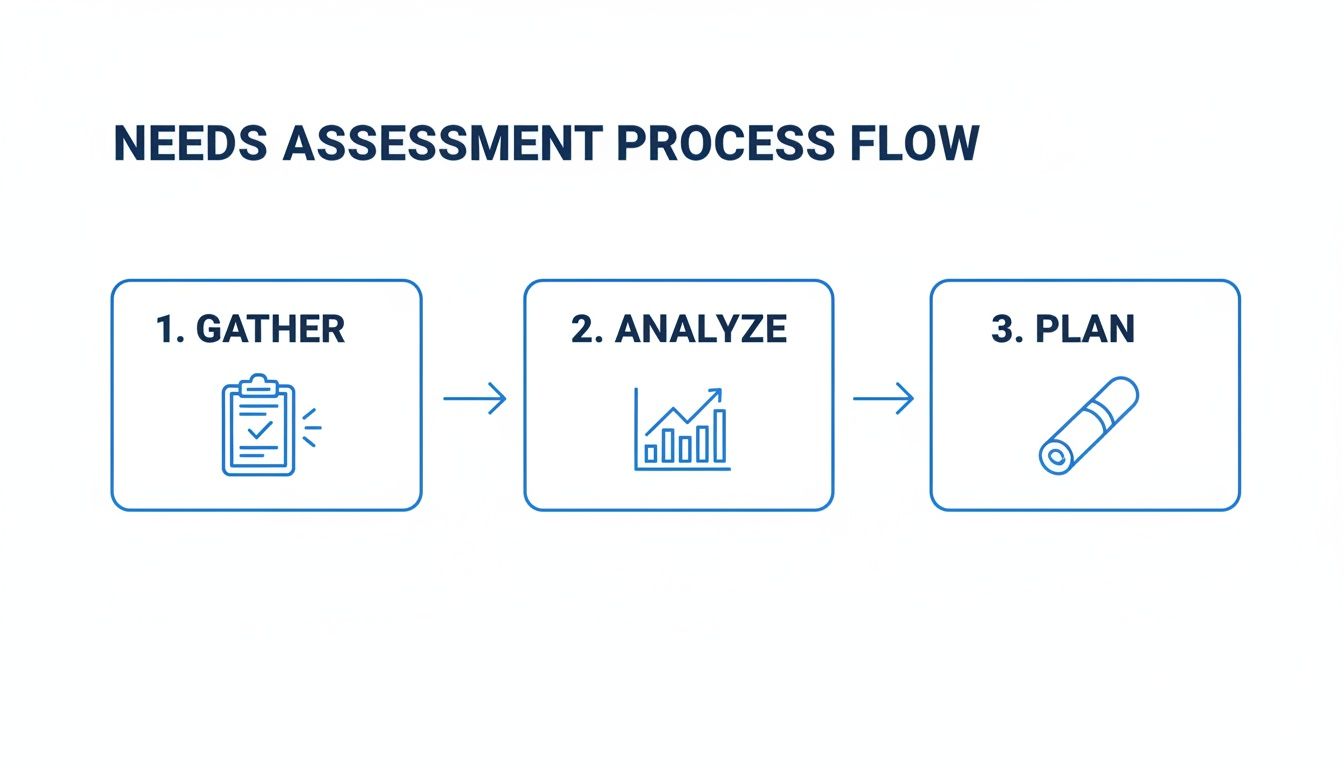
    Flowchart illustrating the needs assessment process steps: gather, analyze, and plan.

    This process ensures every part of your wellness program is grounded in what employees actually told you, making it relevant and effective right from the start.

    The Mental and Emotional Health Pillar

    Supporting mental health is essential in any modern wellness program. It begins with making professional help easy to access and free from stigma. Offering confidential access to counselling and therapy for challenges like anxiety or depression sends a powerful message that it's okay to seek support.

    Proactive education is just as important as reactive support. Consider workshops on practical topics that address the feedback you received from your team.

    • Stress Management Techniques: Teach evidence-based methods like mindfulness to help people handle daily pressures.
    • Building Resilience: Host sessions focused on developing coping skills and bouncing back from setbacks.
    • Digital Detox and Boundaries: Offer guidance on switching off to prevent burnout and protect personal time.

    It is vital to clarify that any assessments offered are informational, not diagnostic. They are tools for self-awareness and personal growth, empowering people with insights, not labels.

    The Physical Well-being Pillar

    Physical and mental health are deeply connected. This part of your program should encourage healthy habits and reduce physical strain. This is especially important in hybrid work models, where home office setups can vary.

    Simple, practical steps can make a huge impact. Offer ergonomic assessments for both office and remote workstations to prevent chronic pain. You can also introduce policies that encourage movement, like "walking meetings" or breaks between video calls.

    A supportive workplace doesn't just look after the employee; it cares for the person. By integrating physical and mental health support, you acknowledge that well-being is interconnected, fostering a culture where people can truly thrive.

    Voluntary health screenings or fun wellness challenges can also build a sense of community. These activities can motivate employees to engage with their health while strengthening team bonds. The goal is to make the healthy choice the easy choice.

    The Financial Wellness Pillar

    Financial stress is a significant, often hidden, source of anxiety and lost productivity. A dedicated financial wellness program for employees can show your team you care about their overall stability. These programs can provide confidential, expert guidance on a range of topics.

    • Budgeting and Debt Management Workshops
    • Retirement Planning Seminars
    • Access to Confidential Financial Advisors

    Providing these resources can demystify personal finance and give your team the tools to build a secure future. This helps remove a major source of underlying stress and worry.

    The Cultural Foundation Pillar

    No amount of perks will be effective in a toxic culture. Fostering an environment of psychological safety and compassionate leadership is the most important pillar. This is the foundation upon which all your other wellness initiatives will either grow or wither.

    Psychological safety means creating a space where people feel secure enough to voice concerns or admit mistakes without fear. This requires intentional effort, starting with leadership. Training managers in empathetic communication and active listening is a vital first step.

    Leaders set the tone for the entire organisation. When they prioritize their own well-being and respect boundaries, they give their teams permission to do the same. This cultural shift turns corporate employee wellness from an initiative into a lived reality.

    Choosing the Right Tools and Partners for Success

    Building a great corporate wellness program doesn't mean you have to create everything from scratch. Leaning on the expertise of external partners and smart digital tools can amplify your efforts. This makes high-quality support accessible to everyone on your team.

    The key is to find partners who align with your company's values and understand your team's specific needs. Think of them as an extension of your commitment to your people. Their expertise brings credibility and helps your program scale effectively.

    Vetting Your Potential Wellness Partners

    With so many options available, it's important to focus on a few non-negotiable criteria. This will help you find partners who are genuinely invested in your team's health and happiness. A simple checklist can guide your conversations and ensure you compare everyone on the same factors.

    • Credentials and Expertise: Look into the qualifications of their professionals. Do they have experience with common issues like workplace stress, anxiety, or depression?
    • Confidentiality and Data Security: This is critical. Ask about their privacy policies and ensure they have robust systems for protecting employee data.
    • Scalability and Accessibility: Can the solution grow with your company and is it easy for all employees to use?
    • Cultural Fit: Does their approach feel empathetic and human? You want to foster a warm, welcoming environment.

    Choosing a wellness partner is a lot like hiring a key team member. They need the right skills, of course, but they also have to share your core values of empathy, confidentiality, and genuine care.

    Getting this right ensures that the tool or service you introduce becomes a trusted resource, not just another unused benefit.

    How a Platform Like DeTalks Can Be an Ally

    Digital platforms are a cornerstone of modern corporate employee wellness, offering a private, stigma-free way for people to seek support. A comprehensive platform like DeTalks can be a powerful ally in addressing critical mental health needs. It helps bridge the gap between needing help and actually getting it.

    For instance, a platform can give your team confidential access to vetted therapists and counsellors. An employee can discreetly find a professional who specialises in their specific challenge. This fosters a huge sense of psychological safety and empowers them to take action.

    Empowering Employees with Self-Awareness Tools

    Beyond one-on-one therapy, the best partners offer tools that encourage proactive mental fitness. It can be hard to recognise the early signs of burnout or notice when our resilience is low. This is where scientifically validated assessments can be incredibly useful.

    It is vital to be clear that assessments are informational, not diagnostic. They are designed to give someone personal insights into their emotional patterns, resilience levels, or stress triggers. They empower employees to take that crucial first step, whether it leads to self-help resources or professional counselling.

    By offering such tools, you give your team the language and understanding to be more intentional about their mental health. It builds a foundation of positive psychology, helping people cultivate skills like compassion and happiness. The right partners make quality support accessible and help you create a thriving workplace.

    Launching and Championing Your Wellness Initiative

    Even the best corporate employee wellness program needs a thoughtful rollout and consistent support. A great plan is only as good as its execution. This is where you move from strategy to inspiring action, making wellness a living part of your company culture.

    The success of your launch depends on leadership buy-in that goes beyond a generic email. When leaders personally and publicly support the program, it sends a powerful message. Their active participation shows that well-being is a core company value.

    Diverse corporate employees attend a wellness workshop, listening to a male speaker, holding coffee cups.

    Securing Authentic Leadership Buy-In

    True advocacy starts at the top. Encourage leaders to share their own stories about managing workplace stress or finding a healthy work-life balance. A senior manager admitting they use therapy is far more impactful than any corporate memo.

    This vulnerability normalizes conversations around mental health and gives everyone permission to focus on their own well-being. It helps reframe seeking help for anxiety or burnout as a sign of strength.

    When leadership champions wellness, it transforms from a policy into a principle. Their authentic engagement is the single most important factor in building a culture where employees feel genuinely supported.

    Equip your leaders with simple, empathetic language that focuses on the human side of well-being. Their consistent, visible support will drive engagement and build long-term trust.

    Crafting Communication That Actually Connects

    How you talk about your wellness initiative matters greatly. Your communications should feel warm, encouraging, and respectful. Use positive language that focuses on goals like building resilience, fostering compassion, and finding more happiness at work.

    Always be clear about confidentiality. Reassure your team that their use of services like counselling is completely private. This trust is the bedrock of a successful program, especially for mental health support.

    Financial stress is a huge burden, and with more companies shifting to hybrid work, prioritizing well-being is essential. To see how these shifts are shaping employer offerings, you can find a deeper analysis of the top wellness trends in India on BharatSURE.com.

    Building a Network of Wellness Champions

    While leadership support is critical, peer-to-peer enthusiasm gives a program real energy. Invite employees who are passionate about well-being to become "Wellness Champions." These individuals can generate authentic buzz on the ground.

    These champions don't need to be experts, just approachable advocates who can share information and organize informal activities. Their genuine passion will make the initiative feel like a shared community effort.

    Driving Engagement with Meaningful Activities

    A strong launch should be followed by a steady rhythm of engaging activities. Create a calendar that keeps well-being front and centre to embed healthy habits into your company’s DNA.

    Here are a few ideas:

    • Themed Wellness Months: Dedicate each month to a different aspect of well-being, like mindfulness or financial fitness.
    • Team-Based Challenges: Build connection with group challenges, like a team step-counting competition.
    • Skill-Building Workshops: Host interactive sessions on practical topics like improving sleep or managing depression.

    Consistency and authentic advocacy are what truly count. A well-launched and continuously championed program becomes a cultural asset, creating a workplace where everyone has the support they need to thrive.

    Measuring Real Impact and Fostering a Better Future

    Once your wellness program is running, how do you know if it's making a difference? Measuring what matters is the final piece of the puzzle. It’s about looking beyond simple participation to understand the real human impact of your efforts.

    To get a complete picture, you need to track both hard numbers and personal stories. This means combining quantitative data with rich, qualitative feedback. This combination reveals the true value of what you’re doing.

    Seeing the Full Story in Your Data

    Quantitative metrics provide concrete evidence of change. These numbers show how your wellness initiatives are influencing key business outcomes.

    Start with a few core indicators:

    • Employee Turnover and Retention: A drop in turnover is a powerful sign that people feel more supported.
    • Absenteeism Rates: Healthier, less stressed employees naturally take fewer sick days.
    • Usage of Wellness Resources: Track engagement with offerings like confidential therapy or counselling to see what resonates.

    These metrics help connect wellness efforts to the overall health of the business. They demonstrate that investing in your people's well-being is a smart, sustainable strategy.

    The most meaningful measure of success isn't just a lower healthcare spend. It's creating a workplace where people feel seen, supported, and psychologically safe enough to bring their whole selves to work.

    The Power of Qualitative Feedback

    While numbers are essential, stories give them meaning. Qualitative feedback reveals how your program is truly changing lives. This is where you hear about an employee using mindfulness to navigate workplace stress or finding the courage to seek help for their anxiety.

    Gathering these insights can be simple. Regular, confidential satisfaction surveys with open-ended questions encourage people to share their personal experiences. These stories turn abstract data into relatable human accounts that inspire others and secure ongoing leadership support.

    Remember to always position any assessments as informational tools for self-awareness around challenges like depression or burnout, not as diagnostic tests.

    Redefining ROI as Return on Individual

    Ultimately, the goal is to shift the conversation around ROI to "Return on Individual." This perspective focuses on what truly matters: a healthier, more resilient, and more engaged workforce.

    Corporate employee wellness is a continuous journey of listening, adapting, and caring. It's about progress, not perfection. By measuring what counts—like individual growth in resilience and happiness— you build a workplace where your people don’t just work, they thrive.

    Your Questions About Corporate Wellness, Answered

    As you explore corporate wellness, questions are bound to arise. Whether you're a leader or a team member, clarity is key. Here are straightforward answers to some common questions.

    How Can We Get Employees to Actually Use Mental Health Resources?

    It comes down to building trust and reducing stigma, starting with leadership. Consistent, positive communication that frames mental health support as a tool for strength is effective. Think of it as a gym for your mind.

    Absolute confidentiality is non-negotiable for services like therapy or counselling. When leaders are open about their own experiences with workplace stress, it encourages others to prioritize their well-being.

    Building trust is the most critical first step. An employee will only reach for support if they feel psychologically safe and are absolutely certain their privacy will be respected.

    What's the Difference Between a Wellness Assessment and a Medical Diagnosis?

    This is a crucial distinction. A wellness assessment is an informational tool designed to give you personal insights into your emotional state, resilience, or anxiety triggers. It is a snapshot to help you become more self-aware.

    A formal diagnosis for a condition like depression can only be made by a qualified clinical professional. Assessments are a starting point for personal reflection, never a clinical label.

    We Have a Small Budget. What Are Some Cost-Effective Wellness Ideas?

    You don't need a huge budget to make a real difference. Some of the most impactful initiatives are cultural and cost very little. You could introduce "no-meeting" blocks for focused work or encourage managers to have regular, informal check-ins.

    Other low-cost ideas include:

    • Organising free workshops led by talented people on your own team.
    • Championing small habits, like taking a full lunch break away from a desk.
    • Creating a dedicated channel for sharing positive news or gratitude.

    These simple shifts can dramatically improve the daily work experience and cultivate a healthier, more supportive environment for everyone.


    Ready to build a workplace where your team can truly thrive? DeTalks provides the tools and expert support to make mental well-being a cornerstone of your culture. Explore our confidential therapy services and science-backed assessments at https://detalks.com.


  • What is family therapy? Learn how it heals relationships

    What is family therapy? Learn how it heals relationships

    When a family faces a tough spot, it’s easy to feel like you're all pulling in different directions. Family therapy offers a unique way forward, bringing everyone together to find solutions as a team. It’s not about singling one person out; it looks at the family as a whole, interconnected unit.

    Understanding the Family as a System

    Think of your family like a mobile hanging from the ceiling. If you gently touch one piece, the whole structure sways. That's the core idea behind family therapy: a supportive space designed to help you see and adjust these interconnected dynamics.

    A wooden mobile of five interconnected human figures, suspended from a white ceiling, symbolizing family.

    The goal isn't to find a "problem person" or to assign blame. It's about uncovering patterns of communication and relating to each other that might be causing friction, so you can build healthier ways to connect.

    To put it simply, here’s a quick overview of what family therapy truly entails.

    Family Therapy At a Glance

    Core Aspect What It Means for Your Family
    Systemic View We look at the family as a whole. One person’s stress affects everyone, and healing happens together.
    No Blame Game The focus is on patterns and interactions, not on fault. It's about what is happening, not who is to blame.
    Guided Communication A therapist helps you talk and listen to each other in new, more constructive ways.
    Building Skills You learn practical tools for resolving conflicts, managing stress, and supporting one another better.

    This table shows how therapy moves beyond individual issues to strengthen the entire family foundation.

    A Safe Space to Reconnect and Heal

    A qualified therapist acts as a neutral guide, creating a safe and respectful environment where every voice can be heard. This helps untangle complex issues, from communication breakdowns to the challenge of adapting to a major life event. The process equips your family with tools to build a stronger, more resilient foundation for well-being.

    In India, family therapy is becoming an important resource for navigating conflicts that arise from our evolving social norms. Yet, stigma can stand in the way. Research highlights a significant treatment gap, where many with mental health concerns don't receive care due to social judgment or lack of awareness. You can explore more about these public health findings to understand why accessible support is so crucial.

    This type of counselling can help with a wide range of common challenges, including:

    • The ripple effect of workplace stress on home life.
    • When one member's anxiety or depression impacts the entire family dynamic.
    • Navigating major life transitions like a marriage, the arrival of a new baby, or grieving a loss.
    • Developing collective resilience to face unexpected hardships together.

    More Than Just Fixing Problems

    Family therapy isn't solely about crisis management; it’s a proactive step towards fostering positive growth. It champions concepts from positive psychology, like compassion and shared happiness, to strengthen family bonds. The sessions are always collaborative, and any assessments used are informational, not for diagnosis or labelling.

    By taking part, families discover their hidden strengths and learn healthier, more supportive ways of interacting. It’s a journey that can turn difficult challenges into opportunities for deeper connection and genuine improvement in everyone's well-being.

    What Are the Real Goals and Benefits of Family Counselling?

    Deciding to start family therapy is a positive step toward a healthier home. But it's normal to ask, "What are we actually trying to accomplish?" The point isn't just to put out immediate fires; it's about giving your family a new toolkit for the long haul.

    At its heart, a key goal is to improve communication. A therapist creates a safe space where everyone feels heard, from the quietest teen to the most outspoken parent. This means learning to listen differently and express your needs without starting a fight.

    Building a Stronger Family Foundation

    Another major goal is learning how to solve problems together. Many families get stuck in the same arguments because they lack better strategies. Therapy provides new ways to work through conflict that build you up, turning friction into an opportunity for teamwork.

    When you start doing this, the whole atmosphere at home begins to change. Sorting out unspoken tensions and making daily interactions smoother can significantly lower background anxiety and stress. The result is a home that feels more like a sanctuary and less like a battleground.

    "The aim of family therapy is to interrupt dysfunctional patterns and create new, healthier ways of relating. It’s about building a team that can face anything together, strengthening the emotional fabric that holds a family in place."

    By working through things in a guided setting, family members start to see each other's perspectives. This builds deeper empathy and connection, which is vital for getting through life's challenges. It helps you navigate everything from daily workplace stress to major family changes.

    Fostering Resilience and Well-being for Everyone

    One of the most powerful benefits of family therapy is that it builds collective resilience. Life is full of challenges, and resilient families have the skills to bounce back from tough times. They support each other and come out stronger on the other side.

    A good therapist helps your family see its own strengths, focusing not just on what's wrong but also on what's already working. This shift in perspective can be a massive help in tackling feelings of depression by making home a true source of support.

    When therapy is working well, you'll start to see real changes:

    • Reduced Conflict: Disagreements still happen, but they don't spiral into destructive fights anymore.
    • Deeper Empathy: Family members get much better at understanding and validating how others are feeling.
    • Clearer Roles and Boundaries: Everyone has a clearer sense of their role, which leads to less confusion and more respect.
    • Improved Overall Well-being: A healthier family dynamic boosts the mental health of every single person, creating a more secure and happy environment.

    If you're interested in practical ways to improve communication, you might find some useful ideas in marriage counseling exercises, as many of these techniques can be adapted for the whole family.

    Ultimately, family therapy is an investment in your shared future. It’s a process that helps you rewrite your family’s story with connection and understanding at the center.

    Exploring Different Approaches to Family Therapy

    Family therapy isn't a one-size-fits-all solution. It's a collection of thoughtful approaches, and a good therapist will select one that best suits your family’s unique needs and goals.

    This flexibility is one of the greatest strengths of family counselling. The aim is always to find the most effective path toward better communication, stronger bonds, and lasting resilience. Getting to know these different styles can make the process feel less mysterious.

    Structural Family Therapy

    Every family has an invisible structure that shapes how everyone interacts. Structural therapy works to examine and adjust this blueprint. The therapist helps the family see where the structure might be causing stress, like when boundaries are blurry or roles are rigid.

    For example, a therapist can help re-establish a healthier structure when parent-child roles become confused. The focus is practical, creating supportive and well-defined roles for everyone.

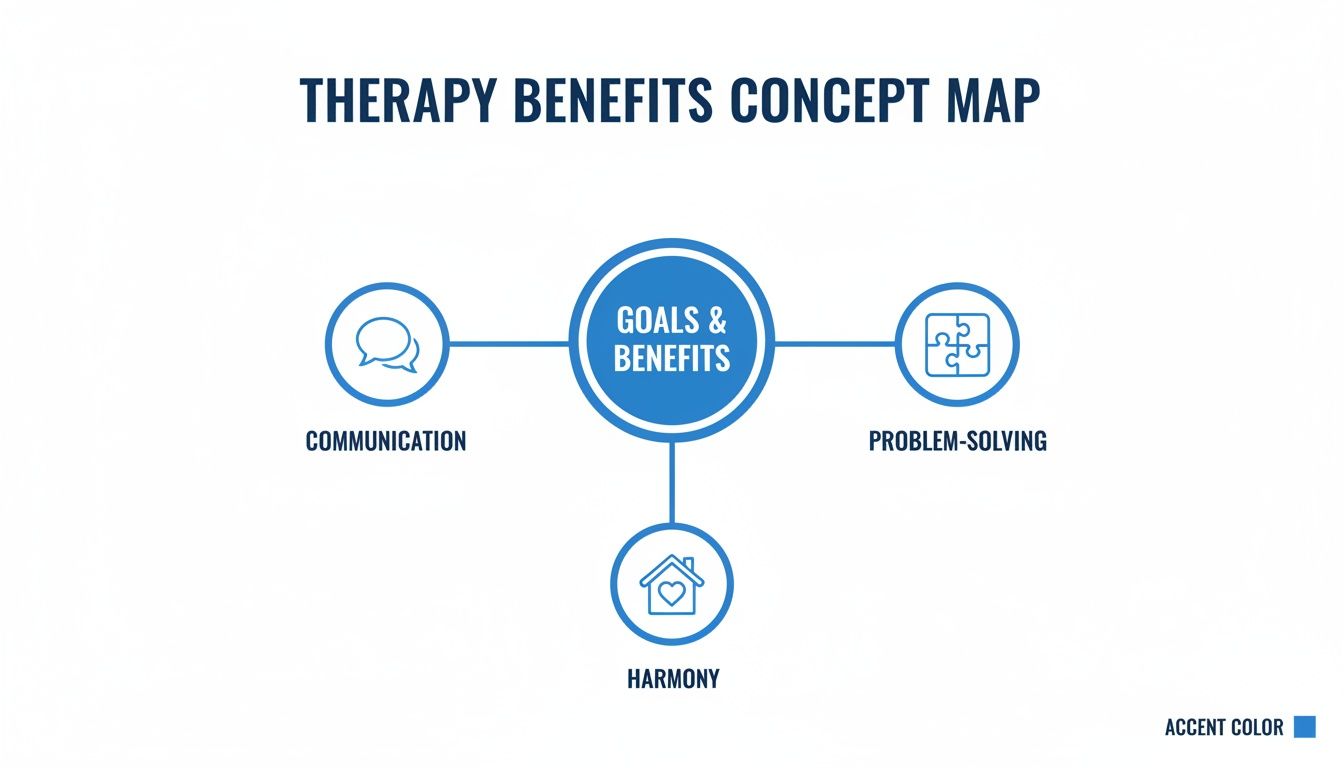
    A clear concept map illustrates the key benefits of therapy: communication, problem-solving, and harmony.

    As this shows, the goal across different models is to create a balanced family system where every member can thrive.

    Narrative Therapy

    Every family has a story it tells about itself. Sometimes, these stories become focused on problems, like past hurts or ongoing struggles with anxiety or depression.

    Narrative therapy helps families rewrite that story. Instead of seeing a person as the problem, this approach separates the person from the issue. The therapist guides your family to uncover strengths and past successes, co-authoring a new, more hopeful story for your future.

    Bowenian Family Therapy

    This approach looks at the family system across generations. It’s based on the idea that many of our relationship patterns are handed down through our family history.

    The main goal is to help each family member develop a stronger sense of self. This means learning to stay emotionally connected to the family while also being your own independent person.

    Bowenian therapy teaches us that understanding our family's emotional history can free us from repeating unhealthy patterns. It’s about achieving a balance between belonging and being an individual, which is key to reducing conflict and anxiety.

    A Bowenian therapist helps you see these inherited patterns. Then, you can consciously choose a healthier, more intentional response, breaking the cycle for yourself and for generations to come.

    Systemic Family Therapy

    The systemic model views the family as a deeply interconnected emotional unit. It focuses on the unspoken rules and communication loops that keep certain behaviours going. A therapist using this model carefully observes how everyone interacts to uncover the underlying dynamics.

    The focus isn't on who started the problem, but on how it’s being maintained now. Changing just one small part of the system can create positive ripple effects, improving everyone's well-being.

    Comparing Common Family Therapy Models

    Here is a simple breakdown of these different models to help you get a clearer picture.

    Therapy Model Main Focus Best Suited For
    Structural Therapy Family hierarchy, boundaries, and roles. Families dealing with conflict around roles and authority, such as parenting challenges.
    Narrative Therapy The stories a family tells about itself. Families who feel stuck in a negative cycle or defined by a particular problem.
    Bowenian Therapy Generational patterns and self-awareness. Families wanting to understand deep-rooted patterns and improve emotional maturity.
    Systemic Therapy Current communication and interaction loops. Families needing to address ongoing conflicts and the unspoken rules driving them.

    While each approach has a different lens, they all share a common goal: to help your family function in a healthier way.

    It’s important to remember that any assessments used during therapy are informational, not diagnostic. A therapist’s role is to understand your family's unique situation and apply the most suitable methods to help you move forward.

    What to Expect During a Family Therapy Session

    Walking into a therapist's office for the first time can feel like a big step. Knowing what to expect can calm your nerves. The therapist’s main job is to create a safe space where every family member feels heard and respected.

    A diverse family, two men and a young girl, engaged in a therapy session with a female counselor.

    Things usually begin with an initial consultation. The therapist will get to know your family, listen to your concerns, and understand your goals for counselling. This is also your chance to see if the therapist is the right fit.

    The First Few Sessions

    The first session or two is all about discovery. Your therapist will act as a neutral guide, listening to everyone’s perspective without taking sides. Their role is to help you talk to each other, not to play judge.

    You’ll likely be asked about your family’s history and the issues that brought you in. It's important to know that any assessments a therapist might use are informational. They are not diagnostic tools and are never used to label anyone.

    Who comes to each session can change. Sometimes the whole family will be there; other times, the therapist might suggest smaller groups. This flexible approach allows the therapist to focus on different relationships.

    What Happens During a Typical Session

    After the initial phase, sessions become more interactive. A therapist will guide the conversation to help you spot hidden patterns causing friction or stress. You might also do specific exercises to improve how you interact.

    These activities could include:

    • Role-playing: A safe way to practise new communication skills for when disagreements pop up.
    • Mapping your family system: Literally drawing out your family tree and relationships to get a clearer picture of connections and boundaries.
    • Setting shared goals: Working as a team to decide what a happier, healthier family life looks like for all of you.

    The point of a session isn’t to dig up old arguments and have another fight. It's about finding new ways forward, together. It’s a collaborative effort to build understanding, foster resilience, and learn practical skills.

    This process shifts the focus from individual blame to shared solutions. It creates a space where tough subjects, like workplace stress or feelings of anxiety and depression, can be discussed openly.

    The Role of Therapy in Broader Contexts

    Family therapy is also expanding to meet families where they are. In India, school-based family counselling is becoming a critical resource for helping students handle academic pressure. This approach gets families involved in solving problems like exam stress, bridging the gap between home and school. You can read more about these school-based initiatives and see their impact.

    Duration and Realistic Expectations

    One common question is, "How long will this take?" There's no set timeline. The duration depends on your family's unique situation and goals. Some families see improvement in a few months, while others with more complex issues may need longer-term support.

    Your therapist will discuss a potential plan with you, but it’s always flexible. The goal is to empower your family with the tools to navigate challenges on your own, long after therapy has ended.

    Signs Your Family Might Benefit from Therapy

    Every family has its rough patches. But what happens when those patches start to feel like a permanent, rocky road? Recognizing that you could use a guide is a sign of strength, not defeat.

    Thinking about counselling is a proactive step toward getting your family’s well-being back on track. It's often wise to address small issues before they grow into larger ones.

    Communication Breakdowns

    One of the first red flags is when communication stops working. Maybe every chat explodes into an argument, or an uncomfortable silence hangs in the air. When people feel they can't speak up or aren't being heard, resentment builds.

    This communication gap can show up in a few ways:

    • Constant Arguing: If every discussion feels like a battle and nothing gets resolved, you're stuck in a negative loop.
    • Avoiding Each Other: Family members might retreat to their rooms or make excuses to stay out of the house to avoid conflict.
    • Holding Grudges: When old wounds never heal, the lingering anger can poison the home atmosphere.

    Therapy creates a safe, neutral ground to learn how to talk and listen to one another again. A therapist acts as a coach, helping your family break old habits and start having real conversations.

    Overwhelming Life Transitions or Events

    Life has a way of throwing curveballs that can shake even the strongest families. Big events—like a new baby, a move, a job loss, or illness—can pile on stress. These moments bring up huge emotions that are hard to handle as a group.

    Family therapy provides a space to work through these changes together. It helps everyone find their footing and build resilience as a team.

    Persistent Behavioural or Emotional Issues

    When a child or teen is having a hard time, the ripple effects are felt by everyone. If you're dealing with ongoing behavioural problems, signs of anxiety or depression, or sudden mood swings, it's a source of worry. Often, these struggles are a symptom of a dynamic within the family.

    Seeking help is about understanding the root cause of the behaviour, not just managing the symptoms. It’s an opportunity to create a more supportive home environment where every member can thrive.

    Therapy can uncover underlying stressors and give your family practical tools to support the person who's struggling. When it comes to adolescents, a guide to therapy for teens can be a great resource.

    Takeaways for Your Family

    Seeing your family in these descriptions is the first, most important step. Remember, the goal of therapy isn’t about pointing fingers. It’s about giving your family the tools and understanding needed to face challenges together, reconnect, and build a stronger future.

    Finding the Right Family Therapist with DeTalks

    Deciding to start family therapy is a big step. But finding the right professional for your family is what truly sets the stage for meaningful change. The relationship you build with your therapist is key, so you need someone whose style resonates with your family.

    A good fit is when everyone feels safe, genuinely heard, and understood.

    A smiling family engaging in a virtual video call with a professional on a laptop.

    Look for a qualified professional with experience in the kinds of issues your family is facing. Ask if they have a background in areas like managing workplace stress, parenting hurdles, or dealing with anxiety.

    Your Path to Finding Support

    The thought of searching for a therapist can feel overwhelming, which is why platforms like DeTalks exist. We offer a clear way to connect with vetted therapists across India, bringing professional counselling within reach. Whether you're looking for face-to-face or online therapy, the right support is out there.

    Online therapy has become a game-changer in India, helping to bridge a huge gap in mental health access. For families in remote areas or those still navigating post-pandemic life, digital platforms are a necessity. This shift is helping countless people find support, a trend highlighted in this report on mental health awareness trends.

    Taking that first step is an act of courage and a commitment to your family's well-being. Finding a therapist you can all trust builds the foundation for healing and allows your family to grow.

    How DeTalks Can Help You Begin

    At DeTalks, we believe you should feel empowered with information from the start. Our platform offers confidential, science-backed assessments that can provide a valuable glimpse into your family's dynamics. It’s crucial to remember that these assessments are informational tools, not diagnostic ones.

    Here's how easy it is to get started with us:

    • Explore Profiles: Take your time browsing our directory of experienced therapists to find a good match for your family.
    • Book with Ease: Once you've found a potential fit, schedule an appointment directly on the platform at a time that works for everyone.
    • Gain Insights: Consider taking one of our informational assessments to get a better handle on your family’s strengths.

    Starting this journey is a sign of hope. It’s an investment in building lasting resilience and nurturing deeper connections. With the right support, the path forward is just a click away.

    Got Questions About Family Therapy? We've Got Answers.

    It's completely normal to have questions when you're thinking about starting family therapy. It means you're taking this step seriously. Let's walk through some common concerns to help you feel more comfortable.

    Will the Therapist Pick a Side?

    This is a fair question. A professional family therapist acts as a neutral facilitator, not a referee. Their job isn't to figure out who's "right" or "wrong" or to place blame.

    Instead, they look at the family as a whole system. The focus is on untangling communication patterns and creating a safe space where everyone feels understood. It's about shifting from "you vs. me" to an "us vs. the problem" approach.

    What if Someone in the Family Won't Go?

    This happens all the time, so don't worry. It’s not uncommon for one person to be hesitant about counselling. The good news is that family therapy can still be very effective even if not everyone is in the room.

    Think of it like a ripple effect. When even one or two family members learn new ways of communicating, those positive changes spread. A therapist can also give you tools to gently encourage others to join.

    "Therapy's purpose is not to prove who was right, but to create a shared understanding that allows the family to move forward together. It fosters compassion and builds the resilience needed to face life's challenges as a unified team."

    Is This Only for Big, Dramatic Problems?

    Absolutely not. While therapy is crucial during a crisis, it’s just as valuable for everyday tune-ups. Many families use therapy proactively to strengthen their bonds and get ahead of small issues before they grow.

    Think of it as preventative care for your family's emotional health. It’s a great way to handle life transitions, manage ongoing workplace stress, or simply learn to connect on a deeper level.

    How Long Will We Need to Be in Therapy?

    There's no magic number here. The length of therapy depends on your family's unique situation and goals. For some, a specific issue might be resolved in a handful of sessions.

    For others, untangling more complex patterns might take longer. Your therapist will be open about this and discuss a likely timeline with you. The goal is to give you the skills to thrive on your own long after therapy ends.


    At DeTalks, we know that reaching out is an act of hope and strength. We make it simple to find experienced, compassionate professionals ready to support your family's journey. You can browse therapist profiles and book a session to start building a more connected and resilient future. Find the right guide for your family at https://detalks.com.

  • How to Fix a Broken Relationship and Rebuild Your Connection

    How to Fix a Broken Relationship and Rebuild Your Connection

    Feeling adrift in a relationship is a deeply unsettling experience, but it's also the first sign you are ready to find your way back. Repairing a connection is about understanding the subtle currents that pulled you apart and navigating back to each other.

    This guide is a safe place to acknowledge the hurt and begin the brave work of healing with hope and resilience.

    Getting to the Heart of Why You're Struggling

    Every relationship hits rough patches; it is a universal truth. The real issues are often a slow erosion of intimacy, worn down by the weight of everyday life.

    Admitting things are hard isn't about blame. It is the most courageous first step toward rebuilding something stronger and improving your well-being.

    Life today, especially in India, throws unique challenges at us. High-pressure careers often lead to workplace stress and burnout, leaving little energy for a partner. Financial pressures, family expectations, and digital distractions can create a perfect storm for anxiety or quiet feelings of depression to create distance.

    Spotting the Quiet Signs of a Growing Rift

    Loud arguments are noticeable, but the real red flags are often silent. Feeling more like roommates than partners signifies emotional distance, a key indicator something is wrong.

    Here are a few common signs that your relationship is calling for attention:

    • You Feel Constantly Misunderstood: You’re both talking, but it feels like you're speaking different languages.
    • You Sidestep the Hard Conversations: Important topics get pushed aside to avoid another fight.
    • Shared Joy Has Faded: When was the last time you truly laughed together or shared a moment of simple happiness?
    • Criticism Has Replaced Kindness: Interactions feel sharp and full of fault-finding instead of compassion and support.

    Recognising these patterns is half the battle. If you want to dig deeper into the common reasons why relationships fail, understanding the root causes can bring a lot of clarity.

    The Real-World Impact on Modern Couples

    The pressure on modern relationships is immense. In urban India, for instance, divorce rates have doubled in recent years, showing the real toll of modern life.

    The hopeful part is that couples who seek counselling are changing this narrative. Getting help early has proven to be incredibly effective in strengthening a connection.

    Before things escalate, it helps to recognise the earliest flickers of trouble. Sometimes, the signs are so common we dismiss them as "normal."

    Early Warning Signs of Relationship Distress

    This table can help you spot common but often overlooked signs that your relationship needs care. These assessments are informational, not diagnostic.

    Warning Sign What It Might Mean A Gentle First Step
    "Fine" is the default answer A breakdown in emotional sharing; one or both partners are shutting down. Ask an open-ended question: "I've noticed we haven't talked much lately. How are you really doing?"
    You spend more time on your phones than with each other Digital distractions are being used to avoid intimacy or difficult feelings. Suggest a "no-phone" hour each evening to reconnect, even if it's just sitting together.
    Little resentments are piling up Unresolved minor conflicts are building into a bigger wall of frustration. Pick one small thing and address it gently using "I feel…" language. "I feel a bit lonely when…"
    Your future plans no longer align You've stopped dreaming together, indicating a drift in shared goals and values. Start a low-pressure conversation: "What's one thing you're excited about for the next year?"

    Recognising these signs isn't about panic. It's an opportunity to tune in and gently course-correct before the rift grows wider.

    Taking the time to understand the "why" behind your struggles is a profound act of commitment. It shifts you from feeling helpless to feeling empowered, paving the way for real change and better well-being.

    Ultimately, figuring out how to fix a broken relationship starts with an honest look at what’s really going on. It is about building self-awareness, finding compassion for yourself and your partner, and getting ready to do the work. The journey holds the promise of a stronger, more authentic connection.

    Laying the Groundwork for Genuine Healing

    Before having a big talk, the real work starts with you. Meaningful repair begins with quiet, honest self-reflection, not dramatic conversations.

    When we're hurt, we often lash out or shut down. Lasting change comes from calm understanding and preparing for a conversation that builds something new.

    First, Understand Your Own Reactions

    You cannot have a productive conversation if you are a stranger to yourself. Before explaining your feelings, you need to understand where they come from.

    Recognising your emotional tripwires is the first step to disarming them. This internal work is vital for your well-being and involves asking tough questions:

    • "Looking back, what was my contribution to this problem, even a small one?"
    • "What was I really afraid of or needing in that moment?"
    • "Am I feeling a lot of anxiety about this talk? Why is that?"

    When you get curious instead of furious, you approach your partner with more empathy. You start aiming for healing, not for winning an argument.

    Create a Safe Space for Difficult Talks

    When and where you talk can make or break the conversation. Trying to discuss deep issues when one of you is frazzled from workplace stress is setting yourselves up to fail.

    Find a time when you can both be present and focused. Agreeing on a distraction-free time shows mutual respect for the relationship and the conversation.

    The flowchart below shows how seemingly small issues can snowball, leading to the kind of disconnect that makes these talks necessary.

    It’s a familiar pattern: emotional distance creeps in, intimacy fades, and soon enough, both partners feel completely unheard.

    Getting your own emotional house in order before a conversation isn't about admitting you're wrong. It's an act of strength that creates stability for both of you to be vulnerable.

    This preparation builds your personal resilience. When you are grounded, you can listen properly and respond with intention, not just react on instinct.

    The Power of Taking Responsibility

    True accountability is hard but simple. It means owning your actions and their impact on your partner, without excuses or blame.

    It can be as straightforward as, “I know that when I did X, it made you feel Y. I am truly sorry for that.” This validates their feelings as real.

    This is often the hardest part, but it is where healing begins. This is a core focus in effective couples therapy and counselling. As you start this process, exploring strategies to avoid divorce can provide a broader perspective on preserving your connection.

    Think of this preparation as an ongoing practice. Every tough conversation becomes a chance to learn more about yourself and the person you love. By committing to this internal work, you're not just patching up a problem—you're building a stronger, more honest relationship for the future, one that can better manage the feelings of depression or anxiety that conflict can bring.

    Mastering the Art of Empathetic Communication

    When a relationship is fracturing, silence can hurt as much as shouting. Real communication is the lifeblood of connection and is about reopening lines of understanding.

    The goal is to shift from conflict to genuine connection. This means moving from trying to "win" an argument toward truly hearing your partner's heart.

    Asian couple on a beige couch, having a serious conversation, woman with hand on chest.

    From Accusation to Expression with 'I Feel' Statements

    Think about your last argument. Phrases like "You always…" or "You never…" kill conversations by immediately putting your partner on the defensive.

    "I feel" statements are a powerful tool. Instead of talking about your partner's perceived flaws, you are sharing your own emotional experience.

    For example, instead of, "You never help with the house chores," try, "I feel overwhelmed and unsupported when the housework piles up." One is an attack; the other is a vulnerable share that invites empathy.

    Moving Beyond Hearing to Actively Listening

    In strained relationships, we often listen only to form a reply. Active listening is the opposite; it's about being fully present and absorbing their words.

    This is more than just staying quiet. It's an engaged process that shows your partner they have your full attention and that what they are saying matters.

    Here are a few ways to put active listening into practice:

    • Paraphrase and Clarify: Repeat what you heard in your own words. For example, "So, if I'm understanding you correctly, you feel unappreciated when I work late. Is that right?"
    • Validate Their Feelings: Validation isn’t agreement. It is acknowledging that their feelings are valid from their perspective, with a phrase like, "It makes sense that you would feel that way."

    Navigating Common Communication Traps

    Certain toxic communication habits can poison a relationship over time. Spotting these patterns is the first step toward choosing a healthier path.

    Here are two of the most destructive traps and how you can sidestep them:

    1. Criticism: This is an attack on your partner's character. The antidote is to start gently and use an "I feel" statement to explain your needs.

    2. Defensiveness: This response adds fuel to the fire by telling your partner you aren't taking their concerns seriously. Instead, try to find a small grain of truth in what they're saying and take responsibility.

    Remember, the goal of these conversations is not to determine who is right or wrong. The goal is to understand each other's worlds and move forward together with mutual respect and compassion.

    In our busy lives, outside pressures create new communication hurdles. A recent survey showed only 3% of Indians feel they have a healthy relationship with technology, a trend contributing to a 15% rise in demand for mental health counselling. As detailed in this insightful article on India Today, setting simple boundaries, like a no-phone zone in the bedroom, can help couples reclaim intimacy.

    Putting It All Together: A Real-World Scenario

    Let's look at a classic conflict point: money. Priya feels a constant knot of anxiety about their spending, while Rohan feels controlled and judged.

    • The Old Way (Criticism & Defensiveness):

      • Priya: "You spent so much on that new gadget! You never stick to our budget."
      • Rohan: "It was my money! You need to relax and stop trying to control everything."
    • A Healthier Way (Empathetic Communication):

      • Priya: "When I saw the charge for the new gadget, I felt scared about our financial goals. Can we talk about it?"
      • Rohan: (Taking a breath) "I hear that you're worried about our finances. It wasn't my intention to cause you stress. I got excited and acted impulsively."

    This new approach opens the door for a real conversation about shared goals and fears. Mastering this art is a non-negotiable step when you want to know how to fix a broken relationship. The rewards—a deeper connection, restored well-being, and renewed happiness—are worth the effort.

    Rebuilding Trust After It Has Been Broken

    Trust is the bedrock of a relationship. When that trust is broken, the silence it leaves can feel deafening and finding your way back can seem impossible.

    Rebuilding trust is a slow, deliberate journey that demands immense patience. It's about laying a new foundation, brick by brick, built on transparency and a renewed commitment.

    Two hands gently nurture a small green plant growing from a cracked wooden table in sunlight.

    For the Partner Who Broke the Trust

    If you are the one who caused the breach, the real work starts now. You must accept the full weight of your actions with honesty and compassion.

    This goes beyond a simple apology. It is about showing genuine remorse—true sorrow for the pain you have inflicted—through consistent, transparent behaviour.

    Here are some concrete actions you can start with:

    • Offer Full Transparency: This is a temporary but necessary step. It might mean giving access to your phone or social media to show you have nothing to hide.
    • Answer Every Question Patiently: Your partner will have many questions. Answer with patience and honesty every single time as they try to piece their reality back together.
    • Accept Their Feelings Without Judgement: Their anger, sadness, and anxiety are valid. Your role is to listen and validate what they are feeling.

    For the Partner Who Was Hurt

    If you were hurt, your path forward is about learning to feel safe again. You may battle waves of anxiety, sadness, and feelings like depression. Be kind to yourself.

    Healing doesn't mean forgetting; it means managing the hurt so it no longer controls you. It starts with setting clear, healthy boundaries to regain your emotional well-being.

    Here are some strategies to protect yourself emotionally:

    • Define Your Boundaries: Think about what you need to feel safe, and then communicate it clearly.
    • Practise Radical Self-Care: The stress of betrayal takes a massive toll. Prioritise activities that recharge you, like exercise, meditation, or individual therapy.
    • Avoid "Pain Shopping": Obsessively searching for more pain will only deepen the trauma and make it harder to heal.

    Rebuilding trust is a marathon, not a sprint. There will be good days and bad days. The key is consistent effort and the shared belief that the relationship is worth fighting for.

    Practical Exercises to Rebuild Connection

    Small, consistent actions are what rebuild a connection. These exercises are designed to help you create new, reliable patterns.

    A powerful tool is the scheduled transparent check-in. Set aside 15 minutes each day, at the same time, to connect.

    1. For the Partner Who Broke Trust: Be proactive. Share something from your day that proves your transparency.
    2. For the Partner Who Was Hurt: Use this time to ask one thing that’s on your mind or share a feeling you’re wrestling with.

    This exercise contains difficult conversations to a specific timeframe, stopping them from poisoning every moment. The hurt partner no longer has to be a detective, and the other gets a daily chance to prove their trustworthiness.

    Successful couples counselling often revolves around structured interactions like this. They build resilience by showing, through action, that change is possible. The journey of how to fix a broken relationship is paved with these small, courageous steps.

    Knowing When to Seek Professional Guidance

    Sometimes, repairing a relationship on your own feels impossible. Getting professional help isn't a sign of failure; it is a courageous act and a true commitment to your relationship's health.

    The thought of therapy can feel daunting, but see it as a safe space. It is a dedicated time to learn healthier ways of talking and reconnecting.

    Red Flags That It's Time for Support

    It’s often tricky to know when to make the call. Reaching out earlier can make the repair process much smoother.

    Consider looking for a counsellor if any of these sound painfully familiar:

    • Circular Arguments: You’re having the exact same fight, just on different days, with no resolution.
    • Deep Resentment: One or both of you are clinging to past hurts, making it impossible to feel close or emotionally safe.
    • Infidelity or a Major Betrayal: Rebuilding trust after it’s been shattered is a monumental task where a therapist can offer a clear roadmap.
    • Emotional Gridlock: You’ve stopped talking about the big stuff because it feels too painful or pointless.

    Seeking professional help isn't giving up. It's a proactive choice for your relationship's future, acknowledging some challenges are too big to solve with the same tools that may have contributed to the problem.

    This is especially relevant in today's world. Love marriages in India, while a minority, often face unique pressures, with relationship counselling on the rise. Studies show post-therapy interventions can boost marital adjustment scores by as much as 35%, proving the powerful impact of professional guidance. You can learn more about these trends on Wedknott.

    What Really Happens in Couples Therapy?

    Couples therapy isn't about a therapist playing judge. It is a collaborative process to equip you with skills for a healthier partnership.

    A good therapist acts as a facilitator and translator. They help you hear each other, spot destructive patterns, and offer practical tools to manage conflict, workplace stress, or feelings of anxiety and depression.

    Finding the Right Support for You Both

    Taking the first step is often the hardest part. Platforms like DeTalks exist to make the process less overwhelming by connecting you with qualified therapists.

    Many platforms offer initial assessments, but it’s crucial to know that these assessments are informational, not diagnostic. They provide valuable insights into your relationship dynamics and stress points.

    Ultimately, exploring professional support is about arming yourselves with every possible tool on your journey back to each other. It’s a brave, hopeful step toward a stronger, more compassionate, and happier future.

    Common Questions About Fixing a Relationship

    When you decide to mend a relationship, it is normal for questions and worries to surface. Having clear answers can help you feel more grounded as you begin.

    How Long Does It Take to Heal?

    There is no magic number. The healing timeline depends on what happened and whether both of you are genuinely committed to making it work.

    Rebuilding trust is a marathon, not a sprint, and can take many months or even years. Focus on steady, consistent progress and celebrate small wins to build momentum and resilience.

    What If My Partner Refuses to Try Therapy?

    This is a common and tough situation. You cannot force someone to go to counselling, but you can lead by example.

    Going to individual therapy on your own can be a game-changer. Focusing on your personal well-being and growth can have a surprisingly positive ripple effect on the relationship.

    Remember, the only person you can truly control is yourself. Investing in your own growth is never a waste of time and builds your own strength and emotional happiness.

    Can a Relationship Be the Same After a Betrayal?

    Honestly, no. It won't be the same, but that isn't necessarily a bad thing. It has the potential to become something new and much stronger.

    The repair process is a chance to build a new foundation based on radical honesty and renewed commitment. Many couples emerge with a relationship that is more authentic and resilient than ever, forged with a new depth of understanding and compassion.

    Are There Signs a Relationship Cannot Be Fixed?

    Yes. While most relationships can be repaired, some situations are too unhealthy to salvage. Your emotional and physical safety is non-negotiable.

    Other red flags include a partner who consistently refuses accountability or ongoing deception. A therapist can offer a safe space to see these signs clearly and decide what’s best for your well-being, without the fog of anxiety or depression.


    Trying to sort through all this is tough, but you don't have to figure it out alone. At DeTalks, we offer supportive takeaways, not promises of a cure. We connect you with qualified therapists and provide science-backed assessments to help you understand your challenges and build a stronger future. Take the first step and explore the support available at DeTalks.

  • How to Deal with Rejection and Build Lasting Resilience

    How to Deal with Rejection and Build Lasting Resilience

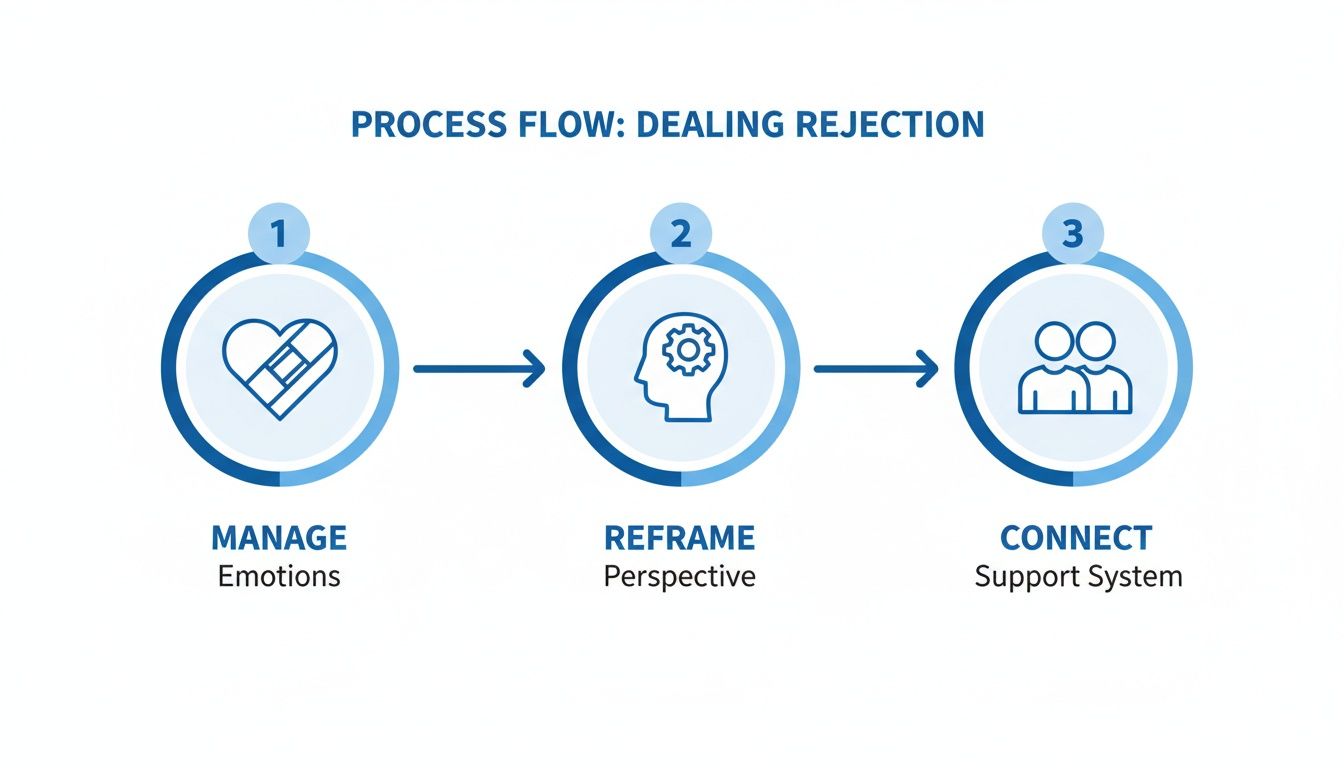
    Rejection stings, but how you respond to it matters most. Having a plan can help you navigate the difficult emotions. Think of it as a three-step process: manage your feelings, reframe your perspective, and connect with your support system.

    This approach isn't about avoiding pain. It’s about moving through it in a way that builds you up, helping you develop resilience and protect your well-being.

    Understanding the Experience of Rejection

    Rejection is a universal human experience, yet it always feels deeply personal. Whether it’s a job you wanted in Bengaluru, a relationship ending in Mumbai, or a creative idea being dismissed, the emotional impact can be strong.

    There's a scientific reason for this. Our brains process social rejection in the same regions that register physical pain, which explains why it can hurt so much.

    That initial pain can spiral into self-doubt, anxiety, or even symptoms of depression if not addressed. The goal isn’t to become immune to rejection, but to learn how to process it constructively for your long-term well-being.

    Why Rejection Impacts Us So Deeply

    At our core, humans are wired for connection. Belonging was essential for our ancestors' survival, and that need is still a powerful part of us today. When we face rejection, our brain can interpret it as a threat, triggering a stress response.

    This experience can show up in several ways:

    • Emotional Distress: It's normal to feel sadness, anger, shame, or loneliness.
    • Negative Thoughts: Your mind might jump to conclusions, telling you that you aren't good enough.
    • Behavioural Changes: You might feel an urge to withdraw and avoid similar situations in the future.

    For some, especially after repeated rejections, these feelings can contribute to challenges like social anxiety disorder. Acknowledging these reactions is the first step toward developing healthier ways to cope and building resilience.

    This simple flow chart breaks down a healthy way to process the experience.

    A three-step process flow illustrating how to deal with rejection: manage emotions, reframe perspective, and connect support system.

    As you can see, managing your immediate emotions is the foundation. You can’t think clearly or reach out for support until you’ve given yourself a moment to feel.

    When rejection hits, the initial shock can feel overwhelming. Your heart might race, and your mind might spin. This is a normal stress response, and the key is to manage that first emotional wave.

    The goal isn't to solve the problem right away. It's about creating space between the event and your reaction to prevent the initial hurt from turning into a crisis of confidence.

    Your First Aid Kit for the Immediate Sting

    So, what can you do in those first raw moments? It’s all about creating a buffer to calm your nervous system.

    Here’s a quick guide to help you navigate those first feelings.

    Immediate Responses to Rejection

    Feeling Initial Thought A Healthier First Response
    Shock/Disbelief "This can't be happening." Take a slow, deep breath. Acknowledge the feeling without trying to fix it.
    Sadness/Hurt "I'm not good enough." Say to yourself, "This hurts, and it's okay to feel sad right now."
    Anger/Frustration "This is so unfair!" Notice the anger in your body, but pause before acting on it.
    Anxiety/Panic "What am I going to do now?" Focus on your senses. Name five things you can see in the room to ground yourself.

    This isn't about suppressing what you feel. It's about giving yourself a moment to breathe so you can respond thoughtfully instead of reacting from a place of pain.

    Acknowledge the Feeling Without Judgement

    Your first instinct might be to push the feeling down and pretend you're fine. But bottling up emotions like hurt or disappointment often makes them feel more intense.

    Instead, try to turn toward the feeling with compassion. Silently tell yourself, "Wow, that stings," or "I'm really disappointed, and that makes sense." This is a powerful act of self-kindness.

    Remember, feelings are temporary signals, not permanent truths about who you are. By acknowledging them, you reduce their power over you and take the first step toward building resilience.

    "The moment you accept what troubles you've been given, the door will open." – Rumi

    Fighting a feeling takes a lot of energy. Acceptance is what allows you to release your grip and begin to move forward.

    Use Your Breath to Calm Your Body

    When you're experiencing stress, your breathing often becomes shallow and fast, sending panic signals to your brain. You can interrupt this cycle with simple breathing exercises anywhere, anytime.

    • Box Breathing: Inhale for a count of four, hold for four, exhale for four, and hold for four. Repeat this a few times to steady yourself under pressure.
    • 4-7-8 Breathing: Breathe in through your nose for 4 seconds, hold for 7 seconds, then exhale slowly through your mouth for 8 seconds. This is especially helpful for calming a racing heart.

    These techniques won't make the problem disappear. They calm your nervous system so you can think more clearly, which is essential for managing workplace stress and personal challenges.

    Engage Your Senses to Ground Yourself

    If your mind is stuck replaying what happened, grounding techniques can bring your focus back to the present moment. They shift your attention from the painful story in your head to your physical surroundings.

    Try the 5-4-3-2-1 method. It's simple and effective.

    1. 5: Look around and name five things you can see.
    2. 4: Acknowledge four things you can touch.
    3. 3: Identify three things you can hear.
    4. 2: Notice two things you can smell.
    5. 1: Name one thing you can taste.

    This exercise reconnects you with the world outside your head, providing a necessary mental break. Learning how to build emotional intelligence can also support your long-term well-being.

    These immediate actions are a crucial first line of defence. They create the stability you need to shift from reacting emotionally to responding thoughtfully.

    Turn Rejection From a Setback Into a Stepping Stone

    Once the initial sting begins to fade, the story you tell yourself about the rejection will shape its impact. This is your chance to shift your perspective from a place of hurt to one of growth.

    This is known as cognitive reframing—actively changing how you view an experience. It’s not about pretending it didn’t hurt. It's about challenging the automatic negative thoughts to build resilience and protect your self-esteem.

    Peaceful woman sits by a window with closed eyes and hands on her chest.

    Spotting Unhelpful Thought Patterns

    Our minds often fall into negative traps when we feel vulnerable. Learning to recognise these automatic thoughts is the first step toward changing them.

    Two common patterns after a rejection are:

    • Personalising: This is when you assume you are the sole reason for a negative outcome. For example, if a project is rejected, you might think, "My ideas are terrible," ignoring other factors like budget or timing.
    • Catastrophising: This involves blowing the consequences out of proportion. If a date doesn't call back, your mind might jump to, "I'm going to be alone forever," turning a single event into a forecast of a bleak future and fueling anxiety.

    Learning how to deal with rejection means learning to spot these mental shortcuts. Once you can label a thought, it loses some of its power over you.

    Challenging Your Automatic Thoughts

    After you've identified a negative thought, gently question it. The goal is to find a more balanced and realistic viewpoint.

    Imagine you were passed over for a promotion at your job in Hyderabad. Your instant thought might be, "I'm a failure. My boss must think I'm incompetent."

    To challenge this, ask yourself a few questions:

    • "Is there any other possible explanation?" (Perhaps the other candidate had specific experience required for the role.)
    • "Is this thought 100% true, or is it an assumption?" (You don't actually know what your boss is thinking.)
    • "What would I tell a friend in this situation?" (You would likely offer a kinder, more balanced perspective.)

    This process helps you shift from emotional reasoning to a more objective space. It's a crucial practice for protecting your mental well-being and managing workplace stress.

    Finding the Lesson or Opportunity

    Every experience, especially a difficult one, holds a potential lesson. Shifting your focus from the pain to the opportunity for growth is a cornerstone of building resilience.

    Ask yourself, "What can I learn from this?" instead of getting stuck on "What's wrong with me?" For example, feedback on a rejected project might highlight a skill you can develop.

    This approach reframes rejection not as a final judgment but as useful information. In India, where social pressures can sometimes intensify feelings of isolation, positive psychology tools can be very helpful. You can explore more about mental health in India to understand these challenges better.

    Reframing is a practice that becomes a healthier mental habit over time. For structured support in developing this skill, professional counselling or therapy can be very effective.

    Navigating Rejection in Your Career and Workplace

    Professional setbacks can feel intensely personal. Whether you were passed over for a promotion or a project was declined, it can shake your confidence and increase workplace stress.

    Handling rejection at work isn’t about pretending it doesn’t hurt. It’s about having strategies to process what happened, protect your well-being, and turn a difficult moment into an opportunity for growth. This is how you build genuine resilience and avoid burnout.

    A person walks on stepping stones towards a glowing sunset over the ocean, symbolizing a new path.

    Separate Your Performance From Your Person

    This is a critical mindset shift. A rejected proposal is a decision about a specific piece of work at a specific time, not a rejection of you as a person.

    Your mind might jump to, "I'm not good enough." Catch that thought and reframe it: "This particular approach didn't meet the requirements this time." This subtle shift removes the personal sting.

    Practising this separation is vital for your long-term mental health. It prevents professional pressures from spiralling into chronic anxiety or depression.

    Seek Constructive Feedback Gracefully

    While your first instinct might be to withdraw, seeking clarity can be an empowering move. Approaching the decision-maker with a calm, professional attitude can provide valuable insights.

    Avoid defensive language. Instead, frame your request as a genuine desire to learn and grow.

    Sample Script for Seeking Feedback:

    "Thank you for letting me know the outcome. I respect the decision and am always looking to improve. Would you be open to sharing any feedback that I could learn from for my future growth?"

    This transforms a moment of disappointment into a chance to learn. It shows you can handle setbacks with grace, which is a sign of true professionalism.

    Create a Plan to Move Forward

    Once you’ve processed the emotions and gathered feedback, it’s time to take action. This puts you back in control and helps you move forward.

    Look at the feedback and identify one or two actionable steps. For example, if you were passed over for a promotion, your plan might be to take a course to build a specific skill.

    This proactive approach is the essence of resilience. It shifts your focus from the past to the future. You can learn more about the alarming mental health statistics in India and the difference professional support can make.

    Navigating professional rejection is a skill built over time. If feelings of workplace stress linger, seeking therapy offers a supportive space to build these crucial coping skills.

    Building Your Personal Support System

    When you’re hit with rejection, your instinct might be to withdraw. But connection is one of the best antidotes to the loneliness that rejection can create.

    Leaning on your support system—close friends, family, or a trusted mentor—is a vital part of bouncing back. It’s about being real about how you feel in a safe and supportive environment.

    In India, community and family ties are often strong, but showing vulnerability can still feel challenging. Being open is an act of courage that deepens relationships and builds your own inner resilience.

    Who’s Really in Your Corner?

    Think about your support system. It’s not about how many social media followers you have, but who makes you feel seen and valued.

    Take a moment to identify the people who genuinely lift you up. These are the friends who listen without judgment and remind you of your strengths.

    A solid support network is a powerful buffer against the kind of chronic stress that can contribute to anxiety or depression. It provides a needed reality check and reminds you that you aren't alone.

    How to Ask for What You Actually Need

    Asking for support can be difficult. We often worry about being a burden, but being specific makes it easier for others to help.

    Instead of a vague "I'm feeling down," try being more direct. Do you need someone to listen, a fun distraction, or just a hug?

    Here are a few ways to phrase your needs:

    • "I had a rough day and just need to vent. Do you have a few minutes to listen?"
    • "I’m feeling discouraged. Could we grab a coffee and talk about something else? I need a distraction."
    • "I don't need advice right now, but a hug would be amazing."

    Communicating your needs clearly is a skill that builds healthier, more honest relationships.

    When to Bring in a Professional

    Friends and family are incredible, but sometimes, professional support is needed. If you feel stuck or overwhelmed by sadness, it might be time to consider therapy or counselling.

    A therapist is a trained, impartial expert who provides a safe space to work through your feelings. They can offer proven tools and strategies to help you navigate difficult emotions and build lasting resilience.

    Seeking professional help is a proactive and empowering step to protect your long-term mental well-being. Remember, informational assessments are tools to understand your needs, not diagnoses. They can be a helpful first step in figuring out if professional support is right for you.

    When to Seek Professional Support

    Self-help strategies and support from loved ones are powerful tools. But sometimes, the pain of rejection becomes too much to carry on your own.

    Recognising that you might need more support is a sign of self-awareness and strength. It's about giving yourself the dedicated space and expert guidance you need to heal and grow.

    Three smiling young Asian people, two women and one man, sitting closely on a park bench, looking at each other.

    Signs It Might Be Time to Reach Out

    How do you know when it’s time to seek professional help? While everyone is different, there are a few common signs that therapy or counselling could be beneficial.

    Consider if any of these sound familiar:

    • Lingering Sadness: The hurt isn’t lifting, and you’ve felt sad or hopeless for several weeks.
    • Changes in Habits: Your sleep or appetite has significantly changed.
    • Social Withdrawal: You're avoiding friends, family, and activities you used to enjoy.
    • Difficulty Focusing: The rejection is constantly on your mind, making it hard to concentrate on daily tasks.

    These signs might indicate that the rejection has triggered deeper issues, such as persistent anxiety or depression. These challenges are highly manageable with the right support.

    What to Expect from Therapy

    The idea of therapy can feel intimidating, especially where conversations about mental health are still evolving. A professional offers a safe, confidential, and non-judgmental space to talk freely.

    A therapist will work with you to:

    • Explore Deeper Feelings: Understand if this rejection has touched on older wounds related to self-worth.
    • Build a Toolkit: Learn practical techniques to manage emotional pain and challenge negative thought patterns.
    • Develop Real Resilience: Build the emotional strength to bounce back from future setbacks.

    Remember, therapy is an investment in yourself. The goal is to empower you with tools for long-term emotional well-being and happiness.

    While an online assessment can be a good starting point, it's not a substitute for a conversation with a professional. If the pain of rejection is keeping you from living your life, reaching out for counselling is a kind and powerful choice.

    Frequently Asked Questions

    It's normal to have questions when you're working through the pain of rejection. Here are answers to some common questions to provide practical clarity.

    How Long Does It Take to Get Over a Significant Rejection?

    There is no fixed timeline for healing. The time it takes depends on the situation's significance to you and your personal way of processing emotions. The goal is to move through your feelings constructively, not to rush the process.

    If the pain remains intense and interferes with your daily life after several weeks, it may be a sign that something deeper is going on. In that case, professional counselling can provide the support you need to move forward.

    What if I Keep Replaying the Rejection in My Head?

    This is called rumination, a common cycle that can fuel anxiety. It’s like having a thought stuck on a loop.

    To break the cycle, try a mindfulness exercise to bring your attention to the present. You could also schedule a "worry time"—a short, specific window to think about it, then consciously switch to an engaging activity.

    If you still feel stuck, cognitive-behavioural therapy (CBT) offers practical ways to challenge and change these persistent thought patterns.

    Is It Better to Try Again Immediately After Being Rejected?

    This depends on the situation. Sometimes, jumping back in can build resilience, but it's often wise to take a moment to reflect.

    Rushing back in without processing what happened can lead to more disappointment. It is more powerful to use the rejection as a learning opportunity. Give yourself some time and move forward when you feel genuinely ready. This self-compassion is a key part of learning how to deal with rejection.


    At DeTalks, we believe finding the right support for your mental well-being should be straightforward. Whether you're navigating a setback or want to build emotional resilience, our platform connects you with qualified therapists and evidence-based tools. Find the clarity and support you deserve at https://detalks.com.

  • How to Strengthen the Nervous system and Build Resilience

    How to Strengthen the Nervous system and Build Resilience

    Strengthening your nervous system is a journey of small, kind actions, not a major overhaul. It comes down to simple, consistent habits in how you move, eat, sleep, and manage daily pressures.

    By weaving these supportive practices into your life, you can build genuine resilience and find a greater sense of calm. This guide will walk you through practical, supportive steps to help you feel more balanced and in control.

    Why Your Nervous System Deserves Your Attention

    Smiling woman meditating by a sunlit window, sitting on a cushion with tea and a notebook.

    Think of your nervous system as your body's command centre, managing everything from your breathing to your thoughts and feelings. In our busy world, filled with constant demands, this system can often feel pushed into overdrive.

    When your nervous system is always on high alert, you might experience challenges like anxiety, burnout, or exhaustion. This can show up as poor sleep or digestive issues, or emotionally through irritability and a sense of unease.

    Learning how to strengthen your nervous system helps you build the capacity to navigate stress with more ease and resilience.

    A Tale of Two States: Fight-or-Flight vs. Rest-and-Digest

    Your nervous system has two main modes that work together to keep you balanced. Understanding them is the first step toward better well-being.

    • The Sympathetic State (Your "Fight-or-Flight" Mode): This is your body's accelerator, preparing you for action when it senses a threat—like a tight deadline or a difficult conversation. It's a natural and helpful response.
    • The Parasympathetic State (Your "Rest-and-Digest" Mode): This is your body's brake pedal, allowing it to slow down, repair, and recharge. This is your state of calm, healing, and recovery.

    A healthy nervous system moves smoothly between these states. However, ongoing stress from challenges like anxiety or workplace pressure can keep the accelerator on, making it hard to relax. The strategies in this guide are designed to help you gently apply the brakes and find balance.

    Four Pillars of Nervous System Health at a Glance

    Pillar Key Action Primary Benefit
    Mindful Movement Gentle, conscious exercise Releases tension and reduces stress hormones
    Nourishing Foods Nutrient-dense, balanced diet Supports brain health and hormonal balance
    Restorative Sleep Consistent, quality rest Allows the nervous system to repair and reset
    Stress Regulation Breathwork and relaxation Actively calms the fight-or-flight response

    By focusing on these four pillars, you give your body the support it needs to thrive. Let's explore how you can put them into practice.

    How Mindful Movement Strengthens Your Nerves

    Movement is one of the most powerful and accessible tools for supporting your nervous system. When stress or anxiety takes hold, gentle movement acts as a release valve, helping you build resilience.

    This isn't about pushing through intense workouts, which can sometimes add more stress. Instead, focus on restorative practices that feel nurturing, like yoga, a walk in a local park, or dancing in your living room.

    A man practicing yoga on a rooftop at sunset, performing an Extended Triangle Pose.

    The Science Behind Soothing Movement

    When you engage in mindful movement, your body releases excess stress hormones like cortisol. At the same time, it boosts endorphins, your body's natural mood lifters, promoting a sense of calm and well-being. This is why a simple walk can clear your head after a day of dealing with workplace stress.

    Movement also stimulates Brain-Derived Neurotrophic Factor (BDNF), a protein that acts like fertilizer for your brain cells. It supports and protects neurons, helping fortify your nervous system against the long-term impacts of stress and feelings linked to anxiety and depression.

    When you move with intention, you send signals of safety and calm to your brain. This helps it shift out of high alert and into a state of peace.

    Finding a Practice That Feels Right for You

    The most effective movement is the one you genuinely enjoy. The goal is to find something that feels restorative, not like another chore.

    In the Indian context, traditional practices like a morning Surya Namaskar (Sun Salutation) are beautifully suited for this. This routine combines physical postures with mindful breathing, gently waking up the body while calming the mind.

    Here are a few gentle yet powerful options to explore:

    • Yoga: It merges physical postures, breath control, and meditation to soothe the nervous system.
    • Brisk Walking: A simple, low-impact activity that releases feel-good endorphins, especially when done in nature.
    • Tai Chi: This practice uses slow, flowing movements to promote balance and deep relaxation.
    • Dancing: A joyful way to release stored tension and express emotion, whether in a class or at home.

    Making Movement a Consistent Habit

    When learning how to strengthen the nervous system, consistency is more important than intensity. Aiming for 20-30 minutes of moderate activity on most days can make a significant difference.

    In India, where neurological health is a growing area of focus, regular physical activity is an evidence-based strategy. Research shows that moderate activity can significantly boost neuron growth and resilience. You can read more in studies on the benefits of exercise for neurological health.

    To build a lasting habit, link your movement to an existing routine, like a walk after your evening meal. Starting small builds momentum, supporting long-term resilience and your overall well-being.

    Fuelling Your System with Proper Nutrition and Rest

    Just as movement releases tension, nourishing food and quality rest provide essential fuel for a calm, resilient nervous system. Your nerves need specific nutrients to function well, and sleep is when your body and brain repair themselves.

    The foods we eat become the building blocks for neurotransmitters, the chemical messengers that influence our mood and ability to handle stress. Deep sleep allows the brain to clear out metabolic waste, helping us feel refreshed and emotionally steady.

    Nourishing Your Nerves with Brain Foods

    Strengthening your nervous system starts with your diet, and many beneficial foods are readily available in India. Focusing on a balanced diet can make a significant difference in managing feelings of anxiety and building resilience.

    Small, consistent choices in your diet add up, giving your nervous system the support it needs. Think of it as a long-term investment in your mental well-being.

    Here are a few key nutrients to focus on:

    • Omega-3 Fatty Acids: Crucial for brain health, these are found in fatty fish, flaxseeds (alsi), chia seeds, and walnuts.
    • B Vitamins: Vital for mood-regulating neurotransmitters, they're abundant in leafy greens like spinach (palak), lentils (dal), and whole grains.
    • Magnesium: Known as the "calming mineral," it helps regulate your stress-response system and is found in almonds, seeds, and bananas.

    The Critical Role of Restorative Sleep

    Prioritizing sleep is one of the most powerful things you can do for your nervous system. During deep sleep, your brain repairs itself, preparing you to face the next day with a clearer mind.

    Chronic sleep deprivation, on the other hand, can contribute to workplace stress and a lower capacity to cope with daily challenges. A 2019 study in India highlighted how nutritional deficiencies, combined with poor sleep, can impact nerve health. Making quality sleep a priority is fundamental to building a robust inner world.

    Creating a Calming Bedtime Routine

    Improving sleep often begins with good "sleep hygiene"—the habits surrounding your bedtime. The goal is to send clear signals to your brain that it's time to wind down.

    A consistent evening ritual is a quiet promise that you deserve rest and recovery. It is an act of compassion for yourself.

    To get started, explore these simple steps. For a deeper dive, you can find comprehensive sleep tips to help optimize your rest.

    Here are a few practices you can adopt tonight:

    • Ditch the Screens: The blue light from phones and laptops can interfere with melatonin, the sleep hormone. Try to put screens away at least an hour before bed.
    • Create a Relaxing Atmosphere: Dim the lights, read a physical book, or sip a warm, caffeine-free drink like chamomile tea.
    • Be Consistent: Going to bed and waking up around the same time each day helps regulate your body’s internal clock.

    Using Breathwork and Mindfulness to Calm Your System

    When you feel stressed, your breath is your most immediate tool for finding calm. It’s an anchor that can help shift your body out of a high-alert state and back into a relaxed one.

    Simple, focused breathing techniques send a signal of safety to your brain. Practices like pranayama, rooted in Indian tradition, are now supported by science for their ability to soothe the body and mind.

    A serene Asian woman meditating with closed eyes, hands on her stomach, practicing deep breathing.

    Activating Calm with Your Breath

    Many of us take short, shallow breaths, which can keep our system in a low-grade state of stress. The key to calm is to breathe deeper into your belly, engaging the diaphragm muscle.

    This "belly breathing" stimulates the vagus nerve, a major part of your body's relaxation response. Activating it helps slow your heart rate and dial down feelings of anxiety.

    Here are two simple techniques:

    • Diaphragmatic Breathing: Place one hand on your chest and the other on your stomach. Breathe in slowly through your nose for a count of four, feeling your stomach rise. Then, breathe out slowly for a count of six.
    • The 4-7-8 Technique: Breathe in through your nose for four seconds. Hold your breath for seven seconds. Then, exhale completely through your mouth for eight seconds. A few rounds can make a noticeable difference.

    Cultivating Mindfulness for a Less Reactive Brain

    Mindfulness is about paying attention to the present moment without judgment. This practice creates a small but vital space between a stressful event and your reaction to it.

    When you notice a challenging feeling, mindfulness helps you observe it without getting carried away. You can acknowledge the feeling, then gently guide your focus back to your breath, preventing an automatic spiral of anxious thoughts.

    Mindfulness doesn’t eliminate life’s problems, but it can change your relationship with them. It helps you build a deep sense of inner stability and resilience.

    Weaving These Practices into Your Daily Life

    Knowing how to strengthen the nervous system is about weaving small moments of awareness into your existing routine. You don't need a special cushion or a silent retreat to begin.

    Here are a few real-world examples:

    • Before a meeting: Take two minutes for a few rounds of the 4-7-8 breath to feel more centered.
    • On your commute: Instead of scrolling on your phone, do a quick body scan, noticing the feeling of your feet on the ground.
    • When overwhelmed: Step away for a moment and take five deep belly breaths to prevent stress from escalating into burnout.

    These small, consistent actions build pathways for calm and well-being. To go deeper, you can explore various meditation practices that build on these skills.

    Finding Resilience Through Connection and Support

    As humans, we are wired for connection. Feeling seen and supported is a biological need for a healthy nervous system.

    Spending quality time with people who care about us can trigger the release of oxytocin, a hormone that builds trust and safety. Nurturing these bonds is a fundamental strategy for building lasting resilience and happiness.

    The Power of Social Co-Regulation

    Have you ever felt calmer just by being with a relaxed friend? This is called co-regulation, where our nervous system syncs up with the calmer state of someone we trust. This is a cornerstone of our emotional well-being.

    When we share what we're going through, we let our nervous system borrow a sense of safety from others. This shared experience reminds us we aren’t alone in our challenges, from anxiety to workplace stress.

    Seeking Professional Support Is a Sign of Strength

    While personal relationships are vital, sometimes we need more targeted guidance. Seeking therapy or counselling is a proactive and courageous step towards understanding and supporting your mental health.

    A qualified professional offers a safe space to explore the roots of your challenges. They can provide tools to manage experiences like anxiety, depression, or burnout.

    Professional support can take different forms:

    • Individual Therapy: One-on-one sessions focused on your unique goals.
    • Group Counselling: A shared space to learn from others facing similar challenges.
    • Couples or Family Therapy: Sessions to improve communication in your most important relationships.

    Using Assessments to Guide Your Journey

    Getting a clearer picture of where you stand can be a helpful first step. Platforms like DeTalks offer psychological assessments that provide a snapshot of your current emotional well-being.

    It's important to remember these assessments are informational, not diagnostic. They serve as a guide for self-awareness, helping you find the right support, whether it's self-help resources or professional counselling.

    Studies on how lifestyle changes build neural resilience show that a combination of proactive habits and professional support is key. Whether it’s through a conversation with a friend or a session with a therapist, connection is a cornerstone of a healthy nervous system.

    Final Thoughts on Your Journey to a Calmer Nervous System

    Strengthening your nervous system is an ongoing practice of self-compassion, built on small, consistent actions. Be kind to yourself through this process; progress isn't always linear, and that's okay.

    The goal isn't to eliminate stress but to build your capacity to navigate life's ups and downs with more ease and resilience. You're learning how to strengthen the nervous system so you can feel more grounded when life gets demanding.

    Your Path Is Your Own

    Everyone's journey to well-being is unique. What works for one person may not work for another, so it's important to explore these practices with curiosity, not pressure.

    This is about nurturing a healthier, more compassionate relationship with yourself. You are learning to tune into your body's signals and respond with care, which is how lasting change happens.

    Think of this as a commitment to show up for yourself with compassion. Each supportive action you take lays the foundation for a stronger, calmer inner world.

    Small Steps, Big Impact

    If you feel overwhelmed by these suggestions, just start with one small, manageable change. Pick something that feels doable right now.

    • Try a five-minute breathing exercise each morning to set a calm tone for the day.
    • Go for a short walk after dinner to unwind your body and mind.
    • Reach out to a trusted friend when you're feeling low to experience the power of connection.
    • Consider professional support through therapy or counselling if you feel you need more tailored guidance.

    Celebrate your small victories. Every mindful breath and nourishing meal is a step in the right direction, building a foundation for balance, clarity, and inner peace.

    Your Questions, Answered

    It's natural to have questions as you begin this journey. Here are answers to some common ones.

    How Long Until I Actually Feel a Difference?

    This varies for everyone, as you are on your own timeline. Some practices, like deep breathing, can bring an immediate sense of calm.

    For more lasting changes to your overall resilience, you might notice a shift after a few weeks of consistent practice. The key is to be patient and compassionate with yourself.

    Can I Really Do This on My Own, Without a Therapist?

    Yes, the strategies covered here—mindful movement, good nutrition, quality sleep, and breathwork—are powerful tools you can use on your own. They are the fundamentals of a healthy nervous system.

    However, if you are navigating deep-seated challenges like anxiety, depression, or past trauma, professional therapy can provide invaluable support. Think of lifestyle changes as building a strong foundation, and therapy as bringing in a specialist to help reinforce it.

    Is It Possible to Completely Heal a Damaged Nervous System?

    Your nervous system has an amazing ability to adapt and create new pathways throughout your life. This means that improvement and healing are always possible.

    While some conditions may require long-term management, you can make significant strides in how your nervous system functions. The goal is to build resilience, lessen stress responses, and improve your overall quality of life.


    Ready to explore personalised support for your mental health journey? At DeTalks, we can connect you with qualified therapists and provide science-backed assessments to light the way. Find the right support for you and take the next step towards resilience at https://detalks.com.

  • What Is Natural Acceptance? A Guide to Finding Calm and Resilience

    What Is Natural Acceptance? A Guide to Finding Calm and Resilience

    Have you ever felt exhausted from fighting your own feelings? We often push away sadness or try to fix anxious thoughts, but this internal battle can be draining. What if there was a gentler way to relate to our inner world?

    This is where natural acceptance comes in. It is the simple, innate ability to allow your thoughts and feelings to exist without judging them or needing to change them. This shift can be the first step toward greater inner peace and a stronger sense of well-being.

    Finding Calm in a Hectic World

    A person sits on a bench, eyes closed, basking in golden sunlight amidst city blur.

    Life, especially in a fast-paced environment like modern India, can feel relentless. The pressure to succeed and juggle countless responsibilities often leads to workplace stress, anxiety, and even burnout.

    Many of us learn early on to treat difficult emotions as problems to solve. This creates a constant struggle within our minds, which can deepen feelings of depression and overwhelm. Natural acceptance offers a more compassionate and intuitive path forward.

    "Our natural acceptance is aligned with what we truly desire to be. That is our intention. It is a fundamental aspect of human existence. Although we may not be aware of it right now, it is constantly present."

    What Natural Acceptance Truly Means

    At its heart, natural acceptance is about observing your inner world—thoughts, emotions, and sensations—without needing to change anything. It means creating space for all your experiences, whether they bring you joy or pain.

    This practice is built on a few core ideas that help us understand it better.

    Natural Acceptance At a Glance

    Core Principle What It Means in Practice
    Non-Judgement Observing thoughts and feelings without labelling them as "good" or "bad."
    Allowance Letting emotions come and go naturally, without suppressing or fighting them.
    Mindfulness Staying present with your experience without getting carried away by it.
    Self-Compassion Treating yourself with kindness, especially during difficult moments.

    This isn't about resigning yourself to hardship. It's a wise way to save your mental energy for what truly matters, rather than using it up in an internal struggle.

    Building Resilience and Compassion

    When you stop wrestling with your own mind, you can respond to life’s challenges with greater clarity and calm. Natural acceptance helps you build a healthier, more compassionate relationship with yourself.

    This gentle shift offers powerful benefits for your mental health and overall happiness.

    • Reduces Stress: By not fighting your feelings, you naturally lower your internal stress levels.
    • Builds Resilience: You learn to navigate challenges without being overwhelmed by your emotions.
    • Fosters Happiness: Accepting where you are is a vital first step toward genuine, lasting happiness.

    It’s important to clarify that while tools like psychological assessments can offer valuable insights, they are for informational purposes only and are not a substitute for a professional diagnosis. They are simply there to support your journey toward greater well-being.

    Distinguishing Acceptance from Resignation

    To fully grasp natural acceptance, it's important to understand what it isn't. The word "acceptance" is sometimes misunderstood as giving up or passively letting bad things happen. That's not acceptance; that's resignation.

    Resignation is a heavy, helpless feeling that drains your energy and leaves you feeling stuck. Natural acceptance is an active, empowering choice.

    Imagine you're caught in a traffic jam in Delhi. Resignation is slumping over the wheel and thinking, "My day is ruined." Natural acceptance is taking a breath and thinking, "Okay, I'm in a traffic jam. Raging won't move the cars. What can I do now?" This small shift moves you from feeling like a victim to someone who can act wisely within their circumstances.

    Acceptance Is an Active Choice, Not a Passive State

    It’s easy to think of acceptance as doing nothing, but it's an active decision to stop fighting reality. This constant internal battle often fuels feelings of anxiety and overwhelming workplace stress.

    Natural acceptance means consciously allowing your feelings—frustration, sadness, disappointment—to be there without letting them control you. This is a key part of building true resilience, as it frees you to respond to life with a clear head.

    "Finding inner harmony leads to happiness. Unhappiness arises from internal contradictions and that is what natural acceptance of human values is about."

    This practice doesn't mean you have to like difficult emotions. It just means you stop struggling with them, which ironically is what often makes feelings of depression or stress more intense.

    Natural Acceptance vs Resignation vs Radical Acceptance

    To make this clearer, let's compare natural acceptance with related ideas you might hear in therapy or counselling. They may sound similar, but their impact on your well-being is very different.

    The table below breaks down these subtle but crucial differences.

    Concept Core Idea Typical Feeling
    Natural Acceptance Acknowledging your inner reality (thoughts and feelings) without judgement to respond wisely. Calm, clear, and empowered.
    Resignation Giving up on a situation with a sense of defeat and hopelessness. Powerless, stuck, and drained.
    Radical Acceptance An active skill, often taught in therapy, of completely accepting reality, especially painful events you cannot change. Grounded, but can be difficult.

    Understanding these distinctions is key to your well-being. Natural acceptance is an intuitive, gentle process of making peace with what's happening inside you. This gives you the strength and clarity to handle whatever is happening outside.

    The Benefits of Accepting Your Inner World

    Constantly fighting your thoughts and feelings is exhausting and is often the real source of chronic stress, anxiety, and burnout. Cultivating natural acceptance offers a gentler path that can profoundly improve your mental and emotional well-being.

    When you learn to allow difficult feelings to be present without struggling, you change your relationship with pressure. This shift is especially helpful for managing workplace stress. Instead of resisting that overwhelmed feeling, you simply acknowledge it, which often lessens its power.

    Diagram illustrating natural acceptance, distinguishing it from resignation, and relating it to radical acceptance.

    As this illustrates, natural acceptance is an empowering stance, not a passive one. It's a practice that leads to positive action and inner strength.

    Building Authentic Resilience and Compassion

    True resilience isn't about being tough or emotionless; it's about navigating life with flexibility and inner strength. When you stop wasting energy fighting your own mind, you can redirect it toward what truly matters.

    This approach also nurtures self-compassion. Instead of criticizing yourself for feeling anxious or sad, you learn to treat yourself with the kindness you'd offer a friend. This compassionate stance is a cornerstone of healing and long-term well-being.

    Natural acceptance is not about getting rid of difficult feelings. It’s about creating space for them, which frees you to live a fuller, more meaningful life alongside them.

    This practice helps break the cycle where feelings of anxiety or depression are made worse by the struggle against them. To support this journey, some find complementary tools, like this guide to crystals for peace and serenity, helpful in finding balance.

    A New Perspective on Happiness

    Many of us believe that happiness means the absence of negative feelings. Natural acceptance offers a different view: genuine happiness comes from embracing the full range of human experience. This creates a stable foundation for well-being that doesn't depend on life's ups and downs.

    It’s important to remember this psychological concept of acceptance is very different from its use in other fields. For example, in statistics, an "acceptance region" is a technical term in hypothesis testing that has nothing to do with emotional well-being.

    Ultimately, this journey isn't about reaching a perfect, problem-free state. It's about building a kinder, more honest relationship with yourself, which can be a valuable step to take before or during therapy or counselling.

    How Natural Acceptance Looks in Real Life

    Theory is one thing, but seeing a concept in action makes it real. Natural acceptance is a practical way to handle everyday challenges. Let's look at how this subtle shift can transform our reactions in common situations, guiding us from stress to calm.

    These examples show the difference between fighting a feeling and simply allowing it to be—which is the heart of natural acceptance.

    A young man meditating with closed eyes at a desk with books and a pen.

    Scenario 1: Facing Exam Nerves in Mumbai

    Meet Priya, a university student in Mumbai facing the pressure of final exams. A familiar knot of anxiety is building in her stomach, and her mind is racing with "what if I fail?" scenarios.

    A typical response is to fight it by scolding herself: "I can't be anxious, I have to focus!" This internal struggle only makes the anxiety louder and often leads to more stress and procrastination.

    Natural acceptance offers a different path. Priya can pause, take a deep breath, and acknowledge, "Okay, anxiety is here." By allowing the feeling to exist without judgment, she stops adding fuel to the fire.

    This small shift frees up her mental energy. While the anxiety may linger, it no longer has her in a chokehold. From this clearer space, she can decide to study for 30 minutes and then take a break, responding with wisdom instead of panic.

    Scenario 2: Handling Workplace Pressure in Bengaluru

    Now, consider Arjun, a tech professional in Bengaluru facing an impossible project deadline. The wave of workplace stress is instant and overwhelming, making his shoulders tense and his thoughts race.

    His first instinct might be to push the stress down and carry on. This resistance is a fast track to irritability, sleepless nights, and burnout, and can intensify feelings of anxiety or even depression.

    Here’s how natural acceptance helps:

    • Acknowledge the Feeling: Arjun can notice the physical signs of stress and name them without judgment: "This is stress."
    • Create Some Space: By not fighting it, he creates breathing room. He sees the stress as an experience, not as his entire identity.
    • Respond with Intention: From this calmer place, he can break the project into smaller steps and communicate with his team about the timeline.

    This approach changes everything. Instead of being frozen by stress, Arjun channels his energy into constructive action, building resilience by navigating pressure without being consumed by it. These stories show that this practice, supported when needed by counselling or therapy, helps us use our inner resources wisely.

    Simple Practices to Cultivate Natural Acceptance

    You don't need complicated techniques to begin your journey with natural acceptance. It starts with small, gentle steps you can weave into your daily routine. Think of these as invitations to build a kinder relationship with yourself, one moment at a time.

    A calm Asian woman meditates with closed eyes, hands on belly, beside tea and a plant.

    The goal isn't to erase difficult feelings but to change your relationship with them. By meeting your experiences with curiosity and care, you take a huge step toward greater well-being and emotional resilience.

    The Notice and Name Technique

    One of the simplest ways to start is to 'Notice and Name'. The next time a strong feeling like anxiety or frustration arises, just pause. Without judging it, simply observe it and silently label it: “Ah, here is anxiety,” or “This is sadness.”

    This simple act creates a little space between you and the emotion. It helps you realize that you are experiencing a feeling, not that you are the feeling. This can reduce the overwhelming power of difficult emotions tied to workplace stress or personal challenges.

    This isn’t about analyzing or fixing the feeling. It's simply a moment of quiet acknowledgement of what's happening in your inner world right now.

    Mindful Breathing and Allowing

    Mindful breathing is another wonderfully effective practice. Find a quiet spot to sit comfortably for a few minutes. Gently bring your attention to your breath, noticing the sensation of air moving in and out of your body.

    When thoughts and feelings arise, your only job is to let them float by like clouds. There's no need to engage with them or push them away. Just notice them, and then gently guide your attention back to your breath.

    • Observe Without Attachment: See thoughts as temporary mental events, not absolute truths.
    • Stay Grounded: Use the physical sensation of your breath to anchor you in the present moment.
    • Practice Self-Compassion: When your mind wanders, kindly and gently bring your focus back without any self-criticism.

    This exercise slowly trains your mind to be less reactive, helping you build resilience against challenges like anxiety and depression.

    It's interesting that "acceptance" can mean different things in different fields. In statistics, for example, you can learn about acceptance and rejection regions here, a technical concept unrelated to emotional well-being.

    Remember, these practices are not a quick fix. If your feelings consistently feel too big to handle, seeking professional therapy or counselling is a sign of strength and a great way to deepen your journey.

    Recognising When to Seek Professional Support

    Practicing natural acceptance is a powerful skill for building a healthier relationship with your inner world. However, some challenges are too heavy to carry alone, and that is completely okay.

    Reaching out for professional support from a therapist or counsellor is not a sign of failure. It is a courageous act of self-care and a true sign of strength.

    If you find that feelings of anxiety or sadness consistently get in the way of your daily life, it may be time to talk to a professional. Their guidance can offer structure and support that self-practice alone cannot always provide.

    Signs It Might Be Time for Therapy

    Knowing when to ask for help is a key part of your well-being journey. While this is not a diagnostic checklist, these signs may suggest that professional counselling or therapy could make a real difference.

    Consider reaching out if you are experiencing any of these:

    • Persistent Overwhelm: You constantly feel that life’s demands, including workplace stress, are too much to handle.
    • Difficulty Functioning: Your emotional state makes it hard to keep up with responsibilities at work, home, or school.
    • Loss of Interest: You have lost interest in activities and hobbies you once enjoyed.
    • Unhealthy Coping: You notice you're relying on unhealthy habits to manage difficult feelings.

    Therapy provides a safe, confidential space to explore what you're feeling without judgment. A trained professional can help you understand underlying patterns and build practical strategies for managing challenges like anxiety and depression.

    It's also helpful to remember that tools like the psychological assessments offered by DeTalks are designed to provide insights, not a diagnosis. Think of them as a supportive starting point for better understanding your needs.

    Taking the step to seek help is a powerful, proactive investment in your long-term resilience and happiness.

    Supportive Takeaways

    It’s completely normal to have questions when exploring a new way of thinking. The goal of natural acceptance is not to achieve a perfect, painless state but to build a kinder, more honest relationship with yourself. This journey is about progress, not perfection.

    Does Natural Acceptance Mean I Have to Like My Negative Feelings?

    Not at all. This is a common misunderstanding. Natural acceptance isn't about forcing yourself to like feeling sad or anxious.

    It is more like acknowledging the weather. You don’t have to enjoy a rainy day, but fighting it is pointless. By simply noticing your feelings are there, without the struggle, you often find they have less of a grip on you.

    How Is It Different from Ignoring My Problems?

    This is a very important distinction. Ignoring a problem is avoidance—actively pushing it away. This can worsen challenges like workplace stress and lead to burnout.

    Natural acceptance is the opposite. It's about turning toward your inner experience with gentle awareness. This gives you the clarity to see the issue for what it is and respond from a place of strength.

    Can I Still Have Goals if I Practise Natural Acceptance?

    Absolutely. In fact, natural acceptance can be a great asset for personal growth. It helps you relate to your inner experience differently, not your external circumstances.

    By accepting your current feelings—perhaps frustration or dissatisfaction—without judgment, you stop wasting energy fighting yourself. This allows you to channel that energy more effectively toward achieving your goals, starting from a place of reality.

    If you’re looking for more information, you might find answers to additional frequently asked questions on similar topics. And if difficult feelings consistently get in your way, remember that professional therapy and counselling provide a supportive space to work through them.


    Ready to better understand your own path to resilience and well-being? DeTalks offers confidential, science-backed psychological assessments to provide you with valuable insights. Explore our assessments today and take the next step on your journey.

  • Difference Between Counselor and Psychologist: Choosing the Right Support for You

    Difference Between Counselor and Psychologist: Choosing the Right Support for You

    Deciding between a counsellor and a psychologist comes down to their training and the kind of support they offer. A psychologist often has advanced education, including formal assessments, preparing them to help with persistent mental health conditions. A counsellor typically uses talk therapy to help you navigate specific life challenges, like workplace stress or grief.

    Navigating Your Path to Mental Well-being

    A man speaks and gestures to a woman sitting at a desk during a professional consultation.

    Taking the first step to seek support is an act of strength. It can also feel confusing, as terms like 'counsellor' and 'psychologist' are often used interchangeably. Understanding the difference is key to finding the professional who best aligns with your personal journey.

    This guide is here to bring clarity and help you choose with confidence. It’s not about which professional is “better,” but about finding the right fit for your unique needs and goals for your well-being. We'll explore their education, the concerns they handle, and how their approaches to therapy can differ.

    Counselor vs Psychologist at a Glance

    To start, here is a simple summary of the key differences between these two mental health professionals. This can help you understand their primary distinctions.

    Aspect Counselor Psychologist
    Primary Focus Addresses specific life challenges, like workplace stress or relationship issues, through supportive talk therapy. Works with a range of mental health concerns, from anxiety and depression to more complex conditions.
    Approach Goal-oriented and supportive, focusing on building coping strategies for improved emotional well-being and resilience. May use a combination of therapy, psychological assessments, and structured treatment plans.
    Education Typically holds a Master’s degree in counselling or a related field, with a focus on therapeutic techniques. Holds advanced degrees (Master's, M.Phil, or Doctorate) with extensive training in human behaviour and psychological theory.
    Assessments Generally does not conduct formal psychological testing; these assessments are informational, not diagnostic. Trained and often licensed to perform psychological assessments to help inform the therapy process.

    This table provides a quick overview, but the details are what will help you find the right support. Both professionals are dedicated to helping you build resilience, find compassion, and lead a more fulfilling life.

    Why This Distinction Matters for You

    Understanding these roles empowers you to choose a path that feels right from the start. This ensures your journey to well-being begins on a solid foundation of understanding and trust.

    Are you looking for practical guidance to navigate a period of burnout or build more happiness in your life? A counsellor could be an excellent partner for that journey. Their focus on therapy and practical skills can help you build resilience and compassion.

    However, if you're dealing with persistent feelings of anxiety or depression that impact your daily life, a psychologist’s expertise might be a better fit. They are trained to explore the deeper patterns of thought and behaviour that may be holding you back.

    Comparing Education, Training, and Licensure

    One of the clearest ways to understand the difference between a counsellor and a psychologist is by looking at their education. Their training paths are quite different, shaping their skills and the kind of support they can offer. This foundational training builds trust and clarifies why their roles are distinct yet equally important for your mental well-being.

    A counsellor’s education focuses on building strong therapeutic and supportive skills. In India, this usually means a Master’s degree in counselling or psychology. Their training emphasizes talk therapy techniques and creating a safe space to work through life’s challenges.

    The goal is to prepare them to help with common issues like workplace stress, relationship problems, or grief. Their education shapes them into empathetic guides who can help you build resilience and find practical ways to move forward.

    The Psychologist’s Rigorous Path

    The journey to become a clinical psychologist in India is more intensive and specialised. It typically requires an M.Phil in Clinical Psychology, a demanding two-year training program. This advanced qualification is essential for licensure by the Rehabilitation Council of India (RCI).

    This process involves deep training in psychological theories, research, and administering psychological assessments. These assessments are informational tools that help create a clearer picture of what might be causing challenges like severe anxiety or depression. They are not about assigning labels.

    The RCI license is a crucial differentiator. It signifies that a professional has met a high standard of training, allowing them to work with a broader spectrum of mental health concerns and conduct formal psychological evaluations.

    Why Licensure and Regulation Matter

    In India, these educational requirements create a clear distinction between counsellors and psychologists. Counsellors, with their Master's degree, are well-qualified for many support roles without a specific license for formal diagnosis. Psychologists, however, must complete an RCI-approved M.Phil to practice clinically.

    The RCI, established in 1993, is the regulatory body. As of 2023, there were only about 4,200 RCI-licensed clinical psychologists in India, compared to over 50,000 counsellors. You can find out more about how these paths shape psychologist salaries and career trajectories in India.

    This distinction ensures that professionals who handle more complex mental health conditions have standardised training. While counsellors are skilled at providing therapy and support for personal growth, the RCI license gives psychologists a specific scope of practice that includes formal assessment. To learn more about different roles, a guide to the Top 10 Roles in Mental Health Careers can provide excellent context.

    Global Perspectives on Training

    While the RCI framework is specific to India, this difference in training is consistent globally. In countries like the USA or the UK, psychologists also complete more extensive doctoral-level education and must be licensed to practice. Counsellors in these regions also require a Master’s degree and a license but focus on therapeutic counselling.

    Both paths create dedicated professionals committed to supporting mental health. Understanding their training helps you appreciate their unique strengths, ensuring you find the right expertise for your needs.

    Exploring Their Scope of Practice and Therapeutic Approaches

    To truly understand the difference between a counsellor and a psychologist, it’s helpful to look at what they do in a session. Their scope of practice is a direct result of their training and dictates the kind of support they are best suited to provide. This knowledge helps you connect with the right professional, whether you're looking to build resilience or work through deeper mental health concerns.

    A clinical psychologist's role is often more structured. They are trained to use formal psychological assessments to better understand patterns behind conditions like major depression, severe anxiety, or trauma. These assessments are informational tools, not labels. They help create an effective, personalised therapy plan aligned with your unique situation.

    A person sits at a desk with a laptop, facing a calm counseling room with two armchairs.

    A Counsellor’s Focus on Guidance and Well-being

    A counsellor’s work is centered on providing guidance, support, and a safe space to explore life challenges. Their primary tool is talk therapy, a collaborative conversation where you can speak freely. They help you develop practical coping strategies for issues like workplace stress, relationship hurdles, or grief.

    Their approach is typically goal-oriented, focusing on your present situation and empowering you with self-awareness and skills. The goal is to foster personal growth, a better sense of well-being, and stronger resilience.

    In India, the scope is quite defined: psychologists are authorised for formal diagnosis and therapy, while counsellors primarily offer guidance. This specialisation affects session fees, and you can learn more about how this impacts psychology-related careers and salaries in India.

    Therapeutic Approaches: A Side-by-Side Look

    The methods used by counsellors and psychologists often reflect their distinct training. While both may use similar talk therapy techniques, the application and depth can vary.

    Here’s a simple way to think about their common therapeutic approaches:

    • A Counsellor often uses:
      • Client-centred methods like Person-Centred Therapy, where you guide the conversation in a supportive, non-judgmental space.
      • Solution-Focused Brief Therapy (SFBT) to help you identify your strengths and find practical solutions for immediate problems, like managing burnout.
    • A Psychologist may employ:
      • Specialised therapies like Cognitive Behavioural Therapy (CBT), an effective approach for anxiety and depression that helps change unhelpful thought patterns.
      • For more complex issues, they might use psychodynamic therapy to explore how past experiences shape the present or other evidence-based treatments.

    Key Takeaway: A counsellor's approach often focuses on improving your well-being and managing life's stressors. A psychologist's toolkit is built to handle both life challenges and more complex mental health conditions.

    Real-World Scenarios: Making the Choice Clearer

    Let’s bring this to life with a couple of common situations.

    Scenario 1: Dealing with Workplace Stress
    Anjali feels overwhelmed by constant pressure at her job, leading to burnout and a loss of happiness. She needs practical strategies to manage her workload and set boundaries. In this case, a counsellor would be an excellent choice to provide the guidance and support she needs to navigate workplace stress.

    Scenario 2: Persistent Feelings of Sadness
    Rohan has been experiencing a deep sadness for months, affecting his sleep, relationships, and enjoyment of life. A psychologist would be better suited to help him explore the root causes of his feelings. They could develop a structured therapy plan to address what might be depression.

    Both professionals are dedicated to helping you live a healthier, more fulfilling life. Understanding their unique roles and approaches allows you to make an informed choice on your journey toward well-being.

    Common Conditions They Address and Where They Work

    One of the easiest ways to understand the difference between a counsellor and a psychologist is by looking at where they work. Their professional settings often indicate their training and the type of support they offer. This can help you decide if you need help building resilience or navigating a more persistent mental health challenge.

    A counsellor's work is often embedded in everyday life settings focused on personal growth and well-being. The goal is to make support accessible where people need it most, helping them handle life's hurdles.

    Psychologists, with their specialised training in assessment and complex conditions, are generally found in more clinical environments. Their work often involves a deeper exploration of mental health patterns to develop structured treatment plans.

    Illustrations showing people in different professional counseling and psychology settings: school, corporate, and clinical.

    Where You Might Meet a Counsellor

    Counsellors shine in environments that prioritize proactive well-being and personal development. They help people build skills like resilience and self-compassion to manage challenges before they grow.

    You’ll commonly find counsellors in settings like:

    • Schools and Universities: Guiding students through academic stress, career choices, or personal anxieties.
    • Corporate Wellness Programmes: Helping employees manage workplace stress, avoid burnout, and improve work-life balance.
    • Community Centres: Providing accessible support for relationship problems, grief, or parenting difficulties.
    • Private Practice: Offering talk therapy for clients who want to build self-esteem, improve communication, or find more happiness.

    Their focus is on building your inner strengths and equipping you with practical tools for specific challenges, from stress to enhancing well-being.

    Where You Are Likely to Find a Psychologist

    Given their rigorous training, psychologists tend to work where a more intensive level of care is required. These settings support individuals dealing with significant mental health concerns like anxiety and depression.

    Psychologists are typically based in:

    • Hospitals and Mental Health Clinics: Collaborating with medical teams to treat conditions like severe anxiety or major depression.
    • Private Practice: Providing specialised therapies and conducting psychological assessments for various conditions.
    • Rehabilitation Centres: Assisting individuals with the psychological aspects of recovery.
    • Research and Academic Institutions: Advancing the field of psychology through teaching and study.

    Looking at current psychologist job opportunities can give you a practical glimpse into the breadth of their roles.

    A key takeaway is that both professionals are vital to our collective well-being. A counsellor is often a great first contact for life's challenges, while a psychologist provides specialised care for more complex mental health conditions.

    The professional's work setting often tells you what kind of support to expect. Whether you're aiming to boost your well-being or need help with persistent symptoms, there is someone trained to help.

    Navigating Costs and Accessibility in India

    Making the decision to seek mental health support is a significant step, and practical considerations like cost are important. Understanding the financial aspect can make the process feel less overwhelming. In India, there is often a difference in session fees between a counsellor and a psychologist.

    This price difference is mainly due to their training and qualifications. Psychologists complete a longer, more intensive education, often including an RCI-approved M.Phil. This equips them for formal psychological assessments, which contributes to higher session fees. Budget is a valid and real-world part of choosing the right professional.

    Understanding Session Fees

    Session fees can vary based on experience, specialisation, and location. However, we can look at general price ranges to give you a starting point for therapy costs.

    • Counsellors: A session with a qualified counsellor in India typically costs between ₹800 and ₹2,500. This often makes them an accessible option for working through issues like workplace stress or building personal resilience.
    • Psychologists: With their advanced qualifications, a session with a licensed clinical psychologist usually ranges from ₹1,500 to ₹5,000. Specialists in major cities may charge more.

    This difference in fees is also reflected in their earning potential, as seen in psychologist salary structures in India.

    Think of therapy as a long-term investment in your mental and emotional well-being. Many professionals offer sliding scale fees based on income or discounted session packages, so don't hesitate to ask.

    Accessibility and Finding the Right Fit

    Cost isn't the only practical factor; availability is also key. It can sometimes be harder to find a licensed clinical psychologist due to their smaller numbers, especially outside major cities.

    The good news is that the mental health landscape is improving. Platforms like DeTalks are making it easier to connect with qualified professionals across India. These services help bridge the accessibility gap, allowing you to find someone who fits your budget and understands your specific needs, whether for anxiety, depression, or personal growth.

    The goal is to find support that feels right on every level. Understanding the costs and availability empowers you to make a decision that works for you, so you can focus on your well-being journey.

    How to Choose the Right Professional for You

    Deciding to get help is a courageous first step. The next is choosing the right person to guide you. This isn't about finding the "best" professional, but the one who is the best fit for you right now.

    When you understand the difference between a counsellor and a psychologist, you can make a choice that feels right. Taking a moment to think about what you’re hoping to gain from therapy can offer incredible clarity.

    Reflect on Your Current Needs

    Take a gentle look at what's going on. Are you navigating a specific life event, like a stressful project at work, or is it a persistent feeling of unease?

    Thinking about your challenges in these terms can help:

    • Situational Hurdles: Things like managing workplace stress, grief, or adjusting to change are often well-suited for a counsellor.
    • Deeper Patterns: Repeating cycles of anxiety or long-term feelings of depression that interfere with daily life may be better explored with a psychologist.

    This flowchart can offer a quick visual guide for which path might make sense for your current situation.

    Flowchart guiding choices between a counselor and psychologist for mental health support, based on symptom severity.

    As you can see, a counsellor is a great choice for targeted support with life's challenges. A psychologist is trained to help with more severe, persistent symptoms that might have deeper roots.

    Clarify Your Goals for Well-being

    Now, think about what you want to achieve. Are you looking for a practical toolkit, or do you want to understand why you feel the way you do? Both are valid goals.

    Consider if your aim is:

    • Building Skills: If you want to learn coping mechanisms, improve communication, or build resilience, the practical approach of counselling is a great fit.
    • Exploring the 'Why': If you’re curious about how your past influences your present, a psychologist’s training in human behaviour can help you connect those dots.

    Your goals may change, and that's okay. Starting with a clear intention helps you find someone whose methods align with what you're trying to achieve.

    The first meeting is a two-way conversation. It's your chance to see if you connect with the professional and their style. If it doesn't feel right, it's perfectly okay to look for someone else.

    Questions to Ask a Potential Professional

    Once you have a better sense of your needs, it's time to talk to a few professionals. The initial consultation is the perfect time to ask questions and see if their approach aligns with what you’re looking for.

    Here are a few helpful questions:

    1. "Can you tell me a bit about your therapeutic approach?" This gives you a feel for their style—whether it's structured or more flexible.
    2. "What's your experience with challenges like mine?" Whether you’re dealing with anxiety, burnout, or relationship issues, it helps to know they have relevant experience.
    3. "What can I expect in our first few sessions together?" This helps set expectations and clarifies their process.
    4. "How do you and your clients track progress?" It’s useful to know if their idea of progress matches yours.

    Asking these questions makes you an active partner in your well-being journey.

    Your Supportive Takeaway

    Choosing between a counsellor and a psychologist is a personal decision, and there is no wrong answer. Both are skilled professionals dedicated to helping you live a better, more meaningful life. The key is finding someone whose approach makes you feel safe, heard, and understood.

    Taking time to reflect on what you need is a powerful act of self-care. It's the first step toward building a healthier, more resilient you.

    Frequently Asked Questions

    Stepping into the world of mental health support can bring up many questions. Here, we answer some common queries about counsellors and psychologists to help you move forward with confidence.

    Can a Counsellor Help with Anxiety or Depression?

    Yes, a counsellor can be a great support for mild to moderate anxiety or depression. Through talk therapy, they can help you build coping skills, manage daily symptoms, and improve your emotional resilience. The focus is often on your immediate challenges.

    If your symptoms feel severe or persistent, a psychologist might be a better choice. Their training allows them to explore and treat more complex conditions and the underlying patterns that may be contributing to them.

    Do I Need a Referral to See a Psychologist in India?

    No, you do not need a referral to see a clinical psychologist in India. You can contact them directly to book an appointment. This direct access makes seeking specialised mental health care simpler and faster.

    Which Professional Is Better for Workplace Stress?

    For issues like burnout and workplace stress, a counsellor is often an excellent starting point. Their work is typically solution-focused, providing practical tools to manage stress, set boundaries, and improve work-life balance. They help you develop skills to navigate your professional life more effectively.

    Ultimately, the right professional is the one you connect with. A strong therapeutic relationship is one of the most powerful predictors of positive outcomes, regardless of their title.

    How Do I Know If I Need Formal Assessments?

    You don't have to figure this out on your own. A psychologist uses formal assessments as informational tools to get a clearer picture when a more complex issue might be involved. They are not diagnostic labels.

    Whether you start with a counsellor or a psychologist, they will listen to your concerns. If they believe a formal assessment could provide valuable insights, they will discuss it with you. Think of it as a way to get a more accurate map of what's happening.


    Finding your way to mental well-being is a deeply personal journey, and the right guide makes all the difference. At DeTalks, we simplify the process of finding and connecting with vetted counsellors and psychologists across India. You can find the support that truly fits your needs. Take the first step by exploring our network of professionals today at https://detalks.com.

  • Online Counselling for Students: Your Guide to Accessible Mental Health Support

    Online Counselling for Students: Your Guide to Accessible Mental Health Support

    Online counselling for students is mental health support that happens over the internet. It's like having a confidential chat with a professional via video call or messaging, designed to fit your busy university schedule. This approach to therapy gives you guidance on your own terms, from anywhere you feel comfortable.

    Why Online Counselling Is a Lifeline for Students

    Student life is an exciting time of growth, but it can also be filled with academic pressure and social challenges. Many students quietly navigate stress and burnout, trying to balance their studies with their personal lives. It's common to feel overwhelmed by it all.

    A smiling young man studies on his laptop while sitting cross-legged on a bunk bed in a dorm.

    This is where online counselling can be incredibly helpful. It provides a practical, private space to talk about feelings of stress, anxiety, or whatever is on your mind. You can connect from your phone or laptop without worrying about judgment.

    A Modern Solution for Today’s Challenges

    Imagine a student in a city like Pune, feeling panicked about upcoming exams. They know talking to someone could help but feel hesitant to reach out. This is a very common experience in India and around the world.

    Online therapy removes these barriers by offering a discreet first step toward support. It allows you to prioritise your mental health from the comfort of your own space.

    Seeking support is a sign of strength and self-awareness. It’s about giving yourself the tools to not just get through your academic years, but to truly thrive.

    More Than Just Managing Problems

    While online counselling is excellent for navigating challenges like anxiety and depression, its benefits don't stop there. It's also a space for proactive growth, helping you build skills that will last a lifetime.

    Think of it as building a personal toolkit for your well-being. You can work on:

    • Building Resilience: Learning to bounce back from academic or personal setbacks.
    • Developing Self-Compassion: Treating yourself with the same kindness you would offer a friend.
    • Enhancing Happiness: Discovering what brings you a genuine sense of joy and purpose.

    Counselling is an investment in your overall well-being. For those needing urgent help, other services are available, and some even provide Lifeline student discounts to make care more affordable.

    How Online Counselling Actually Works

    So, what does online counselling for students really look like? It's a private, supportive conversation with a trained professional without the need to travel to an office. You can connect from your dorm, the library, or anywhere you feel comfortable.

    These are structured, confidential sessions designed to help you understand what's going on in your life. You can use secure video calls, phone calls, or messaging, depending on what works best for you. The goal is to create a safe space where you can be yourself.

    A Partnership for Your Growth

    It's helpful to see therapy as a collaborative journey. A counsellor is there to guide you and ask thoughtful questions, helping you find your own answers. It's a partnership focused on your growth.

    Together, you can identify patterns, build healthier coping skills, and find practical ways to manage everything from deadlines to relationships. Whether you're dealing with anxiety or the early signs of burnout, counselling empowers you to build your own resilience.

    This approach helps with common student experiences like:

    • Managing Academic Pressure: Developing healthy ways to handle exam stress.
    • Improving Relationships: Learning to communicate more effectively with others.
    • Building Self-Confidence: Quieting your inner critic and learning to trust your abilities.
    • Navigating Life Transitions: Adjusting to new environments and figuring out what’s next.

    It’s Not Just About Solving Problems

    Online counselling isn't only for tough times, like dealing with workplace stress (or its academic equivalent) and depression. A big part of it is about building on your strengths through positive psychology. Sessions can be a space to become more resilient, learn self-compassion, and actively create a more fulfilling life.

    The goal isn’t just to feel less overwhelmed—it’s to genuinely feel better. It’s a proactive step toward creating a life that feels balanced and authentic.

    If you complete any initial assessments, remember they are simply informational tools. They are not a formal diagnosis but a starting point to help guide your conversation. The focus is always on supportive takeaways and building skills for the future.

    2. The Real Benefits of Choosing Online Therapy

    As a student, much of your life is already online, so it makes sense for mental health support to be there too. The biggest advantage of online counselling is convenience. You can have a session between classes or from your room without any travel time.

    This flexibility is a game-changer, meaning you don’t have to choose between your studies and your well-being. For students in areas with fewer mental health professionals, online platforms make expert help accessible.

    You also have choices in how you connect with your counsellor. Most services offer secure and comfortable options.

    Online counseling options offering accessible, flexible mental health support via video call, phone call, or messaging.

    Whether you prefer a video call, a phone conversation, or messaging, you can find a format that feels right for you.

    Privacy and Affordability: A Student’s Best Friend

    Many students hesitate to seek help because of privacy concerns. Online counselling removes this barrier, allowing you to have a confidential conversation from your own room. This makes taking that first step much easier.

    Cost is another important factor. In India's competitive academic environment, accessible support is crucial. A 2024 study found that 40% of teenagers named anxiety as a major issue, highlighting a widespread need. Online platforms often have sessions priced between ₹500 and ₹1,500, making consistent help more affordable. You can learn more about these student mental health findings to understand the context.

    Building Skills That Last a Lifetime

    Getting support for immediate concerns like anxiety or depression is important, but therapy also helps you build a foundation for your future. It's like a gym for your mind, where you develop skills that will serve you long after graduation.

    The real power of online therapy is in building the resilience and self-awareness needed to navigate future challenges, from workplace stress to personal relationships.

    Through your sessions, you’ll develop a practical toolkit for life. This includes skills like:

    • Greater Resilience: Learning how to bounce back from setbacks without letting them derail you.
    • Self-Compassion: Learning to be kinder to yourself, especially during stressful times.
    • Emotional Regulation: Understanding and managing your feelings in a constructive way.

    This kind of support empowers you to do more than just cope—it helps you thrive. Ultimately, online counselling for students is an investment in your long-term happiness.

    How to Find the Right Online Counsellor for You

    Finding a counsellor you connect with is one of the most important parts of the journey. The relationship you build is what creates a safe space for growth. It’s about finding someone who understands you.

    Think of it like finding a great mentor. You need to feel comfortable and heard. Taking the time to choose the right person is an important act of self-care.

    What to Look for in a Counsellor’s Profile

    When browsing profiles, it helps to know what to look for to find someone who supports student well-being. A good profile will give you a sense of the person and their approach.

    First, check their qualifications and specialisations. Are they experienced in helping with academic stress, anxiety, or feelings of depression? Most counsellors list their areas of expertise, making it easier to find a match.

    Next, look at their therapeutic approach. Some use cognitive-behavioural techniques, while others may take a different path. There is no "best" method—it’s about finding a style that resonates with you and your goals for counselling.

    Using Platforms to Find Your Match

    Modern platforms make it easier to find the right professional for you. You can use filters to narrow your search, making the process of finding online counselling for students less daunting.

    Try using filters to specify what's important to you:

    • Specialisation: Look for experts in student issues, exam stress, or building resilience.
    • Language and Gender: Choose someone you feel you can communicate with openly.
    • Availability: Find a counsellor whose schedule aligns with your academic timetable.

    Some students may need broader services, and platforms can help you find online clinics, including those specializing in ADHD. The goal is to use these tools to create a shortlist of potential counsellors.

    Remember, you are in control of this process. It’s okay to take your time to find someone who feels like a genuine partner in your journey toward better well-being.

    Don't hesitate to ask questions during an introductory chat. A brief call can tell you a lot about a counsellor's style. Prepare a few simple questions to see if you connect with them.

    For example, you could ask:

    • "How do you usually work with students feeling burnt out?"
    • "What is your approach to helping someone build confidence?"
    • "Can you tell me what a first session with you is like?"

    Their answers will give you a feel for their warmth and expertise. This helps you make a confident choice about who to trust with your thoughts and feelings.

    How to Prepare for Your First Online Session

    It’s completely normal to feel a little nervous before your first therapy session. A little preparation can help calm those nerves and ensure you get the most out of the conversation. The goal is simply to set yourself up for an open and productive chat.

    A laptop showing a video call with a woman, a smartphone with a checklist, and headphones on a desk.

    A few simple steps can make a big difference in your first experience with online counselling for students. Preparing your space and your thoughts helps you begin this journey with more confidence.

    Creating Your Safe Space

    Your physical environment can impact how comfortable you feel mentally. Before your session, find a quiet, private spot where you won't be interrupted. This could be your dorm room, a quiet corner at home, or anywhere you can speak freely.

    Using headphones can enhance privacy and help you focus on the conversation. Confidentiality is key to good therapy, and securing your physical space is the first step in building that trust.

    Next, do a quick technology check a few minutes before you begin:

    • Check Your Connection: Ensure your Wi-Fi is stable to avoid interruptions.
    • Test Your Tech: Check your camera and microphone to make sure they're working properly.
    • Minimise Distractions: Close unnecessary tabs and silence your phone.

    Thinking About What to Discuss

    It can be helpful to think about what brought you to counselling. You don't need a prepared speech, but having a few notes can provide a starting point. Consider any stress, anxiety, or feelings about your well-being you've recently noticed.

    It's okay if you don't know where to start. Your counsellor is trained to guide the conversation in a gentle and supportive way.

    Your first session is about getting to know each other and seeing if it’s a good fit. There’s no pressure to share anything you’re not ready to discuss. The goal is to start a conversation that can lead to greater resilience and clarity.

    Building Your Toolkit for Resilience and Well-Being

    Think of online counselling as a workshop for your mind, not just a quick fix. It’s a space where you actively build a personal toolkit for life. The focus is on creating lasting, positive change.

    The goal is to equip you with essential skills for your future, like resilience—the inner strength to bounce back from setbacks. It also involves fostering self-compassion, which means treating yourself with the kindness you'd show a friend.

    From Coping to Thriving

    It’s easy to fall into unhelpful coping habits, especially under student pressure. A student in Mumbai might stay up all night gaming to avoid thinking about exams. Research shows that over 40% of Indian students cope by isolating themselves, while less than 15% choose healthier outlets like counselling or exercise. You can read the full report on student stress management to learn more.

    Online counselling for students offers a constructive alternative, helping you replace avoidance with proactive strategies. You learn to see challenges as opportunities to grow and apply new skills. It's about building a purposeful life with stronger relationships and a greater sense of well-being.

    Remember, progress is a journey. Each session is a step toward building a stronger, more balanced you, and seeking support is a powerful investment in your future.

    The tools you gain in counselling will prepare you for future pressures and help you create a more fulfilling life. It is one of the most meaningful investments you can make in your long-term emotional health.

    A Few Common Questions We Hear

    It's natural to have questions before starting therapy. Asking them is a great sign that you're taking this step seriously. Let's address some common queries students have about online counselling.

    Many students wonder if online therapy is as effective as meeting in person. For common student challenges like stress, anxiety, and mild depression, the answer is yes. Research shows online therapy can be just as impactful, as the connection with your counsellor is what matters most.

    Is Online Counselling as Effective as In-Person Therapy?

    Yes, for many student challenges, online counselling is a highly effective option. It delivers professional support in a way that fits a busy schedule. Feeling heard and understood by your therapist is the most important part of the process.

    For more complex mental health conditions, a therapist might suggest a blend of online and in-person care. But for managing exam pressure or feeling overwhelmed, online counselling is a proven way to build resilience.

    How Is My Privacy Protected During Online Sessions?

    Your privacy is a top priority. Reputable online counselling platforms in India follow strict confidentiality laws. They use secure, encrypted technology for all communications to ensure your conversations remain private.

    You can also take steps to protect your privacy. Check the platform's privacy policy before signing up. During your session, find a quiet space and use a secure internet connection.

    “That is perfectly fine and very common. You don't need to have everything figured out before you start. Your counsellor is trained to guide the conversation.”

    Many students worry about what to talk about in their first session. You don't need to have a script prepared. Your counsellor is skilled at guiding the conversation and will help you open up in a comfortable way. The first meeting is simply a chance to get to know each other.


    Ready to find a professional who gets it? DeTalks helps you connect with qualified counsellors and therapists who specialise in the pressures and challenges of student life. Take a look at our directory and start your journey towards feeling more balanced and in control at https://detalks.com.
  • Navigating Relationships with a Narcissistic Partner: Signs and Healing

    Navigating Relationships with a Narcissistic Partner: Signs and Healing

    Being in a relationship with a person who has narcissistic traits can be a confusing and draining experience. It often leaves you questioning your reality and self-worth. This dynamic can create an imbalance where their needs consistently overshadow yours, pulling you into a cycle of highs and lows.

    What a Relationship with a Narcissist Can Feel Like

    A distressed woman in the passenger seat of a car, as a man drives on a highway.

    If you constantly feel on edge or exhausted by your partnership, please know those feelings are valid. Being with a partner with narcissistic traits can feel like being a passenger in a car where the driver keeps changing the destination without telling you. It can leave you feeling disoriented and powerless.

    At its core, this kind of relationship often involves a significant power imbalance where your partner's need for admiration sets the rules. This dynamic can lead to serious emotional distress, contributing to anxiety, chronic stress, and eventually, burnout.

    The Emotional Rollercoaster

    Many of these relationships start with an intense and exciting "idealisation" phase, where they shower you with affection. You might feel like you've found your soulmate. This initial connection can feel incredibly strong and validating.

    Then, the dynamic can shift, and the person who once praised you may begin to criticise or devalue you. This sudden change is jarring and can leave you scrambling to regain their approval. It's a difficult cycle that can impact your mental health.

    "The end of a relationship with a narcissistic partner is unlike any other breakup. It involves shattering an entire reality. Yet, in that shattering, there is a profound opportunity for healing and rediscovering yourself."

    This cycle of idealisation and devaluation is a common pattern in a narcissist in relationships. It is an emotional rollercoaster designed to keep you seeking their approval, often at a great cost to your own well-being.

    Building Resilience and Finding Clarity

    Understanding these patterns is a crucial first step toward reclaiming your sense of self. It's not about diagnosing your partner but about recognising how the dynamic is affecting you. This awareness is where you can begin to build resilience and practice self-compassion.

    What you are experiencing is real, and your feelings are normal reactions to a challenging situation. Acknowledging this truth is your first move toward healing, often with the support of professional counselling or therapy.

    Recognising the Red Flags of a Narcissistic Partner

    Identifying the specific behaviours of a narcissistic partner can be difficult. You might have a nagging feeling that something is wrong but struggle to pinpoint it. Let's break down some common red flags to help you connect the dots.

    These patterns often start in a way that feels wonderful, which makes them hard to spot. Over time, however, these behaviours can reveal a cycle designed to control rather than connect. Recognising them is the first step toward protecting your emotional health.

    The Dazzling Start: Love Bombing

    At the beginning, you may be swept off your feet by an overwhelming display of affection known as love bombing. You are placed on a pedestal and celebrated as the perfect partner. This intense idealisation is meant to forge a powerful bond very quickly.

    You might receive extravagant gifts or hear declarations of love much sooner than feels natural. While it can seem like a fairy tale, this phase often lays the groundwork for future manipulation. It’s the "too good to be true" stage that can make it so painful to leave later.

    The Mind Game: Gaslighting

    After the initial high, you may notice a disturbing shift where your reality is questioned. Gaslighting is a manipulation tactic that can make you doubt your own perceptions, memories, and sanity. It is a slow erosion of your self-confidence.

    For example, your partner might deny saying something you clearly remember, using phrases like, "You're just being too sensitive." Over time, this constant invalidation can lead to significant anxiety and a sense that you can no longer trust your own judgment.

    This tactic is particularly damaging because it isolates you from your own intuition. When you can no longer trust what you know to be true, you may become more dependent on the person causing the confusion.

    Understanding what a healthy emotional connection looks like can highlight the lack of emotional availability common in these dynamics. Learning how to be more emotionally available can offer a helpful contrast.

    The Slow Erosion: Devaluation and Criticism

    Once the love-bombing phase has you emotionally invested, a pattern of devaluation often begins. The same person who once adored you may now find fault in everything you do. It can start subtly with backhanded compliments or small jabs disguised as jokes.

    This often escalates to overt criticism about your appearance, intelligence, or choices. A partner might praise you in public but dismiss your feelings or tear down your achievements in private. This behaviour can chip away at your self-esteem, leading to feelings of anxiety and depression.

    The Three-Phase Cycle

    The dynamic with a narcissist in relationships often follows a predictable cycle. Understanding these stages can help you see the bigger picture and realise the shifts in behaviour are part of a pattern, not a reflection of your worth.

    The Narcissistic Relationship Cycle Explained

    This table breaks down the three main phases of a relationship with a person with narcissistic traits to help identify recurring patterns.

    Phase Their Behaviour (What You See) Your Feeling (How It Impacts You)
    Idealisation Intense praise, over-the-top affection, and constant attention. They present themselves as your perfect match. Euphoric, seen, and deeply loved. You feel an incredibly strong, almost magical connection.
    Devaluation Non-stop criticism, dismissal of your feelings, and gaslighting. The praise vanishes, replaced by fault-finding. Confused, anxious, and inadequate. You're always on edge, trying to win back their approval.
    Discard Abruptly ending things, often with shocking cruelty and blame. They might just disappear without a word. Shocked, heartbroken, and worthless. You are left feeling completely abandoned and disposable.

    This cycle rarely ends with the discard and can repeat, reinforcing an unhealthy attachment. Understanding this cycle is a crucial step toward finding support to build your resilience and protect your well-being.

    The Toll on Your Mental and Emotional Well-Being

    Being in a relationship with a narcissistic partner can slowly erode your sense of self. It takes a profound toll on your mental health, leaving an emotional weight that feels heavy to carry alone. Recognising this impact is a compassionate first step toward healing.

    The constant cycle of being put on a pedestal only to be torn down can create chronic unease. This emotional rollercoaster often leads to persistent anxiety, as your nervous system remains on high alert. It is an exhausting way to live.

    This destructive pattern is often visualised as a cycle of love bombing, devaluing, and discarding.

    A diagram illustrating the narcissistic relationship cycle: love bomb, devalue, discard, and repeat.

    Seeing this laid out can help you realise that these behavioural shifts are part of a predictable pattern—they are not a reflection of your worth.

    From Anxiety to Burnout

    Over time, living in this heightened state of stress can lead to something deeper than just worry. Many people experience symptoms of depression, like a persistent low mood and a loss of interest in things they once loved. Your world can start to feel smaller.

    This prolonged emotional strain can eventually lead to complete burnout, a state of emotional, physical, and mental exhaustion. It might feel like you have nothing left to give—not to your partner, your work, or even yourself.

    In a relationship with a narcissist, your emotional needs may be consistently dismissed. This invalidation can chip away at your self-esteem and make you question your own perceptions of reality.

    This erosion of confidence is a significant blow to your overall well-being. It can even spill over into your professional life, increasing workplace stress and feeding a sense of inadequacy.

    Understanding the Impact as Trauma

    It can be helpful to view the effects of such a relationship through the lens of trauma. This is not about assigning a diagnosis but acknowledging that prolonged emotional distress is a genuinely traumatic experience. Your body and mind are having a normal reaction to an abnormal situation.

    Complex trauma can develop from the repeated emotional harm common in these relationships. Recognising these responses as trauma-related can be incredibly validating. It helps shift your perspective from, "What's wrong with me?" to, "What happened to me?" which is a powerful step toward self-compassion.

    Cultivating Resilience and Happiness

    Despite the immense challenges, remember your capacity for healing and resilience. Resilience is about integrating your experiences and growing stronger because of them. You can learn to rebuild your self-worth and find happiness again.

    This journey starts with small, intentional acts of self-care. It involves reconnecting with hobbies, friends, and activities that bring you joy. Every step you take to prioritise your own well-being is an act of reclaiming your life.

    Understanding Narcissistic Traits Versus NPD

    It's helpful to distinguish between someone showing narcissistic traits and someone who has Narcissistic Personality Disorder (NPD). The difference is like feeling sad versus experiencing clinical depression. This distinction helps in navigating the situation with clarity and empathy.

    Most of us can be selfish or crave attention at times, especially under stress, but these moments don't define a personality disorder. Human behaviour exists on a spectrum. This helps us avoid labels while still acknowledging the pain that a narcissist in relationships can cause.

    The Spectrum of Narcissism

    Think of narcissism as a continuum, with healthy self-esteem at one end and NPD at the other. NPD is a mental health condition defined by a pervasive pattern of grandiosity, a need for admiration, and a lack of empathy. Most people fall somewhere in the middle, occasionally showing traits like self-absorption.

    For example, a colleague under intense workplace stress might become unusually self-centred for a short period. While their behaviour might be hurtful, it is different from the destructive patterns of NPD that affect all aspects of a person's life.

    Disclaimer: It is important to remember that only a qualified mental health professional can make a formal diagnosis. This guide is informational and intended to empower you, not to serve as a diagnostic tool.

    Why the Distinction Matters for Your Healing

    Understanding this distinction is not about excusing hurtful behaviour but about protecting your mental health from anxiety and burnout. When you understand what you are dealing with, you can set realistic expectations. This clarity helps you focus on what you can control: your responses, boundaries, and path to resilience.

    This knowledge is the first step toward getting the right kind of help. Whether you are dealing with someone with strong narcissistic traits or someone who may have NPD, professional counselling can provide you with valuable tools. A therapist can help you develop coping mechanisms and rebuild your self-worth.

    Practical Strategies for Setting Boundaries and Coping

    A woman stands by an open door, bathed in warm morning sunlight, looking outside.

    Moving from understanding to action is a major step in reclaiming your life. Setting boundaries with a narcissist in relationships can feel intimidating but is essential for your well-being. The key is to start with small, manageable steps.

    These strategies are not about changing your partner but about changing how you interact with them. By creating emotional distance and setting clear limits, you can shield yourself from the constant impact of their behaviour. This process helps you manage the anxiety and stress these dynamics often create.

    Establishing Clear and Firm Boundaries

    The first step in setting a boundary is defining your limit and communicating it calmly and firmly. Using "I" statements helps you express your needs without starting a conflict. This approach focuses on what you will do, which is within your control.

    For instance, instead of saying, "You can't yell at me," try framing it as, "I am not willing to continue this conversation if you're yelling." Sticking to your boundary is crucial. Each time you enforce it, you reinforce its importance to both them and yourself.

    The Grey Rock Method

    When dealing with manipulation, the "Grey Rock Method" can be an effective technique. The goal is to become as uninteresting as a plain grey rock. This means keeping conversations short, factual, and emotionally neutral.

    A person with narcissistic traits often thrives on emotional reactions. By not providing that reaction, you become a less satisfying target. The Grey Rock Method is a powerful tool for disengaging and reducing the daily stress of the interactions.

    "Your healing cannot and should not be rushed. The depth of your pain reflects what you endured. Honour that by giving yourself permission to take all the time you need."

    This approach protects your inner peace by allowing you to opt out of their emotional chaos. It is a quiet act of resilience that conserves your energy for your own healing.

    Rebuilding Your Support System and Self-Worth

    Relationships with narcissistic partners can be isolating, which makes reconnecting with your support system vital. Reach out to trusted friends and family who see and value you. Rebuilding these connections is a powerful reminder of who you are outside the relationship.

    At the same time, consciously invest in things that bring you joy. This could be joining a class, reviving a hobby, or spending time in nature. These activities are concrete steps toward rebuilding the self-esteem that may have been eroded.

    Creating a Safety Plan

    If you ever feel emotionally or physically unsafe, creating a safety plan is the top priority. This is a practical and empowering step to ensure you are protected. A therapist or a domestic violence support service can be invaluable in this process.

    A safety plan might include identifying a safe person to call or a safe place to go. It could also involve keeping a small bag with essentials in a secure location. Taking these steps can help you regain a sense of control in a chaotic environment.

    How to Find the Right Professional Support

    Choosing to seek professional help is a profound act of self-care and strength. If you are constantly on edge, battling anxiety, or feel you’ve lost yourself, it may be time to talk to someone. These feelings are valid signals that you need support.

    In India, conversations around mental health are becoming more open, making it easier to seek help. Choosing therapy or counselling is a courageous move toward healing. It offers a safe space to process your experiences and develop tools for lasting resilience.

    When Is It Time to Seek Help?

    Knowing when to reach out is a personal decision, but some common signs include persistent self-doubt or a feeling of sadness you can't shake. If stress from your relationship is affecting other areas of your life, such as your work or friendships, that is another key indicator. Professional guidance may be helpful if you feel alone, anxious, or have lost touch with your own needs.

    Finding a therapist is not about admitting defeat; it’s about investing in your well-being and future happiness. A good counsellor can act as a guide, helping you find your way back to yourself.

    Finding a Therapist Who Understands

    When dealing with a narcissist in relationships, finding the right therapist is key. It is important to find someone experienced in narcissistic abuse, complex trauma, and difficult relationship dynamics. Not all therapists have this specialised training, so feel empowered to be selective.

    As you search, look for professionals who list these areas as specialities. Platforms like DeTalks can simplify this process by allowing you to filter therapists by their expertise. This helps ensure you connect with someone who understands the nuances of what you are facing.

    Disclaimer: Online psychological assessments are informational, not diagnostic. A formal diagnosis can only be provided by a qualified mental health professional, but these tools can offer valuable insights for your first therapy session.

    Questions to Ask a Potential Counsellor

    Before committing to sessions, it is a good idea to have an initial chat with a potential therapist. This is your chance to see if their approach feels right for you. You deserve to feel heard, respected, and comfortable.

    Here are a few questions you could ask:

    1. What is your experience working with clients who have been in relationships with narcissistic individuals?
    2. Which therapeutic approaches do you use for issues like complex trauma, anxiety, and rebuilding self-esteem?
    3. How do you create a safe and non-judgmental space for your clients?
    4. Can you explain how you help someone learn to set boundaries and build resilience?

    Healing is a journey, not a race, focused on rediscovering your strength and practicing self-compassion. The right professional support can provide a roadmap, guiding you toward a healthier, more peaceful life.

    Frequently Asked Questions

    When you are dealing with the effects of a narcissistic relationship, it is normal to have many questions. It's common for the same doubts and fears to surface repeatedly. Let’s walk through some of them to help you find more clarity.

    Can a Narcissist Change for Someone They Love?

    In theory, anyone can change, but for someone with deep-seated narcissistic patterns, it is a very difficult and rare process. Real, lasting change requires significant self-awareness and a strong commitment to long-term therapy. The desire for change must come from within them, not from external pressure.

    Am I to Blame for What Happened?

    No, you are not to blame. After experiencing gaslighting, it is natural to feel guilt or wonder if you could have done something differently. However, the manipulation and control tactics used by a narcissist are about their needs, not your worth or actions.

    Your reactions were normal for someone in a confusing and challenging situation. Feeling hurt, trying to fix things, or getting angry does not make you the problem. Practicing self-compassion is an important first step in healing.

    How Do I Heal After Leaving a Narcissistic Relationship?

    Healing is a gradual journey of returning to yourself and rebuilding your emotional well-being. The path often includes giving yourself permission to grieve, reconnecting with your support system, and creating emotional safety through boundaries. Working with a professional counsellor can help you process the experience and build resilience.

    This process is about rediscovering who you are and learning to trust yourself again. It is about moving toward a future where you can experience genuine happiness and peace.


    If you are struggling and need someone to talk to, DeTalks can connect you with therapists who understand narcissistic abuse. Start your healing journey by visiting https://detalks.com today.

  • Anger Issues Test: A Guide to Understanding Your Emotions

    Anger Issues Test: A Guide to Understanding Your Emotions

    An anger issues test is a self-assessment tool, a series of questions to help you reflect on your emotional responses. Think of it as a personal inventory, a way to explore how often you feel angry and how it impacts your well-being.

    This is an informational guide, not a diagnostic tool. Understanding your feelings is a key step toward building emotional resilience and finding balance.

    Understanding Anger and When It Becomes a Challenge

    Anger is a normal, healthy human emotion. It’s a signal that something needs your attention and can motivate us to solve problems or make positive changes.

    But when anger becomes frequent, intense, or leads to actions you regret, it can become a challenge. This is the point where a natural emotion can impact your mental health and relationships.

    From Healthy Emotion to Persistent Challenge

    In today's high-pressure world, it’s easy for anger to become a common response. Triggers like tight deadlines, family dynamics, and daily stress are everywhere, particularly in contexts like India where work and personal demands can be high.

    This constant pressure from workplace stress can lead to burnout, anxiety, and even symptoms of depression. When left unaddressed, persistent anger can strain relationships, leaving you feeling on edge.

    "Anger is an acid that can do more more harm to the vessel in which it is stored than to anything on which it is poured." – Mark Twain

    Why Self-Awareness Matters

    Taking an anger issues test is a private act of self-awareness, not a way to get a formal diagnosis. It offers a moment to pause and honestly reflect on your emotional habits without judgment.

    Getting to know your anger is the foundation for building emotional resilience. When you understand your triggers, you can develop healthier ways to manage tough emotions and cultivate positive qualities.

    This journey helps foster self-compassion and improves emotional regulation. Exploring this side of yourself is a sign of strength, leading to better well-being and stronger relationships.

    Across India, it's estimated that between 5% and 12% of adults struggle with anger that impacts daily life. You can learn more about the prevalence of anger regulation challenges in India to see how common this is. An assessment can be a great starting point for considering therapy or counselling.

    How an Anger Issues Test Can Help You

    Taking an anger issues test is like getting an emotional weather report. It's a private, pressure-free way to check in with yourself and spot patterns in your feelings over time.

    The goal isn’t to apply a label but to provide a starting point for self-discovery. By answering honest questions, you gain a clearer picture of your inner world and can better articulate your feelings.

    What an Anger Assessment Really Measures

    A good anger assessment is nuanced, looking at how you experience and express anger. The questions are designed to move you beyond "I'm angry" to a deeper understanding of your patterns.

    These assessments explore a few key areas to give you a full picture.

    Understanding the Dimensions of an Anger Assessment

    This table breaks down what an anger issues test measures, helping you understand the insights you can gain.

    Dimension Measured What It Tells You Example Reflection Question
    Frequency How often you feel angry or irritated—is it a rare storm or a daily drizzle? "Do I find myself feeling annoyed most days of the week?"
    Intensity The strength of your anger—is it a mild simmer or a full-blown boil? "When I get angry, does it feel like it completely takes over?"
    Duration How long the feeling sticks around—does it pass quickly or linger for hours? "After an argument, do I stay upset for the rest of the day?"
    Expression Style How you show your anger—do you bottle it up, lash out, or express it constructively? "Am I more likely to yell or to just go silent when I'm frustrated?"
    Consequences The impact your anger has on your life, work, and relationships. "Have my angry reactions caused problems with my partner or at work?"

    Looking at these dimensions helps you see the complete story. This specific insight is the first real step toward making a change for your well-being.

    Important Clarification: An online anger issues test is a powerful tool for self-reflection, not a clinical diagnosis. It's a great starting point, but it can't replace an evaluation from a qualified mental health professional.

    The Bridge from Insight to Action

    Gaining this clarity is empowering. Instead of feeling controlled by a confusing emotion, you can see anger as a signal pointing to unmet needs, workplace stress, anxiety, or depression.

    This knowledge is the foundation for building true emotional resilience. Once you understand your anger, you can pinpoint your triggers and develop healthier ways to cope.

    An anger issues test gives you information. What you choose to do with it is where the real journey toward positive change begins, whether through self-help or professional therapy or counselling.

    A Practical Self-Assessment to Reflect on Your Anger

    Taking a quiet moment to check in with yourself can help you understand your emotions. This self-assessment is an informational tool for private reflection, not a clinical diagnosis.

    It’s designed to help you gently explore your emotional patterns in a judgment-free space. This is not a substitute for a professional evaluation but a way to start a conversation with yourself about your well-being.

    Your Personal Anger Reflection Tool

    Read the following statements and consider how often you’ve felt this way over the past month. The key is honest, private reflection for your personal insight.

    Scoring Instructions:
    For each statement, pick the number that best fits your experience.

    • 1 = Never
    • 2 = Rarely
    • 3 = Sometimes
    • 4 = Often
    • 5 = Always

    The Questions

    1. I find myself getting irritated by small, everyday annoyances.
    2. When I feel angry, it feels intense and overwhelming.
    3. I hold onto angry feelings for a long time after an incident has passed.
    4. I have trouble controlling what I say or do when I feel provoked.
    5. My anger has caused tension or arguments in my relationships with family or friends.
    6. People have commented on my temper or told me I seem angry.
    7. I feel physical symptoms when I'm angry (e.g., heart racing, tense muscles, feeling hot).
    8. I tend to dwell on things that have made me angry, replaying them in my mind.
    9. After feeling angry, I often feel guilty or ashamed of my reaction.
    10. My temper has created problems for me at work or in my professional life, contributing to workplace stress.
    11. I feel resentful or bitter about how things are going in my life.
    12. I use sarcasm or cynical comments to express my frustration with others.

    Tallying Your Score

    Once you’ve answered all 12 questions, add up the numbers to get your total score. Remember, this number is a data point to help you see patterns more clearly.

    What Your Score Might Suggest

    Use this interpretation as a guide for reflection, not a definitive diagnosis. The goal is to build self-awareness, which is a cornerstone of emotional health and a defence against anxiety and depression.

    Low Range (12–24)

    A score in this range may suggest you experience anger in a manageable way. You likely have effective coping strategies and a good foundation for emotional resilience.

    Moderate Range (25–48)

    If your score is here, anger might be a more noticeable part of your life. This is a very common experience, and noticing it is a huge step toward finding new ways to manage your feelings.

    This could be a perfect time to explore proactive strategies like journaling. For inspiration, you could look into the best journals for mental health.

    A flowchart illustrating anger test measures, detailing a decision path based on frequency, intensity, and consequences.

    As you can see, a meaningful assessment considers how often, how strongly, and what kind of impact anger has on your life.

    High Range (49–60)

    A score in this range could mean that anger is causing significant distress. It’s important to know that feeling this way is not a personal failure, and reaching out for support is a sign of strength.

    This level of distress can lead to burnout. Exploring professional support through counselling or therapy can provide you with proven tools to find your balance.

    Supportive Takeaways

    No matter your score, this anger issues test is a tool for self-compassion and awareness.

    • Your score is a snapshot, not a permanent label. Emotions are fluid, and our ways of responding can change and grow.
    • Awareness is the first step toward growth. Simply reflecting on these questions helps build deeper emotional understanding.
    • Support is always available. If this reflection brought up difficult feelings, talking with a trusted person or a professional can help.

    Looking Beyond the Score to Find Your Triggers

    Your score is a useful starting point, but the real insight comes from understanding the why behind your feelings. Now is the time to become an 'emotional detective' and explore what sparks your anger.

    Anger rarely appears out of nowhere; it’s usually a reaction to something. Identifying your personal triggers can help you connect your feelings to challenges like workplace stress, burnout, or anxiety.

    Uncovering Your Personal Anger Patterns

    To find your triggers, ask gentle, curious questions when anger shows up. This self-reflection is a powerful step toward building emotional resilience.

    Start by asking yourself these focused questions with kindness and curiosity.

    • When do I feel most angry? Notice the time of day or week when these feelings are strongest.
    • Where am I when these feelings come up? Different environments can have a huge impact on our emotional state.
    • Who am I with? Anger can surface differently depending on whether we are with family, colleagues, or alone.
    • What was I thinking or doing right before I felt angry? Were you feeling criticized, ignored, or overwhelmed?

    Answering these questions helps patterns emerge. This awareness is the true foundation of change, helping you understand your personal challenges.

    The Indian Context: Family and Career Pressures

    In India, cultural nuances add unique layers to our emotional lives. The pressure to succeed professionally, coupled with family expectations, can create stress that makes us more susceptible to anger.

    This tension between traditional duties and modern ambitions can fuel frustration. Recognizing these cultural pressures is about understanding the full context of your emotional well-being.

    Anger is often a secondary emotion—a protective mask for more vulnerable feelings like hurt, fear, or disappointment. When you feel a surge of anger, gently ask yourself, "What other feeling might be underneath this?"

    This compassionate inquiry can reveal the root cause of your anger. This deeper understanding is essential for addressing the source, not just the symptom.
    From Triggers to Growth

    Once you identify your triggers, you can make conscious choices instead of having automatic reactions. This journey isn't about eliminating anger but understanding its message and building resilience.

    This self-awareness is a vital step toward greater happiness and a core part of effective counselling and therapy. By looking beyond the score, you learn that your anger is a signal, guiding you toward areas of your life that need more care and compassion.

    So, What's Next? Practical Steps for Your Emotional Well-being

    Peaceful Asian woman meditating in lotus pose on a yoga mat in a bright room.

    Reflecting on your emotions is an act of self-care. The insights from an anger issues test are a starting point, pointing you toward greater self-awareness and a calmer state of mind.

    These first steps are about building a personal toolkit for navigating tough feelings. You can nurture your inner resilience by treating yourself with compassion, one small action at a time.

    Self-Help Strategies You Can Start Today

    You have the power to influence your emotional state. Mindful practices can create calm and provide a healthy outlet for feelings before they become overwhelming.

    One powerful tool is your breath. Simple techniques, like the Indian practice of pranayama, can calm your nervous system. Exploring breathing exercises specifically for anger management can be incredibly helpful.

    Here are a few other gentle yet effective strategies:

    • Mindful Movement: Getting your body moving—through yoga, a walk, or dancing—can release physical tension and improve your mood.
    • Journaling: Writing down your thoughts without judgment offers a private, safe space to untangle feelings and understand what's beneath the surface.
    • Mindfulness Meditation: Even five minutes of quiet observation can help you build the mental muscle to pause and choose your response.

    When to Consider Professional Support

    Self-help is a great foundation, but sometimes we need more support. Reaching out for professional help through therapy or counselling is a sign of profound strength and an investment in your happiness.

    An anger management session is a confidential, supportive conversation. It's a space where you can explore your feelings and experiences without being judged.

    A good therapist acts as your guide, helping you understand the roots of your anger and develop personalized strategies. They can provide tools to cope with workplace stress and challenge unhelpful thoughts related to anxiety or depression.

    This journey is about learning to be kinder to yourself. A professional can offer evidence-based techniques and support to help you find balance.

    Finding the Right Path for You

    Where you live can play a role in your experience. In India, for example, people in urban areas may report higher stress, while rural communities might face a shortage of mental health specialists.

    Whether you start with self-help or seek professional guidance, the most important thing is to take that first gentle step. Every action toward understanding yourself builds a stronger foundation for a more peaceful life.

    Supportive Takeaways to Remember:

    • Start small. Pick one small thing, like a five-minute breathing exercise each morning, to build momentum.
    • Be patient with yourself. Learning new emotional habits takes time, and it's okay to have good days and tough days.
    • You are not alone. Many people navigate similar feelings, and support is available to help you move forward.

    Your Questions About Anger and Support, Answered

    Taking the first step to understand your anger can bring up questions. It's normal to feel curious or uncertain. This section provides clear, straightforward answers to common concerns.

    We want to clear up any confusion and help you feel more confident about the path that feels right for you. Seeking answers is a powerful act of self-care.

    Is It Normal to Feel Angry Every Day?

    Flashes of irritation are a normal part of life. However, feeling intense anger every day, especially if it disrupts your work or relationships, may be a sign of a deeper issue.

    If anger has become your primary emotion, it could be tied to workplace stress, unresolved issues, or anxiety. An anger issues test is a good starting point, but a counsellor can offer professional clarity and support for your well-being.

    Can an Online Anger Issues Test Actually Diagnose Me?

    No, an online test is an informational self-reflection tool, not a diagnostic instrument. It offers insights into your emotional patterns in a private, judgment-free way.

    A formal diagnosis can only come from a qualified professional, like a clinical psychologist or psychiatrist. However, these online tests are valuable for building self-awareness and can be a great way to start a conversation with a therapist.

    What’s the Difference Between Therapy and Counselling?

    These terms are often used interchangeably, but there's a subtle difference. Counselling usually focuses on specific, current problems and helps you build practical coping strategies over a shorter period.

    Therapy may dig deeper into the root causes of your emotional patterns, exploring past experiences. Both approaches are collaborative and aim to improve your emotional resilience. The most important thing is finding a professional you trust.

    The best choice depends on your needs and goals. Both offer a safe space to work toward a healthier, more balanced emotional life.

    How Do I Know if I Need Anger Management?

    Looking into anger management is a proactive choice for your well-being. It might be useful if you feel your temper is controlling you, hurting your relationships, or causing guilt.

    Anger management, often part of therapy or counselling, gives you practical tools to spot triggers and respond in healthier ways. It's about building skills to shift from automatic reactions to thoughtful responses.

    How Can I Find a Therapist for Anger Issues in India?

    Finding the right therapist is about finding a good fit. Look for professionals who specialize in anger management or emotional regulation on reputable online platforms.

    Don't be shy about asking questions in an initial chat to see if you connect. The goal is to find someone you feel safe with. Reaching out is a sign of strength, and the right therapist can be an incredible ally.


    Taking the time to understand your anger is a meaningful step toward a more peaceful and fulfilling life. If you feel ready to explore professional support, DeTalks provides a safe and trusted space to connect with verified therapists and counsellors across India. Browse our directory to find a professional who can guide you with compassion and expertise. Find the right support for you on DeTalks.