Category: Uncategorized

  • 12 Best Mental Health Assessment Tools for 2025: A Guide

    12 Best Mental Health Assessment Tools for 2025: A Guide

    Understanding our inner world is the first step toward a more balanced and fulfilling life. Mental health assessment tools are supportive resources that offer insights into our emotional landscape, from challenges like workplace stress and anxiety to our capacity for resilience, compassion, and happiness.

    This guide explores a range of valuable assessment tools, with a special focus on options available in India while keeping a global perspective. We'll cover what each tool does and who it's for, helping you find the right fit. It’s also helpful to remember that taking care of our well-being includes rest; understanding mental health days off work can be a part of this journey.

    It's important to remember that these assessments are for informational purposes. They are designed to build self-awareness and open up helpful conversations, not to replace a formal diagnosis from a qualified therapy or counselling professional.

    1. DeTalks for Therapists | All‑in‑One Practice Management Solution

    DeTalks for Therapists is a leading all-in-one practice management solution designed for mental health professionals in India. It combines scheduling, billing, and client management with a powerful suite of mental health assessment tools, creating a seamless ecosystem. This allows therapists to focus more on providing quality care and less on administrative tasks.

    The platform’s strength is its direct integration with PsyPack Assessments, which embeds scientifically validated screening tools into the clinical workflow. Professionals can administer and review assessments for challenges like anxiety and depression within the same system they use for daily practice. This supports an informed approach to therapy and counselling from the very first session.

    DeTalks for Therapists | All‑in‑One Practice Management Solution

    Why It Excels as an Assessment Platform

    DeTalks acts as a supportive clinical partner, enhancing the therapeutic journey for both therapist and client. The built-in assessments help practitioners gain objective insights into a client's experiences with issues like workplace stress or anxiety. This helps in creating personalised care plans and tracking progress in well-being over time.

    For group practices, the system offers a central hub for managing multiple clinicians and their clients, ensuring organised and consistent care. The secure client portal also empowers individuals to actively participate in their mental health journey. This unified environment makes DeTalks an excellent choice for any practice aiming to enhance its services.

    • Best for: Individual therapists and group practices in India seeking an integrated system that combines practice management with robust, evidence-based assessment capabilities.
    • Key Features: Integrated PsyPack assessments, secure client-therapist communication, intuitive scheduling, and a dedicated client portal.
    • Pricing: Customised pricing plans are available upon request.
    • Pros: A complete all-in-one solution that saves time; provides deep clinical insights through validated assessments; enhances client engagement.
    • Cons: Primarily serves the Indian market currently; may involve a learning curve for those new to comprehensive digital platforms.

    Website: https://detalks.com/for-therapists/

    2. Pearson Clinical Assessment India (Q-global)

    For mental health professionals in India, Pearson Clinical is a key resource for world-renowned mental health assessment tools. It offers India-adapted versions of well-known assessments like the MMPI and Beck Depression Inventory (BDI). The platform focuses on providing tools that are culturally and linguistically relevant for Indian populations.

    Pearson Clinical Assessment India (Q-global)

    Its Q-global web platform allows practitioners to administer, score, and generate reports online. This simplifies the assessment process for understanding conditions like anxiety and depression. The platform offers a mix of digital and paper formats to suit different clinical needs.

    Access and Practical Considerations

    Access to these professional tools is restricted to qualified professionals who must verify their credentials before purchasing. Pricing is in Indian Rupees, with local support available. This platform is ideal for clinics, hospitals, and educational institutions needing validated and standardised assessment instruments for therapy and counselling.

    3. PARiConnect (PAR, Inc.)

    PARiConnect from PAR, Inc. is a reliable digital platform offering a wide range of clinical mental health assessment tools. It is widely used in clinical and research settings for its extensive catalog covering challenges like anxiety, depression, and other emotional patterns. The platform's strength is its digital efficiency, helping professionals administer, score, and report on assessments online.

    PARiConnect (PAR, Inc.)

    The platform is known for its high uptime, ensuring these critical tools are almost always available. PAR continually updates its library, giving practitioners access to the latest instruments in psychological assessment. This commitment to technology and content makes it a dependable choice for modern mental health practice, supporting overall well-being.

    Access and Practical Considerations

    Access to PARiConnect's instruments is limited to qualified professionals who must register and meet specific criteria. While based in the US, its digital-first nature makes it accessible globally. The platform is ideal for professionals who need a broad, continuously updated, and highly reliable digital assessment solution for their therapy practice.

    4. MHS Online Assessment Center+ (Multi-Health Systems)

    The MHS Online Assessment Center+ (MAC+) is a powerful resource for professionals seeking a streamlined digital platform. It provides access to a wide range of MHS clinical measures covering anxiety, behaviour, and emotional patterns. The platform is efficient, offering pay-per-use digital forms and automated reminders that simplify the assessment process.

    MHS Online Assessment Center+ (Multi-Health Systems)

    A key feature is its support for remote and tele-assessment, which is crucial in today's world. This flexibility makes mental health assessment tools more accessible to clients, regardless of their location. The pay-per-use model is cost-effective, and MHS provides excellent training resources, supporting professional growth.

    Access and Practical Considerations

    Similar to other professional-grade platforms, access to the MAC+ requires professional credential verification. Users must create an account and prove their qualifications. The platform is an attractive option for educational institutions and clinicians in training, helping build skills in areas like counselling and well-being.

    5. WPS Publishing – Online Evaluation System (OES)

    WPS Publishing is a respected source for clinical assessments, especially for understanding autism and behavior. Its Online Evaluation System (OES) provides a powerful digital platform for administering, scoring, and generating reports. The system focuses on providing efficient and cost-effective tools for professionals.

    A key benefit of the OES is its pricing model, where users only pay for completed forms, which is helpful for smaller practices. The platform also offers strong support for tele-assessment, making it an excellent resource for remote counselling. Its progress monitoring reports are valuable for tracking a client's journey over time.

    Access and Practical Considerations

    Access to WPS tools requires user qualification verification to ensure assessments are used ethically. While the content is primarily oriented towards US markets, its high-quality mental health assessment tools are widely used internationally. It's ideal for practitioners who need a flexible, digital-first solution to support their clients' well-being.

    6. ePROVIDE by Mapi Research Trust (PROQOLID/COA licensing)

    For researchers and organisations conducting formal studies, ePROVIDE by Mapi Research Trust is a critical resource. It is a central hub for legally accessing and licensing validated mental health assessment tools. It simplifies the complex process of getting official permissions for copyrighted scales used in research and practice.

    The platform's strength is its large database of Clinician-Reported Outcome Assessments (COAs). It offers licensing and translation services for hundreds of instruments, which is invaluable for multicountry studies. This ensures that the correct and validated version of an assessment for conditions like anxiety or depression is being used.

    Access and Practical Considerations

    Accessing the full databases often requires a subscription or payment. The platform is not for casual users but for professionals who need to ensure their use of a specific tool is fully authorized. It is essential for clinical trials, academic research, and healthcare organisations integrating validated mental health assessment tools into their systems.

    7. HealthMeasures (PROMIS, NIH Toolbox, Neuro-QoL)

    HealthMeasures is a vital resource for anyone seeking robust, publicly available information on patient-reported outcomes. Backed by the U.S. National Institutes of Health (NIH), it provides free access to powerful tools like PROMIS. These tools cover areas like depression, anxiety, and sleep, helping to build a picture of overall well-being.

    HealthMeasures (PROMIS, NIH Toolbox, Neuro-QoL)

    The platform offers different formats, including short forms and Computerized Adaptive Tests (CATs), which provide precise and efficient measurement. This flexibility allows for integration into electronic health records or research studies. HealthMeasures also provides extensive support, making it a powerful tool for tracking well-being and resilience.

    Access and Practical Considerations

    The primary tools, such as PROMIS measures, are free to use. Users can download paper forms or access APIs for digital integration without charge. The platform is ideal for large-scale research projects and practitioners who need scientifically rigorous and cost-effective mental health assessment tools.

    8. APA PsycTests (American Psychological Association)

    For researchers and academics, APA PsycTests is an unparalleled database for discovering a vast range of mental health assessment tools. It is not a platform for taking tests but a comprehensive library of measures, scales, and surveys. Its value lies in providing detailed records for thousands of instruments, which is essential for academic work.

    APA PsycTests (American Psychological Association)

    The platform is a great resource for finding tools to understand experiences like workplace stress, anxiety, and depression. It offers direct downloads for many non-commercial tests and provides clear guidance on how to obtain commercial ones. It empowers professionals to find the most appropriate tools for their specific needs, from large studies to developing therapy programs.

    Access and Practical Considerations

    Access to PsycTests is typically provided through an institutional subscription, common in university and research libraries. It is an ideal resource for academic institutions rather than individual practitioners. It helps professionals and researchers find validated tools to support evidence-based practice and build resilience.

    9. American Psychiatric Association – DSM-5/DSM-5-TR Online Assessment Measures

    The American Psychiatric Association (APA) offers its official DSM-5 and DSM-5-TR Online Assessment Measures completely free of charge. These tools are designed to help practitioners systematically screen for and monitor symptoms across a range of mental health domains. They are a vital and accessible resource for clinicians worldwide.

    American Psychiatric Association – DSM-5/DSM-5-TR Online Assessment Measures

    The collection includes measures for initial broad screening and more specific tools for deeper investigation into areas like depression or anxiety. Available in adult and youth versions, these are some of the most widely used mental health assessment tools globally. They support a measurement-based care approach in therapy, establishing a baseline and tracking progress.

    Access and Practical Considerations

    Access is simple: the measures are available as free, downloadable PDFs directly from the APA website. There are no qualification checks or fees, making them incredibly accessible. It's important to remember these are informational tools; positive screens require a thorough clinical follow-up with a counselling professional.

    10. PHQ/GAD Official Screeners (Pfizer – PHQscreeners)

    Pfizer’s PHQscreeners website is an essential, no-fee resource for clinicians and public health professionals. It provides official versions of the globally recognized Patient Health Questionnaire (PHQ-9) for depression and the Generalised Anxiety Disorder (GAD-7) scale. It offers these gold-standard mental health assessment tools directly from the developers.

    The platform is designed for quick access to printable PDF screeners. These instruments are helpful for initial screening in various settings to identify individuals who may need further evaluation for anxiety or depression. The availability of multiple validated translations makes it invaluable for diverse communities in India and globally.

    Access and Practical Considerations

    Access to all screeners is completely free and unrestricted. However, these are informational tools, not diagnostic ones. It is crucial for practitioners to have supportive protocols in place. This resource is ideal for any setting needing rapid, validated, and copyright-clear screening measures to support well-being.

    11. Prasad Psycho (India)

    Prasad Psycho is a key Indian publisher and distributor of psychological tests. Their digiConnect platform facilitates online administration of many of their assessments. They are a vital resource for Indian practitioners using both international and locally developed mental health assessment tools.

    The organization focuses on professional development, regularly conducting training workshops. By partnering with test authors, Prasad Psycho ensures a relevant catalog for evaluating challenges like workplace stress and anxiety. Their local presence provides dependable support for clinics, researchers, and educational institutions across India.

    Access and Practical Considerations

    Similar to other professional distributors, access requires qualification verification. Pricing is in Indian Rupees, and one of the main benefits is the local, India-based customer support. This platform is ideal for Indian professionals seeking a mix of established tools, local support, and resources for counselling.

    12. National Psychological Corporation (NPC), Agra (India)

    The National Psychological Corporation (NPC) is a major Indian publisher and distributor of mental health assessment tools. It offers a vast catalog of standardized tests, many developed or adapted for Indian populations. This focus on local relevance makes it an essential resource for culturally sensitive assessments of challenges like anxiety and depression.

    National Psychological Corporation (NPC), Agra (India)

    NPC acts as a comprehensive hub, not only publishing its own instruments but also reselling for major international publishers. This provides a single point of access to a wide array of tools. Their services are particularly valuable for academic institutions and clinics engaged in local research, supporting the growth of India-centric psychological knowledge.

    Access and Practical Considerations

    Accessing NPC’s catalog requires professional qualification. Procurement is often traditional, involving phone or email orders, as the website serves as a catalog. The organization's long-standing reputation ensures reliability, making it an indispensable partner for practitioners needing India-normed psychological tests for their therapy or research work.

    Mental Health Assessment Tools: Feature Comparison of Top 12

    Product Core Features & Integration User Experience & Quality ★ Value Proposition 💰 Target Audience 👥 Unique Selling Points ✨
    🏆 DeTalks for Therapists All-in-one scheduling, secure client portal, PsyPack Assessments ★★★★☆ Streamlined clinical workflow Competitive, time-saving practice management Therapists & group practices in India Integrated evidence-based assessments
    Pearson Clinical Assessment India (Q-global) India-adapted digital & paper assessments, local support ★★★☆☆ Localized tools & training Mid-range, India-specific pricing Clinicians requiring Indian norms Local reseller network & training
    PARiConnect (PAR, Inc.) 80+ tests, online admin, batch & inventory ★★★★☆ Highly reliable platform Variable, broad test portfolio Clinics, researchers worldwide Large, updated test library
    MHS Online Assessment Center+ (MAC+) Pay-per-use digital forms, remote admin ★★★☆☆ Efficient workflow Pay-as-you-go, academic discounts Professionals using MHS tools Tele-assessment & training supports
    WPS Publishing – Online Evaluation System Autism/behavior focus, pay-per-completed form ★★★☆☆ Cost-effective, user tutorials Pay-per-completion, reduces waste Autism/behavior specialists Focused portfolio with video tutorials
    ePROVIDE by Mapi Research Trust Licensing & translations, 8,400+ instruments ★★★★☆ Authoritative metadata Subscription/licenses required Researchers & clinicians needing licenses One-stop official instrument licensing
    HealthMeasures (PROMIS, NIH Toolbox) Free PROMIS tools, adaptive testing ★★★★☆ NIH-backed, multilingual Free tools, some consulting costs Clinicians & researchers globally Free validated multi-language PROMs
    APA PsycTests Indexed test database, research-focused ★★★☆☆ Extensive, scholarly Institutional subscription required Researchers & educators Historic & comprehensive test archive
    American Psychiatric Assoc. DSM-5 Tools Free DSM-5 Cross-Cutting symptom measures ★★★★☆ Clinician-trusted Free official tools Clinicians using DSM-5 No-cost validated screening tools
    PHQ/GAD Official Screeners (Pfizer) Free PHQ-9, GAD-7 screeners with guides ★★★★☆ Widely used, evidence-based Free Primary care, public health Official, globally recognized tools
    Prasad Psycho (India) DigiConnect platform, India-centric tools & training ★★★☆☆ Local digitization & workshops India-focused pricing Indian clinicians & institutions Local test publishing & training
    National Psychological Corp. (NPC), India 1000+ India-normed tests, publishing & reselling ★★★☆☆ Established authority Moderate, local manufacturing Indian clinical & educational use Strong Indian adaptations & support

    Your Path Forward: Using Insights for Growth

    Exploring mental health assessment tools is an empowering first step toward greater self-awareness and well-being. Throughout this guide, we have looked at a variety of platforms, from comprehensive clinical systems to accessible screeners. We've also highlighted India-specific resources like Prasad Psycho and NPC to provide a relevant perspective.

    The purpose of these assessments is not to give a diagnosis but to offer a language for your inner experiences. They can help you recognize patterns related to anxiety, depression, or workplace stress. This clarity can be a powerful starting point for communicating your needs to a loved one or a mental health professional.

    Choosing the Right Tool for Your Journey

    Selecting the right tool depends on your personal goals and circumstances. A few key questions can guide you:

    • For Individuals: Are you looking for a simple check-in on your emotional state? Freely available screeners can be a great place to start. They can help you decide if seeking professional counselling or therapy could be a supportive next step.
    • For HR Leaders and Organisations: Is your goal to support employee well-being and address workplace stress? A platform offering insights into burnout and organisational health would be more suitable.
    • For Clinicians and Counsellors: Do you need reliable, validated instruments for client evaluation? Professional platforms like MHS Online, WPS, or DeTalks for Therapists are designed specifically for clinical practice.

    The true value of any mental health assessment tool is in how the information is used. The insights are not labels but starting points for a deeper conversation. They can guide you toward resources that help build resilience, enhance compassion, and foster a more fulfilling life.

    Taking the Next Meaningful Step

    Your mental health journey is a personal and ongoing process of growth. Taking the initiative to understand yourself better through these tools is an act of self-care. It acknowledges that your well-being matters and that support is available to help you navigate life's challenges.

    Whether the results encourage you to explore self-help strategies, talk about your mental health, or seek formal therapy, you are moving in a positive direction. This journey is yours, and you don't have to walk it alone. Every step contributes to building a stronger, more resilient you.


    Ready to connect with a professional who can help you interpret these insights and guide your next steps? DeTalks offers a secure and supportive platform to find qualified therapists and counsellors across India who can help you transform self-discovery into lasting growth. Visit DeTalks to begin your journey with a trusted expert today.

  • A Practical Guide to Emotional Intelligence Training

    A Practical Guide to Emotional Intelligence Training

    Do you ever wish you could handle difficult situations with more calm and less stress? That's where emotional intelligence training comes in. It’s a way to better understand your own feelings and the feelings of others, helping you navigate life more effectively. This training can help manage workplace stress and build healthier, more supportive relationships.

    Understanding Emotional Intelligence Training

    Emotional intelligence isn’t a fixed trait you either have or don’t—it's a skill you can develop. This training helps you learn the unspoken language of human connection. It gives you the tools to respond thoughtfully in tense moments instead of reacting on impulse.

    This isn’t about ignoring your feelings or becoming robotic. It's about understanding the important messages your emotions send. That feeling of anxiety before a big presentation is normal; training helps you work with it, not let it overwhelm you.

    From Reacting to Responding

    A core goal is to create a small pause between a trigger and your reaction. In that brief moment, you can make a conscious, effective choice. This skill is fundamental for your well-being and for maintaining strong professional relationships.

    Emotional intelligence is critical in building and maintaining relationships and influencing others—key skills that help people throughout their career and wherever they sit in an organisational structure.

    This shift from reacting to responding has a direct, positive impact on your mental health. When you manage emotional triggers, you can reduce the chronic stress that often leads to burnout or feelings of depression. It's a proactive way to build genuine mental resilience.

    Building Resilience and Compassion

    Emotional intelligence is also linked to positive psychology, focusing on strengths like resilience, empathy, and compassion. In the Indian workplace, where team harmony is highly valued, these skills are essential. They help foster happiness and cohesive teamwork.

    This kind of training helps you build:

    • Self-Awareness: Understanding your own emotional patterns and what triggers you.
    • Empathy: Seeing things from a colleague's perspective, which turns conflict into collaboration.
    • Social Skills: Communicating clearly, handling disagreements, and building supportive relationships.

    These are not "soft skills"—they are core strengths for great leadership and teamwork. Modern training methods, like those described in what is interactive video for corporate training, make learning engaging.

    Working with a professional through counselling or therapy can offer structured support on this journey. It's important to remember that any assessments are informational, not diagnostic. They are simply tools to guide your growth toward lasting well-being.

    The Five Pillars of Emotional Intelligence

    To understand emotional intelligence, it helps to break it down into five core parts. These pillars are a roadmap, guiding you from understanding yourself to interacting effectively with others. They are all connected, working together to boost your overall well-being.

    Building these pillars is a personal journey of growth and self-discovery. Sometimes, that journey is easier with guidance. Professional support, such as counselling or therapy, can provide a safe space to explore these areas without judgment.

    The Five Pillars of Emotional Intelligence Explained

    To bring these ideas to life, let’s look at what each pillar means in a daily work setting. The table below breaks down each component with a real-world example. It's important to clarify that assessments used to measure these are informational, not diagnostic tools.

    Pillar What It Means for You A Real-World Workplace Example
    Self-Awareness Knowing your emotional landscape—what triggers you, what energizes you, and how your feelings affect your thoughts and behavior. It is the foundation for everything else. A manager notices they get irritable when a deadline is near. Being self-aware, they can manage that reaction instead of snapping at their team, preventing workplace stress.
    Self-Regulation The ability to manage your emotional responses. It's that crucial pause between feeling an impulse and acting on it, especially under pressure, which builds resilience. During a heated meeting, you feel frustrated. Instead of interrupting, you take a breath and listen, formulating a calm, constructive response to reduce conflict.
    Motivation An internal drive and passion for what you do that pushes you to persevere through setbacks with optimism. This helps manage feelings of anxiety about challenges. A project hits an unexpected snag. Your internal motivation drives you to see it as a challenge to solve, keeping your own and the team's spirits up.
    Empathy The skill of tuning into how others are feeling and trying to understand their perspective. This fosters compassion and helps prevent feelings of isolation or depression in others. A colleague seems withdrawn. Instead of assuming they're unengaged, you check in with them privately, listen to their struggles, and offer your support.
    Social Skills Using your understanding of your own emotions and others' to build strong relationships, communicate clearly, resolve conflicts, and inspire people. This is key to overall happiness at work. You need to give a team member difficult feedback. Using your social skills, you deliver the message constructively and with compassion, helping them grow without feeling attacked.

    These pillars are practical tools that can change how you navigate your professional life. They help you build relationships, lead with compassion, and foster a healthier work environment.

    Pillar 1: Self-Awareness

    The journey begins by looking inward with curiosity. Self-awareness is the ability to recognize your emotions as they arise and understand your typical reactions. It’s about knowing what makes you tick—what causes stress, what brings you joy, and how those feelings guide you.

    As the foundation of emotional intelligence, it’s essential to delve into self-awareness to build the other skills. It's the starting point for genuine personal and professional growth.

    This infographic gives a great visual of how these core skills stack up.

    Infographic about emotional intelligence training

    Just as the diagram shows, you can’t build a strong house on a weak foundation. Self-awareness is that foundation.

    Pillar 2: Self-Regulation

    Once you know what you're feeling, the next step is learning how to manage it. Self-regulation is your ability to control impulses instead of letting them control you. This art of the pause is crucial for avoiding burnout from constant workplace stress.

    Someone with strong self-regulation can navigate a tense conversation without losing their cool. This skill is vital for preventing small disagreements from becoming major conflicts and is a cornerstone of personal resilience.

    Pillar 3: Motivation

    Motivation in EI goes deeper than external rewards. It’s about your inner drive—a genuine passion for your work and an optimistic commitment to your goals. This internal fire is what fuels resilience and helps you push through challenges.

    True motivation is about finding personal meaning in what you do. It’s the 'why' that keeps you focused and hopeful, even when faced with difficulties or the mental weight of anxiety.

    This pillar is tied to a positive outlook. A motivated person sees opportunities where others see roadblocks. That mindset doesn’t just boost your performance; it can inspire and uplift those around you.

    Pillar 4: Empathy

    Empathy is the ability to understand and share what someone else is feeling. It means putting yourself in their position to see the world from their perspective. In any team, this is the secret ingredient for building trust, compassion, and connection.

    In the workplace, empathy is an action. It looks like:

    • Truly listening: Not just waiting to talk, but hearing what a colleague is really saying.
    • Validating feelings: Acknowledging a teammate's frustration after a project fails.
    • Offering help: Noticing when someone is struggling and quietly offering support.

    Empathy doesn't mean you must agree with everyone; it means you try to understand where they're coming from. It's the heart of effective teamwork and helps combat feelings of isolation that can contribute to depression.

    Pillar 5: Social Skills

    The final pillar, social skills, is where you put everything into practice. It's about using your awareness of your own emotions and others' to build strong relationships. This includes clear communication, conflict resolution, and inspiring people positively.

    A person with strong social skills can deliver tough feedback constructively and lead a team with compassion. They are naturals at building rapport and navigating tricky social dynamics. These are the skills that turn a good professional into a great leader.

    Why Emotional Skills Matter in the Workplace

    A diverse team of professionals engaged in a thoughtful discussion in a bright, modern meeting room.

    In today's world, technical abilities might get you a job, but emotional skills help you succeed. These aren’t just "nice-to-have" traits; they are essential tools for navigating human interaction at work. Without them, even the most talented individuals can struggle to collaborate, lead, or handle pressure.

    Think about common workplace frustrations like misunderstandings, communication breakdowns, or ineffective leadership. Often, a lack of emotional awareness is the root cause. This is why emotional intelligence training is crucial for building teams that are effective, supportive, and resilient.

    Bridging the Gap Between Pressure and Performance

    The modern workplace, especially within India's demanding corporate culture, can be a high-pressure environment. This constant drive can lead to chronic workplace stress and other challenges if left unmanaged. Developing emotional intelligence gives you powerful tools to handle pressure before it handles you.

    When you recognize your emotional triggers—like that feeling of anxiety before a big deadline—you can address them proactively. This conscious approach helps prevent burnout and supports a healthier work life. It’s about shifting from merely surviving your workday to actively shaping your professional well-being.

    Across Indian organizations, emotional intelligence is increasingly seen as essential for success, especially in leadership. You can read more about the role of EI in leadership on economictimes.com. Employees who develop their emotional intelligence not only perform better but also create a more positive environment for everyone.

    Cultivating a Culture of Well-being

    Beyond managing stress, emotional skills are the foundation of a positive workplace. When empathy and clear communication are the norm, they create psychological safety. This environment allows open dialogue, creative problem-solving, and true collaboration to flourish.

    Emotional intelligence is not about suppressing feelings. It’s about understanding them, learning from them, and using that awareness to make conscious choices that support your well-being and strengthen your relationships.

    A supportive atmosphere directly impacts job satisfaction and overall happiness. People who feel understood, heard, and valued are more engaged, motivated, and loyal. Investing in these skills is a direct investment in the human core of an organization.

    From Soft Skill to Strategic Advantage

    It’s time we recognize emotional intelligence as a core competency for professional excellence. It directly influences everything from decision-making and team dynamics to leadership. A few practical advantages include:

    • Improved Decision-Making: Understanding how emotions affect judgment helps you make clearer, more rational choices under pressure.
    • Stronger Collaboration: Empathy allows you to genuinely understand colleagues' perspectives, leading to smoother teamwork and innovation.
    • Enhanced Resilience: The ability to regulate your emotions helps you bounce back from setbacks, turning challenges into learning opportunities.

    Emotional intelligence training is a path to greater well-being. It offers strategies for navigating challenges like anxiety while building positive traits like compassion and resilience. A guided journey, perhaps with therapy or counselling, can provide a structured framework for this growth, using assessments as informational tools, not labels.

    The Real-World Rewards of Higher Emotional Intelligence

    Investing in your emotional intelligence isn’t about changing who you are. It’s about sharpening your awareness and giving you tools to navigate life’s ups and downs with more grace. The impact is profound, touching everything from how you handle pressure to the strength of your relationships.

    Think of it as a fundamental life upgrade. The same abilities that help you in a tricky work conversation also strengthen your connection with loved ones. It’s a journey toward a more resilient, understanding, and fulfilling life.

    Finding Calm and Building Resilience in a Hectic World

    In our fast-paced world, stress can feel constant. Emotional intelligence training provides a practical toolkit for managing that pressure before it leads to burnout. By tuning into your self-awareness, you can spot your stress triggers and respond thoughtfully.

    This ability to self-regulate is what builds true resilience. It's the inner strength that helps you bounce back from setbacks, viewing challenges as opportunities for growth instead of sources of anxiety. You learn to navigate emotional waves instead of being knocked over by them.

    “Emotional intelligence is critical in building and maintaining relationships and influencing others—key skills that help people throughout their career and wherever they sit in an organisational structure.”

    This proactive stance on mental health is empowering. It creates a buffer against chronic workplace stress, which, if unchecked, can contribute to feelings of depression. Building these skills is a direct investment in your long-term well-being.

    Boosting Your Career and Becoming a Better Leader

    In any workplace, emotional intelligence separates good colleagues from great ones. It transforms how you communicate, collaborate, and lead. A genuine sense of empathy, for example, helps you create a more supportive and creative atmosphere.

    For anyone in a leadership role, these skills are essential. A leader with strong emotional intelligence can:

    • Give constructive feedback that feels helpful, not hurtful.
    • Navigate conflict by understanding the emotions involved and guiding the conversation to a solution.
    • Inspire a team by connecting with them as people, building trust and loyalty.

    These are core competencies for success. Research consistently shows that people with higher emotional intelligence report greater job satisfaction and perform better. They are simply better equipped for the complex human dynamics of any workplace.

    Deepening Personal Connections and Overall Happiness

    The positive effects of emotional intelligence extend far beyond your work life. These skills are the foundation of deeper, more meaningful connections with family and friends. When you understand and manage your feelings, you can express yourself more clearly and listen with genuine empathy.

    This creates a solid foundation of trust and respect in your relationships. You become better at working through disagreements, offering real support, and sharing openly. This kind of emotional connection is a powerful ingredient for lasting happiness.

    Remember, this is a process. Getting support from a professional through counselling or therapy can offer a safe space to practice these skills. Any assessments you encounter are informational tools to light the way, not labels; they simply show you where you are so you can move forward with supportive takeaways.

    Practical Ways to Start Your EI Training Journey

    A person sitting in a calm, well-lit space, journaling in a notebook.

    Starting your emotional intelligence training journey doesn’t require a huge overnight change. It begins with small, consistent steps toward understanding yourself and others a little better. It's about weaving simple habits into your daily life, focusing on progress, not perfection.

    These gentle techniques build your skills gradually, helping you navigate life with more grace. Whether managing workplace stress or forging stronger connections, every small effort adds up to a greater sense of well-being and happiness.

    Cultivate Self-Awareness Through Reflection

    The first step is always to look inward with a curious and open mind. A powerful way to do this is through mindful journaling. Just set aside a few minutes each day to write down your thoughts and feelings without judgment.

    Ask yourself gentle questions like, What emotions did I feel today? What situations sparked them? This simple practice helps you recognize your emotional patterns, which is the foundation for managing them. It’s a quiet conversation with yourself that builds clarity and self-compassion.

    This self-awareness is vital in our professional lives. In India, there's a growing appreciation for emotional intelligence, yet recent data shows a dip in overall EI scores. This highlights an opportunity for training that strengthens emotional awareness, starting with personal reflection. You can read more about India's emotional intelligence trends on 6seconds.org.

    Practice the Power of the Pause

    Self-regulation is about creating space between a feeling and your reaction. One effective way to build this skill is by practicing ‘the pause’. When you feel a strong emotion like anger or anxiety, consciously stop before you speak or act.

    Just take a single, deep breath. That tiny action gives your logical brain a moment to catch up with your emotional brain, allowing for a more thoughtful response. It’s a simple technique that can prevent misunderstandings and build your resilience one breath at a time.

    Emotional intelligence is not about suppressing feelings. It’s about understanding them, learning from them, and using that awareness to make conscious choices that support your well-being and strengthen your relationships.

    Strengthen Empathy with Active Listening

    Empathy is the heart of human connection, and it is a skill you can develop. A great place to start is by practicing active listening. This means giving the other person your full, undivided attention.

    Here are a few things to try:

    • Listen to Understand: Focus on what the other person is really saying with their words, tone, and body language.
    • Ask Open-Ended Questions: Encourage them to share more with questions like, "How did that make you feel?"
    • Summarise and Reflect: Gently paraphrase what you heard. Saying, "It sounds like you felt really overwhelmed," shows you were listening and validates their experience.

    Seek Professional Guidance and Support

    While self-help practices are valuable, a structured path can make a big difference. Professional support through therapy or counselling provides a safe, non-judgmental space to explore your emotions with an expert guide. A professional can offer personalized strategies to navigate challenges like anxiety or feelings of depression.

    It's important to remember that any assessments used are informational tools. They are designed to offer insights to guide your journey, not to apply a rigid diagnostic label. The goal is to equip you with supportive takeaways and lasting skills for a more balanced life.

    How DeTalks Can Support Your Growth Journey

    Starting a journey of self-improvement is easier with the right support. At DeTalks, we offer a safe, understanding, and professional space for your emotional intelligence training. Our approach helps you navigate real-world challenges like workplace stress while nurturing positive skills like compassion and resilience.

    Our counselling and therapy services are tailored to you. We work to understand your personal journey, helping you develop practical strategies for managing emotions. Our guidance combines globally recognized practices with a deep cultural understanding, keeping your well-being as our top priority.

    It’s also important to clarify that any assessments we use are informational tools. They are meant to guide your progress by offering insight, not to serve as a diagnostic label for conditions like anxiety or depression. Our goal is to support your growth toward happiness.

    Our goal is to be your partner in this process, offering practical tools and insights to enhance your well-being in a non-judgemental way. We are here to support your growth, helping you build the skills for a more balanced and fulfilling life.

    A Few Common Questions

    It's natural to have questions when exploring something new like emotional intelligence. Let's walk through some common ones to give you a clearer picture.

    How Can This Training Actually Help with Everyday Stress and Anxiety?

    Think of emotional intelligence training as learning to recognize the early signs of stress or anxiety. By becoming more self-aware, you notice that tight feeling in your chest or racing thoughts sooner. This allows you to respond calmly before you feel overwhelmed.

    The training also teaches self-regulation—the skill of pausing before you react. This helps you respond with a clear head instead of impulse. Building this kind of resilience is key to handling challenges at work and home with greater calm.

    Is Emotional Intelligence Training the Same as Therapy?

    That's a great question, and while they both support well-being, they are different. EI training focuses on developing specific emotional and social skills that can benefit anyone. It's like learning a practical life skill.

    Therapy, or counselling, is a clinical approach aimed at addressing deeper mental health challenges such as chronic anxiety, depression, or trauma. The two can work together powerfully. The skills from EI training can strengthen your progress in therapy, and insights from therapy can deepen your emotional intelligence.

    A quick note: Any assessments you might take in emotional intelligence training are there to give you insights for your growth. They are informational tools, not diagnostic ones for mental health conditions.

    Can This Training Genuinely Make a Difference in My Career?

    Absolutely. Success at work is often about how well you work with people. Honing your emotional intelligence helps you manage workplace stress more effectively, communicate clearly, and navigate conflicts constructively.

    This is especially vital in demanding fields. For example, a review of studies on nurses in India found that emotional intelligence programs significantly boosted their professionalism and personal health. You can read the full review about EI training in healthcare on pubmed.ncbi.nlm.nih.gov.

    What if I’m Not a Very “Emotional” Person?

    Everyone has emotions, even if they don't show them openly. The goal of emotional intelligence isn’t to make you more emotional; it's to make you more skillful at understanding the emotions you and others experience.

    This training can be very helpful if you find emotions confusing. It provides a practical framework for understanding what feelings are and how they shape thoughts and actions. This awareness leads to better decision-making and stronger relationships.

    How Long Until I Start Seeing Results?

    Building emotional intelligence is a journey, not a race. However, you can see small but meaningful changes quickly when you start practicing consistently. The secret is to aim for progress, not perfection.

    Within a few weeks, you might notice yourself taking a deep breath before replying in a tense meeting. These small victories are the building blocks for lasting improvements to your overall well-being and happiness.


    Taking this step is a powerful move toward a more fulfilling and balanced life. When you’re ready for professional, supportive guidance, DeTalks is here to connect you with the right therapist or counsellor for your journey. See how our platform can help you grow by visiting https://detalks.com.

  • How to Build Emotional Intelligence: A Practical Guide

    How to Build Emotional Intelligence: A Practical Guide

    Developing emotional intelligence is a practical, real-world skill, not an abstract theory. It’s about learning to notice, understand, and manage your own emotional world while also tuning into the feelings of those around you.

    Think of it as an inner compass that helps you navigate daily challenges. It’s a tool that supports you through workplace stress, builds the resilience to bounce back from setbacks, and improves your overall sense of well-being.

    What Emotional Intelligence Looks Like in Real Life

    Emotional intelligence (EI) is the skill you use to handle the weight of expectations, find balance when anxiety arises, and build deeper connections. It empowers you to navigate life’s complexities with greater awareness and compassion.

    Developing EI isn't a quick fix for burnout or a cure for depression. It is a supportive, lifelong practice for building a more balanced and compassionate inner world.

    This journey gives you the space to respond thoughtfully in a tense meeting instead of reacting impulsively, fostering better outcomes for everyone. It is about learning to navigate life’s challenges with more grace.

    The Core of Emotional Intelligence

    At its heart, EI is about understanding the 'what' and 'why' behind your feelings and the feelings of others. This infographic breaks down the foundational pieces of this crucial skill for personal growth.

    As you can see, self-awareness, self-regulation, and social awareness work together. Each element builds on the last, creating a solid foundation for healthier relationships with yourself and others.

    Let’s take a closer look at the five core components that make up emotional intelligence.

    The Five Core Pillars of Emotional Intelligence

    Here's a look at the five key components of EI and what they mean in practice. Understanding these pillars is the first step toward building a more emotionally intelligent life and enhancing your personal well-being.

    Pillar What It Means Why It Matters for Your Well-being
    Self-Awareness Knowing your own emotions, strengths, and weaknesses. Helps you understand why you feel what you feel, which is the first step to managing your reactions and reducing internal stress.
    Self-Regulation The ability to control or redirect disruptive impulses and moods. Prevents you from being overwhelmed by emotions like anger or anxiety, allowing for calmer, clearer thinking and better decision-making.
    Motivation A passion for your efforts for reasons beyond money or status. Fuels your resilience and optimism, helping you push through challenges and find genuine fulfilment in your daily life.
    Empathy The ability to understand the emotional makeup of other people. Strengthens your relationships by allowing you to connect with others on a deeper level, fostering trust, compassion, and mutual support.
    Social Skills Proficiency in managing relationships and building networks. Makes navigating social situations less stressful and more rewarding, helping you build a strong support system for your mental health.

    Understanding these pillars is the starting point for intentionally building a more emotionally intelligent life. Each one offers a different lens through which to view your interactions with yourself and the world.

    A Look at the Indian Context

    The emotional intelligence landscape in India presents a unique picture with opportunities for growth. While many individuals show strong analytical abilities, some find it challenging to apply emotional information to their decision-making.

    Research also shows that women often score higher than men, particularly in self-awareness. This highlights a significant opportunity for growth in both personal and professional settings, where developing these skills can enhance happiness and success.

    Developing emotional intelligence is less about controlling your feelings and more about understanding the valuable information they provide. It’s a shift from being driven by your emotions to being guided by them.

    Building these skills can be a fantastic asset alongside professional support like therapy or counselling. Remember, any assessment is purely informational and not a diagnosis. The goal is simply to build a more resilient and compassionate relationship with yourself and others.

    Building Your Foundation with Self-Awareness

    Before you can understand others, you have to start with yourself. Self-awareness is the cornerstone of emotional intelligence, inviting you to get to know your own internal landscape with gentle curiosity.

    A person sitting calmly, looking inward, representing self-awareness and reflection.

    Think about the last time you felt a knot in your stomach before a big presentation. These physical sensations are your body's way of communicating, and the goal is not to suppress them but to listen.

    This inner listening is a powerful tool for managing workplace stress and avoiding burnout. When you can recognise the early stirrings of anxiety or frustration, you create an opportunity to respond thoughtfully, which is a game-changer for your overall well-being.

    Simple Ways to Tune In

    You don't need a silent retreat to build self-awareness; it’s about weaving small, intentional moments of reflection into your day. Consistency is far more important here than intensity.

    Here are a few practical and helpful exercises:

    • The 60-Second Check-In: Set a few random alarms on your phone each day. When one goes off, pause for one minute and ask: "What am I feeling right now?" Simply name the feeling—tense, calm, hopeful—without any pressure to fix it.
    • Mindful Journaling: Before bed, take five minutes to jot down an emotion you felt during the day and what was happening at that moment. This simple act connects your feelings to real-world events and builds your self-understanding.
    • Body Scan Meditation: Sit or lie down comfortably and close your eyes. Mentally scan your body from your toes to your head, just noticing any sensations. This practice shows you how emotions like anxiety manifest physically.

    These small acts of noticing build your emotional resilience over time. You are training your brain to pay attention to your internal cues, which gives you valuable information to guide your decisions.

    Linking Your Feelings to Your Thoughts

    Once you can name your emotions, the next step is to understand their triggers. Feelings are often a response to the stories we tell ourselves, and exploring these connections can be incredibly insightful.

    Remember, noticing your emotional patterns is about gathering information, not self-diagnosis. Think of it as collecting personal data to help you make more informed choices for your own well-being.

    If you find yourself feeling consistently overwhelmed, seeking professional support can be helpful. Working with a professional through counselling or therapy offers a safe space to explore these connections and identify thought patterns that may fuel feelings of anxiety or depression.

    You are learning to observe your thoughts without getting swept away by them. It's the subtle shift from saying "I am sad" to "I am noticing a feeling of sadness," which reminds you that feelings are temporary states.

    Learning to Respond Instead of React

    Knowing what you’re feeling is one thing, but choosing how to act on that feeling is where emotional intelligence truly shines. This is self-regulation—the skill of creating a pause between a trigger and your action.

    A calm person breathing deeply, symbolizing the pause between emotion and reaction.

    Think about receiving tough feedback at work. The instinct might be to get defensive, but self-regulation allows you to feel that initial flare-up, take a breath, and choose a more constructive way forward.

    This ability is the bedrock of resilience. It's the difference between feeling like your emotions are running the show and feeling in control, which is essential when dealing with anxiety or high-stakes workplace stress.

    Practical Tools for Finding Your Calm

    You don't need a personality overhaul to get better at self-regulation. It's about having a few simple techniques to calm your nervous system when things get intense.

    Here are a couple of effective methods that work:

    • The Power of the Pause: Before you speak or type in a tense situation, just stop. Take one slow, deep breath, or say, "Give me a moment to think about that." This tiny interruption can break the cycle of reaction.
    • Box Breathing: This is a fantastic breathing exercise for when anxiety spikes. Inhale for a count of four, hold for four, exhale for four, and hold again for four. A few rounds can bring surprising calm and clarity.

    Self-regulation isn't about bottling up your feelings. It's about managing them so they don't manage you. This skill is a key defence against burnout and a huge asset for staying clear-headed under pressure.

    Putting It into Practice

    Imagine you receive an email from your boss that feels unfair. Your gut reaction might be anger and an urge to fire back a defensive reply. This is a prime moment to pause.

    Push your chair back and walk away from the screen for a few minutes. When you return, you'll have a calmer mind to re-read the email, separate the feedback from the feeling, and formulate a professional response.

    While these tools are powerful, they are for in-the-moment management. If you're constantly battling overwhelming emotions, reaching out for professional counselling or therapy is a sign of strength, supporting your long-term emotional well-being.

    Connecting with Your Inner Motivation

    In emotional intelligence, motivation isn't just about ambition. It's the powerful internal drive that connects your daily actions to what you truly value, fostering a deep sense of purpose and happiness.

    This intrinsic motivation is a cornerstone of long-term well-being and a huge source of resilience. When your efforts are tied to your core beliefs, you tap into a well of energy that helps you navigate setbacks with greater ease.

    Cultivating this drive helps push back against burnout. It ensures your life feels aligned with your inner compass, leading to greater satisfaction and compassion for yourself.

    Finding Your Why

    To connect with your motivation, you first need to get clear on what truly moves you. It's easy to get swept up in what we think we should want, so taking time to reflect on your personal values is the first step.

    Here are a few questions to get you started:

    • What activities leave you feeling energised, even when they’re challenging?
    • Think about a moment you were genuinely proud of. What value was at the heart of that achievement (e.g., creativity, helping others, mastery)?
    • If you had a free afternoon with zero obligations, how would you spend it?

    The answers are clues leading you back to what fuels you. This clarity is a powerful buffer against workplace stress and feelings of anxiety or depression.

    Turning Values into Action

    Once you have a better handle on your core values, translate them into small, tangible actions. For example, if you value mental clarity, your goal could be: "Go for a 20-minute walk during my lunch break three times a week."

    This approach connects a simple action to a deeper purpose. It makes your goals more meaningful and sustainable over the long term.

    Celebrate every small win. Acknowledging your progress, no matter how small, creates positive momentum and strengthens your resolve. This practice is key for building the kind of optimism that fuels emotional motivation and happiness.

    This is a deeply personal journey. If you're struggling to connect with your inner drive, remember that counselling or therapy can offer incredible support. Remember, any assessment of motivation is just informational, not diagnostic.

    Strengthening Your Empathy and Social Skills

    So far, we’ve looked inward, but emotional intelligence truly comes alive when we connect with others. Empathy and social skills are the bridge between our inner world and the people around us, helping us build stronger relationships.

    Two people having a supportive and empathetic conversation.

    Empathy is the ability to genuinely understand and share what someone else is feeling. It means listening to understand, not just to reply, and can be a powerful antidote to loneliness and a cornerstone of resilience.

    Sharpening these skills helps us handle workplace stress and navigate personal challenges. A strong social network is a buffer against anxiety and depression, and these pillars are your guide to building it with compassion.

    Cultivating Genuine Empathy

    Putting yourself in someone else's shoes can be tough, but it's a skill anyone can strengthen with conscious effort. It requires us to quiet our own thoughts and truly listen.

    Here are a few practical ways to build your empathy muscle:

    • Practise Active Listening: Give the other person your full attention. When they pause, try reflecting back what you heard: "It sounds like you're feeling really frustrated." This shows you were truly listening with compassion.
    • Try to See Their Perspective: In a disagreement, pause and ask yourself, "What might be going on for them that's causing them to see it this way?" You don't have to agree, but this question opens the door to a kinder conversation.
    • Read More Fiction: Studies have shown that getting lost in literary fiction can boost our capacity for empathy. It’s a great way to practice seeing the world from a completely different point of view.

    Empathy isn't about feeling sorry for someone; it's about feeling with them. This shared understanding forges powerful connections and is a foundational element of how to build emotional intelligence that lasts.

    Honing Your Social Skills

    Good social skills are about clear communication and managing conflict constructively. These abilities are essential for both personal happiness and professional success, built on a foundation of trust.

    For leaders, strong emotional intelligence is critical. Developing these skills is directly linked to creating a supportive and productive team, as detailed in these essential soft skills for leaders.

    In India, where some studies show moderate emotional intelligence scores, there is a real opportunity for development. Focusing on these interpersonal skills can greatly improve our workplaces and communities.

    If you find social interactions consistently difficult, working with a professional through therapy or counselling can help. Seeking support is a proactive step towards greater well-being.

    Weaving Emotional Intelligence into Your Everyday Life

    Building emotional intelligence is a continuous practice, not a destination. It’s a lifelong journey of returning to yourself with kindness and patience, where the real goal is progress, not perfection.

    These skills are invaluable for navigating life's challenges, from managing workplace stress to building personal resilience. By strengthening your EI, you are building a more compassionate relationship with yourself and forging deeper connections with others, which is a cornerstone of your overall well-being.

    Why EI Matters in India

    The power of emotional intelligence shines through in our professional lives. Here in India, where many have an opportunity for growth in this area, developing these skills can be transformative.

    Research shows that a higher EI can positively impact salary and accounts for a significant part of job performance. You can explore the professional impact of EI to see how empathetic leadership can dramatically boost employee engagement and happiness.

    Practical Steps to Keep You Going

    As you weave these practices into your routine, remember to be gentle with yourself. Building new emotional habits is a marathon, not a sprint, and takes consistent, compassionate effort.

    • Celebrate the small wins. Acknowledging your progress, like when you paused before reacting, reinforces positive change.
    • Stay curious. Instead of self-criticism, ask, "What is this feeling trying to tell me?" This fosters self-compassion.
    • Find your people. Sharing your journey with a trusted friend or partner makes the process feel less lonely.

    Remember, these skills support you, but they aren’t a substitute for professional help. The assessments and exercises discussed are for information, not diagnosis.

    If you’re struggling with persistent anxiety, depression, or feel overwhelmed, reaching out for therapy or counselling is a courageous step. A trained professional can offer a safe space and tailored guidance to support your mental health journey.

    Your Emotional Intelligence Questions, Answered

    As you start working on your emotional intelligence, it's natural for questions to come up. Let's tackle some of the most common ones.

    Can You Actually Learn Emotional Intelligence?

    Yes, absolutely. While some people might have a natural head start, emotional intelligence is a set of skills that can be developed with focus and practice.

    Think of it like building a muscle. The more you consciously work on noticing your feelings or seeing things from another's perspective, the stronger those skills get.

    How Long Until I Notice a Difference?

    This varies for everyone, as there’s no magic timeline. Some people feel small shifts within a few weeks, while deep, lasting change often takes several months of consistent effort.

    Patience is your best friend on this journey. The goal is to build sustainable habits that support your long-term happiness and well-being.

    The secret is to aim for small, consistent habits, not a massive overhaul. Celebrate little victories, like the time you paused before sending a reactive email. Those moments are the foundation of real emotional growth.

    Does Having Low Emotional Intelligence Mean I Have a Mental Health Problem?

    Not at all. A lower EI score simply highlights an area for personal development; it is not a diagnosis. It’s an opportunity to get better at understanding and managing emotions.

    Strengthening your EI can be a huge help in dealing with challenges like anxiety or workplace stress. Remember to see EI assessments as informational guides, not diagnostic tests. If you're dealing with persistent issues like depression, seeking support from a therapist or counsellor is always the best step.

    If you're looking for great reads to guide you, check out some of the best books for emotional intelligence. A good book can offer fresh insights to keep you moving forward with compassion.


    At DeTalks, we believe that understanding your emotional landscape is the first step towards a more fulfilling life. If you’re ready to take that step with our science-backed assessments or connect with a qualified professional, we're here to support you. Start your journey today by visiting https://detalks.com.

  • Mindfulness Based Stress Reduction: A Practical Guide

    Mindfulness Based Stress Reduction: A Practical Guide

    Mindfulness Based Stress Reduction (MBSR) is a structured eight-week programme that combines mindfulness meditation, gentle yoga, and a deep awareness of your own body. It is a practical, evidence-based approach designed to help people better manage challenges like stress, anxiety, and even chronic pain.

    The core idea is simple yet powerful: training your attention to live in the present moment. This helps you avoid getting lost in worries about the future or regrets about the past.

    A Practical Path to Resilience and Well-Being

    In the whirlwind of modern life, especially in bustling Indian cities, it is easy to feel overwhelmed. The relentless demands of work, family, and daily tasks can lead to chronic workplace stress, anxiety, and burnout, making you feel stuck.

    If this sounds familiar, please know you are not alone in this experience. Many people are seeking ways to navigate these pressures with more calm and clarity, and MBSR offers a grounded path to build the inner resources you need.

    A person meditating peacefully outdoors, symbolising the calm found through mindfulness.

    Learning to Surf the Waves of Life

    Imagine your thoughts and feelings are like waves in the ocean; some are small and gentle, while others feel huge and overwhelming. Trying to fight them or stop them from coming is an exhausting and impossible task.

    MBSR does not teach you to stop the waves, but rather how to surf them. It gives you the skills to find your balance and navigate life's unpredictable currents with greater ease.

    This guide will walk you through what MBSR is, how the programme is structured, and the tools it provides to improve your well-being. We will explore the science behind it and the benefits it offers for anyone seeking a more balanced way of living. This is a journey of building positive strengths, such as:

    • Resilience: The ability to bounce back more quickly from setbacks.
    • Compassion: Fostering a kinder, more understanding attitude toward yourself and others.
    • Happiness: Cultivating a genuine and lasting sense of peace and contentment.

    Mindfulness is the awareness that arises from paying attention, on purpose, in the present moment, non-judgementally. It’s about being fully where you are, rather than where you are not.

    The table below offers a quick look at the fundamental practices that make up the MBSR programme.

    MBSR Core Components At a Glance

    Component What It Involves
    Body Scan Meditation Lying down and bringing focused, non-judgemental attention to different parts of the body, one by one.
    Mindful Movement Gentle yoga and stretching practices to explore the body's movements and limitations with curiosity.
    Sitting Meditation Focusing on the breath, sounds, or bodily sensations to anchor attention in the present moment.
    Informal Mindfulness Integrating awareness into everyday activities like eating, walking, or washing dishes.
    Group Dialogue & Inquiry Sharing experiences and insights in a supportive group setting, guided by a trained facilitator.

    Each of these elements works together, creating a comprehensive toolkit for managing stress and enhancing your quality of life.

    A Supportive Approach to Mental Health

    It is important to understand that MBSR is a powerful educational tool for personal development, not a replacement for professional therapy or counselling. Any assessments or insights you gain are informational, not diagnostic.

    For challenges like clinical anxiety or depression, combining MBSR with support from a qualified therapist can create a robust plan for your well-being. This approach empowers you to take an active, informed role in your own mental health journey.

    This is about more than just managing stress; it's about building a life filled with greater awareness and inner peace. The following sections will give you a clear roadmap to understanding this transformative practice.

    The Story Behind MBSR: Science Meets Ancient Wisdom

    To understand Mindfulness-Based Stress Reduction (MBSR), it helps to look at its roots. This is not a wellness trend, but a carefully structured programme born from a blend of ancient contemplative practices and modern science. It began in a hospital with a clear, secular goal.

    The programme started in 1979 with Dr. Jon Kabat-Zinn at the University of Massachusetts Medical School. He worked with patients experiencing chronic pain and severe stress who found little relief from conventional medicine. He adapted mindfulness traditions, removing religious aspects to create an accessible approach that could be studied in a healthcare setting.

    This scientific foundation is what makes MBSR so distinct. It is not about adopting a spiritual belief system, but about learning a practical skill to train your mind and improve your well-being.

    So, What Exactly Is Mindfulness?

    Let's clarify the term 'mindfulness,' as it is often used loosely. At its core, it is the simple, basic human ability to be fully present and aware of where we are and what we are doing. It helps us avoid being overly reactive or overwhelmed by what is happening around us.

    Think about the last time you had a cup of tea. Did you truly taste it, or was your mind already racing through your to-do list? That is living on autopilot. A mindful approach is to simply experience the tea—noticing the warmth, the steam, the flavour—and switch from 'doing' mode to 'being' mode for a few moments.

    When you practise this, you train your attention. You learn to step back from the constant mental chatter that fuels stress and anxiety, which is a gentle but effective way to reconnect with yourself.

    A Practical Toolkit for Today’s World

    The need for tools like this has never been greater, particularly in high-pressure environments. In the Indian private sector, for instance, intense competition and long work hours have made workplace stress a significant issue. Researchers have studied how MBSR can offer support, and one Indian study on an 8-week online MBSR course showed a positive impact on stress, anxiety, and the well-being of working professionals. You can read the full research on MBSR's impact in India to learn more.

    This shows how these principles are more relevant than ever for building mental and emotional resilience. MBSR is not a magic wand but a form of mental training.

    Ultimately, MBSR provides a framework to nurture our own ability to be healthier and happier. It does not pretend life's challenges don't exist, but it offers tools to navigate everything from workplace pressure to personal struggles with more clarity. It's a supportive approach that can be a great companion to professional therapy or counselling.

    Inside the 8-Week MBSR Programme

    Starting a Mindfulness-Based Stress Reduction (MBSR) programme can feel like a big commitment. The eight-week structure is a gradual process, where each week intentionally builds on the last, helping you develop skills to manage stress and improve your well-being.

    This journey is a guided exploration of how your mind and body work. Each session introduces new practices in a manageable way, making it easier to weave mindfulness into your everyday life.

    This infographic gives you a great visual overview of the core elements you’ll encounter, from foundational meditation to mindful movement, showing how each piece fits together.

    Infographic about mindfulness based stress reduction

    As you can see, the programme flows logically, starting with basic awareness and progressing towards skills like mindful communication and self-compassion.

    The Weekly Rhythm

    A typical MBSR session runs for about two and a half hours and follows a consistent rhythm. This structure is designed to create a sense of safety, allowing you to relax and focus on your inner experience.

    Most sessions will include a blend of these core components:

    • Guided Meditation: Your facilitator will lead the group through practices like the body scan or sitting meditation with gentle instructions.
    • Mindful Movement: This involves simple, gentle yoga accessible to all fitness levels, helping you reconnect with your body and release physical tension.
    • Group Discussion: This is a chance to share experiences from your home practice in a confidential and non-judgemental space.
    • Weekly Themes: Each week has a specific focus, creating a clear path for learning and personal growth.

    This combination of individual practice and shared reflection helps normalise the struggles of dealing with workplace stress and anxiety. It builds a real sense of connection and mutual support.

    A Week-by-Week Journey

    The eight-week path is designed to build your mindfulness skills step-by-step. While programmes may vary slightly, the core themes follow a time-tested progression from basic awareness to deeper emotional intelligence.

    The real practice is not what you do for 45 minutes a day, but how you bring that awareness into the other 23 hours and 15 minutes. It’s about weaving mindfulness into the fabric of your life.

    Here is a breakdown of the typical weekly themes:

    1. Week 1: Moving Off Autopilot: This week focuses on recognising how often we run on autopilot and beginning to consciously step into the present moment.
    2. Week 2: Perceiving the World Differently: The focus shifts to how our perceptions shape our reality, learning to observe thoughts and feelings without getting entangled in them.
    3. Week 3: Being Present and Finding Pleasure: This week introduces mindful movement and the practice of finding joy in simple moments, a powerful tool against burnout.
    4. Week 4: Understanding Stress Reactivity: You will explore your personal "stress signature"—how stress shows up in your body and mind—to learn how to respond with awareness.
    5. Week 5: Responding to Stress with Mindfulness: This session builds on the last, applying mindfulness techniques in challenging situations to build resilience.
    6. Week 6: Mindful Communication: The focus broadens to relationships, practising listening and speaking with more presence and compassion.
    7. Week 7: Taking Care of Yourself: This week is dedicated to self-compassion, exploring how to use mindfulness to cultivate a kinder inner voice.
    8. Week 8: Living a Mindful Life: The final session ties everything together, helping you create a sustainable plan to carry your practice forward.

    Remember, MBSR is a skills-based educational programme, not a substitute for therapy or counselling. The insights you gain are informational, not diagnostic, providing a solid foundation for building resilience.

    A Closer Look at the Core Practices of MBSR

    The Mindfulness-Based Stress Reduction (MBSR) programme is built on simple, practical exercises designed to train your attention. By engaging with these core practices, you learn to observe your thoughts and feelings without getting carried away by them. This is how you build a solid base for greater calm and resilience.

    Think of these techniques as ways to exercise your "mindfulness muscle," strengthening your ability to navigate stress. The goal is to make these practices feel like moments of self-care you can turn to whenever you need them.

    The Body Scan Meditation

    One of the first practices you will learn is the Body Scan. This involves lying down and systematically moving your attention through your body, part by part. You are not trying to change anything, just noticing sensations as they are—warmth, tingling, pressure, or even nothing at all.

    The Body Scan is a wonderful way to bring your mind and body back into conversation. It gently brings you back home to your body, helping you notice and release stored tension.

    Sitting Meditation with Breath Awareness

    Sitting Meditation is often what people associate with mindfulness. The primary focus is your breath, using its natural rhythm as an anchor to the present moment. You simply pay attention to the feeling of air flowing in and out of your body.

    Your mind will wander—that is completely normal. The instruction is not to stop it, but to gently guide your attention back to your breath whenever you notice it has strayed. To get a feel for this, you can explore some basic guidance on how to practice mindfulness.

    This gentle act of returning is the "rep" that strengthens your attention. Each time you guide your focus back to the breath, you're building your capacity for focus, calm, and emotional balance.

    This skill translates directly into daily life. Taking a few moments to center yourself with your breath before a big meeting or a difficult conversation can significantly reduce anxiety.

    Mindful Movement

    MBSR also includes Mindful Movement, often through gentle yoga or simple stretches. This is not a fitness class; the emphasis is on paying close attention to the sensations in your body as you move. You learn to honour your body's limits with kindness and curiosity.

    This practice is brilliant for dissolving the physical tension that builds up from work stress and daily worries. By moving with awareness, you foster a deeper connection between your physical and emotional states.

    Keeping the Practice Alive

    While these practices offer incredible benefits, making them a consistent habit can be a challenge. Research shows that things like group support and a set routine are crucial for long-term success. This is especially true in India, where unique cultural stressors can make it hard to stay consistent. To learn more, you can read the full research about the challenges and facilitators of sustained mindfulness practice.

    Together, these foundational practices help you cultivate a more present and resilient way of living. They are not about escaping life, but about learning to show up for it more fully.

    The Proven Benefits of MBSR for Mind and Body

    When you commit to a Mindfulness-Based Stress Reduction (MBSR) programme, you are building inner resources with real, science-backed benefits. It is like developing a 'mental muscle'—the more you practise, the stronger your mind becomes at handling life's challenges.

    This mental strengthening is especially helpful for navigating tough emotions. Consistent mindfulness practice has been shown to reduce symptoms of anxiety and depression, giving you a way to manage overwhelming internal static.

    A serene image of a person sitting by a calm lake at sunrise, reflecting the mental clarity gained from MBSR.

    Cultivating Emotional Resilience

    One of the most profound outcomes of MBSR is improved emotional regulation. Instead of reacting automatically, you gain the ability to pause, breathe, and choose your response. This skill is a game-changer for managing workplace stress and preventing burnout.

    This newfound emotional balance is the foundation of genuine resilience. Life will always have its ups and downs, but MBSR gives you the tools to bounce back more quickly and build a deep well of inner stability.

    "Mindfulness gives you time. Time gives you choices. Choices, skillfully made, lead to freedom." – Bhante Henepola Gunaratana

    The programme also helps positive psychological traits like compassion flourish, both for yourself and for others. This can lead to a deeper, more sustainable sense of happiness that is not dependent on external circumstances.

    Physical Well-being and Holistic Health

    The benefits of MBSR extend to the body as well. Chronic stress can harm our physical health, and mindfulness is a direct antidote. Many people report improved sleep, finding it easier to quiet a racing mind and get restorative rest.

    MBSR has also proven to be a valuable tool for managing chronic pain. By changing your relationship with physical sensations, you can lessen their intensity and the emotional distress that often accompanies them. It is also wise to explore other coping strategies for anxiety and depression to build a broader toolkit for your well-being.

    It is crucial to see MBSR as an educational programme for personal growth, not a replacement for clinical treatment. Any insights are informational, not diagnostic. For deeper challenges, MBSR can be a wonderful partner to professional therapy or counselling, creating a powerful path toward lasting wellness.

    Weaving MBSR into the Fabric of Your Life

    Starting a mindfulness practice is an act of kindness toward yourself. Now that you understand MBSR, you might wonder how to begin. The secret is to start with gentle curiosity, knowing this journey is about showing up for yourself consistently, not achieving perfection.

    Some days, your practice will feel effortless, while other days it will feel like a struggle. Both experiences are normal and valuable. The point is not to force your mind into silence, but to get to know its habits with a compassionate eye.

    So, What's the Next Step?

    If the structured, eight-week journey appeals to you, finding a qualified MBSR teacher is the best approach. A certified instructor provides the expert guidance and supportive group dynamic that makes the programme so effective.

    For many, MBSR becomes one piece of a larger well-being puzzle. It complements other forms of professional support beautifully.

    • Working with a Therapist: While MBSR provides tools for the present moment, therapy or counselling offers a space to explore the roots of personal history and patterns. Combining the two can be a solid foundation for working through challenges like anxiety or depression.
    • Diving into Resources: Keep your curiosity alive with books, guided meditation apps, and talks from seasoned mindfulness teachers.
    • Finding Your People: Connecting with a local or online meditation group can offer a real sense of shared experience and encouragement.

    Remember, this is your journey. There's no single "right" way to do it. The only path that matters is the one that resonates with you.

    Supportive Takeaways to Carry with You

    Bringing mindfulness based stress reduction into your life is not about adding another task to your schedule. It is a fundamental shift in how you relate to your mind and the world, creating space for more compassion and clarity, especially when navigating workplace stress.

    Think of any assessments as helpful signposts, not definitive labels; they are informational tools to guide you. Be kind to yourself as you move forward. Every moment you consciously choose to be present is a step towards building a more mindful, resilient, and fulfilling life.

    Your Questions About MBSR, Answered

    Thinking about starting a Mindfulness-Based Stress Reduction programme? It’s completely normal to have a few questions. Feeling clear from the start can make all the difference, so we’ve put together some common queries to provide that clarity.

    Do I Need Any Meditation Experience to Join?

    Not at all. The MBSR programme is designed for absolute beginners and assumes you are starting from scratch.

    Each week, you will be gently guided through the core practices in a supportive space where everyone is new. It is a welcoming starting point for anyone interested in learning.

    Is MBSR the Same as Therapy or Counselling?

    That is an important distinction. While MBSR is wonderful for mental well-being, it is not therapy or counselling. MBSR is an educational programme that teaches you practical skills to manage stress using your own awareness.

    It works brilliantly alongside professional therapy. A counsellor can help you explore your personal history, while MBSR gives you tools to handle present-moment challenges like workplace stress and anxiety.

    How Much Time Do I Need for Home Practice?

    To get the most out of the programme, you will be encouraged to practice for about 45 minutes a day, six days a week. This consistent effort is what builds your mental 'muscle' for resilience.

    That might sound like a lot, but the programme helps you weave these practices into your life. You will receive guided recordings and also learn informal practices to bring more awareness to everyday activities.

    Remember, any assessments you might do are purely for your own information, not for diagnosis. They're simply tools to help you understand yourself better, pointing you toward the right kind of support for your well-being.

    Is MBSR a Religious Practice?

    No, it is completely secular. While mindfulness has roots in contemplative traditions, MBSR was developed in a modern medical center. It is a science-based approach that taps into our universal human ability to be aware.

    The practices are taught in a way that is accessible to people from all backgrounds, regardless of their beliefs. The focus is always on your direct experience and how these skills can help you navigate life with more ease.


    At DeTalks, we're passionate about making sure everyone has access to tools that support their mental and emotional health. If you feel that professional guidance could complement your mindfulness journey, or if you want to explore challenges like anxiety and depression more deeply, our network of qualified therapists is ready to help. Take the next step and explore support options at DeTalks to find a more balanced life.

  • What Is Positive Psychology? A Guide to Happiness & Resilience

    What Is Positive Psychology? A Guide to Happiness & Resilience

    Positive psychology is the scientific study of what helps us flourish. It explores what makes life feel meaningful and fulfilling, focusing on our strengths rather than just our challenges.

    Instead of only looking at what's wrong, this field helps us understand what's right. It offers tools to build lasting resilience, compassion, and happiness in our everyday lives.

    Understanding Psychology Beyond Fixing Problems

    A person sitting peacefully outdoors, symbolizing mental well-being and flourishing.

    When we hear "psychology," we often think of treating conditions like anxiety, depression, or stress. For a long time, its main goal was to help people move from a state of suffering back to a stable baseline, which is incredibly important work.

    But what happens after you reach that baseline? Positive psychology offers a complementary view by asking a different, empowering question: "What is right with you?"

    This simple shift helps us move from fixing problems to actively nurturing our inner strengths. It provides a path toward genuine well-being.

    Think of it like this: A gardener doesn't just pull weeds. To grow a vibrant garden, they must also nourish the soil, provide sunlight, and water the plants. Positive psychology is the "nourishing" side of mental health.

    This isn't about ignoring life's hardships or forcing a smile. It is about equipping you with science-backed tools to build your inner resources, so you can face challenges with greater strength.

    To understand this better, let's look at how the two approaches compare.

    Positive Psychology vs Traditional Psychology At a Glance

    This table shows how positive psychology and traditional clinical psychology focus on different, yet equally important, parts of our mental health journey.

    Focus Area Traditional Psychology Positive Psychology
    Primary Goal To heal distress and treat mental illness; moving from negative to neutral. To cultivate well-being and flourishing; moving from neutral to positive.
    Core Question "What is wrong with you?" or "How do we fix the problem?" "What is right with you?" or "How do we build on your strengths?"
    Focus of Study Disorders, trauma, dysfunction, and human suffering. Happiness, strengths, resilience, optimism, and positive relationships.
    Outcome Alleviating symptoms, restoring normal functioning. Increasing life satisfaction, engagement, and a sense of meaning.

    As you can see, both are essential for a complete picture of mental wellness. They work together to support your overall health.

    Key Focus Areas of Positive Psychology

    So, what does positive psychology actually concentrate on? It zeroes in on a few core areas that help create a balanced and meaningful life.

    • Building resilience: This is about learning how to bounce back from adversity and grow from challenges.
    • Cultivating positive emotions: This involves mindfully fostering feelings like gratitude, joy, and hope in your daily life.
    • Identifying and using character strengths: We all have unique strengths, and using them helps boost our confidence and engagement.
    • Fostering strong relationships: This explores how to build and maintain the supportive connections crucial for our well-being.

    The tools and assessments in positive psychology are designed to be informational guides on your journey. It's important to remember they are not for diagnosing conditions, but for offering insights into building a more flourishing life.

    The Core Pillars of a Flourishing Life

    To understand positive psychology in practice, it helps to see it as a structure built on three core pillars. These pillars work together to support a life of genuine well-being, helping us move from just getting by to truly flourishing.

    The first pillar is Positive Emotions. This goes beyond fleeting happiness to include intentionally cultivating feelings like joy, gratitude, hope, and compassion. These emotions enrich our lives, broaden our perspective during challenges, and build our resilience over time.

    Next is the second pillar: Positive Individual Traits. This focuses on our inner character—the strengths and virtues we can all develop, like kindness, courage, and perseverance. These are like muscles that get stronger with use, helping you navigate workplace stress and personal struggles with more confidence.

    This infographic neatly shows how these three foundational pillars—Positive Emotions, Positive Traits, and Positive Institutions—all link up to support a flourishing life.

    Infographic about what is positive psychology, showing three pillars labeled "Positive Emotions," "Positive Traits," and "Positive Institutions."

    As you can see, our personal growth is deeply connected to the environments we live and work in.

    The Power of Positive Connections

    This brings us to the third pillar: Positive Institutions. We don't build well-being in a vacuum. Supportive families, fair workplaces, and strong communities are essential for us to thrive and feel a sense of belonging.

    A key part of living a flourishing life involves getting clear on your core values and purpose. You can gain clarity and direction by learning how to write a personal mission statement.

    Nurturing all three pillars helps create a balanced foundation for a meaningful life. This framework complements, rather than replaces, professional therapy or counselling for challenges like anxiety or burnout.

    Why Well-being Is Gaining Global Attention

    There has been a major shift in how we talk about mental health. For years, the focus was mostly on fixing problems. Now, the conversation is expanding to include how we can actively build and nurture our well-being.

    This is a global movement. From corporate wellness programs in India to community initiatives worldwide, people are asking how to move from just surviving to truly thriving. This is why understanding what is positive psychology is so important for handling challenges like workplace stress.

    From West to East and Beyond

    While the term "positive psychology" was coined in the West, its core ideas—like building resilience and fostering compassion—are universal. Cultures around the world, including in India, are adapting these principles to fit their unique contexts.

    The field has grown globally, especially in regions with strong South Asian cultural ties. For example, a review of studies in the Arab world showed a dramatic spike in interest after 2011. You can read the full research about these regional trends.

    This surge shows that the desire to flourish is a fundamental human aspiration, shared across borders.

    By focusing on well-being, we aren't dismissing the seriousness of conditions like anxiety or depression. We are adding a vital layer to mental health care—one focused on prevention, strength, and proactive growth.

    Traditional therapy and counselling are essential for healing, while positive psychology provides tools for building strength. The two approaches work together to create a more complete and supportive picture of mental health.

    Practical Ways to Apply Positive Psychology Daily

    Knowing the theory is a great start, but real change comes from putting these ideas into practice. This is about weaving small, consistent actions into your day that build mental strength over time.

    Turning these concepts into simple habits can help you manage anxiety and cope with workplace stress. These exercises are tools for self-discovery that support, not replace, professional therapy or counselling.

    Cultivating Gratitude and Mindfulness

    One of the simplest practices is gratitude journaling. Each day, take a few minutes to write down three things you are thankful for. This small act trains your brain to focus on what you have, which is an idea you can learn more about in the profound impact of gratitude.

    Mindfulness is another powerful tool that brings you into the present moment, calming anxious thoughts.

    • Mindful Breathing: When you feel overwhelmed, stop and take a few slow, deep breaths. This can be done anywhere.
    • Sensory Check-in: Pause and name five things you can see, four you can touch, and three you can hear. This simple trick grounds you in the here and now.

    Identifying and Using Your Strengths

    Another key part of positive psychology is discovering your unique character strengths and finding ways to use them. When you lean into what you're naturally good at, you feel more authentic, engaged, and confident.

    Positive psychology often takes a holistic approach, which fits well with many cultural perspectives, including those across India. Any assessments you find are for informational purposes, not for diagnosis.

    Research shows these methods work. A major review found that interventions based on these principles boosted resilience and happiness while reducing symptoms of anxiety and depression. By bringing these small practices into your life, you build a stronger foundation for your mental well-being.

    Let's Clear Up Some Common Myths About Positive Psychology

    As positive psychology has become more popular, a few misunderstandings have emerged. It’s important to clarify these so you can see how this field genuinely supports our overall well-being.

    The biggest myth is that positive psychology is about being happy all the time. This is untrue. Forcing a smile, often called "toxic positivity," is the opposite of what this science is about. The goal is not to ignore difficult feelings like sadness or anger, but to build the inner resources to navigate them.

    It’s Not a Replacement for Therapy

    Another common mix-up is thinking positive psychology can replace traditional therapy or counselling. It cannot. Instead, think of it as a powerful ally that works alongside these vital services.

    While therapy is often essential for healing from distress like anxiety or depression, positive psychology offers tools to proactively build your strengths. The two approaches are complementary and can be used together for a holistic approach to mental health.

    We see this balance in research worldwide. For instance, studies in Asia show that both a strengths-based focus and a focus on deficits are needed for a complete picture of mental health. You can discover more insights about these research trends if you're curious.

    Positive psychology fully acknowledges human suffering. Its aim is to help you build the coping skills, emotional balance, and resilience needed to navigate life's inevitable hardships, not pretend they don't exist.

    By clearing up these myths, we see positive psychology for what it is: a science-backed partner on your journey. It offers practical tools to manage challenges like workplace stress and build a more meaningful life.

    Your Path Forward to Greater Well-being

    Your journey toward well-being is deeply personal, and understanding positive psychology can be a supportive first step. It's not about chasing constant happiness, but about gathering tools to build a more authentic and resilient life.

    Focusing on your strengths and nurturing meaningful connections creates a solid foundation for your well-being. Remember that progress comes from small, consistent steps, not a complete life overhaul overnight.

    The goal is to build a life that feels good on the inside, not just one that looks good on the outside. This means embracing all your emotions while actively nurturing the resources that help you thrive.

    Reaching out for professional support through therapy or counselling is a sign of strength. It is especially helpful when navigating challenges like anxiety, depression, or workplace stress.

    Ultimately, this path is about discovering what works for you. Whether through your own exploration or with professional guidance, you have the power to build a life filled with purpose, connection, and genuine well-being. Every step you take is a move toward a more resilient you.

    Got Questions? We've Got Answers

    Let's answer a few common questions about positive psychology and how it might fit into your life.

    Is Positive Psychology Just Another Name for Therapy?

    Not at all. Think of it as a partner to traditional therapy, not a replacement. While therapy is often essential for healing and managing mental health conditions, positive psychology focuses on building your strengths for a more fulfilling life.

    How Can This Actually Help Me with Stress at Work?

    Positive psychology is very practical for real-world challenges like workplace stress. Instead of just coping with burnout, it helps you proactively build resilience.

    You can start by identifying your unique strengths and using them more at your job. Practising short mindfulness exercises or fostering better relationships with colleagues are also proven strategies to buffer against stress.

    So, Do I Have to Be Happy All the Time?

    Absolutely not. Positive psychology acknowledges that sadness, anger, and anxiety are normal parts of being human. It is not about forcing a smile or ignoring difficulties.

    The goal is to build a foundation of positive emotions, relationships, and meaning. This foundation doesn't prevent life's storms, but it helps you weather them with greater strength. Remember, any assessments you take are for your own insight and are not diagnostic.


    Ready to explore how you can build a more fulfilling life? At DeTalks, we connect you with qualified therapists and provide science-backed tools to support your unique journey.

    Take a look at our resources and find the support that's right for you at https://detalks.com.

  • How to Deal with Insecurities and Reclaim Your Confidence

    How to Deal with Insecurities and Reclaim Your Confidence

    Tackling insecurity is not about fighting a war against yourself. It's a gentle process of understanding your feelings without judgment and learning what they are trying to tell you. It begins with self-awareness, questioning negative thoughts, and treating yourself with more compassion.

    Where Do Your Insecurities Actually Come From?

    A person sitting on the floor, looking thoughtfully out a window, representing introspection.

    Before you can work through an insecurity, it helps to understand its origins. These feelings don't appear from nowhere; they are complex responses to our life experiences, not a sign of failure. Insecurity can be a messenger, pointing toward an old wound or an unmet need that deserves attention.

    For many of us, these feelings are rooted in childhood, tangled in societal expectations, or stem from a single painful moment we have carried with us. Understanding this can help you see the insecurity as separate from your true self.

    Digging Into the Common Roots of Insecurity

    Pinpointing the source is a kind first step toward healing. When you know where a feeling comes from, it loses some of its power over you.

    Here are a few common sources:

    • Past Experiences: A critical comment from a parent, harsh feedback from a teacher, or bullying can plant seeds of self-doubt that grow into a persistent inner critic.
    • Societal Pressures: In India and globally, we are often shown unrealistic images of success, beauty, and happiness, which can lead to constant comparison and self-criticism.
    • Major Life Events: Losing a job, a painful breakup, or not meeting a personal goal can trigger a powerful wave of inadequacy that is hard to shake.

    Many insecurities form during our teenage years. For a deeper look into this stage, it can be helpful to explore resources on understanding and coping with teenage emotions.

    Common Insecurity Triggers and Mindful Responses

    Common Trigger Initial Feeling A Mindful First Step
    Seeing others' success on social media "I'm so far behind." Pause and remind yourself: "This is a curated highlight, not the whole story."
    Receiving constructive criticism at work "I'm not good enough." Take a breath. Separate the feedback from your self-worth. "This is about my work, not me as a person."
    A friend cancels plans last minute "They don't really like me." Gently challenge the assumption. "There could be a hundred reasons for this. It's not personal."
    Trying on clothes in a changing room "I hate how I look." Shift focus to a part of your body you appreciate or how the fabric feels. Offer yourself one kind thought.

    Becoming aware of your triggers is the first step. It helps you catch the thought before it spirals, giving you a chance to respond with more care.

    How Insecurity Spills Over Into Stress and Anxiety

    When insecurities are left unaddressed, they can affect your daily life. The constant need to prove yourself can lead to workplace stress and burnout as you try to hide what you perceive as flaws. This internal struggle can contribute to general anxiety.

    Over time, this can even feed into feelings of hopelessness associated with depression. Learning to trace your insecurity to its source is a proactive step in protecting your overall well-being and building resilience.

    Supportive Takeaway: Your feelings of insecurity are not a flaw. They are a shared human experience, often rooted in past events and external pressures. The first step to healing is simply noticing them with curiosity instead of criticism.

    Reaching out for professional support through therapy or counselling can make a real difference. It offers a safe, non-judgmental space to explore these origins and build a healthier relationship with yourself.

    Recognising How Insecurity Shows Up in Daily Life

    Insecurity can be subtle, quietly weaving into our thoughts and actions. It often disguises itself as perfectionism, procrastination, or the need to please everyone. Learning to spot these patterns is the first step toward reclaiming your well-being.

    Have you ever held back an idea in a meeting, worried it wasn't good enough? Or felt a knot in your stomach at a party, convinced everyone was judging you? These are common ways insecurity can steer our choices and limit our potential.

    The Common Disguises of Insecurity

    Identifying these behaviours helps create space between who you are and the insecure voice in your head. This is not about self-blame but about cultivating gentle awareness so you can choose a different response.

    Here are a few common masks insecurity wears:

    • Perfectionism: This is the crippling belief that anything less than flawless is a failure. You might spend hours on a simple task, terrified of what someone might think.
    • Constant Apologising: Saying "sorry" for things that are not your fault can stem from a feeling that you are an inconvenience or a burden to others.
    • Procrastination: We often delay tasks not out of laziness, but out of fear that we won't do them perfectly. Procrastination becomes a way to protect ourselves from potential failure.
    • People-Pleasing: This is the strong need for everyone's approval. You might say "yes" to things you don't want to do just to avoid disappointing someone.

    The infographic below shows how a trigger can lead to these behaviours and how awareness can interrupt the cycle.

    Infographic showing a three-step process: A trigger like comparison leads to behaviours like perfectionism, which can be interrupted by awareness and reframing.

    Simply recognising the behaviour creates a crucial pause. In that pause, you have the power to respond thoughtfully instead of reacting out of fear.

    The Link Between Insecurity and Mental Health

    These daily challenges are deeply connected to our overall mental health. In the United States, which often reflects global trends, 23.1% of adults experienced a mental illness in 2022, with anxiety and depression being the most common. Insecurities often fuel these conditions, creating a cycle that can feel difficult to break.

    You can find more details in these important mental health statistics.

    Supportive Takeaway: Noticing how insecurity shows up in your life isn't an invitation for self-criticism. Think of it as an act of self-compassion. It's what empowers you to finally make choices that align with your true self, not your fears.

    This is where professional support can be a game-changer. Therapy or counselling provides a safe, non-judgmental space to unpack these patterns and build the resilience you need for lasting well-being and happiness. Please remember, any informational assessments here are for guidance, not diagnosis.

    Actionable Ways to Challenge Your Inner Critic

    A person journaling in a notebook, looking calm and focused.

    The nagging voice of insecurity can feel like the truth, but it's often a playlist of old, unhelpful stories. The key to turning down the volume is not forced positivity but gentle curiosity and questioning those automatic negative thoughts. This creates breathing room, giving you the power to choose a more balanced perspective.

    This is a gentle skill that helps you build genuine mental resilience. With practice, you can learn to respond to your inner critic with more compassion and wisdom.

    Questioning Your Automatic Thoughts

    Our brains use mental shortcuts that can become negative when we are stressed. These flawed thinking patterns, known as cognitive distortions, include jumping to conclusions or seeing things in black-and-white. Asking a few simple questions can help dismantle them.

    If you think, "I completely failed that presentation," pause and ask yourself:

    • Is this thought 100% true? Were there any parts that went well?
    • What’s a kinder way to look at this? Perhaps, "I was nervous and stumbled, but I also shared valuable information."
    • What would I say to a friend in this situation? Try offering yourself the same grace and encouragement.

    This practice is about finding a more complete and less punishing story. It can slowly rewire your default thinking and improve your overall well-being.

    Using a Journal to Spot Patterns

    Getting swirling, critical thoughts onto paper can be incredibly powerful. They become words you can observe objectively instead of an overwhelming feeling.

    Here are a few prompts to get you started:

    1. When did I feel most insecure today? Note the situation, your thoughts, and how it felt in your body.
    2. What is my inner critic’s go-to line? Identify recurring phrases like "You're not smart enough."
    3. Find one piece of evidence that proves that thought wrong. Did a friend send a kind message? Write it down.

    Over time, your journal reveals your thought patterns. You will see connections between triggers like workplace stress and your insecurities, which is the first step toward managing anxiety or depression.

    Supportive Takeaway: Learning to challenge your inner critic is a skill that gets stronger with practice. Every time you question a negative thought, you're building a healthier, more compassionate relationship with yourself. These small acts add up to real change.

    If these thoughts feel too big to handle alone, therapy or counselling can provide a safe, structured space to work through them. Remember that self-assessments are for informational purposes and are not a substitute for a professional diagnosis.

    Building a Foundation of Self-Compassion and Resilience

    A person watering a small plant, symbolising the nurturing of self-compassion and resilience.

    Managing insecurities is about changing the relationship you have with yourself to be kinder and more understanding. This is built on two powerful concepts: self-compassion and resilience. Self-compassion means treating yourself with the same care you would offer a friend.

    It involves accepting that mistakes and setbacks are part of being human, not personal failures. This mindset is the foundation for genuine emotional well-being.

    Cultivating Everyday Self-Compassion

    Self-compassion is built through small, consistent acts of kindness toward yourself, especially when you feel anxious or inadequate. Start by noticing your self-talk. When you make a mistake, do you immediately criticize yourself?

    Try to pause and approach the thought with gentle curiosity. For instance, replace "That was so stupid" with "That didn't go as planned. What can I learn?" This shift can soften the impact of workplace stress and daily pressures, helping to prevent feelings from spiralling into anxiety or depression.

    Supportive Takeaway: Treating yourself with compassion isn't selfish. It’s a crucial practice for building the inner strength needed to handle life's challenges with more grace and achieve greater happiness.

    Practical Steps to Build Resilience

    Resilience is the ability to bounce back from difficult experiences without letting them diminish your self-worth. It is like an emotional muscle that grows stronger with use.

    Here are ways to strengthen your resilience:

    • Celebrate Small Wins: Acknowledge your accomplishments, no matter how small. These victories create momentum and remind you of your capabilities.
    • Set Healthy Boundaries: Learning to say "no" to protect your energy is an act of self-respect. It reinforces that your needs matter.
    • View Vulnerability as a Strength: Opening up to a trusted friend or seeking counselling is a courageous step toward connection and emotional honesty.

    This is especially vital in situations like new motherhood, where support can be limited. Research on maternal mental health risks on PolicyCenterMMH.org shows a need for accessible ways for mothers to build resilience. Ultimately, these practices help you create a safe inner space where it is okay to be imperfect and grow.

    Knowing When and How to Seek Professional Support

    Asking for help is a powerful act of self-care and a sign of strength. If insecurities consistently affect your happiness, relationships, or daily life, it might be time to consider professional support like therapy or counselling. This is not admitting defeat; it is adding an expert to your team.

    A therapist provides a safe, confidential space to explore the roots of your insecurities without judgment. They can help you build personalised strategies for your mental well-being.

    What to Expect in Therapy

    The first therapy session is usually a conversation. Your therapist will ask what brought you in and what you hope to achieve. This is also your chance to see if you feel comfortable with them, as a strong therapeutic relationship is built on trust.

    Therapy is a collaborative journey to build lasting resilience against challenges like workplace stress, anxiety, and depression. The goal is to empower you to understand your patterns and make healthier choices.

    Supportive Takeaway: Seeking professional help is a proactive choice for your well-being. It’s like hiring a personal trainer for your mind—someone to guide, support, and challenge you to become the strongest version of yourself.

    Finding the Right Professional for You

    Finding a therapist who is a good fit is crucial. Look for licensed professionals with experience in the issues you are facing. In a diverse country like India, it can be helpful to find someone who understands your cultural background.

    Don't hesitate to have initial chats with a few therapists before deciding. Platforms like DeTalks can connect you with qualified professionals across India, making the first step less intimidating.

    Accessible care leads to better outcomes, as shown in The State of Mental Health in America 2025 report from mhanational.org. Reducing stigma and improving access are proven ways to help people manage their insecurities. Finally, please remember any self-assessments are informational and not a substitute for a professional diagnosis.

    Common Questions About Overcoming Insecurity

    As you build self-confidence, it is normal for questions to arise. Here are answers to some common ones to support you on your journey.

    Can Insecurities Ever Be Completely Cured?

    It is more helpful to think of managing insecurities rather than "curing" them. Everyone feels insecure at times; it is part of being human. The goal is to reduce their power over your life so they no longer prevent you from pursuing your goals and finding happiness.

    With consistent self-compassion and practice in challenging negative thoughts, you learn to handle these feelings when they appear. They may show up less often and with less intensity, improving your overall well-being.

    How Can I Support Someone Dealing With Insecurity?

    The best thing you can do is listen without judgment. Offer a safe space for them to share their feelings, and validate their experience by saying something like, "That sounds really difficult." Resist the urge to give advice or say, "Just be more confident."

    Instead, gently remind them of their strengths and past accomplishments. If their insecurities are significantly impacting their life, you can encourage them to consider professional support through therapy or counselling.

    Supportive Takeaway: True progress isn't about erasing insecurity, but about learning to live alongside it more peacefully. Every small step you take towards self-awareness and self-compassion builds a stronger, more resilient you.

    Is There a Difference Between Low Self-Esteem and Insecurity?

    Yes, though they are closely related. Low self-esteem is a more general, persistent feeling of not being "good enough." Insecurity is often more specific to a situation, like feeling insecure about public speaking due to workplace stress.

    However, persistent insecurities can erode your overall self-esteem over time. Working on specific insecurities can, in turn, boost your self-esteem and help reduce feelings of anxiety and depression.

    How Long Does It Take to See Progress?

    Everyone's journey is different, and progress is rarely a straight line. Some people notice small shifts in their thinking within a few weeks, while deeper insecurities may take months or years of dedicated work, often with a therapist.

    Focus on consistent effort rather than a deadline. Celebrate small wins and be patient and kind with yourself throughout the process. Please note that any assessments mentioned are for informational purposes only and are not a substitute for a professional diagnosis.


    At DeTalks, we believe everyone deserves to find the right support for their mental well-being. Whether you're ready to explore therapy for deep-seated insecurities, want the clarity of a psychological assessment, or simply want to build resilience for a happier life, our platform connects you with trusted professionals across India. Take the next step on your journey by exploring support options at DeTalks.

  • A Guide to Pranayama for Anxiety Relief

    A Guide to Pranayama for Anxiety Relief

    When anxiety feels overwhelming and your mind starts racing, intentional breathing—or pranayama—can be a powerful way to find your balance. By consciously slowing your breath, you can interrupt the cycle of worry and gently guide your body back to a state of calm. It’s a simple, science-backed tool you can use anywhere to manage the challenging feelings of anxiety.

    Finding Your Calm in a Hectic World

    A person sitting in a calm, meditative pose with hands resting on their knees, embodying the peace found through pranayama.

    Feeling overwhelmed can seem like the new normal. The constant juggle of work and personal life can easily lead to burnout and persistent workplace stress. In this environment, finding a true moment of peace can feel almost impossible.

    This relentless pressure often appears as anxiety, trapping your mind in a loop of worries. You might feel it physically—a tight chest, a knot in your stomach, or shallow breaths. These are signs your body is in a state of high alert.

    Anchoring Yourself with Breath

    This is where the ancient Indian practice of pranayama, or conscious breathing, can help. At its heart, pranayama is about regulating your breath to shift your state of mind. It's a practical technique for anyone looking to build a bit more resilience.

    When you intentionally slow your breath, you send a direct signal to your nervous system to calm the stress response. Focusing on your inhales and exhales can pull you out of anxious thoughts and anchor you in the present moment.

    The benefits are well-documented. Research published in the Indian Journal of Psychological Medicine has shown how powerful these practices are for mental well-being. One study found a significant drop in anxiety scores for participants after just three months of consistent practice. You can explore the full research paper to see the data.

    More Than Just Breathing

    Using pranayama for anxiety is an act of self-compassion. Each mindful breath is a small gesture of kindness toward yourself. It's a way to navigate life's challenges with more clarity, helping you build emotional balance one breath at a time.

    Please remember: This guide offers informational support, not a diagnosis. While pranayama is a wonderful practice for well-being, it is not a substitute for professional therapy or counselling. If you are struggling, please connect with a qualified mental health professional.

    Starting with gentle techniques can make the practice feel more approachable. Here are three simple exercises perfect for beginners.

    Three Gentle Pranayama Techniques for Beginners

    Technique Name Primary Benefit Best For
    Belly Breathing (Diaphragmatic Breathing) Deep relaxation and calming the nervous system Moments of acute stress or before sleep
    Alternate Nostril Breathing (Nadi Shodhana) Balancing the mind and promoting mental clarity When feeling scattered or mentally foggy
    Box Breathing (Sama Vritti) Focusing the mind and regulating stress hormones Pre-meeting jitters or during a stressful task

    Each of these offers a unique way to connect with your breath and can be a fantastic starting point on your journey to a calmer mind.

    How Conscious Breathing Calms Your Nervous System

    Ever feel a sudden wave of anxiety? Your heart pounds, your breathing gets shallow, and your thoughts race. That's your sympathetic nervous system—your body's "fight or flight" alarm—kicking into high gear.

    Conscious breathing, the core of pranayama, is like an override switch. When you intentionally slow and deepen your breath, you signal to your body that it is safe. This simple act activates the parasympathetic nervous system, your body's "rest and digest" mode, which fosters a feeling of calm.

    This is a physiological process. Slow, deliberate breathing tells your brain the threat has passed. In response, your body reduces stress hormones like cortisol, helping you feel grounded and centred again.

    The Science of a Simple Breath

    When you practise pranayama for anxiety, you directly influence the systems that stress disrupts. Think of it as communicating with your body in the simple, powerful language of breath.

    The process is straightforward but creates a profound ripple effect. This infographic breaks down how a simple breathing exercise can trigger significant physiological shifts toward calm.

    Infographic showing a three-step process: a lung icon for 'Parasympathetic Activation' leads to a heart icon for 'Heart Rate ↓', which then leads to a drop icon for 'Cortisol ↓'.

    As you can see, activating this relaxation response starts a chain reaction that directly counters the physical effects of anxiety. This simple sequence can make a huge difference in how you feel in the moment.

    The most empowering part of this process is that it puts you back in control. Instead of feeling helpless against waves of anxiety or workplace stress, you have a practical tool to self-regulate and restore balance.

    Building Resilience One Breath at a Time

    Every time you practice, you strengthen this calming pathway in your nervous system, much like exercising a muscle. With consistency, your body becomes more efficient at shifting out of stress mode. This is how you build long-term resilience, making you less reactive to triggers over time.

    Of course, this isn't about eliminating stress or anxiety entirely; they are normal parts of life. It’s about changing your relationship with them. While conscious breathing is powerful on its own, adding complementary elements like exploring matcha's calming health benefits, particularly L-theanine, can give your nervous system even more support.

    Remember, this practice is an act of self-compassion. The goal is not perfection but finding a supportive practice that enhances your overall well-being and helps you navigate life's challenges with more ease and happiness.

    Your Guide to Calming Pranayama Practices

    A person practising Alternate Nostril Breathing (Nadi Shodhana) in a serene setting, showcasing a practical pranayama technique.

    Now that we've covered how breathing can shift your nervous system, let's get practical. Here are a few gentle, hands-on practices you can do almost anywhere.

    Whether you're feeling pressure at your desk or seeking peace at home, these techniques are accessible. The goal isn't to achieve a perfect breathing pattern, but to find a rhythm that feels good for you.

    Each of these pranayama exercises offers a slightly different way to manage feelings of anxiety. The most important thing is to listen to your body and return to your normal breath if anything feels strained. This is an act of self-kindness, not a performance.

    Nadi Shodhana: The Balancing Breath

    Nadi Shodhana, or Alternate Nostril Breathing, is an incredibly grounding technique. It is especially helpful when your mind feels scattered, bringing clarity and balance to the nervous system.

    Imagine you're about to give a presentation and your heart is pounding. Taking just two or three minutes for Nadi Shodhana can centre your mind, helping you proceed with more calm and focus.

    Here’s a simple way to begin:

    • Find a comfortable seated position with a tall but relaxed spine.
    • Rest your left hand on your left knee. With your right hand, fold your index and middle fingers toward your palm.
    • Gently close your right nostril with your thumb and inhale slowly through your left nostril.
    • Close your left nostril with your ring finger, release your thumb, and exhale smoothly through the right nostril.
    • Now, inhale through the right nostril, then close it with your thumb and exhale through the left. This completes one full round.
    • Continue for 5-10 rounds, focusing on a smooth, easy flow of breath.

    Ujjayi: The Victorious Breath

    Ujjayi Pranayama, or the Victorious Breath, creates a soft, oceanic sound at the back of your throat. This slight narrowing of the airway naturally slows your breathing, which has a deeply soothing effect on the nerves.

    This technique is helpful for moments of sudden frustration or rising anxiety. The audible rhythm of the Ujjayi breath gives your mind a steady anchor, pulling your attention away from the stressor.

    What’s wonderful about Ujjayi is its subtlety. You can practise it anywhere without drawing attention, making it a discreet tool for managing anxiety in public or during a stressful meeting.

    To try Ujjayi:

    1. Sit comfortably and notice your natural breath flowing through your nose.
    2. Gently constrict the muscles at the back of your throat, as if you were about to whisper.
    3. As you continue breathing through your nose, you will hear a soft, whisper-like sound, similar to ocean waves.
    4. Try to keep the breath long, smooth, and even on both the inhalation and exhalation.

    Bhramari: The Humming Bee Breath

    Bhramari Pranayama, or Humming Bee Breath, uses the power of vibration to soothe the mind. The gentle humming sound resonates through your skull, which can quieten racing thoughts and release built-up tension and anxiety.

    This is a wonderful practice to unwind with at the end of a long day. It signals to your mind that it’s time to shift from high alert to rest, and its effects are often immediate.

    One Indian study with people in home isolation during the COVID-19 pandemic found that 20 minutes of daily Bhramari practice over 15 days led to major reductions in stress, anxiety, and depression. Participants reported significant improvements in their psychological health. You can read more about these powerful pranayama findings.

    While pranayama is a great starting point, pairing it with other mindfulness practices like essential meditation techniques can deepen your sense of calm. Think of these as a toolkit of skills to help you navigate life’s challenges with greater ease.

    Weaving Pranayama Into Your Everyday Life

    A person taking a moment for a calming breath during their workday, with a cup of tea on their desk, showing how pranayama can be integrated into daily life.

    Knowing how to practice pranayama is one thing; making it a part of your life is another. The key is to avoid making it another chore. Instead, sprinkle these breathing practices throughout your day so they feel like a lifeline.

    The biggest hurdle is often time. But you don't need a full hour on a yoga mat. You can see real benefits with just five minutes a day, as consistency is more important than duration.

    Finding Your Moments

    An easy way to build a new habit is to attach it to something you already do every day. This simple trick, called "habit stacking," works because you're not trying to reinvent your schedule.

    Think about the natural pauses in your day. Could you fit a practice in then?

    • With your morning tea or coffee: While the water boils, try five rounds of Nadi Shodhana. It's a centering way to begin your day.
    • Before you commute: Before you leave the house, take three deep, intentional breaths to set a calm tone for your journey.
    • As a lunchtime reset: Before you eat, do two minutes of Ujjayi breathing to release any workplace stress from the morning.

    This approach transforms your practice from an obligation into a welcome pause. You are simply filling small pockets of time with a moment of self-care.

    Remember, the goal is not perfection; it's presence. One mindful breath when you feel anxiety rising is a victory. That single breath builds incredible resilience over time.

    Creating a Supportive Space

    You don't need a special meditation room. A comfortable chair in a quiet corner where you won't be interrupted for five minutes is all you need.

    It can help to make this spot feel inviting, perhaps with a small plant or a favourite cushion. These small visual cues signal to your brain that it's time to slow down, which can make you look forward to your practice.

    Overcoming the Inevitable Hurdles

    You will miss days, and that's completely normal. The important part is to return to your practice the next day without guilt.

    Your mind will wander. When you notice you’re thinking about your to-do list, gently guide your focus back to your breath without judgment. The practice isn't about having an empty mind; it's about the act of returning, again and again, to your anchor.

    Ultimately, making pranayama for anxiety work for you is about flexibility. It's a gentle, consistent effort that can be a powerful tool for managing anxiety and depression, especially alongside professional support like therapy or counselling.

    A Few Important Things to Keep in Mind

    Starting a pranayama practice is a wonderful way to build a kinder relationship with your mind. It’s a journey, not a race. To ensure that journey is safe and supportive, it helps to remember a few simple guidelines.

    The most important rule is to listen to your body. It is your best teacher.

    If any breathing technique feels strained or uncomfortable, that is your body's signal to ease off. This is not about pushing through discomfort; it is about finding a rhythm that feels nurturing for you.

    Honouring Your Body’s Limits

    It's normal to feel a bit light-headed when you're just starting out. If that happens, simply stop and let your breath return to its natural pattern. Your body is just adjusting to something new.

    This whole practice is about creating well-being, not chasing perfection. Pushing too hard will only create more stress. Be gentle with yourself, and your capacity will grow over time.

    A crucial reminder: This guide is for informational support, not as a medical assessment. Think of these tools as a way to understand yourself better, not as a substitute for a professional evaluation or diagnosis.

    Pranayama Is a Supportive Tool, Not a Replacement

    Breathing practices can make a huge difference in how you experience anxiety and build your resilience. But they are not a substitute for professional mental healthcare.

    Think of pranayama for anxiety as a powerful addition to your mental health toolkit. It works beautifully alongside, not instead of, professional guidance from therapy or counselling. If you are dealing with persistent anxiety or depression, reaching out to a professional is a sign of strength.

    Pranayama in High-Stress Environments

    The need for simple ways to manage stress is universal, especially in high-pressure jobs. In India, for example, the immense demands on frontline workers have highlighted this need.

    A study on Indian doctors during the pandemic found high rates of stress and depression. While not about pranayama specifically, it shows how much professionals in these fields could benefit from grounding techniques. You can explore the research on frontline worker stress.

    Your pranayama practice is a personal journey. By approaching it with self-awareness, compassion, and professional support when needed, you are building a path toward greater emotional balance and lasting well-being.

    Your Questions on Pranayama and Anxiety, Answered

    As you explore how pranayama can help with anxiety, you're bound to have questions. This is a great sign that you're engaging with the practice.

    Let's walk through some common queries to bring more clarity to your practice. Remember, this is for informational purposes, and it's always best to consult a professional for personal medical advice.

    How Quickly Will I Actually Feel a Difference?

    This is a common question. Many people feel a shift right away. Even after a five-minute session, you might notice your mental chatter quietening and physical tension easing.

    For deeper, more lasting change, consistency is key. Committing to a few minutes each day helps build your resilience to workplace stress and general anxiety. Over a few weeks, you may notice positive shifts in your overall well-being.

    One session can offer a moment of peace. A consistent practice teaches your mind and body how to create that peace for themselves, especially when things get tough.

    Can I Do This if I Have a Medical Condition?

    Your health and safety always come first. If you're managing a condition like asthma, high blood pressure, or heart-related issues, please speak with your doctor before starting.

    While most of these exercises are gentle, some involve breath-holding or energetic breathing that might not be right for everyone. A chat with your doctor or a qualified instructor can help you find safe modifications. This ensures your journey with pranayama for anxiety supports your unique health needs.

    Is Pranayama a Replacement for Therapy?

    This is an important question, and the short answer is no. Pranayama is a powerful, supportive tool, not a substitute for professional help. It works wonderfully alongside therapy or counselling to help manage anxiety and depression.

    If you're struggling, reaching out to a qualified therapist is a sign of strength. They can provide a proper assessment (which is informational, not a fixed label) and work with you on a structured plan. Weaving pranayama into that plan can be a fantastic way to support your progress.


    At DeTalks, we know that finding the right support is the first step towards building a more resilient and fulfilling life. If you're looking for professional guidance, our platform can connect you with qualified therapists who are ready to support you. Explore our network of professionals and take that next step today.

  • Depression Treatment Online: Hope & Support from Home

    Depression Treatment Online: Hope & Support from Home

    Feeling overwhelmed is a natural part of life, but you don't have to navigate it alone. Exploring depression treatment online is a courageous first step toward feeling better, offering professional support in a space where you feel safe and comfortable.

    Finding Support from the Comfort of Your Home

    Taking the first step toward mental well-being requires courage, and it's a journey where you deserve to feel supported. Life's challenges, like workplace stress, burnout, or persistent feelings of sadness and anxiety, can feel isolating. Simply acknowledging these feelings is an act of self-awareness.

    Fortunately, technology makes getting professional help more accessible than ever. Online therapy provides a confidential space to explore your thoughts and feelings with a trained professional, right from your home. This removes practical barriers like travel and scheduling, allowing you to focus on your well-being.

    A Path Toward Resilience and Well-Being

    Online counselling is about more than managing difficult moments; it's about building a stronger, more resilient you. The process focuses on developing practical skills to navigate life's ups and downs with greater confidence. It's a journey toward rediscovering a sense of purpose and joy.

    Therapists often draw from positive psychology to help you focus on your strengths, cultivate resilience, and foster happiness. You might learn skills like self-compassion or mindfulness, which are tools for lasting well-being.

    "The curious paradox is that when I accept myself just as I am, then I can change." – Carl Rogers

    This quote captures the essence of healing: it begins with self-acceptance. Therapy offers a judgment-free space to explore who you are, fostering the self-compassion needed for growth and helping you understand that your struggles don't define you.

    What to Expect from This Guide

    This guide will walk you through the world of online depression treatment in a clear, straightforward way. We'll cover what online therapy looks like, the types of services available, and how to find a professional who feels right for you. Our goal is to empower you to make an informed choice for your mental health.

    We will explore these key areas:

    • Understanding Online Therapy: What is it, and how does it help with challenges like anxiety and depression?
    • Building Resilience: Practical ways to cope with workplace stress and other life challenges.
    • The Role of Assessments: How certain tools offer useful insights, remembering they are informational, not diagnostic.
    • Finding Your Path: How to choose a therapist and begin your journey toward greater happiness and balance.

    Think of this guide as a supportive companion on your path to well-being. It's designed to give you the knowledge and confidence to take a meaningful step toward a healthier life.

    What Online Depression Treatment Really Means

    A person sitting comfortably at home and using a laptop for an online therapy session, looking calm and engaged.

    So, what does depression treatment online actually involve? It means having professional mental health support that fits into your life, whether you're at home, at work, or traveling.

    This approach removes the hassle of travel and waiting rooms, creating a direct, private connection to a qualified therapist through your device. This is structured, professional counselling designed to help you address real challenges. Whether it's a low mood, feelings of anxiety, or workplace stress, online therapy offers a dedicated space to learn practical coping skills with an expert's guidance.

    The Core of Online Counselling

    At its heart, online therapy is a partnership built on a trusting relationship with your counsellor. Together, you can explore thought and behavior patterns that may contribute to feelings of depression.

    The process is collaborative and tailored to you. A therapist might use methods like Cognitive Behavioural Therapy (CBT) to help reframe unhelpful thoughts or teach mindfulness to manage stress. The goal is to equip you with tools to enhance your overall well-being and build lasting resilience.

    Online therapy offers more than just a listening ear; it provides a structured framework for personal growth, helping you build self-compassion and develop the strength to navigate life's challenges with greater confidence.

    This framework supports sustainable change by helping you understand the connections between your thoughts, feelings, and actions. This empowers you to make conscious choices that lead to a healthier, more fulfilling life.

    Making Support Accessible in India

    Online therapy is transforming accessibility, especially in India, where an estimated 56 million people are affected by depression. Digital platforms bridge this gap by offering a convenient and often more affordable alternative to traditional therapy. You can learn more about the role of online therapy in India and its growing impact.

    Online therapy effectively removes common barriers to getting help:

    • Geographical Distance: Connect with a skilled therapist from anywhere, whether in a major city or a remote town.
    • Scheduling Conflicts: Flexible scheduling, including evenings and weekends, accommodates busy lives.
    • Privacy and Comfort: Discussing personal matters from a safe space can make it easier to open up and reduce stigma.

    Building Resilience and Well-Being

    The journey of online therapy is not just about managing challenges; it’s about actively cultivating positive mental health. This means shifting focus from merely surviving to truly thriving. A key part of this is developing resilience—the ability to bounce back from life's difficulties.

    Your therapist can help you recognize your strengths and values, fostering self-compassion and teaching you to be kind to yourself. This process lays a foundation for long-term emotional well-being and a life filled with meaning. It's important to remember that any online assessments are informational tools to start a conversation, not a substitute for a professional diagnosis.

    Exploring Different Online Therapy Formats

    Online therapy offers a range of approaches designed to fit your needs and comfort level. The goal is to find a communication style that feels natural and allows you to be open with your therapist.

    For some, the direct connection of a video call feels most like traditional therapy. For others who experience anxiety with live conversation, text-based therapy provides space to reflect and write. Let's explore these formats.

    Comparing Online Therapy Formats

    Choosing the right format can significantly impact your experience. Here’s a comparison of common online therapy methods to help you decide what works best for you.

    Therapy Format How It Works Best For Considerations
    Live Video/Voice Calls Scheduled, real-time sessions with a therapist via secure video or voice chat. It’s a direct, face-to-face conversation. Building a strong therapist relationship, picking up on non-verbal cues, and having a structured, dedicated appointment time. Requires a private space and a stable internet connection. Can feel intense for those anxious about live interaction.
    Text & Messaging Therapy You send messages (text, audio, or video clips) to your therapist anytime. They reply at scheduled times. It's asynchronous. People with busy schedules, those who express themselves better in writing, or anyone needing ongoing, in-the-moment support. Lacks the immediacy of a live chat and misses non-verbal cues. The connection can feel less personal for some.

    Ultimately, there is no single "best" format—only the one that is best for you. Your choice shapes your interaction, so consider what would make you feel most supported.
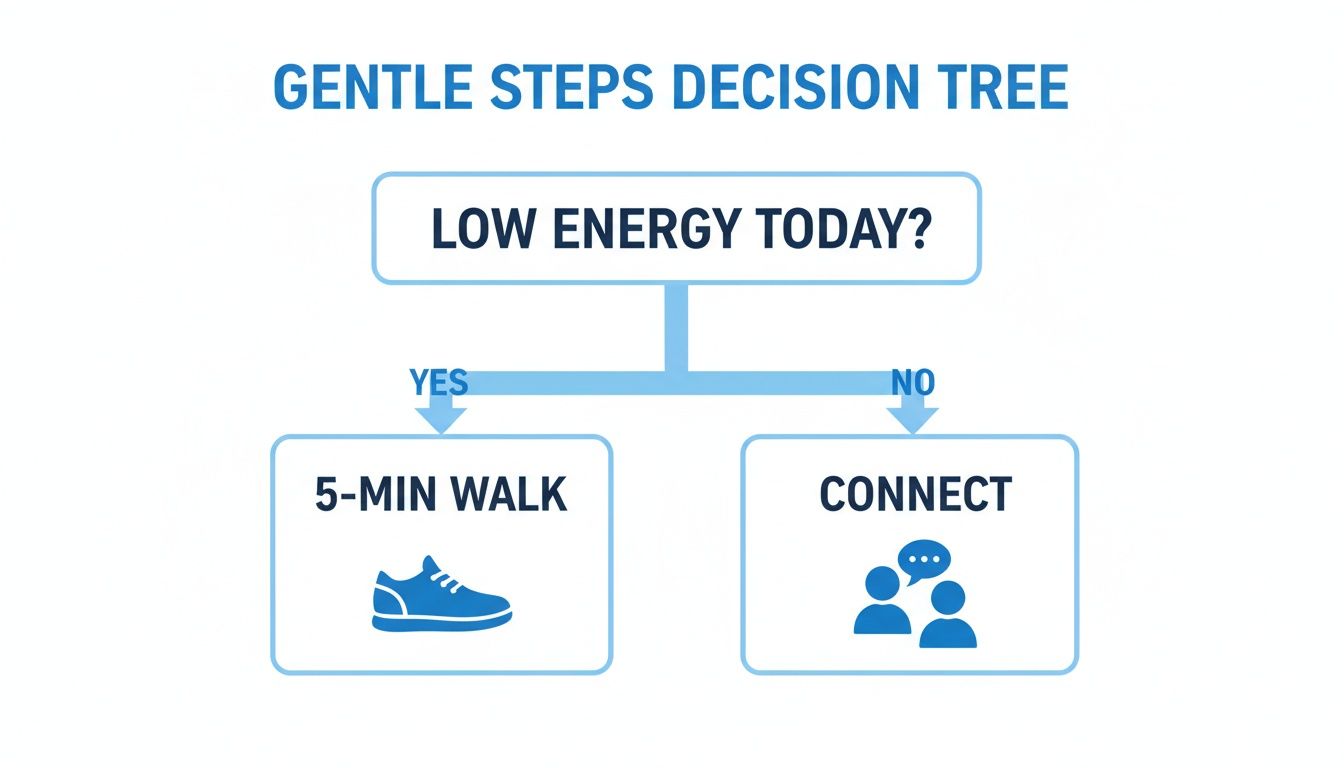
    The Therapeutic Techniques Behind the Screen

    The format is the how, but the therapeutic technique is the what. Online therapists use the same evidence-based methods as in-person clinicians to help you navigate depression and anxiety.

    One of the most widely used methods is Cognitive Behavioural Therapy (CBT). CBT helps you identify, challenge, and change unhelpful thought patterns and behaviors. For example, you might work with your therapist to reframe an automatic negative thought into a more constructive one.

    Evidence shows these structured online methods deliver real results.

    A bar chart comparing the improvement rates of Online CBT (68%), Medication Management (55%), and Peer Support (42%) for depression treatment.

    As you can see, structured therapy like online CBT often leads to significant improvements for people seeking support.

    Therapists also integrate other powerful techniques during online counselling, including:

    • Mindfulness-Based Practices: These teach you to stay in the present moment without judgment, such as through guided breathing exercises.
    • Psychodynamic Therapy: This approach explores how past experiences may shape your present feelings, leading to self-awareness.
    • Positive Psychology Interventions: This technique focuses on building your strengths and practicing gratitude to cultivate resilience.

    A quick reminder: any assessments your therapist uses are informational tools to guide your sessions. They are not a formal diagnosis but a compass to point you in the right direction.

    The Rise of Digital Mental Health Support

    A person smiling while participating in an online therapy session on their tablet, feeling supported and understood.

    The conversation around mental health in India is changing for the better as stigma fades. More people now recognize that caring for emotional well-being is a sign of strength.

    Technology has been a major driver of this shift, breaking down barriers that made professional help feel out of reach. With online platforms, a meaningful conversation with a qualified therapist is now just a click away. Choosing depression treatment online is a modern, practical way to invest in yourself.

    Overcoming Traditional Barriers with Technology

    For years, accessing mental health support involved overcoming many obstacles. Finding a nearby therapist, scheduling appointments, and managing social anxiety were common challenges.

    Online therapy eliminates these problems. It allows you to connect with a professional from your own space, making it easier to attend sessions consistently. This convenience lets you focus on what truly matters: your healing journey.

    Online therapy creates a bridge to support, ensuring that compassionate, professional care is available to anyone, regardless of their location or circumstances. It democratises access to well-being.

    This accessibility is especially helpful when dealing with depression or anxiety, as it brings support directly to you. This makes taking that crucial first step feel much more manageable.

    A Growing Acceptance and a Strong Legal Framework

    The shift to digital mental healthcare is supported by a strong foundation. The online mental health market in India was valued at USD 133.47 million and is expected to reach USD 451.73 million by 2033, showing a growing demand for accessible teletherapy.

    India's Mental Healthcare Act, 2017, gives every person the right to access mental healthcare with dignity. This legislation gives online therapy legitimacy, assuring you receive recognized, professional support. This blend of social acceptance and legal backing confirms that online counselling is an effective path for managing workplace stress or building emotional resilience. Technologies like voice software in healthcare are also improving support services behind the scenes.

    Empowering You on Your Journey

    Ultimately, the rise of digital mental health is about putting you in control. It empowers you to find a therapist and therapy style that fits your life, where you can focus on building positive habits like managing stress and cultivating self-compassion.

    Remember that online assessments are conversation starters, providing initial insights to discuss with a professional. They are not a formal diagnosis. Real, effective help is closer than ever, and choosing online support is a powerful step toward a healthier, more balanced life.

    How to Choose the Right Online Therapist

    A diverse group of professional therapists' profile pictures arranged in a grid, conveying choice and accessibility.

    Finding a therapist you connect with is one of the most important parts of your therapy journey. This therapeutic relationship creates a safe space to open up and begin healing. A good online counsellor brings expertise, empathy, and understanding to your sessions.

    This connection is vital for successful depression treatment online. When you feel seen and heard, you are more likely to build the trust needed for real progress. Choosing a therapist is a personal decision, so take your time to find someone who feels right for you.

    Look for the Right Qualifications and Specialisations

    First, ensure your therapist is properly qualified with credentials like a Master’s degree in psychology or social work. Reputable platforms like DeTalks simplify this by vetting all therapists in their network.

    Consider their specializations. Finding a professional with experience in what you're facing—whether it's depression, anxiety, or workplace stress—can make a significant difference. Reading their profiles can help you see if their expertise aligns with your needs.

    Understanding Their Therapeutic Approach

    Every therapist has a unique style or therapeutic approach. Some use Cognitive Behavioural Therapy (CBT) to reframe thoughts, while others use mindfulness to build resilience. The most important thing is finding an approach that resonates with you.

    Think about what you hope to achieve in your sessions. Are you looking for practical strategies or a deeper exploration of your past? Answering this will help you find a therapist whose methods align with your goals for improving your well-being.

    The goal isn’t to find a perfect therapist, but to find a therapist who is perfect for you—someone whose approach makes you feel supported, understood, and hopeful about the journey ahead.

    This mindset transforms the search from a task into an empowering choice. You are selecting a partner for your mental health journey.

    Use the Initial Consultation Wisely

    Most platforms offer an initial consultation, which is a great opportunity to see if a therapist is a good fit. Use this low-pressure meeting to ask questions and get a feel for their communication style.

    Here are a few questions you might ask:

    • What is your experience helping people with challenges like mine?
    • Could you explain your therapeutic approach in simple terms?
    • What can I expect in our first few sessions together?

    It's okay if the first person you speak with isn't the right one. Trust your intuition. Finding the right therapeutic relationship is a crucial step toward building resilience and finding a path to greater self-compassion and happiness. Remember, assessments are for guidance, not diagnosis.

    Your Next Steps Toward a Healthier Mind

    Taking the first step is a powerful act of self-care. Choosing depression treatment online is a courageous decision to prioritize your well-being.

    The path to feeling better is personal, and the goal is not an overnight fix. It’s about gradually building skills to support your long-term mental health. Online therapy offers a supportive space to learn and practice these skills at your own pace.

    Embracing a Path of Self-Compassion

    As you begin, remember to be kind to yourself. Progress isn't always linear, and some days will be harder than others.

    Celebrate small wins, like showing up for a session or trying a new coping technique. These moments are the building blocks of resilience. Online counselling provides a non-judgmental space to explore your feelings and understand that struggling with anxiety or workplace stress is part of being human.

    True well-being comes not from the absence of problems, but from the confidence that you have the tools to handle them. Online therapy is about empowering you with those very tools.

    This sense of empowerment is at the core of therapy. It helps shift your perspective from feeling overwhelmed to feeling capable and ready to navigate life's challenges.

    The Growing Accessibility of Online Support

    If you're considering online support, you are not alone. In India, technology has made seeking mental health help more accessible and accepted than ever.

    One survey showed that about 61% of female and 55% of male respondents have used digital wellness tools. You can learn more about technology's role in mental health statistics to see how it's improving access to support. This growing acceptance means quality care is within reach for many. Platforms like DeTalks offer a safe starting point to browse professionals and find someone you connect with.

    Remember, any initial questionnaires or assessments are simply tools to start the conversation, not a final diagnosis. Taking this step is an act of hope and an investment in your happiness and a more resilient life.

    Frequently Asked Questions About Online Therapy

    It's normal to have questions when considering online therapy. You're taking an important step, and you deserve to feel clear about how it works. Here are answers to some common queries to help you feel more empowered.

    Is Online Therapy as Effective as In-Person Therapy?

    Yes, for many people, research shows that online therapy is just as effective as in-person sessions, especially for mild to moderate depression and anxiety.

    Therapeutic methods like Cognitive Behavioural Therapy (CBT) translate well to a digital format. The success of counselling depends on your connection with the therapist, which is entirely possible to build online. For more answers, you can check out Buddypro's FAQ section.

    How Is My Privacy Protected in Online Counselling?

    Reputable platforms use bank-level encryption and secure technology to ensure your conversations remain confidential. Therapists are also bound by the same strict professional codes of confidentiality as in a physical office.

    To protect your privacy, find a quiet space for your sessions where you won't be interrupted.

    Choosing a platform that is upfront and transparent about its privacy policies is crucial. It lets you relax and focus on what truly matters: your journey toward building resilience and self-compassion, without a second thought about your data.

    What Should I Expect from My First Session?

    Your first session is a low-pressure conversation for you and your therapist to get to know each other. You'll discuss what brought you to therapy, the challenges you're facing (like workplace stress), and your goals.

    Your therapist will ask about your background to better understand your situation. This is also your time to ask them questions and see if their approach feels like a good fit. The goal is to create a safe foundation to build upon. Remember, any initial screening tools are informational and not a formal diagnosis.


    Ready to take the next step in a supportive, confidential space? At DeTalks, you can connect with qualified professionals who can help you navigate life's challenges and build a path toward greater well-being. Explore our network of therapists and begin your journey today at https://detalks.com.

  • Cognitive Behavioral Therapy for OCD: A Guide to Finding Relief

    Cognitive Behavioral Therapy for OCD: A Guide to Finding Relief

    Cognitive Behavioral Therapy, or CBT, is a practical, hands-on approach to therapy. It's designed to help you recognize and change the patterns of thinking and behavior that can keep you feeling stuck. Think of it as a training program for your mind, giving you real-world tools to manage difficult feelings and build long-term resilience.

    Your Path Forward Starts with Understanding

    Living with Obsessive-Compulsive Disorder (OCD) can feel like a constant internal struggle. The intrusive thoughts (obsessions) and the strong urge to perform certain actions (compulsions) can be exhausting and cause a great deal of anxiety. If this sounds familiar, please know you're not alone, and there is a proven path toward feeling better.

    This guide will walk you through Cognitive Behavioral Therapy (CBT), a structured and supportive type of counselling. Unlike therapies focused only on the past, CBT addresses the here-and-now. It helps you untangle the cycles of thoughts, feelings, and actions that fuel OCD.

    The Connection Between Thoughts and Actions

    At its heart, CBT is based on a simple but powerful idea: your thoughts, feelings, and actions are all connected. When you change one, the others often follow.

    For example, an obsessive thought like, "My hands are contaminated," can trigger a feeling of intense anxiety. This anxiety might then drive a compulsive action, such as repeated handwashing. CBT teaches you how to step into that cycle and gently break it.

    Cognitive Behavioral Therapy isn't about eliminating unwanted thoughts—it’s about changing how you relate to them. It shows you that you have a choice in how you respond, which is the first step toward managing OCD.

    Why CBT Is the Recommended Approach

    CBT's success is supported by years of research. A specific type, called Exposure and Response Prevention (ERP), is known as the most effective therapy for OCD. In India, where OCD affects a significant part of the population, this therapy offers a structured path forward. For more details, you can read about OCD's prevalence and treatment in India.

    What makes this type of therapy so helpful?

    • It’s skill-based: You learn practical techniques you can use for the rest of your life to support your well-being.
    • It’s a partnership: You and your therapist work as a team, setting goals at a pace that feels comfortable for you.
    • It builds independence: The goal is to equip you with the skills to become your own guide over time.

    This isn't just about managing specific symptoms. It is a journey toward building self-compassion and creating a life with more peace, especially when dealing with challenges like [workplace stress] or feelings of anxiety and depression.

    How Exposure and Response Prevention Works

    When we talk about Cognitive Behavioral Therapy for OCD, we often focus on a powerful technique called Exposure and Response Prevention (ERP). The name might sound clinical, but the idea is very practical. It’s about safely and gradually facing your fears until they no longer have the same power over you.

    Think of it like learning to swim with a supportive instructor. You start in shallow water and slowly build your confidence. ERP works the same way; it's a guided, step-by-step process tailored to you.

    This infographic captures the internal struggle of OCD, where thoughts and behaviors can feel like an impossible knot.

    Infographic about cognitive behavioral therapy for ocd

    ERP is a gentle method for untangling that knot, helping you regain a sense of control over your actions and reactions.

    The ‘Exposure’ Part: Facing the Fear

    The first part of the process is Exposure. This means you will gradually and safely confront the thoughts, places, or objects that trigger your anxiety. This is a carefully planned process that you and your therapist design together.

    For someone with a fear of contamination, an early exposure might be as simple as touching a doorknob at home for a few seconds. The goal is to start with a challenge that feels manageable and builds your confidence.

    This systematic process teaches your brain a new lesson: the things you fear may not be as dangerous as they feel. Over time, the triggers begin to lose their intensity.

    The ‘Response Prevention’ Part: Breaking the Habit

    This brings us to the second critical part: Response Prevention. After being exposed to a trigger, you learn to resist the urge to perform your usual compulsion or ritual. This is where you learn to sit with the discomfort until it naturally subsides.

    At first, the feeling of anxiety can be strong, and that's perfectly normal. Your therapist is there to support you through it. This discomfort always fades with time.

    By not giving in to the ritual, you are actively breaking the OCD cycle. You send a powerful message to your brain: "The difficult feeling passed on its own." This is where you start to find freedom.

    To make this clearer, this table breaks down the core components of Exposure and Response Prevention to clarify how this structured therapy helps you regain control.

    Understanding the Two Parts of ERP Therapy

    Component What It Means in Practice The Ultimate Goal
    Exposure Systematically facing triggers (thoughts, objects, situations) in a controlled way, starting with the least scary and moving up. To reduce the anxiety and fear associated with your triggers through a process called habituation.
    Response Prevention Actively choosing not to perform the compulsive behaviours or mental rituals that you normally use to reduce anxiety. To break the link between obsessions and compulsions, proving to your brain that the rituals are not necessary for safety.

    Together, Exposure and Response Prevention are a powerful team. This is a crucial step toward managing OCD and addressing related challenges like workplace stress, anxiety, and depression.

    What to Expect from Your Therapy Sessions

    Deciding to start counselling is a significant and hopeful step. To help you feel more prepared, let's walk through what cognitive behavioral therapy for OCD sessions typically look like.

    Think of the process as a partnership between you and your therapist. You are always in control of the pace, and the main goal is to create a safe space where you feel supported.

    Your First Session: The Initial Assessment

    The first few sessions are about getting to know each other. Your therapist is there to listen to your story and understand what you are going through in a judgement-free environment.

    You’ll likely talk about your specific challenges and what you hope to achieve through counselling. Any assessments used are simply informational tools to help create a personalized plan; they are not a formal diagnosis.

    The initial assessment is a two-way street. It is a chance for you to see if the therapist is a good fit and for them to understand how best to support you.

    This groundwork ensures your therapy is tailored to your unique needs, whether that's addressing OCD or related challenges like anxiety, depression, or stress.

    Creating Your Fear Hierarchy Together

    After your therapist understands your experiences, you'll work together to build a fear hierarchy. This is a list of the situations or thoughts that trigger your OCD, ranked from least stressful to most stressful.

    This list becomes your personal roadmap for therapy. You'll start with small, manageable challenges and only move up when you feel ready and confident. This step-by-step approach is designed to build your skills without feeling overwhelming.

    Practicing New Skills Beyond the Session

    A key part of CBT is applying what you learn in therapy to your everyday life. This is often called "homework," but it’s more like real-world practice to help new skills stick.

    These practice tasks are always designed with your therapist and are linked to your fear hierarchy. They are practical, achievable steps to keep your momentum going between sessions.

    What might this practice look like?

    • Behavioral Experiments: Gently testing a fear in a controlled way, like touching an object and waiting a few extra minutes before washing your hands.
    • Thought Records: Noting down a difficult thought and using cognitive skills to look at it from a different perspective.
    • Mindfulness Exercises: Practicing short, guided meditations to get better at sitting with uncomfortable feelings without reacting.

    This is the work that turns theory into a lived reality. It proves to you, one small victory at a time, that you have the strength to manage anxiety and reclaim your well-being.

    Navigating Challenges and Building Resilience

    The journey of managing OCD with cognitive behavioral therapy is not always a straight line. You will have days of great progress and moments that feel like a step back. This is a normal and expected part of the healing process.

    Facing your fears takes emotional energy, so feeling tired or experiencing therapy burnout is common. Life challenges, like [workplace stress], can also increase anxiety. Acknowledging that these bumps in the road are part of the path is an important first step.

    A person sitting peacefully on a rock, looking out over a calm body of water at sunrise, symbolizing resilience and self-compassion.

    Learning to Be Kind to Yourself

    One of the most powerful skills you will develop is self-compassion. OCD can often be accompanied by a harsh inner critic. Therapy teaches you to treat yourself with the same kindness you would offer a friend.

    This shift from self-criticism to self-kindness can lift a heavy emotional weight. It helps you recognize that you are doing your best with a genuinely difficult condition, which fosters both resilience and happiness.

    As you build this foundation, you may want to explore other strategies to master your anxiety. This can make the core therapy work feel more manageable.

    Forging True Resilience from Within

    Resilience is not about being unbreakable; it's the ability to bounce back from difficult experiences. CBT for OCD is excellent training for this. Every time you face a trigger without performing a compulsion, you are strengthening your resilience.

    You are proving to yourself that you can tolerate discomfort and that feelings of anxiety eventually pass. This process builds a deep sense of self-trust and confidence that extends far beyond managing OCD.

    Resilience is not a trait you either have or don’t. It is a set of skills and a mindset that anyone can learn and strengthen through practice.

    The Indian Context: Family, Culture, and Support

    In India, family and community are incredible sources of strength. However, cultural pressures to always appear "strong" can sometimes make it difficult to talk about mental health struggles.

    Good therapy respects these cultural nuances. It helps you combine professional techniques with the support systems you already have. It is about creating a personal toolkit for well-being that honors both modern therapy and your cultural roots.

    The road has its challenges, but it is also a path of incredible personal growth. By facing these difficulties with self-compassion, you are building a more resilient, calm, and fulfilling life.

    The Supportive Role of Your Therapist

    Your relationship with your therapist is one of the most important parts of the process. Think of them as a compassionate guide walking the path with you. Their first priority is to create a safe, confidential, and non-judgmental space where you feel heard.

    This partnership is often called the therapeutic alliance and is built on trust and respect. A good therapist knows that you are the expert on your own life. They bring their professional knowledge to help you find your inner strength.

    A compassionate therapist listening intently to a client in a warm and comfortable office setting.

    A Personalized and Flexible Approach

    There is no one-size-fits-all script for effective therapy. An experienced therapist will tailor your treatment plan to fit your specific needs, comfort level, and personal goals. They will listen to your concerns and adjust the pace, especially during ERP exercises.

    This flexibility is key. If you are dealing with burnout or high levels of stress, your therapist can shift the focus to building coping skills first. They ensure the process feels empowering, not exhausting.

    A therapist's job isn't to push you into situations you aren't ready for. It's to help you build the confidence to take the next step when you decide it's time.

    This tailored support is what makes professional counselling so effective. It addresses not just OCD but also related challenges like anxiety and depression, paving the way for greater well-being and resilience.

    Finding the Right Professional for You

    Finding a therapist you connect with is fundamental to your success. The right person will not only have the right qualifications but also a style that makes you feel comfortable and secure.

    When looking for a therapist, whether in India or elsewhere, keep these points in mind:

    • Qualifications: Look for professionals with specific training in CBT and ERP for OCD.
    • Experience: Feel free to ask about their experience working with people who have similar challenges.
    • Approach: During an initial chat, ask about their therapeutic style to see if it feels collaborative and empathetic.
    • Comfort Level: Most importantly, do you feel a sense of connection and trust?

    This relationship is the foundation for all your hard work. A strong therapeutic bond can make a significant difference in your journey.

    Empowering You to Become Your Own Guide

    Ultimately, a great therapist’s goal is to empower you with the tools to manage your thoughts and behaviors on your own. They teach you how to challenge unhelpful thinking, resist compulsions, and treat yourself with kindness.

    This process builds incredible self-reliance and resilience. You'll start using these skills automatically in your daily life. This is the true sign of successful therapy—feeling more capable and in control every day.

    Making Your Skills a Part of Your Life

    Finishing a course of cognitive behavioral therapy is a huge achievement. Now, the skills you’ve learned become tools for life. The more you use them, the stronger they become, supporting your well-being long after your sessions end.

    CBT teaches you to observe your thoughts without getting carried away and to choose how you respond. Weaving this into your daily routine is what turns your progress into lasting change.

    Weaving Your Skills into Everyday Moments

    The real power of this therapy appears in the small moments of your day. When a difficult thought or feeling of anxiety arises, you have a toolkit ready. The goal was never to eliminate anxiety, but to know what to do when it shows up.

    Here are a few ways to keep your CBT skills strong:

    • Practice Mindful Pauses: A few times a day, just notice what’s happening in your mind and body without judgment.
    • Embrace Mini-Exposures: Gently lean into small avoidance habits. See them as opportunities to practice your skills.
    • Take Self-Compassion Breaks: When you feel overwhelmed, treat yourself with kindness. Acknowledge that this is hard, without self-blame.

    Be Patient—This Is a Journey, Not a Race

    Progress is not always a straight line. Some days will feel easy, while others will be challenging. This is completely normal and expected.

    The goal isn’t perfection; it’s persistence. Every time you choose a compassionate response over self-criticism, you build resilience and reinforce your progress.

    Remembering this helps you handle tough days with more grace. It allows you to see setbacks not as failures, but as opportunities to learn and grow.

    This is a path of empowerment. Starting counselling for OCD is a sign of incredible strength and a commitment to your own well-being. Supportive takeaways from this journey include greater peace, freedom, and resilience, knowing you have the skills to care for yourself.

    Frequently Asked Questions

    It’s normal to have questions when considering therapy. Taking a thoughtful approach to your well-being is a great first step. Here are answers to some common questions about using cognitive behavioral therapy for OCD.

    This is helpful background information, but it is not a substitute for a conversation with a qualified professional.

    How Long Does Cognitive Behavioural Therapy for OCD Usually Take?

    There is no fixed timeline, as therapy is always personalized. A standard course of Exposure and Response Prevention (ERP) typically runs for about 12 to 20 weekly sessions. This rhythm helps you build momentum without feeling rushed.

    The real goal is to help you build the skills and confidence to manage OCD on your own. Your therapist will work with you to find a pace that feels right.

    The aim of therapy isn’t to keep you in counselling forever. It’s to empower you with the tools you need to eventually become your own therapist.

    Is ERP Therapy Scary or Overwhelming?

    It's understandable to feel nervous about ERP, as it involves facing your fears. However, a good therapist ensures the process is gradual, collaborative, and always supportive. You will never be pushed to do something you aren’t ready for.

    You and your therapist will create a "fear hierarchy," starting with small, manageable exposures. The idea is to gently show you that you can handle anxiety without compulsions. Your therapist acts as your coach every step of the way.

    Can I Do CBT for OCD on My Own?

    Self-help resources can be great for learning about general stress management. However, trying to do ERP for OCD on your own is not recommended. It is a precise process that requires careful planning to be safe and effective.

    A qualified therapist offers crucial support. They help you:

    • Design the right exposures: They create challenges that are effective but not overwhelming.
    • Navigate tough moments: A therapist provides in-the-moment coaching to help you manage anxiety.
    • Stay on track: They provide accountability and encouragement to help you keep going.

    For the safest and most effective path to managing OCD, working with a professional is the best approach. That partnership helps you build lasting skills for a calmer, more resilient life.


    Finding the right support is the most important first step. At DeTalks, we can connect you with experienced therapists who specialise in proven treatments like CBT for OCD. Feel free to explore our directory or take a confidential assessment to find the guidance you deserve. Your journey to well-being starts here: https://detalks.com.

  • ADHD Symptoms in Adults: 7 Key Signs to Recognize

    ADHD Symptoms in Adults: 7 Key Signs to Recognize

    Attention-Deficit/Hyperactivity Disorder (ADHD) is often thought of as a childhood condition, but it affects many adults, too. For adults, the experience can be complex, often leading to challenges with focus, emotions, and organisation that may be mistaken for personal shortcomings. This misunderstanding can cause significant workplace stress and anxiety, impacting overall well-being.

    This guide offers a warm and supportive look into the common ADHD symptoms in adults, moving beyond stereotypes. Our goal is to provide clear insights, helping you recognise patterns that might affect your life or someone you care about. We will explore both the challenges and the unique strengths, like resilience and creativity, that can come with an ADHD mind.

    This article provides information, not a diagnosis. If these descriptions feel familiar, it could be a helpful first step toward seeking professional counselling or an assessment for personalised support.

    1. Inattentive Type – Difficulty Sustaining Focus

    A core ADHD symptom in adults is a constant challenge in holding focus. This isn't just boredom; it's a genuine difficulty in paying attention to tasks or conversations that aren't highly engaging. An adult might feel like their brain has too many tabs open at once, pulling their attention in different directions.

    In adults, this can look different than in children. Instead of being physically restless, an adult might seem quiet while their mind wanders during an important meeting or a conversation with a loved one. This internal experience of a constantly shifting mind can make it exhausting to complete projects that require long-term mental effort.

    How It Manifests in Daily Life

    Difficulty with focus can impact well-being in both personal and professional life, sometimes leading to workplace stress and feelings of inadequacy.

    • At Work: A talented professional might miss important details in reports or make simple mistakes, not due to lack of skill but because their focus drifts.
    • At Home: A parent may forget appointments or struggle to finish household chores, often starting several tasks but completing none.
    • In Relationships: Partners may feel unheard when the person with ADHD loses track of conversations, which comes from an attention challenge, not a lack of care.

    Actionable Strategies to Improve Focus

    While a professional assessment is important, you can try strategies to manage this symptom. Structuring your tasks and environment can make a real difference.

    • Use Time-Blocking Techniques: The Pomodoro Technique, using focused 25-minute work periods with short breaks, can make large tasks feel more manageable.
    • Externalise Your Plans: Use detailed checklists or apps to keep track of steps. Resources like the best focus apps for people with ADHD can offer practical support.
    • Minimise Distractions: Create a calmer environment by using noise-cancelling headphones, turning off phone notifications, or finding a quiet space to work.

    2. Hyperactivity-Impulsivity – Restlessness and Hasty Decision Making

    While childhood hyperactivity often involves visible energy like running and climbing, it shows up more subtly in adults. It can feel like an inner restlessness or a mind that is always on the go. This is often paired with impulsivity—acting on sudden urges without fully thinking about the consequences.

    Hyperactivity-Impulsivity - Restlessness and Hasty Decision Making

    This inner drive can make quiet activities feel difficult and can lead to fidgeting, tapping your feet, or pacing. Impulsivity is not a character flaw; it’s a challenge with self-regulation that can affect work, finances, and relationships, sometimes leading to workplace stress and anxiety.

    How It Manifests in Daily Life

    The mix of restlessness and impulsivity can create challenges that affect an adult's sense of control and well-being.

    • At Work: A colleague might interrupt others in meetings, not to be rude, but because an idea feels too urgent to hold back.
    • At Home: An individual might make a large, impulsive purchase online that affects the family budget, or suddenly start a big home project without a plan.
    • In Relationships: This can show up as saying things without thinking, which might be hurtful, or making big life decisions, like quitting a job, without discussion.

    Actionable Strategies to Manage Impulses

    Learning to manage hyperactivity and impulsivity involves building awareness and creating pauses. While professional counselling can offer a tailored approach, these strategies can help.

    • Implement a 'Waiting Period': For big decisions, try to create a 24 to 48-hour waiting period. This provides a buffer between the impulse and the action.
    • Channel Restless Energy: Using a discreet fidget tool during long meetings can help manage excess energy. Short, frequent breaks to walk or stretch also help.
    • Practise Mindfulness: Mindfulness exercises can strengthen your brain's ability to notice thoughts and feelings without immediately acting on them.

    3. Executive Functioning Deficits – Problems with Mental Management

    Beyond attention, many ADHD symptoms in adults are linked to challenges with executive functions. These are the brain's "management" skills, responsible for organising, planning, and getting tasks done. When this system is less effective, it creates challenges in managing daily life.

    Executive Functioning Deficits - Problems with Mental Management

    This isn't about intelligence or effort; it's a neurobiological difference in high-level thinking skills. An adult with these challenges might feel constantly overwhelmed, as if they are always trying to keep up. This can lead to significant workplace stress and a persistent feeling of being behind.

    How It Manifests in Daily Life

    Difficulties with executive function can affect an adult's ability to reach long-term goals and manage daily tasks, which may contribute to anxiety.

    • At Work: A project manager may find it hard to estimate how long tasks will take, leading to missed deadlines and team frustration.
    • At Home: An individual might find it very difficult to organise a multi-step task like preparing for a festival or managing household bills.
    • In Personal Growth: A student might have wonderful ideas but struggle to structure them, create an outline, or manage their time to complete their work.

    Actionable Strategies to Improve Management

    Building external support systems can help compensate for internal executive function challenges, creating a "scaffolding" for the brain.

    • Break Down Large Projects: Turn overwhelming goals into small, clear, and actionable steps. For example, "organise office" becomes "clear desk," then "sort papers."
    • Use Time-Blocking: Schedule specific blocks of time in a calendar for every task, including breaks, and set multiple reminders to help with time perception.
    • Externalise Your Memory: Don't rely on your memory alone. Use external aids like phone notes, voice memos, or a physical notebook to keep track of ideas and to-do lists.

    4. Emotional Dysregulation – Intense and Rapidly Changing Emotions

    Though not an official diagnostic criterion, emotional dysregulation is one of the most impactful ADHD symptoms in adults. It means having difficulty managing emotional responses in a way that feels balanced for the situation. This can look like intense reactions to small frustrations or quick mood shifts.

    Emotional Dysregulation - Intense and Rapidly Changing Emotions

    Living with this can feel like being on an emotional rollercoaster, causing both personal and workplace stress. An adult with ADHD might experience sudden anger over a minor issue or feel overwhelming sadness from gentle criticism. This is a challenge with emotional control, linked to the brain's executive functions.

    How It Manifests in Daily Life

    Unmanaged emotional responses can strain relationships and are often misunderstood by others, which can lead to anxiety and feelings of isolation.

    • At Work: A team member might get very frustrated over a small technical glitch, affecting team morale. A manager’s mood could shift quickly, creating an unpredictable environment.
    • At Home: A small disagreement with a partner could escalate into a big argument. An individual might feel overwhelmed for hours after a stressful event.
    • In Relationships: Friends and family might feel like they need to be very careful, unsure what might trigger an intense emotional reaction.

    Actionable Strategies for Emotional Regulation

    Building emotional awareness is key to managing this symptom. While professional counselling provides tailored support, these strategies can help build emotional resilience.

    • Practise the STOP Technique: When you feel a strong emotion rising, Stop. Take a breath. Observe your feelings without judgement. Proceed mindfully.
    • Develop an Emotional Recovery Routine: Create a personal toolkit for when you feel overwhelmed. This could be a short walk, listening to calming music, or deep breathing.
    • Communicate Your Needs Clearly: Let trusted friends and family know you sometimes experience intense emotions and explain what helps you in those moments.

    5. Rejection Sensitive Dysphoria (RSD) – Extreme Fear of Criticism

    One of the most intense emotional ADHD symptoms in adults is Rejection Sensitive Dysphoria (RSD). This is an extreme emotional sensitivity to the perception of being rejected, criticised, or failing. It’s an overwhelming emotional response to situations that others might not find as painful.

    This intense reaction can seem out of proportion, but for the person experiencing it, the emotional pain is very real. The constant fear of this pain can lead to behaviours like trying very hard to please others or avoiding situations where criticism is possible.

    How It Manifests in Daily Life

    The fear of rejection can create chronic anxiety and impact self-worth, making it difficult to pursue goals and maintain healthy relationships.

    • At Work: An employee might take constructive feedback as a personal attack, leading to feelings of worthlessness or a defensive reaction.
    • At Home: A person might avoid discussing difficult topics with their partner to prevent potential disapproval, which can lead to unresolved issues.
    • In Social Situations: Someone might avoid a new hobby or opportunity, not because they can't do it, but to avoid the risk of perceived failure.

    Actionable Strategies to Manage RSD

    Managing RSD involves building emotional resilience and finding new ways to view feedback. While professional therapy is very helpful, these strategies can offer support.

    • Practise Cognitive Reframing: When you feel rejected, gently question your first interpretation. Ask yourself: "Is there another way to see this?"
    • Develop a Support Network: Talk about your experiences with a trusted friend, partner, or therapist. A supportive person can offer a different perspective and reduce feelings of isolation.
    • Use Mindfulness Techniques: Practise noticing your emotions without judgement. Acknowledge the feeling as a symptom, rather than a fact. This creates a little space between the trigger and your reaction.

    6. Hyperfocus – Intense Concentration on Preferred Activities

    While ADHD is known for a lack of focus, a surprising symptom in adults is hyperfocus. This is a long, intense state of concentration on an activity that is interesting or rewarding. The brain locks onto a stimulating task, often tuning out everything else.

    During hyperfocus, an adult can become so absorbed that they lose track of time and forget basic needs like eating or sleeping. While this can lead to amazing productivity and creativity, it can also disrupt balance in daily life and contribute to workplace stress or personal neglect.

    How It Manifests in Daily Life

    Hyperfocus can be both a great strength and a challenge, leading to high achievement but also missed responsibilities.

    • At Work: A developer might code for 12 hours straight to fix a complex problem but miss important meetings and forget to take a break.
    • At Home: An artist could get so lost in a project that they miss family dinner or ignore phone calls, which can cause strain in relationships.
    • In Personal Pursuits: A person might spend an entire weekend absorbed in a fascinating new hobby, making great progress but neglecting household chores.

    Actionable Strategies to Manage Hyperfocus

    Learning to channel hyperfocus is key to making it an asset. The goal is not to stop it but to manage its timing and intensity.

    • Set External Cues: Use alarms or timers to create "break points." These reminders can pull you out of a hyperfocused state to check on other priorities.
    • Schedule Hyperfocus Time: Set aside time for engaging activities when it won’t disrupt other important responsibilities.
    • Communicate with Loved Ones: Explain your hyperfocus patterns to your family and partner. This helps them understand and reduces misunderstandings when you become temporarily absorbed in something.

    7. Time Blindness – Distorted Perception of Time Passage

    One of the more disorienting ADHD symptoms in adults is "time blindness," a difficulty in accurately sensing the passage of time. This isn't just poor time management; it's a neurological challenge where the brain struggles to feel how much time has passed or how long a task will take. It can lead to chronic lateness and missed deadlines.

    This symptom is a core part of executive function challenges in ADHD and can cause significant workplace stress and anxiety. It explains why a "quick five-minute" task can turn into an hour, or a deadline that seems far away suddenly arrives tomorrow.

    How It Manifests in Daily Life

    Time blindness can affect all areas of life and is often misunderstood as carelessness, which can harm relationships and self-esteem.

    • At Work: A person might consistently arrive late for meetings, not from a lack of respect, but from underestimating travel time.
    • At Home: A parent might find mornings chaotic and stressful, frequently running late for school drop-offs.
    • In Relationships: Someone might get lost in a hobby and forget a planned dinner with their partner, which can be perceived as neglect.

    Actionable Strategies to Manage Time Blindness

    While a professional assessment can bring clarity, you can use strategies to make time more concrete. The goal is to create external structures to help with the brain's internal timing.

    • Make Time Visible: Use analog clocks where you can see the hands move, or countdown timers. This makes the passage of time more tangible.
    • Build in Buffer Time: If you think a task will take 30 minutes, schedule 45. Adding extra time to schedules can reduce the stress of being late.
    • Use External Reminders: Set multiple alarms for important events—for example, an hour before, 30 minutes before, and when it's time to leave.
    • Track Your Time: To learn more about managing this, you can explore effective time management strategies specifically for adults with ADHD.

    7-Point ADHD Symptom Comparison in Adults

    Symptom / Aspect Implementation Complexity 🔄 Resource Requirements 🔄 Expected Outcomes 📊 Ideal Use Cases 💡 Key Advantages ⭐
    Inattentive Type – Difficulty Sustaining Focus Moderate – requires consistent strategies Moderate – checklists, apps, environment control Moderate improvement in focus and task completion Office work, project management, household tasks Enhanced creativity, detail orientation
    Hyperactivity-Impulsivity – Restlessness and Hasty Decision Making Moderate – mindfulness and structure needed Moderate – mindfulness tools, fidget devices Improved impulse control and decision-making accuracy Fast-paced environments, sales, dynamic team settings High energy, quick decisions
    Executive Functioning Deficits – Problems with Mental Management High – involves complex organizational methods High – calendar apps, memory aids, methodologies Significant improvement in planning and deadlines Project management, academia, entrepreneurship Strong crisis management, creative solutions
    Emotional Dysregulation – Intense and Rapidly Changing Emotions Moderate – emotional regulation techniques Moderate – apps, therapy, mindfulness practices Better emotional stability and relationship quality Professions requiring emotional resilience, caregiving Deep empathy, passionate engagement
    Rejection Sensitive Dysphoria (RSD) – Extreme Fear of Criticism High – cognitive and behavioral adjustments High – therapy, medication, support networks Reduced emotional pain and improved social interactions Creative professions, social work, client-facing roles High empathy, motivation to excel
    Hyperfocus – Intense Concentration on Preferred Activities Low to Moderate – scheduling and alarms Low – timers, reminders Exceptional productivity in focused tasks Creative arts, research, programming, emergency medicine Exceptional work quality under focus
    Time Blindness – Distorted Perception of Time Passage Moderate – requires external aids and awareness Moderate – apps, alarms, visual tools Improved punctuality and deadline management Consulting, writing, parenting Ability for flow states, reduced time anxiety

    Embracing Your Unique Mind: Your Path Forward

    Understanding your mind is the first step on a positive path forward. We've explored the diverse and often misunderstood adhd symptoms in adults, from the quiet challenge of inattention to the intense feelings of emotional dysregulation. Recognising these patterns is not about finding flaws but about seeing the unique way your brain works.

    Perhaps you saw yourself in "time blindness" or connected with the idea of hyperfocus. Understanding these traits is the foundation for self-compassion. It allows you to move away from self-criticism and toward building a life that works for you.

    From Recognition to Actionable Strategy

    Living with unmanaged ADHD symptoms can contribute to workplace stress, anxiety, and feelings of depression. It can be exhausting to constantly manage organisation, priorities, and emotions. However, identifying these patterns empowers you to seek the right support and build a life that honours your brain's natural style.

    The goal is not to "fix" a core part of who you are but to build skills and strategies that support your well-being and resilience. This journey can include:

    • Seeking Professional Insight: A formal assessment with a qualified professional can provide clarity and open the door to support like therapy or counselling. Remember, an assessment is informational, not just a label.
    • Developing Personalised Systems: Work with your brain, not against it. If you struggle with time, visual timers can become your friend. If emotions feel big, counselling can help you develop mindfulness techniques.
    • Leveraging Your Strengths: Remember that an ADHD brain has incredible strengths. The same mind that wanders can also achieve amazing hyperfocus, leading to creativity and innovation. Building on these strengths is key to confidence and happiness.

    Supportive Takeaways for Your Journey

    Understanding common adhd symptoms in adults is an act of self-advocacy. It’s the key to transforming daily struggles into manageable challenges and using your unique strengths to live a more balanced and joyful life. This journey requires patience, self-compassion, and a willingness to seek support. You are not alone, and help is available to guide you toward a life where you can truly thrive.


    Ready to take the next step in understanding your mind? On DeTalks, you can explore scientifically validated assessments for deeper insights or connect with qualified mental health professionals across India who specialise in adult ADHD. Start your journey towards clarity and well-being today at DeTalks.