Category: Uncategorized

  • How to Improve Communication: Building Stronger, More Meaningful Connections

    How to Improve Communication: Building Stronger, More Meaningful Connections

    Improving your communication is about more than just getting your point across. It’s about building genuine connections, listening with intention, and expressing yourself with clarity and kindness. These skills are essential for strong relationships and are a powerful way to support your own well-being.

    The Foundation of Meaningful Connection

    Communication is the thread connecting every part of our lives, from professional projects to personal relationships. When this thread weakens, misunderstandings can lead to workplace stress, anxiety, or feelings of isolation. Learning how to improve communication is a profound step toward better mental health.

    The first step is to see communication as a two-way street that requires deep listening, not just talking. In today’s fast-paced world, especially in contexts like India where daily pressures are high, it’s easy to slip into autopilot during conversations. We hear words but often miss the feelings behind them, leading to unresolved tension.

    Building a Stronger Communicative Core

    Getting better at this takes conscious effort. It’s about creating a safe space where people feel heard and respected, which is key to building resilience against life's challenges. For more strategies, this guide on effective communication in relationships is a great resource.

    Here are a few core principles to start with:

    • Empathy Before Ego: Try to understand the other person's perspective before forming your reply. This simple shift can lower defenses and build a bridge toward connection.
    • Clarity and Simplicity: Use straightforward language to get your message across. A clear, honest message is always more powerful than a complicated one.
    • Patience and Practice: No one gets this right every time. Be patient with yourself and others, and view every conversation as a chance to learn and grow.

    Remember, the goal isn't to win an argument. It’s to deepen your understanding and strengthen the connection you share.

    To get you started, here is a quick summary of foundational strategies you can begin using today.

    Quick Guide to Better Communication

    Strategy Why It Matters Simple Action to Start Today
    Active Listening Shows respect and ensures you fully understand the other person's point of view before responding. Put your phone away. Next time someone talks to you, just listen without planning what you'll say next.
    Notice Nonverbal Cues A huge part of communication is unspoken. Body language and tone can reveal more than words. Pay attention to someone's posture and facial expressions during your next conversation. Do they match their words?
    Give Clear Feedback Vague feedback causes confusion. Specific, constructive comments lead to real improvement. Instead of saying "good job," try "I really liked how you handled that client's question with such patience."

    Ultimately, working on your communication is an act of compassion for yourself and others. As you build these skills, you invest in your own emotional well-being, reducing anxiety and making stress more manageable.

    If you feel stuck, remember that professional support from therapy or counselling can offer a safe space to practice and untangle communication habits. These supports offer helpful tools, not a diagnosis, for building a happier, more resilient you—one conversation at a time.

    Mastering the Art of Active Listening

    Real connection isn't just about what you say; it’s about how well you listen. Active listening is a deliberate choice to listen to understand, not just to wait for your turn to talk. This shift in focus is one of the most powerful things you can do to build stronger relationships.

    When people feel genuinely heard, it builds trust and a sense of psychological safety. This foundation is crucial for everything from handling workplace stress to navigating a personal disagreement. It turns a simple conversation into an opportunity for true connection and happiness.

    Beyond Hearing Words to Understanding Meaning

    At its heart, active listening is about curiosity. It means setting your own judgments aside to fully explore the other person's perspective. This is especially important in emotional conversations, as it can de-escalate tension and prevent misunderstandings.

    Let’s break down a few practical techniques you can start using today:

    • Paraphrase and Summarise: After someone shares a thought, try saying it back in your own words. For example, "It sounds like the deadline is causing stress because you're waiting on key information. Is that right?" This shows you're engaged and gives them a chance to clarify.
    • Ask Open-Ended Questions: Avoid questions with a simple "yes" or "no" answer. Instead of "Are you upset?" you could ask, "How are you feeling about all of this?" This opens the door for a more honest and detailed response.
    • Acknowledge Their Feelings: You don't have to agree with someone to validate their emotions. A simple phrase like, "It sounds like that was a really frustrating experience," demonstrates empathy and compassion, which helps build emotional resilience.

    This visual captures the flow of a genuinely engaged conversation, where listening is just as active as speaking.

    Image

    This image highlights that great communication is a dynamic exchange. Focused listening creates space for clearer expression and mutual understanding.

    Creating a Space for Honest Dialogue

    The first and most important step is to remove distractions. Putting your phone away sends a powerful non-verbal message: "I value you and what you have to say." This simple act can reduce any anxiety the other person might be feeling.

    Imagine a tense chat with a colleague over a missed deadline. Instead of defending yourself, try pausing and saying, "Talk me through what happened from your perspective." That small shift can turn a potential conflict into a problem-solving session, strengthening your working relationship and boosting team well-being.

    The goal of active listening isn’t to gather ammunition for your rebuttal; it’s to understand the other person’s world so completely that they feel seen and respected.

    This skill improves all interactions, from catching up with a partner to brainstorming with your team. To dive deeper, resources like What Is Active Listening are a fantastic place to start.

    If you find it hard to stay present in conversations due to stress or other concerns, it may be helpful to explore why. Sometimes, challenges like anxiety or depression can make it difficult to focus. Remember, assessments are informational, not diagnostic, but reaching out for therapy or counselling is a proactive step toward building stronger mental health.

    Decoding Unspoken Language and Nonverbal Cues

    So much of what we communicate has nothing to do with words. Our posture, tone of voice, and facial expressions reveal our true emotional state. Understanding this silent language is key to learning how to improve communication effectively.

    This skill is critical for your well-being. When your body language doesn't match your words, it can create mistrust and lead to stress or anxiety. Authentic connection comes from aligning what you say with what you show.

    Image

    Reading the Room to Build Rapport

    Have you ever heard someone say "yes" while their body language screamed "no"? This disconnect is where misunderstandings grow, fueling workplace stress and burnout. Paying attention to these signals is a form of empathy.

    It helps you notice hesitation or excitement that isn't being put into words. While cultural nuances exist, like the head wobble in India, a closed-off posture is an almost universal sign of resistance. This awareness allows for more compassionate and effective conversations.

    To start building stronger rapport, focus on these key areas:

    • Body Posture: An open stance with relaxed shoulders signals approachability. Slouching or turning away can suggest disinterest or insecurity.
    • Facial Expressions: A genuine smile involves the eyes, not just the mouth. Notice a furrowed brow or a tight jaw, as these can be signs of stress or concern.
    • Tone of Voice: The same words can have different meanings based on your tone. A calm, steady voice builds trust, while a rushed tone can signal anxiety.

    Aligning Your Own Nonverbal Signals

    Becoming a better communicator also means ensuring your own nonverbal cues send the intended message. When your body language aligns with your words, people see you as trustworthy and genuine. This alignment is foundational for building resilience in relationships.

    For example, when giving supportive feedback, leaning in slightly shows you are engaged. Maintaining comfortable eye contact conveys sincerity. These small actions create a safe atmosphere where others are more receptive to what you have to say.

    The best communicators don't just say the right things; they create an emotional environment where their words can actually be heard.

    Think about a difficult conversation where you kept glancing at your phone. Your actions likely undermined your words, sending a signal that the other person wasn't a priority. Becoming aware of these habits is a skill often developed through practices like therapy and counselling.

    Actionable Tips for Nonverbal Awareness

    Mastering nonverbal communication is an ongoing practice that requires mindfulness.

    • Observe Without Judging: Start by noticing the body language of people around you. The goal isn't to draw conclusions but to simply observe patterns.
    • Look for Mismatches: When you sense a disconnect between words and actions, you can gently ask a clarifying question. Try, "You said you're fine, but I'm sensing some hesitation. Is there anything to talk through?"
    • Practice Mindful Self-Correction: Notice your own physical habits, like fidgeting when nervous. Acknowledging these tendencies is the first step toward choosing more open gestures.

    If you find that nonverbal signals are consistently driven by anxiety or depression, it can be helpful to explore the root cause. While this guide offers practical tools, professional support can help with persistent challenges. Therapy provides a safe space to build stronger, more authentic communication habits for long-term well-being.

    Giving and Receiving Feedback with Grace

    Feedback is a powerful tool for growth, but it can often make us feel defensive or anxious. The key is to see it not as criticism, but as a compassionate act meant to help someone improve. When we shift our perspective, feedback becomes a gift.

    Feedback delivered with care strengthens relationships and boosts well-being. When we learn to receive it openly, it becomes a guide for growth rather than an attack. This approach helps build a culture of trust and support.

    Image

    A Framework for Delivering Supportive Feedback

    Giving good feedback is a learned skill. The goal is to be clear, kind, and specific, focusing on the behavior, not the person. This distinction prevents others from feeling personally attacked and helps them stay open to your message.

    Think of your feedback as an observation. Instead of a vague comment like, "Your presentation was weak," offer concrete details. Separating the action from the person's identity creates the psychological safety needed for a real conversation.

    Here's a simple, effective model you can use:

    • Be Specific and Objective: Start with a neutral fact. For example, "During this morning's client call, I noticed we went over our scheduled time by about 15 minutes." This is an observation, not a judgment.
    • Explain the Impact: Connect that observation to a consequence. "Because of that, we had to rush the last few agenda items, and I’m worried the client felt their questions weren’t fully addressed."
    • Suggest a Collaborative Next Step: Frame the solution as a team effort. "For the next call, maybe we could set a timer to keep us on track. What do you think?"

    Real-World Scripts for Graceful Feedback

    Let's put this into practice. Imagine you're a manager in a Mumbai office and need to address missed deadlines with a team member. A blunt approach could cause workplace stress and damage their confidence.

    Try this instead: "Hi Rohan, do you have a moment? I wanted to check in about the project timeline. I noticed the last two reports came in a day late, which impacted the design team. Can I help clear any roadblocks, or should we look at the workload together?"

    This script works because it's private, specific, and supportive. It explains the impact without blame and opens the door for a problem-solving discussion. This is how you build a resilient and trusting team.

    How to Receive Feedback with an Open Mind

    Receiving feedback well is just as important as giving it. It's normal to feel a jolt of anxiety or defensiveness. The key is to manage that initial reaction by taking a breath before you respond.

    Remind yourself that this information is an opportunity to learn. Before you say a word, focus on listening to understand, not to form a defense. This mindset shift is crucial for personal growth and happiness.

    Remember, feedback is data—not a verdict. It’s information you can use to build a better version of yourself.

    To get the most out of the experience, try these strategies:

    1. Listen Fully and Avoid Interrupting: Let the person finish their thought completely without jumping in with excuses.
    2. Ask Clarifying Questions: Once they're done, ask questions to ensure you understand. For example, "Could you give me a specific example of when you noticed that?"
    3. Show Appreciation: Thank them for their perspective. A simple, "Thank you for bringing this to my attention," shows maturity and keeps communication open.

    If receiving feedback consistently triggers overwhelming anxiety or feelings of depression, it may be helpful to explore why. Remember that assessments are informational and not a substitute for a diagnosis. Therapy or counselling can offer a supportive space to build the emotional resilience to turn feedback into a positive force.

    Navigating Difficult Conversations and Conflict

    No one enjoys conflict, but avoiding difficult conversations often creates bigger problems like resentment and burnout. Learning to handle these moments with grace can turn a tense situation into something productive. This skill helps you manage anxiety and build more resilient relationships.

    Staying Centred Under Pressure

    When you feel misunderstood, your body's stress response can take over, making it hard to think clearly. The most important first step is to manage that internal storm. Before you say a word, take a slow, deep breath.

    This simple pause can interrupt that knee-jerk reaction and help you shift from a defensive to a problem-solving mindset. This technique, often taught in therapy and counselling, puts you back in control of your emotions. It's a powerful tool for maintaining your well-being during a challenge.

    Using 'I' Statements to Express Yourself

    One of the most effective shifts you can make is starting sentences with "I" instead of "You." "You" statements can sound like accusations and put the other person on the defensive. In contrast, "I" statements allow you to share your experience without assigning blame.

    Here’s how it works in practice:

    • Instead of: "You're stressing me out with all these last-minute changes."
    • Try: "I feel overwhelmed when project details change unexpectedly at the last minute."
    • Instead of: "You never listen to what I have to say."
    • Try: "I feel unheard when I'm not able to finish my thought."

    This is not a trick; it's an invitation to a real dialogue. It creates a space where both people can be honest without feeling attacked, which is vital for long-term well-being in any relationship.

    Finding Common Ground in Disagreements

    Even in conflict, there is almost always a shared goal hidden beneath the surface. Finding this common ground can anchor the conversation, reminding both of you that you're a team solving a shared problem. For example, an argument over finances might really be about a shared desire for future security.

    Starting from that shared goal—"We both want to be financially secure, so how can we create a plan together?"—changes the entire dynamic. You begin collaborating instead of competing. This approach builds incredible resilience and proves you can navigate tough spots without damaging the relationship.

    Conflict is not the enemy; unresolved tension is. A difficult conversation handled with compassion is an investment in your relationship and your peace of mind.

    If you find that conflict consistently overwhelms you, leading to severe anxiety or feelings of depression, it may be time to seek support. While assessments can offer insight, they are never a substitute for a professional opinion. Therapy can provide a safe space to develop better coping strategies for managing workplace stress and personal disagreements.

    Putting It All into Practice

    Mastering communication is a lifelong journey of small, mindful changes. The strategies we've covered are a toolkit to help you build stronger, more authentic connections. Remember, this is about progress, not perfection.

    When an old habit resurfaces, show yourself compassion. Every interaction is a new chance to practice and learn. Celebrate the small wins along the way as you build healthier communication habits.

    Weaving These Skills into Your Daily Life

    Mindful communication blends active listening, reading nonverbal cues, and handling disagreements with grace. Together, these skills create a foundation of trust and respect. The best way to make these habits stick is to focus on one at a time.

    • For one week, make active listening your main focus. Put your phone away and truly listen to understand what someone is saying before you reply.
    • The next week, shift your attention to body language. Notice your own posture in meetings and try to keep your stance open and approachable.

    This journey toward better communication is a powerful act of self-care. Every step you take not only makes your relationships stronger but also builds your own resilience and inner calm.

    Knowing When You Might Need More Support

    This guide offers practical tools, but sometimes our communication struggles are linked to deeper challenges like anxiety, workplace stress, or depression. If you feel these hurdles are holding you back, reaching out for professional support is a sign of strength.

    Therapy or counselling provides a safe, confidential space to explore these patterns. A professional can offer personalized strategies to improve your self-awareness and overall well-being. Remember, any self-assessments are for informational purposes only and are not a diagnosis.

    Ultimately, committing to improving how you connect with others is one of the best investments you can make in your own happiness. Be patient with yourself, stay present in your conversations, and trust the process. The path to more mindful communication is incredibly rewarding.

    A Few Common Questions About Communication

    Starting the journey to better communication often brings up a few questions. It’s a big topic, after all. Let's tackle some of the most common ones that people ask as they get started.

    How Quickly Can I Actually See Improvements?

    You can use a technique like active listening in your next conversation and see an immediate positive effect. However, real, lasting improvement takes time and consistent practice.

    Think of it like building a muscle rather than flipping a switch. Focus on small, steady efforts every day. That consistent practice is what builds genuine skill and confidence in your communication.
    What If I Get Anxious During Conversations?

    That's incredibly common, as social anxiety can make simple chats feel challenging. A good starting point is to focus on your breathing before and during a conversation to help ground yourself.

    If anxiety is a constant barrier, talking to a therapist can be a powerful way to build confidence and understand those feelings better.

    It's important to remember that this guide offers supportive takeaways, not a diagnosis. Professional counselling gives you a safe space to work through these challenges with an expert.

    Do These Skills Work for Texts and Emails, Too?

    Absolutely. In digital communication, where you can't see body language or hear tone, the principles of clarity and empathy are even more crucial.

    A good habit is to reread messages before hitting send, specifically checking for tone. If a text exchange becomes tense, suggest a quick phone or video call to clear things up.

    How Does All This Relate to Stress at Work?

    There's a massive link between communication and well-being at work. Constant misunderstandings and unresolved conflicts are huge drivers of workplace stress and burnout.

    When a team communicates with clarity and compassion, it builds psychological safety. People feel heard and respected, which reduces friction and builds the kind of trusting relationships that lower stress for everyone.

    If you feel your communication struggles are tangled up with deeper challenges like depression, please know that support is available. Working with a professional to explore these connections is a brave and empowering step towards feeling better.


    Ready to take the next step toward better mental health and communication? DeTalks connects you with qualified therapists and provides science-backed assessments to guide your journey. Find the right support for you.

  • A Compassionate Guide to Online Therapy in India

    A Compassionate Guide to Online Therapy in India

    Deciding to start therapy is a courageous step toward prioritizing your well-being. If you're looking into online therapy in India, you’ve found a path that is flexible, private, and genuinely supportive. Think of this guide as a warm conversation, designed to help you confidently find the right support.

    Starting Your Online Therapy Journey in India

    Choosing to seek support is a powerful first move toward better mental health. It’s an act of acknowledging that everyone needs a safe space to explore their thoughts and feelings. Online therapy makes getting that support simpler and more discreet than ever before.

    This modern approach to counselling brings a qualified professional to you, on your terms. Instead of commuting, you can connect with a therapist from wherever you feel most comfortable. It removes traditional barriers like distance, busy schedules, and the hesitation some feel about seeking help.

    A New Era of Accessible Well-being

    The shift to digital mental health support is growing quickly. In India, the online mental health market was valued at around USD 133.47 million and is projected to reach USD 451.73 million by 2033. This growth is driven by better internet access and a welcome cultural shift where talking about mental health is becoming more common. You can read more about the growth of India's online mental health market.

    This expansion means more options and easier access for everyone. It shows we are moving toward a future where seeking help is seen as a proactive step toward a stronger, more resilient life.

    Here is a quick summary of what online therapy in India offers.

    Aspect Key Benefit
    Accessibility Connect with a therapist from anywhere, removing geographical barriers.
    Convenience Sessions fit into your schedule, saving you travel time and hassle.
    Privacy Discuss personal matters from the comfort and confidentiality of your own space.
    Choice Access a wider pool of therapists with diverse specialisations.

    Ultimately, online therapy makes professional support a practical and realistic option for more people across the country.

    What Can Online Therapy Help With?

    Online counselling is a valuable tool for personal growth, helping you build resilience for life's ups and downs. It provides a confidential space to explore a wide range of concerns, from everyday challenges to personal development.

    Here are a few areas where therapy can make a real difference:

    • Managing Daily Challenges: Learn effective ways to handle workplace stress, anxiety, and burnout, creating a healthier work-life balance.
    • Navigating Emotional Difficulties: A professional can guide you through feelings of depression, grief, or difficult experiences with empathy and practical support.
    • Fostering Positive Growth: Therapy isn't just about problems; it helps you cultivate more happiness, self-compassion, and resilience so you can thrive.
    • Improving Relationships: Understand communication patterns and build stronger, healthier connections with your partner, family, and friends.

    A friendly reminder: If you come across online mental health assessments, please remember they are for informational purposes only. They can offer useful insights to discuss with a therapist, but they are not a substitute for a professional diagnosis.

    At its core, online therapy is about empowering you to take charge of your own well-being. It gives you the tools, support, and understanding to navigate life with more confidence and clarity.

    Why Online Counselling Is Gaining Trust in India

    More people across India are choosing online counselling as a practical and empowering way to care for their mental health. This modern approach is breaking down long-standing barriers, making professional support more accessible. It’s like having a trusted guide for your personal journey, available from the comfort of your home.

    Online therapy directly addresses common hurdles, like the difficulty of finding a qualified therapist in a smaller town. It also respects the discomfort many feel about visiting a clinic in person.

    Image

    This shift is particularly important in India, where there's a significant need for mental health support. Online counselling acts as a crucial bridge, connecting people to help while offering a level of privacy that helps overcome hesitation. You can learn more about this and understand more about this treatment gap.

    Overcoming Traditional Barriers with Ease

    A major benefit of online therapy is that it removes geographical boundaries. Living outside a major Indian city can make finding a specialist difficult. Online platforms open up a vast network of professionals from across the country.

    This means you can connect with a therapist who has the right qualifications and understands your cultural background. Whether you're navigating workplace stress, anxiety, or relationship issues, technology gives you choices to find a genuine connection.

    The convenience is also a significant advantage. Online sessions can fit into a lunch break or evening, making consistent support a realistic part of a busy routine.

    A Focus on Privacy and Comfort

    For many, the thought of being seen at a therapist's office is a barrier. Online counselling offers a level of confidentiality that makes taking the first step feel much safer. Your sessions take place in your own secure space.

    This sense of privacy encourages more open and honest conversations. When you feel at ease, it's easier to talk about sensitive topics, whether it's feelings of depression or personal insecurities.

    Online therapy isn’t just about talking through problems; it’s a proactive step toward building a healthier, more balanced life. It empowers you to invest in your own well-being on your own terms.

    Cultivating Resilience and Positive Growth

    While therapy is invaluable for managing challenges like anxiety and depression, its benefits extend much further. It is also a powerful space for personal development and building a positive mindset. Online counselling provides a dedicated space to learn skills that help you flourish.

    You can work with a therapist to strengthen your emotional resilience, making you better equipped to handle life's challenges. Sessions can focus on learning self-compassion, practising mindfulness, or finding more joy in daily life.

    • Building Resilience: Learn how to bounce back from setbacks with greater strength.
    • Enhancing Self-Awareness: Gain a clearer understanding of your thoughts, feelings, and actions.
    • Improving Relationships: Develop healthier ways to communicate and connect with others.
    • Finding Purpose: Explore what truly matters to you and work toward a more meaningful life.

    The growing trust in online therapy in India comes from its people-first approach. It meets you where you are, respects your privacy, and gives you tools not just to cope, but to thrive.

    Navigating Costs and Platform Features

    Thinking about therapy is a big step, and it's natural to wonder about the cost. Investing in your mental health is one of the best things you can do. Let's walk through what to expect financially and what to look for in an online platform.

    The good news is that online therapy often has clear pricing. In India, you can typically expect to pay between ₹1,200 and ₹2,500 per session. This is often more affordable than traditional therapy, as online platforms have lower overhead costs. Reputable platforms use encrypted systems to protect your privacy, following Indian legal standards. You can explore the legal requirements for online therapy in India.

    Image

    Understanding the Pricing Models

    As you explore different platforms, you'll find a few payment structures. These options are designed to fit your budget and your well-being goals.

    Here are the three most common models:

    • Pay-Per-Session: This is the most straightforward option, where you pay for one session at a time. It’s perfect for flexibility if you're not ready to commit to a fixed schedule.
    • Monthly Subscriptions: Many services offer a monthly plan with a set number of sessions for a flat fee. This is often more economical if you plan on regular weekly sessions.
    • Package Deals: Some platforms let you buy a bundle of sessions upfront at a discounted rate. This is a great middle ground if you want to commit to a few months of therapy.

    The cost may also reflect the therapist's experience. A seasoned psychologist will naturally have different rates than a counsellor who is newer to the field.

    Key Platform Features to Look For

    While price is important, the platform's features will shape your experience. A great platform is more than a video chat tool; it's a supportive environment built to help you feel safe.

    Think of these features as the support system for your therapy. They make the process smoother and more secure, so you can focus on your growth and healing.

    When comparing options, keep an eye out for these essentials. They are what separate a high-quality service from a basic one, especially when you're exploring topics like anxiety, workplace stress, or building resilience.

    Essential Tools for a Better Experience

    A well-designed platform should feel easy and intuitive. The right tools make a big difference in your comfort and progress.

    Make sure the platform includes:

    • Secure Video and Messaging: End-to-end encryption is essential for privacy. A secure chat feature is also a plus for connecting with your therapist between sessions.
    • Easy Scheduling and Reminders: A simple interface for booking appointments makes life easier. Automatic reminders are also helpful for busy schedules.
    • Resource Libraries: Many platforms offer articles, worksheets, or guided meditations on topics like depression or mindfulness, which can support your sessions.
    • Digital Journaling Tools: Some services have a private in-app journal. This is a great feature for noting down thoughts to share with your therapist.

    Choosing the right online therapy in India comes down to balancing cost, therapist fit, and platform features. Knowing what to look for will help you make a confident choice.

    How to Find the Right Therapist for You

    Finding the right therapist is the most important part of your journey. The connection you build with your counsellor is the foundation for your progress. The goal is to find the best therapist for you, based on your unique needs and personality.

    This is a personal decision, so let's walk through how to check qualifications and what to ask. Considering the cultural context is also a key part of finding a good fit in India.

    Start with Qualifications and Specialisations

    First, ensure the professional you choose is properly qualified. Look for counsellors with at least a master's degree in psychology, counselling, or a related field. Reputable platforms like DeTalks vet their professionals, but it's always good practice to check credentials.

    Next, consider their area of specialisation. Therapists often focus on specific concerns. If you're dealing with workplace stress and burnout, a counsellor who specialises in career-related issues will be a better fit.

    Most platforms have filters to help you search by:

    • Issues Addressed: Look for keywords that resonate with you, like anxiety, depression, relationship troubles, or grief.
    • Therapeutic Approach: You might see terms like CBT (Cognitive Behavioural Therapy). A quick search can help you see if their style aligns with your needs.
    • Experience Level: Decide if you'd prefer someone with decades of experience or a newer therapist with fresh perspectives.

    The Importance of Cultural and Linguistic Connection

    In a country as diverse as India, feeling understood is crucial. A therapist who gets the cultural nuances of your life can offer more relevant guidance. This shared understanding helps build trust faster.

    Language is another important factor. Expressing complex emotions is easier without a language barrier. Most online therapy in India platforms let you filter for therapists who speak your preferred language, whether it's Hindi, Tamil, Bengali, or English.

    Choosing a therapist who understands your world, both culturally and linguistically, helps create a safe and effective therapeutic space. It means you don't have to spend your sessions explaining the context of your life.

    Cost is also a practical consideration. As this chart shows, online therapy can be a more affordable and accessible option.

    Image

    The data here shows that online sessions can be up to 50% more affordable, which makes consistent support possible for more people.

    Questions to Ask in Your First Consultation

    Most platforms offer a brief initial consultation, often for free. This is your chance to see if you connect with the therapist. Remember, it's a two-way conversation.

    Don't hesitate to ask questions. A good therapist will welcome them and provide the clarity you need.

    Here’s a quick checklist to help you choose the right therapist.

    Checklist for Choosing Your Therapist

    Factor to Consider What to Look For
    Credentials & Education At least a master's degree in psychology or a related field. Licensed and registered with a professional body.
    Specialisation Experience and training in the specific issues you're facing (e.g., anxiety, relationships, trauma).
    Therapeutic Approach A style that resonates with you. Do you prefer a structured, goal-oriented approach like CBT, or something more exploratory?
    Cultural & Linguistic Fit Someone who understands your cultural background and speaks your preferred language fluently.
    Communication Style Do they sound warm, empathetic, and non-judgemental? Do you feel heard and respected during the initial consultation?
    Logistics & Policies Clear policies on session length, fees, cancellations, and how to communicate between sessions.
    Your Gut Feeling Do you feel a sense of comfort and safety talking to them? This is often the most important factor.

    After reviewing your options, you should have a clearer idea of who is the best fit for your mental health journey.

    Listen to how you feel during the conversation. Do you feel seen, respected, and comfortable? Trust your intuition. A warm, non-judgemental presence is just as important as qualifications.

    Preparing for Your First Online Session

    It’s completely normal to feel a little nervous before your first therapy session. Taking this step is an act of self-care, and it's natural to wonder what it will be like. Let's walk through what to expect so you can feel more at ease.

    Think of this first meeting as a conversation. It's a chance for the therapist to understand what brought you to them, and for you to see if their style feels right. The goal is to make a connection and set the stage for your work together.

    Image

    Setting the Stage for a Successful Session

    A little preparation can make a big difference. The most important step is creating a comfortable, private environment. This is your safe space to speak freely without worry, which is essential for building trust.

    Before your session, run through this quick checklist:

    • Find a Quiet Spot: Choose a room where you can be alone. Using headphones can increase privacy and improve sound quality.
    • Check Your Tech: A few minutes beforehand, make sure your internet, camera, and microphone are working well.
    • Minimise Distractions: Silence your phone and close other tabs on your computer. Giving the session your full attention honors the time you've set aside for your well-being.

    What to Expect During the Conversation

    Your therapist will likely start by introducing themselves and explaining how they work, including confidentiality. They will then gently guide the conversation to get to know you better. You are always in control of what you choose to share.

    The conversation may cover areas such as:

    • What prompted you to seek therapy now.
    • The challenges you're currently facing, like workplace stress or anxiety.
    • A little about your personal history.
    • What you hope to achieve through counselling.

    The first session is a two-way street. It’s as much about you seeing if the therapist is a good fit as it is about them getting to know you. Pay attention to how you feel—are you heard, respected, and understood?

    Making the Most of Your First Meeting

    To feel even more prepared, you might jot down a few thoughts beforehand. This is just a simple way to gather your thoughts. There's no pressure to have it all figured out; your therapist is there to help you connect the dots.

    You could think about:

    1. What are my main concerns? List the key things you want to work on, like a specific feeling such as depression or a difficult situation.
    2. What are my goals? Think about what change you'd like to see, such as learning new coping skills or building more resilience.
    3. What questions do I have? You can ask your therapist about their experience, their approach, or what future sessions might look like.

    Remember, any assessments you've taken on a platform like DeTalks are informational tools, not a diagnosis. You can bring up the results as a starting point for discussion.

    Preparing for your first online therapy in India session is about creating a space for honesty and openness. These small steps set you up for a positive, empowering experience.

    Common Questions About Online Therapy

    Taking the first step into online therapy in India is a significant one. It’s natural to have questions as you consider a new way to support your well-being.

    To help provide clarity, here are some straightforward answers to common questions. This can help quiet any doubts so you can move forward with confidence.

    Is Online Therapy as Effective as In-Person Therapy?

    This is a common question, and for many people, the answer is yes. Research shows that for issues like anxiety, stress, and mild-to-moderate depression, online counselling is just as effective as meeting in person.

    The key to successful therapy is the relationship you build with your counsellor. For many, the convenience of online sessions means they can attend more consistently, which is a major factor in making progress. The best option is always what feels right for you and fits into your life.

    How Is My Privacy Protected During Online Sessions?

    Your privacy is the foundation of good therapy. Reputable online platforms in India use end-to-end encryption for all communications. This means your conversation is secure between you and your therapist.

    These platforms are also bound by data protection laws like the Mental Healthcare Act. It's always a good idea to review a platform's privacy policy. On your end, finding a private space for your sessions adds another layer of confidentiality.

    "Confidentiality is the cornerstone of effective therapy. A secure digital environment isn't just a feature; it's a promise that allows individuals to be vulnerable, explore their deepest concerns, and engage in the healing process with complete trust."

    Knowing a platform is secure helps you relax and open up, which is essential for building trust with your therapist.

    What if I Don’t Connect With My Therapist?

    It happens, and it is completely okay. Finding the right therapist is personal, and sometimes the connection isn't there. A strong therapeutic relationship is vital for progress.

    Most online platforms understand this and make it easy to switch to a new counsellor. Don't be discouraged if the first one isn't the right fit. See it as part of the process of finding the best person to support your mental health journey.

    Is Online Therapy Suitable for Severe Mental Health Issues?

    Online therapy is a fantastic tool for a wide range of challenges. It is excellent for navigating workplace stress, relationship issues, or managing symptoms of anxiety and depression. It provides accessible support to build emotional resilience.
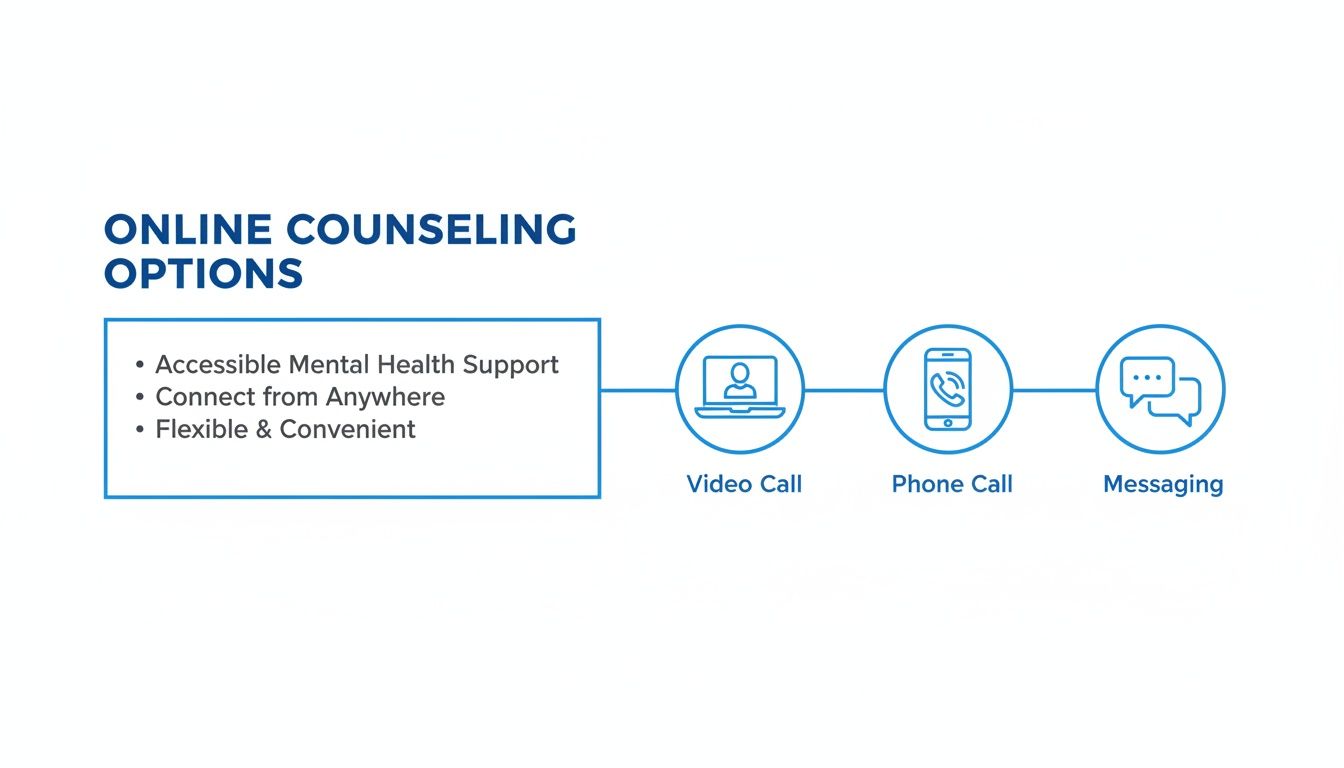
    However, it is not a one-size-fits-all solution. For severe conditions like psychosis or active suicidal thoughts, in-person care is often the safer choice. A professional online therapist will recognize this and help guide you to appropriate in-person resources if needed.

    How Does Online Therapy Promote Positive Psychology?

    Therapy is not just about addressing difficulties; it's also a powerful space for building on your strengths. It’s about learning to thrive. Online platforms make this proactive side of mental well-being very accessible.

    A therapist can guide you in positive psychology, helping you cultivate a happier, more meaningful life.

    • Building Resilience: Learn skills to bounce back from setbacks with a flexible mindset.
    • Practising Self-Compassion: Work on developing a kinder inner voice, which is fundamental to emotional health.
    • Cultivating Happiness: Discover practical techniques to focus on what's good and find more joy in the everyday.

    Therapy is not a promise of a cure. Instead, it offers a supportive space and a toolkit of skills to help you navigate your own mind with more confidence and clarity.


    At DeTalks, we're here to help you find the right support for your unique path. Our platform gives you access to a wide network of qualified professionals and scientifically validated assessments to guide you toward greater self-awareness and emotional balance. Take the next step today by exploring our resources and connecting with a therapist who understands your needs at https://detalks.com.

    Article created using Outrank