
It often starts with a single thought—replaying a conversation from yesterday or worrying about a meeting next week. Before you know it, your mind is stuck in a loop you can't seem to switch off. This isn't a personal failing; it's a common human response to past experiences, current pressures, and ingrained thinking habits.
Why Your Mind Won't Switch Off
Does your mind ever feel like an engine that keeps running long after you’ve parked the car? That constant hum of thoughts can be exhausting, replaying conversations, second-guessing decisions, and spiralling into what-if scenarios. If this sounds familiar, you are not alone on this journey.
This guide explores the core reasons overthinking happens, not as a weakness, but as a surprisingly common reaction to modern life. It's helpful to distinguish between productive reflection and the unhelpful cycle of overthinking. Productive thought builds a bridge to a solution, while overthinking just runs in circles, leading to stress and exhaustion.
Understanding Reflection vs. Rumination
Healthy reflection is how we learn and grow. It’s a purposeful look back at our experiences to gain new perspectives and make better choices, helping us build resilience.
Overthinking, on the other hand, often means dwelling on things far outside our control. This only magnifies negative feelings and leads to mental fatigue, anxiety, and paralysis.
The image below paints a clear picture of this trap. The mind gets caught between replaying the past (rumination) and anxiously anticipating the future (worry). These two patterns fuel the overthinking engine.
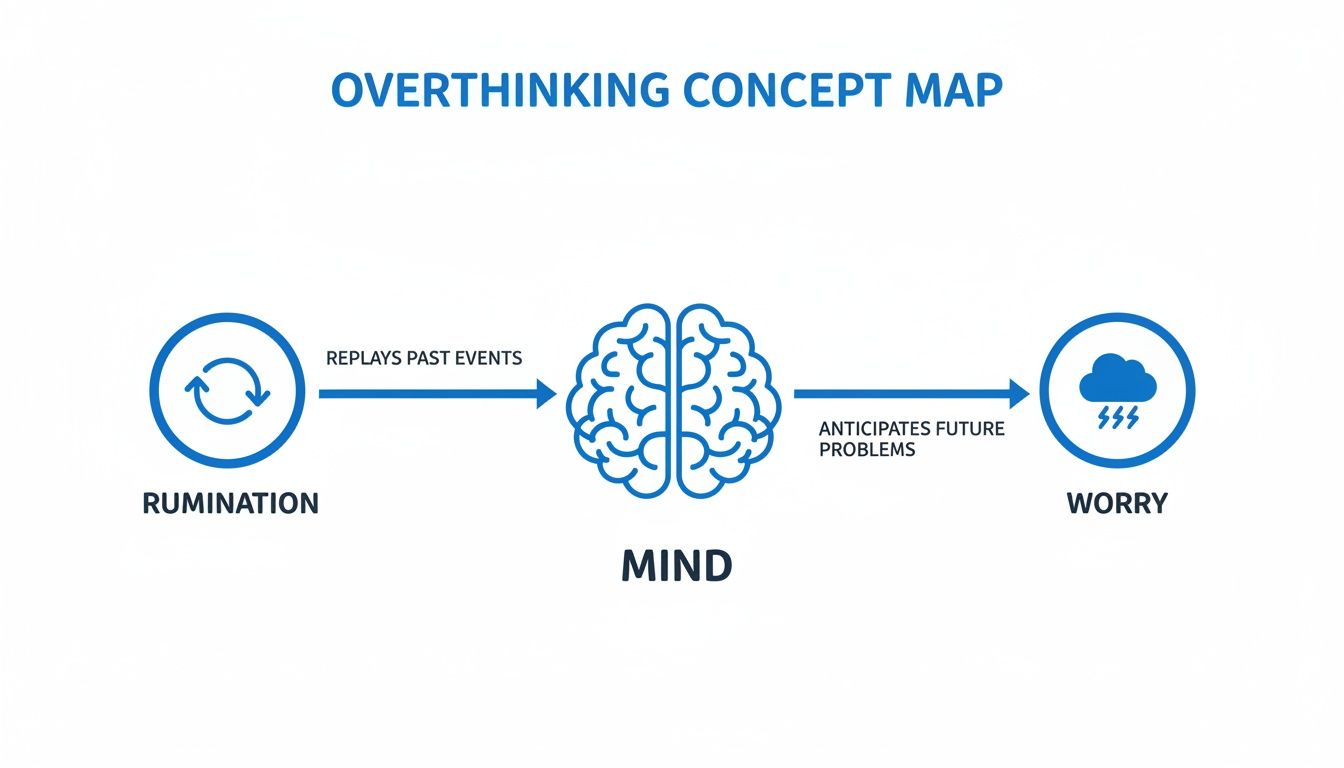
Recognising which path your mind is taking—back to the past or forward to the future—is a powerful first step. This awareness helps you gently guide your attention back to the present moment.
The Impact on Your Well-Being
When your brain is always "on," the effects can ripple through your entire life. This constant mental churn can disrupt your sleep, shatter your concentration, and feed feelings of anxiety or even depression. Over time, it can lead straight to burnout, straining your relationships, work, and health.
If you often wonder how to quiet your mind, exploring practical techniques can be very helpful. Learning how to quiet your mind and find focus fast can build your resilience and bring back a much-needed sense of calm and happiness.
Understanding your thought patterns is not about judging yourself; it is about gathering information. This awareness is the foundation for creating meaningful change and improving your mental well-being.
Getting to know the root causes of overthinking is the starting point for reclaiming your mental space. Supportive resources, from self-help strategies to professional counselling or therapy, can provide the tools you need for this journey toward clarity and self-compassion.
The Cognitive Roots of a Restless Mind
While overthinking often feels like an emotional storm, its origins are frequently cognitive. These are simply well-worn mental pathways, not character flaws. They're thinking habits developed over years, often as a way to feel more certain in an unpredictable world.
Two of the biggest drivers are perfectionism and a need for control. Perfectionism whispers that any mistake is a disaster, turning every decision into a high-stakes gamble. This forces your mind to churn through every possible outcome to avoid the fear of failure.

The need for control goes hand-in-hand with this. When life feels chaotic, our minds try to regain command by overanalysing every detail. It creates the illusion of being in charge but ultimately leads to mental gridlock and burnout.
The Trap of Analysis Paralysis
When perfectionism and the need for control team up, they often lead to "analysis paralysis." This is the classic trap where you get so bogged down weighing every option that you make no decision at all. The fear of making the wrong choice becomes more powerful than the relief of making any choice.
This pattern can show up in big projects and small daily tasks alike. It might look like spending ages writing a single email to get the tone perfect or replaying a casual comment from a friend to find a hidden meaning. This cycle not only harms productivity but also becomes a major source of workplace stress and chips away at your confidence.
The Emotional Fuel Behind Overthinking
Of course, thinking habits are only half the picture; emotions fuel the overthinking engine. Underlying feelings like anxiety and low self-esteem act as powerful amplifiers, turning up the volume on self-doubt and criticism.
Anxiety focuses on future threats, flooding the mind with worst-case scenarios. Low self-esteem adds another layer by turning that analytical lens inward, making you more likely to see negativity where there is none. This relentless self-scrutiny is exhausting and reinforces feelings of inadequacy.
Overthinking is not your identity; it is a habit your brain has learned. With awareness and practice, you can teach it new, more compassionate ways to think and improve your mental resilience.
Introducing Self-Compassion as an Antidote
Breaking these cycles is not as simple as telling yourself to "stop thinking." A more effective approach is to cultivate self-compassion—treating yourself with the same kindness you would offer a good friend. This simple shift in tone doesn't make the thought disappear, but it strips it of its power, helping you find a calmer state of mind.
For anyone whose overthinking is tangled up with persistent anxiety or depression, professional support can make a world of difference. Both therapy and counselling provide a safe space to unpack these roots, offering personalised strategies to build healthier thought patterns and lasting resilience.
How Life Experiences Shape Your Thought Patterns
Think of your mind like a garden where life experiences are planted as seeds. Some grow into strong, beautiful flowers, while others sprout into tangled weeds of worry. Overthinking is often a learned response to the world you've had to navigate.
Understanding these outside influences is a massive step forward. It helps you see your thought patterns not as a personal flaw, but as a survival tool your brain built to keep you safe. That shift in perspective is the ground you need to build mental resilience and find your balance.
When Your Past Echoes in the Present
Our early years leave a lasting mark on how we see the world. If you grew up in a home where every mistake was scrutinised, your brain can become hyper-aware of potential errors. Similarly, experiencing major life events like trauma can hardwire the brain to be on high alert for threats.
The mind may replay what happened, not to punish you, but in an attempt to understand it and prevent it from happening again. This protective instinct, while well-intentioned, can become one of the deepest causes of overthinking.
Overthinking is often a conversation between who you are today and a past version of you that is still just trying to feel safe. Acknowledging that connection with compassion is a powerful first step toward healing.
This link between past experiences and present thought loops is why professional counselling can be so effective. A therapist provides a safe space to gently untangle those old connections and weave new, healthier ways of thinking.
The Pressure Cooker of Modern Life
While our past might lay the foundation, the pressures of daily life keep the fire going. Modern society, especially in a competitive environment like India, puts incredible demands on us, creating a perfect storm for an exhausted mind.
Workplace stress, for instance, is a huge trigger. The fear of missing a deadline or the anxiety of dealing with a difficult boss can leave you chewing over work problems long after you’ve clocked out. This constant mental rehearsal can turn your mind into an after-hours office.
Academic pressure is another major factor, particularly for young adults in India. The relentless focus on exams and securing a "perfect" future creates an environment where the fear of failure feels overwhelming. This immense stress is a primary driver behind the rumination and worry we see in so many students.
From Survival Tactic to Daily Habit
When a cautious past meets a demanding present, overthinking can shift from a temporary coping skill into your brain's default setting. It becomes the go-to strategy for handling any uncertainty, even when it only increases anxiety and leads to burnout.
Realising where these external triggers come from is incredibly empowering. It helps you take it less personally and understand that you're not broken; you're just responding to your circumstances. Understanding these influences is your first step toward taking back your mental space and building lasting well-being.
Navigating Overthinking in the Digital Age
Our hyper-connected world has introduced a whole new set of triggers for a restless mind. Social media, with its constant stream of notifications and curated perfection, has become a digital breeding ground for overthinking, comparison, and self-doubt.
We scroll through endless highlight reels of picture-perfect holidays and flawless relationships. It’s only natural to start measuring our own messy, real lives against these polished online images. This gap between their digital persona and our offline reality is one of the most powerful modern causes of overthinking.

This often leads us to dissect our own digital footprint with intense scrutiny. We agonise over posting the ‘right’ photo or spend far too long crafting a witty caption. These are modern forms of rumination, fuelled by a deep-seated fear of being judged in a space where every interaction feels permanent.
The Pressure to Perform Online
This pressure feels especially intense in India, where digital and social lives are deeply intertwined. The constant demand of social media can be a primary driver of overthinking for many young people and professionals.
A revealing report found that a staggering 81% of Indians overthink for at least three hours every single day. You can explore the full findings to better understand how these digital pressures are impacting daily thought patterns. This constant performance anxiety turns our phones into stages where we feel perpetually watched.
Your value is not determined by likes, comments, or shares. Cultivating self-compassion and resilience is about remembering your worth exists offline, independent of any algorithm or digital validation.
Building a healthier relationship with technology is vital for protecting your mental well-being. It all starts with recognising how these digital habits are affecting you and your peace of mind.
Common Digital Triggers for Overthinking
Recognising your personal triggers is the first step toward reclaiming your headspace. The table below breaks down some common digital activities that can send our minds into an overthinking loop, helping you identify which ones might be affecting you.
| Digital Activity | Common Overthinking Pattern | Underlying Fear |
|---|---|---|
| Checking "Last Seen" Statuses | Constantly monitoring when someone was last online and interpreting it as a sign of being ignored. | Fear of rejection or being unimportant. |
| Crafting the 'Perfect' Post | Spending hours editing photos, writing captions, and worrying about how a post will be perceived. | Fear of judgment and not measuring up. |
| Analysing Text Messages | Rereading messages repeatedly to decode punctuation, emoji use, or response time. | Fear of miscommunication or conflict. |
| Comparing Your Life to Others | Scrolling through feeds and feeling inadequate about your own career, relationships, or appearance. | Fear of falling behind or not being enough. |
Simply seeing these patterns laid out can be a powerful moment of realisation. Small changes—like setting time limits on apps or turning off non-essential notifications—can make a world of difference.
If you find that these digital pressures are a consistent source of anxiety or feelings of depression, professional support can be invaluable. Therapy or counselling offers a dedicated space to unpack these triggers and develop strategies for building digital resilience.
Overthinking in Your Professional Life
The modern workplace, with its high stakes and constant demand to perform, can easily become a breeding ground for overthinking. Career-related rumination is a real challenge that can follow us home long after we've logged off, contributing to workplace stress and burnout.
Perhaps you find yourself dissecting a manager's brief email for hidden criticism. Or maybe you're wrestling with imposter syndrome, convinced you're about to be exposed as a fraud despite your accomplishments. These thought loops are classic signs that professional pressures are taking a toll.

This experience is especially common in India’s competitive professional environment, where career uncertainty is a major stressor. A recent study found that 42% of employees admit to panicking over a boss's one-word 'Ok' reply—a telling sign of how deep these anxieties can run. You can read the full report to understand more about daily professional overthinking habits in India for more context.
Common Workplace Triggers
The first step to breaking the cycle is spotting what sets it off. The professional world is full of potential triggers that can send an already busy mind into overdrive, creating significant anxiety.
Common causes of overthinking at work include:
- Ambiguous Feedback: Vague comments can leave you spending hours trying to read between the lines, often assuming the worst.
- High-Stakes Projects: The pressure to deliver perfection can lead to analysis paralysis, making it feel impossible to even start.
- Interpersonal Dynamics: Navigating tricky relationships with colleagues or managers can lead to replaying conversations and second-guessing your actions.
- Career Progression Worries: Constantly measuring your career path against others or worrying if you’re making the "right" moves is a major source of rumination.
Your professional worth is not defined by a single email, project, or piece of feedback. Building resilience involves learning to separate your identity from your day-to-day performance outcomes.
Building Professional Resilience and Well-being
If these situations feel familiar, please know you’re not alone. Acknowledging these struggles is a sign of strength. This self-awareness is your starting point for building professional resilience and safeguarding your overall well-being.
Instead of letting these thought patterns spiral into burnout or depression, think of them as signals that it might be time to get support. Proactive steps like counselling or therapy can offer a confidential space to unpack these triggers. A therapist can help you develop personalised tools to manage workplace stress and cultivate self-compassion.
Actionable Steps Toward a Calmer Mind
Understanding why you overthink is a fantastic first step, but real change happens when you explore how to manage it. This journey from understanding to action starts with self-compassion. Building a calmer inner world takes time and patience.
While strategies like mindfulness are brilliant, sometimes you need a clearer roadmap. Professional support like therapy or counselling can provide a dedicated space to build coping skills that work for you. It's a powerful, proactive step toward lasting mental well-being.
Finding a Path Forward with Professional Support
Reaching out for guidance is an act of strength. A good therapist acts as a skilled guide, helping you connect the dots between your past experiences and current thought patterns. This process can bring clarity and provide proven strategies to finally break the cycle.
One of the most effective approaches for overthinking is cognitive behavioral therapy (CBT). It teaches you how to catch, challenge, and change the unhelpful thoughts that fuel rumination and anxiety. As you build these skills, you can face challenges with more clarity and less distress.
A quieter mind isn't an empty mind. It’s a mind that has learned to watch its thoughts with kindness and curiosity, without letting them run the show. This is the very foundation of emotional resilience.
Professional help is particularly valuable if your overthinking is tied to deeper issues like anxiety, depression, or intense workplace stress. A qualified counsellor can use assessments to bring clarity to your situation. Remember, these tools are informational, not diagnostic—they are there to guide your journey, not define it.
Supportive Takeaways for Your Journey
There is no magic wand to stop overthinking overnight, but there is so much hope. A quieter mind is within your reach, and every small step you take is a win.
Keep these supportive takeaways in mind as you move forward:
- Self-Compassion is Key: Be as kind to yourself as you would be to a friend. You're doing your best, and healing is not a straight line.
- Awareness is Your First Tool: Simply noticing when you're stuck in an overthinking spiral is a massive step toward choosing a different path.
- Action Creates Momentum: Small actions, like journaling for five minutes or booking a first therapy session, build confidence and create real change.
- You Are Not Alone: Many of us get caught in overthinking. Connecting with supportive friends, family, or a professional can provide the encouragement you need.
This journey is about moving toward a deeper understanding of yourself and finding more emotional freedom. By combining your own efforts with the right support, you can build the skills to manage overthinking and cultivate a life with more happiness and resilience.
Frequently Asked Questions About Overthinking
When you're trying to get a handle on overthinking, questions are a normal part of the process. Let’s walk through some of the most common ones to bring you more clarity and peace of mind.
Is Overthinking a Sign of a Mental Illness?
On its own, overthinking is a common thought pattern, not a mental health condition. However, if it becomes constant and seriously disrupts your sleep, relationships, or ability to function, it may be a symptom of an underlying issue like an anxiety or depression. A professional assessment can help clarify this; please remember any online quizzes are informational, not diagnostic.
Can Overthinking Ever Be a Good Thing?
That’s a fair question. The instinct behind overthinking often starts from a good place—your brain is trying to solve a problem or protect you. It’s a defence mechanism.
The skill is learning to channel that analytical energy toward productive problem-solving instead of letting it spin out of control. Therapy can help you shift from harmful rumination to helpful reflection, building your emotional resilience.
Just a friendly reminder: any screening tools or quizzes you find online are for informational purposes. They can offer insights, but they are no substitute for a formal assessment from a qualified mental health professional.
How Do I Know If I Need Professional Help?
The tipping point is usually when overthinking starts to control your life. If it's causing you constant distress, ruining your sleep, or straining your work and relationships, it may be time to seek support. If self-help strategies aren't enough, reaching out to a professional is a proactive step toward improving your well-being.
What Kind of Therapy Helps with Overthinking?
Fortunately, several therapies are very effective for managing the causes of overthinking. Cognitive Behavioural Therapy (CBT) is a practical approach that teaches you to spot and change unhelpful thought patterns.
Other methods like mindfulness-based practices can also help you relate to your thoughts in a healthier way. The right therapist will work with you to find the best approach, guiding you toward a life with more clarity, resilience, and happiness.
Understanding and managing your thoughts is a journey. If you feel professional guidance could support you, DeTalks is here. We can connect you with qualified therapists and provide science-backed assessments to help you understand yourself better and build the resilience to thrive. Find the right support for your journey today.
Leave a Reply