
Self-discipline isn't a special talent you're born with—it's a skill you can build. Like any skill, it grows stronger with small, consistent actions each day. It’s about creating routines that gently guide you toward your goals, especially when your initial motivation fades.
Remember, true discipline is about progress, not perfection. This approach helps you build resilience and supports your overall well-being.
Why Self Discipline Is a Skill, Not a Trait

Trying to become disciplined by using pure willpower alone is exhausting. This approach often leads to frustration and self-criticism, making you feel like you just aren't "built for it."
But self-discipline is more like learning a new skill—it requires practice, patience, and the right techniques. It’s an act of self-care.
Everyday challenges like workplace stress or anxiety can drain your mental energy, making it hard to stick to new goals. This isn’t a personal failure; it's a completely normal human response to feeling overwhelmed.
Rethinking Discipline in the Indian Context
In India, there's often a strong cultural belief that willpower is a measure of mental strength. This creates a heavy expectation and can lead to harmful misunderstandings about mental health.
This mindset can create a cycle of guilt when we struggle with challenges like anxiety or depression. It's important to separate the skill of building healthy habits from the reality of these health conditions. Learning how to develop self discipline can be a supportive part of improving your well-being, but it is not a cure.
Before we explore practical steps, it's helpful to shift your mindset from one of force to one of compassion. Let's look at a more effective approach rooted in well-being.
Shifting Your Mindset From Willpower to Well-being
| Old Myth (Based on Willpower) | New Truth (Based on Well-being) |
|---|---|
| "I just need to be tougher on myself." | "I need to be kinder and smarter with my energy." |
| "If I fail once, I've ruined everything." | "Setbacks are part of the process. I can learn and adjust." |
| "I must force myself to do things I hate." | "I can find ways to align my goals with my values." |
| "Discipline is about restriction and punishment." | "Discipline is about creating freedom and structure." |
This shift is the foundation for a sustainable practice. By adopting a well-being approach, you work with your mind, not against it.
Moving From Perfection to Progress
The key to lasting discipline is focusing on small, consistent wins rather than trying to be perfect overnight. This empathetic approach allows you room for an off day without feeling defeated.
An off day isn't a failure; it's a chance to get curious and ask, "What got in my way today? What can I adjust for tomorrow?"
Building resilience starts with understanding your own patterns without judgment. This self-awareness helps you create systems that truly work for you, like starting with a tiny goal or practising self-compassion.
The secret to discipline isn’t about being harsher on yourself. It's about being smarter with your energy and kinder in your approach, creating systems that make success the easiest path.
Ultimately, this journey is about aligning your daily actions with your deeper values. If you find you're persistently struggling, remember that professional support through therapy or counselling can offer valuable guidance and strategies.
Understanding the Brain Science of Motivation
To build self-discipline, it helps to understand what's happening inside your brain. If you constantly struggle with motivation, you’re not failing; you're often just working against your brain's natural wiring.
The Dopamine Drive: It’s Not About Pleasure, It’s About the Chase
At the center of motivation is a chemical called dopamine. Many think of it as the "pleasure chemical," but it's more about anticipation. It’s your brain’s way of saying, "Pay attention! Something good is coming!"
This system is powerful and drives you to seek rewards. Our brains are hardwired to chase immediate rewards over long-term goals, which is why scrolling social media can feel more compelling than studying for an exam.
Your Brain's CEO: The Prefrontal Cortex
The part of your brain that manages impulses is the prefrontal cortex. Think of it as your brain's CEO, in charge of planning and decision-making. These abilities, called executive functions, are the foundation of self-discipline.
However, your prefrontal cortex can get overwhelmed by stress. When your brain is overloaded, its ability to think long-term and delay gratification weakens, and it seeks the easiest path to relief. This is why you might reach for junk food after a draining day; your brain is just trying to cope.
Your struggle to stay disciplined isn't a character flaw. It's often your brain's logical response to stress, fatigue, and an environment that prioritises instant gratification over long-term well-being.
How Stress and Anxiety Hijack Your Discipline
Chronic stress and anxiety interfere with your brain's executive functions. When you're anxious, your brain's alarm system can take over, shifting your focus from long-term goals to immediate comfort.
This explains why it feels almost impossible to be disciplined when you're anxious or nearing burnout. Your brain is conserving energy to manage perceived threats, leaving little fuel for disciplined action. Sometimes, a lack of motivation can be a sign of something deeper, like depression.
Understanding this helps you reframe the challenge. Instead of asking, "What's wrong with me?" you can ask, "How can I support my brain?"
Here are a few ways to support your brain's CEO:
- Tackle Decision Fatigue: Simplify your life with routines for meals or work tasks to save mental energy.
- Manage Your Stress Levels: Add small stress-relievers to your day, like a short walk or deep breathing.
- Prioritise Your Sleep: Good sleep is essential for your prefrontal cortex to reset and repair itself.
If persistent stress or low motivation is making your days difficult, therapy or counselling can make a difference. A therapist can help you build lasting resilience. The assessments on the DeTalks platform are informational tools, but please remember they are not a substitute for a professional diagnosis.
Your Practical Toolkit for Building Lasting Habits
Knowing why we act is a good start, but real change comes from practical steps. This toolkit offers proven techniques to build habits that stick, creating systems that make good choices feel easier.
Think of it as setting up a gentle current that pulls you toward your goals. We'll explore simple strategies that work with your brain's natural tendencies.
Make It Obvious: Create a Clear Cue
The first step to starting a new habit is making the trigger for it impossible to miss. You can use your brain's tendency to scan its environment to your advantage.
For example, if you want to meditate each morning, place your cushion beside your bed. It becomes a clear, unavoidable signal, which is more effective than a vague mental note. This approach is called environment design.
- Want to drink more water? Keep a filled bottle on your desk.
- Hoping to read before bed? Replace your phone on the nightstand with a book.
- Trying to eat healthier? Place a bowl of fruit on the counter where you can see it.
When your cues are visible, the process starts to feel more automatic.
Make It Attractive: Pair Habits Together
Our brains love rewards, so making a new habit attractive is key to consistency. One effective technique is temptation bundling, where you pair an action you want to do with one you need to do.
For instance, you could make a rule that you only listen to your favorite podcast while you are on your daily walk. The walk no longer feels like a chore; it becomes the gateway to something you enjoy.
Another method is habit stacking, where you add a new habit onto an existing one. If you already make chai every morning, you can "stack" a new habit on top of it.
After my morning chai is ready, I will take two minutes to stretch.
After I finish stretching, I will write down one thing I am grateful for.
This creates a chain reaction that makes it easier to fit new behaviors into your day.
Make It Easy: Start with Micro-Habits
One of the biggest mistakes is making new habits too big, too soon. Instead, start with a micro-habit—a version of your goal so small it feels almost silly not to do it.
Instead of a 30-minute workout, your goal could be to simply put on your workout clothes. This approach bypasses your brain's resistance to large tasks and helps build momentum.
Building a habit is more about the consistency of small actions than the intensity of one. Once showing up is automatic, you can gradually increase the difficulty.
Make It Satisfying: Reward Your Progress
For a habit to stick, your brain needs to feel an immediate sense of satisfaction. Our brains are wired for short-term rewards, which creates a positive feedback loop.
This simple flowchart shows the powerful process our brain follows to build motivation and lock in our actions.
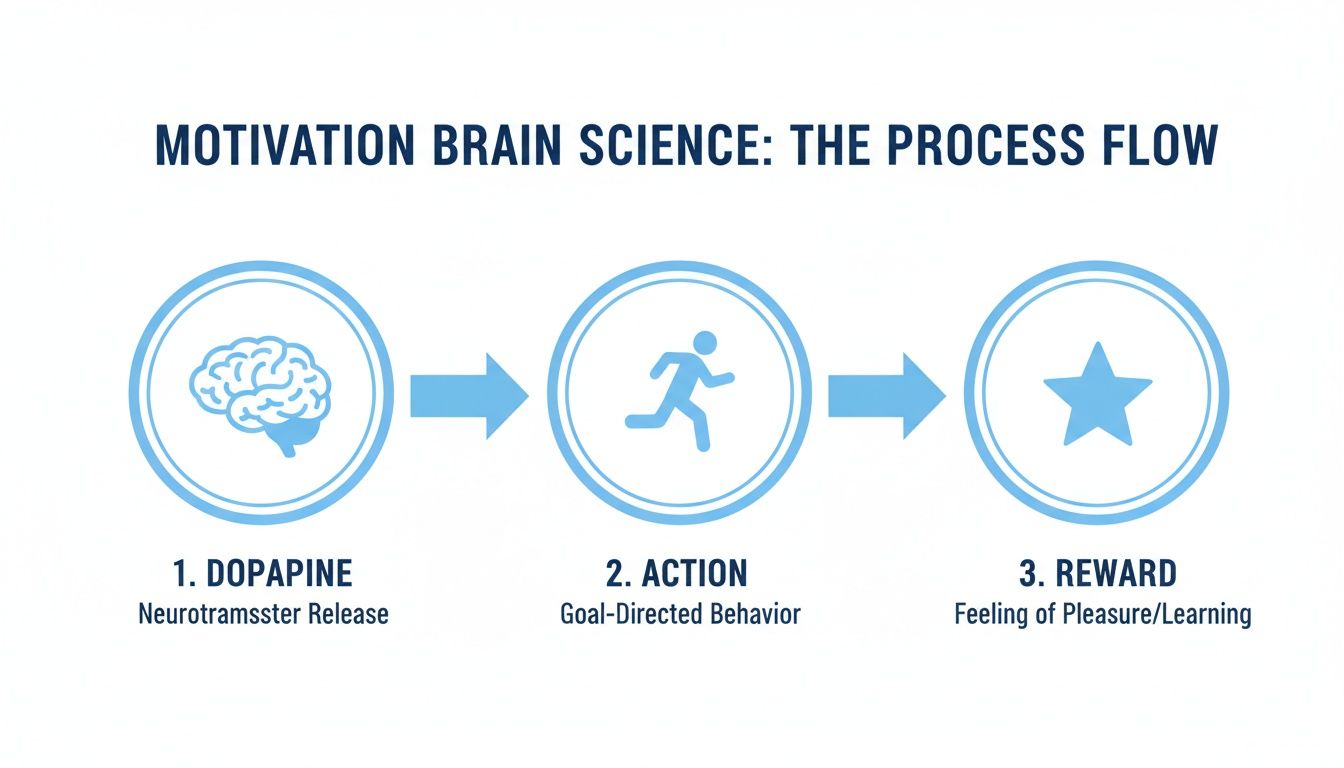
This cycle of anticipation, action, and reward makes habits last. You can design your own rewards, like watching a show after a task or the simple satisfaction of marking it complete on a calendar.
Building positive routines is a powerful way to combat low motivation and workplace stress. This is especially important for creating resilience. To learn more, check out these practical strategies to break bad habits, which can help improve your overall well-being.
How to Overcome Common Roadblocks

As you build new habits, you will encounter challenges. Setbacks are a normal part of the journey and are not a sign of failure.
Think of these challenges as opportunities to learn, adjust your strategy, and build true resilience. This section offers practical solutions for common barriers, helping you turn obstacles into stepping stones.
Navigating Procrastination and Perfectionism
Procrastination is often rooted in a fear of failure or feeling overwhelmed, not laziness. Its close cousin, perfectionism, suggests that if something can't be done perfectly, it's not worth starting at all.
A simple way to break this cycle is the '2-Minute Rule.' Commit to doing whatever task you're avoiding for just two minutes. This lowers the barrier to entry and makes it easier to begin.
- Overwhelmed by a big report? Just open the document and write one sentence.
- Dreading your workout? Just change into your gym clothes.
- Avoiding that messy kitchen? Set a timer and wash just one dish.
This small trick helps you build momentum, and you'll often find it's easier to keep going once you've started.
Protecting Your Energy from Burnout
In today's fast-paced culture, workplace stress and burnout are serious threats to your well-being. Burnout is a state of exhaustion that can completely drain your motivation.
Setting firm boundaries is essential for sustainable self-discipline. This means learning to say "no" and protecting your personal time to disconnect and recharge.
True self-discipline isn't about pushing yourself to the brink. It's about having the wisdom to know when to rest and recharge so you can show up consistently over the long term.
Understanding the Impact of Mental Health
Sometimes, a struggle with discipline is linked to underlying mental health conditions. For example, anxiety can make it hard to focus on long-term goals, while the fatigue from depression can make small tasks feel monumental.
It's important to recognize when your challenges go beyond typical procrastination. If you constantly feel unable to start tasks or experience overwhelming anxiety, you may benefit from professional support.
Seeking guidance through therapy or counselling is a proactive step. A professional can help you develop personalized strategies. Remember, assessments you find on platforms like DeTalks are informational and not a substitute for a clinical diagnosis.
Turning Setbacks into Comebacks
You will have days where you fall off track. The most important thing is how you respond in those moments. Instead of self-criticism, practice self-compassion.
Acknowledge that it was a tough day, and then get curious. Ask yourself what went wrong without judgment and use that insight to adjust your plan for tomorrow.
This mindset shift is the heart of building resilience. Every time you get back on track after a setback, you strengthen your self-discipline and support your long-term well-being.
When to Seek Professional Support
Building self-discipline is a personal journey, but you don't have to do it alone. Sometimes, our own strategies aren't enough to break through the barriers we face.
Seeking professional support is not a sign of weakness; it's a proactive and strong move toward genuine well-being. It’s like hiring a specialist who can offer expert guidance and personalized strategies.
Telltale Signs You Might Need a Hand
How do you know when you might need more support? While everyone's experience is unique, certain patterns suggest that professional therapy could be very helpful.
Keep an eye out for these indicators:
- Chronic Procrastination with Real-World Fallout: If procrastination is consistently affecting your career, relationships, or health, a deeper issue may be at play.
- A Persistent Feeling of "Meh": A constant lack of interest, even in things you once enjoyed, can be a symptom of depression.
- Anxiety or Stress That Shuts You Down: Feeling too overwhelmed by anxiety or workplace stress to focus is a sign you could use coping strategies.
- Stuck on a Hamster Wheel: If you keep trying the same things without success, a therapist can offer a fresh perspective to help you identify unhelpful patterns.
Reaching out for help is a profound act of self-discipline. It’s choosing to invest in your long-term well-being by getting the right support for the challenges you face.
How Therapy Can Supercharge Your Efforts
Therapy is much more than just talking about your problems. A skilled mental health professional can help you identify the root causes of your struggles and build a solid foundation for change.
A key benefit is accountability. Knowing you have a dedicated time to check in with a supportive professional can provide the structure you've been missing.
Building Personalised Strategies That Stick
A good counsellor helps you connect your thoughts, feelings, and actions. They can introduce powerful techniques like Cognitive Behavioural Therapy (CBT) to challenge negative self-talk that fuels procrastination.
By understanding your unique triggers, a therapist can help you:
- Unpack underlying issues like low self-esteem that may be draining your energy.
- Develop healthy coping mechanisms for stress and overwhelm.
- Create a realistic, step-by-step plan that feels achievable and builds resilience.
If you're curious, confidential assessments, like those on the DeTalks platform, can offer valuable personal insights. However, it's vital to remember that these assessments are for informational purposes only and are not a substitute for a professional diagnosis.
Seeking professional help is a powerful way to build a more compassionate and sustainable kind of self-discipline. It’s a true sign of strength.
A Final Word Before You Begin
Building self-discipline is an act of self-respect, not a bootcamp for your brain. It's a journey of getting to know yourself better, especially when facing challenges like workplace stress or anxiety.
Your path is unique to you, and progress is more important than perfection. Every setback is a chance to learn, adjust your strategy, and build genuine resilience.
Your Guiding Principles
As you start, keep these core truths in mind. They can be your compass as you begin living more intentionally.
-
Start so small it feels silly. Break your goals into tiny, easy steps. Consistency will always be more effective than intensity in the long run.
-
Be the architect of your space. Design your environment to make good habits the easy and obvious choice. Set out your workout clothes or place healthy snacks where you can see them.
-
Talk to yourself like a friend. When you slip up, avoid harsh self-criticism. Treat yourself with the same kindness you would offer a friend to build the resilience needed to get back on track.
-
Asking for help is a power move. There is no prize for struggling alone. If you feel stuck or suspect something deeper like depression is at play, reaching out for professional counselling is a strong and wise choice.
Self-discipline, at its heart, is a form of self-care. It's about designing a life that truly supports your well-being and, most importantly, learning to keep the promises you make to yourself.
Got Questions? We've Got Answers
As you work on your self-discipline, questions will naturally arise. Here are answers to some of the most common ones.
"How Long Will This Actually Take?"
There's no magic number for how long it takes to build self-discipline. It's an ongoing process, more like tending a garden than running a race.
Some studies suggest a new habit can take anywhere from 18 to 254 days to form. The wide range shows that everyone's timeline is different. Focus on being consistent rather than fast.
"Is It Possible to Build Discipline With ADHD or Anxiety?"
Yes, it is absolutely possible, though your approach might need to be more strategic. Conditions like ADHD and anxiety can affect focus, but a tailored toolkit can help.
- If you have ADHD: Use external tools like visual timers and break large tasks into very small steps to avoid feeling overwhelmed.
- If you have anxiety: Focus on creating a calm mental space first. Integrating mindfulness or breathing exercises into your day can improve your well-being and ability to concentrate.
A therapist who understands these conditions can help you create a personalized plan that works with your brain.
"What if I Just Keep Failing? I Feel Like Giving Up."
Falling off track isn't failing; it's a normal part of the process. The most disciplined people have off days. The key is how you respond.
Instead of being hard on yourself, get curious. Ask what happened without judgment. Was the goal too big, or did workplace stress get in the way?
Think of every setback as a piece of data. It’s not a verdict on your character; it's valuable information you can use to adjust your strategy. Make the next step smaller, tweak your environment, and just begin again.
If you feel stuck in a cycle, it might be a sign that something deeper is going on. Professional counselling can help you work through challenges like depression or chronic anxiety that may be affecting your motivation.
Ready to build a stronger, more resilient you? At DeTalks, we connect you with qualified therapists who can provide personalised guidance and support on your journey. Take the first step towards lasting change by exploring our network of professionals.
Leave a Reply