
Learning to let go of someone you love is not about deleting memories. It is about reaching a point where thoughts of them do not control your day or your happiness. This healing process is a journey of facing the pain, creating space for yourself, and slowly building a meaningful life on your own terms.
The Unspoken Pain of Heartbreak
When a relationship ends, the sense of loss can feel overwhelming and lonely. You might experience a mix of deep sadness, confusing thoughts, and even moments of anger or relief. Acknowledging that this pain is real and giving yourself permission to feel it is the most important first step toward well-being.
In India, relationship dynamics are evolving. While our culture often values lifelong partnerships, many people now navigate the difficult path of a breakup. This experience, though tough, is a chance to discover your inner strength and build resilience.
A Universal Journey with Unique Challenges
Heartbreak feels similar everywhere, but our environment shapes how we heal. Moving on is not about pretending you are fine; it is about allowing yourself to be not fine for a while. This honesty helps you build the resilience needed for what comes next.
This process can cause significant stress and anxiety, impacting your mental and physical health. The goal is to manage these feelings constructively, preventing them from leading to burnout or more serious issues like depression. The path from heartbreak to healing generally has three stages: feeling the pain, actively healing, and growing from the experience.
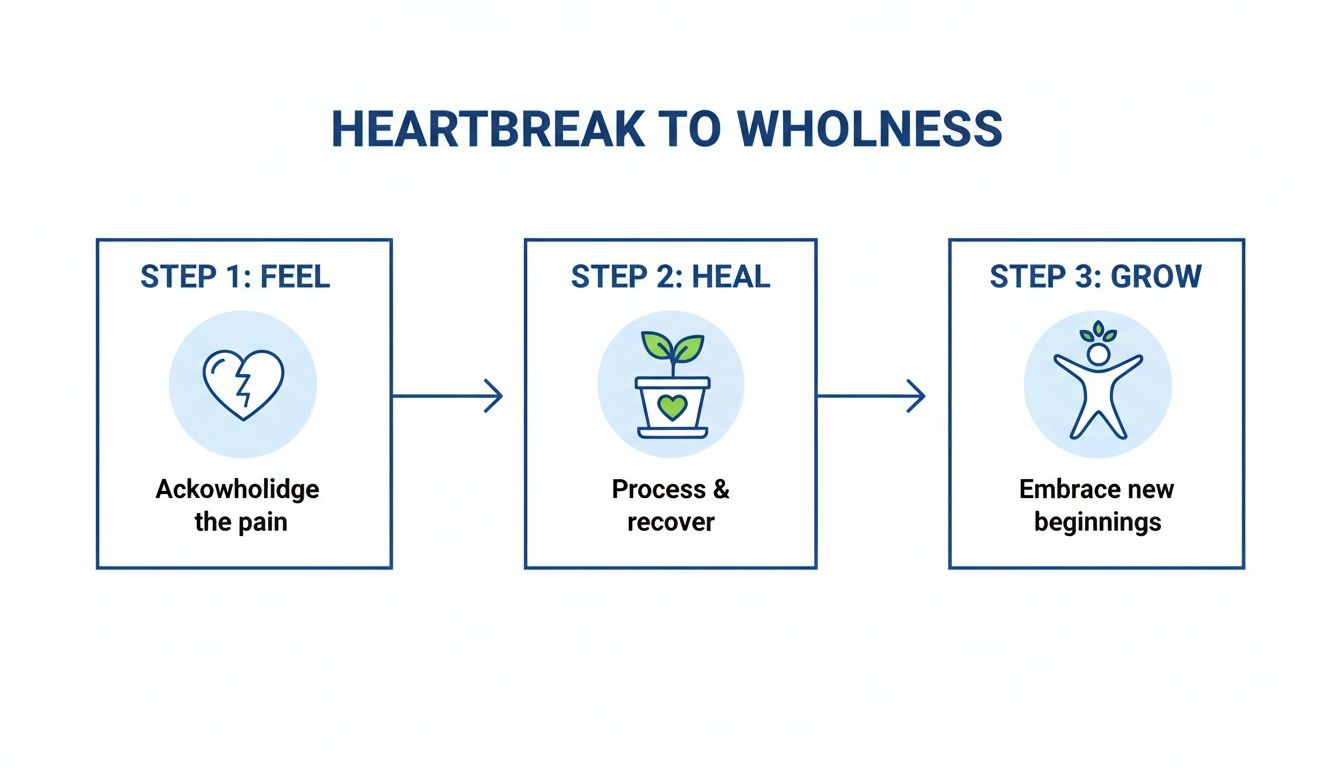
This graphic illustrates that healing is a process, not a single event. It begins with allowing yourself to feel everything, moves into a phase of active healing, and leads to becoming a stronger, more self-aware person.
Understanding the Shifting Landscape in India
While official statistics may seem low, they do not capture the full picture of relationship breakdowns in India. Many people are choosing to leave relationships that no longer support their well-being. This shift is happening across the country, but is especially visible in urban areas.
For example, learn more about the social dynamics of divorce in India, where women are increasingly initiating separations, often due to greater financial independence. This trend reflects a broader social and economic change. It highlights the need for strong support systems, including professional therapy and counselling, to navigate this emotional journey.
Ultimately, this journey is about transforming pain into personal power. It involves building emotional resilience, practicing self-compassion, and creating a future defined by your own purpose and happiness.
Giving Yourself Permission to Feel

Before you can move on, you must allow yourself to stop and feel everything. The first step in learning how to forget about someone you love is not about erasing them, but about acknowledging the pain of their absence.
We are often told to "be strong," but true strength lies in allowing yourself to feel grief, anger, and confusion without judgment. Suppressing these feelings can prolong the hurt and worsen anxiety and stress. Your emotions are valid, and it is normal for them to feel messy.
Creating a Safe Space for Your Emotions
To process difficult emotions, you need a safe outlet where you can be honest. This does not require a grand gesture; it can be as simple as finding a quiet corner in your home.
Here are a few gentle, practical ways to create that space:
- Journaling: Write down everything you feel without censoring yourself. This is a private space for your thoughts.
- Talking to a Trusted Friend: Share your feelings with someone who listens without offering unsolicited advice.
- Creative Expression: If words are difficult, try painting, drawing, or listening to music that reflects your mood.
The goal is to let your feelings move through you instead of getting stuck inside. This practice helps build emotional resilience and restores your sense of well-being.
Understanding the Context of Your Journey
It can be helpful to remember that you are not alone in this experience. In India, for example, societal norms around relationships are changing, as shown by India's rising divorce rates. Women, in particular, are increasingly empowered to leave unhealthy situations.
Whether your story reflects these trends or is different, the need to process emotions is universal. Professional therapy or counselling can provide invaluable support in healing from the attachment wounds a breakup can leave behind.
Gently Reframing Your Thoughts
During heartbreak, harsh thoughts like "I'll be alone forever" are common. These thoughts can create a cycle of despair and contribute to feelings of depression. Cognitive reframing is a technique that can help you gently challenge these thoughts without resorting to toxic positivity.
Instead of: "I'll never find someone like them again."
Try this gentle reframe: "Our connection was unique, and I will always cherish it. I am open to forming new and equally meaningful connections in the future."
This small shift honors your loss while allowing for hope. As you navigate these feelings, remember that online assessments, like those available on some platforms, are for informational purposes. They are not a substitute for a professional diagnosis from a qualified mental health expert.
Carving Out Space to Heal: Why Boundaries Are Your Best Friend
To truly move forward, you need intentional space—physical, emotional, and digital. Setting boundaries is an act of self-preservation that protects your peace and gives your mind the quiet it needs to heal. It is one of the most important parts of figuring out how to forget about someone you love.
Creating this separation helps break the cycle of emotional dependency and allows you to heal. Boundaries give the wound the air it needs to close, helping you build the resilience required to move on.
The No-Contact Rule: A Lifeline for Your Heart
The 'no contact' rule is a popular and effective strategy. It involves a conscious decision to cut off all communication for a period, including calls, texts, and checking social media. It also means not asking mutual friends about them.
This rule is powerful because it breaks the emotional tether that keeps you connected. It forces you to look inward for comfort and validation, rather than seeking it from your ex.
Taming Your Digital World
After a breakup, your phone can feel like a source of constant triggers. Taking control of your digital space is a necessary step in creating healthy boundaries. It is about curating your online world to be a sanctuary, not a source of fresh pain.
A digital detox can be done in small, deliberate steps. The following checklist offers a good place to start.
Digital Detox: A Boundary-Setting Checklist
| Action Item | Why It Helps | Difficulty Level |
|---|---|---|
| Mute/Restrict Accounts | Prevents their posts from appearing in your feed without a full block. Out of sight, out of mind. | Easy |
| Archive Chat History | Hides the conversation so their name is not a constant reminder in your messaging app. | Easy |
| Delete/Move Photos | Removes daily, painful reminders. You can move them to a hidden folder if deleting feels too final. | Medium |
| Update Your Wallpaper | Changing your phone background is a small but symbolic act of moving forward. | Easy |
| Log Out of Shared Accounts | Disconnects you from shared streaming services or other accounts, severing lingering digital ties. | Medium |
| Turn Off "On This Day" Features | Prevents social media from ambushing you with memories you’re not ready to see. | Medium |
Remember, creating digital distance is not about erasing history. It is about giving yourself permission to live in the present, which is a direct investment in your mental well-being.
How to Talk to Friends and Family
Navigating mutual friendships can be tricky. It is important to protect your emotional energy without making friends feel like they must choose sides. Clear and kind communication is key.
A simple request like, "I'm trying to heal right now, so could we avoid talking about [Ex's Name]?" can be very effective. This step helps prevent accidental emotional pain and can reduce social or workplace stress.
If setting boundaries feels too difficult, professional counselling can offer a safe space to work through these challenges. Please remember that any self-assessments you might take are for informational insight and are not a substitute for a professional diagnosis.
Rediscovering Yourself Outside the Relationship

When a relationship ends, it can feel like you have lost a part of yourself. The process of figuring out who you are on your own is a crucial part of healing. It involves a gentle shift from thinking in terms of 'we' back to focusing on 'me.'
This is not just about filling time; it is about reconnecting with your passions and values. This is how to forget about someone you love not by erasing the past, but by creating a future so compelling that the past loses its hold on your well-being and happiness.
Reconnecting with Your Passions and Hobbies
Motivation may be low right now, but small, intentional actions can make a big difference. Think back to who you were before the relationship. What did you love to do? Re-engaging with those activities can help you reconnect with the parts of yourself that existed independently.
- Start Small: You do not have to do something big. Visit an art gallery for an hour or listen to an old favorite album.
- Reconnect with Friends: Reach out to friends you may have seen less of during your relationship.
- Try Something New: If old hobbies feel heavy, try something new like a pottery class or a volunteer opportunity.
This approach, known as "behavioural activation," is a proven technique for lifting your mood. It can help counteract feelings of depression by engaging you in positive activities.
Exploring Your Values Through Journaling
Journaling is a private space to explore your thoughts and feelings without judgment. Use this time to get clear on what matters to you now as a single person. This practice builds resilience and self-awareness.
Try these prompts to begin:
- "What are three non-negotiable values for my life going forward?"
- "What would a perfect day, just for myself, look like?"
- "What personal goal can I start working on again?"
- "List five things I'm proud of that have nothing to do with my last relationship."
These prompts are conversation starters to help you build a clearer picture of the life you want to create. This is a cornerstone of genuine personal well-being.
The Broader Context of Rediscovery in India
This personal journey reflects a broader social shift in India. Urban centers are seeing changes in how relationships are viewed, as detailed in this article on the evolving dynamics of relationships in India. Empowered by education and careers, many people are choosing to leave partnerships that no longer serve them.
This trend shows a growing movement toward self-prioritization and resilience. It reframes moving on as an act of self-reclamation. If you are also managing high workplace stress or academic pressure, therapy can offer structured support during this time of change.
Rediscovering yourself is a process. Be patient and kind to yourself as you navigate this new chapter and build a future where your happiness is in your own hands.
When to Seek Professional Support

The journey of learning how to forget about someone you love can sometimes be too heavy to carry alone. While support from friends is vital, there are times when professional help is needed. Reaching out to a therapist is a sign of strength and a commitment to your well-being.
A therapist or counsellor provides a safe, non-judgmental space to unpack your feelings. They can offer specialized tools to help you heal effectively.
Recognising the Signs You Need More Support
Grief from a breakup is normal, but sometimes it can become persistent and disruptive. It is important to recognize when your emotional pain might be developing into clinical anxiety or depression.
Watch for these indicators:
- Lingering Low Mood: A persistent sadness that does not lift, and loss of interest in activities you once enjoyed.
- Constant Anxiety or Panic: Feeling constantly on edge, having racing thoughts, or experiencing panic attacks.
- Disrupted Daily Life: Struggling with work or home responsibilities, and having trouble concentrating, sleeping, or eating.
- Social Isolation: Consistently withdrawing from friends and family because socializing feels exhausting.
- Feeling Hopeless: A deep sense of hopelessness and the belief that you will never be happy again.
If these signs feel familiar, professional counselling can make a significant difference. It is a proactive step toward building lasting emotional resilience.
What to Expect from Therapy
Therapy is a supportive process designed to empower you. The first session is typically a gentle conversation where you can share your story at your own pace. Your therapist will focus on building a trusting relationship with you.
Together, you will work to:
- Understand Your Patterns: Explore attachment styles and relationship dynamics to understand why this breakup has been so difficult.
- Develop Coping Skills: Learn practical techniques to manage overwhelming emotions and calm your anxiety.
- Rebuild Self-Esteem: Rebuild your sense of self-worth, which can be shaken after a painful split.
- Set Future Goals: Create a hopeful and exciting vision for your future, centered on your own growth and happiness.
Finding the right professional is key. This guide on choosing the right counsellor offers helpful insights.
Important Reminder: While online psychological assessments can offer self-awareness, they are informational tools. They are not a substitute for a formal diagnosis from a qualified mental health professional.
Seeking professional support provides a structured path forward. It not only helps you heal from this loss but also equips you with the strength to handle future challenges.
Embracing Your Next Chapter with Self-Compassion
As you move forward, self-compassion will be your most powerful tool. Learning how to forget about someone you love is less about erasing memories and more about softening their sharp edges until they no longer hurt you.
Your healing journey will have good days and bad days, which is completely normal. The true measure of progress is how kindly you speak to yourself during difficult moments. This shift is the foundation for building emotional resilience and protecting your long-term well-being.
Cultivating Lasting Peace of Mind
Small, consistent practices can make a significant difference over time. These are sustainable tools for your emotional toolkit, not quick fixes.
- Mindfulness: Take a few moments each day to be fully present. Notice the warmth of the sun or the taste of your coffee to ground yourself.
- Gratitude: Make an effort to notice small, positive things. A simple gratitude list can shift your focus from what you have lost to what you still have.
- Self-Compassion Breaks: When a painful memory arises, pause and acknowledge the feeling. Offer yourself a kind intention, such as, "May I be kind to myself in this moment."
Incorporating psychology-backed strategies like these decluttering mental health tips for stress-free living can support your emotional recovery. These small acts of self-care are invaluable for managing anxiety and preventing workplace stress from adding to your burden.
This journey is about hope and rediscovering your inner strength. Forgetting is not about amnesia; it is about freedom—the freedom to look forward to a future filled with peace, new possibilities, and genuine happiness.
Supportive Takeaways
When you are figuring out how to move on from someone you love, many questions can arise. It is normal to feel lost. Here is some guidance on common concerns to help you find your footing.
How Long Does This Actually Take?
There is no set timeline for healing. The time it takes is unique to you and depends on factors like the length of the relationship and your support system. Instead of focusing on a date, notice small, daily steps forward.
Celebrate small wins, like a day without checking their social media. Be kind to yourself; your emotional health is the priority. The goal is to reach a place where their memory no longer disrupts your peace.
Is It Bad That I Still Miss Them?
Missing someone who was important to you is completely normal, even long after a breakup. These feelings do not mean you are failing to move on; they show that what you had was meaningful.
The key is whether these feelings control your life. If you can still function, find moments of joy, and build your future, then occasional feelings of missing them are just a natural part of loss.
Allowing yourself to feel these emotions without judgment builds emotional resilience. It shows you have a great capacity to love, which is a strength.
What if I Can’t Avoid Seeing Them?
Navigating unavoidable encounters at work or in social settings requires firm boundaries to protect your emotional well-being. If you must interact, keep it polite, brief, and focused.
You do not owe anyone a long conversation. Having simple exit lines ready, like, "Good to see you, I have to run," can be helpful. Prioritizing your emotional needs is essential for healing and can help manage any related workplace stress or anxiety.
At DeTalks, we understand that seeking help is a sign of strength. If you are struggling to move forward and need a safe space to talk, our compassionate therapists are here to support you. You can explore our directory of professionals and find the help you deserve by visiting us at https://detalks.com.
Leave a Reply