
You may be searching “ADHD near me” after months of missed deadlines, unfinished tasks, school concerns, emotional overload, or difficulty concentrating at work. You might need an ADHD assessment, therapy or counselling, medication guidance, school support, workplace adjustments, or help with related anxiety, depression, burnout, and workplace stress.
Start by separating screening from diagnosis. An online questionnaire or assessment can offer useful, confidential information about patterns in attention, impulsivity, mood, or executive functioning, but it isn't diagnostic. A qualified clinician must complete the evaluation, consider your history, and assess whether another concern could explain the symptoms.
India's care pathways vary by city, age group, provider, and budget. The same framework can help readers in other countries, but local rules, referral systems, and professional qualifications differ. Compare each option by age group, city or online access, professional disciplines, evaluation depth, follow-up, fees, waiting times, and practical fit.
This list focuses on the kind of help you may need, from integrated platforms and child-focused centres to adult psychiatry, hospitals, public care, and online access. If you're also exploring supplements or lifestyle support, review the ADHD and supplements overview from VitzAi, and discuss any health decision with a qualified professional.
1. DeTalks
DeTalks suits people searching “ADHD near me” who need help comparing routes before contacting a clinic. Its online platform combines a directory of psychologists, therapists, and counsellors, screening guidance, booking support, and self-help resources. That makes it a practical first stop when you are unsure whether to seek an assessment, therapy, coaching, or psychiatric care.
For ADHD searches, the useful entry points are screening information, professional-directory filters, and booking support. Related concerns such as anxiety, depression, burnout, sleep problems, exam stress, and workplace stress can be treated as additional filters rather than as a repeated condition list. Concentration difficulties often sit alongside emotional strain, so ask whether a provider can address the full pattern affecting school, work, relationships, or daily routines.
DeTalks also offers resources focused on resilience, mindfulness, emotional intelligence, purpose, compassion, self-esteem, happiness, and emotional balance. These topics can support overall well-being and coping, but they do not replace an ADHD evaluation or treatment plan.
What makes DeTalks useful for ADHD searches
Its ADHD assessment guidance discusses screening tools such as the Adult ADHD Self-Report Scale, or ASRS v1.1. Use a screening result to record patterns and prepare questions. A clinician still needs to review your history, current functioning, and other possible explanations before making a diagnosis.
You can use DeTalks to:
- Find relevant professionals: Filter psychologists, therapists, and counsellors by the type of support you want.
- Choose a care level: Use your concerns to compare self-help, counselling, coaching, and psychiatric care.
- Address related concerns: Look for support with mood, stress, relationships, sleep, or workplace difficulties.
- Build longer-term skills: Review resources related to resilience, compassion, mindfulness, and well-being.
- Book support online: Use a digital pathway to identify and contact professionals.
Before booking, confirm the practitioner's qualifications, whether they assess your age group, the evaluation process, fees, availability, confidentiality arrangements, and follow-up. Ask whether online care is appropriate for your needs and how referrals work if medication or a more detailed assessment becomes necessary.
DeTalks serves individuals across India and plans to expand to the USA and other markets. Public pages do not clearly explain pricing, insurance integration, practitioner-vetting procedures, or extensive customer reviews, so verify those details directly. For many people, its main value is organising the next step when location, access, and care level are still unclear.
Visit DeTalks to browse its mental-health directory and assessment resources.
2. Children First
For families in Delhi NCR, Children First is a practical option when a child or adolescent shows attention difficulties alongside learning, behaviour, emotional regulation, or family-routine concerns. Its services bring psychiatry, clinical psychology, occupational therapy, and parent-focused programmes together, giving families more than a symptom checklist to guide care.
Assessment should draw on several settings and experiences. Clinicians may ask caregivers about development, sleep, learning, daily functioning, and behaviour at home, while school information can clarify how attention concerns appear in class. This wider view helps separate ADHD screening from diagnosis and can identify anxiety, learning difficulties, or emotional distress that also need support.
Where Children First fits
Choose this provider if coordinated, child-focused care matters more than a single appointment. ADHD assessments, developmental evaluations, psychology, occupational therapy, caregiver workshops, and psychoeducation can help families plan support at home and school. Parent involvement also gives caregivers practical ways to respond consistently and compassionately.
Children First may suit families seeking:
- Child and adolescent expertise: Its services centre on younger people and developmental concerns.
- Multidisciplinary assessment: Psychiatry, psychology, and occupational therapy offer distinct clinical perspectives.
- Family participation: Workshops and guidance can support routines, communication, and emotional well-being.
- Delhi NCR access: Multiple centres may make in-person appointments easier within the region.
Check the trade-offs before booking. Adult ADHD support is limited, and pricing is not clearly published online. Ask for the full cost of assessment, therapy, reports, and follow-up, along with expected wait times and continuity between clinicians. Confirm how school communication works and whether the team can address anxiety, workplace stress in older adolescents, learning needs, or depression when these affect functioning.
Explore Children First's ADHD services.
3. Ummeed Child Development Center
A child whose attention difficulties appear with learning, communication, sensory, or developmental needs may need more than an ADHD consultation. Mumbai-based Ummeed Child Development Center uses a family-centred, multidisciplinary model that considers these connected concerns together.
Developmental paediatricians, psychologists, and therapists contribute to assessment and therapy. This can reduce the burden of arranging separate appointments, though parents should confirm which professionals are available and whether their child's needs fit the service.
Start by asking what the first visit includes. An intake, diagnostic evaluation, and therapy consultation serve different purposes, and screening alone does not establish an ADHD diagnosis.
Ummeed's care planning can address classroom participation, communication, daily routines, emotional regulation, learning skills, and family support. The priorities should follow the child's assessment rather than a standard package. Caregiver guidance can also help parents use consistent strategies at home and coordinate support with school.
The centre may be a strong match for families seeking:
- Developmental paediatric input: Useful when ADHD-like behaviour may overlap with broader developmental questions.
- Shared clinical planning: Multiple professionals can contribute to one understanding of the child.
- Caregiver training: Parents receive practical support for routines and developing skills.
- Therapy under one roof: Fewer separate providers may make ongoing care easier to organise.
Ummeed is primarily paediatric, so it is not an adult ADHD pathway. Families should also check location, wait times, continuity between clinicians, and the full cost of assessment, reports, therapy, and follow-up. Ask whether the team can address anxiety, depression, school stress, or emotional well-being when these affect functioning.
See Ummeed's child development services.
4. Cadabam's Hospitals and Child Development Centre
A student struggling with focus, or an adult facing missed deadlines and workplace stress, may need more than a single ADHD appointment. Cadabam's offers access to adult and adolescent psychiatry, a Child Development Centre, psychology, occupational therapy, speech therapy, rehabilitation, and longer-term management in Bengaluru and Hyderabad.
This range is useful when attention difficulties overlap with anxiety, depression, sleep problems, emotional regulation, learning concerns, or wider mental-health needs. It also gives families a possible route from child services to later psychiatric care within one organisation, although the local team and availability should be confirmed before booking.
Match the pathway to the person
Cadabam's provides psychiatry and therapy, with options such as CBT, DBT, rTMS, and neurofeedback at relevant hospital units. These are not automatic ADHD treatments. Ask what a proposed modality targets, why it fits the assessment, and how the clinician will review progress.
The service deserves consideration if you need:
- Adult and child pathways: Support is available beyond paediatric care.
- Multidisciplinary input: Psychiatry, psychology, occupational therapy, and speech therapy may contribute when specific needs affect functioning.
- Rehabilitation support: This can help address education, work, relationships, or daily routines.
- In-person regional access: Bengaluru and Hyderabad locations may make ongoing visits easier.
Screening does not establish a diagnosis. Ask whether the first appointment is with a psychiatrist, psychologist, or another professional, and whether the assessment includes developmental history, current functioning, other possible explanations, and written documentation. Confirm the full cost, expected wait time, follow-up arrangements, and who will monitor medication response, side effects, and adjustments. Private hospital care may cost more than public services.
5. Manipal Hospitals
Choose Manipal Hospitals when you want psychiatric care within a broader hospital network. Its services may include psychiatry, clinical psychology, neuropsychological testing, medication management, and referrals to other departments. ADHD pathways depend on the specific hospital and clinician, so confirm local arrangements before booking.
A hospital setting can help when attention concerns overlap with sleep problems, anxiety, depression, workplace stress, neurological symptoms, medical conditions, or medication effects. It may also support continuity if you move between cities or need input from another specialty. That wider access comes with a trade-off: a general psychiatry service may not provide the same depth of ADHD assessment as a clinician focused on neurodevelopmental care.
Questions to ask the local team
Use the first call to establish who will handle each part of care:
- Assessment lead: Ask whether you will see a psychiatrist, clinical psychologist, or both, and whether the clinician regularly assesses children, adults, or both.
- Screening and diagnosis: Confirm how the team distinguishes an initial screen from a diagnosis, including developmental history, current functioning, mood, sleep, and other possible explanations.
- Testing: Ask whether neuropsychological testing is available and why it would add value in your case. It is not automatically required for every assessment.
- Continuity: Check who reviews medication, coordinates therapy or referrals, provides reports, and handles follow-up if symptoms, side effects, or workplace stress change.
- Access and cost: Confirm the fee, expected wait time, appointment availability, and whether the same clinician can continue care.
Manipal Hospitals suits people who value hospital infrastructure and referral options. It may be a weaker fit if you need a highly specialised ADHD assessment, unless the named clinician has relevant experience with your age group.
Find Psychiatry services at Manipal Hospitals
6. VIMHANS
For Delhi residents whose ADHD concerns affect study, work, communication, or family routines, VIMHANS offers assessment and treatment through psychology, psychiatry, and neuro-rehabilitation services. Its pathway can include clinical psychology assessment, psychiatric diagnosis confirmation, medication management, rehabilitation, caregiver training, speech-language assessment, and IQ testing.
That range suits people who need more than a brief symptom check. Adults may value access to neuropsychological assessment and rehabilitation, while families may need practical guidance for routines, communication, and daily functioning. The right service still depends on age, goals, and the clinician's current availability.
Check the pathway before booking
Ask these questions before travelling:
- Who assesses you: Confirm whether the appointment is with a clinical psychologist, psychiatrist, or both, and whether that professional regularly works with children, adolescents, or adults.
- What the evaluation covers: Clarify how screening differs from diagnosis and whether the process reviews development, current functioning, mood, sleep, anxiety, depression, workplace stress, and other possible explanations.
- What support follows: Ask who manages medication, therapy referrals, rehabilitation, caregiver guidance, and reports after the assessment.
- Practical details: Confirm fees, appointment type, expected number of visits, documents required, and whether follow-up stays with the same professional.
Clinician availability and costs can change, and busy periods may limit appointment slots. Confirm the age range and total pathway before making travel plans.
VIMHANS is a sensible Delhi option for people seeking psychology, psychiatry, and related support in one setting. Compare wait times and continuity first if stress or symptoms require prompt, ongoing care.
Explore VIMHANS mental-health services
7. IHBAS
Families in Delhi seeking lower-cost specialist care can consider IHBAS, the Institute of Human Behaviour and Allied Sciences. This public-sector institute includes a Child and Adolescent Psychiatry Clinic that commonly assesses ADHD and can connect families with related mental-health services in an academic setting.
The main trade-off is access. Government care may reduce financial pressure, while queues, registration requirements, travel, and limited appointment capacity can make the process slower. These demands are harder to manage alongside school, work, caregiving, anxiety, depression, or workplace stress.
IHBAS may suit your family when:
- Cost matters: Government fees are generally lower than private hospital charges.
- Your child needs specialist care: The relevant clinic focuses mainly on children and adolescents.
- Complex needs are present: A tertiary setting may link assessment with other mental-health services.
- You can plan around waiting: Public access often requires patience and careful scheduling.
Before travelling, check the current registration process, clinic days, identity or medical documents, age range, and referral requirements through the Visit the IHBAS Delhi government portal. Ask how ADHD screening differs from a diagnostic evaluation, who will conduct the assessment, and what follow-up is available for therapy, medication, family guidance, or rehabilitation.
Bring school reports, developmental history, previous evaluations, medication details, and a short record of current concerns. Clear information can help the team understand attention, mood, sleep, daily functioning, resilience, and overall well-being.
IHBAS is a practical public-care pathway for children and adolescents in Delhi, especially when cost and multidisciplinary access matter. If waiting is difficult, arrange interim support through a qualified local clinician, counsellor, or school team, while keeping everyone informed about the broader care plan.
8. Mpower
Mpower suits readers comparing ADHD support across ages and care settings. Its centres in several Indian cities combine psychiatry, psychology, psychoeducational testing, CBT, allied therapies, and help with educational or workplace needs. Online access adds an option for people who live far from a centre or find travel difficult.
The main advantage is coordination. A child may need testing and school guidance, while an adult may need help with focus, organisation, anxiety, depression, burnout, or workplace stress. Mpower's mix of clinical and practical support can address those concerns within one service, subject to local availability.
Check what your local centre provides
The brand name does not guarantee the same pathway everywhere. Before booking, confirm the clinician's ADHD experience, accepted age group, assessment process, and whether psychoeducational testing is available at that branch or only through another location. Ask how screening differs from diagnosis, who makes the diagnostic decision, and how psychiatry, therapy, educational guidance, and follow-up connect.
Mpower may fit your needs if you want:
- Support for children or adults: Availability depends on the centre and clinician.
- School or learning guidance: Testing may help inform accommodations and support plans.
- Adult-focused care: Discuss attention, organisation, stress, professional functioning, and overall well-being.
- Flexible access: Online appointments may reduce travel, while in-person care can support testing and ongoing coordination.
Cost and waiting time can vary by centre. Request a written estimate for screening, diagnostic evaluation, testing, therapy, medication reviews, and reports. Bring school or workplace examples, developmental history, previous reports, medication details, and current concerns. Confirm whether online care covers your next step or whether an in-person appointment is required.
Explore Mpower's mental-health services.
9. Apollo 24/7
If travel, waiting, or uncertainty is delaying care, Apollo 24/7 offers a practical online starting point for ADHD-related concerns. Its Psychiatry service lists ADHD among the conditions addressed and provides online consultations, e-prescriptions, medication delivery within its ecosystem, and bookable doctor profiles. In-person follow-through may also be available through Apollo Hospitals or Clinics, depending on location and service.
Online psychiatry suits people whose nearest specialist is far away or whose stress, anxiety, depression, workplace pressure, or overall well-being makes travel difficult. It can support an initial discussion and medication follow-ups after a psychiatrist has established a treatment plan. A video consultation remains different from a full diagnostic evaluation, especially for developmental history, school evidence, or complex overlapping concerns.
Before booking, use the appointment details to check:
- Clinician and age fit: Confirm ADHD experience and whether the psychiatrist sees children, adults, or both.
- Purpose of the visit: Ask whether it covers screening, diagnostic assessment, treatment planning, or medication review. These are separate steps.
- Records required: Prepare previous reports, school or workplace examples, medication details, family history, and current concerns.
- Local follow-through: Confirm whether psychology, testing, hospital review, or therapy is available near you.
- Cost and continuity: Request fees for each stage, expected wait times, and the process for follow-up with the same clinician.
Apollo 24/7 is a strong access route when speed and distance matter. Choose a specialised multidisciplinary service for detailed testing, school coordination, rehabilitation, or a complex review involving sleep, anxiety, depression, or burnout. Start with the narrowest appointment that matches your need, then confirm the next step before paying for additional care.
Book Psychiatry care through Apollo 24/7.

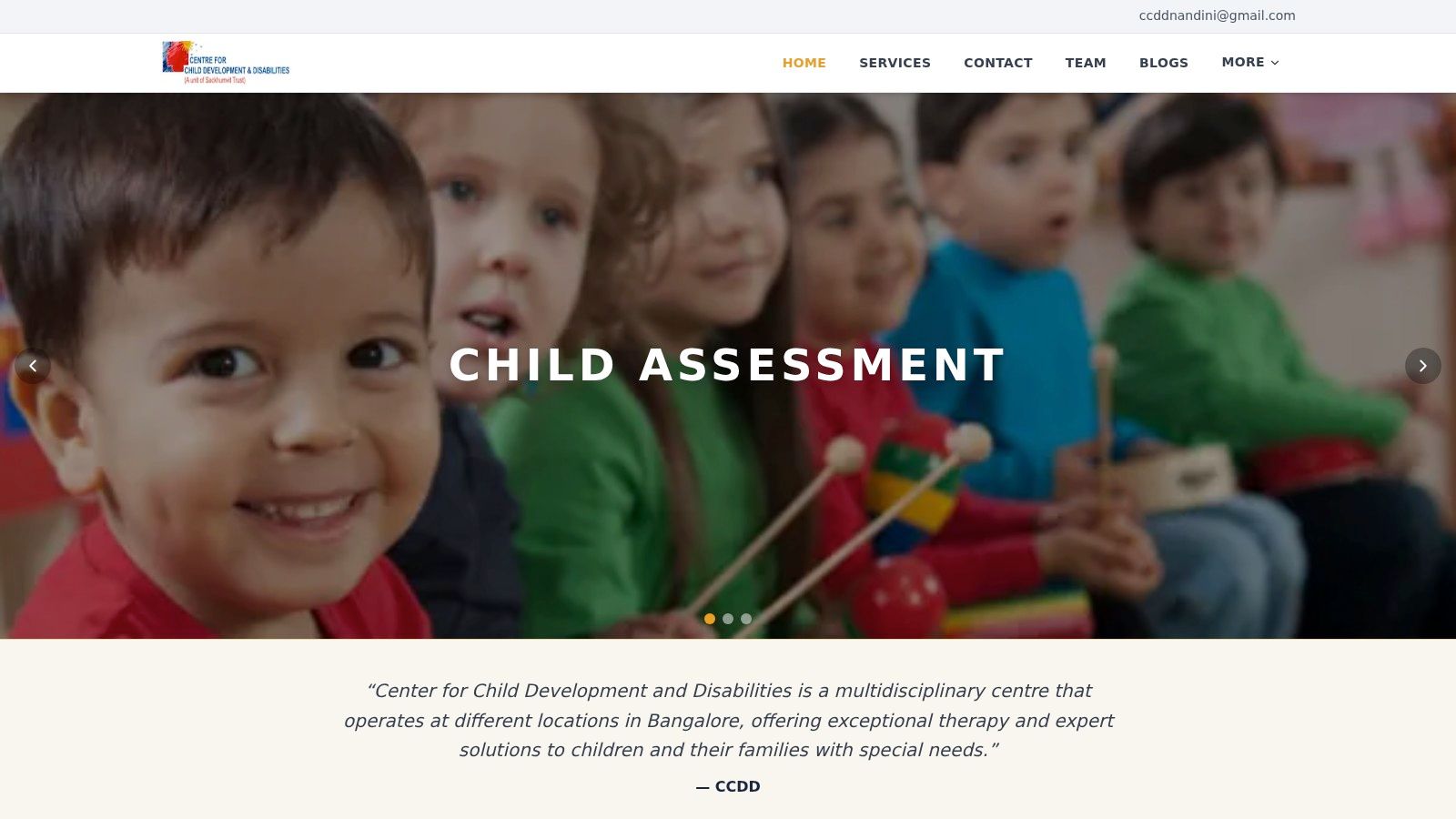
10. Center for Child Development and Disabilities
For families in Bengaluru, the Center for Child Development and Disabilities (CCDD) offers child-focused ADHD support alongside learning, communication, sensory, and developmental care. Its ADHD Intervention Program brings together assessment, individual goals, occupational therapy, speech therapy, psychology, learning-disability services, remedial education, school coordination, and parent guidance.
CCDD fits a practical question: what will help a child learn, communicate, participate, and manage daily demands? Its education-focused approach can connect clinical recommendations with classroom routines and home support.
A child-focused, coordinated option
The centre may suit families looking for:
- Individual ADHD goals: A personalized plan can make intervention clearer and more useful.
- School coordination: Parents and teachers can work from shared strategies.
- Learning support: Remedial education and learning-disability services address academic barriers.
- Therapy coordination: Psychology, speech therapy, and occupational therapy can support related needs.
CCDD is primarily paediatric, so it is not an adult ADHD pathway. Ask whether the first appointment provides screening or diagnostic assessment, and what records the team needs. Pricing is not published online. Confirm whether assessment and therapy are billed separately or packaged together, how long you may wait, and how often progress is reviewed. If school input matters, ask whether written recommendations can be shared with consent.
Visit the Center for Child Development and Disabilities.
ADHD Near-Me: Comparison of 10 Local Providers
| Service / Core features | Quality & trust (★) | Cost & access (💰) | Target audience (👥) | Unique selling points (✨) |
|---|---|---|---|---|
| DeTalks 🏆 | ★★★★☆ · Evidence‑based assessments | 💰 Not listed; India-wide, telehealth | 👥 Individuals, caregivers, clinicians | ✨ Validated screening tools, large practitioner directory, practitioner support |
| Children First (Delhi NCR) | ★★★★☆ · Child specialists | 💰 Fees on request | 👥 Children & families | ✨ Multidisciplinary assessments, parent training, local centres |
| Ummeed Child Development Center (Mumbai) | ★★★★☆ · Established non-profit reputation | 💰 Fees shared at scheduling | 👥 Children & caregivers | ✨ On-site multidisciplinary care, strong caregiver training |
| Cadabam's Hospitals & Child Dev Centre | ★★★★☆ · Large private network | 💰 Varies; often higher than public | 👥 Adults & children needing advanced care | ✨ End-to-end ADHD pathway, rehab, advanced modalities (rTMS, neurofeedback) |
| Manipal Hospitals – ADHD/Adult Psychiatry | ★★★★☆ (varies by location) | 💰 Varies by city | 👥 Adults & children across cities | ✨ Nationwide network, standardized hospital protocols |
| VIMHANS (New Delhi) | ★★★★☆ · Specialty rehab & testing | 💰 Fees vary by clinician | 👥 Adults & adolescents | ✨ Integrated ADHD assessment + rehab and caregiver training |
| IHBAS (Delhi) | ★★★☆☆ · Government tertiary, academic | 💰 Low-cost government rates | 👥 Children & adolescents; low-cost seekers | ✨ Tertiary referral ecosystem, evidence-based public care |
| Mpower (Aditya Birla Education Trust) | ★★★★☆ (branch-dependent) | 💰 Varies by centre | 👥 All ages, corporates, students | ✨ Multi-city + online, psychoeducational testing, outreach programs |
| Apollo 24/7 (Pan‑India) | ★★★☆☆ · Fast digital access | 💰 Many clinicians with transparent bookable fees | 👥 Adults & families needing quick consults | ✨ 24/7 online consults, e-prescriptions, hospital/pharmacy integration |
| Center for Child Development & Disabilities (CCDD), Bengaluru | ★★★★☆ · Local reputation in developmental paediatrics | 💰 Pricing quoted after intake | 👥 Children, schools & caregivers | ✨ Structured ADHD intervention, school coordination, remedial education |
Choose Support That Fits Your Needs and Next Step
The best “ADHD near me” option is the one that matches your age, location, concerns, budget, and need for follow-up. A child who needs school coordination may require a developmental centre, while an adult experiencing concentration problems, anxiety, depression, or burnout may need an adult psychiatrist, psychologist, therapist, or integrated platform.
Start by confirming the basics before you share sensitive information or pay for an appointment:
- Check the age group: Ask whether the provider regularly serves children, adolescents, adults, or all three.
- Identify the assessor: Confirm whether a psychiatrist, clinical psychologist, developmental paediatrician, or another qualified professional conducts the evaluation.
- Separate screening from diagnosis: Ask whether the first appointment is an informational screen, clinical assessment, treatment consultation, or medication review.
- Clarify the care team: Find out whether psychiatry, psychology, therapy, counselling, occupational therapy, speech therapy, or neuropsychological testing is available.
- Request full costs: Ask about consultation fees, testing, reports, therapy, medication reviews, travel, and any package conditions.
- Ask about waiting times: Confirm the earliest assessment appointment and the expected time between assessment and follow-up.
- Understand continuity: Find out who will review progress and whether you can continue with the same clinician.
- Confirm documentation: Ask what identity documents, previous reports, school records, medication details, or referral letters you need.
- Check location needs: Online support may reduce travel, but some assessments or follow-up services may still require in-person care.
Screening results are informational, not diagnostic. ADHD symptoms can overlap with anxiety, depression, sleep problems, burnout, trauma-related distress, medication effects, and workplace stress. India's National Mental Health Survey reported weighted prevalence of 10.6% for current mental morbidity and 13.7% for lifetime mental morbidity among adults, and noted that nearly 150 million people may be affected in some form. These figures come from the National Mental Health Survey report, and they reinforce why concentration concerns deserve thoughtful assessment rather than quick assumptions.
Workplace pressure can also complicate the picture. A peer-reviewed review citing a large India workplace study reported that, among 1,764 urban white-collar employees, nearly 29% showed moderate-to-severe signs of depression, 55% had moderate-to-severe signs of anxiety, and 78% had moderate-to-high stress. Read the peer-reviewed review on workplace mental health in India for the cited context. If your difficulties began during a period of extreme workload, poor sleep, conflict, or burnout, tell the clinician rather than trying to decide the cause alone.
Bring concrete examples to the appointment. Note what happens at school, home, in relationships, or at work, when the pattern began, how often it occurs, what improves it, and what makes it worse. If possible, bring observations from a parent, partner, teacher, or trusted colleague, while respecting your privacy and comfort.
Adult ADHD deserves the same seriousness as child ADHD. Indian research has reported adult prevalence estimates ranging from 5.48% to 25.7% across study populations, and a Delhi screening study found 14% of 18 to 25-year-olds screened positive on ASRS v1.1, as summarised in a review of ADHD in India. A positive screen still isn't a diagnosis, but it can be a useful reason to seek a proper evaluation.
Choose a provider who listens carefully, explains uncertainty, respects your goals, and offers a realistic plan. Good care may include therapy, counselling, medication guidance, school support, workplace strategies, sleep support, or self-help. It can also include positive psychology practices that strengthen resilience, compassion, emotional awareness, happiness, and overall well-being.
If you feel unsafe, might harm yourself or someone else, or can't manage an immediate crisis, seek urgent local help through emergency services, the nearest hospital, or a trusted person who can stay with you. Don't wait for an online screening result or routine appointment when immediate safety is at risk.
You don't need to solve everything in one search. Make an informed choice, ask clear questions, and give yourself permission to seek a better fit if the first provider doesn't understand your needs. Support should help you build practical skills, self-understanding, resilience, and long-term well-being, not leave you feeling judged or promised a simple cure.
DeTalks helps you explore confidential screening resources, understand possible next steps, and connect with qualified psychologists, therapists, and counsellors for ADHD-related concerns, anxiety, depression, burnout, and workplace stress. Visit DeTalks to compare support options and find a practical starting point for therapy, counselling, assessment guidance, or broader well-being care.