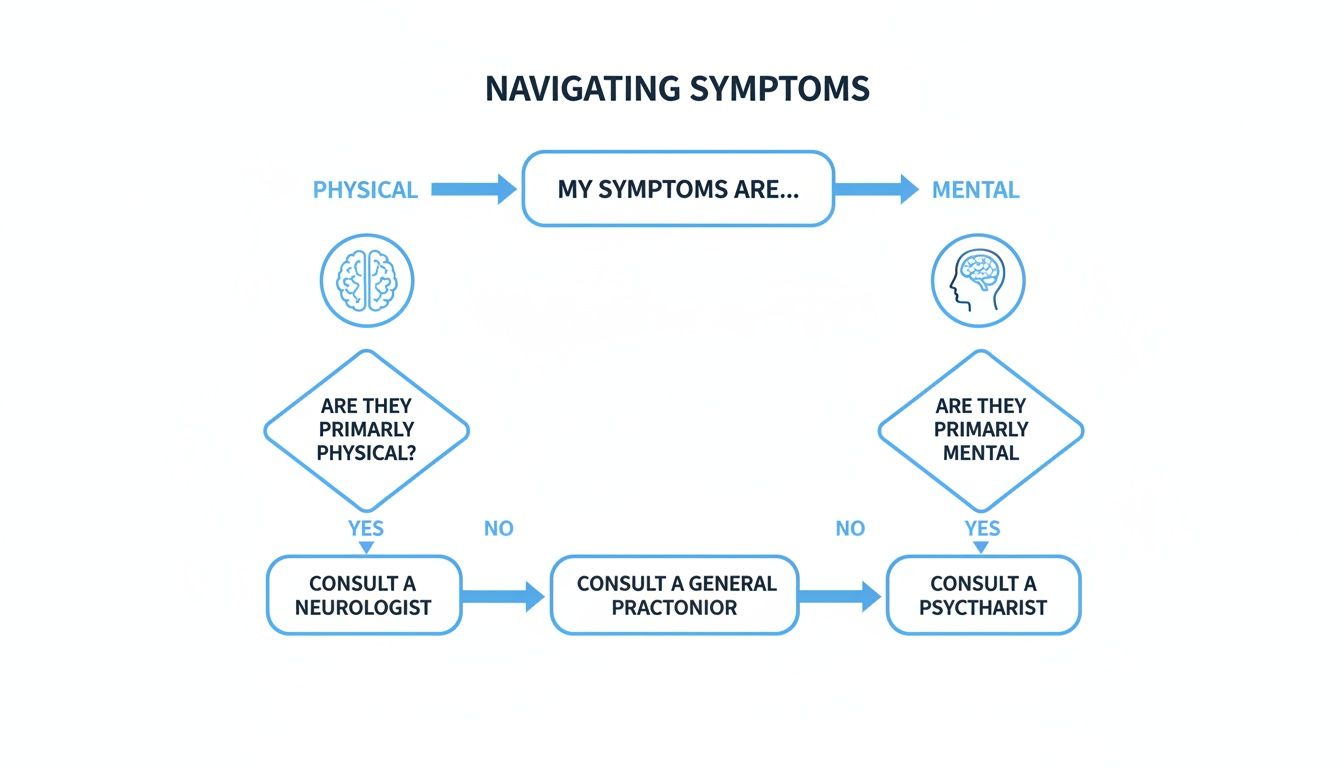
Realising you might need support is a courageous first step toward feeling better. Mental health services, including therapy and counselling, are professional resources designed to help you handle life's challenges. Think of this guide as a gentle introduction to your options.
Taking the First Step Towards Well-Being
We all have times when stress, anxiety, or burnout feels overwhelming. Reaching out for help is a sign of strength, showing you are ready to take care of yourself.
This journey is not just about managing difficulties; it's also about building a more resilient and compassionate life. It is a proactive step toward feeling more balanced, connected, and happy.
Thankfully, the conversation around mental health in India is becoming more open and supportive. Professional support can help with many things, from managing workplace stress or symptoms of depression to simply understanding yourself better. The goal is to make mental health care feel as normal and accessible as any other kind of healthcare.
Understanding the Need for Support
Many of us could benefit from some form of mental health support. A significant number of people in India live with mental health concerns, but a large gap exists between who needs help and who receives it.
The National Mental Health Survey found that about 10.6% of adults in India have experienced a mental health condition. This means nearly 150 million people could use support, yet a staggering 70-92% never receive formal treatment. This data highlights the scale of the challenge.
Taking care of your mind is just as important as taking care of your body. Think of mental health services as personal training for your emotional well-being—a way to build strength, flexibility, and resilience from the inside out.
Your Journey Begins with a Single Step
Starting this process can feel daunting, but you are not alone. It often begins with small, practical actions that move you forward at your own pace.
One of the first things you might do is fill out some initial paperwork. Getting familiar with digital patient registration forms can make that first interaction feel much smoother.
Remember, every step you take is progress. Whether you're exploring therapy, looking for counselling, or learning more about your own mind, you are actively investing in yourself.
Understanding the Types of Mental Health Support
Exploring mental health services can feel like learning a new language. Words like therapy, counselling, and psychiatry are common, but it can be hard to know where to begin.
Think of it this way: different health needs require different specialists. Mental health is similar, with various professionals offering distinct forms of support to help you.
This section clarifies the kinds of support available, from one-on-one sessions to group settings. Our goal is to help you make an informed choice, whether you're navigating workplace stress, managing anxiety, or aiming for personal growth.
The Core Pillars of Professional Support
The most common mental health services involve working with a trained professional. Each offers a different approach, tailored to specific needs and goals.
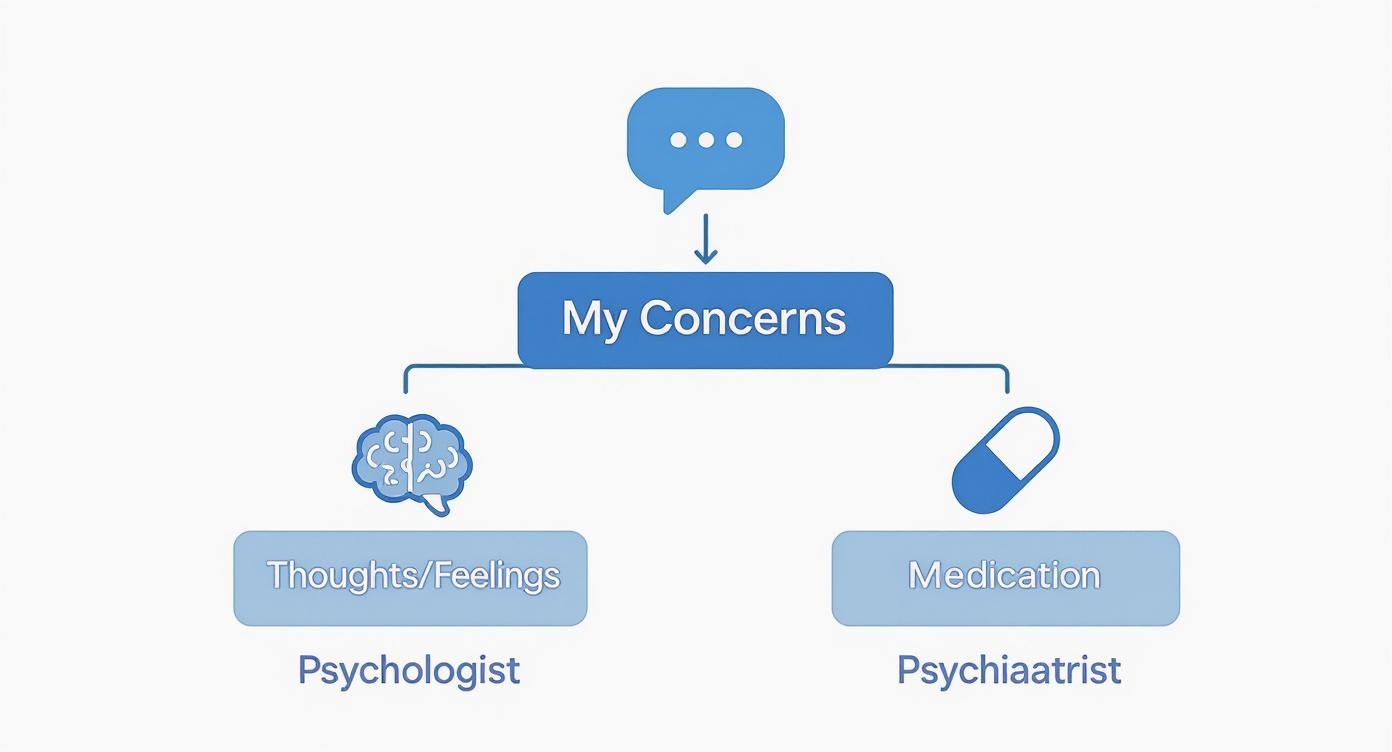
A psychiatrist is a medical doctor who specialises in mental health. They can diagnose conditions and prescribe medication, often helping with concerns like severe depression or anxiety where biological factors play a role.
A psychologist or therapist focuses on psychotherapy, also known as "talk therapy." They help you explore your thoughts, feelings, and behaviours to develop healthier coping skills and build resilience.
Mental health support isn't a one-size-fits-all solution. The "best" service is simply the one that aligns with your personal needs, goals, and comfort level right now.
Looking at treatment plan example templates can give you a better sense of how therapy is structured. A counsellor typically provides guidance for specific life challenges, like grief or relationship issues, often offering practical, short-term strategies.
Broadening the Circle of Support
Beyond individual sessions, other mental health services offer community and immediate help. These options recognise that shared experiences can be a powerful source of support.
This diagram shows how our well-being is built on internal strength, external support, and a commitment to personal growth.
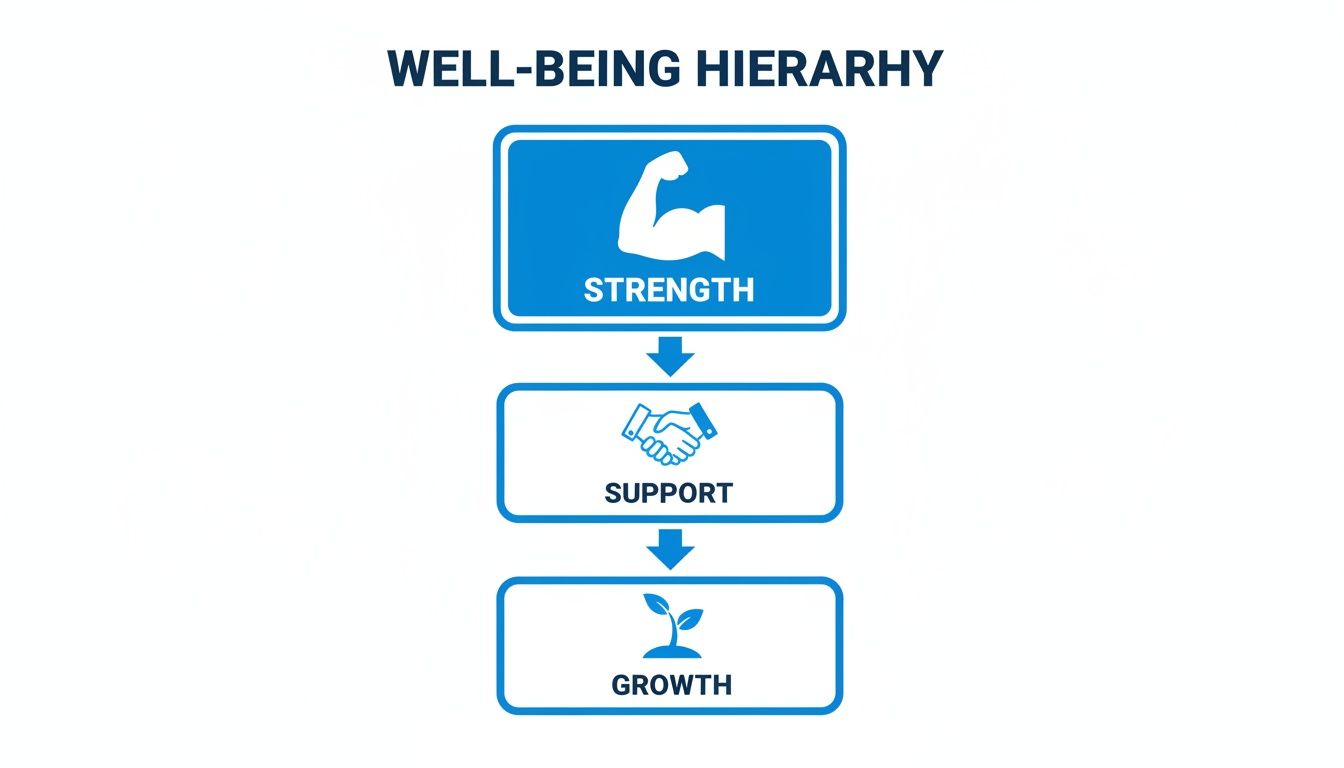
It’s a great reminder that a holistic approach involves nurturing your own resilience (Strength), leaning on professional and peer networks (Support), and staying committed to self-improvement (Growth).
Two great examples of this wider support network include:
- Support Groups: These are gatherings of people facing similar challenges, like grief or chronic illness. They provide a safe space to share experiences and feel less alone.
- Crisis Services: Helplines and crisis centres offer immediate, confidential support for anyone in serious distress. They are staffed by trained individuals ready to listen and help.
A Clear Comparison to Guide Your Choice
Seeing your options side-by-side can make choosing a path feel less overwhelming. The table below outlines the primary focus and typical scenarios for each service. It is normal to use a combination of these services as your needs evolve.
Choosing the Right Mental Health Service for You
This table compares different types of mental health services to help you understand their primary focus, who they help, and what to expect.
| Service Type | Primary Focus | Best Suited For | Example Scenario |
|---|---|---|---|
| Psychiatry | Medical diagnosis, medication management, and treatment of complex mental health conditions. | Individuals experiencing significant symptoms of depression, anxiety, or bipolar disorder that may benefit from medication. | A person struggling with persistent low mood and lack of energy who hasn't found relief through other methods. |
| Therapy | In-depth exploration of thoughts, emotions, and behavioural patterns to foster long-term change. | Anyone looking to understand themselves better, heal from past trauma, or build lasting resilience and coping skills. | Someone wanting to work through long-standing anxiety patterns that affect their relationships and professional life. |
| Counselling | Practical, goal-oriented support for navigating specific life challenges and stressors. | People facing immediate issues like workplace stress, grief, or relationship conflicts who need targeted strategies. | A professional feeling overwhelmed by burnout and looking for practical ways to set boundaries and manage stress. |
| Support Groups | Peer-based community and shared understanding to reduce isolation and foster connection. | Individuals who would benefit from hearing from others with similar life experiences, such as new parents or caregivers. | A person coping with the loss of a loved one who wants to connect with others who understand their grief. |
Seeking support is a powerful step toward taking charge of your well-being. Each of these mental health services offers a unique path to feeling understood, gaining clarity, and building a more fulfilling life.
How to Find the Right Mental Health Professional
Finding a therapist or counsellor you connect with is a vital part of your journey. It helps to think of it as finding the right partner for your personal growth. The goal is to find a professional who makes you feel seen, heard, and understood.
This is about matching your needs with their expertise. Whether you are navigating workplace stress, managing anxiety, or living with depression, finding someone who specialises in those areas can make a significant difference.
Starting Your Search with Clarity
Before you begin, take a moment to think about what you hope to achieve. Are you looking for practical strategies to manage stress, or do you need a safe space to explore deeper issues?
Consider practical factors, too. In a country as diverse as India, language and cultural understanding are important. Platforms like DeTalks can simplify your search, allowing you to filter professionals by specialisation, language, and session type.
Accessible care has never been more critical. India's mental health landscape and its economic impact30475-4/fulltext) show an immense need, with an estimated 150 million people requiring support. Modern therapy and counselling platforms are working to close this gap.
Online Therapy vs In-Person Sessions
Deciding between online or in-person sessions is a key choice. Both have advantages, and the right option depends on your personal comfort and needs.
Online therapy offers great convenience, saving travel time and fitting easily into busy schedules. For many, talking from the privacy of home makes it easier to open up.
The "right" therapist is someone with whom you can build a relationship based on trust and safety. This connection, known as the therapeutic alliance, is one of the strongest predictors of successful outcomes in therapy.
On the other hand, in-person sessions provide a dedicated space away from daily life. Some people find this change of environment helps them focus on their well-being. There is no right or wrong answer—it's about what feels most supportive for you.
What to Look for in a Professional
When browsing professional profiles, look beyond qualifications. Their approach to therapy is just as important for finding the right fit.
Here are a few things to consider:
- Specialisation: Do they have experience helping people with challenges like yours, whether it's anxiety or building resilience?
- Therapeutic Approach: What methods do they use, such as Cognitive Behavioural Therapy (CBT) or mindfulness-based practices?
- Personal Fit: Does their profile give you a good feeling? Finding someone you feel comfortable talking to is essential.
Your first session is a chance for you to interview them, too. It's okay to ask about their experience and approach, and it's normal to try a few professionals before finding the right one.
What to Expect in Your First Therapy Sessions
Deciding to start therapy is a significant step, and it's normal to feel both hopeful and nervous. Knowing what to expect can make the process feel less intimidating.

Your first meeting is a gentle introduction. The therapist's main goal is to create a safe, non-judgemental space where you can share your story at your own pace.
The Intake Process and Building Trust
The first session, often called an "intake," is about laying the groundwork. Your therapist will ask questions about your background and what you hope to gain from the process.
Confidentiality is the bedrock of good counselling. Everything you share is private, creating the security you need to be open and honest.
Your first therapy session is a two-way street. It's just as much about you interviewing the therapist to see if they're a good fit as it is about them getting to know you.
Feeling comfortable and respected is crucial. If the connection doesn’t feel right, it is perfectly okay to look for someone who is a better match for you.
Collaborating on Your Personal Goals
Therapy is a partnership where you are the expert on your own life. You and your therapist will work together to set meaningful, realistic goals for your well-being.
These goals might focus on managing a specific challenge like anxiety or workplace stress. They could also be about positive growth, like building resilience or developing self-compassion.
Here are a few examples of what those goals might look like:
- For managing anxiety: Learning practical techniques to calm your mind when stress arises.
- For addressing depression: Identifying and challenging negative thought patterns to improve your mood.
- For building resilience: Developing healthier coping skills to navigate life’s ups and downs more effectively.
Asking the Right Questions
Having a few questions ready can empower you to take an active role in your care. You are a partner in your own growth, not just a recipient of mental health services.
Consider asking your therapist questions like:
- What is your therapeutic approach? Understanding their methods helps you see if their style aligns with your needs.
- What is your experience with challenges like mine? It can be reassuring to know they have experience with issues like depression.
- How will we measure progress? This question helps set clear expectations for your journey together.
These first sessions are about planting seeds for self-discovery. It is the start of a supportive partnership dedicated to your personal growth and lasting well-being.
Using Psychological Assessments for Self-Discovery
Understanding yourself better can feel like navigating without a map. A psychological assessment can act as a personal compass, offering insights into your emotional landscape.

It is very important to remember that these tools are informational, not diagnostic. They are not meant to give you a label but to illuminate a path forward. An assessment can help you spot patterns related to anxiety, depression, or workplace stress.
What Assessments Can Reveal
Scientifically validated assessments are thoughtfully designed questionnaires that help you understand your emotional state. They offer a gentle first step and can give you the language to describe your experiences.
These tools can measure a range of things, from symptoms of common concerns to personal strengths like resilience. Seeing the results can be a relief, helping you realise that what you're feeling is valid.
An assessment is like taking your emotional temperature. It doesn't tell you the cause of the fever, but it confirms that something needs attention and helps you decide the next best step.
This initial insight can be the spark for positive change. It can give you the confidence to explore self-help resources or feel more prepared to seek professional therapy or counselling.
Focusing on Both Challenges and Strengths
Good mental health services are not just about addressing difficulties; they are also about building on your strengths. Assessments support this balanced view by looking at both sides.
- Understanding Challenges: Assessments for anxiety, depression, or workplace stress provide a clearer picture of what you are facing. They offer a structured way to think about your experiences.
- Highlighting Strengths: Other assessments focus on positive psychology, exploring your capacity for resilience, happiness, and self-compassion. Discovering your natural strengths can be incredibly empowering.
By looking at both challenges and strengths, you get a more complete and useful picture of your overall well-being.
Your Next Step After an Assessment
The results from an assessment are a starting point, not a final destination. They are there to help you make an informed choice about what to do next.
For some, this may mean exploring helpful articles or trying a mindfulness app. For others, the results might provide the encouragement needed to speak with a professional.
Your Path Forward to Resilience and Well-Being
Seeking support is a significant and positive step. This journey is not about finding a quick fix but about tending to your inner world and building strength.
A wide range of mental health services exists to meet you where you are. Whether you are managing daily pressures like workplace stress or navigating feelings of anxiety or depression, support is available.
Embracing Both Challenges and Strengths
True well-being involves acknowledging your struggles while also celebrating your strengths. Mental health support shines a light on your natural capacity for growth, resilience, and happiness.
A big part of the process is learning to be kinder and more compassionate with yourself. Therapy and counselling can provide tools for managing stress while also helping you connect with what truly matters.
Your mental health journey is uniquely your own. Seeking support is simply choosing to have a skilled, compassionate guide walk alongside you for part of the way, helping you find the path that feels right for you.
Supportive Takeaways for Your Journey
Feeling empowered often begins with small, concrete actions. You don't need a grand plan to get started; the most important thing is to take the first step.
Here are a few gentle next steps you can take:
- Explore Self-Help Resources: Start by reading articles or listening to podcasts about well-being to help put words to your feelings.
- Take a Confidential Assessment: Using a validated tool can offer private insights. Remember, these are informational, not diagnostic.
- Browse a Professional Directory: Looking through therapist profiles on a platform like DeTalks can make reaching out feel less intimidating.
Every small action is an investment in your own happiness and resilience. You have the strength to move forward, and professional help is ready to support you when you are.
Your Questions About Mental Health Services, Answered
Thinking about getting mental health support can bring up many questions. Let's walk through some common ones to help you feel more clear and confident.
How Do I Know If I Really Need Therapy?
You don’t have to be at a crisis point to benefit from therapy. The right time is often when you feel you could use extra support to navigate life's challenges.
People seek mental health services when they feel stuck, persistently sad or anxious, or are struggling to cope. Therapy is also a powerful space for personal growth, building resilience, and improving relationships.
Is Online Therapy as Good as Seeing Someone in Person?
For many common concerns like anxiety, depression, and stress, research shows that online counselling can be just as effective as in-person meetings.
The main benefits are convenience and access, especially if you have a busy schedule or live in an area with limited options. The success of therapy depends most on the connection you build with your therapist, so the best choice is the one that feels right for you.
What's the Difference Between a Psychologist and a Psychiatrist?
It is easy to confuse these terms, but they have different roles. Knowing the distinction can help you find the right kind of support for your needs.
- Psychiatrist: A psychiatrist is a medical doctor who can prescribe medication. Their focus is often on the biological aspects of well-being.
- Psychologist: A psychologist is an expert in the mind and behaviour. They use "talk therapy" to help you explore your thoughts and develop healthier coping skills.
- Counsellor: A counsellor provides talking therapy focused on helping you navigate specific life challenges like grief or workplace stress.
How Much Do Mental Health Services Cost in India?
The cost of mental health services in India can vary widely, from ₹500 to ₹5,000 or more per session. This depends on the professional’s experience, the city, and the type of session.
The Mental Healthcare Act of 2017 requires insurers to cover mental illness like physical illness. However, outpatient therapy coverage can vary, so it is always best to check your specific insurance policy.
In India, the reality is that a massive treatment gap still exists. Around 150 million people need care, but only a fraction ever receive it. It’s a gap that accessible and modern mental health services are determined to close.
Data from the National Mental Health Survey revealed a treatment gap of 70-92%. Digital platforms are becoming a lifeline for people dealing with burnout and workplace stress by offering tailored support, from therapist directories to assessments that help build resilience. You can explore more data on India's mental health infrastructure on statista.com.
Your journey toward well-being is one of the most important things you can invest in, and finding the right help shouldn't add to your stress. At DeTalks, we make it easier to find qualified professionals and take confidential, science-backed assessments to understand what you need. Take a step toward clarity and support today by visiting https://detalks.com.