Tag: anxiety counselling

  • Online Therapy for Anxiety Can Help You Find Your Balance

    Online Therapy for Anxiety Can Help You Find Your Balance

    If you've been carrying the weight of constant worry or stress, you're not alone. Online therapy for anxiety offers a practical and accessible way to get professional support from the comfort and privacy of your own space. It connects you with a qualified therapist to help you build resilience and find balance on your own schedule.

    How Online Therapy Can Help with Anxiety

    Life in India can be incredibly fast-paced, and the pressure to succeed often leaves us feeling anxious or burnt out. When you're stuck in that cycle, acknowledging these feelings is a huge, courageous first step.

    Online therapy gives you a supportive, confidential space to unpack these challenges without commuting or changing your routine. It’s professional counselling delivered securely online, making mental healthcare more convenient than ever before.

    A Modern Approach to Well-being

    Think of online therapy as having a personal guide for your mental and emotional health, accessible from your laptop or phone. It removes common barriers like stigma or a packed schedule, putting you in the driver's seat of your well-being.

    This kind of counselling is about more than just managing tough emotions; it's a tool for genuine personal growth. By focusing on concepts from positive psychology, it helps you build a stronger foundation for mental wellness. This often includes:

    • Building Resilience: Learning to bounce back from setbacks and handle life’s hurdles with more strength.
    • Developing Compassion: Cultivating kindness towards yourself and others, which is a wonderful antidote to harsh self-criticism.
    • Enhancing Happiness: Getting clearer on what truly brings you joy and a sense of purpose for a more fulfilling life.

    Navigating Stress and Anxiety with Support

    Workplace stress and the pressure to perform can take a serious toll on your mental health. Online therapy provides practical strategies to cope with these exact pressures, helping you manage feelings of anxiety and depression.

    Your therapist will work with you to understand what you're feeling and develop tools to manage your thoughts and emotions more effectively. It is a collaborative process designed to help you feel less overwhelmed and more in control.

    Therapy is a partnership aimed at uncovering your strengths. It’s a journey of progress, not perfection, where every small step forward contributes to lasting well-being and resilience.

    Starting Your Journey with Clarity

    For many, the first step is taking an online assessment to get a clearer picture of their emotional state. These tools can offer useful insights into your mental health patterns. It's crucial to remember that these assessments are for your information; they are not a clinical diagnosis.

    This initial step can bring clarity and help you articulate what you hope to get out of therapy. The goal isn't a quick fix, but rather to provide supportive, actionable takeaways that you can weave into your daily life.

    Is Online Therapy an Effective Choice for You?

    It’s completely normal to feel sceptical about online therapy. Can talking to someone through a screen really help? For many of us, support is tied to being in the same room, so virtual counselling might seem impersonal at first.

    However, a growing body of research shows that for most people, online therapy for anxiety is just as effective as meeting in person. The magic of therapy isn’t about the furniture; it’s about the connection you build with your therapist.

    Proven methods like Cognitive Behavioural Therapy (CBT) work beautifully in a digital setting, giving you practical skills to manage anxious thoughts. This shift online is making it easier for people to get the professional help they need. The market analysis of online mental health in India shows significant growth, thanks to growing awareness and better internet access.

    The Power of the Therapeutic Alliance Online

    The most important ingredient for successful therapy is the bond you form with your therapist, known as the therapeutic alliance. This relationship is built on trust and empathy, and it can absolutely thrive online.

    Video calls allow you to see each other face-to-face, so non-verbal cues like facial expressions are still present. Many people find it easier to open up from their own homes, which can help a supportive relationship grow more naturally.

    How Does It Compare to In-Person Therapy?

    Deciding between online and in-person therapy comes down to what works for your lifestyle and comfort level. Both are brilliant ways to get support for challenges like anxiety and workplace stress. The right choice is simply the one that makes you feel most supported.

    To help you weigh your options, let’s look at how the two formats stack up.

    Comparing Online and In-Person Therapy for Anxiety

    This table gives a straightforward look at the key differences, helping you figure out which approach best fits your needs for managing anxiety.

    Feature Online Therapy In-Person Therapy
    Accessibility Highly accessible from any location with an internet connection, breaking down geographical barriers. Requires you to be physically present at a specific location, which can be a barrier for some.
    Convenience Offers flexible scheduling, often including evenings and weekends, with no travel time required. Sessions are typically held during standard business hours and require time for commuting.
    Environment You attend sessions from a private, familiar space where you feel most comfortable and secure. Sessions take place in a professional, neutral office setting designed for therapy.
    Therapist Choice Provides access to a wider range of specialists, regardless of where you or they are located. Your options are limited to professionals who are geographically close to you.

    Ultimately, whether you choose to meet a therapist online or in their office, the goal is the same: to get the support you need to improve your well-being.

    Building Resilience from Your Own Space

    At its core, online therapy offers a powerful way to build resilience and learn to cope with anxiety and depression. It brings expert guidance right to you, empowering you to work on your mental health in a way that fits your life.

    The goal of therapy is not to eliminate challenges, but to build your capacity to navigate them with greater self-awareness and compassion. An online setting provides a unique opportunity to practise these new skills in your everyday environment.

    This is a huge plus, as you can immediately apply new coping strategies in your daily environment. Whether you're feeling burnt out or just want to find more happiness, online counselling is a solid, effective path forward.

    What to Expect in Your Sessions: A Look at Common Therapy Approaches

    Starting online therapy for anxiety can feel a bit mysterious. Your sessions are built around proven methods to help you make sense of your thoughts and feelings. Think of your therapist as a skilled guide, using an established toolkit to help you build resilience.

    These different approaches are like different lenses for looking at the same problem. Getting to know them can take the guesswork out of the process and empower you on your journey.

    Cognitive Behavioural Therapy (CBT)

    One of the most common methods for anxiety is Cognitive Behavioural Therapy (CBT). The core idea is that our thoughts, feelings, and actions are all linked. By learning to change unhelpful thought patterns, we can change how we feel and behave.

    For example, a thought like, "I'm going to stumble over my words," can trigger panic and lead you to avoid practicing. CBT gives you practical strategies to break that cycle by helping you spot, challenge, and reframe these thoughts. This isn't about forced positivity; it's a skill-building process that gives you tools to manage everything from workplace stress to social anxiety.

    Acceptance and Commitment Therapy (ACT)

    Another fantastic approach is Acceptance and Commitment Therapy (ACT). While CBT often focuses on changing your thoughts, ACT is about changing your relationship with them. You learn to accept their presence without letting them run the show.

    Imagine your anxiety is an annoying passenger in your car shouting directions. ACT teaches you to acknowledge the passenger is there but reminds you that you are still the one holding the steering wheel. You decide where you're going, even if anxiety is along for the ride.

    "The goal of ACT is not to eliminate difficult feelings, but to be present with what life brings us and to move toward valued behaviour." – Dr. Russ Harris

    This approach builds psychological flexibility by helping you clarify what truly matters to you (your values). You learn to commit to actions that align with them while using mindfulness to notice your thoughts without getting tangled up in them.

    Other Effective Therapy Styles

    A great therapist often draws from several methods to create a plan that fits you perfectly. Therapy isn't a one-size-fits-all solution, and a good counsellor knows how to adapt.

    Other styles you might encounter include Mindfulness-Based Therapies, Person-Centred Therapy, or Solution-Focused Brief Therapy (SFBT). The specific technique is often less important than the connection you build with your therapist. Their goal is to give you the tools and insight you need to navigate anxiety and stress.

    Finding the Right Online Therapist in India

    Choosing the right person for online therapy for anxiety is the most critical part of the process. Think of them as a partner in your well-being; finding someone you connect with is non-negotiable.

    Online platforms have made it easier to find qualified therapists, which is important given India's shortage of mental health professionals. Online therapy and counselling are making a real difference, connecting people everywhere with the support they need. You can learn more about India's mental health landscape here.

    What to Look for in a Therapist

    Knowing what to look for makes the search less intimidating. A good therapist will be open about their qualifications and methods, which helps you make a confident choice.

    Look for at least a Master’s degree in Psychology or Social Work, and check if their profile mentions experience with anxiety or workplace stress. A therapist who understands the nuances of life in India can also help build a strong foundation of trust.

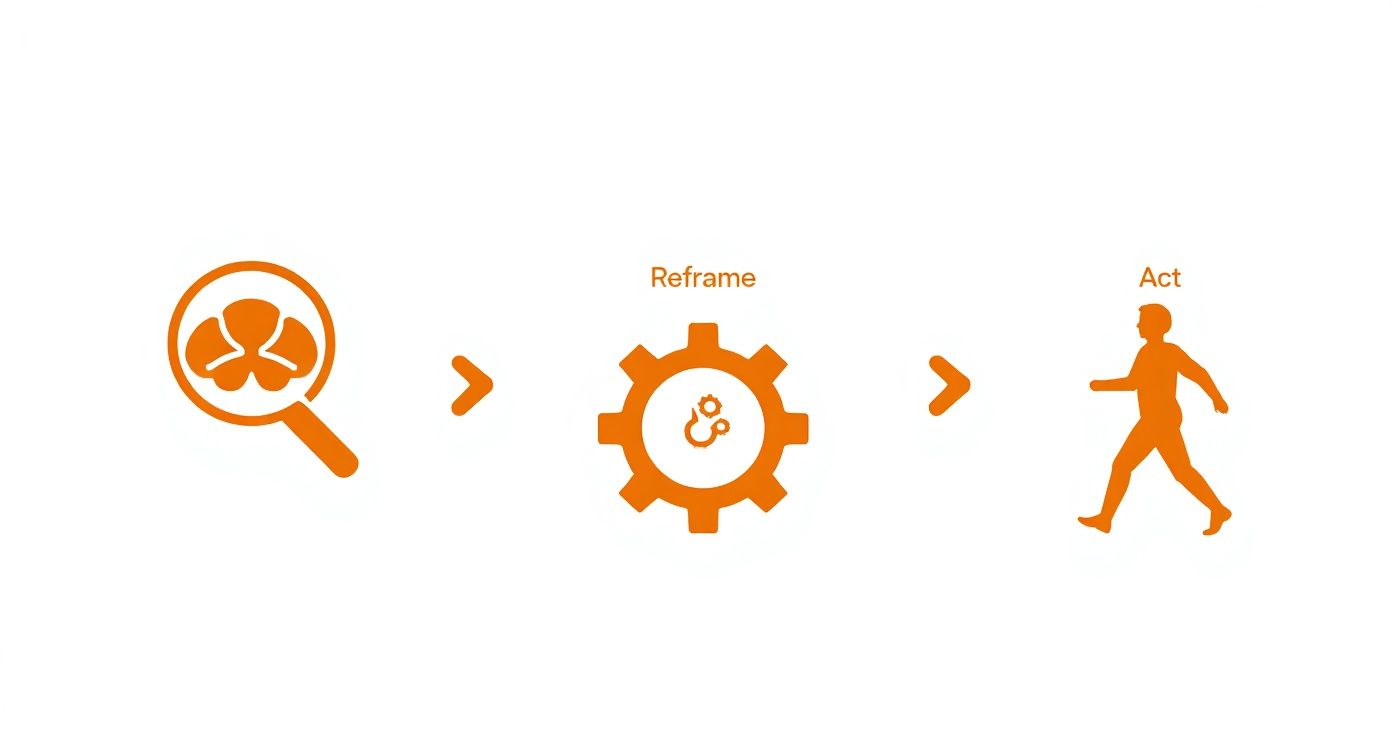
    The image below shows the basic framework most therapists use to help you tackle anxiety and feel better.

    Three-step process showing search, reframe with gears, and act with person walking forward in orange

    Essentially, therapy is a structured journey where you learn to spot unhelpful patterns, challenge them, and start taking actions that truly matter to you.

    Key Questions to Ask in Your First Consultation

    Most online platforms offer a short introductory call, which is your chance to see if a therapist is a good match. It’s a good idea to have a few questions ready.

    Here are a few solid questions to ask:

    • What's your approach to helping with anxiety?
    • What does a typical session with you look like?
    • How do you measure progress toward better well-being?
    • Do you have experience with [mention your specific concern, like workplace stress]?

    At the end of the day, the single most important factor in successful therapy is the relationship you have with your therapist. Feeling safe, respected, and truly understood is more powerful than any specific technique.

    Ultimately, go with your gut. The aim is to find someone who feels like a real ally—a person you can talk to openly without worrying about being judged.

    What to Expect on Your Therapy Journey

    Person writing session goals in notebook with laptop and headphones on white desk

    Starting online therapy for anxiety often brings a mix of hope and nervousness, which is perfectly normal. Think of this as a gradual journey toward understanding yourself better and building skills for lasting well-being. Your sessions are a partnership where your therapist creates a safe space to explore what’s on your mind.

    Your First Few Sessions

    Think of the first couple of sessions as a "getting to know you" phase. Your therapist will ask about your background, what’s bringing you to counselling, and what you're hoping to change.

    Together, you'll start setting small, realistic goals, such as learning grounding techniques or understanding how your thoughts connect to feelings of anxiety. This is about taking manageable steps, not overhauling your life overnight.

    Technology and Privacy in Online Therapy

    It's smart to have questions about privacy. Professional platforms use high-level encryption to keep your conversations confidential. Your therapist is also bound by the same strict ethical codes of confidentiality as they would be in a physical office.

    The need for accessible support is undeniable. With many young people in India facing anxiety, online therapy is becoming a crucial lifeline, helping to overcome barriers like stigma and cost.

    Therapy is a process of learning, not a performance. It's about showing up for yourself, even on days when it feels hard, and trusting that each session is a step toward building greater resilience and self-compassion.

    Progress Over Perfection

    Once you get going, you'll find a natural rhythm. Some weeks will feel like a major breakthrough, while others might feel like you're just treading water. Both are valid and necessary parts of the healing process.

    Your therapist is there to help you navigate these ups and downs with tools and fresh perspectives. To support your work, exploring self-help resources for anxiety can also offer extra insight. Remember, progress is rarely a straight line, so be patient and kind to yourself along the way.

    Still Have Questions About Online Anxiety Therapy?

    It’s completely normal to have questions before diving into online therapy for anxiety. It shows you’re taking your mental well-being seriously. Let's walk through some common queries to help you feel more confident about getting started.

    Our aim here is to give you straight answers. Once you understand the nuts and bolts, you can move forward knowing you’ve made an informed choice.

    Is Online Therapy as Confidential as Meeting a Therapist in Person?

    Yes, absolutely. Confidentiality is the foundation of all professional therapy and is upheld just as rigorously online. Reputable platforms use secure, end-to-end encryption to ensure your conversations stay completely private.

    Your therapist is also bound by the same professional ethics and confidentiality laws as in a traditional clinic. This framework ensures your personal details and everything you discuss are protected.

    How Much Does Online Therapy Cost in India?

    The cost of online therapy in India can vary, often depending on the therapist's experience and the platform. A single session can range from ₹500 to over ₹3,000, meaning you can usually find an option for your budget.

    Many online services offer different payment options, like subscription plans or package deals. While insurance coverage for mental health is improving in India, it’s always smart to check directly with your provider about your policy.

    What if I Don’t Click with My First Therapist?

    Finding the right therapist can feel a bit like dating; sometimes the first one isn't the right one, and that’s okay. The relationship you build is one of the biggest predictors of success, so it's vital that you feel seen and supported.

    It's not a failure if you don't connect at first. Most online platforms understand this and make switching to a new therapist a simple process. Feel empowered to find someone you truly feel comfortable with.

    "The aim of therapy is not to be in a good place, but to be in a place where you can be good to yourself, no matter where you are." – Achor

    Think of this as finding a trusted guide. Feeling safe and respected is non-negotiable, so advocating for yourself to find the right fit is a powerful first step.

    Is Online Therapy Suitable for Severe Anxiety or a Crisis?

    Online therapy is fantastic for managing mild to moderate anxiety, workplace stress, and symptoms of depression. However, it’s generally not the right choice for someone in an acute crisis or experiencing severe symptoms.

    In an emergency, immediate, in-person help is essential. If you are in a crisis, please contact a local crisis helpline or go to the nearest hospital. A good online therapist will guide you to the right level of care if they believe online therapy isn't enough.

    What Kinds of Physical Symptoms Can Anxiety Cause?

    Anxiety isn’t just in your head; it can have a huge impact on your body. When you feel anxious, your body's "fight or flight" system kicks in, which can trigger a host of physical sensations.

    Many people are surprised by the physical toll anxiety can take, including heart palpitations like arrhythmia. Common physical signs include muscle tension, stomach issues, headaches, and fatigue. Recognizing that these feelings are linked to your anxiety helps you and your therapist create a holistic plan that addresses both mind and body. You can learn more about if can anxiety cause arrhythmia here.


    At DeTalks, we're here to help you find the right support for your mental health journey. Our platform gives you access to a directory of qualified therapists, confidential science-backed assessments, and tools to help you build resilience. Take the first step toward feeling better by exploring your options with us today at https://detalks.com.

  • Cognitive Behavioral Therapy for OCD: A Guide to Finding Relief

    Cognitive Behavioral Therapy for OCD: A Guide to Finding Relief

    Cognitive Behavioral Therapy, or CBT, is a practical, hands-on approach to therapy. It's designed to help you recognize and change the patterns of thinking and behavior that can keep you feeling stuck. Think of it as a training program for your mind, giving you real-world tools to manage difficult feelings and build long-term resilience.

    Your Path Forward Starts with Understanding

    Living with Obsessive-Compulsive Disorder (OCD) can feel like a constant internal struggle. The intrusive thoughts (obsessions) and the strong urge to perform certain actions (compulsions) can be exhausting and cause a great deal of anxiety. If this sounds familiar, please know you're not alone, and there is a proven path toward feeling better.

    This guide will walk you through Cognitive Behavioral Therapy (CBT), a structured and supportive type of counselling. Unlike therapies focused only on the past, CBT addresses the here-and-now. It helps you untangle the cycles of thoughts, feelings, and actions that fuel OCD.

    The Connection Between Thoughts and Actions

    At its heart, CBT is based on a simple but powerful idea: your thoughts, feelings, and actions are all connected. When you change one, the others often follow.

    For example, an obsessive thought like, "My hands are contaminated," can trigger a feeling of intense anxiety. This anxiety might then drive a compulsive action, such as repeated handwashing. CBT teaches you how to step into that cycle and gently break it.

    Cognitive Behavioral Therapy isn't about eliminating unwanted thoughts—it’s about changing how you relate to them. It shows you that you have a choice in how you respond, which is the first step toward managing OCD.

    Why CBT Is the Recommended Approach

    CBT's success is supported by years of research. A specific type, called Exposure and Response Prevention (ERP), is known as the most effective therapy for OCD. In India, where OCD affects a significant part of the population, this therapy offers a structured path forward. For more details, you can read about OCD's prevalence and treatment in India.

    What makes this type of therapy so helpful?

    • It’s skill-based: You learn practical techniques you can use for the rest of your life to support your well-being.
    • It’s a partnership: You and your therapist work as a team, setting goals at a pace that feels comfortable for you.
    • It builds independence: The goal is to equip you with the skills to become your own guide over time.

    This isn't just about managing specific symptoms. It is a journey toward building self-compassion and creating a life with more peace, especially when dealing with challenges like [workplace stress] or feelings of anxiety and depression.

    How Exposure and Response Prevention Works

    When we talk about Cognitive Behavioral Therapy for OCD, we often focus on a powerful technique called Exposure and Response Prevention (ERP). The name might sound clinical, but the idea is very practical. It’s about safely and gradually facing your fears until they no longer have the same power over you.

    Think of it like learning to swim with a supportive instructor. You start in shallow water and slowly build your confidence. ERP works the same way; it's a guided, step-by-step process tailored to you.

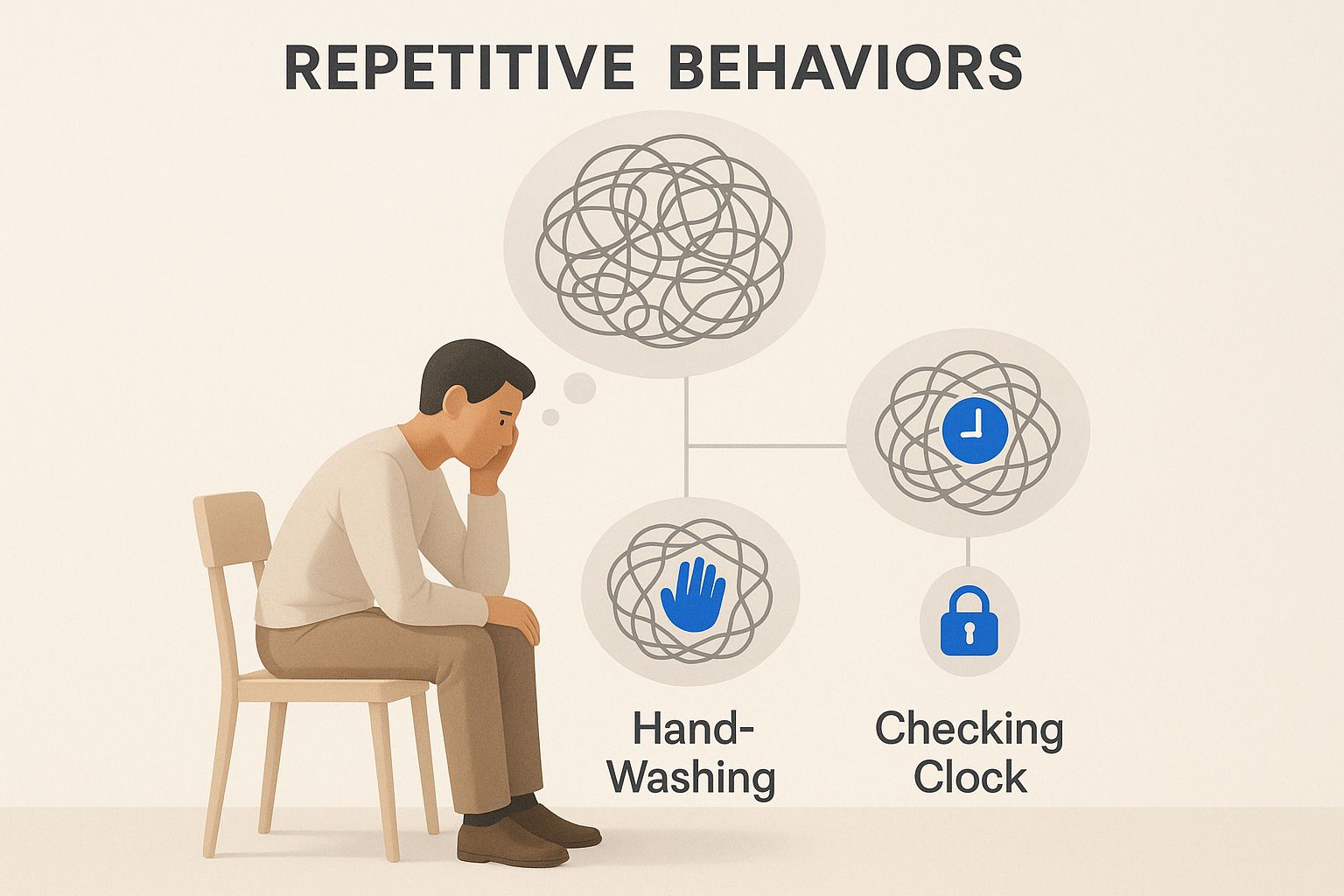
    This infographic captures the internal struggle of OCD, where thoughts and behaviors can feel like an impossible knot.

    Infographic about cognitive behavioral therapy for ocd

    ERP is a gentle method for untangling that knot, helping you regain a sense of control over your actions and reactions.

    The ‘Exposure’ Part: Facing the Fear

    The first part of the process is Exposure. This means you will gradually and safely confront the thoughts, places, or objects that trigger your anxiety. This is a carefully planned process that you and your therapist design together.

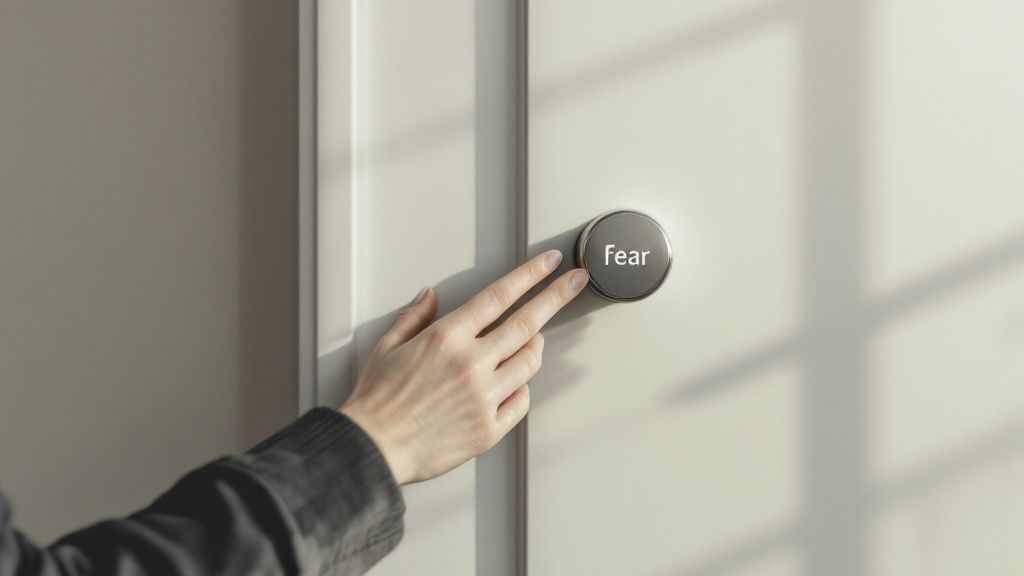
    For someone with a fear of contamination, an early exposure might be as simple as touching a doorknob at home for a few seconds. The goal is to start with a challenge that feels manageable and builds your confidence.

    This systematic process teaches your brain a new lesson: the things you fear may not be as dangerous as they feel. Over time, the triggers begin to lose their intensity.

    The ‘Response Prevention’ Part: Breaking the Habit

    This brings us to the second critical part: Response Prevention. After being exposed to a trigger, you learn to resist the urge to perform your usual compulsion or ritual. This is where you learn to sit with the discomfort until it naturally subsides.

    At first, the feeling of anxiety can be strong, and that's perfectly normal. Your therapist is there to support you through it. This discomfort always fades with time.

    By not giving in to the ritual, you are actively breaking the OCD cycle. You send a powerful message to your brain: "The difficult feeling passed on its own." This is where you start to find freedom.

    To make this clearer, this table breaks down the core components of Exposure and Response Prevention to clarify how this structured therapy helps you regain control.

    Understanding the Two Parts of ERP Therapy

    Component What It Means in Practice The Ultimate Goal
    Exposure Systematically facing triggers (thoughts, objects, situations) in a controlled way, starting with the least scary and moving up. To reduce the anxiety and fear associated with your triggers through a process called habituation.
    Response Prevention Actively choosing not to perform the compulsive behaviours or mental rituals that you normally use to reduce anxiety. To break the link between obsessions and compulsions, proving to your brain that the rituals are not necessary for safety.

    Together, Exposure and Response Prevention are a powerful team. This is a crucial step toward managing OCD and addressing related challenges like workplace stress, anxiety, and depression.

    What to Expect from Your Therapy Sessions

    Deciding to start counselling is a significant and hopeful step. To help you feel more prepared, let's walk through what cognitive behavioral therapy for OCD sessions typically look like.

    Think of the process as a partnership between you and your therapist. You are always in control of the pace, and the main goal is to create a safe space where you feel supported.

    Your First Session: The Initial Assessment

    The first few sessions are about getting to know each other. Your therapist is there to listen to your story and understand what you are going through in a judgement-free environment.

    You’ll likely talk about your specific challenges and what you hope to achieve through counselling. Any assessments used are simply informational tools to help create a personalized plan; they are not a formal diagnosis.

    The initial assessment is a two-way street. It is a chance for you to see if the therapist is a good fit and for them to understand how best to support you.

    This groundwork ensures your therapy is tailored to your unique needs, whether that's addressing OCD or related challenges like anxiety, depression, or stress.

    Creating Your Fear Hierarchy Together

    After your therapist understands your experiences, you'll work together to build a fear hierarchy. This is a list of the situations or thoughts that trigger your OCD, ranked from least stressful to most stressful.

    This list becomes your personal roadmap for therapy. You'll start with small, manageable challenges and only move up when you feel ready and confident. This step-by-step approach is designed to build your skills without feeling overwhelming.

    Practicing New Skills Beyond the Session

    A key part of CBT is applying what you learn in therapy to your everyday life. This is often called "homework," but it’s more like real-world practice to help new skills stick.

    These practice tasks are always designed with your therapist and are linked to your fear hierarchy. They are practical, achievable steps to keep your momentum going between sessions.

    What might this practice look like?

    • Behavioral Experiments: Gently testing a fear in a controlled way, like touching an object and waiting a few extra minutes before washing your hands.
    • Thought Records: Noting down a difficult thought and using cognitive skills to look at it from a different perspective.
    • Mindfulness Exercises: Practicing short, guided meditations to get better at sitting with uncomfortable feelings without reacting.

    This is the work that turns theory into a lived reality. It proves to you, one small victory at a time, that you have the strength to manage anxiety and reclaim your well-being.

    Navigating Challenges and Building Resilience

    The journey of managing OCD with cognitive behavioral therapy is not always a straight line. You will have days of great progress and moments that feel like a step back. This is a normal and expected part of the healing process.

    Facing your fears takes emotional energy, so feeling tired or experiencing therapy burnout is common. Life challenges, like [workplace stress], can also increase anxiety. Acknowledging that these bumps in the road are part of the path is an important first step.

    A person sitting peacefully on a rock, looking out over a calm body of water at sunrise, symbolizing resilience and self-compassion.

    Learning to Be Kind to Yourself

    One of the most powerful skills you will develop is self-compassion. OCD can often be accompanied by a harsh inner critic. Therapy teaches you to treat yourself with the same kindness you would offer a friend.

    This shift from self-criticism to self-kindness can lift a heavy emotional weight. It helps you recognize that you are doing your best with a genuinely difficult condition, which fosters both resilience and happiness.

    As you build this foundation, you may want to explore other strategies to master your anxiety. This can make the core therapy work feel more manageable.

    Forging True Resilience from Within

    Resilience is not about being unbreakable; it's the ability to bounce back from difficult experiences. CBT for OCD is excellent training for this. Every time you face a trigger without performing a compulsion, you are strengthening your resilience.

    You are proving to yourself that you can tolerate discomfort and that feelings of anxiety eventually pass. This process builds a deep sense of self-trust and confidence that extends far beyond managing OCD.

    Resilience is not a trait you either have or don’t. It is a set of skills and a mindset that anyone can learn and strengthen through practice.

    The Indian Context: Family, Culture, and Support

    In India, family and community are incredible sources of strength. However, cultural pressures to always appear "strong" can sometimes make it difficult to talk about mental health struggles.

    Good therapy respects these cultural nuances. It helps you combine professional techniques with the support systems you already have. It is about creating a personal toolkit for well-being that honors both modern therapy and your cultural roots.

    The road has its challenges, but it is also a path of incredible personal growth. By facing these difficulties with self-compassion, you are building a more resilient, calm, and fulfilling life.

    The Supportive Role of Your Therapist

    Your relationship with your therapist is one of the most important parts of the process. Think of them as a compassionate guide walking the path with you. Their first priority is to create a safe, confidential, and non-judgmental space where you feel heard.

    This partnership is often called the therapeutic alliance and is built on trust and respect. A good therapist knows that you are the expert on your own life. They bring their professional knowledge to help you find your inner strength.

    A compassionate therapist listening intently to a client in a warm and comfortable office setting.

    A Personalized and Flexible Approach

    There is no one-size-fits-all script for effective therapy. An experienced therapist will tailor your treatment plan to fit your specific needs, comfort level, and personal goals. They will listen to your concerns and adjust the pace, especially during ERP exercises.

    This flexibility is key. If you are dealing with burnout or high levels of stress, your therapist can shift the focus to building coping skills first. They ensure the process feels empowering, not exhausting.

    A therapist's job isn't to push you into situations you aren't ready for. It's to help you build the confidence to take the next step when you decide it's time.

    This tailored support is what makes professional counselling so effective. It addresses not just OCD but also related challenges like anxiety and depression, paving the way for greater well-being and resilience.

    Finding the Right Professional for You

    Finding a therapist you connect with is fundamental to your success. The right person will not only have the right qualifications but also a style that makes you feel comfortable and secure.

    When looking for a therapist, whether in India or elsewhere, keep these points in mind:

    • Qualifications: Look for professionals with specific training in CBT and ERP for OCD.
    • Experience: Feel free to ask about their experience working with people who have similar challenges.
    • Approach: During an initial chat, ask about their therapeutic style to see if it feels collaborative and empathetic.
    • Comfort Level: Most importantly, do you feel a sense of connection and trust?

    This relationship is the foundation for all your hard work. A strong therapeutic bond can make a significant difference in your journey.

    Empowering You to Become Your Own Guide

    Ultimately, a great therapist’s goal is to empower you with the tools to manage your thoughts and behaviors on your own. They teach you how to challenge unhelpful thinking, resist compulsions, and treat yourself with kindness.

    This process builds incredible self-reliance and resilience. You'll start using these skills automatically in your daily life. This is the true sign of successful therapy—feeling more capable and in control every day.

    Making Your Skills a Part of Your Life

    Finishing a course of cognitive behavioral therapy is a huge achievement. Now, the skills you’ve learned become tools for life. The more you use them, the stronger they become, supporting your well-being long after your sessions end.

    CBT teaches you to observe your thoughts without getting carried away and to choose how you respond. Weaving this into your daily routine is what turns your progress into lasting change.

    Weaving Your Skills into Everyday Moments

    The real power of this therapy appears in the small moments of your day. When a difficult thought or feeling of anxiety arises, you have a toolkit ready. The goal was never to eliminate anxiety, but to know what to do when it shows up.

    Here are a few ways to keep your CBT skills strong:

    • Practice Mindful Pauses: A few times a day, just notice what’s happening in your mind and body without judgment.
    • Embrace Mini-Exposures: Gently lean into small avoidance habits. See them as opportunities to practice your skills.
    • Take Self-Compassion Breaks: When you feel overwhelmed, treat yourself with kindness. Acknowledge that this is hard, without self-blame.

    Be Patient—This Is a Journey, Not a Race

    Progress is not always a straight line. Some days will feel easy, while others will be challenging. This is completely normal and expected.

    The goal isn’t perfection; it’s persistence. Every time you choose a compassionate response over self-criticism, you build resilience and reinforce your progress.

    Remembering this helps you handle tough days with more grace. It allows you to see setbacks not as failures, but as opportunities to learn and grow.

    This is a path of empowerment. Starting counselling for OCD is a sign of incredible strength and a commitment to your own well-being. Supportive takeaways from this journey include greater peace, freedom, and resilience, knowing you have the skills to care for yourself.

    Frequently Asked Questions

    It’s normal to have questions when considering therapy. Taking a thoughtful approach to your well-being is a great first step. Here are answers to some common questions about using cognitive behavioral therapy for OCD.

    This is helpful background information, but it is not a substitute for a conversation with a qualified professional.

    How Long Does Cognitive Behavioural Therapy for OCD Usually Take?

    There is no fixed timeline, as therapy is always personalized. A standard course of Exposure and Response Prevention (ERP) typically runs for about 12 to 20 weekly sessions. This rhythm helps you build momentum without feeling rushed.

    The real goal is to help you build the skills and confidence to manage OCD on your own. Your therapist will work with you to find a pace that feels right.

    The aim of therapy isn’t to keep you in counselling forever. It’s to empower you with the tools you need to eventually become your own therapist.

    Is ERP Therapy Scary or Overwhelming?

    It's understandable to feel nervous about ERP, as it involves facing your fears. However, a good therapist ensures the process is gradual, collaborative, and always supportive. You will never be pushed to do something you aren’t ready for.

    You and your therapist will create a "fear hierarchy," starting with small, manageable exposures. The idea is to gently show you that you can handle anxiety without compulsions. Your therapist acts as your coach every step of the way.

    Can I Do CBT for OCD on My Own?

    Self-help resources can be great for learning about general stress management. However, trying to do ERP for OCD on your own is not recommended. It is a precise process that requires careful planning to be safe and effective.

    A qualified therapist offers crucial support. They help you:

    • Design the right exposures: They create challenges that are effective but not overwhelming.
    • Navigate tough moments: A therapist provides in-the-moment coaching to help you manage anxiety.
    • Stay on track: They provide accountability and encouragement to help you keep going.

    For the safest and most effective path to managing OCD, working with a professional is the best approach. That partnership helps you build lasting skills for a calmer, more resilient life.


    Finding the right support is the most important first step. At DeTalks, we can connect you with experienced therapists who specialise in proven treatments like CBT for OCD. Feel free to explore our directory or take a confidential assessment to find the guidance you deserve. Your journey to well-being starts here: https://detalks.com.