Tag: anxiety relief

  • How to Calm Your Mind from Overthinking

    How to Calm Your Mind from Overthinking

    If you've ever found yourself replaying a conversation in your mind or getting lost in "what-if" scenarios, you're not alone. Understanding how to calm your mind from overthinking isn't about fighting your thoughts; it's about gently guiding them. This is a very human response to stress and uncertainty, and learning to manage it is the first step toward finding peace.

    Why We Get Stuck in Overthinking Loops

    A person sitting calmly on a windowsill, looking out over a city at dusk, representing a moment of quiet reflection.

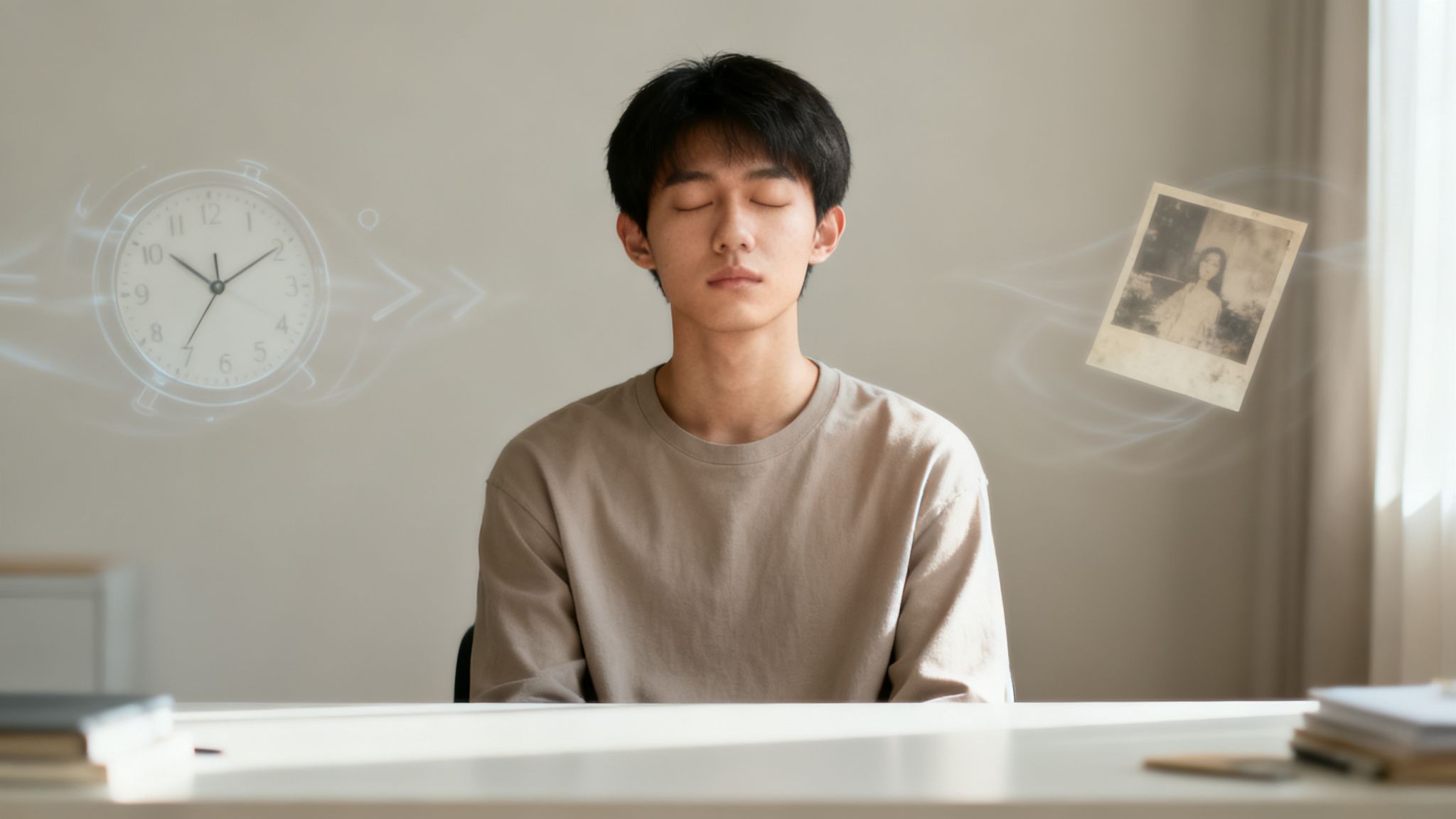
    Thinking deeply is normal, but overthinking is when your thoughts spin in circles without finding a solution. It’s not a personal failing; it's often the brain's attempt to protect you from future unknowns or potential pain.

    This cycle can be common in high-pressure environments, like in cases of workplace stress, where the need to be constantly available fuels endless analysis. This isn't productive problem-solving; it’s a direct path to burnout and can harm your overall well-being.

    The Impact on Your Well-being

    When your mind gets caught in a loop, it can take a real toll on your mental and emotional health. This constant mental activity often triggers anxiety and can contribute to feelings of depression, keeping your nervous system on high alert.

    This experience is common. In India, a recent study revealed that 81% of people spend over three hours a day overthinking. For many, it's a constant habit tied to daily choices and major life events, showing how deeply this pattern can affect us. You can discover more insights from the India Overthinking Report to understand the full scope.

    Moving from Awareness to Action

    Recognising that overthinking is a common response is a powerful first step. It allows you to approach these thoughts with compassion rather than self-criticism. This awareness isn't about labeling yourself, but about preparing to make a positive change.

    Please remember, this guide provides informational tools to support your journey toward a calmer mind. It is not a substitute for a professional diagnosis from a qualified healthcare provider.

    Acknowledging these thought loops as they happen allows you to try practical strategies to build mental resilience. The goal is to shift your relationship with your thoughts—to observe them without being controlled by them. That is where the path to a quieter mind begins.

    Ground Yourself with Practical Mindfulness Techniques

    A person practicing a calming breathing exercise by a window, with soft light filtering in, creating a serene and focused atmosphere.

    When your thoughts are spiralling, bringing yourself back to the present moment can be incredibly powerful. This is the core of mindfulness. It isn't about forcing your mind to be empty, but about giving it a gentle anchor.

    These simple techniques can be used anywhere, whether at your desk or on a crowded train. The idea is to shift your focus from the storm inside your head to the world around you, helping to calm your body’s stress response.

    Use the 5-4-3-2-1 Grounding Method

    This technique is a discreet way to stop a thought spiral by engaging your five senses. It pulls your mind out of past regrets or future worries and plants it firmly in the here and now.

    You can try it right now. Silently, go through this checklist:

    • See 5 things: Look around and name five objects without judgement. Notice their colour, shape, and texture.
    • Feel 4 things: Bring attention to physical sensations, like the feeling of your chair or the fabric of your clothes.
    • Hear 3 things: Listen for background sounds you might have been tuning out, such as traffic or your own breathing.
    • Smell 2 things: Focus on what you can smell in the air. Even noticing the absence of a scent is helpful.
    • Taste 1 thing: Acknowledge what you can taste, whether it’s a lingering flavour or just the natural taste in your mouth.

    This sensory scan is a wonderful first step in learning how to calm your mind from overthinking. It short-circuits internal chatter and reminds you that you are more than your thoughts.

    Practise Simple Box Breathing

    Box breathing is another great tool for calming your nervous system. It works by regulating your breath, which sends a direct signal to your brain that you are safe. This helps turn off the fight-or-flight response that overthinking often triggers.

    By intentionally slowing your breathing, you can create a sense of calm and mental space, easing feelings of stress and anxiety.

    It's beautifully simple. Picture a square and follow these steps, with each side lasting for a count of four:

    1. Breathe in slowly through your nose for four seconds.
    2. Hold your breath gently for four seconds.
    3. Breathe out slowly through your mouth for four seconds.
    4. Hold your breath at the end for four seconds.

    Repeat this cycle for a minute or two until you feel more settled. The steady, rhythmic nature of this practice gives your racing mind something positive to focus on.

    Simple Techniques to Interrupt Overthinking

    Technique How It Works When to Use It
    5-4-3-2-1 Grounding Engages all five senses to pull your focus out of your head and into the present physical environment. When you feel detached or are caught in a loop of "what-if" scenarios and past regrets. Excellent for public spaces.
    Box Breathing Regulates your breathing pattern to calm the body's physiological stress response (fight-or-flight). When you feel the physical symptoms of anxiety—a racing heart, shallow breathing, or tension. Great before a stressful event.

    These are immediate, practical actions you can take the next time you feel overwhelmed. Integrating these small practices into your day builds mental resilience and gives you back a sense of control.

    Change Your Relationship with Your Thoughts

    A person looking at their own reflection in a puddle, symbolizing self-reflection and changing one's perspective on their thoughts.

    While grounding techniques are helpful in the moment, a long-term strategy involves changing how you relate to your thoughts. It’s about learning to see them as mental events, like clouds passing in the sky—temporary and not always true.

    Many of these strategies come from approaches used in therapy and counselling. The goal is not to suppress your thoughts, which often makes them stronger, but to get curious and gently loosen their hold on you. This builds lasting mental resilience and promotes happiness.

    Question Your Automatic Thoughts

    Our brains often jump to conclusions, especially when we feel pressure from workplace stress or general anxiety. For example, a short email from your boss might trigger a spiral of worry that you've done something wrong.

    Instead of accepting that first negative thought, pause and question it.

    Ask yourself these questions:

    • Is there another way to look at this? Perhaps your manager was just busy. It might not be about you at all.
    • What's the actual evidence for my fear? Often, you'll find there’s no real proof for the worst-case scenario.
    • What would I tell a friend in this situation? Applying the same compassion to yourself can change your perspective.

    This is not about ignoring problems but about creating space to consider more balanced possibilities. Practicing this can help rewire your brain to be less reactive, which is a big step toward greater well-being.

    Schedule a Time to Worry

    This may sound unusual, but setting aside a specific time to worry can be very effective. By scheduling a "worry window," you contain the thoughts instead of letting them take over your entire day.

    Dedicate a short period, like 15 minutes each evening, to your worries. If a concern pops up earlier, you can gently tell yourself, "I'll think about that at 6 PM," and redirect your focus.

    This works because it stops worries from constantly interrupting you. When you do sit down for your worry session, you may find that many of those thoughts now seem less urgent or important.

    Learning how to calm your mind from overthinking is a skill built over time. If these patterns feel too difficult to manage alone, seeking support through counselling can make a significant difference, especially if you are facing challenges like anxiety or depression.

    Build a Lifestyle That Supports a Calm Mind

    A person incorporating healthy lifestyle changes, such as enjoying a quiet cup of tea and a nutritious meal, creating a peaceful and supportive home environment.

    While in-the-moment techniques are useful, a lifestyle that supports calm is key to long-term well-being. Your daily habits can either fuel overthinking or build a strong foundation for peace.

    This isn’t about a complete overhaul. Small, intentional choices can create a powerful buffer against workplace stress, anxiety, and burnout.

    Set Healthy Digital Boundaries

    We are surrounded by a constant flow of information that can easily put our minds into overdrive. Setting digital boundaries helps you reclaim your mental space.

    Try these simple habits:

    • Schedule 'no-phone' times, like the first hour of your day or during meals, to give your brain a break.
    • Curate your digital world. Unfollow accounts that make you feel anxious or drained and focus on content that inspires you.
    • Silence non-essential notifications. Constant alerts can keep your nervous system on high alert, so turn them off.

    Connect Your Body and Mind

    Your physical and mental health are deeply connected. When you take care of your body, your mind is better equipped to handle stress. It's also worth understanding the intricate link between your gut and brain health, as your diet can directly impact your mood.

    Simple activities, like a short walk, can help clear your head and improve your sleep. The goal is not perfection but gentle, consistent care for your whole self.

    Remember, consistency is more important than intensity. A gentle 20-minute walk each day is more beneficial for long-term well-being than an intense workout once a week.

    Finally, protect your sleep. A tired brain is more likely to fall into patterns of rumination that can contribute to feelings of anxiety or depression. A simple, relaxing bedtime routine can signal to your body that it’s time to wind down.

    Know When to Seek Professional Support

    While self-help strategies are valuable, sometimes overthinking can be too much to handle alone. Recognising you need extra support is a sign of strength and self-awareness, an important step toward improving your mental well-being.

    If racing thoughts are disrupting your sleep, work, or relationships, it may be time to speak with someone. Persistent feelings of hopelessness or an inability to switch off your worries are also signs that professional help could be beneficial.

    When overthinking feels like your default state, it could be related to an underlying condition like anxiety or depression. Reaching out for help through therapy or counselling provides a safe space to explore these patterns.

    What to Expect from Therapy

    Starting therapy can feel like a big step, but it is a collaborative process. A therapist can act as a guide, helping you understand the roots of your overthinking and providing you with personalised tools to build resilience.

    In India, accessing mental healthcare can be challenging. The country faces a significant mental health burden of 2443 DALYs per 100,000 population, with only 0.75 psychiatrists per 100,000 people. You can read the full report on India's mental health imperatives for more context.

    Despite these gaps, support is becoming more accessible through online platforms and helplines. The goal of therapy isn't to eliminate all worries, but to help you build a healthier relationship with your thoughts so they no longer control your life.

    Taking the First Step

    Acknowledging that you might need help is the most important move. If overthinking is affecting your quality of life, exploring comprehensive mental health assessment services could offer helpful insights. It's important to remember these assessments are informational, not diagnostic.

    Here are a few signs that professional guidance could be helpful:

    • Constant Fatigue: Feeling mentally and emotionally exhausted most of the time.
    • Avoiding Situations: Dodging activities you once enjoyed due to anxiety.
    • Physical Symptoms: Regular headaches, stomach issues, or muscle tension without a clear medical cause.
    • Impact on Relationships: Your worrying is causing strain with loved ones.

    The journey to a calmer mind is about building a supportive toolkit for the long haul. A professional can provide the structure and expertise to guide you with compassion.

    Your mental health is just as important as your physical health. Seeking professional support is a powerful investment in your happiness and resilience.

    Your Questions, Answered

    It's natural to have questions as you learn to manage overthinking. Here are answers to some common concerns to help you feel more confident on your journey.

    How Can I Stop My Brain from Racing at Night?

    The quiet of nighttime can often amplify our thoughts. Creating a gentle buffer between your day and bedtime can help. A simple wind-down routine, like reading a book or listening to calm music, signals to your brain that it's time to rest.

    A helpful tip is to keep a notepad by your bed. If a worry pops into your head, write it down. This simple act tells your brain that the thought is captured and can be addressed tomorrow, allowing you to let it go for now.

    What's the Difference Between Overthinking and Anxiety?

    This is a great question. Overthinking is a pattern of thought—the repetitive, unproductive loop. Anxiety is a broader emotional and physical response that often includes physical symptoms like a racing heart or a feeling of dread.

    While they are not the same, they are closely linked. Chronic overthinking can intensify anxiety, and feeling anxious can make you more prone to overthinking. If you feel overwhelmed by either, speaking with a professional through counselling can help clarify what you're experiencing.

    Remember, this information is for educational purposes and is not a substitute for a professional diagnosis. A therapist can provide a clear assessment based on your unique situation.

    How Can I Help a Friend Who's Stuck in Overthinking?

    It's hard to watch someone you care about struggle. Instead of telling them to "just stop worrying," which can feel dismissive, try simply listening with compassion.

    Validating their feelings with a phrase like, "That sounds really stressful," can make a world of difference. You can also gently guide them to the present moment by suggesting a shared activity, like a walk or watching a movie. Sometimes, a supportive presence is the most helpful gift you can offer, promoting their own resilience.

    Are There Good Mental Health Resources in India?

    Yes, access to mental health support in India is improving. The Tele MANAS helpline, launched in 2022, is a wonderful initiative that has provided over 1.81 million mental health consultations. It's free, available 24/7, and offers support in multiple Indian languages.

    Services like these make it easier for people to get the initial support they need in a confidential way. You can learn more about Tele MANAS and its impact on mental health care to see the progress being made.


    At DeTalks, we believe everyone deserves the right support for their mental well-being. Our platform is designed to connect you with qualified therapists and provide science-backed tools to help you understand your thoughts and build a more resilient, peaceful mind. Take the first step toward clarity and find the support you need at https://detalks.com.

  • Top Mindfulness Techniques for Stress Relief in 2025

    Top Mindfulness Techniques for Stress Relief in 2025

    In today's fast-paced world, feeling stressed, anxious, or overwhelmed is a common experience. The demands of our personal and professional lives can sometimes lead to workplace stress and burnout, impacting our overall well-being. This article explores practical mindfulness techniques for stress to help you find calm and build a strong foundation for emotional balance.

    Mindfulness is the simple practice of paying attention to the present moment on purpose and without judgment. It's a skill that builds resilience, enhances self-compassion, and can foster a greater sense of happiness. By connecting with the here and now, you can learn to navigate difficult feelings linked to anxiety and depression with more ease. For a broader approach to mental calm, you might find value in this gentle guide to calming your mind and finding inner peace.

    This guide offers eight proven methods to support your mental wellness journey, explained in warm, clear language. Rooted in an India-first context with global relevance, these informational techniques are tools for well-being, not diagnostic assessments or a replacement for professional therapy or counselling. Let’s explore how you can cultivate a more balanced and mindful life.

    1. The Anchor of Now: Mindful Breathing (Breath Awareness Meditation)

    Mindful breathing is the foundation of many mindfulness techniques for stress. It involves focusing your attention on the natural rhythm of your breath. This simple act anchors you in the present moment, guiding your focus away from anxious thoughts.

    This practice helps activate the body's relaxation response, which can lower stress hormones and slow your heart rate. Popularised in the West, its power lies in its simplicity and accessibility for managing stress and promoting well-being.

    Why It's a Powerful Tool for Stress

    This technique is especially helpful for managing immediate stress. When you feel overwhelmed by workplace stress or a sudden wave of anxiety, focusing on your breath offers an instant point of concentration. The Indian Army incorporates similar tactical breathing to enhance focus, while the NHS in the UK often suggests it for managing anxiety.

    How to Practise Mindful Breathing

    Getting started is simple and requires no special equipment. Here are some tips to integrate this into your routine:

    • Start Small: Begin with just two to three minutes a day. Consistency is more important than duration when building a new habit.
    • Use a Tangible Anchor: Place one hand on your belly to feel the rise and fall with each breath, giving your mind a concrete sensation to focus on.
    • Practise the 4-7-8 Technique: A calming method popularised by Dr. Andrew Weil involves inhaling for 4 counts, holding for 7, and exhaling for 8.
    • Don't Judge Your Thoughts: Your mind will wander; that's natural. When it does, gently guide your attention back to your breath without criticism.
    • Use Guided Resources: Apps like Calm or Insight Timer offer guided breathing meditations that can help structure your practice, which is especially useful for beginners.

    2. Body Scan Meditation

    Body Scan Meditation is a practice that cultivates a deep connection between your mind and body. It involves guiding your attention through different parts of your body, noticing sensations like warmth or tension without judgment. This is one of the most effective mindfulness techniques for stress for those who carry tension physically.

    Body Scan Meditation

    Popularised as part of Mindfulness-Based Stress Reduction (MBSR), the practice helps you tune into your body's signals. By simply noticing physical sensations, you can consciously release accumulated stress from challenges like workplace stress and improve your well-being.

    Why It's a Powerful Tool for Stress

    This method is potent for managing chronic stress and physical discomfort that often come with anxiety and burnout. It trains the mind to observe sensations objectively rather than reacting to them. Major corporations like Apple and Nike include body scan sessions in their wellness programs to enhance employee resilience and well-being.

    How to Practise Body Scan Meditation

    Lying down comfortably is ideal for this practice, making it a perfect pre-sleep routine. Here are some actionable tips:

    • Use Guided Recordings: When starting, guided meditations are invaluable. Apps like Headspace or Insight Timer have excellent guided body scans.
    • Practise Before Bed: Performing a body scan in bed can significantly improve sleep quality by calming your nervous system and body.
    • Notice Without Judging: The goal is to notice sensations, not change them. Acknowledge tightness, pain, or ease with gentle curiosity.
    • Pace Yourself: Spend about 30-60 seconds on each major body part, such as your feet or abdomen, before moving to the next.
    • Return Gently: Your mind will naturally wander. When you notice this, gently guide your focus back to the part of your body you were attending to.
    • Stay Warm: As you relax, your body temperature might drop slightly. Keep a light blanket nearby to stay comfortable.

    3. Mindful Walking

    Mindful walking transforms the everyday act of moving into a powerful meditation. It involves bringing your full, non-judgmental awareness to the physical sensations of walking. This mindfulness technique for stress shifts your focus from the destination to the journey itself.

    Mindful Walking

    This practice grounds you in the present moment through movement, making it a great alternative for those who find seated meditation difficult. It connects the mind and body, helping to soothe anxiety by engaging your senses directly with the here and now.

    Why It's a Powerful Tool for Stress

    This technique is valuable for managing workplace stress and integrating calm into a busy schedule. A short mindful walk can physically and mentally reset your state, reducing feelings of being overwhelmed. The Japanese practice of Shinrin-yoku (forest bathing) combines mindful walking with nature to lower cortisol, while companies like Salesforce encourage it to boost employee well-being and resilience.

    How to Practise Mindful Walking

    You can practice mindful walking anywhere, from an office corridor to a quiet park. Here are some tips to get started:

    • Start with Short Sessions: Begin with just five minutes of mindful walking. As you become more comfortable, you can extend the duration.
    • Focus on Each Movement: Pay close attention to the sensation of lifting one foot, moving it through the air, and placing it back down.
    • Coordinate Breath with Steps: Try synchronizing your breath with your steps, such as inhaling for three steps and then exhaling for the next three.
    • Walk Barefoot: If you are in a safe, natural space like a grassy lawn, try walking barefoot to enhance the sensory feedback from the ground.
    • Use it as a Transition: Take a mindful walk when moving between tasks. This can act as a mental palate cleanser, helping you refocus.

    • Choose a Quiet Path: When possible, find a route with minimal distractions to deepen your practice and sense of well-being.
    4. Loving-Kindness Meditation (Metta)

    Loving-kindness meditation, or 'Metta', is a practice focused on cultivating unconditional compassion and goodwill. It involves silently repeating phrases that extend warmth and well-wishes first to yourself, and then to others. This can transform your relationship with stress born from conflict or self-criticism, fostering resilience.

    This technique shifts your mental state from judgment to acceptance and connection. By generating feelings of warmth, you actively counter the brain's negativity bias, reducing the emotional charge of stressful situations and promoting happiness.

    Why It's a Powerful Tool for Stress

    This mindfulness technique for stress is uniquely effective for managing emotional and interpersonal challenges. When facing workplace conflict or harsh self-judgment, Metta offers a way to soften your heart and approach the situation with greater empathy. Healthcare organizations are now using compassion meditation to help professionals prevent burnout and manage emotional tolls.

    How to Practise Loving-Kindness Meditation

    You can begin this heartfelt practice with just a few minutes a day. Here are some actionable tips:

    • Start With Yourself: Always begin by directing kind phrases toward yourself. Repeat phrases like, "May I be safe. May I be happy. May I be healthy. May I live with ease."
    • Personalise Your Phrases: If the traditional phrases don’t resonate, change them. You might prefer, "I wish myself peace," or "May I feel strong today."
    • Visualise the Recipient: When extending wishes to others, picture them in your mind. This makes the practice more vivid and heartfelt.
    • Combine with a Gesture: Place a hand over your heart as you offer kindness to yourself. This physical touch can deepen the feeling of self-compassion.
    • Be Patient with 'Difficult People': Only extend Metta to those you have friction with after you are comfortable directing it towards yourself and loved ones. It is a gradual process.

    5. The RAIN Technique: Navigating Emotional Storms

    The RAIN technique is a structured mindfulness practice to help you work through difficult emotions rather than suppressing them. Developed by mindfulness teachers, it provides a clear, four-step process. This method transforms your relationship with stress, creating a crucial pause between a trigger and your reaction.

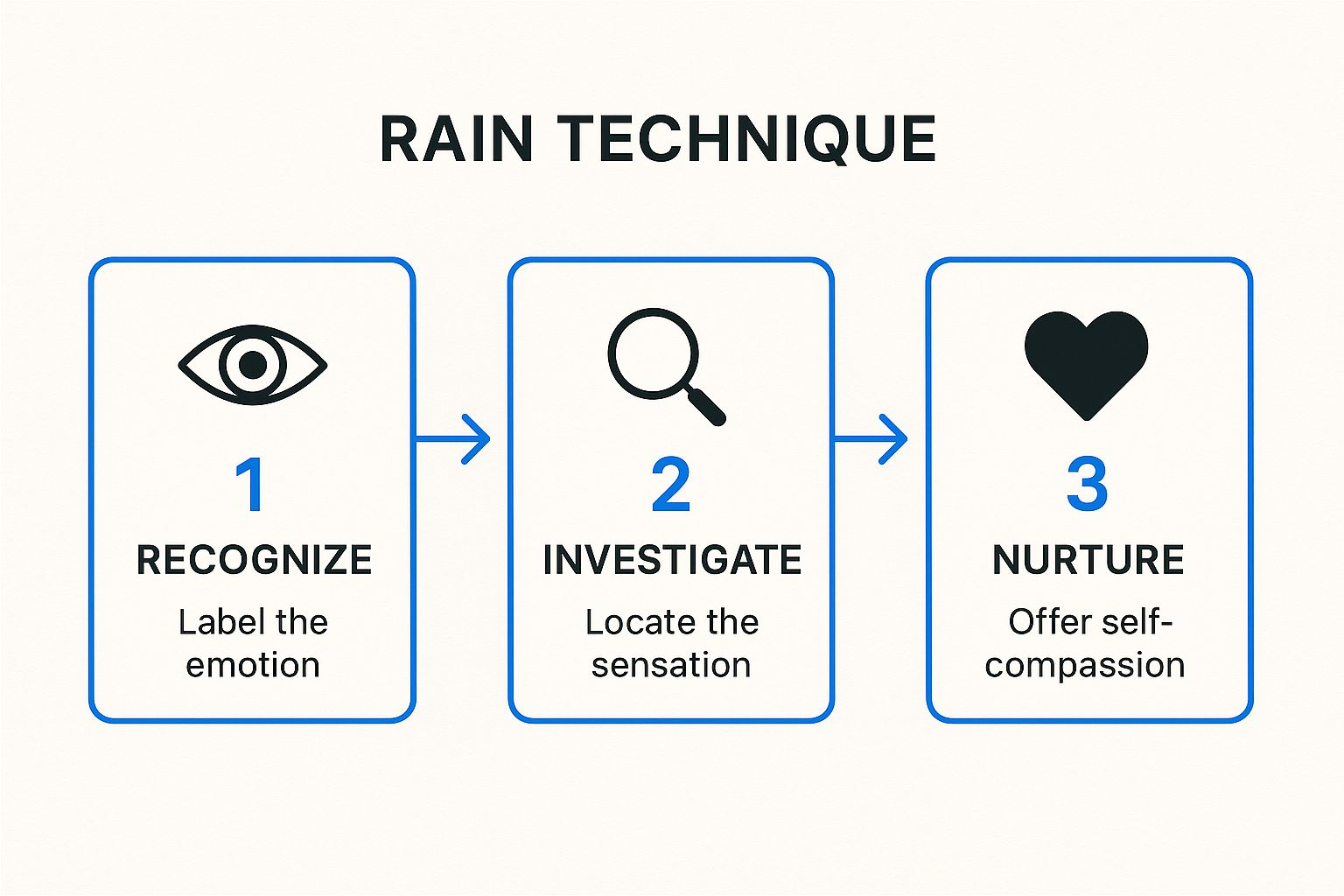
    The infographic below illustrates the core steps of the RAIN process, offering a visual guide to this powerful technique.

    Infographic showing key data about RAIN Technique

    This simple flow provides a structured pathway to process difficult emotional experiences. By moving through these stages, you build resilience and self-compassion.

    Why It's a Powerful Tool for Stress

    RAIN is exceptionally effective for processing intense emotions that accompany workplace stress or anxiety. It is widely used in therapy and counselling; for instance, addiction recovery programs in India employ it to manage cravings. It provides a practical framework for emotional regulation and well-being.

    How to Practise the RAIN Technique

    You can apply this four-step process anytime you feel a strong emotion rising. Here are some tips to integrate RAIN into your life:

    • Recognise What’s Happening: Pause and mentally name the feeling. For example, say to yourself, "This is anxiety," or "Anger is here."
    • Allow the Experience to Be There: Gently give the feeling permission to exist without trying to fix it. You might whisper internally, "It's okay to feel this."
    • Investigate with Kindness: Turn your attention inward with curiosity. Ask yourself, "Where do I feel this in my body?" or "What does this emotion need right now?"
    • Nurture with Self-Compassion: Offer yourself a gesture of kindness, like placing a hand on your heart or offering kind words. This step provides comfort and care.
    • Start with Minor Irritations: Practice RAIN with small stressors, like being stuck in traffic, before applying it to more intense situations to build the skill.

    6. Mindful Observation (Open Awareness)

    Mindful observation, or open awareness, is a practice that trains your attention on a single object in your environment. Whether it's a flower or a cup of tea, the goal is to observe it with full sensory awareness, free from judgment. This technique interrupts the cycle of stress-generating thoughts by anchoring your mind in the tangible world.

    The practice shifts your focus from internal mental chatter, which often fuels anxiety, to external sensory input. Popularised through the famous "raisin exercise," it shows that even a mundane object can be a gateway to presence and peace.

    Why It's a Powerful Tool for Stress

    This technique is effective for breaking free from repetitive negative thinking. When you're caught in a loop of worry about workplace stress, mindful observation provides an escape route. Nature-based therapy programs in India often use mindful observation to help individuals manage symptoms of anxiety and depression, grounding them in the natural environment.

    How to Practise Mindful Observation

    Integrating this practice requires only a willingness to see the world with fresh eyes. Here are some actionable tips:

    • Start with a 'Beginner's Mind': Choose an object, perhaps the cup of chai you have every morning, and pretend you are seeing it for the very first time.
    • Keep a 'Mindfulness Object': Place a small object like a smooth stone on your desk. When stress rises, take a two-minute break to simply observe it.
    • Engage All Senses: The "raisin exercise" is a classic example. Look at it, feel it, smell it, and finally, taste it slowly, observing the flavor.
    • Use the 5-4-3-2-1 Technique: Ground yourself by naming: 5 things you can see, 4 things you can feel, 3 things you can hear, 2 things you can smell, and 1 thing you can taste.
    • Don't Strive, Just Notice: The goal is simply to observe. When your mind wanders, gently guide it back to the object of your attention.

    7. Penning Down Peace: Mindful Journaling

    Mindful journaling is a powerful mindfulness technique for stress that combines writing with present-moment awareness. It involves writing about your thoughts, emotions, and physical sensations as they arise, observing them without judgment. This practice helps make overwhelming feelings feel more manageable.

    Translating thoughts and feelings into words creates a healthy distance, allowing you to see them more objectively. This method builds self-awareness, a key component of emotional resilience and well-being.

    Why It's a Powerful Tool for Stress

    This technique is effective for untangling complex emotions tied to workplace stress, anxiety, or burnout. It’s a private and accessible way to engage in self-counselling and identify recurring thought patterns. Corporate wellness programs, like those at LinkedIn, offer journaling sessions to help employees manage job stress and improve well-being.

    How to Practise Mindful Journaling

    You don’t need to be a writer to benefit; you just need a pen and paper or a digital app. Here are some tips to begin:

    • Start with Five Minutes: Begin with a short, achievable goal of five minutes a day. Consistency is more crucial than duration.
    • Use Mindful Prompts: Kickstart your session with prompts like, "Right now, I am feeling…" or "I notice in my body…" to anchor your writing in the present.
    • Observe, Don't Solve: Write about a source of stress without pressure to find a solution. The goal is to simply observe your thoughts and feelings.
    • Incorporate Gratitude: End each session by noting three specific things you are grateful for. This shifts your focus towards positivity and builds resilience.
    • Try Morning Pages: This involves writing stream-of-consciousness thoughts upon waking to clear your mind for the day.
    • Use Digital Tools: If you prefer typing, apps like Day One or Journey offer secure platforms to support your mindful journaling practice.

    8. Mindful Sensory Grounding (5-4-3-2-1 Technique)

    Mindful sensory grounding is a powerful mindfulness technique for stress that pulls your awareness out of overwhelming thoughts. It uses your five senses to connect to the present moment, as seen in the popular 5-4-3-2-1 method. This practice involves systematically identifying things you can see, touch, hear, smell, and taste.

    The technique works by redirecting your brain's focus from anxiety-fuelling thoughts to neutral, real-world sensory information. This shift interrupts the body's stress response, calming the nervous system and providing immediate relief.

    Why It's a Powerful Tool for Stress

    This technique is effective for managing sudden spikes in anxiety or panic. When your mind is racing with workplace stress or worry, sensory grounding acts as an emergency brake. Professionals in therapy and counselling use grounding as a core component for helping people navigate intense emotions and feel safe in the here and now.

    How to Practise Mindful Sensory Grounding

    The 5-4-3-2-1 method is easy to remember and can be done anywhere. Here are actionable tips to integrate this into your well-being toolkit:

    • Practise When Calm: Rehearse the technique when you are relaxed. This makes it easier to use automatically during a high-stress moment.
    • Be Specific: Instead of just noticing "a chair," describe it to yourself: "I see a brown wooden chair with a smooth surface." Specificity deepens the grounding effect.
    • Speak Aloud: If you are in a private space, say what you observe out loud. Hearing your own voice can provide an extra layer of grounding.
    • Adapt for the Senses: For taste, you can notice the current taste in your mouth or have a mint or sip of water. For touch, focus on textures like the fabric of your clothes.
    • Create a 'Grounding Kit': Keep a small bag with items that have strong sensory properties, such as a textured stone or a small bottle of essential oil.

    Mindfulness Techniques: 8-Item Comparison

    Technique Implementation Complexity 🔄 Resource Requirements ⚡ Expected Outcomes 📊 Ideal Use Cases 💡 Key Advantages ⭐
    Mindful Breathing Low – simple focus on breath, easy to learn Minimal – no equipment needed, 5–20 mins Immediate stress reduction, parasympathetic activation Acute stress, quick calming Accessible anywhere, scientifically proven, no cost
    Body Scan Meditation Moderate – systematic, 10–45 mins Quiet space, guided audio recommended Reduces chronic pain, improves body awareness Insomnia, chronic stress, physical tension Effective for physical stress, increases emotional regulation
    Mindful Walking Low to moderate – slow walking, 5–30 mins Safe walking space, outdoors preferred Combines stress relief with physical activity Restless individuals, integrating mindfulness into daily routine Combines exercise and mindfulness, grounding benefits
    Loving-Kindness Meditation (Metta) Moderate – structured phrases, 10–30 mins Minimal – quiet space, no equipment Increases positive emotions, reduces social anxiety Interpersonal stress, self-criticism, isolation Enhances empathy, social connection, self-compassion
    RAIN Technique Moderate – 4-step cognitive-emotional process Minimal, 5–20 mins Enhances emotional intelligence, prevents reactivity Acute emotional overwhelm, trauma processing Structured, practical for intense emotions
    Mindful Observation (Open Awareness) Low to moderate – focus on external object, 5–15 mins Suitable object, quiet or public space Reduces rumination, improves concentration Those triggered by internal focus, daily routine Easily integrated, subtle public practice
    Mindful Journaling Moderate – writing with mindful awareness, 10–20 mins Writing materials or digital app Processes stress, identifies thought patterns People who express via writing, emotional processing Tangible record of stress, combines writing & mindfulness
    Mindful Sensory Grounding (5-4-3-2-1) Very Low – simple sensory engagement, 2–5 mins None, portable, can be discreet Immediate grounding, reduces panic and acute anxiety Panic attacks, acute stress, anxiety Fast, easy, discreet, suitable for all ages

    Your Path Forward: Integrating Mindfulness into Your Life

    You have just explored a powerful toolkit of mindfulness techniques for stress, each offering a unique pathway to the present moment. These strategies are invitations to reshape your relationship with your mind and emotions. From Mindful Breathing to the compassionate practice of Loving-Kindness Meditation, they provide practical ways to build resilience and find calm.

    The journey through these techniques reveals a central truth: you do not have to be swept away by stress, anxiety, or worry. Instead of fighting difficult thoughts, you can learn to observe them with gentle curiosity. This shift in perspective is the heart of mindfulness and is key to greater well-being.

    Key Takeaways: Making Mindfulness Your Own

    As you integrate these practices into your life, remember the goal is not perfection but presence. The true value lies in discovering which techniques resonate with you and committing to a gentle, consistent practice.

    • Start Small and Be Patient: You don’t need to meditate for an hour. Begin with five minutes of Mindful Breathing or a short Mindful Walk. Each time you gently guide your attention back from a wandering thought, you are strengthening your resilience.
    • Adapt to Your Needs: These are flexible tools. On a day filled with workplace stress, the 5-4-3-2-1 technique might be your anchor. When dealing with difficult emotions, the RAIN technique can offer insight and self-compassion.
    • Mindfulness is Not a Cure, but a Skill: Mindfulness won't eliminate stress, but it builds your capacity to navigate it without being overwhelmed. It cultivates emotional regulation, enhances well-being, and provides a buffer against burnout, anxiety, and depression.

    Building a Foundation for Lasting Well-being

    By weaving these mindfulness techniques for stress into your life, you invest in your long-term mental health and happiness. This practice fosters a deeper connection with yourself and the world around you. You learn to savour positive moments more fully and approach challenges with greater clarity and self-compassion.

    This journey is a powerful step towards personal growth and building resilience against life's challenges. Remember, each breath and each moment of awareness is a victory. You are cultivating a sanctuary within yourself—a place of calm you can always return to.


    If you're looking for personalised support to navigate stress, anxiety, or other life challenges, professional guidance can make all the difference. DeTalks connects you with qualified therapists and counsellors across India who can help you integrate these mindfulness practices into a structured plan for your mental well-being. Explore your path to a healthier mind by visiting DeTalks today.

  • Mindfulness Based Stress Reduction: A Practical Guide

    Mindfulness Based Stress Reduction: A Practical Guide

    Mindfulness Based Stress Reduction (MBSR) is a structured eight-week programme that combines mindfulness meditation, gentle yoga, and a deep awareness of your own body. It is a practical, evidence-based approach designed to help people better manage challenges like stress, anxiety, and even chronic pain.

    The core idea is simple yet powerful: training your attention to live in the present moment. This helps you avoid getting lost in worries about the future or regrets about the past.

    A Practical Path to Resilience and Well-Being

    In the whirlwind of modern life, especially in bustling Indian cities, it is easy to feel overwhelmed. The relentless demands of work, family, and daily tasks can lead to chronic workplace stress, anxiety, and burnout, making you feel stuck.

    If this sounds familiar, please know you are not alone in this experience. Many people are seeking ways to navigate these pressures with more calm and clarity, and MBSR offers a grounded path to build the inner resources you need.

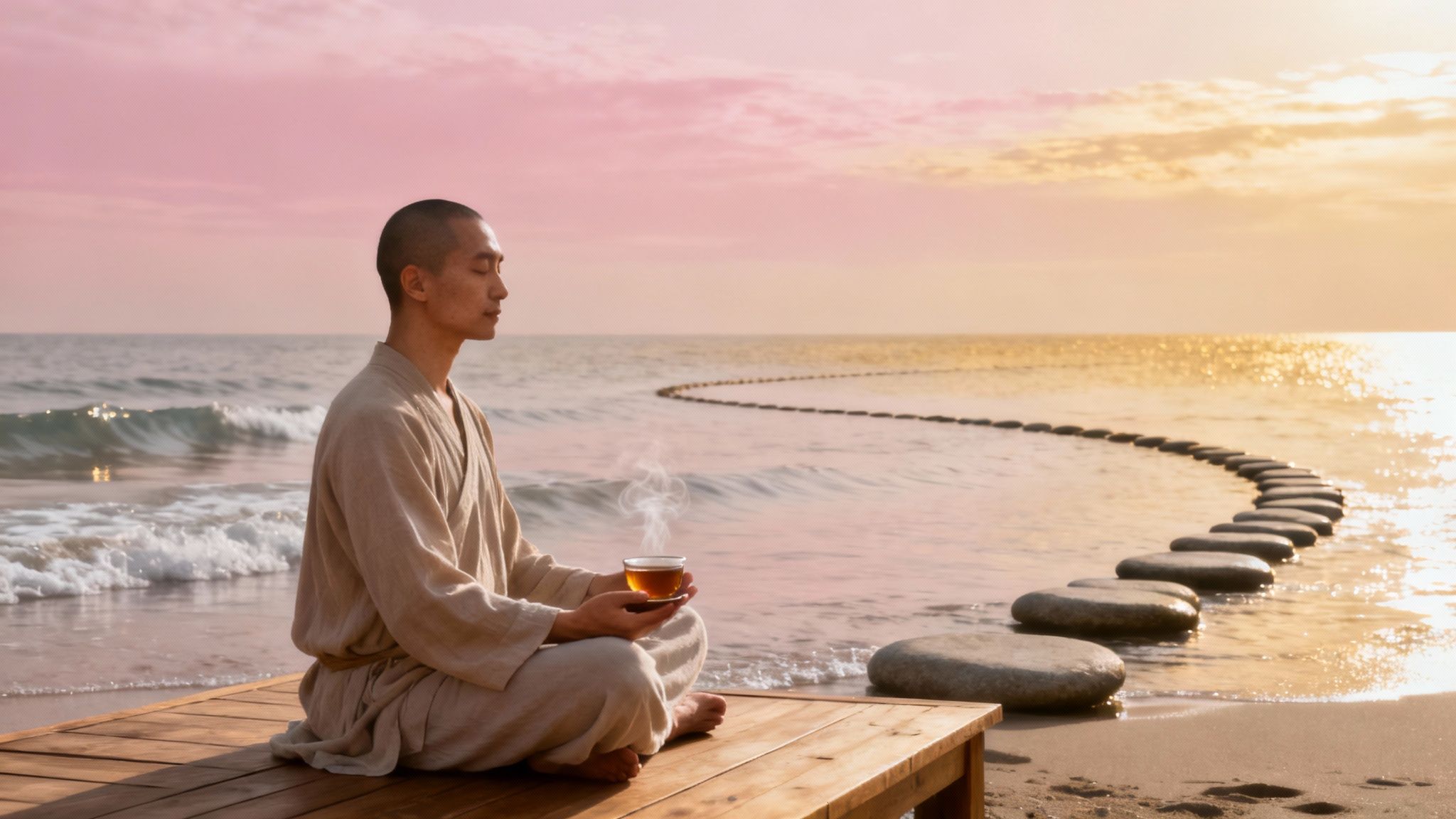
    A person meditating peacefully outdoors, symbolising the calm found through mindfulness.

    Learning to Surf the Waves of Life

    Imagine your thoughts and feelings are like waves in the ocean; some are small and gentle, while others feel huge and overwhelming. Trying to fight them or stop them from coming is an exhausting and impossible task.

    MBSR does not teach you to stop the waves, but rather how to surf them. It gives you the skills to find your balance and navigate life's unpredictable currents with greater ease.

    This guide will walk you through what MBSR is, how the programme is structured, and the tools it provides to improve your well-being. We will explore the science behind it and the benefits it offers for anyone seeking a more balanced way of living. This is a journey of building positive strengths, such as:

    • Resilience: The ability to bounce back more quickly from setbacks.
    • Compassion: Fostering a kinder, more understanding attitude toward yourself and others.
    • Happiness: Cultivating a genuine and lasting sense of peace and contentment.

    Mindfulness is the awareness that arises from paying attention, on purpose, in the present moment, non-judgementally. It’s about being fully where you are, rather than where you are not.

    The table below offers a quick look at the fundamental practices that make up the MBSR programme.

    MBSR Core Components At a Glance

    Component What It Involves
    Body Scan Meditation Lying down and bringing focused, non-judgemental attention to different parts of the body, one by one.
    Mindful Movement Gentle yoga and stretching practices to explore the body's movements and limitations with curiosity.
    Sitting Meditation Focusing on the breath, sounds, or bodily sensations to anchor attention in the present moment.
    Informal Mindfulness Integrating awareness into everyday activities like eating, walking, or washing dishes.
    Group Dialogue & Inquiry Sharing experiences and insights in a supportive group setting, guided by a trained facilitator.

    Each of these elements works together, creating a comprehensive toolkit for managing stress and enhancing your quality of life.

    A Supportive Approach to Mental Health

    It is important to understand that MBSR is a powerful educational tool for personal development, not a replacement for professional therapy or counselling. Any assessments or insights you gain are informational, not diagnostic.

    For challenges like clinical anxiety or depression, combining MBSR with support from a qualified therapist can create a robust plan for your well-being. This approach empowers you to take an active, informed role in your own mental health journey.

    This is about more than just managing stress; it's about building a life filled with greater awareness and inner peace. The following sections will give you a clear roadmap to understanding this transformative practice.

    The Story Behind MBSR: Science Meets Ancient Wisdom

    To understand Mindfulness-Based Stress Reduction (MBSR), it helps to look at its roots. This is not a wellness trend, but a carefully structured programme born from a blend of ancient contemplative practices and modern science. It began in a hospital with a clear, secular goal.

    The programme started in 1979 with Dr. Jon Kabat-Zinn at the University of Massachusetts Medical School. He worked with patients experiencing chronic pain and severe stress who found little relief from conventional medicine. He adapted mindfulness traditions, removing religious aspects to create an accessible approach that could be studied in a healthcare setting.

    This scientific foundation is what makes MBSR so distinct. It is not about adopting a spiritual belief system, but about learning a practical skill to train your mind and improve your well-being.

    So, What Exactly Is Mindfulness?

    Let's clarify the term 'mindfulness,' as it is often used loosely. At its core, it is the simple, basic human ability to be fully present and aware of where we are and what we are doing. It helps us avoid being overly reactive or overwhelmed by what is happening around us.

    Think about the last time you had a cup of tea. Did you truly taste it, or was your mind already racing through your to-do list? That is living on autopilot. A mindful approach is to simply experience the tea—noticing the warmth, the steam, the flavour—and switch from 'doing' mode to 'being' mode for a few moments.

    When you practise this, you train your attention. You learn to step back from the constant mental chatter that fuels stress and anxiety, which is a gentle but effective way to reconnect with yourself.

    A Practical Toolkit for Today’s World

    The need for tools like this has never been greater, particularly in high-pressure environments. In the Indian private sector, for instance, intense competition and long work hours have made workplace stress a significant issue. Researchers have studied how MBSR can offer support, and one Indian study on an 8-week online MBSR course showed a positive impact on stress, anxiety, and the well-being of working professionals. You can read the full research on MBSR's impact in India to learn more.

    This shows how these principles are more relevant than ever for building mental and emotional resilience. MBSR is not a magic wand but a form of mental training.

    Ultimately, MBSR provides a framework to nurture our own ability to be healthier and happier. It does not pretend life's challenges don't exist, but it offers tools to navigate everything from workplace pressure to personal struggles with more clarity. It's a supportive approach that can be a great companion to professional therapy or counselling.

    Inside the 8-Week MBSR Programme

    Starting a Mindfulness-Based Stress Reduction (MBSR) programme can feel like a big commitment. The eight-week structure is a gradual process, where each week intentionally builds on the last, helping you develop skills to manage stress and improve your well-being.

    This journey is a guided exploration of how your mind and body work. Each session introduces new practices in a manageable way, making it easier to weave mindfulness into your everyday life.

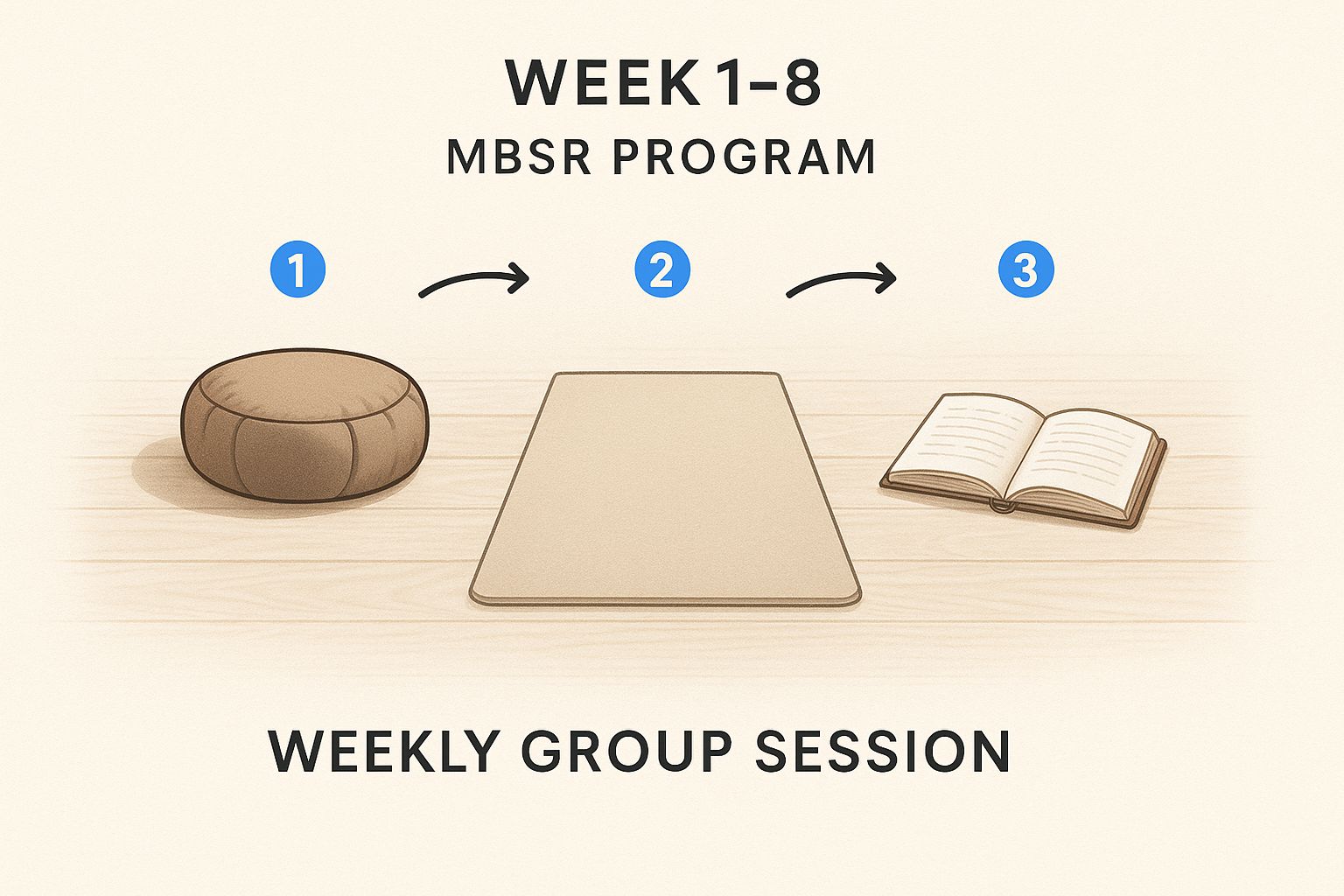
    This infographic gives you a great visual overview of the core elements you’ll encounter, from foundational meditation to mindful movement, showing how each piece fits together.

    Infographic about mindfulness based stress reduction

    As you can see, the programme flows logically, starting with basic awareness and progressing towards skills like mindful communication and self-compassion.

    The Weekly Rhythm

    A typical MBSR session runs for about two and a half hours and follows a consistent rhythm. This structure is designed to create a sense of safety, allowing you to relax and focus on your inner experience.

    Most sessions will include a blend of these core components:

    • Guided Meditation: Your facilitator will lead the group through practices like the body scan or sitting meditation with gentle instructions.
    • Mindful Movement: This involves simple, gentle yoga accessible to all fitness levels, helping you reconnect with your body and release physical tension.
    • Group Discussion: This is a chance to share experiences from your home practice in a confidential and non-judgemental space.
    • Weekly Themes: Each week has a specific focus, creating a clear path for learning and personal growth.

    This combination of individual practice and shared reflection helps normalise the struggles of dealing with workplace stress and anxiety. It builds a real sense of connection and mutual support.

    A Week-by-Week Journey

    The eight-week path is designed to build your mindfulness skills step-by-step. While programmes may vary slightly, the core themes follow a time-tested progression from basic awareness to deeper emotional intelligence.

    The real practice is not what you do for 45 minutes a day, but how you bring that awareness into the other 23 hours and 15 minutes. It’s about weaving mindfulness into the fabric of your life.

    Here is a breakdown of the typical weekly themes:

    1. Week 1: Moving Off Autopilot: This week focuses on recognising how often we run on autopilot and beginning to consciously step into the present moment.
    2. Week 2: Perceiving the World Differently: The focus shifts to how our perceptions shape our reality, learning to observe thoughts and feelings without getting entangled in them.
    3. Week 3: Being Present and Finding Pleasure: This week introduces mindful movement and the practice of finding joy in simple moments, a powerful tool against burnout.
    4. Week 4: Understanding Stress Reactivity: You will explore your personal "stress signature"—how stress shows up in your body and mind—to learn how to respond with awareness.
    5. Week 5: Responding to Stress with Mindfulness: This session builds on the last, applying mindfulness techniques in challenging situations to build resilience.
    6. Week 6: Mindful Communication: The focus broadens to relationships, practising listening and speaking with more presence and compassion.
    7. Week 7: Taking Care of Yourself: This week is dedicated to self-compassion, exploring how to use mindfulness to cultivate a kinder inner voice.
    8. Week 8: Living a Mindful Life: The final session ties everything together, helping you create a sustainable plan to carry your practice forward.

    Remember, MBSR is a skills-based educational programme, not a substitute for therapy or counselling. The insights you gain are informational, not diagnostic, providing a solid foundation for building resilience.

    A Closer Look at the Core Practices of MBSR

    The Mindfulness-Based Stress Reduction (MBSR) programme is built on simple, practical exercises designed to train your attention. By engaging with these core practices, you learn to observe your thoughts and feelings without getting carried away by them. This is how you build a solid base for greater calm and resilience.

    Think of these techniques as ways to exercise your "mindfulness muscle," strengthening your ability to navigate stress. The goal is to make these practices feel like moments of self-care you can turn to whenever you need them.

    The Body Scan Meditation

    One of the first practices you will learn is the Body Scan. This involves lying down and systematically moving your attention through your body, part by part. You are not trying to change anything, just noticing sensations as they are—warmth, tingling, pressure, or even nothing at all.

    The Body Scan is a wonderful way to bring your mind and body back into conversation. It gently brings you back home to your body, helping you notice and release stored tension.

    Sitting Meditation with Breath Awareness

    Sitting Meditation is often what people associate with mindfulness. The primary focus is your breath, using its natural rhythm as an anchor to the present moment. You simply pay attention to the feeling of air flowing in and out of your body.

    Your mind will wander—that is completely normal. The instruction is not to stop it, but to gently guide your attention back to your breath whenever you notice it has strayed. To get a feel for this, you can explore some basic guidance on how to practice mindfulness.

    This gentle act of returning is the "rep" that strengthens your attention. Each time you guide your focus back to the breath, you're building your capacity for focus, calm, and emotional balance.

    This skill translates directly into daily life. Taking a few moments to center yourself with your breath before a big meeting or a difficult conversation can significantly reduce anxiety.

    Mindful Movement

    MBSR also includes Mindful Movement, often through gentle yoga or simple stretches. This is not a fitness class; the emphasis is on paying close attention to the sensations in your body as you move. You learn to honour your body's limits with kindness and curiosity.

    This practice is brilliant for dissolving the physical tension that builds up from work stress and daily worries. By moving with awareness, you foster a deeper connection between your physical and emotional states.

    Keeping the Practice Alive

    While these practices offer incredible benefits, making them a consistent habit can be a challenge. Research shows that things like group support and a set routine are crucial for long-term success. This is especially true in India, where unique cultural stressors can make it hard to stay consistent. To learn more, you can read the full research about the challenges and facilitators of sustained mindfulness practice.

    Together, these foundational practices help you cultivate a more present and resilient way of living. They are not about escaping life, but about learning to show up for it more fully.

    The Proven Benefits of MBSR for Mind and Body

    When you commit to a Mindfulness-Based Stress Reduction (MBSR) programme, you are building inner resources with real, science-backed benefits. It is like developing a 'mental muscle'—the more you practise, the stronger your mind becomes at handling life's challenges.

    This mental strengthening is especially helpful for navigating tough emotions. Consistent mindfulness practice has been shown to reduce symptoms of anxiety and depression, giving you a way to manage overwhelming internal static.

    A serene image of a person sitting by a calm lake at sunrise, reflecting the mental clarity gained from MBSR.

    Cultivating Emotional Resilience

    One of the most profound outcomes of MBSR is improved emotional regulation. Instead of reacting automatically, you gain the ability to pause, breathe, and choose your response. This skill is a game-changer for managing workplace stress and preventing burnout.

    This newfound emotional balance is the foundation of genuine resilience. Life will always have its ups and downs, but MBSR gives you the tools to bounce back more quickly and build a deep well of inner stability.

    "Mindfulness gives you time. Time gives you choices. Choices, skillfully made, lead to freedom." – Bhante Henepola Gunaratana

    The programme also helps positive psychological traits like compassion flourish, both for yourself and for others. This can lead to a deeper, more sustainable sense of happiness that is not dependent on external circumstances.

    Physical Well-being and Holistic Health

    The benefits of MBSR extend to the body as well. Chronic stress can harm our physical health, and mindfulness is a direct antidote. Many people report improved sleep, finding it easier to quiet a racing mind and get restorative rest.

    MBSR has also proven to be a valuable tool for managing chronic pain. By changing your relationship with physical sensations, you can lessen their intensity and the emotional distress that often accompanies them. It is also wise to explore other coping strategies for anxiety and depression to build a broader toolkit for your well-being.

    It is crucial to see MBSR as an educational programme for personal growth, not a replacement for clinical treatment. Any insights are informational, not diagnostic. For deeper challenges, MBSR can be a wonderful partner to professional therapy or counselling, creating a powerful path toward lasting wellness.

    Weaving MBSR into the Fabric of Your Life

    Starting a mindfulness practice is an act of kindness toward yourself. Now that you understand MBSR, you might wonder how to begin. The secret is to start with gentle curiosity, knowing this journey is about showing up for yourself consistently, not achieving perfection.

    Some days, your practice will feel effortless, while other days it will feel like a struggle. Both experiences are normal and valuable. The point is not to force your mind into silence, but to get to know its habits with a compassionate eye.

    So, What's the Next Step?

    If the structured, eight-week journey appeals to you, finding a qualified MBSR teacher is the best approach. A certified instructor provides the expert guidance and supportive group dynamic that makes the programme so effective.

    For many, MBSR becomes one piece of a larger well-being puzzle. It complements other forms of professional support beautifully.

    • Working with a Therapist: While MBSR provides tools for the present moment, therapy or counselling offers a space to explore the roots of personal history and patterns. Combining the two can be a solid foundation for working through challenges like anxiety or depression.
    • Diving into Resources: Keep your curiosity alive with books, guided meditation apps, and talks from seasoned mindfulness teachers.
    • Finding Your People: Connecting with a local or online meditation group can offer a real sense of shared experience and encouragement.

    Remember, this is your journey. There's no single "right" way to do it. The only path that matters is the one that resonates with you.

    Supportive Takeaways to Carry with You

    Bringing mindfulness based stress reduction into your life is not about adding another task to your schedule. It is a fundamental shift in how you relate to your mind and the world, creating space for more compassion and clarity, especially when navigating workplace stress.

    Think of any assessments as helpful signposts, not definitive labels; they are informational tools to guide you. Be kind to yourself as you move forward. Every moment you consciously choose to be present is a step towards building a more mindful, resilient, and fulfilling life.

    Your Questions About MBSR, Answered

    Thinking about starting a Mindfulness-Based Stress Reduction programme? It’s completely normal to have a few questions. Feeling clear from the start can make all the difference, so we’ve put together some common queries to provide that clarity.

    Do I Need Any Meditation Experience to Join?

    Not at all. The MBSR programme is designed for absolute beginners and assumes you are starting from scratch.

    Each week, you will be gently guided through the core practices in a supportive space where everyone is new. It is a welcoming starting point for anyone interested in learning.

    Is MBSR the Same as Therapy or Counselling?

    That is an important distinction. While MBSR is wonderful for mental well-being, it is not therapy or counselling. MBSR is an educational programme that teaches you practical skills to manage stress using your own awareness.

    It works brilliantly alongside professional therapy. A counsellor can help you explore your personal history, while MBSR gives you tools to handle present-moment challenges like workplace stress and anxiety.

    How Much Time Do I Need for Home Practice?

    To get the most out of the programme, you will be encouraged to practice for about 45 minutes a day, six days a week. This consistent effort is what builds your mental 'muscle' for resilience.

    That might sound like a lot, but the programme helps you weave these practices into your life. You will receive guided recordings and also learn informal practices to bring more awareness to everyday activities.

    Remember, any assessments you might do are purely for your own information, not for diagnosis. They're simply tools to help you understand yourself better, pointing you toward the right kind of support for your well-being.

    Is MBSR a Religious Practice?

    No, it is completely secular. While mindfulness has roots in contemplative traditions, MBSR was developed in a modern medical center. It is a science-based approach that taps into our universal human ability to be aware.

    The practices are taught in a way that is accessible to people from all backgrounds, regardless of their beliefs. The focus is always on your direct experience and how these skills can help you navigate life with more ease.


    At DeTalks, we're passionate about making sure everyone has access to tools that support their mental and emotional health. If you feel that professional guidance could complement your mindfulness journey, or if you want to explore challenges like anxiety and depression more deeply, our network of qualified therapists is ready to help. Take the next step and explore support options at DeTalks to find a more balanced life.

  • A Guide to Pranayama for Anxiety Relief

    A Guide to Pranayama for Anxiety Relief

    When anxiety feels overwhelming and your mind starts racing, intentional breathing—or pranayama—can be a powerful way to find your balance. By consciously slowing your breath, you can interrupt the cycle of worry and gently guide your body back to a state of calm. It’s a simple, science-backed tool you can use anywhere to manage the challenging feelings of anxiety.

    Finding Your Calm in a Hectic World

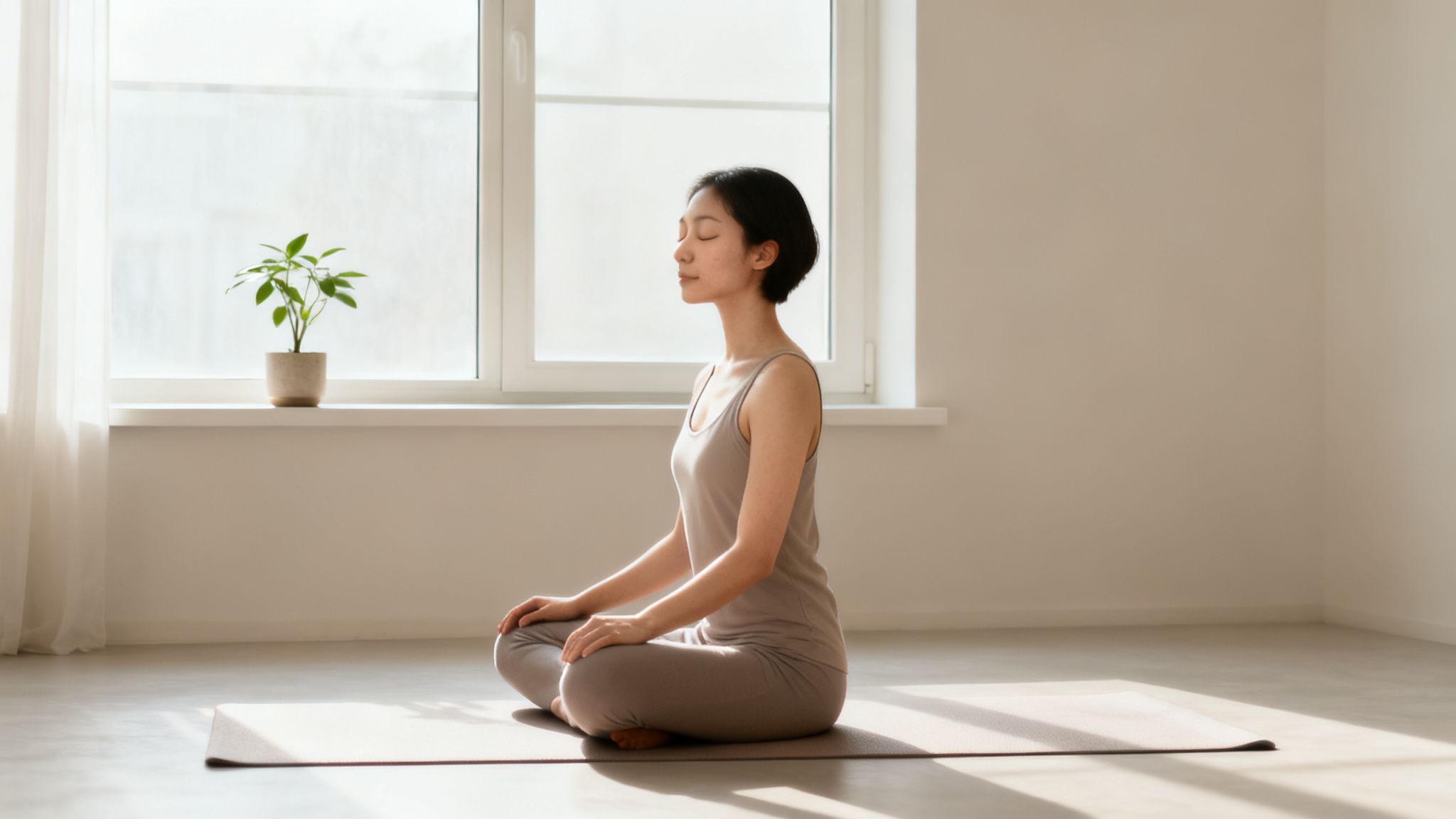
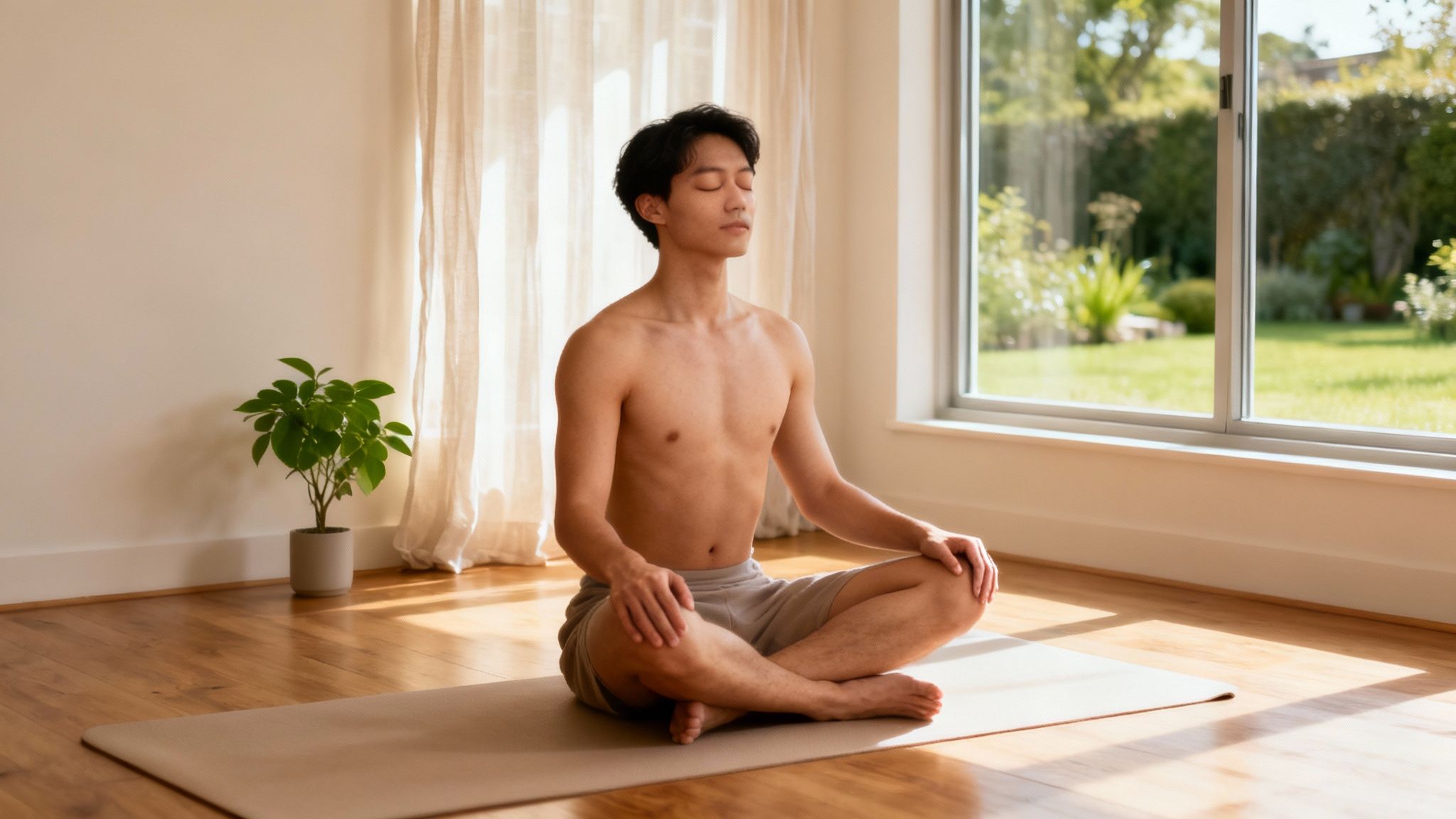
    A person sitting in a calm, meditative pose with hands resting on their knees, embodying the peace found through pranayama.

    Feeling overwhelmed can seem like the new normal. The constant juggle of work and personal life can easily lead to burnout and persistent workplace stress. In this environment, finding a true moment of peace can feel almost impossible.

    This relentless pressure often appears as anxiety, trapping your mind in a loop of worries. You might feel it physically—a tight chest, a knot in your stomach, or shallow breaths. These are signs your body is in a state of high alert.

    Anchoring Yourself with Breath

    This is where the ancient Indian practice of pranayama, or conscious breathing, can help. At its heart, pranayama is about regulating your breath to shift your state of mind. It's a practical technique for anyone looking to build a bit more resilience.

    When you intentionally slow your breath, you send a direct signal to your nervous system to calm the stress response. Focusing on your inhales and exhales can pull you out of anxious thoughts and anchor you in the present moment.

    The benefits are well-documented. Research published in the Indian Journal of Psychological Medicine has shown how powerful these practices are for mental well-being. One study found a significant drop in anxiety scores for participants after just three months of consistent practice. You can explore the full research paper to see the data.

    More Than Just Breathing

    Using pranayama for anxiety is an act of self-compassion. Each mindful breath is a small gesture of kindness toward yourself. It's a way to navigate life's challenges with more clarity, helping you build emotional balance one breath at a time.

    Please remember: This guide offers informational support, not a diagnosis. While pranayama is a wonderful practice for well-being, it is not a substitute for professional therapy or counselling. If you are struggling, please connect with a qualified mental health professional.

    Starting with gentle techniques can make the practice feel more approachable. Here are three simple exercises perfect for beginners.

    Three Gentle Pranayama Techniques for Beginners

    Technique Name Primary Benefit Best For
    Belly Breathing (Diaphragmatic Breathing) Deep relaxation and calming the nervous system Moments of acute stress or before sleep
    Alternate Nostril Breathing (Nadi Shodhana) Balancing the mind and promoting mental clarity When feeling scattered or mentally foggy
    Box Breathing (Sama Vritti) Focusing the mind and regulating stress hormones Pre-meeting jitters or during a stressful task

    Each of these offers a unique way to connect with your breath and can be a fantastic starting point on your journey to a calmer mind.

    How Conscious Breathing Calms Your Nervous System

    Ever feel a sudden wave of anxiety? Your heart pounds, your breathing gets shallow, and your thoughts race. That's your sympathetic nervous system—your body's "fight or flight" alarm—kicking into high gear.

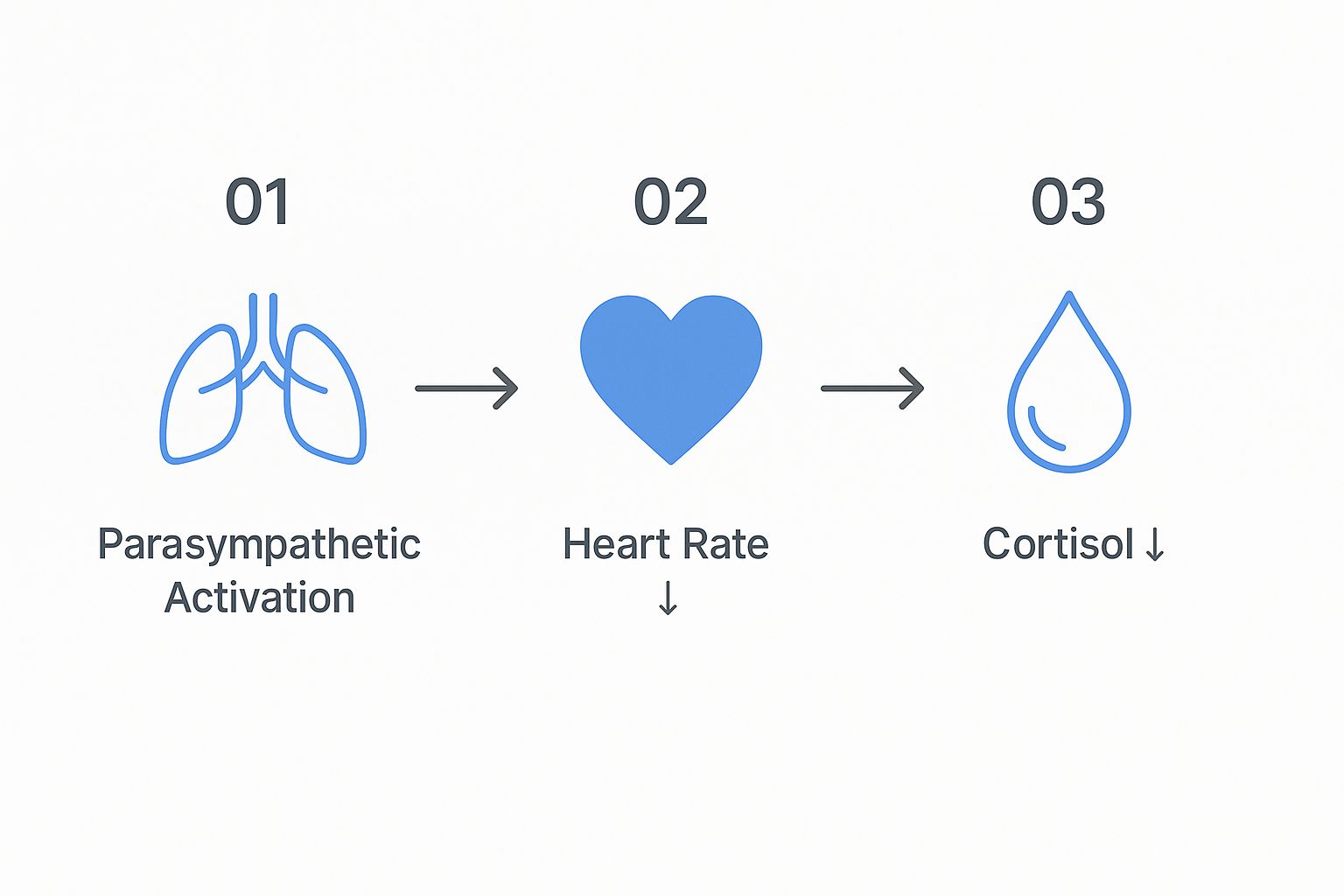
    Conscious breathing, the core of pranayama, is like an override switch. When you intentionally slow and deepen your breath, you signal to your body that it is safe. This simple act activates the parasympathetic nervous system, your body's "rest and digest" mode, which fosters a feeling of calm.

    This is a physiological process. Slow, deliberate breathing tells your brain the threat has passed. In response, your body reduces stress hormones like cortisol, helping you feel grounded and centred again.

    The Science of a Simple Breath

    When you practise pranayama for anxiety, you directly influence the systems that stress disrupts. Think of it as communicating with your body in the simple, powerful language of breath.

    The process is straightforward but creates a profound ripple effect. This infographic breaks down how a simple breathing exercise can trigger significant physiological shifts toward calm.

    Infographic showing a three-step process: a lung icon for 'Parasympathetic Activation' leads to a heart icon for 'Heart Rate ↓', which then leads to a drop icon for 'Cortisol ↓'.

    As you can see, activating this relaxation response starts a chain reaction that directly counters the physical effects of anxiety. This simple sequence can make a huge difference in how you feel in the moment.

    The most empowering part of this process is that it puts you back in control. Instead of feeling helpless against waves of anxiety or workplace stress, you have a practical tool to self-regulate and restore balance.

    Building Resilience One Breath at a Time

    Every time you practice, you strengthen this calming pathway in your nervous system, much like exercising a muscle. With consistency, your body becomes more efficient at shifting out of stress mode. This is how you build long-term resilience, making you less reactive to triggers over time.

    Of course, this isn't about eliminating stress or anxiety entirely; they are normal parts of life. It’s about changing your relationship with them. While conscious breathing is powerful on its own, adding complementary elements like exploring matcha's calming health benefits, particularly L-theanine, can give your nervous system even more support.

    Remember, this practice is an act of self-compassion. The goal is not perfection but finding a supportive practice that enhances your overall well-being and helps you navigate life's challenges with more ease and happiness.

    Your Guide to Calming Pranayama Practices

    A person practising Alternate Nostril Breathing (Nadi Shodhana) in a serene setting, showcasing a practical pranayama technique.

    Now that we've covered how breathing can shift your nervous system, let's get practical. Here are a few gentle, hands-on practices you can do almost anywhere.

    Whether you're feeling pressure at your desk or seeking peace at home, these techniques are accessible. The goal isn't to achieve a perfect breathing pattern, but to find a rhythm that feels good for you.

    Each of these pranayama exercises offers a slightly different way to manage feelings of anxiety. The most important thing is to listen to your body and return to your normal breath if anything feels strained. This is an act of self-kindness, not a performance.

    Nadi Shodhana: The Balancing Breath

    Nadi Shodhana, or Alternate Nostril Breathing, is an incredibly grounding technique. It is especially helpful when your mind feels scattered, bringing clarity and balance to the nervous system.

    Imagine you're about to give a presentation and your heart is pounding. Taking just two or three minutes for Nadi Shodhana can centre your mind, helping you proceed with more calm and focus.

    Here’s a simple way to begin:

    • Find a comfortable seated position with a tall but relaxed spine.
    • Rest your left hand on your left knee. With your right hand, fold your index and middle fingers toward your palm.
    • Gently close your right nostril with your thumb and inhale slowly through your left nostril.
    • Close your left nostril with your ring finger, release your thumb, and exhale smoothly through the right nostril.
    • Now, inhale through the right nostril, then close it with your thumb and exhale through the left. This completes one full round.
    • Continue for 5-10 rounds, focusing on a smooth, easy flow of breath.

    Ujjayi: The Victorious Breath

    Ujjayi Pranayama, or the Victorious Breath, creates a soft, oceanic sound at the back of your throat. This slight narrowing of the airway naturally slows your breathing, which has a deeply soothing effect on the nerves.

    This technique is helpful for moments of sudden frustration or rising anxiety. The audible rhythm of the Ujjayi breath gives your mind a steady anchor, pulling your attention away from the stressor.

    What’s wonderful about Ujjayi is its subtlety. You can practise it anywhere without drawing attention, making it a discreet tool for managing anxiety in public or during a stressful meeting.

    To try Ujjayi:

    1. Sit comfortably and notice your natural breath flowing through your nose.
    2. Gently constrict the muscles at the back of your throat, as if you were about to whisper.
    3. As you continue breathing through your nose, you will hear a soft, whisper-like sound, similar to ocean waves.
    4. Try to keep the breath long, smooth, and even on both the inhalation and exhalation.

    Bhramari: The Humming Bee Breath

    Bhramari Pranayama, or Humming Bee Breath, uses the power of vibration to soothe the mind. The gentle humming sound resonates through your skull, which can quieten racing thoughts and release built-up tension and anxiety.

    This is a wonderful practice to unwind with at the end of a long day. It signals to your mind that it’s time to shift from high alert to rest, and its effects are often immediate.

    One Indian study with people in home isolation during the COVID-19 pandemic found that 20 minutes of daily Bhramari practice over 15 days led to major reductions in stress, anxiety, and depression. Participants reported significant improvements in their psychological health. You can read more about these powerful pranayama findings.

    While pranayama is a great starting point, pairing it with other mindfulness practices like essential meditation techniques can deepen your sense of calm. Think of these as a toolkit of skills to help you navigate life’s challenges with greater ease.

    Weaving Pranayama Into Your Everyday Life

    A person taking a moment for a calming breath during their workday, with a cup of tea on their desk, showing how pranayama can be integrated into daily life.

    Knowing how to practice pranayama is one thing; making it a part of your life is another. The key is to avoid making it another chore. Instead, sprinkle these breathing practices throughout your day so they feel like a lifeline.

    The biggest hurdle is often time. But you don't need a full hour on a yoga mat. You can see real benefits with just five minutes a day, as consistency is more important than duration.

    Finding Your Moments

    An easy way to build a new habit is to attach it to something you already do every day. This simple trick, called "habit stacking," works because you're not trying to reinvent your schedule.

    Think about the natural pauses in your day. Could you fit a practice in then?

    • With your morning tea or coffee: While the water boils, try five rounds of Nadi Shodhana. It's a centering way to begin your day.
    • Before you commute: Before you leave the house, take three deep, intentional breaths to set a calm tone for your journey.
    • As a lunchtime reset: Before you eat, do two minutes of Ujjayi breathing to release any workplace stress from the morning.

    This approach transforms your practice from an obligation into a welcome pause. You are simply filling small pockets of time with a moment of self-care.

    Remember, the goal is not perfection; it's presence. One mindful breath when you feel anxiety rising is a victory. That single breath builds incredible resilience over time.

    Creating a Supportive Space

    You don't need a special meditation room. A comfortable chair in a quiet corner where you won't be interrupted for five minutes is all you need.

    It can help to make this spot feel inviting, perhaps with a small plant or a favourite cushion. These small visual cues signal to your brain that it's time to slow down, which can make you look forward to your practice.

    Overcoming the Inevitable Hurdles

    You will miss days, and that's completely normal. The important part is to return to your practice the next day without guilt.

    Your mind will wander. When you notice you’re thinking about your to-do list, gently guide your focus back to your breath without judgment. The practice isn't about having an empty mind; it's about the act of returning, again and again, to your anchor.

    Ultimately, making pranayama for anxiety work for you is about flexibility. It's a gentle, consistent effort that can be a powerful tool for managing anxiety and depression, especially alongside professional support like therapy or counselling.

    A Few Important Things to Keep in Mind

    Starting a pranayama practice is a wonderful way to build a kinder relationship with your mind. It’s a journey, not a race. To ensure that journey is safe and supportive, it helps to remember a few simple guidelines.

    The most important rule is to listen to your body. It is your best teacher.

    If any breathing technique feels strained or uncomfortable, that is your body's signal to ease off. This is not about pushing through discomfort; it is about finding a rhythm that feels nurturing for you.

    Honouring Your Body’s Limits

    It's normal to feel a bit light-headed when you're just starting out. If that happens, simply stop and let your breath return to its natural pattern. Your body is just adjusting to something new.

    This whole practice is about creating well-being, not chasing perfection. Pushing too hard will only create more stress. Be gentle with yourself, and your capacity will grow over time.

    A crucial reminder: This guide is for informational support, not as a medical assessment. Think of these tools as a way to understand yourself better, not as a substitute for a professional evaluation or diagnosis.

    Pranayama Is a Supportive Tool, Not a Replacement

    Breathing practices can make a huge difference in how you experience anxiety and build your resilience. But they are not a substitute for professional mental healthcare.

    Think of pranayama for anxiety as a powerful addition to your mental health toolkit. It works beautifully alongside, not instead of, professional guidance from therapy or counselling. If you are dealing with persistent anxiety or depression, reaching out to a professional is a sign of strength.

    Pranayama in High-Stress Environments

    The need for simple ways to manage stress is universal, especially in high-pressure jobs. In India, for example, the immense demands on frontline workers have highlighted this need.

    A study on Indian doctors during the pandemic found high rates of stress and depression. While not about pranayama specifically, it shows how much professionals in these fields could benefit from grounding techniques. You can explore the research on frontline worker stress.

    Your pranayama practice is a personal journey. By approaching it with self-awareness, compassion, and professional support when needed, you are building a path toward greater emotional balance and lasting well-being.

    Your Questions on Pranayama and Anxiety, Answered

    As you explore how pranayama can help with anxiety, you're bound to have questions. This is a great sign that you're engaging with the practice.

    Let's walk through some common queries to bring more clarity to your practice. Remember, this is for informational purposes, and it's always best to consult a professional for personal medical advice.

    How Quickly Will I Actually Feel a Difference?

    This is a common question. Many people feel a shift right away. Even after a five-minute session, you might notice your mental chatter quietening and physical tension easing.

    For deeper, more lasting change, consistency is key. Committing to a few minutes each day helps build your resilience to workplace stress and general anxiety. Over a few weeks, you may notice positive shifts in your overall well-being.

    One session can offer a moment of peace. A consistent practice teaches your mind and body how to create that peace for themselves, especially when things get tough.

    Can I Do This if I Have a Medical Condition?

    Your health and safety always come first. If you're managing a condition like asthma, high blood pressure, or heart-related issues, please speak with your doctor before starting.

    While most of these exercises are gentle, some involve breath-holding or energetic breathing that might not be right for everyone. A chat with your doctor or a qualified instructor can help you find safe modifications. This ensures your journey with pranayama for anxiety supports your unique health needs.

    Is Pranayama a Replacement for Therapy?

    This is an important question, and the short answer is no. Pranayama is a powerful, supportive tool, not a substitute for professional help. It works wonderfully alongside therapy or counselling to help manage anxiety and depression.

    If you're struggling, reaching out to a qualified therapist is a sign of strength. They can provide a proper assessment (which is informational, not a fixed label) and work with you on a structured plan. Weaving pranayama into that plan can be a fantastic way to support your progress.


    At DeTalks, we know that finding the right support is the first step towards building a more resilient and fulfilling life. If you're looking for professional guidance, our platform can connect you with qualified therapists who are ready to support you. Explore our network of professionals and take that next step today.