Your First Steps in Offering Support

Watching someone you care about struggle with anxiety is difficult. You might feel unsure of what to do or say, especially as conversations around mental health are still growing in India.
Your response can make a real difference. It’s not about "fixing" them, but about creating a safe, judgment-free space. Being a steady, compassionate presence is the most powerful support you can offer.
Recognising the Signs of Anxiety
Anxiety doesn't always look like a panic attack; it can be much quieter. Learning to spot these subtle signs is the first step toward offering meaningful help.
Keep an eye out for common indicators:
- Persistent Worry: They seem stuck in a loop of worry over daily things like work, health, or family.
- Irritability: You might notice a shorter fuse or big emotional reactions to small frustrations.
- Physical Symptoms: They may complain of headaches, stomach issues, or constant tiredness without a clear physical cause.
- Changes in Behaviour: They might start avoiding social events, procrastinate on tasks, or have trouble sleeping.
Seeing these as signs of a struggle rather than character traits shifts your approach toward empathy and compassion.
How to Start the Conversation
Starting the conversation is often the biggest hurdle. Aim to be gentle and simply show you care, inviting them to share what's on their mind.
Instead of saying, "Why are you so stressed?" try something softer. For instance, "I've noticed you seem to have a lot on your plate lately. I just wanted to check in." This turns a potential confrontation into a warm invitation.
You don't need to be a therapist to help; you just need to be a good listener. If you'd like to build more formal skills, an online certificate in mental health can provide a solid foundation.
Remember, the most powerful thing you can offer is your presence. Letting someone know they are not alone can significantly lighten their emotional load and is a critical part of supporting their well-being.
Building that initial trust is key. Here’s a quick guide to help you navigate that first delicate conversation.
Immediate Actions: Do's and Don'ts
| Do Say or Do This | Don't Say or Do This |
|---|---|
| Listen patiently. Let them speak without interrupting. | Dismiss their feelings. Avoid saying things like "You're overreacting" or "It's not a big deal." |
| Validate their experience. Use phrases like "That sounds really tough" or "I can see why you'd feel that way." | Offer unsolicited advice. Don't jump in with "You should just…" or "Why don't you try…" |
| Ask open-ended questions. "How has this been affecting you?" or "What's on your mind?" | Make it about you. Steer clear of "I know exactly how you feel, one time I…" |
| Offer specific, practical help. "Can I help you with groceries this week?" or "Want to go for a quiet walk?" | Pressure them to "snap out of it." Phrases like "Just be positive" or "Calm down" are not helpful. |
Getting this first interaction right helps build a strong foundation of trust, making it easier for them to lean on you.
Understanding Anxiety in the Indian Context
To truly help someone, it helps to understand their world. While conversations about mental health are opening up in India, many people still battle their feelings in private. Knowing the cultural context can help you offer more grounded and meaningful support.
Anxiety is often tangled up with the pressures of daily life. From academic competition to demanding jobs and workplace stress, these external factors play a big role.
The Pressures They Might Be Facing
In India, a unique set of expectations can add to stress and anxiety. The intense pressure to excel in exams and careers can create a deep-seated fear of failure.
There is also a strong cultural tendency to keep personal problems "within the family." While well-intentioned, this can make it difficult for someone to seek professional help. Understanding this can help you be more patient if they seem hesitant to open up.
Long hours and "hustle culture" can also contribute to burnout and chronic anxiety. Your friend is navigating these external pressures every day.
Remember, you're their ally, not their therapist. Your role is to be a supportive presence and gently point them towards professional help, but their journey is their own. Think of it as a partnership, not a rescue mission.
What Anxiety Looks Like and How Help Works
Anxiety shows up in many ways, from constant worry to sudden panic attacks. You don't need to be an expert, but a little knowledge helps you listen better.
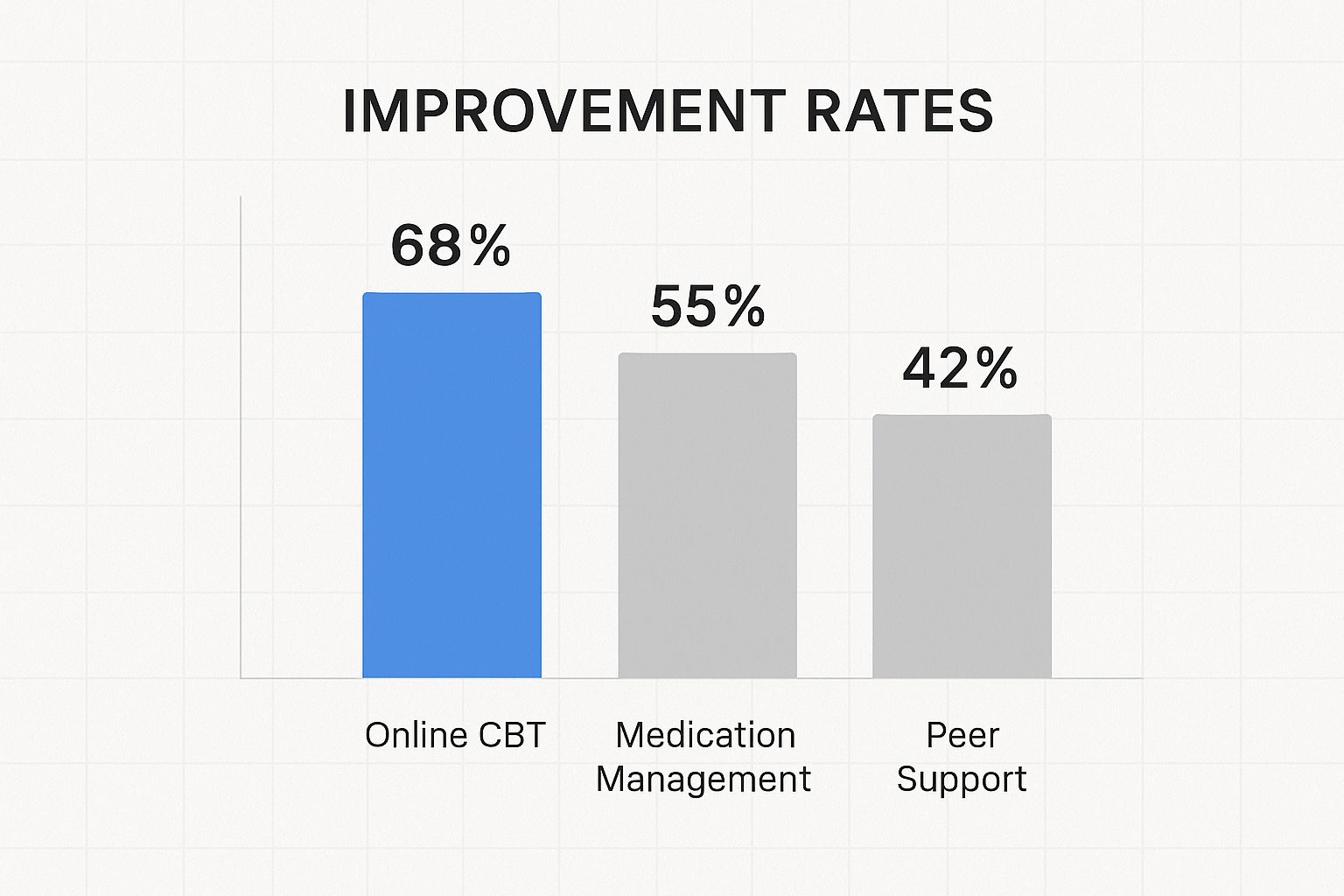
This is where professional support can be a game-changer. Therapies like Cognitive Behavioural Therapy (CBT) give people practical tools to challenge negative thought cycles. This helps them build lasting resilience.
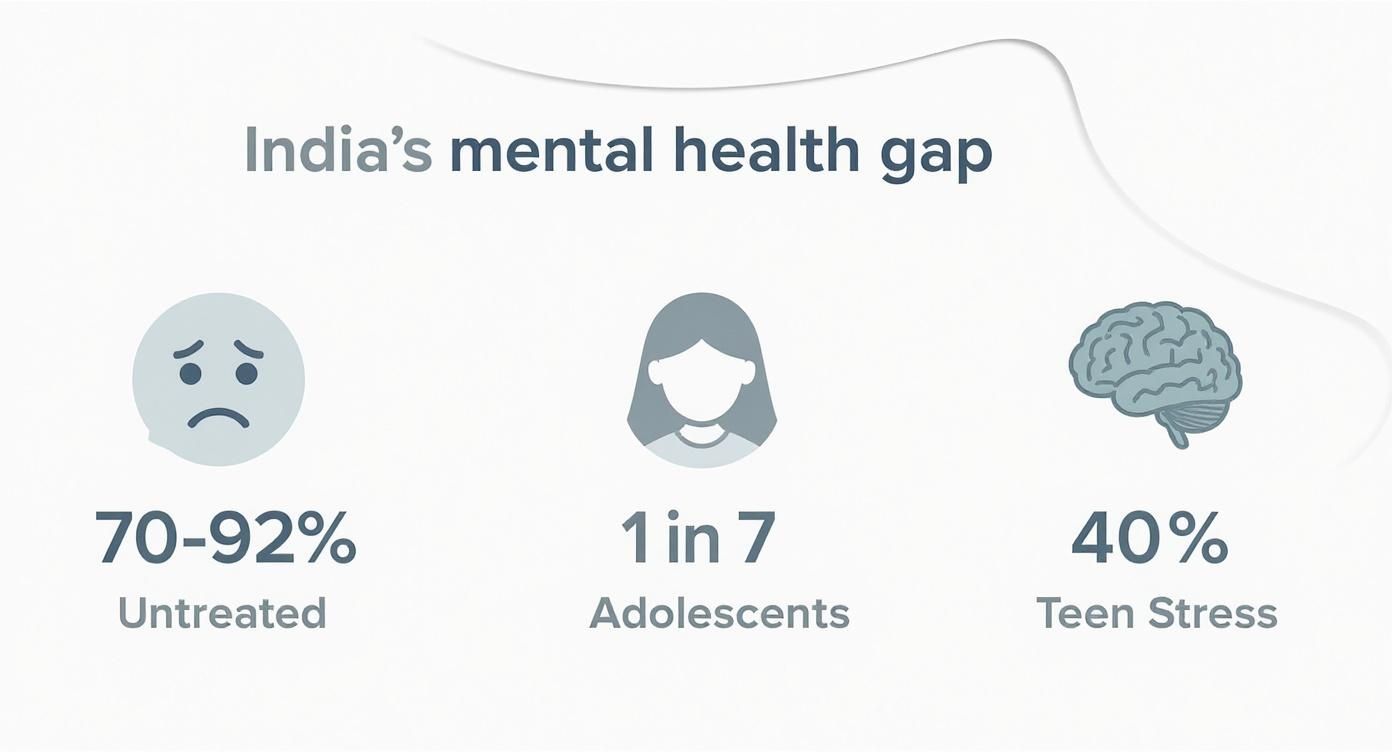
The numbers show how common this is. According to India's National Mental Health Survey (NMHS) 2015-16, 9.54% of adults are affected by common mental disorders. Suggesting therapy isn't a shot in the dark; studies show it's effective. Reading about the success rates of anxiety therapy can give you confidence in the conversation.
Using a Simple Tool to Start the Conversation
Starting this conversation can feel awkward. A simple, structured tool can sometimes break the ice and ease the tension.
Assessments like the GAD-7 (Generalised Anxiety Disorder 7-item scale) are straightforward questionnaires. Crucially, these tools are for information, not diagnosis. They are a low-pressure way to start a conversation about feelings.
You could say, "I found this simple quiz that helps people make sense of their feelings. We could look at it together if you like, no pressure." This approach gives them space to reflect and may provide the confidence they need to seek professional therapy or counselling.
Practical Ways to Help During Anxious Moments
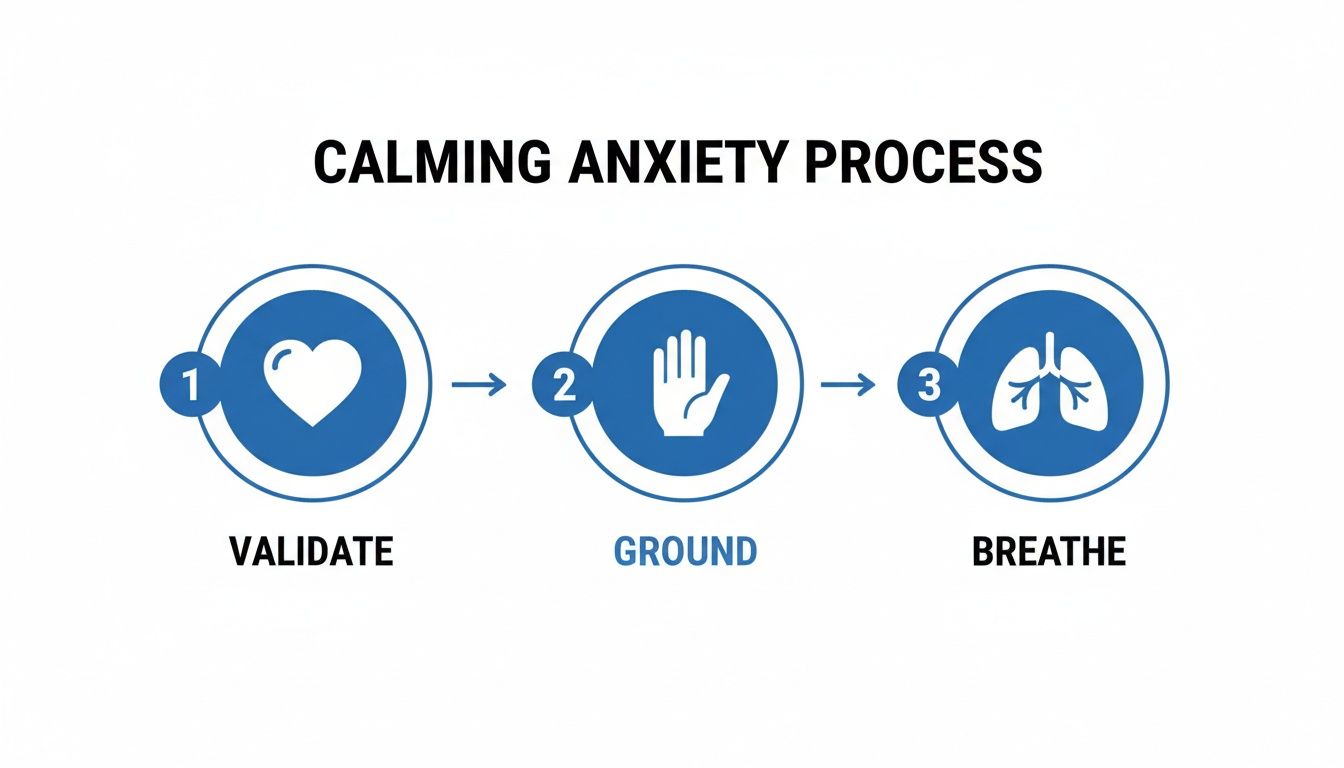
When someone is in the grip of anxiety, your calm presence is your greatest tool. It’s not about fixing them but about being a steady anchor while the storm passes.
Having a few simple techniques can make a difference. These aren't complex interventions, but human ways to show support and well-being.
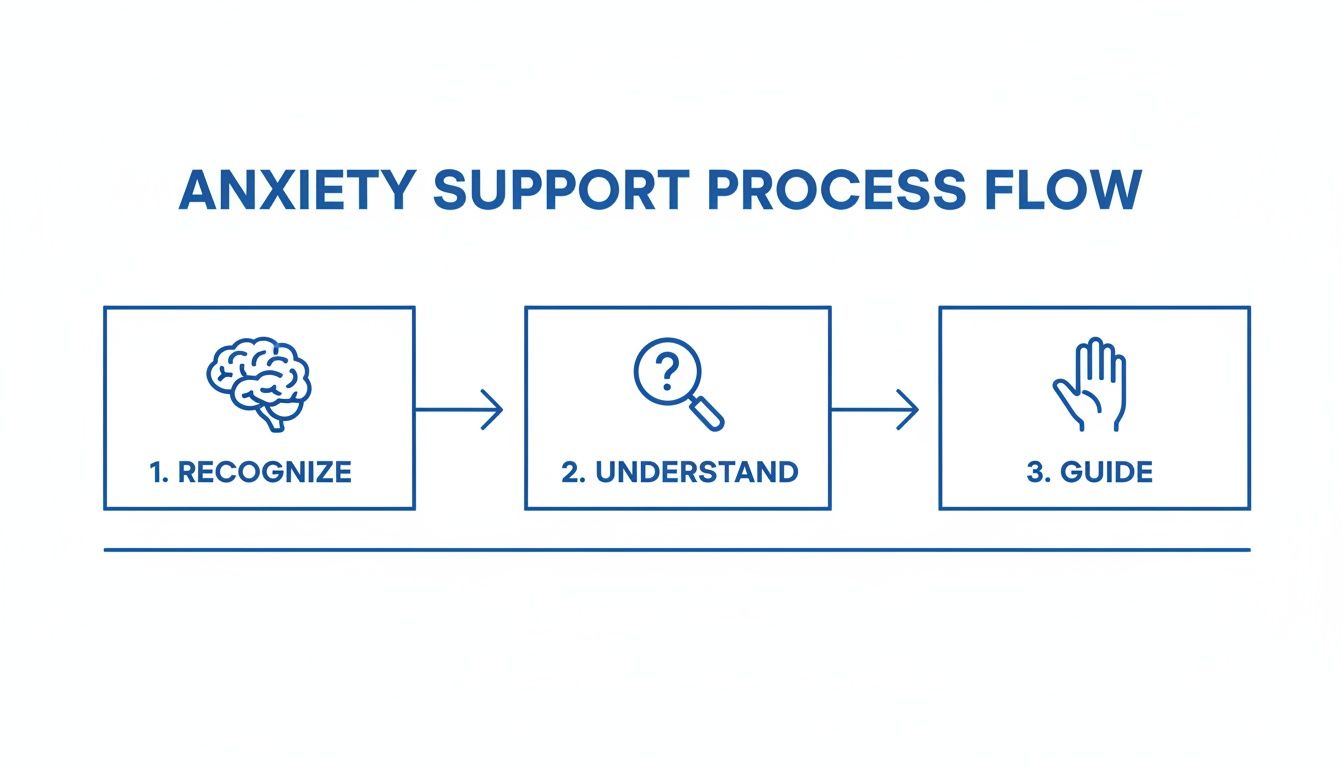
Real support starts with empathy before action. This ensures your help is genuinely helpful.
Use Grounding to Bring Them Back to the Present
During intense anxiety, the mind gets lost in "what-ifs." Grounding techniques use the five senses to pull their focus back to the present moment.
A simple method is the 5-4-3-2-1 technique. You can guide them through it in a quiet voice.
- 5 Things You Can See: Ask them to name five things around them, like a lamp or a book.
- 4 Things You Can Feel: Guide them to notice four physical sensations, like the texture of their jeans or their feet on the ground.
- 3 Things You Can Hear: Have them tune into three distinct sounds, like birds outside or the hum of a fan.
- 2 Things You Can Smell: Encourage them to find two scents, such as coffee or fresh air.
- 1 Thing You Can Taste: Lastly, ask them to name one thing they can taste.
This exercise shifts the brain's attention from internal chaos to the neutral details of the outside world, helping them find their footing.
Guide Them with Calming Breathing
When anxiety takes over, breathing becomes fast and shallow, which can increase panic. Guiding someone to slow their breathing sends a calming signal to their nervous system.
The 4-7-8 breathing technique is very effective. Guide them with a calm voice.
- Ask them to exhale completely.
- Have them close their mouth and inhale through their nose for a count of four.
- Then, ask them to hold that breath for a count of seven.
- Finally, guide them to exhale slowly through their mouth for a count of eight.
Repeat this cycle with them a few times. The long exhale triggers the body's relaxation response.
The goal isn’t to stop the anxiety. It's to help them ride the wave without being swept away. Offering these tools shows you're right there with them in the struggle, not just waiting on the sidelines for it to be over. That’s what builds trust and resilience.
Ultimately, your presence is what matters most. By staying calm, listening, and using these practical tools, you can be a profoundly reassuring presence.
How to Talk About Getting Professional Help
Talking about professional help can feel daunting. But approaching the conversation with care can be one of the most loving things you do.
The goal isn't to push them into therapy. It's about gently opening a door to building mental strength and resilience.
Normalising the Conversation
In India, mental health can still carry a stigma, causing many to suffer in silence. Your first task is to gently dismantle that outdated idea.
A huge treatment gap exists; data shows that only a small fraction of people with anxiety get formal help. You can learn more about these important mental health findings. By talking about mental well-being openly, you help break the silence.
Here are a few ways to start:
- Share your own story. If you've benefited from counselling, talking about it makes the idea more human and relatable.
- Keep it casual. Mention an article you read about workplace stress or a podcast on managing anxiety.
- Frame it as skill-building. Pitch therapy not as a "cure," but as a way to learn practical skills for life's challenges.
This approach positions professional support as a proactive, positive step towards happiness and well-being.
Choosing the Right Time and Place
Timing is crucial. Avoid bringing this up during an argument or in a crowded, stressful environment.
Wait for a calm moment when you both have privacy and won't be interrupted. A quiet evening at home or during a peaceful walk can create a safe atmosphere.
Your approach matters just as much as your words. Lead with "I care about you" rather than "You need to fix this." A compassionate tone makes it clear that your suggestion comes from a place of love and concern, not criticism.
How to Phrase Your Suggestion
The words you choose can make all the difference. Keep your language gentle, collaborative, and free of demands.
Here are a few supportive conversation starters:
- "I’ve noticed you’ve been under so much pressure, and it seems really tough. Would you ever be open to talking to someone trained to help with this kind of stress?"
- "I care about you, and it's hard to see you struggling. Some friends found that talking to a therapist gave them new tools. I'm here to help you look into it if you're ever curious."
- "We've been talking about how overwhelming things feel. I came across a platform called DeTalks that helps people find support for things like anxiety and depression. We could look at it together, no pressure."
These phrases are invitations, not instructions. They respect their autonomy and make it clear you are a supportive partner in their journey.
Building Sustainable Support and Self Care

Helping someone with anxiety is a marathon, not a sprint. Your consistent, patient presence is powerful, but it requires a long-term view.
Recovery is not a straight line; there will be good days and tough ones. The goal is to build a foundation of sustainable support for both of you.
Fostering Resilience Through Healthy Routines
Gently encouraging small, positive daily habits can make a huge difference. These routines bring structure and can be incredibly grounding.
Suggest activities you can do together, turning it into a shared effort. Physical activity is a brilliant tool; even a daily walk can regulate the nervous system. There's a strong the surprising link between exercise and anxiety and its benefits.
Other simple routines could include:
- Mindfulness Moments: Suggesting a five-minute guided meditation you can try together.
- Consistent Sleep: Encouraging a regular bedtime to support their body's natural rhythms.
- Shared Hobbies: Finding a low-stress activity to enjoy together, like listening to music.
These small, consistent actions build stability and a sense of control, which are vital for long-term well-being.
The Importance of Celebrating Small Wins
When anxiety has a tight grip, even small tasks can feel monumental. It’s essential to notice and celebrate these small victories.
A "win" might be making a phone call they were dreading or trying a breathing exercise. Acknowledging their courage helps them build self-compassion and recognise their own strength.
Your role is to be a consistent source of encouragement, not a critic. Celebrating progress, no matter how minor it seems, validates their journey and reminds them they are moving forward. This positive reinforcement is a cornerstone of building lasting resilience.
Protecting Your Own Wellbeing to Avoid Burnout
It's easy to get so wrapped up in helping that you forget to care for yourself. But you can't pour from an empty cup. If you experience burnout, you won't be able to offer the steady support they need.
Taking care of yourself isn’t selfish—it’s a necessary part of being an effective ally. It means knowing your limits and actively protecting your own well-being.
Setting Healthy Boundaries for Yourself
Boundaries create a healthy dynamic where you can give support without becoming drained. This is crucial for preventing burnout, especially when managing your own challenges like workplace stress.
Here are a few practical ways to set boundaries:
- Define Your Availability: It's okay to say, "I'm here to listen for the next 20 minutes, but then I have another commitment."
- Encourage Self-Reliance: Instead of solving their problems, ask, "What are some things you think might help right now?"
- Schedule 'You' Time: Block out and protect time in your calendar for your own rest and hobbies.
Setting these limits protects you and models healthy self-care. This balanced approach ensures you have the emotional resources to be a pillar of support for the long haul.
Common Questions About Supporting Someone with Anxiety
Even with the best intentions, tricky situations can arise. It's normal to feel unsure. This guide can help you navigate tough spots with confidence.
The goal isn't to be perfect but to be present and supportive. Let's walk through some common concerns.
What If They Refuse Professional Help?
This is a common and difficult situation. If they’re not ready for therapy or counselling, pushing them will likely cause them to shut down.
Instead, continue to be a safe person they can talk to without judgment. You can still offer incredible support by listening and helping with small, everyday tasks.
Gently normalise the idea of professional help over time. You might share an article or resource without pressure. The goal is to keep the door open for when they feel ready.
How to Help During a Panic Attack Without Making It Worse
Your calm presence is the most powerful tool during a panic attack. Stay grounded, speak softly, and ask what they need.
Avoid saying things like "just calm down," which can sound dismissive when their body is in fight-or-flight mode.
A better approach is to gently guide them through a grounding or breathing exercise. Quietly remind them that the feeling will pass and you are there with them. Your steady support is more helpful than trying to "fix" it.
Your role is to be a supportive ally, not to be responsible for their recovery. True healing is their personal journey, and trying to carry that weight can lead to your own burnout. Offer compassion, encourage professional help, and protect your own mental health.
Am I Responsible for Their Recovery?
It's natural to feel responsible, but it is vital to draw a line. You are not responsible for their recovery from anxiety or depression.
This is a deeply personal journey they must navigate, ideally with professional help. Your role is to offer compassion and encouragement.
Be their cheerleader, point them towards support, and set healthy boundaries to protect your own energy. This allows you to be a consistent, positive presence as they build their own resilience.
Taking the first step toward getting help is a sign of strength. At DeTalks, we make finding the right support less overwhelming. Explore our directory of qualified therapists and our library of science-backed assessments to help your loved one start their journey. Find out more at https://detalks.com.