Tag: anxiety support

  • A Guide to Online Counseling Services: Finding Support That Fits You

    A Guide to Online Counseling Services: Finding Support That Fits You

    Starting a conversation about your mental health is a brave and hopeful step. Online counseling services make this easier than ever by bringing confidential, professional support directly to you, using the technology you use every day.

    What Are Online Counseling Services and How Do They Work?

    Think of online counselling as therapy that fits into your life. It’s a private, secure space to talk with a qualified counsellor or therapist through video calls, phone calls, or even text-based chat, all from the comfort of your home.

    This modern approach to mental well-being removes many old barriers, making support more accessible. It’s designed to be a practical and achievable part of your routine, whether you live in a bustling Indian city or a quieter town.

    Infographic showing three online counseling modes: Video, Chat, and Phone, with their key features.

    The best part is you get to choose how you connect. This ensures the experience feels comfortable and right for you, helping you take that important first step toward feeling better.

    To help you decide, here’s a quick comparison of the different ways you can connect. This table can help you figure out which format might be the best fit for your specific needs and comfort level.

    Comparing Different Modes of Online Counselling

    Counseling Mode Best For Key Considerations
    Video Calls Those who prefer a face-to-face connection and can see non-verbal cues. Requires a stable internet connection and a private, quiet space.
    Phone Calls Individuals who feel more comfortable talking without being on camera. Good for privacy but misses the visual cues that can be important in therapy.
    Chat/Messaging People who express themselves better in writing or need more flexibility. Can be asynchronous (non-real-time) but may feel less personal than voice or video.

    Ultimately, there's no single "best" option—only what's best for you. Whether you prefer the personal connection of video, the simplicity of a phone call, or the reflective nature of chat, online counselling offers a path forward.

    A Space for Both Challenges and Growth

    It's a common myth that counselling is only for moments of crisis. While it is a vital support for navigating challenges like anxiety, depression, and workplace stress, it's also a powerful tool for personal growth and building a happier life.

    You can work with a therapist to build greater resilience, practice self-compassion, or find a deeper sense of direction. It's about developing skills to handle life's ups and downs with more confidence and calm.

    The Process Simplified

    Getting started is usually refreshingly simple. Most platforms have a clear process: you find a therapist who feels like a good match, book a time that works for you, and then connect for your session with ease.

    Some people start their journey with a private mental health assessment to better understand their feelings. These can offer valuable insights and direction for your path forward.

    It's important to clarify: an assessment is an informational tool to guide your journey, not a formal diagnosis. Think of it as a compass pointing you toward the right support, not a definitive label.

    Who Can Benefit From Online Counselling?

    Honestly? Anyone. It’s for the student in Mumbai juggling exam pressure, the IT professional in Bengaluru feeling burnout, or the parent in a small town who just needs someone to talk to without judgement.

    Online counselling services are designed to meet you exactly where you are. Taking that first step isn't a sign of weakness; it's a powerful move toward taking control of your well-being and feeling better.

    The Urgent Need for Digital Mental Health Support in India

    Young man on couch having a video call with a female counselor on his smartphone.

    Across India, more people are bravely opening up about their mental health and seeking support. This positive shift also highlights a major challenge: there isn't enough accessible support for everyone who needs it.

    People reach out for many reasons, from the pressure of exams to the quiet toll of workplace stress. These are not abstract problems; they are the real, everyday struggles we all can face at times.

    This rising need reveals what experts call the "treatment gap"—the space between how many people need help and how many can actually get it. This is often due to a shortage of professionals, the cost of traditional therapy, and the difficulty of travel.

    Bridging the Gap With Online Counselling

    This is exactly where online counseling services have become so essential. Using the technology in our pockets, these platforms connect you with a qualified professional, no matter where you are in India.

    The need is clear. Since October 2022, India’s Tele-MANAS helpline has received over 34 lakh calls for issues like low mood, anxiety, and daily stress. This shows how common these feelings are and why supportive platforms are a lifeline. You can see the data in this in-depth report on the rising demand for mental health support.

    Digital mental health support isn’t just a convenience; it’s a necessity. It promises that no matter who you are or where you live, you can find a safe space to talk and be heard.

    From Surviving to Thriving

    While many first seek counselling to cope with difficult times like depression or high stress, the journey is about much more. Online counselling provides practical tools to move from just surviving to truly thriving.

    This isn’t about chasing a vague idea of happiness. It’s about building concrete life skills, such as learning to practice self-compassion, building resilience, and discovering what brings you a sense of joy and purpose.

    This focus on positive psychology empowers you to not only manage hard times but also build a life rich with meaning. It's a compassionate and timely response, making professional guidance a realistic option for everyone working on their mental well-being.

    Common Issues Addressed Through Online Counselling

    Diverse individuals, young to elderly, engage with smartphones in varied home and outdoor environments.

    Many of us wonder, "Is what I'm going through serious enough for therapy?" The truth is, online counselling services are for anyone who wants to understand themselves better and feel more in control of their life.

    Whether you're struggling with a constant sense of unease or just feeling that something isn't right, reaching out is a valid first step. Counselling is a proactive tool for building a more balanced and resilient life.

    Navigating Life's Common Challenges

    Many people first turn to therapy when facing life's normal challenges. Online counselling offers a private, non-judgemental space to work through them with an expert, so you don't have to go through it alone.

    Some common reasons people seek support include:

    • Managing Anxiety and Stress: Learning practical tools to calm a racing mind and cope with the pressures of modern life.
    • Addressing Depression and Low Mood: Working through persistent sadness or a loss of interest in things you once loved. For more information, a guide to online psychiatry for depression can be a helpful resource.
    • Coping with Workplace Stress and Burnout: Developing strategies to manage professional demands and recover from emotional exhaustion.
    • Working Through Grief and Loss: Finding a safe space to process the pain of losing someone or something important to you.
    • Improving Relationships: Understanding communication breakdowns and building healthier connections with partners, family, and friends.

    Your reasons for seeking help are personal and valid. A good therapist will meet you where you are, with warmth and without judgement.

    Beyond Challenges: Cultivating Positive Well-Being

    While therapy is a great resource for tough times, it's just as powerful for personal growth. This side of counselling, often rooted in positive psychology, is less about fixing what's wrong and more about building on what's right.

    Therapy isn't only about what's going wrong; it's also about strengthening what's going right. It’s a space to build inner resources and intentionally create a life you love living.

    Think of it as moving from just getting by to actively thriving. It is a warm and supportive investment in your long-term emotional fitness.

    Building Your Inner Strengths

    Using online counselling for growth can equip you with essential life skills. You might work with a therapist to explore areas like:

    • Building Resilience: Developing the mental and emotional flexibility to bounce back from life's setbacks with grace.
    • Improving Self-Esteem: Learning to quiet your inner critic and build a more compassionate, supportive relationship with yourself.
    • Cultivating Compassion and Gratitude: Practicing kindness toward yourself and others, a practice proven to boost overall well-being.
    • Finding Purpose and Happiness: Aligning your life choices with your core values to create a more authentic and meaningful life.

    Whether you're facing a struggle like anxiety or you're ready to build a more joyful life, online counselling services can help. The goal is not a "cure," but supportive takeaways and tools to help you navigate your own path with greater strength.

    Finding the Right Therapist for You

    Of all the steps you'll take, this one matters most: finding the right person to talk to. The connection you have with your therapist is the foundation of your progress, creating a safe space where real change can begin.

    Think of it as finding a trusted partner for your journey. You need someone with the right skills and an approach that feels right for you. Taking time to find this fit is the most important step.

    Understanding Professional Qualifications

    When you browse online counselling services, you’ll see titles like "counsellor" and "psychologist." In the Indian context, it helps to know the general distinctions.

    • Counsellors often help with specific life challenges like workplace stress, relationship issues, or grief. Their focus is usually on providing practical guidance and building coping strategies.
    • Psychologists typically hold advanced degrees and have training in treating mental health conditions. They use established therapy methods to help with persistent issues like anxiety or depression.

    Ultimately, the professional's qualifications, experience, and your connection with them are what matter most. A good platform will make their credentials clear so you feel confident in your choice.

    Matching Specialisation to Your Needs

    Finding a therapist who specialises in what you need help with can make a huge difference. They will have a deeper understanding and a richer toolkit to support you effectively.

    For example, if you're feeling burnout, a therapist focused on workplace stress is a great choice. A little self-reflection here can guide you toward the right kind of professional support for your counselling journey.

    The therapeutic relationship is a partnership. Your comfort and trust are essential for growth. Give yourself permission to be selective and find someone you truly connect with.

    Questions to Ask a Potential Therapist

    Most online services allow a brief chat before you book a full session. This is your chance to see if their style aligns with your needs. Asking questions shows you are invested in your own well-being.

    Here are a few ideas to get you started:

    1. How do you typically approach helping someone with issues like mine?
    2. What does a typical session with you look like?
    3. How do you help people build skills like resilience?
    4. Could you tell me about your experience with [mention your concern, e.g., anxiety]?
    5. How will we track my progress toward my well-being goals?

    Pay attention to how the conversation makes you feel. Your gut feeling—and their answers—will tell you a lot about what therapy with them would be like. Finding the right fit is a journey, not a race.

    Understanding the Cost and Value of Online Therapy

    It’s completely normal to think about the financial side of getting help. It can be helpful to see online counselling services not as an expense, but as an investment in your long-term well-being—much like you would invest in your education or physical health.

    When we view therapy as an investment, it clicks. You're dedicating resources to build new skills, improve your daily life, and strengthen your emotional health for the future.

    Factors That Influence Session Costs

    The price of an online counselling session can vary. Understanding what influences the cost helps you find a good fit for your budget.

    • Therapist’s Experience and Qualifications: A professional with advanced degrees or years of specialised experience may have higher rates.
    • Session Length and Frequency: Sessions are typically priced by time (usually 45-60 minutes), and your total cost depends on how often you meet.
    • Type of Service: Individual therapy will have a different price than couples or family counselling.

    Knowing these factors helps you balance a therapist's expertise with what feels sustainable for you.

    Why Online Therapy Can Be More Affordable

    While there is a cost, the online format itself often makes professional support more accessible. You save time and money by cutting out the commute to a physical office, and the flexible scheduling means you may not have to take unpaid time off work.

    The India online mental health market is growing rapidly, expected to reach USD 451.73 million by 2033. This growth means more vetted experts and effective tools are becoming available. You can read more about this market expansion and its impact.

    Investing in therapy is an act of self-care that pays lifelong dividends. It's not about the cost of one session, but the immense value of building lasting resilience, clarity, and peace of mind.

    Beyond the Price Tag: The True Value

    The real value of online counselling is in the lasting positive changes it brings. It's an investment in learning how to navigate anxiety, cope with workplace stress, or build healthier relationships.

    The skills you build in therapy—like emotional regulation and personal resilience—become a permanent part of your life toolkit. They empower you to face whatever comes next with more confidence and calm. The goal is supportive guidance, not a promise of a cure.

    What to Expect in Your First Online Session

    Booking your first online counselling session is a huge step forward. It's completely normal to feel a mix of hope and nerves, but knowing what to expect can help you feel more confident.

    Your first meeting is not a test; it's simply a conversation. It's a chance for your therapist to gently get to know you and for you to see if you feel a good connection with them.

    There's no pressure to share everything at once. You are always in control, deciding what to talk about and when you feel ready. The main goal is just to start building a supportive connection.

    Setting Yourself Up for a Smooth First Session

    A little preparation can make a big difference, helping you focus on the conversation instead of distractions. Try these simple tips for your online counselling services session:

    • Find a Private Spot: Choose a quiet room where you won’t be disturbed to create a safe, confidential space.
    • Do a Quick Tech Check: Test your internet, camera, and microphone before your session. Headphones can improve privacy and sound.
    • Keep Water Handy: Having a glass of water nearby gives you a natural pause to collect your thoughts if you need a moment.
    • Jot Down a Few Notes: If you're worried you'll forget what you want to say, scribbling down a few key points can be a helpful reminder.

    This small amount of preparation helps ensure the focus stays right where it belongs: on you.

    What’s the Deal with Initial Assessments?

    Your therapist might ask you to fill out a questionnaire. It's easy to feel like you're being graded, but these are simply informational guides, not diagnostic tests or judgements.

    It's important to clarify: an assessment is an informational tool to guide your journey, not a formal diagnosis. It helps your therapist get a clearer picture of your current well-being so they can support you in a way that truly fits.

    For example, a form may ask about your sleep, work stress, or feelings of anxiety. Your answers provide a helpful snapshot and a solid starting point for you and your therapist. This practice is more common as online therapy has grown in India. Discover more insights about India's shift to online therapy.

    A Courageous Step Forward

    Your first session is about connection. Your therapist will likely ask open-ended questions about what brought you to counselling and what you're hoping for. This is also your chance to ask them questions.

    Remember, just showing up is a brave and powerful act of self-care. The journey won't be a quick fix, but it does offer a supportive path toward greater clarity, resilience, and overall well-being.

    Frequently Asked Questions About Online Counselling

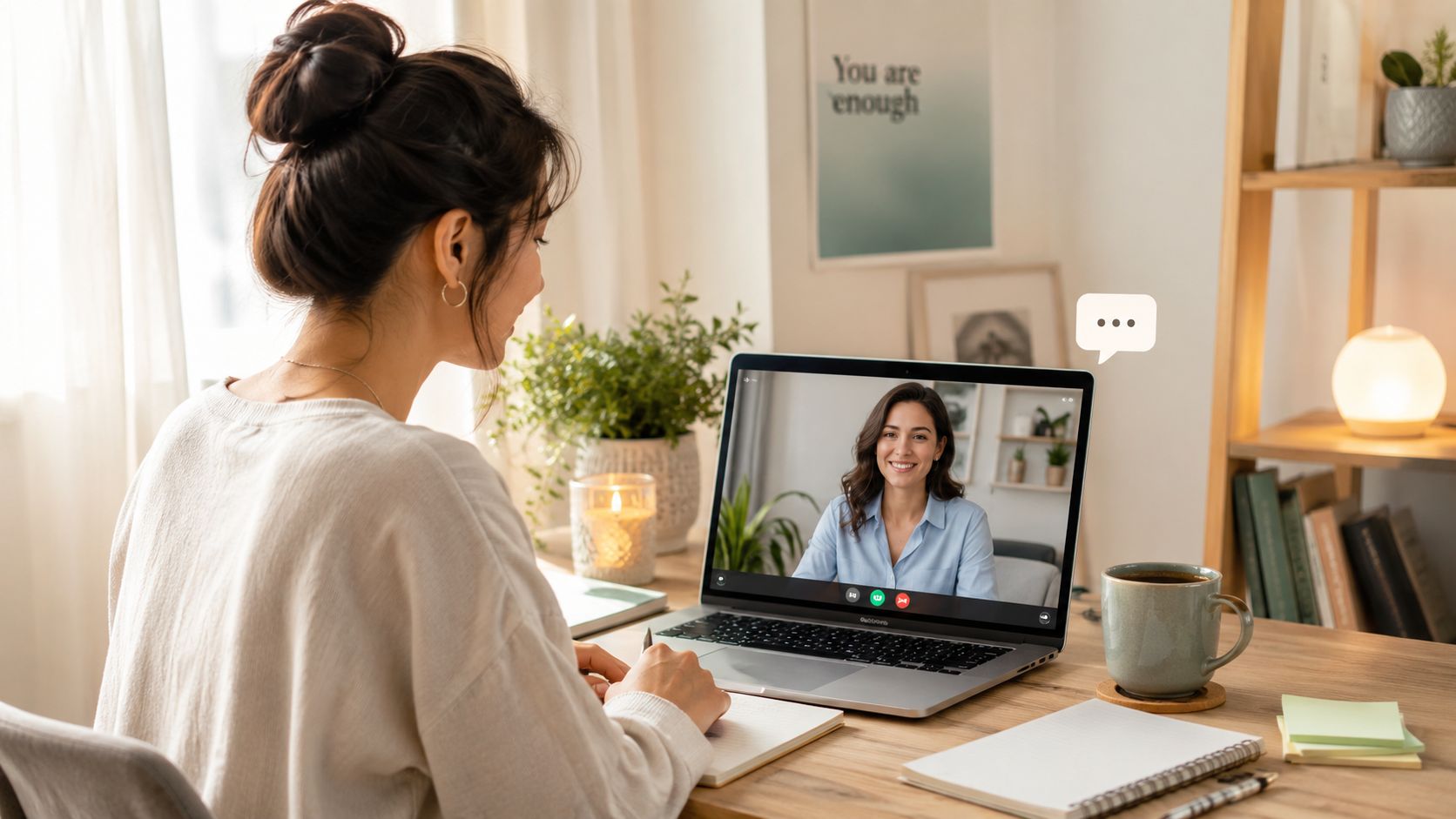
    Laptop on a desk showing a woman on an online video call, with headphones and a mug.

    It’s completely normal to have questions before diving into something new. Taking that first step is a big deal, so let’s clear up some common queries about online therapy with warm, professional clarity.

    Is Online Counselling as Effective as In-Person Therapy?

    This is a very common question, and the answer is yes. For many common issues like anxiety, depression, and workplace stress, research shows that online counselling services are just as effective as meeting a therapist in person.

    Successful therapy depends less on the room you're in and more on the quality of the connection you build with your therapist.

    The real power of therapy comes from the relationship. A strong, trusting bond with your counsellor is what drives progress, whether you’re connecting through a screen or sitting across from each other.

    How Is My Privacy Protected During Online Sessions?

    This is an excellent and important question. Reputable online counselling platforms use robust, end-to-end encryption to ensure your conversations remain completely confidential and secure.

    Think of it this way: the technology protecting your session is similar to what banks use to secure financial information. It creates a private, digital room just for you and your therapist, keeping your personal information safe.

    What if I Don't Connect With My First Therapist?

    It happens, and it's perfectly okay. Finding a professional you click with is a personal journey, and it might take a try or two to find the right fit. This is no one's fault.

    You should never feel obligated to continue with a therapist who doesn't feel right for you. Most online platforms understand this and make it easy to switch to someone new. Your comfort is the top priority, as a trusting therapeutic relationship is essential for making real progress.


    Ready to take the next step on your well-being journey? DeTalks offers a secure platform to connect with vetted professionals and explore confidential assessments. Find the right support for you by visiting https://detalks.com.

  • Unlock Your Potential with Cognitive Behavioral Therapy Online

    Unlock Your Potential with Cognitive Behavioral Therapy Online

    Deciding to focus on your mental well-being is a courageous step, and it’s one worth feeling good about. This guide is here to walk you through cognitive behavioural therapy online—a practical, proven approach for navigating life's challenges. Think of it as a mental toolkit that helps you manage everything from stress and anxiety to building a more resilient and compassionate you.

    Starting Your Path to Well-Being With Online CBT

    Life can often feel demanding, and the constant pressure on our time and energy can be draining. This makes having strong mental health support more important than ever. Whether you're a professional in India navigating burnout, a student facing exams, or just someone aiming for a more balanced life, knowing your options is the first step toward well-being.

    A smiling young man works on a laptop at a bright desk with a plant and tea.

    Why Consider Online Therapy Now?

    The pressures of modern life can leave us feeling stretched thin, and it's completely normal to feel the weight of anxiety or low moods. It's vital to have effective tools to manage these feelings. Online therapy shines by removing many traditional barriers, making professional counselling accessible from your own space, on your own schedule.

    Platforms like DeTalks are designed to connect you with qualified therapists who specialise in CBT, making it simpler to find the right support. Whether you’re in a bustling Indian city or a quieter town, the aim is to provide a professional and welcoming space. Here, you can feel heard and begin building a path toward greater well-being.

    Online CBT isn’t just about managing problems. It’s a proactive way to build self-awareness and inner strength, helping you develop skills for long-term resilience and happiness.

    Building Skills for a Better Life

    At its core, online CBT is a partnership between you and your therapist. It's a structured approach that helps you see the link between your thoughts, feelings, and actions. Once you spot unhelpful patterns, you can learn to reframe them, leading to healthier responses to stress, anxiety, and other challenges.

    This form of counselling gives you tools to:

    • Manage workplace stress and avoid burnout with practical coping strategies.
    • Ease symptoms of anxiety and depression by breaking cycles of unhelpful thoughts.
    • Cultivate resilience so you can bounce back from setbacks with more confidence.
    • Nurture self-compassion and happiness by changing your inner dialogue.

    To enhance your journey, you can also explore complementary practices like mindfulness. Resources for guided meditation scripts can be a great way to center yourself between sessions. This guide will show how online CBT equips you with supportive takeaways for a more fulfilling life.

    Understanding How Cognitive Behavioural Therapy Works

    Think of Cognitive Behavioural Therapy (CBT) as learning to become a curious observer of your own mind. It’s a practical approach that helps you map the connections between your thoughts (the 'cognitive' part), your emotions, and your actions (the 'behavioural' part). CBT is based on a powerful idea: it’s often not events themselves that cause distress, but the meaning we give them.

    This relationship is often shown as the ‘cognitive triangle,’ where thoughts, feelings, and behaviours constantly influence each other. An unhelpful thought can spark a difficult feeling, which then pushes you toward an action that reinforces the original thought. This can create a challenging cycle that feels hard to break.

    Let's take a common work scenario that many people in India and globally can relate to. Imagine you receive some unexpected feedback from your manager.

    • Thought: Your mind might jump to, "I'm a failure. I can't do anything right."
    • Feeling: That thought could trigger feelings of anxiety, shame, or deep sadness.
    • Behaviour: In response, you might avoid your manager or overwork yourself to compensate.

    This kind of spiral is incredibly common, especially in high-pressure environments that contribute to workplace stress. CBT gives you the tools to pause that cycle. By learning to question that first automatic thought, you gain the power to change how you feel and, ultimately, how you react.

    A Collaborative and Goal-Oriented Approach

    One of the most appreciated aspects of CBT is its focus on the present. While your past is important, sessions concentrate on tackling the challenges you're facing right now. It's a true partnership where you are the expert on your life, and the therapist is your guide, offering their knowledge of CBT techniques.

    Together, you'll set clear, achievable goals, whether it's feeling less anxious, managing stress, or building more resilience and self-compassion. The therapy is active and structured, designed to arm you with practical skills you can use immediately. This is why it has become such an effective form of counselling for challenges like anxiety and depression.

    CBT empowers you to become your own therapist. The skills you learn are designed for long-term use, providing a lasting toolkit for well-being and personal growth.

    Learning to Challenge Unhelpful Thinking

    A core part of the CBT process involves identifying what are sometimes called ‘cognitive distortions’ or unhelpful thinking styles. These are mental shortcuts our brains develop over time. They are very common, but they often paint a picture that is negatively skewed and not entirely accurate.

    Some examples include:

    • All-or-Nothing Thinking: Seeing things in extremes. If your performance wasn't perfect, you see it as a complete failure.
    • Catastrophising: Automatically jumping to the worst-possible conclusion. A bit of feedback means, "I'm definitely going to be fired."
    • Overgeneralisation: Taking one negative event and letting it define everything. "I made a mistake, so I must mess everything up."

    A good therapist helps you gently spot these patterns in your own thinking. The goal isn't to force "positive thinking," but to foster a more accurate and compassionate perspective. You'll learn to question these thoughts, look for evidence, and develop more balanced ways of seeing situations.

    This kind of support is more accessible than ever, thanks to telehealth. Across the globe, including India, people are embracing digital solutions for mental health. With 60% of people open to online therapy and 55.5% preferring digital options, there is a clear demand for support like online CBT. You can explore the latest teletherapy statistics to see the full picture.

    Comparing Online CBT and In-Person Therapy

    Deciding between online and in-person therapy is a personal choice, and there's no single right answer. Both online and in-person Cognitive Behavioural Therapy have unique advantages. The goal here is to help you understand the differences so you can make a choice that truly supports your mental well-being journey.

    Let's start with the most obvious benefit of cognitive behavioural therapy online: its accessibility. For a vast and diverse country like India, this is a game-changer. Suddenly, the right therapist can be in another city, but still available to you.

    This format also brings incredible convenience. If you're a busy professional or juggling family commitments, having a session without a commute makes it possible to fit vital self-care into a packed schedule. Many people also find that being in their own home creates a sense of comfort that makes it easier to open up.

    The Core Difference: How Does it Feel?

    While the proven techniques of CBT remain the same, the experience itself differs. In-person therapy is the traditional model where you're in the same room, making it easier to pick up on non-verbal cues. For some, this physical presence is key to building a strong connection.

    Online therapy builds this connection through a screen, which requires a stable internet connection and a private, quiet space. While the dynamic is different, it is a myth that the therapeutic bond is weaker. Countless people have built strong, trusting relationships with their therapists online.

    The most crucial factor for success in therapy—online or in-person—is the quality of the relationship you build with your therapist. A strong, trusting connection is the bedrock of progress, no matter the medium.

    The core principle of CBT—the interplay between our thoughts, feelings, and actions—is what you'll work on in either format.

    A concept map illustrating the core components of Cognitive Behavioral Therapy (CBT), showing how thoughts, actions, and feelings mutually influence each other in a continuous cycle.

    This therapy helps you see how changing one element—like an unhelpful thought—can create a positive ripple effect, improving how you feel and what you do.

    Online vs In-Person CBT: A Feature Comparison

    Feature Online CBT In-Person CBT
    Accessibility Excellent; access therapists from anywhere, overcoming geographical limits. Limited; requires you to be near the therapist’s office.
    Convenience High; no travel time, flexible scheduling fits into busy lives. Lower; requires commuting and scheduling around office hours.
    Comfort Can be higher, as you are in your own familiar and private space. Can be comforting for those who prefer a formal, neutral setting.
    Non-Verbal Cues Limited to what is visible on camera. Full range of body language and non-verbal cues are present.
    Technology Requires a stable internet connection and a private device (laptop, phone). No technology required beyond what the clinic uses for scheduling.
    Anonymity Can feel more private or anonymous, which some people prefer. Less anonymity due to physical presence in a clinic or waiting room.

    This table shows the "best" option depends on what you prioritise: convenience and accessibility, or the dynamic of a shared physical space.

    Is Online CBT as Effective? The Indian Context

    A common question is whether online therapy is as good as the "real thing." Research shows that for many challenges like anxiety and depression, online CBT is just as effective as face-to-face sessions. In India, the online format has shown unique advantages for managing issues like workplace stress and burnout.

    Post-pandemic, telehealth consultations for mental health in India soared by 500%, showing that online platforms are filling a critical need. You can find more data on how the global cognitive behavioural therapy market is evolving. The choice is yours, and both paths can lead to the same destination: building skills for better mental well-being and lasting resilience.

    Who Actually Benefits from Online CBT?

    It's a common myth that you need to be in crisis to start therapy. While online Cognitive Behavioural Therapy is very helpful for specific challenges, its true strength is its versatility. It's for anyone looking to build a more fulfilling life, whether that means tackling a problem or simply wanting to grow.

    Think of online CBT as a practical way forward if you're dealing with the constant buzz of anxiety, the heavy feeling of depression, or the relentless pressure of workplace stress. It can help you get unstuck and find your footing again.

    Support for Life’s Common Hurdles

    Life throws curveballs that can feel overwhelming, but online therapy makes getting support much easier. This is especially true if you're juggling a demanding schedule or live in an area with few local options.

    Online CBT is particularly effective for:

    • Working Professionals: If you're in a high-pressure career, you know how real burnout is. CBT offers tools to manage that stress, challenge perfectionism, and create a healthier work-life balance.
    • University Students: The academic world brings its own pressures, from exam nerves to social anxiety. A confidential online space can make a huge difference to your focus and well-being.
    • Anyone Navigating Relationship Issues: Difficulties with a partner, family, or friend can be draining. CBT helps you communicate more clearly, manage emotional reactions, and build stronger connections.

    Online CBT meets you where you are. It’s designed to fit into your life, not the other way around, providing support that feels both practical and deeply personal.

    A Powerful Tool for Personal Growth

    You don't need a specific issue to benefit from therapy. Many people use online CBT proactively to build a stronger, more resilient mindset and improve their overall quality of life. It’s less about fixing what’s broken and more about building what’s strong.

    This is where therapy shifts from just managing problems to actively cultivating well-being and happiness. Instead of only focusing on the negative, CBT can help you build skills for genuine, lasting fulfillment. You can work on building resilience, practicing self-compassion, and improving your emotional awareness.

    This need for accessible support has become clear. In India, the years after the pandemic saw a huge jump in people seeking cognitive behavioural therapy online, especially in areas with fewer mental health professionals. With its flexible scheduling, online CBT became a crucial resource for people managing job stress, anxiety, and relationship troubles. You can read the full research on teletherapy adoption in India to get a clearer picture of its impact.

    Whether you're looking for healing or growth, online CBT has something to offer. The journey begins with recognizing you want something to change and taking that first step. Most importantly, you don't have to do it alone—effective, accessible help is available.

    What to Expect in Your Online CBT Session

    So, you’ve decided to try online CBT. It’s natural to wonder what happens once you log in for your first session. A CBT appointment is a surprisingly straightforward and active process.

    Forget the image of passively lying on a couch; this is a collaborative effort. Your therapist brings expertise in CBT techniques, and you bring the most important part: your own life experience. It's a team approach aimed at improving your well-being.

    Person taking notes during an online therapy session with a therapist on a laptop screen.

    From the moment you connect, the goal is to create a space where you feel heard and understood. Your therapist is there to guide you, not judge you, using proven methods to help you move forward.

    The Structure of a Typical Session

    One of the great things about cognitive behavioural therapy online is its structure. While there's always flexibility for what you need, most sessions follow a clear path to ensure your time is used effectively. This helps you see real progress, whether you're tackling anxiety or workplace stress.

    Here’s a rough guide to how a typical online counselling session flows:

    • A Quick Catch-Up: Sessions usually start with a brief check-in on how your week has been. You'll also touch on any practices you tried since your last meeting.
    • Setting the Focus: Next, you and your therapist will decide together what to focus on for the session. This ensures the session is centered on what matters most to you right now.
    • Getting to Work: This is the heart of the session, where you'll explore a specific challenge, thought pattern, or situation. The goal is to gently untangle the connections between your thoughts, feelings, and actions.
    • Learning a New Tool: Your therapist will likely introduce a practical CBT skill that fits the problem. This is how you build a mental toolkit for lasting resilience.
    • Planning the Next Step: Before you sign off, you’ll recap the main points and agree on a small 'action plan' to try before the next session. This is key to applying what you learn in your daily life.

    This focused approach helps make cognitive behavioural therapy online feel empowering. You should leave each session with more clarity and a practical tool you can start using immediately.

    Common CBT Exercises Explained Simply

    A big part of CBT involves hands-on exercises that are simple yet effective tools. They help you notice the mental habits that might be holding you back. For instance, you might use a 'Thought Record' to jot down a situation, the automatic thought it triggered, and how it made you feel. Then, you work together to find a more balanced and helpful way of looking at it.

    Another common tool is the 'Behavioural Experiment,' where you act like a scientist investigating your own fears. If you're anxious about speaking in a meeting, you might design a small experiment to test your prediction that something awful will happen. It’s a way to challenge fears with real-world evidence, whether you're navigating depression or building self-compassion.

    CBT exercises are like a workout for your brain. They aren't about judging your thoughts but about observing them with curiosity and learning to respond in healthier, more helpful ways.

    It's important to clarify that any worksheets or assessments you use are informational tools to guide the conversation. They are not diagnostic. The aim of CBT is to equip you with supportive, life-long skills for navigating challenges with more confidence and calm.

    Finding the Right Online Therapist for You

    Choosing a therapist is perhaps the most important step in your journey. This isn't about finding the "best" therapist, but the right one for you. That personal connection is the bedrock of effective cognitive behavioural therapy online.

    When you look through profiles on a platform like DeTalks, take your time. A well-written profile offers a glimpse into a therapist's qualifications, expertise, and philosophy on counselling. Pay attention to whether their words feel warm, professional, and like someone you could talk to.

    What to Look For in a Therapist's Profile

    As you browse, notice the specialisations they list. If you're grappling with workplace stress or persistent anxiety, look for professionals who highlight these as their focus. This means they have experience and will understand the nuances of what you’re facing.

    Trust your gut on that initial sense of connection, as it is often a good predictor of a strong therapeutic fit. This trust is crucial for effective therapy. Keep an eye out for these specifics:

    • Qualifications and Credentials: Look for their degrees and professional licenses. This confirms they have the right training and are accountable to a professional board.
    • Areas of Specialisation: Do their skills align with your needs? Whether it's anxiety, depression, or building resilience, you want someone with relevant experience.
    • Therapeutic Approach: Their profile can give you clues about their style. Are they direct and structured, or do they lean towards a more exploratory, compassionate approach?

    Getting Deeper Insights with Assessments

    To give you a head start, platforms like DeTalks often provide psychological screening tools. These private questionnaires can offer a clearer picture of your current mental and emotional state. They can help you spot patterns in your own thinking, which is a fantastic starting point for therapy.

    It is very important to be clear on what these assessments are—and what they aren't.

    The screening tools available on DeTalks are informational, not diagnostic. Their purpose is to provide you with insights that can help you and your therapist better understand your needs and guide your sessions. They are not a substitute for a professional diagnosis from a qualified practitioner.

    Think of these tools as a compass, not a map; they help point you in the right direction. Sharing these results with your therapist can make your first session more productive by providing a snapshot of your current levels of anxiety or capacity for resilience. The goal is not a quick cure, but to find an ally who can equip you with practical tools to build a stronger, more balanced life.

    Common Questions About Online CBT

    Thinking about starting cognitive behavioural therapy online? It's completely normal to have questions. In fact, it’s a great sign that you're thoughtfully considering your path forward. Let's clear up some common uncertainties so you can feel confident and ready.

    Perhaps the biggest question is whether it works as well as in-person therapy. A mountain of research shows that for common challenges like anxiety and depression, online CBT is just as effective. The strength of the trusting, collaborative relationship you build with your counsellor is what truly matters.

    How Long Does Online CBT Usually Take?

    Another common question is about the timeline. CBT is a focused, goal-oriented approach, and a standard course of therapy usually falls between 12 to 20 sessions. Of course, this can be shorter or longer depending on your unique needs and goals.

    Your therapist will work with you to map out a plan that feels right. Whether you're tackling workplace stress or looking to build more resilience, the goal is to give you practical skills for long-term well-being, not to keep you in therapy forever.

    What Technology Do I Need for My Sessions?

    You don’t need a high-tech setup for cognitive behavioural therapy online. Keeping it simple means you can focus on what's important—your session.

    Here’s a quick checklist of the basics:

    • A Private, Quiet Space: This is essential. You need a confidential spot where you feel safe and comfortable enough to speak freely.
    • A Stable Internet Connection: A reliable connection is key to making sure your conversation flows naturally without frustrating interruptions.
    • A Device with a Camera and Microphone: Any modern laptop, tablet, or smartphone will do the job perfectly.

    It can also be helpful to understand how mental health therapy practices operate behind the scenes. This gives you insight into the professional standards that ensure a secure experience.

    Your privacy is paramount. Reputable online therapy platforms use secure, encrypted video software to safeguard your information, ensuring your sessions are a truly confidential space for you to heal and grow.

    This focus on security is a core part of professional online counselling. Our aim is to provide supportive takeaways, not promises of a quick fix. Your journey is about gaining skills for lasting well-being.


    Ready to find the right support for your journey? On DeTalks, you can browse a directory of qualified professionals who specialise in cognitive behavioural therapy. Explore our therapists and take the next step toward well-being today at https://detalks.com.

  • Your Guide to Online Mental Health Support in India

    Your Guide to Online Mental Health Support in India

    Realising you need support is a significant first step, and it is a path many people walk. In today's world, online mental health support offers a private, accessible way for millions to navigate challenges like stress, anxiety, and burnout.

    This guide is here to walk you through understanding your needs and connecting with the right kind of help.

    Taking the First Step Toward Your Well-being

    A smiling young man uses his smartphone while sitting by a window at sunset, a notebook nearby.

    This guide provides clear, practical steps for understanding your needs and finding professional support. The goal is to help you move forward with a renewed sense of confidence and hope.

    In India, where many people face mental health challenges, digital platforms have become a lifeline. Online therapy helps bridge the gap between the number of people needing help and the limited number of available professionals.

    This became especially clear during the pandemic, which saw a surge in teletherapy sessions and a rise in mental health app downloads.

    Building a Foundation for Lasting Well-being

    Getting support is about more than just managing difficulties; it’s about building a strong foundation for a more meaningful life. It creates the space for positive growth, where you can develop skills for greater resilience and purpose.

    This journey often involves focusing on a few key areas:

    • Managing Challenges: Learning constructive ways to cope with difficulties like workplace stress, anxiety, or feelings of depression.
    • Fostering Resilience: Building the mental and emotional strength to bounce back from life's setbacks and adapt to change.
    • Cultivating Compassion: Nurturing a kinder relationship with yourself and others, which is fundamental to overall happiness.

    If you're wondering where to begin, exploring a practical guide to mental health clarity can provide excellent foundational insights.

    Taking that first step often means getting a clearer picture of your needs. Platforms like DeTalks offer psychological assessments that provide helpful insights—which are informational, not a diagnosis—to point you toward the right therapy or counselling options.

    Our aim is to demystify the process of finding professional therapy and counselling. We want you to feel confident exploring online mental health support and finding a path that feels right for you.

    What Is Online Mental Health Support

    So, what exactly is online mental health support? It is access to professional mental healthcare without the waiting rooms and travel time. It’s a secure, private space on your phone or computer where you can connect with a qualified professional.

    This is not a one-size-fits-all model; it is care that fits into your life. Whether you are dealing with anxiety and need in-depth counselling, or you're seeking tools for daily stress, the goal is to make getting help feel more approachable.

    For many people in India and around the world, this has been a game-changer. It removes common barriers like busy schedules, long commutes, or the hesitation of walking into a clinic for the first time.

    The Different Forms of Online Support

    When we talk about "online support," it includes several different ways to connect. The best one for you depends on your comfort level and what fits your life.

    • Video Counselling: This feels the most like a traditional, in-person therapy session. You and your therapist can see each other, which is great for building connection.

    • Messaging or Chat Therapy: If you are always on the go or find it easier to write down your thoughts, this is a fantastic option. You can send messages to your therapist whenever you need to, and they will reply during their set hours.

    • Phone Sessions: Sometimes, you may just want to talk without being on camera. Phone sessions offer privacy while still providing a direct, personal connection.

    • Mental Health Apps and Tools: Many platforms, like DeTalks, also provide resources like mood trackers, guided journals, and simple exercises. These can be a powerful supplement to therapy or a great first step in focusing on your well-being.
    It's worth remembering that any quizzes or assessments you might take online are there to give you a starting point. They are informational tools, not a clinical diagnosis. Think of them as a compass pointing you toward the right kind of support.

    The Professionals Behind the Screen

    When you reach out for help online, you are connecting with a real, qualified human being. These are trained professionals—psychologists and counsellors—who have dedicated their careers to helping people.

    They specialise in helping you navigate challenges like depression, workplace stress, and anxiety. They also help you build skills for a better life, like resilience and self-compassion. The field has grown so much that there are now many remote mental health positions for experts.

    At the end of the day, technology is just the bridge. The real work is still about human connection—a trusted, professional relationship focused on your well-being.

    The Pros and Cons of Going Digital for Therapy

    Stepping into the world of online mental health support can be a brilliant move for your well-being. But like any important decision, it helps to understand both the advantages and the practical realities.
    For many people, especially across India, digital therapy is breaking down long-standing barriers. If finding a qualified therapist in your local area is difficult, online platforms make your location almost irrelevant. You can connect with an expert in anxiety, depression, or workplace stress from anywhere.

    The convenience is also a major draw. Online support lets you fit therapy and counselling into your life, not the other way around. You can schedule sessions without fighting traffic or rearranging your day.

    The Upside of Online Support

    The benefits of getting help online run much deeper than just convenience. For many of us, the privacy of a digital setting can make it easier to open up and be vulnerable.

    • Greater Accessibility: You are no longer limited by geography. You have access to a wider pool of therapists with different specialisations.
    • Scheduling Freedom: The flexibility to book sessions that fit your schedule means you're more likely to stick with it.
    • Comfort and Privacy: There’s a unique sense of safety in talking to someone from your own space, which can lower anxiety.
    • Consistent Support: Many platforms include messaging, which lets you share thoughts between sessions and creates a steady source of support for your well-being.

    Think of online mental health support as more than just a way to manage problems. It’s a space to actively build positive skills, cultivate resilience, and learn how to be kinder to yourself on the path to a happier life.

    Practical Realities to Consider

    While the benefits are huge, it’s just as important to be aware of the practical considerations. Knowing these things upfront helps you set realistic expectations.

    First, a stable internet connection is essential. A choppy connection during a video or phone session can break the flow and cause frustration.

    It’s also good to think about communication style. Messaging-based therapy is convenient, but you lose non-verbal cues like facial expressions. If seeing your therapist’s reactions helps you feel connected, a video-first approach is probably a better fit.

    Comparing Different Online Support Methods

    Understanding the pros and cons empowers you to make the best choice. This table breaks down the different formats to help you decide what might work for you.

    Support Method Best For Key Benefit Consideration
    Video Counselling Those who want a face-to-face connection and clear, direct communication. Builds rapport quickly; allows for non-verbal cues like body language and tone. Requires a private space and a strong, stable internet connection.
    Phone/Audio Calls Individuals who prefer talking but want more privacy than video offers. The warmth of a human voice without the pressure of being on camera. Lacks visual cues, which can sometimes lead to misinterpretation.
    Live Chat/Messaging People who need flexibility or feel more comfortable writing their thoughts. Allows time to reflect and compose your thoughts; can be done from anywhere. Can feel less personal; lacks the nuance of spoken conversation.
    Peer Support Forums Those seeking community and shared experiences with others facing similar challenges. Feeling understood and less alone; gaining practical tips from others' journeys. Not a substitute for professional therapy; advice is not from a licensed expert.

    Ultimately, choosing the right kind of digital therapy is a very personal decision. By weighing these factors, you can step forward with confidence on your journey toward better mental health.

    How to Find the Right Therapist for You

    Choosing the right person to guide you is the most important step in your mental health journey. When you're seeking online mental health support, finding a therapist you connect with is the bedrock of making real progress.

    Think of it like hiring a guide for a challenging expedition. You would want someone with the right experience, who you can communicate with easily, and who makes you feel safe. The same principle applies to therapy and counselling.

    Understanding Therapist Qualifications and Specialities

    As you browse platforms like DeTalks, you will see professionals with different titles, like psychologists and counsellors. While their training may differ, every qualified professional is there to support your well-being.
    Some therapists focus on specific challenges like anxiety, depression, or relationship troubles. Others focus on positive psychology areas, like building self-compassion or finding more happiness. Any initial assessments on a platform, which are always informational and not a diagnosis, can help guide you.

    This chart can help you think about which therapy format might suit you best.

    Flowchart for choosing digital therapy options based on need for flexibility or connection.

    As you can see, your own preferences are central to picking the right kind of online support.

    The Power of the Therapeutic Relationship

    Qualifications are important, but they are not the whole story. The biggest factor in whether therapy works is the therapeutic relationship—that feeling of trust, safety, and genuine connection.

    You need to feel seen, heard, and understood without fear of judgement. It is okay if you don't 'click' with the first person you speak to. Good platforms understand this and make it simple to switch.

    Don't underestimate the importance of "fit." A good therapeutic relationship feels like a genuine alliance. You should feel comfortable being open and honest, knowing you have a supportive partner in your corner.

    This feeling of safety also extends to your data. Reputable online mental health support platforms use strong encryption and follow strict confidentiality rules to protect your conversations.

    Questions to Help You Choose Your Therapist

    When you're looking through profiles or having an introductory call, it helps to have a few questions ready. Think of it as a conversation to see if your styles and goals mesh.

    Here are a few questions you might want to ask:

    • What's your approach to therapy? (For example, do they use structured methods or are they more focused on exploring your past?)
    • What's your experience with challenges similar to mine? (For instance, have they helped others with anxiety or professional burnout?)
    • How do you work with clients to track progress toward their goals?
    • What can I expect in our first few sessions together?

    Their answers will give you a feel for their style and whether it resonates with you. Finding someone who makes you feel hopeful and understood is where your journey toward greater well-being and resilience truly begins.

    Navigating Your First Online Therapy Session

    A young Asian woman works on her laptop at a white desk with headphones and a notebook.

    Starting anything new, especially something as personal as therapy, can feel a little nerve-wracking. Taking the first step toward online mental health support is a sign of strength, and knowing what to expect can make the process feel much less mysterious.

    The journey often begins with self-reflection. Many platforms, including DeTalks, offer a psychological assessment to get you started. It is important to remember these assessments are informational tools, not medical diagnoses.

    The results can point you toward areas you might want to work on, like managing workplace stress, navigating anxiety, or building personal resilience. With these insights, you can browse therapist profiles with a clearer idea of who might be a good fit.

    Booking Your First Session

    Once you have a sense of what you’re looking for, it’s time to book your first appointment. Online platforms make this easy, letting you see a therapist's open slots and book a time that works for you.

    This flexibility is one of the biggest advantages of online mental health support. It puts you in the driver’s seat, making it easier to prioritise your well-being.

    Your first therapy session is not a test. It is simply a conversation—a chance for you and your therapist to get to know each other and see if you are a good fit to work together.

    This initial meeting is all about connection. It's a space for you to share what’s on your mind and for your therapist to explain their approach.

    What to Expect in Your First Conversation

    It is natural to feel some butterflies before your first session. A therapist’s main goal is to create a safe, non-judgemental space where you feel comfortable opening up at your own pace.

    They will likely start with gentle, open-ended questions. You might talk about:

    • Your current challenges: What’s been weighing on you? It could be anything from work pressures to feelings of anxiety or depression.
    • Your goals for therapy: What are you hoping to get out of the experience? Maybe you want to learn coping skills or just have a space for personal growth.
    • A bit about your background: Sharing some context about your life helps the therapist understand the bigger picture.

    You are always in control of what you share. This first session is a two-way street—it’s also your chance to ask questions and see if this therapist feels like the right person for you.

    Tips for a Positive First Session

    A little preparation can go a long way in helping you feel ready for your first appointment.

    1. Find a Private, Comfortable Space: Pick a spot where you know you won’t be interrupted so you can speak freely.
    2. Jot Down Your Thoughts: It can be helpful to scribble a few notes about what you want to talk about. This can help if you feel nervous.
    3. Check Your Technology: A few minutes beforehand, make sure your internet is stable and your device is charged.
    4. Be Open and Honest: Therapy works best when you can be yourself. Your therapist is there to support you, judgement-free.

    The path to better mental well-being is built one step at a time. By simply showing up for your first session, you are taking a powerful step toward prioritising your health.

    Using Therapy for Resilience and Personal Growth

    Many people think of online mental health support as a lifeline during a crisis. While it is vital for that, its potential goes much further. Therapy is a powerful tool for proactively building a more fulfilling and meaningful life.

    This is a shift from surviving to thriving. It’s about using the guidance of therapy and counselling to actively strengthen your positive qualities, like resilience, compassion, and happiness.

    Think of it like going to a gym to build physical strength. A therapist can be your guide for building that same kind of mental and emotional muscle.

    Building Your Foundation of Resilience

    One of the most valuable skills you can develop is resilience—the ability to bounce back when life knocks you down. In India, where pressure on professionals can be immense, resilience is essential for your well-being.

    Therapy gives you a safe space to untangle unhelpful thought patterns that can keep us stuck after a setback. A therapist guides you to reframe challenges, seeing them as opportunities to grow.

    For instance, a professional facing workplace stress and burnout could work with a counsellor to set better boundaries. Platforms like DeTalks can connect you with therapists who specialise in these areas, helping you build your own resilience toolkit.

    Remember, any initial assessments you take are just for your information. They’re designed to give you a snapshot of your current well-being, not to provide a clinical diagnosis. Think of them as a helpful starting point for your growth journey.

    Cultivating Self-Compassion and Happiness

    Beyond just bouncing back, online mental health support is an incredible way to foster a kinder relationship with yourself. This is called self-compassion. It’s about treating yourself with the same care you'd give a good friend.

    Your therapist acts as a coach, guiding you to challenge that harsh inner critic. It is not about pretending you don’t have flaws, but about acknowledging them without punishing self-judgement.

    This often involves:

    • Practising Self-Kindness: Actively learning to replace self-critical thoughts with a more encouraging inner voice.
    • Recognising Common Humanity: Realising that your struggles are part of the shared human experience, which helps you feel less isolated.
    • Developing Mindfulness: Learning to observe difficult thoughts and feelings without getting swept away by them.

    This isn't about chasing a perfect, problem-free existence. It’s about building inner resources to navigate life's ups and downs with more wisdom and grace.

    Still Have Questions? Let’s Talk Through Some Common Concerns

    It’s completely natural to have questions when you’re thinking about starting online mental health support. Being curious is a great sign—it means you’re taking your well-being seriously.

    But Does It Actually Work as Well as In-Person Therapy?

    For many common concerns—like managing anxiety, working through depression, or dealing with workplace stress—research is very clear. A large body of evidence shows that online therapy can be just as effective as meeting a therapist face-to-face.

    The key ingredients for success are the same. It comes down to finding a qualified therapist you connect with and choosing a method that fits your life.

    How Can I Be Sure My Information Stays Private?

    Another important concern is privacy. Trustworthy platforms are built on a foundation of security, using technology like end-to-end encryption to keep your conversations secure.

    Before you commit, always take a few minutes to read their privacy policy. This document should clearly explain how they protect your confidentiality.

    What Happens if I Don’t “Click” With My Therapist?

    This happens sometimes, both online and off, and it is absolutely okay. The bond you form with your therapist is a huge part of what makes counselling work.

    Most online platforms understand this. They make it straightforward to switch to a different professional if the first person is not the right match for you.

    The whole point of counselling is to build a foundation of trust where you feel seen, heard, and understood. Finding the right person is a core part of your journey toward greater well-being and resilience.

    Is This a Good Option for Serious Mental Health Conditions?

    Online support helps with a wide range of issues. However, for more severe or complex conditions, online therapy is often best used as one part of a more comprehensive care plan.

    The best first step is always to consult with a professional. They can help you figure out the right level and type of care for your unique situation.


    Exploring professional support is a positive step on your journey toward greater well-being. Finding the right therapist can help you build resilience, gain new perspectives, and navigate life’s challenges with more confidence. Taking care of your mental health is a worthwhile investment in yourself.

    Ready to explore what the right support feels like for you? DeTalks offers a safe, trusted space to connect with qualified professionals. You can also start with a confidential assessment to get a clearer picture of your needs. Find your path forward today at https://detalks.com.

  • How to Help Someone with Anxiety: A Practical Guide

    How to Help Someone with Anxiety: A Practical Guide

    Your First Steps in Offering Support

    Two women having a quiet, supportive conversation in a bright room with a cup of tea.

    Watching someone you care about struggle with anxiety is difficult. You might feel unsure of what to do or say, especially as conversations around mental health are still growing in India.

    Your response can make a real difference. It’s not about "fixing" them, but about creating a safe, judgment-free space. Being a steady, compassionate presence is the most powerful support you can offer.

    Recognising the Signs of Anxiety

    Anxiety doesn't always look like a panic attack; it can be much quieter. Learning to spot these subtle signs is the first step toward offering meaningful help.

    Keep an eye out for common indicators:

    • Persistent Worry: They seem stuck in a loop of worry over daily things like work, health, or family.
    • Irritability: You might notice a shorter fuse or big emotional reactions to small frustrations.
    • Physical Symptoms: They may complain of headaches, stomach issues, or constant tiredness without a clear physical cause.
    • Changes in Behaviour: They might start avoiding social events, procrastinate on tasks, or have trouble sleeping.
    Seeing these as signs of a struggle rather than character traits shifts your approach toward empathy and compassion.

    How to Start the Conversation

    Starting the conversation is often the biggest hurdle. Aim to be gentle and simply show you care, inviting them to share what's on their mind.

    Instead of saying, "Why are you so stressed?" try something softer. For instance, "I've noticed you seem to have a lot on your plate lately. I just wanted to check in." This turns a potential confrontation into a warm invitation.

    You don't need to be a therapist to help; you just need to be a good listener. If you'd like to build more formal skills, an online certificate in mental health can provide a solid foundation.

    Remember, the most powerful thing you can offer is your presence. Letting someone know they are not alone can significantly lighten their emotional load and is a critical part of supporting their well-being.

    Building that initial trust is key. Here’s a quick guide to help you navigate that first delicate conversation.
    Immediate Actions: Do's and Don'ts

    Do Say or Do This Don't Say or Do This
    Listen patiently. Let them speak without interrupting. Dismiss their feelings. Avoid saying things like "You're overreacting" or "It's not a big deal."
    Validate their experience. Use phrases like "That sounds really tough" or "I can see why you'd feel that way." Offer unsolicited advice. Don't jump in with "You should just…" or "Why don't you try…"
    Ask open-ended questions. "How has this been affecting you?" or "What's on your mind?" Make it about you. Steer clear of "I know exactly how you feel, one time I…"
    Offer specific, practical help. "Can I help you with groceries this week?" or "Want to go for a quiet walk?" Pressure them to "snap out of it." Phrases like "Just be positive" or "Calm down" are not helpful.

    Getting this first interaction right helps build a strong foundation of trust, making it easier for them to lean on you.

    Understanding Anxiety in the Indian Context

    To truly help someone, it helps to understand their world. While conversations about mental health are opening up in India, many people still battle their feelings in private. Knowing the cultural context can help you offer more grounded and meaningful support.

    Anxiety is often tangled up with the pressures of daily life. From academic competition to demanding jobs and workplace stress, these external factors play a big role.

    The Pressures They Might Be Facing

    In India, a unique set of expectations can add to stress and anxiety. The intense pressure to excel in exams and careers can create a deep-seated fear of failure.

    There is also a strong cultural tendency to keep personal problems "within the family." While well-intentioned, this can make it difficult for someone to seek professional help. Understanding this can help you be more patient if they seem hesitant to open up.

    Long hours and "hustle culture" can also contribute to burnout and chronic anxiety. Your friend is navigating these external pressures every day.

    Remember, you're their ally, not their therapist. Your role is to be a supportive presence and gently point them towards professional help, but their journey is their own. Think of it as a partnership, not a rescue mission.

    What Anxiety Looks Like and How Help Works

    Anxiety shows up in many ways, from constant worry to sudden panic attacks. You don't need to be an expert, but a little knowledge helps you listen better.

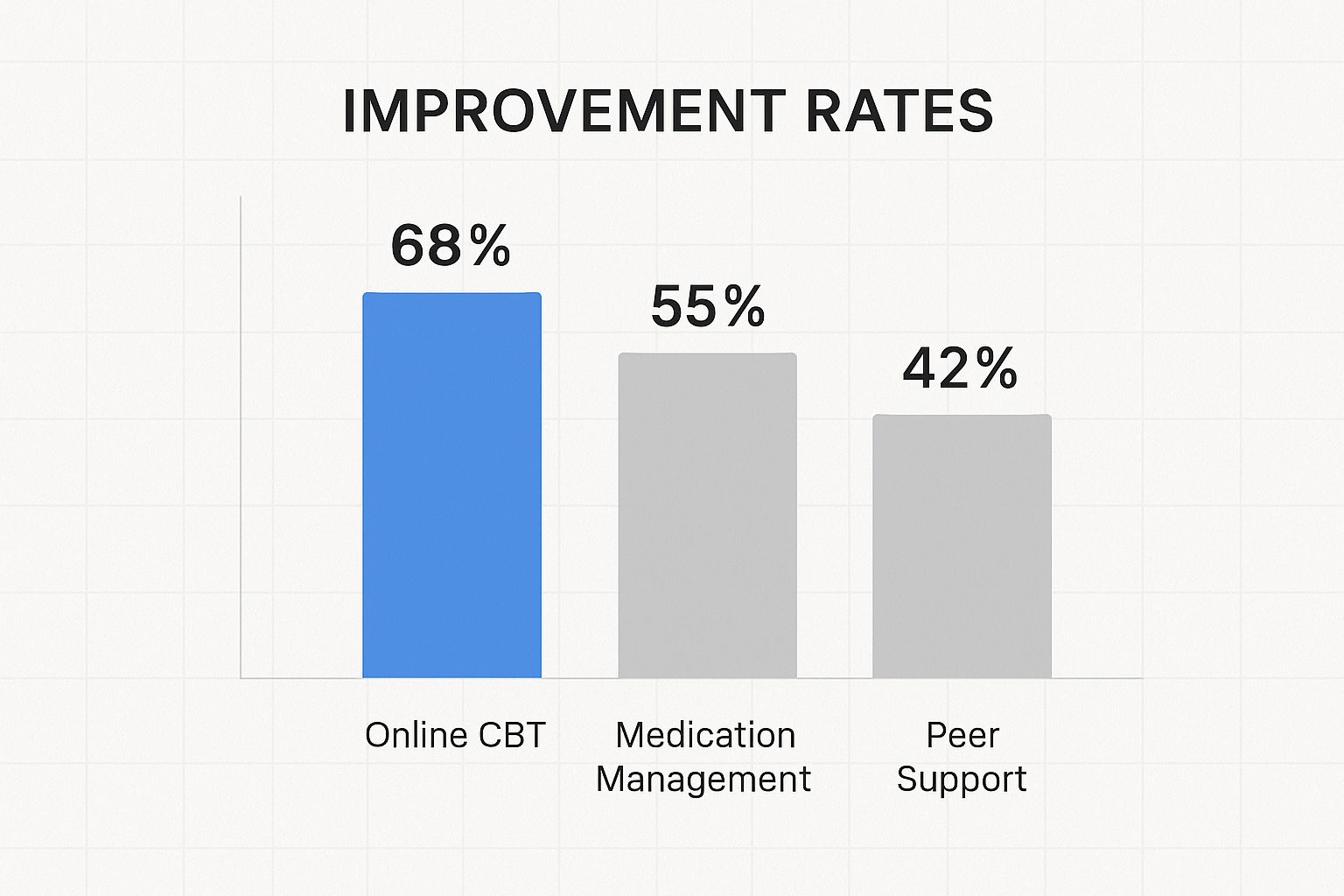
    This is where professional support can be a game-changer. Therapies like Cognitive Behavioural Therapy (CBT) give people practical tools to challenge negative thought cycles. This helps them build lasting resilience.

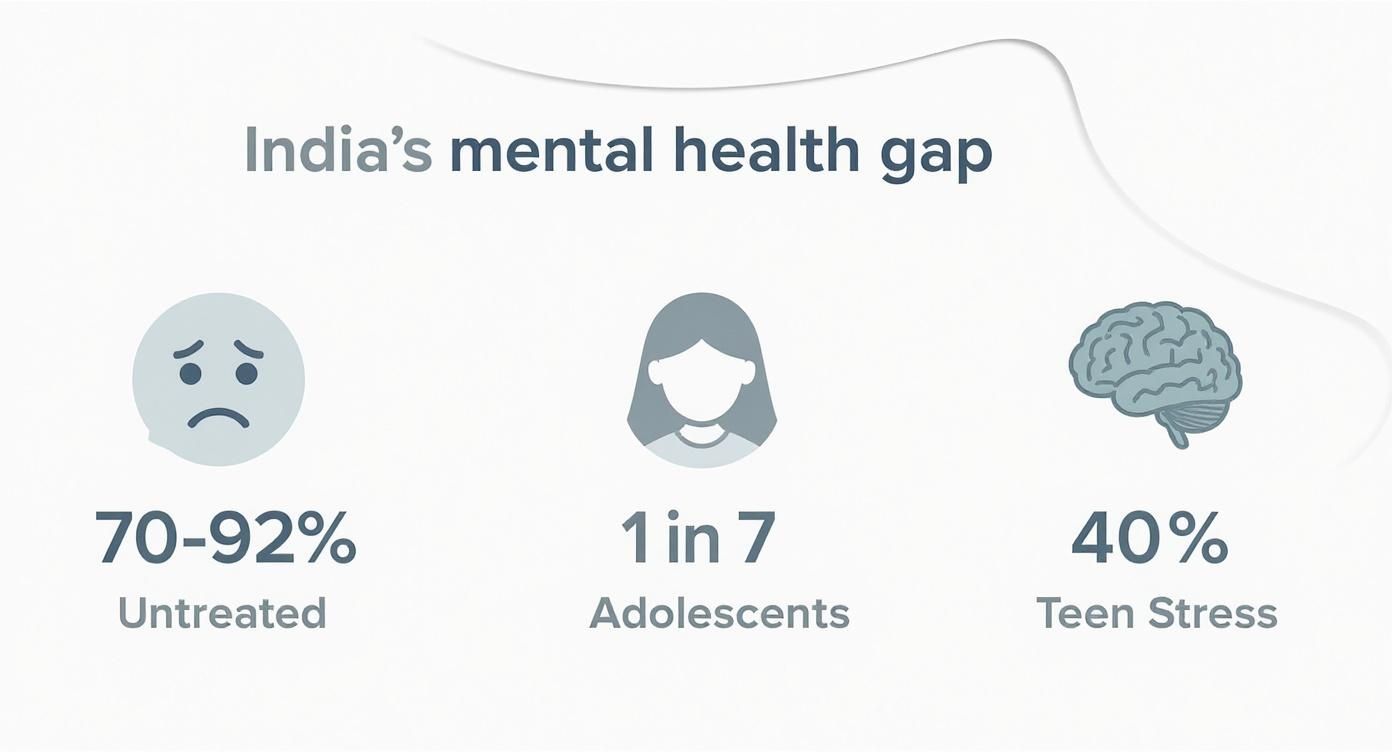
    The numbers show how common this is. According to India's National Mental Health Survey (NMHS) 2015-16, 9.54% of adults are affected by common mental disorders. Suggesting therapy isn't a shot in the dark; studies show it's effective. Reading about the success rates of anxiety therapy can give you confidence in the conversation.

    Using a Simple Tool to Start the Conversation

    Starting this conversation can feel awkward. A simple, structured tool can sometimes break the ice and ease the tension.

    Assessments like the GAD-7 (Generalised Anxiety Disorder 7-item scale) are straightforward questionnaires. Crucially, these tools are for information, not diagnosis. They are a low-pressure way to start a conversation about feelings.

    You could say, "I found this simple quiz that helps people make sense of their feelings. We could look at it together if you like, no pressure." This approach gives them space to reflect and may provide the confidence they need to seek professional therapy or counselling.

    Practical Ways to Help During Anxious Moments

    When someone is in the grip of anxiety, your calm presence is your greatest tool. It’s not about fixing them but about being a steady anchor while the storm passes.

    Having a few simple techniques can make a difference. These aren't complex interventions, but human ways to show support and well-being.

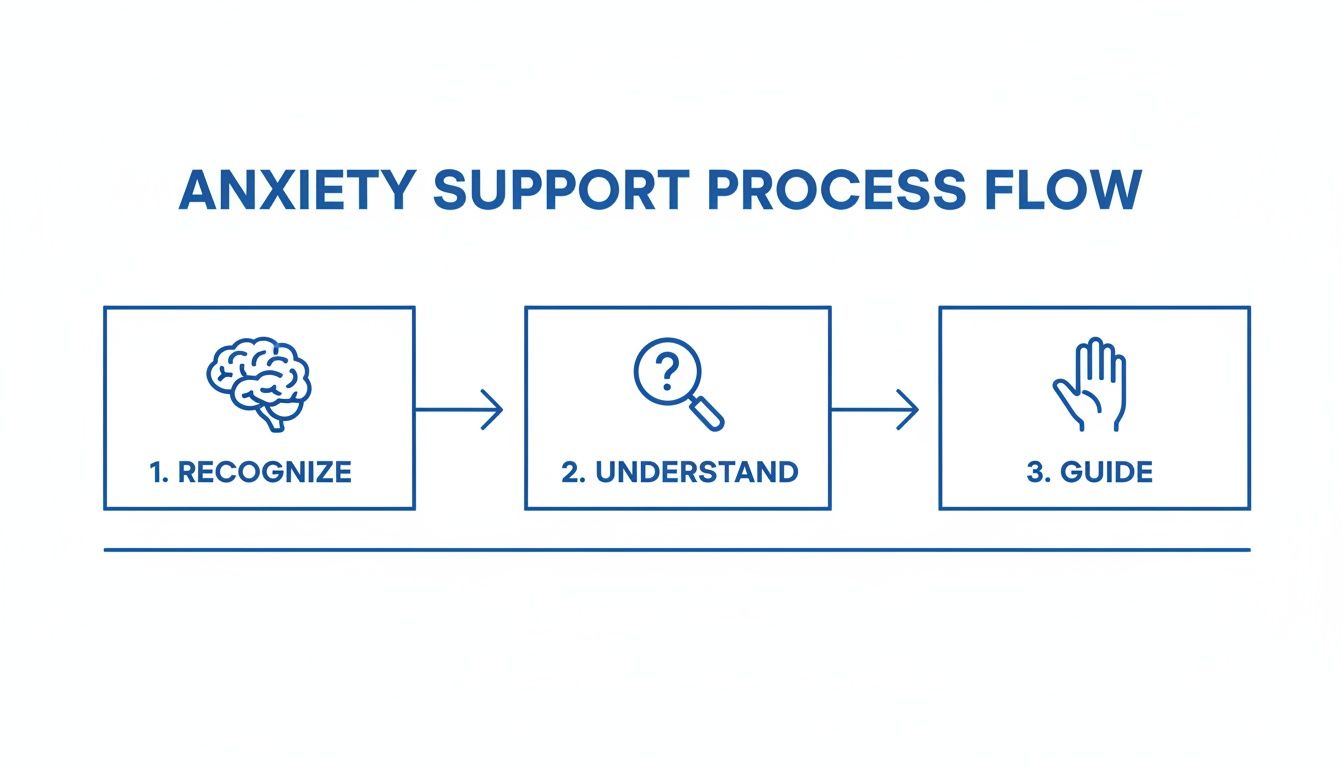
    A flowchart outlining the anxiety support process: Recognize, Understand, and Guide, with corresponding icons.

    Real support starts with empathy before action. This ensures your help is genuinely helpful.

    Use Grounding to Bring Them Back to the Present

    During intense anxiety, the mind gets lost in "what-ifs." Grounding techniques use the five senses to pull their focus back to the present moment.

    A simple method is the 5-4-3-2-1 technique. You can guide them through it in a quiet voice.

    • 5 Things You Can See: Ask them to name five things around them, like a lamp or a book.
    • 4 Things You Can Feel: Guide them to notice four physical sensations, like the texture of their jeans or their feet on the ground.
    • 3 Things You Can Hear: Have them tune into three distinct sounds, like birds outside or the hum of a fan.
    • 2 Things You Can Smell: Encourage them to find two scents, such as coffee or fresh air.
    • 1 Thing You Can Taste: Lastly, ask them to name one thing they can taste.

    This exercise shifts the brain's attention from internal chaos to the neutral details of the outside world, helping them find their footing.

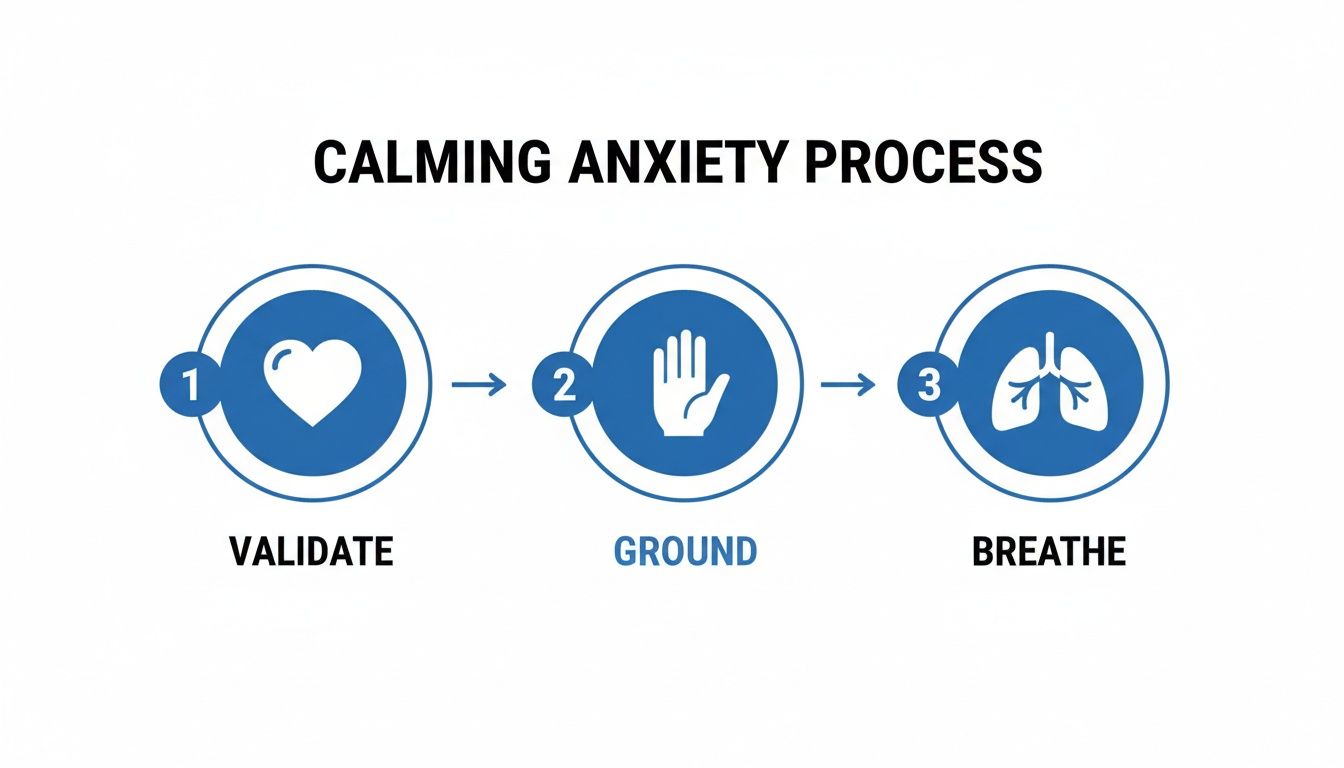
    Guide Them with Calming Breathing

    When anxiety takes over, breathing becomes fast and shallow, which can increase panic. Guiding someone to slow their breathing sends a calming signal to their nervous system.

    The 4-7-8 breathing technique is very effective. Guide them with a calm voice.

    1. Ask them to exhale completely.
    2. Have them close their mouth and inhale through their nose for a count of four.
    3. Then, ask them to hold that breath for a count of seven.
    4. Finally, guide them to exhale slowly through their mouth for a count of eight.

    Repeat this cycle with them a few times. The long exhale triggers the body's relaxation response.

    The goal isn’t to stop the anxiety. It's to help them ride the wave without being swept away. Offering these tools shows you're right there with them in the struggle, not just waiting on the sidelines for it to be over. That’s what builds trust and resilience.

    Ultimately, your presence is what matters most. By staying calm, listening, and using these practical tools, you can be a profoundly reassuring presence.

    How to Talk About Getting Professional Help

    Talking about professional help can feel daunting. But approaching the conversation with care can be one of the most loving things you do.

    The goal isn't to push them into therapy. It's about gently opening a door to building mental strength and resilience.

    Normalising the Conversation

    In India, mental health can still carry a stigma, causing many to suffer in silence. Your first task is to gently dismantle that outdated idea.

    A huge treatment gap exists; data shows that only a small fraction of people with anxiety get formal help. You can learn more about these important mental health findings. By talking about mental well-being openly, you help break the silence.

    Here are a few ways to start:

    • Share your own story. If you've benefited from counselling, talking about it makes the idea more human and relatable.
    • Keep it casual. Mention an article you read about workplace stress or a podcast on managing anxiety.
    • Frame it as skill-building. Pitch therapy not as a "cure," but as a way to learn practical skills for life's challenges.

    This approach positions professional support as a proactive, positive step towards happiness and well-being.

    Choosing the Right Time and Place

    Timing is crucial. Avoid bringing this up during an argument or in a crowded, stressful environment.

    Wait for a calm moment when you both have privacy and won't be interrupted. A quiet evening at home or during a peaceful walk can create a safe atmosphere.

    Your approach matters just as much as your words. Lead with "I care about you" rather than "You need to fix this." A compassionate tone makes it clear that your suggestion comes from a place of love and concern, not criticism.

    How to Phrase Your Suggestion

    The words you choose can make all the difference. Keep your language gentle, collaborative, and free of demands.

    Here are a few supportive conversation starters:

    • "I’ve noticed you’ve been under so much pressure, and it seems really tough. Would you ever be open to talking to someone trained to help with this kind of stress?"
    • "I care about you, and it's hard to see you struggling. Some friends found that talking to a therapist gave them new tools. I'm here to help you look into it if you're ever curious."
    • "We've been talking about how overwhelming things feel. I came across a platform called DeTalks that helps people find support for things like anxiety and depression. We could look at it together, no pressure."

    These phrases are invitations, not instructions. They respect their autonomy and make it clear you are a supportive partner in their journey.

    Building Sustainable Support and Self Care

    Two smiling friends walk in a sunny park at sunset, one with an arm around the other's shoulder, both wearing backpacks.

    Helping someone with anxiety is a marathon, not a sprint. Your consistent, patient presence is powerful, but it requires a long-term view.

    Recovery is not a straight line; there will be good days and tough ones. The goal is to build a foundation of sustainable support for both of you.

    Fostering Resilience Through Healthy Routines

    Gently encouraging small, positive daily habits can make a huge difference. These routines bring structure and can be incredibly grounding.

    Suggest activities you can do together, turning it into a shared effort. Physical activity is a brilliant tool; even a daily walk can regulate the nervous system. There's a strong the surprising link between exercise and anxiety and its benefits.

    Other simple routines could include:

    • Mindfulness Moments: Suggesting a five-minute guided meditation you can try together.
    • Consistent Sleep: Encouraging a regular bedtime to support their body's natural rhythms.
    • Shared Hobbies: Finding a low-stress activity to enjoy together, like listening to music.

    These small, consistent actions build stability and a sense of control, which are vital for long-term well-being.

    The Importance of Celebrating Small Wins

    When anxiety has a tight grip, even small tasks can feel monumental. It’s essential to notice and celebrate these small victories.

    A "win" might be making a phone call they were dreading or trying a breathing exercise. Acknowledging their courage helps them build self-compassion and recognise their own strength.

    Your role is to be a consistent source of encouragement, not a critic. Celebrating progress, no matter how minor it seems, validates their journey and reminds them they are moving forward. This positive reinforcement is a cornerstone of building lasting resilience.

    Protecting Your Own Wellbeing to Avoid Burnout

    It's easy to get so wrapped up in helping that you forget to care for yourself. But you can't pour from an empty cup. If you experience burnout, you won't be able to offer the steady support they need.

    Taking care of yourself isn’t selfish—it’s a necessary part of being an effective ally. It means knowing your limits and actively protecting your own well-being.

    Setting Healthy Boundaries for Yourself

    Boundaries create a healthy dynamic where you can give support without becoming drained. This is crucial for preventing burnout, especially when managing your own challenges like workplace stress.

    Here are a few practical ways to set boundaries:

    • Define Your Availability: It's okay to say, "I'm here to listen for the next 20 minutes, but then I have another commitment."
    • Encourage Self-Reliance: Instead of solving their problems, ask, "What are some things you think might help right now?"
    • Schedule 'You' Time: Block out and protect time in your calendar for your own rest and hobbies.

    Setting these limits protects you and models healthy self-care. This balanced approach ensures you have the emotional resources to be a pillar of support for the long haul.

    Common Questions About Supporting Someone with Anxiety

    Even with the best intentions, tricky situations can arise. It's normal to feel unsure. This guide can help you navigate tough spots with confidence.

    The goal isn't to be perfect but to be present and supportive. Let's walk through some common concerns.

    What If They Refuse Professional Help?

    This is a common and difficult situation. If they’re not ready for therapy or counselling, pushing them will likely cause them to shut down.

    Instead, continue to be a safe person they can talk to without judgment. You can still offer incredible support by listening and helping with small, everyday tasks.

    Gently normalise the idea of professional help over time. You might share an article or resource without pressure. The goal is to keep the door open for when they feel ready.

    How to Help During a Panic Attack Without Making It Worse

    Your calm presence is the most powerful tool during a panic attack. Stay grounded, speak softly, and ask what they need.

    Avoid saying things like "just calm down," which can sound dismissive when their body is in fight-or-flight mode.

    A better approach is to gently guide them through a grounding or breathing exercise. Quietly remind them that the feeling will pass and you are there with them. Your steady support is more helpful than trying to "fix" it.

    Your role is to be a supportive ally, not to be responsible for their recovery. True healing is their personal journey, and trying to carry that weight can lead to your own burnout. Offer compassion, encourage professional help, and protect your own mental health.

    Am I Responsible for Their Recovery?

    It's natural to feel responsible, but it is vital to draw a line. You are not responsible for their recovery from anxiety or depression.

    This is a deeply personal journey they must navigate, ideally with professional help. Your role is to offer compassion and encouragement.

    Be their cheerleader, point them towards support, and set healthy boundaries to protect your own energy. This allows you to be a consistent, positive presence as they build their own resilience.


    Taking the first step toward getting help is a sign of strength. At DeTalks, we make finding the right support less overwhelming. Explore our directory of qualified therapists and our library of science-backed assessments to help your loved one start their journey. Find out more at https://detalks.com.

  • How to Help Someone with Anxiety: A Practical Guide

    How to Help Someone with Anxiety: A Practical Guide

    When someone you care about is struggling with anxiety, the best thing you can do is offer patience, empathy, and a willingness to listen without judgment. It’s not about finding a quick fix, but creating a safe space where they feel understood. Your presence alone can be one of the most powerful tools for their well-being.

    What Anxiety Actually Feels Like

    A distressed young man sits on the floor, receiving a comforting touch on his shoulder.

    To genuinely help, it’s useful to understand what they're going through. Anxiety is more than just feeling worried; it's like a constant alarm bell inside their head they can't switch off. In India, this can be amplified by pressure from work, academics, and family, creating a stressful environment.

    Imagine trying to get through your day while your mind constantly jumps to the worst-case scenario. A simple task can spiral into overwhelming thoughts of failure, which is mentally draining. This constant state of alert makes it hard to focus on anything else.

    It's Not "All in Their Head"

    Anxiety is a deeply physical experience as well as a mental one. It can show up as a racing heart, tense muscles that ache, or a persistent knot in the stomach. These physical symptoms are real and can be frightening.

    Someone experiencing intense anxiety might even worry they are having a medical emergency, which feeds the cycle of fear. Recognizing this strong mind-body connection is a key part of offering compassionate support and building resilience.

    Anxiety can also take on different forms depending on life circumstances. For example, knowing the warning signs of postpartum depression and anxiety can help you provide timely and effective assistance to a new parent.

    The Scale of the Challenge in India

    This need for empathy is especially critical given the numbers. In India, anxiety disorders affect a significant portion of the population. A large percentage of people may never get the support they need due to a treatment gap widened by social stigma.

    Mental health challenges are sometimes viewed as a personal weakness rather than a health condition. Encouraging the use of informational assessments can be a helpful first step, as they can identify symptoms with high accuracy. You can read the full research about these mental health challenges to learn more. Please remember, these assessments are for informational purposes only and are not a substitute for a professional diagnosis.

    By seeing the world from their perspective—acknowledging the mental and physical weight they carry—you can offer support that truly matters. This foundation of empathy is where genuine connection and healing begin.

    Ultimately, your role isn't to diagnose or fix them. It's to build a bridge of understanding that helps them feel less alone in their struggle. This compassionate approach is the first and most vital step in helping someone navigate the journey of managing anxiety.

    What to Say and Do During an Anxiety Attack

    When someone is having an anxiety attack, your calm presence can be a lifeline. The key is not to try and stop the attack but to be a steady anchor while it passes. This is about grounding them, not problem-solving.

    The most powerful thing you can do is often just to be there, but it’s always best to ask first. A simple, "I'm here. Do you want me to stay with you?" gives them a sense of control. Speak softly, move slowly, and your quiet, non-judgmental presence can make all the difference.

    First, Create a Sense of Safety

    Anxiety can make the brain feel like there's an immediate threat. Your first job is to help their nervous system feel safe. You can do this by speaking in a low, reassuring voice and reminding them that the feeling, though terrifying, is temporary and will pass.

    Keep your language simple and avoid asking why this is happening, as that can make things worse. Right now, it's about the present moment and letting them know they are physically safe. This is the foundation they need to start feeling grounded again.

    Managing your own reaction is also a huge part of this. It’s natural to feel distressed, but if you look scared, it can confirm their brain's fears. Take a deep breath yourself; your calm can be contagious and help them feel secure.

    Guide Them Back to the Present with Grounding

    Grounding techniques are brilliant because they pull focus away from internal chaos and onto the tangible, outside world. One of the simplest and most effective is the 5-4-3-2-1 technique.

    You can gently guide them through it without any pressure.

    • "Let's find 5 things you can see around us. I see the blue lamp. What do you see?"
    • "Okay, now what are 4 things you can feel? Maybe your feet on the floor, or the texture of the sofa."
    • "Let's listen for 3 things you can hear. I can hear a car outside. What can you hear?"
    • "Can you smell 2 different things? Maybe my coffee, or the soap on your hands."
    • "And finally, what's 1 thing you can taste? Even if it's just the taste in your mouth."

    This simple exercise gives their racing mind a concrete task to focus on. It helps break the cycle of panic and regain a small but vital sense of control.

    You’re not expected to be their therapist. Think of yourself as a compassionate anchor. By staying calm and offering gentle guidance, you help them navigate the storm and remind them of their own strength.

    Choose Your Words Carefully

    What you say—and don't say—matters immensely. Common reactions like "just calm down" or "it's not that bad" can feel dismissive and make them feel more isolated.

    The goal is always empathy and validation. Your words should show that you see their struggle, believe them, and you're not going anywhere. This is what builds trust and helps them feel safe.

    Navigating these conversations can be tricky. Here’s a quick guide on what to say and what to avoid to foster connection and happiness.

    Helpful vs Unhelpful Phrases When Supporting Someone with Anxiety

    Communication can either build a bridge or a wall. The right words can make someone feel seen and understood, while the wrong ones can deepen their sense of isolation.

    Instead of Saying This… Try Saying This Instead…
    "Just calm down." "I'm here with you. Take your time."
    "There's nothing to be scared of." "I know this feels really scary right now."
    "You're overreacting." "This must feel so overwhelming. It will pass."
    "Why are you feeling this way?" "You don't need to explain. Just focus on your breathing."
    "It's all in your head." "I can see you're in distress. Let's get through this together."

    Choosing validation over dismissal is one of the most powerful ways to offer support. It communicates that you're on their team, ready to sit with them in their discomfort without judgment. This is the heart of learning how to help someone with anxiety.

    Gently Encouraging Professional Support

    Suggesting professional help is one of the most loving things you can do. The key is to approach the conversation with care and patience, so your loved one feels supported, not judged. Think of it as opening a door, not pushing them through it.

    Timing is everything. Find a quiet, private moment when you’re both calm. Bringing it up during an argument or a moment of high anxiety will likely not be helpful. The goal is to create a safe space where your genuine concern can be felt.

    Framing the Conversation with Care

    How you say it matters just as much as what you say. It's crucial to speak from a place of compassion, focusing on your own feelings and concerns rather than placing blame.

    Using "I" statements is a fantastic way to do this. Instead of saying, "You need therapy," which can sound like an accusation, try a softer approach.

    You could say, "I've noticed you've been having a hard time, and it worries me because I care about you. I was wondering if you’ve ever considered talking to someone who might have tools to help?" This reframes the conversation, positioning therapy or counselling as a proactive step toward building resilience.

    Highlighting the Power of Evidence-Based Support

    Sometimes, explaining that therapy is a practical, science-backed tool can make a huge difference. You don't need to be an expert, but mentioning that there are proven methods can normalise the idea.

    For example, you could mention Cognitive Behavioural Therapy (CBT), an effective approach for anxiety that teaches skills to manage difficult thoughts. Pointing them toward a resource like DeTalks, which connects them with professionals, makes it feel more concrete. It's a tangible next step, especially since untreated anxiety can sometimes be linked with depression. You can discover more insights about these findings to feel more informed.

    Remember, the goal isn't to push them into a decision. It's about planting a seed of possibility and letting them know that effective, compassionate help is available whenever they are ready.

    The visual below breaks down a simple process to help someone calm down in an anxious moment. It focuses on validation, grounding, and breathing.

    Diagram illustrating the three-step calming anxiety process: Validate, Ground, and Breathe.

    This simple flow shows that in-the-moment support is about connection, not correction.

    Offering Practical, Hands-On Help

    Anxiety and depression can be exhausting, making it hard to find a therapist and make an appointment. This is where you can step in with practical support. Offering this kind of help shows you're truly in their corner.

    Here are a few ways to lighten their load:

    • Do the legwork. Offer to research therapists or counsellors who specialise in anxiety. You could say, "If you'd like, I can help look up a few people who might be a good fit."
    • Help make the call. The first phone call can feel intimidating. Offering to make it for them, or just sitting with them while they do it, can provide a boost of courage.
    • Go with them. Simply offering to drive them to their first appointment can make the experience feel far less daunting.

    Your role here is to remove logistical and emotional friction, making it as easy as possible for them to take that brave first step. It’s a powerful way to show you are not facing this alone.

    Providing Long-Term Support Without Burning Out

    Two young men walk and talk on a misty park path during a golden sunrise.

    Learning how to help someone with anxiety is a marathon, not a sprint. It’s about showing up with patience, but it’s just as important to protect your own well-being to avoid burnout. You can only give your best support when you’re not running on empty.

    Long-term support means shifting your mindset from finding a "cure" to celebrating small wins. Recovery isn’t a straight line; there will be good and bad days. Your steady presence through it all makes a real difference.

    Embracing the Ebb and Flow of Recovery

    It’s normal to feel frustrated when someone has a setback after doing well. Remember, these ups and downs are a standard part of managing a mental health condition like anxiety or depression. This is where your compassion and resilience truly count.

    Your job isn't to fix them but to be a consistent, stable presence. Simply listen, offer encouragement, and gently remind them of how far they've come. This steady support helps them build their own strength over time.

    While geared towards classrooms, this article on how to help students with anxiety has some great universal strategies. The core ideas of patience and validation are just as relevant when supporting an adult.

    Setting Boundaries to Prevent Burnout

    Setting healthy boundaries is essential for being there for the long haul. This isn't selfish; it prevents compassion fatigue or burnout, which doesn't help anyone. Boundaries are kind limits that protect your mental and emotional energy.

    Here’s what healthy boundaries can look like:

    • Defining Your Availability: "I'm always here for you, but I need to switch off after 10 PM. Can we catch up tomorrow morning?"
    • Protecting Your Emotional Energy: "I want to support you, but I don't have the headspace to talk about this right now. Can we check back in this afternoon?"
    • Encouraging Self-Reliance: "I can see this decision is weighing on you. I can't make it for you, but I'm happy to listen while you think it through."

    These are respectful ways of communicating your own needs, allowing you to continue showing up for them in a meaningful way and promoting their own resilience.

    Supporting someone with anxiety means being a lighthouse, not a lifeboat. Your job is to be a steady, guiding light—you cannot carry them to shore. You can only show them the way.

    Prioritising Your Own Well-Being

    You can't pour from an empty cup. Looking after yourself is a non-negotiable part of being a good support person, especially if you're juggling your own workplace stress.

    Make time for things that recharge you, whether it’s a walk, a hobby, or five minutes of peace. These moments build your own resilience and stop resentment from creeping in. If you feel overwhelmed, consider getting support for yourself through therapy or counselling.

    How Digital Tools Can Open Doors to Recovery

    Close-up of hands holding a smartphone displaying a voice recorder app with sound waves in a home setting.

    Technology can be an accessible ally in the journey towards better well-being. For someone with anxiety, the thought of finding help can feel overwhelming. Digital tools offer a gentle, private first step, empowering them to explore support on their own terms.

    It’s important to remember these tools are a support for, not a replacement of, professional counselling. By knowing what's out there, you can gently suggest resources that might resonate with your loved one.

    Making That First Step Feel Less Scary

    One of the biggest hurdles is not knowing where to begin. Online platforms like DeTalks help by offering directories of qualified therapists. This lets someone browse profiles and find a professional who feels like the right fit from home.

    Many platforms also offer confidential, informational assessments. It's crucial to clarify these are for insight, not diagnosis. But they can provide a language for what someone is feeling, which makes future conversations with a therapist more focused.

    Digital tools can act as a bridge, connecting a person's private struggle with the world of professional support. They lower the barrier to entry, making that first step toward healing feel more manageable and less frightening.

    Evidence-Based Strategies Right at Their Fingertips

    Technology also puts a library of self-help strategies directly into their hands. Suggesting these tools is a brilliant way to encourage proactive steps in managing anxiety without being pushy.

    Here are a few ideas you could suggest:

    • Mindfulness and Meditation Apps: Apps like Calm or Headspace offer guided meditations that teach mindfulness techniques to help quiet a racing mind and build resilience.
    • Digital Journaling: A journaling app can be a private space to untangle thoughts and spot anxiety triggers, promoting positive psychology.
    • Mood Trackers: These apps help people connect the dots between their lifestyle and how they feel. Seeing how sleep or exercise impacts their anxiety can be eye-opening.

    While these tools are best used alongside professional support, they are a fantastic way to build healthy habits for long-term well-being and manage challenges like workplace stress.

    Breaking Down Barriers in the Indian Context

    In India, geography and stigma can make getting mental health care tough. This is where teletherapy, or online counselling, shines, bringing quality care to people in smaller cities and rural areas.

    The impact has been significant, especially as post-COVID data shows a rise in anxiety. Online platforms cut through the hesitation to seek help, making support accessible and consistent. You can learn more about these mental health trends from the CDC.

    By encouraging your loved one to explore these digital avenues, you're not just pointing them to a resource. You’re offering hope and a modern, accessible path toward well-being.

    Your Questions Answered: Navigating Anxiety Support

    When you’re trying to help someone, it’s natural to have questions. Feeling unsure of what to do is part of the process. Let’s walk through some common concerns to help you feel more confident.

    What if They Refuse to Get Help?

    This is a tough situation. You can see they’re struggling, but you can’t force someone into therapy or counselling. Pushing too hard can often cause them to shut down.

    Instead, keep the lines of communication open and let your support be unconditional. You can gently say, "I'm always here to listen, and if you ever want to talk to someone else, I can help." Focus on what you can do: be a patient, non-judgmental presence in their life.

    How Can I Support Someone from Far Away?

    Living at a distance adds complexity, but your support can still be a powerful anchor. Consistency is key. Regular check-ins, even a simple text, can bridge the physical gap and make them feel seen.

    Schedule regular video calls to make the connection feel more real. You can also encourage them to look into local support or online therapy, which is widely accessible. Offering to help research options shows that even from miles away, you’re there with them.

    Your consistent presence, even from afar, is a powerful reminder that someone cares. It's about showing up emotionally, even when you can't be there physically.

    Is It Anxiety or Just Normal Stress?

    This is a great question, as stress and anxiety can feel similar. The main difference is the trigger and duration. Stress is usually tied to a specific external cause, like a work deadline, and eases up when the situation resolves.

    Anxiety, however, often lingers long after a trigger is gone or appears for no clear reason. It’s a more persistent feeling of dread that impacts daily life. While everyone experiences workplace stress, chronic anxiety is a deeper challenge affecting a person’s well-being.

    What Do I Do if I Say the Wrong Thing?

    It’s bound to happen. If you say something that comes out wrong, the most important thing is how you handle it. Simply own it with a sincere apology.

    Something like, "I'm sorry, that didn't come out right. What I meant was that I care," can make all the difference. It shows humility and that your intention is to help. Your willingness to listen and learn builds trust and strengthens your ability to build resilience together.

    Can Someone Ever Fully Recover from Anxiety?

    Recovery looks different for everyone. For most, it isn't about a "cure" that makes anxiety and depression disappear. Instead, it’s about learning to manage symptoms so they no longer run your life. With tools from counselling and self-care, people can and do live rich, happy, and fulfilling lives.

    The goal is building resilience and having coping strategies for tough times. Remember to celebrate small wins and understand there will be ups and downs. Your steady, patient support is a vital part of this journey toward lasting well-being.


    Navigating mental health support can feel overwhelming, but you're not in this alone. If you're looking for professional, compassionate guidance for yourself or someone you love, DeTalks provides a directory of qualified therapists. Our confidential, science-backed assessments can help you find the right path forward. Explore your options at https://detalks.com.

  • How to Find a Therapist: A Practical Guide for Your Well-being

    How to Find a Therapist: A Practical Guide for Your Well-being

    Deciding to find a therapist is a powerful first step on your personal journey. Before searching, it helps to reflect on what you need, understand your options, and know where to begin your search for support. This guide will help you create a clear map for your path forward.

    Starting Your Search for the Right Therapist

    Looking for a therapist is a significant investment in your well-being. It’s a positive step, whether you're navigating challenges like stress, anxiety, or depression, or aiming to build a more resilient and fulfilling life. The process begins with one simple, personal question: “What am I hoping to achieve?”

    Answering that honestly gives you a clearer picture of the support you need. Remember, therapy isn't just for crisis moments; it's also a powerful space for personal growth and building the life you want.

    Why Are You Seeking Therapy Now?

    Everyone's reasons for starting therapy are unique. Perhaps workplace stress is leading to burnout, or you are looking for ways to manage feelings of anxiety or depression. Your path might also be about positive growth.

    Many people explore therapy to build resilience, cultivate self-compassion, improve relationships, or connect with a deeper sense of purpose. Taking a moment to think about your "why" helps you clarify your goals. For instance, are you thinking:

    • "I need skills to manage my anxiety in social situations." (Navigating specific challenges)
    • "I want to feel more confident and believe in myself." (Personal growth and happiness)
    • "I'm going through a major life transition and need support." (Coping with change)
    • "My partner and I are struggling to communicate effectively." (Improving relationships)

    Pinpointing your core motivation makes it much easier to find a professional whose skills and experience align with what you need.

    Understanding the Mental Health Landscape in India

    Finding a qualified therapist in India can sometimes feel challenging, and there are systemic reasons for this. India faces a significant mental health treatment gap, with many people who need support not receiving it. This is compounded by a shortage of qualified professionals and social stigma that can make reaching out feel difficult.

    However, things are changing for the better. There's a growing awareness of mental well-being, and more people are seeking support for everything from workplace stress to clinical depression. This has led to an expansion of both online and in-person services, making therapy more accessible.

    Remember, any difficulty in finding a therapist is a reflection of the system, not a reflection of you or the importance of your needs. Taking the step to look is a courageous act.

    This checklist is designed to help you organize your thoughts before you dive into the search.

    A Self-Reflection Checklist to Clarify Your Needs

    Use this checklist to reflect on your goals and preferences before you start your search for a therapist.

    Area of Reflection Guiding Questions Your Notes
    Your Primary Goal What is the #1 thing you want to change or achieve through therapy?
    Key Challenges What specific feelings, situations, or patterns are causing you distress?
    Therapy Style Do you want a therapist who mostly listens, or one who gives direct advice and "homework"?
    Practical Needs What’s your budget per session? What days/times work for your schedule?
    Personal Comfort Do you have a preference for your therapist’s gender, age range, or cultural background?

    Spending 15-20 minutes on these questions can bring incredible clarity and make the process feel more manageable.

    Clarifying Your Personal Preferences

    Beyond your core goals, the practical details are very important. Finding a setup that fits your life is key to sticking with therapy long-term.

    Think about what truly works for you. Does meeting a therapist in a face-to-face setting feel right, or does the convenience of online therapy from home sound more appealing?

    Here are a few key preferences to consider:

    • Session Format: Do you prefer online video calls, phone sessions, or in-person meetings?
    • Therapist's Gender: You might find it easier to open up to a therapist of a specific gender.
    • Language: It's vital that your therapist is fluent in a language you can express yourself in completely.
    • Budget: Be realistic about what you can comfortably afford per session or on a monthly basis.

    Modern platforms can help you filter your options effectively. Once you have a clearer idea of your needs, you can begin your search on BuddyPro, which allows you to find professionals based on these exact preferences.

    Exploring Different Therapy Options in India

    Once you know what you’re looking for, you can start exploring where to find that support. The mental health landscape in India has expanded, offering more choices than ever, from traditional in-person counselling to the convenience of online platforms.

    This means you can find a path that fits your life and comfort level. Whether you prefer meeting in person or need the flexibility of online sessions, a solution is available for you.

    The Rise of Online Therapy Platforms

    In recent years, online therapy has become a popular choice for many people. Platforms like DeTalks bring professional counselling to those who might have struggled to access it before, especially in smaller towns or with busy schedules.

    The main benefit is convenience. You can speak with a qualified professional from home, eliminating travel time and giving you access to a wider pool of specialists.

    The data highlights the need for accessible mental health care in India, and online services are helping to bridge this gap.

    Infographic about how to find a therapist

    These numbers show that many people who need help aren't getting it, with young people facing particular challenges.

    Finding In-Person Counselling

    While online therapy offers flexibility, the traditional face-to-face approach remains a powerful choice. Meeting a therapist in a dedicated, neutral space can build a strong sense of safety and connection.

    If you’re looking for a local practitioner, here’s where you can start:

    • Ask for recommendations: Your doctor or a trusted friend may be able to suggest a well-regarded professional.
    • Check local directories: Community health centers or local websites often list qualified therapists.
    • Contact hospitals: Many large hospitals have psychology departments with outpatient services.

    Consider practical factors like travel time and the clinic's atmosphere, as the right environment can make a big difference.

    Choosing between online and in-person therapy is a personal decision. There's no right or wrong answer—only what works best for your comfort, lifestyle, and therapeutic goals.

    Understanding the Evolving Mental Health Market

    India's mental health market is becoming more diverse and sophisticated. We are seeing a range of services from inpatient care for serious conditions to accessible telemedicine for managing day-to-day anxiety and depression.

    This growth reflects a greater investment in well-being. While inpatient services meet acute needs, issues like depression, anxiety, and workplace stress affect many people. New, specialised services are emerging to help individuals build resilience and improve their lives. You can read the full research about the India mental health market for more details.

    How to Check a Therapist's Credentials

    Once you have a few names of potential therapists, the next step is to ensure they are qualified. This is an empowering way to take an active role in your own care.

    Verifying credentials ensures that the person you confide in has the proper training to help you navigate your challenges, whether it's managing anxiety or building healthier relationships.

    Understanding Different Mental Health Roles

    In India, several key professionals work in mental health, and their titles can sometimes be confusing. Knowing the difference between roles like 'counsellor' and 'psychologist' will help you find the right fit.

    Let's clarify these roles. The following table compares the most common mental health professionals in India.

    Types of Mental Health Professionals in India

    Professional Title Typical Qualifications Can They Prescribe Medication? Key Focus Areas
    Psychiatrist MBBS, MD in Psychiatry Yes Assessment of mental health conditions, medication management, and treatment for complex disorders.
    Clinical Psychologist M.Phil in Clinical Psychology, RCI Licence No Psychotherapy, psychological assessments (informational, not diagnostic), and support for a wide range of mental health concerns.
    Counsellor/Psychotherapist Usually a Master’s degree (MA/MSc) in Psychology No Providing talk therapy for life challenges like stress, grief, relationship problems, and personal growth.

    Understanding these distinctions helps narrow your search. A psychiatrist is the right choice if you think you may need medication, while a clinical psychologist is ideal for in-depth therapy. A counsellor can be a great ally for support with life's hurdles.

    The RCI Licence: A Mark of Credibility

    For clinical psychologists, the most important credential is their RCI registration number. The Rehabilitation Council of India (RCI) is the government body that regulates their training and practice in the country.

    An RCI licence confirms the psychologist has completed a rigorous, supervised M.Phil programme. You can and should ask for their RCI number and verify it on the RCI website.

    Think of an RCI licence as a quality-assurance seal. It confirms a clinical psychologist has met national standards for education and ethical practice, giving you peace of mind.

    Navigating the Unregulated Field of Counselling

    In India, the field of counselling is largely unregulated, which means there isn't a single, mandatory licensing body. This can make verifying a counsellor's background more challenging.

    However, there are many skilled and ethical counsellors available. It simply means you need to be a more informed and proactive searcher.

    This situation reflects a broader issue in India's mental health landscape, which faces a critical shortage of professionals. There are only 0.75 psychiatrists per 100,000 people, and only a few thousand clinical psychologists are RCI registered. You can explore more insights on India's mental health landscape to understand the full context.

    Questions to Ask When Credentials Aren't Standardised

    Since there isn't a single licence for counsellors, it's important to ask direct questions during your initial consultation. A genuine professional will appreciate your diligence.

    Here are a few things you can ask:

    • What is your educational background? Look for at least a Master’s degree in Psychology (MA/MSc).
    • What specific therapeutic training have you had? Ask about their approaches, like Cognitive Behavioural Therapy (CBT) or mindfulness-based techniques.
    • Do you receive regular supervision? This is a great sign that they are committed to providing high-quality care.
    • Are you part of any professional associations? Membership in organisations shows a commitment to professional standards.

    Asking these questions helps build a foundation of trust and ensures you are placing your well-being in capable hands.

    Making the Most of Your First Session

    A therapist and client having a productive first session.

    Congratulations on booking your first therapy session. It's normal to feel a mix of excitement and nervousness.

    This initial meeting is an opportunity for you and the therapist to see if you are a good fit. The main goal is to lay the groundwork for a safe, trusting relationship, which is where the real work happens.

    What to Expect in Your First Conversation

    Your first session may be more structured. The therapist will likely cover essentials like confidentiality and scheduling, then shift the focus to what brought you to counselling.

    They may ask open-ended questions like, "What’s on your mind?" or "What are you hoping to get from therapy?" There are no right or wrong answers. Sharing a bit about what you're navigating—whether it’s workplace stress, anxiety, or a desire to build resilience—is a great start.

    You are in control of the conversation. Share what feels comfortable, as a good therapist will always respect your pace.

    Setting the Stage for a Good Fit

    The connection you build with your therapist, known as the "therapeutic alliance," is a key factor in successful therapy. Research shows this bond is more critical than the specific techniques a therapist uses.

    During your first meeting, pay attention to how you feel. Do you feel seen and heard? Trust your instincts. It's perfectly okay to keep looking if the connection doesn't feel right.

    Your comfort and sense of safety are non-negotiable. This first session is your chance to see if that connection is there. A good fit helps create a solid foundation for your journey toward improved well-being.

    Thoughtful Questions to Ask Your Therapist

    This is also your opportunity to interview them. Coming prepared with questions can help you feel more in control and ensure their approach aligns with your needs.

    Here are a few ideas:

    • About Their Experience:

      • "What’s your experience working with people dealing with issues like mine (e.g., anxiety, depression, burnout)?"
      • "Which therapeutic approaches do you use most often, and why?"
    • About the Therapeutic Process:

      • "What does a typical session with you look like?"
      • "How will we track progress together?"
      • "What’s your philosophy on the therapist-client relationship?"
    • About Practical Details:

      • "What are your fees and payment policies?"
      • "What is your policy for rescheduling sessions?"
      • "How can I contact you between sessions if needed?"

    Asking these questions is about making an informed choice and starting your partnership on a collaborative note.

    Supportive Takeaways for Your Path Ahead

    After your first session, take a moment to reflect. The goal isn't to feel "cured" but to feel that you've found a safe space to begin your work.

    Focus on how the interaction felt, not on immediate results. This is a journey of progress, not perfection. Just showing up is a powerful act of self-care.

    Building a Supportive Path Forward

    Deciding to find a therapist is the start of a journey of healing and growth. Therapy is a collaboration where your voice and experiences are central.

    Together, you and your therapist will explore patterns, build new skills, and create a life that feels more authentic to you.

    The Journey Is Not Always a Straight Line

    It's okay if the first therapist you meet isn't the right one. This is not a failure but a crucial part of the process. The connection with your therapist needs to feel right for you to open up and do meaningful work.

    Continuing the search shows your commitment to finding the support you deserve. Every conversation teaches you more about what you need and brings you one step closer to the right fit.

    Your commitment to finding the right support is what matters most. Acknowledging a mismatch and choosing to continue the search is an act of empowerment and a testament to your dedication to your mental health.

    Nurturing Your Well-Being Beyond the Session

    Real progress often happens between appointments as you apply insights from therapy to your daily life. It’s about weaving what you learn into your everyday routines.

    This might mean practicing new ways of thinking, like using mindfulness exercises during a stressful workday. If you're building resilience, you might start a gratitude journal. You might also explore tools like effective time management strategies for adults with ADHD to manage daily life better.

    These small, consistent actions reinforce the work you do in sessions and create lasting change.

    A Focus on Growth and Resilience

    Therapy isn't just about managing challenges like workplace stress, anxiety, or depression. It's also a space to cultivate positive aspects of your life, such as joy, meaning, and connection.

    Your path can include building skills that make life richer, such as:

    • Strengthening Resilience: Learning to navigate life’s ups and downs with emotional balance.
    • Fostering Self-Compassion: Treating yourself with kindness, especially during difficult times.
    • Cultivating Happiness: Actively identifying and nurturing what brings you genuine joy.

    This approach shifts the focus from simply "fixing" what's wrong to actively building what's right, helping you move from coping to flourishing.

    Supportive Takeaways for Your Path Ahead

    As you move forward, remember that this is your journey, unfolding at its own pace. There's no set timeline for growth, only a commitment to showing up for yourself with kindness.

    Be patient with yourself. Some weeks will feel like great progress, while others may feel slow. The goal isn't a "cure" but a deeper connection with yourself and the tools to build a more resilient, meaningful life.

    Your Questions, Answered

    It’s completely normal to have questions as you start looking for a therapist. Let's address some of the most common ones to help you feel more confident.

    How Do I Know If a Therapist Is the Right Fit for Me?

    Finding the right therapist is more about a feeling of connection than a checklist. During your first conversation, notice how you feel. Do you feel seen, heard, and respected without judgment?

    That feeling of safety is the foundation of a good therapeutic relationship. Trust your intuition. If something feels off, it’s okay to keep looking for someone else.

    What Is the Difference Between Counselling and Therapy?

    These terms are often used interchangeably, but there's a slight distinction. Counselling is often short-term and focuses on specific issues, providing practical tools for challenges like workplace stress or life transitions.

    Therapy tends to be a deeper, longer-term process that explores the roots of ongoing patterns, such as chronic anxiety or depression. Neither is better; it just depends on your current needs.

    How Much Does Therapy Cost in India and Is Online Therapy Cheaper?

    The cost of therapy in India varies depending on the therapist's experience and location. An in-person session in a major city can range from ₹1,000 to ₹3,000 or more.

    Online therapy has made support more accessible and often more affordable, with some platforms offering sessions starting from ₹500–₹800. While cost is a factor, always verify the professional's credentials to ensure you receive quality care.

    Your mental health journey is a marathon, not a sprint. Remember to be patient and kind to yourself as you navigate the process of finding the right support. The goal is progress, not perfection.

    How Can I Bring Up a Difficult Topic with My Therapist?

    It's common to feel anxious about discussing something deeply personal. A good therapist is trained to create a safe space for these conversations.

    You can start simply by saying, "There’s something I want to talk about, but I'm finding it difficult to bring up." This invites your therapist to guide the conversation gently, at a pace that feels comfortable for you.


    Ready to find your person? At DeTalks, we've brought together qualified and compassionate therapists from all over India to make your search easier. You can browse profiles, filter by what's important to you, and book a session that works for your life, all in one confidential, supportive space.

    Visit DeTalks to start exploring today.

  • Depression Treatment Online: Hope & Support from Home

    Depression Treatment Online: Hope & Support from Home

    Feeling overwhelmed is a natural part of life, but you don't have to navigate it alone. Exploring depression treatment online is a courageous first step toward feeling better, offering professional support in a space where you feel safe and comfortable.

    Finding Support from the Comfort of Your Home

    Taking the first step toward mental well-being requires courage, and it's a journey where you deserve to feel supported. Life's challenges, like workplace stress, burnout, or persistent feelings of sadness and anxiety, can feel isolating. Simply acknowledging these feelings is an act of self-awareness.

    Fortunately, technology makes getting professional help more accessible than ever. Online therapy provides a confidential space to explore your thoughts and feelings with a trained professional, right from your home. This removes practical barriers like travel and scheduling, allowing you to focus on your well-being.

    A Path Toward Resilience and Well-Being

    Online counselling is about more than managing difficult moments; it's about building a stronger, more resilient you. The process focuses on developing practical skills to navigate life's ups and downs with greater confidence. It's a journey toward rediscovering a sense of purpose and joy.

    Therapists often draw from positive psychology to help you focus on your strengths, cultivate resilience, and foster happiness. You might learn skills like self-compassion or mindfulness, which are tools for lasting well-being.

    "The curious paradox is that when I accept myself just as I am, then I can change." – Carl Rogers

    This quote captures the essence of healing: it begins with self-acceptance. Therapy offers a judgment-free space to explore who you are, fostering the self-compassion needed for growth and helping you understand that your struggles don't define you.

    What to Expect from This Guide

    This guide will walk you through the world of online depression treatment in a clear, straightforward way. We'll cover what online therapy looks like, the types of services available, and how to find a professional who feels right for you. Our goal is to empower you to make an informed choice for your mental health.

    We will explore these key areas:

    • Understanding Online Therapy: What is it, and how does it help with challenges like anxiety and depression?
    • Building Resilience: Practical ways to cope with workplace stress and other life challenges.
    • The Role of Assessments: How certain tools offer useful insights, remembering they are informational, not diagnostic.
    • Finding Your Path: How to choose a therapist and begin your journey toward greater happiness and balance.

    Think of this guide as a supportive companion on your path to well-being. It's designed to give you the knowledge and confidence to take a meaningful step toward a healthier life.

    What Online Depression Treatment Really Means

    A person sitting comfortably at home and using a laptop for an online therapy session, looking calm and engaged.

    So, what does depression treatment online actually involve? It means having professional mental health support that fits into your life, whether you're at home, at work, or traveling.

    This approach removes the hassle of travel and waiting rooms, creating a direct, private connection to a qualified therapist through your device. This is structured, professional counselling designed to help you address real challenges. Whether it's a low mood, feelings of anxiety, or workplace stress, online therapy offers a dedicated space to learn practical coping skills with an expert's guidance.

    The Core of Online Counselling

    At its heart, online therapy is a partnership built on a trusting relationship with your counsellor. Together, you can explore thought and behavior patterns that may contribute to feelings of depression.

    The process is collaborative and tailored to you. A therapist might use methods like Cognitive Behavioural Therapy (CBT) to help reframe unhelpful thoughts or teach mindfulness to manage stress. The goal is to equip you with tools to enhance your overall well-being and build lasting resilience.

    Online therapy offers more than just a listening ear; it provides a structured framework for personal growth, helping you build self-compassion and develop the strength to navigate life's challenges with greater confidence.

    This framework supports sustainable change by helping you understand the connections between your thoughts, feelings, and actions. This empowers you to make conscious choices that lead to a healthier, more fulfilling life.

    Making Support Accessible in India

    Online therapy is transforming accessibility, especially in India, where an estimated 56 million people are affected by depression. Digital platforms bridge this gap by offering a convenient and often more affordable alternative to traditional therapy. You can learn more about the role of online therapy in India and its growing impact.

    Online therapy effectively removes common barriers to getting help:

    • Geographical Distance: Connect with a skilled therapist from anywhere, whether in a major city or a remote town.
    • Scheduling Conflicts: Flexible scheduling, including evenings and weekends, accommodates busy lives.
    • Privacy and Comfort: Discussing personal matters from a safe space can make it easier to open up and reduce stigma.

    Building Resilience and Well-Being

    The journey of online therapy is not just about managing challenges; it’s about actively cultivating positive mental health. This means shifting focus from merely surviving to truly thriving. A key part of this is developing resilience—the ability to bounce back from life's difficulties.

    Your therapist can help you recognize your strengths and values, fostering self-compassion and teaching you to be kind to yourself. This process lays a foundation for long-term emotional well-being and a life filled with meaning. It's important to remember that any online assessments are informational tools to start a conversation, not a substitute for a professional diagnosis.

    Exploring Different Online Therapy Formats

    Online therapy offers a range of approaches designed to fit your needs and comfort level. The goal is to find a communication style that feels natural and allows you to be open with your therapist.

    For some, the direct connection of a video call feels most like traditional therapy. For others who experience anxiety with live conversation, text-based therapy provides space to reflect and write. Let's explore these formats.

    Comparing Online Therapy Formats

    Choosing the right format can significantly impact your experience. Here’s a comparison of common online therapy methods to help you decide what works best for you.

    Therapy Format How It Works Best For Considerations
    Live Video/Voice Calls Scheduled, real-time sessions with a therapist via secure video or voice chat. It’s a direct, face-to-face conversation. Building a strong therapist relationship, picking up on non-verbal cues, and having a structured, dedicated appointment time. Requires a private space and a stable internet connection. Can feel intense for those anxious about live interaction.
    Text & Messaging Therapy You send messages (text, audio, or video clips) to your therapist anytime. They reply at scheduled times. It's asynchronous. People with busy schedules, those who express themselves better in writing, or anyone needing ongoing, in-the-moment support. Lacks the immediacy of a live chat and misses non-verbal cues. The connection can feel less personal for some.

    Ultimately, there is no single "best" format—only the one that is best for you. Your choice shapes your interaction, so consider what would make you feel most supported.

    The Therapeutic Techniques Behind the Screen

    The format is the how, but the therapeutic technique is the what. Online therapists use the same evidence-based methods as in-person clinicians to help you navigate depression and anxiety.

    One of the most widely used methods is Cognitive Behavioural Therapy (CBT). CBT helps you identify, challenge, and change unhelpful thought patterns and behaviors. For example, you might work with your therapist to reframe an automatic negative thought into a more constructive one.

    Evidence shows these structured online methods deliver real results.

    A bar chart comparing the improvement rates of Online CBT (68%), Medication Management (55%), and Peer Support (42%) for depression treatment.

    As you can see, structured therapy like online CBT often leads to significant improvements for people seeking support.

    Therapists also integrate other powerful techniques during online counselling, including:

    • Mindfulness-Based Practices: These teach you to stay in the present moment without judgment, such as through guided breathing exercises.
    • Psychodynamic Therapy: This approach explores how past experiences may shape your present feelings, leading to self-awareness.
    • Positive Psychology Interventions: This technique focuses on building your strengths and practicing gratitude to cultivate resilience.

    A quick reminder: any assessments your therapist uses are informational tools to guide your sessions. They are not a formal diagnosis but a compass to point you in the right direction.

    The Rise of Digital Mental Health Support

    A person smiling while participating in an online therapy session on their tablet, feeling supported and understood.

    The conversation around mental health in India is changing for the better as stigma fades. More people now recognize that caring for emotional well-being is a sign of strength.

    Technology has been a major driver of this shift, breaking down barriers that made professional help feel out of reach. With online platforms, a meaningful conversation with a qualified therapist is now just a click away. Choosing depression treatment online is a modern, practical way to invest in yourself.

    Overcoming Traditional Barriers with Technology

    For years, accessing mental health support involved overcoming many obstacles. Finding a nearby therapist, scheduling appointments, and managing social anxiety were common challenges.

    Online therapy eliminates these problems. It allows you to connect with a professional from your own space, making it easier to attend sessions consistently. This convenience lets you focus on what truly matters: your healing journey.

    Online therapy creates a bridge to support, ensuring that compassionate, professional care is available to anyone, regardless of their location or circumstances. It democratises access to well-being.

    This accessibility is especially helpful when dealing with depression or anxiety, as it brings support directly to you. This makes taking that crucial first step feel much more manageable.

    A Growing Acceptance and a Strong Legal Framework

    The shift to digital mental healthcare is supported by a strong foundation. The online mental health market in India was valued at USD 133.47 million and is expected to reach USD 451.73 million by 2033, showing a growing demand for accessible teletherapy.

    India's Mental Healthcare Act, 2017, gives every person the right to access mental healthcare with dignity. This legislation gives online therapy legitimacy, assuring you receive recognized, professional support. This blend of social acceptance and legal backing confirms that online counselling is an effective path for managing workplace stress or building emotional resilience. Technologies like voice software in healthcare are also improving support services behind the scenes.

    Empowering You on Your Journey

    Ultimately, the rise of digital mental health is about putting you in control. It empowers you to find a therapist and therapy style that fits your life, where you can focus on building positive habits like managing stress and cultivating self-compassion.

    Remember that online assessments are conversation starters, providing initial insights to discuss with a professional. They are not a formal diagnosis. Real, effective help is closer than ever, and choosing online support is a powerful step toward a healthier, more balanced life.

    How to Choose the Right Online Therapist

    A diverse group of professional therapists' profile pictures arranged in a grid, conveying choice and accessibility.

    Finding a therapist you connect with is one of the most important parts of your therapy journey. This therapeutic relationship creates a safe space to open up and begin healing. A good online counsellor brings expertise, empathy, and understanding to your sessions.

    This connection is vital for successful depression treatment online. When you feel seen and heard, you are more likely to build the trust needed for real progress. Choosing a therapist is a personal decision, so take your time to find someone who feels right for you.

    Look for the Right Qualifications and Specialisations

    First, ensure your therapist is properly qualified with credentials like a Master’s degree in psychology or social work. Reputable platforms like DeTalks simplify this by vetting all therapists in their network.

    Consider their specializations. Finding a professional with experience in what you're facing—whether it's depression, anxiety, or workplace stress—can make a significant difference. Reading their profiles can help you see if their expertise aligns with your needs.

    Understanding Their Therapeutic Approach

    Every therapist has a unique style or therapeutic approach. Some use Cognitive Behavioural Therapy (CBT) to reframe thoughts, while others use mindfulness to build resilience. The most important thing is finding an approach that resonates with you.

    Think about what you hope to achieve in your sessions. Are you looking for practical strategies or a deeper exploration of your past? Answering this will help you find a therapist whose methods align with your goals for improving your well-being.

    The goal isn’t to find a perfect therapist, but to find a therapist who is perfect for you—someone whose approach makes you feel supported, understood, and hopeful about the journey ahead.

    This mindset transforms the search from a task into an empowering choice. You are selecting a partner for your mental health journey.

    Use the Initial Consultation Wisely

    Most platforms offer an initial consultation, which is a great opportunity to see if a therapist is a good fit. Use this low-pressure meeting to ask questions and get a feel for their communication style.

    Here are a few questions you might ask:

    • What is your experience helping people with challenges like mine?
    • Could you explain your therapeutic approach in simple terms?
    • What can I expect in our first few sessions together?

    It's okay if the first person you speak with isn't the right one. Trust your intuition. Finding the right therapeutic relationship is a crucial step toward building resilience and finding a path to greater self-compassion and happiness. Remember, assessments are for guidance, not diagnosis.

    Your Next Steps Toward a Healthier Mind

    Taking the first step is a powerful act of self-care. Choosing depression treatment online is a courageous decision to prioritize your well-being.

    The path to feeling better is personal, and the goal is not an overnight fix. It’s about gradually building skills to support your long-term mental health. Online therapy offers a supportive space to learn and practice these skills at your own pace.

    Embracing a Path of Self-Compassion

    As you begin, remember to be kind to yourself. Progress isn't always linear, and some days will be harder than others.

    Celebrate small wins, like showing up for a session or trying a new coping technique. These moments are the building blocks of resilience. Online counselling provides a non-judgmental space to explore your feelings and understand that struggling with anxiety or workplace stress is part of being human.

    True well-being comes not from the absence of problems, but from the confidence that you have the tools to handle them. Online therapy is about empowering you with those very tools.

    This sense of empowerment is at the core of therapy. It helps shift your perspective from feeling overwhelmed to feeling capable and ready to navigate life's challenges.

    The Growing Accessibility of Online Support

    If you're considering online support, you are not alone. In India, technology has made seeking mental health help more accessible and accepted than ever.

    One survey showed that about 61% of female and 55% of male respondents have used digital wellness tools. You can learn more about technology's role in mental health statistics to see how it's improving access to support. This growing acceptance means quality care is within reach for many. Platforms like DeTalks offer a safe starting point to browse professionals and find someone you connect with.

    Remember, any initial questionnaires or assessments are simply tools to start the conversation, not a final diagnosis. Taking this step is an act of hope and an investment in your happiness and a more resilient life.

    Frequently Asked Questions About Online Therapy

    It's normal to have questions when considering online therapy. You're taking an important step, and you deserve to feel clear about how it works. Here are answers to some common queries to help you feel more empowered.

    Is Online Therapy as Effective as In-Person Therapy?

    Yes, for many people, research shows that online therapy is just as effective as in-person sessions, especially for mild to moderate depression and anxiety.

    Therapeutic methods like Cognitive Behavioural Therapy (CBT) translate well to a digital format. The success of counselling depends on your connection with the therapist, which is entirely possible to build online. For more answers, you can check out Buddypro's FAQ section.

    How Is My Privacy Protected in Online Counselling?

    Reputable platforms use bank-level encryption and secure technology to ensure your conversations remain confidential. Therapists are also bound by the same strict professional codes of confidentiality as in a physical office.

    To protect your privacy, find a quiet space for your sessions where you won't be interrupted.

    Choosing a platform that is upfront and transparent about its privacy policies is crucial. It lets you relax and focus on what truly matters: your journey toward building resilience and self-compassion, without a second thought about your data.

    What Should I Expect from My First Session?

    Your first session is a low-pressure conversation for you and your therapist to get to know each other. You'll discuss what brought you to therapy, the challenges you're facing (like workplace stress), and your goals.

    Your therapist will ask about your background to better understand your situation. This is also your time to ask them questions and see if their approach feels like a good fit. The goal is to create a safe foundation to build upon. Remember, any initial screening tools are informational and not a formal diagnosis.


    Ready to take the next step in a supportive, confidential space? At DeTalks, you can connect with qualified professionals who can help you navigate life's challenges and build a path toward greater well-being. Explore our network of therapists and begin your journey today at https://detalks.com.

  • A Compassionate Guide to Online Therapy in India

    A Compassionate Guide to Online Therapy in India

    Deciding to start therapy is a courageous step toward prioritizing your well-being. If you're looking into online therapy in India, you’ve found a path that is flexible, private, and genuinely supportive. Think of this guide as a warm conversation, designed to help you confidently find the right support.

    Starting Your Online Therapy Journey in India

    Choosing to seek support is a powerful first move toward better mental health. It’s an act of acknowledging that everyone needs a safe space to explore their thoughts and feelings. Online therapy makes getting that support simpler and more discreet than ever before.

    This modern approach to counselling brings a qualified professional to you, on your terms. Instead of commuting, you can connect with a therapist from wherever you feel most comfortable. It removes traditional barriers like distance, busy schedules, and the hesitation some feel about seeking help.

    A New Era of Accessible Well-being

    The shift to digital mental health support is growing quickly. In India, the online mental health market was valued at around USD 133.47 million and is projected to reach USD 451.73 million by 2033. This growth is driven by better internet access and a welcome cultural shift where talking about mental health is becoming more common. You can read more about the growth of India's online mental health market.

    This expansion means more options and easier access for everyone. It shows we are moving toward a future where seeking help is seen as a proactive step toward a stronger, more resilient life.

    Here is a quick summary of what online therapy in India offers.

    Aspect Key Benefit
    Accessibility Connect with a therapist from anywhere, removing geographical barriers.
    Convenience Sessions fit into your schedule, saving you travel time and hassle.
    Privacy Discuss personal matters from the comfort and confidentiality of your own space.
    Choice Access a wider pool of therapists with diverse specialisations.

    Ultimately, online therapy makes professional support a practical and realistic option for more people across the country.

    What Can Online Therapy Help With?

    Online counselling is a valuable tool for personal growth, helping you build resilience for life's ups and downs. It provides a confidential space to explore a wide range of concerns, from everyday challenges to personal development.

    Here are a few areas where therapy can make a real difference:

    • Managing Daily Challenges: Learn effective ways to handle workplace stress, anxiety, and burnout, creating a healthier work-life balance.
    • Navigating Emotional Difficulties: A professional can guide you through feelings of depression, grief, or difficult experiences with empathy and practical support.
    • Fostering Positive Growth: Therapy isn't just about problems; it helps you cultivate more happiness, self-compassion, and resilience so you can thrive.
    • Improving Relationships: Understand communication patterns and build stronger, healthier connections with your partner, family, and friends.

    A friendly reminder: If you come across online mental health assessments, please remember they are for informational purposes only. They can offer useful insights to discuss with a therapist, but they are not a substitute for a professional diagnosis.

    At its core, online therapy is about empowering you to take charge of your own well-being. It gives you the tools, support, and understanding to navigate life with more confidence and clarity.

    Why Online Counselling Is Gaining Trust in India

    More people across India are choosing online counselling as a practical and empowering way to care for their mental health. This modern approach is breaking down long-standing barriers, making professional support more accessible. It’s like having a trusted guide for your personal journey, available from the comfort of your home.

    Online therapy directly addresses common hurdles, like the difficulty of finding a qualified therapist in a smaller town. It also respects the discomfort many feel about visiting a clinic in person.

    Image

    This shift is particularly important in India, where there's a significant need for mental health support. Online counselling acts as a crucial bridge, connecting people to help while offering a level of privacy that helps overcome hesitation. You can learn more about this and understand more about this treatment gap.

    Overcoming Traditional Barriers with Ease

    A major benefit of online therapy is that it removes geographical boundaries. Living outside a major Indian city can make finding a specialist difficult. Online platforms open up a vast network of professionals from across the country.

    This means you can connect with a therapist who has the right qualifications and understands your cultural background. Whether you're navigating workplace stress, anxiety, or relationship issues, technology gives you choices to find a genuine connection.

    The convenience is also a significant advantage. Online sessions can fit into a lunch break or evening, making consistent support a realistic part of a busy routine.

    A Focus on Privacy and Comfort

    For many, the thought of being seen at a therapist's office is a barrier. Online counselling offers a level of confidentiality that makes taking the first step feel much safer. Your sessions take place in your own secure space.

    This sense of privacy encourages more open and honest conversations. When you feel at ease, it's easier to talk about sensitive topics, whether it's feelings of depression or personal insecurities.

    Online therapy isn’t just about talking through problems; it’s a proactive step toward building a healthier, more balanced life. It empowers you to invest in your own well-being on your own terms.

    Cultivating Resilience and Positive Growth

    While therapy is invaluable for managing challenges like anxiety and depression, its benefits extend much further. It is also a powerful space for personal development and building a positive mindset. Online counselling provides a dedicated space to learn skills that help you flourish.

    You can work with a therapist to strengthen your emotional resilience, making you better equipped to handle life's challenges. Sessions can focus on learning self-compassion, practising mindfulness, or finding more joy in daily life.

    • Building Resilience: Learn how to bounce back from setbacks with greater strength.
    • Enhancing Self-Awareness: Gain a clearer understanding of your thoughts, feelings, and actions.
    • Improving Relationships: Develop healthier ways to communicate and connect with others.
    • Finding Purpose: Explore what truly matters to you and work toward a more meaningful life.

    The growing trust in online therapy in India comes from its people-first approach. It meets you where you are, respects your privacy, and gives you tools not just to cope, but to thrive.

    Navigating Costs and Platform Features

    Thinking about therapy is a big step, and it's natural to wonder about the cost. Investing in your mental health is one of the best things you can do. Let's walk through what to expect financially and what to look for in an online platform.

    The good news is that online therapy often has clear pricing. In India, you can typically expect to pay between ₹1,200 and ₹2,500 per session. This is often more affordable than traditional therapy, as online platforms have lower overhead costs. Reputable platforms use encrypted systems to protect your privacy, following Indian legal standards. You can explore the legal requirements for online therapy in India.

    Image

    Understanding the Pricing Models

    As you explore different platforms, you'll find a few payment structures. These options are designed to fit your budget and your well-being goals.

    Here are the three most common models:

    • Pay-Per-Session: This is the most straightforward option, where you pay for one session at a time. It’s perfect for flexibility if you're not ready to commit to a fixed schedule.
    • Monthly Subscriptions: Many services offer a monthly plan with a set number of sessions for a flat fee. This is often more economical if you plan on regular weekly sessions.
    • Package Deals: Some platforms let you buy a bundle of sessions upfront at a discounted rate. This is a great middle ground if you want to commit to a few months of therapy.

    The cost may also reflect the therapist's experience. A seasoned psychologist will naturally have different rates than a counsellor who is newer to the field.

    Key Platform Features to Look For

    While price is important, the platform's features will shape your experience. A great platform is more than a video chat tool; it's a supportive environment built to help you feel safe.

    Think of these features as the support system for your therapy. They make the process smoother and more secure, so you can focus on your growth and healing.

    When comparing options, keep an eye out for these essentials. They are what separate a high-quality service from a basic one, especially when you're exploring topics like anxiety, workplace stress, or building resilience.

    Essential Tools for a Better Experience

    A well-designed platform should feel easy and intuitive. The right tools make a big difference in your comfort and progress.

    Make sure the platform includes:

    • Secure Video and Messaging: End-to-end encryption is essential for privacy. A secure chat feature is also a plus for connecting with your therapist between sessions.
    • Easy Scheduling and Reminders: A simple interface for booking appointments makes life easier. Automatic reminders are also helpful for busy schedules.
    • Resource Libraries: Many platforms offer articles, worksheets, or guided meditations on topics like depression or mindfulness, which can support your sessions.
    • Digital Journaling Tools: Some services have a private in-app journal. This is a great feature for noting down thoughts to share with your therapist.

    Choosing the right online therapy in India comes down to balancing cost, therapist fit, and platform features. Knowing what to look for will help you make a confident choice.

    How to Find the Right Therapist for You

    Finding the right therapist is the most important part of your journey. The connection you build with your counsellor is the foundation for your progress. The goal is to find the best therapist for you, based on your unique needs and personality.

    This is a personal decision, so let's walk through how to check qualifications and what to ask. Considering the cultural context is also a key part of finding a good fit in India.

    Start with Qualifications and Specialisations

    First, ensure the professional you choose is properly qualified. Look for counsellors with at least a master's degree in psychology, counselling, or a related field. Reputable platforms like DeTalks vet their professionals, but it's always good practice to check credentials.

    Next, consider their area of specialisation. Therapists often focus on specific concerns. If you're dealing with workplace stress and burnout, a counsellor who specialises in career-related issues will be a better fit.

    Most platforms have filters to help you search by:

    • Issues Addressed: Look for keywords that resonate with you, like anxiety, depression, relationship troubles, or grief.
    • Therapeutic Approach: You might see terms like CBT (Cognitive Behavioural Therapy). A quick search can help you see if their style aligns with your needs.
    • Experience Level: Decide if you'd prefer someone with decades of experience or a newer therapist with fresh perspectives.

    The Importance of Cultural and Linguistic Connection

    In a country as diverse as India, feeling understood is crucial. A therapist who gets the cultural nuances of your life can offer more relevant guidance. This shared understanding helps build trust faster.

    Language is another important factor. Expressing complex emotions is easier without a language barrier. Most online therapy in India platforms let you filter for therapists who speak your preferred language, whether it's Hindi, Tamil, Bengali, or English.

    Choosing a therapist who understands your world, both culturally and linguistically, helps create a safe and effective therapeutic space. It means you don't have to spend your sessions explaining the context of your life.

    Cost is also a practical consideration. As this chart shows, online therapy can be a more affordable and accessible option.

    Image

    The data here shows that online sessions can be up to 50% more affordable, which makes consistent support possible for more people.

    Questions to Ask in Your First Consultation

    Most platforms offer a brief initial consultation, often for free. This is your chance to see if you connect with the therapist. Remember, it's a two-way conversation.

    Don't hesitate to ask questions. A good therapist will welcome them and provide the clarity you need.

    Here’s a quick checklist to help you choose the right therapist.

    Checklist for Choosing Your Therapist

    Factor to Consider What to Look For
    Credentials & Education At least a master's degree in psychology or a related field. Licensed and registered with a professional body.
    Specialisation Experience and training in the specific issues you're facing (e.g., anxiety, relationships, trauma).
    Therapeutic Approach A style that resonates with you. Do you prefer a structured, goal-oriented approach like CBT, or something more exploratory?
    Cultural & Linguistic Fit Someone who understands your cultural background and speaks your preferred language fluently.
    Communication Style Do they sound warm, empathetic, and non-judgemental? Do you feel heard and respected during the initial consultation?
    Logistics & Policies Clear policies on session length, fees, cancellations, and how to communicate between sessions.
    Your Gut Feeling Do you feel a sense of comfort and safety talking to them? This is often the most important factor.

    After reviewing your options, you should have a clearer idea of who is the best fit for your mental health journey.

    Listen to how you feel during the conversation. Do you feel seen, respected, and comfortable? Trust your intuition. A warm, non-judgemental presence is just as important as qualifications.

    Preparing for Your First Online Session

    It’s completely normal to feel a little nervous before your first therapy session. Taking this step is an act of self-care, and it's natural to wonder what it will be like. Let's walk through what to expect so you can feel more at ease.

    Think of this first meeting as a conversation. It's a chance for the therapist to understand what brought you to them, and for you to see if their style feels right. The goal is to make a connection and set the stage for your work together.

    Image

    Setting the Stage for a Successful Session

    A little preparation can make a big difference. The most important step is creating a comfortable, private environment. This is your safe space to speak freely without worry, which is essential for building trust.

    Before your session, run through this quick checklist:

    • Find a Quiet Spot: Choose a room where you can be alone. Using headphones can increase privacy and improve sound quality.
    • Check Your Tech: A few minutes beforehand, make sure your internet, camera, and microphone are working well.
    • Minimise Distractions: Silence your phone and close other tabs on your computer. Giving the session your full attention honors the time you've set aside for your well-being.

    What to Expect During the Conversation

    Your therapist will likely start by introducing themselves and explaining how they work, including confidentiality. They will then gently guide the conversation to get to know you better. You are always in control of what you choose to share.

    The conversation may cover areas such as:

    • What prompted you to seek therapy now.
    • The challenges you're currently facing, like workplace stress or anxiety.
    • A little about your personal history.
    • What you hope to achieve through counselling.

    The first session is a two-way street. It’s as much about you seeing if the therapist is a good fit as it is about them getting to know you. Pay attention to how you feel—are you heard, respected, and understood?

    Making the Most of Your First Meeting

    To feel even more prepared, you might jot down a few thoughts beforehand. This is just a simple way to gather your thoughts. There's no pressure to have it all figured out; your therapist is there to help you connect the dots.

    You could think about:

    1. What are my main concerns? List the key things you want to work on, like a specific feeling such as depression or a difficult situation.
    2. What are my goals? Think about what change you'd like to see, such as learning new coping skills or building more resilience.
    3. What questions do I have? You can ask your therapist about their experience, their approach, or what future sessions might look like.

    Remember, any assessments you've taken on a platform like DeTalks are informational tools, not a diagnosis. You can bring up the results as a starting point for discussion.

    Preparing for your first online therapy in India session is about creating a space for honesty and openness. These small steps set you up for a positive, empowering experience.

    Common Questions About Online Therapy

    Taking the first step into online therapy in India is a significant one. It’s natural to have questions as you consider a new way to support your well-being.

    To help provide clarity, here are some straightforward answers to common questions. This can help quiet any doubts so you can move forward with confidence.

    Is Online Therapy as Effective as In-Person Therapy?

    This is a common question, and for many people, the answer is yes. Research shows that for issues like anxiety, stress, and mild-to-moderate depression, online counselling is just as effective as meeting in person.

    The key to successful therapy is the relationship you build with your counsellor. For many, the convenience of online sessions means they can attend more consistently, which is a major factor in making progress. The best option is always what feels right for you and fits into your life.

    How Is My Privacy Protected During Online Sessions?

    Your privacy is the foundation of good therapy. Reputable online platforms in India use end-to-end encryption for all communications. This means your conversation is secure between you and your therapist.

    These platforms are also bound by data protection laws like the Mental Healthcare Act. It's always a good idea to review a platform's privacy policy. On your end, finding a private space for your sessions adds another layer of confidentiality.

    "Confidentiality is the cornerstone of effective therapy. A secure digital environment isn't just a feature; it's a promise that allows individuals to be vulnerable, explore their deepest concerns, and engage in the healing process with complete trust."

    Knowing a platform is secure helps you relax and open up, which is essential for building trust with your therapist.

    What if I Don’t Connect With My Therapist?

    It happens, and it is completely okay. Finding the right therapist is personal, and sometimes the connection isn't there. A strong therapeutic relationship is vital for progress.

    Most online platforms understand this and make it easy to switch to a new counsellor. Don't be discouraged if the first one isn't the right fit. See it as part of the process of finding the best person to support your mental health journey.

    Is Online Therapy Suitable for Severe Mental Health Issues?

    Online therapy is a fantastic tool for a wide range of challenges. It is excellent for navigating workplace stress, relationship issues, or managing symptoms of anxiety and depression. It provides accessible support to build emotional resilience.

    However, it is not a one-size-fits-all solution. For severe conditions like psychosis or active suicidal thoughts, in-person care is often the safer choice. A professional online therapist will recognize this and help guide you to appropriate in-person resources if needed.

    How Does Online Therapy Promote Positive Psychology?

    Therapy is not just about addressing difficulties; it's also a powerful space for building on your strengths. It’s about learning to thrive. Online platforms make this proactive side of mental well-being very accessible.

    A therapist can guide you in positive psychology, helping you cultivate a happier, more meaningful life.

    • Building Resilience: Learn skills to bounce back from setbacks with a flexible mindset.
    • Practising Self-Compassion: Work on developing a kinder inner voice, which is fundamental to emotional health.
    • Cultivating Happiness: Discover practical techniques to focus on what's good and find more joy in the everyday.

    Therapy is not a promise of a cure. Instead, it offers a supportive space and a toolkit of skills to help you navigate your own mind with more confidence and clarity.


    At DeTalks, we're here to help you find the right support for your unique path. Our platform gives you access to a wide network of qualified professionals and scientifically validated assessments to guide you toward greater self-awareness and emotional balance. Take the next step today by exploring our resources and connecting with a therapist who understands your needs at https://detalks.com.

    Article created using Outrank