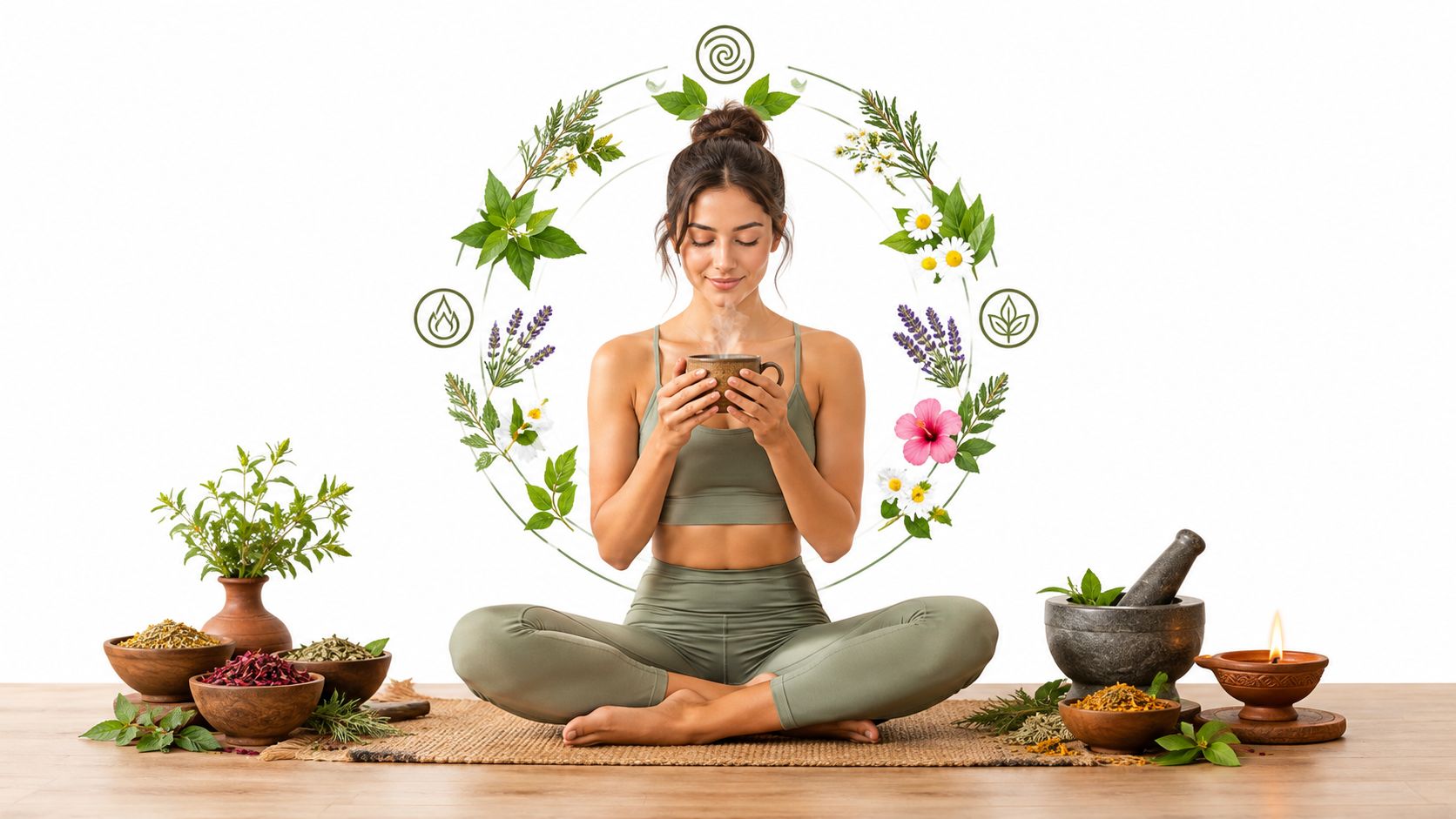
At midnight, a Bengaluru product manager closes her laptop but can't switch off. Her jaw is tight, her stomach feels knotted, and sleep arrives in scattered pieces before the next notification pulls her awake. A student facing examinations, a parent carrying family responsibilities, and a professional dealing with workplace stress may recognise the same pattern, even when their lives look very different.
Conversations about mental health and Ayurveda can become useful, provided they remain practical and responsible. Ayurveda offers ways to think about routine, food, sleep, breath, attention, and emotional balance. It doesn't replace therapy, counselling, or psychiatric care, especially when symptoms are persistent, severe, or unsafe.
India needs both cultural understanding and modern clinical support. The National Mental Health Survey is described in Indian academic literature as finding a substantial burden of mental-health problems, with one summary reporting 10.6% of adults with mental disorders and other literature citing nearly 14% of the population. Indian research also notes a 79.1% treatment gap for depression, meaning many people who need care aren't receiving it. These figures make accessible, culturally familiar support important, but they also make safe integration essential. Indian research on Ayurveda and mental health describes Ayurveda mainly as complementary care, not a replacement for evidence-based treatment.
When Ancient Wisdom Meets Modern Stress
The product manager's first instinct may be to call her experience a time-management problem. Yet long screen hours, deadline-driven work, processed food, irregular sleep, and constant notifications can affect the body and mind together. Ayurveda gives her a language for noticing this pattern before she turns it into self-blame.
Ayurveda is an ancient Indian system of medicine that understands well-being through the relationship between the body, mind, senses, and spirit. In this view, mental well-being isn't only the absence of a diagnosis. It also includes steadiness, clear perception, healthy emotional responses, meaningful connection, and the capacity to recover after difficulty.
That perspective can sit comfortably beside modern psychology. A therapist may help someone identify unhelpful thought patterns, a counsellor may support grief or relationship stress, and a psychiatrist may assess depression, anxiety, bipolar disorder, psychosis, or sleep problems that need medical treatment. Ayurvedic routines can support these forms of care by making rest, nourishment, movement, and self-observation easier to practise.
A useful boundary: Ayurveda can support the conditions in which healing happens. It shouldn't be used to delay an assessment when symptoms are serious.
Public familiarity also matters. A Government of India survey covering July 2022 to June 2023 found Ayurveda was the most preferred AYUSH system for prevention or treatment of ailments, with usage reported at 40.5% in rural India and 45.5% in urban India. Overall AYUSH use reached 46.3% in rural areas and 52.9% in urban areas, while awareness was around 95% in rural areas and 96% in urban areas. Government of India AYUSH survey details help explain why Ayurveda remains part of everyday health conversations.
Someone exploring supplements may also encounter an ashwagandha ginseng combination. Treat that kind of information as a starting point for questions, not a personal prescription. The rest of this guide focuses on what Ayurvedic ideas mean, which habits are reasonable, what research can and can't establish, and when modern mental-health care must take priority.
The Ayurvedic View of Mind and Emotions
Ayurveda uses several concepts to describe inner experience. These concepts can help a person observe patterns, but they should never become rigid labels or substitutes for a clinical assessment.
Manas means the everyday mind that processes thoughts, emotions, memories, and sensory input. You can think of it as the room where impressions arrive and are organised. Atma, often described as the conscious self or observer, represents the steady awareness that notices thoughts without being identical to every thought.

The three gunas, or mental qualities, offer another lens:
- Sattva suggests clarity, steadiness, compassion, and balanced judgement. It resembles clean glass, through which you can see a situation without as much distortion.
- Rajas describes activity, drive, urgency, and restlessness. It is like wind shaking water, making it hard to see what lies beneath.
- Tamas refers to heaviness, withdrawal, dullness, and inertia. It can be compared with mud settling in a pond, making movement and clarity difficult.
These qualities aren't permanent personality types. A person may feel sattvic after a nourishing meal and quiet walk, rajasic during an overloaded workday, and tamasic after exhaustion or prolonged low mood.
Doshas as patterns, not diagnoses
The three doshas, Vata, Pitta, and Kapha, describe functional patterns in the body and mind. Vata patterns may include racing thoughts, fear, uncertainty, and anxiety. Pitta patterns may appear as irritation, impatience, criticism, or anger. Kapha patterns may include heaviness, low motivation, withdrawal, and difficulty beginning tasks.
Ayurvedic practitioners distinguish prakriti, a person's constitutional nature, from vikriti, the current state of imbalance. This distinction matters because a temporary pattern doesn't define who you are. Someone with a naturally energetic temperament may still be exhausted, while a calm person may experience intense anxiety during a demanding period.
The value of this map lies in personalising routine, food, movement, and reflective practices. It can also help a practitioner discuss what kind of therapy or counselling feels manageable. For a broader cultural discussion of hormonal health through Asian traditions, readers may find it useful to compare how different traditions connect physical rhythms with emotional well-being. These frameworks can enrich self-understanding, but a diagnosis still belongs to a qualified mental-health professional.
Core Practices That Support Mental Well-Being
Ayurvedic self-care begins with ordinary actions repeated consistently. The aim isn't to force happiness or eliminate every difficult emotion. It is to reduce avoidable strain on the nervous system and create more stable conditions for resilience, concentration, sleep, and connection.

Food, sleep, and rhythm
Ahara, or food, traditionally favours fresh, warm, nourishing meals that are easy to digest. Regular meal times may suit people whose mood and energy become unsettled when they skip meals. Limiting excessive caffeine, refined sugar, and late-night eating can also reduce stimulation and discomfort, although food should be adapted to health needs, culture, budget, and medical advice.
Nidra, or sleep, deserves equal attention. A gentle wind-down before 10 pm, dimmer lights, and a consistent wake time can signal that the day is ending. Someone working night shifts or caring for a young child may need a flexible version rather than an idealised routine.
Dinacharya, or daily routine, can include tongue scraping, a short period of mindful breathing, and gentle self-massage with sesame or coconut oil before bathing. These rituals may offer sensory grounding and a pause between work and rest. They aren't cures for depression or anxiety, but they can make self-care more tangible.
Herbs and mind-body practices
Ashwagandha is commonly discussed for stress and sleep, Brahmi for focus, and turmeric or jatamansi for mood-related support. The evidence and safety of these products vary, and a qualified Ayurvedic practitioner should assess the person, formulation, dose, existing medicines, and health conditions before prescribing them. Readers comparing products should treat broad lists such as the best herbal supplements for stress as general information, not as a reason to self-medicate.
Yoga asana can reconnect a person with the body, while pranayama may slow an overactive breathing pattern. Nadi shodhana, bhramari, and longer, comfortable exhales are often chosen for settling attention. Meditation and mantra repetition can support reflection, spiritual connection, and compassion, but some people with trauma or severe anxiety may need guidance because quiet attention can initially feel uncomfortable.
Panchakarma is a supervised Ayurvedic therapeutic process intended for deeper imbalance. It shouldn't be treated as a home detox or undertaken during a period of serious psychological distress without coordination between clinicians.
A short demonstration can make breathwork less abstract:
The practical test is simple. Does a practice improve sleep, daily functioning, emotional regulation, or connection without creating new risk? Track those outcomes rather than chasing a promise of cure.
A Simple Dosha-Based Self-Care Plan
This plan is for supportive wellness, not diagnosis or treatment. If racing thoughts, irritability, heaviness, panic, or low mood persist, speak with a psychologist, counsellor, psychiatrist, or qualified Ayurvedic practitioner instead of trying to solve the problem alone.
Start with a brief self-check. A Vata-like pattern may feel scattered, fearful, or mentally fast. A Pitta-like pattern may feel hot, impatient, argumentative, or easily frustrated. A Kapha-like pattern may feel slow, withdrawn, or unable to begin. These descriptions are prompts for observation, not labels of identity.

Morning reset
Wake at a reasonably consistent time. If it suits you, use warm sesame or coconut oil for a gentle abhyanga, scrape the tongue, and take a short walk in daylight. On work-from-home days, walk around the building or terrace before opening the laptop. On travel days, keep only the breathing and daylight components.
Food cues
Choose warm, cooked, gently spiced meals when Vata patterns include worry and irregularity. For Pitta patterns, try cooling, less spicy, non-acidic choices if they suit your digestion. For Kapha patterns, lighter meals with pungent or bitter flavours and more movement may feel supportive. These are broad cues, not restrictions, and people with diabetes, gastrointestinal illness, eating concerns, or other medical needs should follow clinical advice.
Breath and movement
Use nadi shodhana for general stress, sheetali when frustration feels heated, and kapalabhati only when sluggishness is present and the practice is safe for you. Keep sessions brief, stop if you feel dizzy or distressed, and ask a trained teacher about technique. Gentle yoga or walking can be more appropriate than forceful breathing when anxiety is high.
Evening boundary
Set a consistent lights-out window, reduce screens after 9 pm when possible, and leave space for a few lines of gratitude or journaling. A light dinner and a short oil massage may help mark the transition into rest. Weekends shouldn't become a complete reversal of the weekday rhythm, but flexibility matters during family events, festivals, or travel.
Personal rule: Choose the smallest version you can repeat. A short walk and one calm breath cycle are more useful than an elaborate routine abandoned after a difficult day.
What the Evidence Actually Shows
Ayurvedic research is promising in places, but it isn't uniform. Indian studies have examined whole-system care, herbal formulations, shirodhara, nasal and oral delivery routes, yoga-linked practices, sleep outcomes, quality of life, and adverse effects. The studies differ in design, participants, treatment combinations, comparison groups, and follow-up, so their findings shouldn't be merged into one simple claim.
For depression, an Indian randomised clinical study compared selective Ayurvedic therapy with fluoxetine over 42 days and reported significant improvement in both groups. The Ayurvedic group had no unpleasant side effects reported in that study and showed a clinically meaningful antidepressant effect in mild-to-moderate depression, but the short duration and limited population mean it supports monitored adjunctive use rather than replacement of psychiatric assessment. The clinical study comparing Ayurvedic therapy and fluoxetine provides the relevant details.
Another Indian open-label, non-randomised trial followed 52 depression patients for four weeks using Lasunadya Ghrita through oral and nasal routes. HAM-D and SF-36 changes weren't significantly different from a comparator group receiving escitalopram, etizolam, and zolpidem. The study is hypothesis-generating, not definitive proof, because it was short and non-randomised. The Lasunadya Ghrita trial also illustrates why symptom scales and quality-of-life measures matter.
Recent Indian evidence continues to develop. A 2024 whole-system Ayurveda study for major depressive disorder reported better outcomes than escitalopram in its trial setting, while a 2025 randomised trial in generalised anxiety disorder reported comparable anxiety and depression outcomes to escitalopram, with better sleep and fewer adverse events. This review of the emerging Indian evidence also emphasises that the literature remains small.
| Approach | Condition studied | Evidence strength | Key limitation |
|---|---|---|---|
| Whole-system Ayurveda | Major depressive disorder | Early clinical evidence | Limited trials and need for wider replication |
| Selective Ayurvedic therapy with shirodhara | Mild-to-moderate depression | Randomised comparative evidence | Short follow-up and restricted severity range |
| Lasunadya Ghrita through oral and nasal routes | Depression | Non-randomised clinical evidence | Comparator design and short duration |
| Ayurvedic lifestyle, yoga, and breath practices | Stress, anxiety, sleep, and well-being | Supportive, mixed evidence | Different protocols make direct comparison difficult |
For moderate or severe depression, recurrent panic, psychosis, mania, or significant functional decline, psychotherapy and psychiatry must lead care. Ayurveda may contribute to sleep, routine, nourishment, and coping, but evidence doesn't justify presenting it as a stand-alone treatment.
Safety, Myths, and Red Flags to Know
Natural doesn't automatically mean harmless. Ayurvedic products can vary in identity, strength, preparation, and quality. They may interact with antidepressants, antipsychotics, sedatives, sleep medicines, or medicines for other conditions, and extra caution is needed during pregnancy. Reviews also identify limited real-world safety surveillance and limited subgroup information for people already taking psychiatric medication. An India-focused safety review explains why product quality and herb-drug interactions deserve direct discussion.

Three myths to set aside
- Myth, Ayurveda cures severe mental illness: Ayurveda shouldn't be presented as a cure for schizophrenia, bipolar disorder, or severe depression. Delaying psychiatric care can increase risk.
- Myth, herbs are always safe: “Herbal” doesn't remove the possibility of side effects, contamination, incorrect dosing, or interactions.
- Myth, yoga class equals therapy: Yoga can support body awareness, breathing, and routine. It doesn't replace psychotherapy, counselling, crisis care, or medication when those are indicated.
Seek prompt professional help for persistent thoughts of self-harm, hallucinations, severe withdrawal, panic attacks, sudden personality change, or low mood lasting two weeks or more. Contact a local psychiatrist, iCall, the Vandrevala Foundation, or the NIMHANS helpline without delay. If immediate danger is present, stay with the person and use local emergency services.
Integrating Ayurveda with Therapy and Psychiatry
India's policy framework recognises that mental health care can involve more than one tradition. The National Mental Health Policy 2014 identifies Ayurveda and Yoga practitioners as resources for mental-health promotion. The Mental Healthcare Act 2017 includes AYUSH practitioners and facilities within its broader framework of mental-health professionals and establishments. Indian policy analysis discusses this role and records 799,879 registered AYUSH practitioners in 2018.
Policy recognition doesn't mean every practitioner is trained to manage every psychiatric condition. A safe care team might include a qualified Ayurvedic practitioner for traditional lifestyle and treatment guidance, a licensed psychologist or counsellor for therapy, and a psychiatrist when diagnosis, medication, severe symptoms, or risk assessment is involved.
Build communication into the plan
Tell every provider what you're taking and doing. Share the exact product name, ingredient list, dose, timing, manufacturer, and any change in symptoms. Don't stop a prescribed medicine because an Ayurvedic product feels more natural, and don't assume that one clinician will automatically know what another has advised.
Ask practical questions before beginning:
- Training: What recognised qualification and clinical experience do you have with mental-health concerns?
- Coordination: Will you communicate with my psychologist, counsellor, or psychiatrist if needed?
- Safety: Could this herb or procedure interact with my current medicines or health conditions?
- Monitoring: Which outcomes will we track, such as sleep, mood, anxiety, functioning, quality of life, and side effects?
- Escalation: What symptoms mean I should seek psychiatric or emergency care?
- Consent: What are the expected benefits, limitations, risks, and alternatives?
Workplace stress deserves the same seriousness as any other health concern. A review of Indian workplace research reported that, among 1,764 urban white-collar employees, 29% had moderate-to-severe signs of depression, 55% had moderate-to-severe signs of anxiety, and 78% had moderate-to-high stress. The workplace mental-health review also describes burnout, anxiety, and adverse symptoms in another Indian workplace study.
Access can begin remotely. Tele-counselling and Tele-MANAS at 14416 may help someone take an early step, while a local psychiatrist or psychologist can provide more detailed assessment when required.
Supportive Takeaways for a Calmer Mind
Mental health is multidimensional. Sleep, digestion, work demands, relationships, trauma, social connection, physical health, beliefs, and purpose can all shape how a person feels and functions. Ayurveda contributes a culturally familiar vocabulary for routine, attention, nourishment, and balance, while therapy and counselling help people work through thoughts, emotions, relationships, and painful experiences.
The safest position is neither uncritical rejection nor exaggerated faith. Ayurveda may support stress management, sleep, resilience, compassion, and daily well-being. For significant anxiety or depression, it should sit alongside appropriate psychological or psychiatric care. Severe symptoms, safety concerns, hallucinations, mania, or major changes in functioning require prompt clinical attention.
Try a modest routine this week:
- Keep one calming dinacharya habit, such as a quiet morning walk.
- Practise a gentle breath exercise that feels comfortable.
- Set one evening boundary around screens or work messages.
- Have one honest conversation with a trusted professional or supportive person.
Assessments and screening tools can offer useful information, but they're informational, not diagnostic. Let your experience guide the next conversation rather than turning a score or dosha description into a final judgement about yourself.
Balance rarely arrives as a quick fix. It develops through compassion, appropriate support, and small choices repeated through changing seasons of life. Seek help early when warning signs appear, and allow both traditional wisdom and modern mental-health science to serve the person in front of you.
If you're looking for therapy, counselling, or a clearer understanding of anxiety, depression, burnout, or resilience, DeTalks helps you explore qualified mental-health professionals and confidential psychological assessments across India. Visit DeTalks to find support that respects your goals, your context, and the pace at which you're ready to begin.