Tag: building trust

  • A Guide on How to Build Trust in Relationships

    A Guide on How to Build Trust in Relationships

    Building and nurturing trust is a gentle process, forged in the small, consistent moments of daily life. It grows from a foundation of honesty, dependability, and emotional safety, creating a space where we feel truly seen and heard. This is a journey that asks for patience and a real commitment to being there for one another.

    Why Trust Is the Foundation of Every Strong Relationship

    A young couple in soft light, holding arms and gazing intently at each other.

    At its heart, trust is the quiet confidence that lets us be vulnerable without fearing judgment or hurt. It is the emotional glue holding our connections together, whether with a partner, a friend, or a family member.

    When you have trust, you create psychological safety. It’s a space where you can be your authentic self, share your fears, and work through disagreements without the relationship feeling at risk.

    This sense of security is essential for our well-being. It helps us build resilience against life's challenges, like personal anxiety or workplace stress. Knowing you have a reliable support system acts as a powerful buffer against loneliness and even feelings of depression.

    The Core Components of Trust at a Glance

    Pillar of Trust What It Means in Practice
    Honesty Being truthful, even when it's difficult. It's about transparency and not withholding information.
    Reliability Doing what you say you will do. Your actions consistently match your words, showing you're dependable.
    Vulnerability Sharing your true self—fears and insecurities included. It’s about letting someone in and seeing them do the same.
    Emotional Safety Creating a space where someone feels safe to express emotions without fear of dismissal or judgment.
    Non-Judgment Accepting people for who they are, flaws included. It means listening without jumping to conclusions.

    Each of these pillars works together to create a strong bond. Emotional safety feels possible because of honesty, and reliability makes vulnerability feel safe.

    The Cultural Fabric of Trust

    In community-focused cultures like India, strong interpersonal bonds are woven into the fabric of society. Relationships are often seen as a collective effort, built on mutual respect and shared history.

    In fact, a 2023 report revealed that 62% of Indians place their deepest trust in family and close circles, compared to 30% who trust institutions. This highlights how our immediate environment shapes our expectations. You can explore these cultural dynamics in this comprehensive study on social trust in India.

    While culture plays a role, the core principles of trust are universal. Consistency, honesty, and empathy are recognised as hallmarks of a trustworthy person anywhere in the world.

    Trust and Its Impact on Mental Health

    The link between trust and our mental health is incredibly strong. A lack of trust can create a draining cycle of anxiety and hyper-vigilance. Constantly questioning someone's motives or bracing for disappointment is emotionally exhausting and can lead to chronic stress or burnout.

    A stable emotional foundation is key for our well-being. Simple practices that help to reduce cortisol levels naturally can make a difference. When we feel calmer, we're better equipped for the patient, compassionate work that building trusting connections requires.

    A Quick Note From Our Team: This guide offers informational support for building healthier relationships. These assessments are not diagnostic tools. If you're facing challenges, seeking professional therapy or counselling is a compassionate step toward well-being.

    The Art of Honest and Open Communication

    Two Asian women, one young and one older, in deep conversation at a table.

    The work of building trust begins with communication. It’s not just about talking; it’s about creating a space where both people feel safe enough to be honest. This is the bedrock of a resilient and happy connection.

    Genuine, open dialogue is about listening as much as it is about speaking. It means truly hearing what someone is trying to say, both with their words and the emotions behind them.

    This skill is essential for navigating everything from daily irritations to major life decisions, like managing workplace stress or family expectations. Getting this right can dramatically improve your well-being and ease the anxiety that often comes with strained relationships.

    Moving Beyond Surface-Level Conversations

    To build genuine trust, we must listen with our full attention. This is often called active listening, and it’s a game-changer. It means you’re not just waiting for your turn to speak; you are fully present and focused on understanding.

    Imagine your partner comes home and says, "Work was so stressful today." A surface-level reply might be, "It'll be better tomorrow."

    An active listener goes deeper: "That sounds tough. What happened that made it so stressful?" This simple shift shows you care about their experience, which is a powerful way to build emotional safety and happiness in your bond.

    The Power of 'I' Statements

    One of the most practical tools for better communication is the "I" statement. This technique helps you express your feelings without making the other person feel defensive.

    Let’s take a common scenario in many Indian families where a young adult feels pressured about their career.

    • A "You" Statement (Blaming): "You never listen to what I want." This can immediately put the other person on the defensive.
    • An "I" Statement (Expressive): "I feel anxious when we talk about my career because I need to feel my choices are respected." This frames the concern around personal feelings.

    This approach transforms a potential conflict into a conversation. It opens the door for understanding and collaboration, which are essential for building trust.

    "When we communicate from a place of honesty and vulnerability, we invite others to meet us there. This is how true connection is formed, one conversation at a time."

    Cultivating Empathy in Your Dialogue

    At the heart of great communication is empathy—the ability to understand and share someone else's feelings. It helps you see a situation from their point of view, even if you don’t agree.

    To truly master honest communication, it helps to deepen your understanding of empathy. When someone feels genuinely understood, they feel safe, and safety is the soil in which trust and compassion grow.

    Here are a few ways to practice empathy in daily conversations:

    • Reflect Feelings: Try saying, "It sounds like you felt really disappointed by that," to show you're hearing the emotion.
    • Ask Open-Ended Questions: Instead of "yes" or "no" questions, ask, "How did that make you feel?"
    • Listen to Understand: For a few moments, set aside your own opinions. Make your only goal to understand their world.

    These practices are crucial steps in learning how to build lasting trust. Consistently showing up with empathy creates a powerful pattern of mutual respect, which is a foundation of therapy and professional counselling.

    Consistent Actions: The Real Currency of Trust

    Open communication is where trust starts, but consistent action is what truly builds it. Words are promises, but actions are proof. Reliability and dependability form a silent language of trust that often speaks louder than anything we can say.

    Think of trust as a savings account. Every time you follow through on a promise, you make a deposit. Showing up when you said you would or just being there on a rough day are all deposits that build a powerful sense of security and well-being.

    Why Predictability Feels So Good

    We are all wired to seek safety and predictability. When someone’s actions consistently line up with their words, it calms the part of our brain that worries about uncertainty. This creates a safe space in a relationship.

    This is especially true when navigating challenges like anxiety or intense workplace stress. Knowing you have a partner or friend who will reliably show up for you acts as a powerful buffer. It's unspoken reassurance that helps build personal resilience.

    It's the Small Promises That Count the Most

    Lasting reliability is forged in the hundreds of small commitments we make every day, not just grand gestures.

    What does this look like in the real world?

    • Following through: If you tell a friend you'll call them back after a meeting, doing it sends a clear message: your word is good.
    • Being punctual: Consistently showing up on time tells someone you respect their time and energy. It's a non-verbal way of saying, "You matter."
    • Remembering the little things: Asking about a small detail from a past conversation shows you were genuinely listening and that you care.

    These small actions add up, weaving a strong fabric of dependability. Every fulfilled promise reinforces the message: "You can count on me." This is the practical, day-to-day work of learning how to build trust in relationships.

    How You Show Up in Tough Times Says Everything

    Reliability is truly tested when someone is vulnerable or going through a hard time. Showing up when it’s inconvenient or difficult is what cements trust.

    For example, if a friend is experiencing depression, saying "I'm here for you" is a start. But consistently checking in, dropping off a meal, or just sitting with them in silence makes that support real. These actions create profound emotional safety.

    Your actions become the story people tell themselves about who you are. When that story is one of consistency, reliability, and unwavering support, trust becomes the natural outcome.

    This kind of dependable support is also a cornerstone of good counselling and therapy. A therapist’s consistent presence creates the safe space a person needs to heal and grow with compassion.

    In the end, building trust through your actions isn't about being perfect. It’s about being consistent and showing through your daily choices that you are a safe person in someone's life.

    Navigating Betrayal and Rebuilding a Path Forward

    When trust is broken, it can feel like the ground has been pulled out from under you. The aftermath often brings hurt, anger, and confusion. It's one of the toughest challenges a relationship can face.

    Moving forward isn't easy, but it is possible. It requires significant emotional work from both people to face the pain, take responsibility, and patiently build a new foundation. This journey is often filled with stress and anxiety, but it's the only way through.

    The First Step: Genuine Accountability and Remorse

    If you are the one who broke the trust, rebuilding starts with owning it completely. This isn't the time for excuses or downplaying the hurt you’ve caused.

    A quick "I'm sorry" is often not enough. True remorse means listening to the pain you’ve inflicted and validating the other person's feelings. Resisting the urge to be defensive is crucial for creating an opening for healing.

    For the Person Who Was Hurt: Processing and Setting Boundaries

    If you’ve been betrayed, your first priority is your own well-being. Give yourself permission to feel everything—the anger, sadness, and confusion are all valid. Suppressing these feelings can prolong the pain and may lead to lasting anxiety.

    Healing is not a straight line; expect good days and tough ones. Boundaries become your lifeline, creating the safe space you need to heal. This might mean asking for time alone or clearly stating what you need to see before you can consider rebuilding.

    Rebuilding trust isn't about forgetting what happened. It's about consciously creating a future where both people feel respected, secure, and emotionally safe again. That takes patience, empathy, and a shared commitment.

    A Roadmap for Rebuilding

    Once accountability has been taken and emotions are on the table, the slow work of rebuilding can begin. This is about consistent, transparent actions over a long period.

    Here are a few practical actions to help pave the way:

    • Offer Total Transparency: This could mean sharing information openly for a while to prove there are no more secrets.
    • Get Professional Support: Professional counselling or therapy offers a safe, structured space to communicate and process what happened.
    • Be Patient with the Process: Healing takes time. Trust has to be re-earned, one day at a time, and the person who was hurt cannot be rushed.

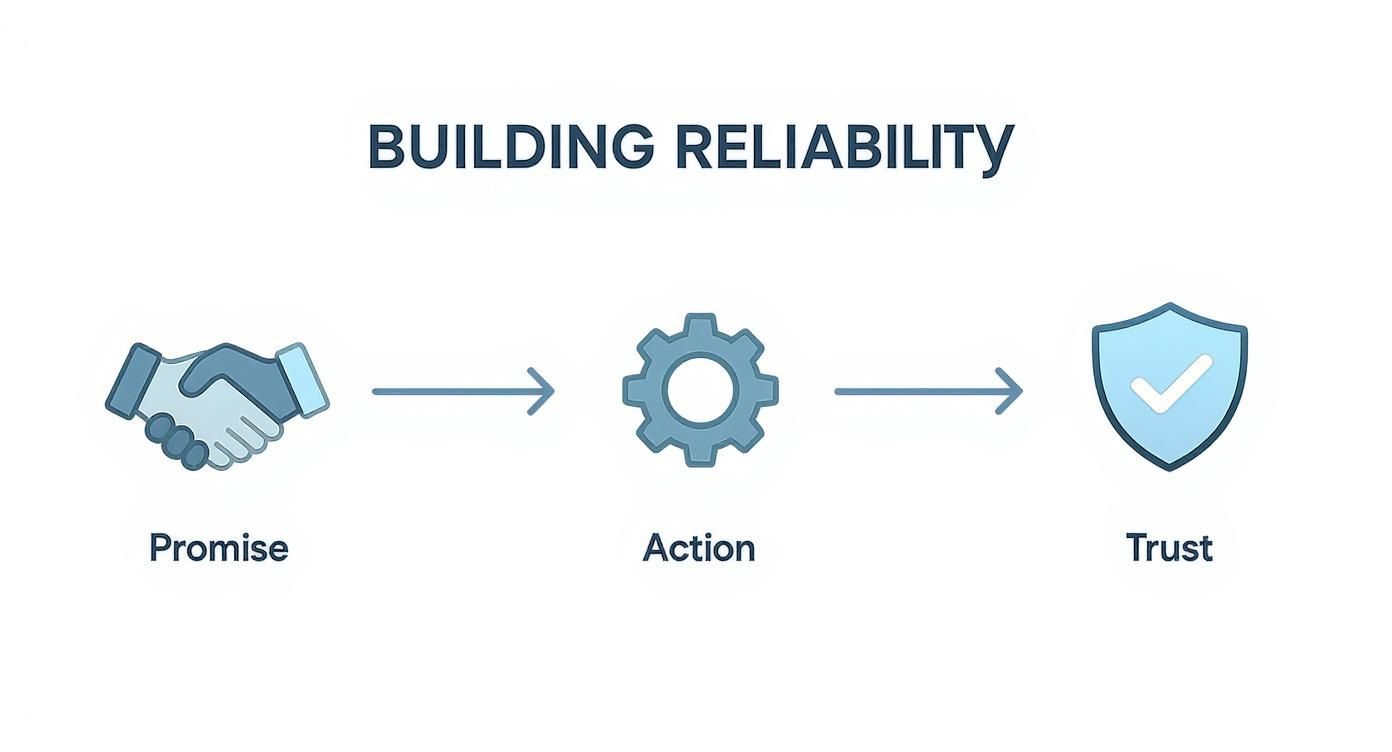
    The core of this process is re-establishing reliability.

    Diagram illustrating how reliability is built through promise, action, and resulting in trust.

    As the diagram shows, trust is the result of a promise being kept. It's about your actions consistently matching your words.

    The Role of Professional Guidance

    Feeling isolated after a betrayal is common and can trigger feelings of depression and severe anxiety. Reaching out for professional help is a sign of strength. A therapist can provide tools to manage difficult emotions and facilitate conversations.

    Many relationship challenges in India stem from unresolved distrust. The supportive takeaway is that many couples are able to rebuild that trust through structured counselling and patient work. You can explore the dynamics of interpersonal trust in this detailed research on social connections.

    Ultimately, rebuilding is a choice. It requires a profound commitment from both people to cultivate resilience, show compassion, and work towards a healthier, more honest connection.

    Building Trust in a Modern Digital World

    Our relationships today exist in both the real and digital worlds. This adds a new layer of complexity to building trust, as so much of our connection happens through screens.

    Learning how to build trust in a relationship now means handling texts and social media with the same care you’d use face-to-face. The core principles of honesty and reliability haven't changed, but how we practice them has.

    Navigating Digital Etiquette and Transparency

    Online, misunderstandings can happen quickly. A text left on ‘read’ can easily be misinterpreted, sparking unnecessary anxiety.

    The solution is to be clear and upfront. Being open about your digital habits can prevent potential stress. Something as simple as, "Hey, I'm not great at texting during work, but I always catch up in the evenings," can set a reliable expectation and build trust.

    This proactive communication is vital for everyone's well-being. It replaces ambiguity with predictable patterns, which is especially helpful when dealing with workplace stress from remote work.

    The Importance of Respecting Digital Boundaries

    We all understand physical boundaries, but digital ones are just as important for our well-being. It’s about respecting someone's online privacy and thinking twice before sharing or posting something involving them.

    Here are a few ways to show respect and build trust online:

    • Ask Before You Post: Always check if it’s okay before sharing photos or personal details about someone else.
    • Honour Their Online Space: Avoid digging through someone's old posts or questioning their past online life. Trust focuses on the present.
    • Be a Secure Digital Confidante: If someone trusts you with personal information in a private message, treat it with respect.

    Trust in the digital space isn't just about what you say; it's about respecting the unspoken rules of digital privacy and consent. Your actions online create a story of your reliability and respect for others.

    Using Technology to Strengthen Bonds

    While technology can sometimes create distance, it can also be a fantastic tool for connection and building resilience. Technology allows us to be there for each other in ways that weren't possible before.

    A quick video message on a tough day or a shared playlist can be a small but powerful deposit into your relationship's trust bank. These digital gestures show you care and can help combat feelings of loneliness that can contribute to depression.

    Research from the Indian Council of Social Science Research (ICSSR) highlights this shift, showing an 18% decline in trust among neighbours in big cities as digital connections change community ties. But we are also finding new ways to prove reliability online. You can find more insights on how community relationships strengthen public trust on independentsector.org.

    Building trust in our connected world is about mixing timeless principles with modern awareness. If you're finding this balance challenging, professional therapy or counselling can offer guidance for building healthier communication habits.

    Your Questions About Building Trust, Answered

    When you're trying to build or repair trust, it's natural to have questions. We've gathered some common questions and answered them with a practical, supportive perspective.

    How Long Does It Realistically Take to Build Trust?

    There is no set timeline for building trust. It's a living thing that grows over time, nurtured by consistent, reliable actions. Think of it less like a race and more like tending a garden.

    In a new relationship, you might feel a solid foundation after a few months of dependable interactions. If you're rebuilding trust after it's been broken, it often takes a year or more of patient, dedicated effort to restore a true sense of safety. The key is to focus on "how well?" rather than "how long?".

    Can Trust Be Fully Rebuilt After a Major Betrayal?

    Yes, it is possible, but it is one of the hardest things two people can do. Rebuilding requires an incredible commitment from both sides.

    The person who broke the trust must show genuine remorse and offer complete transparency. The person who was hurt has to find a willingness to eventually open up to the possibility of forgiveness. This journey often benefits from professional support, like counselling or therapy, which provides a safe space for difficult conversations.

    True healing doesn’t erase the past, but it can integrate the experience into a new story of resilience and renewed connection. The goal is not to go back to how things were, but to build something stronger and more honest.

    What If I Struggle with Trust Due to Past Experiences?

    This is a completely valid and understandable feeling. If you've been hurt in the past, your brain’s natural defense mechanism tries to protect you. This can show up as persistent anxiety or a reluctance to be vulnerable.

    Working through this is a journey of self-compassion. Therapy offers a non-judgmental space to explore the roots of trust issues and develop healthier coping strategies. Putting your own well-being first is a courageous step.

    How Do I Trust Myself Again After Making a Mistake?

    Losing faith in your own judgment after hurting someone can be painful. Rebuilding that self-trust starts with self-forgiveness. This means accepting what you did without letting it define who you are.

    Start by taking accountability. Then, begin making small, manageable promises to yourself and keeping them. Each time you follow through, you are proving to yourself that you are reliable, which can be a supportive step in managing feelings of depression or low self-esteem.


    At DeTalks, we know that building trust—with others and yourself—is a deeply personal journey. If you're grappling with relationship challenges, anxiety, or the aftershocks of broken trust, our platform connects you with compassionate, qualified therapists who can guide you. Explore our directory of professionals and take the first step towards healing and building the stronger, more meaningful connections you deserve.

  • Overcome insecurity in relationship: Build Confidence and Trust

    Overcome insecurity in relationship: Build Confidence and Trust

    Feeling a pang of insecurity in your relationship is a common human experience, not a personal flaw. It’s that nagging worry or anxiety about your partnership, a knot in your stomach that whispers fears of rejection or abandonment. This feeling isn’t a sign of weakness; think of it as a signal from your heart, telling you something needs attention.

    What Does it Mean to Feel Insecure in a Relationship?

    A hand gently waters a wilting potted plant on a sunlit windowsill.

    Imagine your relationship is like a plant. For it to thrive, it needs the right environment—sunlight of trust, water of reassurance, and the solid ground of a stable emotional foundation. When these elements are missing, the plant naturally shows signs of stress, and your sense of security in a relationship works in much the same way.

    This feeling of insecurity in a relationship is more than simple jealousy or mistrust. It’s a complex mix of emotions that can stem from past experiences, current life pressures, or deep-seated anxieties about the future.

    You're Not Alone—This is a Common Feeling

    First things first: it’s completely normal to feel this way. Especially in a place like India, where family and societal expectations add another layer of pressure, navigating relationships can feel challenging. You are not the only one wrestling with these feelings of unease.

    This feeling is simply a message. Just as physical pain warns you of an injury, emotional insecurity points to a need for better communication, deeper understanding, or personal healing. Acknowledging it without judgment is the first step toward building a stronger, more connected partnership.

    This guide is here to help you unpack those feelings in a supportive way. We’ll explore common causes and signs, and share practical steps to nurture your emotional well-being. Remember, this journey is about making progress, not achieving an impossible standard of perfection.

    “Insecurity is a natural response to perceived threats to our connection with a loved one. Viewing it as a cue for introspection, rather than a character flaw, opens the door to growth, compassion, and a more secure bond.”

    How It Affects Your Well-being

    When insecurity lingers, it can start to wear you down. It can feed a constant cycle of anxiety, create distance between you and your partner, and sometimes spiral into feelings of depression. The endless worry is draining and can spill over into other parts of your life, increasing workplace stress.

    But there is a positive side. Confronting these feelings can spark incredible personal growth and build resilience. As you learn to navigate your insecurity, you develop powerful self-awareness and sharpen your communication skills. The goal isn’t to erase insecurity forever, but to learn how to manage it with kindness, which can lead to greater happiness and a stronger relationship.

    Understanding the Roots of Relationship Insecurity

    Hands cradle a young plant, old photo, boy figurine, and phone in soil, symbolizing roots and growth.

    That nagging feeling of insecurity rarely appears out of nowhere. It often grows from seeds planted long ago or is nurtured by the pressures of our daily lives. Getting to the root of these feelings is a huge step toward healing and building stronger relationships.

    Think of your emotional reactions like a familiar path in a forest. The more a path is used—whether carved by childhood experiences or past heartbreaks—the easier it is to slip back onto it. Understanding where these paths came from helps you consciously choose a new direction with more self-compassion.

    Generally, the causes of insecurity in a relationship fall into two main areas: the internal patterns we carry within us, and the external pressures from the world around us.

    Internal Patterns: The Stories We Tell Ourselves

    Our inner world is a rich tapestry of memories, beliefs, and learned behaviours that shape how we experience love. These internal patterns are often the main source of the anxiety and doubt we feel in our partnerships.

    A major influence is our early attachment style, the blueprint for relationships we formed as children. If our caregivers were consistently loving, we likely developed a secure attachment, making it easier to trust. But if that care was unpredictable, we might have an anxious attachment style, which can trigger a deep fear of abandonment in adult relationships.

    Low self-worth is another powerful internal driver. If you don’t feel worthy of love and respect, it's incredibly difficult to believe someone else when they offer it to you. That inner critic can twist a simple misunderstanding into "proof" that you’re not good enough, trapping you in a painful cycle of doubt.

    Remember, these patterns are not your fault. They are learned responses that developed to protect you. Acknowledging them with kindness is the first step toward rewriting your story and building emotional resilience.

    Past betrayals can also leave deep, lasting scars. If a previous partner was unfaithful, it can feel almost impossible to trust again, even with a dependable new partner. Your mind is trying to shield you from getting hurt again, but this constant watchfulness can create unnecessary stress.

    External Pressures: The Weight of the World

    Our relationships don’t exist in a bubble; they are constantly influenced by society, finances, and cultural norms. These external forces can easily fuel the fire of insecurity.

    In India, for example, relationship dynamics are often deeply connected to economic and social pressures. A study found that 41% of Indian adults report feeling insecure in their romantic relationships sometimes. For 55% of those, economic uncertainty was a major factor. You can read the full research about these connection challenges to see how intertwined these issues are.

    This data shows how easily outside stressors can create an environment where insecurity can flourish.

    • Financial Uncertainty: Worrying about your job or income creates immense workplace stress that spills into your personal life. This instability can erode your confidence and make you feel more dependent on your relationship for safety, which is a recipe for anxiety.
    • Social and Family Expectations: In many Indian families, there are powerful expectations around marriage, career, and lifestyle. The pressure to live up to these ideals can leave you and your partner questioning if you’re "good enough," fuelling feelings of inadequacy and even depression.
    • The Social Media Effect: It’s hard to feel good about your relationship when you’re constantly seeing curated, "perfect" versions of others' lives. This comparison culture creates unrealistic benchmarks that can make you doubt your own partnership.

    Understanding both the internal and external roots of your insecurity in a relationship is empowering. It helps you see how outside forces might be affecting your feelings. With that clarity, you can nurture your well-being and find the right support, whether through self-reflection, honest conversations, or professional counselling.

    Spotting the Signs of Insecurity in Your Relationship

    It’s one thing to know what relationship insecurity is, but another to see how it plays out in your life. Think of these signs not as personal flaws, but as signals your mind is sending for your attention. If you can look at these patterns with curiosity instead of judgment, you’re already on the path to feeling more secure.

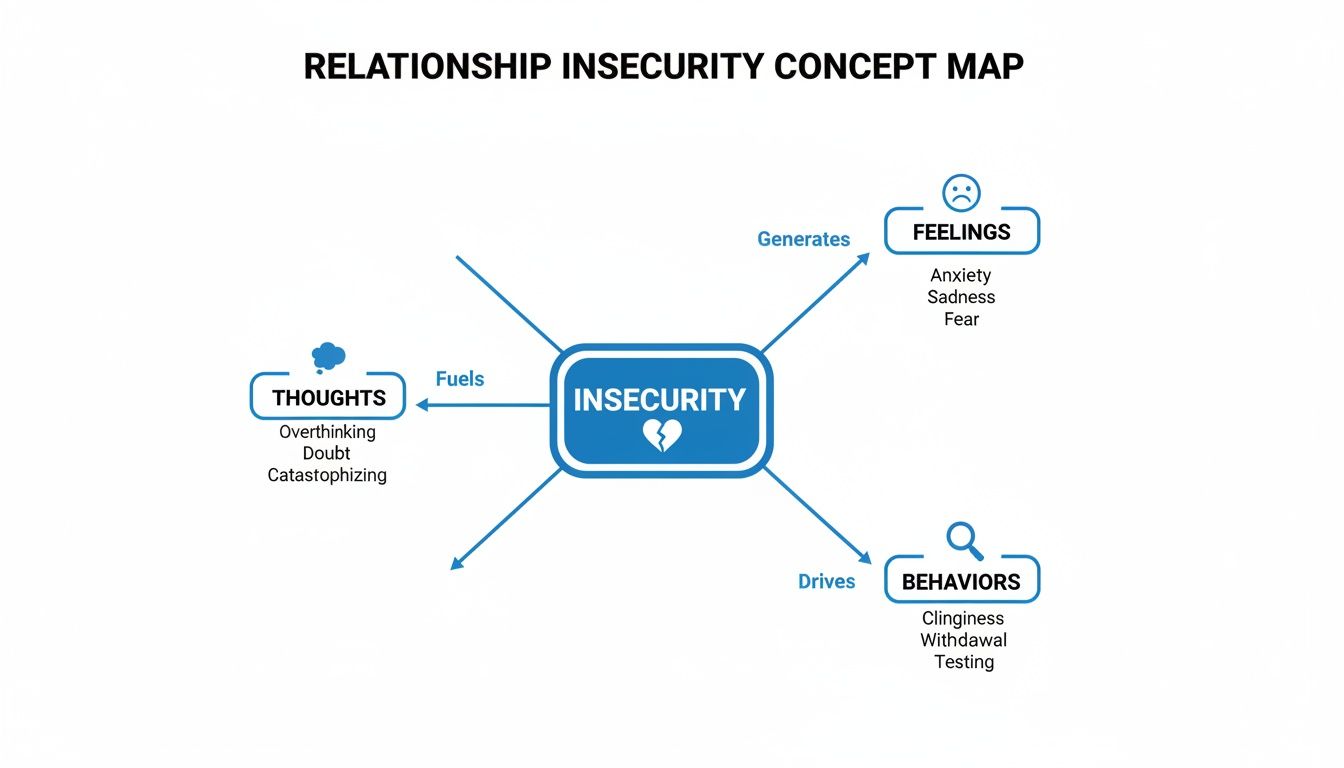
    Insecurity often shows up in two ways: through your actions (behaviours) and your feelings (emotional triggers). The feelings frequently drive the actions. Learning to spot both can help you untangle the knot of anxiety and confusion.

    Behavioural Clues You Might Notice

    These are the outward actions that often point to a shaky feeling inside. You might see yourself or your partner doing things to gain control or seek constant validation. These actions are often just an attempt to quiet the anxious voice in your head, even if they end up making things worse.

    For example, do you find yourself needing a lot of reassurance, like repeatedly asking, "Do you still love me?" Other common habits include checking your partner’s phone, monitoring their social media, or relying on them for all your emotional needs.

    Try to see these behaviours as a cry for connection, not an accusation. Shifting your perspective this way can change everything. It moves the conversation from blame to understanding and opens up a space where you can both heal and grow together.

    Another classic pattern is starting arguments just to test your partner's commitment. It’s a subconscious way of checking if they’ll stick around when things get tough. While it might feel like a way to get the security you crave, it often just pushes your partner away, creating a self-fulfilling prophecy.

    The Emotional Triggers Beneath the Surface

    Underneath these actions are powerful emotions that can feel overwhelming and seem to appear out of nowhere. Getting good at naming these emotions is a game-changer for managing how you react.

    A constant, nagging anxiety about the future of the relationship is a major sign. You might be stuck in a loop, worrying your partner will leave, even with no real reason to think so. This often goes hand-in-hand with intense jealousy over small things.

    Living in this state of high alert is draining and can lead to burnout or contribute to feelings of depression. It’s important to remember that these feelings are real and valid, even if they aren't an accurate reflection of your relationship. They are often just echoes from your past that haven't fully healed yet.

    To help you connect the dots, we’ve created a table with some common signs. Please remember, this is an informational guide to help you reflect, not a diagnostic tool.

    Recognising Signs of Relationship Insecurity

    Category Common Manifestations Example in Daily Life
    Thoughts Assuming the worst about your partner's intentions or feelings. "They haven't replied to my message in an hour; they must be angry with me or losing interest."
    Feelings Pervasive jealousy, anxiety, or a deep-seated fear of being abandoned. Feeling a surge of panic when your partner mentions spending time with friends without you.
    Behaviours Seeking constant reassurance or checking up on your partner. Repeatedly asking your partner, "Are we okay?" after a minor disagreement.

    Seeing these signs in yourself is an act of self-care. It provides the clarity you need to address the real issues, build your inner resilience, and find the right support, whether through personal strategies or professional counselling.

    Actionable Steps for Building a Secure Connection

    A young Asian couple sits on a couch, talking intensely. The woman holds a checklist notebook.

    Understanding where your insecurity comes from is the first big step. Now comes the empowering part: turning that understanding into positive action. Let's walk through some practical ways to build a stronger, more secure bond—with your partner and with yourself.

    Think of these strategies not as quick fixes, but as small, consistent habits that build emotional resilience over time. By learning to calm your mind, question your fears, and talk openly, you can lay the groundwork for a much healthier relationship.

    Practise Self-Soothing Techniques

    When a wave of anxiety or panic hits, your first job is to calm your nervous system. Self-soothing techniques are simple, mindful actions you can do anywhere to bring yourself back to the present moment and reduce the intensity of overwhelming feelings.

    Consider them a kind of emotional first aid. For instance, the 5-4-3-2-1 grounding exercise is incredibly powerful. Just pause and quietly name:

    • 5 things you can see
    • 4 things you can touch
    • 3 things you can hear
    • 2 things you can smell
    • 1 thing you can taste

    This simple act pulls your focus away from racing thoughts and grounds you in your physical surroundings.

    Another fantastic tool is deep belly breathing.

    • Place one hand on your chest and the other on your stomach.
    • Breathe in slowly through your nose for a count of four, feeling your belly expand.
    • Hold for a moment.
    • Then, breathe out slowly through your mouth for a count of six.
    • Continue this for a few minutes until you feel a sense of calm.

    This type of breathing directly counteracts the fight-or-flight response that fuels insecurity in a relationship, sending a signal to your brain that you're safe.

    Challenge and Reframe Negative Thoughts

    Insecure feelings are often powered by what experts call Automatic Negative Thoughts (ANTs). These are the critical voices that pop into our heads, often without us realizing it. The key is to stop accepting them as fact and start questioning them, a practice known as cognitive reframing.

    First, just notice when these thoughts show up. The next time your mind jumps to, "They're definitely going to leave me," pause. Ask yourself: "Is that thought 100% true? What evidence do I have for it? What evidence do I have against it?"

    “Our thoughts are not facts. By learning to observe them with curiosity instead of judgment, we can separate our true selves from the stories of fear our minds create, paving the way for greater peace and happiness.”

    Then, look for a more balanced, kinder perspective. Instead of, "They haven't texted back; they must be mad," you could reframe it as, "They might just be busy at work. Their response time doesn't define how they feel about me." This small mental shift can stop a minor worry from spiraling into major workplace stress or a relationship conflict.

    Use Clear Communication Scripts

    Voicing your fears and needs without sounding accusatory is a cornerstone of trust. When you're feeling insecure, it's easy for "I'm worried" to come out as "You always…," which puts your partner on the defensive. Using simple communication scripts can help you express yourself constructively.

    The key is to use "I feel" statements, which center the conversation on your emotions. For example, instead of saying, "You never listen to me," try this: "I feel unheard when we discuss important topics, and it makes me feel anxious about our connection."

    Here are a few scripts you can adapt:

    • To express a need: "I feel a little disconnected lately. Would you be open to spending some quality time together this weekend?"
    • To share an insecurity: "I've been feeling some anxiety about [specific issue]. Could you share your perspective? It would help me feel more secure."
    • To set a boundary: "I feel overwhelmed when we argue via text. Can we agree to discuss sensitive topics in person?"

    To truly build a secure connection, it's helpful to explore strategies for navigating communication breakdown in relationships. When you can state your needs kindly and clearly, you're not attacking your partner; you're inviting them to be part of the solution.

    Build Your Self-Esteem Outside the Relationship

    A solid sense of self is the ultimate antidote to relationship insecurity. When your self-worth isn’t completely tied to your partner's approval, you bring a calmer, more resilient energy to your partnership.

    Make it a priority to invest in activities and people that make you feel capable and valued on your own. This could mean reconnecting with friends, dusting off a hobby, or chasing a personal goal. Every small accomplishment builds your confidence from the inside out.

    Cultivating a life that feels full and meaningful on your own terms is vital for your overall well-being. It ensures you're in the relationship because you want to be, not because you need your partner to feel whole. This independence helps create space for a more authentic and secure love to grow.

    When to Consider Professional Support

    While working on yourself is powerful, sometimes the weight of insecurity is too heavy to lift alone. Reaching out for professional support isn’t a sign of failure. It is a courageous step toward healing and an investment in your long-term happiness and well-being.

    The thought of seeking help can feel intimidating. However, certain signs suggest it might be the most compassionate choice for yourself and your relationship. If you notice insecurity is fuelling constant arguments, or if you feel like you're always walking on eggshells, it may be time. These patterns can create a draining cycle of stress that is tough to break without an outside perspective.

    Recognising It Is Time to Reach Out

    A clear signal is when the insecurity in a relationship starts affecting your daily life. Perhaps you can’t concentrate at work because you’re consumed by worry, or you've started withdrawing from friends. If you're noticing ongoing symptoms of anxiety or depression, that is a definite sign that professional support could be beneficial.

    Another indicator is when insecurity feels tangled with older issues, like past trauma or a lifelong struggle with low self-esteem. A good therapist can help you gently unpack those experiences in a way self-help guides cannot. They provide the specific tools and support needed to heal from the root, helping you build genuine, lasting resilience.

    “Therapy is not about being ‘fixed.’ It's about being seen, heard, and guided as you discover the strength you already possess. It’s a proactive choice for a healthier, more authentic life.”

    Individual Therapy vs Couples Counselling

    Knowing your options can make the process feel more manageable. Both individual therapy and couples counselling have unique strengths, and the best fit depends on your needs.

    • Individual Therapy: This is your dedicated space to explore the internal roots of your insecurity, whether that means building self-esteem, healing from the past, or managing anxiety and workplace stress.
    • Couples Counselling: This brings you and your partner together to work on communication and rebuild trust. It’s a collaborative setting where you can both learn to handle disagreements better and understand each other’s emotional worlds.

    Often, a combination of both can be a powerful approach. You might work on personal triggers in individual therapy while attending counselling with your partner to strengthen the relationship itself. Please remember that this guide is informational, not diagnostic—a professional can help you find the best path forward.

    Seeking support is an act of profound strength. Platforms like DeTalks are a great starting point for exploring qualified therapists and finding someone who feels like the right fit for your journey.

    A Final Word on Your Journey Forward

    An open notebook with handwritten text and a cup of tea on a wooden table with sunlight.

    Tackling insecurity in a relationship isn’t about finding a quick fix; it's a personal journey of growth. The path forward is about progress, not perfection. The most important thing you can bring along is compassion for yourself.

    Simply understanding where these feelings come from is a huge first step. From there, it’s a process of patiently unlearning old habits and practising healthier ways of connecting. It's the small, consistent efforts that build lasting security.

    Gentle Reminders for the Road Ahead

    Every step you take, no matter how small, builds your emotional resilience and contributes to your overall well-being. Keep these supportive takeaways in mind as you move forward.

    • Your Feelings Are Messengers, Not Monsters: When insecurity pops up, try to meet it with curiosity, not criticism. See it as a signal pointing to a need that isn't being met or an old wound that needs your attention.
    • Self-Compassion Is Key: You will have good days and tough days. On the hard ones, treat yourself with the same kindness you’d offer a close friend who was struggling.
    • Small Steps Lead to Big Changes: Don't try to change everything at once. Focus on one small thing, like using a breathing exercise when you feel anxious. These little wins add up over time.

    Ultimately, building security in your relationship starts with building a stronger, more trusting relationship with yourself. When you know your own worth, you bring a calmer, more confident, and compassionate energy to your partnership.

    Reaching Out Is a Sign of Strength

    If this journey feels overwhelming, please remember that asking for help is an act of courage. Professional therapy or counselling offers a safe, non-judgmental space to explore these feelings, especially if they’re linked to issues like depression or workplace stress.

    You have it in you to create a more secure and loving connection. By understanding your emotions, being kind to yourself, and reaching out when needed, you are taking charge of your own happiness and emotional freedom.

    Frequently Asked Questions

    It's completely normal to have questions when you're working through feelings of insecurity in your relationship. Let's tackle some of the most common ones that come up on the path to building a more trusting and connected partnership.

    Can Relationship Insecurity Ever Be Cured?

    It’s more helpful to think of managing relationship insecurity rather than "curing" it, as everyone feels uncertain now and then. The real goal is to develop emotional resilience and coping skills so these feelings don't dictate your actions or harm your well-being.

    With self-awareness, open communication, and sometimes professional guidance, you can dramatically lessen insecurity's hold on you. Over time, you can build a genuine, lasting sense of security from within.

    Is It My Partner's Responsibility to Make Me Feel Secure?

    This is a tricky one. While a supportive partner is a cornerstone of a healthy relationship, your core sense of security is ultimately your own to cultivate.

    Your partner can offer reassurance and be a reliable presence. However, the deepest roots of insecurity often grow from our own past experiences. A partnership works best when both people take responsibility for their own emotional health while also supporting each other. Placing the entire burden of your security on your partner can create unhealthy dynamics and add stress to the relationship.

    How Do I Talk to My Partner About My Insecurity?

    Bringing this up requires courage and a gentle approach. The key is to use "I" statements to share your feelings without making your partner feel blamed, which helps keep the conversation collaborative.

    For instance, instead of saying, "You make me feel insecure," try framing it like this: "Lately, I've been feeling some anxiety when [mention a specific situation], and I'm working through it. Would you be open to talking with me about it?" This simple change invites them to be part of the solution with you.


    At DeTalks, we believe everyone deserves to feel secure and understood. If you are struggling with insecurity or looking to build a healthier relationship with yourself and others, we are here to help. Explore our directory of qualified therapists or take a confidential assessment to gain deeper insight into your emotional well-being by visiting DeTalks.