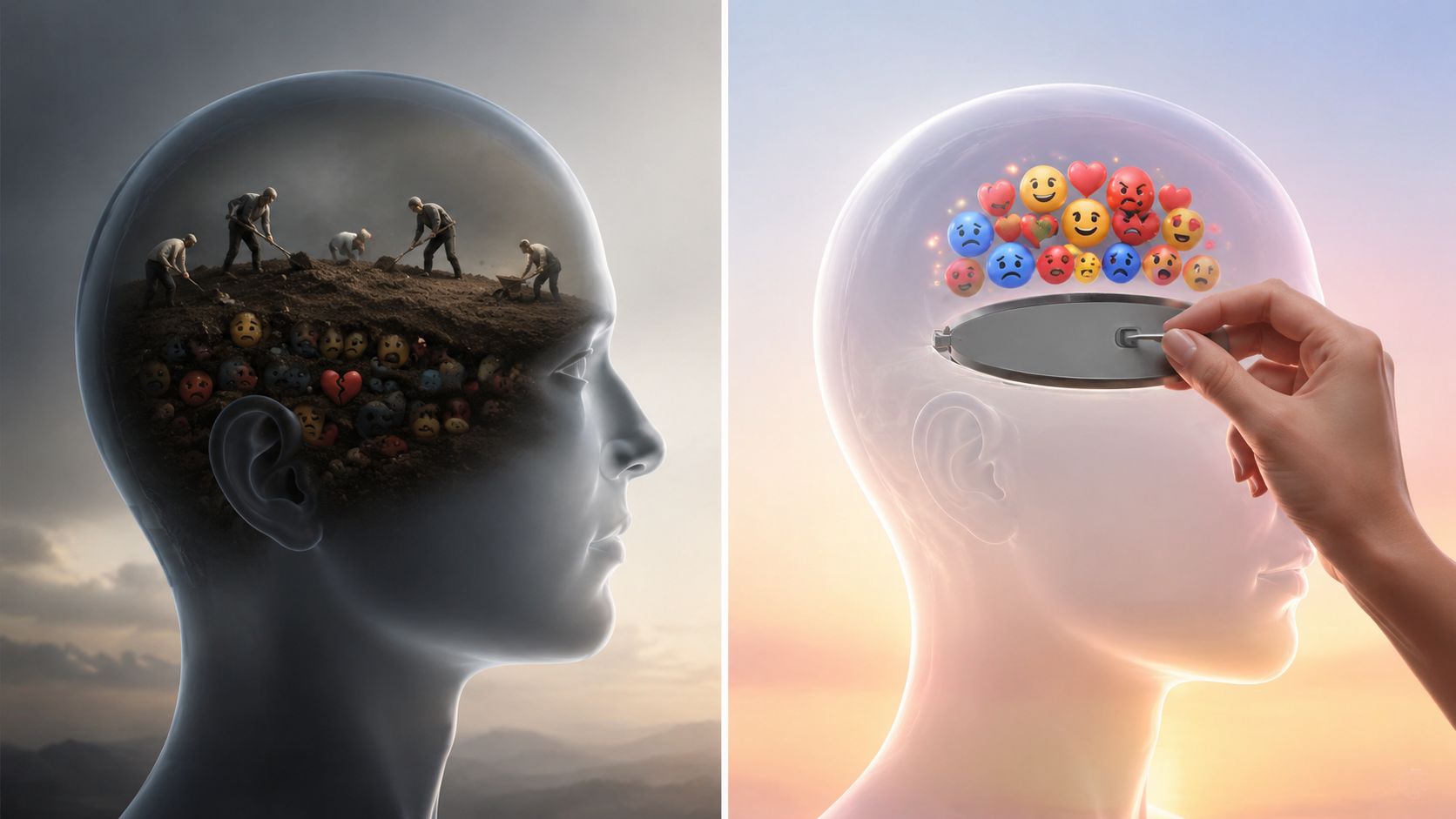
A difficult meeting ends. A stressful message lands on your phone. A parent, partner, manager, or relative says something that stays with you longer than it should. In those moments, many people shut down, snap, overthink, or distract themselves just to get through the next hour.
From deadline pressure in Bengaluru to family tension in Delhi, Mumbai, Chennai, or anywhere else in the world, feeling upset is a universal human experience. What changes the outcome isn't whether you feel upset. It's what you do next.
That matters even more in India right now. In 2024, 26% of India's population reported feeling angry, and the country ranked at the high end of the global anger spectrum in the Anger & Agency India 2024 report by Mindworks Lab. The same report noted that young Indians carry a particularly heavy load, with those aged 18 to 34 ranking 60th out of 84 countries in mental health and recording an MHQ of 33, compared with 96 for Indians over 55.
When people ask what do people do when they are upset, the honest answer is this. They often reach for whatever gives fast relief. Sometimes that helps. Often it makes things worse.
Some people scroll, avoid, buy things, argue, work longer, eat mindlessly, or take out their frustration on the wrong person. These reactions can make sense in the moment, especially under workplace stress, anxiety, burnout, or relationship strain. But they rarely build resilience.
Healthier responses are usually quieter. They create space, reduce intensity, and help you respond instead of react. None of them are magic. All of them are skills.
1. Mindfulness and Meditation

When people are upset, one helpful move is to stop trying to win the argument inside their head. Mindfulness helps you notice, “I'm angry,” “I'm hurt,” or “I'm overwhelmed,” without immediately acting on it. Meditation gives that skill a regular practice space.
Many people don't just feel one emotion. They feel a whole stack of them. Anger on top, fear underneath, and exhaustion at the bottom. A few quiet minutes can help you see the full picture.
How it helps in daily life
A professional in Mumbai might sit for 10 minutes before opening work email. A student can use mindful breathing before an exam. A parent can do a body scan at night after a tense day of caregiving and household demands.
For some people, meditation sounds too big or too spiritual. It doesn't have to be. Sit down, set a timer, and notice your breath going in and out. When your mind wanders, bring it back gently.
Practical rule: Start with five minutes. A short practice you actually repeat works better than a long practice you avoid.
If you're new, guided audio can make it easier. Many people also pair mindfulness with mindfulness and drinking work, especially when they notice they use alcohol or other quick fixes to numb distress.
What works and what doesn't
- What works: Practising when you're calm, so the skill is available when emotions rise.
- What works: Simple anchors like the breath, sounds in the room, or sensations in your feet.
- What doesn't: Expecting your mind to go blank.
- What doesn't: Using meditation to suppress pain instead of noticing it with compassion.
Mindfulness isn't a diagnosis or a cure. It's a skill that supports well-being, resilience, and clearer choices.
2. Physical Exercise and Movement

Sometimes the mind calms down only after the body gets a chance to move. If you're upset and your thoughts are looping, movement can interrupt the cycle faster than analysis.
I often see this with people who say, “I need to think this through,” when what they really need first is a walk. A brisk walk, a yoga class, dancing in your room, stretching between meetings, or a short run can change the emotional temperature of the moment.
Movement is often easier than insight
A teacher might walk for 20 minutes after school instead of replaying every difficult interaction. A student might dance to two favourite songs before returning to revision. A parent may choose a morning walk because it helps them respond with more patience later in the day.
Work stress makes this especially relevant. A 2023 ASSOCHAM study found that 42.5% of employees in India's private sector report stress-related issues, linked to long hours, heavy workload, and poor work-life balance, as discussed in this piece on workplace stress and anxiety among employers and employees.
When your body is stuck in stress, thinking harder isn't always the answer. Moving helps many people settle enough to think clearly again.
A practical way to start
- Pick something pleasant: Walking, badminton, yoga, cycling, swimming, or dancing all count.
- Lower the entry bar: Ten or fifteen minutes is enough to begin.
- Use routine cues: Walk after lunch, stretch after calls, or take stairs before heading home.
- Add company if helpful: A class or walking partner can support consistency.
What doesn't help is turning exercise into punishment. If movement feels like one more demand, it won't become a reliable coping tool. Choose forms that restore you.
3. Journaling and Expressive Writing

Writing is one of the simplest ways to slow emotional chaos. When feelings stay vague, they can feel endless. Once they become words, they often become more manageable.
This is useful when you're upset but not ready to talk. A page can hold anger, grief, jealousy, shame, confusion, or disappointment without interrupting you, judging you, or trying to fix you too quickly.
What to write when your mind feels crowded
A professional can write for 10 minutes after conflict at work. A university student might journal about a relationship problem and realise they aren't only sad, they're also feeling ignored. A grieving person may write a letter they never send.
You don't need polished sentences. Try starting with “Today I felt…” or “What really hurt was…”. If you're overwhelmed, write exactly what happened, then write what you needed in that moment.
- Free writing: Keep your pen moving without editing.
- Feeling words: Name more than one emotion if you can.
- Compassion lines: Add one kind sentence to yourself at the end.
- Pattern spotting: Re-read later to notice repeated triggers.
Where journaling helps most
It helps people who overthink, people who avoid conflict, and people who feel guilty for having strong reactions. It can also reveal when upset is covering something deeper, like anxiety, burnout, loneliness, or depression.
What doesn't help is using the journal only to rehearse the same argument every night. If your writing keeps you stuck, add two prompts: “What do I need now?” and “What is one small next step?”
4. Social Connection and Talking It Out

Individuals cope better when they feel less alone. A calm conversation with the right person can reduce shame, soften panic, and help you organise what you're feeling.
The key phrase there is “the right person.” Not everyone who loves you knows how to listen well. Some minimise, rush to advice, or make the issue about themselves.
Choose support, not just company
A working professional might call one close friend after a rough day instead of venting in five WhatsApp chats. A couple may book relationship counselling when the same argument keeps returning. A student may feel safer in a peer support space than in a family conversation that becomes critical.
This is also important for men who were taught to hide pain until it comes out as irritation. A campaign highlighted by MHF India uses the line He's Angry, Not Okay, reflecting the pattern that anger can mask depression, anxiety, and trauma, especially in Indian men who avoid therapy because of stigma.
Some people don't need advice first. They need a witness. Being heard can lower distress enough to make the next step possible.
How to make talking more useful
- Be clear about what you need: Listening, advice, distraction, or help making a plan.
- Pick one or two trusted people: Too many opinions can increase confusion.
- Set limits with dismissive people: Support shouldn't leave you feeling smaller.
- Consider counselling: If the issue is repetitive, painful, or affecting daily life, professional help is often more useful than endless venting.
Connection builds resilience, but it works best when it's safe, respectful, and honest.
5. Deep Breathing and Grounding Techniques
Sometimes upset hits fast. Your chest tightens, thoughts race, and your body acts as if there's an immediate threat. That's when breathing and grounding can help most.
These tools are portable. You can use them in an office washroom, in your parked car, outside an exam hall, or before replying to a difficult message.
Quick tools for high-intensity moments
A professional in a tense meeting can use box breathing by inhaling for four counts, holding for four, exhaling for four, and pausing for four. A student can take three slow breaths before entering an exam room. A parent can pause and breathe before responding to a child during a frustrating moment.
If you feel foggy or unreal, grounding can help bring you back into the present. The 5-4-3-2-1 method is simple. Name five things you see, four you can touch, three you hear, two you smell, and one you taste.
A short demonstration can help if you want to practise visually:
Why this works better than “calm down”
Telling yourself to calm down often doesn't work because it stays in the thinking part of the mind. Breathing and grounding give the body something concrete to do.
- Use exhale-focused breathing: Longer exhales often feel more settling.
- Practise before crisis: These skills are easier to use when they're familiar.
- Pair with sensory cues: Hold a cold glass of water or feel your feet on the floor.
- Keep it discreet: No one has to know you're using a coping skill.
These techniques don't solve the whole problem. They lower the emotional volume so you can choose your next move more wisely.
6. Creative Expression and Hobbies
Not every upset feeling needs to be processed through talking. Some emotions move better through the hands.
Creative work gives distress a place to go. Painting, music, knitting, baking, gardening, photography, rangoli, sketching, poetry, or cooking can all help shift attention without forcing avoidance.
This is regulation, not escapism
A teenager might play guitar after a lonely evening. A working professional may paint on weekends after a difficult week. A parent may find that tending plants each morning creates a small zone of peace before the day gets noisy.
Many people cope with distress by trying to change their mood through spending. Commentary on Indian consumer behaviour has described a rise in mood-triggered buying, where people make faster and stranger purchases driven by boredom, memes, cravings, or mood swings, and it also notes that investors can be pulled off course by emotional biases during market stress in this LinkedIn discussion on Indian consumer behaviour and investor bias.
Better substitutes for reactive spending
- Create something physical: Food, music, drawings, craft, or a planted pot.
- Choose process over outcome: It doesn't need to be impressive.
- Keep supplies visible: A notebook, colours, seeds, or a recipe book within reach makes follow-through easier.
- Use hobby time as a transition ritual: Especially after work or study.
What doesn't help is turning your hobby into another performance space where you judge yourself harshly. The value is in the act itself. Creativity can support happiness, compassion, and emotional reset even when the final result is messy.
7. Setting Boundaries and Saying No
A lot of upset isn't random. It comes after too many demands, too little rest, and not enough room to be a person. Boundaries help reduce that build-up.
In India, many people juggle work pressure, family responsibility, social obligation, commute fatigue, and financial stress at the same time. If you keep saying yes when your body and mind mean no, resentment usually appears sooner or later.
Boundaries protect energy before anger takes over
A corporate employee may stop checking email after 7 pm. A parent can refuse an extra commitment during a school exam week at home. Someone in a strained relationship may state clearly that shouting, mocking, or repeated disrespect isn't acceptable.
Workplaces can intensify this. According to anger statistics collected on workplace and desk rage, 65% of office workers in India have experienced desk rage, 51% report fury at work, 45% regularly lose their temper, and 53% have been victims of bullying. The same summary notes that anger is often expressed indirectly, including over the phone or in writing, which can keep issues unresolved.
A boundary isn't punishment. It's information about what you can participate in without harming your well-being.
How to say no without creating more damage
- Start small: Practise with low-stakes requests.
- Use plain language: “I can't take that on this week.”
- Drop long justifications: Over-explaining often invites negotiation.
- Expect discomfort: Guilt doesn't always mean you're doing something wrong.
What doesn't work is waiting until you're furious and then trying to set a boundary in the middle of an explosion. Earlier, calmer limits usually land better.
8. Sleep Hygiene and Rest
When sleep gets worse, emotional recovery usually gets worse too. Small irritations feel bigger. Patience drops. Anxiety gets louder. Concentration becomes patchy.
People often underestimate how much being upset and being tired feed each other. You lose sleep because you're stressed, then the lack of sleep makes the next day's stress harder to carry.
Rest is not a luxury
A student who skips sleep to study may become more emotionally reactive by the next afternoon. A working professional who keeps scrolling in bed may wake up tense before the day has even started. A parent who protects a basic wind-down routine often notices better patience the next day.
This connects with broader mental health strain. A study cited in this discussion of workplace mental health in India reports that, according to Deloitte's 2022 study, 80% of the Indian workforce experienced mental health challenges primarily due to stress, and discrimination affected two-thirds of employees who had faced depression.
Better sleep habits that support resilience
- Keep a steady sleep window: Even on weekends if possible.
- Make the room calmer: Darker, quieter, and cooler usually helps.
- Create a shut-down ritual: Reading, gentle stretching, prayer, journaling, or herbal tea.
- Reduce late-night stimulation: Especially doomscrolling, work messages, and arguments.
If sleep problems persist, it may be time for therapy, counselling, or a medical evaluation. Sleep struggles can be part of anxiety, depression, grief, trauma, burnout, or a sleep disorder. Any assessment you take online is informational, not diagnostic.
9. Seeking Professional Help Through Therapy and Counselling
Sometimes people do all the “right” things and still feel stuck. They breathe, walk, journal, talk, and try to sleep better, but the same pain keeps returning. That's often a sign that support needs to go deeper.
Therapy and counselling help when upset isn't just a momentary reaction. They help when it becomes a pattern. If you're dealing with anxiety, depression, panic, grief, relationship conflict, trauma, burnout, or repeated anger, professional care can give structure and relief.
When self-help isn't enough
In India, the weighted lifetime prevalence of any mental illness is 13.7%, and 10.6% experience current mental illness, according to the National Mental Health Survey summary published by NAMS. Those numbers don't mean every difficult week is a disorder. They do remind us that ongoing distress is common, and it deserves attention.
A therapist may help a professional facing workplace harassment, a student struggling with exam anxiety, a couple stuck in repetitive fights, or a parent overwhelmed by family conflict. Good therapy is practical. It helps you understand patterns, build resilience, improve coping, and make daily life feel more manageable.
How to approach support wisely
- Start with a consultation: It can clarify what kind of support fits.
- Ask about approach: Different therapists work differently.
- Give the process a little time: Trust takes a few sessions to build.
- Be honest: Therapy works better when you're not editing the truth.
Support around sleep can matter here too, since rest and mental health affect each other. For readers interested in that link, Miller Waldrop's mattress advice offers a practical reminder that your environment can shape how you feel.
Platforms like DeTalks can make this step easier by helping people find therapists, counsellors, and confidential mental health assessments. Those assessments are informational tools that can guide next steps. They aren't a diagnosis.
Comparison of 9 Coping Strategies When Upset
| Strategy | 🔄 Implementation Complexity | ⚡ Resource Requirements | ⭐ Key Advantages | 📊 Expected Outcomes | 💡 Ideal Use Cases |
|---|---|---|---|---|---|
| Mindfulness and Meditation | Moderate, needs regular practice and habit formation | Low, time (5–30 min), optional apps or group classes | Strong evidence base; builds long-term emotional regulation | Reduced anxiety and rumination; measurable benefits in 2–4 weeks | Anxiety, workplace stress, exam nerves, building resilience |
| Physical Exercise and Movement | Low–Moderate, start small but consistency helps | Variable, from walking (none) to classes/equipment | Immediate mood boost; improves sleep and physical health | Rapid mood lift (20–30 min); long-term reduction in depression/anxiety | Acute distress, daily stress management, social wellbeing |
| Journaling and Expressive Writing | Low, simple routine but requires honesty | Very low, pen/app and time (10–20 min) | Clarifies thoughts; externalizes emotions; tracks patterns | Reduced rumination; improved clarity and decision-making | Processing emotions, grief, reflection, identifying triggers |
| Social Connection and Talking It Out | Moderate, requires vulnerability and safe listeners | Low, time and access to trusted people or counselors | Immediate emotional relief; offers perspective and support | Decreased isolation; improved coping and relationship health | Acute crises, relationship issues, ongoing emotional support |
| Deep Breathing and Grounding Techniques | Low, easy to learn but needs practice to be automatic | Minimal, no equipment, a few minutes anywhere | Fast physiological calming; portable and discreet | Lowers heart rate/cortisol within minutes; stops panic escalation | Panic attacks, acute anxiety spikes, tense situations |
| Creative Expression and Hobbies | Low–Moderate, depends on activity and time commitment | Variable, low to moderate (materials, classes) | Engages flow; healthy distraction and emotional processing | Reduces rumination; boosts confidence and mood over time | Coping with stress, grief, regular self-care, social creativity |
| Setting Boundaries and Saying No | High, requires skill, practice, and cultural navigation | Low, primarily communication skills and time | Prevents burnout; protects energy; improves relationships | Long-term reduction in chronic stress and resentment | Workplace overload, draining relationships, burnout prevention |
| Sleep Hygiene and Rest | Moderate, habit change over weeks | Low–Moderate, environment changes, routine time | Foundational for emotional resilience; enhances other strategies | Better emotion regulation, reduced anxiety; benefits after 2–4 weeks | Chronic stress, impaired decision-making, anyone needing recovery |
| Seeking Professional Help: Therapy and Counselling | Moderate–High, finding fit and committing to sessions | High, cost, time, and access (sliding scales available) | Addresses root causes with evidence-based methods; tailored support | Significant symptom reduction over months; durable skills and insight | Severe/persistent anxiety, trauma, depression, complex relationship issues |
Your Path to Resilience Starts With One Step
When people ask what do people do when they are upset, the most honest answer is that people do many different things. Some withdraw. Some lash out. Some shop, scroll, overwork, or go silent. Some breathe, walk, write, talk, rest, and reach for help.
Not every reaction is unhealthy. Not every coping skill fits every person. What matters is whether the response reduces suffering in a lasting way or only numbs it for a moment. That's an important distinction.
In India, many people carry emotional strain inside systems that are already demanding. Family expectations, long commutes, workplace stress, financial pressure, and social stigma all shape how distress shows up. Some public conversations have also pointed to anger as a broader response to overwork, underpayment, harsh authority, and limited opportunity, not just a personal flaw, as reflected in this Reddit discussion about anger issues in India.
That wider context matters. It reminds us to be compassionate with ourselves and with others. It also reminds us that resilience isn't the same as endless endurance. Sometimes resilience means resting. Sometimes it means saying no. Sometimes it means asking for therapy.
You don't need to master every tool in this list. Pick one that feels possible today. Five minutes of mindful breathing. A short walk after work. Ten minutes of journaling before bed. One honest conversation with someone safe. One boundary you stop postponing.
You also don't need to wait until things become unbearable. If distress keeps interfering with sleep, work, study, parenting, relationships, or your sense of hope, that is enough reason to seek support. Therapy and counselling aren't only for crisis. They can help with clarity, emotional balance, self-understanding, and growth.
Professional support can be especially useful when upset is masking something else, such as depression, anxiety, grief, burnout, or trauma. A good therapist won't just tell you to calm down. They'll help you understand why your mind and body react the way they do, and what changes are realistic in your life.
If you're unsure where to begin, start with information. A confidential mental health assessment can help you notice patterns and decide what kind of support to explore next. Just remember the key point. Assessments are informational, not diagnostic.
Small changes count. Real well-being usually grows that way. One grounded breath, one better boundary, one supportive conversation, one appointment, one step at a time.
If you're ready to move from coping alone to getting the right support, DeTalks can help you find therapists, psychologists, and counsellors across India, explore confidential assessments, and choose support that fits your needs. Whether you're facing anxiety, depression, workplace stress, burnout, relationship conflict, or you're aiming to build more resilience and well-being, DeTalks offers a practical next step with care that is accessible, professional, and grounded in real life.