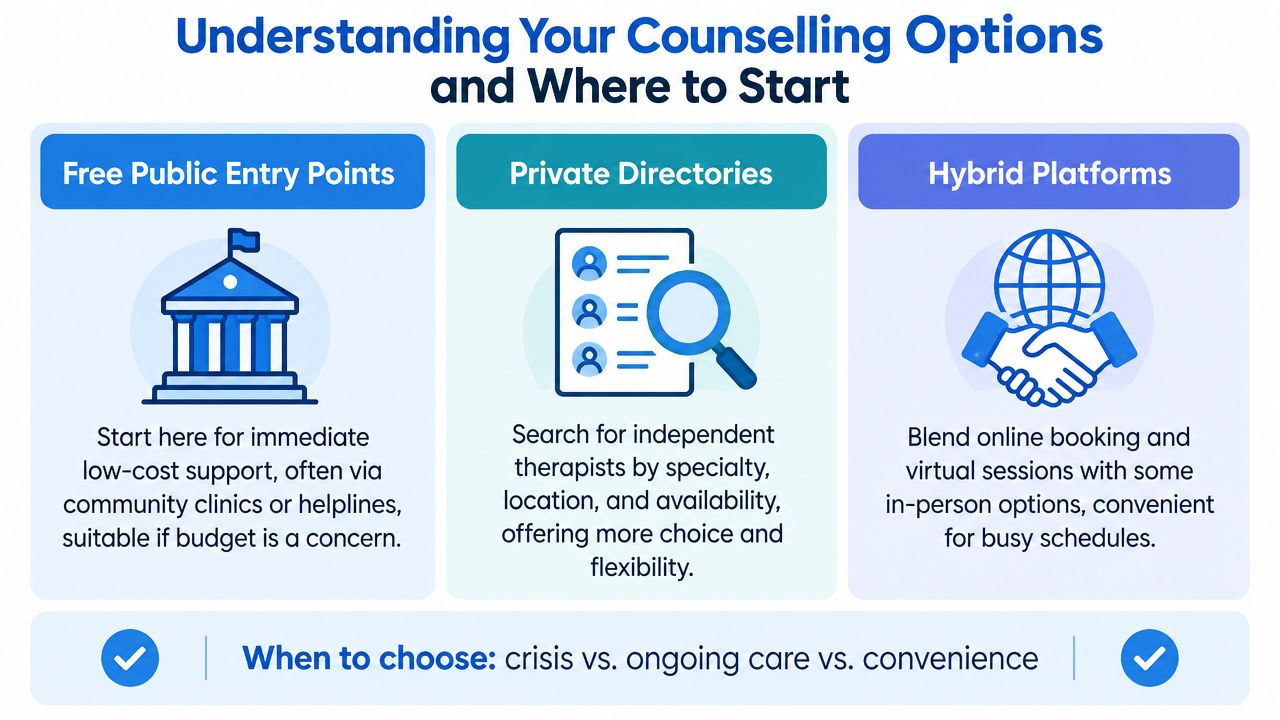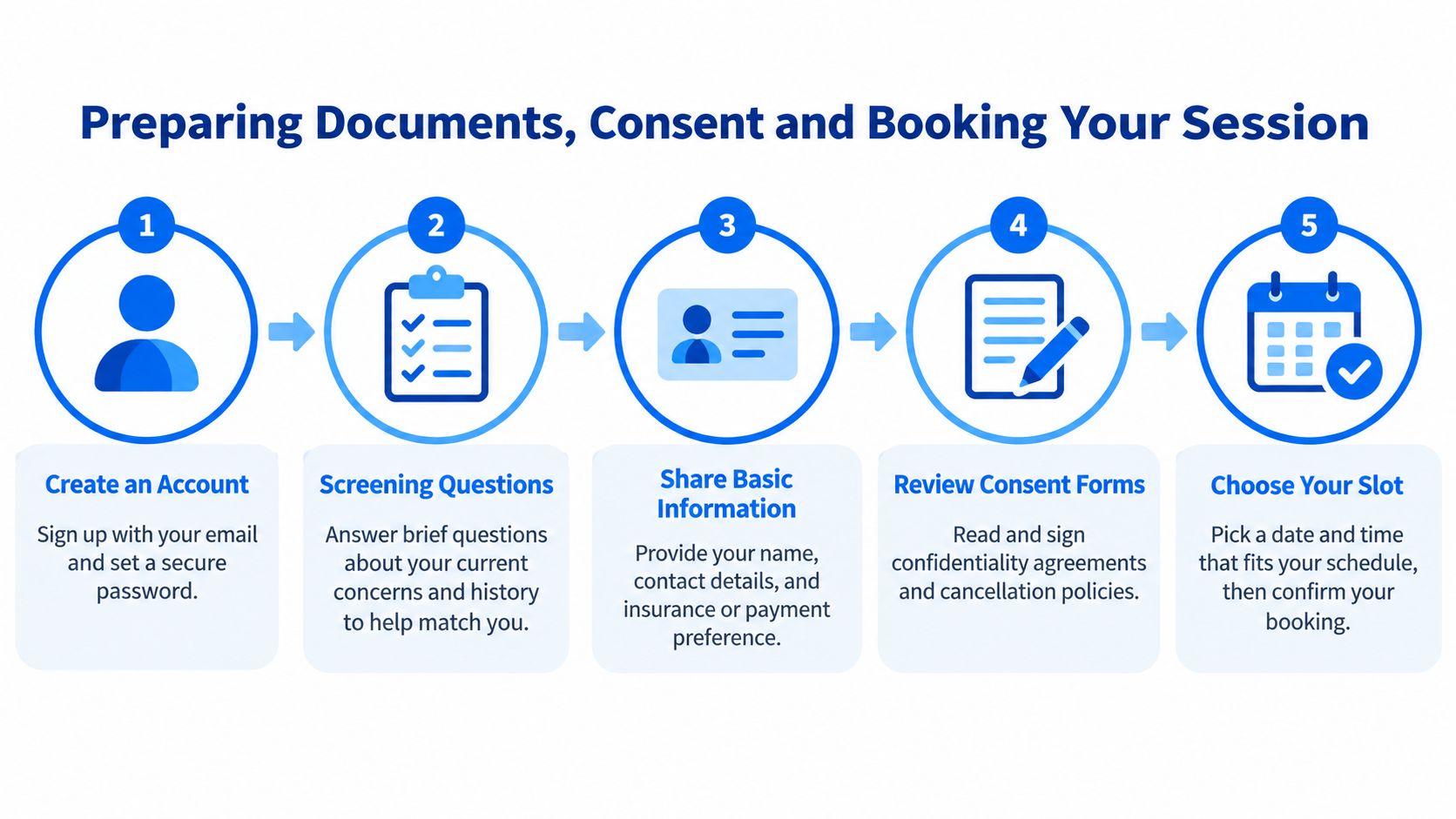
Tag: counselling guide

  • Mind Care Counselling Centre: Find Your Path to Well-being

    Mind Care Counselling Centre: Find Your Path to Well-being

    Some evenings feel heavier than they should. You finish work, reply to one more family message, scroll without absorbing anything, and notice that even small tasks feel oddly difficult.

    Maybe you've said, “I'm just stressed,” for weeks. Maybe it's workplace stress, anxiety before sleep, a short temper at home, or a quiet feeling that you're not quite yourself.

    For many people in India, that moment leads to a private question. Should I talk to someone? Not because life is falling apart, but because carrying everything alone is getting tiring.

    A Mind Care counselling centre can be one possible next step. It isn't a label, and it isn't a sign that you've failed to cope. It's a place where therapy and counselling can help you understand what's happening, find steadier ways to respond, and rebuild well-being with support.

    Taking the First Step Towards Mental Well-Being

    Riya had been telling herself she was fine. She was meeting deadlines, attending family functions, and keeping up appearances. But she was also waking up tired, snapping at people she loved, and feeling a knot in her chest every Sunday evening before the work week began.

    That kind of experience is more common than many people realise. The 2016 National Mental Health Survey of India estimated that about 14% of India's population required active mental health interventions, with accessible support especially important for concerns such as depression and anxiety, making community-based counselling centres a vital entry point for care, as noted in the National Mental Health Survey discussion published on PMC.

    Why this question matters

    When people first think about counselling, they often assume they need a dramatic reason. They wonder whether their pain is “serious enough”, whether they should just be more grateful, or whether talking to a professional means something is seriously wrong.

    Usually, it means something simpler. It means you're noticing strain and want support before it grows.

    You don't need to be at breaking point to deserve care.

    In India, this decision can feel tangled with family expectations, privacy concerns, and the pressure to “adjust”. A young professional may worry about being seen as weak. A parent may fear being misunderstood. A student may think everyone else is managing better.

    What the first step really says

    Reaching out for therapy or counselling says a few healthy things about you:

    • You're paying attention: You've noticed changes in mood, energy, sleep, or motivation.
    • You want support, not struggle: You don't want to keep guessing your way through stress, anxiety, or depression.
    • You value your future self: You're trying to build resilience before burnout becomes your normal.

    A good mind care counselling centre meets you there. Not with judgement, and not with pressure. It starts with a conversation.

    For some people, that first step brings relief before the first session even happens. There's comfort in knowing you won't have to explain everything perfectly, and you won't be expected to have all the answers. You only need enough honesty to begin.

    What Exactly Is a Mind Care Counselling Centre

    A Mind Care counselling centre is a professional space where people come to talk, reflect, and learn practical ways to handle emotional challenges. You can think of it as a place for both healing and growth. Not only for crisis, but also for everyday life when things feel confusing, draining, or stuck.

    Some people visit because of anxiety, depression, grief, or relationship strain. Others come because they want better well-being, stronger resilience, healthier boundaries, more self-compassion, or a clearer sense of purpose.

    More than “problem solving”

    A counselling centre isn't only about reducing distress. It can also help you build emotional skills that make daily life more manageable and meaningful.

    That might include:

    • Handling workplace stress: Learning how to respond when pressure, deadlines, or conflict start affecting sleep and mood.
    • Improving relationships: Understanding patterns in communication, expectations, and hurt.
    • Building resilience: Becoming better able to recover after setbacks, criticism, or disappointment.
    • Supporting positive psychology goals: Exploring compassion, gratitude, confidence, happiness, and emotional balance.

    What happens in a supportive centre

    Many people expect advice. What they often receive is something more useful. A trained professional helps them slow down, notice patterns, and test healthier responses.

    At a practical level, a counselling centre usually offers:

    Support area What it may involve
    Emotional support Talking through stress, anxiety, sadness, anger, or overwhelm
    Behavioural support Building routines, boundaries, coping tools, and healthier habits
    Relationship support Exploring communication, conflict, trust, and family dynamics
    Growth-focused work Self-esteem, resilience, values, meaning, and well-being

    A simple way to think about it: a mind care counselling centre is a structured, confidential place where your inner life gets the same attention your physical health would.

    That confidentiality and structure matter. You're not just venting. You're working with someone who can help organise what feels messy, notice what you miss when you're overwhelmed, and support change at a pace you can tolerate.

    If you've been wondering whether therapy is only for “big” problems, it isn't. Many people start because they're tired of carrying stress alone and want steadier ways to cope.

    Who Can Help Counsellors Therapists Psychologists and Psychiatrists

    The words can get confusing fast. Someone says “therapist”, another says “psychologist”, a clinic lists a “psychiatrist”, and suddenly you're not sure who does what.

    The clearest distinction is this. Counselling centres and therapy services usually focus on talk-based support and do not typically offer crisis intervention or medication, while psychiatric clinics can provide medical diagnosis and manage medication, as explained on Mind Care Therapy's overview of therapy and psychiatric services.

    A comparison chart outlining the qualifications, focus, and methods of counsellors, therapists, psychologists, and psychiatrists.

    Mental health professionals at a glance

    Professional Primary Role Can Prescribe Medication? Typical Focus Areas
    Counsellor Provides supportive conversations, coping strategies, and guidance for specific concerns No, typically not Stress, relationships, workplace stress, life transitions, emotional support
    Therapist A broad term for professionals offering talk-based therapy No, typically not Emotional patterns, behaviour change, trauma-informed work, couples or family work
    Psychologist Uses psychological methods for assessment and therapy No, typically not Therapy, psychological formulation, behavioural change, structured interventions
    Psychiatrist Medical doctor focused on mental health treatment Yes Medical diagnosis, medication management, complex or severe symptoms

    How to choose based on your need

    If you're dealing with stress, burnout, anxiety, relationship issues, or low mood, a counsellor, therapist, or psychologist may be a strong starting point. These professionals often help with emotional insight, coping tools, and behaviour change through regular sessions.

    If symptoms feel more severe, or if you think medication might be needed, a psychiatrist may be the right person to consult. Some people also work with both. For example, they may see a psychiatrist for medication review and continue therapy with a counsellor or psychologist.

    A few examples make this easier:

    • You're exhausted and dread Monday mornings: Counselling or therapy may help with workplace stress, boundaries, and burnout patterns.
    • You keep having intense fear, racing thoughts, and physical panic: A therapist or psychologist may help with coping and emotional regulation. A psychiatric opinion may also be useful if symptoms are severe or persistent.
    • You want to understand long-standing patterns in relationships: Therapy is often a good fit.
    • You need medical input: A psychiatrist is the professional to see.

    If the titles still feel blurry

    That's normal. In everyday conversation, people often use “counsellor” and “therapist” loosely. If you want a simple outside explanation, this guide on choosing a counsellor or therapist can help you sort the language in a practical way.

    Useful rule: You don't have to pick the “perfect” title first. You need a professional whose scope matches your current needs.

    And if a centre is responsible, it will tell you when your concerns would be better handled by a psychiatrist or another specialist.

    Signs You Might Benefit from Counselling

    Sometimes the signs are obvious. You're crying more, sleeping badly, or dreading social contact. Sometimes they're quieter. You're functioning, but everything takes more effort than it used to.

    India's mental health treatment gap is estimated to be between 88% and 90%, which means many people who could benefit from support never receive it, according to the review summarised at FCC Wellbeing's results page. If you've been struggling on your own, you're far from alone.

    A checklist infographic listing eight common emotional and behavioral signs that indicate someone could benefit from professional counselling.

    Everyday signs people often dismiss

    You might benefit from counselling if:

    • You feel constantly “on”: Your mind keeps running even when you're supposed to be resting.
    • Small things trigger big reactions: You feel more irritable, tearful, or emotionally flooded than usual.
    • Work follows you home: Workplace stress keeps showing up in your body, sleep, or relationships.
    • You've stopped enjoying things: Hobbies, friendships, and routines feel flat or hard to care about.
    • You're avoiding people or tasks: Not because you don't care, but because everything feels draining.

    These signs don't automatically mean a diagnosis. They do suggest that support could help.

    Signs linked to anxiety depression and life change

    For some people, the pattern looks more intense. You may feel persistent worry, panic, sadness, numbness, hopelessness, guilt, or difficulty concentrating. Others notice changes around a breakup, grief, exam pressure, parenting stress, relocation, or family conflict.

    A few examples are especially easy to overlook:

    • Body-based distress: Headaches, restlessness, chest tightness, or fatigue that seem linked to emotional strain.
    • Family-role pressure: Feeling torn between your own needs and what relatives expect from you.
    • Hormonal or life-stage shifts: Emotional changes can also overlap with physical transitions. If that's relevant, this article on understanding panic attacks in perimenopause offers a helpful, readable example of how mental and physical experiences can connect.
    • Unhealthy coping: Shutting down, overworking, binge-scrolling, emotional eating, or isolating yourself.

    Struggling quietly can look very “normal” from the outside.

    Counselling is also for growth

    You don't have to wait for distress to justify therapy. Many people seek counselling because they want to feel more grounded, more confident, or more connected to themselves.

    You might want support to:

    • Build resilience after setbacks
    • Improve communication in marriage, dating, or family life
    • Develop self-compassion instead of constant self-criticism
    • Strengthen happiness and well-being in a sustainable, realistic way
    • Understand yourself better before making a life or career decision

    If you recognised yourself in even a few of these signs, that recognition matters. It doesn't mean something is wrong with you. It means you're noticing where care could help.

    How to Evaluate and Choose the Right Centre

    Finding a counselling centre can feel strangely personal and strangely practical at the same time. You want warmth, trust, and skill. You also want clear timings, accessibility, and a process that doesn't create more stress than the problem itself.

    A useful real-world benchmark comes from Coimbatore. Mind Care Counselling Centre has been listed as open six days a week from 9:00 am to 6:00 pm, with a 4.4/5 rating from 545 reviews, which makes it a helpful example of how availability and visible community trust can matter when people are choosing a centre, based on its Justdial listing for Mind Care Counselling Centre in Coimbatore.

    An infographic titled How to Choose the Right Counselling Centre with eight numbered steps for finding support.

    Start with the basics that affect access

    A centre may be excellent on paper, but if booking is difficult or timings don't work, you may never begin.

    Check for:

    • Appointment availability: Evening or weekend convenience can matter a lot for students and working adults.
    • Location or online option: A long commute can become a reason to stop going.
    • Responsiveness: Did someone reply clearly when you enquired?
    • Privacy and professionalism: Was information shared respectfully and in a way that felt safe?

    These aren't minor details. They shape whether support is realistic in your actual life.

    Look at the service design

    A good counselling centre usually has a process. That doesn't mean it should feel rigid. It means the team has a thoughtful way of understanding your concerns and matching support to your needs.

    When you speak to a centre, ask practical questions such as:

    1. Who will I be meeting with?
    2. What kinds of concerns do you commonly support?
    3. How do you decide whether counselling is the right fit?
    4. Do you offer online sessions, in-person sessions, or both?
    5. What happens if I need a different level of care?

    If the answers are vague, rushed, or defensive, that's useful information.

    Read beyond star ratings

    Reviews can tell you whether people felt respected, heard, and able to book reliably. They can't tell you if a centre is the right fit for your personality or goals.

    Try to read for patterns:

    What to notice Why it matters
    Comments about kindness and listening Suggests emotional safety
    Mentions of organised scheduling Shows practical reliability
    Clear explanation of services Reduces confusion before booking
    Repeated complaints about communication May signal avoidable stress

    Trust the emotional fit, too

    People sometimes assume they must choose the most formal or most impressive-sounding option. But the best fit is often the centre where you feel respected and understood.

    Practical checkpoint: After your first interaction, ask yourself, “Did I feel rushed, judged, or confused?” If the answer is yes, keep looking.

    That instinct matters. Therapy works best when you can speak openly, and honesty is hard in a space that doesn't feel safe.

    A good centre won't pressure you to commit instantly. It will give you enough clarity to decide whether you want to take the next step.

    Your Counselling Journey What to Expect from Booking to Session

    The unknown is often the hardest part. People worry they'll have to tell their whole life story in one sitting, answer trick questions, or be judged for not knowing how to explain what's wrong.

    Most counselling journeys are much gentler than that. Many centres use a multi-stage care model that may include rapport-building, psychological testing to gather information, collaborative goal-setting, customised worksheets or exercises, counselling, therapies, and follow-up, with support described as non-medicinal on the Mind Care Counselling Centre website.

    A visual guide outlining the seven steps of a counselling journey from initial contact to termination.

    From first message to first appointment

    The process often begins with a call, form, or message. You may be asked what brings you in, whether you prefer online or in-person support, and what timings work for you.

    Then comes intake. That usually means a brief information-gathering step so the centre can understand your needs and decide who might be the right professional for you.

    A short note on assessments matters here. Some centres use questionnaires or screening tools for concerns like stress, anxiety, depression, attention, or relationship patterns. These assessments are informational, not diagnostic. They help organise the picture. They are not a final label on who you are.

    What the first session often feels like

    Your first session is usually about connection and clarity, not performance. The counsellor may ask what's been difficult, how long it has felt this way, what support you already have, and what you hope might improve.

    You don't need a polished story. “I've been overwhelmed and I don't know why” is enough.

    A first session may include:

    • Rapport-building: Getting comfortable with the person and the setting.
    • Exploring your concerns: Naming the stress, anxiety, depression, conflict, or confusion that brought you there.
    • Goal-setting: Agreeing on what would feel helpful.
    • Next-step planning: Deciding whether to continue, adjust the approach, or seek another kind of support.

    To make the process feel less abstract, some people find it useful to watch a simple explainer before they begin:

    Online or in person

    There isn't one right format. Online counselling offers privacy, convenience, and easier access if travel is difficult. In-person sessions may feel more grounded for people who focus better in a shared room.

    What matters most is whether the format helps you show up consistently and speak honestly.

    The quality of communication also shapes how supported you feel before therapy even starts. While it comes from a business context, this guide on improving client communication for businesses highlights something relevant here too. Clear, respectful communication reduces anxiety and helps people feel informed.

    Your first session doesn't need to change your whole life. It only needs to open a door.

    Frequently Asked Questions and Your Next Step with DeTalks

    Is everything I say confidential

    In most counselling settings, privacy is treated seriously. A centre should explain its confidentiality practices clearly before or during the early stage of care. If anything is unclear, ask directly. You have every right to understand how your information is handled.

    Do I need to be in crisis to go to counselling

    No. Many people begin therapy because they're dealing with stress, anxiety, depression, burnout, family tension, or a desire for stronger well-being. Others go because they want more resilience, better relationships, or a calmer mind.

    What if I don't know how to explain what I'm feeling

    That's very common. You don't need the perfect words. A good counsellor helps you find language for your experience, one step at a time.

    What if the first person or centre doesn't feel right

    That can happen. Fit matters. If you feel unseen, confused, or uncomfortable, it's okay to try someone else. Choosing support is not a test of loyalty. It's part of caring for yourself well.

    The biggest takeaway is simple. Reaching out for help doesn't mean you're weak, broken, or failing. It often means you've carried enough alone and are ready for support that is thoughtful, structured, and human.

    If you're ready to move from “Should I talk to someone?” to “I've booked my first session,” taking one clear action can make the whole process feel lighter.


    DeTalks makes that first step easier. On DeTalks, you can explore mental health support options across India, find therapists and psychologists, use science-backed assessments for personal insight, and book sessions in a way that feels private and manageable. If you've been waiting for a simple place to begin your therapy or counselling journey, DeTalks can help you take that next step with more clarity, confidence, and care.

  • A Guide to Different Methods of Counselling

    A Guide to Different Methods of Counselling

    The various methods of counselling are structured ways a therapist can guide you through emotional and psychological challenges. It's helpful to see them not as a quick fix, but as a diverse toolkit for well-being. Each tool is designed to support your unique journey towards feeling better and growing as a person.

    Your Compass to Navigating Counselling

    A person's hands reviewing a detailed paper map on a wooden table with a vintage compass and a cup of tea, planning a journey.

    Starting therapy can feel like planning a journey without a map, and it's completely normal to have questions. This guide is your compass, offering a clearer picture of the different paths available in counselling.

    Each method is simply a different lens for understanding yourself and working through life’s hurdles. The "best" one is whichever feels right for you—the one that suits your personality, comfort level, and goals for your well-being.

    Why It's Worth Exploring Different Methods

    Getting to know the various counselling methods is empowering, putting you in the driver's seat of your own mental health journey. Whether you're managing workplace stress in a bustling city like Mumbai, navigating anxiety, or simply want to cultivate more happiness, there's a therapeutic style that can help.

    Some approaches offer practical tools to manage challenges like depression or burnout, while others explore past experiences to understand current feelings. This variety ensures there's support for everyone, from managing difficult emotions to building personal resilience.

    If you're curious to learn more about the specifics, you can explore these different psychotherapy types to see how they're structured.

    A Quick Guide to Common Counselling Approaches

    Here is a brief look at some common methods of counselling to help you identify which approach might resonate with you. Think of this as a starting point on your journey toward greater well-being.

    Counselling Method Best For… Focus of Sessions
    Cognitive Behavioural Therapy (CBT) Anxiety, depression, phobias, managing negative thought cycles. Identifying and changing unhelpful thinking patterns and behaviours.
    Psychodynamic Therapy Exploring deep-seated emotional patterns, relationship issues, self-awareness. Uncovering how past experiences and unconscious thoughts affect your present life.
    Person-Centred Therapy Building self-esteem, personal growth, navigating life transitions. Creating a supportive space for you to explore your own feelings and find your own solutions.
    Dialectical Behaviour Therapy (DBT) Intense emotional regulation, borderline personality disorder, self-harm. Developing skills in mindfulness, distress tolerance, and emotional regulation.
    Family/Couples Therapy Improving communication, resolving conflicts, navigating relationship dynamics. Understanding and changing the patterns of interaction within a family or couple.

    This table shows the incredible range of support available. Each path offers a unique way of helping you move forward with more confidence and self-compassion.

    A Path for Every Goal

    Counselling isn’t just for crisis moments; it's a proactive tool for building a more meaningful life and strengthening your resilience. The different methods are designed to address the full spectrum of human experience, from challenges to personal growth.

    • For challenges: You might seek therapy to better manage anxiety, process grief, or find ways to cope with burnout.
    • For personal growth: You could also turn to counselling to build self-compassion, improve relationships, or cultivate a stronger sense of purpose and happiness.

    Remember, the goal of therapy is about getting support, learning new tools, and gaining insight. It’s about empowering you to build resilience, find your emotional balance, and navigate life’s ups and downs with more confidence.

    Ultimately, the journey starts with understanding your options. Exploring different methods of counselling is the first step toward finding a professional who can walk alongside you as you find your way.

    Diving Into Action-Oriented Therapies

    A person is writing a cognitive behavioral therapy (CBT) thought record in a notebook on a white desk.

    While some counselling methods explore your past, others give you practical tools to manage the here and now. These action-oriented therapies equip you with tangible skills to change how you think, feel, and behave. They are helpful for anyone feeling stuck or overwhelmed by specific challenges like anxiety or workplace stress.

    The core idea is simple yet powerful: our thoughts, feelings, and actions are all interconnected. Learning to change one of these, often starting with your thoughts, can create a positive ripple effect and improve your overall well-being.

    Cognitive Behavioural Therapy (CBT)

    Cognitive Behavioural Therapy, or CBT, is one of the most well-known and researched therapies today. At its heart, CBT helps you spot, challenge, and reframe unhelpful thought patterns that contribute to emotional distress. Think of it as a personal trainer for your mind, helping you build healthier mental habits.

    For example, a therapist could help you notice a thought like, "I'm terrible at my job," and gently challenge it. Together, you would explore the evidence and replace that thought with a more balanced one, like, "I made a mistake, but I can learn from it." This small shift can make a big difference in how you feel, especially when managing anxiety or depression.

    This structured approach has become a key tool in India, especially with the growth of online platforms making support more accessible. As this mental health trends in India industry report highlights, it's a vital tool for managing common struggles like stress and anxiety.

    Dialectical Behaviour Therapy (DBT)

    Dialectical Behaviour Therapy, or DBT, is a type of therapy that grew from CBT, first developed to help people who experience very intense emotions. DBT aims to help you build "a life worth living" by teaching skills in four key areas.

    These skills create a balanced toolkit for emotional health and resilience:

    • Mindfulness: Learning to stay grounded in the present moment without judgement.
    • Distress Tolerance: Getting through tough moments without making them worse.
    • Emotion Regulation: Understanding and managing your emotions, rather than letting them manage you.
    • Interpersonal Effectiveness: Communicating your needs clearly and building stronger relationships.

    DBT is especially helpful for anyone who feels they are on an emotional rollercoaster. It offers a structured path to finding balance between accepting yourself and making positive changes.

    Acceptance and Commitment Therapy (ACT)

    What if you didn't have to fight difficult feelings, but could learn to make space for them? That’s the central idea behind Acceptance and Commitment Therapy, or ACT. This counselling method teaches you to stop struggling against painful thoughts and emotions and, instead, learn to accept their presence.

    ACT helps you create room for discomfort while still taking steps toward what truly matters to you. It uses mindfulness exercises to help you observe your thoughts from a distance, without getting tangled up in them. This skill allows you to live by your values even when feeling anxious or down.

    Rather than trying to win a war with your thoughts, ACT teaches you to let them come and go. It’s about choosing to walk alongside your difficult feelings, not letting them steer your life.

    This can be incredibly empowering for anyone dealing with chronic anxiety, burnout, or depression. It shifts the focus from trying to control how you feel to building a rich, meaningful life that feels genuinely yours.

    A Deeper Look: Understanding Insight-Oriented Therapies

    Sometimes, the things that challenge us today have roots in our past. Insight-oriented therapies help us look inward, exploring our personal history to understand how it shapes our feelings and behaviours now. This is about moving beyond symptoms to understand the source of our distress.

    The goal isn't to get stuck in the past, but to connect the dots between what happened then and what’s happening now. By gaining this self-awareness, you can begin to heal old wounds and make more conscious choices, leading to profound and lasting changes in your well-being.

    Psychodynamic Therapy

    Psychodynamic therapy is like being a friendly archaeologist of your own mind. It’s a process of carefully uncovering how your past—especially your early life—influences you in the present. This approach brings unconscious thoughts and feelings to the surface so you can understand what truly drives your actions.

    This kind of therapy is useful if you notice recurring patterns, such as always ending up in the same kind of unsatisfying relationship. In a safe, non-judgemental space, you and your therapist explore these connections. This can shed light on why you might be struggling with persistent anxiety, depression, or a feeling of being "stuck."

    The relationship you build with your therapist is a key part of this process. It becomes a safe space to see your relational patterns play out and learn healthier ways to connect with yourself and others.

    Person-Centred Therapy

    Person-Centred Therapy operates from a simple, powerful belief: you are the expert on your own life. It trusts that you have the inner resources to grow and heal. The therapist’s job is not to direct or advise, but to create a warm, supportive, and accepting space for you to find your own answers.

    This approach is built on three core conditions the therapist provides:

    • Unconditional Positive Regard: You are accepted completely, without judgement.
    • Empathy: The therapist genuinely works to understand your world from your point of view.
    • Genuineness: The therapist is real and authentic, building a foundation of trust.

    This combination creates a secure environment where you feel safe enough to explore your deepest thoughts and feelings. It's particularly powerful for building self-esteem, navigating life transitions, and developing a stronger sense of self-worth and compassion.

    In Person-Centred Therapy, the focus is less on techniques and more on the healing power of the relationship itself. When you feel truly seen and heard, you can access your own inner resources to move toward positive change and greater happiness.

    How These Therapies Help You Grow

    Insight-oriented therapies help you uncover the "why" behind what you feel and do. While other therapies might give you tools for "how" to cope, these methods help you make sense of your life's bigger story. This can be a game-changer for long-standing issues that haven't shifted with other approaches.

    For example, someone with chronic workplace stress might discover their intense fear of making mistakes is tied to early family pressures. Another person might realize they’ve spent their life putting others’ needs first and can finally learn to value their own.

    These therapies aren't about blaming the past; they are about empowerment. By giving you a clearer map of your inner world, they help you build self-compassion, improve your relationships, and create a future that feels authentically yours.

    Healing Our Most Important Connections: Relationship and Family Therapy

    So much of our happiness is wrapped up in the people closest to us. When relationships with a partner or family become difficult, the stress can affect every other part of our lives. That’s where relationship and family therapies come in. These specialised methods of counselling are designed to strengthen our most vital connections.

    Instead of focusing on one person, these approaches look at the dynamic between a couple or within an entire family. The idea is to improve how everyone communicates, handles disagreements, and connects on a deeper level.

    Couples and Marriage Counselling

    Couples counselling is a safe, neutral space for partners to untangle their issues and start rebuilding their connection. It's not about blame, but about helping both people feel heard and understood. The therapist acts as a guide, helping you both spot negative cycles and find new ways to communicate.

    A big part of the process is learning practical skills for managing conflict without causing damage. The goal is to nurture the friendship at the heart of the relationship and build a life of shared meaning. It’s about learning to turn towards each other during tough times.

    Family Therapy

    Family therapy operates on the idea that a family is a system where each person's actions affect everyone else. A family therapist helps everyone see these connections and understand how they can all contribute to a more balanced and supportive home.

    This type of counselling can be helpful for many challenges, from parenting struggles to getting through major life events. The therapist helps create an environment where everyone feels safe to speak their mind and learn new ways to be there for each other.

    In family therapy, the family is the client. The focus shifts from pointing fingers at one person to understanding how the entire system can work together to heal and grow with compassion.

    Relationship Support is More Accessible Than Ever

    In India, the conversation around seeking help for relationship problems is changing, largely thanks to technology. The rise of online therapy has made it easier for couples and families to get professional support from home. This has been a game-changer, especially for those dealing with workplace stress that affects home life.

    The numbers support this trend, showing how much people are seeking accessible support for their well-being. Online counselling helps break down old barriers like stigma or lack of trained therapists in certain areas. You can read more about the growth of India's online mental health market to see how it's making a difference.

    These therapies provide a neutral ground and practical tools for our closest relationships. They remind us that our connections need care, understanding, and a shared commitment to growth.

    How to Choose the Right Method and Therapist

    Finding a therapist you connect with is the most important step in your counselling journey. With so many different methods, it’s normal to feel a bit lost at first. Remember, this is about finding the right fit for your personality, your goals, and what you're going through.

    Taking a moment for honest self-reflection can bring a lot of clarity. What do you hope to get out of counselling? Knowing what you want is the first step toward finding a path that feels right for your well-being.

    Reflecting on Your Personal Goals

    To get started, think about what matters most to you. Your preferences are the best compass for narrowing down the options and finding a therapist whose approach aligns with your needs.

    A few gentle questions to ask yourself might be:

    • What are my main challenges? Am I dealing with burnout, feelings of depression, or relationship difficulties?
    • What kind of support do I need? Do I want a structured plan, or a more open, exploratory conversation?
    • What have I tried before? Thinking about what has or hasn't helped in the past can offer valuable clues.

    This isn't about finding perfect answers, but about gathering insights to make an informed choice. It can be helpful to explore various treatment options to see the full range of support available.

    The Importance of the Therapeutic Alliance

    Here’s a secret from the therapy world: more than any specific technique, the single most important factor for success is the therapeutic alliance. This is the trusting, collaborative, and empathetic relationship you build with your therapist.

    Feeling safe, truly heard, and respected is the foundation for all healing and growth. A strong alliance means you feel comfortable being honest without fear of judgement. It's a partnership.

    Finding the right therapist is a bit like finding a trusted guide for a journey. Their expertise is important, but what matters most is that you feel you can rely on them and walk the path together.

    Using Assessments as a Guide, Not a Diagnosis

    Platforms like DeTalks are designed to make this process less intimidating, with verified professional profiles and helpful screening tools. Assessments can help you get a better handle on your emotional landscape, from stress levels to personality traits.

    It’s crucial to remember that these assessments are informational, not diagnostic. They offer insights and suggest potential areas to focus on in therapy, but they are not a substitute for a professional evaluation. Think of them as a compass, not a final map.

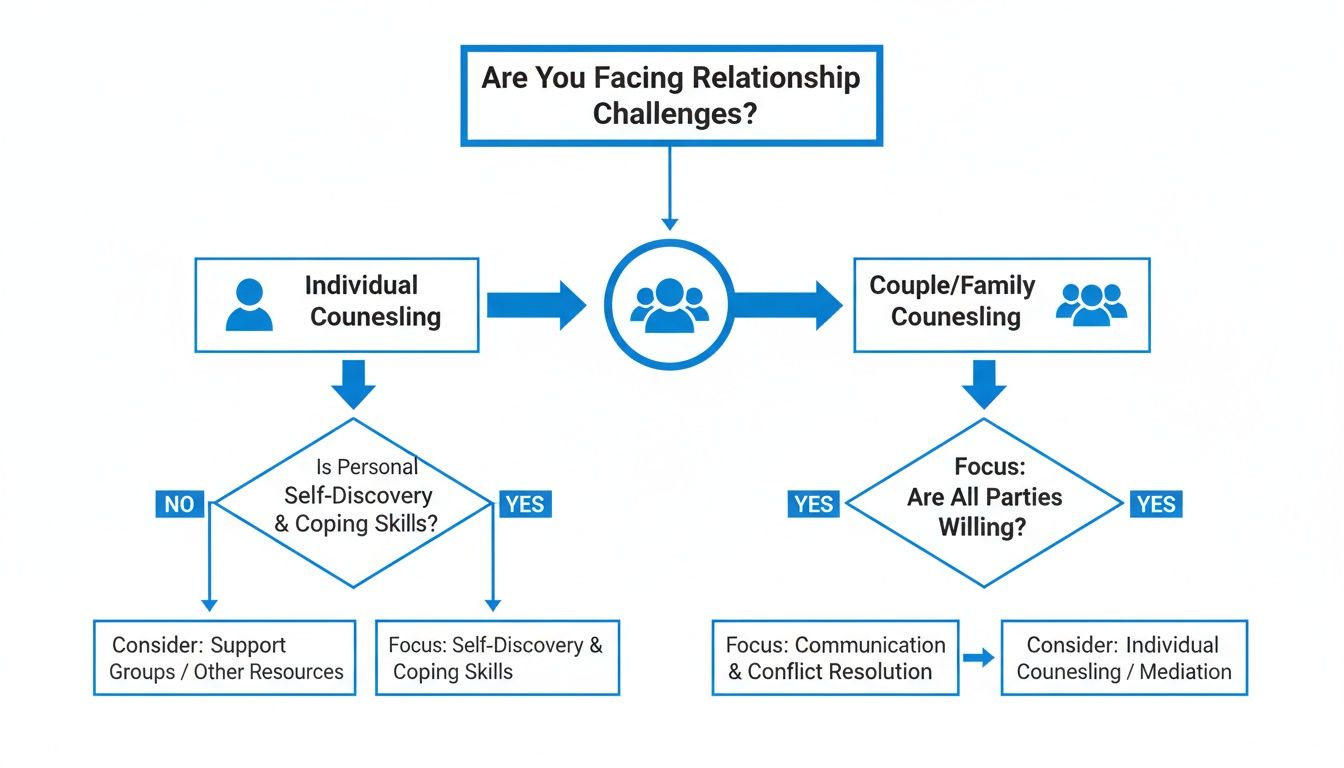
    This helpful decision tree offers a simple visual guide for thinking through relationship challenges and what kind of support might be a good fit.

    Flowchart guiding individuals through counseling options for relationship challenges, focusing on self-discovery and communication.

    As you can see, both individual and couples therapy can be effective—it just depends on your situation.

    Taking the Next Step with Confidence

    This journey is uniquely yours, and reaching out for support is a true sign of strength. Don't be afraid to have initial chats with a few therapists to see who you feel most comfortable with. This is about empowering yourself to find a space where you can thrive.

    The goal is to provide supportive takeaways that help you build resilience and find your balance. With the right guidance and a strong therapeutic connection, you can gain the tools to navigate life’s challenges with more confidence and self-compassion.

    Your Counselling Questions, Answered

    It’s completely normal to have questions when you’re thinking about starting counselling. Getting clear, straightforward information can help you feel more confident moving forward. Our goal is to normalize getting support, whether for challenges like anxiety and workplace stress or for positive goals like building resilience.

    How Long Does Counselling Usually Take?

    The honest answer is: it really depends. The length of your counselling journey is shaped by your unique needs, the challenges you're working through, and the goals you set with your therapist.

    Some approaches, like CBT, are often short-term, perhaps lasting 12 to 20 sessions for a specific issue. Deeper, exploratory work like psychodynamic therapy can be a longer-term commitment. The right duration is simply the time you need to feel you’ve made meaningful progress.

    The point of therapy isn’t to keep you in sessions forever. It’s to give you the insight and skills to navigate life more effectively on your own. Your therapist will check in with you regularly about your progress.

    Is Online Counselling as Effective as In-Person Sessions?

    Absolutely. For many people, online counselling has proven to be just as effective as meeting a therapist in person. It makes mental health support far more accessible, removing geographical barriers and offering flexibility—a huge plus in a vast country like India.

    The things that make therapy work—a strong relationship, empathy, and professional guidance—can all be built effectively over video or audio calls. The best format is whichever one you feel most at ease with.

    What Happens if I Don't Connect With My First Therapist?

    It is perfectly okay not to click with the first therapist you see. Finding the right fit can sometimes take a few tries. The relationship, or therapeutic alliance, is one of the biggest predictors of a successful outcome.

    If it doesn’t feel right after a few sessions, you have every right to look for someone else. Please don't get discouraged. The most important thing is to keep searching until you find a professional who makes you feel safe, heard, and respected.

    How Do I Know Which Method of Counselling Is Right for Me?

    You don’t have to figure this out on your own. A good therapist is trained in several methods of counselling and knows how to adapt their technique to fit you. Your first step is simply to find a qualified professional you trust.

    During your initial consultation, you’ll talk about what’s on your mind. Based on that conversation, the therapist will suggest an approach they believe will help you most. This is a collaborative process designed to create a plan that works for you.

    If you remember nothing else, hold on to these supportive takeaways:

    • Your journey is unique: There's no single "right" way to do therapy. Your path will be tailored to you, at your own pace.
    • Connection is key: The foundation of all good therapy is the relationship you build with your therapist.
    • Seeking help is a strength: Reaching out for support is a proactive step toward taking charge of your well-being.

    Navigating your mental health is a journey of discovery. By understanding these basics, you're better equipped to take that next step with clarity and confidence.


    At DeTalks, we're here to help you find the right path and the right professional. You can explore our directory of verified therapists or take a confidential assessment to gain deeper insights into your well-being by visiting us at https://detalks.com.