
Taking the first step toward managing depression is an act of courage. This guide offers a warm and clear look at how online therapy for depression is making professional support more accessible across India and globally. It’s a private, flexible way to connect with a qualified therapist who can help you navigate feelings of stress and find a way forward.
Starting Your Path to Well-being
Deciding to seek help for depression can feel overwhelming, but it is a hopeful and powerful choice. Online therapy, also known as online counselling, brings professional support directly to you, wherever you feel most comfortable. This allows for meaningful sessions with a therapist without leaving your home.
Think of it as building a supportive bridge to better mental health. Online therapy connects you with the tools and guidance needed to manage challenges like workplace stress, anxiety, or depression. These platforms provide a safe, confidential space to explore your feelings and learn healthy coping skills.

Embracing a New Way to Access Support
The concept of therapy is evolving beyond the traditional clinic setting. This shift is particularly significant in places like India, where technology is transforming healthcare access. There is a growing demand for convenient mental health services, indicating a positive change in awareness and reduced stigma.
This growing acceptance is reflected in market trends. In 2024, India's online mental health market was valued at USD 133.47 million, with projections reaching USD 451.73 million by 2033. This growth highlights how many people are finding value in online support, which you can read more about in this shift in mental health care in India.
Online therapy for depression isn't a quick fix, but a journey of self-discovery and resilience with a trusted professional. It combines convenience with confidentiality, offering a powerful path toward well-being.
Building Resilience and Well-being
Therapy is not just about managing challenges; it's also about nurturing your strengths. It helps you build resilience, that inner capacity to bounce back from adversity. Through guided conversations, you can cultivate self-compassion, find more happiness, and enhance your overall emotional health.
- Navigating Challenges: Learn effective strategies to manage stress, anxiety, burnout, and symptoms of depression.
- Fostering Strengths: Discover and build on your inner resources like resilience, self-compassion, and emotional awareness.
- Improving Relationships: Gain clarity on your relationships and develop healthier ways to communicate and connect with others.
On some platforms, you may find assessments to better understand your current state of well-being. It is important to remember that these are informational tools, not a formal diagnosis. They serve as a helpful starting point for you and your therapist to understand your needs.
How Online Therapy for Depression Actually Works
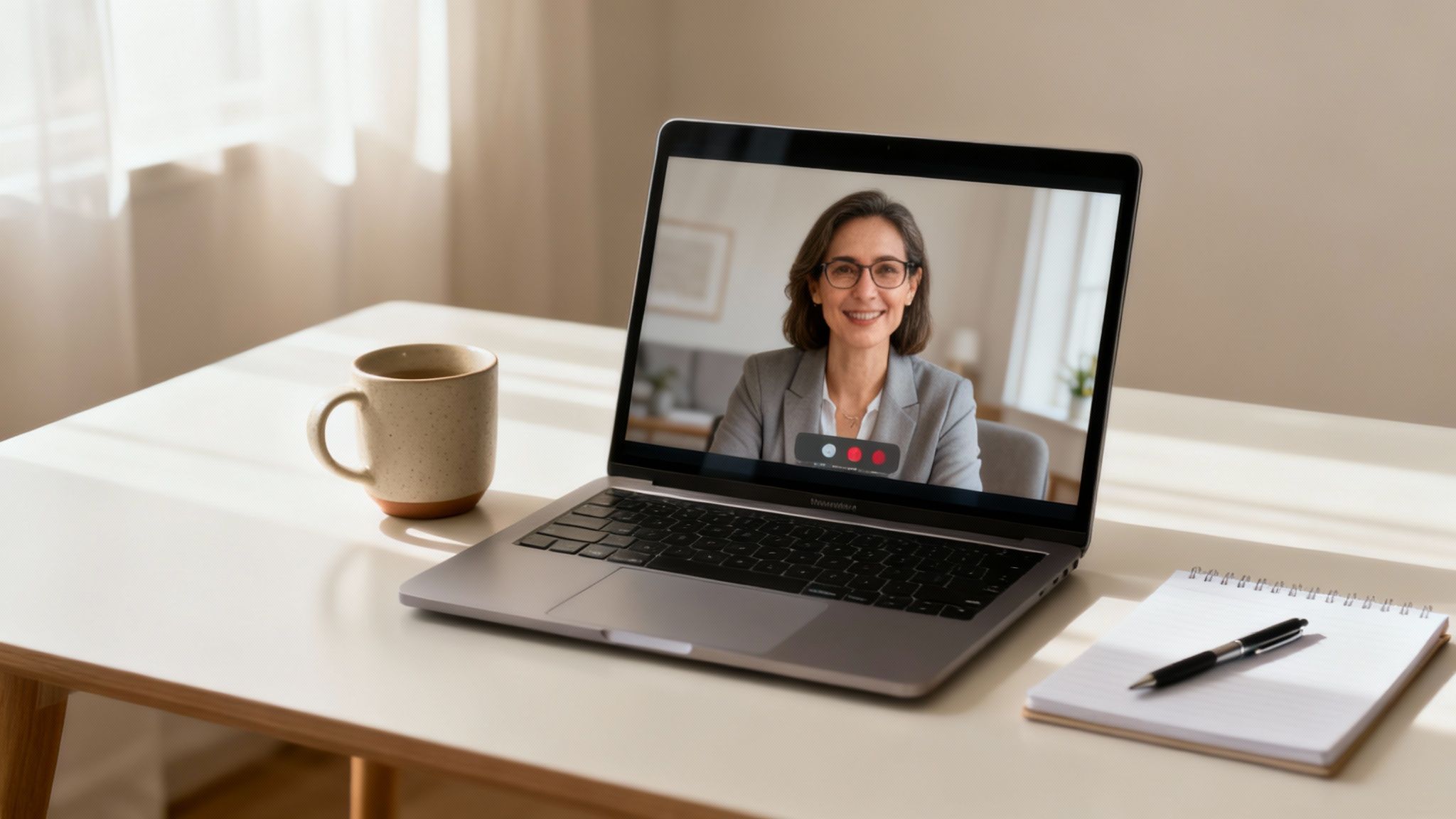
So, what does online therapy for depression look like in practice? It involves having a supportive, professional conversation from a space where you feel completely at ease. You build a genuine connection with a therapist through secure video calls, phone chats, or messaging.
The core goal is the same as in-person therapy: to create a safe, non-judgmental space. Here, you can explore your feelings, learn practical ways to cope with challenges like depression and anxiety, and work toward feeling more like yourself again.
Different Ways to Connect with Your Therapist
Online counselling offers several communication methods to suit your comfort level and schedule. Each format provides a unique way to engage in therapy.
-
Video Sessions: This format closely mirrors a traditional face-to-face meeting. Seeing your therapist allows for non-verbal cues to deepen understanding and connection.
-
Audio (Phone) Calls: If you prefer not to be on camera, audio sessions are a great alternative. Focusing solely on the conversation can make it easier for some people to open up.
-
Live Chat or Messaging: This involves real-time, text-based conversations. Typing out your thoughts can feel less intimidating than speaking, offering a discreet and comfortable option.
-
Asynchronous Messaging: This allows you to send messages to your therapist, who replies within a specific timeframe. It's incredibly flexible and gives you time to reflect on your thoughts before sharing them.
What Happens in a Typical Session
Regardless of the format, an online session is structured to support you. The first appointment is usually about getting to know each other, discussing what brought you to therapy, and exploring your goals.
From there, your therapist will work with you to create a personalized plan. This might involve talking through difficult experiences, learning new skills to manage depression, or examining thought patterns related to workplace stress. The entire process is centered on your unique needs.
The real power of online therapy lies in its ability to meet you where you are, both emotionally and physically. It removes barriers, making consistent, professional support a realistic part of modern life.
Remember, therapy is a partnership. Your therapist is there as a guide, but your active participation is what drives meaningful progress.
Building a Strong Therapeutic Bond Online
A common question is whether you can truly connect with a therapist you've never met in person. The answer is a clear yes. Research and personal experiences show that the therapeutic alliance—the bond of trust between you and your counsellor—can be just as strong online.
This connection is the foundation for real change. A skilled therapist knows how to create a sense of empathy, safety, and presence, even through a screen. Ultimately, consistency, active listening, and a shared commitment to your well-being build this powerful relationship.
Finding the Therapeutic Approach That Fits You
Starting online therapy is a significant step, and it's helpful to know that "therapy" includes various approaches. Each style has its own philosophy, and finding the right one is key to your progress. It's about finding a method that resonates with your personality and what you hope to achieve.
This process empowers you to be an active participant in your own journey. Understanding the different types of therapy can help you make an informed choice.
Cognitive Behavioural Therapy (CBT)
Cognitive Behavioural Therapy (CBT) is a well-researched and widely used approach. It is based on the idea that your thoughts, feelings, and behaviours are interconnected. By changing unhelpful thought patterns, you can positively influence how you feel and act.
A CBT therapist helps you identify and challenge negative thought patterns. They teach you practical, hands-on tools to replace these with more balanced and helpful thoughts. This approach focuses on making changes in the here and now.
CBT helps you become more aware of your thought patterns. It provides skills to restructure thoughts in a way that supports your well-being, focusing on practical solutions for current challenges.
Interpersonal Therapy (IPT)
While CBT focuses inward, Interpersonal Therapy (IPT) looks outward at your relationships. This approach recognizes that our connections with others significantly impact our mental health. Difficulties in relationships can be a major source of stress and contribute to depression.
IPT helps you identify and resolve issues within your key relationships. This could involve navigating conflict, processing grief, or adapting to major life changes. By improving communication and strengthening your social support system, you can lift your mood and build resilience.
Psychodynamic Therapy
Psychodynamic therapy explores how past experiences and unresolved conflicts may shape your current emotions and behaviours. It aims to uncover deeper, often unconscious, patterns that may be contributing to depression.
This approach helps you connect the dots between your past and present, offering deep insights into why you feel the way you do. By addressing these underlying issues in a safe space, you can begin to heal and break free from old patterns.
This table offers a quick comparison of common methods used in online therapy for depression.
Comparing Online Therapy Approaches for Depression
| Therapy Type | Primary Focus | Best Suited For |
|---|---|---|
| Cognitive Behavioural Therapy (CBT) | Identifying and changing negative thought patterns and behaviours. | People looking for practical, structured strategies to manage current symptoms of depression and anxiety. |
| Interpersonal Therapy (IPT) | Improving relationships and social functioning to relieve distress. | Individuals whose depression seems linked to relationship conflicts, grief, or major life transitions. |
| Psychodynamic Therapy | Exploring past experiences and unconscious thoughts to understand current feelings. | Those who want to gain deep insight into the root causes of their depression and recurring emotional patterns. |
| Mindfulness-Based Therapies | Using mindfulness and meditation to increase awareness and acceptance of the present moment. | Anyone struggling with rumination or worry, looking to break free from cycles of negative thinking. |
It's good to know that many therapists use an integrative approach. They blend techniques from different models to create a plan tailored specifically to you.
The most important factor for success isn't the specific type of therapy, but the connection you feel with your therapist. Finding someone you trust is the true foundation for growth.
Is Online Counselling Right for You? A Look at the Real Benefits and Drawbacks
Choosing how to support your mental health is a deeply personal decision. Online counselling has made therapy more accessible for many, but it's important to understand if it's the right fit for you. Let's have an honest look at its strengths and limitations.
For many dealing with depression, online therapy can be transformative, especially in a country like India. It removes the barrier of distance, allowing you to connect with a skilled therapist from anywhere. This flexibility helps you find time for yourself, whether during a lunch break or late in the evening.
There is also a sense of comfort in speaking from your own familiar space. For someone feeling nervous about starting therapy, this can make it much easier to open up. It offers a gentle way to begin the process of healing and self-discovery.
The Upside: What Makes Digital Support So Powerful?
The primary advantage of online therapy is accessibility. When you're managing workplace stress or the weight of depression, removing obstacles is key. Online platforms put professional help at your fingertips, making consistent care a real possibility.
Here’s a breakdown of the key advantages:
- No Commuting: Attend sessions from anywhere with an internet connection, saving time and travel costs.
- Fits Your Schedule: Many online therapists offer flexible hours, including evenings and weekends.
- Your Safe Space: Speaking from home can feel less intimidating and more private, promoting openness in counselling.
- A Wider Pool of Experts: Access therapists with specific specializations, not just those in your local area.
The shift to digital mental healthcare has already shown a positive impact. During the COVID-19 pandemic, online therapy became mainstream in India. One study noted that between 2020 and 2025, average depression scores showed a significant drop, with online support playing a key role. You can read the full study on pandemic-era mental health trends to learn more.
The Other Side of the Coin: Practical Limitations to Consider
While the benefits are clear, it's important to be realistic about the drawbacks. Online therapy may not be suitable for everyone or every situation. For instance, it relies entirely on technology, and a poor internet connection can disrupt a session.
Building a strong therapeutic connection through a screen can also feel different for some. While many form deep bonds with their online therapists, others may miss the energy of an in-person meeting.
It's absolutely critical to understand that online therapy is not suitable for severe mental health crises. If you are having thoughts of harming yourself or are in a psychiatric emergency, you need immediate, in-person help. A crisis helpline or the nearest hospital is your safest option.
Finally, ensuring privacy in your home environment is crucial. It’s important to find a confidential space for your sessions. Taking these practical challenges into account will help you make an informed choice for your well-being and resilience.
How to Find the Right Online Therapist for You
Choosing a therapist is about finding a genuine connection with someone you trust. Think of it as seeking a skilled guide for your journey. You want someone who knows the terrain and helps you feel safe, heard, and understood.
The process of finding the right professional can feel daunting, but breaking it down into small steps helps. The goal is to find someone whose expertise and style align with your needs. This chart can help you think through your options.
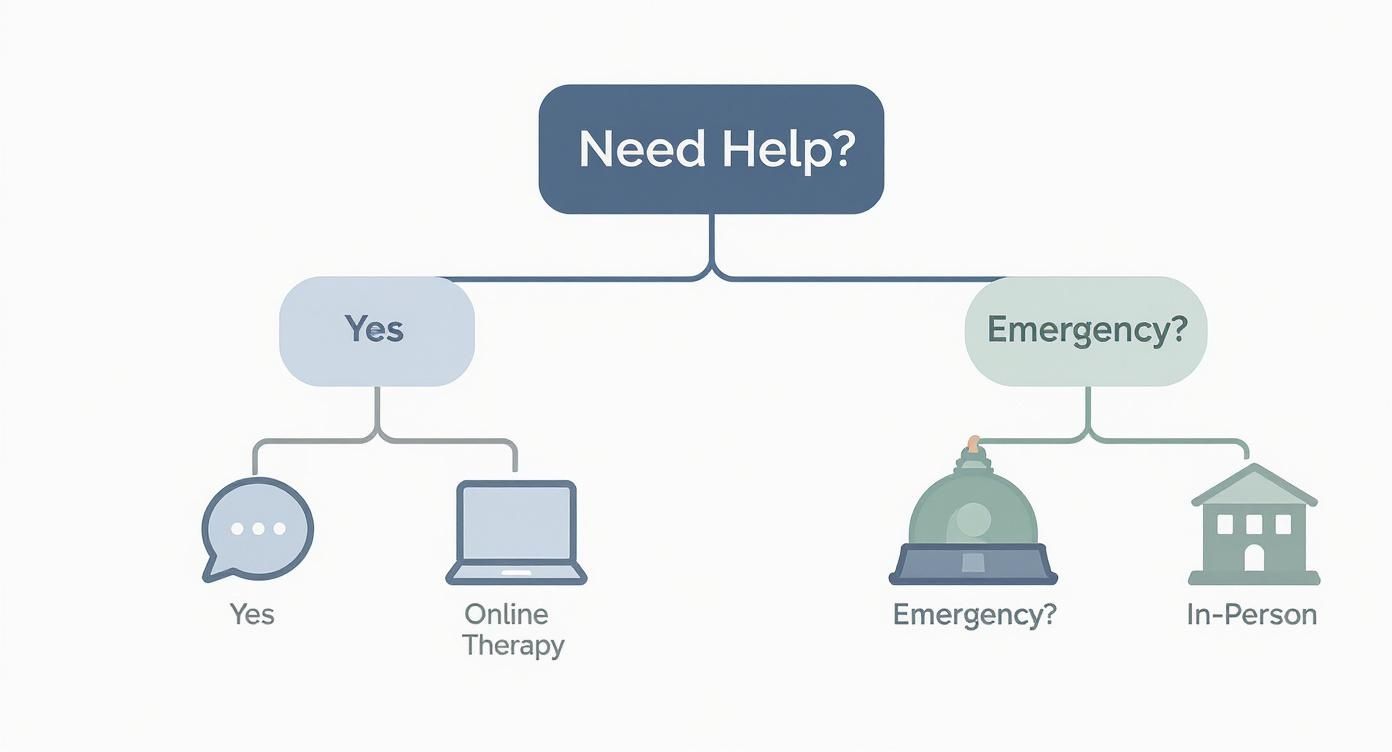
As you can see, online therapy is an excellent option for consistent, ongoing support. However, for crisis situations, immediate in-person help is essential.
Verifying Qualifications and Specialisations
First, ensure any therapist you consider has the right credentials. In India, look for professionals with degrees like an M.A., M.Sc., or M.Phil in Clinical Psychology. Registration with the Rehabilitation Council of India (RCI) is a strong indicator of professional standing.
Beyond qualifications, look into their areas of expertise. Many therapists specialize in challenges like depression, anxiety, or workplace stress. Finding someone experienced in the areas you need help with can make a significant difference.
The Importance of Cultural and Personal Fit
A therapist who understands your cultural background can be incredibly helpful. When you don't need to explain cultural nuances, you can focus on the core issues more quickly. This shared context can build a bridge of understanding from the very first session.
Beyond culture, a personal connection is vital. You need to feel comfortable being your authentic self without judgment. The right therapist creates an environment of validation and respect, which is the foundation for a strong therapeutic relationship.
The right therapist doesn't just listen to your words; they hear the feelings behind them. Trust your intuition—the "chemistry check" during an initial consultation is often the most reliable guide to finding the right fit for your journey.
Using Initial Consultations to Your Advantage
Many online platforms offer introductory sessions, often at a reduced cost. Use this as a no-pressure opportunity to see if you connect with the therapist. It's a time to ask questions and notice how you feel during the conversation.
Here are a few questions you might consider asking:
- What is your approach to helping people with depression?
- How do you help clients build resilience and improve their well-being?
- What does a typical counselling session with you look like?
- How will we track progress in therapy?
Pay attention to both their answers and their energy. Do they seem empathetic and respectful? This initial interaction provides a valuable preview of what a long-term therapeutic relationship might feel like.
Remember, it is perfectly okay if the first person isn't the right fit. Taking the time to choose thoughtfully is a powerful act of self-care.
Your Journey Towards Lasting Resilience
The path to feeling better is a gradual process of building inner strength and self-compassion. This journey is uniquely yours, and every step you take is a genuine victory.
Remember that asking for help is a sign of strength, not weakness. Online therapy for depression is a valid and effective tool that can provide the supportive guidance you need to navigate feelings of depression, anxiety, or workplace stress.
Supportive Takeaways for Your Path Forward
As you move forward, keep these gentle reminders in mind. Think of them as anchors to hold onto during the natural ups and downs of your emotional health.
- Your Feelings Are Valid: Whatever you are feeling is real and deserves to be heard. Therapy offers a safe, non-judgmental space to explore those feelings.
- Progress Over Perfection: Healing is not a straight line. Focus on gradual progress rather than an impossible standard of perfection.
- Kindness is Key: Be gentle with yourself throughout this process. Self-compassion is a powerful skill for building emotional resilience.
A Brighter, More Balanced Future
Despite the growing acceptance of online therapy for depression in India, a significant gap remains between those who need help and those who receive it. The National Mental Health Survey found that while many Indians could benefit from support, few access it. Online counselling is helping close this gap, though challenges like digital literacy and stigma persist, as noted in resources on mental wellness in India on youremotionalwellbeing.org.
This highlights the importance of accessible, professional support. Online platforms are working to make quality care more widely available, connecting more people with qualified therapists.
Every step you take towards understanding your mental well-being is a courageous move. Exploring your options with curiosity and kindness opens the door to a future where you feel more in control, understood, and hopeful.
We encourage you to explore the possibilities that online therapy offers. Professional support is available to help you navigate challenges and build a life with greater happiness and meaning. Your journey matters, and you don’t have to walk it alone.
Your Questions About Online Therapy, Answered
Deciding to explore online therapy is a big step, and it's natural to have questions. This section provides clear, straightforward answers to common concerns. Our goal is to offer the clarity you need to feel confident moving forward.
Everyone's path is different, and finding what works for you is what truly matters. We hope these answers help you on your journey.
Is Online Therapy Actually as Good as Meeting in Person?
For many people with mild to moderate depression, research shows that online therapy can be just as effective. The success of therapy depends on the connection you build with your therapist and your commitment to the process, not the format.
The flexibility of online therapy is a major advantage. Connecting via video, audio, or chat from your own comfortable space can sometimes make it easier to open up.
How Do I Know My Sessions Are Private?
Reputable online therapy platforms use secure, encrypted technology to protect your conversations. This is similar to the security used for online banking, ensuring your information remains confidential.
Therapists are also bound by the same strict professional ethics and confidentiality laws, whether online or in person. Always check a platform's privacy policy to ensure you feel secure.
Your privacy isn't just a feature; it's a fundamental part of ethical therapy. A trustworthy platform will be upfront about how they protect your data, so you can focus on what matters—your well-being.
What if I Don't Click With the First Therapist I Try?
It’s completely normal and okay if you don’t connect with the first therapist you meet. The 'therapeutic alliance,' or your relationship with your therapist, is a key factor in successful therapy. You need to feel safe and understood.
Most online services make it easy to switch to a new counsellor. Don't be discouraged by an initial mismatch; think of it as part of the process of finding the right fit for your journey toward resilience.
What’s the Typical Cost for Online Therapy in India?
The cost of online therapy can vary depending on the therapist's experience and the platform used. The good news is that online therapy is often more affordable than traditional in-person sessions.
In India, session prices typically range from around ₹800 to over ₹2,500. Many platforms offer subscription plans or package deals that can make consistent support more budget-friendly.
Taking the first step can feel challenging, but you don't have to do it alone. DeTalks offers a safe, supportive space to find qualified therapists who understand depression. You can explore our directory of professionals or take one of our confidential, science-backed assessments to get a clearer picture of your needs. See how we can help at https://detalks.com.