Tag: counselling

  • How to Find a Therapist: A Practical Guide for Your Well-being

    How to Find a Therapist: A Practical Guide for Your Well-being

    Deciding to find a therapist is a powerful first step on your personal journey. Before searching, it helps to reflect on what you need, understand your options, and know where to begin your search for support. This guide will help you create a clear map for your path forward.

    Starting Your Search for the Right Therapist

    Looking for a therapist is a significant investment in your well-being. It’s a positive step, whether you're navigating challenges like stress, anxiety, or depression, or aiming to build a more resilient and fulfilling life. The process begins with one simple, personal question: “What am I hoping to achieve?”

    Answering that honestly gives you a clearer picture of the support you need. Remember, therapy isn't just for crisis moments; it's also a powerful space for personal growth and building the life you want.

    Why Are You Seeking Therapy Now?

    Everyone's reasons for starting therapy are unique. Perhaps workplace stress is leading to burnout, or you are looking for ways to manage feelings of anxiety or depression. Your path might also be about positive growth.

    Many people explore therapy to build resilience, cultivate self-compassion, improve relationships, or connect with a deeper sense of purpose. Taking a moment to think about your "why" helps you clarify your goals. For instance, are you thinking:

    • "I need skills to manage my anxiety in social situations." (Navigating specific challenges)
    • "I want to feel more confident and believe in myself." (Personal growth and happiness)
    • "I'm going through a major life transition and need support." (Coping with change)
    • "My partner and I are struggling to communicate effectively." (Improving relationships)

    Pinpointing your core motivation makes it much easier to find a professional whose skills and experience align with what you need.

    Understanding the Mental Health Landscape in India

    Finding a qualified therapist in India can sometimes feel challenging, and there are systemic reasons for this. India faces a significant mental health treatment gap, with many people who need support not receiving it. This is compounded by a shortage of qualified professionals and social stigma that can make reaching out feel difficult.

    However, things are changing for the better. There's a growing awareness of mental well-being, and more people are seeking support for everything from workplace stress to clinical depression. This has led to an expansion of both online and in-person services, making therapy more accessible.

    Remember, any difficulty in finding a therapist is a reflection of the system, not a reflection of you or the importance of your needs. Taking the step to look is a courageous act.

    This checklist is designed to help you organize your thoughts before you dive into the search.

    A Self-Reflection Checklist to Clarify Your Needs

    Use this checklist to reflect on your goals and preferences before you start your search for a therapist.

    Area of Reflection Guiding Questions Your Notes
    Your Primary Goal What is the #1 thing you want to change or achieve through therapy?
    Key Challenges What specific feelings, situations, or patterns are causing you distress?
    Therapy Style Do you want a therapist who mostly listens, or one who gives direct advice and "homework"?
    Practical Needs What’s your budget per session? What days/times work for your schedule?
    Personal Comfort Do you have a preference for your therapist’s gender, age range, or cultural background?

    Spending 15-20 minutes on these questions can bring incredible clarity and make the process feel more manageable.

    Clarifying Your Personal Preferences

    Beyond your core goals, the practical details are very important. Finding a setup that fits your life is key to sticking with therapy long-term.

    Think about what truly works for you. Does meeting a therapist in a face-to-face setting feel right, or does the convenience of online therapy from home sound more appealing?

    Here are a few key preferences to consider:

    • Session Format: Do you prefer online video calls, phone sessions, or in-person meetings?
    • Therapist's Gender: You might find it easier to open up to a therapist of a specific gender.
    • Language: It's vital that your therapist is fluent in a language you can express yourself in completely.
    • Budget: Be realistic about what you can comfortably afford per session or on a monthly basis.

    Modern platforms can help you filter your options effectively. Once you have a clearer idea of your needs, you can begin your search on BuddyPro, which allows you to find professionals based on these exact preferences.

    Exploring Different Therapy Options in India

    Once you know what you’re looking for, you can start exploring where to find that support. The mental health landscape in India has expanded, offering more choices than ever, from traditional in-person counselling to the convenience of online platforms.

    This means you can find a path that fits your life and comfort level. Whether you prefer meeting in person or need the flexibility of online sessions, a solution is available for you.

    The Rise of Online Therapy Platforms

    In recent years, online therapy has become a popular choice for many people. Platforms like DeTalks bring professional counselling to those who might have struggled to access it before, especially in smaller towns or with busy schedules.

    The main benefit is convenience. You can speak with a qualified professional from home, eliminating travel time and giving you access to a wider pool of specialists.

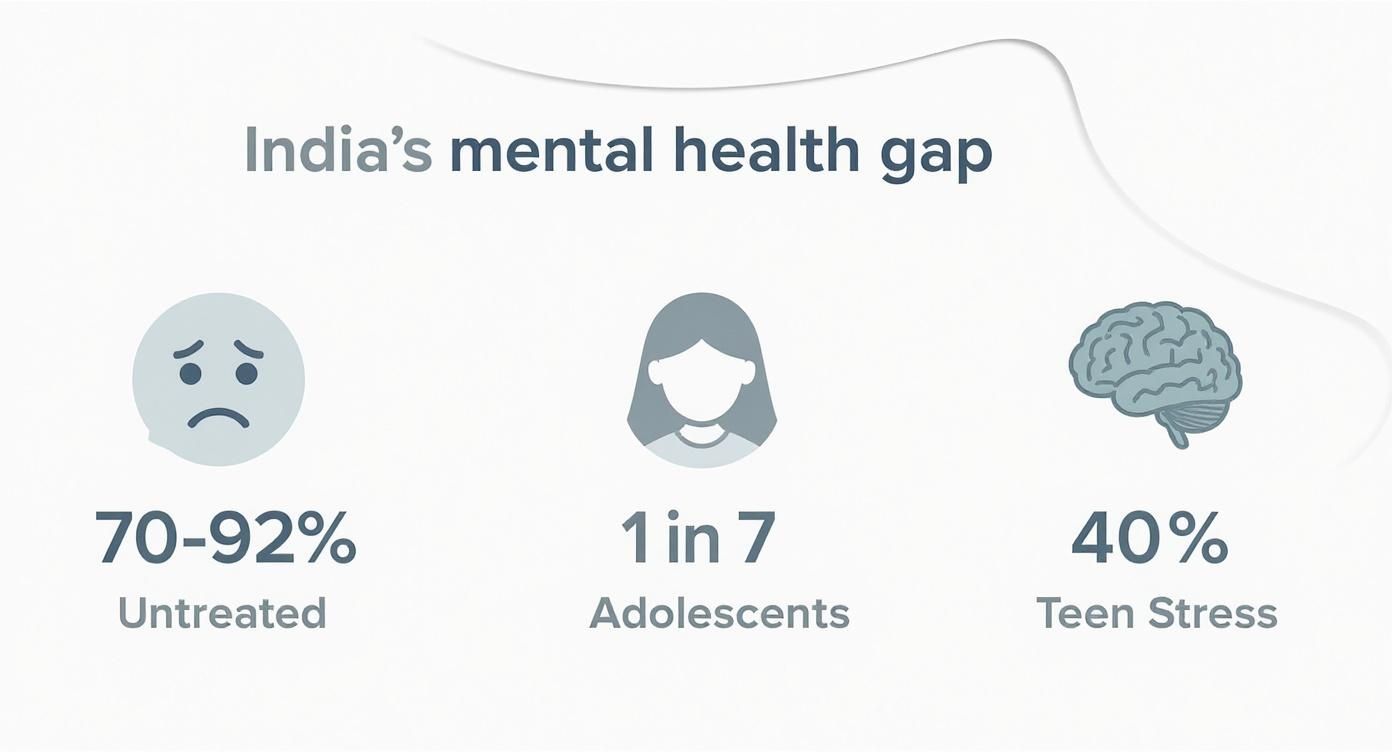
    The data highlights the need for accessible mental health care in India, and online services are helping to bridge this gap.

    Infographic about how to find a therapist

    These numbers show that many people who need help aren't getting it, with young people facing particular challenges.

    Finding In-Person Counselling

    While online therapy offers flexibility, the traditional face-to-face approach remains a powerful choice. Meeting a therapist in a dedicated, neutral space can build a strong sense of safety and connection.

    If you’re looking for a local practitioner, here’s where you can start:

    • Ask for recommendations: Your doctor or a trusted friend may be able to suggest a well-regarded professional.
    • Check local directories: Community health centers or local websites often list qualified therapists.
    • Contact hospitals: Many large hospitals have psychology departments with outpatient services.

    Consider practical factors like travel time and the clinic's atmosphere, as the right environment can make a big difference.

    Choosing between online and in-person therapy is a personal decision. There's no right or wrong answer—only what works best for your comfort, lifestyle, and therapeutic goals.

    Understanding the Evolving Mental Health Market

    India's mental health market is becoming more diverse and sophisticated. We are seeing a range of services from inpatient care for serious conditions to accessible telemedicine for managing day-to-day anxiety and depression.

    This growth reflects a greater investment in well-being. While inpatient services meet acute needs, issues like depression, anxiety, and workplace stress affect many people. New, specialised services are emerging to help individuals build resilience and improve their lives. You can read the full research about the India mental health market for more details.

    How to Check a Therapist's Credentials

    Once you have a few names of potential therapists, the next step is to ensure they are qualified. This is an empowering way to take an active role in your own care.

    Verifying credentials ensures that the person you confide in has the proper training to help you navigate your challenges, whether it's managing anxiety or building healthier relationships.

    Understanding Different Mental Health Roles

    In India, several key professionals work in mental health, and their titles can sometimes be confusing. Knowing the difference between roles like 'counsellor' and 'psychologist' will help you find the right fit.

    Let's clarify these roles. The following table compares the most common mental health professionals in India.

    Types of Mental Health Professionals in India

    Professional Title Typical Qualifications Can They Prescribe Medication? Key Focus Areas
    Psychiatrist MBBS, MD in Psychiatry Yes Assessment of mental health conditions, medication management, and treatment for complex disorders.
    Clinical Psychologist M.Phil in Clinical Psychology, RCI Licence No Psychotherapy, psychological assessments (informational, not diagnostic), and support for a wide range of mental health concerns.
    Counsellor/Psychotherapist Usually a Master’s degree (MA/MSc) in Psychology No Providing talk therapy for life challenges like stress, grief, relationship problems, and personal growth.

    Understanding these distinctions helps narrow your search. A psychiatrist is the right choice if you think you may need medication, while a clinical psychologist is ideal for in-depth therapy. A counsellor can be a great ally for support with life's hurdles.

    The RCI Licence: A Mark of Credibility

    For clinical psychologists, the most important credential is their RCI registration number. The Rehabilitation Council of India (RCI) is the government body that regulates their training and practice in the country.

    An RCI licence confirms the psychologist has completed a rigorous, supervised M.Phil programme. You can and should ask for their RCI number and verify it on the RCI website.

    Think of an RCI licence as a quality-assurance seal. It confirms a clinical psychologist has met national standards for education and ethical practice, giving you peace of mind.

    Navigating the Unregulated Field of Counselling

    In India, the field of counselling is largely unregulated, which means there isn't a single, mandatory licensing body. This can make verifying a counsellor's background more challenging.

    However, there are many skilled and ethical counsellors available. It simply means you need to be a more informed and proactive searcher.

    This situation reflects a broader issue in India's mental health landscape, which faces a critical shortage of professionals. There are only 0.75 psychiatrists per 100,000 people, and only a few thousand clinical psychologists are RCI registered. You can explore more insights on India's mental health landscape to understand the full context.

    Questions to Ask When Credentials Aren't Standardised

    Since there isn't a single licence for counsellors, it's important to ask direct questions during your initial consultation. A genuine professional will appreciate your diligence.

    Here are a few things you can ask:

    • What is your educational background? Look for at least a Master’s degree in Psychology (MA/MSc).
    • What specific therapeutic training have you had? Ask about their approaches, like Cognitive Behavioural Therapy (CBT) or mindfulness-based techniques.
    • Do you receive regular supervision? This is a great sign that they are committed to providing high-quality care.
    • Are you part of any professional associations? Membership in organisations shows a commitment to professional standards.

    Asking these questions helps build a foundation of trust and ensures you are placing your well-being in capable hands.

    Making the Most of Your First Session

    A therapist and client having a productive first session.

    Congratulations on booking your first therapy session. It's normal to feel a mix of excitement and nervousness.

    This initial meeting is an opportunity for you and the therapist to see if you are a good fit. The main goal is to lay the groundwork for a safe, trusting relationship, which is where the real work happens.

    What to Expect in Your First Conversation

    Your first session may be more structured. The therapist will likely cover essentials like confidentiality and scheduling, then shift the focus to what brought you to counselling.

    They may ask open-ended questions like, "What’s on your mind?" or "What are you hoping to get from therapy?" There are no right or wrong answers. Sharing a bit about what you're navigating—whether it’s workplace stress, anxiety, or a desire to build resilience—is a great start.

    You are in control of the conversation. Share what feels comfortable, as a good therapist will always respect your pace.

    Setting the Stage for a Good Fit

    The connection you build with your therapist, known as the "therapeutic alliance," is a key factor in successful therapy. Research shows this bond is more critical than the specific techniques a therapist uses.

    During your first meeting, pay attention to how you feel. Do you feel seen and heard? Trust your instincts. It's perfectly okay to keep looking if the connection doesn't feel right.

    Your comfort and sense of safety are non-negotiable. This first session is your chance to see if that connection is there. A good fit helps create a solid foundation for your journey toward improved well-being.

    Thoughtful Questions to Ask Your Therapist

    This is also your opportunity to interview them. Coming prepared with questions can help you feel more in control and ensure their approach aligns with your needs.

    Here are a few ideas:

    • About Their Experience:

      • "What’s your experience working with people dealing with issues like mine (e.g., anxiety, depression, burnout)?"
      • "Which therapeutic approaches do you use most often, and why?"
    • About the Therapeutic Process:

      • "What does a typical session with you look like?"
      • "How will we track progress together?"
      • "What’s your philosophy on the therapist-client relationship?"
    • About Practical Details:

      • "What are your fees and payment policies?"
      • "What is your policy for rescheduling sessions?"
      • "How can I contact you between sessions if needed?"

    Asking these questions is about making an informed choice and starting your partnership on a collaborative note.

    Supportive Takeaways for Your Path Ahead

    After your first session, take a moment to reflect. The goal isn't to feel "cured" but to feel that you've found a safe space to begin your work.

    Focus on how the interaction felt, not on immediate results. This is a journey of progress, not perfection. Just showing up is a powerful act of self-care.

    Building a Supportive Path Forward

    Deciding to find a therapist is the start of a journey of healing and growth. Therapy is a collaboration where your voice and experiences are central.

    Together, you and your therapist will explore patterns, build new skills, and create a life that feels more authentic to you.

    The Journey Is Not Always a Straight Line

    It's okay if the first therapist you meet isn't the right one. This is not a failure but a crucial part of the process. The connection with your therapist needs to feel right for you to open up and do meaningful work.

    Continuing the search shows your commitment to finding the support you deserve. Every conversation teaches you more about what you need and brings you one step closer to the right fit.

    Your commitment to finding the right support is what matters most. Acknowledging a mismatch and choosing to continue the search is an act of empowerment and a testament to your dedication to your mental health.

    Nurturing Your Well-Being Beyond the Session

    Real progress often happens between appointments as you apply insights from therapy to your daily life. It’s about weaving what you learn into your everyday routines.

    This might mean practicing new ways of thinking, like using mindfulness exercises during a stressful workday. If you're building resilience, you might start a gratitude journal. You might also explore tools like effective time management strategies for adults with ADHD to manage daily life better.

    These small, consistent actions reinforce the work you do in sessions and create lasting change.

    A Focus on Growth and Resilience

    Therapy isn't just about managing challenges like workplace stress, anxiety, or depression. It's also a space to cultivate positive aspects of your life, such as joy, meaning, and connection.

    Your path can include building skills that make life richer, such as:

    • Strengthening Resilience: Learning to navigate life’s ups and downs with emotional balance.
    • Fostering Self-Compassion: Treating yourself with kindness, especially during difficult times.
    • Cultivating Happiness: Actively identifying and nurturing what brings you genuine joy.

    This approach shifts the focus from simply "fixing" what's wrong to actively building what's right, helping you move from coping to flourishing.

    Supportive Takeaways for Your Path Ahead

    As you move forward, remember that this is your journey, unfolding at its own pace. There's no set timeline for growth, only a commitment to showing up for yourself with kindness.

    Be patient with yourself. Some weeks will feel like great progress, while others may feel slow. The goal isn't a "cure" but a deeper connection with yourself and the tools to build a more resilient, meaningful life.

    Your Questions, Answered

    It’s completely normal to have questions as you start looking for a therapist. Let's address some of the most common ones to help you feel more confident.

    How Do I Know If a Therapist Is the Right Fit for Me?

    Finding the right therapist is more about a feeling of connection than a checklist. During your first conversation, notice how you feel. Do you feel seen, heard, and respected without judgment?

    That feeling of safety is the foundation of a good therapeutic relationship. Trust your intuition. If something feels off, it’s okay to keep looking for someone else.

    What Is the Difference Between Counselling and Therapy?

    These terms are often used interchangeably, but there's a slight distinction. Counselling is often short-term and focuses on specific issues, providing practical tools for challenges like workplace stress or life transitions.

    Therapy tends to be a deeper, longer-term process that explores the roots of ongoing patterns, such as chronic anxiety or depression. Neither is better; it just depends on your current needs.

    How Much Does Therapy Cost in India and Is Online Therapy Cheaper?

    The cost of therapy in India varies depending on the therapist's experience and location. An in-person session in a major city can range from ₹1,000 to ₹3,000 or more.

    Online therapy has made support more accessible and often more affordable, with some platforms offering sessions starting from ₹500–₹800. While cost is a factor, always verify the professional's credentials to ensure you receive quality care.

    Your mental health journey is a marathon, not a sprint. Remember to be patient and kind to yourself as you navigate the process of finding the right support. The goal is progress, not perfection.

    How Can I Bring Up a Difficult Topic with My Therapist?

    It's common to feel anxious about discussing something deeply personal. A good therapist is trained to create a safe space for these conversations.

    You can start simply by saying, "There’s something I want to talk about, but I'm finding it difficult to bring up." This invites your therapist to guide the conversation gently, at a pace that feels comfortable for you.


    Ready to find your person? At DeTalks, we've brought together qualified and compassionate therapists from all over India to make your search easier. You can browse profiles, filter by what's important to you, and book a session that works for your life, all in one confidential, supportive space.

    Visit DeTalks to start exploring today.

  • How to Control My Thoughts for Mental Clarity

    How to Control My Thoughts for Mental Clarity

    Learning how to control my thoughts isn't about forcing your mind into silence. It's a gentler process of listening to your inner dialogue and guiding the conversation with kindness, which builds resilience and improves your overall well-being.

    This skill helps you understand that you are not your thoughts; you are the one who observes them. This small shift in perspective is the first step toward managing stress, anxiety, and the pressures of daily life with greater calm.

    Understanding Your Inner Dialogue

    Before you can guide your thoughts, you have to get to know them. Our minds are constantly active, and much of this inner chatter happens automatically, influenced by our past experiences and core beliefs.

    These automatic thoughts can be triggered by everyday challenges, from workplace stress to personal anxiety. Learning to notice them without judgment is a key step toward improving your mental well-being and building emotional strength.

    The Nature of Automatic Thoughts

    Imagine you have a major presentation at work in Mumbai. A thought like, "I'm going to mess this up," might suddenly appear. This isn't a conscious choice but an automatic reaction, perhaps rooted in past fears.

    Recognising that these thoughts are just mental events—not facts—is incredibly freeing. The goal isn't to stop thinking, but to change your relationship with your thoughts, observing them with curiosity instead of fear.

    The Broader Context of Mental Well-being

    Managing our thoughts is especially important in a place like India, where the pressures of work and family life can feel intense. This environment can often fuel feelings of anxiety, self-doubt, and burnout.

    When challenges like depression or anxiety are present, managing your thoughts can feel even harder. Exploring mental health issues in India shows just how common these experiences are.

    This is why developing thought-management skills is so vital. It helps you build a foundation of self-awareness and compassion, allowing you to navigate life's challenges with greater ease and happiness.

    This process isn't about fighting with your mind. It's about treating yourself with kindness and curiosity, creating a safe internal space where you can build resilience and find greater peace.

    This gentle approach allows you to become an explorer of your thoughts rather than a prisoner to them. Understanding where they come from is the first step toward guiding them to a more balanced and supportive place.

    How to Observe Your Thoughts Without Judgment

    The first skill in managing your mind is to simply watch your thoughts without getting caught up in them. This creates a small but powerful space between you and your thoughts, which is key for building resilience.

    When you can see a thought as just a mental event, it loses its power to trigger an immediate emotional reaction. This helps you handle everything from workplace stress to feelings of anxiety with more calm and clarity.

    Create Space with Mindful Breathing

    A simple way to step back from a racing mind is to focus on your breath. This isn't about stopping your thoughts, but gently shifting your attention to the physical sensation of breathing.

    When you feel overwhelmed, find a quiet spot and bring your awareness to the air moving in and out of your body. If your mind wanders, just notice it and gently guide your focus back to your breath.

    Label Your Thoughts Gently

    Once you have a little distance, you can start to gently label what your mind is doing. This isn't about deep analysis; it’s simply a way of categorising your thoughts, like "planning" or "worrying."

    For example, if the thought "They'll think I'm an idiot" appears, you can label it as a "judging thought" or a "fear thought." This act of naming helps you see it as a mental habit rather than a fact.

    By simply naming what your mind is doing, you shift from being in the thought to being an observer of the thought. This simple change in perspective is a powerful tool for improving your well-being.

    Start a Thought Journal

    A thought journal is a private space to notice your recurring thought patterns. This simple practice can help you identify triggers for anxiety or low moods without pressure to fix anything.

    You can use a notebook or a notes app with a simple structure:

    • The Situation: What was happening? (e.g., "My boss sent a one-word email: 'Urgent'.")
    • The Thought: What did your mind say? (e.g., "I've messed something up badly.")
    • The Feeling: What emotion came up? (e.g., Panic, dread.)

    Remember, these informational self-assessments are for your awareness and are not a substitute for a professional diagnosis. If the patterns you notice feel overwhelming, seeking professional counselling can provide supportive guidance.

    Gently Questioning Unhelpful Thinking Patterns

    Once you're comfortable observing your thoughts, you can begin to question them with gentle curiosity. This isn't about self-criticism, but about checking if your thoughts are as true as they feel in the moment.

    This practice builds mental flexibility, a key skill for improving your well-being and strengthening your resilience against workplace stress and other life challenges.

    Identify Common Thought Traps

    Our brains sometimes take mental shortcuts that aren't very helpful, often called "thought traps." Learning to recognise them is the first step toward loosening their hold on your mood and actions.

    Here are a few common ones:

    • Black-and-White Thinking: Seeing things as all-or-nothing. For example, a small mistake makes you think, "I'm a complete failure," instead of, "I made an error I can correct."
    • Catastrophising: Assuming the worst-case scenario will happen. A friend not replying to a text immediately leads to, "They must be angry with me."
    • Mind Reading: Believing you know what others are thinking without evidence. You might assume, "My boss thinks I'm incompetent," after a brief interaction.

    These patterns can feel particularly strong when dealing with anxiety or depression. In a high-pressure environment like India, these thoughts can feel very real and powerful.

    Becoming aware of these patterns is not about self-criticism. It’s about understanding your mind's habits so you can respond with more wisdom and self-compassion.

    Ask Compassionate Questions

    After you notice an unhelpful thought, you can explore it with a few simple questions. Approach this with kindness, as if you were helping a friend.

    Try asking yourself:

    • What's the evidence for this thought? And what's the evidence against it?
    • Is there a more balanced or realistic way of looking at this situation?
    • What would I say to a friend who was having this exact thought?

    Practising this helps build mental strength. You can explore critical thinking exercises to develop these skills further. This self-exploration is for your benefit and is not a clinical diagnosis; if you feel overwhelmed, professional counselling can offer personalised support.

    Reframing Thoughts for a Kinder Inner Voice

    After you've learned to notice and question your thoughts, the next step is to cultivate a kinder inner voice. Reframing is the skill of shifting a harsh thought into one that is more balanced, compassionate, and constructive.

    This isn't about ignoring problems but about finding a more helpful perspective. This small shift can have a big impact on your well-being and build the resilience you need to navigate workplace stress and personal challenges.

    Turning Criticism into Compassion

    The first step is to catch a self-critical thought and consciously replace it with something more supportive. Think of it as swapping an inner critic for a compassionate coach.

    Here’s an example:

    • Harsh Inner Critic: "I completely failed that job interview. I'm so useless."
    • Supportive Coach: "That interview was challenging. It was a good learning experience for next time."

    Another example might be:

    • Harsh Inner Critic: "I can't believe I made that mistake. Everyone must think I'm incompetent."
    • Supportive Coach: "I made a mistake, which is human. I can fix it and learn from it."

    With practice, you begin to strengthen neural pathways linked to self-compassion and problem-solving. This is how you can guide your thoughts in a way that truly supports your well-being.

    Reframing doesn't change the facts of a situation, but it fundamentally changes the story you tell yourself about it. This shift in narrative is where your power lies.

    Cultivating a More Positive Focus

    You can also build a more positive mindset through simple, daily habits from positive psychology. These practices train your brain to notice what's good and what's working in your life.

    Two helpful habits include:

    1. Practising Gratitude: Each day, take a moment to identify three specific things you're grateful for. This could be a warm cup of chai, a kind word, or a moment of peace.
    2. Acknowledging Small Wins: Celebrate your small accomplishments instead of waiting for a huge success. Finishing a difficult task or handling a stressful conversation with grace are both wins worth noting.

    Reframing your thoughts effectively is supported by strong cognitive skills. It can be helpful to improve your executive function, as these abilities are key to regulating thoughts and actions.

    These practices are valuable tools for building a stronger mindset, but they are not a cure for conditions like anxiety or depression. They are supportive habits for your mental well-being, helping you build a foundation of inner strength.

    When to Seek Professional Support

    While self-help strategies are powerful, sometimes our thoughts are too heavy to manage alone. Reaching out for professional support through therapy or counselling is a proactive and courageous step toward lasting well-being.

    A therapist provides a safe, confidential space to explore your thoughts without judgment. They offer expert guidance and personalised strategies that can help you build resilience and navigate challenges more effectively.

    Signs It Might Be Time to Reach Out

    Knowing when you need extra support is a sign of self-awareness. It may be time to seek professional help if your thoughts are consistently interfering with your daily life.

    Consider reaching out if you notice these signs:

    • Persistent Distress: Your thoughts regularly cause significant emotional pain, anxiety, or sadness that doesn't go away.
    • Interference with Daily Life: Your thinking patterns make it difficult to focus at work, maintain relationships, or care for yourself.
    • Feeling Overwhelmed: You feel like you're losing the battle with your thoughts, and your coping strategies aren't enough to manage workplace stress or other pressures.
    • Lack of Joy: You've lost interest in activities you once enjoyed, which can sometimes be a sign of depression.

    Seeking therapy isn't an admission of weakness; it's an investment in your mental fitness. It’s dedicated time to build the resilience and skills you need to face life’s challenges with more clarity and kindness towards yourself.

    Normalising the Conversation in India

    In India, there can be a gap between needing and receiving mental health support due to social stigma and other barriers. This can make the journey of managing your thoughts feel isolating. You can learn more about India’s mental health challenges.

    Choosing to seek counselling is a meaningful decision for your own well-being and helps normalise the conversation for others. Therapy is a supportive partnership that can empower you to build a healthier inner world.

    A Few Common Questions

    It's natural to have questions as you begin to explore how to manage your thoughts. Here are some straightforward answers to common concerns.

    How Long Will This Take to Work?

    The timeline is different for everyone. Some people feel relief right away just by becoming more aware of their thoughts, while for others, it takes a few weeks of consistent practice.

    Be patient and compassionate with yourself. Focus on small, steady progress rather than expecting an overnight transformation, as each small win helps build resilience.

    What if I Feel Totally Overwhelmed by My Thoughts?

    When your thoughts feel like a storm, don't try to fight them. Instead, focus on grounding yourself in the present moment with simple, calming techniques.

    You can try these grounding exercises:

    • Tune into your senses: Name five things you can see, four you can feel, three you can hear, two you can smell, and one you can taste.
    • Get moving: A short walk or a few gentle stretches can help release the built-up energy that comes with anxiety.
    • Just breathe: Place a hand on your stomach and take a few slow, deep breaths to help calm your nervous system.

    When you feel overwhelmed, the goal isn't to silence your thoughts. It's to gently shift your focus and anchor yourself until the storm calms down. This is a skill that’s fundamental to long-term well-being.

    If you often feel overwhelmed, professional counselling can offer more targeted support to help you manage these intense moments.

    Is This Normal Worry, or Is It Something More?

    It can be difficult to distinguish between everyday worry and a condition like an anxiety disorder. The key differences are often in the intensity, frequency, and impact on your daily life.

    If your worries feel constant, uncontrollable, and interfere with your work, relationships, or happiness, it might be more than just stress. Conditions like anxiety or depression often involve persistent, distressing thought patterns.

    The techniques in this guide can support your well-being, but they are not a replacement for a professional assessment. If you have concerns, speaking with a therapist is the best way to get clarity and find the right path forward.


    At DeTalks, we help you find qualified mental health professionals who can offer personalised guidance for your unique journey. Take a look at our directory to connect with a therapist who can help you build a healthier, more balanced inner world. You can find the right support for you today.

  • How to Overcome Inferiority Complex and Build Confidence

    How to Overcome Inferiority Complex and Build Confidence

    Feeling like you’re not quite good enough is a deeply human experience. When these feelings are constant, learning how to overcome an inferiority complex starts with seeing these thoughts for what they are—just thoughts, not facts. Your journey begins by spotting this pattern and taking small, kind steps toward building genuine self-worth and resilience.

    Understanding What an Inferiority Complex Is

    Have you ever felt a knot in your stomach before speaking in a meeting, convinced your idea isn't good enough? Or perhaps you've scrolled through social media, feeling your own life seems dull in comparison. These moments can be signs of a deeper pattern: an inferiority complex.

    While not a formal diagnosis, the term describes a persistent, gnawing feeling of inadequacy. It’s the inner voice that whispers you’re less capable or worthy than others, shaping your decisions, relationships, and overall well-being.

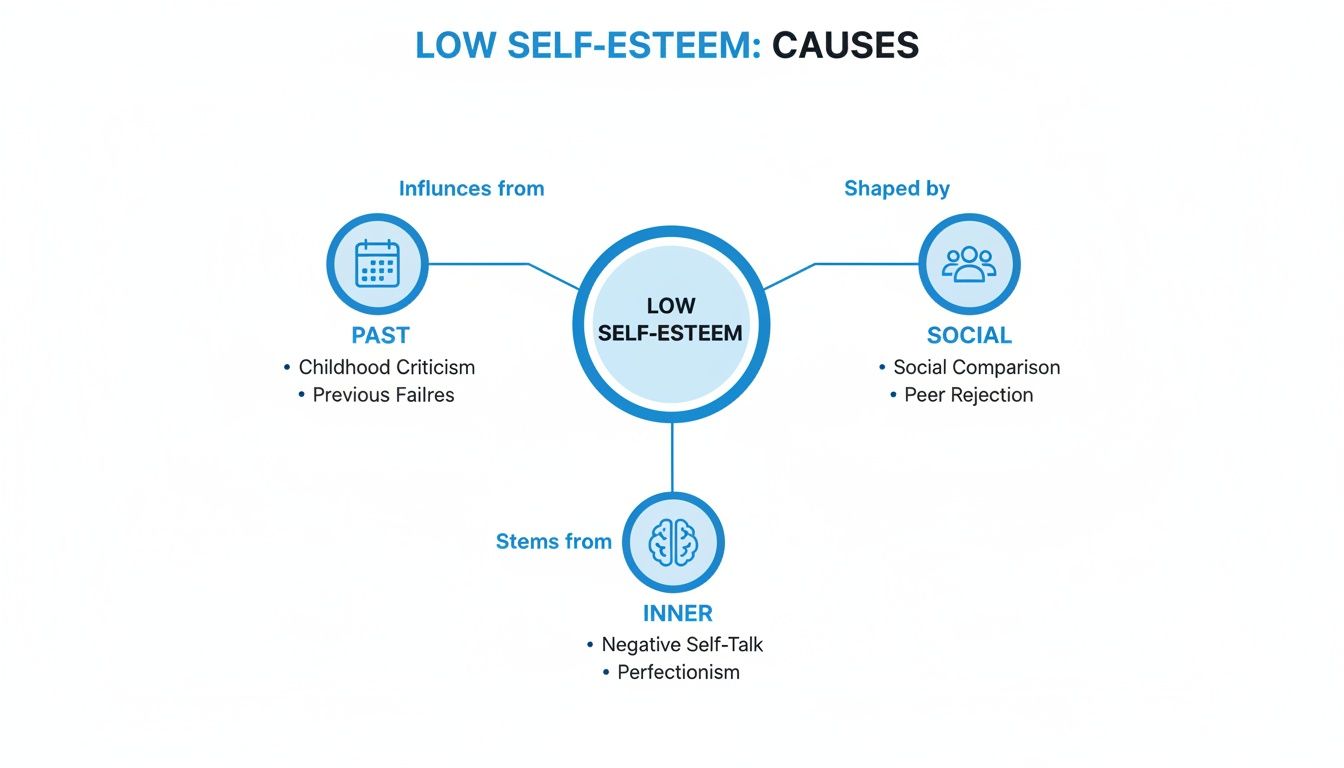
    It's helpful to see this not as a personal failing, but as a learned pattern of thinking rooted in past experiences. Childhood criticism, social comparisons, or difficult times can create a mental filter that distorts how we see ourselves.

    The Impact on Daily Life

    Living with these feelings is exhausting and can create significant workplace stress. It might stop you from seeking a promotion or taking credit for your hard work, leading to burnout.

    These feelings often spill into personal life, fueling social anxiety and making it hard to form genuine connections. If left unaddressed, these persistent thoughts can sometimes contribute to more serious mental health challenges like depression.

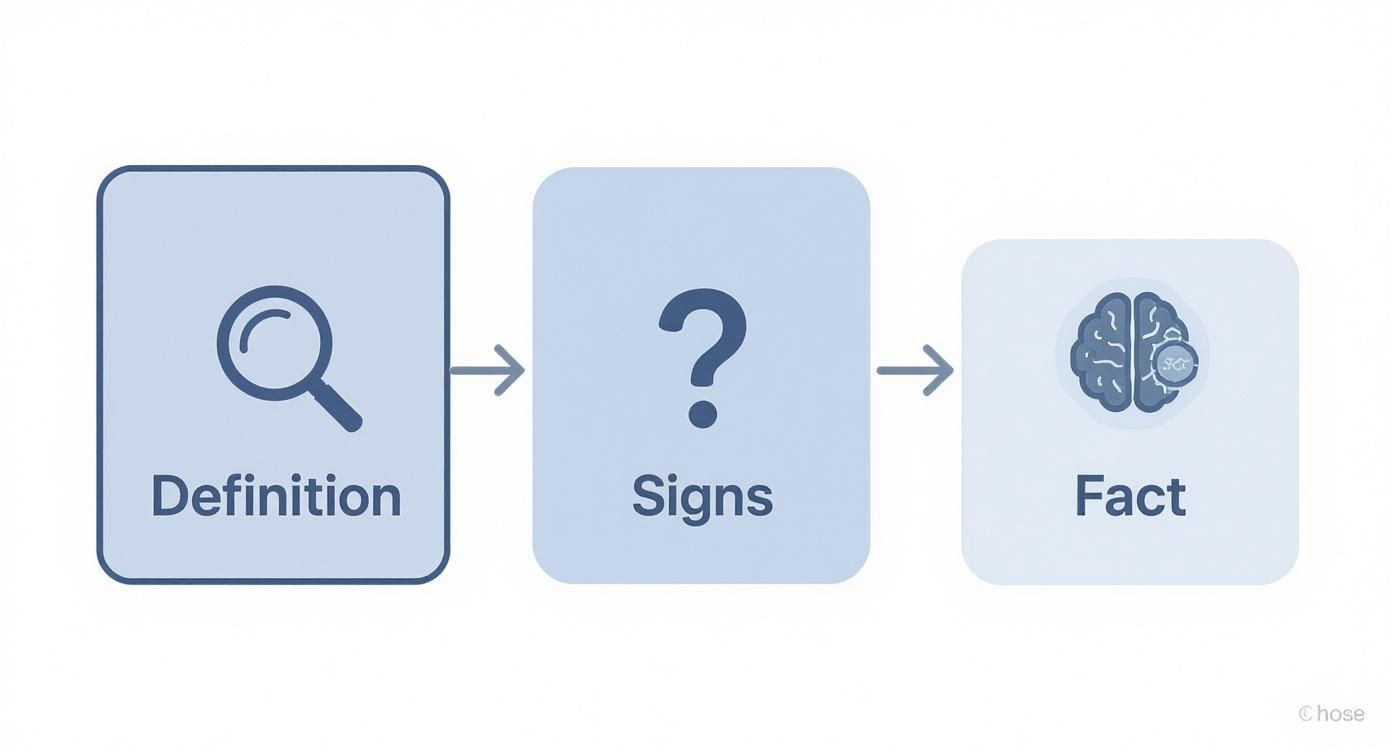
    The infographic below breaks down the core elements of an inferiority complex, from what it is to its most common signs.

    Infographic about how to overcome inferiority complex

    This visual guide unpacks a complex feeling into a mix of thoughts and behaviours. Simply recognising these signs in yourself is a powerful and compassionate first step toward change.

    A Relatable Challenge in India

    In India, intense pressure to succeed in academics and careers can create fertile ground for these feelings. A study on Indian college students found a direct link between feelings of inferiority and lower academic performance. You can read more about these findings about student challenges.

    This shows that an inferiority complex is less about your actual abilities and more about your perception of them. Understanding this is key to improving your mental well-being.

    The goal isn't to become perfect or banish self-doubt forever. It's about building resilience and self-compassion so you can manage these feelings without letting them run your life.

    How to Challenge Your Inner Critic

    We all have an inner voice that whispers doubts and criticisms. The first step in overcoming an inferiority complex is learning to gently challenge this internal narrative. You can learn to turn down its volume and reframe the self-talk that fuels feelings of inadequacy.

    A person sitting calmly and meditating while thoughts swirl around them

    The techniques for doing this are simple and borrowed from well-established therapeutic approaches. With small, consistent efforts, you can build the mental resilience needed to quiet that critic and improve your overall well-being.

    First, Just Notice the Critical Thought

    Your first task is to catch your inner critic in the act, especially during moments of workplace stress or social anxiety. These thoughts often appear automatically, saying things like, "I’m going to fail this presentation," or, "Everyone here is smarter than me."

    The key is to notice these thoughts without judging yourself for having them. This simple act of mindful awareness creates a small but vital space between the thought and your emotional reaction. Once you can spot these thoughts, you are ready to question them.

    Now, Question and Reframe Your Thoughts

    Once you've noticed a critical thought, it's time to examine it. Ask yourself: is this thought 100% true? Is there a kinder, more realistic way to see this situation? This isn't about forced positivity, but about finding a more balanced perspective.

    For example, if your inner critic says, "I messed up that entire project," you can challenge it:

    • Is that completely true? "No, most of the project went well. I made one mistake and I can learn from it."
    • What’s a more helpful way to look at this? "Mistakes happen to everyone. This is a chance to improve for next time."
    • What would I tell a friend? "I'd tell a friend that one error doesn't define their competence."

    This reframing process helps break the cycle of automatic negative thinking that often drives anxiety and can contribute to depression.

    By consistently examining your inner critic, you reduce its power. You start to see that critical thoughts are often distorted interpretations, not objective facts.

    This shift in perspective is a cornerstone of building genuine self-worth.

    Try Keeping a Thought Journal

    To make this process more concrete, try keeping a thought journal. When you feel a strong negative emotion, pause and write down the situation, the automatic thought, and the feeling that followed. Then, consciously write a more balanced, alternative thought.

    An entry might look like this:

    • Situation: My manager gave me constructive feedback on my report.
    • Automatic Thought: "I'm terrible at my job. I can't do anything right."
    • Emotion: Shame, anxiety.
    • Alternative Thought: "My manager is helping me grow. This feedback is about the work, not about me as a person."

    This practice trains your brain to challenge these patterns more naturally over time. It's a practical tool to help you learn how to overcome an inferiority complex in the moments it matters most. Remember, this is about building new mental habits. If feelings feel too overwhelming, professional therapy or counselling can offer structured support. Assessments here are for informational purposes and not a substitute for a professional diagnosis.

    Building a Foundation of Self-Compassion

    Challenging your inner critic is important, but a gentler, more effective approach is to actively cultivate self-compassion. This means treating yourself with the same kindness and understanding you would offer a good friend. It is a shift from self-judgment to self-support that builds lasting resilience and improves well-being.

    A person gently holding a small, glowing plant, symbolising self-care and growth.

    This change is fundamental to managing the pressures that can lead to workplace stress and anxiety. It helps you build a more supportive inner world, which is crucial for happiness.

    Embrace Kindness Through Self-Compassion Breaks

    When feelings of inadequacy arise, a self-compassion break can ground you in kindness. This brief, mindful pause is a simple yet powerful exercise you can do anywhere.

    It is built on three core actions:

    1. Acknowledge Your Pain: Say to yourself, "This is a difficult moment." This validates your experience without judgment.
    2. Recognise Common Humanity: Remind yourself, "Feeling this way is part of being human. I am not alone in this." This connects you to a shared experience.
    3. Offer Yourself Kindness: Gently place a hand over your heart and say, "May I be kind to myself." The physical touch can be very calming.

    These breaks can interrupt the downward spiral of negative self-talk. They are a practical way to soothe difficult emotions and prevent them from escalating into deeper feelings of anxiety or depression.

    Celebrate Your Small Victories

    When you're figuring out how to overcome an inferiority complex, focusing only on big goals can be overwhelming. Instead, shift your focus to celebrating small wins along the way. Every small act of courage—like speaking up in a meeting or reframing a negative thought—is a victory.

    Acknowledging these small wins builds positive momentum and provides tangible proof of your progress. Each success, no matter how minor, reinforces your capability and helps build genuine self-belief.

    Celebrating small wins builds a ladder to your larger goals, one sturdy rung at a time. This approach makes the journey feel more manageable and rewarding.

    Cultivate Authenticity in a World of Comparison

    In a world of curated online lives, it’s easy to fall into the comparison trap, a major source of workplace stress and unhappiness. The antidote is not to be better than others, but to be more authentically yourself.

    Authenticity means aligning your actions with your core values and embracing your unique strengths. It's about understanding what truly matters to you, separate from external expectations.

    Reflect on these questions to connect with your authentic self:

    • What activities make you feel genuinely energised?
    • When do you feel most like yourself, without any pretence?
    • What values (like honesty, creativity, or kindness) are most important to you?

    Living authentically reduces the need for external validation because your sense of worth comes from within. It’s a powerful step toward building true resilience and a deeper sense of well-being. Keep in mind that all assessments mentioned are for informational purposes only and are not a substitute for a professional diagnosis.

    How Your Lifestyle Can Lift You Up

    Our mental and physical health are deeply connected. The small choices you make every day—what you eat, how you move, and how well you rest—form the foundation of your mental resilience. Gentle, sustainable shifts in your lifestyle can be a powerful way to support yourself as you work to overcome feelings of inferiority.

    A person practicing yoga at sunrise, representing mindful movement and a healthy start to the day.

    This is not about a complete life overhaul or adding more pressure. It’s about making small, manageable changes that can genuinely reduce feelings of anxiety and protect against burnout.

    Mindful Movement for a Calmer Mind

    When you feel down, exercise might be the last thing on your mind. But mindful movement is about connecting with your body gently, which can be very effective for easing workplace stress. A brisk walk, simple stretches, or a few yoga poses can release feel-good chemicals in your brain.

    These small actions help regulate your mood and build a stronger mind-body connection. The goal is to find joy in moving, which is a huge step for building self-compassion and boosting your overall well-being.

    The Restorative Power of Sleep

    Good sleep is essential for mental health. When you are tired, negative emotions can feel more intense, making you more vulnerable to anxiety and depression. A well-rested mind is better equipped to challenge the inner critic and handle stress.

    Creating a simple pre-sleep routine can make a big difference.

    • Limit Screen Time: Put devices away at least an hour before bed.
    • Create a Calm Environment: A dark, quiet, and cool room promotes better sleep.
    • Practice Relaxation: A few minutes of deep breathing or reading can help calm your mind.

    Consistent, restful sleep is one of the most powerful tools for building emotional resilience.

    Nourishing Your Body to Support Your Brain

    The food you eat directly impacts your mood and brain function. A balanced diet rich in whole foods provides the stable energy and nutrients your brain needs to thrive.

    You don't need a "perfect" diet to feel the benefits. Simply adding more fruits, vegetables, and lean proteins can help regulate your mood and lessen symptoms of anxiety, making a big impact on your well-being.

    In the Indian context, basic needs like education can significantly shape self-worth, as research shows a link between illiteracy and feelings of inferiority. You can learn more about how education shapes self-perception and its impact. These lifestyle changes create a supportive environment for your mind and body to thrive, but remember that this information is for guidance, not diagnosis.

    When to Seek Professional Support

    Reaching out for professional help is an act of strength and self-care. While self-help tools and lifestyle changes are powerful, sometimes the weight of inadequacy is too heavy to carry alone. Recognising when you need support is a huge step toward lasting mental well-being.

    If feelings of inferiority consistently interfere with your daily life, work, or relationships, it may be time to talk to someone. When these feelings contribute to persistent anxiety, cycles of depression, or overwhelming workplace stress, professional guidance offers structured support.

    Recognising the Signs It’s Time for Support

    It can be hard to tell the difference between a bad day and a deeper issue. Gently ask yourself if any of the following feel familiar, as they may indicate that professional support could be helpful.

    • Feelings Are Overwhelming: You feel stuck in a loop of negative self-talk you can't break.
    • Daily Functioning Is Affected: Your work performance is suffering, or you are avoiding social situations.
    • Coping Mechanisms Are Unhealthy: You are relying on unhealthy habits to manage your feelings.
    • You Feel Persistently Hopeless: A sense of hopelessness has become a constant companion.

    These are not personal failings; they are signals that you are carrying a heavy load. A professional can help you unpack it in a safe, non-judgmental space.

    What to Expect from Therapy and Counselling

    The idea of therapy or counselling can feel intimidating, but the process is designed to be supportive. In a first session, a therapist aims to understand your experiences and goals. It is a collaborative space where you can share your story at your own pace.

    The goal of therapy isn’t to "fix" you, because you are not broken. It is to provide you with personalised tools and new perspectives, empowering you to build the resilience needed to thrive.

    In India, societal pressures can add another layer to these feelings. You can learn more about how this mindset can be addressed by fostering greater self-assurance. A culturally aware therapist can be invaluable in helping you explore these nuances.

    Finding the Right Professional for You

    Finding the right person is key to a successful therapeutic journey. It's important to work with someone you feel comfortable with, such as one of these Clinical and Counseling Psychologists. Look for qualified professionals with experience in self-esteem, anxiety, and cognitive-behavioural techniques.

    Don't hesitate to have a brief initial chat with a potential therapist to see if their approach feels right. Think of it as an investment in your long-term happiness and well-being. Remember, the self-assessments and guidance in this article are informational and not a substitute for a professional diagnosis.

    A Gentle Path Forward on Your Journey

    The journey to move past an inferiority complex is a personal one, built on small, courageous steps. It is not a race to a flawless state of confidence, but rather a process of valuing progress over perfection. Every time you question a negative thought or offer yourself kindness, you are strengthening your foundation for mental well-being.

    This path is about weaving these strategies into your daily life. It’s about questioning your inner critic, celebrating small wins, and nourishing your mind and body. Every effort, no matter how small, adds to your growing resilience.

    Embracing the Gradual Process

    Healing is rarely a straight line; you will have days when old feelings creep back in, and that's okay. These moments are not setbacks but opportunities to practice your new skills, like self-compassion or managing workplace stress.

    Think of it like tending a garden. You plant seeds with new techniques, water them with consistent effort, and remain patient. This steady, consistent care helps your self-worth flourish over time. You might also find this external guide to building confidence to be a helpful companion.

    Your Continued Growth

    This process is proof that you can change your inner narrative. You have the power to shift from self-criticism to self-acceptance. If the journey feels too heavy to walk alone, remember that seeking professional support through therapy or counselling is a sign of incredible strength.

    The most important takeaway is this: you are worthy of kindness, respect, and acceptance—especially from yourself. Every small step on this path is a victory for your long-term happiness and a testament to your strength.

    Your Questions, Answered

    As you work through these feelings, questions will naturally arise. Here are answers to some common ones, but remember, this is for informational purposes; it's always best to speak with a professional for personal advice.

    Is an Inferiority Complex Just Low Self-Esteem?

    That's a great question. While they are related, there is a subtle but important difference. Low self-esteem is a general feeling of not being good enough, whereas an inferiority complex is a more intense conviction that you are fundamentally behind everyone else.

    It involves constant comparison and always finding yourself lacking. Working on your self-esteem is an excellent starting point for addressing feelings of inferiority.

    Can I Really Get Over This on My Own?

    For many, the answer is yes. Self-help strategies like practicing self-compassion, reframing negative thoughts, and making positive lifestyle changes build resilience. These practical tools can genuinely help you manage feelings of anxiety and workplace stress.

    However, if these feelings are deeply ingrained, professional therapy or counselling can be highly effective. A good therapist provides a safe space and tailored strategies for lasting change.

    How Long Until I Start to Feel Better?

    There is no magic timeline, as everyone's journey is different. Some people notice small shifts within a few weeks, while for others, it may be a more gradual process. It’s all about unlearning old habits and building new, healthier ones.

    Be patient and compassionate with yourself. Celebrate the small victories along the way—each one is a meaningful step toward breaking free from self-doubt and building a healthier relationship with yourself.

    Your progress is not a race. It is a commitment to your own well-being, and every step is a powerful move in the right direction.


    Ready to take the next step in your mental health journey? At DeTalks, we connect you with qualified therapists and provide science-backed assessments to guide you toward greater clarity and resilience. Find the right support for you today.