
Tag: couples communication

  • Unlocking Deeper Connection with Relationship Communication Skills

    Unlocking Deeper Connection with Relationship Communication Skills

    Strong relationship communication skills are the foundation of how couples and families connect. It’s not just about talking; it's about sharing feelings, working through disagreements, and building true closeness. This means listening to understand, showing empathy, and creating a safe space for everyone to be themselves.

    Why Great Communication Is Your Relationship's Foundation

    A couple sits at a table, holding hands and looking at each other in a kitchen.

    Every relationship faces communication challenges; it's a normal part of being human. Daily pressures, from workplace stress to personal anxiety, can strain our most important connections. This makes clear, kind dialogue more essential than ever for our overall well-being.

    Think of healthy communication as the bedrock of your relationship, giving it strength to handle life’s storms. Without this foundation, small misunderstandings can grow, leading to loneliness and emotional distance.

    The Impact of Modern Stress on Connection

    In our hectic world, it's hard to keep outside pressures from affecting our personal lives. Long hours and financial worries can leave us drained, impacting our ability to communicate with patience and compassion.

    When we experience burnout, anxiety, or depression, our communication style often changes. We might become more irritable or avoid important conversations. Working on your communication skills is a powerful way to build resilience and protect your relationship.

    A strong connection isn’t about never fighting; it’s about having the skills to navigate disagreements without damaging the bond. This foundation of trust makes it safe to be vulnerable, which is where real growth happens.

    Building Intimacy Through Better Dialogue

    Good communication skills are key to unlocking deep, lasting intimacy and happiness. It's about shifting from a "me vs. you" mindset to an "us vs. the problem" approach. A study on young couples in India found positive conflict resolution was the biggest predictor of intimacy, accounting for 9.4% of the positive variance.

    Tackling challenges as a team is crucial for your well-being. To start strengthening your own foundation, explore these actionable steps to improve marriage communication. If you feel stuck, professional therapy or counselling can offer valuable guidance.

    The Four Pillars of Healthy Relationship Communication

    Pillar What It Means Why It Matters
    Active Listening Paying full attention to what your partner is saying, not just waiting for your turn to talk. It shows respect and helps you fully understand their perspective, preventing misunderstandings.
    Clear Expression Sharing your own thoughts and feelings honestly and directly, using "I" statements. It allows your partner to know what you're truly experiencing without feeling attacked or blamed.
    Empathy Trying to understand and share the feelings of your partner, even if you don't agree. It builds emotional connection and validates your partner's feelings, making them feel heard.
    Problem-Solving Working together as a team to find solutions that work for both of you. It turns conflict into an opportunity for growth and strengthens your partnership.

    Keeping these four elements in mind can fundamentally change how you interact, turning potential conflicts into moments of connection.

    Learning the Art of Active Listening

    A man and a woman are seated, looking at each other and engaging in a casual conversation.

    One of the most powerful relationship communication skills is active listening. It’s not just about hearing words; it's a conscious effort to understand the entire message, including the emotions behind it.

    This means quieting your inner voice that's busy forming a reply or planning a defence. In a culture like India's, where family ties are vital, truly hearing your loved ones creates a deep foundation of respect and supports your well-being.

    Moving from Hearing to Understanding

    The gap between passively hearing and actively listening is enormous. Hearing is physical, but understanding is an emotional connection. It makes your partner feel seen and valued, which is critical when dealing with pressures like workplace stress or personal anxiety.

    For example, your partner comes home drained and complains about their boss. A passive listener might offer a quick fix, but an active listener pauses to tune into the feeling behind the words.

    The goal of active listening isn't to agree with everything your partner says. It's about showing them that you acknowledge and respect their feelings. This simple change in perspective can stop a fight before it starts and transform a moment of conflict into one of genuine connection.

    Practical Techniques for Active Listening

    Making this shift involves small, gentle adjustments to how you approach conversations. Here are a few simple yet effective techniques.

    • Paraphrase and Reflect: After your partner speaks, summarize what you heard in your own words. This confirms you understood correctly and shows you were paying attention.
    • Ask Open-Ended Questions: Instead of questions with "yes" or "no" answers, ask things like, "How did that make you feel?" This invites a deeper conversation.
    • Validate Their Feelings: Acknowledge that their emotion is valid, even if you see things differently. Simple phrases like, "That sounds incredibly frustrating," can work wonders.

    When to Seek Deeper Insights

    Practising these skills consistently builds a more resilient and happy relationship. But if you still find conversations leading to misunderstandings, it could be a sign of deeper patterns. Sometimes, challenges like persistent anxiety or depression can make effective communication feel difficult.

    Our assessments can offer valuable informational insights into your communication style, but they are not a diagnostic tool. For ongoing challenges, seeking professional therapy or counselling provides a safe, supportive space to develop these skills with expert guidance.

    How to Express Yourself with Clarity and Kindness

    Speaking your mind is a cornerstone of any trusting relationship. How you say things can be the difference between connecting with your partner and starting a fight. Learning to express yourself with clarity and kindness is one of the most valuable communication skills you can build.

    This becomes especially important when pressures like workplace stress seep into your home life. Communicating your needs constructively can protect your relationship and keep it a safe haven.

    The Power of "I" Statements

    "I" statements are a simple way to shift the conversation from blame to your personal experience. This small tweak can lower your partner's defences and open them up to finding a solution with you.

    Instead of saying, "You always ignore me," try reframing it. Something like, "I feel lonely when we don't connect after a long day," shares the same issue from your perspective, making it easier for your partner to respond with care.

    Takeaway: Using "I" statements isn't about being soft or avoiding a problem. It's a confident way to take ownership of your feelings and state them clearly. This builds incredible resilience in your relationship and deepens your connection.

    If you're new to this, a simple structure can help:

    • I feel… (name the emotion: sad, frustrated, worried).
    • When… (describe the specific, observable behaviour—no generalisations).
    • Because… (explain how that behaviour personally affects you).
    • I would appreciate it if… (suggest a positive alternative or a solution).

    Beyond Words: Your Tone and Body Language

    What you say is only half the story; your tone and body language often speak louder than words. A sarcastic tone can turn a simple request into a jab, while crossed arms can signal you're closed off.

    Ensure your non-verbal cues match your verbal message to show sincerity. This creates a safer space for honest conversation and supports your emotional well-being.

    Bridging the Gap Between Work and Home

    This need for emotionally smart communication extends beyond our homes. A report on Indian knowledge workers revealed that while 80% believe open emotional dialogue is crucial at work, nearly half feel their leaders aren't delivering. You can read more in this insightful report on the work relationship index.

    If expressing yourself is a constant struggle, it might point to deeper challenges like anxiety or depression. Our informational assessments can offer initial insights, but they are not a substitute for a professional diagnosis. Seeking therapy or counselling provides a supportive space to build healthier communication patterns.

    Navigating Conflict with Compassion and Resilience

    Conflict is a given in any close relationship and can be an opportunity to understand each other better. The real measure of a relationship's strength is how you find your way back to connection afterwards.

    Handling disagreements with compassion and compassion is key to lasting happiness and resilience. When conflict is managed poorly, it can lead to anxiety and disconnection. Navigating these moments with kindness reinforces that you’re a team, even when you disagree.

    Sidestepping Common Communication Traps

    In the heat of an argument, it's easy to fall into damaging patterns that make things worse. The first step is learning to recognise them as they happen.

    For example, a specific complaint can escalate into criticism, which is a general attack on your partner's character. Another common trap is stonewalling—completely shutting down. Both of these make resolving the issue impossible.

    The goal during a conflict isn't to win the argument. The true goal is to understand your partner's perspective and work together to find a resolution that honours both of your feelings. This shift in mindset can change everything.

    From Reacting to Responding Mindfully

    When emotions are high, our instinct is often to get defensive. The most powerful tool you have is pausing. Taking a few deep breaths can create enough space to respond thoughtfully instead of lashing out.

    This mindful pause helps you manage intense feelings and choose a response that builds connection. Learning how to handle difficult conversations with proven strategies is key to keeping relationships healthy.
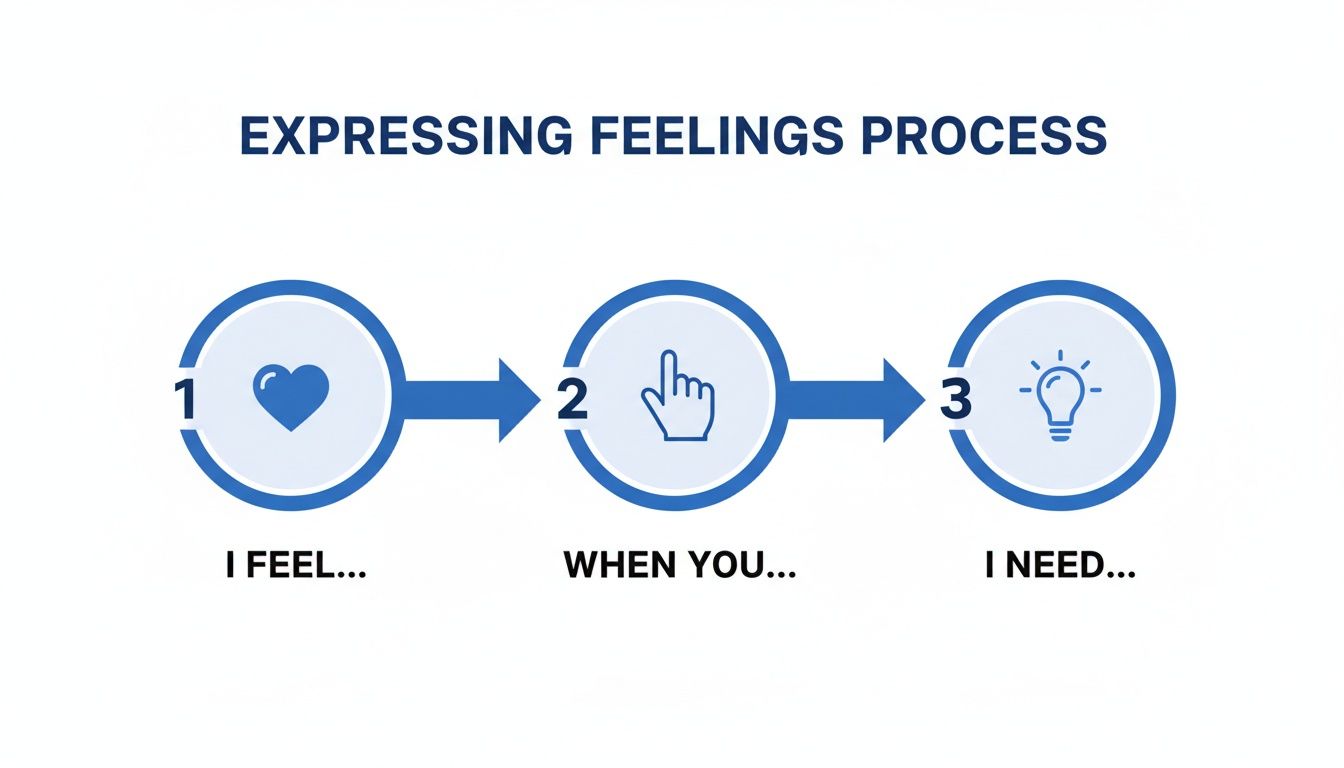
    A three-step diagram illustrates the process of expressing feelings: I feel, when you, I need.

    Using the "I feel… when you… I need…" formula helps you own your experience. It makes it much easier for your partner to hear what you’re saying without feeling blamed.

    Unhelpful vs Helpful Communication During Conflict

    Unhelpful Pattern (The Four Horsemen) Helpful Alternative Example
    Criticism: Attacking your partner's character. Use "I" Statements: Complain gently without blame. Instead of "You're always so messy," try "I feel stressed when the kitchen is cluttered."
    Contempt: Expressing disgust through sarcasm, eye-rolling, or name-calling. Build a Culture of Appreciation: Express respect and gratitude regularly. Instead of "Oh, you finally did the dishes? A miracle," try "Thank you for taking care of that. I really appreciate it."
    Defensiveness: Playing the victim or making excuses. Take Responsibility: Accept even a small part of the problem. Instead of "It's not my fault, you never reminded me," try "You're right, I forgot. I'm sorry."
    Stonewalling: Shutting down or emotionally withdrawing from the conversation. Practise Self-Soothing: Take a break to calm down, and agree on a time to return. Instead of walking out, say "I'm feeling overwhelmed. Can we please take 20 minutes and come back to this?"

    By consciously choosing helpful alternatives, you can turn a potential fight into a moment of connection and problem-solving.

    Reconnecting and Repairing After a Fight

    Everyone says things they don't mean in the heat of the moment. A resilient partnership is defined by the ability to repair the connection afterwards. A sincere apology or a simple hug can do wonders.

    Repairing the bond reinforces that your relationship is more important than any single argument. If conflicts consistently leave you drained, it might be time to look deeper. Our informational assessments can offer useful insights, but they are not a substitute for a professional diagnosis. For persistent issues affecting your well-being, seeking therapy or counselling provides a supportive path forward.

    Knowing When to Seek Professional Support

    Even with the best intentions, some communication roadblocks feel too big to tackle alone. Recognizing you might need a supportive guide is a courageous move and a powerful investment in your relationship.

    Seeing a therapist or counsellor is a proactive step towards a healthier future. A professional can help you understand negative cycles and provide a safe space to practise new, healthier relationship communication skills.

    Signs It Might Be Time for a Change

    It can be tough to know when to reach out, but if the same draining patterns keep appearing, professional support could make a real difference.

    Do any of these situations feel familiar?

    • The Same Fight, Different Day: You keep having the same argument on a loop, never getting any closer to a resolution.
    • Feeling Emotionally Disconnected: You’re living under the same roof but feel more like roommates than partners. The warmth and intimacy have faded.
    • Avoiding Difficult Topics: You find yourself actively sidestepping important issues simply because you’re terrified it will just spark another argument.
    • Communication Feels Impossible: Almost every attempt at a meaningful conversation ends in misunderstanding, frustration, or one of you shutting down completely.

    Acknowledging that you need support is the first step towards building a more resilient and connected partnership. It’s about choosing to invest in the future of your relationship and opting for growth over stagnation.

    How Therapy Can Help Rebuild Connection

    A therapist acts as a neutral guide who can see relationship dynamics you're too close to notice. Their job is to equip you with practical tools to manage conflict, rebuild trust, and foster a deeper emotional connection.

    They can also help address underlying issues that may affect communication, such as unresolved anxiety, depression, or workplace stress.

    Skilled communication is critical in high-stress situations. A study in India found that poor communication skills among ICU staff were linked to serious conflict, showing major gaps in training. This is a powerful reminder of how professional guidance can build the empathy and resilience needed in emotionally charged moments. You can learn more about these communication findings.

    If these challenges feel close to home, help is available. While our informational assessments can help you understand your patterns (though they are not diagnostic), finding a qualified professional is the next step. A trusted directory like DeTalks can connect you with the expert support you need for lasting change.

    Your Top Questions About Relationship Communication, Answered

    Let's dig into some common questions people have when working on their communication. This can be a quick-reference guide for navigating tricky spots.

    What If My Partner Won’t Work on Our Communication?

    You can't make your partner change, but you can change the dynamic. Start by modelling the behaviour you want to see, such as active listening and using "I" statements.

    When you shift your approach from blame to understanding, it can sometimes disarm the other person. If you're still hitting a wall, suggesting couples counselling can create a safe space where you both might feel heard.

    How Long Until We Actually See an Improvement?

    Every couple is different, but with consistent effort, you'll likely notice small, positive shifts within a few weeks. Perhaps an argument de-escalates faster, or you catch yourselves before falling into an old pattern.

    Building these skills into second nature usually takes a few months. Be patient with yourselves, celebrate small wins, and remember the goal is steady progress and building resilience, not perfection.

    Remember, improving your relationship communication skills isn’t about never disagreeing again. It’s about building a solid foundation so you can handle life’s challenges as a team. It’s a journey of learning and growing together.

    Are Communication Problems a Sign Our Relationship Is Doomed?

    Not at all. Communication snags are a normal part of any long-term relationship. Life challenges like workplace stress or family drama can strain even the most solid connections.

    Instead of seeing these challenges as a red flag, view them as a signal that your relationship needs attention. These moments are an opportunity to understand each other better and emerge stronger, which is also great for your personal well-being and can ease anxiety or depression.


    At DeTalks, we're passionate about giving everyone the tools they need for healthier, more fulfilling relationships. When you feel ready for the next step, our platform is here to help. You can explore our confidential, science-backed assessments for powerful insights or connect with a skilled therapist who can guide your journey. Begin building a better connection today at https://detalks.com.


  • How to Fix a Broken Relationship and Rebuild Your Connection

    How to Fix a Broken Relationship and Rebuild Your Connection

    Feeling adrift in a relationship is a deeply unsettling experience, but it's also the first sign you are ready to find your way back. Repairing a connection is about understanding the subtle currents that pulled you apart and navigating back to each other.

    This guide is a safe place to acknowledge the hurt and begin the brave work of healing with hope and resilience.

    Getting to the Heart of Why You're Struggling

    Every relationship hits rough patches; it is a universal truth. The real issues are often a slow erosion of intimacy, worn down by the weight of everyday life.

    Admitting things are hard isn't about blame. It is the most courageous first step toward rebuilding something stronger and improving your well-being.

    Life today, especially in India, throws unique challenges at us. High-pressure careers often lead to workplace stress and burnout, leaving little energy for a partner. Financial pressures, family expectations, and digital distractions can create a perfect storm for anxiety or quiet feelings of depression to create distance.

    Spotting the Quiet Signs of a Growing Rift

    Loud arguments are noticeable, but the real red flags are often silent. Feeling more like roommates than partners signifies emotional distance, a key indicator something is wrong.

    Here are a few common signs that your relationship is calling for attention:

    • You Feel Constantly Misunderstood: You’re both talking, but it feels like you're speaking different languages.
    • You Sidestep the Hard Conversations: Important topics get pushed aside to avoid another fight.
    • Shared Joy Has Faded: When was the last time you truly laughed together or shared a moment of simple happiness?
    • Criticism Has Replaced Kindness: Interactions feel sharp and full of fault-finding instead of compassion and support.

    Recognising these patterns is half the battle. If you want to dig deeper into the common reasons why relationships fail, understanding the root causes can bring a lot of clarity.

    The Real-World Impact on Modern Couples

    The pressure on modern relationships is immense. In urban India, for instance, divorce rates have doubled in recent years, showing the real toll of modern life.

    The hopeful part is that couples who seek counselling are changing this narrative. Getting help early has proven to be incredibly effective in strengthening a connection.

    Before things escalate, it helps to recognise the earliest flickers of trouble. Sometimes, the signs are so common we dismiss them as "normal."

    Early Warning Signs of Relationship Distress

    This table can help you spot common but often overlooked signs that your relationship needs care. These assessments are informational, not diagnostic.

    Warning Sign What It Might Mean A Gentle First Step
    "Fine" is the default answer A breakdown in emotional sharing; one or both partners are shutting down. Ask an open-ended question: "I've noticed we haven't talked much lately. How are you really doing?"
    You spend more time on your phones than with each other Digital distractions are being used to avoid intimacy or difficult feelings. Suggest a "no-phone" hour each evening to reconnect, even if it's just sitting together.
    Little resentments are piling up Unresolved minor conflicts are building into a bigger wall of frustration. Pick one small thing and address it gently using "I feel…" language. "I feel a bit lonely when…"
    Your future plans no longer align You've stopped dreaming together, indicating a drift in shared goals and values. Start a low-pressure conversation: "What's one thing you're excited about for the next year?"

    Recognising these signs isn't about panic. It's an opportunity to tune in and gently course-correct before the rift grows wider.

    Taking the time to understand the "why" behind your struggles is a profound act of commitment. It shifts you from feeling helpless to feeling empowered, paving the way for real change and better well-being.

    Ultimately, figuring out how to fix a broken relationship starts with an honest look at what’s really going on. It is about building self-awareness, finding compassion for yourself and your partner, and getting ready to do the work. The journey holds the promise of a stronger, more authentic connection.

    Laying the Groundwork for Genuine Healing

    Before having a big talk, the real work starts with you. Meaningful repair begins with quiet, honest self-reflection, not dramatic conversations.

    When we're hurt, we often lash out or shut down. Lasting change comes from calm understanding and preparing for a conversation that builds something new.

    First, Understand Your Own Reactions

    You cannot have a productive conversation if you are a stranger to yourself. Before explaining your feelings, you need to understand where they come from.

    Recognising your emotional tripwires is the first step to disarming them. This internal work is vital for your well-being and involves asking tough questions:

    • "Looking back, what was my contribution to this problem, even a small one?"
    • "What was I really afraid of or needing in that moment?"
    • "Am I feeling a lot of anxiety about this talk? Why is that?"

    When you get curious instead of furious, you approach your partner with more empathy. You start aiming for healing, not for winning an argument.

    Create a Safe Space for Difficult Talks

    When and where you talk can make or break the conversation. Trying to discuss deep issues when one of you is frazzled from workplace stress is setting yourselves up to fail.

    Find a time when you can both be present and focused. Agreeing on a distraction-free time shows mutual respect for the relationship and the conversation.

    The flowchart below shows how seemingly small issues can snowball, leading to the kind of disconnect that makes these talks necessary.

    It’s a familiar pattern: emotional distance creeps in, intimacy fades, and soon enough, both partners feel completely unheard.

    Getting your own emotional house in order before a conversation isn't about admitting you're wrong. It's an act of strength that creates stability for both of you to be vulnerable.

    This preparation builds your personal resilience. When you are grounded, you can listen properly and respond with intention, not just react on instinct.

    The Power of Taking Responsibility

    True accountability is hard but simple. It means owning your actions and their impact on your partner, without excuses or blame.

    It can be as straightforward as, “I know that when I did X, it made you feel Y. I am truly sorry for that.” This validates their feelings as real.

    This is often the hardest part, but it is where healing begins. This is a core focus in effective couples therapy and counselling. As you start this process, exploring strategies to avoid divorce can provide a broader perspective on preserving your connection.

    Think of this preparation as an ongoing practice. Every tough conversation becomes a chance to learn more about yourself and the person you love. By committing to this internal work, you're not just patching up a problem—you're building a stronger, more honest relationship for the future, one that can better manage the feelings of depression or anxiety that conflict can bring.

    Mastering the Art of Empathetic Communication

    When a relationship is fracturing, silence can hurt as much as shouting. Real communication is the lifeblood of connection and is about reopening lines of understanding.

    The goal is to shift from conflict to genuine connection. This means moving from trying to "win" an argument toward truly hearing your partner's heart.

    Asian couple on a beige couch, having a serious conversation, woman with hand on chest.

    From Accusation to Expression with 'I Feel' Statements

    Think about your last argument. Phrases like "You always…" or "You never…" kill conversations by immediately putting your partner on the defensive.

    "I feel" statements are a powerful tool. Instead of talking about your partner's perceived flaws, you are sharing your own emotional experience.

    For example, instead of, "You never help with the house chores," try, "I feel overwhelmed and unsupported when the housework piles up." One is an attack; the other is a vulnerable share that invites empathy.

    Moving Beyond Hearing to Actively Listening

    In strained relationships, we often listen only to form a reply. Active listening is the opposite; it's about being fully present and absorbing their words.

    This is more than just staying quiet. It's an engaged process that shows your partner they have your full attention and that what they are saying matters.

    Here are a few ways to put active listening into practice:

    • Paraphrase and Clarify: Repeat what you heard in your own words. For example, "So, if I'm understanding you correctly, you feel unappreciated when I work late. Is that right?"
    • Validate Their Feelings: Validation isn’t agreement. It is acknowledging that their feelings are valid from their perspective, with a phrase like, "It makes sense that you would feel that way."

    Navigating Common Communication Traps

    Certain toxic communication habits can poison a relationship over time. Spotting these patterns is the first step toward choosing a healthier path.

    Here are two of the most destructive traps and how you can sidestep them:

    1. Criticism: This is an attack on your partner's character. The antidote is to start gently and use an "I feel" statement to explain your needs.

    2. Defensiveness: This response adds fuel to the fire by telling your partner you aren't taking their concerns seriously. Instead, try to find a small grain of truth in what they're saying and take responsibility.

    Remember, the goal of these conversations is not to determine who is right or wrong. The goal is to understand each other's worlds and move forward together with mutual respect and compassion.

    In our busy lives, outside pressures create new communication hurdles. A recent survey showed only 3% of Indians feel they have a healthy relationship with technology, a trend contributing to a 15% rise in demand for mental health counselling. As detailed in this insightful article on India Today, setting simple boundaries, like a no-phone zone in the bedroom, can help couples reclaim intimacy.

    Putting It All Together: A Real-World Scenario

    Let's look at a classic conflict point: money. Priya feels a constant knot of anxiety about their spending, while Rohan feels controlled and judged.

    • The Old Way (Criticism & Defensiveness):

      • Priya: "You spent so much on that new gadget! You never stick to our budget."
      • Rohan: "It was my money! You need to relax and stop trying to control everything."
    • A Healthier Way (Empathetic Communication):

      • Priya: "When I saw the charge for the new gadget, I felt scared about our financial goals. Can we talk about it?"
      • Rohan: (Taking a breath) "I hear that you're worried about our finances. It wasn't my intention to cause you stress. I got excited and acted impulsively."

    This new approach opens the door for a real conversation about shared goals and fears. Mastering this art is a non-negotiable step when you want to know how to fix a broken relationship. The rewards—a deeper connection, restored well-being, and renewed happiness—are worth the effort.

    Rebuilding Trust After It Has Been Broken

    Trust is the bedrock of a relationship. When that trust is broken, the silence it leaves can feel deafening and finding your way back can seem impossible.

    Rebuilding trust is a slow, deliberate journey that demands immense patience. It's about laying a new foundation, brick by brick, built on transparency and a renewed commitment.

    Two hands gently nurture a small green plant growing from a cracked wooden table in sunlight.

    For the Partner Who Broke the Trust

    If you are the one who caused the breach, the real work starts now. You must accept the full weight of your actions with honesty and compassion.

    This goes beyond a simple apology. It is about showing genuine remorse—true sorrow for the pain you have inflicted—through consistent, transparent behaviour.

    Here are some concrete actions you can start with:

    • Offer Full Transparency: This is a temporary but necessary step. It might mean giving access to your phone or social media to show you have nothing to hide.
    • Answer Every Question Patiently: Your partner will have many questions. Answer with patience and honesty every single time as they try to piece their reality back together.
    • Accept Their Feelings Without Judgement: Their anger, sadness, and anxiety are valid. Your role is to listen and validate what they are feeling.

    For the Partner Who Was Hurt

    If you were hurt, your path forward is about learning to feel safe again. You may battle waves of anxiety, sadness, and feelings like depression. Be kind to yourself.

    Healing doesn't mean forgetting; it means managing the hurt so it no longer controls you. It starts with setting clear, healthy boundaries to regain your emotional well-being.

    Here are some strategies to protect yourself emotionally:

    • Define Your Boundaries: Think about what you need to feel safe, and then communicate it clearly.
    • Practise Radical Self-Care: The stress of betrayal takes a massive toll. Prioritise activities that recharge you, like exercise, meditation, or individual therapy.
    • Avoid "Pain Shopping": Obsessively searching for more pain will only deepen the trauma and make it harder to heal.

    Rebuilding trust is a marathon, not a sprint. There will be good days and bad days. The key is consistent effort and the shared belief that the relationship is worth fighting for.

    Practical Exercises to Rebuild Connection

    Small, consistent actions are what rebuild a connection. These exercises are designed to help you create new, reliable patterns.

    A powerful tool is the scheduled transparent check-in. Set aside 15 minutes each day, at the same time, to connect.

    1. For the Partner Who Broke Trust: Be proactive. Share something from your day that proves your transparency.
    2. For the Partner Who Was Hurt: Use this time to ask one thing that’s on your mind or share a feeling you’re wrestling with.

    This exercise contains difficult conversations to a specific timeframe, stopping them from poisoning every moment. The hurt partner no longer has to be a detective, and the other gets a daily chance to prove their trustworthiness.

    Successful couples counselling often revolves around structured interactions like this. They build resilience by showing, through action, that change is possible. The journey of how to fix a broken relationship is paved with these small, courageous steps.

    Knowing When to Seek Professional Guidance

    Sometimes, repairing a relationship on your own feels impossible. Getting professional help isn't a sign of failure; it is a courageous act and a true commitment to your relationship's health.

    The thought of therapy can feel daunting, but see it as a safe space. It is a dedicated time to learn healthier ways of talking and reconnecting.

    Red Flags That It's Time for Support

    It’s often tricky to know when to make the call. Reaching out earlier can make the repair process much smoother.

    Consider looking for a counsellor if any of these sound painfully familiar:

    • Circular Arguments: You’re having the exact same fight, just on different days, with no resolution.
    • Deep Resentment: One or both of you are clinging to past hurts, making it impossible to feel close or emotionally safe.
    • Infidelity or a Major Betrayal: Rebuilding trust after it’s been shattered is a monumental task where a therapist can offer a clear roadmap.
    • Emotional Gridlock: You’ve stopped talking about the big stuff because it feels too painful or pointless.

    Seeking professional help isn't giving up. It's a proactive choice for your relationship's future, acknowledging some challenges are too big to solve with the same tools that may have contributed to the problem.

    This is especially relevant in today's world. Love marriages in India, while a minority, often face unique pressures, with relationship counselling on the rise. Studies show post-therapy interventions can boost marital adjustment scores by as much as 35%, proving the powerful impact of professional guidance. You can learn more about these trends on Wedknott.

    What Really Happens in Couples Therapy?

    Couples therapy isn't about a therapist playing judge. It is a collaborative process to equip you with skills for a healthier partnership.

    A good therapist acts as a facilitator and translator. They help you hear each other, spot destructive patterns, and offer practical tools to manage conflict, workplace stress, or feelings of anxiety and depression.

    Finding the Right Support for You Both

    Taking the first step is often the hardest part. Platforms like DeTalks exist to make the process less overwhelming by connecting you with qualified therapists.

    Many platforms offer initial assessments, but it’s crucial to know that these assessments are informational, not diagnostic. They provide valuable insights into your relationship dynamics and stress points.

    Ultimately, exploring professional support is about arming yourselves with every possible tool on your journey back to each other. It’s a brave, hopeful step toward a stronger, more compassionate, and happier future.

    Common Questions About Fixing a Relationship

    When you decide to mend a relationship, it is normal for questions and worries to surface. Having clear answers can help you feel more grounded as you begin.

    How Long Does It Take to Heal?

    There is no magic number. The healing timeline depends on what happened and whether both of you are genuinely committed to making it work.

    Rebuilding trust is a marathon, not a sprint, and can take many months or even years. Focus on steady, consistent progress and celebrate small wins to build momentum and resilience.

    What If My Partner Refuses to Try Therapy?

    This is a common and tough situation. You cannot force someone to go to counselling, but you can lead by example.

    Going to individual therapy on your own can be a game-changer. Focusing on your personal well-being and growth can have a surprisingly positive ripple effect on the relationship.

    Remember, the only person you can truly control is yourself. Investing in your own growth is never a waste of time and builds your own strength and emotional happiness.

    Can a Relationship Be the Same After a Betrayal?

    Honestly, no. It won't be the same, but that isn't necessarily a bad thing. It has the potential to become something new and much stronger.

    The repair process is a chance to build a new foundation based on radical honesty and renewed commitment. Many couples emerge with a relationship that is more authentic and resilient than ever, forged with a new depth of understanding and compassion.

    Are There Signs a Relationship Cannot Be Fixed?

    Yes. While most relationships can be repaired, some situations are too unhealthy to salvage. Your emotional and physical safety is non-negotiable.

    Other red flags include a partner who consistently refuses accountability or ongoing deception. A therapist can offer a safe space to see these signs clearly and decide what’s best for your well-being, without the fog of anxiety or depression.


    Trying to sort through all this is tough, but you don't have to figure it out alone. At DeTalks, we offer supportive takeaways, not promises of a cure. We connect you with qualified therapists and provide science-backed assessments to help you understand your challenges and build a stronger future. Take the first step and explore the support available at DeTalks.