Tag: couples counseling

  • A Practical Guide to Happiness in a Relationship

    A Practical Guide to Happiness in a Relationship

    True happiness in a relationship isn't about a conflict-free, picture-perfect life. It is a deep sense of contentment and security built on emotional safety, shared dreams, and a genuine partnership that makes you feel seen and valued. This kind of lasting joy comes from facing life's challenges together, not from pretending they don't exist.

    What Actually Creates Happiness in a Relationship

    A smiling couple sits on a light-colored sofa, gazing at each other lovingly.

    We often imagine relationship happiness as a series of grand romantic gestures. In reality, it is much quieter and more profound. Happiness is found in the small, consistent acts of kindness and the quiet understanding that weaves a strong bond over time.

    This is especially true in India, where romantic partnerships are deeply connected to our overall life satisfaction. A recent survey revealed that 84% of urban Indians see their relationship with a partner as a primary source of happiness, highlighting how vital these connections are to our well-being. You can explore the complete global happiness survey findings.pdf) to get the full picture.

    The Four Pillars of a Happy Relationship

    Lasting happiness is built intentionally, day by day. Couples who report deep contentment consistently focus on a few fundamental pillars. Understanding these is the first step toward cultivating more joy in your partnership.

    We can break these down into four core pillars that support a strong connection.

    Pillar What It Means in Practice Why It Matters
    Emotional Safety You can be completely yourself—vulnerable, scared, or goofy—without fearing judgement or dismissal. It creates a safe harbour where you can both let your guard down, fostering deep intimacy and trust.
    Mutual Respect Genuinely valuing your partner’s opinions, dreams, and boundaries, especially when you disagree. Respect confirms your partner's worth and shows them they are a priority, not an afterthought.
    Shared Goals & Values Moving in the same general direction in life, whether it's raising a family, building careers, or simply creating a peaceful home. This creates a sense of "we" and "us," reminding you that you're a team working towards a common future.
    Effective Communication Going beyond talking about daily tasks to share feelings, listen with empathy, and navigate disagreements constructively. This is the very lifeblood of a relationship, allowing you to resolve issues and stay emotionally connected.

    Focusing on these four areas provides a clear and practical roadmap for strengthening your bond and intentionally building a happier future together.

    It's Not Just About You Two

    No relationship exists in a vacuum. The pressures of modern life—from workplace stress and financial worries to sheer burnout—can spill into our partnerships. These challenges can drain the energy needed to stay connected.

    When one or both partners are dealing with anxiety or depression, connecting can feel nearly impossible. It’s important to remember that these personal struggles are a part of the relationship. A truly happy partnership involves learning to support each other through these challenges.

    A healthy relationship doesn't mean you never face problems. It means you have a trusted partner to face them with, turning individual burdens into shared challenges and strengthening your bond through resilience.

    Finding happiness is about committing to a shared journey of growth and learning skills together. It's about building a connection strong enough to handle life's ups and downs. Sometimes, that requires the courage to seek support through counselling or therapy when you need it.

    Navigating the Real Barriers to Relational Joy

    Every relationship faces challenges; that's a given. The secret to a happy partnership isn't avoiding these difficulties but learning how to face them as a team. The first step toward building that resilience is understanding what you're up against.

    These hurdles can be tricky, as they often come from the world around you and the dynamic you’ve built together. Spotting them early, without blame, is key to protecting the bond you share and strengthening your overall well-being.

    External Pressures That Strain Your Bond

    Stress from outside your relationship can easily spill into it, turning your partnership into a source of tension. It's important to frame these as shared problems you can tackle together, not as individual failings.

    Here are some common external stressors:

    • Financial Anxiety: Money worries can put a significant strain on a relationship. Job insecurity, family pressures, or the rising cost of living can turn simple conversations into arguments.
    • Family Conflicts: In the Indian context, navigating expectations from in-laws or the dynamics of a joint family can be a source of friction. Disagreements over family duties can create distance between partners.
    • Workplace Stress: When your job is demanding, it’s hard to have emotional energy left for your partner. High-pressure careers can lead to burnout and a feeling of disconnect from the person you love.

    These external factors are a major part of modern life. It's telling that India ranks 126th out of 137 countries in the World Happiness Report. Experts suggest that strong relationships are one of our best defenses against unhappiness. You can learn more about these findings on world happiness.

    Internal Roadblocks to Happiness

    While outside forces are powerful, the most significant work often happens within the relationship. This involves the patterns, unspoken rules, and communication habits that shape your daily life together. Getting these right takes honesty and a commitment to growing as a couple.

    The greatest barrier to connection is often not what is said, but what is left unspoken. Fear of conflict can create more distance than the conflict itself.

    Communication breakdowns are a common challenge. It's the feeling of being misunderstood, of your partner not truly listening, or of your feelings being dismissed. Over time, poor communication can breed resentment and a deep sense of loneliness.

    Mismatched expectations also create internal friction. You might have different ideas about intimacy, chores, or how to spend free time. It is also common for people to unknowingly create obstacles through patterns of self-sabotage in relationships, which can prevent them from feeling truly connected.

    The Overlap of Personal and Relational Well-Being

    You can't separate your own well-being from the health of your relationship; they are deeply intertwined. If you're struggling with anxiety, depression, or burnout, it directly impacts your partner and the dynamic you share.

    For example, anxiety can show up as a constant need for reassurance, while depression might lead you to withdraw emotionally. These are not intentional acts, but they can put an immense strain on the partnership.

    The key is to see these as health challenges that require compassion, patience, and support. Acknowledging this link between individual mental health and your relationship's health is the foundation for a partnership that can weather any storm, sometimes with the help of professional therapy or counselling.

    Actionable Ways to Cultivate Happiness Together

    Knowing the challenges is one thing, but actively building joy together is where the real work begins. This is about turning ideas into practical skills that forge a stronger bond. Fostering happiness is about the small, consistent things you do for each other every day.

    Think of these practices as tools in your relationship toolkit. They take patience, empathy, and a real commitment from both of you. The good news is that even tiny shifts in your daily habits can create a massive positive ripple effect over time.

    This visual shows a common path relationships take—navigating external and internal pressures to ultimately find solutions as a team.

    Infographic illustrating a three-step relationship barriers process flow: external pressures, internal issues, and finding solutions.

    It’s a good reminder that you have to identify the stressors before you can really start working on the solutions.

    Master Compassionate Communication

    Good communication is the lifeblood of a happy relationship, but it's often the first casualty of stress. The goal is to genuinely understand your partner’s world, not just to win an argument. A powerful shift is moving from blame to vulnerability.

    Instead of an accusatory "You always…" try framing things from your perspective with "I feel…".

    Here’s what that looks like in practice:

    • Instead of: "You never help around the house."
    • Try: "I feel really overwhelmed and unsupported when the chores pile up."
    • Instead of: "You're always on your phone when I'm talking."
    • Try: "I feel lonely and unimportant when you're distracted while we're meant to be spending time together."

    Learning how to express your feelings in words is a skill that can bridge the emotional gap that grows when things go unsaid.

    Build a Simple Gratitude Routine

    In the daily grind of workplace stress and family demands, it's easy to focus on what's going wrong. A gratitude practice deliberately shifts your focus back to what’s going right. Studies show that couples who practice gratitude feel more connected and satisfied.

    This can be as simple as sharing three things you appreciated about each other that day.

    • "I really appreciated that you made me a cup of tea this morning."
    • "Thanks for listening to me vent about my stressful day at work."
    • "You made me laugh earlier, and I really needed that."

    This small habit trains your brain to look for the good in your partner and your relationship. You're building a reservoir of positive feelings that acts as a powerful source of resilience when you hit a rough patch.

    Create a Framework for Conflict

    Conflict isn't a sign of a bad relationship; it’s a sign of a real one. The secret to long-term happiness in a relationship isn't avoiding disagreements but learning how to handle them constructively. Having a plan for disagreements can stop a discussion from spiraling.

    A great way to do this is to agree on some ground rules before you're in the heat of the moment.

    The goal in any disagreement should be to understand, not to win. When you both feel understood, you both win.

    Here’s a simple framework you can use:

    • Schedule It. If a topic feels too intense, agree to press pause and return to it when you're calmer. This shows respect for the issue and your partner.

    • Use a "Talking Piece". Grab any small object. The person holding it is the only one who speaks, while the other's job is to listen without planning a rebuttal.

    • Reflect and Validate. Before sharing your side, summarize what you heard and validate their emotion. This simple step ensures you both feel genuinely heard before you try to solve anything.

    This structured approach turns a potential battle into a collaborative problem-solving session. This is a skill that can be sharpened over time, sometimes with the help of professional counselling.

    How Your Well-Being Shapes Your Shared Life

    A serene woman meditating on a balcony as a man pours tea in warm morning light.

    True happiness in a relationship starts with two healthy individuals coming together. Your personal well-being isn't a selfish project; it's the foundation for a thriving partnership. When you nurture your own mental health, you bring a stronger, more present version of yourself to the life you share.

    Investing in yourself is one of the most generous things you can do for your partner. It moves the relationship away from neediness and toward genuine support. A stronger you makes for a stronger "us."

    The Power of Self-Compassion and Boundaries

    Self-compassion means treating yourself with the same kindness you'd show a friend. In the Indian context, where we are often raised to put others first, this can feel unfamiliar. But it's vital for building emotional resilience.

    This kindness toward yourself is the starting point for setting healthy boundaries. Boundaries are clear guidelines that protect your energy. For instance, you might need to say, "After a draining day with workplace stress, I need an hour of quiet time to recharge."

    When you set these limits with respect, you stop resentment from growing. You’re teaching your partner how you need to be cared for, creating a foundation of mutual respect.

    Managing Your Inner World to Benefit Your Outer World

    Our personal battles with anxiety or burnout affect how we interact with our partner. If you're constantly feeling on edge or depleted, a small disagreement can easily escalate. Your own system is already overloaded.

    This is where practices like mindfulness can be incredibly powerful. Mindfulness is simply the act of paying attention to the present moment without judgement. Even a few minutes of focused breathing can help you respond thoughtfully instead of just reacting.

    Caring for your own mental health isn’t a solo journey—it's a gift to your relationship. It creates a calmer, more stable emotional environment for both of you to thrive in.

    When you get better at managing your own stress, you lighten the emotional load on your partner. This creates more space for connection and joy, allowing happiness in a relationship to flourish.

    When Personal Struggles Become Shared Challenges

    Challenges like burnout or the heavy weight of depression can make you pull back emotionally. From your partner’s perspective, this can feel confusing or like a personal rejection. It's important to see these not as "relationship problems" but as health challenges to face together with compassion.

    Here’s how a personal struggle can impact a partnership:

    • Emotional Withdrawal: When you're hurting, it's natural to pull away, but this can leave your partner feeling lonely and disconnected.
    • Increased Irritability: High stress or anxiety shortens everyone's fuse, leading to more frequent arguments over small things.
    • Shifting Responsibilities: If burnout forces one partner to pull back, the other often picks up the slack, which can breed resentment over time.

    Recognizing these patterns is a huge first step. The next is to seek support—through self-care, honest talks, or professional counselling. Remember, any assessments you take are informational guides to start a conversation, not a final diagnosis.

    When It’s Time to Call in a Professional for Your Relationship

    Deciding to get help is an act of courage and care for your relationship. It's not a last resort or a sign of failure. Instead, think of it as a proactive step toward building a stronger, more resilient partnership.

    The idea of therapy or counselling can feel intimidating, but it’s really about bringing in a neutral expert to help you see things from a new angle. They offer a safe space to learn new ways of relating to one another, which is a massive step towards lasting happiness in a relationship.

    Recognising the Signs That You Might Need Support

    It’s often a slow drift apart or a quiet build-up of resentment that signals trouble. Catching these patterns early is key. If you feel like you’re stuck in a negative cycle, a professional can offer a way forward.

    Keep an eye out for these common signs:

    • The Same Fight, Different Day: You have the same argument repeatedly about money, chores, or in-laws, with no resolution.
    • Feeling Like Roommates: The emotional intimacy and affection have faded, leaving you feeling lonely even when you’re together.
    • A Culture of Criticism: Conversations are filled with blame, sarcasm, or contempt, slowly eroding mutual respect.
    • "Off-Limits" Topics: You deliberately avoid certain subjects because you know they’ll start a fight, allowing unspoken tension to grow.

    Seeing these signs doesn't mean your relationship is doomed. It just means the tools you've been using aren't working anymore, and it’s time to learn some new ones.

    Understanding the Different Kinds of Help Available

    Getting support is not a one-size-fits-all solution. The right approach depends on your unique situation. Sometimes the issue is the dynamic between you, and other times it's individual struggles like anxiety spilling over.

    Here’s a quick rundown of your options:

    • Couples Counselling: You and your partner work together with a therapist to improve communication, resolve conflict, and reconnect.
    • Individual Therapy: Personal challenges like past trauma, depression, or intense workplace stress can be addressed in individual therapy, bringing positive changes to your partnership.
    • Psychological Assessments: These are informational tools, never diagnostic. They can offer valuable insights into personalities and communication styles to start a meaningful conversation.

    Seeking help is not an admission of defeat; it is a declaration that your relationship is worth fighting for. It’s an investment in your shared future and personal well-being.

    Even in India, where relationships are a cornerstone of life, external pressures can take a toll. A recent Ipsos report highlighted that while family is a top source of happiness, it is often overshadowed by worries about health and finances. This shows how easily life's stressors can strain even the strongest bonds, making professional guidance a vital resource. You can discover more insights from the happiness report to see the bigger picture.

    A Path Toward Strength and Resilience

    Professional support isn’t about "fixing" what’s broken; it's about equipping you with skills. A good therapist acts as a guide, helping you build resilience and rediscover the compassion that first brought you together. The process empowers you to have tough conversations in a safe, structured way.

    You’ll learn not just how to speak your truth, but how to truly listen to your partner's. It’s a supportive journey that reinforces that you are, and always have been, on the same team.

    Frequently Asked Questions

    As you work on building a happier relationship, it’s normal for questions to arise. We’ve gathered insights to help guide you toward a stronger, more resilient connection.

    What’s the Real Difference Between Being in Love and Being Happy?

    It's easy to confuse the two. The initial "in love" feeling is the exciting honeymoon phase. True, lasting happiness comes later, built on trust, mutual respect, and emotional intimacy.

    This happiness provides a secure sense of companionship and the resilience to face life's challenges together. It’s less about constant butterflies and more about the calm confidence that you have someone who truly has your back.

    Can I Make Our Relationship Happier if My Partner Isn’t on Board?

    Yes, you can still make a difference. While partnership requires two people, one person can change the dynamic. By focusing on your own well-being and communication, you can create a more positive atmosphere.

    However, for deep-seated problems, you'll eventually need both partners to engage for lasting change. If your efforts aren't being met, individual counselling can provide clarity and personal strength to figure out your next steps.

    Remember, the only person you can truly change is yourself. But when you change, the entire dynamic of your relationship can shift in response.

    How Do We Possibly Find Time for Each Other When Life Is So Busy?

    This is a common struggle for modern couples dealing with careers and workplace stress. The secret is shifting from quantity to quality time. Small, consistent moments of connection are what truly sustain a relationship.

    Try scheduling a simple, 15-minute "check-in" each evening without phones or TV. Look for tiny pockets of time you already have, like sharing a coffee in the morning, and turn them into intentional moments of connection.

    Are Those Online Relationship Quizzes Actually Reliable?

    Some can be useful, but you have to be selective. Scientifically validated assessments can offer valuable insights. The key is to see them as conversation starters, not diagnostic tests for challenges like anxiety or depression.

    Think of an assessment as a structured way to highlight strengths and areas for growth. It provides a neutral starting point for a chat with your partner or a therapist, helping you focus on practical solutions for your shared well-being.


    At DeTalks, we are passionate about providing tools for a more fulfilling life and relationship. Our platform connects you with qualified therapists and scientifically-backed psychological assessments to help you and your partner grow together. Take the first step on your journey toward deeper connection by exploring our resources at https://detalks.com.

  • Navigating Insecurity in a Relationship and Building Lasting Trust

    Navigating Insecurity in a Relationship and Building Lasting Trust

    Feeling insecure in a relationship can be a painful and confusing experience. It's often a deep-down fear that you aren't enough, or that your partner might leave, turning small worries into major internal stress.

    This guide is a supportive space to explore these feelings. We will look at what causes insecurity, how it affects you, and most importantly, what steps you can take to build a stronger sense of self and a more secure partnership.

    What Does Relationship Insecurity Actually Feel Like?

    Living with relationship insecurity is like having an internal alarm that’s overly sensitive. It constantly scans for threats, often seeing danger where there isn't any. This isn't a flaw in your character; it's a very human response that often stems from past experiences and self-perception.

    This constant state of high alert can be emotionally draining. It makes it hard to relax and truly enjoy the connection you have with your partner, even during happy moments.

    The Emotional Weight of Insecurity

    When you're caught in a cycle of insecurity, your mind can feel like a battlefield of worry and doubt. This isn’t just a passing thought—it’s a heavy emotional load that can lead to constant stress and anxiety, affecting your overall well-being.

    You might find yourself replaying conversations or analysing your partner’s actions, searching for hidden meanings that confirm your fears. This emotional turmoil makes it difficult to feel present and can create a barrier to true intimacy, leaving you feeling isolated.

    You're Not Alone in This

    It’s important to know that feeling insecure is a widely shared human experience. Across India and the world, many people grapple with these same feelings, often made worse by the pressures of modern life and social media.

    This insecurity can show up in several common ways:

    • Needing constant reassurance: You may feel a frequent need to ask if everything is okay or if your partner still loves you.
    • Comparing your relationship: You might look at other couples, online or in real life, and feel that your own connection falls short.
    • Fearing conflict: You may avoid disagreements, fearing that any argument could threaten the entire relationship.

    Insecurity can whisper lies that you're unlovable or destined to be left. Learning to challenge this inner voice is a powerful first step toward healing and resilience.

    Recognising how common these feelings are can reduce feelings of shame and isolation. By acknowledging these emotions with compassion, you can begin to address their roots and build a happier, more secure relationship with yourself and your partner.

    Understanding the Psychological Roots of Your Insecurity

    Insecurity in a relationship rarely begins with a recent event. Its roots often run much deeper, connected to our earliest experiences with caregivers, which form a blueprint for how we connect with others later in life.

    Psychologists often use attachment theory to explain these patterns. This theory suggests that our first bonds shape our expectations for love, trust, and intimacy in adult relationships.

    How Your Attachment Style Shapes Your Relationships

    Our early experiences create an attachment style, which is your unique way of connecting with others. Understanding your style can provide clarity on your emotional reflexes in relationships and is a key step toward feeling more secure.

    For many, understanding your attachment style through self-assessments can be an enlightening experience. Remember, these tools are informational and not a clinical diagnosis, but they can offer valuable insights.

    Here’s a brief overview of common styles:

    • Secure Attachment: If your caregivers were reliable and supportive, you likely feel confident in your relationships, trust your partner, and see conflict as manageable.
    • Anxious Attachment: Stemming from inconsistent care, this style can lead to craving deep connection while constantly worrying about abandonment, creating a need for frequent reassurance.
    • Avoidant Attachment: If your caregivers were emotionally distant, you may have learned to be highly independent, feeling uncomfortable with too much closeness and preferring to handle problems alone.

    Recognising your style is not about blame, but about fostering self-compassion. It helps you understand the "why" behind your feelings, which is essential for building emotional resilience.

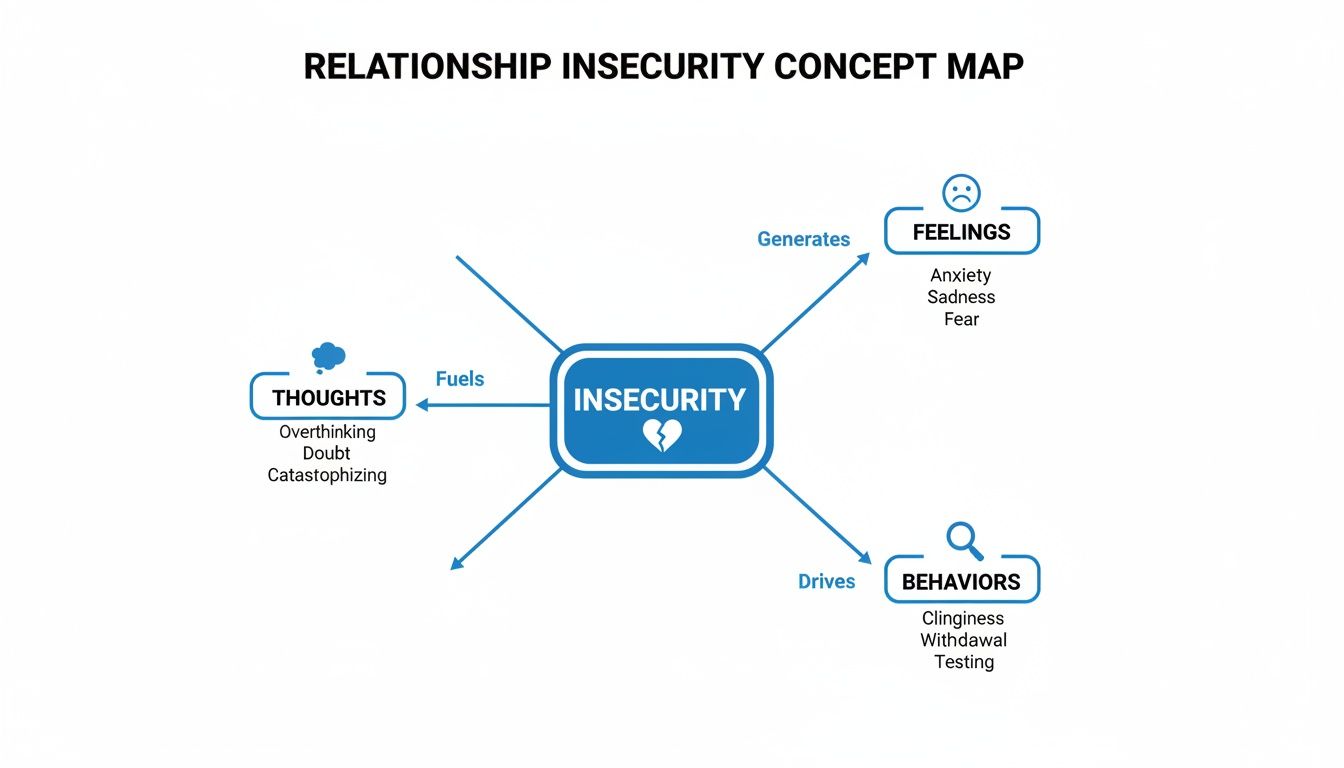
    Concept map illustrating relationship insecurity, showing how it connects with thoughts, feelings, and behaviors.

    As this map shows, insecurity is a painful cycle. Anxious thoughts trigger difficult emotions, which then lead to reactive behaviours like seeking constant validation or emotionally withdrawing.

    Other Factors That Fuel Insecurity

    While attachment is a major factor, other life experiences can intensify insecurity in a relationship. These events can amplify old fears, making it hard to feel safe even with a loving partner.

    Past betrayals, for example, can make you more guarded in future relationships as a form of self-protection. Low self-esteem also plays a significant role, acting as a filter that makes you doubt your own worthiness of love and acceptance.

    Your mind will always believe what you tell it. Feed it faith. Feed it truth. Feed it with love.

    Furthermore, mental health conditions like anxiety and depression are deeply connected to relationship insecurity. They can create persistent worry or a negative outlook, contributing to emotional burnout and making it hard to see situations clearly.

    In India, these psychological roots have a tangible impact on relationships, mixing with modern pressures like workplace stress. Understanding where your insecurity comes from is the first step toward healing, allowing you to see it not as a personal flaw but as a learned response that can be changed.

    How Insecurity Affects Both You and Your Partner

    In a relationship, insecurity is a shared burden that can create distance and tension, affecting both individuals. It quietly erodes the connection, leaving both partners feeling exhausted and misunderstood.

    Understanding its impact on each person is crucial for finding a way forward together. By recognising these dynamics, you can begin to address them with empathy and build a healthier bond.

    A sad couple sits back-to-back on a sofa, representing distance and relationship problems.

    The Internal Storm of the Insecure Partner

    If you are the one struggling with insecurity, your inner world may feel like a constant state of high alert. This persistent undercurrent of anxiety and stress is draining and can lead to emotional burnout.

    This vigilance makes it difficult to be present and enjoy moments with your partner. You may desperately want to feel closer, but your own fears can inadvertently push that connection away.

    The Exhaustion of the Supporting Partner

    For the supporting partner, loving someone with deep insecurity can be emotionally taxing. You might find yourself constantly offering reassurance and choosing your words carefully, which can lead to frustration and helplessness.

    Over time, this dynamic can wear down trust and lead to resentment. To protect their own mental well-being, the supporting partner might begin to withdraw, unintentionally creating the very distance the insecure partner fears.

    Insecurity can starve a relationship of its oxygen—the spontaneity, trust, and joy that help it thrive. Both partners end up feeling isolated, trapped in a cycle of hurt and misunderstanding.

    The Destructive Cycle and Its Impact

    Insecurity often creates a painful, repeating cycle in a relationship. It may start with the insecure partner's fear, which leads to questioning or accusations. The other partner, feeling unfairly judged, may become defensive or withdraw.

    This reaction can feel like "proof" of the original fear, intensifying the anxiety and perpetuating the cycle. This pattern erodes trust and makes open communication feel risky. In some contexts, as seen in India and globally, unresolved relationship insecurity can contribute to serious domestic conflict. For more details, you can read the full analysis of domestic violence reports.

    Breaking this cycle requires empathy from both people. It involves building personal resilience, seeking support through therapy or counselling, and learning new communication strategies that foster connection instead of conflict.

    Actionable Strategies to Cultivate Security and Resilience

    Understanding the source of your insecurity is the first step, but turning that awareness into action is where real change begins. This involves building your inner strength while learning healthier ways to connect with your partner.

    By creating a solid foundation of security within yourself, you create a stable anchor for your relationship to flourish. This journey toward happiness and well-being starts with you.

    A man and a woman in a deep conversation at a table with a notebook and tea.

    Building Your Inner Security First

    Before you can build a secure partnership, you must cultivate a secure home within yourself. This is about being a compassionate friend to yourself, especially during moments of vulnerability. It involves using practical techniques to manage difficult emotions and challenge unhelpful thoughts.

    A powerful first step is to practise self-soothing when anxiety arises. Instead of immediately turning to your partner for reassurance, try a grounding exercise to create a sense of calm and control.

    Here are a few simple yet effective techniques:

    • The 5-4-3-2-1 Grounding Method: When your mind is racing, pause and name 5 things you can see, 4 things you can touch, 3 things you can hear, 2 things you can smell, and 1 thing you can taste. This pulls your attention into the present moment.
    • Mindful Breathing: Place a hand on your stomach and focus on slow, deep breaths. This simple action helps calm your nervous system and breaks the cycle of panic.

    Another helpful strategy is to gently question your insecure thoughts, a core technique in modern counselling. Instead of accepting fears as facts, use a journal to explore them with curiosity.

    Writing down your fears allows you to see them for what they are—thoughts, not truths. It creates the space needed to challenge them and choose a more balanced perspective.

    Try these journaling prompts inspired by cognitive-behavioural therapy (CBT):

    1. What is the insecure thought I’m having? (e.g., "My partner is losing interest in me.")
    2. What evidence actually supports this thought? (Be objective and stick to facts.)
    3. What evidence contradicts this thought? (Recall moments of connection and love.)
    4. What’s a more balanced, compassionate way to see this? (e.g., "My partner is dealing with workplace stress, and it's not a reflection of their feelings for me.")

    This process strengthens your mental well-being by training your brain to break free from automatic negative thought patterns, building your emotional resilience.

    Strengthening Your Connection Together

    While individual work is crucial, fostering security is also a team effort. Effective communication can transform your relationship from a source of anxiety into a safe haven of support.

    Learning to share your feelings without blame and to listen with empathy is key. To build a deeper bond, it's essential to understand how to be more emotionally available.

    Communication Scripts for Tough Conversations

    Finding the right words when you feel vulnerable can be challenging. Using a structured approach helps you express yourself clearly and constructively. The "I feel" statement is a classic tool for this reason.

    Instead of saying: "You never text me back. You obviously don't care." (This sounds like an accusation.)
    Try saying: "I feel anxious when I don't hear from you for a while. A quick text to say you're busy would help me feel more secure."

    This approach focuses on your feelings and needs, inviting your partner to be part of the solution rather than putting them on the defensive. This compassionate communication style, often taught in therapy, helps break cycles of conflict and builds a happier, more connected partnership.

    When It’s Time to Bring in a Professional

    While self-help strategies are valuable, sometimes a guiding hand is needed. Reaching out for professional support is a sign of strength and a commitment to your well-being and the future of your relationship.

    Think of it as a proactive investment in your happiness. If insecurity in a relationship is causing constant distress or leading to persistent anxiety or depression, an expert can offer the tools you need to move forward.

    Recognising the Signs You Need Support

    Deciding to see a therapist can feel like a big step, but certain patterns indicate you could benefit from professional guidance. It's about a persistent, draining dynamic that you can't seem to solve alone.

    Consider seeking professional help if you experience:

    • Constant Conflict: Small issues frequently escalate into major fights about trust or commitment.
    • Emotional Exhaustion: You and your partner feel perpetually drained or burnt out from the stress.
    • Controlling Behaviours: Insecurity leads to actions like checking phones or monitoring social media, eroding trust.
    • Loss of Intimacy: Emotional and physical closeness has been replaced by suspicion and distance.

    In India, relationship insecurity often manifests as a deep fear of abandonment. For instance, the research into relationship dynamics shows how these fears can create destructive patterns. Professional support can help identify and address these issues early on.

    How Therapy and Assessments Can Point the Way

    Professional counselling provides a safe, neutral space to explore the roots of insecurity without blame. A therapist can guide you and your partner in learning healthier communication skills and building individual resilience.

    Platforms like DeTalks also offer scientifically-backed psychological assessments that can serve as a starting point for understanding your emotional patterns.

    A Quick Note: These assessments are fantastic for gaining insight into your emotional patterns and relationship dynamics. However, they are informational tools, not diagnostic ones. They are never a substitute for a full evaluation by a qualified professional.

    These assessments can provide clarity and help you decide if individual therapy or couples counselling is the right path for you. Seeking help is a compassionate choice for yourself and your partner, opening the door to healing and a more secure, loving connection.

    Burning Questions About Relationship Insecurity

    Let's address some common questions about insecurity to provide extra clarity. These answers can help you as you work toward building a stronger, more secure bond.

    Is a Little Insecurity Normal in a Relationship?

    Yes, moments of doubt are a normal part of being human. The problem arises when insecurity in a relationship becomes a constant state, shaping your reactions and damaging the connection.

    The goal isn't to eliminate insecurity entirely, but to build emotional resilience so these feelings don't take control. This helps protect the trust you and your partner have built.

    Can My Partner Fix My Insecurity for Me?

    While a supportive partner is a great asset, they cannot fix your insecurity for you. Lasting security is an inside job, as it often stems from your past experiences and self-perception.

    Your partner can create a safe environment, but the work of challenging negative thoughts and building self-worth is a personal journey. This is where individual therapy or counselling can be transformative for your overall well-being.

    True security is an inside job. Your partner can be a wonderful ally, but the real work of building self-worth and challenging fear is a journey you must take for yourself.

    How Do I Talk to My Partner About Their Insecurity?

    Approach the conversation with empathy and gentleness. Use "I" statements to share how their behaviour affects you, such as, "I feel hurt when it seems like you don't trust me."

    Choose a calm moment for this discussion, not during a conflict. Reaffirming your care for them can also help, and you might suggest couples counselling as a way to learn better communication tools together as a team.

    Will Insecurity Ever Fully Go Away?

    While it may not vanish completely, its influence can significantly decrease. With self-awareness, new coping strategies, and a stronger bond with your partner, you'll learn to see insecure thoughts as just thoughts, not facts.

    Over time, that loud voice of insecurity can become a quiet whisper you can easily manage. This shift helps in managing related feelings of anxiety or depression, allowing you to build lasting trust in yourself and your relationship.


    If insecurity is casting a shadow over your life and relationship, please know you don't have to face it on your own. DeTalks is here to connect you with experienced therapists who can equip you with the right tools for building a more secure and joyful connection. Take the first step and explore our network of professionals to begin your healing journey at https://detalks.com.

  • Your Guide to Online Counseling for Couples in India

    Your Guide to Online Counseling for Couples in India

    Deciding to explore online counselling for couples is a powerful statement about your commitment to your relationship. It’s a way to create a private, comfortable space to work through challenges and reconnect, all from home. This modern approach to therapy makes getting professional support easier than ever, giving you tools to build a stronger, more resilient partnership.

    How Online Counselling Can Strengthen Your Partnership

    A smiling Indian couple on a couch having an online video consultation with a female therapist.

    If you're reading this, you might be looking for a way forward in your relationship. Perhaps you feel stuck in the same arguments or simply feel distant from each other. Juggling work, family, and personal life can strain even the strongest connections.

    Online therapy offers a supportive setting to navigate everything from everyday stresses to deeper issues like anxiety or depression that may impact your relationship. The goal is to turn difficult moments into opportunities for growth and to improve your overall well-being.

    A Safe Space to Heal and Grow

    Online counselling provides a neutral space where a trained therapist guides the conversation. This ensures both partners have a chance to speak and feel heard without judgment. This process is key to understanding emotions and identifying the root causes of friction.

    The point of therapy isn’t to decide who is right or wrong, but to build understanding and compassion. It’s about learning to express your needs while hearing your partner's, creating a foundation of trust.

    This guided dialogue helps you move past old arguments and start rebuilding intimacy. For more on working through relationship issues, this dedicated couples therapy resource is a helpful starting point.

    Building Skills for a Resilient Future

    Effective online counselling provides practical skills for a lifetime. It empowers you with tools to improve communication, manage conflict, and enhance your emotional connection.

    Here’s a glimpse of what you can learn:

    • Communicate with compassion: Share your feelings and needs clearly and kindly, avoiding criticism or blame.
    • Manage conflict constructively: Learn to handle disagreements in a way that brings you closer together.
    • Enhance emotional connection: Re-ignite the friendship and affection at the heart of your partnership.

    These are life skills that contribute to a happier, healthier relationship and build long-term resilience.

    What Are the Real Benefits of Choosing Online Therapy?

    Choosing to get support for your relationship is an act of care. With online counselling for couples, you bring that support right into your home, fitting it into your life without disruption. It makes the process feel more approachable and less intimidating.

    This shift to digital well-being has made professional guidance more available than ever. It removes practical barriers like traffic or conflicting schedules, so you can focus your energy on each other.

    It Just Fits Into Your Life

    Online therapy respects your time and your space. You can connect with a qualified therapist from wherever you both feel comfortable, whether that's your living room or even from two different cities.

    This flexibility is particularly helpful for couples in India juggling demanding careers, family duties, or long-distance relationships. Booking a session during a lunch break or after the kids are asleep makes consistency easier, and consistency is key to making progress.

    Online therapy doesn't replace human connection; it makes professional support more accessible. By removing physical barriers, it creates a unique space for couples to be more open in their own environment.

    Being in a familiar setting often helps you feel more relaxed and open. This can lead to more productive conversations, turning counselling into a positive, proactive part of your routine.

    A Safe Space for Tricky Conversations

    Privacy is the foundation of good therapy, and online platforms prioritize this. They offer a discreet, confidential space to discuss personal challenges like workplace stress and anxiety without the concern of a public waiting room.

    This security encourages the honesty needed to address conflicts and heal. When you both feel safe, you are more likely to share what’s really on your mind, opening the door to greater understanding and well-being.

    The growth in online mental health services shows a clear need for this kind of accessible support. In fact, India's therapy landscape is rapidly evolving, driven by growing awareness around mental well-being and modern pressures.

    Building a Stronger, More Resilient Partnership

    Online counselling does more than address current problems; it equips you with skills for long-term resilience. It's not just about getting through a rough patch, but learning to face future challenges as a stronger team.

    Therapy provides practical tools to handle common relationship friction. Here’s a glimpse of what you can gain:

    • Stress Management Skills: Learn to support each other when workplace stress or personal anxiety is high.
    • Constructive Conflict Resolution: Discover healthier ways to discuss needs and resolve disagreements without blame.
    • Genuine Empathy: Develop a deeper sense of compassion for each other's perspectives and experiences.

    These skills are the foundation of a healthy relationship and individual well-being, helping prevent burnout and reduce the risk of more serious issues like depression.

    Finding a Therapy Approach That Fits Your Needs

    Starting online counselling for couples is a great first step. The next is recognizing that therapy isn't a one-size-fits-all solution. Every relationship is unique, and finding the right approach can make all the difference.

    Think of different therapy approaches as toolkits for building a better relationship. Some focus on daily behaviors, while others explore deeper emotional patterns. Knowing the options helps you choose a path that aligns with your goals, whether it's improving communication or boosting your overall well-being.

    The Gottman Method: Building a Stronger Relationship House

    Based on decades of research, the Gottman Method provides a practical blueprint for a healthy relationship. It focuses on building friendship, trust, and managing conflict constructively. This approach is highly practical and skill-based.

    Your therapist will guide you through exercises to strengthen your connection. You’ll learn to understand each other's inner worlds, express appreciation, and respond to bids for attention. This is a direct way to improve daily interactions and build lasting resilience as a team.

    The Gottman Method teaches that small, positive moments are the foundation of a strong partnership. By learning to handle disagreements gently and nurture your friendship, you create a relationship that can withstand life's storms, including pressures from workplace stress and anxiety.

    For example, a couple might practice a "softened start-up" to raise an issue, beginning with "I feel…" instead of blame. This simple change can turn a potential fight into a productive conversation.

    Emotionally Focused Therapy: Tuning Into Your Emotional Music

    Emotionally Focused Therapy (EFT) concentrates on the emotional bond that holds you together. It helps you understand the deeper feelings and unmet needs that fuel your conflicts. This can feel like learning to hear the "emotional music" playing beneath your arguments.

    A fight is often about an underlying fear of disconnection. An EFT therapist helps you identify these negative patterns, such as one partner pursuing while the other withdraws. It's a powerful approach for couples feeling emotionally distant.

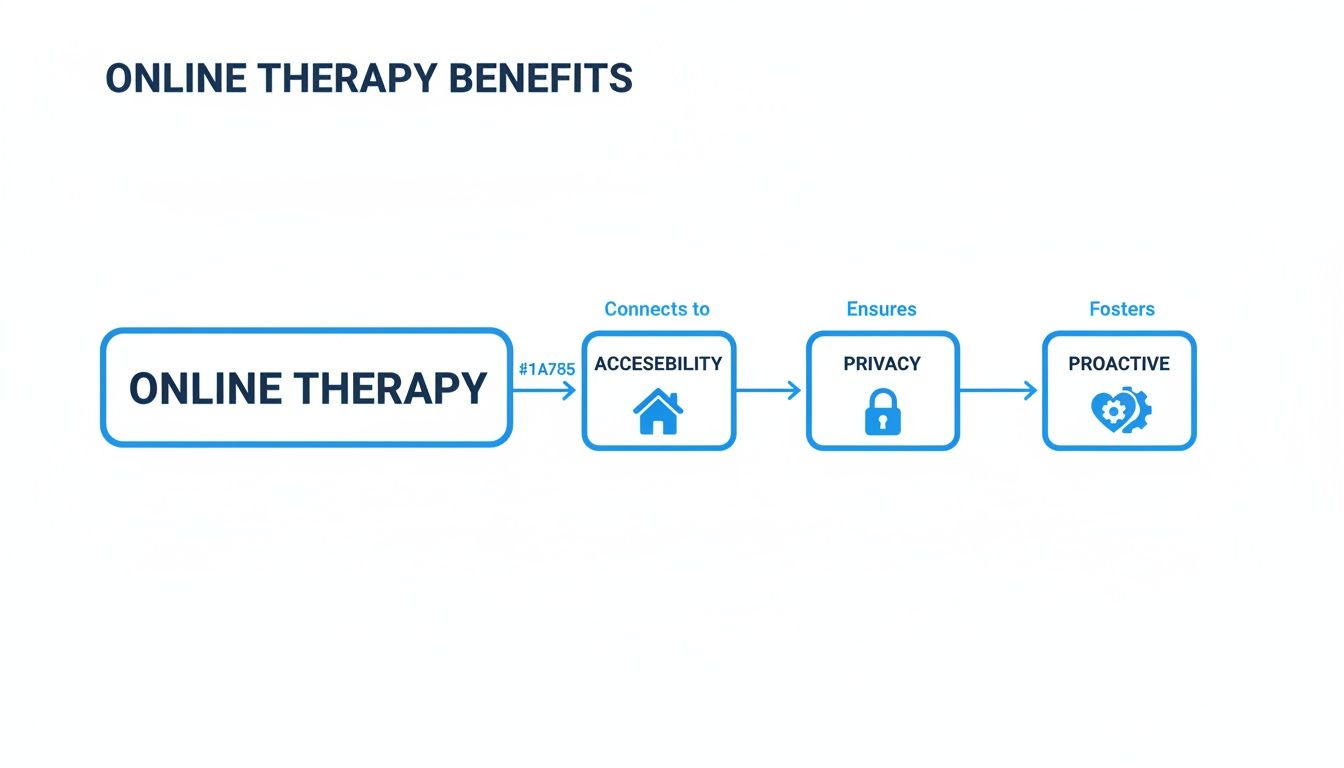
    The benefits of online therapy make this work more accessible.

    Flowchart illustrating the benefits of online therapy, highlighting accessibility, privacy, and proactive care.

    As the flowchart shows, online counselling for couples combines accessibility, privacy, and proactive care. This creates a supportive space for you to focus on your emotional connection and shared well-being.

    Cognitive-Behavioural Therapy: Rewriting Your Relationship Scripts

    Cognitive-Behavioural Therapy (CBT) for couples explores the link between your thoughts, feelings, and actions. It helps identify unhelpful assumptions or "scripts" you may have about your partner and the relationship. This method is practical and goal-oriented.

    A CBT therapist helps you challenge these negative thought patterns. For instance, if you think, "They never listen," you might feel angry and withdraw. CBT teaches you to pause, examine the evidence, and reframe the thought, which can change how you feel and react.

    This approach is helpful for specific challenges like communication roadblocks linked to anxiety or depression. It provides concrete tools to change unhelpful behaviors and improve your dynamic.

    Comparing Popular Couples Therapy Approaches

    Here is a quick overview of these common therapy models to help you understand their focus.

    Therapy Approach Primary Focus Best For
    The Gottman Method Building friendship and managing conflict with practical, skill-based tools. Couples who want concrete strategies to improve their daily interactions.
    Emotionally Focused Therapy (EFT) Strengthening the emotional bond and breaking negative interaction cycles. Couples feeling emotionally distant or needing to rebuild trust.
    Cognitive-Behavioural Therapy (CBT) Identifying and changing negative thought patterns and behaviours. Couples dealing with specific issues linked to mental health.

    The best approach is the one that resonates with both of you and your goals.

    So, Which Approach Is Right for You?

    Choosing the right therapy is a conversation between you, your partner, and your therapist. The ideal method depends on your unique challenges and what you hope to achieve.

    • Choose the Gottman Method if: You want practical tools to become better friends and navigate conflict constructively.
    • Consider EFT if: You feel emotionally disconnected and want to get to the root of your arguments to rebuild intimacy.
    • Explore CBT if: You need to tackle specific negative thoughts and behaviours with clear, actionable strategies.

    Many therapists use an integrative approach, blending techniques to tailor therapy for you. Effective counselling provides a structured roadmap to help you reconnect and build a stronger partnership.

    What to Expect From Your First Online Session

    Starting online counselling for couples can bring a mix of hope and nervousness, which is completely normal. Knowing what to expect can ease any apprehension and help you both feel more prepared.

    Think of the first session as a foundation-building opportunity. It’s a chance for you to get to know your therapist, and for them to get to know you.

    The Initial Intake and Goal Setting

    Your first meeting will begin with practical details, like confidentiality and how the online platform works. From there, the conversation will shift to you and your relationship's story.

    The therapist will want to understand what brought you to counselling, exploring both the good times and the challenges. This is not an interrogation, but a gentle exploration to help the therapist understand your dynamic.

    Remember, the first session is about setting the stage for future work. It’s a chance to create a shared vision for what a healthier, more connected relationship looks like for you.

    You might discuss communication styles, recurring arguments, or external pressures like workplace stress. This initial conversation is crucial for setting meaningful goals together.

    What a Typical Session Looks Like

    A standard 60-minute session is a guided conversation where your therapist acts as a neutral facilitator. Their role is not to take sides but to help you both gain new perspectives and communicate more effectively.

    Here’s a general idea of the flow:

    • A Gentle Beginning: The session usually starts with a check-in to see how you are both doing.
    • Guided Dialogue: You'll each have a chance to speak without the conversation spiraling into blame.
    • Skill Introduction: Your therapist may introduce a practical tool, like a new communication technique.
    • Supportive Closing: You'll review key takeaways, and you might receive a small task to work on before your next meeting.

    This structure helps turn difficult conversations about topics like anxiety or resentment into opportunities for healing.

    A Quick Word on Assessments

    Your therapist might use a short questionnaire to gather more insight into your relationship dynamics. These are informational tools, not diagnostic tests. They are simply used to gather information.

    Think of them as a way to fine-tune the process. The information helps your therapist tailor the therapy to your specific needs, ensuring the approach is as helpful as possible. The goal is always to equip you with the understanding needed to build resilience and a stronger connection.

    How to Find the Right Therapist for You Both

    Person holding a tablet showing diverse professional headshots, with a blurred couple in a counseling session.

    The connection you build with your therapist is fundamental to your success. It’s worth taking the time to find a professional who feels right for both of you. This is about finding the best fit for your unique partnership and goals.

    Your therapist should be a trusted ally who creates a balanced space where you both feel safe and understood. This comfort makes it possible to discuss difficult topics, from managing anxiety to navigating workplace stress. A good fit will motivate you both to engage in the process and build lasting resilience.

    What to Look for in a Couples Therapist

    When searching for online counselling for couples, knowing what to look for can make a significant difference. You want someone with specific experience in relationship dynamics.

    Here are a few key things to consider:

    • Credentials and Qualifications: Ensure the therapist is a licensed mental health professional, such as a psychologist or clinical social worker. This confirms they have the right training and adhere to ethical standards.
    • Specialisation in Couples Therapy: Look for someone who specializes in couples or marriage counselling and is trained in evidence-based methods.
    • A Therapeutic Approach That Resonates: Read the therapist’s profile to see if their philosophy aligns with your goals.

    Platforms like DeTalks can simplify this search. They provide detailed profiles where you can review a therapist's qualifications, specialities, and approach to therapy.

    Important Questions to Ask During a Consultation

    Most therapists offer a short, free consultation call. This is your chance to interview them and get a feel for their style.

    Your initial consultation is a chemistry check. Pay attention to how the therapist makes you both feel. Do they listen actively? Do you feel respected? This first impression is often a strong indicator of the therapeutic relationship to come.

    Having a few questions ready can guide the conversation and help you make a confident choice.

    Consider asking questions like these:

    1. What is your experience with couples facing issues similar to ours?
    2. How do you ensure both partners feel equally heard and supported?
    3. Could you describe your general approach to couples counselling?
    4. What can we expect from the first few sessions?
    5. How do you help couples set and work towards their goals?

    A warm, empathetic, and professional tone is a great sign. Choosing the right person is a proactive step toward building a stronger foundation for your relationship and overall well-being.

    Navigating the Cost of Couples Counselling in India

    Let's discuss the practical side: the investment. Understanding the cost of online counselling for couples in India can help you commit to the process with clarity. The good news is that online therapy often makes professional support more affordable than traditional sessions.

    This accessibility is a key reason for online therapy's growing popularity in India. By reducing overheads like rent and travel, digital platforms can offer more competitive pricing. This means more couples can access the support they need to improve their relationship and well-being.

    Understanding Session Rates and Packages

    The cost for online counselling for couples in India is quite competitive. Online session costs are often lower than in-person meetings, putting professional help within reach for more people.

    Generally, you can expect online couple therapy sessions to be priced between ₹900 and ₹1,500. For marriage counselling, the range is often around ₹800 to ₹1,400. You can learn more about therapy pricing in India for a deeper breakdown.

    Many platforms also offer packages, such as bundles of four or eight sessions, which usually come with a discount. This approach saves money and encourages commitment to the process, which is essential for lasting change.

    Investing in your relationship is one of the most powerful decisions you can make. Viewing therapy as an investment in your shared happiness and resilience reframes the experience as a positive step toward a better future.

    Simple Logistics and Complete Confidentiality

    The logistics of online therapy are simpler and more flexible. Therapists often offer evening and weekend appointments to fit around work schedules. Payments are handled securely online, keeping the process smooth.

    Most importantly, your privacy is taken seriously. Reputable platforms use secure, encrypted video technology to ensure your conversations remain confidential. This creates a safe space to discuss sensitive topics like anxiety or workplace stress, allowing you both to open up honestly.

    Common Questions About Online Couples Counselling

    It’s normal to have questions when considering online counselling for couples. Let's walk through some common queries to help you feel more confident about this positive step for your relationship.

    Our goal is to clarify the process so you can see counselling as a proactive way to build a stronger, happier partnership.

    Is Online Counselling as Effective as In-Person Therapy?

    Yes, research has shown that online therapy can be as effective as traditional sessions for many issues, including relationship dynamics, anxiety, and depression. The key to success is the connection you build with your therapist and your commitment to the process.

    For many couples, being in the comfort of their own home makes it easier to be vulnerable. While it's a common worry to ask, "does couple counselling work for different problems?", the evidence and success stories confirm that it does.

    What if My Partner Is Hesitant to Try Therapy?

    It’s common for one partner to be more eager than the other. Approach the conversation with empathy, not pressure. Frame it as a way for you both to learn new skills for handling life's challenges, like workplace stress, as a team to improve your well-being.

    A great way to start is by suggesting you try just one session without any long-term commitment. Experiencing the supportive, non-judgmental space a therapist creates can often ease initial fears. Present therapy as a tool for building resilience together.

    This collaborative approach is gaining traction. As noted in this trend in couples therapy, many young couples in India are proactively seeking to build healthy relationship foundations.

    Is Everything We Discuss Kept Confidential?

    Absolutely. Confidentiality is a cornerstone of all therapy. Licensed therapists are legally and ethically bound to protect your privacy. Reputable online platforms use secure, encrypted technology to ensure your conversations remain private.

    This secure environment is vital for creating a safe space to talk honestly. Knowing your discussions are protected makes it easier to address sensitive topics, which is necessary for making real progress.


    At DeTalks, we're here to help you find the right path forward for your relationship. Our platform is designed to connect you with qualified, compassionate therapists who specialise in working with couples. Explore our directory and take that first step toward a more connected and resilient relationship by visiting https://detalks.com.