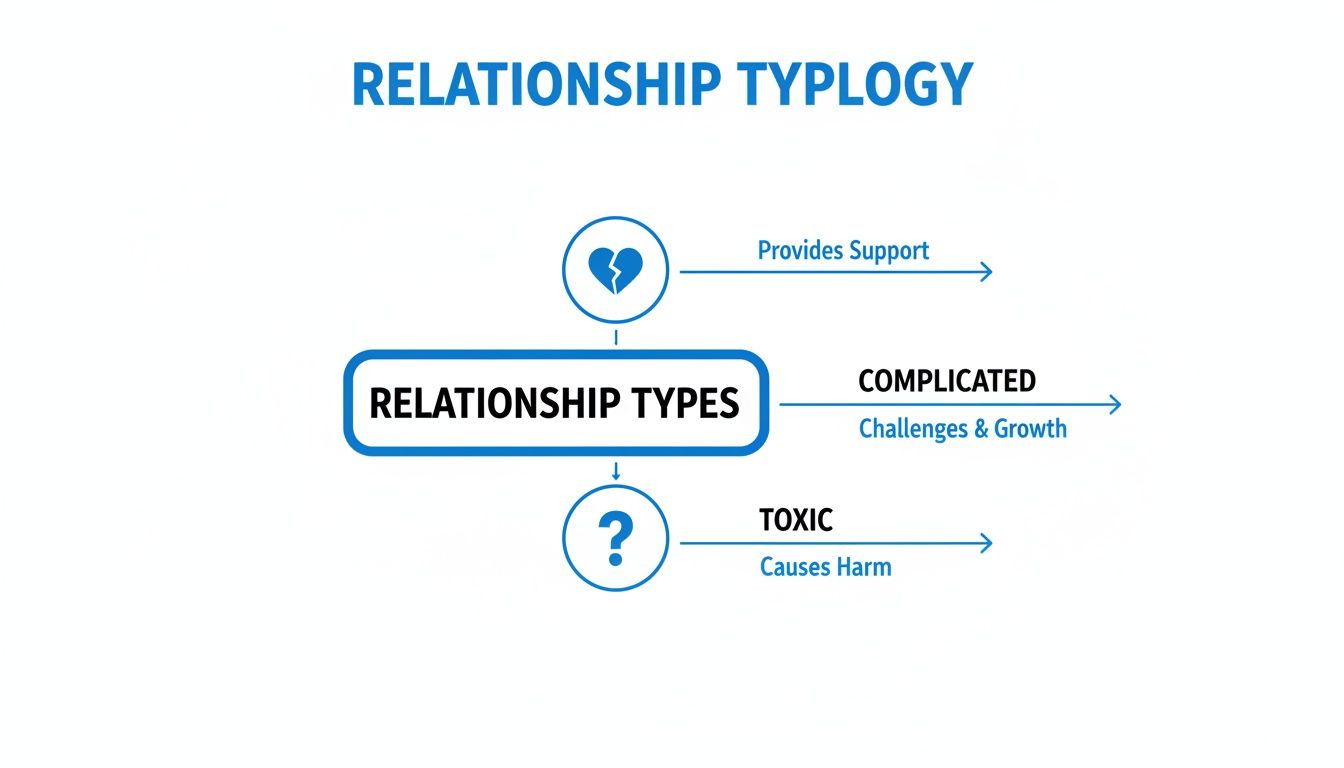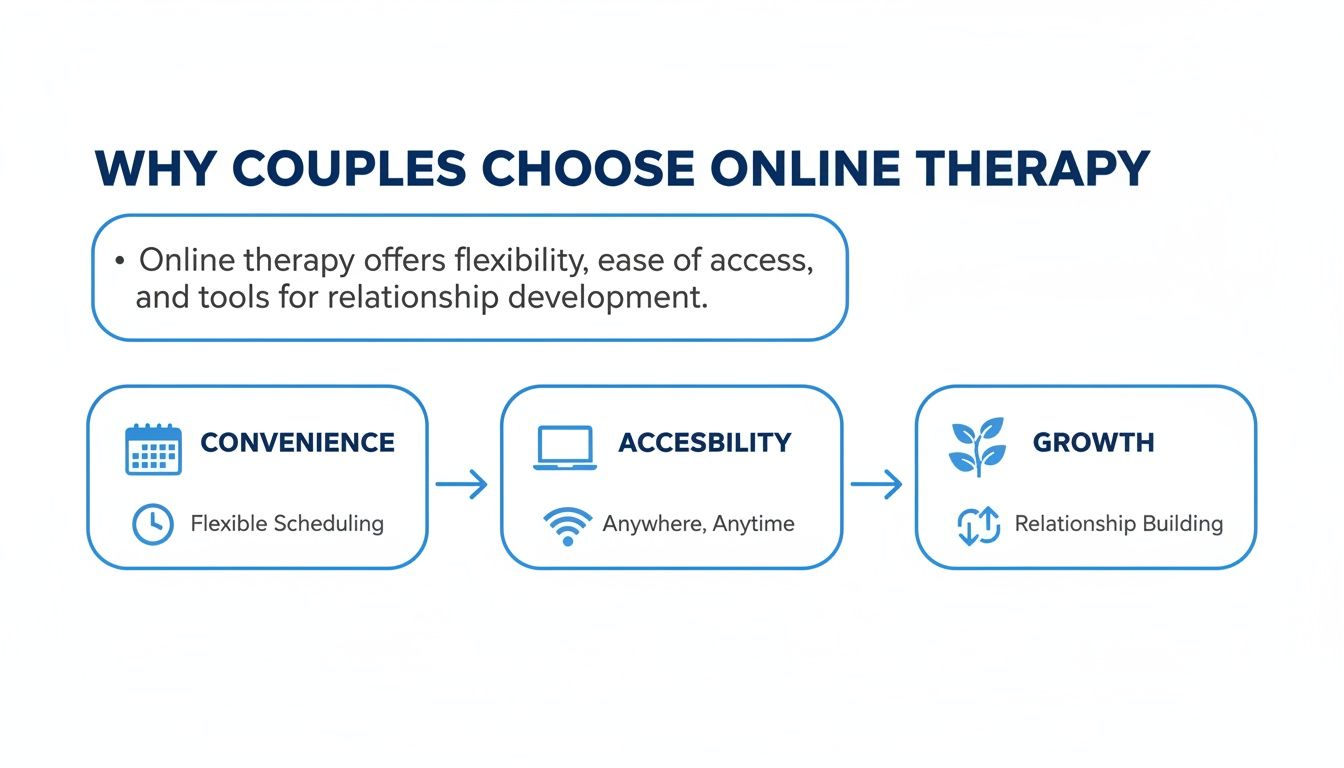
Insecurity in a relationship is that persistent, nagging feeling of doubt about where you stand with your partner. It’s a deep-seated anxiety that you’re not quite good enough, turning what should be a source of comfort into a source of stress.
What Relationship Insecurity Actually Feels Like
Living with insecurity in a relationship often feels like a constant, low-level hum of anxiety. It's the inner voice that questions your partner's love, analyses their every move, and casts a shadow of doubt over your connection.
Instead of feeling like a safe harbour, your relationship can start to feel like unstable ground. This experience, while deeply personal, is also very common. Many people grapple with these feelings, which can stem from past heartbreaks, low self-worth, or even family pressures, especially common in the India-first context but relatable globally.
The Emotional Undercurrent of Doubt
When you peel back the layers, relationship insecurity is almost always driven by fear. It's the fear of being abandoned, the fear of not being truly seen, or the fear of simply being inadequate.
This fear can filter your daily life together. A delayed text might feel like a sign of fading interest, and a quiet evening can seem like proof of emotional distance, causing significant anxiety.
This heightened sensitivity can sometimes be linked to concepts like rejection sensitive dysphoria, where even small slights feel overwhelming. This can trap you in a painful cycle of seeking reassurance, feeling momentary relief, and then having the anxiety rush back, taking a toll on your well-being.
"Insecurity whispers lies that our deepest fears are truths. It tells us we are unlovable and that abandonment is inevitable, turning our relationships into a stage for a self-fulfilling prophecy."
Recognising the Signs in Yourself
Learning to spot the signs of insecurity in your thoughts and actions is the first step toward change. This isn't about blame; it's about building self-awareness to break the cycle and improve your well-being.
To help you identify these patterns, here's a quick summary of common behaviours and the fears often hiding beneath them.
Quick Guide to Common Signs of Insecurity
| Sign | What It Looks Like | Underlying Fear |
|---|---|---|
| Constant Reassurance Seeking | Frequently asking, "Do you love me?" or "Are we okay?" after minor interactions. | Fear that your partner's love is fragile and can disappear at any moment. |
| Overthinking & Misinterpreting | Reading negative intentions into neutral actions, like a short text or a quiet mood. | Fear of being secretly disliked or that something is wrong and you're missing it. |
| Comparing Your Relationship | Feeling that your connection pales in comparison to what you see on social media or among friends. | Fear that your relationship is flawed or not "as good" as it should be. |
| Conflict Avoidance | Staying silent about your needs or feelings to avoid a potential disagreement or upsetting your partner. | Fear that expressing yourself will lead to rejection or abandonment. |
Seeing your behaviours in this table can be a moment of realisation. Acknowledging these feelings with compassion is how you begin to build resilience and foster a happier, healthier connection.
Uncovering the Roots of Your Insecurity
Feelings of insecurity rarely come from nowhere. To find your footing, it's helpful to gently explore where these feelings first took hold, not to assign blame, but to understand yourself with more compassion.
Our earliest bonds with caregivers often teach us what to expect from love, a concept known as attachment theory. These experiences create an internal 'map' that guides how we connect as adults, sometimes locking in patterns of anxiety.
For instance, if a caregiver was unpredictable, you might develop an anxious attachment style, constantly seeking reassurance. If showing emotion was discouraged, you might adopt an avoidant style, keeping partners at a distance to prevent getting hurt.
How Your Past Shapes Your Present
Beyond childhood, painful romantic experiences—like betrayal or an unexpected breakup—can leave deep emotional scars. These wounds can make it difficult to feel safe in a new relationship, contributing to stress and anxiety.
One betrayal can plant a seed of fear that history will repeat itself. It’s a self-preservation instinct, but it can also prevent you from feeling truly relaxed and secure with someone new.
This concept map shows how these internal states of doubt, anxiety, and fear are often interconnected.

As you can see, these feelings often feed each other in a loop. Anxiety fuels doubt, which then amplifies your fear, continuing the cycle and impacting your well-being.
The Inner Critic and Self-Esteem
That nagging voice of insecurity is often amplified by a harsh inner critic and low self-esteem. When you don't feel worthy of love deep down, it’s hard to believe that someone else could genuinely give it to you.
This internal self-doubt can make you dismiss compliments or second-guess your partner’s intentions. This mindset keeps you on high alert for rejection, sometimes sabotaging the very connection you want to protect.
Insecurity thrives in the gap between how we see ourselves and how we believe our partner sees us. The smaller we make that gap by building self-worth, the less room there is for doubt to grow.
Here in India, these personal struggles can be compounded by cultural pressures. Family expectations or societal ideas about relationships can add another layer of inadequacy if your life doesn’t fit the mould.
A study adapted by IIT Delhi found that over 60% of young Indian adults feel insecure in unsupportive relationships. This research reinforces that emotional neglect significantly increases loneliness and mental health risks like anxiety and depression. You can read the full research about these findings to learn more.
Understanding where your insecurity comes from is a crucial step. It allows you to see your feelings not as a flaw, but as a response to your experiences, building a foundation for resilience.
How Insecurity Shows Up in Your Daily Life
Insecurity rarely stays inside our heads; it spills out, shaping our actions and interactions. Understanding these behaviours with compassion is the key to changing them and improving your well-being.
When you're feeling insecure, behaviours like seeking reassurance or feeling jealous are often misguided attempts to calm a deep fear. They aren't character flaws, but rather signals of underlying anxiety.

The Constant Need for Reassurance
One of the most common signs of insecurity in relationships is a relentless need for validation. It’s that urge to ask, "Do you still love me?" or seek confirmation that everything is okay after a minor issue.
While reassurance offers temporary relief from anxiety, the doubt soon returns. This creates an exhausting cycle for both partners, impacting overall happiness.
Suspicion and a Lack of Trust
When you don't feel worthy of love, it's hard to trust your partner's feelings are genuine. This doubt can morph into suspicion, leading to behaviours like checking their phone or social media.
This is a common struggle. A survey in urban Indian centres found that 28% of couples grapple with insecurity tied to suspicions of infidelity, often worsened by digital communication. You can discover more insights about these findings on relationship insecurity in the full study.
These actions, born from fear, erode the trust that holds a relationship together. They create a tense atmosphere that can cause a partner to pull away, damaging the connection you fear losing.
"Insecurity often convinces us that if we just find enough evidence, we can finally relax. In reality, the search itself is what keeps the anxiety alive, preventing true connection and well-being."
Creating Conflict to Test Commitment
Sometimes, insecurity shows up by picking fights as a subconscious way to test a partner's loyalty. The hidden logic is, "If they stay and fight with me, it must mean they really care."
This behaviour might involve blowing a small issue out of proportion to trigger a strong emotional response. It's a desperate plea for connection but often creates a cycle of stress and emotional burnout.
This tactic usually backfires, causing a partner to feel like they are walking on eggshells. Recognising these patterns with compassion is the first step toward choosing responses that build trust and resilience.
The Toll Insecurity Takes on You and Your Partner
Insecurity in a relationship creates a ripple effect, impacting the well-being of both people. For the person struggling with these feelings, the constant state of anxiety and stress can be exhausting.
This relentless emotional state can contribute to symptoms of anxiety and even depression. It's a heavy weight that makes it difficult to feel secure not just in the relationship, but in yourself.

The Impact on Your Partner
For the other person, the experience can be just as challenging. They may feel unfairly mistrusted, confused, and emotionally drained by the cycle of conflict and reassurance, leading to burnout.
This "walking on eggshells" dynamic can breed resentment. Even the most patient partner can feel worn down, turning a supportive partnership into a source of strain similar to workplace stress.
"When one partner is constantly trying to soothe the other's insecurity, the relationship shifts from a partnership to a caretaker dynamic. This imbalance erodes intimacy and replaces connection with a sense of obligation and fatigue."
The Slow Erosion of Trust and Intimacy
Together, this cycle slowly dismantles the foundation of a healthy relationship. Trust becomes brittle, and both emotional and physical intimacy fade as honest conversations are replaced by guarded interactions.
The relationship can get stuck in a painful loop, leaving both partners feeling lonely. In India, this breakdown can have serious consequences, with lack of emotional safety being a driver of relationship distress.
Research shows that women in insecure relationships often report higher levels of anxiety and depressive symptoms. You can learn more about these relationship findings and their broader impact.
From Burnout to Resilience
Dealing with insecurity in relationships is about rebuilding a shared sense of safety and nurturing individual well-being. Acknowledging the challenge is the first step toward building resilience and happiness.
Support through therapy or counselling can help both partners learn healthier ways to communicate and connect. The goal is to develop the compassion and skills needed to navigate these feelings as a team, turning a cycle of anxiety into an opportunity for a stronger bond.
Building a Foundation of Security and Resilience
Understanding insecurity is the first step, but healing begins with action. The goal is to build a sense of safety from the inside out through small, steady steps toward emotional well-being.
The journey involves inner work to strengthen your sense of self and developing skills with your partner. Together, these paths help create a more trusting and secure bond.

Cultivating Security From Within
Lasting security starts with feeling secure in yourself. When your self-worth doesn't depend on your partner's every action, the natural ups and downs of life together feel less threatening.
A great starting point is self-compassion. This means treating yourself with the same kindness you would offer a friend, quieting the harsh inner voice that fuels your anxiety.
Here are a few practical ways to start building that inner security:
- Mindfulness and Grounding: When anxious thoughts spin, mindfulness brings you back to the present. A few deep breaths can calm your nervous system, creating a pause between a trigger and your reaction.
- Challenge Your Thoughts: Insecure thoughts are often automatic and not based in reality. Question them by asking, "Is this fear based on facts, or is it an old story I'm replaying?"
- Build Genuine Self-Worth: Focus on your strengths, values, and accomplishments outside of your relationship. Hobbies and friendships create a stable foundation, allowing your relationship to add to your life rather than define it.
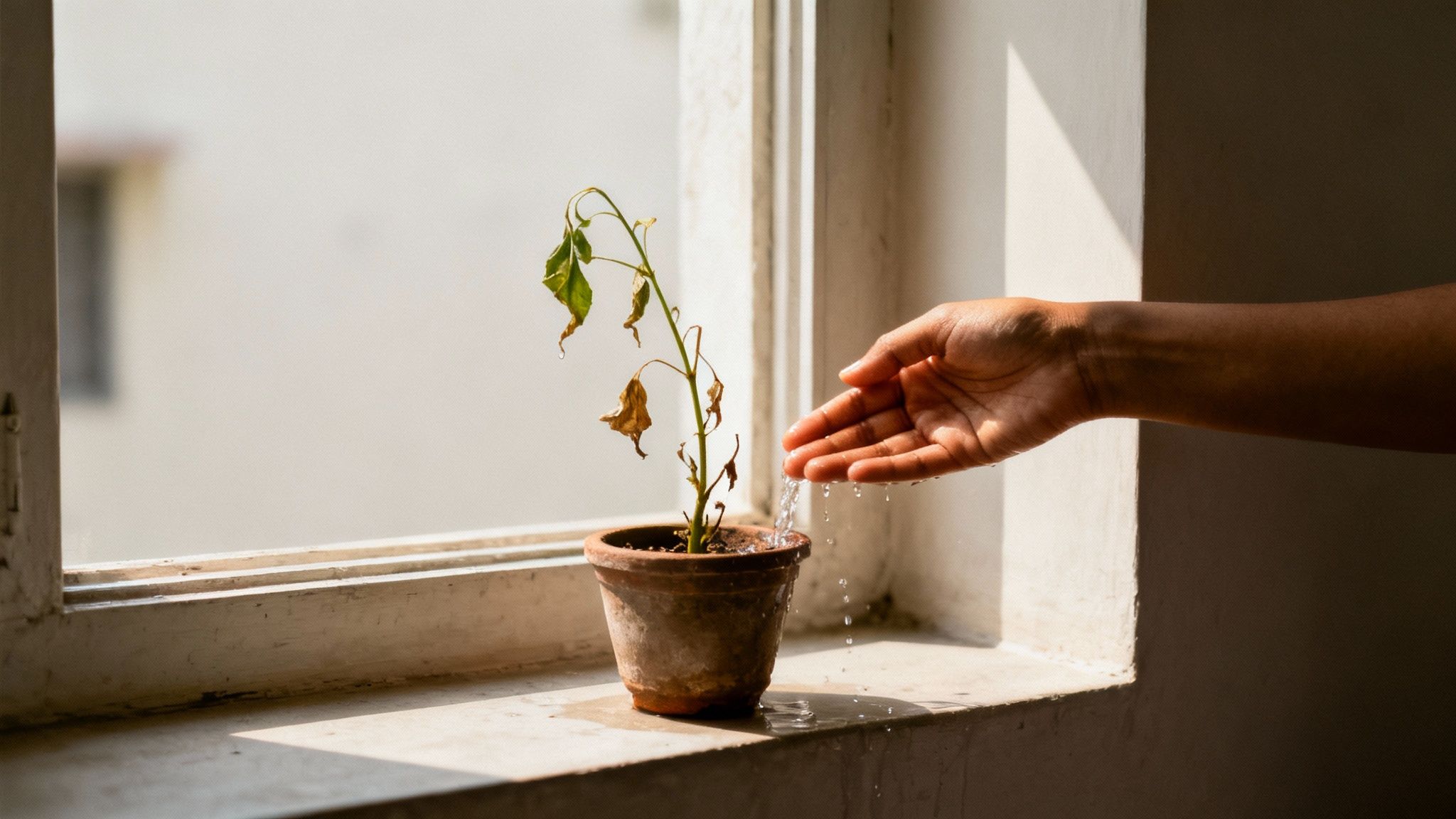
"By not fully choosing her every day, by focusing on what bothered me rather than what I adored about her, I deserted her… Like a precious fragrant flower I brought proudly into my home but then failed to water, I left her alone." – Bryan Reeves, Relationship Coach
This quote highlights the importance of being intentional. Building security means consciously focusing on the good, both in yourself and your partner, which is a cornerstone of resilience.
Strengthening Your Relational Skills
Insecurity lives in the dynamic between two people, so improving communication and trust is crucial. These skills help you both handle challenges with respect and understanding, reducing triggers for anxiety.
Use Healthier Communication Techniques
Good communication is the lifeblood of a secure partnership. Sharing your needs and fears without accusation invites your partner to respond with empathy instead of defensiveness.
Here are a few powerful techniques to try:
- Use 'I Feel' Statements: Instead of saying, "You never listen," try, "I feel unheard when we discuss this." This focuses on your experience, not your partner's perceived failure.
- Practise Active Listening: Give your partner your full attention. Reflect back what you hear—"It sounds like you're feeling…"—to ensure you understand.
- Choose the Right Time: Avoid heavy topics when either of you is stressed or tired. Find a calm, dedicated time to talk.
Set and Respect Healthy Boundaries
Boundaries are not walls; they are guidelines that teach others how you want to be treated. They are essential for protecting your emotional well-being and preventing resentment.
A boundary can be as simple as, "I need some quiet time after work," or, "It's not okay to raise your voice at me." Communicating your limits kindly is an act of self-respect that makes a relationship feel safer.
These strategies are the building blocks of a more secure connection. If these steps feel difficult, professional therapy or counselling can offer a supportive space to learn and practice these skills.
Knowing When to Seek Professional Support
While self-work is powerful, sometimes a guide can help navigate tougher challenges. Recognizing when you need professional support is a sign of strength and an investment in your happiness and well-being.
If insecurity in your relationship is causing significant distress or fuelling harmful behaviours, it may be time to reach out. Persistent feelings of anxiety, burnout, or sadness are clear signals that extra support could help.
What to Expect from Therapy
Therapy or counselling is a supportive process designed to help you feel safe. A therapist acts as a skilled guide, helping you untangle complex emotions and find healthier ways of thinking and behaving.
In individual therapy, you can explore the roots of your insecurity in a private space. Couples therapy provides a structured environment for both of you to improve communication with a neutral professional to guide you.
Engaging in something like a Counseling Therapeutic Intervention can be a crucial step toward healing. It’s about equipping yourself with the right tools to build a stronger dynamic and greater resilience.
Finding the Right Support for You
Finding a therapist who understands relationship dynamics is vital. Platforms like DeTalks connect you with qualified professionals across India who specialise in relationship issues, anxiety, depression, and workplace stress.
It’s also helpful to understand the role of online psychological assessments.
Please note: Psychological assessments found on platforms like DeTalks are helpful informational tools for self-insight. However, they are not diagnostic and should never replace a full evaluation by a qualified mental health professional.
Seeking professional help is about choosing a path toward greater well-being and resilience. It's not about a quick cure but about learning skills to handle life's emotions with more compassion, building a future founded on trust and authentic connection.
Your Questions on Relationship Insecurity Answered
It's natural to have questions when navigating the complexities of insecurity in relationships. Here are answers to some of the most common concerns.
Can Our Relationship Truly Recover from Deep Insecurity?
Yes, recovery is possible with commitment from both partners. It happens when the insecure partner works on self-worth and coping skills, while the other partner offers patience and understanding.
Open communication, consistent trust-building actions, and professional guidance through therapy or counselling are cornerstones of healing. This shared journey can build resilience and make your bond stronger.
Am I to Blame for My Partner's Insecurity?
Insecurity is rarely about one person; its roots often lie in past experiences and self-esteem. While their insecurity is not your fault, your actions can either help or hinder the healing process.
You are not responsible for fixing their insecurity, but you can help create a safe environment. Being reliable, honest, and open contributes to the well-being and happiness of you both.
Remember, the goal isn't to assign blame but to build understanding. Insecurity is the problem, not the person feeling it. Working together with compassion is the most effective path forward.
How Can I Tell If It's My Insecurity or a Real Problem?
Look for objective evidence to tell the difference. Are your fears tied to specific, repeated behaviours that have broken trust, or is it a general feeling of anxiety even when things are good?
Talking to a trusted friend or therapist can offer clarity. If your partner is consistently dishonest or dismissive, that's a relationship problem. If you feel anxious with a dependable partner, the feeling likely stems from personal insecurity.
If you're looking for professional guidance to navigate these challenges, DeTalks is here to help. Explore our directory of qualified therapists and take the first step toward building a more secure and fulfilling relationship today at https://detalks.com.