
Tag: depression support

  • Online Counseling for Depression: A Path to Feeling Better

    Online Counseling for Depression: A Path to Feeling Better

    Feeling the weight of depression can be incredibly isolating, but help is much closer than you might imagine. Online counselling for depression is a practical and supportive first step towards improving your well-being. It is a confidential conversation with a professional, from a place where you feel most comfortable.

    This approach makes working on your mental health an achievable goal, fitting it gently into your life.

    Your Path Forward with Online Counselling

    Taking the first step to seek support is an act of courage. When daily challenges like stress or anxiety feel overwhelming, online counselling offers a straightforward way to connect with a qualified professional. You can get guidance for feelings of sadness or burnout, all from the privacy of your home.

    This is especially helpful in the Indian context, where stigma or busy schedules can be barriers to care. Online therapy removes these obstacles, connecting you with support without the stress of travel. The goal is to make professional guidance for your well-being a normal part of life.

    Understanding the Need for Accessible Care

    Depression is a significant mental health challenge in India, and the need for accessible care like online counselling is clear. The National Mental Health Survey of India highlights that many people, especially in their most productive years, experience depression.

    A large number of individuals dealing with mental health concerns do not receive professional help. This "treatment gap" represents real people navigating difficult times, often alone. This is where online therapy and counselling can make a meaningful difference.

    The infographic below helps to visualise India's mental health landscape, showing the prevalence, the treatment gap, and how online access can be a powerful solution.

    This data shows that while many people are struggling, few are getting the support they need. This is the gap that online platforms are perfectly positioned to close, making therapy more reachable.

    Making an Informed Choice

    As you consider your options, you might want to explore the differences between online therapy vs in person. Understanding what fits your life best helps you choose a path that feels right for you.

    The most important thing is finding a supportive space where you can start to build resilience and find balance.

    This journey is not just about managing challenges like workplace stress or anxiety. It is also about nurturing positive well-being, including resilience, self-compassion, and happiness. Online therapy is a tool to support you on this complete journey.

    Core Benefits of Online Counseling for Depression

    Let's break down the key advantages of online therapy. This table shows why choosing this path can be a positive step in managing depression and enhancing your overall well-being.

    Benefit How It Helps Your Journey
    Accessibility Receive support from anywhere in India with an internet connection.
    Convenience Fit sessions into your schedule without travel, saving time and energy.
    Privacy Talk to a therapist from the comfort and confidentiality of your own home.
    Choice Access a wide range of therapists with diverse specialities, not just local ones.
    Comfort Opening up can feel easier in a familiar and secure environment.

    These benefits work together to remove common barriers, making it simpler to begin and continue your therapy journey.

    How Online Therapy Actually Works

    Young man having an online video counseling session with a therapist on his laptop.

    So, what happens in an online counselling for depression session? It’s more straightforward than you might think. Your therapist is a trained professional who uses evidence-based methods to help you navigate your thoughts and feelings.

    This support is simply delivered through video, audio, or chat, right where you are.

    A Private Space, Just for You

    Good therapy begins in a safe, confidential space where you can speak freely. Online counselling platforms use secure, encrypted technology to protect your privacy. This allows you to connect from wherever you feel most comfortable, which often makes it easier to open up.

    Within this private virtual space, your therapist listens without judgement. They help you gently understand the patterns that may contribute to feelings of sadness, anxiety, or workplace stress.

    The Tools of the Trade

    Therapists use well-researched techniques to help you create lasting change. One common and effective approach in online counselling for depression is Cognitive Behavioural Therapy (CBT).

    CBT is based on the idea that your thoughts, feelings, and actions are all connected. It helps you learn to identify unhelpful thought patterns and gently replace them with more balanced ways of thinking. When your thoughts shift, your feelings and behaviours often follow.

    The aim of therapy isn't just to talk about problems; it's to build practical skills you can use for life. With tools like CBT, you're not just solving an issue for today—you're building a personal toolkit for managing life with greater resilience.

    From Facing Problems to Finding Strengths

    Good counselling doesn't only focus on what's wrong; it also highlights your strengths. While you might start by exploring challenges like burnout or anxiety, a great therapist will also help you build on your inner resources.

    This balanced approach includes both tackling challenges and building strengths. You might explore the roots of your stress or depression, and at the same time, learn mindfulness exercises, practice self-compassion, or rediscover activities that bring you joy.

    This process helps you move from just coping to truly thriving. By nurturing strengths like resilience and self-kindness, you're not just recovering from a tough period—you're actively creating a more meaningful life.

    Finding the Right Therapist for Your Needs

    Choosing a professional for online counselling for depression is a deeply personal and important step. The connection you have with your therapist is a key part of what makes therapy effective.

    Taking time to find the right fit is a real investment in your own well-being. The goal is to find a professional you can build a genuine rapport with, as this relationship is the foundation for your progress.

    What to Look for in a Therapist's Profile

    When you browse platforms like DeTalks, you’ll see profiles that give you a snapshot of each therapist. Look for details that resonate with what you're going through.

    Here’s what to pay attention to:

    • Qualifications and Licensing: In India, an RCI license (Rehabilitation Council of India) is a strong credential for clinical psychologists. Other qualifications include a Master's degree in Psychology or Social Work.
    • Areas of Specialisation: Look for expertise in areas like depression, anxiety, or workplace stress. This shows they have experience with the issues you are facing.
    • Therapeutic Approach: You might see terms like CBT (Cognitive Behavioural Therapy) or Mindfulness-Based Therapy. Read their description to get a feel for their style—is it structured and practical, or more exploratory?

    Matching Your Needs with Their Expertise

    Finding the right person goes beyond qualifications; it’s about a human connection. As you look at profiles, ask yourself what might make you feel most comfortable.

    There are no wrong answers here. Your comfort is what matters because it allows you to be vulnerable, which is where healing begins. Trust your intuition.

    It is important to remember that finding the right therapist can sometimes take more than one try. If the first person you speak with doesn't feel like the right match, that is a normal part of the process, not a failure.

    Preparing for Your First Conversation

    Many platforms offer an initial consultation. This is your chance to ask questions and see how it feels to talk to them.

    Here are a few questions you might consider:

    1. How do you typically approach working with someone experiencing depression?
    2. What can I expect from our first few sessions?
    3. How do you help clients build resilience and practical coping skills?

    How you feel during the conversation is often the clearest sign you’ve found the right person to support your journey toward better mental well-being.

    What to Expect in Your First Online Session

    It’s completely normal to feel a little nervous before your first therapy session. This first meeting is about easing you into the process. There is no pressure, just an opportunity for you and your therapist to get to know one another.

    Think of it as the start of a conversation. The goal is to create a space where you feel comfortable and safe enough to start sharing.

    Setting the Stage for Your Session

    After booking through a platform like DeTalks, you'll join a private, secure video call. The first few minutes are usually about making sure the technology is working and confirming confidentiality.

    This brief check-in establishes professionalism and gives you a moment to settle in.

    Getting to Know Each Other

    The heart of the first session is a gentle, guided conversation. Your therapist will ask open-ended questions to understand what brought you to therapy, whether it's depression, anxiety, or workplace stress.

    You are always in control of how much you share. The goal is simply to start painting a picture of your experiences at a pace that feels right for you.

    Important Note: Assessments or questionnaires are informational tools, not diagnostic ones. They provide a helpful snapshot of your current well-being, but they are not a clinical diagnosis. Only a qualified professional can provide a formal diagnosis.

    These initial conversations lay the groundwork for a trusting, collaborative relationship between you and your therapist.

    Focusing on Both Challenges and Strengths

    A good therapist will want to know about your challenges and also about what is going well. Modern therapy is about recognising your strengths and moments of resilience just as much as your struggles.

    This balanced approach helps create a complete picture. Your first session might touch on current challenges, your personal history, existing strengths, and your hopes for the future of your therapy and well-being.

    Ending with Supportive Takeaways

    As the session ends, your therapist will summarize your discussion and share some initial thoughts. The aim isn't a quick fix, but to create a sense of clarity and hope.

    You will likely discuss a plan for future sessions. You should leave the first session feeling heard, understood, and confident that you have found a partner for your journey.

    Ensuring Privacy and Security in Online Therapy

    Person on a video call for a first online therapy session, with headphones, notebook, and pen on the desk.

    Trust is the bedrock of good therapy. Knowing your conversations are private is essential for online counselling for depression. Reputable platforms treat this with the utmost seriousness.

    Good platforms are designed with robust security measures to create a digital safe space. This lets you focus on what matters most: your well-being.

    How Technology Keeps Your Information Safe

    Your online therapy session takes place in a digitally secure environment. Modern platforms use end-to-end encryption for all communication. This is the same powerful security technology used by banks.

    This encryption ensures that only you and your therapist can access the conversation. It protects your privacy from start to finish.

    Your privacy is a core ethical and legal obligation. A secure platform is the first line of defence, ensuring your personal information remains confidential.

    The growth of digital mental healthcare in India has been remarkable. Online consultations have increased significantly, showing that these platforms successfully remove barriers to care. You can discover more insights about this digital revolution in Indian mental health care.

    The Professional Commitment to Confidentiality

    Technology is one part of the equation; professional ethics are the other. Your therapist is bound by strict codes of confidentiality. What you say in therapy, stays in therapy.

    This professional commitment means your therapist will not share your information without your permission. The only exceptions are specific situations involving a risk of harm.

    Your Role in Protecting Your Privacy

    You also have a role in keeping your sessions secure. A few simple steps can make a big difference in protecting your privacy during your therapy sessions.

    Here are a few practical tips:

    • Find a Private Location: Choose a room where you can shut the door and won't be overheard. Using headphones adds an extra layer of privacy.
    • Secure Your Internet Connection: Always use a password-protected Wi-Fi network. Avoid public Wi-Fi for your sessions.
    • Keep Your Device Secure: Use a strong password or biometric lock on the device you use for therapy.

    Taking these steps helps create a secure environment where you can feel safe to be open and honest.

    A Few Final Thoughts on Your Path Forward

    As you consider what's next, remember that the journey to feeling better is about small, meaningful steps. This is your path, and every step you take is a genuine win for your well-being.

    Reaching out for help is an act of strength. Whether you're navigating depression, anxiety, or workplace stress, acknowledging your need for support is a brave first move toward healing and building resilience.

    It's About Progress, Not Perfection

    It’s helpful to think of therapy as learning a new skill rather than a quick cure. Some days will feel like a breakthrough, while others might feel more challenging. This is a normal part of the process, and online counselling offers a steady space to work through it all.

    The real goal is to build a personal toolkit of coping skills and a deeper understanding of yourself. This slow, steady progress is what creates lasting change.

    Your Gentle Next Steps

    Feeling ready to move forward doesn't require a giant leap. Think about one small, manageable thing you could do today.

    Taking that first step is an incredible investment in your future self. It’s a quiet promise that you are worth the effort and that a life with more ease and joy is within reach.

    Here are a few gentle next steps to consider:

    • Try a Self-Assessment: Use a confidential screening tool, like the one on DeTalks, for personal insight. Remember, these assessments are informational, not a clinical diagnosis.
    • Just Look at Profiles: Spend some time browsing therapist profiles. Reading about their approaches to therapy for depression can make the process feel more familiar.
    • Book an Intro Call: Many therapists offer a brief, no-pressure chat to see if you are a good fit. This is a simple way to test the waters.

    Support is out there, and you are in control of this decision. You don't have to do this alone; help is just a click away.

    Frequently Asked Questions

    It’s normal to have questions when looking into online mental health support. Here are some straightforward answers about online counselling for depression to help you feel more confident.

    This is a quick guide to clarify uncertainties before you begin your therapy journey.

    Is Online Counselling as Effective as In-Person Therapy for Depression?

    Yes, for many people experiencing mild to moderate depression and anxiety, online counselling is just as effective as in-person therapy. Research shows that methods like Cognitive Behavioural Therapy (CBT) work very well over secure video or audio calls.

    The success of any therapy depends on the connection you build with your therapist. A strong, trusting relationship can be built online, creating a safe space for you to work on your mental well-being.

    How Much Does Online Depression Counselling Cost in India?

    The cost of online counselling for depression in India can vary, often depending on the therapist's experience. Session fees can range from ₹500 to over ₹3000.

    Many people find that online therapy is a more sustainable option. By saving on travel time and costs, it becomes easier to get consistent support.

    What if I Do Not Connect with My First Therapist?

    This can happen, so please don't be discouraged. The therapeutic alliance—the bond between you and your therapist—is crucial for good outcomes. You need to feel comfortable and understood.

    If the first person you talk to doesn't feel like the right fit, that is perfectly okay. Good platforms make it easy to find another therapist whose approach is a better match for your well-being journey and building resilience.

    A Quick Reminder on Assessments: Please remember that online screening tools are for informational purposes. While they offer useful insight, they are not a substitute for a clinical diagnosis. Only a qualified mental health professional can provide a formal diagnosis of depression.


    Ready to take that first, gentle step? On DeTalks, you can browse through a wide range of qualified professionals and find the support that feels right for you. Start your journey today.

  • A Guide to Online Treatment for Depression in India

    A Guide to Online Treatment for Depression in India

    Recognising you might need support is a brave and important step. If you're exploring your options, this guide offers a clear, gentle path through online treatment for depression. Think of it as a helpful map for finding your way to feeling better, with a special focus on the context in India.

    A New Path to Mental Well-Being in India

    Taking the first step toward mental wellness can feel big, but you are not alone on this journey. In India, conversations about mental health are becoming more open, creating new ways to find professional, confidential help. Online therapy offers a private and flexible way to get support from your own comfortable space.

    This guide is designed to be a supportive companion on your path. We will explore how online treatment for depression can provide you with tools to manage difficult emotions and build a stronger, more resilient you.

    Navigating Life's Modern Pressures

    Modern life can be demanding, whether you're in a bustling city or a quiet town. Juggling a career, family, and personal goals can leave anyone feeling overwhelmed and stretched thin.

    This constant pressure can show up in different ways, making everyday tasks feel like a challenge. Recognising these signs is the first step toward feeling more in control of your well-being.

    • Workplace Stress: Feeling overwhelmed by deadlines or a tough work environment can lead to burnout.
    • Anxiety: This can feel like a persistent worry or restlessness that makes it hard to focus.
    • Depression: This often shows up as a heavy sadness, loss of interest in things you once enjoyed, or feeling tired all the time.

    Online counselling provides a safe, non-judgemental space to work through these feelings. A therapist can help you understand the roots of these challenges and develop practical strategies to manage them.

    Building a Foundation of Well-Being

    Support isn't just about managing tough times; it's about building a life that feels good and meaningful. This is where positive psychology can help by focusing on our strengths, like resilience and compassion.

    "Therapy is not about becoming a new person. It’s about becoming more of who you truly are, with tools to navigate life’s ups and downs more effectively."

    It’s a shift from just getting by to truly thriving. Online therapy can be a wonderful guide in this process, helping you lay a solid foundation for your overall well-being and happiness.

    • Resilience: This is your ability to bounce back from challenges and adapt to change.
    • Compassion: Learning to be kinder to yourself can quiet your inner critic and improve your relationships.
    • Happiness: It's about discovering what brings you joy and purpose to build a more fulfilling life.

    Please remember, the information here is for guidance and understanding. It is not a substitute for a formal evaluation by a qualified healthcare professional.

    Understanding Online Depression Treatment

    Online therapy is much like a traditional therapy session, but it happens in a secure, private digital space. Instead of travelling to an office, you receive professional support for challenges like depression and anxiety from wherever you feel most comfortable.

    Online treatment for depression offers a variety of care options, from live video calls to structured self-paced programs. This flexibility is making professional mental health support more approachable and accessible for many people.

    Bridging a Critical Gap in Mental Health Care

    In India, accessing quality mental health care can be difficult due to distance, schedules, or stigma. Online platforms are helping to close this gap by connecting people with the support they need, wherever they are.

    The need for this is clear. India has just 0.75 psychiatrists for every 100,000 people, which is far below the recommended number. This makes finding in-person help a challenge for many, positioning online therapy not just as a convenience but as a vital solution. You can read more about India's mental health landscape and how technology is helping.

    This improved access means expert care for depression or workplace stress is now within reach for many more people.

    More Than Just Managing Symptoms

    Good online counselling does more than help with the symptoms of depression or anxiety. It aims to build a strong foundation for your long-term mental well-being by giving you practical skills and a deeper understanding of yourself.

    This often involves a blend of proven therapeutic methods and principles from positive psychology. The goal is to equip you with the tools you need to face future challenges with greater strength and confidence.

    At its core, therapy is about building resilience—that inner capacity to navigate life's inevitable ups and downs without getting swept away. It's about strengthening your own resources so you can face challenges from a place of calm and control.

    How It Fosters Growth and Resilience

    Online treatment provides a supportive space to work on personal growth. Your therapist acts as a guide, helping you identify unhelpful thought patterns that may contribute to feelings of sadness, stress, or burnout.

    Together, you can build healthier ways of coping. This process might involve:

    • Building Self-Compassion: Learning to be as kind to yourself as you would be to a friend.
    • Developing Emotional Regulation: Gaining skills to better understand and manage your emotions so they feel less overwhelming.
    • Finding Purpose and Happiness: Exploring what gives your life meaning to create a more fulfilling future.

    While tools like online assessments can offer useful insights into your emotional state, they are informational, not diagnostic. They serve as a starting point for a meaningful conversation with a qualified professional.

    Exploring Different Types of Online Therapy

    When you look into online treatment for depression, you'll find several options. The best approach is the one that fits your personality, schedule, and comfort level.

    Think of it as a menu of services, each offering a unique way to get support. Let’s look at the most common formats to help you understand how they work.

    Live Video and Audio Sessions (Teletherapy)

    This is what most people picture when they think of online counselling. You schedule live appointments with a therapist and meet through a secure video or audio call for a real-time conversation.

    This format is great if you value direct interaction and want to build a strong connection with your therapist. It provides dedicated time to work through feelings related to depression, anxiety, or workplace stress.

    Internet-Delivered CBT Programmes

    Internet-delivered Cognitive Behavioural Therapy (iCBT) is a structured, educational approach. You work through online modules that teach you the core skills of CBT, a powerful method for managing depression.

    A therapist often guides you, checking in with messages or short calls to offer support. This blend of self-paced learning and professional guidance is ideal if you prefer a clear curriculum. You can also explore best Cognitive Behavioural Therapy (CBT) apps that use a similar model.

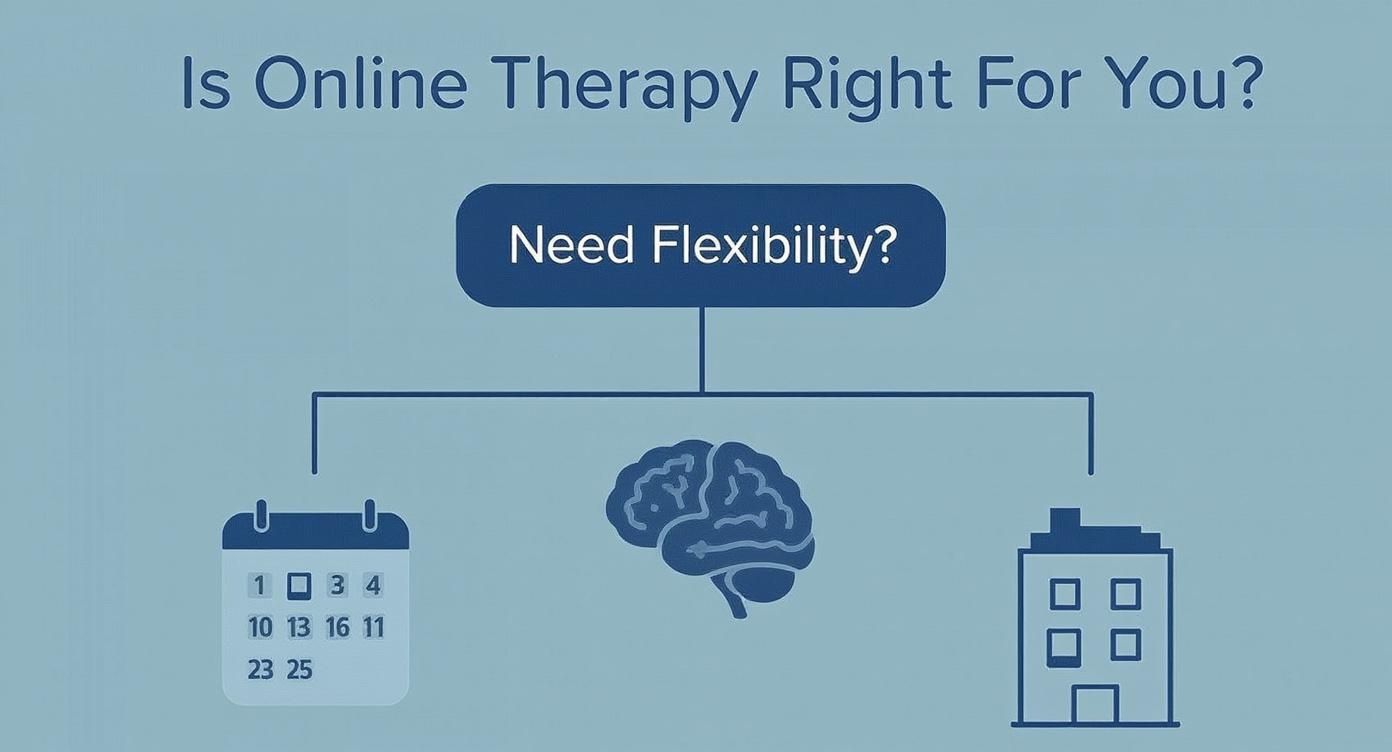
    This flowchart can help you think about whether the flexibility of online care is a good fit for you.

    Flowchart asking if online therapy is right, showcasing flexibility with time, mental health, and location.

    As you can see, factors like a busy schedule or the comfort of home can make online therapy an excellent choice for your mental well-being.

    Medication Management (Telepsychiatry)

    For many, an effective path for managing depression includes both therapy and medication. Telepsychiatry makes this process seamless online by connecting you with a qualified psychiatrist through video consultations.

    It's important to know that only medical doctors, like psychiatrists, can prescribe medication. Therapists provide talk therapy but cannot write prescriptions, making telepsychiatry a vital part of online care.

    This service is a game-changer if you need medication but find it hard to get an in-person appointment. It brings expert medical care into your home, ensuring your treatment plan is complete and well-managed.

    Comparing Online Therapy Formats

    How do you choose the right format? It depends on what you're looking for in terms of interaction, structure, and support. The table below outlines the key differences to help you decide.

    Therapy Type Best For Level of Interaction Typical Structure
    Live Teletherapy Those who want a strong, direct connection with a therapist and real-time conversation. High Weekly or bi-weekly scheduled sessions (video or audio).
    Internet-Delivered CBT Individuals who prefer a structured, educational approach and self-paced learning. Low to Medium Sequential modules with exercises, often with periodic therapist check-ins.
    Guided Self-Help Apps People looking for introductory tools to build resilience and manage mild symptoms. Low Daily check-ins, guided meditations, mood tracking, and educational articles.
    Telepsychiatry Those needing a medical evaluation for medication to complement their therapy. High (Medical Focus) Initial consultation followed by regular follow-up appointments for management.

    Ultimately, the best online treatment for depression is the one that feels right for you. Whether you prefer direct interaction or self-paced learning, there is an online path that can help you build resilience.

    Online vs. In-Person Therapy: Which Is Right for You?

    When considering therapy, you might wonder whether to choose an online or in-person setting. Research shows that for many people, especially those with mild to moderate depression, online support can be just as effective.

    There is no single "better" option. The right choice depends on your lifestyle, comfort with technology, and personal preferences for your therapy journey.

    Convenience and Access: Therapy on Your Terms

    The biggest advantage of online therapy is its convenience. It eliminates travel time, which is a huge benefit whether you live in a busy city or a remote area.

    This means you can connect with a professional from a place where you feel completely comfortable, like your own home. Feeling safe can make it easier to open up and discuss what’s on your mind.

    The Client-Therapist Connection

    The bond you build with your therapist is a key part of successful therapy. Many people wonder if this connection can be as strong through a screen, and experience shows that it absolutely can.

    A strong therapeutic relationship is built on trust, empathy, and feeling truly heard. These human qualities come through a screen just as powerfully as they do in person.

    While in-person sessions offer the benefit of seeing body language, a skilled online therapist is trained to listen closely to build a deep connection. The chemistry between you and your therapist matters most, not the medium you use.

    Weighing Up the Cost and Effectiveness

    Effectiveness and cost are important considerations. Studies have shown that online Cognitive Behavioural Therapy (CBT) is as effective as face-to-face therapy for managing depression and anxiety.

    In India, the demand for mental health support has grown, with a 40% jump in people seeking help since the pandemic. Online therapy is often 20–30% less expensive than traditional sessions, making care more accessible. You can learn more about the rise of online therapy packages in India and their effectiveness.

    This blend of effectiveness and affordability makes online treatment for depression a powerful and practical choice for improving your well-being.

    How to Choose the Right Online Therapist for You

    Finding the right person to talk to is the most important step in your therapy journey. The connection you build with your therapist is the foundation for growth, so it's worth choosing thoughtfully.

    This guide will walk you through what qualifications to look for and the best questions to ask. Making an informed choice helps you start your online treatment for depression feeling confident.

    Checking Qualifications and Specialisations

    First, ensure you're speaking with a qualified professional. In India, look for credentials like a Master's degree in Psychology (M.A./M.Sc.), an M.Phil in Clinical Psychology, or a PhD in Psychology.

    Also, consider their areas of expertise. A therapist specializing in depression, anxiety, or workplace stress will have a deeper understanding of your challenges. Platforms like DeTalks make this easy by listing each therapist's credentials and specialities.

    Questions to Ask in Your First Consultation

    Most online services offer an initial consultation, which is a great chance to see if you connect. Think of it as a conversation to see if the therapist feels like a good fit for you.

    Having a few questions ready can help you make the most of this chat. It's about understanding their approach and seeing if it aligns with your needs.

    Here are a few ideas:

    • What's your approach to helping with challenges like depression?
    • How do you help clients build skills for resilience and self-compassion?
    • What does a typical therapy session with you look like?
    • How will we work together and track progress toward my goals?

    Pay attention to how the conversation feels. The best therapist for you is someone you feel you can be open and honest with.

    Understanding Costs and Payment in India

    The cost of online counselling in India is generally more affordable than in-person sessions. Most services charge per session, and some offer discounted packages for booking multiple sessions.

    Before you commit, get a clear understanding of the payment process and cancellation policy. Feeling clear about the financial side removes a potential source of stress, allowing you to focus on your well-being.

    Choosing a therapist is a personal decision, so take your time. Finding someone who feels like a true partner for your journey can make all the difference.

    Final Thoughts on Your Path Forward

    Exploring therapy is a courageous act of self-care and an investment in your well-being. This journey is not about finding a quick fix but about discovering new ways to cope and uncovering your inner resilience.

    Online treatment for depression offers a safe space to process your experiences and practical tools for the road ahead. It’s about building resilience to handle life's challenges and learning to show yourself compassion along the way.

    How to Make Online Therapy Work for You

    A little preparation can make a big difference in your online counselling sessions. Creating a focused and secure space helps you open up and engage fully with your therapist.

    Here are a few tips to get the most out of every session:

    • Find a private space: Choose a quiet spot where you won't be disturbed to help you focus.
    • Be open and honest: The more you share, the better your therapist can support you.
    • Apply what you learn: The real progress happens when you practice new skills in your daily life.

    The effort you put in is a direct investment in your long-term well-being.

    It's a Marathon, Not a Sprint

    Therapy is a partnership where you are the expert on your life, and your therapist is a guide. They have the tools to help you navigate challenges like anxiety, workplace stress, or depression.

    I often tell my clients to think of therapy like tending to a garden. It takes patience, consistent care, and the right environment to thrive. Some days will be bright and sunny, while others might bring rain. But every single day of tending to it helps something beautiful grow.

    Progress isn't always a straight line, so celebrate small wins and be kind to yourself on tough days. Exploring strategies to reduce brain fog can also be a helpful addition to your toolkit. Remember that online assessments are informational starting points, not diagnoses. Help is more accessible than ever, and you can take the next step whenever you're ready.

    Your Questions About Online Depression Treatment, Answered

    It's natural to have questions when starting something new, especially regarding your mental health. We've gathered answers to some common questions about online treatment for depression to help you feel more comfortable.

    Getting your questions answered is an important part of feeling ready. This can help you make a choice that feels right for you on your journey toward building greater resilience.

    Is My Information Kept Confidential in Online Therapy?

    Yes, absolutely. Reputable online therapy platforms in India follow the same strict confidentiality rules as in-person therapists. They use secure, encrypted technology to ensure your conversations remain private.

    It's always a good idea to review a platform's privacy policy before signing up. This will help you feel secure and focus on your well-being.

    What if I Don’t Click with My First Online Therapist?

    This can happen, and it's perfectly okay. The connection with your therapist is vital for successful therapy, and it might take time to find the right match.

    Most online services make it easy to switch to a new therapist if the first one doesn't feel right. Finding someone who understands you is a key step in feeling supported with challenges like anxiety or depression.

    "Finding the right therapist is like finding the right key for a lock. It's not about the key being 'bad' if it doesn't fit the first time—it's about finding the one that turns smoothly."

    Can I Get Medication Through Online Treatment?

    Yes, through a service called telepsychiatry. While counsellors provide talk therapy, only a psychiatrist, who is a medical doctor, can prescribe and manage medication.

    Many platforms now offer access to online psychiatrists for evaluation and prescription management. This allows you to receive both therapy and medical treatment conveniently, supporting your overall well-being.

    What Technology Do I Need for Online Therapy?

    You likely already have what you need: a smartphone, tablet, or computer with a camera and a stable internet connection.

    Just as important is your environment. Finding a quiet, private space where you can speak openly is essential for making the most of your counselling sessions.


    Taking steps towards better mental health is a personal and brave decision. If you feel ready to connect with a professional who can guide you, DeTalks provides a safe, trusted space with qualified therapists and science-backed assessments. Begin your journey to resilience and well-being today at https://detalks.com.