Tag: emotional regulation

  • Anger Issues Test: A Guide to Understanding Your Emotions

    Anger Issues Test: A Guide to Understanding Your Emotions

    An anger issues test is a self-assessment tool, a series of questions to help you reflect on your emotional responses. Think of it as a personal inventory, a way to explore how often you feel angry and how it impacts your well-being.

    This is an informational guide, not a diagnostic tool. Understanding your feelings is a key step toward building emotional resilience and finding balance.

    Understanding Anger and When It Becomes a Challenge

    Anger is a normal, healthy human emotion. It’s a signal that something needs your attention and can motivate us to solve problems or make positive changes.

    But when anger becomes frequent, intense, or leads to actions you regret, it can become a challenge. This is the point where a natural emotion can impact your mental health and relationships.

    From Healthy Emotion to Persistent Challenge

    In today's high-pressure world, it’s easy for anger to become a common response. Triggers like tight deadlines, family dynamics, and daily stress are everywhere, particularly in contexts like India where work and personal demands can be high.

    This constant pressure from workplace stress can lead to burnout, anxiety, and even symptoms of depression. When left unaddressed, persistent anger can strain relationships, leaving you feeling on edge.

    "Anger is an acid that can do more more harm to the vessel in which it is stored than to anything on which it is poured." – Mark Twain

    Why Self-Awareness Matters

    Taking an anger issues test is a private act of self-awareness, not a way to get a formal diagnosis. It offers a moment to pause and honestly reflect on your emotional habits without judgment.

    Getting to know your anger is the foundation for building emotional resilience. When you understand your triggers, you can develop healthier ways to manage tough emotions and cultivate positive qualities.

    This journey helps foster self-compassion and improves emotional regulation. Exploring this side of yourself is a sign of strength, leading to better well-being and stronger relationships.

    Across India, it's estimated that between 5% and 12% of adults struggle with anger that impacts daily life. You can learn more about the prevalence of anger regulation challenges in India to see how common this is. An assessment can be a great starting point for considering therapy or counselling.

    How an Anger Issues Test Can Help You

    Taking an anger issues test is like getting an emotional weather report. It's a private, pressure-free way to check in with yourself and spot patterns in your feelings over time.

    The goal isn’t to apply a label but to provide a starting point for self-discovery. By answering honest questions, you gain a clearer picture of your inner world and can better articulate your feelings.

    What an Anger Assessment Really Measures

    A good anger assessment is nuanced, looking at how you experience and express anger. The questions are designed to move you beyond "I'm angry" to a deeper understanding of your patterns.

    These assessments explore a few key areas to give you a full picture.

    Understanding the Dimensions of an Anger Assessment

    This table breaks down what an anger issues test measures, helping you understand the insights you can gain.

    Dimension Measured What It Tells You Example Reflection Question
    Frequency How often you feel angry or irritated—is it a rare storm or a daily drizzle? "Do I find myself feeling annoyed most days of the week?"
    Intensity The strength of your anger—is it a mild simmer or a full-blown boil? "When I get angry, does it feel like it completely takes over?"
    Duration How long the feeling sticks around—does it pass quickly or linger for hours? "After an argument, do I stay upset for the rest of the day?"
    Expression Style How you show your anger—do you bottle it up, lash out, or express it constructively? "Am I more likely to yell or to just go silent when I'm frustrated?"
    Consequences The impact your anger has on your life, work, and relationships. "Have my angry reactions caused problems with my partner or at work?"

    Looking at these dimensions helps you see the complete story. This specific insight is the first real step toward making a change for your well-being.

    Important Clarification: An online anger issues test is a powerful tool for self-reflection, not a clinical diagnosis. It's a great starting point, but it can't replace an evaluation from a qualified mental health professional.

    The Bridge from Insight to Action

    Gaining this clarity is empowering. Instead of feeling controlled by a confusing emotion, you can see anger as a signal pointing to unmet needs, workplace stress, anxiety, or depression.

    This knowledge is the foundation for building true emotional resilience. Once you understand your anger, you can pinpoint your triggers and develop healthier ways to cope.

    An anger issues test gives you information. What you choose to do with it is where the real journey toward positive change begins, whether through self-help or professional therapy or counselling.

    A Practical Self-Assessment to Reflect on Your Anger

    Taking a quiet moment to check in with yourself can help you understand your emotions. This self-assessment is an informational tool for private reflection, not a clinical diagnosis.

    It’s designed to help you gently explore your emotional patterns in a judgment-free space. This is not a substitute for a professional evaluation but a way to start a conversation with yourself about your well-being.

    Your Personal Anger Reflection Tool

    Read the following statements and consider how often you’ve felt this way over the past month. The key is honest, private reflection for your personal insight.

    Scoring Instructions:
    For each statement, pick the number that best fits your experience.

    • 1 = Never
    • 2 = Rarely
    • 3 = Sometimes
    • 4 = Often
    • 5 = Always

    The Questions

    1. I find myself getting irritated by small, everyday annoyances.
    2. When I feel angry, it feels intense and overwhelming.
    3. I hold onto angry feelings for a long time after an incident has passed.
    4. I have trouble controlling what I say or do when I feel provoked.
    5. My anger has caused tension or arguments in my relationships with family or friends.
    6. People have commented on my temper or told me I seem angry.
    7. I feel physical symptoms when I'm angry (e.g., heart racing, tense muscles, feeling hot).
    8. I tend to dwell on things that have made me angry, replaying them in my mind.
    9. After feeling angry, I often feel guilty or ashamed of my reaction.
    10. My temper has created problems for me at work or in my professional life, contributing to workplace stress.
    11. I feel resentful or bitter about how things are going in my life.
    12. I use sarcasm or cynical comments to express my frustration with others.

    Tallying Your Score

    Once you’ve answered all 12 questions, add up the numbers to get your total score. Remember, this number is a data point to help you see patterns more clearly.

    What Your Score Might Suggest

    Use this interpretation as a guide for reflection, not a definitive diagnosis. The goal is to build self-awareness, which is a cornerstone of emotional health and a defence against anxiety and depression.

    Low Range (12–24)

    A score in this range may suggest you experience anger in a manageable way. You likely have effective coping strategies and a good foundation for emotional resilience.

    Moderate Range (25–48)

    If your score is here, anger might be a more noticeable part of your life. This is a very common experience, and noticing it is a huge step toward finding new ways to manage your feelings.

    This could be a perfect time to explore proactive strategies like journaling. For inspiration, you could look into the best journals for mental health.

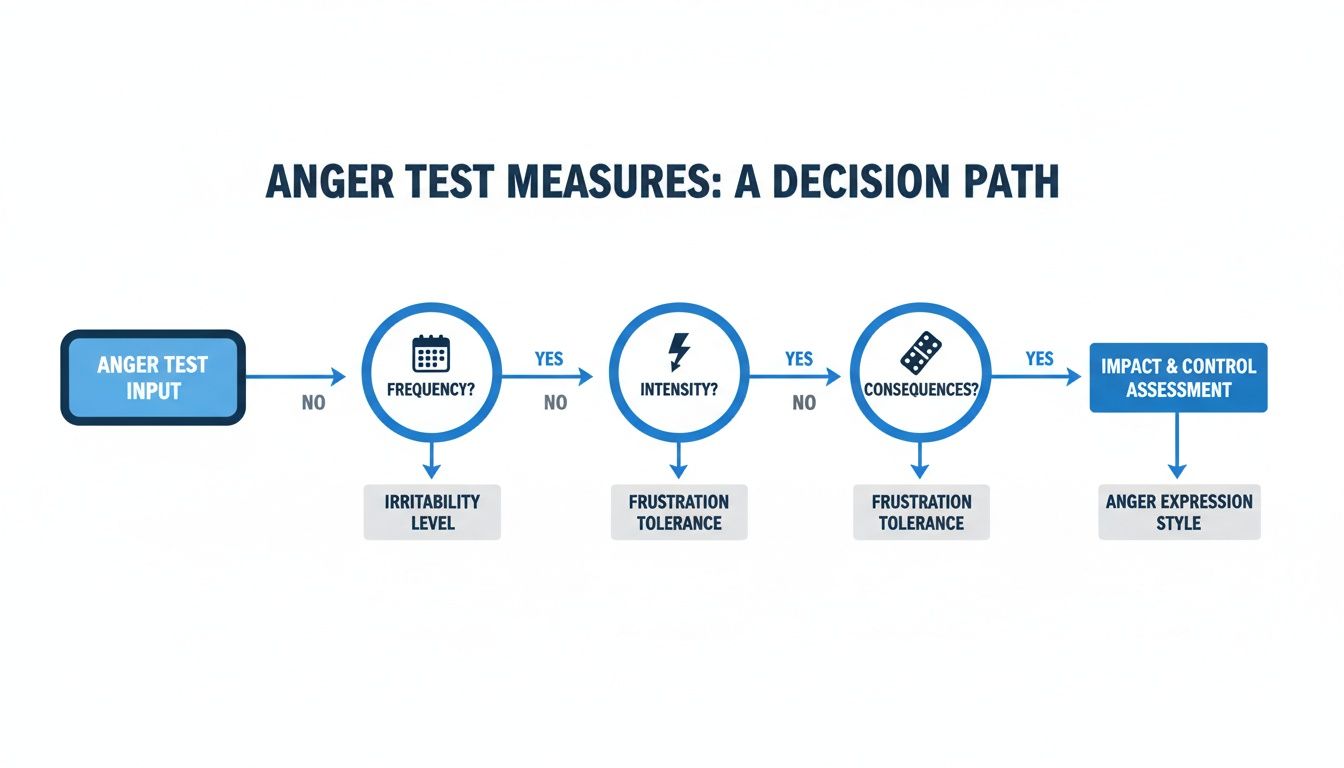
    A flowchart illustrating anger test measures, detailing a decision path based on frequency, intensity, and consequences.

    As you can see, a meaningful assessment considers how often, how strongly, and what kind of impact anger has on your life.

    High Range (49–60)

    A score in this range could mean that anger is causing significant distress. It’s important to know that feeling this way is not a personal failure, and reaching out for support is a sign of strength.

    This level of distress can lead to burnout. Exploring professional support through counselling or therapy can provide you with proven tools to find your balance.

    Supportive Takeaways

    No matter your score, this anger issues test is a tool for self-compassion and awareness.

    • Your score is a snapshot, not a permanent label. Emotions are fluid, and our ways of responding can change and grow.
    • Awareness is the first step toward growth. Simply reflecting on these questions helps build deeper emotional understanding.
    • Support is always available. If this reflection brought up difficult feelings, talking with a trusted person or a professional can help.

    Looking Beyond the Score to Find Your Triggers

    Your score is a useful starting point, but the real insight comes from understanding the why behind your feelings. Now is the time to become an 'emotional detective' and explore what sparks your anger.

    Anger rarely appears out of nowhere; it’s usually a reaction to something. Identifying your personal triggers can help you connect your feelings to challenges like workplace stress, burnout, or anxiety.

    Uncovering Your Personal Anger Patterns

    To find your triggers, ask gentle, curious questions when anger shows up. This self-reflection is a powerful step toward building emotional resilience.

    Start by asking yourself these focused questions with kindness and curiosity.

    • When do I feel most angry? Notice the time of day or week when these feelings are strongest.
    • Where am I when these feelings come up? Different environments can have a huge impact on our emotional state.
    • Who am I with? Anger can surface differently depending on whether we are with family, colleagues, or alone.
    • What was I thinking or doing right before I felt angry? Were you feeling criticized, ignored, or overwhelmed?

    Answering these questions helps patterns emerge. This awareness is the true foundation of change, helping you understand your personal challenges.

    The Indian Context: Family and Career Pressures

    In India, cultural nuances add unique layers to our emotional lives. The pressure to succeed professionally, coupled with family expectations, can create stress that makes us more susceptible to anger.

    This tension between traditional duties and modern ambitions can fuel frustration. Recognizing these cultural pressures is about understanding the full context of your emotional well-being.

    Anger is often a secondary emotion—a protective mask for more vulnerable feelings like hurt, fear, or disappointment. When you feel a surge of anger, gently ask yourself, "What other feeling might be underneath this?"

    This compassionate inquiry can reveal the root cause of your anger. This deeper understanding is essential for addressing the source, not just the symptom.

    From Triggers to Growth

    Once you identify your triggers, you can make conscious choices instead of having automatic reactions. This journey isn't about eliminating anger but understanding its message and building resilience.

    This self-awareness is a vital step toward greater happiness and a core part of effective counselling and therapy. By looking beyond the score, you learn that your anger is a signal, guiding you toward areas of your life that need more care and compassion.

    So, What's Next? Practical Steps for Your Emotional Well-being

    Peaceful Asian woman meditating in lotus pose on a yoga mat in a bright room.

    Reflecting on your emotions is an act of self-care. The insights from an anger issues test are a starting point, pointing you toward greater self-awareness and a calmer state of mind.

    These first steps are about building a personal toolkit for navigating tough feelings. You can nurture your inner resilience by treating yourself with compassion, one small action at a time.

    Self-Help Strategies You Can Start Today

    You have the power to influence your emotional state. Mindful practices can create calm and provide a healthy outlet for feelings before they become overwhelming.

    One powerful tool is your breath. Simple techniques, like the Indian practice of pranayama, can calm your nervous system. Exploring breathing exercises specifically for anger management can be incredibly helpful.

    Here are a few other gentle yet effective strategies:

    • Mindful Movement: Getting your body moving—through yoga, a walk, or dancing—can release physical tension and improve your mood.
    • Journaling: Writing down your thoughts without judgment offers a private, safe space to untangle feelings and understand what's beneath the surface.
    • Mindfulness Meditation: Even five minutes of quiet observation can help you build the mental muscle to pause and choose your response.

    When to Consider Professional Support

    Self-help is a great foundation, but sometimes we need more support. Reaching out for professional help through therapy or counselling is a sign of profound strength and an investment in your happiness.

    An anger management session is a confidential, supportive conversation. It's a space where you can explore your feelings and experiences without being judged.

    A good therapist acts as your guide, helping you understand the roots of your anger and develop personalized strategies. They can provide tools to cope with workplace stress and challenge unhelpful thoughts related to anxiety or depression.

    This journey is about learning to be kinder to yourself. A professional can offer evidence-based techniques and support to help you find balance.

    Finding the Right Path for You

    Where you live can play a role in your experience. In India, for example, people in urban areas may report higher stress, while rural communities might face a shortage of mental health specialists.

    Whether you start with self-help or seek professional guidance, the most important thing is to take that first gentle step. Every action toward understanding yourself builds a stronger foundation for a more peaceful life.

    Supportive Takeaways to Remember:

    • Start small. Pick one small thing, like a five-minute breathing exercise each morning, to build momentum.
    • Be patient with yourself. Learning new emotional habits takes time, and it's okay to have good days and tough days.
    • You are not alone. Many people navigate similar feelings, and support is available to help you move forward.

    Your Questions About Anger and Support, Answered

    Taking the first step to understand your anger can bring up questions. It's normal to feel curious or uncertain. This section provides clear, straightforward answers to common concerns.

    We want to clear up any confusion and help you feel more confident about the path that feels right for you. Seeking answers is a powerful act of self-care.

    Is It Normal to Feel Angry Every Day?

    Flashes of irritation are a normal part of life. However, feeling intense anger every day, especially if it disrupts your work or relationships, may be a sign of a deeper issue.

    If anger has become your primary emotion, it could be tied to workplace stress, unresolved issues, or anxiety. An anger issues test is a good starting point, but a counsellor can offer professional clarity and support for your well-being.

    Can an Online Anger Issues Test Actually Diagnose Me?

    No, an online test is an informational self-reflection tool, not a diagnostic instrument. It offers insights into your emotional patterns in a private, judgment-free way.

    A formal diagnosis can only come from a qualified professional, like a clinical psychologist or psychiatrist. However, these online tests are valuable for building self-awareness and can be a great way to start a conversation with a therapist.

    What’s the Difference Between Therapy and Counselling?

    These terms are often used interchangeably, but there's a subtle difference. Counselling usually focuses on specific, current problems and helps you build practical coping strategies over a shorter period.

    Therapy may dig deeper into the root causes of your emotional patterns, exploring past experiences. Both approaches are collaborative and aim to improve your emotional resilience. The most important thing is finding a professional you trust.

    The best choice depends on your needs and goals. Both offer a safe space to work toward a healthier, more balanced emotional life.

    How Do I Know if I Need Anger Management?

    Looking into anger management is a proactive choice for your well-being. It might be useful if you feel your temper is controlling you, hurting your relationships, or causing guilt.

    Anger management, often part of therapy or counselling, gives you practical tools to spot triggers and respond in healthier ways. It's about building skills to shift from automatic reactions to thoughtful responses.

    How Can I Find a Therapist for Anger Issues in India?

    Finding the right therapist is about finding a good fit. Look for professionals who specialize in anger management or emotional regulation on reputable online platforms.

    Don't be shy about asking questions in an initial chat to see if you connect. The goal is to find someone you feel safe with. Reaching out is a sign of strength, and the right therapist can be an incredible ally.


    Taking the time to understand your anger is a meaningful step toward a more peaceful and fulfilling life. If you feel ready to explore professional support, DeTalks provides a safe and trusted space to connect with verified therapists and counsellors across India. Browse our directory to find a professional who can guide you with compassion and expertise. Find the right support for you on DeTalks.

  • Uncover the Real Reasons for Procrastination and How to Move Forward

    Uncover the Real Reasons for Procrastination and How to Move Forward

    Procrastination is not a sign of laziness. It's an emotional response our brain uses to avoid uncomfortable feelings tied to a task, like anxiety, self-doubt, or boredom. This isn't a character flaw; it’s a deeply human way of coping with challenging emotions.

    Understanding this helps us shift from self-blame to self-compassion. When you know the real reasons for procrastination, you can find kinder, more effective ways to move forward.

    Why Procrastination Is More Than Just a Bad Habit

    Have you ever scrolled through your phone when a deadline is near, feeling a growing sense of dread? This common experience shows that procrastination is less about managing time and more about managing emotions. It's a way we protect ourselves from feelings of stress and anxiety.

    Our brains are wired to seek immediate comfort. Faced with a difficult task, we often choose a distraction to get a quick sense of relief, even if it leads to more stress later. In the high-pressure academic and professional settings in India and globally, this can affect our well-being and lead to burnout.

    This mind map shows how procrastination is often linked to our emotional state.

    As you can see, putting things off is often a direct response to internal challenges, not just a lack of effort. Recognising this pattern in our own lives is the first step toward building resilience.

    Common Procrastination Triggers and Their Emotional Roots

    Task Trigger Common Underlying Emotion Immediate Relief Sought
    Writing a complex report Fear of failure or criticism Distraction (e.g., watching videos)
    Making a difficult phone call Social anxiety or dread Avoidance (e.g., cleaning the house)
    Studying for an exam Feeling overwhelmed or inadequate Numbing (e.g., scrolling social media)
    Starting a new creative project Self-doubt ("Am I good enough?") "Productive" procrastination (e.g., organising files)

    Recognising these connections is a key step. The goal isn't to eliminate the feeling but to learn how to act with self-compassion even when it’s present.

    Shifting from Self-Blame to Self-Compassion

    Once you understand the emotional roots of procrastination, you can change your approach. The next time you delay a task, gently ask, "What feeling am I trying to avoid right now?" This shift opens the door to kinder and more effective solutions.

    Procrastination can also be linked to executive dysfunction, which affects the brain's ability to plan, organise, and start tasks. Learning about executive dysfunction help and practical strategies can offer a new way to understand these challenges.

    Procrastination is an emotion regulation challenge, not a time management problem. By addressing the underlying feelings with kindness, we can begin to break the cycle and improve our well-being.

    Ultimately, this journey is about creating a supportive inner environment. A compassionate mindset helps you acknowledge your feelings without letting them take over, which is key to breaking free from the procrastination loop.

    Exploring the Emotional Roots of Delay

    Often, the real reasons we procrastinate are not on our to-do lists but deep within us. Delay is a way we protect ourselves from feelings that seem too uncomfortable to face. Understanding these emotional drivers is the first step toward a healthier relationship with our tasks and ourselves.

    At its heart, procrastination is often tied to anxiety. This isn't just a vague worry but a specific fear of being judged negatively. For example, a student in India might put off a major project not because they can't do the work, but because the thought of their professor's critique feels overwhelming.

    Young man sitting at a desk, looking intently at his glowing smartphone with a notebook nearby.

    This kind of avoidance is common in high-pressure settings. Research shows that evaluation anxiety is a major reason for procrastination among college students in India and around the world. One study found that 35.7% of students delayed weekly reading assignments, often due to a fear of being assessed poorly. You can read the full research about academic procrastination here.

    The Perfectionism Paralysis

    Perfectionism is another powerful trigger for delay. It traps us in an all-or-nothing mindset where the pressure to be flawless is so great that we avoid starting at all. The internal thought is often, "If I can't do it perfectly, I won't do it."

    This isn't about high standards; it's about setting impossibly high ones that lead to inaction. This cycle fuels workplace stress and gets in the way of both well-being and personal growth.

    The Weight of Low Self-Esteem

    How we see ourselves plays a huge role in our motivation. When we struggle with low self-esteem, we often believe we are not capable of succeeding. This internal story can be shaped by past experiences, making us hesitant to take on new challenges.

    Each new task can feel like another opportunity to fail, creating a difficult cycle. Breaking this pattern requires more than time management; it demands building self-compassion and resilience. This is where therapy and counselling can be very helpful, offering a safe space to challenge these beliefs and cultivate a more supportive inner voice.

    Please clarify: assessments mentioned in this article are for informational purposes only. They are tools for self-reflection and not a substitute for a professional diagnosis.

    These emotional reasons for procrastination are not signs of weakness. They are deeply human responses to perceived threats. Acknowledging these feelings without judgment is the most compassionate and effective first step toward regaining control and improving your overall well-being.

    How Your Thoughts and Surroundings Can Trap You in Procrastination

    Sometimes, the reasons for procrastination are hiding in plain sight—in our thoughts and our environment. The stories we tell ourselves about a task or our own abilities can either help us get started or stop us completely.

    This is more than just a lack of willpower; it's often about how we think. Many of us are not good at guessing how long a task will take. This is known as the planning fallacy, and it's a common setup for procrastination.

    The Problem of "Decision Paralysis"

    Have you ever felt so overwhelmed by choices that you did nothing at all? That's decision paralysis. It happens when a task is too vague or the options are too numerous, making it feel easier to avoid making a choice.

    A student in India choosing a project topic might feel lost in hundreds of options, making it impossible to start. This isn't laziness; it's a common reaction to feeling overloaded that can trigger stress and anxiety.

    Facing these mental hurdles is completely normal. Recognising these patterns is the first real step toward finding supportive strategies to overcome them and improve your well-being.

    When Your Environment Is the Enemy

    Our physical space matters a great deal. It’s hard to focus when your environment is working against you. Trying to work in a chaotic room or study in a noisy space is an invitation to procrastinate.

    Lacking the right tools for a job can also be a real barrier. These practical issues are not just excuses; they can make getting started feel like an enormous effort.

    Poor time management is a common thread, especially in high-pressure situations. An Indian study found that 95% of medical undergraduates cited poor time management as the top reason they procrastinated. You can discover more insights from this study on academic procrastination. This cycle of stress can impact mental health, sometimes contributing to anxiety and depression if not addressed.

    The Link Between Procrastination and Mental Health

    Putting things off occasionally is normal. But when procrastination becomes a constant, draining pattern, it might be a sign of a deeper mental health challenge. The internal struggle can make getting started feel impossible.

    Understanding this connection is a compassionate first step toward getting support. Chronic procrastination often co-exists with conditions like ADHD, anxiety, and depression. This is for awareness, not self-diagnosis, but exploring these links can be helpful.

    Stressed male student studying at a desk with a laptop and papers in a dorm room.

    The Role of ADHD and Executive Function

    For someone with ADHD, procrastination is often a result of executive dysfunction. Executive functions are your brain's management system for planning, organising, and starting tasks. When this system faces challenges, it's a neurological hurdle, not a lack of effort.

    This can show up in a few key ways:

    • Trouble Starting: The task seems so big or vague that the first step feels overwhelming.
    • Difficulty Sustaining Focus: Distractions can easily pull you off track.
    • Time Blindness: Gauging how long something will take can be difficult, leading to last-minute rushes.

    The Cycle of Anxiety and Avoidance

    Anxiety and procrastination can create a difficult cycle. When a task makes you anxious, your brain's instinct is to avoid it. This brings a moment of relief, reinforcing procrastination as a coping strategy.

    However, that relief is temporary. The task remains, which increases anxiety and workplace stress. Breaking this pattern often means addressing the root cause of the anxiety, sometimes with the help of professional counselling.

    Always clarify: any assessments you may find are informational tools for insight, not a clinical diagnosis. For an accurate understanding of your mental health, please consult a qualified professional.

    Depression and the Loss of Motivation

    Depression can make even simple actions feel incredibly difficult. Its core symptoms—fatigue, loss of interest, and feelings of hopelessness—directly impact motivation. In this context, procrastination isn't a choice; it's a symptom.

    The self-criticism that often accompanies it can worsen feelings of worthlessness and fuel the cycle of depression. Rebuilding your strength takes self-compassion, patience, and often professional therapy. Building resilience starts with acknowledging that the struggle is real and that you deserve support on your journey to well-being.

    Building Resilience with Compassionate Strategies

    https://www.youtube.com/embed/VBifDZwPiI4

    Knowing why you procrastinate is a breakthrough. The next step is learning to respond to yourself with compassion instead of criticism. This shift helps you move from harsh self-discipline into the world of positive psychology and builds lasting resilience.

    Building resilience is about creating a kinder inner dialogue. Instead of asking, "What's wrong with me?" you can start asking, "What do I need right now?" This small change in perspective can make a big difference in breaking the cycle of avoidance and building positive momentum toward happiness.

    Start with Small, Actionable Steps

    Feeling overwhelmed is a major trigger for procrastination. Breaking tasks down into very small pieces can lower the barrier to starting. This helps rebuild trust in your ability to follow through.

    Here are a couple of simple yet powerful techniques:

    • The Two-Minute Rule: Commit to working on something for just two minutes. This tiny push is often all you need to overcome the initial hurdle and keep going.
    • Task Chunking: Break a large project into small, specific mini-tasks. Instead of "write report," your list becomes "open document" and "write one paragraph." This makes the project feel less intimidating.

    Remember to celebrate these small wins. Every task you complete is proof of your progress. This is how you build the resilience and confidence needed to take on bigger challenges. For more great ideas, check out these 10 practical ways to stop procrastination.

    Prioritise Compassion and Well-Being

    Lasting change comes from treating yourself with kindness. Self-compassion is about acknowledging that challenges are difficult without adding self-judgment. It’s a powerful antidote to the shame that fuels procrastination and can worsen feelings of anxiety or depression.

    By treating ourselves with compassion, we create the psychological safety needed to face difficult tasks. It is not an excuse for inaction but the foundation for sustainable action and improved well-being.

    This kind approach should extend to all parts of your life, including rest. "Bedtime procrastination"—delaying sleep for leisure activities despite being tired—is a growing issue, especially for students.

    One study found that about 20% of Indian university students regularly did this, often due to academic pressure and late-night digital use. Improving your sleep by setting a consistent bedtime is a crucial act of self-care. These are supportive takeaways, not promises of a cure, to help you move forward in a healthier way.

    When to Seek Professional Support

    A smiling woman checks off a task on a paper checklist, next to a cup with a '2-minute rule' note.

    While self-help strategies can be very effective, sometimes procrastination is a sign of a deeper issue that needs professional support. Reaching out for help is a sign of strength and an investment in your long-term well-being. It shows you are ready to take charge when the struggle feels too difficult to manage alone.

    Signs It Might Be Time for Therapy

    How do you know when it's time to seek support? If procrastination consistently disrupts your work, relationships, or mental health, it may be time to consider professional therapy or counselling.

    Look out for these recurring patterns:

    • Chronic Overwhelm: You constantly feel swamped by your to-do list, which increases workplace stress and makes it hard to start anything.
    • Significant Impact on Life: Procrastination is causing real problems, such as missed deadlines at work or friction in your relationships.
    • Co-occurring Symptoms: Procrastination appears alongside persistent sadness, worry, or hopelessness, which could be linked to underlying anxiety or depression.

    Therapy and counselling offer a safe, non-judgmental space to explore the real reasons you procrastinate. A professional can help you understand your challenges and build coping skills that work for you.

    A therapist acts as a guide, helping you see the connections between your feelings and actions. They can provide practical tools to manage difficult emotions, reframe unhelpful thoughts, and develop strategies that build genuine resilience. The goal is a deeper understanding of yourself and a more balanced, compassionate approach to life.

    Frequently Asked Questions About Procrastination

    You might still have some questions, and that's perfectly normal. Let's walk through some common ones to provide more clarity on the reasons for procrastination.

    Is Procrastination a Sign of Laziness?

    No, it’s a common misconception. Procrastination is not about being lazy; it's an emotional coping mechanism. Our brain tries to avoid feelings like stress, boredom, or fear of failure.

    Understanding this allows you to stop self-criticism and approach the problem with more kindness. This shift is the first step toward real change and improved well-being.

    Can Procrastination Be Linked to Anxiety or Depression?

    Yes, there is a strong connection. If you are dealing with anxiety, the fear of not doing something perfectly can be paralysing. With depression, symptoms like low energy and hopelessness can make even small tasks feel overwhelming.

    If you suspect your procrastination is tied to these deeper feelings, seeking professional counselling can be a supportive step. A therapist can help you untangle these overlapping challenges.

    What Is the First Step I Can Take to Stop Procrastinating?

    The best place to start is with a small, kind action. Try the 'two-minute rule': commit to doing a task for only two minutes. This simple trick lowers the mental barrier and often helps you continue for longer.

    The goal isn't to solve the problem all at once. It's about breaking the initial paralysis with one tiny, achievable step. That small win builds momentum and resilience, helping you chip away at the core reasons for procrastination.

    This small action interrupts the cycle of avoidance that fuels workplace stress and personal anxiety. It creates space for something new to happen. These supportive takeaways are practical steps, not promises of a cure, to help you on your journey.


    Ready to understand your own patterns and start building a more resilient you? Explore our confidential, science-backed assessments or connect with a qualified therapist on DeTalks. Find the support you need to move forward with confidence and happiness at https://detalks.com.

  • How to Build Resilience and Thrive Under Pressure

    How to Build Resilience and Thrive Under Pressure

    Building resilience isn't about avoiding life's storms; it's about learning how to sail your ship through them. It is a skill you can develop to help you recover from adversity, manage change, and protect your well-being. This is especially true when dealing with intense workplace stress or personal challenges.

    What Resilience Really Means and Why It Matters

    Life can be unpredictable, bringing demanding projects at work or personal difficulties at home. Resilience is that inner strength that helps you get back up and move forward, rather than letting a setback define your story.

    This isn't about being stoic or "toughing it out" alone. It is a gentle but firm process of acknowledging your feelings, learning from the experience, and taking the next step forward with a renewed sense of direction. This compassionate approach is key to your long-term well-being.

    Here in India, many of us juggle high-pressure careers, family duties, and the fast pace of modern life. That constant pressure can lead to workplace stress, anxiety, and burnout. Learning how to build resilience is a vital tool for protecting your mental health and creating a sustainable path to happiness and fulfillment.

    Developing these skills proactively empowers you to manage stress before it becomes overwhelming. It gives you the confidence to face whatever comes next, strengthening your inner foundation.

    The Four Pillars of Resilience

    To build lasting resilience, it helps to focus on four key, interconnected areas of your life. Strengthening each pillar creates a solid foundation for your overall well-being, making you better equipped to handle pressure.

    Let's break down these core components that contribute to building personal resilience.

    Pillar What It Means Why It's Important
    Mental This involves your thoughts, mindset, and cognitive skills. It's about staying flexible, solving problems, and maintaining a hopeful outlook. A strong mental pillar helps you reframe negative thoughts, see challenges as opportunities, and stay focused under pressure.
    Emotional This is your ability to manage and understand your emotions. It includes self-awareness, emotional regulation, and expressing feelings constructively. Emotional resilience prevents you from being overwhelmed by feelings, allowing you to respond thoughtfully rather than reactively.
    Social This refers to your connections and support network. It's about building strong, positive relationships and knowing how and when to ask for help. A solid social pillar provides a sense of belonging and offers practical and emotional support, reminding you that you're not alone.
    Physical This covers your physical health—sleep, nutrition, and exercise. Your body and mind are deeply linked. Taking care of your body boosts your mood, reduces stress hormones, and provides the energy needed to face challenges head-on.

    When you look at it this way, it’s clear that lasting strength comes from a balanced approach.

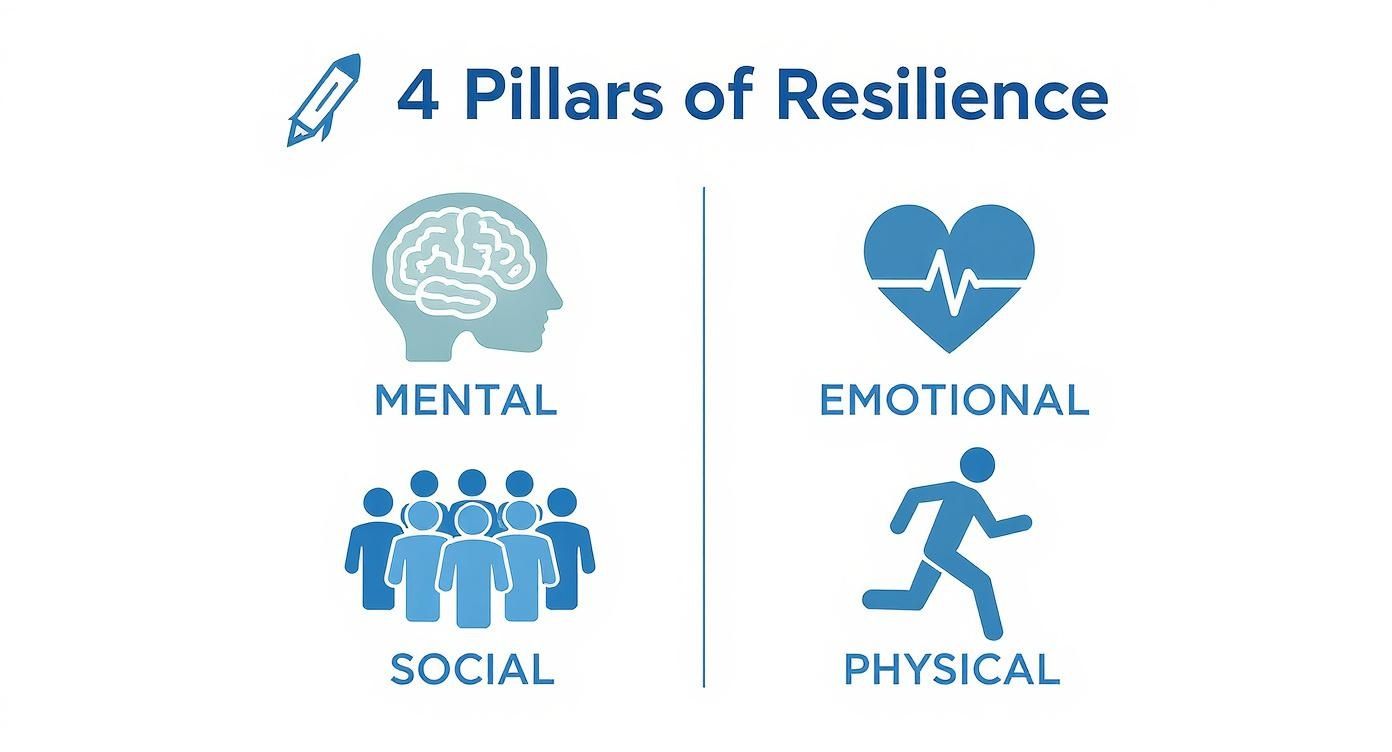
    The infographic below offers a great visual of how these four pillars—mental, emotional, social, and physical—work together.

    Infographic about how to build resilience

    True resilience isn't just about mental toughness; it is a holistic practice. Caring for your mind is just as vital as caring for your body and nurturing your relationships.

    Cultivating these pillars is a continuous practice, not a one-time fix. Small, consistent efforts in each area add up, improving your ability to navigate life's inevitable ups and downs. This guide will give you practical steps to strengthen each one.

    Building resilience is not about preventing storms but about learning how to navigate them. It is an act of self-compassion that allows you to bend without breaking, adapt without losing yourself, and grow stronger through adversity.

    Sometimes, the most resilient thing you can do is ask for help. Seeking professional support through therapy or counselling is a powerful way to build coping strategies and gain personalised insights. This support can help you navigate feelings of anxiety or depression and build a more resilient mindset for the long haul.

    Develop a Resilient Mindset

    Think of your mindset as the filter through which you process everything, from a frustrating traffic jam to a major career setback. Building a resilient mindset isn't about pretending problems don't exist. It's about shifting how you see them: as temporary hurdles you can overcome, not permanent roadblocks.

    This perspective is a game-changer for navigating workplace stress and life's challenges. It is the difference between taking feedback personally and seeing it as an opportunity to grow. When you frame events with intention, you take back control and build mental fortitude.

    A person sitting calmly and meditating, representing a resilient mindset

    Challenge Negative Thought Patterns

    Our brains have a natural tendency to focus on the negative, which can trap us in thought loops that amplify anxiety. The good news is you can break this cycle by challenging the automatic stories you tell yourself. This is known as cognitive reframing.

    Imagine your team misses a deadline on a key project. An automatic thought might be, "This is a catastrophe. I've failed." This all-or-nothing thinking can be paralysing.

    Instead, pause and ask yourself some gentle questions. "Is this thought 100% true?" "What's a more realistic way to see this?" "What can I learn from this?" This act of questioning shifts you from panic to problem-solving, an essential skill for managing workplace stress.

    Cultivate an Optimistic Outlook

    Real optimism is not blind positivity; it is a realistic, hopeful view of the future. Resilient people believe that setbacks are temporary and that they can influence what happens next. This belief is a powerful antidote to the hopelessness that can be linked with depression.

    You can actively train your brain to be more optimistic. Each evening, try jotting down three things that went well that day, no matter how small. This simple habit trains your brain to notice the good, creating a healthier balance to its natural focus on the negative.

    "Your mindset is your most powerful asset in building resilience. By consciously choosing to reframe challenges and focus on what you can control, you turn adversity into an opportunity for growth and strengthen your overall well–being."

    Focus on what you can control, rather than wasting energy on things you can't. This shift creates a profound sense of agency, which is the bedrock of a resilient mindset.

    Integrate Mindfulness into Your Day

    Mindfulness is simply paying attention to the present moment without judgement. It creates a crucial pause between a stressful event and your reaction. In that gap, you find the freedom to choose a considered response, which is key to managing anxiety.

    You don’t need an hour for meditation to feel the benefits. Start with small practices you can weave into your day, like a three-minute breathing exercise or paying full attention while drinking your morning coffee. These small acts help you stay grounded when things get chaotic, protecting your long-term well-being. If thoughts feel persistently overwhelming, seeking professional therapy or counselling can provide structured guidance.

    Master Your Emotional Responses

    Bouncing back from setbacks is deeply connected to how you manage your emotions. It is completely human to feel frustrated, disappointed, or anxious in high-pressure environments. The goal isn't to suppress these feelings, but to acknowledge them without letting them take control.

    Developing emotional regulation is a cornerstone of learning how to build resilience. It is the ability to pause between a feeling and a reaction. That pause gives you the power to respond with clarity, which helps prevent emotional exhaustion and burnout from workplace stress.

    A person taking a deep, calming breath in a serene setting, representing emotional control.

    Acknowledge and Name Your Feelings

    The first step in managing your emotions is to notice what you are feeling. We often try to ignore difficult feelings, but this usually gives them more power. A simple, effective technique is the 'emotional check-in'.

    Take a moment to pause and ask, "What am I feeling right now?" Try to be specific. Instead of "I feel bad," you might identify the feeling as "disappointed" or "overwhelmed." Naming the emotion creates distance, letting you observe it instead of being consumed by it. This practice can be very helpful for managing anxiety.

    Soothe Your Nervous System with Tactical Breathing

    When you're stressed, your body's fight-or-flight response activates. You can consciously calm this response with controlled breathing. A simple and effective method is 'box breathing', used by many to stay calm under pressure.

    Here’s how to do it: breathe in for a count of four, hold for four, breathe out for four, and hold for four. Repeating this cycle for just a few minutes signals to your brain that you are safe. It's a powerful tool you can use anywhere to quiet anxious thoughts.

    Emotional regulation isn't about controlling what you feel, but about choosing how you respond. By acknowledging your feelings with compassion and using simple grounding techniques, you build a foundation of inner stability that supports your overall well-being.

    Cultivate Self-Compassion

    In cultures like ours in India, there is often pressure to appear strong. This can make it hard to be kind to ourselves when we stumble. Self-compassion is treating yourself with the same kindness you would offer a good friend.

    It involves acknowledging difficult feelings without judgement and remembering that mistakes are part of the shared human experience. Instead of harsh self-criticism, try gentle self-talk. This shift is fundamental to building emotional resilience because it allows you to learn from setbacks without losing your self-worth.

    If you find that feelings of anxiety or depression are persistent, please know that seeking professional support is an act of strength. Therapy and counselling provide a safe space to develop these skills. Platforms like DeTalks offer access to qualified professionals and informational assessments to help you understand your emotional patterns; please note these are not a substitute for a professional diagnosis.

    Lean on Your Support System

    No one gets through tough times completely on their own. We often think of resilience as inner grit, but it is greatly amplified by the people around us. Our connections are a strong defence against workplace stress and personal crises.

    This is especially true in a culture like India, where community is at the heart of everything. These bonds are a fundamental part of our mental well-being. Nurturing these connections is a proactive investment in your emotional health.

    A group of friends supporting each other, symbolizing a strong support system.

    Nurture Your Key Relationships

    Great relationships need to be tended to, like a garden. It is the small, consistent acts of connection that build the strongest bonds. This could be a weekly call to your parents or a coffee date with a close friend.

    Keeping lines of communication open makes it feel more natural to reach out when you're struggling. When you are with people you care about, give them your full attention. Real connection is also built on authenticity; sharing your own struggles creates a safe space for others to do the same.

    Overcome the Hesitation to Ask for Help

    Many of us see asking for help as a sign of weakness or feel like we are a burden. We need to flip that script. Reaching out is an act of strength and self-awareness that shows you are taking charge of your well-being.

    The people who care about you want to be there for you. If it feels daunting, start small by asking for a tiny favour or simply texting a friend to listen. This power of connection is a vital resilience tool for everyone.

    "Leaning on others isn't a sign of weakness; it is the ultimate recognition of our shared humanity. Our connections are our greatest strength, turning individual struggles into collective resilience."

    Know When Professional Support Is the Next Step

    Friends and family are incredible, but sometimes their support is not enough. If you are stuck in persistent feelings of depression, battling overwhelming anxiety, or facing complex emotional issues, seeking professional counselling is a brave move.

    A therapist provides a confidential, non-judgemental space with specialised tools to help you develop effective coping strategies. Platforms like DeTalks can connect you with qualified professionals who can provide expert guidance. Investing in therapy is a significant investment in your long-term resilience and mental health.

    Take Proactive Steps with Self-Care and Problem-Solving

    When stress or anxiety feels overwhelming, it is easy to feel helpless. Taking control where you can is a powerful way to build resilience. Proactive problem-solving and foundational self-care are two of the best tools for reclaiming your sense of agency.

    https://www.youtube.com/embed/K4ns53t77bk

    These two pillars work together. Good physical health fuels your mental capacity for clear thinking, while a structured approach to challenges prevents emotional drain. By focusing on these areas, you shift from reacting to life’s stressors to actively managing them.

    Break Down Overwhelming Challenges

    When a problem feels too big, our instinct is often to avoid it, which only increases anxiety. The key is to break it down into smaller, more manageable pieces. This approach makes any issue feel less intimidating and creates a clear path forward.

    First, define the problem with clarity. Instead of a vague worry like, "I'm failing at work," get specific: "I am behind on the Q3 report and struggling with the new sales data." This transforms an emotional burden into a practical, solvable issue. Then, you can brainstorm potential solutions without judgement and identify a single, small step you can take right now. Taking that first step builds momentum and reinforces your belief in your ability to handle challenges. For deeper insights, it’s worth exploring resources on understanding the interplay between mental health, coping strategies, and support systems during challenging life transitions.

    Prioritise Your Physical Well-Being

    Self-care is not an indulgence; it is a non-negotiable part of any resilience strategy. Your mind and body are deeply connected. When you neglect your physical health, your capacity to handle stress plummets, leaving you more vulnerable to burnout and anxiety.

    Think of your physical well-being as the foundation your mental strength is built upon. This does not require a complete lifestyle overhaul. It is about making small, consistent choices that add up over time.

    Aim for 7-8 hours of quality sleep, focus on balanced meals, and move your body in a way you enjoy for 20 minutes a day. These habits provide the fuel your brain and body need to function at their best under pressure.

    Self-care is not about escaping your life; it's about creating a life you don't need to escape from. It's the daily practice of tending to your physical and emotional needs so you have the strength to face challenges head-on.

    These proactive steps are about empowerment. By methodically solving problems and caring for your body, you prove to yourself that you are capable and have the energy to show up as your best self. If you find it difficult to stay consistent, professional counselling can provide the structure and support to build these vital habits.

    When It's Time to Reach Out for Professional Support

    Building resilience is a powerful journey, but you don't always have to walk it alone. Recognizing when you need to bring in an expert is a sign of incredible strength and self-awareness. It is not a setback, but an act of taking charge of your well-being.

    Sometimes, the pressures of work, anxiety, or feelings of depression can become too much to handle with your current toolkit. If you feel stuck or find that constant worry is getting in the way of your life, it might be time for professional support.

    Spotting the Signs

    How do you distinguish a rough patch from something more serious? Here are a few signals that it might be time to consider professional counselling or therapy:

    • Your Mood Won’t Lift: You’ve felt down or irritable for weeks, and it's impacting your work and relationships.
    • Anxiety Has Taken Over: The worry is constant, making it hard to focus or relax.
    • Your Coping Habits Aren't Helping: You are leaning on behaviours you know aren't good for you in the long run.
    • Nothing Seems Fun Anymore: The hobbies you used to love now feel like a chore.

    Think of a therapist as a guide for your mind. They have the map and the tools to help you navigate tricky terrain, offering fresh perspectives and proven strategies you might not find on your own.

    This guide provides information, but it cannot replace a professional diagnosis. A conversation with a qualified therapist can bring clarity and a personalised roadmap. Platforms like DeTalks are designed to help you find verified professionals across India. Sometimes, specialised support is exactly what’s needed to navigate a specific life challenge and bolster your resilience—for example, understanding what a lactation consultant does can be a game-changer for a new parent's mental well-being.

    Supportive Takeaways

    Building resilience is an ongoing practice of self-compassion and growth, not a destination. Remember that small, consistent steps in your thoughts, emotions, and connections can lead to profound strength over time.

    Is Resilience Something You’re Born With, or Can You Learn It?

    The good news is that resilience is not a fixed trait you either have or don't. It is a collection of skills and mindsets that anyone can learn and strengthen. Think of it like a muscle; the more you practice, the stronger it becomes.

    Your capacity for resilience grows with every intentional act of self-compassion and every time you reach out for support. It is a dynamic strength that you can actively develop throughout your life.

    How Long Does It Take to Build Resilience?

    Building resilience is a lifelong journey, not a race with a finish line. You can start to feel meaningful changes within a few weeks of consistent practice. The key is consistency, not perfection.

    Be patient with yourself and celebrate small victories along the way. These are the building blocks of lasting strength and well-being.

    Can I Build Resilience on My Own, or Do I Need a Therapist?

    Many people make incredible progress on their own using self-guided strategies like the ones in this guide. You can absolutely build a strong foundation by yourself.

    However, if you're dealing with persistent challenges like severe anxiety or depression, professional counselling is a valuable resource. A therapist offers a supportive space and personalised guidance to help you work through specific roadblocks. Seeking professional help is a powerful step towards taking control of your health.


    If you feel ready for that next step, DeTalks is here to help. Our platform connects you with verified therapists and offers scientifically validated assessments to give you a clearer picture of your mental well-being. Please remember, these assessments are for informational purposes and are not a substitute for a professional diagnosis.

    Start exploring your path to greater resilience today.

  • How to Improve Self Awareness: A Practical Guide

    How to Improve Self Awareness: A Practical Guide

    Becoming more self-aware isn’t a complicated process. It's about paying closer attention to your feelings, thoughts, and actions without judgment. This journey begins with small habits, like pausing to notice why you're reacting a certain way, building a foundation for your overall well-being.

    Your Starting Point for Greater Self Awareness

    A person sitting on a dock and looking out at a calm lake, reflecting on their thoughts.

    Starting the journey to greater self-awareness is one of the kindest things you can do for your mental health. It’s not about finding flaws, but about building an honest and compassionate relationship with yourself. This practice is the cornerstone for building real resilience, giving you the clarity to navigate life’s challenges.

    This guide explores what self-awareness looks like in the real world. By observing your thoughts and feelings, you can better manage common challenges like workplace stress and anxiety.

    Understanding the Core of Self Awareness

    At its heart, self-awareness is the ability to see yourself clearly and gently. It’s about tuning into your internal world—your emotions, thoughts, and physical sensations—as they happen. The key is to simply acknowledge them without labelling them as "good" or "bad."

    This is important because it helps you understand why you react the way you do. For instance, noticing your shoulders tense up when a certain colleague speaks is a clue. It’s the first step to unpacking and addressing the stress you might be feeling.

    Self-awareness isn’t about discovering a new, improved version of yourself. It’s about showing up for the person you already are, with kindness and curiosity.

    This practice helps you feel more in control of your emotional health. By knowing your internal landscape, you can make choices that feel right for you, helping you learn how to find your authentic self and highest good.

    Why This Journey Matters Now

    In the fast pace of modern life, especially in demanding jobs common across India and globally, it's easy to lose touch with ourselves. This pressure can lead to burnout, anxiety, and even feelings of depression. Self-awareness acts as an anchor to keep you grounded.

    Building this skill can enrich many areas of your life:

    • Better Emotional Regulation: You learn to manage your emotions instead of letting them manage you.
    • Improved Relationships: Understanding your own needs helps you communicate them clearly and empathise with others.
    • Increased Resilience: You can bounce back from setbacks more easily because you know your strengths and coping strategies.

    This journey empowers you to shape your life proactively. It's the starting point for greater well-being, often supported by tools like mindfulness, journaling, and sometimes, the guidance of professional counselling or therapy.

    Mastering the Art of Mindful Observation

    A person sitting in a lotus position on a mat, practicing mindfulness in a calm, sunlit room.

    Mindfulness is a practical tool for building self-awareness. It's about creating a small pause between an event and your reaction to it. This simple habit is key to managing daily pressures and building emotional resilience.

    When you pay attention to the present moment without judging it, you start to see your internal patterns clearly. This is especially helpful for tackling workplace stress and staying centred. If you're new to the concept, a beginner's guide to mindfulness can offer helpful techniques.

    Starting With Small Moments of Stillness

    You don’t need an hour of silent meditation to begin. Start with a single 'Mindful Minute' at your desk or while waiting for your chai. Just close your eyes and bring your full attention to your breath, noticing the air coming in and going out.

    Imagine you're about to enter a stressful meeting. Taking sixty seconds to focus on your breath can make the difference between walking in flustered and entering with a calm, clear head.

    These small, consistent practices add up. A 2022 survey found that people who practised mindfulness for just 15 minutes a day reported a 27% improvement in recognising and managing their emotions. Furthermore, 62% noticed better clarity in their decision-making, alongside a 22% reduction in workplace stress.

    Simple Mindfulness Exercises to Start Today

    A quick guide to integrating mindfulness into your daily routine with simple, effective practices.

    Exercise How to Practice When to Use It
    Mindful Breathing Close your eyes and focus on the sensation of your breath. Notice the rise and fall of your chest. Do this for 1 minute. Before a stressful meeting, when you wake up, or to refocus at work.
    Body Scan Mentally scan your body from your toes to your head, noticing any tension or sensation without judging it. Before bed to relax, or during a break to release physical stress.
    Mindful Listening Pick a sound in your environment (like a fan or birds) and listen to it intently, without labelling it as "good" or "bad". When you feel distracted or overwhelmed by noise.
    Mindful Eating Eat a meal or a snack slowly, paying full attention to the taste, texture, and smell of the food. During lunch or a coffee break to ground yourself in the present.

    These aren't complicated rituals but simple, powerful check-ins with yourself that you can fit into any schedule.

    Observing Without Judgement

    One of the most important parts of mindfulness is observing your thoughts without a harsh inner critic. When a thought like, "I'm going to mess this up," appears, simply acknowledge it: "A thought about failure." Note it and let it pass.

    This skill is invaluable for navigating personal challenges, such as family expectations. Noticing your emotional reaction before you act gives you the power to choose a better response. This can reduce feelings that contribute to anxiety or depression.

    The goal of mindfulness is not to empty your mind of thoughts but to become more aware of them. It's about changing your relationship with your thoughts, so they no longer control you.

    Weaving these brief moments of observation into your day helps build stronger emotional regulation and a deeper sense of well-being. If you uncover complex patterns, professional counselling or therapy can offer a safe space to explore them.

    Using a Journal to Decode Your Inner World

    A person writing in a journal with a cup of tea nearby, in a cozy, well-lit setting.

    Journaling is more than a diary; it's a private conversation with yourself. This simple practice brings clarity to a cluttered mind, helping you see recurring patterns in your moods and actions. It’s a dedicated space to process everything from daily frustrations to bigger life questions.

    The act of writing can be a safe container for difficult feelings tied to anxiety, workplace stress, or burnout. When thoughts spin in your head, they can feel overwhelming; writing them down offers perspective. This is a cornerstone practice for building emotional resilience and well-being.

    Going Beyond the Blank Page

    Staring at an empty page can feel intimidating, but structured prompts can help. They guide your reflection to uncover new insights. Remember, the goal isn't perfect writing but honest curiosity about your inner world.

    Here are a few prompts to get you started:

    • What situation today brought up a strong emotion? What was underneath that feeling?
    • When did I feel most energised today? What was I doing?
    • What’s one thing I’m avoiding, and what fear is holding me back?

    Using focused questions turns your journal into a tool for self-discovery, which is essential if you want to learn how to improve self awareness.

    Making Journaling a Consistent Habit

    Consistency is more important than length. Just five minutes of focused writing each day can lead to significant shifts in self-understanding. Research shows this works; one study found that students who journaled daily had a 40% higher retention of self-awareness skills. You can discover more about these findings from NIMHANS.

    Your journal isn't there to judge you. It’s a mirror that reflects your inner world, helping you see yourself more clearly and with greater compassion.

    To make the habit stick, try linking it to an existing routine, like sipping your morning coffee. Over time, this small ritual becomes a reliable anchor in your day. While journaling is a powerful tool, it's not a substitute for professional help if you're experiencing significant challenges like depression, where therapy or counselling can provide supportive guidance.

    Discovering Your Blind Spots Through Feedback

    Two people having a constructive, positive conversation over coffee in a bright, airy cafe.

    While looking inward is key, we all have blind spots—habits that are clear to others but invisible to us. Seeing yourself through the eyes of people you trust is a game-changer for personal growth.

    Asking for feedback can feel vulnerable, but approaching it with curiosity can highlight behaviours causing workplace stress or friction in relationships. The goal isn’t to invite criticism but to have an honest conversation that helps you understand yourself better.

    How to Ask for Meaningful Feedback

    Being specific and gentle is the best approach. A vague question like, "What do you think of me?" can make others uncomfortable. Instead, frame your request around a specific situation or behaviour.

    Here are a few ways to start the conversation:

    • "I'm trying to be a better listener. In our recent chats, have you ever felt I wasn't fully present?"
    • "I'm working on managing stress. Have you noticed me overreacting to things at work lately?"
    • "I want to be a more supportive teammate. Is there anything I could do differently to help our projects run smoother?"

    Think of this as gathering information to improve your well-being and strengthen your connections with others.

    Receiving Feedback with Grace

    When someone shares their perspective, your only job is to listen. Resist the urge to get defensive or explain yourself. Remember, their feedback is their perception, and that is valuable information on your journey of how to improve self awareness.

    Thank them for their honesty, even if what they say is hard to hear. Take time to reflect on it afterward. The goal isn't to blindly accept everything but to use these insights to build greater resilience and emotional intelligence.

    Learning to gracefully accept feedback is a superpower. It offers a perspective that self-reflection alone can never provide.

    Understanding your impact on others is vital for healthy relationships. If feedback consistently triggers difficult emotions tied to anxiety or depression, exploring those feelings in counselling or therapy can turn tough moments into opportunities for growth.

    Look to Assessments and Professional Guidance for a Fresh Perspective

    Self-guided practices are fantastic, but an outside view can be a real eye-opener. Structured tools, like personality or emotional intelligence assessments, can offer a helpful mirror, reflecting parts of yourself you might not have noticed.

    It's important to remember these assessments are informational, not diagnostic. They don't define you. However, seeing your traits laid out in a clear framework can help you connect the dots between how you think, feel, and act.

    Finding Clarity with Structured Tools

    In India, such tools are gaining traction in the corporate world. A 2023 report from the Confederation of Indian Industry found that 68% of organisations use formal self-awareness tools for employee development. The results are promising: 82% of employees reported better relationships with colleagues, and 76% noted a positive impact on their leadership skills.

    These frameworks can help you understand:

    • Your communication style: Do you prefer direct conversations or a more collaborative approach?
    • Your stress responses: What are your typical triggers and how do you react under pressure?
    • Your decision-making process: Do you rely more on logic, gut feelings, or emotions?
    • Your core motivations: What truly drives and energises you in life?

    This structured insight is particularly useful for tackling workplace stress. It can highlight why certain situations feel draining while others feel engaging.

    The Role of Professional Guidance

    You don’t have to do this work alone. Seeking professional guidance through therapy or counselling can be a profound step in your self-discovery journey. A trained professional offers a confidential, non-judgmental space to explore patterns that may be fuelling challenges like anxiety or feelings of depression.

    Therapy isn’t about "fixing" something that’s broken. It’s about having a skilled, compassionate guide to help you read your own internal map with greater clarity.

    A good therapist helps you connect the dots in ways that are hard to see on your own. This partnership can accelerate your growth, helping you build lasting resilience and a stronger sense of well-being. If your self-exploration brings up difficult feelings, reaching out for support is a proactive step toward a more balanced, fulfilling life.

    Making Self-Awareness a Part of Your Everyday Life

    Think of this as a practice, not a race. The aim isn't to reach a perfect state of ‘self-awareness’ but to weave it into your daily life. This consistent, gentle effort is what truly improves your long-term well-being.

    Being patient and kind to yourself is key. Every small step you take toward understanding yourself better is a win. It’s about building small habits that support your mental health over time.

    Weaving These Practices Into Your Routine

    We've covered several powerful tools, from mindfulness and journaling to asking for feedback. Blending these into your daily life can help you navigate workplace stress, anxiety, or burnout more effectively. These are practical skills that empower you to move through life with more clarity and resilience.

    Think of this not as a task to check off a list, but as an ongoing conversation with yourself. Each day offers a new opportunity to listen to your inner world with a little more kindness.

    Remember, if looking inward brings up tough emotions, that's completely normal. Seeking professional therapy or counselling is a sign of strength and provides invaluable support.

    Your Questions About Self-Awareness, Answered

    As you explore self-awareness, it’s natural for questions to arise. Here are answers to some common uncertainties.

    How Long Until I Start Seeing a Difference?

    Building self-awareness is an ongoing practice, much like learning a skill. However, you don't have to wait long to see changes. Committing to a small, consistent practice—like journaling for 5-10 minutes a day—can lead to a noticeable shift in how you manage your emotions within a few weeks.

    Is This Something I Can Do on My Own?

    Absolutely. You can make huge strides using tools like journaling, mindfulness, or asking a trusted friend for feedback. However, we all have blind spots. That's where therapy can be incredibly valuable, offering a safe space to uncover deeper patterns, especially if you're dealing with persistent anxiety or depression.

    Isn't Self-Awareness Just Being Self-Conscious?

    These two are very different. Self-awareness is about looking inward with curiosity and without judgment to gain clarity. Self-consciousness is worrying about how you appear to others, often rooted in a fear of being scrutinised.

    Self-awareness is freeing because it is rooted in compassionate curiosity. Self-consciousness, on the other hand, can feel limiting because it is rooted in fear of external judgment.

    Learning to be more self-aware builds true resilience by helping you create a more honest and solid relationship with yourself.


    This journey is one of compassion and curiosity, and you don’t have to walk it alone. The goal is not a cure, but to gain supportive takeaways that empower you to navigate life’s ups and downs with greater awareness and self-compassion. At DeTalks, we connect you with qualified therapists and evidence-based tools to support your growth in self-understanding and mental well-being. To explore our resources and find the right professional for you, head over to DeTalks.com.

  • A Practical Guide to Emotional Intelligence Training

    A Practical Guide to Emotional Intelligence Training

    Do you ever wish you could handle difficult situations with more calm and less stress? That's where emotional intelligence training comes in. It’s a way to better understand your own feelings and the feelings of others, helping you navigate life more effectively. This training can help manage workplace stress and build healthier, more supportive relationships.

    Understanding Emotional Intelligence Training

    Emotional intelligence isn’t a fixed trait you either have or don’t—it's a skill you can develop. This training helps you learn the unspoken language of human connection. It gives you the tools to respond thoughtfully in tense moments instead of reacting on impulse.

    This isn’t about ignoring your feelings or becoming robotic. It's about understanding the important messages your emotions send. That feeling of anxiety before a big presentation is normal; training helps you work with it, not let it overwhelm you.

    From Reacting to Responding

    A core goal is to create a small pause between a trigger and your reaction. In that brief moment, you can make a conscious, effective choice. This skill is fundamental for your well-being and for maintaining strong professional relationships.

    Emotional intelligence is critical in building and maintaining relationships and influencing others—key skills that help people throughout their career and wherever they sit in an organisational structure.

    This shift from reacting to responding has a direct, positive impact on your mental health. When you manage emotional triggers, you can reduce the chronic stress that often leads to burnout or feelings of depression. It's a proactive way to build genuine mental resilience.

    Building Resilience and Compassion

    Emotional intelligence is also linked to positive psychology, focusing on strengths like resilience, empathy, and compassion. In the Indian workplace, where team harmony is highly valued, these skills are essential. They help foster happiness and cohesive teamwork.

    This kind of training helps you build:

    • Self-Awareness: Understanding your own emotional patterns and what triggers you.
    • Empathy: Seeing things from a colleague's perspective, which turns conflict into collaboration.
    • Social Skills: Communicating clearly, handling disagreements, and building supportive relationships.

    These are not "soft skills"—they are core strengths for great leadership and teamwork. Modern training methods, like those described in what is interactive video for corporate training, make learning engaging.

    Working with a professional through counselling or therapy can offer structured support on this journey. It's important to remember that any assessments are informational, not diagnostic. They are simply tools to guide your growth toward lasting well-being.

    The Five Pillars of Emotional Intelligence

    To understand emotional intelligence, it helps to break it down into five core parts. These pillars are a roadmap, guiding you from understanding yourself to interacting effectively with others. They are all connected, working together to boost your overall well-being.

    Building these pillars is a personal journey of growth and self-discovery. Sometimes, that journey is easier with guidance. Professional support, such as counselling or therapy, can provide a safe space to explore these areas without judgment.

    The Five Pillars of Emotional Intelligence Explained

    To bring these ideas to life, let’s look at what each pillar means in a daily work setting. The table below breaks down each component with a real-world example. It's important to clarify that assessments used to measure these are informational, not diagnostic tools.

    Pillar What It Means for You A Real-World Workplace Example
    Self-Awareness Knowing your emotional landscape—what triggers you, what energizes you, and how your feelings affect your thoughts and behavior. It is the foundation for everything else. A manager notices they get irritable when a deadline is near. Being self-aware, they can manage that reaction instead of snapping at their team, preventing workplace stress.
    Self-Regulation The ability to manage your emotional responses. It's that crucial pause between feeling an impulse and acting on it, especially under pressure, which builds resilience. During a heated meeting, you feel frustrated. Instead of interrupting, you take a breath and listen, formulating a calm, constructive response to reduce conflict.
    Motivation An internal drive and passion for what you do that pushes you to persevere through setbacks with optimism. This helps manage feelings of anxiety about challenges. A project hits an unexpected snag. Your internal motivation drives you to see it as a challenge to solve, keeping your own and the team's spirits up.
    Empathy The skill of tuning into how others are feeling and trying to understand their perspective. This fosters compassion and helps prevent feelings of isolation or depression in others. A colleague seems withdrawn. Instead of assuming they're unengaged, you check in with them privately, listen to their struggles, and offer your support.
    Social Skills Using your understanding of your own emotions and others' to build strong relationships, communicate clearly, resolve conflicts, and inspire people. This is key to overall happiness at work. You need to give a team member difficult feedback. Using your social skills, you deliver the message constructively and with compassion, helping them grow without feeling attacked.

    These pillars are practical tools that can change how you navigate your professional life. They help you build relationships, lead with compassion, and foster a healthier work environment.

    Pillar 1: Self-Awareness

    The journey begins by looking inward with curiosity. Self-awareness is the ability to recognize your emotions as they arise and understand your typical reactions. It’s about knowing what makes you tick—what causes stress, what brings you joy, and how those feelings guide you.

    As the foundation of emotional intelligence, it’s essential to delve into self-awareness to build the other skills. It's the starting point for genuine personal and professional growth.

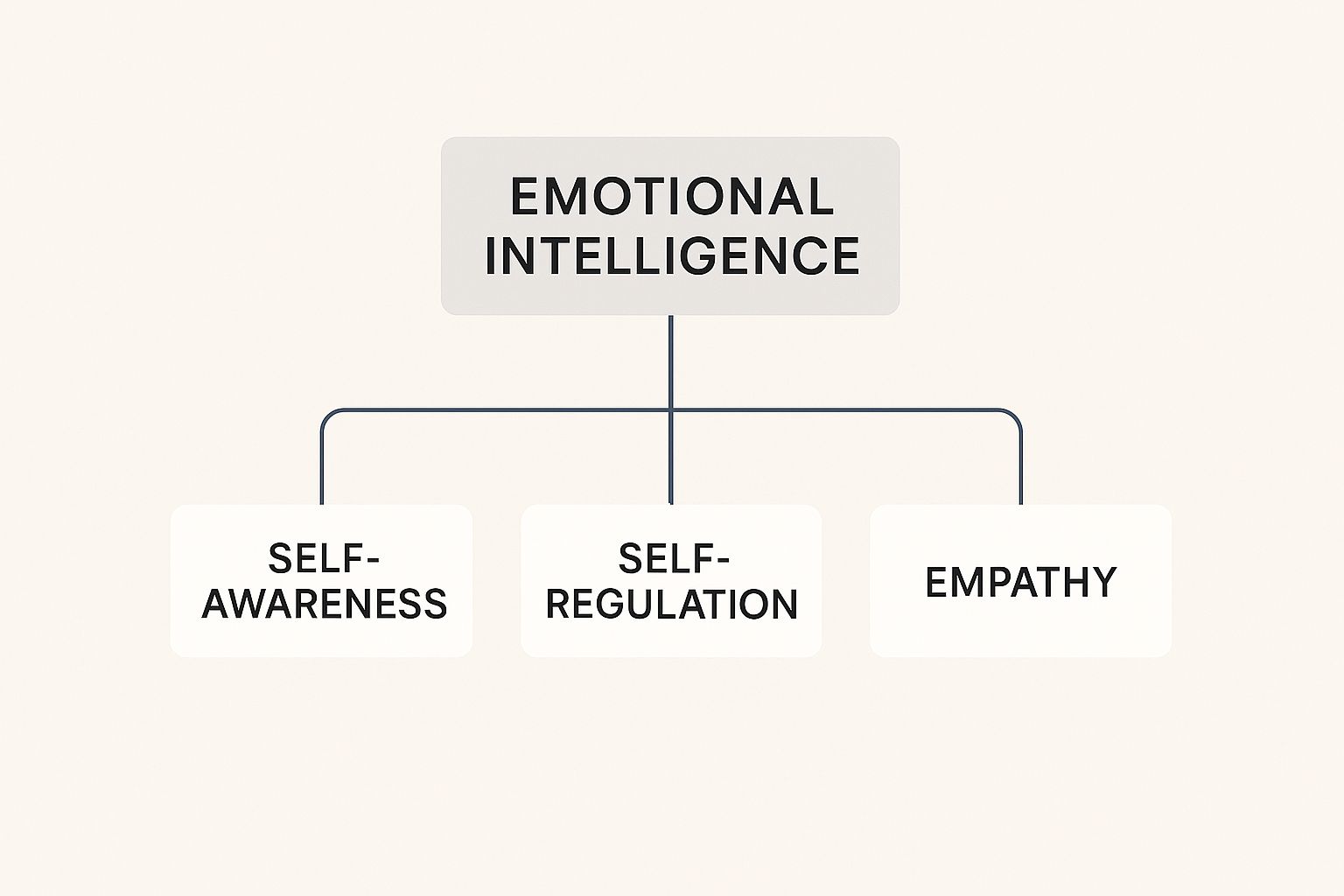
    This infographic gives a great visual of how these core skills stack up.

    Infographic about emotional intelligence training

    Just as the diagram shows, you can’t build a strong house on a weak foundation. Self-awareness is that foundation.

    Pillar 2: Self-Regulation

    Once you know what you're feeling, the next step is learning how to manage it. Self-regulation is your ability to control impulses instead of letting them control you. This art of the pause is crucial for avoiding burnout from constant workplace stress.

    Someone with strong self-regulation can navigate a tense conversation without losing their cool. This skill is vital for preventing small disagreements from becoming major conflicts and is a cornerstone of personal resilience.

    Pillar 3: Motivation

    Motivation in EI goes deeper than external rewards. It’s about your inner drive—a genuine passion for your work and an optimistic commitment to your goals. This internal fire is what fuels resilience and helps you push through challenges.

    True motivation is about finding personal meaning in what you do. It’s the 'why' that keeps you focused and hopeful, even when faced with difficulties or the mental weight of anxiety.

    This pillar is tied to a positive outlook. A motivated person sees opportunities where others see roadblocks. That mindset doesn’t just boost your performance; it can inspire and uplift those around you.

    Pillar 4: Empathy

    Empathy is the ability to understand and share what someone else is feeling. It means putting yourself in their position to see the world from their perspective. In any team, this is the secret ingredient for building trust, compassion, and connection.

    In the workplace, empathy is an action. It looks like:

    • Truly listening: Not just waiting to talk, but hearing what a colleague is really saying.
    • Validating feelings: Acknowledging a teammate's frustration after a project fails.
    • Offering help: Noticing when someone is struggling and quietly offering support.

    Empathy doesn't mean you must agree with everyone; it means you try to understand where they're coming from. It's the heart of effective teamwork and helps combat feelings of isolation that can contribute to depression.

    Pillar 5: Social Skills

    The final pillar, social skills, is where you put everything into practice. It's about using your awareness of your own emotions and others' to build strong relationships. This includes clear communication, conflict resolution, and inspiring people positively.

    A person with strong social skills can deliver tough feedback constructively and lead a team with compassion. They are naturals at building rapport and navigating tricky social dynamics. These are the skills that turn a good professional into a great leader.

    Why Emotional Skills Matter in the Workplace

    A diverse team of professionals engaged in a thoughtful discussion in a bright, modern meeting room.

    In today's world, technical abilities might get you a job, but emotional skills help you succeed. These aren’t just "nice-to-have" traits; they are essential tools for navigating human interaction at work. Without them, even the most talented individuals can struggle to collaborate, lead, or handle pressure.

    Think about common workplace frustrations like misunderstandings, communication breakdowns, or ineffective leadership. Often, a lack of emotional awareness is the root cause. This is why emotional intelligence training is crucial for building teams that are effective, supportive, and resilient.

    Bridging the Gap Between Pressure and Performance

    The modern workplace, especially within India's demanding corporate culture, can be a high-pressure environment. This constant drive can lead to chronic workplace stress and other challenges if left unmanaged. Developing emotional intelligence gives you powerful tools to handle pressure before it handles you.

    When you recognize your emotional triggers—like that feeling of anxiety before a big deadline—you can address them proactively. This conscious approach helps prevent burnout and supports a healthier work life. It’s about shifting from merely surviving your workday to actively shaping your professional well-being.

    Across Indian organizations, emotional intelligence is increasingly seen as essential for success, especially in leadership. You can read more about the role of EI in leadership on economictimes.com. Employees who develop their emotional intelligence not only perform better but also create a more positive environment for everyone.

    Cultivating a Culture of Well-being

    Beyond managing stress, emotional skills are the foundation of a positive workplace. When empathy and clear communication are the norm, they create psychological safety. This environment allows open dialogue, creative problem-solving, and true collaboration to flourish.

    Emotional intelligence is not about suppressing feelings. It’s about understanding them, learning from them, and using that awareness to make conscious choices that support your well-being and strengthen your relationships.

    A supportive atmosphere directly impacts job satisfaction and overall happiness. People who feel understood, heard, and valued are more engaged, motivated, and loyal. Investing in these skills is a direct investment in the human core of an organization.

    From Soft Skill to Strategic Advantage

    It’s time we recognize emotional intelligence as a core competency for professional excellence. It directly influences everything from decision-making and team dynamics to leadership. A few practical advantages include:

    • Improved Decision-Making: Understanding how emotions affect judgment helps you make clearer, more rational choices under pressure.
    • Stronger Collaboration: Empathy allows you to genuinely understand colleagues' perspectives, leading to smoother teamwork and innovation.
    • Enhanced Resilience: The ability to regulate your emotions helps you bounce back from setbacks, turning challenges into learning opportunities.

    Emotional intelligence training is a path to greater well-being. It offers strategies for navigating challenges like anxiety while building positive traits like compassion and resilience. A guided journey, perhaps with therapy or counselling, can provide a structured framework for this growth, using assessments as informational tools, not labels.

    The Real-World Rewards of Higher Emotional Intelligence

    Investing in your emotional intelligence isn’t about changing who you are. It’s about sharpening your awareness and giving you tools to navigate life’s ups and downs with more grace. The impact is profound, touching everything from how you handle pressure to the strength of your relationships.

    Think of it as a fundamental life upgrade. The same abilities that help you in a tricky work conversation also strengthen your connection with loved ones. It’s a journey toward a more resilient, understanding, and fulfilling life.

    Finding Calm and Building Resilience in a Hectic World

    In our fast-paced world, stress can feel constant. Emotional intelligence training provides a practical toolkit for managing that pressure before it leads to burnout. By tuning into your self-awareness, you can spot your stress triggers and respond thoughtfully.

    This ability to self-regulate is what builds true resilience. It's the inner strength that helps you bounce back from setbacks, viewing challenges as opportunities for growth instead of sources of anxiety. You learn to navigate emotional waves instead of being knocked over by them.

    “Emotional intelligence is critical in building and maintaining relationships and influencing others—key skills that help people throughout their career and wherever they sit in an organisational structure.”

    This proactive stance on mental health is empowering. It creates a buffer against chronic workplace stress, which, if unchecked, can contribute to feelings of depression. Building these skills is a direct investment in your long-term well-being.

    Boosting Your Career and Becoming a Better Leader

    In any workplace, emotional intelligence separates good colleagues from great ones. It transforms how you communicate, collaborate, and lead. A genuine sense of empathy, for example, helps you create a more supportive and creative atmosphere.

    For anyone in a leadership role, these skills are essential. A leader with strong emotional intelligence can:

    • Give constructive feedback that feels helpful, not hurtful.
    • Navigate conflict by understanding the emotions involved and guiding the conversation to a solution.
    • Inspire a team by connecting with them as people, building trust and loyalty.

    These are core competencies for success. Research consistently shows that people with higher emotional intelligence report greater job satisfaction and perform better. They are simply better equipped for the complex human dynamics of any workplace.

    Deepening Personal Connections and Overall Happiness

    The positive effects of emotional intelligence extend far beyond your work life. These skills are the foundation of deeper, more meaningful connections with family and friends. When you understand and manage your feelings, you can express yourself more clearly and listen with genuine empathy.

    This creates a solid foundation of trust and respect in your relationships. You become better at working through disagreements, offering real support, and sharing openly. This kind of emotional connection is a powerful ingredient for lasting happiness.

    Remember, this is a process. Getting support from a professional through counselling or therapy can offer a safe space to practice these skills. Any assessments you encounter are informational tools to light the way, not labels; they simply show you where you are so you can move forward with supportive takeaways.

    Practical Ways to Start Your EI Training Journey

    A person sitting in a calm, well-lit space, journaling in a notebook.

    Starting your emotional intelligence training journey doesn’t require a huge overnight change. It begins with small, consistent steps toward understanding yourself and others a little better. It's about weaving simple habits into your daily life, focusing on progress, not perfection.

    These gentle techniques build your skills gradually, helping you navigate life with more grace. Whether managing workplace stress or forging stronger connections, every small effort adds up to a greater sense of well-being and happiness.

    Cultivate Self-Awareness Through Reflection

    The first step is always to look inward with a curious and open mind. A powerful way to do this is through mindful journaling. Just set aside a few minutes each day to write down your thoughts and feelings without judgment.

    Ask yourself gentle questions like, What emotions did I feel today? What situations sparked them? This simple practice helps you recognize your emotional patterns, which is the foundation for managing them. It’s a quiet conversation with yourself that builds clarity and self-compassion.

    This self-awareness is vital in our professional lives. In India, there's a growing appreciation for emotional intelligence, yet recent data shows a dip in overall EI scores. This highlights an opportunity for training that strengthens emotional awareness, starting with personal reflection. You can read more about India's emotional intelligence trends on 6seconds.org.

    Practice the Power of the Pause

    Self-regulation is about creating space between a feeling and your reaction. One effective way to build this skill is by practicing ‘the pause’. When you feel a strong emotion like anger or anxiety, consciously stop before you speak or act.

    Just take a single, deep breath. That tiny action gives your logical brain a moment to catch up with your emotional brain, allowing for a more thoughtful response. It’s a simple technique that can prevent misunderstandings and build your resilience one breath at a time.

    Emotional intelligence is not about suppressing feelings. It’s about understanding them, learning from them, and using that awareness to make conscious choices that support your well-being and strengthen your relationships.

    Strengthen Empathy with Active Listening

    Empathy is the heart of human connection, and it is a skill you can develop. A great place to start is by practicing active listening. This means giving the other person your full, undivided attention.

    Here are a few things to try:

    • Listen to Understand: Focus on what the other person is really saying with their words, tone, and body language.
    • Ask Open-Ended Questions: Encourage them to share more with questions like, "How did that make you feel?"
    • Summarise and Reflect: Gently paraphrase what you heard. Saying, "It sounds like you felt really overwhelmed," shows you were listening and validates their experience.

    Seek Professional Guidance and Support

    While self-help practices are valuable, a structured path can make a big difference. Professional support through therapy or counselling provides a safe, non-judgmental space to explore your emotions with an expert guide. A professional can offer personalized strategies to navigate challenges like anxiety or feelings of depression.

    It's important to remember that any assessments used are informational tools. They are designed to offer insights to guide your journey, not to apply a rigid diagnostic label. The goal is to equip you with supportive takeaways and lasting skills for a more balanced life.

    How DeTalks Can Support Your Growth Journey

    Starting a journey of self-improvement is easier with the right support. At DeTalks, we offer a safe, understanding, and professional space for your emotional intelligence training. Our approach helps you navigate real-world challenges like workplace stress while nurturing positive skills like compassion and resilience.

    Our counselling and therapy services are tailored to you. We work to understand your personal journey, helping you develop practical strategies for managing emotions. Our guidance combines globally recognized practices with a deep cultural understanding, keeping your well-being as our top priority.

    It’s also important to clarify that any assessments we use are informational tools. They are meant to guide your progress by offering insight, not to serve as a diagnostic label for conditions like anxiety or depression. Our goal is to support your growth toward happiness.

    Our goal is to be your partner in this process, offering practical tools and insights to enhance your well-being in a non-judgemental way. We are here to support your growth, helping you build the skills for a more balanced and fulfilling life.

    A Few Common Questions

    It's natural to have questions when exploring something new like emotional intelligence. Let's walk through some common ones to give you a clearer picture.

    How Can This Training Actually Help with Everyday Stress and Anxiety?

    Think of emotional intelligence training as learning to recognize the early signs of stress or anxiety. By becoming more self-aware, you notice that tight feeling in your chest or racing thoughts sooner. This allows you to respond calmly before you feel overwhelmed.

    The training also teaches self-regulation—the skill of pausing before you react. This helps you respond with a clear head instead of impulse. Building this kind of resilience is key to handling challenges at work and home with greater calm.

    Is Emotional Intelligence Training the Same as Therapy?

    That's a great question, and while they both support well-being, they are different. EI training focuses on developing specific emotional and social skills that can benefit anyone. It's like learning a practical life skill.

    Therapy, or counselling, is a clinical approach aimed at addressing deeper mental health challenges such as chronic anxiety, depression, or trauma. The two can work together powerfully. The skills from EI training can strengthen your progress in therapy, and insights from therapy can deepen your emotional intelligence.

    A quick note: Any assessments you might take in emotional intelligence training are there to give you insights for your growth. They are informational tools, not diagnostic ones for mental health conditions.

    Can This Training Genuinely Make a Difference in My Career?

    Absolutely. Success at work is often about how well you work with people. Honing your emotional intelligence helps you manage workplace stress more effectively, communicate clearly, and navigate conflicts constructively.

    This is especially vital in demanding fields. For example, a review of studies on nurses in India found that emotional intelligence programs significantly boosted their professionalism and personal health. You can read the full review about EI training in healthcare on pubmed.ncbi.nlm.nih.gov.

    What if I’m Not a Very “Emotional” Person?

    Everyone has emotions, even if they don't show them openly. The goal of emotional intelligence isn’t to make you more emotional; it's to make you more skillful at understanding the emotions you and others experience.

    This training can be very helpful if you find emotions confusing. It provides a practical framework for understanding what feelings are and how they shape thoughts and actions. This awareness leads to better decision-making and stronger relationships.

    How Long Until I Start Seeing Results?

    Building emotional intelligence is a journey, not a race. However, you can see small but meaningful changes quickly when you start practicing consistently. The secret is to aim for progress, not perfection.

    Within a few weeks, you might notice yourself taking a deep breath before replying in a tense meeting. These small victories are the building blocks for lasting improvements to your overall well-being and happiness.


    Taking this step is a powerful move toward a more fulfilling and balanced life. When you’re ready for professional, supportive guidance, DeTalks is here to connect you with the right therapist or counsellor for your journey. See how our platform can help you grow by visiting https://detalks.com.

  • How to Build Emotional Intelligence: A Practical Guide

    How to Build Emotional Intelligence: A Practical Guide

    Developing emotional intelligence is a practical, real-world skill, not an abstract theory. It’s about learning to notice, understand, and manage your own emotional world while also tuning into the feelings of those around you.

    Think of it as an inner compass that helps you navigate daily challenges. It’s a tool that supports you through workplace stress, builds the resilience to bounce back from setbacks, and improves your overall sense of well-being.

    What Emotional Intelligence Looks Like in Real Life

    Emotional intelligence (EI) is the skill you use to handle the weight of expectations, find balance when anxiety arises, and build deeper connections. It empowers you to navigate life’s complexities with greater awareness and compassion.

    Developing EI isn't a quick fix for burnout or a cure for depression. It is a supportive, lifelong practice for building a more balanced and compassionate inner world.

    This journey gives you the space to respond thoughtfully in a tense meeting instead of reacting impulsively, fostering better outcomes for everyone. It is about learning to navigate life’s challenges with more grace.

    The Core of Emotional Intelligence

    At its heart, EI is about understanding the 'what' and 'why' behind your feelings and the feelings of others. This infographic breaks down the foundational pieces of this crucial skill for personal growth.

    As you can see, self-awareness, self-regulation, and social awareness work together. Each element builds on the last, creating a solid foundation for healthier relationships with yourself and others.

    Let’s take a closer look at the five core components that make up emotional intelligence.

    The Five Core Pillars of Emotional Intelligence

    Here's a look at the five key components of EI and what they mean in practice. Understanding these pillars is the first step toward building a more emotionally intelligent life and enhancing your personal well-being.

    Pillar What It Means Why It Matters for Your Well-being
    Self-Awareness Knowing your own emotions, strengths, and weaknesses. Helps you understand why you feel what you feel, which is the first step to managing your reactions and reducing internal stress.
    Self-Regulation The ability to control or redirect disruptive impulses and moods. Prevents you from being overwhelmed by emotions like anger or anxiety, allowing for calmer, clearer thinking and better decision-making.
    Motivation A passion for your efforts for reasons beyond money or status. Fuels your resilience and optimism, helping you push through challenges and find genuine fulfilment in your daily life.
    Empathy The ability to understand the emotional makeup of other people. Strengthens your relationships by allowing you to connect with others on a deeper level, fostering trust, compassion, and mutual support.
    Social Skills Proficiency in managing relationships and building networks. Makes navigating social situations less stressful and more rewarding, helping you build a strong support system for your mental health.

    Understanding these pillars is the starting point for intentionally building a more emotionally intelligent life. Each one offers a different lens through which to view your interactions with yourself and the world.

    A Look at the Indian Context

    The emotional intelligence landscape in India presents a unique picture with opportunities for growth. While many individuals show strong analytical abilities, some find it challenging to apply emotional information to their decision-making.

    Research also shows that women often score higher than men, particularly in self-awareness. This highlights a significant opportunity for growth in both personal and professional settings, where developing these skills can enhance happiness and success.

    Developing emotional intelligence is less about controlling your feelings and more about understanding the valuable information they provide. It’s a shift from being driven by your emotions to being guided by them.

    Building these skills can be a fantastic asset alongside professional support like therapy or counselling. Remember, any assessment is purely informational and not a diagnosis. The goal is simply to build a more resilient and compassionate relationship with yourself and others.

    Building Your Foundation with Self-Awareness

    Before you can understand others, you have to start with yourself. Self-awareness is the cornerstone of emotional intelligence, inviting you to get to know your own internal landscape with gentle curiosity.

    A person sitting calmly, looking inward, representing self-awareness and reflection.

    Think about the last time you felt a knot in your stomach before a big presentation. These physical sensations are your body's way of communicating, and the goal is not to suppress them but to listen.

    This inner listening is a powerful tool for managing workplace stress and avoiding burnout. When you can recognise the early stirrings of anxiety or frustration, you create an opportunity to respond thoughtfully, which is a game-changer for your overall well-being.

    Simple Ways to Tune In

    You don't need a silent retreat to build self-awareness; it’s about weaving small, intentional moments of reflection into your day. Consistency is far more important here than intensity.

    Here are a few practical and helpful exercises:

    • The 60-Second Check-In: Set a few random alarms on your phone each day. When one goes off, pause for one minute and ask: "What am I feeling right now?" Simply name the feeling—tense, calm, hopeful—without any pressure to fix it.
    • Mindful Journaling: Before bed, take five minutes to jot down an emotion you felt during the day and what was happening at that moment. This simple act connects your feelings to real-world events and builds your self-understanding.
    • Body Scan Meditation: Sit or lie down comfortably and close your eyes. Mentally scan your body from your toes to your head, just noticing any sensations. This practice shows you how emotions like anxiety manifest physically.

    These small acts of noticing build your emotional resilience over time. You are training your brain to pay attention to your internal cues, which gives you valuable information to guide your decisions.

    Linking Your Feelings to Your Thoughts

    Once you can name your emotions, the next step is to understand their triggers. Feelings are often a response to the stories we tell ourselves, and exploring these connections can be incredibly insightful.

    Remember, noticing your emotional patterns is about gathering information, not self-diagnosis. Think of it as collecting personal data to help you make more informed choices for your own well-being.

    If you find yourself feeling consistently overwhelmed, seeking professional support can be helpful. Working with a professional through counselling or therapy offers a safe space to explore these connections and identify thought patterns that may fuel feelings of anxiety or depression.

    You are learning to observe your thoughts without getting swept away by them. It's the subtle shift from saying "I am sad" to "I am noticing a feeling of sadness," which reminds you that feelings are temporary states.

    Learning to Respond Instead of React

    Knowing what you’re feeling is one thing, but choosing how to act on that feeling is where emotional intelligence truly shines. This is self-regulation—the skill of creating a pause between a trigger and your action.

    A calm person breathing deeply, symbolizing the pause between emotion and reaction.

    Think about receiving tough feedback at work. The instinct might be to get defensive, but self-regulation allows you to feel that initial flare-up, take a breath, and choose a more constructive way forward.

    This ability is the bedrock of resilience. It's the difference between feeling like your emotions are running the show and feeling in control, which is essential when dealing with anxiety or high-stakes workplace stress.

    Practical Tools for Finding Your Calm

    You don't need a personality overhaul to get better at self-regulation. It's about having a few simple techniques to calm your nervous system when things get intense.

    Here are a couple of effective methods that work:

    • The Power of the Pause: Before you speak or type in a tense situation, just stop. Take one slow, deep breath, or say, "Give me a moment to think about that." This tiny interruption can break the cycle of reaction.
    • Box Breathing: This is a fantastic breathing exercise for when anxiety spikes. Inhale for a count of four, hold for four, exhale for four, and hold again for four. A few rounds can bring surprising calm and clarity.

    Self-regulation isn't about bottling up your feelings. It's about managing them so they don't manage you. This skill is a key defence against burnout and a huge asset for staying clear-headed under pressure.

    Putting It into Practice

    Imagine you receive an email from your boss that feels unfair. Your gut reaction might be anger and an urge to fire back a defensive reply. This is a prime moment to pause.

    Push your chair back and walk away from the screen for a few minutes. When you return, you'll have a calmer mind to re-read the email, separate the feedback from the feeling, and formulate a professional response.

    While these tools are powerful, they are for in-the-moment management. If you're constantly battling overwhelming emotions, reaching out for professional counselling or therapy is a sign of strength, supporting your long-term emotional well-being.

    Connecting with Your Inner Motivation

    In emotional intelligence, motivation isn't just about ambition. It's the powerful internal drive that connects your daily actions to what you truly value, fostering a deep sense of purpose and happiness.

    This intrinsic motivation is a cornerstone of long-term well-being and a huge source of resilience. When your efforts are tied to your core beliefs, you tap into a well of energy that helps you navigate setbacks with greater ease.

    Cultivating this drive helps push back against burnout. It ensures your life feels aligned with your inner compass, leading to greater satisfaction and compassion for yourself.

    Finding Your Why

    To connect with your motivation, you first need to get clear on what truly moves you. It's easy to get swept up in what we think we should want, so taking time to reflect on your personal values is the first step.

    Here are a few questions to get you started:

    • What activities leave you feeling energised, even when they’re challenging?
    • Think about a moment you were genuinely proud of. What value was at the heart of that achievement (e.g., creativity, helping others, mastery)?
    • If you had a free afternoon with zero obligations, how would you spend it?

    The answers are clues leading you back to what fuels you. This clarity is a powerful buffer against workplace stress and feelings of anxiety or depression.

    Turning Values into Action

    Once you have a better handle on your core values, translate them into small, tangible actions. For example, if you value mental clarity, your goal could be: "Go for a 20-minute walk during my lunch break three times a week."

    This approach connects a simple action to a deeper purpose. It makes your goals more meaningful and sustainable over the long term.

    Celebrate every small win. Acknowledging your progress, no matter how small, creates positive momentum and strengthens your resolve. This practice is key for building the kind of optimism that fuels emotional motivation and happiness.

    This is a deeply personal journey. If you're struggling to connect with your inner drive, remember that counselling or therapy can offer incredible support. Remember, any assessment of motivation is just informational, not diagnostic.

    Strengthening Your Empathy and Social Skills

    So far, we’ve looked inward, but emotional intelligence truly comes alive when we connect with others. Empathy and social skills are the bridge between our inner world and the people around us, helping us build stronger relationships.

    Two people having a supportive and empathetic conversation.

    Empathy is the ability to genuinely understand and share what someone else is feeling. It means listening to understand, not just to reply, and can be a powerful antidote to loneliness and a cornerstone of resilience.

    Sharpening these skills helps us handle workplace stress and navigate personal challenges. A strong social network is a buffer against anxiety and depression, and these pillars are your guide to building it with compassion.

    Cultivating Genuine Empathy

    Putting yourself in someone else's shoes can be tough, but it's a skill anyone can strengthen with conscious effort. It requires us to quiet our own thoughts and truly listen.

    Here are a few practical ways to build your empathy muscle:

    • Practise Active Listening: Give the other person your full attention. When they pause, try reflecting back what you heard: "It sounds like you're feeling really frustrated." This shows you were truly listening with compassion.
    • Try to See Their Perspective: In a disagreement, pause and ask yourself, "What might be going on for them that's causing them to see it this way?" You don't have to agree, but this question opens the door to a kinder conversation.
    • Read More Fiction: Studies have shown that getting lost in literary fiction can boost our capacity for empathy. It’s a great way to practice seeing the world from a completely different point of view.

    Empathy isn't about feeling sorry for someone; it's about feeling with them. This shared understanding forges powerful connections and is a foundational element of how to build emotional intelligence that lasts.

    Honing Your Social Skills

    Good social skills are about clear communication and managing conflict constructively. These abilities are essential for both personal happiness and professional success, built on a foundation of trust.

    For leaders, strong emotional intelligence is critical. Developing these skills is directly linked to creating a supportive and productive team, as detailed in these essential soft skills for leaders.

    In India, where some studies show moderate emotional intelligence scores, there is a real opportunity for development. Focusing on these interpersonal skills can greatly improve our workplaces and communities.

    If you find social interactions consistently difficult, working with a professional through therapy or counselling can help. Seeking support is a proactive step towards greater well-being.

    Weaving Emotional Intelligence into Your Everyday Life

    Building emotional intelligence is a continuous practice, not a destination. It’s a lifelong journey of returning to yourself with kindness and patience, where the real goal is progress, not perfection.

    These skills are invaluable for navigating life's challenges, from managing workplace stress to building personal resilience. By strengthening your EI, you are building a more compassionate relationship with yourself and forging deeper connections with others, which is a cornerstone of your overall well-being.

    Why EI Matters in India

    The power of emotional intelligence shines through in our professional lives. Here in India, where many have an opportunity for growth in this area, developing these skills can be transformative.

    Research shows that a higher EI can positively impact salary and accounts for a significant part of job performance. You can explore the professional impact of EI to see how empathetic leadership can dramatically boost employee engagement and happiness.

    Practical Steps to Keep You Going

    As you weave these practices into your routine, remember to be gentle with yourself. Building new emotional habits is a marathon, not a sprint, and takes consistent, compassionate effort.

    • Celebrate the small wins. Acknowledging your progress, like when you paused before reacting, reinforces positive change.
    • Stay curious. Instead of self-criticism, ask, "What is this feeling trying to tell me?" This fosters self-compassion.
    • Find your people. Sharing your journey with a trusted friend or partner makes the process feel less lonely.

    Remember, these skills support you, but they aren’t a substitute for professional help. The assessments and exercises discussed are for information, not diagnosis.

    If you’re struggling with persistent anxiety, depression, or feel overwhelmed, reaching out for therapy or counselling is a courageous step. A trained professional can offer a safe space and tailored guidance to support your mental health journey.

    Your Emotional Intelligence Questions, Answered

    As you start working on your emotional intelligence, it's natural for questions to come up. Let's tackle some of the most common ones.

    Can You Actually Learn Emotional Intelligence?

    Yes, absolutely. While some people might have a natural head start, emotional intelligence is a set of skills that can be developed with focus and practice.

    Think of it like building a muscle. The more you consciously work on noticing your feelings or seeing things from another's perspective, the stronger those skills get.

    How Long Until I Notice a Difference?

    This varies for everyone, as there’s no magic timeline. Some people feel small shifts within a few weeks, while deep, lasting change often takes several months of consistent effort.

    Patience is your best friend on this journey. The goal is to build sustainable habits that support your long-term happiness and well-being.

    The secret is to aim for small, consistent habits, not a massive overhaul. Celebrate little victories, like the time you paused before sending a reactive email. Those moments are the foundation of real emotional growth.

    Does Having Low Emotional Intelligence Mean I Have a Mental Health Problem?

    Not at all. A lower EI score simply highlights an area for personal development; it is not a diagnosis. It’s an opportunity to get better at understanding and managing emotions.

    Strengthening your EI can be a huge help in dealing with challenges like anxiety or workplace stress. Remember to see EI assessments as informational guides, not diagnostic tests. If you're dealing with persistent issues like depression, seeking support from a therapist or counsellor is always the best step.

    If you're looking for great reads to guide you, check out some of the best books for emotional intelligence. A good book can offer fresh insights to keep you moving forward with compassion.


    At DeTalks, we believe that understanding your emotional landscape is the first step towards a more fulfilling life. If you’re ready to take that step with our science-backed assessments or connect with a qualified professional, we're here to support you. Start your journey today by visiting https://detalks.com.