Tag: family dynamics

  • A Guide to the Family Life Cycle Stages and How to Navigate Them

    A Guide to the Family Life Cycle Stages and How to Navigate Them

    The idea of family life cycle stages offers a warm and helpful way to see how families grow and change. Like individuals, families evolve through a series of predictable phases. Each stage brings its own unique joys, learning opportunities, and a fresh set of challenges.

    This framework helps normalise the hurdles we all face on this journey. It reframes them not as personal failings, but as natural parts of a shared human experience, fostering resilience and understanding.

    Understanding Your Family's Evolving Journey

    While every family’s story is unique, there is a common rhythm to how most of us grow and transition. Thinking about your family's path in terms of these stages can act like a roadmap, helping you anticipate what’s next and navigate challenges with more compassion.

    It's a way of realising that the stress of new parenthood or the quiet of an empty home is a well-trodden path. This perspective shifts the focus from "what's wrong with us?" to "how can we grow through this?", empowering you to see challenges as opportunities for connection and well-being.

    The Natural Flow of Family Life

    Looking at your family this way builds resilience and encourages open conversations about what each person is experiencing. This shared understanding is the first step toward strengthening your family's mental health and finding healthier ways to relate to one another.

    The timeline below gives a simple visual of the core phases many families experience.
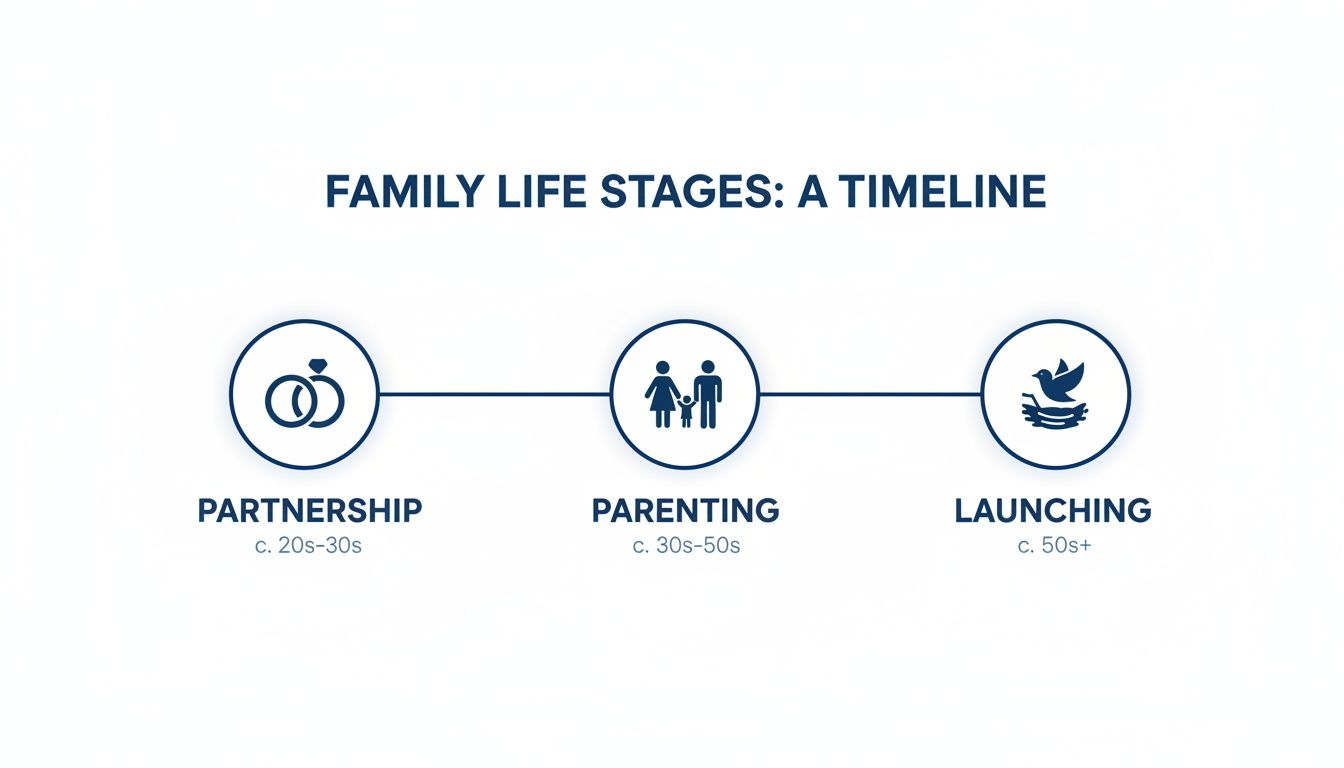
    Timeline diagram showing family life stages: Partnership, Parenting, and Launching, with age ranges.

    As you can see, each stage—from building a partnership to parenting and eventually launching children—marks a major shift in the family’s focus and priorities.

    To give you a clearer picture, here’s a quick breakdown of what to expect at each stage.

    Overview of Key Family Life Cycle Stages

    Stage Primary Task Common Challenge
    1. Single Young Adult Establishing independence & identity Balancing career goals with personal relationships
    2. The New Couple Merging two lives into a new system Navigating differences in values, habits & finances
    3. Family with Young Children Adjusting to new parenting roles Exhaustion, loss of personal time & couple intimacy
    4. Family with Adolescents Increasing flexibility of family boundaries Managing conflicts over independence & responsibility
    5. Launching Children Releasing adult children into the world Adjusting to the "empty nest" & redefining roles
    6. Family in Later Life Accepting shifting generational roles Coping with health issues, retirement & new family dynamics

    This table is just a snapshot, but it illustrates how the focus and pressures on a family naturally change over the years.

    Understanding these stages feels especially relevant in an India-first context, where family is central but modern pressures like intense workplace stress are common. Seeking support through counselling during these transitions isn’t a sign of weakness; it’s a proactive step toward building a happier, stronger family and nurturing your well-being.

    Building a Foundation: From Independence to Partnership

    The journey into adulthood often unfolds in two parts: first, learning to stand on our own, and then, learning to walk alongside someone else. These early family life cycle stages are about laying a foundation of independence, communication, and mutual respect. This exciting and sometimes messy period is filled with growth but also brings its own pressures.

    The first major step is becoming your own person, which involves both financial and emotional independence. Young adults are often juggling career-building, managing finances, and discovering their identity away from their family. It's no surprise that this can be a time of significant workplace stress and personal anxiety.

    The Young Adult Journey

    In many cultures, including India, it's common for young adults to live at home while establishing their careers. This dynamic calls for a delicate balance of honouring family traditions while carving out space for personal freedom. It requires patience and clear communication from everyone involved.

    Ultimately, the goal is to develop a strong, secure sense of self. This personal foundation is what you'll carry into future relationships. Building resilience now—learning to manage stress and bounce back from setbacks—is a direct investment in your long-term well-being.

    Moving from dependence to independence is a profound emotional shift. It's not just about what you do, but about how you see yourself—as capable, responsible, and ready for the next chapter of life.

    Forming a New Partnership

    The next stage begins when two people decide to build a life together. This "new couple" phase is a beautiful, yet intricate, process of merging two separate worlds. You’re blending habits, values, family stories, and deeply held hopes for the future.

    This is where the real work of creating a partnership begins. As the initial glow settles, the practical realities of daily life emerge. Disagreements over money or chores aren't signs of trouble, but normal growing pains as a couple learns to function as a team.

    In India, this transition can be particularly intense for newly married couples. While marital happiness is often high initially, challenges in adjusting can cause friction for some. A significant factor is communication, with many young couples reporting that simple gaps in understanding lead to conflict. You can find more insights on these family connection trends on the ASPE website.

    Creating a Resilient Bond

    Strong communication is the bedrock of a lasting partnership, helping you solve problems, share dreams, and support each other through tough times. When communication falters, small misunderstandings can grow into larger conflicts, leading to feelings of loneliness or resentment.

    This is why seeking support early on can make a profound difference. Relationship counselling or therapy isn't about admitting failure; it’s a smart, proactive step to build healthy communication skills. Learning to listen actively and express needs constructively is one of the most powerful things you can do for your relationship's happiness.

    By investing in their connection during this foundational stage, couples build a resilient bond that can handle the pressures of later family life cycle stages. This early effort creates a deep sense of security and teamwork, helping them face future storms, including potential struggles with anxiety or depression, together.

    Navigating the Intensity of the Parenting Years

    The arrival of children marks a huge shift in the family dynamic, launching one of the most intense and rewarding phases of the family life cycle stages. Life is completely reorganised around the needs of a new, dependent person. This is a fundamental recalibration of your identity, responsibilities, and daily rhythm.

    Almost overnight, a couple must learn to operate as a parenting team, which can strain time, energy, and emotional reserves. The spotlight naturally moves to the child's well-being, and finding moments for connection as a couple can feel like a challenge. For most, this period is a powerful mix of profound joy and significant stress.

    A happy Asian couple smiling while planning schedules with a laptop and calendar at home.

    The Demands of Parenting Young Children

    Raising small children is an all-consuming job that can easily lead to parental burnout. It's common to feel overwhelmed by the constant demands, and some mothers may grapple with challenges like postpartum depression. These feelings are not a sign of failure, but a normal human reaction to a life-altering event.

    This is where building a strong support system becomes essential. This might mean leaning on family, connecting with other new parents, or seeking professional counselling to navigate the emotional journey. Simply acknowledging the struggle is a crucial first step toward building the resilience you need to thrive.

    To better understand your child’s evolving needs on this journey, exploring a guide on the various stages of child development by age can be an invaluable resource.

    Navigating the Adolescent Years

    Just when you think you've mastered parenting, the teenage years arrive and change the game again. This stage is built around a key challenge: adolescents need both firm boundaries and growing freedom. Their main task is to form their identity, which often involves pushing back against family rules.

    For parents, this can feel like walking a tightrope as a child who once clung to your hand now seeks more privacy. This is a healthy and necessary part of growing up, but it can create friction. Open communication becomes more critical—and often, more challenging—than ever.

    The goal is not to control your teen, but to coach them. It’s about shifting from being a manager of their life to a consultant they can trust, helping them make good choices while allowing them the space to learn from their mistakes.

    In many Indian families, this stage is heightened by immense academic pressure, which can lead to a rise in family conflicts. Studies show that many parents in urban areas experience burnout tied to competitive schooling. This pressure also impacts mental health, with a significant number of adolescents showing signs of depression linked to high parental expectations. You can discover more insights about family life cycle pressures from this study.

    Fostering Connection and Resilience

    Throughout these demanding parenting years, leading with compassion—for your children and yourself—is key. It's about balancing expectations with unconditional love and support.

    Here are a few practical ways to nurture your family's well-being:

    • Schedule One-on-One Time: Even 15 minutes of focused, distraction-free time with each child can strengthen your bond and keep communication open.
    • Practice Active Listening: When your teen talks, put your phone away and just listen. Resisting the urge to jump in with advice helps them feel heard and understood.
    • Establish Family Rituals: Consistent rituals, like a weekly movie night, build a comforting sense of stability and connection during a time of constant change.
    • Prioritise Self-Care: You cannot pour from an empty cup. Making time for your own mental health isn’t selfish; it’s an essential part of being a present and patient parent.

    The added pressure of parenting can sometimes bring back old challenges like unresolved workplace stress or personal anxiety. Seeking therapy is a powerful step toward creating a healthier family environment. It also models for your children that asking for help is a sign of strength, building a foundation of emotional intelligence and resilience.

    Embracing Change as Children Leave Home

    The day your child leaves home is a massive turning point in the family journey. After years of a life built around their needs, the house suddenly becomes quiet. The daily rhythm you took for granted is gone.

    This stage is often called the "empty nest," but it's more helpful to see it as a profound transition. It is an ending, but it is also a beginning that opens new doors for personal growth and for reconnecting with your partner.

    It's completely normal to feel a mix of emotions, including sadness, loneliness, and anxiety, as you adapt to this new reality. After pouring so much of yourself into parenting, it's natural to ask, "What now?" This shift can feel especially jarring in nuclear families where the parent-child bond is so central.

    A father and son sit on a couch, talking seriously, with school supplies on the coffee table.

    Rediscovering Life Beyond Parenting

    While this is a time for letting go, it's also a powerful opportunity to rediscover yourself. Now is the time to turn your focus inward and remember who you were before you were a parent. It’s your chance to dust off old hobbies, find new passions, and invest energy back into your own well-being.

    This period can also test your relationship as a couple. For many years, the shared project of raising children may have masked underlying issues. With the kids gone, those challenges might surface, which is an invitation to strengthen your bond and redefine your partnership.

    This stage isn’t really about an empty home, but about newly available space. It's a chance to refill your life with personal passions, renewed connections, and a different kind of purpose.

    Strengthening Your Partnership

    Successfully navigating this stage is about turning toward each other, not away. With the children gone, you have the time and space to remember why you fell in love. It’s an opportunity to be partners and friends again, not just co-parents.

    To build resilience as a couple and find happiness in this new phase, try these supportive strategies:

    • Communicate Openly: Talk about your feelings—the good and the bad. Acknowledging the sadness alongside the excitement builds empathy and compassion.
    • Create New Rituals: The old family routines are gone, so create new ones for just the two of you, like a weekly date night or planning a trip together.
    • Respect Individual Growth: Encourage each other to pursue separate interests. This brings fresh energy and new experiences back into your relationship to share.

    When to Seek Professional Support

    Sometimes, this transition can feel overwhelming and may bring feelings of anxiety or depression to the surface. If you feel stuck in sadness or find that old conflicts are causing distress, professional therapy can be an incredible help.

    Couples counselling offers a safe, structured space to work through issues and learn healthier ways to communicate. Seeking support is a proactive step toward protecting your collective well-being as you step into this next phase of life. It is an investment in a happy and fulfilling future, together.

    Finding Meaning and Well-Being in Later Life

    The later stages of the family journey bring a shift in our roles and responsibilities. This chapter often begins with being part of the "sandwich generation"—those caught between caring for their children and supporting their ageing parents. It’s a time defined by giving, which can easily lead to personal strain and burnout.

    Juggling the needs of multiple generations, a career, and your own life can stretch you emotionally and financially. This balancing act is a common cause of high workplace stress and caregiver burnout, especially when self-care gets pushed aside.

    A somber elderly couple in a child's room, holding a framed picture of a young girl, gazing upward.

    Navigating the Demands of Caregiving

    In an India-first context, the sandwich generation experience often defines the middle-age stage of the family life cycle. Many adults find themselves grappling with this dual duty to parents and children, which can contribute to burnout.

    Later on, as retirement begins, a new set of challenges appears. A growing number of older adults in urban areas live alone, which can fuel feelings of loneliness. You can learn more about these family life cycle trends to see how these patterns play out.

    Feeling overwhelmed when pulled in so many directions is completely normal. Acknowledging the anxiety or stress is an important first step. Leaning on support systems—family, friends, or professional counselling—is crucial for protecting your own well-being.

    Embracing the Retirement Years

    The shift into retirement marks another massive chapter in the family life cycle stages. After decades built around work and family, the sudden influx of unstructured time can feel both freeing and unsettling. For many, a career is a source of identity, purpose, and social connection.

    Losing that familiar structure can leave you feeling adrift. This is also a time when health concerns may come to the forefront, requiring lifestyle adjustments. The key to a happy retirement is to proactively build new routines and find new sources of meaning that fit who you are now.

    Retirement isn’t just an ending. It’s an invitation to consciously design a life filled with purpose, connection, and joy—on your own terms. It's a time to finally invest in yourself.

    This stage is a powerful opportunity to pour energy into personal passions and nurture a positive outlook. By embracing ideas from positive psychology, you can build resilience and find genuine happiness and satisfaction in your later years.

    Cultivating Happiness and Purpose

    Finding meaning in later life is an active process of rediscovery. It’s about shifting focus from the roles you used to have to the joys you can find today.

    Here are a few gentle but powerful ways to boost your well-being:

    • Practise Gratitude: Making a daily habit of noticing the good things can dramatically improve your mood and foster happiness.
    • Maintain Social Connections: Be intentional about staying connected with friends and family to combat loneliness. These bonds are a lifeline for your emotional health.
    • Embrace New Hobbies: This is the perfect time to learn something new, which keeps your mind sharp and can introduce you to new friends.
    • Focus on Mindfulness: Simple practices like meditation can help manage anxiety and keep you grounded in the present, helping you appreciate the simple joys of life.

    If adjusting to these changes feels like a struggle, or if feelings of depression persist, reaching out for professional support can make all the difference. Therapy provides a safe, compassionate space to explore what you're feeling and create a plan for a truly fulfilling life in your later years.

    Supportive Steps for Your Family's Well-Being

    Moving through the different stages of family life is a journey filled with wonderful moments and some tough challenges. The first step to building a stronger, more connected family is acknowledging that struggles are a normal part of the story. You don't have to navigate these transitions alone; support is available to help your family thrive.

    Knowing when to reach out for help is a sign of strength. Professional support can offer tools to communicate better, handle disagreements constructively, and boost your family's overall well-being. It’s about learning how to grow together through life's inevitable ups and downs.

    Finding the Right Support for Your Family

    Different challenges call for different solutions. The key is finding a type of support that fits what your family is going through.

    • Individual Therapy: Personal struggles like anxiety, depression, or workplace stress can affect the whole family. Individual therapy provides a safe, one-on-one space to work through these issues.
    • Couples Counselling: This is a proactive step for partners looking to strengthen their relationship. Counselling can help you navigate big changes, from new parenthood to life after the kids have moved out.
    • Parenting Guidance: This type of support offers parents practical strategies to create a calmer, more positive home and navigate behavioural challenges.

    Using Assessments for Personal Insight

    On the path to better understanding, tools like psychological assessments can offer valuable clues. These screeners can help you get a clearer picture of your emotional habits, personality traits, or symptoms of stress.

    It is critical to remember that these assessments are informational tools, not diagnostic ones. Think of them as a personal snapshot—a helpful starting point for self-reflection or a conversation with a mental health professional, but not a final verdict.

    A crucial aspect of ensuring long-term family well-being involves engaging in comprehensive estate planning to secure everyone's future. This practical step provides peace of mind across all life stages.

    Taking these supportive steps is an investment in your family’s happiness and resilience. Every action you take helps build a stronger foundation for whatever comes next.

    Frequently Asked Questions About the Family Life Cycle

    Thinking about how families grow and change often brings up some common questions. Here are some clear answers to help guide you.

    Do All Families Follow These Stages Exactly?

    Absolutely not. Think of this framework as a helpful map, not a strict set of rules. Every family’s journey is unique, and modern family life is incredibly diverse.

    Single-parent households, blended families, couples without children, and LGBTQ+ families all carve their own paths. The key insight is that all families face transitions that call for new skills, patience, compassion, and fresh ways of relating to each other.

    How Can I Tell if Stress Is Normal or a Sign of a Deeper Problem?

    A bit of stress or sadness is completely normal during a big life change. These feelings are usually tied to a specific challenge and tend to ease as you adjust.

    A red flag may be when those feelings stick around, feel overwhelming, or interfere with your daily life, work, or relationships. If it feels like you're constantly struggling, it could be a sign of something more, like depression or an anxiety disorder. That's a good cue to consider seeking professional support for your well-being.

    Remember, reaching out for counselling is a proactive step toward building resilience. It's not about waiting for a crisis but about learning better ways to cope with life's challenges.

    How Do I Talk to a Family Member About Therapy?

    Bringing up therapy can feel tricky, so it’s important to lead with kindness and genuine concern.

    Find a quiet, private time to talk. Start by using "I" statements to share your feelings, such as, "I've been feeling worried about us lately," which feels softer than an accusation.

    Frame it as a team effort to make your family life stronger and more connected. Normalising the idea by saying something like, "Lots of families get support to get through tough patches" can also help. Be patient, as your goal is to open the door with compassion, not force them through it.


    Navigating your family's unique journey is easier with the right support. DeTalks connects you with qualified therapists and counsellors who can provide guidance at every stage, helping you build stronger bonds and greater well-being. Start your journey toward a healthier family life with DeTalks.


  • What is family therapy? Learn how it heals relationships

    What is family therapy? Learn how it heals relationships

    When a family faces a tough spot, it’s easy to feel like you're all pulling in different directions. Family therapy offers a unique way forward, bringing everyone together to find solutions as a team. It’s not about singling one person out; it looks at the family as a whole, interconnected unit.

    Understanding the Family as a System

    Think of your family like a mobile hanging from the ceiling. If you gently touch one piece, the whole structure sways. That's the core idea behind family therapy: a supportive space designed to help you see and adjust these interconnected dynamics.

    A wooden mobile of five interconnected human figures, suspended from a white ceiling, symbolizing family.

    The goal isn't to find a "problem person" or to assign blame. It's about uncovering patterns of communication and relating to each other that might be causing friction, so you can build healthier ways to connect.

    To put it simply, here’s a quick overview of what family therapy truly entails.

    Family Therapy At a Glance

    Core Aspect What It Means for Your Family
    Systemic View We look at the family as a whole. One person’s stress affects everyone, and healing happens together.
    No Blame Game The focus is on patterns and interactions, not on fault. It's about what is happening, not who is to blame.
    Guided Communication A therapist helps you talk and listen to each other in new, more constructive ways.
    Building Skills You learn practical tools for resolving conflicts, managing stress, and supporting one another better.

    This table shows how therapy moves beyond individual issues to strengthen the entire family foundation.

    A Safe Space to Reconnect and Heal

    A qualified therapist acts as a neutral guide, creating a safe and respectful environment where every voice can be heard. This helps untangle complex issues, from communication breakdowns to the challenge of adapting to a major life event. The process equips your family with tools to build a stronger, more resilient foundation for well-being.

    In India, family therapy is becoming an important resource for navigating conflicts that arise from our evolving social norms. Yet, stigma can stand in the way. Research highlights a significant treatment gap, where many with mental health concerns don't receive care due to social judgment or lack of awareness. You can explore more about these public health findings to understand why accessible support is so crucial.

    This type of counselling can help with a wide range of common challenges, including:

    • The ripple effect of workplace stress on home life.
    • When one member's anxiety or depression impacts the entire family dynamic.
    • Navigating major life transitions like a marriage, the arrival of a new baby, or grieving a loss.
    • Developing collective resilience to face unexpected hardships together.

    More Than Just Fixing Problems

    Family therapy isn't solely about crisis management; it’s a proactive step towards fostering positive growth. It champions concepts from positive psychology, like compassion and shared happiness, to strengthen family bonds. The sessions are always collaborative, and any assessments used are informational, not for diagnosis or labelling.

    By taking part, families discover their hidden strengths and learn healthier, more supportive ways of interacting. It’s a journey that can turn difficult challenges into opportunities for deeper connection and genuine improvement in everyone's well-being.

    What Are the Real Goals and Benefits of Family Counselling?

    Deciding to start family therapy is a positive step toward a healthier home. But it's normal to ask, "What are we actually trying to accomplish?" The point isn't just to put out immediate fires; it's about giving your family a new toolkit for the long haul.

    At its heart, a key goal is to improve communication. A therapist creates a safe space where everyone feels heard, from the quietest teen to the most outspoken parent. This means learning to listen differently and express your needs without starting a fight.

    Building a Stronger Family Foundation

    Another major goal is learning how to solve problems together. Many families get stuck in the same arguments because they lack better strategies. Therapy provides new ways to work through conflict that build you up, turning friction into an opportunity for teamwork.

    When you start doing this, the whole atmosphere at home begins to change. Sorting out unspoken tensions and making daily interactions smoother can significantly lower background anxiety and stress. The result is a home that feels more like a sanctuary and less like a battleground.

    "The aim of family therapy is to interrupt dysfunctional patterns and create new, healthier ways of relating. It’s about building a team that can face anything together, strengthening the emotional fabric that holds a family in place."

    By working through things in a guided setting, family members start to see each other's perspectives. This builds deeper empathy and connection, which is vital for getting through life's challenges. It helps you navigate everything from daily workplace stress to major family changes.

    Fostering Resilience and Well-being for Everyone

    One of the most powerful benefits of family therapy is that it builds collective resilience. Life is full of challenges, and resilient families have the skills to bounce back from tough times. They support each other and come out stronger on the other side.

    A good therapist helps your family see its own strengths, focusing not just on what's wrong but also on what's already working. This shift in perspective can be a massive help in tackling feelings of depression by making home a true source of support.

    When therapy is working well, you'll start to see real changes:

    • Reduced Conflict: Disagreements still happen, but they don't spiral into destructive fights anymore.
    • Deeper Empathy: Family members get much better at understanding and validating how others are feeling.
    • Clearer Roles and Boundaries: Everyone has a clearer sense of their role, which leads to less confusion and more respect.
    • Improved Overall Well-being: A healthier family dynamic boosts the mental health of every single person, creating a more secure and happy environment.

    If you're interested in practical ways to improve communication, you might find some useful ideas in marriage counseling exercises, as many of these techniques can be adapted for the whole family.

    Ultimately, family therapy is an investment in your shared future. It’s a process that helps you rewrite your family’s story with connection and understanding at the center.

    Exploring Different Approaches to Family Therapy

    Family therapy isn't a one-size-fits-all solution. It's a collection of thoughtful approaches, and a good therapist will select one that best suits your family’s unique needs and goals.

    This flexibility is one of the greatest strengths of family counselling. The aim is always to find the most effective path toward better communication, stronger bonds, and lasting resilience. Getting to know these different styles can make the process feel less mysterious.

    Structural Family Therapy

    Every family has an invisible structure that shapes how everyone interacts. Structural therapy works to examine and adjust this blueprint. The therapist helps the family see where the structure might be causing stress, like when boundaries are blurry or roles are rigid.

    For example, a therapist can help re-establish a healthier structure when parent-child roles become confused. The focus is practical, creating supportive and well-defined roles for everyone.

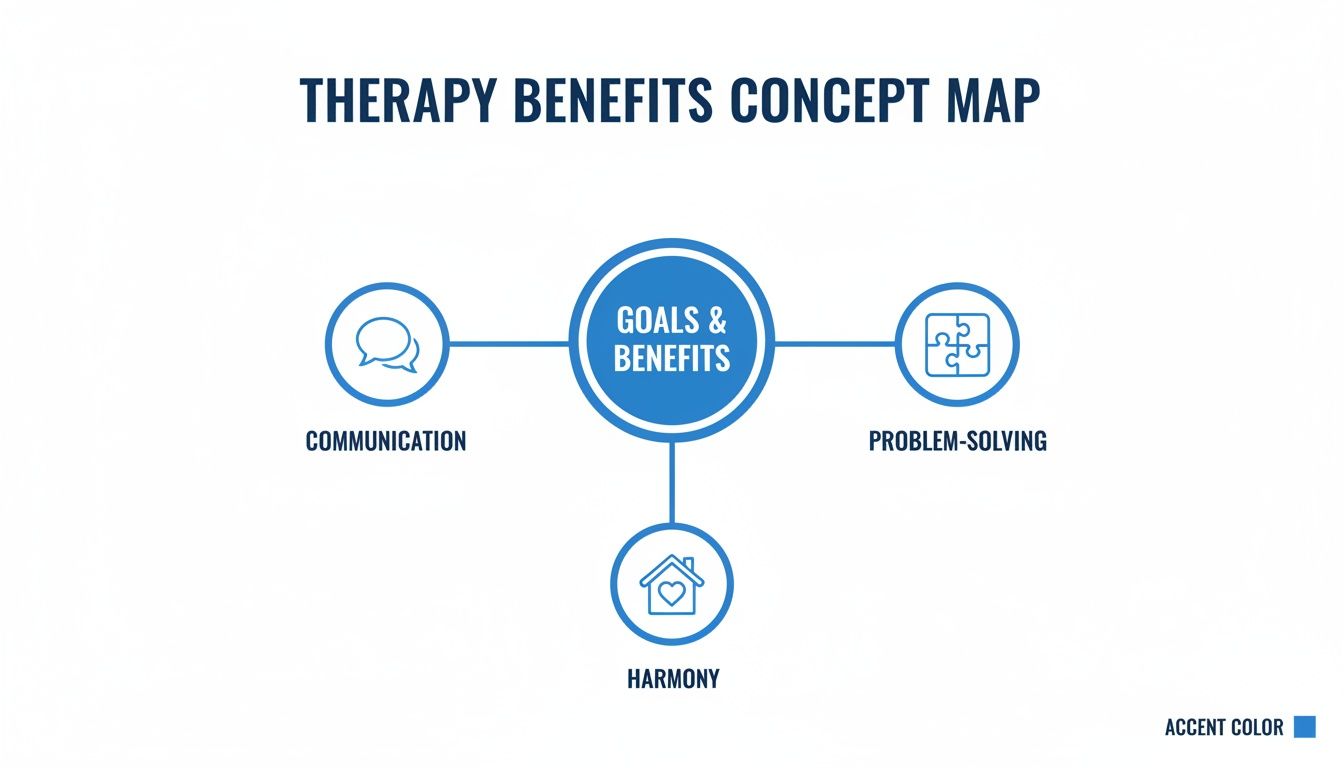
    A clear concept map illustrates the key benefits of therapy: communication, problem-solving, and harmony.

    As this shows, the goal across different models is to create a balanced family system where every member can thrive.

    Narrative Therapy

    Every family has a story it tells about itself. Sometimes, these stories become focused on problems, like past hurts or ongoing struggles with anxiety or depression.

    Narrative therapy helps families rewrite that story. Instead of seeing a person as the problem, this approach separates the person from the issue. The therapist guides your family to uncover strengths and past successes, co-authoring a new, more hopeful story for your future.

    Bowenian Family Therapy

    This approach looks at the family system across generations. It’s based on the idea that many of our relationship patterns are handed down through our family history.

    The main goal is to help each family member develop a stronger sense of self. This means learning to stay emotionally connected to the family while also being your own independent person.

    Bowenian therapy teaches us that understanding our family's emotional history can free us from repeating unhealthy patterns. It’s about achieving a balance between belonging and being an individual, which is key to reducing conflict and anxiety.

    A Bowenian therapist helps you see these inherited patterns. Then, you can consciously choose a healthier, more intentional response, breaking the cycle for yourself and for generations to come.

    Systemic Family Therapy

    The systemic model views the family as a deeply interconnected emotional unit. It focuses on the unspoken rules and communication loops that keep certain behaviours going. A therapist using this model carefully observes how everyone interacts to uncover the underlying dynamics.

    The focus isn't on who started the problem, but on how it’s being maintained now. Changing just one small part of the system can create positive ripple effects, improving everyone's well-being.

    Comparing Common Family Therapy Models

    Here is a simple breakdown of these different models to help you get a clearer picture.

    Therapy Model Main Focus Best Suited For
    Structural Therapy Family hierarchy, boundaries, and roles. Families dealing with conflict around roles and authority, such as parenting challenges.
    Narrative Therapy The stories a family tells about itself. Families who feel stuck in a negative cycle or defined by a particular problem.
    Bowenian Therapy Generational patterns and self-awareness. Families wanting to understand deep-rooted patterns and improve emotional maturity.
    Systemic Therapy Current communication and interaction loops. Families needing to address ongoing conflicts and the unspoken rules driving them.

    While each approach has a different lens, they all share a common goal: to help your family function in a healthier way.

    It’s important to remember that any assessments used during therapy are informational, not diagnostic. A therapist’s role is to understand your family's unique situation and apply the most suitable methods to help you move forward.

    What to Expect During a Family Therapy Session

    Walking into a therapist's office for the first time can feel like a big step. Knowing what to expect can calm your nerves. The therapist’s main job is to create a safe space where every family member feels heard and respected.

    A diverse family, two men and a young girl, engaged in a therapy session with a female counselor.

    Things usually begin with an initial consultation. The therapist will get to know your family, listen to your concerns, and understand your goals for counselling. This is also your chance to see if the therapist is the right fit.

    The First Few Sessions

    The first session or two is all about discovery. Your therapist will act as a neutral guide, listening to everyone’s perspective without taking sides. Their role is to help you talk to each other, not to play judge.

    You’ll likely be asked about your family’s history and the issues that brought you in. It's important to know that any assessments a therapist might use are informational. They are not diagnostic tools and are never used to label anyone.

    Who comes to each session can change. Sometimes the whole family will be there; other times, the therapist might suggest smaller groups. This flexible approach allows the therapist to focus on different relationships.

    What Happens During a Typical Session

    After the initial phase, sessions become more interactive. A therapist will guide the conversation to help you spot hidden patterns causing friction or stress. You might also do specific exercises to improve how you interact.

    These activities could include:

    • Role-playing: A safe way to practise new communication skills for when disagreements pop up.
    • Mapping your family system: Literally drawing out your family tree and relationships to get a clearer picture of connections and boundaries.
    • Setting shared goals: Working as a team to decide what a happier, healthier family life looks like for all of you.

    The point of a session isn’t to dig up old arguments and have another fight. It's about finding new ways forward, together. It’s a collaborative effort to build understanding, foster resilience, and learn practical skills.

    This process shifts the focus from individual blame to shared solutions. It creates a space where tough subjects, like workplace stress or feelings of anxiety and depression, can be discussed openly.

    The Role of Therapy in Broader Contexts

    Family therapy is also expanding to meet families where they are. In India, school-based family counselling is becoming a critical resource for helping students handle academic pressure. This approach gets families involved in solving problems like exam stress, bridging the gap between home and school. You can read more about these school-based initiatives and see their impact.

    Duration and Realistic Expectations

    One common question is, "How long will this take?" There's no set timeline. The duration depends on your family's unique situation and goals. Some families see improvement in a few months, while others with more complex issues may need longer-term support.

    Your therapist will discuss a potential plan with you, but it’s always flexible. The goal is to empower your family with the tools to navigate challenges on your own, long after therapy has ended.

    Signs Your Family Might Benefit from Therapy

    Every family has its rough patches. But what happens when those patches start to feel like a permanent, rocky road? Recognizing that you could use a guide is a sign of strength, not defeat.

    Thinking about counselling is a proactive step toward getting your family’s well-being back on track. It's often wise to address small issues before they grow into larger ones.

    Communication Breakdowns

    One of the first red flags is when communication stops working. Maybe every chat explodes into an argument, or an uncomfortable silence hangs in the air. When people feel they can't speak up or aren't being heard, resentment builds.

    This communication gap can show up in a few ways:

    • Constant Arguing: If every discussion feels like a battle and nothing gets resolved, you're stuck in a negative loop.
    • Avoiding Each Other: Family members might retreat to their rooms or make excuses to stay out of the house to avoid conflict.
    • Holding Grudges: When old wounds never heal, the lingering anger can poison the home atmosphere.

    Therapy creates a safe, neutral ground to learn how to talk and listen to one another again. A therapist acts as a coach, helping your family break old habits and start having real conversations.

    Overwhelming Life Transitions or Events

    Life has a way of throwing curveballs that can shake even the strongest families. Big events—like a new baby, a move, a job loss, or illness—can pile on stress. These moments bring up huge emotions that are hard to handle as a group.

    Family therapy provides a space to work through these changes together. It helps everyone find their footing and build resilience as a team.

    Persistent Behavioural or Emotional Issues

    When a child or teen is having a hard time, the ripple effects are felt by everyone. If you're dealing with ongoing behavioural problems, signs of anxiety or depression, or sudden mood swings, it's a source of worry. Often, these struggles are a symptom of a dynamic within the family.

    Seeking help is about understanding the root cause of the behaviour, not just managing the symptoms. It’s an opportunity to create a more supportive home environment where every member can thrive.

    Therapy can uncover underlying stressors and give your family practical tools to support the person who's struggling. When it comes to adolescents, a guide to therapy for teens can be a great resource.

    Takeaways for Your Family

    Seeing your family in these descriptions is the first, most important step. Remember, the goal of therapy isn’t about pointing fingers. It’s about giving your family the tools and understanding needed to face challenges together, reconnect, and build a stronger future.

    Finding the Right Family Therapist with DeTalks

    Deciding to start family therapy is a big step. But finding the right professional for your family is what truly sets the stage for meaningful change. The relationship you build with your therapist is key, so you need someone whose style resonates with your family.

    A good fit is when everyone feels safe, genuinely heard, and understood.

    A smiling family engaging in a virtual video call with a professional on a laptop.

    Look for a qualified professional with experience in the kinds of issues your family is facing. Ask if they have a background in areas like managing workplace stress, parenting hurdles, or dealing with anxiety.

    Your Path to Finding Support

    The thought of searching for a therapist can feel overwhelming, which is why platforms like DeTalks exist. We offer a clear way to connect with vetted therapists across India, bringing professional counselling within reach. Whether you're looking for face-to-face or online therapy, the right support is out there.

    Online therapy has become a game-changer in India, helping to bridge a huge gap in mental health access. For families in remote areas or those still navigating post-pandemic life, digital platforms are a necessity. This shift is helping countless people find support, a trend highlighted in this report on mental health awareness trends.

    Taking that first step is an act of courage and a commitment to your family's well-being. Finding a therapist you can all trust builds the foundation for healing and allows your family to grow.

    How DeTalks Can Help You Begin

    At DeTalks, we believe you should feel empowered with information from the start. Our platform offers confidential, science-backed assessments that can provide a valuable glimpse into your family's dynamics. It’s crucial to remember that these assessments are informational tools, not diagnostic ones.

    Here's how easy it is to get started with us:

    • Explore Profiles: Take your time browsing our directory of experienced therapists to find a good match for your family.
    • Book with Ease: Once you've found a potential fit, schedule an appointment directly on the platform at a time that works for everyone.
    • Gain Insights: Consider taking one of our informational assessments to get a better handle on your family’s strengths.

    Starting this journey is a sign of hope. It’s an investment in building lasting resilience and nurturing deeper connections. With the right support, the path forward is just a click away.

    Got Questions About Family Therapy? We've Got Answers.

    It's completely normal to have questions when you're thinking about starting family therapy. It means you're taking this step seriously. Let's walk through some common concerns to help you feel more comfortable.

    Will the Therapist Pick a Side?

    This is a fair question. A professional family therapist acts as a neutral facilitator, not a referee. Their job isn't to figure out who's "right" or "wrong" or to place blame.

    Instead, they look at the family as a whole system. The focus is on untangling communication patterns and creating a safe space where everyone feels understood. It's about shifting from "you vs. me" to an "us vs. the problem" approach.

    What if Someone in the Family Won't Go?

    This happens all the time, so don't worry. It’s not uncommon for one person to be hesitant about counselling. The good news is that family therapy can still be very effective even if not everyone is in the room.

    Think of it like a ripple effect. When even one or two family members learn new ways of communicating, those positive changes spread. A therapist can also give you tools to gently encourage others to join.

    "Therapy's purpose is not to prove who was right, but to create a shared understanding that allows the family to move forward together. It fosters compassion and builds the resilience needed to face life's challenges as a unified team."

    Is This Only for Big, Dramatic Problems?

    Absolutely not. While therapy is crucial during a crisis, it’s just as valuable for everyday tune-ups. Many families use therapy proactively to strengthen their bonds and get ahead of small issues before they grow.

    Think of it as preventative care for your family's emotional health. It’s a great way to handle life transitions, manage ongoing workplace stress, or simply learn to connect on a deeper level.

    How Long Will We Need to Be in Therapy?

    There's no magic number here. The length of therapy depends on your family's unique situation and goals. For some, a specific issue might be resolved in a handful of sessions.

    For others, untangling more complex patterns might take longer. Your therapist will be open about this and discuss a likely timeline with you. The goal is to give you the skills to thrive on your own long after therapy ends.


    At DeTalks, we know that reaching out is an act of hope and strength. We make it simple to find experienced, compassionate professionals ready to support your family's journey. You can browse therapist profiles and book a session to start building a more connected and resilient future. Find the right guide for your family at https://detalks.com.