A mental health consultation is a supportive conversation designed to help you understand your thoughts and feelings. Taking this step is a sign of strength, creating a safe space to explore your well-being with a professional. It's a confidential chat focused on your unique journey.
This first meeting is a judgement-free zone. A trained professional listens to your concerns, challenges, and goals, helping you find clarity and a path forward.
What a Mental Health Consultation Really Is

A mental health consultation is an empowering step toward personal growth and a healthier mind. It's dedicated time to speak openly with an expert about anything on your mind, from everyday stress to deeper feelings of sadness or anxiety.
This initial conversation is not about diagnosis. Its purpose is to bring clarity, making you feel heard and understood in a supportive setting. The professional is there to listen, ask thoughtful questions, and help you map out what comes next.
More Than Just Talking About Problems
While addressing challenges like workplace stress is important, a consultation also helps you discover your strengths. It's not just about managing difficulties; it’s about building skills for a more fulfilling life. It’s a proactive way to invest in your long-term well-being.
Think of it as exploring ways to:
- Build Resilience: Learn to bounce back from life’s setbacks with greater ease.
- Cultivate Compassion: Develop more kindness toward yourself and others.
- Find Happiness: Discover what brings you genuine joy and a sense of purpose.
This balanced approach shows that therapy and counselling are for everyone. They are tools to help you not only overcome challenges but also to truly thrive.
Understanding the Indian Context
In India, conversations about mental health can feel difficult due to social stigma. Many worry about judgement from family, friends, or colleagues. A mental health consultation should be seen as a proactive investment in your well-being, much like a regular physical check-up.
This hesitation has led to a significant treatment gap. A national survey revealed that a large majority of people with mental health conditions in India do not receive the care they need, often due to cultural beliefs that misunderstand issues like depression or anxiety. You can learn more about these important mental health findings in India.
A mental health consultation is simply a conversation. It's a safe space where your feelings are validated and your concerns are met with empathy and professional guidance, helping you build resilience and find clarity.
By choosing to have a consultation, you are taking a courageous step for yourself. It is an act of strength that can lead to powerful personal insights and positive change.
Recognising the Signs: When Is It Time to Talk to Someone?
Knowing when to seek help isn't always obvious. The signs can be subtle—a quiet feeling of unease rather than a loud alarm. Learning to recognise these whispers is the first step toward feeling better.
Sometimes, the clues are emotional. It might be a persistent sadness you can't shake or a constant feeling of being overwhelmed. For others, it shows up as losing interest in hobbies that once brought joy.
At other times, the signs are in your actions. Your sleep patterns might be off, or you may find yourself withdrawing from friends and family. Choosing to be alone can feel less exhausting than pretending everything is okay.
Listening to What Your Mind and Body Are Telling You
Mental strain is also common, especially in high-pressure work and academic environments in India and globally. You might find it hard to concentrate, with your mind constantly wandering. It can also feel like you're stuck in a loop of negative thoughts, affecting your self-esteem.
These experiences are human. They are not signs of weakness but signals that you're carrying too much.
Consider these examples where a supportive conversation can help:
- Workplace Stress: Constant pressure from deadlines or a difficult work environment can lead to burnout.
- Exam Pressure: The overwhelming stress of academic expectations can trigger intense anxiety.
- Relationship Difficulties: Ongoing conflict or emotional distance can take a huge toll on your well-being.
- Major Life Changes: Events like moving, starting a new job, or losing someone can leave you feeling adrift.
A mental health consultation isn't just for a crisis. It’s a proactive step for anyone who feels stuck, is navigating a tough time, or simply wants to build more resilience for the future.
It’s Okay to Not Be Okay
Acknowledging these feelings is an act of strength. Recent studies show a rise in mental health challenges, with a high percentage of people in India reporting experiences with stress and anxiety. This makes accessible support more important than ever. You can read more about these important findings on mental health trends.
It's also important to remember that distress looks different for everyone. For example, understanding the hidden signs of depression in men can help spot when someone needs support, even if they aren't showing it in typical ways.
A mental health consultation offers a safe, confidential space to explore what you're feeling without judgement. Reaching out is a healthy, responsible choice. The goal is supportive guidance to help you build resilience and find a clearer way forward.
Navigating the Different Types of Consultations
Not all mental health consultations are the same, and knowing the differences can make the process feel less intimidating. Understanding the purpose of each type of session helps you feel more prepared and confident. Whether you're just starting out or facing a specific challenge, there's a conversation designed to help.
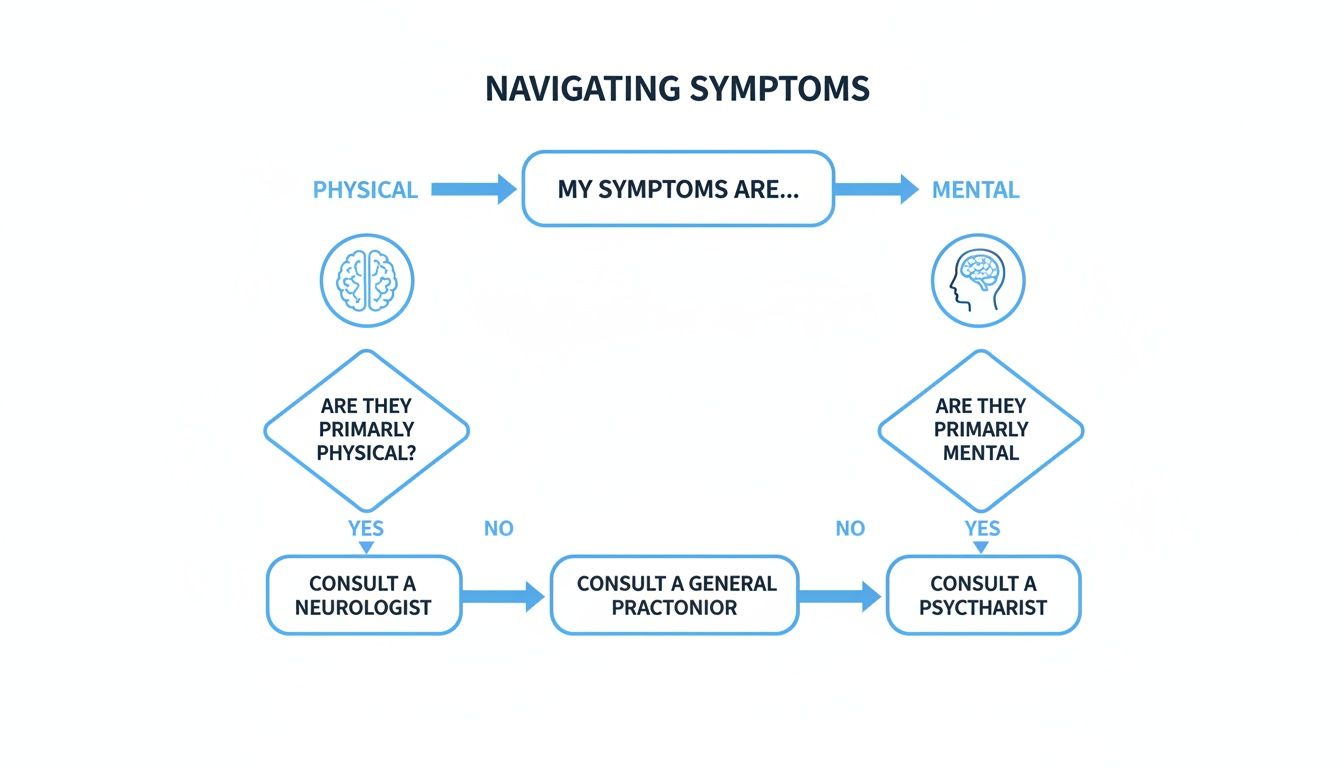
This simple guide can help you decide when it might be the right time to reach out and talk to someone.

The key takeaway here is that you don't need to be in a crisis to take action. Simply feeling overwhelmed is more than enough reason to seek a supportive conversation.
The Initial Intake Session
Your first meeting is often called an initial intake session. Think of it as a mutual introduction where a professional gets to know you and listens to what brought you to them. It is also your chance to get a feel for the therapist and their approach.
During this session, you’ll likely discuss your personal history and current struggles, like workplace stress or feelings of anxiety. It's a safe space to share your story and what you hope to achieve. The goal is to gather information to build a supportive plan together.
Ongoing Therapy or Counselling
After the first meeting, you may move into ongoing therapy or counselling sessions. These are regular appointments where deeper work happens. Here, you and your therapist explore patterns, develop new coping strategies, and work toward your well-being goals.
These sessions are dedicated time to build resilience, process emotions, and make lasting positive changes. You might focus on managing symptoms of depression, improving relationships, or building a stronger sense of self. Consistency is key to building the trust needed for progress.
Understanding Assessments
A professional might suggest an assessment at some point. It’s important to see these as informational tools, not a formal diagnosis. They use structured questions to provide insights into patterns of thought or behavior that might be causing difficulty.
An assessment is like a map highlighting the unique terrain of your inner world. It doesn’t define who you are, but it can offer valuable direction on the best route forward for your mental well-being.
An assessment can help clarify why you're struggling with focus or worry. This information helps your therapist tailor their approach specifically to you. Remember, these tools are just one part of understanding your unique human experience.
Comparing Consultation Types
To help you visualise which path might be right for you, here’s a quick comparison of the most common types of consultations.
| Consultation Type | Primary Goal | Who It's For |
|---|---|---|
| Initial Intake Session | To gather information, understand your needs, and establish a therapeutic relationship. | Anyone new to therapy or starting with a new provider. |
| Ongoing Therapy/Counselling | To work through challenges, develop coping skills, and achieve long-term well-being goals. | Individuals seeking consistent support for personal growth or managing mental health conditions. |
| Diagnostic Assessment | To gain clarity on specific symptoms or patterns and inform a precise treatment plan. | People who need a clearer understanding of their mental health challenges (e.g., ADHD, anxiety disorders). |
| Medication Review | To evaluate, prescribe, and manage psychiatric medications as part of a treatment plan. | Individuals considering or currently using medication for mental health. |
| Crisis Assessment | To provide immediate support and ensure safety during an acute mental health crisis. | Anyone experiencing severe distress, suicidal thoughts, or a risk of harm to themselves or others. |
Each consultation type is a tool in the toolbox, designed for a specific purpose. Knowing which one you need is the first step toward getting the right kind of help.
Other Important Consultations
Beyond these common types, a few other specialised consultations are worth knowing about. Each serves a distinct purpose in a holistic approach to mental well-being.
-
Medication Review: If medication is being considered, a psychiatrist can assess if it's a helpful part of your plan. They can discuss options and monitor its effects to ensure it’s working for you.
-
Crisis Assessment: This is for urgent situations where someone needs immediate support to stay safe. It’s a focused intervention to stabilise a crisis and connect the person with the right level of care.
Understanding these options empowers you to make informed decisions. You might also want to explore the benefits of art therapy as a creative path to wellness. The most important thing is that support is available, no matter what you're facing.
How to Prepare for Your First Therapy Session

Feeling nervous before your first mental health consultation is completely normal. It takes courage to open up, but a little preparation can make the experience feel more comfortable and productive.
This is your time, and there's no right or wrong thing to say. The goal is to start a conversation focused on your well-being. Your therapist is a trained guide, there to listen with compassion.
Thinking Ahead: What to Reflect On
You don't need a prepared speech, but taking a moment to reflect can help the conversation flow. This can make you feel more grounded, especially if you're nervous.
Here are a few gentle prompts to get you started:
- What’s on your mind? Think about what prompted you to seek support now. It could be a specific issue like workplace stress, a feeling of anxiety, or a general sense that something is off.
- How have you been feeling? Check in with your emotions. Have you been more irritable, sad, or overwhelmed? No feeling is too small to mention.
- What are your hopes? Consider what you'd like to change. Perhaps you want to build resilience, improve a relationship, or simply feel more at peace.
Jotting down a few notes can be helpful but isn't necessary. The most important preparation is giving yourself permission to be honest.
Setting Up Your Space for Success
For an online session, your environment makes a big difference. Creating a comfortable, private space is a practical way to prepare for your first therapy session.
Find a quiet room where you won’t be disturbed, and let family or flatmates know you need uninterrupted time. Using headphones can enhance privacy and help you focus on the conversation.
Your first therapy session is not a test. It is an invitation to be seen, heard, and supported, exactly as you are. The bravest step is simply showing up.
Also, check your internet connection and make sure your device is charged. Simple comforts like a glass of water can help you feel more relaxed. The goal is to create a secure space so you can be fully present for your counselling session.
What to Remember During the Session
Your therapist will gently guide the conversation, likely starting with what brought you to them. Share what feels comfortable; you don't have to tell your whole life story at once.
Keep these things in mind:
- It’s a two-way street. You are also getting a feel for the therapist. Notice if you feel respected and heard.
- You can ask questions, too. Feel free to ask about their approach, their experience, or what future sessions might look like.
- It’s okay to be emotional. Tears, frustration, and silence are all natural. Your therapist is trained to support you through it all.
The first session is about building a connection and laying the groundwork. Your only job is to be yourself. This first mental health consultation is a powerful act of self-care.
Finding the Right Therapist for You

Starting a mental health consultation is a courageous step, and who you take that journey with matters. The bond you form with your therapist is a key factor in your progress. Finding someone you connect with can make all the difference.
The search for the right professional can feel overwhelming, but modern platforms have made it much simpler. They help you find someone who understands your unique needs, allowing you to start your path to better well-being with confidence.
Matching Your Needs with the Right Expertise
Just as you'd see a specialist for a specific physical condition, the same applies to mental health. Therapists often have areas of focus, and finding someone who specializes in what you're facing—whether it's anxiety, depression, or workplace stress—is vital for effective support.
Platforms like DeTalks simplify this by allowing you to filter by a therapist's specialization. This helps you quickly find a professional with the right background and tools. It's a smart approach that saves time and emotional energy.
In a diverse country like India, being understood goes beyond words. Expressing yourself in your native language can make counselling feel more accessible and relatable. Filtering by language and cultural background is an important feature that can help you feel more comfortable.
Using Assessments to Guide Your Search
Many platforms now offer psychological assessments to give you a head start. These are informational tools, not a formal diagnosis. Think of them as a compass, offering a clearer picture of your emotional state and pointing you toward the right kind of support.
For example, an assessment might highlight patterns related to anxiety or difficulty concentrating. This insight helps you search for professionals who are experts in those areas. This self-knowledge empowers you to choose a therapist with more confidence.
It’s vital to remember that these assessments are informational, not diagnostic. They offer valuable insights to help guide your journey, but they can't replace a full evaluation from a qualified mental health professional.
Their purpose is to illuminate, not to label. They provide a solid starting point for you and your potential therapist, creating a foundation for a personalised plan for your mental health consultation.
Making Professional Support Accessible
Finding the right person is also about availability. India faces a shortage of mental health professionals, making timely help challenging. Technology is helping to bridge this gap. You can discover more insights about India's mental health landscape.
Platforms like DeTalks connect people with a network of qualified therapists, making professional support easier to find. By being transparent about costs, availability, and specializations, they remove many traditional barriers to getting help. This transforms a daunting task into a guided, supportive process.
The goal is to find a trusted partner for your well-being journey. A good therapist meets you where you are, listens without judgement, and helps you build the resilience to handle life's challenges.
Embracing Your Journey Toward Well-Being
Deciding to explore a mental health consultation is a brave and self-aware choice. It’s not about finding an instant cure, but about acknowledging your feelings and investing in your well-being. This path is your own, and seeking support is a powerful way to walk it with more clarity.
Remember, therapy isn’t just for crisis moments. It's also a tool for personal growth, helping you build skills that will serve you throughout your life. This journey is about nurturing resilience to better handle challenges, from workplace stress to feelings of anxiety and depression.
From Surviving to Thriving
A consultation can be the start of a new chapter focused on positive change and feeling more in control. It's an opportunity to shift from just getting through the day to creating a life that feels more meaningful.
This process can help you:
- Learn to treat yourself with more compassion and kindness.
- Improve your relationships and communication with others.
- Discover what brings you a sense of purpose and happiness.
These are the foundations of a fulfilling life. Each session is a step toward understanding yourself better and establishing healthier habits.
Your mental health journey is a marathon, not a sprint. Every step, no matter how small, is a victory. The courage to begin is the most important part of the process.
Supportive Takeaways for Your Path Forward
A mental health consultation is a safe, confidential space where your experiences are heard and valued. Think of it as a partnership where a professional walks alongside you, offering guidance while respecting your choices. The goal is to empower you, not to fix you.
There is so much hope in taking this first step. Whether you're exploring options or sharing this article with a friend, you are helping build a culture of openness and support. Your courage sends a powerful message: your well-being matters.
Frequently Asked Questions
It's completely normal to have a few questions when you're thinking about starting your mental health journey. Let's walk through some of the most common ones to help put your mind at ease.
Is My Mental Health Consultation Kept Confidential?
Absolutely. Confidentiality is the foundation of effective therapy and counselling. What you share with your mental health professional stays between you, in a secure and private space.
This trust is protected by strict ethical codes. The only rare exception is if there's an immediate, serious risk of harm to yourself or someone else, where professionals are legally required to ensure safety.
What if I Don't Connect With My First Therapist?
This is a common concern, and it is perfectly okay if it happens. The connection with your therapist is one of the biggest factors in making progress. Finding the right fit is crucial.
If the first person doesn't feel right, please don't be discouraged. You have every right to find a professional who makes you feel comfortable, heard, and understood.
Finding the right therapist is a bit like finding a good friend—sometimes it takes a few conversations to find someone you click with. Your comfort and trust are the top priorities.
Platforms like DeTalks are designed to help with this. You can explore different profiles until you find someone who feels like the right partner for your journey. The choice is always yours.
How Do I Know if I Need Counselling or a Psychiatrist?
This is a great question. Counsellors and psychologists focus on "talk therapy," helping you work through challenges like workplace stress, relationship issues, or feelings of anxiety by building healthier coping skills.
A psychiatrist is a medical doctor who specialises in mental health. They can diagnose conditions and are the only professionals who can prescribe medication. An initial mental health consultation with a counsellor is a great starting point, and they can refer you to a psychiatrist if needed.
Are Online Mental Health Assessments a Formal Diagnosis?
No, and this is a very important distinction. Online assessments are excellent informational tools. They can offer valuable insights into your emotional state and help you understand what you're feeling.
These tools are great for self-reflection and can point you toward the right support, whether that's working on resilience or addressing symptoms of depression. However, they are not a substitute for a formal diagnosis from a qualified professional.
Ready to take that next step? DeTalks makes it easy to find support that feels right for you. You can browse our directory of qualified therapists, take a confidential assessment, and book your first session whenever you're ready. Visit https://detalks.com to get started.