
It’s a deeply human experience to feel adrift, like you’re trying to navigate life without a map. This isn't a sign of failure; it's a quiet signal to pause, breathe, and reconnect with yourself. In a world that never stops moving, feeling lost in life is rarely a final destination—it's often a necessary stop on the journey of personal growth.
Why It's Perfectly Normal to Feel Lost
Feeling lost connects us all at some point. It can seem like you’re walking through a dense fog where the usual landmarks have vanished, and you can’t see the path ahead. It’s important to remember this isn't a personal flaw, but a natural reaction to the complexity and constant changes of life.
Here in India, the pressure to follow a set path can be immense, especially for students and young professionals. When your own dreams don’t fit the traditional script of career, marriage, and settling down, confusion can set in. This gap between societal expectations and your inner voice is a common reason for feeling lost.
A Powerful Signal for Growth and Change
Instead of seeing this feeling as a crisis, consider it a powerful message from your inner self. It’s your mind’s way of saying, "Hey, something isn't working anymore. It's time for a change." This period of uncertainty, though uncomfortable, is often the soil from which new passions, self-awareness, and a stronger sense of purpose can grow.
This feeling often surfaces during big life transitions, such as:
- Graduating and entering the professional world.
- Questioning your career path after several years.
- Navigating the end of a significant relationship.
- Adapting to new family roles and responsibilities.
These moments can shake our sense of identity. They force us to pause and reflect on what's truly important, making that temporary feeling of being directionless almost unavoidable.
Turning the Journey Inward
The key is to approach this phase with curiosity, not criticism. It's your chance to ask important questions: What truly brings me joy? What are my core values? What kind of life do I genuinely want to build? Finding the answers takes time, patience, and self-compassion.
Feeling lost doesn't mean you are broken; it means you are in the process of becoming. It's an invitation to rediscover your internal compass and chart a course that is authentically yours.
This isn't about a quick fix; it’s about building resilience. By exploring these feelings without judgement, you can understand their source—whether it's workplace stress, underlying anxiety, or a genuine need for a new direction. This compassionate approach can turn confusion into a profound journey of self-discovery.
Understanding Why You Might Be Feeling Lost
Feeling lost often begins as a quiet sense that something is off, growing until it becomes a mental fog. It's usually not one single problem, but a mix of internal and external pressures. The first step to finding your way is understanding what’s causing these feelings.
This feeling often has deep roots in workplace stress. When the daily grind drains your energy and leaves you disconnected from any sense of purpose, it’s natural to question everything. This can lead to burnout, a state of emotional and physical exhaustion that makes seeing a clear path forward feel impossible.
Societal expectations, particularly within the Indian context, add another layer of pressure. When the unspoken script for life clashes with your authentic desires, it creates a painful conflict. This inner struggle is a significant reason so many of us end up feeling lost in life.
The Signs: How Feeling Lost Shows Up
The signs you're feeling lost can appear in your thoughts, emotions, and daily habits. You might notice a persistent low mood, a lack of excitement for things you once loved, or a general sense of just going through the motions. It can feel like you’re an actor in your own life, reading lines without any real connection.
Behaviourally, this often looks like chronic indecisiveness, where even small choices feel overwhelming. You might find yourself procrastinating more or withdrawing from friends and family. This isn't a weakness; it's your mind signalling that it's overwhelmed and unsure which way to turn.
This feeling, while difficult, can also be a powerful signal for personal growth.
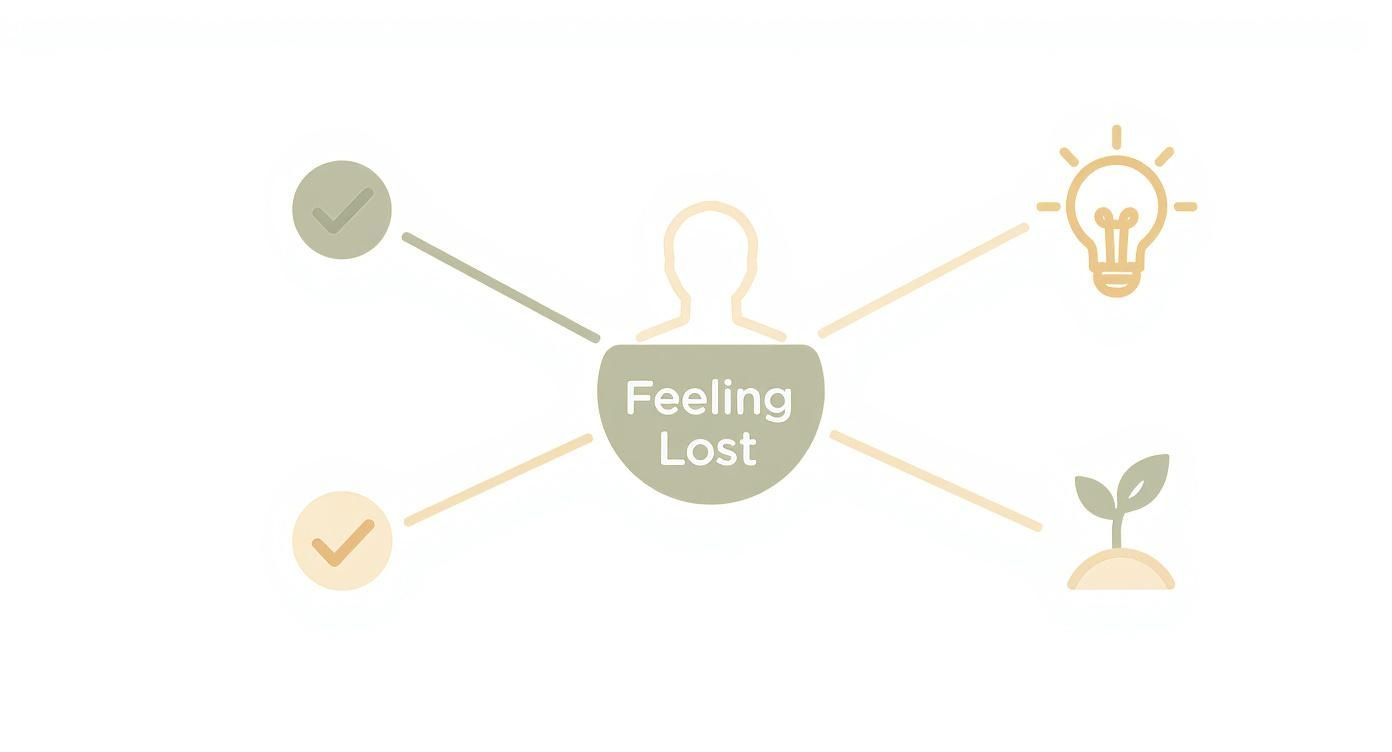
As this image suggests, we can reframe this experience. Instead of a dead end, think of it as a pause—a chance to reflect, recalibrate, and find a path that feels more true to you.
Connecting the Dots to Your Overall Well-being
It is vital to listen to these feelings, as they are valid signals from your mind and body. Persistent confusion and a lack of drive are often tied to deeper issues affecting your mental well-being. If left unaddressed, they can sometimes contribute to conditions like anxiety or depression.
Feeling lost isn’t a clinical diagnosis; it's a human experience. Think of it as an invitation to explore what’s really going on and build greater self-awareness and resilience.
Broader societal changes in India, like rapid urbanization, also contribute to this collective feeling. A report highlighted that 74% of Indians experienced stress and 88% reported symptoms of anxiety, with many mentioning feeling disconnected. You can learn more about these alarming mental health statistics in India and their impact.
To help you connect the dots, let's break down the common signs.
Recognizing the Signs You Might Be Feeling Lost
Pinpointing what’s wrong can be hard. This table outlines common signs across different areas of life to help you identify what you may be experiencing. It is important to remember that this is for informational purposes and is not a diagnostic tool.
| Category | Common Signs and Symptoms |
|---|---|
| Emotional | A persistent sense of emptiness, feeling numb, or a lack of joy even in good moments. |
| Behavioural | Chronic indecisiveness, avoiding social situations, procrastinating on important tasks, and a general loss of motivation. |
| Cognitive | Constant confusion about your future, trouble concentrating, and a nagging inner critic that fuels negative self-talk. |
| Physical | Unexplained fatigue, changes in your sleep patterns or appetite, and persistent aches and pains often linked to stress. |
If this sounds familiar, please know you're not alone. This is a common human experience. The journey out starts with being kind to yourself and exploring these feelings without judgement. Reaching out for support, whether through professional counselling or talking to a friend, can provide the anchor you need to navigate this time.
Simple First Steps to Regain Your Footing
When you're feeling lost, the idea of making a big decision can be overwhelming. The secret isn't to solve everything at once but to take small, manageable steps that create a little calm. These actions are about giving yourself a moment to breathe and reconnect with the present.
Think of it as clearing a tiny patch in a thick fog—just enough to see your own two feet on the ground again. It’s about creating a stable base from which you can begin to explore your path forward.

Ground Yourself in the Present Moment
Feeling lost often means your mind is stuck worrying about the future or replaying the past. Grounding techniques bring your attention back to the here and now, which can instantly reduce anxiety. One of the simplest ways to do this is through mindful breathing.
Try this quick, three-minute exercise:
- Find a quiet spot where you can sit comfortably.
- Gently close your eyes and bring your focus to your breath, noticing the air moving in and out.
- Count your breaths. Try breathing in for four counts, holding for four, and slowly breathing out for six. Repeat this for a few minutes.
This simple action breaks the cycle of stressful thoughts and gives your nervous system a chance to reset. It’s a powerful tool for building emotional resilience, one breath at a time.
Untangle Your Thoughts Through Action
Sometimes the easiest way to change your mental state is to change your physical one. Focusing on simple, concrete activities can help loosen the knot of difficult feelings. You can explore various therapeutic activities for mental well-being that offer a gentle boost.
Here are a few practical ideas to try today:
- Journal for five minutes: Write down your thoughts without judgement. Getting them onto paper can bring surprising relief and clarity.
- Take a short walk: A 10-15 minute walk, especially in nature, can do wonders for clearing your head. Notice the sights and sounds around you.
- Connect with a friend: Send a message to someone you trust. Simply sharing that you’re having a tough time can make you feel less alone.
Remember, the goal of these first steps isn't to find a magic cure. It's about creating space and showing yourself some compassion. Each small action builds momentum.
These practices are your immediate toolkit for managing overwhelming feelings. They build a stable foundation from which you can later explore deeper questions about your life's direction.
How to Reconnect with Your Inner Compass
Once you have some breathing room, you can begin the deeper work of reconnecting with yourself. This isn't about a quick fix; it's about carefully building a new path forward that feels authentic. It’s a journey to rediscover what truly matters, away from the noise of external expectations.
Finding your way again is a process of self-discovery that starts by turning your attention inward. The goal is to build long-term resilience and a stronger sense of direction. Let's explore practical ways to identify your values, set meaningful goals, and practice self-compassion.

Rediscover Your Core Values
Think of your core values as your personal compass; they are the beliefs that guide your choices. When you feel lost, it’s often because your daily life has drifted away from what you truly believe in. Getting clear on what’s most important to you is a huge step toward finding your way back.
Think back to moments when you felt genuinely happy and alive. What were you doing? Who were you with? The answers often point to your values, whether that's creativity, community, security, or adventure.
To get started, ask yourself:
- What topics do I enjoy reading or thinking about for fun?
- What qualities do I admire in other people?
- If there were no limits, what impact would I want to have on the world?
Jot down whatever comes to mind without judgement. This is a personal exploration to help you find what gives your life meaning.
Set Small, Meaningful Goals
Once you have a better sense of your values, you can set small, manageable goals that align with them. Aim for progress, not perfection. Small wins build momentum and confidence, which is a powerful way to counter feeling stuck.
For instance, if "community" is a core value, a small goal could be calling a friend once a week. If "creativity" drives you, your goal might be spending 20 minutes sketching each day. These tiny actions anchor your values in the real world, creating a renewed sense of purpose.
Feeling lost can feel permanent, but it’s almost always a temporary state of disconnection. By aligning your daily actions with your core values, you begin to chart a new course, one small, intentional step at a time.
This gradual process helps you rebuild trust in yourself. It proves that you have the power to shape a life that feels authentic and contributes to your happiness.
Cultivate Self-Compassion and Connection
The journey back to yourself requires kindness. Self-compassion means treating yourself with the same care you’d offer a friend. It's about accepting that it’s okay to feel lost and that you don't need all the answers right now, which is key to cultivating self-compassion for emotional well-being.
Building a support network is just as crucial. Sharing your feelings with trusted friends, family, or a professional through therapy or counselling can bring incredible relief. Connection reminds us that we aren't alone and helps us build the resilience needed to navigate tough times.
When to Consider Professional Guidance
While self-help strategies are powerful, sometimes the fog is too thick to navigate on your own. Reaching out for professional support isn’t a sign of weakness; it’s a courageous step toward reclaiming your well-being. A therapist can act as a guide for your inner world, helping you find a safe path forward.
Taking this step is especially important if these feelings persist and interfere with your daily life. If feeling lost has been a constant companion for weeks or months, professional guidance can offer needed structure and support. The goal of therapy is not just to get by, but to build lasting resilience and a greater sense of happiness.
Signs It Might Be Time to Talk to Someone
Recognizing when you need more support is a sign of self-awareness. While everyone’s journey is different, a few common signals suggest that professional help could be beneficial. Consider professional counselling if you find yourself nodding along to several of these points.
Consider reaching out if you're experiencing:
- Persistent Hopelessness: A constant feeling that things will never get better.
- Significant Life Disruption: Your ability to work, study, or maintain relationships is suffering.
- Overwhelming Emotions: You feel swamped by sadness, anxiety, or anger that you can't manage.
- Social Withdrawal: You consistently avoid friends, family, and activities you once enjoyed.
- Changes in Physical Health: Unexplained tiredness, sleep issues, or appetite changes have become your new normal.
Please remember, this list is for informational purposes to help you reflect on your experience. It is not a diagnostic tool.
Understanding Therapy and Counselling
Therapy and counselling both provide a safe, confidential space to explore your feelings with a trained professional. Knowing the difference can help you find the right fit. Counselling is often shorter-term and focused on specific issues, like managing workplace stress.
Therapy can be a longer-term process that goes deeper. It helps you understand recurring patterns of thought and behaviour that may be at the root of feelings like depression or chronic anxiety. Both approaches are designed to empower you with coping skills and greater self-awareness.
Seeking professional help is an investment in your long-term happiness and well-being. It provides a dedicated space to untangle complex feelings and develop healthier ways of navigating life's challenges.
A professional can help you build coping skills and find a clearer path forward when you are feeling lost in life.
What to Expect in Your First Session
The idea of a first therapy session can feel intimidating, but it’s usually a gentle process. The main goal is for you and the therapist to get to know each other and see if you’re a good match. It is a conversation, not an interrogation.
The therapist will likely ask what brought you in and what you hope to achieve. This is also your chance to ask them questions about their approach and experience. Finding the right therapist is about connection, which is key to a supportive therapeutic relationship.
Your Questions About Feeling Lost, Answered
When you're feeling adrift, it's natural to have questions. Trying to make sense of this unsettling time is a huge first step. Let's walk through some common concerns to help normalize what you're going through and offer practical perspective.
Feeling lost isn't a sign of failure; it's a very human experience. Asking these questions is how you start to find your way back to a path with purpose and a greater sense of happiness.
How Long Does This Feeling Last?
There's no set timeline, as the experience is personal. For some, it might be a short phase that passes in a few weeks. For others, it can linger for months, especially if it’s tied to deeper issues like burnout or intense workplace stress.
The duration depends on the cause and how you approach it. Engaging in self-reflection, leaning on your support system, and making small, meaningful changes can help shorten this period. The goal isn't to rush through it, but to use this time to build resilience and clarity.
It’s important to remember that this feeling isn't permanent, even when it feels like it is. It is a season of life, and like all seasons, it will eventually pass. Patience and self-kindness are your best allies.
Is Feeling Lost the Same as Depression?
This is a crucial distinction to make. While feeling lost and depression can look similar—both may involve low moods or a lack of motivation—they are not the same. Feeling lost is often a reaction to your circumstances, an existential response to life changes or a lack of purpose.
Depression, on the other hand, is a persistent mental health condition defined by a consistent low mood and loss of interest that interferes with daily life. It often requires professional help, like therapy, to manage effectively. If your feelings are constant and overwhelming, it is vital to speak with a professional. Please remember, this information is for educational purposes and is not a substitute for a professional diagnosis.
Could My Job Be the Real Reason I Feel So Lost?
Yes, absolutely. Our careers take up a huge part of our lives and are often tied to our identity. It's very common for work to be the source of feeling lost, especially with prolonged workplace stress, a lack of meaning, or a toxic environment.
This feeling can be stronger if you chose your career based on external expectations rather than your own passions. If you suspect your job is the issue, ask yourself if it aligns with your values and offers a sense of accomplishment. Answering honestly can provide the clarity needed to decide if a career change is the key to finding your direction again.
What Role Does Self-Compassion Play in All This?
Self-compassion is one of the most powerful tools you can use when feeling lost in life. It simply means treating yourself with the same kindness you'd give a friend. Instead of being critical, self-compassion allows you to accept your feelings without judgement.
This practice is the foundation for building resilience. By being kinder to yourself, you create a safe mental space to explore your feelings, which is essential for self-discovery. It helps quiet the harsh inner critic that fuels anxiety, making it easier to hear what you truly need and want.
How Do I Know if I Actually Need Therapy?
Deciding to seek therapy or counselling is a personal choice. If this feeling of being lost won't go away, harms your work or relationships, or comes with overwhelming anxiety, it might be time to reach out.
A good therapist provides a safe, structured space to unpack these feelings. They can offer practical tools and guide you as you reconnect with your values. If you've tried to work through it on your own but still feel stuck, a professional can provide the support needed to find a clear path forward.
At DeTalks, we understand that finding your way starts with the right support. Our platform connects you with qualified therapists and provides science-backed assessments to help you understand your unique needs. These assessments are informational and not diagnostic. Take the first step toward clarity and resilience today. Explore support options on DeTalks.