
Striking a healthy work-life balance isn't about a perfect 50/50 split between your desk and personal time. It’s about finding a rhythm where your career and your life outside of it can coexist, letting you feel present and fulfilled in both.
Why Your Work-Life Balance May Feel Strained
If you're constantly feeling drained or disconnected from loved ones, these are common signs that your work-life balance needs attention. This is a widespread challenge in today's demanding world, not a personal failing.
Think of the IT professional in Bengaluru missing family dinners for late-night calls or the manager in Mumbai feeling pressure to be available 24/7. These experiences show how the lines between work and home have blurred, often leading to chronic stress and exhaustion. Acknowledging this is the first step toward change.
Understanding Burnout and Its Impact
Burnout isn't just feeling tired; it's a state of emotional, physical, and mental exhaustion from prolonged stress. You might feel cynical about your job, detached from colleagues, and less effective, no matter how hard you work.
This deep depletion can affect every part of your life, sometimes contributing to feelings of anxiety and even depression. Recognizing these signs is crucial for your overall well-being. If this feels familiar, exploring strategies for recovering from burnout can be a helpful step.
This is a significant issue, especially in India, where a recent survey found that 52% of professionals experienced burnout. Additionally, 23% reported working overtime regularly, which cuts into essential personal time.
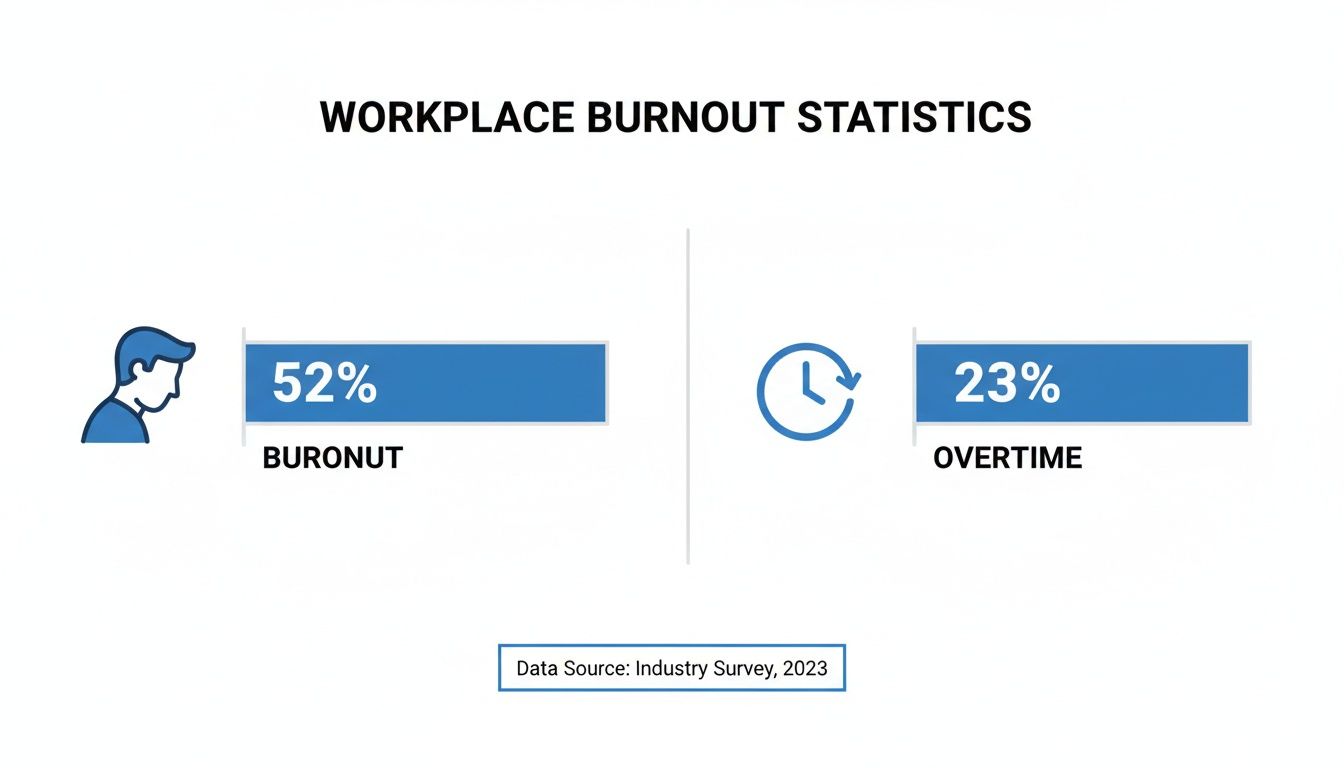
These numbers highlight that many people are running on empty. The culture of working "just one more hour" is taking a serious toll on well-being.
Noticing the early signs of an imbalance is the most important step toward making a positive change. It's easy to dismiss persistent headaches or irritability, but these are often signals that something needs to shift.
Table: Early Warning Signs of Work-Life Imbalance
| Symptom Category | Common Indicators to Watch For |
|---|---|
| Physical Symptoms | Frequent headaches, muscle tension, sleep disturbances (insomnia or oversleeping), constant fatigue, and changes in appetite. |
| Emotional Symptoms | Feeling cynical or detached, increased irritability, anxiety, a sense of dread about work, and a lack of motivation. |
| Behavioural Symptoms | Withdrawing from social activities, neglecting hobbies, relying on unhealthy coping mechanisms, and increased procrastination. |
If several of these indicators feel familiar, it may be a good time to pause and reflect on your current situation. These are important signals to pay attention to for your long-term health.
The Role of Therapy and Counselling
Recognizing you could use support is a sign of strength. Seeking help through therapy or counselling provides a confidential space to explore the root causes of stress with a professional. A therapist can help you develop practical coping mechanisms and build genuine resilience.
These conversations are focused on your well-being, equipping you with tools to set boundaries, manage stress, and reconnect with what matters most. This is about building a foundation for a healthier, more intentional life.
Setting Boundaries Without the Guilt
Setting boundaries is a powerful step in reclaiming your work-life balance, though it can feel challenging at first. It's about self-respect and bringing clarity to your professional life to protect your personal time and build resilience against workplace stress.
Many of us work in cultures where being "always on" is common, and saying "no" can feel uncomfortable. However, clear boundaries can actually improve your focus and energy at work, preventing the cycle of overwork that can lead to anxiety and burnout.
Actionable Scripts for Common Scenarios
Knowing what to say can make a big difference. The key is to be polite, clear, and firm without feeling the need for a lengthy explanation. You are communicating your availability, not asking for permission.
Here are a few phrases you can adapt:
- For a non-urgent weekend request: "Thanks for sending this over. I'm offline for the weekend to recharge, but I'll make it a priority first thing on Monday morning."
- When you're at capacity and asked to take on more: "I appreciate you thinking of me for this. My plate is full right now, and I want to ensure my current projects get the attention they need. Could we discuss my priorities?"
- To create 'do not disturb' time: "Just a heads-up, I'm blocking out 2 PM to 4 PM for deep work, so I'll have my notifications silenced. I'll get back to any messages after that."
Using calm, straightforward language turns a potentially difficult conversation into a simple statement about your schedule.
Creating Physical and Digital Separation
When your home is also your office, creating separation between your work and personal life is key to mentally clocking out. Having a dedicated workspace, even a small corner, helps your brain switch between "work mode" and "rest mode."
At the end of your day, a simple shutdown ritual like closing your laptop and tidying your desk can signal that work is over. Turning off work notifications on your phone after hours is another non-negotiable step toward protecting your personal time.
"A boundary is not a wall; it's a filter. It helps you protect your energy by deciding what gets your attention and what doesn't. This isn't selfish—it's essential for your long-term well-being and professional sustainability."
Overcoming the Guilt of Saying No
Feeling guilty about setting boundaries is common, often stemming from a worry of letting others down. Remember that your well-being is a prerequisite for doing good work, and taking time to rest is a strategic way to prevent burnout.
Taking your entitled time off is a crucial part of this. For instance, employees in the UK can get clarity by Understanding Your Holiday Entitlement. Knowing that leave is a right, not a favor, makes it easier to disconnect fully.
If feelings of guilt persist, professional support can help. Therapy or counselling can be a great space to explore patterns like people-pleasing and build the confidence to advocate for your needs.
Working Smarter, Not Harder
True work-life balance is more about managing your energy than managing every minute of your day. Improving work-life balance starts with shifting from "working harder" to "working smarter" by structuring your day with more intention.
This often means aligning your most demanding tasks with your peak energy levels. For many in India, this could mean tackling a complex project in the quiet morning hours, leading to a more effective and fulfilling day.

A Toolkit for Intentional Productivity
A few simple techniques can help you manage your schedule and reduce workplace stress. These are flexible frameworks you can adapt to your own style.
- Eat the Frog: Tackle your most challenging task first. Completing it provides a sense of accomplishment and momentum that can ease procrastination-related anxiety.
- Time-Blocking: Schedule specific time blocks in your calendar for tasks, including deep work, emails, and breaks. This encourages single-tasking and focused attention.
- The Pomodoro Technique: Work in focused intervals, traditionally 25 minutes, followed by a short break. This is a great way to maintain concentration without feeling overwhelmed.
These methods help create a structure that protects your focus and energy, allowing you to direct your day instead of just reacting to it. This shift is a significant step toward better well-being.
Scheduling Personal Time Is Non-Negotiable
Treating personal time as an afterthought is a common mistake. Instead, schedule personal activities with the same commitment you would a client meeting, as this is vital for building resilience.
Whether it's a walk, a hobby, or dinner with family, putting it in your calendar makes it a real commitment. This signals to yourself and others that your well-being is a priority.
Your personal time is not a reward for finishing your work; it is a critical component of your ability to do good work in the first place. Recharging isn't lazy—it's a strategic necessity for preventing burnout.
For example, a marketing manager in Delhi who blocks out time for a daily yoga class creates a clear boundary. This helps her manage chronic stress that could otherwise contribute to more serious issues like depression.
From Overwhelmed to In Control
Adopting these strategies is a gradual process, and progress is more important than perfection. Start with one technique that feels right for you and build from there.
If you struggle to make new habits stick, it may be helpful to explore underlying patterns like perfectionism. Professional support can make a significant difference in these situations.
Therapy or counselling offers a dedicated space to unpack these challenges. A therapist can provide personalized strategies to help you build the self-awareness needed for a genuinely balanced life.
Navigating Your Workplace Culture
Sometimes, the challenge in improving work-life balance lies within the workplace culture itself. If a company's environment promotes an "always on" mentality, it can feel difficult to disconnect.
This is a widespread issue, particularly in India, where workers average 46.7 hours a week, one of the longest workweeks globally. This relentless pace has a significant impact on mental health.
Recent data shows that 77% of workers in India are dealing with mental health challenges. You can read more about the connection between work hours and mental health in India to understand the scope of the issue.

Assessing Your Company Culture
Before making changes, it's helpful to observe the unspoken rules of your workplace. Do managers send late-night emails expecting immediate replies? Is taking a full lunch break away from your desk viewed negatively?
Understanding these dynamics helps you frame conversations about your workload in a way that aligns with company goals while protecting your well-being.
Starting Productive Conversations
Talking to your manager about your workload can be nerve-wracking, but it's a crucial skill for a sustainable career. Approach the conversation as a collaborator focused on efficiency and performance.
Instead of saying, "I'm overworked," try a more strategic approach. You might say, "I'm committed to producing my best work, and I've noticed my current workload is affecting my focus. Could we review my priorities to ensure I’m directing my energy effectively?" This positions you as a proactive team member.
Advocating for your own well-being isn't a sign of weakness; it's a demonstration of self-awareness and a commitment to sustainable performance. A healthy, rested employee is a productive employee.
Unique Challenges and How to Address Them
It’s important to acknowledge that workplace stress affects everyone differently. For example, working mothers often manage a "second shift" of caregiving and household duties, which can make rigid schedules especially draining and contribute to anxiety and burnout.
If you face specific challenges, it's necessary to bring them up. You might be able to negotiate for more flexible hours or remote work options to better integrate your responsibilities.
Tips for Self-Advocacy
- Document Everything: Keep a simple log of your hours and extra tasks. Concrete data can support your conversation.
- Propose Solutions: Come prepared with potential solutions, such as delegating a task or suggesting a new workflow.
- Know Your Worth: Your well-being is directly tied to your performance. Protecting it is a long-term investment for you and your company.
Learning to navigate your workplace culture and advocate for your needs is a powerful defence against burnout. If these conversations feel challenging, therapy or counselling can provide a safe space to build confidence and practice these skills.
Looking After Your Mental Well-being
Achieving a better work-life balance is fundamentally about protecting your mental and emotional health. The link between a demanding work schedule and mental health struggles is clear. Ongoing workplace stress can evolve into chronic anxiety or feelings of depression.
Recognizing this connection is an important first step. Sustained pressure can impact your health, strain relationships, and make it difficult to find joy outside of work.
Knowing When It's Time to Ask for Help
Deciding to speak with a professional through therapy or counselling is a positive step toward taking care of yourself. It offers a confidential space to explore the sources of your stress and learn practical ways to build resilience.
A therapist can help you identify unhelpful thought patterns, navigate workplace dynamics, and build confidence in setting boundaries. Their outside perspective can be a game-changer in managing stress before it becomes overwhelming.
Reaching out for support isn't giving up. It's making a smart investment in your own long-term happiness. It's a way to build a life where your career and your well-being can actually thrive together.
This is a particularly important conversation in India, where work pressures can disproportionately affect women. Inflexible schedules often clash with family responsibilities, and a 2021 survey showed women were more likely than men to consider quitting due to poor work-life balance. You can learn more about these gender-specific work-life balance challenges in India on Statista.com.
Using Assessments as a Starting Point
If you sense something is off but aren't sure what it is, online psychological assessments can be a helpful starting point. These tools can provide insights into what you might be experiencing, such as stress, anxiety, or burnout.
However, it is critical to remember that these assessments are informational, not diagnostic. They are not a substitute for a conversation with a qualified mental health professional but can serve as a compass, pointing you toward the right kind of support, whether that's self-help resources or professional counselling.
Finding the Right Therapist for You
The connection you have with your therapist is one of the most important factors in your journey. When searching for a professional, consider a few things:
- Specialisation: Look for professionals with expertise in workplace issues, stress management, or anxiety.
- Approach: An introductory call can help you get a feel for a therapist's style and see if it's a good fit for you.
- Comfort and Trust: Above all, you should feel safe and heard. Trust your intuition when choosing a professional.
Platforms like DeTalks can simplify this search by offering a directory of qualified professionals. Taking this step is about giving yourself the support you need to build sustainable habits for your long-term well-being.
Your Path to a More Balanced Life
Finding your equilibrium is an ongoing practice of making small, deliberate choices every day. We’ve covered key steps, from recognizing burnout to setting boundaries and managing your energy.
The goal is to create a life where your professional drive and personal well-being can coexist harmoniously.
The Power of Small Steps
Instead of attempting a complete life overhaul, focus on small, manageable adjustments. A five-minute shutdown ritual at the end of your workday or blocking off one personal activity each week can create powerful momentum. These habits build true resilience against long-term workplace stress.
If a persistent sense of anxiety or feeling overwhelmed continues, professional support can be a positive step. Reaching out for therapy or counselling is a proactive way to gain the tools you need for a healthier mindset and greater happiness.
Be patient and kind to yourself through this process. You deserve a life that feels genuinely good, not just one that looks busy. Every small choice you make for your own well-being is a win.
Got Questions? We've Got Answers
It’s normal to have questions as you begin creating a healthier work-life balance. Let's address some common ones to help you move forward with confidence.
How Do I Talk to My Manager About My Workload?
This conversation can feel intimidating, but framing it constructively is key. Approach it as a strategic partner who wants to deliver high-quality work, rather than with a list of complaints.
You could start with, "I'm fully committed to my role and want to ensure my work is always high-quality. Could we review my current priorities to make sure I’m focusing my energy effectively?" This shows you're focused on the team's success.
Is It Really Burnout, or Am I Just Stressed?
While they are related, there are differences between stress and burnout. Workplace stress often feels like you are under too much pressure, but you can imagine feeling better once a deadline passes.
Burnout, on the other hand, is a deeper state of emotional, physical, and mental exhaustion. It's characterized by feeling empty, detached, and cynical. If you find that weekends no longer recharge you, it might be a sign of burnout.
A quick note: These points are meant to guide you, not to serve as a diagnosis. If you’re feeling completely overwhelmed, the best step you can take is to speak with a qualified professional.
How Can Therapy Actually Help with Work Problems?
Therapy or counselling offers a safe space to understand the underlying patterns affecting your work-life balance, such as perfectionism or people-pleasing tendencies.
A therapist can also provide practical strategies to build resilience, set boundaries without guilt, and communicate your needs more effectively. It is an investment in developing a toolkit for a more sustainable and fulfilling career.
At DeTalks, we know that the right support can make all the difference. You can explore our directory of qualified therapists and use our confidential, science-backed assessments to get a clearer picture of where you stand. Start building a more balanced life today at https://detalks.com.