Your phone is full of chats, reactions, and half-made plans. You might have people to message at any hour, yet still feel unseen when workplace stress peaks, when anxiety keeps you up, or when you need one honest conversation instead of another meme. That gap is where friendship gets confusing.
Friendships shape daily well-being more than is often acknowledged. They affect how safe you feel, how much resilience you can access under pressure, and whether hard seasons feel shared or lonely. In India, that often carries an added layer. Friendship is closely tied to loyalty, trust, tactful honesty, and the expectation that a real friend shows up when needed, not just when it's convenient, as discussed in this reflection on what makes a true friendship in India.
That matters because modern life pulls friendships in the opposite direction. Work relocations, burnout, digital habits, and crowded schedules can leave even caring people inconsistent, reactive, or emotionally unavailable. If you've ever wondered why some friendships feel nourishing while others drain you, the answer usually isn't chemistry alone. It's skill.
These rules for friendship aren't about being perfect. They're about building relationships that protect mental health, support happiness, and make room for therapy, counselling, boundaries, conflict, and growth. If a friendship is adding to anxiety, depression, or loneliness, that deserves attention. If it's helping you feel steadier and more alive, that deserves care too.
1. Practice Active Listening Without Judgment
The fastest way to weaken a friendship is to listen only long enough to reply. People can feel the difference between being heard and being managed. Good listening lowers defensiveness and creates the kind of emotional safety that makes honest friendship possible.
A simple example. Your friend says they're panicking about job interviews. Instead of saying, “You'll be fine” or launching into advice, ask, “What part feels most overwhelming right now?” That question slows the moment down and tells them their inner experience matters.
A visual reminder of what presence looks like can help.

What active listening sounds like
Active listening is practical. Put your phone away. Turn off notifications. Let the other person finish before you connect their story to your own.
If your friend is in therapy or counselling and shares something difficult they're processing, don't rush to compare it with your life. Try reflective language instead: “It sounds like you're feeling frustrated because things are still uncertain. Is that right?” That gives them a chance to correct you and go deeper.
Practical rule: Ask permission before giving advice. “Would it help to brainstorm, or do you want me to just listen?”
This matters even more when someone is carrying stress, anxiety, or low mood. Listening without judgment doesn't treat depression or replace therapy, but it can reduce isolation and help a person feel less alone in what they're facing.
Small habits that make you a better listener
- Use open questions: Try “Tell me more” or “How are you feeling about that?” instead of quick yes or no questions.
- Watch your timing: If you're distracted, say so directly and ask to talk later rather than half-listening.
- Reflect before responding: Repeat back the feeling, not just the facts.
- Learn the skill: If this feels hard, work on improving active listening skills.
If you want a short explainer to revisit later, this one is useful.
2. Set and Respect Healthy Boundaries
Many friendships don't break because people stop caring. They break because nobody says, clearly and kindly, what they can and can't carry. Without boundaries, support turns into resentment, guilt, or emotional exhaustion.
This is especially relevant in a culture where people often treat close friends like family. That closeness can be beautiful, but it can also blur limits. You can love someone and still say, “I care about you, and I'm overloaded this week. Can we talk next weekend instead?”

Boundaries protect friendship, not threaten it
A boundary is not punishment. It's a limit around time, energy, privacy, money, or emotional labour. Healthy rules for friendship include both setting your own boundaries and respecting someone else's without sulking, pushing, or guilt-tripping.
Some boundaries are especially important in Indian social settings. Speaking negatively about a friend's family or interfering in their romantic life can be a serious line-crossing, and guidance discussed in this Times of India article on the rules of friendship treats family respect as a core friendship rule.
When a friend says no, believe them the first time. Don't force them to defend their limit.
If a friend keeps using you as their only outlet for burnout, anxiety, or relationship pain, say something caring and direct: “I want to support you, but I'm noticing I can't be your only place to process this. A therapist or counsellor could help in a way I can't.”
Boundary scripts that work
- For limited energy: “I'm not up for a long call tonight, but I can text tomorrow.”
- For repeated venting: “I can listen for a bit, but I don't have the capacity for a deep conversation right now.”
- For last-minute invites: “Thanks for asking. I can't make it.”
- For oversharing private matters: “I'm not comfortable discussing that.”
You don't need a dramatic speech. Calm, brief, and consistent usually works better than long explanations.
3. Show Up Consistently, Even in Small Ways
Your friend has a difficult doctor's appointment on Tuesday. You text that morning, then remember to check in that evening. A week later, you ask how they're feeling now. That kind of steady follow-through is what turns affection into trust.
Friendship usually strengthens through repeated contact, dependable replies, and small acts of attention over time. People feel safer with friends who are predictable in a healthy way. For someone dealing with anxiety, grief, burnout, or a stressful season, that predictability can lower emotional strain. They do not have to guess whether support will disappear once the immediate crisis passes.

Consistency is a form of care
Small follow-ups carry weight because they show memory, attention, and emotional reliability. If a friend mentions an exam, a therapy session, a family conflict, or a hard meeting at work, ask later: “How did it go?” That one question tells them their inner life matters to you beyond the moment.
In practice, inconsistency is one of the fastest ways to weaken closeness. Repeated last-minute cancellations, disappearing during hard seasons, or sharing private information after someone trusted you creates insecurity. The friendship starts to feel emotionally expensive instead of steadying.
There is also a trade-off here. Showing up consistently does not mean being available at all hours or becoming someone's only support. It means your care is believable because your actions match your words.
Small ways to show up
- Create repeat contact: A Sunday voice note, a monthly chai plan, or a short walk after work makes connection easier to maintain.
- Track what matters to them: Put birthdays, interviews, court dates, anniversaries, and medical appointments in your calendar.
- Match your promises to your capacity: Replace “Call me anytime” with “I can talk after 7” or “Text me and I'll reply when I can.”
- Follow up after hard moments: “I know yesterday was heavy. How are you doing today?”
- Notice withdrawal without pressure: “You've seemed quieter lately. No pressure to explain, but I wanted to check in.”
These are small actions. They are also how trust gets built.
If a friend is struggling with low mood or stress, consistency helps. If every conversation becomes crisis management, or you notice signs that they need more support than a friendship can provide, say so gently: “I care about you, and I think this might be bigger than what a friend can hold alone. Have you thought about talking to a therapist?” In some cases, support from a mental health platform such as DeTalks can give them a steadier place to process what they are carrying.
A useful red flag is this. If someone expects constant access from you but offers little reliability in return, the issue is not closeness. It is imbalance. Healthy friendship feels mutual, even when one person needs extra support for a while.
4. Communicate Honestly About Conflicts and Hurt
Unspoken hurt doesn't stay small. It turns into distance, sarcasm, passive replies, and stories you start telling yourself about the other person. Honest repair is one of the most underrated rules for friendship.
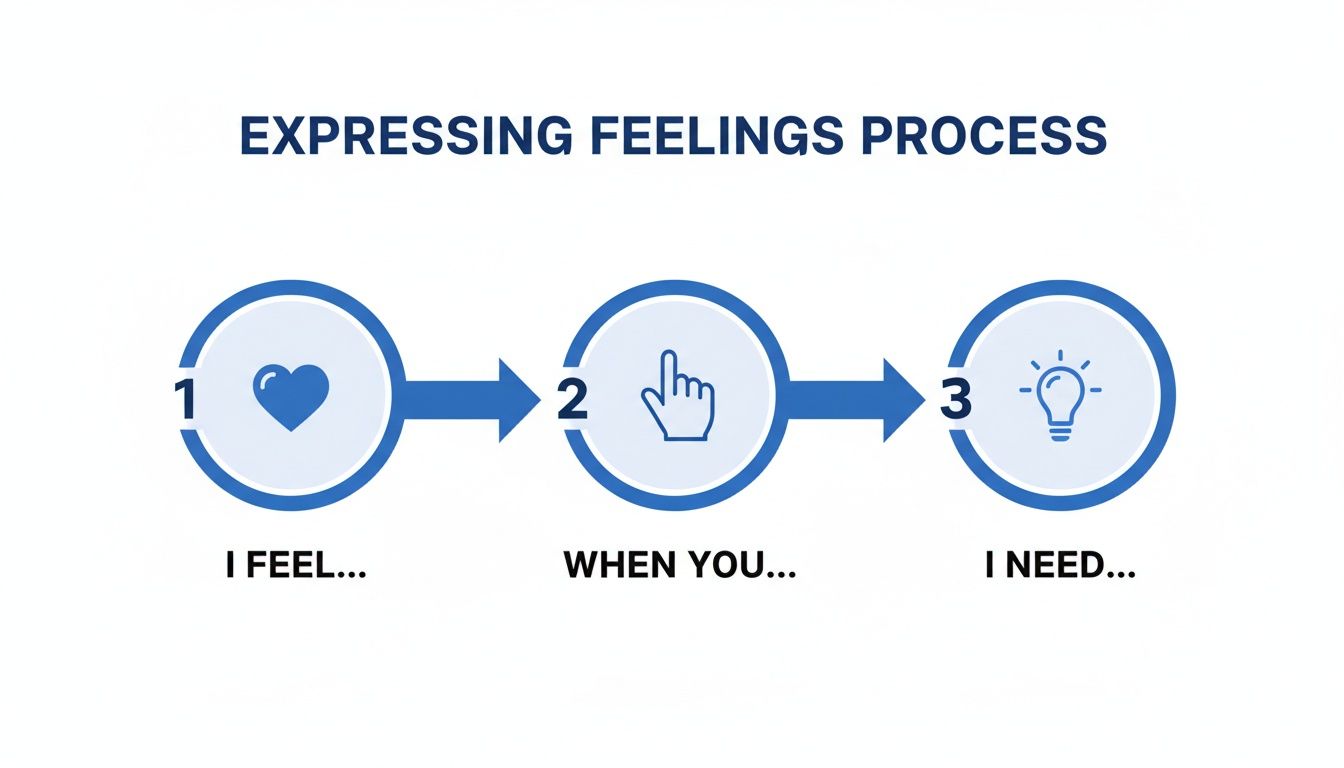
Say your friend cancels repeatedly. If you stay quiet, resentment builds. If you attack, they'll defend themselves. A better script is: “I feel hurt when plans change at the last minute. I want to stay close, and I also need more reliability.”

Use honesty with tact
In India, friendship often values “honesty with tact,” not bluntness for its own sake. That balance matters. You can be truthful without humiliating someone. You can name a wound without turning it into a character verdict.
At work, this skill becomes even more important. A friend-colleague who makes dismissive comments about your well-being can increase stress far beyond one awkward exchange. You might say, “When you joke about my mental health, I feel judged. I'm taking my well-being seriously, and I need that respected.”
“I might be missing context. Help me understand your side.”
That one sentence lowers blame and invites a fuller conversation.
A better conflict pattern
- Wait until you're calm: Don't start a hard conversation in the peak of anger.
- Name behaviour, not identity: “You interrupted me several times” is better than “You're selfish.”
- State impact clearly: Explain how the action affected trust, comfort, or connection.
- Offer repair: “What would help us do this better next time?”
A sincere apology matters too. “I haven't been present lately. That wasn't fair to you” can reopen trust faster than long self-defence.
5. Celebrate Their Growth and Challenges Without Comparison
Your friend tells you they finally got the promotion, started therapy, or ended a draining relationship. If your first reaction is a tight chest, a flat joke, or the urge to mention your own setback, pay attention. Comparison often shows up before kindness does.
Friendship gets stronger when there is enough emotional room for two truths at once. Their life may be opening up while yours feels heavy. You can feel proud of them and disappointed for yourself. The key is where those feelings go. Process your envy privately or with a therapist, not by puncturing their moment.
Let change change the friendship
Growth affects friendship because it changes patterns. A friend who is healing may stop overexplaining, answer less often, spend money differently, or say no more clearly. That does not automatically mean they care less. It may mean they are functioning better.
This matters for mental health. People who are addressing anxiety, burnout, trauma, or low self-worth often become less available for unhealthy dynamics. If you benefited from those old dynamics, their growth can feel like rejection. A healthier response is curiosity.
Try:
- “You seem more grounded lately. What's been helping?”
- “I'm glad you're taking care of yourself.”
- “I miss some of our old routines, but I respect the changes you're making.”
Those lines protect connection without pulling them back into patterns that were costing them peace.
How to spot comparison before it damages trust
Comparison is not always obvious. Sometimes it sounds supportive on the surface but carries resentment underneath.
Watch for these red flags in yourself:
- Minimising their progress. “It's not a big deal.”
- Making their news about you. “I wish I had your luck.”
- Withdrawing after they do well.
- Teasing them for becoming “too serious” after they start taking care of their mental health.
- Keeping score of who is struggling more.
A better practice is specific affirmation. “You worked hard for this.” “I've noticed how much steadier you seem.” “Leaving that relationship took courage.” Specific praise feels real. It also helps your friend build resilience, because growth tends to stick when trusted people recognise it clearly.
A grounded way to handle mixed feelings
If comparison is active, use a simple pause:
- Name the trigger. “Their progress brings up my insecurity.”
- Separate their path from yours.
- Respond to what they need in the moment.
- Come back to your own feelings later with honesty and care.
One sentence can keep you aligned with the friendship: “This is their moment. My feelings are real, but they are mine to manage.”
Healthy friendships are not free of envy. They are honest enough to handle it without turning love into competition.
6. Support with Compassion Without Fixing or Taking on Their Burden
Many caring people overhelp. They hear pain and rush to solve it. Or they absorb so much of a friend's distress that they end up anxious, depleted, and less useful. Compassion works better when it includes empathy, limits, and realism.
If your friend says they're struggling with anxiety, avoid lines like “just relax” or “think positive.” Try, “That sounds hard. Do you want advice, or do you want me to listen?” That question respects their needs and protects you from guessing badly.
You are support, not the whole system
A friend can be critically important to mental health, but friendship is not a substitute for therapy, counselling, or medical care. That distinction matters because many people live with workplace stress, burnout, anxiety, or depression that needs more than a kind listener.
The burden is heavy for a lot of working adults. A 2022 McKinsey Health Survey found that over 40% of Indian employees were at risk of burnout or depression due to workplace conditions, and toxic workplace behaviour ranked as the biggest driver of burnout risk. The same discussion also notes that Deloitte India reported 55% of respondents experienced emotional exhaustion or burnout, as summarised in this piece on mental health at the workplace in India.
Boundary reminder: “I care about you. I'm not the best person to handle this alone. Have you thought about talking to a therapist?”
Compassionate responses that help
- Validate first: “Your feelings make sense.”
- Ask what they need: Listening, distraction, practical help, or company.
- Don't overpromise: If you can't be available at all hours, say that clearly.
- Ground yourself too: If their pain is affecting you, talk to your own counsellor, therapist, or trusted support.
When someone reaches out in crisis late at night, love doesn't require becoming their emergency service. It may sound like: “I care about you, and I need sleep. If you're in immediate danger, please contact emergency help or a qualified professional right now.”
7. Choose Friends Who Support Your Growth and Mental Health
Not every friendship deserves equal access to your time, energy, and inner life. Some people leave you steadier. Others leave you tense, guilty, or small. Paying attention to that difference is a form of self-respect.
Quantity of friends doesn't guarantee genuine connection, as a 2023-24 finding cited in this discussion on healthy friendships and toxic friendship distress indicates 29% of college students in India report feeling isolated despite having multiple friends. The same source also cites a 2024 study from the Mental Health Foundation of India that found 38% of respondents in urban metros experienced significant distress linked to toxic friendships involving manipulation or financial exploitation.
Use your nervous system as data
After spending time with someone, ask yourself simple questions. Do I feel calmer or more agitated? More myself or more guarded? Supported in my goals or subtly mocked for them?
This isn't about expecting perfection. Every friend will get things wrong sometimes. The issue is pattern. If someone repeatedly ignores your boundaries, pressures you into unhealthy coping, gossips, belittles therapy, or treats your success like a threat, take that seriously.
You can also widen your support network in healthy ways. Activities that improve mood and connection can help you meet people with more grounded values. Resources that connect movement with mental health, such as Danza Academy dance and mental health, can be one gentle starting point.
Red flags worth noticing
- Chronic disrespect: They mock your limits or push past them.
- Emotional one-way traffic: They want support but show little interest in your life.
- Competitive energy: Your progress seems to trigger withdrawal or criticism.
- Unsafe behaviour: They pressure you toward harmful choices.
Sometimes the healthiest move is not confrontation. It's reducing access, replying less, and investing more where trust grows.
8. Be Willing to Show Vulnerability and Share Your Own Struggles
Friendship becomes shallow when one person always performs strength. If you're always the listener, fixer, or “sorted” one, people may never get to know your authentic self. Vulnerability is what turns pleasant connection into genuine closeness.
That doesn't mean oversharing with everyone. It means letting trusted friends see parts of your real experience. “I've been dealing with anxiety lately and started therapy” is often more connecting than another polished update about being busy.
Let yourself be known
There's a mental health reason this matters. The National Mental Health Survey 2016 across 12 Indian states found that 13.7% of adults experienced any mental illness in their lifetime, current mental illness prevalence was 10.6%, and anxiety disorder prevalence was 3.6%, as outlined in the NAMS task force report on mental stress. Many people around you are carrying something real, even if nobody says it first.
Assessments can help people reflect on symptoms, patterns, and resilience, but they are informational, not diagnostic. If you're noticing persistent anxiety, depression, burnout, or relationship distress, professional counselling or therapy is the right next step, not just more self-analysis.
Real friendship often begins when someone stops pretending they're fine.
You can also be honest about capacity. “I want to be here for you, and I'm having a hard week too” is more sustainable than acting endlessly available. Mutual honesty creates dignity for both people.
Vulnerability also helps you test safety. If someone responds to your openness with care, respect, and steadiness, trust grows. If they react with gossip, judgment, or dismissal, you've learned something important.
A gentle perspective on emotional openness and support can also be found in HolyJot's guide to mental health.
8-Point Friendship Rules Comparison
| Item | Implementation Complexity 🔄 | Resource / Effort ⚡ | Expected Outcomes ⭐📊 | Ideal Use Cases 📊 | Key Advantages 💡 |
|---|---|---|---|---|---|
| Practice Active Listening Without Judgment | Moderate 🔄, requires mindfulness and practice | Low ⚡, focused attention, no special tools | High ⭐📊, increased trust, reduced anxiety, clearer understanding | One-on-one emotional talks, supportive check-ins | Builds psychological safety; reduces misunderstandings |
| Set and Respect Healthy Boundaries | Moderate–High 🔄, ongoing communication, consistency needed | Low–Moderate ⚡, time, courage to say “no” | High ⭐📊, prevents burnout, preserves well-being | Overcommitment, workplace boundaries, emotional labor situations | Protects energy; clarifies expectations; reduces resentment |
| Show Up Consistently, Even in Small Ways | Low 🔄, habit formation and reminders | Moderate ⚡, regular small time investments | High ⭐📊, fosters security, reduces loneliness | Long-distance friendships, friends with depression/anxiety | Builds reliability; strengthens bonds over time |
| Communicate Honestly About Conflicts and Hurt | High 🔄, emotionally challenging, requires skill | Moderate ⚡, preparation, emotional energy | High ⭐📊, resolves resentment, deepens trust, prevents escalation | Repeated issues, workplace/college tensions, unresolved hurt | Improves conflict resolution; preserves relationship health |
| Celebrate Their Growth and Challenges Without Comparison | Low–Moderate 🔄, mindset shift and self-awareness | Low ⚡, intentional positive responses | Moderate–High ⭐📊, reduces envy, fosters mutual support | Achievement milestones, personal growth moments | Encourages genuine support; removes competitive tension |
| Support with Compassion: Offer Help Without Fixing | Moderate 🔄, balancing support and limits | Moderate ⚡, boundary-setting, signposting to help | High ⭐📊, sustainable support; protects both parties | Crises, chronic struggles, when professional help is appropriate | Validates feelings; promotes help-seeking without taking over |
| Choose Friends Who Support Your Growth and Mental Health | High 🔄, assessment and sometimes distancing | Moderate ⚡, time/energy to adjust social circle | High ⭐📊, improved well-being, reduced stress | Long-term wellbeing, recovering from toxic dynamics | Protects mental health; fosters reciprocal, growth-minded ties |
| Be Willing to Show Vulnerability and Share Your Own Struggles | Moderate–High 🔄, requires trust and judgment | Low–Moderate ⚡, selective sharing, emotional courage | High ⭐📊, deeper intimacy, reciprocity, normalized help-seeking | Close friendships, mutual-support relationships | Deepens connection; models authentic emotional expression |
Your Path to Healthier, More Resilient Friendships
You reply to a friend three days late, skip one call because work ran over, and suddenly start wondering whether the friendship is slipping. That kind of anxiety is common, especially when people are already carrying stress, burnout, and constant demands on their attention. Healthy friendships help regulate that stress. Unhealthy ones often add to it.
The eight rules in this guide work because they ask for something more realistic than constant availability. They ask for steadiness, honesty, emotional safety, and clear limits. In practice, that means checking in without keeping score, saying “I care about you, but I can't talk tonight,” repairing tension early, and noticing when a friendship repeatedly leaves you smaller, more confused, or chronically responsible for both people's feelings.
Many adults are trying to maintain close relationships while handling work pressure, relocation, family expectations, and uneven energy. As noted earlier, changing jobs and cities can strain even strong friendships. Long history helps, but history alone does not make a friendship healthy. A friendship lasts because both people keep choosing behaviors that build trust.
Mental health matters here. Research published in this PMC article on mental health problems among industrial workers found meaningful rates of stress, anxiety, and depression across work settings in India. In real life, that means a friend may be quieter, more irritable, less responsive, or more dependent than usual. It also means you may be.
Friendship can offer comfort, perspective, and belonging. It cannot be the only container for serious emotional pain.
If your pattern is overgiving, people-pleasing, shutting down during conflict, or staying in friendships that repeatedly drain you, outside support can help you change the pattern instead of repeating it. Platforms like DeTalks can support that process by helping you connect with qualified mental health professionals if you are dealing with loneliness, anxiety, depression, burnout, conflict, or relationship stress. Informational assessments can also give you a starting point, though they are not a diagnosis.
Start small. Send the text. Name the boundary. Apologize clearly. Ask one honest question instead of assuming. Choose one friendship that feels worth strengthening, and practice one better response this week.
If you're ready to improve your friendships and your mental well-being, DeTalks offers a practical next step. You can explore therapy, counselling, and informational assessments, then connect with qualified mental health professionals who understand relationship stress, anxiety, burnout, depression, and personal growth in an India-first context.