
Rejection stings, but how you respond to it matters most. Having a plan can help you navigate the difficult emotions. Think of it as a three-step process: manage your feelings, reframe your perspective, and connect with your support system.
This approach isn't about avoiding pain. It’s about moving through it in a way that builds you up, helping you develop resilience and protect your well-being.
Understanding the Experience of Rejection
Rejection is a universal human experience, yet it always feels deeply personal. Whether it’s a job you wanted in Bengaluru, a relationship ending in Mumbai, or a creative idea being dismissed, the emotional impact can be strong.
There's a scientific reason for this. Our brains process social rejection in the same regions that register physical pain, which explains why it can hurt so much.
That initial pain can spiral into self-doubt, anxiety, or even symptoms of depression if not addressed. The goal isn’t to become immune to rejection, but to learn how to process it constructively for your long-term well-being.
Why Rejection Impacts Us So Deeply
At our core, humans are wired for connection. Belonging was essential for our ancestors' survival, and that need is still a powerful part of us today. When we face rejection, our brain can interpret it as a threat, triggering a stress response.
This experience can show up in several ways:
- Emotional Distress: It's normal to feel sadness, anger, shame, or loneliness.
- Negative Thoughts: Your mind might jump to conclusions, telling you that you aren't good enough.
- Behavioural Changes: You might feel an urge to withdraw and avoid similar situations in the future.
For some, especially after repeated rejections, these feelings can contribute to challenges like social anxiety disorder. Acknowledging these reactions is the first step toward developing healthier ways to cope and building resilience.
This simple flow chart breaks down a healthy way to process the experience.
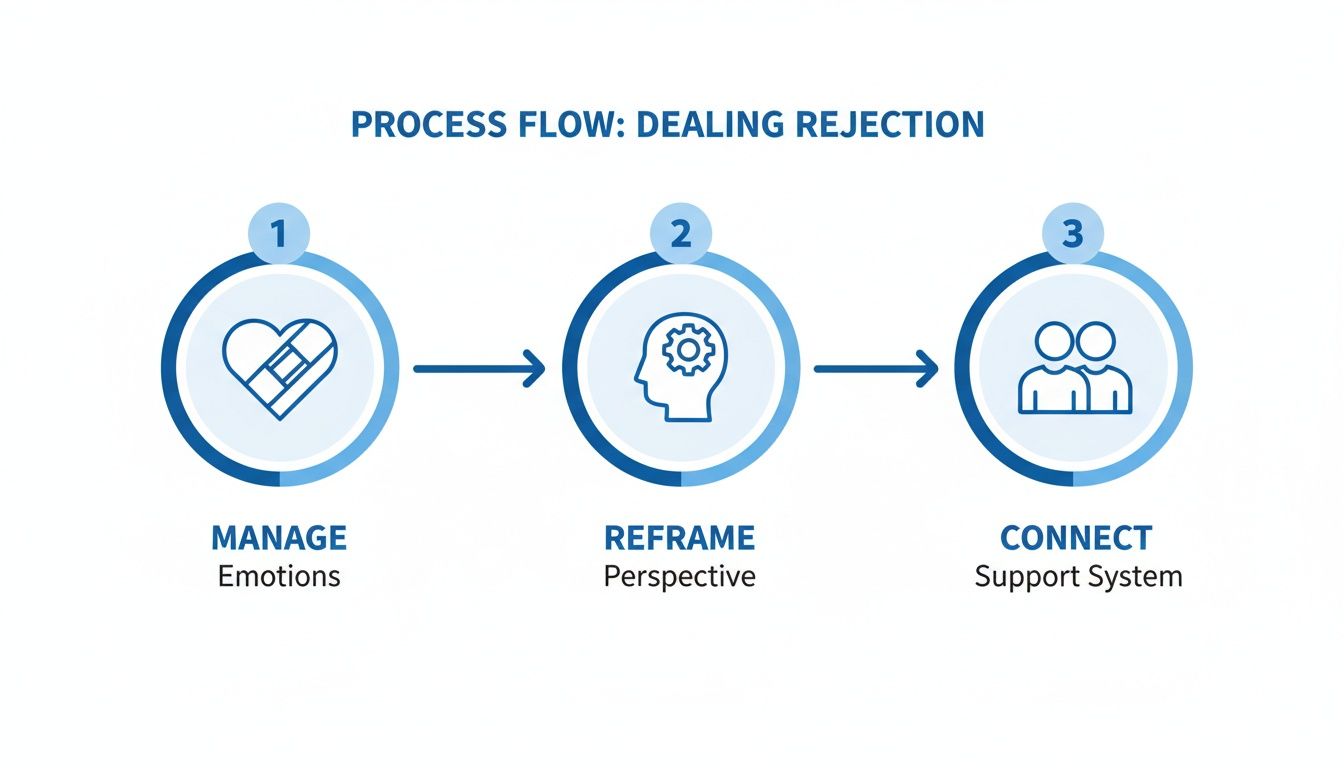
As you can see, managing your immediate emotions is the foundation. You can’t think clearly or reach out for support until you’ve given yourself a moment to feel.
When rejection hits, the initial shock can feel overwhelming. Your heart might race, and your mind might spin. This is a normal stress response, and the key is to manage that first emotional wave.
The goal isn't to solve the problem right away. It's about creating space between the event and your reaction to prevent the initial hurt from turning into a crisis of confidence.
Your First Aid Kit for the Immediate Sting
So, what can you do in those first raw moments? It’s all about creating a buffer to calm your nervous system.
Here’s a quick guide to help you navigate those first feelings.
Immediate Responses to Rejection
| Feeling | Initial Thought | A Healthier First Response |
|---|---|---|
| Shock/Disbelief | "This can't be happening." | Take a slow, deep breath. Acknowledge the feeling without trying to fix it. |
| Sadness/Hurt | "I'm not good enough." | Say to yourself, "This hurts, and it's okay to feel sad right now." |
| Anger/Frustration | "This is so unfair!" | Notice the anger in your body, but pause before acting on it. |
| Anxiety/Panic | "What am I going to do now?" | Focus on your senses. Name five things you can see in the room to ground yourself. |
This isn't about suppressing what you feel. It's about giving yourself a moment to breathe so you can respond thoughtfully instead of reacting from a place of pain.
Acknowledge the Feeling Without Judgement
Your first instinct might be to push the feeling down and pretend you're fine. But bottling up emotions like hurt or disappointment often makes them feel more intense.
Instead, try to turn toward the feeling with compassion. Silently tell yourself, "Wow, that stings," or "I'm really disappointed, and that makes sense." This is a powerful act of self-kindness.
Remember, feelings are temporary signals, not permanent truths about who you are. By acknowledging them, you reduce their power over you and take the first step toward building resilience.
"The moment you accept what troubles you've been given, the door will open." – Rumi
Fighting a feeling takes a lot of energy. Acceptance is what allows you to release your grip and begin to move forward.
Use Your Breath to Calm Your Body
When you're experiencing stress, your breathing often becomes shallow and fast, sending panic signals to your brain. You can interrupt this cycle with simple breathing exercises anywhere, anytime.
- Box Breathing: Inhale for a count of four, hold for four, exhale for four, and hold for four. Repeat this a few times to steady yourself under pressure.
- 4-7-8 Breathing: Breathe in through your nose for 4 seconds, hold for 7 seconds, then exhale slowly through your mouth for 8 seconds. This is especially helpful for calming a racing heart.
These techniques won't make the problem disappear. They calm your nervous system so you can think more clearly, which is essential for managing workplace stress and personal challenges.
Engage Your Senses to Ground Yourself
If your mind is stuck replaying what happened, grounding techniques can bring your focus back to the present moment. They shift your attention from the painful story in your head to your physical surroundings.
Try the 5-4-3-2-1 method. It's simple and effective.
- 5: Look around and name five things you can see.
- 4: Acknowledge four things you can touch.
- 3: Identify three things you can hear.
- 2: Notice two things you can smell.
- 1: Name one thing you can taste.
This exercise reconnects you with the world outside your head, providing a necessary mental break. Learning how to build emotional intelligence can also support your long-term well-being.
These immediate actions are a crucial first line of defence. They create the stability you need to shift from reacting emotionally to responding thoughtfully.
Turn Rejection From a Setback Into a Stepping Stone
Once the initial sting begins to fade, the story you tell yourself about the rejection will shape its impact. This is your chance to shift your perspective from a place of hurt to one of growth.
This is known as cognitive reframing—actively changing how you view an experience. It’s not about pretending it didn’t hurt. It's about challenging the automatic negative thoughts to build resilience and protect your self-esteem.

Spotting Unhelpful Thought Patterns
Our minds often fall into negative traps when we feel vulnerable. Learning to recognise these automatic thoughts is the first step toward changing them.
Two common patterns after a rejection are:
- Personalising: This is when you assume you are the sole reason for a negative outcome. For example, if a project is rejected, you might think, "My ideas are terrible," ignoring other factors like budget or timing.
- Catastrophising: This involves blowing the consequences out of proportion. If a date doesn't call back, your mind might jump to, "I'm going to be alone forever," turning a single event into a forecast of a bleak future and fueling anxiety.
Learning how to deal with rejection means learning to spot these mental shortcuts. Once you can label a thought, it loses some of its power over you.
Challenging Your Automatic Thoughts
After you've identified a negative thought, gently question it. The goal is to find a more balanced and realistic viewpoint.
Imagine you were passed over for a promotion at your job in Hyderabad. Your instant thought might be, "I'm a failure. My boss must think I'm incompetent."
To challenge this, ask yourself a few questions:
- "Is there any other possible explanation?" (Perhaps the other candidate had specific experience required for the role.)
- "Is this thought 100% true, or is it an assumption?" (You don't actually know what your boss is thinking.)
- "What would I tell a friend in this situation?" (You would likely offer a kinder, more balanced perspective.)
This process helps you shift from emotional reasoning to a more objective space. It's a crucial practice for protecting your mental well-being and managing workplace stress.
Finding the Lesson or Opportunity
Every experience, especially a difficult one, holds a potential lesson. Shifting your focus from the pain to the opportunity for growth is a cornerstone of building resilience.
Ask yourself, "What can I learn from this?" instead of getting stuck on "What's wrong with me?" For example, feedback on a rejected project might highlight a skill you can develop.
This approach reframes rejection not as a final judgment but as useful information. In India, where social pressures can sometimes intensify feelings of isolation, positive psychology tools can be very helpful. You can explore more about mental health in India to understand these challenges better.
Reframing is a practice that becomes a healthier mental habit over time. For structured support in developing this skill, professional counselling or therapy can be very effective.
Navigating Rejection in Your Career and Workplace
Professional setbacks can feel intensely personal. Whether you were passed over for a promotion or a project was declined, it can shake your confidence and increase workplace stress.
Handling rejection at work isn’t about pretending it doesn’t hurt. It’s about having strategies to process what happened, protect your well-being, and turn a difficult moment into an opportunity for growth. This is how you build genuine resilience and avoid burnout.

Separate Your Performance From Your Person
This is a critical mindset shift. A rejected proposal is a decision about a specific piece of work at a specific time, not a rejection of you as a person.
Your mind might jump to, "I'm not good enough." Catch that thought and reframe it: "This particular approach didn't meet the requirements this time." This subtle shift removes the personal sting.
Practising this separation is vital for your long-term mental health. It prevents professional pressures from spiralling into chronic anxiety or depression.
Seek Constructive Feedback Gracefully
While your first instinct might be to withdraw, seeking clarity can be an empowering move. Approaching the decision-maker with a calm, professional attitude can provide valuable insights.
Avoid defensive language. Instead, frame your request as a genuine desire to learn and grow.
Sample Script for Seeking Feedback:
"Thank you for letting me know the outcome. I respect the decision and am always looking to improve. Would you be open to sharing any feedback that I could learn from for my future growth?"
This transforms a moment of disappointment into a chance to learn. It shows you can handle setbacks with grace, which is a sign of true professionalism.
Create a Plan to Move Forward
Once you’ve processed the emotions and gathered feedback, it’s time to take action. This puts you back in control and helps you move forward.
Look at the feedback and identify one or two actionable steps. For example, if you were passed over for a promotion, your plan might be to take a course to build a specific skill.
This proactive approach is the essence of resilience. It shifts your focus from the past to the future. You can learn more about the alarming mental health statistics in India and the difference professional support can make.
Navigating professional rejection is a skill built over time. If feelings of workplace stress linger, seeking therapy offers a supportive space to build these crucial coping skills.
Building Your Personal Support System
When you’re hit with rejection, your instinct might be to withdraw. But connection is one of the best antidotes to the loneliness that rejection can create.
Leaning on your support system—close friends, family, or a trusted mentor—is a vital part of bouncing back. It’s about being real about how you feel in a safe and supportive environment.
In India, community and family ties are often strong, but showing vulnerability can still feel challenging. Being open is an act of courage that deepens relationships and builds your own inner resilience.
Who’s Really in Your Corner?
Think about your support system. It’s not about how many social media followers you have, but who makes you feel seen and valued.
Take a moment to identify the people who genuinely lift you up. These are the friends who listen without judgment and remind you of your strengths.
A solid support network is a powerful buffer against the kind of chronic stress that can contribute to anxiety or depression. It provides a needed reality check and reminds you that you aren't alone.
How to Ask for What You Actually Need
Asking for support can be difficult. We often worry about being a burden, but being specific makes it easier for others to help.
Instead of a vague "I'm feeling down," try being more direct. Do you need someone to listen, a fun distraction, or just a hug?
Here are a few ways to phrase your needs:
- "I had a rough day and just need to vent. Do you have a few minutes to listen?"
- "I’m feeling discouraged. Could we grab a coffee and talk about something else? I need a distraction."
- "I don't need advice right now, but a hug would be amazing."
Communicating your needs clearly is a skill that builds healthier, more honest relationships.
When to Bring in a Professional
Friends and family are incredible, but sometimes, professional support is needed. If you feel stuck or overwhelmed by sadness, it might be time to consider therapy or counselling.
A therapist is a trained, impartial expert who provides a safe space to work through your feelings. They can offer proven tools and strategies to help you navigate difficult emotions and build lasting resilience.
Seeking professional help is a proactive and empowering step to protect your long-term mental well-being. Remember, informational assessments are tools to understand your needs, not diagnoses. They can be a helpful first step in figuring out if professional support is right for you.
When to Seek Professional Support
Self-help strategies and support from loved ones are powerful tools. But sometimes, the pain of rejection becomes too much to carry on your own.
Recognising that you might need more support is a sign of self-awareness and strength. It's about giving yourself the dedicated space and expert guidance you need to heal and grow.

Signs It Might Be Time to Reach Out
How do you know when it’s time to seek professional help? While everyone is different, there are a few common signs that therapy or counselling could be beneficial.
Consider if any of these sound familiar:
- Lingering Sadness: The hurt isn’t lifting, and you’ve felt sad or hopeless for several weeks.
- Changes in Habits: Your sleep or appetite has significantly changed.
- Social Withdrawal: You're avoiding friends, family, and activities you used to enjoy.
- Difficulty Focusing: The rejection is constantly on your mind, making it hard to concentrate on daily tasks.
These signs might indicate that the rejection has triggered deeper issues, such as persistent anxiety or depression. These challenges are highly manageable with the right support.
What to Expect from Therapy
The idea of therapy can feel intimidating, especially where conversations about mental health are still evolving. A professional offers a safe, confidential, and non-judgmental space to talk freely.
A therapist will work with you to:
- Explore Deeper Feelings: Understand if this rejection has touched on older wounds related to self-worth.
- Build a Toolkit: Learn practical techniques to manage emotional pain and challenge negative thought patterns.
- Develop Real Resilience: Build the emotional strength to bounce back from future setbacks.
Remember, therapy is an investment in yourself. The goal is to empower you with tools for long-term emotional well-being and happiness.
While an online assessment can be a good starting point, it's not a substitute for a conversation with a professional. If the pain of rejection is keeping you from living your life, reaching out for counselling is a kind and powerful choice.
Frequently Asked Questions
It's normal to have questions when you're working through the pain of rejection. Here are answers to some common questions to provide practical clarity.
How Long Does It Take to Get Over a Significant Rejection?
There is no fixed timeline for healing. The time it takes depends on the situation's significance to you and your personal way of processing emotions. The goal is to move through your feelings constructively, not to rush the process.
If the pain remains intense and interferes with your daily life after several weeks, it may be a sign that something deeper is going on. In that case, professional counselling can provide the support you need to move forward.
What if I Keep Replaying the Rejection in My Head?
This is called rumination, a common cycle that can fuel anxiety. It’s like having a thought stuck on a loop.
To break the cycle, try a mindfulness exercise to bring your attention to the present. You could also schedule a "worry time"—a short, specific window to think about it, then consciously switch to an engaging activity.
If you still feel stuck, cognitive-behavioural therapy (CBT) offers practical ways to challenge and change these persistent thought patterns.
Is It Better to Try Again Immediately After Being Rejected?
This depends on the situation. Sometimes, jumping back in can build resilience, but it's often wise to take a moment to reflect.
Rushing back in without processing what happened can lead to more disappointment. It is more powerful to use the rejection as a learning opportunity. Give yourself some time and move forward when you feel genuinely ready. This self-compassion is a key part of learning how to deal with rejection.
At DeTalks, we believe finding the right support for your mental well-being should be straightforward. Whether you're navigating a setback or want to build emotional resilience, our platform connects you with qualified therapists and evidence-based tools. Find the clarity and support you deserve at https://detalks.com.