
The journey to find your passion is a personal one, focusing on a few key ideas. It involves getting to know yourself, trying new interests through small experiments, and thinking about your career more flexibly. It's all about exploration and self-discovery, not forcing a perfect answer overnight.
Why The Search For Passion Feels So Overwhelming

If asking "how to find your passion" feels overwhelming, you are not alone. Society often presents passion as a single, grand purpose you must find to live a meaningful life. This pressure can turn a joyful exploration into a source of stress and anxiety.
This expectation can lead to feeling down when your daily life doesn't match this ideal, a common experience in India and globally. The key is to see the journey differently. It's not a quest for a magical answer but a gentle process of understanding yourself better.
Moving From Pressure to Curiosity
Instead of chasing one big 'thing', try approaching this with genuine curiosity and self-compassion. This simple shift in mindset can make a significant difference to your well-being. It transforms a daunting task into small, manageable steps toward discovering what truly energises you.
If the idea feels too big, remember there are practical strategies to break down tasks and beat overwhelm that can help. By breaking the journey into smaller actions, it becomes far less intimidating. This can be as simple as noticing what you enjoy in a day or trying something new for an hour a week.
"The goal is not to find a singular, life-defining passion overnight. It's to build a life rich with activities and pursuits that bring you a sense of engagement, meaning, and joy."
The Role of Professional Support
Sometimes, the challenges in finding our passion are deeper than just not knowing what to try. Feelings of stress, burnout, or anxiety can drain the energy needed for exploration. In these moments, professional support can be a powerful resource for building back your resilience.
Talking to a therapist through counselling provides a safe space to navigate these challenges. A professional can help you understand your thoughts and feelings, develop healthy coping skills, and clear the mental fog. It's important to remember that any assessments are informational tools for your growth, not diagnostic labels.
This guide offers a supportive framework for your journey, designed to help you:
- Reduce the pressure that comes with the search for a ‘purpose’.
- Build self-awareness through practical, down-to-earth exercises.
- Improve your overall well-being by focusing on personal growth and happiness.
- Recognise when to seek support to foster a healthier mindset and resilience.
Ultimately, this isn't a race with a finish line. It’s an ongoing practice of aligning your life with what feels authentic to you, one small step at a time.
Start By Understanding Who You Are Right Now
Before you can know where you're going, it helps to have a clear picture of where you are. This isn't about a grand quest, but simply about paying attention. The clues to your passion are already present in your everyday life, waiting to be noticed.
Think of yourself as a detective investigating your own life with kindness. The goal is to gather small pieces of information about what makes you feel engaged and alive. This self-awareness is the foundation you'll build everything else on.
Look Back to Find Clues for the Future
Your past holds many valuable hints about what truly brings you joy. Think back to what you loved doing as a child, before you worried about careers or others' opinions. Tapping into these early interests can point you toward your natural inclinations.
Spend a little time with these questions:
- What were you drawn to as a child? Were you always building things, telling stories, or organising games?
- Which school subjects genuinely fascinated you? Forget about your grades; what made you curious to learn more?
- When do you lose track of time now? This feeling of being completely absorbed in an activity, known as a 'flow state', is a powerful clue.
These memories are more than just nostalgia; they are data points about where your energy naturally flows. Noticing these patterns is a major step toward building a life that feels more meaningful and boosts your overall well-being.
Understand Your Core Values
Your values are your personal compass, guiding your decisions and defining what's important to you. When your life aligns with your values, you often feel a sense of purpose. When it doesn't, it can contribute to workplace stress and feeling stuck.
To clarify your values, think about what matters most to you in life, relationships, and the impact you want to have. Knowing what you stand for makes it easier to make choices that feel right, both big and small.
This alignment is becoming increasingly important in India and around the world. A survey highlighted that 78% of Indian employees plan to prioritise family over careers in 2025. This shows a powerful shift toward a more balanced life, which can open the door to discovering new passions. You can learn more about the future of work-life balance in India.
An honest self-assessment isn't about judging yourself. It's an act of self-compassion that gives you the clarity to move forward with intention and build resilience.
A Note on Assessments and Professional Support
You may come across personality tests and career assessments on your journey. These can be helpful for offering a new perspective on your strengths, but remember they are guides, not definitive truths. These tools are for informational purposes only and are not diagnostic.
Sometimes, progress can be blocked by mental health challenges like anxiety or feelings of depression. If you feel stuck or overwhelmed, seeking support through therapy or counselling is a sign of strength. A therapist can provide a safe space to explore what's holding you back and help clear the way for personal growth.
This first phase is all about creating an honest snapshot of yourself. By understanding your past joys, current values, and emotional state, you gather the clues you need to start exploring what could become your next passion.
Test Your Interests With Low-Stakes Experiments
The idea of "finding your one true passion" can feel heavy and create pressure that stops you from starting. Let's set that idea aside.
Instead of waiting for a life-changing moment, let's start testing. We can do this with micro-experiments – small, manageable actions that let you explore an interest without a big commitment. This approach takes the pressure off and lets you gather real-world feedback on what you genuinely enjoy.
Why This Approach Actually Works
Big life changes can feel scary and trigger anxiety, often leading to inaction. Micro-experiments work by keeping the steps small and the risk low, bypassing that fear response. For example, instead of quitting your job to become a photographer, you could try a weekend smartphone photography workshop.
This process also builds psychological resilience and supports your well-being. When an experiment doesn't spark joy, it’s not a failure; it’s simply new information you've learned about yourself. Reframing 'mistakes' as 'lessons' is a powerful way to manage challenges like workplace stress or burnout.
Designing Your First Few Experiments
To begin, lean into curiosity, not commitment. Brainstorm a list of things you can try that fit into your current schedule, no matter how small they seem.
Here are a few ideas to get started:
- Curious about coding? Try a free, two-hour introductory online course one evening.
- Want to give back? Sign up for a one-day community event or volunteer for a few hours at a local shelter.
- Feeling a creative itch? Find a local studio that offers a one-time "try it" class in pottery or painting.
- Intrigued by a career path? Ask someone in that field for a brief, 15-minute virtual chat to hear about their journey.
The point of these experiments isn’t to immediately land on a lifelong passion. It's to learn what you enjoy, what you really don't, and what you might want to explore a little more deeply. Every test is a clue.
A Simple Framework for Action and Reflection
Trying new things is only half the process; the real learning happens when you pause to reflect. Before you start, ask yourself what you hope to learn from the experience.
Afterward, take five minutes to write down your thoughts. Did you feel energised or drained? This conscious reflection helps turn your experiments into powerful self-discovery.
Your Micro-Experiment Planner
This simple template can help you structure your experiments, clarifying what you’re doing and what you learn.
| Area of Curiosity | Micro-Experiment Idea (Low-cost & Low-risk) | Time Commitment | What I Hope to Learn | Reflection After |
|---|---|---|---|---|
| Example: Graphic Design | Watch a 1-hour tutorial on Canva and design a social media post. | 2 hours total | If I enjoy the creative process of visual design. | Felt energised and lost track of time! Want to try a more advanced tool next. |
| Example: Social Impact | Volunteer at the local food bank for one Saturday morning shift. | 4 hours | If I find hands-on community work fulfilling. | It was rewarding but emotionally draining. Maybe I prefer advocacy work. |
| Example: Writing | Write a 500-word blog post on a topic I enjoy and share it with a friend. | 3 hours | If I enjoy structuring my thoughts and writing for an audience. | Loved the writing part, but felt anxious about sharing. Something to explore in counselling. |
Using a framework like this helps create a positive feedback loop of trying, learning, and adjusting. This gradual process is more effective and less stressful than trying to figure it all out at once. It can also offer a sense of control when navigating feelings of uncertainty or mild depression.
Adopt a Modern Mindset For Career Fulfilment
The traditional idea of a career as a straight, predictable ladder is outdated. Today, especially in India and around the world, the focus is shifting. It’s no longer just about a stable job; it’s about growth, purpose, and work that feels authentic.
This modern approach blends creativity, technology, and an entrepreneurial spirit. It means seeing your career not as a rigid path, but as a dynamic space to explore interests and make an impact. A great resource on this is this guide on following your passion.
Tune Into Today's Opportunities
The world of work is always changing, bringing new opportunities to do what you love. High-growth sectors like digital media, e-commerce, and technology are not just creating jobs; they are creating platforms for creativity and innovation. These fields often reward curiosity and continuous learning, making them great places to align your profession with your interests.
Keeping an eye on these areas can open you to paths you hadn't considered. It’s about being strategic and looking for the overlap between what the world needs and what genuinely excites you. That is where a fulfilling professional life can begin.
A passion-first approach isn't about ignoring practical realities. It’s about strategically positioning yourself for long-term fulfilment by building in-demand skills in areas that genuinely energise you, creating a powerful career advantage.
Learn From the Next Generation's Playbook
Younger professionals are redefining work, and their approach offers valuable lessons. They seek roles that offer mentorship, skill development, and a sense of purpose that aligns with their personal values. This shift signals the future of work for everyone.
This new mindset is visible across India, where Gen Z is leading a passion-driven career revolution. A recent study found 24% aspire to start their own businesses within five years of starting work. This generation prioritises career growth (78%), blended training (73%), and mentorship (70%) over just salary, showing a clear desire for work that serves as a canvas for their passions.
Adopting this way of thinking can be a powerful antidote to workplace stress and a boost to your well-being. It involves asking different questions about your work:
- Does this role allow me to learn and grow?
- Do I feel connected to the company's mission?
- Are there people here who can support my development?
Create a Cycle of Exploration
Embracing this modern approach means getting comfortable with experimentation. You don't need a perfect five-year plan. Instead, create a simple cycle to test potential interests: ideate, experiment, and reflect.
This simple flow helps you turn curiosity into action through small, manageable steps.
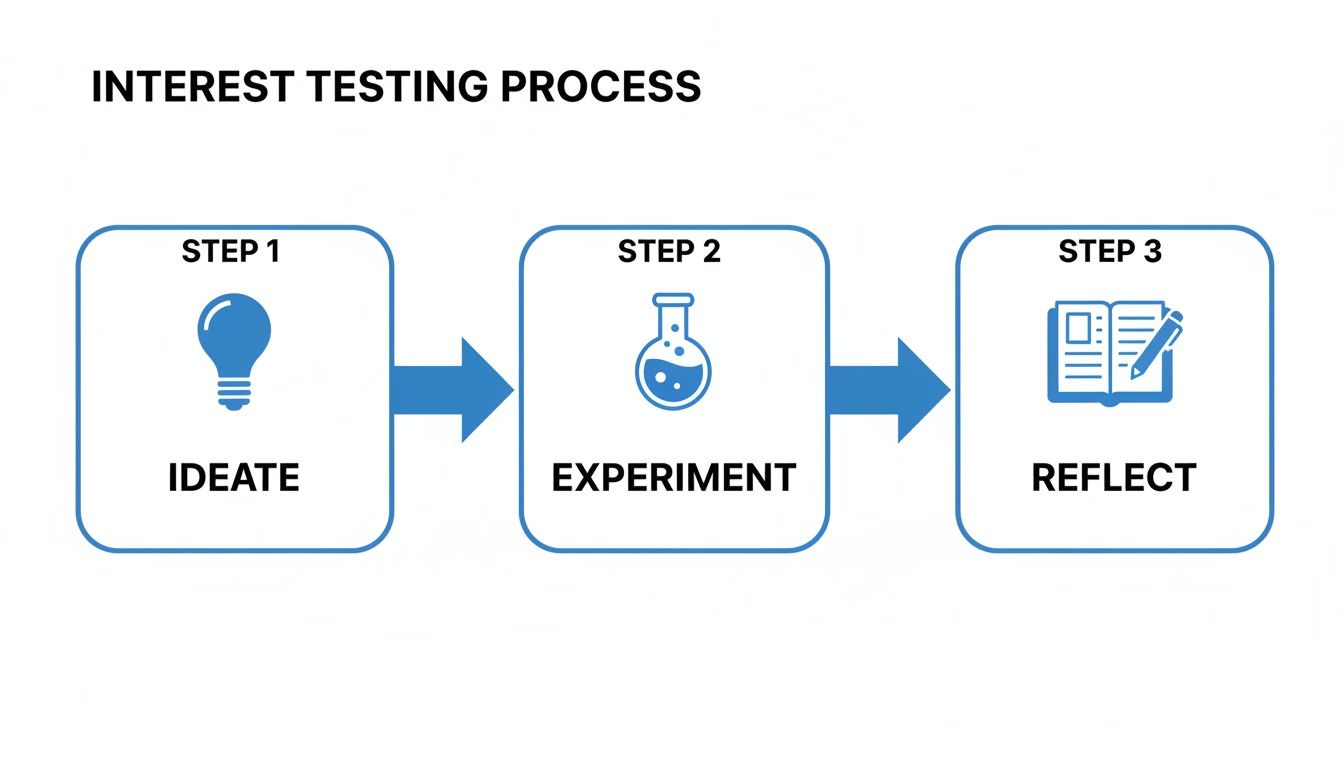
This process is not about finding a final answer overnight. It is about gathering real-world information on what you enjoy before making big decisions, building incredible resilience along the way.
Thinking about your career in this flexible, curious way is a form of self-compassion. It removes the pressure to have it all figured out and gives you permission to evolve. If feelings of anxiety or being stuck arise, remember that therapy or counselling can offer valuable tools to navigate that uncertainty.
Build Confidence By Building Relevant Skills

Often, the biggest obstacle to finding your passion isn't a lack of ideas but a lack of confidence. The thought of trying something new can bring up feelings of inadequacy or self-doubt. These feelings can stop you before you even start.
The good news is that confidence is a skill you can build. One of the best ways to strengthen it is by learning new things. Every small skill you learn becomes a building block, creating a foundation of self-belief that empowers you to explore more freely.
This shifts the goal from "finding your passion" to an actionable plan of expanding your abilities. This proactive approach is a fantastic way to boost your overall well-being.
Identify Your Skill Gaps With Curiosity
Start by looking at the interests you've already identified. What small, practical skills could help you explore them more deeply? Frame this as an exciting investigation, not a critique of what you lack.
For example, if you're curious about storytelling, maybe learning basic video editing is the next step. If you're drawn to community work, a short public speaking course could help you feel more comfortable. The goal is to identify a few key skills that bridge the gap between where you are and where you want to go.
In today's work environment, this is especially important. A recent report found only 37% of Indian workers feel confident they have the skills for career advancement. By learning future-proof skills like emotional intelligence or data literacy, you can turn this gap into an opportunity for growth and discovery. You can read more about these insights on worker confidence in India.
Find Accessible Ways to Learn
Upskilling doesn't have to mean enrolling in an expensive, time-consuming degree. Today, countless accessible resources are available.
- Online Learning Platforms: Sites like Coursera, Udemy, and Skillshare offer thousands of courses you can explore.
- Workshops and Webinars: Look for local or virtual workshops for hands-on experience in anything from coding to creative writing.
- Mentorship: Connecting with someone who has mastered a skill you want to learn can be an invaluable part of your journey.
The very act of learning builds resilience. It teaches you to embrace challenges, learn from mistakes, and celebrate small victories—all crucial mindsets for the journey towards a more passionate life.
Celebrate Small Wins and Build Momentum
As you learn, it is essential to acknowledge your progress. Did you finish an online module or apply a new technique? Celebrate it. These small wins provide the fuel to keep you going, especially when you face challenges.
This process helps counter the self-critical voice that can accompany anxiety or depression. By focusing on progress, not perfection, you create a positive cycle that strengthens both confidence and motivation. If these feelings become overwhelming, remember that counselling or therapy can offer powerful tools to help you manage them.
Ultimately, building skills is about more than becoming more capable. It's a proactive strategy for building the self-trust and resilience you need to step outside your comfort zone.
Create a Personal Action Plan for the Next 90 Days
Self-reflection and experimentation are most effective when they lead to a clear path forward. This is where we translate your insights into a gentle, practical plan.
Forget about creating a rigid, high-pressure to-do list, which is a recipe for burnout and stress. The goal is to build small, sustainable habits over the next 30 to 90 days. This is a commitment to a journey of learning and adapting, not a race to a finish line.
Your First 30 Days: Focus on Consistency
The first month is about getting into a rhythm of exploration. The main goal is simple: make curiosity a regular part of your week. Concentrate on showing up for yourself without worrying about the outcomes.
A simple plan could look like this:
- Weekly Micro-Experiment: Set aside two hours each week for one small experiment, like watching a documentary on a new topic or taking a free online mini-class.
- Daily Reflection: Spend five minutes each evening writing in a journal. Note what sparked your interest or drained your energy. This tiny habit is a powerful tool for self-awareness.
This gentle approach is designed to prevent overwhelm and build motivation. It helps you slowly weave new habits into your life, which is essential for long-term well-being and resilience.
Finding your passion is a marathon, not a sprint. Your 90-day plan is your training schedule—designed to build endurance and self-compassion, not to win a prize.
Your 90-Day Outlook: Broaden Your Horizons
After a month of consistent exploration, you can start to broaden your scope based on what you’ve learned. If certain experiments were particularly energising, now is the time to go a little deeper. You might consider a weekend workshop or start a small personal project.
This is also a perfect time to lean on your support systems. Navigating the emotional side of this journey, especially when dealing with anxiety or feeling stuck, is easier with help. Professional therapy or counselling can offer a safe, confidential space to explore these feelings without judgment.
Remember, this plan is not about finding a final answer by day 90. It’s about creating a sustainable practice of self-discovery. The real takeaway is the confidence you build by taking consistent, thoughtful action toward a life that feels truly yours.
Got Questions? We've Got Answers
It's completely normal to have questions as you start exploring what drives you. This path isn't always a straight line. Here are answers to some common challenges.
"I Have Way Too Many Interests—How Do I Possibly Choose Just One?"
Having many interests is a sign of a curious mind, not a problem. Instead of feeling pressure to choose one, use the micro-experiment approach. You can dip your toes into a few different areas to see what feels right.
You might find a way to blend them, or you might enjoy having several fulfilling hobbies. The goal is to build a life rich with activities that energise you, not to narrow it down to one thing.
"How Can I Find My Passion When I’m Completely Burnt Out?"
When you're dealing with burnout, anxiety, or depression, your energy is low, and it's natural that nothing seems appealing. It is important to pause the search and focus on your well-being first.
Prioritise rest and practice self-compassion. This is a time for kindness toward yourself, not for pushing harder.
Working with a professional through therapy or counselling can be very helpful, providing a safe space to heal and rebuild your strength. Only when you feel more like yourself should you gently reintroduce small, low-pressure activities that might bring a little joy.
Your mental health is the bedrock of everything else. The passion quest can wait until you're standing on solid ground again.
"Should I Turn My Passion Into My Job, Or Keep It As a Hobby?"
There is no single right answer to this question; it is deeply personal. For some, turning a passion into a career is the ultimate goal. For others, the pressure of monetising something they love can diminish the joy it brings.
A smart approach is to start it as a side project or hobby. This allows you to explore it without financial stress. It’s a low-risk way to see if making it a full-time job aligns with your long-term well-being.
If you feel you could use a guide on your journey, connecting with a professional can make all the difference. DeTalks provides a trusted space to find qualified therapists and science-backed assessments, helping you build clarity, resilience, and a life with more meaning. Find out more about how DeTalks can help.