Tag: manage anxiety

  • How to Reduce Job Stress: Practical Steps for Well-being

    How to Reduce Job Stress: Practical Steps for Well-being

    Feeling snowed under at work is a familiar weight for many professionals, whether in India or across the globe. You are not alone in this. The path to reducing job stress starts with acknowledging its presence, then learning immediate ways to cope and building long-term resilience for a healthier work life.

    Recognising the Weight of Workplace Stress

    Workplace stress can feel like a silent burden, something we are expected to handle without complaint. The constant pressure from deadlines, long hours, and team dynamics takes a real toll on our mental and physical well-being. It is more than just a bad day; it is a persistent feeling of being overloaded that can lead to anxiety and irritability.

    This is a widespread challenge. In India, a significant 30% of employees report feeling stressed daily. This personal struggle has a large economic impact, with poor mental health costing Indian employers an estimated ₹1.1 lakh crore (about $14 billion) annually due to low productivity and high turnover. You can discover more insights about this workplace stress epidemic and its financial costs.

    The True Cost of Unchecked Stress

    When stress is left unmanaged, it can develop into more serious challenges like burnout or worsen conditions such as anxiety and depression. Burnout is a state of complete emotional, physical, and mental exhaustion. It can leave you feeling cynical about your job and disconnected from your team.

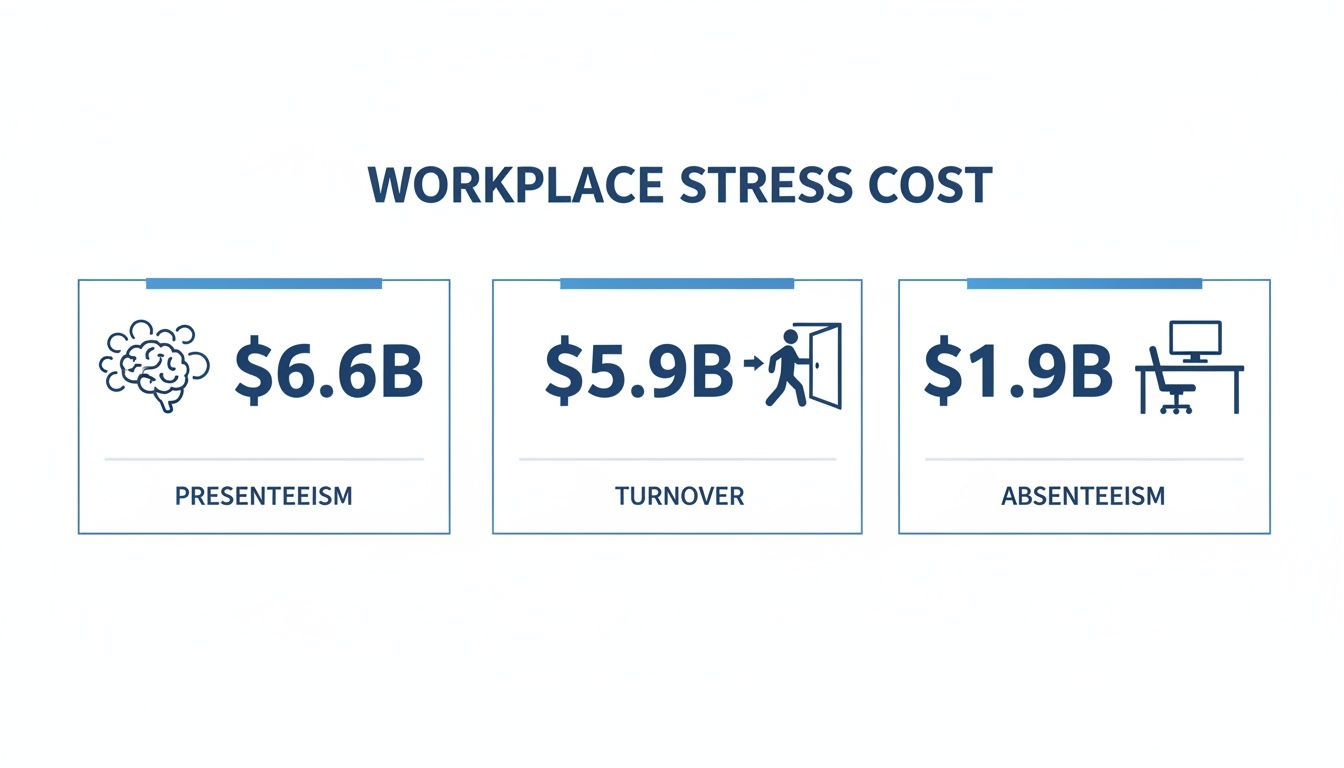
    The costs of this stress are often visible in business performance, as this infographic highlights.

    A graphic detailing workplace stress costs, showing presenteeism, turnover, and absenteeism expenses.

    As you can see, the largest hidden cost is presenteeism—when people are at work but too mentally drained to be productive. It’s a powerful reminder that our well-being is essential for effective work.

    Shifting from Surviving to Thriving

    Learning how to reduce job stress is about more than just getting through the day. It is about developing skills for genuine well-being, happiness, and resilience. This journey begins with self-compassion and understanding that seeking support through therapy or counselling is a sign of strength.

    Acknowledging the weight of workplace stress is the first, most crucial step toward lightening the load. It opens the door to self-compassion, resilience, and the pursuit of a healthier, more fulfilling professional life.

    Once you can recognise the signs, you can start taking small, meaningful steps. This guide offers practical tools not just to cope, but to truly begin thriving again.

    Your Toolkit for In-the-Moment Stress Relief

    When work pressure suddenly increases, you need strategies that help right away. We have all faced an unexpected deadline or a difficult conversation. This toolkit is designed for those moments, helping you find your center whether you are in a busy office or working from home.

    Asian businessman meditating at his office desk with eyes closed and a timer displaying 03:00.

    These techniques are not about ignoring stressors but about managing your immediate reaction to them. Interrupting the automatic anxiety response gives you space to respond thoughtfully. It is a key skill for navigating a tough day and building long-term resilience.

    Master the Three-Minute Mindfulness Break

    When you feel tension building, one of the simplest things you can do is pause and breathe. A short mindfulness exercise can pull you out of stressful thoughts and ground you in the present. You do not need any special equipment; your desk chair will do just fine.

    Here’s a simple exercise to try now:

    • First Minute: Settle In. Sit comfortably with your feet on the floor and your back straight. Notice the feeling of your feet on the ground and your hands in your lap.
    • Second Minute: Focus on Your Breath. Shift your attention to your breathing without trying to change it. Simply observe the natural rhythm of each inhale and exhale.
    • Third Minute: Expand Your Awareness. Widen your focus to your entire body, noticing any areas of tightness without judgment. When you're ready, slowly open your eyes.

    This short break helps activate your body's relaxation response, slowing your heart rate. Making this a habit can significantly improve how you handle high-pressure moments.

    Ground Yourself with the 5-4-3-2-1 Technique

    Anxiety often pulls our minds into worrying about the future or replaying the past. The 5-4-3-2-1 technique brings you back to the present moment by engaging your senses. It is discreet and can be done anywhere.

    This method works by forcing your brain to switch from abstract worries to concrete, external observations. It’s an immediate anchor when you feel emotionally adrift, breaking the anxious chatter in your head.

    Simply pause and silently identify:

    • Five things you can see: Look around and name five objects, like your keyboard, a plant, or a pen.
    • Four things you can feel: Notice physical sensations, such as the texture of your chair or the warmth of your mug.
    • Three things you can hear: Listen for three distinct sounds, like the hum of your computer or distant traffic.
    • Two things you can smell: Tune into your sense of smell, perhaps noticing the aroma of coffee.
    • One thing you can taste: Focus on one taste, such as the lingering flavor of your last meal.

    This sensory exercise is very effective for cutting through acute stress and resetting your mind.

    Embrace Structured Worry Time

    If worry feels like a constant drain on your mental energy, try scheduling time for it. This may sound counterintuitive, but containing your worries to a specific time can keep them from taking over your day.

    Set aside a 15-minute "worry window" each day, perhaps at the end of your workday. During this time, allow yourself to think through your anxieties and write them down. When the time is up, consciously put those worries aside until your next scheduled slot, restoring a sense of control.

    Building Long-Term Resilience to Workplace Pressures

    While immediate relief techniques are helpful, building long-term resilience is key to managing chronic stress. This involves creating sustainable habits and mental frameworks that protect you from burnout. It is a proactive strategy for cultivating a healthier relationship with your work.

    Think of it as becoming a better navigator of pressure, not immune to it. By weaving these strategies into your daily life, you build a strong foundation for lasting mental well-being.

    A person's hands are placing a spiral notebook on a closed laptop on a desk at sunset.

    Establish Clear Boundaries, Especially When Working Remotely

    In today's always-on culture, the lines between professional and personal life have blurred, especially for remote workers. Setting firm boundaries is a vital act of self-preservation that fuels long-term productivity and happiness. Your mind needs time to fully switch off and recharge.

    This is a particular challenge for younger professionals in India. A recent study found that 41% of employees under 35 report daily workplace stress. While remote work offers flexibility, it has also been linked to increased loneliness for this group. You can learn more about the daily stress challenges young Indian employees face.

    Create a simple ‘closing ceremony’ for your workday to signal to your brain that it is time to disconnect.

    Your end-of-day ritual could include:

    • Tidying your desk for a sense of closure.
    • Making tomorrow's to-do list to clear your mind.
    • Changing your clothes to physically shift into personal time.
    • Saying a phrase aloud, like "Work is done for the day."

    Reframe Negative Thoughts with Compassion

    Under pressure, our minds can fall into unhelpful thought patterns, fueling anxiety and self-doubt. Cognitive reframing helps you challenge these automatic negative thoughts and replace them with more balanced ones. The goal is to view challenges from a more helpful perspective, shifting from self-criticism to self-compassion.

    This practice is a cornerstone of mental resilience, helping you bounce back from setbacks. To protect your well-being, it's important to understand how to avoid burnout at work.

    Take a look at how you can actively shift your internal dialogue.

    Mindset Shifts for Building Workplace Resilience

    This table shows how to turn common stress-inducing thoughts into resilience-building alternatives.

    Stress-Inducing Mindset Resilience-Building Mindset A Practical Example
    "I've failed." "I made a mistake. What's the lesson here?" Instead of dwelling on a typo in a report, you focus on implementing a new proofreading step.
    "They think I'm incompetent." "This feedback is a chance to grow." Your manager suggests a better way to structure presentations. You see it as helpful coaching, not criticism.
    "I'll never get this all done." "I'll start with the most important task." Faced with ten emails, you identify the one that unblocks a colleague and tackle it first.
    "This is impossible." "This is tough. I'll break it down." A big project feels daunting, so you map out the first three small, achievable steps.

    By consciously practicing these shifts, you train your brain to respond to challenges with flexibility and optimism.

    Connect with Your Values for Deeper Meaning

    Sometimes, job stress stems from a disconnect between daily tasks and what you truly value. When work feels meaningless, small hurdles can become exhausting, contributing to anxiety or even feelings of depression. Reconnecting with your personal values can bring a much-needed sense of purpose back into your professional life.

    Building resilience is less about toughening up and more about becoming more flexible and compassionate with yourself. It's about progress, not perfection.

    Take a moment to identify your core values, such as creativity, helping others, or continuous learning. Look for small ways to align your work with them. This connection is a powerful defense against burnout, and professional counselling or therapy can be an excellent space to explore this further.

    Navigating Difficult Workplace Dynamics

    Much of our job stress comes not from tasks, but from our interactions with people. Difficult relationships and unclear communication can be draining. Learning to manage these interpersonal challenges is essential for protecting your mental health and well-being.

    This is not about changing who you are, but about equipping yourself with tools for better communication. These small, consistent efforts can significantly reduce daily anxiety and improve your work life.

    Two professionals, a man and a woman, engaged in a business discussion or interview at a desk.

    Mastering Constructive Communication

    Poor communication is a major source of workplace stress, leading to misunderstandings and frustration. In India, this is a significant issue, with 80% of workers reporting that poor communication adds to their stress. You can read the full research about these workplace stress statistics in India.

    The key to better communication is a mix of clarity and compassion. When giving feedback, focus on the behavior, not the person. Instead of saying, "You're always late," try framing it as, "When the report is delayed, it affects our team's timeline. How can we ensure it's submitted on time?"

    When receiving feedback, listen without becoming defensive. Take a breath, thank the person for their input, and ask for specific examples if needed. This approach builds mutual respect and contributes to a low-stress work culture.

    Setting Boundaries with Grace and Firmness

    A fast track to burnout is the inability to say "no." We often worry about appearing unhelpful, but overloading your schedule is unsustainable. Learning to set boundaries is a core professional responsibility.

    A polite but firm "no" is often sufficient. Here are a few phrases you can adapt:

    • When your plate is full: "Thank you for thinking of me. My schedule is full right now, so I can't give this the attention it deserves."
    • When you need to clarify priorities: "I can help with that. Could you help me understand if this is a higher priority than my current task?"
    • When the timing is off: "This looks interesting. I'm focused on another project right now but can look at this next week."

    These phrases help you protect your time and energy while remaining professional and collaborative.

    Navigating difficult dynamics isn’t about winning arguments; it's about preserving your peace. Clear communication and firm boundaries are your best tools for creating a psychologically safe space for yourself at work.

    Dealing with Conflict and Office Politics

    Disagreements are a natural part of work. The goal is not to avoid conflict but to manage it with integrity. When a conflict arises, try to address it directly and privately with the person involved.

    Use "I" statements to explain how their actions affect you. For instance, "I feel frustrated when I'm interrupted during meetings" is more constructive than "You always interrupt me." For more guidance, a step-by-step guide to conflict resolution in the workplace can provide a helpful framework.

    Fostering Psychological Safety for Everyone

    Everyone plays a role in creating a psychologically safe environment. This means building a culture where people feel safe to speak up, share ideas, and admit mistakes without fear of blame. This sense of safety is a powerful antidote to stress and anxiety.

    Small, everyday actions make a big difference. Actively listen to colleagues, give credit where it's due, and offer support to those who are struggling. These behaviors build the trust and resilience that can transform a workplace from a source of stress into a source of support.

    Knowing When to Seek Professional Support

    While the techniques we've discussed are great first steps, it is important to recognize when you might need more support. Acknowledging that you need help is a proactive and courageous step toward protecting your well-being.

    Sometimes, the weight of workplace stress is too much to manage alone. Reaching out to a therapist or counsellor is a sign of strength and self-awareness. A trained professional offers a confidential space to explore what you're experiencing and build a personalized plan.

    Are You Dealing with Stress, Anxiety, or Burnout?

    Understanding what you are feeling is the first step. Though often used interchangeably, these terms describe different experiences. Identifying your experience can help you find the right kind of support.

    • Job Stress: This is typically linked to a specific, short-term pressure, like a project deadline. You feel overwhelmed, but there is a sense of relief once the stressor is gone.
    • Anxiety: This is a more persistent feeling of worry or dread that doesn't go away when you leave work. It can affect your sleep and ability to relax, even without an obvious cause.
    • Burnout: This is a state of total emotional, physical, and mental exhaustion from chronic stress. It is characterized by deep cynicism, emotional detachment from work, and a sense of ineffectiveness.

    A Gentle Self-Check-in

    It can be hard to know when a "tough week" has become something more. This list is informational, not a diagnostic tool, but it can help you reflect on how you've been feeling.

    Over the past few weeks, have you consistently noticed any of the following?

    • Changes in Sleep: Difficulty falling asleep, waking up frequently, or sleeping more than usual?
    • Shifts in Mood: Persistent irritability, low mood, or loss of interest in activities you once enjoyed?
    • Physical Symptoms: More frequent headaches, stomach issues, or unexplained aches and pains?
    • Cognitive Difficulties: Trouble concentrating, making decisions, or remembering things?
    • Social Withdrawal: Avoiding colleagues, friends, or family?
    • Loss of Motivation: Feeling that your work requires a monumental effort?
    • Increased Negativity: A cynical or pessimistic outlook on your job and future?

    If several of these resonate with you, it could be a sign that your usual coping strategies are overloaded. This is a normal experience, and it may be a good time to speak with a professional.

    The Real Benefits of Therapy and Counselling

    The idea of therapy can feel intimidating, but it is a powerful tool for your long-term mental health. A therapist provides a safe, non-judgmental space to explore your thoughts and feelings. They are trained to help you identify unhelpful patterns that contribute to stress, anxiety, or feelings of depression.

    Therapy isn't about "fixing" you because you're broken. It's about giving you new tools, a fresh perspective, and the emotional resilience to handle life’s challenges with more confidence and calm.

    In counselling, you can learn practical, evidence-based skills to manage workplace stress. A good therapist can help you communicate more effectively, set healthier boundaries, and reconnect with your values. This support can equip you with a lifelong toolkit for building genuine resilience and finding more balance.

    Where Do You Go From Here?

    Managing job stress is an ongoing practice, not a one-time fix. It is a commitment to noticing pressure, using tools to ground yourself, and building habits that foster resilience. You now have strategies to set boundaries, communicate better, and recognize when you may need support.

    Remember, you do not have to change everything at once. Simply pick one thing from this guide that resonates with you. It could be a three-minute breathing exercise or a "shut down" ritual at the end of your day. The goal is steady progress, not perfection.

    Taking care of your mental well-being isn't a perk; it's the bedrock of a sustainable and meaningful career. Every small, kind act you do for yourself builds a stronger, more capable you.

    You are not on this journey alone. If the burden of workplace stress, anxiety, or what feels like depression becomes too heavy, resources like therapy and counselling are available to help. Reaching out is a profound act of strength, and every small step you take is a win for your health and happiness.

    Got Questions About Job Stress? We’ve Got Answers.

    Navigating stress at work can bring up many questions. It is completely normal to seek clarity. Let's address some of the most common concerns about managing well-being on the job.

    Is This Just Stress, or Am I Burnt Out?

    It can be hard to distinguish between a tough week and something more serious. Normal workplace stress is often temporary and tied to a specific deadline or project. You feel the pressure, but you know it will eventually ease.

    Burnout is a deeper state of physical and emotional exhaustion. It involves feeling drained, cynical about your job, and seeing your performance decline over time. If you are constantly exhausted and feel detached from your work, it may be a sign of burnout and an indication that dedicated support could be beneficial.

    Are Wellness Apps Enough, or Do I Need Therapy?

    Wellness apps can be a great starting point. They are useful for quick guided meditations or tracking your mood. They definitely have a place in a well-being toolkit.

    However, they are not a substitute for professional counselling or therapy. An app is like a first-aid kit, whereas therapy is like seeing a specialist for a recurring issue. For chronic anxiety, deep-seated stress, or burnout, a therapist provides a personalized plan in a confidential setting.

    How Do I Even Begin to Talk to My Manager About This?

    Discussing stress with your boss can feel daunting due to fears of being seen as incapable. The key is to frame the conversation around your work and potential solutions. This approach is collaborative rather than a complaint.

    Instead of saying, "I'm so burnt out," try something more constructive like, "I'm finding it tough to keep up with the current project timelines and my regular tasks. Could we sit down and reprioritise things so I can focus on what's most critical right now?"

    This opens the door for a practical discussion. If speaking to your manager feels uncomfortable, remember that HR departments or Employee Assistance Programs (EAPs) are there to provide confidential guidance.


    Feeling overwhelmed isn’t a sign of weakness; it’s a signal that it’s time to get some support. At DeTalks, we connect you with qualified professionals who get it. They can help you manage job stress, build resilience, and rediscover your balance. Take a confidential assessment and find a therapist who’s right for you by visiting https://detalks.com.

  • A Practical Guide on How to Become Fearless

    A Practical Guide on How to Become Fearless

    Becoming fearless isn't about flipping a switch to turn off fear. It's about learning to act even when you feel nervous, building courage one small step at a time. True fearlessness is found in how you manage fear, not in pretending it doesn't exist.

    Understanding Fear Before You Can Face It

    A thoughtful man with glowing brain and heart rhythm visualizations, representing mental and physical well-being.

    Your journey starts with a simple but profound realisation: fear isn't your enemy. It's a natural, protective instinct wired into our biology for survival, like an internal alarm system. It flags potential dangers, whether that's a looming deadline at your Delhi office or a difficult personal decision.

    When that alarm sounds, your body's 'fight-or-flight' response kicks in. Your heart may pound, your breath might become shallow, and your muscles could tighten. This is just your nervous system preparing you to handle a perceived threat, a reaction that has kept humans safe for centuries.

    Normalising the Feeling of Fear

    Acknowledging this biological process can be a game-changer. Fear isn't a character flaw or a sign of weakness; it's a completely universal human experience. In India, with significant social and family pressures, it's very common to feel anxious about the future or experience workplace stress.

    These feelings are valid signals. The goal isn't to shut the alarm off, but to listen and understand what it’s telling you. When you normalise these physical sensations, you reduce their power to hold you back.

    This shift in perspective is the foundation of resilience. Once you stop fighting the feeling, you can start working with it. This change supports your mental well-being and helps you face challenges with a clearer mind.

    Fear as a Compass for Growth

    Here's another way to look at it: fear often points directly to what we value most. The fear of a big presentation exists because you care about professional success. The anxiety before a tough conversation shows how much that relationship means to you.

    By viewing fear as a compass, you can use its energy to guide you toward growth. It shows you where you have an opportunity to become stronger and more courageous.

    This flips the script entirely. Instead of instinctively avoiding situations that trigger fear, you can start seeing them as chances to expand your boundaries and build lasting self-trust.

    The Role of Professional Support

    Sometimes, fear can feel too big to handle on your own, evolving into persistent anxiety or contributing to feelings of depression. If fear is consistently disrupting your daily life, reaching out for professional support through therapy or counselling is an act of profound courage.

    A trained professional offers a safe, non-judgemental space to explore the roots of your fears. They can equip you with proven strategies to manage challenges, question unhelpful thoughts, and build lasting emotional resilience. Asking for help is one of the bravest steps you can take.

    Mapping Your Personal Fears to Gain Clarity

    A 'Fear Map' document, pen, and a cup of tea on a desk for self-reflection.

    Before you can build courage, you need to know what you’re up against. A vague, heavy feeling of anxiety is powerful because it's undefined. The moment you name your fears, you begin to reduce their power.

    Think of it like creating a map of your mind. A map doesn't remove the mountains or rivers, but it shows you the layout so you can navigate. By clarifying your specific fears, you turn them from shapeless worries into challenges you can prepare for.

    Identifying Your Personal Triggers

    We all have them: specific situations, thoughts, or people that set off our internal alarms. For many in India, these triggers are woven into daily life, from the pressures of workplace stress to the delicate balance of family expectations. The first step is to be honest about what makes you feel uneasy.

    Where does fear show up for you? Is it in the boardroom, late at night while thinking about finances, or during a difficult conversation? Pinpointing these moments is key to understanding your experience.

    Take some time to reflect with a notebook. This isn't a test; it's a private, informational exercise in self-awareness. Please remember, this is for informational purposes only and is not a diagnostic tool.

    • At Work: What parts of your job create the most anxiety? Public speaking, performance reviews, or a difficult colleague?
    • In Relationships: What fears arise with family, your partner, or friends? It could be a fear of rejection or a worry about disappointing others.
    • About the Future: What are your biggest concerns? Career stability, health, or financial security?
    • In Social Settings: Do certain situations make you uneasy, like large gatherings or making small talk?

    Writing this down is an essential step in building resilience. You cannot address what you do not acknowledge.

    Understanding the Roots of Your Fears

    Once you know what you fear, it helps to ask why. Often, the surface fear is a symptom of a deeper concern. This insight helps you address the root cause as you learn how to become fearless.

    A classic example is the fear of public speaking. For most, it's not about speaking itself but a fear of being judged or failing publicly. Similarly, anxiety about a family get-together might stem from a fear of not meeting expectations.

    To illustrate this connection, here’s a quick look at some common fears and what might be driving them. This table is purely informational and not intended for diagnosis.

    Common Fear Triggers and Their Underlying Causes

    This table helps you identify common fears and understand their potential psychological roots, promoting deeper self-awareness.

    Common Fear Potential Underlying Cause Relatable Scenario
    Public Speaking Fear of judgement, failure, or appearing incompetent Feeling your heart pound before a work presentation, convinced you'll forget your words.
    Social Gatherings Fear of rejection, social inadequacy, or not fitting in Avoiding a party because you're worried you won't have anything interesting to say.
    Conflict/Disagreements Fear of abandonment, disappointing others, or being disliked Agreeing to something you don't want to do just to avoid an argument with a loved one.
    Financial Instability Fear of losing control, insecurity, or inability to provide Constantly checking your bank account and feeling a sense of dread about unexpected expenses.
    Career Setbacks Fear of inadequacy, not living up to potential, or failure Feeling paralysed by the thought of applying for a promotion because you might not get it.

    Looking at your fears this way can be a game-changer. It helps you see the real issue you can work on.

    Acknowledging the deeper cause is an act of self-compassion. It allows you to understand why you feel a certain way, which is far more helpful than criticising yourself for feeling it.

    This process is fundamental to improving your overall well-being. Once you understand your triggers, you’re in a much better position to find strategies that work, whether on your own or with professional counselling. By turning inward with curiosity, you’ve already taken a brave and powerful step.

    How to Reframe Your Thoughts About Fear

    Your mind is a powerful storyteller, and the tales it weaves about your fears can feel incredibly real. This internal narrative shapes your emotions and actions. A key step toward becoming fearless is learning how to gently change that story.

    The good news is you don't have to be a passive audience to your thoughts. Techniques from approaches like Cognitive Behavioural Therapy (CBT) offer practical tools to challenge and reshape unhelpful thought patterns. The goal is to put you back in the driver’s seat.

    Understanding Your Automatic Thoughts

    When faced with something scary, your brain often jumps to instant conclusions called "automatic thoughts." These thoughts are usually negative and can pop into your head so quickly that it's easy to accept them as fact.

    For instance, after receiving critical feedback, your automatic thought might be, "I'm terrible at my job." This single thought can trigger a cascade of anxiety, shame, and an urge to avoid work.

    The first step is simply to notice these thoughts as they happen, without judgement. This practice of observing your thoughts is a cornerstone of building mental resilience. It creates a small but crucial gap between the thought and your reaction, giving you the power to choose a different response.

    The Power of Cognitive Reframing

    Once you get better at spotting automatic negative thoughts, you can start to question them through a process called cognitive reframing. It’s not about forced positivity; it’s about finding a more balanced and realistic point of view.

    Think of yourself as a kind detective investigating your own thoughts. Is there solid evidence for this thought, or is it an assumption? Are there other ways to look at this situation? Asking these questions starts to loosen fear’s grip.

    Cognitive reframing is the practice of consciously choosing your perspective. It’s about shifting from a narrative of fear to one of possibility and strength, which is essential for managing workplace stress and personal anxiety.

    Let's take the thought, "I'm going to fail this presentation." A more balanced, reframed version could be, "I've prepared well, and I will do my best. Even if I make a mistake, it's an opportunity to learn." This new thought changes the emotional tone from panic to empowerment.

    Putting Reframing into Practice

    Changing lifelong thought habits takes consistent effort. A simple but effective way to start is the "Catch It, Check It, Change It" technique.

    1. Catch the Thought: The moment you feel that surge of fear or anxiety, pause. What was the exact thought that just ran through your mind?
    2. Check the Thought: Now, examine the evidence. Is this thought 100% true? What are the actual chances of it happening?
    3. Change the Thought: Create a new, more balanced thought. Remember, this is about finding a perspective that is more realistic and genuinely helpful.

    This process is a skill that gets easier with practice. With time, you'll find that challenging fearful thoughts becomes more natural, which can make a huge difference in preventing feelings that may lead to depression or burnout.

    Reframing thoughts is a profound act of self-compassion. It’s about treating yourself with the same kindness you’d offer a close friend. This builds a foundation of mental strength that makes the journey toward becoming fearless not just possible, but sustainable, and is a crucial skill whether you're navigating personal challenges or seeking support through therapy.

    Face Your Fears Safely with Gradual Exposure

    Once you’ve started to reframe your thoughts, the next step is to gently and safely begin to face what scares you. We're not talking about jumping into the deep end. Instead, we'll use a compassionate and effective strategy called gradual exposure.

    The idea is simple: by systematically and safely exposing yourself to your fears in small, manageable doses, you retrain your brain. You show it, through experience, that the perceived threat isn't as dangerous as it feels. This process, a cornerstone of effective counselling and therapy, helps reduce your fear response over time.

    Create Your Own Fear Ladder

    The first step is to create a personal "fear ladder." This is a list of situations related to your fear, ranked from the least scary to the most terrifying. It’s a brilliant tool because it breaks down a huge challenge into small, achievable steps.

    Let's say your fear is social anxiety at work events. A massive networking event in Mumbai might feel like a 10/10 on your fear scale, while saying "good morning" to a colleague is a 1/10. Your ladder helps you bridge that gap without overwhelming your stress levels.

    Here’s what a fear ladder could look like for someone struggling with social anxiety at work:

    • Rung 1 (Lowest Fear): Make eye contact and smile at a colleague in the hallway.
    • Rung 2: Ask a coworker a simple, work-related question.
    • Rung 3: Have a five-minute chat with a team member by the coffee machine.
    • Rung 4: Eat lunch with a small group of colleagues you know fairly well.
    • Rung 5: Go to a small, informal team meeting and aim to contribute one comment.
    • Rung 6 (Highest Fear): Attend a big company-wide social event for 30 minutes.

    Start Small, Celebrate Your Wins

    The secret is to start at the bottom of your ladder. Don't think about the next rung until you feel reasonably comfortable with the one you're on. When you're in that situation, try to stay long enough for the initial wave of anxiety to rise and then recede, teaching your brain that the feeling is temporary.

    The goal of each step isn't to become fearless overnight. It’s to learn that you can tolerate the discomfort and that you'll be okay. Every small victory builds confidence and resilience.

    Make sure you celebrate every single win, no matter how tiny it seems. Acknowledging your courage reinforces positive behaviour and builds momentum. For those with specific phobias, learning the practical steps to overcome fear of heights offers a great template for building a similar ladder.

    Resilience in the Face of Real-World Fear

    We saw this principle of building resilience play out on a massive scale during the COVID-19 pandemic. Research has shown that fear levels were high across many populations, often made worse by widespread job losses and financial instability.

    However, studies also revealed something hopeful: people who actively adapted—by creating new routines, leaning on support networks, or seeking therapy—reported lower levels of fear over time. In India, a survey found 74% of people felt stressed and 88% anxious after lockdown, leading many to seek mental health support for the first time. You can read full research on post-lockdown anxiety and resilience to see the data.

    This real-world example shows that courage isn't something you're born with; it grows from consistent, brave action. Whether you're facing workplace stress or a societal crisis, taking things one step at a time rebuilds your sense of control and can help manage feelings that might otherwise lead to depression.

    Building Your Personal Well-Being Toolkit

    Reframing thoughts and facing fears are massive parts of this journey. But it's just as important to build a solid foundation of well-being to support you. Fear and anxiety thrive when you're feeling run down or burnt out, so crafting a personal toolkit of supportive practices is essential.

    This is about the small, consistent actions that protect your mental and emotional energy. Think of it like charging a battery; you need that power to do the challenging work of building courage and resilience.

    Ground Yourself with Mindfulness and Routine

    When a wave of anxiety hits, it can feel like you’re being swept away. Grounding techniques are simple, in-the-moment practices that pull you out of the storm in your mind and anchor you in the present. One effective method is the 5-4-3-2-1 technique.

    Take a slow, deep breath and gently notice:

    • 5 things you can see.
    • 4 things you can physically feel.
    • 3 things you can hear.
    • 2 things you can smell.
    • 1 thing you can taste.

    This quick exercise reconnects you with your immediate environment and can dial down the intensity of anxiety. Beyond this, a consistent daily routine creates stability and predictability, which can calm the nervous system and support your overall well-being.

    Nourish Your Body to Strengthen Your Mind

    The link between physical and mental health is undeniable. The journey of learning how to become fearless is much harder when your body doesn't have the fuel it needs. Poor sleep, for example, is directly linked to heightened anxiety and a lower capacity to handle stress.

    Prioritising your physical health is a direct investment in your mental resilience. It doesn't have to be complicated.

    • Sleep: Aim for 7–8 hours of quality sleep. A calming pre-sleep routine can signal to your body that it's time to wind down.
    • Nutrition: A balanced diet helps regulate your mood and energy. Relying too often on processed foods can contribute to feeling sluggish and may impact your mood.
    • Movement: Regular physical activity is a powerful tool for managing anxiety and symptoms of depression. Even a brisk 20-minute walk can release endorphins and clear your head.

    Think of sleep, nutrition, and exercise as the three pillars supporting your mental well-being. If one is shaky, the entire structure becomes less stable.

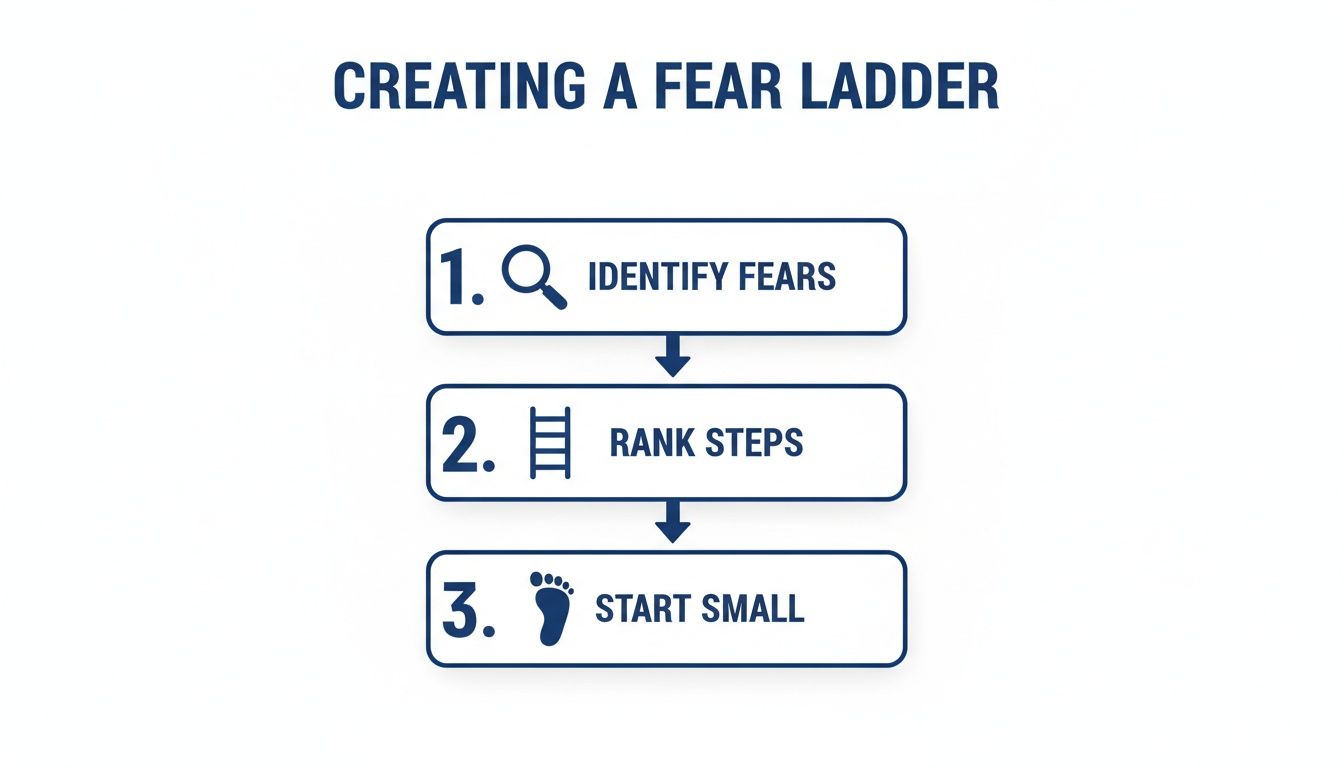
    This simple infographic breaks down how to create a fear ladder, a key tool for methodically building your resilience.

    A three-step guide on creating a fear ladder: identify fears, rank steps, and start small.

    As this visual guide shows, the process of facing fears isn't about diving into the deep end. It’s a structured approach, starting with self-awareness and moving toward small, deliberate actions.

    The Power of Connection and Support

    Fear loves to grow in isolation. When you're alone with your worries, they can feel enormous and insurmountable. This is why connection is a vital piece of your well-being toolkit.

    Reaching out to friends, family, or a support group can offer perspective, comfort, and a reminder that you are not alone. In India, where community and family ties are central to life, this can be an incredible source of strength and happiness.

    And if you feel your immediate circle doesn't quite understand, seeking professional counselling or therapy can provide that safe, non-judgemental space. Your toolkit is a combination of self-care and supported care—knowing when to lean on each is a true sign of strength.

    When to Consider Professional Support

    Knowing when to reach out for help is not a sign of weakness; it's an act of courage and self-awareness. While the strategies we've discussed are powerful, there are times when the weight of fear, stress, or anxiety is too heavy to lift on your own.

    That’s when bringing in a professional can make all the difference. If fear consistently gets in the way of your work, relationships, or joy, talking to a professional can offer a clear path forward. Therapy and counselling provide a safe, confidential space to unpack these feelings without judgement.

    Understanding Your Support Options

    What's the difference between counselling and therapy? Counselling often focuses on specific, immediate issues—like navigating workplace stress or a tough life transition—and is usually more short-term.

    Therapy often takes a wider view, helping you explore deeper, long-standing patterns of thought and behaviour that might be fuelling chronic anxiety or persistent feelings of depression. The goal is to foster a deeper self-understanding that leads to lasting change and resilience.

    Seeking professional help is an investment in your well-being. You’re partnering with a trained expert to build the tools you need to face life's challenges with more compassion and courage.

    If you’re feeling anxious, you are not alone. In India, a 2021 study involving over 10,000 people revealed that 88% reported feeling anxious post-pandemic, leading to a significant increase in people seeking therapy. This shows that asking for help is a normal part of taking care of your mental health. You can read the full research about anxiety and resilience in India to learn more.

    How to Find the Right Professional

    Finding a therapist doesn't have to be overwhelming. When you're looking, try to find qualified professionals with experience in areas you're dealing with, like anxiety or stress management. Many offer an initial consultation, which is a great opportunity to see if you connect with their style.

    Choosing to get help is a powerful step. It's not about finding a "cure," but about gaining a skilled ally who can help you build resilience, manage your fears, and cultivate a stronger sense of well-being.

    Supportive Takeaways

    Building courage is a personal journey, not a race to a finish line. Remember that progress, not perfection, is the goal. Here are a few supportive takeaways to keep in mind.

    Is It Possible to Get Rid of Fear Completely?

    The goal isn’t to erase fear. Fear is a natural, protective instinct. The real aim is to change your relationship with it, so it no longer controls your decisions. True fearlessness means acting with courage, even when fear is present.

    How Long Does This Take?

    There's no set timeline, as everyone's journey is unique. Some people feel small shifts in their mindset within a few weeks of consistent practice. Building deep, lasting resilience is more like a marathon than a sprint, so be patient and compassionate with yourself.

    What’s the Difference Between Fear and Anxiety?

    Fear is typically a response to a clear, present danger. Anxiety, on the other hand, is often a more vague, persistent feeling of dread about a future threat. Though they feel different, the tools for managing them—like mindfulness, reframing thoughts, and counselling—work well for both.

    Remember, the aim isn't a life without fear, but a life where fear doesn't have the final say. True courage is moving forward despite the feeling, a skill that strengthens with practice and compassion for yourself.

    This is all about building a more resilient you, anchored in a strong sense of well-being and happiness.


    If you feel like fear or anxiety is consistently holding you back, talking to a professional can be a game-changer. There are many resources available with qualified therapists and informational assessments to help you find your footing. Please note, any assessments are for informational purposes only and are not a substitute for a professional diagnosis.

    Take the next step with confidence and find the right support for your journey.

  • How to Overcome Fear of Failure

    How to Overcome Fear of Failure

    Learning how to overcome fear of failure is not about erasing the feeling completely. It's about understanding it's a shared human experience, and reframing setbacks as valuable lessons rather than dead ends.

    This means breaking down large goals into smaller, manageable steps. It's about building the mental resilience needed to ensure fear no longer controls your decisions.

    Understanding Why We Fear Failure

    Have you ever felt that worry in your stomach before a big presentation or hesitated to apply for a dream job? You are not alone. The fear of failure is a powerful emotion, often tied to our concerns about judgment, disappointing others, or not meeting our own high expectations.

    At its core, this fear is a protective instinct. But when it becomes too strong, this instinct can hold us back from reaching our full potential.

    This feeling isn't just an internal struggle; it is often amplified by external pressures. In India, where competition in academics and careers can be intense, this fear is a major contributor to workplace stress and anxiety. The pressure to succeed can make any potential misstep feel like a catastrophe.

    The Psychological Drivers of Fear

    To loosen fear's grip, it helps to understand where it comes from. More often than not, this fear is powered by common psychological drivers that quietly shape our thoughts. Bringing them into the light is an empowering first step.

    Here are a few common sources:

    • Perfectionism: The belief that anything short of a perfect result is a total failure.
    • Past Experiences: A negative experience where a mistake led to harsh criticism can leave a lasting emotional impact.
    • Fear of Disappointing Others: We often seek approval from family, bosses, or peers, and the thought of letting them down can feel overwhelming.
    • Low Self-Esteem: If you doubt your own worth, you might see any failure as confirmation of your deepest insecurities.

    By gently examining these roots, you can begin to see fear as a set of learned beliefs, not an unchangeable part of who you are. This shift in perspective is crucial for building lasting resilience and improving your overall well-being.

    Ultimately, this journey is about learning to move forward with the fear, not waiting for it to disappear. While professional therapy or counselling offers a safe space to explore these feelings, the process starts with self-compassion.

    The Toll of Fear on Mental Well-being

    Living under the constant shadow of failure is exhausting. This persistent worry can trap you in a cycle where the dread of making a mistake becomes so overwhelming that you avoid new challenges. It's a heavy burden that can quietly limit your world over time.

    When this fear becomes constant, it can lead to severe workplace stress, exhaustion, and even burnout. Imagine your nervous system being on high alert for every task, making it nearly impossible to relax, focus, or feel proud of your achievements.

    The Link Between Fear, Anxiety, and Burnout

    There is a clear path from a deep fear of failure to conditions like anxiety and depression. This fear often fuels a loop of negative thinking where you might constantly imagine the worst-case scenario or criticize yourself for small mistakes. It's like living with a harsh inner critic who never quits.

    This mental state can feel incredibly isolating, but these feelings are far more common than you might think, especially in high-pressure environments. Recognising this connection is the first step toward breaking the cycle and prioritising your mental health.

    Remember, feeling stressed or anxious about failure is not a sign of weakness. It's a sign that you are human, navigating a world that often values success over the courageous process of trying.

    A Look at the Bigger Picture in India

    These feelings often reflect larger societal pressures. In India, for instance, intense competition in education and the corporate world has created an environment where the fear of not measuring up is widespread. This has a real impact on our collective well-being.

    Recent reports show that around 70% of students in major Indian cities experience anxiety, with over half showing symptoms of depression tied to academic pressure. In the corporate world, 86% of employees report struggling with stress, often driven by a fear of underperforming. You can explore the full report on student mental health for more details.

    From Resilience to Happiness

    Acknowledging the cost of fear is important, but it's not the end of the story. This is where concepts from positive psychology like resilience, compassion, and happiness become so powerful. Building resilience isn't about becoming immune to failure; it's about learning to get back up, stronger and wiser each time.

    Practising self-compassion means treating yourself with the same kindness you would offer a friend. This single shift can dramatically improve your well-being and reduce the anxiety tied to potential mistakes.

    Learning how to overcome fear of failure is a journey toward a more balanced life. By finding the right support, whether through therapy, counselling, or other resources, you can face challenges with more confidence and reclaim your sense of happiness.

    Pinpointing Your Personal Fear Triggers

    To learn how to overcome fear of failure, you need to understand your own mind. This fear is often set off by specific situations, thoughts, or beliefs we may not be aware of. Identifying your personal triggers is the first step toward regaining control.

    Think of a trigger as the spark and the fear as the fire. If you can spot the spark, you can manage it before it grows. This self-discovery is essential for building genuine resilience and improving your well-being.

    Understanding the Beliefs That Hold You Back

    At the heart of most fear triggers are what some psychologists call limiting beliefs. These are assumptions we carry about ourselves and the world, often formed in childhood or through difficult experiences. They operate in the background, shaping our reactions to challenges.

    For example, an employee might hesitate to share a creative idea, thinking, "What if they think it's stupid?" This worry is likely tied to a deeper belief like "I must be perfect to be valued." Addressing the root belief is more powerful than just managing the surface-level anxiety.

    Some common beliefs that fuel the fear of failure include:

    • "Failure is a sign that I'm weak."
    • "If I don't succeed, I’ll lose everyone’s respect."
    • "I need others' approval to feel worthy."
    • "Making a mistake is unacceptable and shameful."

    These beliefs feel true, but they are just perspectives that can be challenged and changed. Working with a professional through counselling can be a great way to safely explore and re-frame these core beliefs.

    Journaling Prompts to Uncover Your Triggers

    Quiet reflection can reveal patterns you have never noticed before. Journaling is a simple yet powerful tool for this, offering a private space to unpack your thoughts and feelings. This can help you understand the roots of your anxiety.

    Set aside a few minutes and try these prompts. Remember, this is an informational exercise for your own insight, not a tool for self-diagnosis.

    1. Think about a recent time you felt a strong fear of failure. What was the situation?
    2. What specific thoughts were going through your mind? Write them down as you remember them.
    3. What did you feel in your body (e.g., tight chest, racing heart)?
    4. How did you react? Did you avoid the task or push through the fear?
    5. Can you connect those thoughts to any of the limiting beliefs mentioned earlier?

    This exercise is about gathering information with curiosity and kindness. Over time, you may start to see connections between certain situations and the internal stories that trigger your fear.

    This self-awareness is your starting point. It transforms the fear from a vague threat into something specific you can work with, rather than run from.

    From Unhelpful Beliefs to Balanced Perspectives

    Once you start spotting unhelpful beliefs, the next step is to gently challenge them. This means questioning their truth and consciously adopting a more balanced and compassionate viewpoint. This process is a cornerstone of many therapies and is crucial for managing workplace stress.

    The goal is not to force positive thinking but to find a realistic, kinder middle ground. This table can help you practice making that shift.

    Challenging Unhelpful Beliefs with Balanced Perspectives

    This table helps you identify common negative thought patterns linked to fear of failure and offers healthier, more compassionate alternatives to practice.

    Unhelpful Belief Balanced and Compassionate Perspective
    "If I make a mistake on this project, my boss will think I'm incompetent." "Everyone makes mistakes. I will do my best, and if something goes wrong, it's an opportunity to learn, not a judgement on my total worth."
    "I have to get this promotion, or my career is over." "This promotion is important to me, but my career is a long journey. There will be other opportunities, and my value isn't defined by this one outcome."
    "Everyone else seems to handle this pressure so easily." "I can't know what others are truly feeling. My job is to focus on my own journey and be kind to myself as I navigate this challenge."

    When you consistently practise this kind of re-framing, you start to rewire your brain's default settings. You are building mental and emotional resilience, making it easier to face challenges without being derailed by fear or the risk of depression. It is a skill that gets stronger with use.

    Practical Strategies to Build Resilience

    Recognising your fear triggers is a huge first step. Now, the journey of learning how to overcome fear of failure continues with practical strategies. Think of this as building the mental and emotional muscle to face challenges with courage.

    These are not quick fixes but evidence-based techniques that can create lasting change in your well-being. Building resilience takes regular, intentional effort. The aim is to learn how to act despite the fear, turning it from a roadblock into a source of strength.

    Reframe Your Negative Thoughts

    One of the most powerful tools you have is your ability to change your perspective. In therapy, this is sometimes called cognitive restructuring. It's about catching negative, automatic thoughts and actively challenging them.

    For example, before a presentation, you might think, "I'm going to mess this up and everyone will think I'm incompetent." This thought alone can increase your anxiety.

    Here’s how you can reframe it:

    • Question the Evidence: Ask yourself, "What proof do I have that this will happen?" You have likely succeeded in the past.
    • Find a More Balanced View: A more realistic thought might be, "I'm nervous, and that's normal. I've prepared, and I can handle small stumbles."
    • Focus on Effort, Not Perfection: Aim to do your best and share what you know, rather than aiming for a flawless performance. This can lift a huge amount of pressure.

    This is a core technique often explored in counselling to manage workplace stress. It's about choosing a more helpful and realistic internal story.

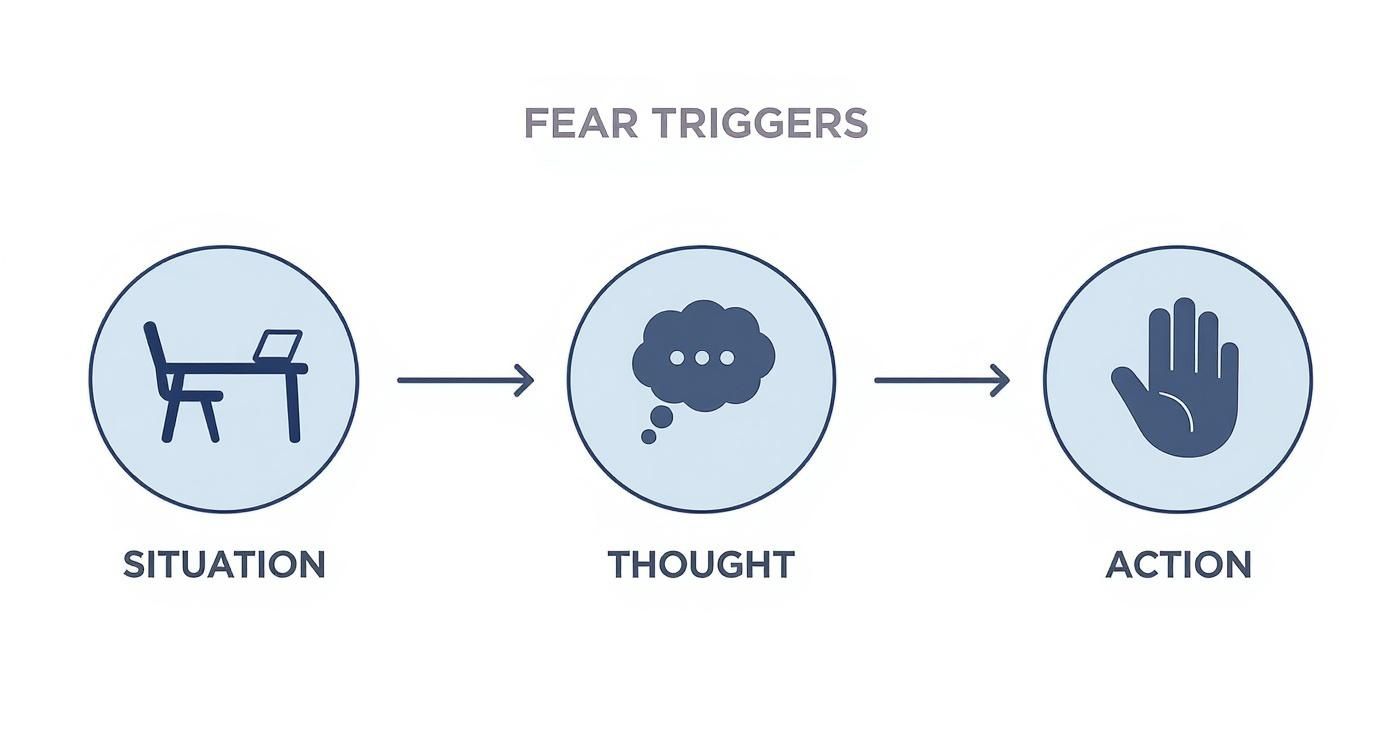
    The fear response usually follows a pattern: a situation triggers a thought, which in turn dictates your action.

    Diagram illustrating fear triggers, showing a situation leading to a thought, then to an action.

    As this shows, it's our interpretation of an event, not the event itself, that powers our response.

    Take Small, Manageable Steps

    When a goal feels overwhelming, the fear of failing at it can be paralysing. Breaking down a large goal into tiny, achievable steps can help. Tackling the easiest part first builds momentum and confidence.

    For instance, if you have a fear of networking:

    1. Start small: Send a connection request to one person on LinkedIn with a personalised note.
    2. Level up slightly: Leave a thoughtful comment on a post from an industry leader you admire.
    3. Keep it incremental: Attend a small, local meet-up where the stakes are low.

    Each small success proves to your brain that you can handle the situation. This method systematically reduces the associated fear and anxiety, allowing you to build resilience one step at a time.

    Shift Your Focus from Outcome to Process

    Our culture is often obsessed with results, which can make any potential failure feel like a catastrophe. This can lead to immense stress and sometimes even symptoms of depression. A powerful mental shift is to move your focus from the final result to the process itself.

    Instead of focusing only on the outcome, celebrate the effort, the learning, and the courage it took to try.

    Try setting process-oriented goals. For example, if you're launching a business, your goals could be:

    • "I will make 5 outreach calls every day."
    • "I will spend 1 hour learning about digital marketing."
    • "I will get feedback from 2 mentors this week."

    You have control over these actions, regardless of the final result. This shift reduces the fear of failure and boosts your sense of control, which is a cornerstone of sustainable well-being.

    Build a Supportive Environment

    Trying to tackle a deep-seated fear on your own can be an uphill battle. Surrounding yourself with supportive people—a trusted mentor, encouraging colleagues, good friends, or a professional therapist—is vital.

    Sometimes, simply sharing your fears with someone you trust can make them feel less powerful. Developing effective coping strategies for stress is fundamental, and a good support network provides a safe space to practice them. Reaching out for connection is a sign of strength.

    By using these strategies together, you create a powerful toolkit for managing fear. These are practical, actionable steps you can start taking today to build a more resilient and fulfilling life.

    How the Fear of Failure Kills Innovation

    The fear of failure is more than a personal hurdle; it's a brake on collective progress. When creative people hold back from taking chances, innovation slows down. This creates a barrier to the experimentation that fuels breakthroughs.

    This hesitation is often rooted in how our culture views setbacks. We tend to see mistakes as dead ends rather than valuable lessons. The fear of judgment or professional consequences can feel so immense that the safest option seems to be not trying at all.

    The Ripple Effect on the Economy

    On a larger scale, this fear affects the entire economy. Strong economies are built by people brave enough to innovate. If a large part of the population is held back by what might go wrong, it leads to missed opportunities for growth.

    The Global Entrepreneurship Monitor report flags fear of failure as a major roadblock for entrepreneurs. In 2024, nearly half (49%) of people surveyed, including in India, said this fear would prevent them from starting a business. India is among the top 10 countries with a high fear of failure rate, around 50%. You can explore the data on global entrepreneurship trends and their barriers.

    Understanding this context helps move the conversation away from individual blame. When you see this is a widespread challenge, it can quiet your inner critic and highlight the need for systems that encourage smart risks.

    Building a Culture Where It’s Safe to Fail

    The solution is creating environments where it feels genuinely safe to fail. This idea, known as psychological safety, is the secret ingredient for any truly innovative space.

    What does that look like in practice?

    • Leaders share their own setbacks: When managers are open about their mistakes, it makes it okay for everyone else to be human, too.
    • Ideas are separated from identities: Feedback focuses on the project, not the person, which takes the personal sting out of critique.
    • "Failing forward" is the mantra: Setbacks are treated as learning opportunities, not something to be hidden.

    By building this kind of culture, we can reframe failure as a necessary part of creating something new. It’s about building the resilience to try, learn, and try again.

    Learning how to overcome fear of failure is not just for personal well-being; it's a contribution to our collective progress. Seeking therapy or counselling can be a powerful step to build the confidence needed to handle workplace stress and embrace this mindset.

    When to Seek Professional Support

    Two beige armchairs, a small table with a plant, and sunlit window create a peaceful room.

    The strategies we've covered are excellent tools, but sometimes the fear of failure runs deep. If it consistently holds you back or causes constant anxiety, it may be time to speak with a professional. Seeking support is a sign of strength.

    Reaching out is about taking control of your well-being. Therapy and counselling offer a safe, confidential space to explore the roots of this fear. A trained professional can provide personalised strategies to manage anxiety and rebuild your self-belief.

    Recognising the Signs

    It can be hard to know when normal worry has crossed a line. However, there are some clear signals that it might be time to consider professional guidance.

    Look out for these patterns:

    • Constant Avoidance: You consistently turn down opportunities because the thought of not succeeding is too much to handle.
    • Persistent Anxiety: The worry is a constant presence, affecting your mood and causing daily distress.
    • Physical Symptoms: You are dealing with ongoing sleep problems, fatigue, or panic attacks related to performance workplace stress.
    • Negative Self-Talk: Your inner critic has become a relentless bully, making you feel worthless in a way you can't shake on your own.

    Think of these as signposts, not diagnoses. Assessments from a trusted platform can be a helpful, informational first step to better understand your emotional patterns and guide you toward the right support.

    Finding the Right Path for You

    Support is not one-size-fits-all, so finding the right fit is key. For career hurdles, exploring if a career coach is worth it can be helpful. For deeper emotional work around anxiety or depression, a qualified therapist is often the most direct path to lasting change.

    Getting help is a powerful investment in your mental health and long-term resilience. It can empower you to move forward with more courage and clarity.

    Frequently Asked Questions

    It's normal to have questions as you navigate your relationship with failure. This is a personal journey, and below are answers to a few common queries. Please remember, this content is informational and not intended as a diagnostic tool.

    Is It Possible to Completely Eliminate the Fear of Failure?

    The goal is not to eliminate fear entirely. A healthy level of concern motivates us to prepare and do our best. The real aim is to manage the fear so it no longer paralyses you.

    Building resilience through practices like mindfulness or cognitive reframing helps turn down the volume on that inner critic. It becomes a background notification rather than a roadblock, which is a huge win for your overall well-being.

    How Is Fear of Failure Different from General Anxiety?

    Think of fear of failure as a specific type of anxiety. It is focused on the imagined negative consequences of not meeting a certain standard, like during a work presentation or a personal project.

    Generalised anxiety is often broader, involving excessive worry about many different things, such as health, finances, or relationships. While they can overlap, if your fear of failure is causing significant distress or you see signs of depression, professional counselling can help clarify what is happening and provide the right support.

    What Is the First Small Step I Can Take if I Feel Overwhelmed?

    When you feel overwhelmed, the best first step is a quiet moment of self-awareness. Simply notice and acknowledge how you feel without judgment.

    You could also try writing down your thoughts in a notebook to get them out of your head. Another great starting point is a short, guided mindfulness exercise. It can help create distance between you and the overwhelming feeling, which is effective for reducing workplace stress. The goal is simply to give yourself a little breathing room.


    This article is for informational purposes only. If you are struggling, please seek guidance from a qualified mental health professional. The journey to well-being is a brave one, and taking the first step is a sign of great strength. Every effort you make to understand yourself and build resilience is a meaningful step toward a more fulfilling life. You deserve support and kindness on this path.

  • How to Stop Worrying And Calm Your Mind

    How to Stop Worrying And Calm Your Mind

    Learning how to stop worrying isn't about flipping a switch. You won’t suddenly feel no anxiety at all. Instead, it's about gently untangling anxious thoughts and finding healthier ways to respond.

    Think of it as building mental muscle. This skill improves your resilience and well-being for the long haul.

    Understanding Why You Worry and How to Move Forward

    Worry is a natural response. But when it becomes a constant chatter in your head, it can feel exhausting. Pressures from work, family, and social expectations can keep us stuck in stress and anxiety.

    The first step is to reframe how you see worry. It’s not a flaw or a weakness. It’s a signal your brain is waving to tell you something needs attention.

    Here in India, the weight of career ambitions and family expectations often fuels this endless loop of anxious thoughts. This can affect your sleep, your relationships, and your ability to enjoy simple moments.

    A person sitting calmly on a windowsill, looking out at a peaceful city view, representing a moment of quiet reflection.

    The Roots of Worry in Daily Life

    Chronic worry often springs from uncertainty or feeling out of control. Everyone’s triggers look a bit different:

    • Workplace Stress: Deadlines, performance pressure, or fears about job security can fuel anxiety.
    • Personal Responsibilities: Managing family needs, finances, and health can leave little room for rest.
    • Societal Pressures: Messages about success and perfection can turn small stumbles into big catastrophes.

    A 2021 report showed India had 2.6 million diagnosed cases of anxiety disorders among those aged 10–24—the highest figure globally for that age group. You can discover more insights about these findings on youth mental health directly from the report.

    Worrying does not take away tomorrow's troubles; it takes away today's peace.

    This quote reminds us that worry drains our peace. Building emotional resilience starts here.

    Self-compassion is a powerful tool. Instead of judging yourself for worrying, get curious. Ask what your thoughts are trying to tell you. This simple shift supports your mental well-being.

    Talking with a trusted friend or keeping a journal can help you notice patterns. And if you ever feel stuck, seeking professional counselling or therapy is a proactive, caring step—not a sign of failure.

    Practical Ways to Break the Worry Cycle

    When you’re caught in an anxious loop, you need tools that work right now. Pushing worries away often gives them more power. The goal is to interrupt the cycle with simple, practical techniques.

    A close-up of a person's hands gently holding a small, delicate plant, symbolizing care and grounding.

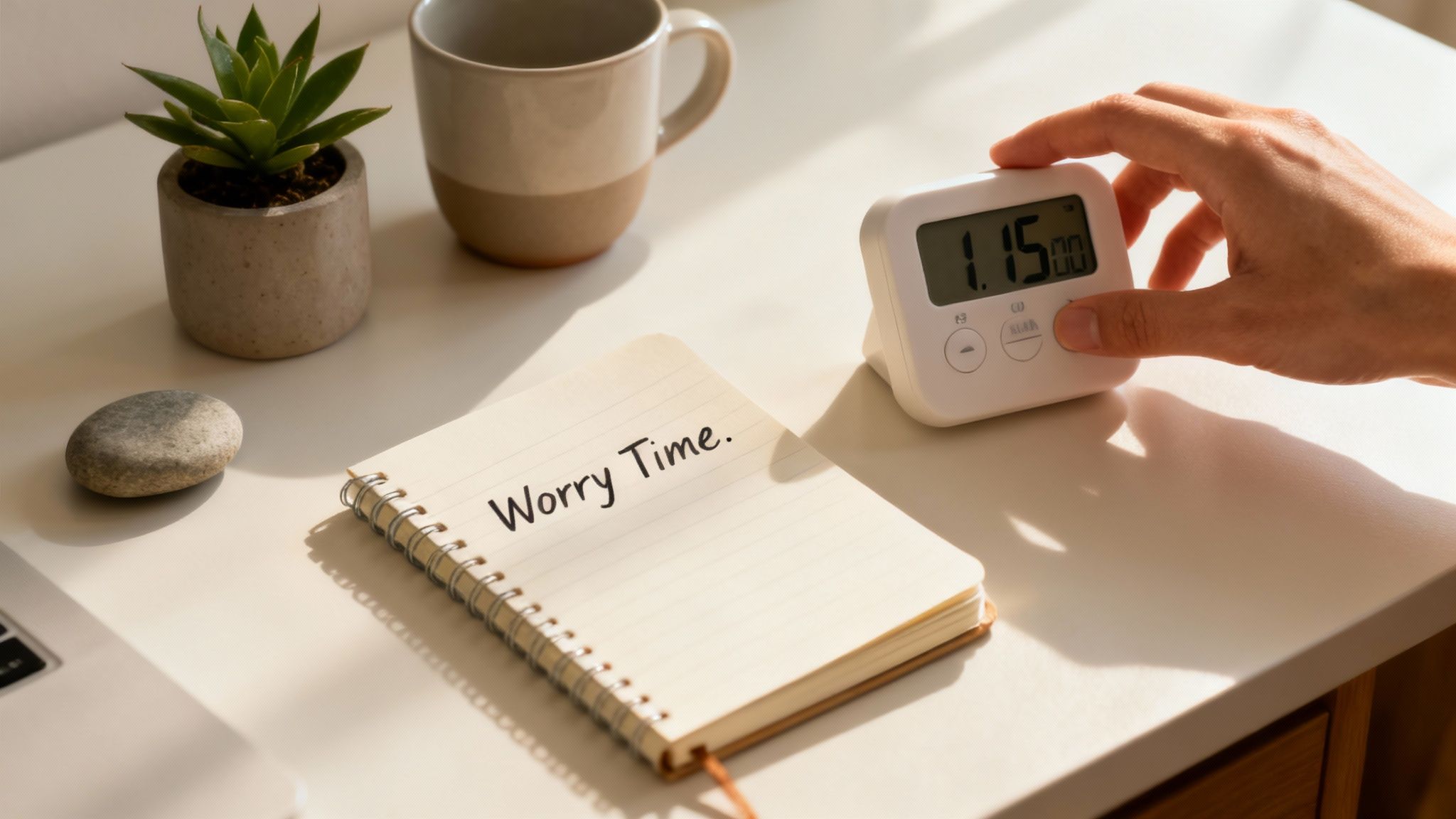
    Create a 'Worry Window'

    A “worry window” helps you control when you face concerns. Choose a 15-minute slot each day—say 6 PM—to sit with your worries.

    When a worry pops up outside that window, acknowledge it and remind yourself, “I’ll deal with this at 6 PM.” This simple act frees your mind for other tasks.

    Ground Yourself in the Here and Now

    Grounding exercises pull you back to the present. One favourite is the 3-3-3 Rule. It works for workplace stress or any spike of anxiety.

    1. Notice 3 things you can see around you.
    2. Listen for 3 sounds you can hear.
    3. Move 3 parts of your body, like wiggling toes or shrugging shoulders.

    This sensory focus breaks the chain of “what if” thoughts. You can also try other grounding techniques for anxiety to anchor yourself in the present.

    Remember, these tools help you manage worry—they're not a magic cure for anxiety or depression.

    Gently question anxious thoughts using cognitive reframing. Ask, “What evidence supports this fear? Is there a more realistic outcome?” This practice builds resilience and reduces the power of catastrophic thinking.

    Worry-Breaking Techniques at a Glance

    Technique What It Does Best Used When
    Worry Window Contains worrying to a specific, limited time slot each day. Worries creep in and disrupt your focus all day long.
    3-3-3 Rule Uses your senses to pull you into the present moment. You feel a sudden spike of anxiety or spiralling thoughts.
    Cognitive Reframing Gently questions and challenges the logic behind an anxious thought. You’re stuck on a persistent “what if” scenario that feels catastrophic.

    Keeping a few of these tools handy can make all the difference when worry starts to take over.

    Building Long-Term Resilience Against Stress

    A person practicing yoga on a mat in a brightly lit room, signifying the connection between physical and mental well-being.

    Quick fixes can help in the moment, but lasting resilience grows through small, steady habits. Think of resilience as a muscle that needs daily exercise.

    Cultivating Mindfulness And Presence

    Mindfulness means noticing what’s happening right now, without rushing to judge or solve. Even a five-minute pause can shift how you handle the day.

    • Mindful Breathing: Focus on each inhale and exhale. When thoughts wander, gently return to your breath.
    • Body Scan Meditation: Lie down and notice sensations from toes to head, without trying to change anything.

    Regular practice can loosen anxiety’s grip over time and support your overall well-being and happiness.

    Resilience is not about avoiding stress but learning to recover from it with compassion and practice.

    The Powerful Link Between Body And Mind

    Physical routines directly impact emotional resilience. Small changes can make a big difference:

    • Nutrition: Include foods rich in Omega-3s, magnesium, and B vitamins—like oily fish, nuts, and whole grains.
    • Sleep: Aim for 7–9 hours of rest each night. A consistent bedtime calms your stress response.
    • Movement: A simple 20-minute walk or gentle stretching lowers cortisol without a full gym workout.

    Journaling For Clarity And Self-Compassion

    Journaling creates space to untangle thoughts. A quick evening “brain dump” for five to ten minutes can lighten your mental load.

    Writing without judgement transforms worries into something you can work with. If you need more guidance, professional counselling can offer personalised support, but a journal remains a powerful first step.

    Navigating Workplace Stress and Preventing Burnout

    For many, the workplace fuels chronic worry. Deadlines, high expectations, and always-on cultures can spark both anxiety and burnout. Learning to stop worrying at work means taking back control of your time and energy.

    It starts with healthy boundaries. Politely decline extra tasks when your plate is full. Truly log off at the end of your workday—protecting your personal time is essential for long-term well-being.

    A person at their desk taking a mindful break, looking away from their screen and stretching, with a calm and focused expression.

    Smart Strategies for Managing Your Workload

    Feeling swamped by your to-do list is a classic worry trigger. Productivity methods can restore order and calm.

    The Pomodoro Technique is one to try. Work in 25-minute sprints, then take a five-minute break. This rhythm helps you stay focused without mental fatigue.

    Mindful breaks are just as important. Stand up, stretch, walk to the window, or close your eyes and breathe. These tiny resets interrupt the stress cycle and bring you back with a clearer mind.

    If you want more guidance on workplace wellbeing, check out effective workplace stress management strategies.

    Your career can be a source of fulfilment, not chronic worry. Small, consistent actions build resilience and support your mental health.

    These practices are acts of self-compassion that protect you from deeper issues like depression. And if stress ever feels too much, professional counselling or therapy offers targeted strategies to thrive without sacrificing your peace.

    When and How to Seek Professional Support

    Sometimes self-help tools need a partner in professional support. That’s perfectly okay. Recognising you might need more help is a sign of strength, not weakness.

    Assessments offered by therapists or online platforms are informational, not diagnostic. They can guide you toward useful strategies, but only a qualified professional can provide a formal diagnosis.

    Knowing When Worry Is Something More

    Everyday worry ties to specific concerns like a looming deadline or exam. It’s temporary.

    Anxiety often feels persistent and hard to pin down. You might carry unease even when there’s no clear reason. Physical symptoms like a racing heart can appear.

    Depression involves long-lasting low mood, loss of interest in activities, and a sense of hopelessness that disrupts daily life.

    If your worry is running the show—ruining sleep, work, or relationships—it may be time to talk to a professional. Remember, these pointers are for awareness, not a substitute for diagnosis.

    Finding the Right Support for You

    The connection with your therapist matters. Finding someone you click with makes all the difference.

    Access to mental healthcare in India is growing, with more in-person and online options. Platforms like DeTalks help you find qualified professionals who fit your budget and preferences.

    Consider what you need—specialisation, approach to counselling, or online versus in-person sessions. Many therapists offer a short initial chat to see if it’s a good fit before you commit.

    Therapy isn’t about being “fixed.” It’s about being heard, understood, and guided as you learn healthier ways to manage thoughts and life’s challenges, including workplace stress.

    Got Questions About Managing Worry? Let's Talk.

    It’s normal to have questions when you start using these tools. Learning how worry works is part of feeling confident you can manage anxious thoughts.

    Is It Realistic to Think I Can Stop Worrying Forever?

    Worry is a basic human emotion that helps us spot problems. The goal isn’t to silence it completely—that’s not possible. It’s to manage it so it doesn’t run your life.

    With consistent practice, you can dial down worry’s volume and frequency. It becomes an alert, not a tidal wave.

    How Can I Tell if My Worrying Is Just ‘Normal’ or Something More Serious?

    Everyday worry is tied to specific events. But if you feel unstoppable worry, constant unease, or physical symptoms like a racing heart, it could point to an anxiety disorder.

    Guides like this are for information and insight, not a diagnosis. If worry spirals out of control, professional counselling or therapy can give you clarity and a structured plan.

    I’m Already in Therapy. Can I Still Use These Techniques?

    Absolutely. These strategies complement professional therapy. Journaling, grounding exercises, and boundary-setting reinforce the progress you make with your counsellor.

    Share any new techniques with your therapist to ensure they fit your treatment plan. Together you can weave these tools into your daily routine for the best results.


    Ready to take that next step? At DeTalks, we help you find qualified therapists and provide science-backed assessments to support your journey towards better mental well-being. Find the right support for you on DeTalks

    Supportive Takeaways

    • You are not alone—worry is a shared human experience.
    • Small, consistent actions build lasting resilience.
    • These techniques are tools, not quick fixes or cures.
    • Assessments are informational, not diagnostic.
    • Kindness and compassion toward yourself fuel well-being.