
Deciding to explore online counselling for couples is a powerful statement about your commitment to your relationship. It’s a way to create a private, comfortable space to work through challenges and reconnect, all from home. This modern approach to therapy makes getting professional support easier than ever, giving you tools to build a stronger, more resilient partnership.
How Online Counselling Can Strengthen Your Partnership

If you're reading this, you might be looking for a way forward in your relationship. Perhaps you feel stuck in the same arguments or simply feel distant from each other. Juggling work, family, and personal life can strain even the strongest connections.
Online therapy offers a supportive setting to navigate everything from everyday stresses to deeper issues like anxiety or depression that may impact your relationship. The goal is to turn difficult moments into opportunities for growth and to improve your overall well-being.
A Safe Space to Heal and Grow
Online counselling provides a neutral space where a trained therapist guides the conversation. This ensures both partners have a chance to speak and feel heard without judgment. This process is key to understanding emotions and identifying the root causes of friction.
The point of therapy isn’t to decide who is right or wrong, but to build understanding and compassion. It’s about learning to express your needs while hearing your partner's, creating a foundation of trust.
This guided dialogue helps you move past old arguments and start rebuilding intimacy. For more on working through relationship issues, this dedicated couples therapy resource is a helpful starting point.
Building Skills for a Resilient Future
Effective online counselling provides practical skills for a lifetime. It empowers you with tools to improve communication, manage conflict, and enhance your emotional connection.
Here’s a glimpse of what you can learn:
- Communicate with compassion: Share your feelings and needs clearly and kindly, avoiding criticism or blame.
- Manage conflict constructively: Learn to handle disagreements in a way that brings you closer together.
- Enhance emotional connection: Re-ignite the friendship and affection at the heart of your partnership.
These are life skills that contribute to a happier, healthier relationship and build long-term resilience.
What Are the Real Benefits of Choosing Online Therapy?
Choosing to get support for your relationship is an act of care. With online counselling for couples, you bring that support right into your home, fitting it into your life without disruption. It makes the process feel more approachable and less intimidating.
This shift to digital well-being has made professional guidance more available than ever. It removes practical barriers like traffic or conflicting schedules, so you can focus your energy on each other.
It Just Fits Into Your Life
Online therapy respects your time and your space. You can connect with a qualified therapist from wherever you both feel comfortable, whether that's your living room or even from two different cities.
This flexibility is particularly helpful for couples in India juggling demanding careers, family duties, or long-distance relationships. Booking a session during a lunch break or after the kids are asleep makes consistency easier, and consistency is key to making progress.
Online therapy doesn't replace human connection; it makes professional support more accessible. By removing physical barriers, it creates a unique space for couples to be more open in their own environment.
Being in a familiar setting often helps you feel more relaxed and open. This can lead to more productive conversations, turning counselling into a positive, proactive part of your routine.
A Safe Space for Tricky Conversations
Privacy is the foundation of good therapy, and online platforms prioritize this. They offer a discreet, confidential space to discuss personal challenges like workplace stress and anxiety without the concern of a public waiting room.
This security encourages the honesty needed to address conflicts and heal. When you both feel safe, you are more likely to share what’s really on your mind, opening the door to greater understanding and well-being.
The growth in online mental health services shows a clear need for this kind of accessible support. In fact, India's therapy landscape is rapidly evolving, driven by growing awareness around mental well-being and modern pressures.
Building a Stronger, More Resilient Partnership
Online counselling does more than address current problems; it equips you with skills for long-term resilience. It's not just about getting through a rough patch, but learning to face future challenges as a stronger team.
Therapy provides practical tools to handle common relationship friction. Here’s a glimpse of what you can gain:
- Stress Management Skills: Learn to support each other when workplace stress or personal anxiety is high.
- Constructive Conflict Resolution: Discover healthier ways to discuss needs and resolve disagreements without blame.
- Genuine Empathy: Develop a deeper sense of compassion for each other's perspectives and experiences.
These skills are the foundation of a healthy relationship and individual well-being, helping prevent burnout and reduce the risk of more serious issues like depression.
Finding a Therapy Approach That Fits Your Needs
Starting online counselling for couples is a great first step. The next is recognizing that therapy isn't a one-size-fits-all solution. Every relationship is unique, and finding the right approach can make all the difference.
Think of different therapy approaches as toolkits for building a better relationship. Some focus on daily behaviors, while others explore deeper emotional patterns. Knowing the options helps you choose a path that aligns with your goals, whether it's improving communication or boosting your overall well-being.
The Gottman Method: Building a Stronger Relationship House
Based on decades of research, the Gottman Method provides a practical blueprint for a healthy relationship. It focuses on building friendship, trust, and managing conflict constructively. This approach is highly practical and skill-based.
Your therapist will guide you through exercises to strengthen your connection. You’ll learn to understand each other's inner worlds, express appreciation, and respond to bids for attention. This is a direct way to improve daily interactions and build lasting resilience as a team.
The Gottman Method teaches that small, positive moments are the foundation of a strong partnership. By learning to handle disagreements gently and nurture your friendship, you create a relationship that can withstand life's storms, including pressures from workplace stress and anxiety.
For example, a couple might practice a "softened start-up" to raise an issue, beginning with "I feel…" instead of blame. This simple change can turn a potential fight into a productive conversation.
Emotionally Focused Therapy: Tuning Into Your Emotional Music
Emotionally Focused Therapy (EFT) concentrates on the emotional bond that holds you together. It helps you understand the deeper feelings and unmet needs that fuel your conflicts. This can feel like learning to hear the "emotional music" playing beneath your arguments.
A fight is often about an underlying fear of disconnection. An EFT therapist helps you identify these negative patterns, such as one partner pursuing while the other withdraws. It's a powerful approach for couples feeling emotionally distant.
The benefits of online therapy make this work more accessible.
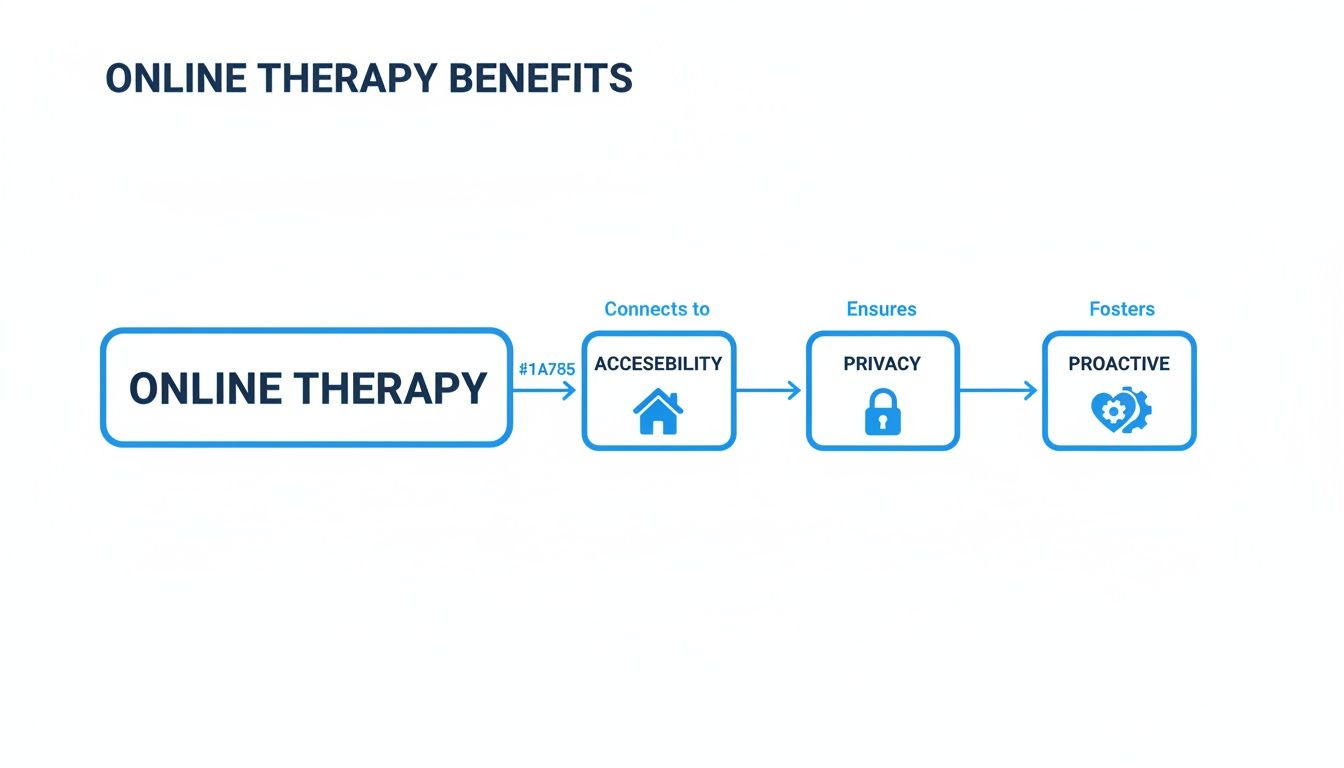
As the flowchart shows, online counselling for couples combines accessibility, privacy, and proactive care. This creates a supportive space for you to focus on your emotional connection and shared well-being.
Cognitive-Behavioural Therapy: Rewriting Your Relationship Scripts
Cognitive-Behavioural Therapy (CBT) for couples explores the link between your thoughts, feelings, and actions. It helps identify unhelpful assumptions or "scripts" you may have about your partner and the relationship. This method is practical and goal-oriented.
A CBT therapist helps you challenge these negative thought patterns. For instance, if you think, "They never listen," you might feel angry and withdraw. CBT teaches you to pause, examine the evidence, and reframe the thought, which can change how you feel and react.
This approach is helpful for specific challenges like communication roadblocks linked to anxiety or depression. It provides concrete tools to change unhelpful behaviors and improve your dynamic.
Comparing Popular Couples Therapy Approaches
Here is a quick overview of these common therapy models to help you understand their focus.
| Therapy Approach | Primary Focus | Best For |
|---|---|---|
| The Gottman Method | Building friendship and managing conflict with practical, skill-based tools. | Couples who want concrete strategies to improve their daily interactions. |
| Emotionally Focused Therapy (EFT) | Strengthening the emotional bond and breaking negative interaction cycles. | Couples feeling emotionally distant or needing to rebuild trust. |
| Cognitive-Behavioural Therapy (CBT) | Identifying and changing negative thought patterns and behaviours. | Couples dealing with specific issues linked to mental health. |
The best approach is the one that resonates with both of you and your goals.
So, Which Approach Is Right for You?
Choosing the right therapy is a conversation between you, your partner, and your therapist. The ideal method depends on your unique challenges and what you hope to achieve.
- Choose the Gottman Method if: You want practical tools to become better friends and navigate conflict constructively.
- Consider EFT if: You feel emotionally disconnected and want to get to the root of your arguments to rebuild intimacy.
- Explore CBT if: You need to tackle specific negative thoughts and behaviours with clear, actionable strategies.
Many therapists use an integrative approach, blending techniques to tailor therapy for you. Effective counselling provides a structured roadmap to help you reconnect and build a stronger partnership.
What to Expect From Your First Online Session
Starting online counselling for couples can bring a mix of hope and nervousness, which is completely normal. Knowing what to expect can ease any apprehension and help you both feel more prepared.
Think of the first session as a foundation-building opportunity. It’s a chance for you to get to know your therapist, and for them to get to know you.
The Initial Intake and Goal Setting
Your first meeting will begin with practical details, like confidentiality and how the online platform works. From there, the conversation will shift to you and your relationship's story.
The therapist will want to understand what brought you to counselling, exploring both the good times and the challenges. This is not an interrogation, but a gentle exploration to help the therapist understand your dynamic.
Remember, the first session is about setting the stage for future work. It’s a chance to create a shared vision for what a healthier, more connected relationship looks like for you.
You might discuss communication styles, recurring arguments, or external pressures like workplace stress. This initial conversation is crucial for setting meaningful goals together.
What a Typical Session Looks Like
A standard 60-minute session is a guided conversation where your therapist acts as a neutral facilitator. Their role is not to take sides but to help you both gain new perspectives and communicate more effectively.
Here’s a general idea of the flow:
- A Gentle Beginning: The session usually starts with a check-in to see how you are both doing.
- Guided Dialogue: You'll each have a chance to speak without the conversation spiraling into blame.
- Skill Introduction: Your therapist may introduce a practical tool, like a new communication technique.
- Supportive Closing: You'll review key takeaways, and you might receive a small task to work on before your next meeting.
This structure helps turn difficult conversations about topics like anxiety or resentment into opportunities for healing.
A Quick Word on Assessments
Your therapist might use a short questionnaire to gather more insight into your relationship dynamics. These are informational tools, not diagnostic tests. They are simply used to gather information.
Think of them as a way to fine-tune the process. The information helps your therapist tailor the therapy to your specific needs, ensuring the approach is as helpful as possible. The goal is always to equip you with the understanding needed to build resilience and a stronger connection.
How to Find the Right Therapist for You Both

The connection you build with your therapist is fundamental to your success. It’s worth taking the time to find a professional who feels right for both of you. This is about finding the best fit for your unique partnership and goals.
Your therapist should be a trusted ally who creates a balanced space where you both feel safe and understood. This comfort makes it possible to discuss difficult topics, from managing anxiety to navigating workplace stress. A good fit will motivate you both to engage in the process and build lasting resilience.
What to Look for in a Couples Therapist
When searching for online counselling for couples, knowing what to look for can make a significant difference. You want someone with specific experience in relationship dynamics.
Here are a few key things to consider:
- Credentials and Qualifications: Ensure the therapist is a licensed mental health professional, such as a psychologist or clinical social worker. This confirms they have the right training and adhere to ethical standards.
- Specialisation in Couples Therapy: Look for someone who specializes in couples or marriage counselling and is trained in evidence-based methods.
- A Therapeutic Approach That Resonates: Read the therapist’s profile to see if their philosophy aligns with your goals.
Platforms like DeTalks can simplify this search. They provide detailed profiles where you can review a therapist's qualifications, specialities, and approach to therapy.
Important Questions to Ask During a Consultation
Most therapists offer a short, free consultation call. This is your chance to interview them and get a feel for their style.
Your initial consultation is a chemistry check. Pay attention to how the therapist makes you both feel. Do they listen actively? Do you feel respected? This first impression is often a strong indicator of the therapeutic relationship to come.
Having a few questions ready can guide the conversation and help you make a confident choice.
Consider asking questions like these:
- What is your experience with couples facing issues similar to ours?
- How do you ensure both partners feel equally heard and supported?
- Could you describe your general approach to couples counselling?
- What can we expect from the first few sessions?
- How do you help couples set and work towards their goals?
A warm, empathetic, and professional tone is a great sign. Choosing the right person is a proactive step toward building a stronger foundation for your relationship and overall well-being.
Navigating the Cost of Couples Counselling in India
Let's discuss the practical side: the investment. Understanding the cost of online counselling for couples in India can help you commit to the process with clarity. The good news is that online therapy often makes professional support more affordable than traditional sessions.
This accessibility is a key reason for online therapy's growing popularity in India. By reducing overheads like rent and travel, digital platforms can offer more competitive pricing. This means more couples can access the support they need to improve their relationship and well-being.
Understanding Session Rates and Packages
The cost for online counselling for couples in India is quite competitive. Online session costs are often lower than in-person meetings, putting professional help within reach for more people.
Generally, you can expect online couple therapy sessions to be priced between ₹900 and ₹1,500. For marriage counselling, the range is often around ₹800 to ₹1,400. You can learn more about therapy pricing in India for a deeper breakdown.
Many platforms also offer packages, such as bundles of four or eight sessions, which usually come with a discount. This approach saves money and encourages commitment to the process, which is essential for lasting change.
Investing in your relationship is one of the most powerful decisions you can make. Viewing therapy as an investment in your shared happiness and resilience reframes the experience as a positive step toward a better future.
Simple Logistics and Complete Confidentiality
The logistics of online therapy are simpler and more flexible. Therapists often offer evening and weekend appointments to fit around work schedules. Payments are handled securely online, keeping the process smooth.
Most importantly, your privacy is taken seriously. Reputable platforms use secure, encrypted video technology to ensure your conversations remain confidential. This creates a safe space to discuss sensitive topics like anxiety or workplace stress, allowing you both to open up honestly.
Common Questions About Online Couples Counselling
It’s normal to have questions when considering online counselling for couples. Let's walk through some common queries to help you feel more confident about this positive step for your relationship.
Our goal is to clarify the process so you can see counselling as a proactive way to build a stronger, happier partnership.
Is Online Counselling as Effective as In-Person Therapy?
Yes, research has shown that online therapy can be as effective as traditional sessions for many issues, including relationship dynamics, anxiety, and depression. The key to success is the connection you build with your therapist and your commitment to the process.
For many couples, being in the comfort of their own home makes it easier to be vulnerable. While it's a common worry to ask, "does couple counselling work for different problems?", the evidence and success stories confirm that it does.
What if My Partner Is Hesitant to Try Therapy?
It’s common for one partner to be more eager than the other. Approach the conversation with empathy, not pressure. Frame it as a way for you both to learn new skills for handling life's challenges, like workplace stress, as a team to improve your well-being.
A great way to start is by suggesting you try just one session without any long-term commitment. Experiencing the supportive, non-judgmental space a therapist creates can often ease initial fears. Present therapy as a tool for building resilience together.
This collaborative approach is gaining traction. As noted in this trend in couples therapy, many young couples in India are proactively seeking to build healthy relationship foundations.
Is Everything We Discuss Kept Confidential?
Absolutely. Confidentiality is a cornerstone of all therapy. Licensed therapists are legally and ethically bound to protect your privacy. Reputable online platforms use secure, encrypted technology to ensure your conversations remain private.
This secure environment is vital for creating a safe space to talk honestly. Knowing your discussions are protected makes it easier to address sensitive topics, which is necessary for making real progress.
At DeTalks, we're here to help you find the right path forward for your relationship. Our platform is designed to connect you with qualified, compassionate therapists who specialise in working with couples. Explore our directory and take that first step toward a more connected and resilient relationship by visiting https://detalks.com.