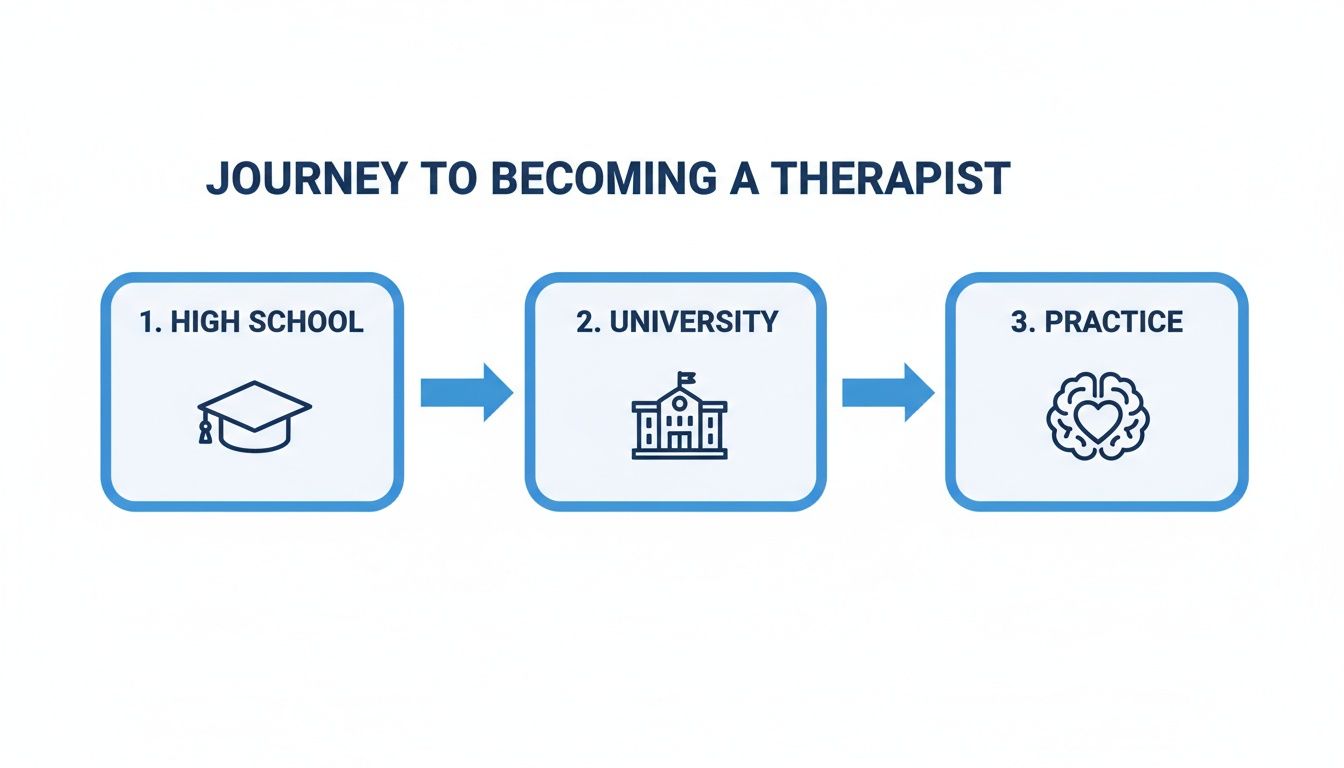
You’re probably not looking for just any job. You want work that feels meaningful, humane, and worth your energy. If you identify with the INFJ pattern, that makes sense. Many INFJs want a career that matches both their values and their need for depth, not just a title that sounds impressive.
That search can feel confusing. You may be good with people, but drained by constant social contact. You may care a great deal, yet struggle when workplace stress, anxiety, or other people’s emotions start to pile up. A career can look perfect on paper and still leave you exhausted.
That’s why the best careers for INFJ personalities aren’t only about “fit.” They’re also about sustainability. A role may suit your empathy and insight, but if it offers poor boundaries, unclear expectations, or nonstop emotional intensity, it can push you toward burnout.
In India, this tension shows up often. Many people choose stable or respected paths first, then later realise they need more purpose, more well-being, or a healthier relationship with work. That doesn’t mean you chose wrong. It often means you’re ready to choose more consciously.
This guide keeps things practical. You’ll find careers that often suit INFJ strengths, along with trade-offs, resume advice, and signs that it may be time to seek career counselling, therapy, or deeper self-understanding through assessments. Keep one thing in mind throughout: personality assessments are informational, not diagnostic. They can guide reflection, but they shouldn’t box you in.
1. Psychotherapist or Counsellor
If you’ve always been the person others open up to, this path may feel familiar. INFJs are strongly associated with helping professions, with counselling, therapy, psychology, and social work appearing as primary career pathways, according to Humanmetrics on INFJ careers.
That fit isn’t only about being kind. Good therapists need patience, pattern recognition, listening skill, and the ability to communicate clearly without taking over a client’s story. Those are qualities many INFJs naturally develop.
Why this can work well
Psychotherapy and counselling give you a structured way to help. Instead of carrying everyone’s feelings informally, you learn how to support people through boundaries, ethics, and evidence-based methods such as CBT, DBT, and psychodynamic work.
In India, this field is also becoming easier to access through online practice, therapist directories, and hybrid care models. That can suit INFJs who prefer calm, focused conversations over noisy, high-pressure workplaces.
Practical rule: If you want to help people professionally, get trained before you start advising them. Empathy matters, but skill protects both you and the client.
What works and what doesn’t
What works is formal training, supervision, and a clear scope of practice. What doesn’t work is relying only on intuition or assuming that being “good with people” is enough.
This career can be deeply fulfilling, but it’s emotionally demanding. If you absorb other people’s distress too easily, you’ll need strong routines around rest, peer consultation, and your own therapy when needed.
A good resume for this path should show more than compassion. Include counselling internships, mental health coursework, supervised practice, helpline work, and any training in trauma, grief, anxiety, depression, or relationship support.
Watch the burnout risk
One major gap in common INFJ career advice is burnout in helping roles. As noted by Diary of an Introvert’s discussion of careers for INFJ, INFJ-friendly job lists often praise therapy and social care work without really addressing compassion fatigue, emotional exhaustion, or the need for boundaries.
If you’re drawn to therapy, take that risk seriously from day one. Wanting to care for others is a strength. Turning yourself into an emotional sponge isn’t.
2. Life Coach or Executive Coach
Not every INFJ wants to work in clinical mental health. Some prefer growth-focused conversations with people who are functioning well but feel stuck, underconfident, or disconnected from purpose. That’s where coaching can fit.
Coaching often suits INFJs who like insight, goal clarity, and one-to-one transformation, but don’t want to diagnose or treat mental illness. The distinction matters. Coaching isn’t therapy, and ethical coaches know when to refer a client for counselling, psychiatric support, or deeper mental health care.

Where INFJs often shine
Executive coaching, career coaching, and life coaching all rely on careful listening and strong questions. INFJs are often good at seeing the gap between how someone is living and what they value.
This can be especially useful for clients dealing with workplace stress, career confusion, low motivation, or leadership challenges. In India’s urban job market, many professionals want support that feels practical and personal, not just motivational.
A coaching resume should show niche clarity. “Life coach” is too broad. “Career transition coach for mid-career professionals” or “executive coach for managers facing burnout and communication challenges” is much stronger.
The trade-offs
Coaching can be flexible and meaningful, but it also requires self-promotion. That’s where many INFJs hesitate. If you dislike visibility, sales calls, or building a personal brand, coaching may feel heavier than the actual client work.
The people who do well here usually build systems that reduce friction:
- Choose a clear niche: Pick one client group, one core problem, and one style of support.
- Use ethical boundaries: Refer clients to therapy when anxiety, depression, trauma, or relationship distress move beyond coaching scope.
- Build trust through content: Share useful reflections, workshops, or short posts that sound like you, not generic hustle advice.
The work itself may suit you. Running the business is the key test.
3. Human Resources or Organisational Psychologist
Some INFJs want to help people at a systems level. They care about individuals, but they also notice patterns in culture, power, communication, and stress. That makes HR and organisational psychology an underrated option.
This path is a strong fit if you want to improve well-being at work, reduce conflict, support employee mental health, or shape healthier teams. In Indian companies, especially larger organisations and start-ups scaling quickly, humane HR is badly needed.
The version of HR that suits INFJs
Routine compliance-heavy HR may feel dry. People operations, employee relations, learning and development, DEI work, wellness strategy, and organisational development often fit better.
You’re not just filling positions. You’re building conditions where people can do good work without constant anxiety, confusion, or avoidable workplace stress.
Real examples include designing induction experiences, improving manager communication, supporting return-to-work after mental health leave, and connecting employees with counselling or therapy resources. That kind of work combines empathy with structure.
Healthy workplaces rarely happen by accident. Someone builds the policies, conversations, and support systems that make them possible.
What to know before choosing it
INFJs in this field need a tougher side. You’ll deal with grievances, politics, and moments where compassion has to coexist with policy. If you want everyone to like you, HR can become emotionally messy.
What works is learning how to document clearly, make fair decisions, and communicate with calm authority. What doesn’t work is acting as the office therapist while holding an HR role. Employees need support, but they also need clarity about your function.
For your resume, highlight employee engagement projects, conflict resolution, training delivery, psychology or HR qualifications, and any experience with wellness initiatives. If you’re moving in from another field, frame your transferable skills carefully. This becomes easier when you understand how to position strengths from prior roles, as explained in this guide for career changers.
4. Marriage and Family Therapist
Some INFJs are especially tuned in to relational dynamics. They notice what people say, what they avoid saying, and the emotional pattern underneath both. Marriage and family therapy can turn that sensitivity into a profession.
This work focuses less on one person in isolation and more on the system around them. Couples conflict, parenting stress, family boundaries, divorce transitions, and communication breakdowns all sit within this space.
A glimpse of the work looks like this:

Why this role can feel meaningful
Many INFJs are good at holding compassion for multiple people at once. In couples and family work, that matters. You can’t become emotionally fused with one person’s version of events and still be useful.
This role often suits people who want to support healing in close relationships. In India, where family involvement can be strong and relationship decisions may carry social pressure, this work can be especially relevant.
Good therapists in this space often train in approaches such as Emotionally Focused Therapy or the Gottman Method. Even if your long-term style is integrative, structured frameworks help you stay grounded when emotions run high.
What can make it hard
This field is not soft just because it involves care. Couples may argue in front of you. Family members may test you, triangulate you, or expect you to “take sides.”
That’s why boundaries and process matter. The best marriage and family therapists are warm, but they’re also steady. They can tolerate conflict without rushing to fix it.
A strong resume should include supervised family work, relationship counselling exposure, crisis support experience, and any training in domestic conflict screening or trauma-informed practice.
Later, it helps to see how experienced professionals think through relational patterns and communication in session:
5. Content Creator or Writer in Mental Health Education
Not every INFJ wants to sit in sessions all day. Some are better suited to reflective, idea-driven work that still helps people. Writing and content creation can offer exactly that.
This can include articles, newsletters, podcasts, scripts, video explainers, psychoeducation resources, or thoughtful social content around therapy, counselling, resilience, anxiety, depression, and emotional well-being. If you can simplify complex ideas without becoming shallow, you can make a real difference.
A good fit for reflective communicators
Many INFJs prefer depth over speed. That can be a strength in content work, especially if you write about mental health, relationships, purpose, or self-understanding.
This career also gives you more control over your energy. You can work solo for long stretches, shape your own voice, and choose formats that match your strengths. If you want to understand the practical side of the role, this LearnStream post gives a useful overview of what a content creator does.
That said, meaningful writing is not the same as vague writing. Strong creators build topical expertise. They don’t just “share thoughts.”
What helps you stand out
If this path interests you, choose a lane. Mental health education is broad. Pick an angle such as workplace stress, relationship patterns, student mental health, grief, or personality-informed self-awareness.
Useful portfolio pieces include:
- Educational articles: Clear, compassionate writing on topics like burnout, resilience, counselling, or emotional regulation.
- Script samples: Short video or podcast scripts that explain anxiety or therapy in plain language.
- Resource design: Journaling prompts, reflection worksheets, or self-help guides grounded in responsible advice.
Write for the reader who’s overwhelmed, not for the algorithm. Clarity builds trust faster than cleverness.
One caution matters here. If you create mental health content without clinical training, stay in your lane. You can educate, reflect, and guide people toward help. You shouldn’t diagnose followers or promise recovery.
6. Clinical Psychologist
If you want both emotional depth and scientific structure, clinical psychology may be one of the best careers for INFJ profiles. It combines assessment, formulation, treatment, and often long-term therapeutic work.
This path usually suits INFJs who want a formal role in mental health and don’t mind years of study. It’s demanding, but it gives you a solid professional identity and a wide scope of practice.
Why this role appeals to many INFJs
Clinical psychologists work with complex human problems. That includes anxiety, depression, trauma, OCD, grief, personality patterns, and more. The role asks for empathy, but it also asks for disciplined thinking.
That balance matters. INFJs are often intuitive, but intuition alone can drift. Clinical training teaches you to test impressions, use evidence-based methods, and make careful decisions.
In work settings that involve digital care, this can be especially relevant. INFJs’ listening ability, introverted style, and capacity to communicate complex ideas clearly are described as strengths in JobCannon’s INFJ role-fit discussion, which also notes a 63% moderate-fit score for structured analytical roles while suggesting stronger satisfaction where human impact and intellectual work are combined.
The reality behind the title
This is not an easy route. Training is long. Supervision can be intense. Clinical documentation, assessment writing, and ethical responsibility are a major part of the job.
But if you like both people and careful analysis, it can fit beautifully. You may assess a client, design a treatment plan, coordinate with psychiatrists, and provide therapy, all within a structured professional framework.
For your resume, emphasise research exposure, assessment training, supervised clinical experience, case presentations, and any work with hospitals, rehabilitation settings, or community mental health services.
If you’re choosing between counselling and clinical psychology, ask yourself one question. Do you want to focus mainly on therapeutic support, or do you also want formal assessment and diagnostic responsibilities? That distinction often clarifies the path.
7. Student Counsellor or School Psychologist
Some INFJs do their best work with young people. They’re patient, observant, and often able to connect with students who feel unseen or misunderstood. In schools and colleges, that becomes a serious professional asset.
This role can involve emotional support, academic guidance, behavioural concerns, parent communication, crisis response, and referral coordination. In India, where student stress often gets reduced to marks and competition, thoughtful school-based counselling can be life-changing.
Why it can be a strong fit
Students often need one adult who can listen without panic or judgment. INFJs tend to offer that kind of presence. They usually notice subtle shifts in mood, isolation, confidence, or peer conflict before those issues become obvious.
The role also has variety. One day may involve helping a student manage exam stress. Another may involve a parent meeting, a classroom workshop, or referral for deeper therapy.
This path can feel especially meaningful if you care about prevention. You’re not only responding to distress. You’re helping young people build resilience, emotional language, and healthier coping early.
The hard parts to prepare for
School settings can be bureaucratic. You may have limited resources, high caseloads, or administrators who still don’t fully understand mental health care. Patience helps, but advocacy matters too.
What works is building trust with teachers and parents while protecting student dignity. What doesn’t work is trying to “save” every child alone.
A strong resume here should include child or adolescent work, school internships, psychoeducation workshops, behavioural observation, and referral experience. If you’ve worked in youth programs, tutoring, or community mental health, include that clearly.
When students act out, many are communicating distress before they know how to explain it.
8. Trauma-informed Coach or Specialist
This path deserves care and honesty. Many INFJs are drawn to trauma work because they can create emotional safety and listen with unusual sensitivity. That can make them effective. It can also make them vulnerable.
If you’re considering trauma-informed work, treat training and supervision as essential. Support for trauma, grief, abuse recovery, or PTSD requires much more than kindness.

Where this career makes sense
Some people in this field are licensed therapists using methods such as EMDR, CPT, or DBT. Others work in non-clinical, trauma-informed coaching roles with careful boundaries and strong referral networks.
INFJs may do well here because they often prioritise safety, pacing, and trust. Survivors usually need exactly that. They don’t need pressure. They need steadiness.
This work can include grief support, abuse recovery support, psychoeducation, nervous system awareness, and post-trauma rebuilding. The best professionals don’t rush a person toward “moving on.” They help them regain agency.
What can go wrong
This path becomes risky when the professional hasn’t processed their own triggers, doesn’t get supervision, or confuses empathy with over-identification. If a client’s story stays in your body after work every day, something needs attention.
Useful signs of healthy practice include:
- Clear scope: You know whether you’re offering therapy, coaching, education, or support.
- Strong referral network: You can connect clients to psychiatrists, therapists, or emergency care when needed.
- Regular supervision: You review difficult cases and notice your own responses early.
If you want to help traumatised people, build your own resilience first. Otherwise, your compassion may become the very thing that overwhelms you.
INFJ Career Paths: 8-Role Comparison
| Role | 🔄 Implementation Complexity | ⚡ Resource Requirements | 📊 Expected Outcomes | 💡 Ideal Use Cases | ⭐ Key Advantages |
|---|---|---|---|---|---|
| Psychotherapist / Counselor | High, Master's + supervised hours + licensure | Significant training time, supervision, practice overhead | Deep, long-term symptom reduction and personal growth | Individual therapy, trauma, relationship repair, long-term change | Strong therapeutic alliance, holistic client understanding |
| Life Coach / Executive Coach | Low–Moderate, certification useful but not mandatory | Moderate startup marketing and credentialing costs; flexible setup | Goal attainment, behavior change, improved performance | Career transitions, leadership development, accountability needs | Outcomes-focused, flexible practice, higher earning potential |
| HR / Organizational Psychologist | Moderate–High, advanced degree often preferred | Organizational access, assessment tools, cross-team collaboration | Improved culture, reduced burnout, measurable ROI on wellness | Employee wellness programs, change management, policy design | Systemic impact, scalable interventions, strategic influence |
| Marriage & Family Therapist | High, MFT degree and licensure required | Supervised training, scheduling for couples/families, practice space | Improved relational functioning, communication repair, healthier families | Couples therapy, family conflict, divorce transitions | Expertise in systems dynamics and relational patterns |
| Content Creator / Writer (Mental Health) | Low–Moderate, writing/marketing skills more than licensure | Time for research/content, platform building, editing resources | Broad public education, community building, resource dissemination | Awareness campaigns, psychoeducation, scalable resources | Wide reach, creative control, multiple revenue streams |
| Clinical Psychologist | Very High, PhD/PsyD + internship + licensure | Extensive education, research obligations, clinical placements | Comprehensive assessment, complex case treatment, research-informed care | Severe mental illness, hospital/clinic settings, diagnostic evaluation | Highest credentialing, broad scope, research opportunities |
| Student Counselor / School Psychologist | Moderate, Master's or specialist credential required | School system integration, assessment tools, large caseloads | Early intervention, academic and social-emotional support for students | K-12 counseling, crisis response, school-wide SEL programs | Stable employment, developmental impact, preventive focus |
| Trauma-Informed Coach / Specialist | Moderate–High, specialized trauma training recommended | Ongoing supervision, self-care investment, referral networks | Trauma stabilization, increased safety, gradual recovery | PTSD, complex trauma, grief and abuse recovery support | Specialized expertise, high demand, flexible credentialing models |
Your Path Forward Integrating Self-Knowledge and Action
Choosing among careers for INFJ personalities is rarely a simple logic exercise. You’re probably weighing meaning, income, energy, ethics, family expectations, and mental health all at once. That’s a lot, and it’s why many INFJs delay decisions until they feel completely sure.
Complete certainty usually doesn’t come first. Clarity often comes from action. A short course, an internship, volunteer experience, informational conversations, or a carefully chosen side project can tell you more than months of overthinking.
Try to evaluate any career through three lenses. First, does the work match your values. Second, does the day-to-day environment suit your nervous system and social energy. Third, can you build a sustainable life around it without constant anxiety, burnout, or emotional depletion.
Some INFJ-friendly careers look beautiful from a distance but feel heavy in practice. Therapy may be meaningful but emotionally intense. HR may be people-focused but politically complex. Content creation may be expressive but unstable at first. Coaching may be energising but hard to market.
If you’re stuck, don’t ask only, “What job fits my personality?” Ask better questions. What kind of suffering can I work with without losing myself? What type of helping feels energising instead of draining? Do I want deep one-to-one work, system change, education, or creative communication?
Use assessments carefully. They can be powerful tools for reflection, but they are informational, not diagnostic. They shouldn’t tell you who you are forever. They should help you notice patterns, strengths, blind spots, and the kinds of environments where you’re more likely to thrive.
That’s where support can make a real difference. If career confusion is tangled up with workplace stress, anxiety, low mood, burnout, or loss of confidence, career decisions become harder to make alone. Counselling or therapy can help you separate what’s a true mismatch from what’s a temporary season of exhaustion.
For many people, a good next step is not a drastic leap. It’s a more honest one. That could mean refining your resume, testing one role before committing, building a niche, or speaking to a professional who can help you interpret your patterns more clearly.
You don’t need a perfect career. You need work that respects your inner life, supports your well-being, and gives your compassion somewhere useful to go. That’s a more realistic goal, and usually a more fulfilling one.
If you want help understanding your patterns, career stress, or emotional well-being more clearly, DeTalks can be a practical next step. You can explore confidential assessments for self-understanding, connect with qualified therapists and counsellors, and find support that respects both your mental health and your growth goals.