Tag: mental health coding

  • ICD 10 Code for ASD: A Complete Guide for India (2026)

    ICD 10 Code for ASD: A Complete Guide for India (2026)

    TL;DR: The most common icd 10 code for asd is F84.0, which denotes Autistic Disorder under the Pervasive Developmental Disorders (F84) category. In India, clinicians use this code for diagnosis, treatment planning, and insurance-related documentation.

    You might be here because you saw F84.0 on a report and felt your stomach drop. Many parents, adults, and even teachers have that same moment of confusion. A code can look cold, but behind it is a practical tool that helps people access therapy, counselling, support, and a clearer plan for well-being.

    For some families, the first question is, “What does this mean for my child?” For adults, it may be, “Will this affect work, relationships, anxiety, or the kind of help I can receive?” Those are valid questions. A diagnosis code doesn't tell the whole story of a person, but it can help organise care in a way that is easier to communicate across clinics, schools, hospitals, and insurers.

    If you're already feeling stressed, burnt out, or worried about the future, take this one step at a time. Understanding the code is often the first move towards better support, not a reason to panic.

    Decoding the Diagnosis Your Guide to Understanding ASD Codes

    A parent receives a developmental report after months of appointments. Near the end, there it is: F84.0. The words may feel unfamiliar, and the fear often comes from not knowing whether this is just paperwork or something that changes daily life.

    In practice, it is both administrative and meaningful. A code helps clinicians record a diagnosis in a standard way, so different professionals can understand the same clinical picture without rewriting everything from scratch.

    That standard language matters when you move between a paediatrician, a psychiatrist, a clinical psychologist, a school counsellor, or a hospital desk handling reimbursement. If you want a simple primer on how this system works more broadly, this guide to understanding medical coding gives helpful context.

    A medical code is not a judgement about character, intelligence, or future potential. It is a shared clinical label used to organise care.

    Many readers get stuck on one common misunderstanding. They assume a code itself is the diagnosis process. It isn't. The code is the final shorthand that appears after clinical evaluation, developmental history, observation, and professional judgement.

    Another point of confusion is emotional. People often worry that once a code appears, the person gets reduced to that label. Good therapy and counselling should do the opposite. It should use the diagnosis to support communication, reduce anxiety, build resilience, and improve day-to-day well-being at home, in school, and later at work.

    Quick Reference for Common ASD Codes

    Some reports mention a broader F84 family rather than only one code. This family sits under Pervasive Developmental Disorders in ICD-10, and older records may use several related entries.

    Here is a simple quick-look table you can return to if you've seen one of these codes.

    ICD-10 Codes for Pervasive Developmental Disorders (F84)

    Code Official Name Simple Explanation
    F84.0 Autistic Disorder The main code commonly used for autism-related diagnosis in ICD-10.
    F84.1 Atypical Autism Used when the presentation does not fully match the pattern expected for F84.0.
    F84.2 Rett syndrome A separate neurodevelopmental condition listed within the same F84 group.
    F84.3 Other childhood disintegrative disorder Used for a rare pattern involving marked developmental regression.
    F84.5 Asperger's syndrome A historical ICD-10 label that many people still recognise from older reports.
    F84.9 Pervasive developmental disorder, unspecified Used when the clinician documents a broader developmental picture without a more specific F84 code.

    How to read this table calmly

    You don't need to memorise every code. Generally, you only need to recognise the one on your own report and understand why it was chosen.

    If your report uses an older label like F84.5 or a less specific one like F84.9, that doesn't automatically mean anything is wrong with the assessment. Sometimes it reflects the time the report was written, the setting, or how much information was available at that stage.

    Practical rule: Ask the clinician, “Which code are you using for records, and what does it mean for therapy, school support, or insurance?”

    Deep Dive into F84.0 Autistic Disorder

    A parent in India may leave an assessment with a short code on paper and a long list of questions in mind. If your report says F84.0, the code can feel impersonal at first, but in real life it often becomes the starting point for therapy planning, school conversations, and a clearer understanding of your child.

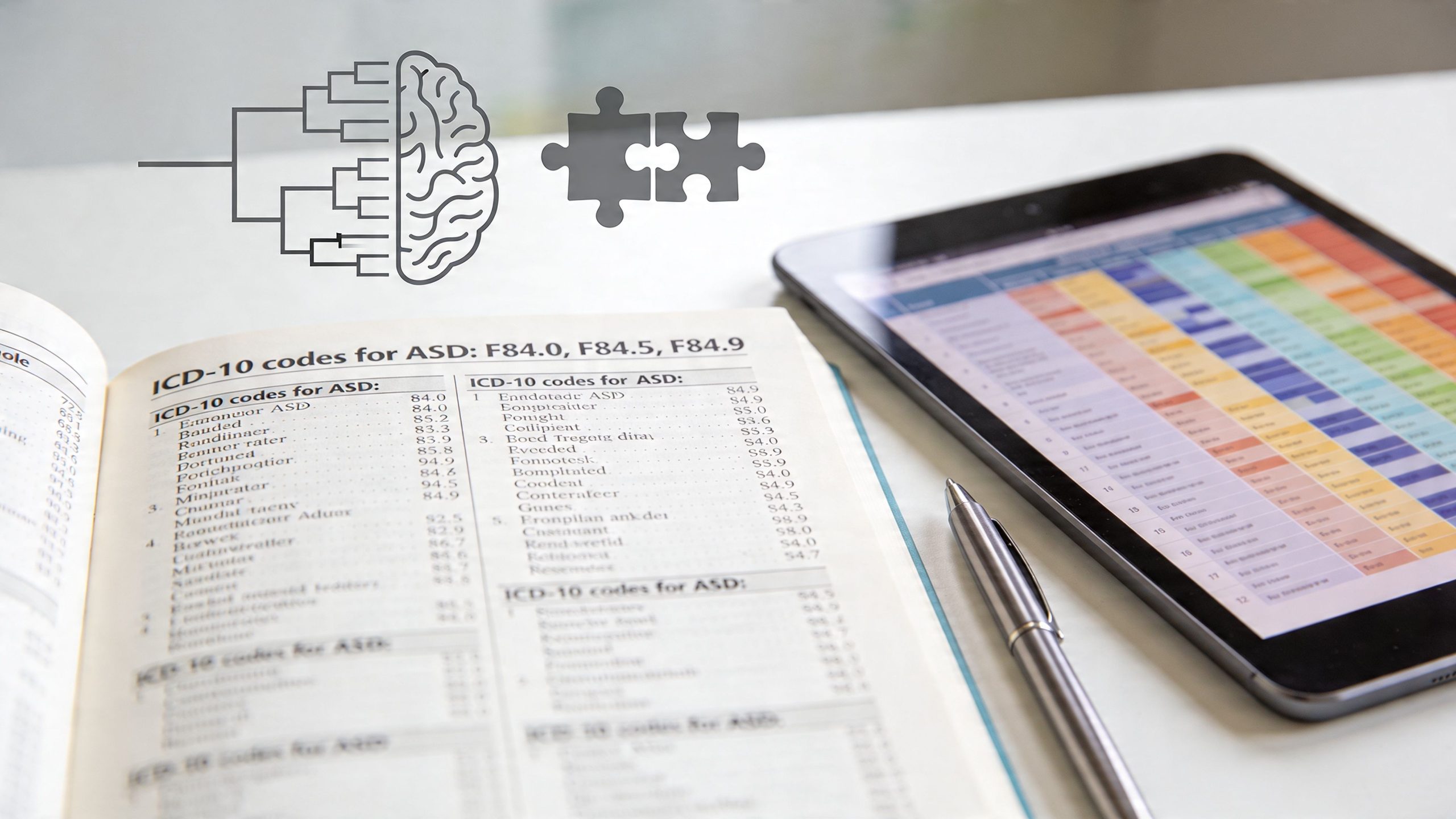
    A close-up photograph of a document labeled F84.0 Autistic Disorder next to a graphical neuron illustration.

    In ICD-10 records, F84.0 refers to Autistic Disorder. Many people today use the broader term Autism Spectrum Disorder (ASD) in everyday conversation, but older medical records, insurance forms, and institutional paperwork may still show F84.0. The code works like a filing label. It does not describe your child’s full personality, strengths, or future.

    What clinicians usually mean is a developmental pattern that affects social communication and includes restricted or repetitive behaviours or interests. These signs begin early, even if they are understood much later. A family may first notice differences in eye contact, back-and-forth interaction, response to name, play style, sensory comfort, or a strong need for routine.

    Some adults recognise this pattern only after years of feeling different without having words for it. That can bring relief, grief, clarity, or all three at once.

    In the source already cited here, the overview of F84.0 and autism coding in India states that ASD prevalence is about 1 in 100 children, reports that a 2023 ICMR study noted over 1.5 million children under 14 diagnosed with ASD, with F84.0 used in 85% of cases, and says the code became billable under Ayushman Bharat in 2018. Even more important than the numbers is what families do with the diagnosis after it appears on a report.

    That is the human side of coding. A diagnosis code often helps open doors to speech therapy, occupational therapy, behavioural support, parent training, school documentation, and mental health care for stress or anxiety that may build around daily struggles. In the Indian context, where families often have to explain a child’s needs across doctors, schools, and relatives, a clear code can reduce confusion and make those conversations easier.

    Older reports may also pair F84.0 with terms such as autistic disorder, infantile autism, or Kanner's syndrome. This can sound alarming if you are comparing documents from different years. Usually, it reflects older classification language rather than a sudden change in the person themselves.

    So if you see F84.0, read it as one part of the picture. The fuller picture includes how the person communicates, learns, copes with sensory demands, builds relationships, and grows with the right support.

    Understanding Other Related F84 Codes

    A parent may open an older school report and see F84.5 Asperger's syndrome, then hear a newer clinician say autism spectrum disorder. That can feel like the ground has shifted. In many cases, the person has not changed. The language in the paperwork has.

    A diagram outlining ICD-10 F84 codes for autism, including Autistic Disorder, Asperger's Syndrome, and Pervasive Developmental Disorder.

    ICD-10 placed several developmental presentations under the F84 group. You can think of this group as a family of related labels used in medical records. Some of these terms still appear in India in older files, hospital notes, disability paperwork, or records carried forward from one clinic to another.

    Two codes often cause confusion.

    F84.5 refers to Asperger's syndrome, a term many adolescents and adults still know well.
    F84.9 refers to pervasive developmental disorder, unspecified, which means the record noted a broader developmental concern but did not pin it down to a more specific F84 code.

    That difference matters in everyday life. A school, insurer, therapist, or government office may focus on the code printed on the document, while the family is focused on the child's real needs. If the wording looks different across reports, people may worry that services will stop or that the earlier diagnosis was somehow "wrong." Usually, the variation reflects older classification habits, the stage of assessment, or the level of detail recorded at that time.

    A simple comparison

    Code What people often recognise What it means in plain language
    F84.0 Autistic Disorder The specific ICD-10 autism diagnosis used in many records
    F84.5 Asperger's syndrome An older label that many people still identify with
    F84.9 PDD unspecified A broader entry used when the description was less specific

    A practical way to read these codes is to treat them like file labels on the same cupboard. The label may change over time, but the goal stays the same. Understanding the person's communication style, sensory profile, learning needs, and daily supports.

    Older terminology may be outdated clinically, yet still feel meaningful personally. Both realities can exist together.

    This can be especially important in the Indian context, where families often have to explain the same child to a paediatrician, a speech therapist, a school coordinator, and extended relatives. Clear interpretation of older F84 codes helps reduce avoidable panic and keeps attention where it belongs. Accessing support, planning therapy, and helping the person build confidence and resilience.

    ICD-10 vs DSM-5 A Practical Comparison for India

    Many people in India hear two systems mentioned in the same month. A hospital record may use ICD-10, while a private psychologist may speak in DSM terms. That can feel contradictory, especially when a family is already dealing with uncertainty, anxiety, or decision fatigue.

    Tablets displaying ICD-10 and DSM-5 with an outline map of India in the background on a surface.

    The practical difference

    In India, the healthcare system officially uses ICD-10, but many private practitioners use DSM-5-TR language in assessment and discussion. According to this clinician-focused guide on ICD-10 and DSM use for autism, this mismatch can affect insurance reimbursement and access to services, and coding inaccuracies can lead to billing denials and delays.

    So the issue isn't which book is “better.” The key issue is whether the code on the formal paperwork matches the system required by the service, insurer, hospital, or institution you're dealing with.

    What to ask your clinician

    If you're unsure, ask direct questions:

    • Which system is on the report: ICD-10, DSM-5-TR, or both?
    • Which code will appear on insurance paperwork: This matters for reimbursement processing.
    • Will the treatment plan use the same terminology: Consistency helps schools, employers, and allied professionals understand the report.

    A short explainer may help if you'd rather watch than read:

    Why this matters emotionally too

    When language changes between professionals, families sometimes worry that the diagnosis itself has changed. Often, it hasn't. The underlying clinical understanding may be similar, while the administrative language differs.

    That said, paperwork details do matter. If you're applying for therapy support, reimbursement, or workplace documentation, it's reasonable to ask for a clear written explanation in plain language.

    Common Co-occurring Conditions and Their Codes

    A parent may come in asking about speech delay or repeated meltdowns, then leave realizing the picture is a little wider. Autism can sit alongside other conditions that affect sleep, attention, mood, learning, or physical health. That does not make the child "more broken" or the diagnosis more frightening. It means the clinician is trying to describe the person more accurately, so support can fit real life.

    A conceptual 3D illustration featuring the text ASD at the center, surrounded by icons for chaos and rest.

    Why more than one code may appear

    A diagnosis code works a bit like a case file label. F84.0 may identify autism, while another code records a condition that also needs attention, such as epilepsy (G40) or ADHD (F90). In practice, this helps the paediatrician, psychiatrist, psychologist, therapist, and school team see the same needs on paper.

    For many families in India, this matters beyond the clinic. A child may need speech therapy and behaviour support. A teenager may need help for anxiety that is making school attendance harder. An adult may seek care for burnout or depression before anyone recognizes autistic traits clearly. If the record captures only one part of the story, referrals can become less precise and treatment can miss daily struggles that are very real.

    Common examples clinicians may code separately

    • ADHD with ASD: Attention and impulsivity can affect classroom learning, routines, and how therapy sessions are paced.
    • Epilepsy with ASD: Seizure care may require regular medical follow-up and coordination between specialists.
    • Sleep problems: Poor sleep can increase irritability, distress, and exhaustion across the whole family.
    • Phobias or anxiety symptoms: Fear responses may affect school, travel, medical visits, or social participation.
    • Depression or chronic stress: Older children, teens, and adults may need mental health support alongside autism-related care.

    A useful way to read multiple codes is this. One code names the neurodevelopmental profile. Another names barriers that may be getting in the way of learning, comfort, safety, or emotional well-being.

    Good coding supports whole-person care. It helps the therapist, doctor, school, and family work from the same map.

    This also has a human side that paperwork often hides. Families are often not asking for a code for its own sake. They are trying to get the right therapy, explain a child's needs to a school, reduce day-to-day stress at home, and build resilience over time. Clear coding cannot solve everything, but it can make it easier to ask for support that matches the person's actual challenges.

    How ASD Codes Impact Therapy and Financial Support

    A diagnosis code may look like a technical detail, but it often decides whether support moves smoothly or gets stuck in paperwork. Families in India commonly discover this when applying for insurance reimbursement, disability-related documentation, or school accommodations.

    Correct coding matters because service systems need specificity. If a hospital, insurer, school administrator, or rehabilitation office asks for a recognised diagnosis entry, vague or inconsistent documentation can slow things down. That can increase stress in households already carrying emotional and financial pressure.

    Where coding affects daily life

    The impact often shows up in practical areas:

    • Therapy access: A clear diagnosis can support referrals for speech, occupational therapy, behavioural intervention, or counselling.
    • Documentation for benefits: Administrative systems usually require standard diagnostic language.
    • School and workplace understanding: Formal records can support conversations about accommodations and support needs.

    For families trying to understand disability-related documentation beyond India, it can also help to see how other systems approach proof and eligibility. This guide on how to qualify for the Disability Tax Credit in Canada is a useful example of how formal records connect to financial support in another country.

    Why emotional support matters during the paperwork stage

    Administrative tasks can trigger anxiety, especially when you're also coping with a new diagnosis, family disagreement, sleep loss, or work strain. Some parents feel guilty for focusing on forms when they want to focus on their child. Some adults feel exposed when they need documentation for workplace support.

    Both reactions are understandable. This is one reason counselling can be helpful even outside the core ASD treatment plan. Support for caregiver stress, depression, burnout, and resilience often makes the practical side more manageable.

    Beyond the Code Building Resilience and Well-being

    A code can open doors, but it doesn't define a person's identity, relationships, or future. Once the clinical language is understood, the focus can shift to daily living, communication, strengths, and emotional balance.

    Many people feel a mix of relief and grief after getting clarity. Relief because there is finally an explanation. Grief because they may be thinking about missed support, school struggles, social pain, or years of self-doubt.

    What healing often looks like

    It may involve therapy for anxiety, counselling for parents, support for depression, or tools to reduce workplace stress in autistic adults. It may also involve practical changes such as sensory adjustments, clearer routines, kinder communication, and more realistic expectations.

    Positive psychology has a place here too. Resilience doesn't mean pretending things are easy. It means building skills, self-understanding, compassion, and supportive environments that make life feel more workable and more meaningful.

    The code is a starting point for understanding. It is not the whole person.

    When care is respectful and well matched, people can build confidence, healthier relationships, and greater well-being. Some need intensive support. Some need only a few targeted changes. In both cases, progress usually starts with being understood accurately and treated with dignity.

    When to Consult a Professional or Use DeTalks

    If you suspect ASD in yourself or someone you care about, speak with a qualified mental health professional or medical specialist. A formal diagnosis should come from a clinician such as a psychiatrist or clinical psychologist after proper evaluation.

    If you already have a report but don't understand the code, ask for a plain-language explanation. You can also seek a second opinion if the wording is unclear or if treatment planning doesn't match the person’s real needs.

    Use assessments carefully. Screening tools can offer insight, but they are informational, not diagnostic. They can help you notice patterns and prepare for a professional conversation, especially if anxiety, depression, stress, burnout, or social difficulties are also present.

    If you're looking for a therapist, counsellor, or psychologist, choose someone who can explain both diagnosis and support in a respectful, practical way.

    Frequently Asked Questions About ASD Coding

    Will this code stay private

    Medical information is generally handled within professional and administrative systems, but you should still ask who can access the report, where it will be shared, and whether you can receive a summary version for school or work.

    Does an ASD code mean the future is fixed

    No. A code helps describe support needs. It doesn't predict a person's full path, happiness, resilience, relationships, or capacity to grow.

    Should I tell school, family, or my employer

    Share it only when it serves a purpose, such as getting support, reducing misunderstanding, or arranging accommodations. If the conversation feels difficult, a therapist or counsellor can help you prepare what to say.

    Are online assessments enough

    No. They can be helpful for reflection, but they are informational, not diagnostic. A diagnosis requires professional evaluation.


    If you're looking for trusted mental health support, DeTalks can help you find therapists, psychologists, and counsellors across India for concerns ranging from autism spectrum challenges to anxiety, depression, burnout, workplace stress, and relationship difficulties. The platform also offers psychological assessments for self-insight, but remember that these tools are informational and meant to guide your next step, not replace a formal diagnosis.

  • Understanding Acute Stress Disorder and the ICD-10 F43.0 Code

    Understanding Acute Stress Disorder and the ICD-10 F43.0 Code

    When you experience an immediate and intense reaction to a major stressor, mental health professionals have a way to understand it. In the ICD-10 system, used in India and globally, this is known as an Acute Stress Reaction under code F43.0. This code helps describe symptoms that appear quickly after a deeply stressful event and usually fade within a few days.

    What Does the F43.0 Code Mean?

    Doctor holds a tablet displaying ICD-10 F43.0 for Acute Stress Reaction in a medical setting.

    After an overwhelming event, like a personal crisis or an extreme incident, it's natural for your mind and body to have a powerful reaction. The acute stress reaction ICD-10 code helps professionals classify these responses in a structured way. Specifically, F43.0 describes immediate, short-term reactions that arise right after a major stressor.

    It is important to remember that this kind of reaction is not a sign of weakness; it is a normal human response to an abnormal situation. Understanding this fosters self-compassion, which is a key step toward building resilience and protecting your long-term well-being. This guide offers clear insights for anyone trying to make sense of this experience.

    Key Aspects of an Acute Stress Reaction

    An acute stress reaction has a few clear features, and recognizing them can be the first step toward getting the right support through counselling or therapy.

    • Immediate Onset: The symptoms almost always begin within an hour of the triggering event.
    • Transient Nature: A key feature is that the reaction is temporary, typically subsiding within 8 to 48 hours.
    • Variable Symptoms: The experience can look different for everyone, from feeling dazed and confused to experiencing overwhelming anxiety.

    Assessments using codes like F43.0 are informational, not a life-long label. They provide a shared language for individuals and professionals to discuss mental health, navigate challenges like anxiety or depression, and find a positive path forward.

    Understanding Acute Stress Reaction vs. Acute Stress Disorder

    In the moments after a deeply unsettling event, you may hear two terms: Acute Stress Reaction (ASR) and Acute Stress Disorder (ASD). They sound similar, but in mental health, they describe different experiences. Understanding the distinction is important for finding the right kind of support.

    Acute Stress Reaction is a term from the ICD-10, the manual used across India and much of the world. It refers to a very brief response to an overwhelming stressor, with symptoms appearing almost immediately and resolving within a couple of days.

    On the other hand, Acute Stress Disorder is a term from the DSM-5. This describes a more persistent pattern of symptoms that last for at least three days and up to a month following a traumatic event.

    Key Differences in a Nutshell

    You can think of an Acute Stress Reaction as the mind's initial, brief shock absorber—a powerful but fleeting response. Acute Stress Disorder involves a more complex set of symptoms that do not fade as quickly. This distinction helps guide next steps, from brief counselling to build immediate resilience to more structured therapy for lasting effects.

    Understanding which term applies can also help address related challenges, like overwhelming workplace stress, persistent anxiety, or the risk of developing depression.

    • Timeline is Crucial: The biggest difference is timing. ASR lasts for hours or a few days, while ASD spans from three days to one month.
    • Diagnostic Manual: Remember, ASR is an ICD-10 term (F43.0), while ASD is from the DSM-5.
    • Symptom Complexity: ASD has a more detailed list of symptoms, including intrusive memories, negative mood, dissociation, avoidance, and hyper-arousal.

    It's helpful to view any assessment as a tool for understanding, not a rigid label. It creates a shared language for a conversation about healing and finding your footing again after a difficult experience.

    Knowing the difference helps everyone involved—from professionals to individuals seeking help—to approach recovery with more precision and empathy. It ensures the support offered matches the person's unique experience and timeline.

    Key Diagnostic Criteria and Symptom Timeline for F43.0

    Medical timeline on paper showing acute stress disorder symptoms like daze, disorientation, anxiety, and autonomic signs, next to a stethoscope.

    The ICD-10 code F43.0, or Acute Stress Reaction, is based on specific guidelines that help make sense of an overwhelming experience. For this code to apply, there must be a clear link between a person's symptoms and a recent, exceptionally stressful event.

    Timing is a critical factor, as symptoms must appear almost immediately—typically within one hour of the traumatic event. Often, the first sign is a 'daze-like' state where the person seems bewildered or unable to process what is happening. This can be seen as the mind's way of creating a temporary shield for protection.

    The Symptom Experience

    After the initial shock, a person might experience a range of intense emotional and physical responses that feel out of their control. It's important to remember these are normal human reactions to an abnormal situation, not signs of weakness.

    • Emotional Fluctuation: A person may swing from feeling numb to experiencing sudden agitation, overwhelming anxiety, or deep despair.
    • Autonomic Signs: The body often goes into high alert, showing signs of panic like a racing heart (tachycardia), sweating, and flushed skin.
    • Social Withdrawal: In some cases, the individual might pull away, becoming unresponsive or seeming disconnected from their surroundings.
    • Disorientation: Mild and brief confusion about time, place, or identity is also common.

    These symptoms are a direct result of the body's 'fight or flight' response being activated. Understanding this can foster self-compassion, which is a vital step toward building resilience and restoring emotional well-being.

    The Critical Timing for Resolution

    The most defining feature of an F43.0 Acute Stress Reaction is how short-lived it is. The clinical guidelines are clear about how quickly these symptoms should fade once the person is out of the stressful situation.

    The main takeaway is that an Acute Stress Reaction is temporary. This is a hopeful and powerful piece of information, as it frames the experience as a passing state, not a permanent condition.

    If the stressor was a single event, symptoms should start to ease within 8 hours. If the stressful situation continues, symptoms should begin to resolve within 48 hours. This rapid recovery separates it from other conditions like PTSD or chronic workplace stress, where symptoms last much longer.

    Professional support through therapy or counselling can be very helpful for navigating this period and may prevent longer-term issues like depression. It's important to view any assessment as a starting point for getting support, not an unchangeable label.

    How Indian Psychiatric Research Shaped the ICD-10

    The ICD-10 is used worldwide, but its strength lies in adapting to insights from across the globe. Research from India has been particularly important in refining how we understand acute stress, making the system more relevant to people's experiences here.

    Pioneering work from research centres in India highlighted a gap in the diagnostic framework. Clinicians often saw acute psychotic episodes that did not fit classic definitions of schizophrenia or major depression.

    Building a More Culturally Relevant System

    This research had a significant impact on clinical practice, showing a clear need for a separate classification for these short-lived, stress-related conditions. This work directly contributed to the creation of codes for acute and transient psychotic disorders, the same family that includes F43.0 for acute stress reaction ICD 10.

    One powerful statistic showed that around 52% of patients with acute psychosis could not be classified using the major diagnoses available at the time. Indian studies were essential in advocating for new categories in the ICD-10. For those interested, you can read the full research about these findings to learn more.

    Why does this backstory matter?

    • Validation: It confirms that mental health experiences seen in India are recognized and respected on a global stage.
    • Accuracy: It provides clinicians with sharper, more precise tools, which often leads to more effective therapy and counselling.
    • Resilience: It highlights the importance of cultural context in mental health, paving the way for a more understanding approach to promoting well-being.

    Knowing this history helps demystify mental health struggles like workplace stress, anxiety, and depression. It reminds us that our understanding of the human mind is always evolving, thanks to researchers who listen to diverse experiences.

    Navigating Differential Diagnoses and Similar Conditions

    In mental health, telling apart conditions with similar symptoms is a crucial first step toward compassionate support. For an acute stress reaction, which can resemble other responses to trauma, getting this right is essential for guiding someone toward healing.

    This involves looking closely at the timing, duration, and specific nature of the symptoms. For example, the acute stress disorder ICD 10 code F43.0 refers to an immediate and brief reaction. Other conditions unfold on different timelines, and sorting this out prevents misdiagnosis.

    The flowchart below shows how psychiatric research in India has helped refine diagnostic tools like the ICD-10, leading to more precise and effective patient care.

    Flowchart illustrating the impact of Indian psychiatric research, highlighting robust data and ICD-10 compliance for better patient care.

    This process of research and data analysis continuously strengthens frameworks like the ICD-10, which translates directly into better outcomes in clinical settings.

    Distinguishing Acute Stress Reaction from Similar Conditions

    It's helpful to remember that a clinical assessment provides clarity, not a permanent label. An acute stress reaction might be mistaken for PTSD, adjustment disorders, or panic disorder at first glance, but each has key features that set it apart.

    The table below provides a side-by-side comparison to help clarify these distinctions.

    Distinguishing Acute Stress Reaction from Similar Conditions

    Condition Onset Duration Core Symptoms
    Acute Stress Reaction (F43.0) Immediate (within minutes/hours of trauma) Begins to diminish within hours; resolves within 3 days Initial daze, disorientation, anxiety, anger, despair, over-activity or withdrawal.
    Post-Traumatic Stress Disorder (PTSD) (F43.1) Can be delayed; diagnosis requires symptoms for >1 month Can be long-term or chronic if untreated Re-experiencing (flashbacks, nightmares), avoidance of reminders, negative mood, hyperarousal.
    Adjustment Disorder (F43.2) Within 1 month of a specific stressor Resolves within 6 months after the stressor ends Emotional/behavioural symptoms (e.g., low mood, anxiety) in response to a non-life-threatening event.

    This table is a quick reference, and a full clinical picture always requires a deeper conversation. Let's look at some of these conditions in more detail.

    • Post-Traumatic Stress Disorder (PTSD): Both conditions are rooted in trauma, but PTSD is diagnosed only when symptoms last for more than one month. The experience involves a lasting pattern of re-experiencing the event, avoiding reminders, and feeling constantly on edge. To understand long-term trauma care, exploring the best PTSD treatments can be insightful.

    • Adjustment Disorder (F43.2): This is more fitting when someone has a strong emotional or behavioral response to a significant but not necessarily life-threatening stressor, like a job loss. Symptoms typically appear within one month and resolve within six months after the stressor ends.

    • Panic Disorder (F41.0): While panic attacks can be part of an acute stress reaction, they are the central feature of Panic Disorder. Here, the attacks are recurrent and often unexpected, leading to a persistent fear of having another one, which is different from the direct trauma response of F43.0.

    Identifying Common Comorbidities with F43.0

    An acute stress reaction rarely happens in isolation. It is a natural human response to an overwhelming event, and it is common for other mental health challenges to surface at the same time or as coping mechanisms.

    Recognizing this overlap is key to providing truly effective and compassionate care. When someone goes through a traumatic experience, it can amplify existing struggles or trigger new ones. This means a diagnosis of acute stress disorder ICD 10 often needs to consider related conditions for a complete picture.

    Common Co-occurring Conditions

    Think of these co-occurring conditions as interconnected parts of the same experience. An integrated care plan, often blending different therapeutic approaches, can address these challenges together, building resilience and supporting a more complete recovery.

    Here are some of the most common overlaps:

    • Anxiety Disorders (F41): It is common for generalized anxiety or panic attacks to appear alongside an acute stress reaction as the mind struggles to feel safe again.
    • Depressive Episodes (F32): Deep feelings of hopelessness or a low mood can follow a major stressor and may sometimes evolve into a depressive episode.
    • Substance-Related Disorders (F10-F19): Some people may turn to alcohol or other substances to numb intense emotional pain, which can unfortunately lead to dependence.
    • Adjustment Disorders (F43.2): When symptoms last longer than a few days but do not meet the full criteria for PTSD, a diagnosis of an adjustment disorder may be considered.

    Acknowledging these related conditions is a critical step. It allows for a support plan that addresses not just the immediate crisis but also the broader impact on a person's life and well-being.

    For anyone seeking practical next steps, exploring a guide to Trauma-Informed CBT Healing can offer a compassionate path forward. Remember, assessments are informational tools designed to guide supportive conversations.

    Next Steps: Guiding Patients and Seeking Support

    A person hands a 'Next Steps' document to another individual in a consultation or therapy session.

    An assessment using an acute stress disorder ICD-10 code is the start of a conversation, not a final verdict. The focus should be on helping the person move from shock and anxiety toward stability and a renewed sense of control. A good first step is gently explaining that their intense reaction is a normal response to an abnormal event.

    Framing the experience this way helps build resilience by shifting the focus from distress to the inherent strength it takes to seek help. It's crucial to clarify that an assessment is an informational tool, not a permanent label.

    Connecting Patients with Supportive Care

    Once someone feels heard, the next step is connecting them with the right support. Presenting options for therapy and counselling provides a safe space to process the event. These are proactive tools for managing stress and preventing longer-term issues like depression or burnout.

    By focusing on compassion and providing practical tools, we empower people to see their response not as a disorder, but as a temporary state they have the strength to navigate. This perspective is central to fostering genuine healing and happiness.

    Working together to create a simple, manageable plan can make the path forward feel less overwhelming. This could involve setting small, achievable goals to build momentum and restore a sense of agency.

    Building a Practical Support Plan

    A helpful support plan is built around the individual, respecting their pace and unique situation. The plan should be holistic, addressing everything from workplace stress to pre-existing anxiety.

    Here are a few practical elements to include:

    • Immediate Grounding Techniques: Simple mindfulness or breathing exercises can be invaluable for managing sudden moments of panic.
    • Connecting with Social Support: Gently encourage reaching out to trusted friends or family, as social connection is a powerful buffer against stress.
    • Professional Counselling Options: Offer clear information on therapists who specialize in trauma, explaining how counselling provides tools for processing difficult emotions.

    The goal is to offer a supportive partnership, not a quick fix. By equipping people with knowledge and resources, we help them move forward with confidence, knowing they can rebuild their sense of safety and well-being.

    Your Questions Answered: Acute Stress and the ICD-10

    Making sense of mental health codes can feel complex, but understanding the terms professionals use is a great first step. Let's clarify some common questions about acute stress reactions and their place in the ICD-10 system.

    What Is the ICD-10 Code for an Acute Stress Reaction?

    The specific code for an acute stress reaction is F43.0. This code is used for an immediate, intense, but very brief response to an exceptionally stressful event. Think of it as the mind's initial shock response, which is temporary, not a chronic condition.

    How Is an Acute Stress Reaction Different From PTSD?

    The main difference is timing. An Acute Stress Reaction (F43.0) is diagnosed when symptoms appear almost immediately and fade within a few hours to three days. In contrast, Post-Traumatic Stress Disorder (PTSD), coded as F43.1, is only considered when symptoms last for more than one month.

    Can Severe Workplace Stress Result in an F43.0 Diagnosis?

    It is possible, but only in specific situations. If the workplace stress comes from a single, overwhelming event like a serious accident, it could trigger an acute stress reaction. However, long-term stress leading to burnout, anxiety, or depression would fall under different codes.

    It's helpful to see any diagnosis as information, not a label. These codes are tools that help professionals understand your experience and map out the most effective support, like therapy or counselling.

    What if My Symptoms Don't Go Away After Three Days?

    If feelings of distress and anxiety continue for more than three days, it is a strong signal to reach out for professional help. A mental health expert can conduct a more thorough assessment to understand what is happening. Persistent symptoms might point toward a different condition, and getting support early is a powerful step toward building resilience.

    Do I Need a Professional Assessment for an Official Diagnosis?

    Yes, a formal diagnosis of F43.0 or any mental health condition can only be made by a qualified healthcare professional. While self-assessment tools offer useful insights, they are not a substitute for a clinical evaluation. This professional assessment ensures you receive care that is right for your situation, putting you on a path toward recovery and well-being.


    At DeTalks, we're here to help you connect with the right support for your mental health journey. Whether you need therapy, counselling, or science-backed assessments, our platform connects you with trusted professionals across India. Take the first step towards clarity and resilience by visiting us at https://detalks.com.

  • Navigating ADHD with Clarity: A Guide to ICD-10 Codes

    Navigating ADHD with Clarity: A Guide to ICD-10 Codes

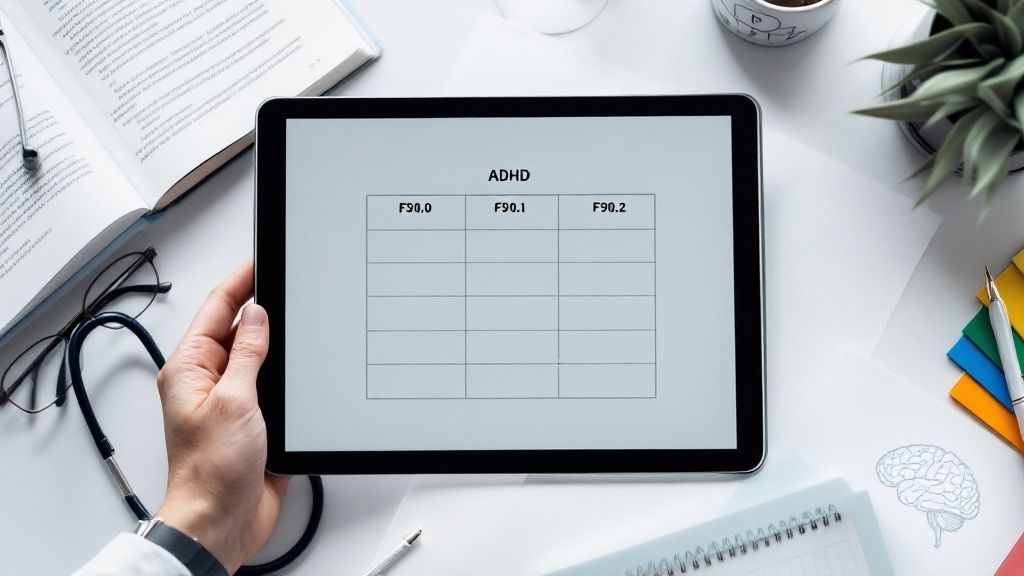
    Understanding a health condition often starts with understanding the language doctors use. For Attention-Deficit/Hyperactivity Disorder (ADHD), this language includes a specific set of codes from the International Classification of Diseases, 10th Revision (ICD-10).

    In India and across the globe, the main ICD-10 code for ADHD is found in the F90 series. This code helps professionals communicate clearly about a person’s needs, which is a vital first step in creating a supportive plan for their well-being.

    A Practical Guide to ADHD ICD-10 Codes

    For anyone navigating a new diagnosis, clinical terms and codes can feel a little intimidating. However, knowing the ICD-10 code for ADHD is more than an administrative detail; it's a shared language that helps everyone involved, from doctors to therapists, understand an individual's unique journey. Getting this right is the first step toward effective support and therapy.

    This visual guide offers a gentle reminder of the focused effort that everyday tasks can require for individuals managing ADHD.

    As the image shows, maintaining concentration can take immense internal effort, highlighting the need for compassion and understanding.

    To help clarify, here is a quick reference table of the most common ICD-10 codes for ADHD. It’s a simple starting point for understanding how different experiences with ADHD are documented.

    ADHD ICD-10 Quick Reference Table

    ICD-10 Code ADHD Presentation Brief Description
    F90.0 Attention-deficit hyperactivity disorder, combined type Used when challenges with both inattention and hyperactivity-impulsivity are present.
    F90.1 Hyperkinetic conduct disorder Indicates ADHD symptoms alongside persistent behaviours that are disruptive or aggressive.
    F90.8 Other hyperkinetic disorders A code for presentations that fit the ADHD profile but don't perfectly match other categories.
    F90.9 Hyperkinetic disorder, unspecified Used when a diagnosis is clear, but more information is needed to specify the type.

    This table provides a snapshot, but it's important to remember that a thoughtful assessment by a professional is always needed to find the most accurate code for an individual's situation.

    Key ADHD Codes Used in India

    In India, just as in many parts of the world, clinicians use the ICD-10 framework to understand and document ADHD. The codes they use reflect the different ways ADHD can appear in a person's life.

    Here’s a simple breakdown of the key codes:

    • F90.0 (Attention-deficit hyperactivity disorder, combined type): This is the most common code, used when a person experiences a blend of inattention (like difficulty focusing) and hyperactivity/impulsivity (like fidgeting or acting without thinking).
    • F90.1 (Hyperkinetic conduct disorder): This code is used when ADHD symptoms are present alongside patterns of behaviour that are consistently disruptive or defiant.
    • F90.8 (Other hyperkinetic disorders): This category is for individuals who clearly show signs of ADHD, but their specific symptoms don't neatly fit the other definitions.
    • F90.9 (Hyperkinetic disorder, unspecified): This code is often used during initial consultations when a diagnosis is confirmed, but further details are needed to be more specific.

    For those looking to learn more, you can discover more insights about ADHD codes in India on sprypt.com, which offers additional context.

    Understanding the F90 Code Series

    The F90 series in the ICD-10 is the designated section for "Hyperkinetic disorders," which is the clinical term for ADHD. This classification allows healthcare professionals to document and communicate a person's specific challenges using a shared, precise language.

    Each code within the F90 series tells a slightly different story, capturing the unique ways ADHD can affect a person. This detail is important because it helps shape a supportive plan and can anticipate related challenges like workplace stress or anxiety, paving the way for a holistic approach to well-being.

    The Role of F90 in Diagnosis

    The F90 series provides a framework for translating observed behaviours—like inattention, hyperactivity, and impulsivity—into a standardized code. This shared language is vital for ensuring a person gets the right kind of support for their needs. It is important to remember that assessments are informational and are one part of a comprehensive evaluation, not a final diagnosis in themselves.

    A correct code ensures that everyone on the support team, from therapists to teachers, is on the same page. A solid understanding of the diagnostic criteria is essential for using these codes accurately. To learn more about the evaluation process, you can explore this detailed guide to the ADHD diagnostic criteria.

    Beyond the Codes to Personal Well-being

    It's so important to remember that behind every icd 10 code for adhd is a person navigating their world. The goal of a diagnosis isn't to apply a label, but to open doors to support that builds resilience and improves quality of life. Understanding how symptoms connect to related feelings like anxiety or depression is often the first step toward developing helpful coping strategies.

    By clarifying the picture with these codes, clinicians and individuals can work together on a path toward better mental health. The journey is not about finding a cure, but about developing self-compassion, managing stress, and nurturing overall happiness and well-being.

    A Closer Look at ADHD Presentations and Real-Life Scenarios

    Image

    When we talk about the ICD-10 code for ADHD, we are looking at a system that honours the different ways ADHD can show up. Understanding these variations is key to appreciating how unique each person's experience is.

    This shared language is invaluable for clinicians structuring effective therapy and counselling. An assessment should be seen not as a restrictive label, but as an informational starting point—a roadmap for a journey toward greater understanding and well-being.

    F90.0: The Inattentive Presentation

    This code is used when a person's main challenges relate to inattention, without significant signs of hyperactivity. Because these symptoms can be less outwardly disruptive, they are sometimes missed, especially in girls and adults.

    • Scenario 1: An employee consistently misses deadlines despite working hard. They find it difficult to organise tasks and are easily distracted, which can lead to significant workplace stress and feelings of burnout.
    • Scenario 2: A student often seems lost in thought, has a messy desk, and frequently loses their homework. They may be seen as quiet or unmotivated, when the real struggle is with maintaining mental focus.

    When these challenges are not understood, they can be mistaken for carelessness, which can harm a person's self-esteem and contribute to anxiety or depression. Building awareness and compassion is key.

    F90.1: The Hyperactive-Impulsive Presentation

    Here, the defining traits are high energy, a persistent feeling of restlessness, and a tendency to act on impulse. While this is a common picture of ADHD in children, these traits also continue into adulthood, though they may look different.

    • Scenario 1: A young child who is constantly fidgeting, leaves their seat when expected to sit, and often interrupts others. It can feel as though they have an internal motor that is always on.
    • Scenario 2: An adult might struggle in long meetings, constantly tap their feet, or make quick decisions about their finances or career without thinking through the consequences.

    F90.2: The Combined Presentation

    The most common presentation, F90.2 is used when a person shows clear signs of both inattentive and hyperactive-impulsive challenges. They navigate a blend of symptoms from both areas.

    • Scenario: A teenager has great difficulty following multi-step instructions for a school project (inattention). At the same time, they talk excessively and often interrupt the teacher (hyperactivity-impulsivity), creating challenges at school and home.

    Other and Unspecified ADHD: Navigating the Nuances

    ADHD doesn't always fit into neat boxes. Sometimes, a person's symptoms don't align perfectly with the three main presentations. For these situations, the ICD-10 code for ADHD system provides specific codes to ensure accurate and thoughtful documentation.

    These aren't just catch-all categories. Using F90.8 (Other hyperkinetic disorders) or F90.9 (Hyperkinetic disorder, unspecified) is a deliberate clinical choice. It reflects an understanding that everyone's experience is unique, and an accurate starting point is key to getting the right support.

    When to Use F90.8 and F90.9

    Deciding between these two codes depends on the information available during an assessment. They are important tools that prevent uncertainty from becoming a barrier to care.

    • F90.8 (Other hyperkinetic disorders): This code is for when the signs of a hyperkinetic disorder are clear, but the mix of symptoms is atypical. The person may not meet the full criteria for the other types, but the clinical picture strongly indicates ADHD.

    • F90.9 (Hyperkinetic disorder, unspecified): This code might be used when a clinician is confident in the ADHD diagnosis but lacks enough information to specify the type. This can happen in an initial consultation before a full evaluation is complete.

    Using these codes correctly keeps the path to therapy or counselling open. It means a person can start getting help for related challenges like workplace stress or anxiety, supporting their journey toward building resilience and self-awareness.

    Why Accurate ADHD Coding Is Essential for Care

    Pinpointing the correct ICD-10 code for ADHD is much more than an administrative task. It is the foundation of effective mental health support, creating a clear, shared language about a person's specific challenges. This precision directly shapes their care plan and is crucial for connecting them to the right therapy or counselling.

    Getting the coding right opens the door to necessary resources and support. In India, for example, the F90 codes are fundamental for clinical management and health policy. When coding is not specific, it can have real-world consequences; insurance reimbursement denials can increase, which highlights how much specificity matters.

    Connecting Codes to Well-Being

    Thoughtful documentation serves a purpose deeper than just meeting requirements. It validates a person's lived experience and provides a clear pathway to support for related struggles, such as workplace stress, anxiety, or depression.

    When a diagnosis is documented with care, it becomes easier to build a holistic plan that nurtures well-being. This plan can then address not only the core symptoms of ADHD but also their emotional impact. To learn more, it can be helpful to explore clinical documentation improvement strategies.

    The ultimate goal is to foster resilience, self-compassion, and long-term well-being. A precise diagnosis is not a label; it's a key that unlocks a personalised map for navigating challenges and building a more fulfilling life.

    Coding Common Co-occurring Conditions

    Image

    It is common for ADHD to exist alongside other conditions. Many people with ADHD also manage experiences like anxiety, depression, or learning disorders. Clinicians use additional ICD-10 codes to create a complete and accurate picture of a person’s health.

    This approach is not about applying more labels, but about acknowledging the full scope of a person's experience to ensure every challenge is seen and supported. Using an ICD-10 code for ADHD alongside codes for co-occurring conditions is key to providing truly integrated care.

    Why Coding Co-occurring Conditions Matters

    A person might be dealing with significant workplace stress that fuels their anxiety, all while managing their ADHD symptoms. Coding only for ADHD would miss other crucial parts of their experience. Documenting these overlapping conditions allows therapy and counselling to support the whole person, not just one aspect.

    By recognising and coding these interconnected challenges, healthcare providers can develop a plan that genuinely fosters resilience. It's about creating a supportive journey focused on long-term well-being, happiness, and personal growth.

    A Quick Look at Common Co-occurring Conditions and Codes

    Here are a few examples of conditions that frequently appear alongside ADHD, with their typical ICD-10 codes:

    • Anxiety Disorders (F40-F41): These codes are used when persistent worry or fear significantly impacts daily life alongside ADHD.
    • Depressive Episodes (F32): This code documents periods of low mood or loss of interest, which can be intensified by the challenges of managing ADHD.
    • Specific Learning Disorders (F81): It is common for individuals with ADHD to have difficulties with reading, writing, or maths. Coding for these ensures the right educational and therapeutic support is in place.

    Common Co-occurring Conditions and Their ICD-10 Codes

    To give you a clearer reference, here is a table of common conditions that often appear with ADHD. This is not an exhaustive list, but it covers some of the most frequent pairings.

    Condition Common ICD-10 Code(s) Relevance to ADHD
    Anxiety Disorders F41.1 (Generalised Anxiety Disorder), F40.1 (Social Phobia) The executive function challenges of ADHD can create situations that trigger or worsen anxiety.
    Mood Disorders F32 (Depressive Episode), F33 (Recurrent Depressive Disorder) Emotional regulation challenges in ADHD can overlap with or contribute to symptoms of depression.
    Oppositional Defiant Disorder (ODD) F91.3 Often seen in children with ADHD, characterised by a pattern of angry/irritable mood and defiant behaviour.
    Conduct Disorder (CD) F91.1, F91.2 A more severe pattern of behaviour where the rights of others or major societal norms are violated.
    Tic Disorders F95.2 (Tourette's Syndrome) A significant overlap exists between ADHD and tic disorders, suggesting a shared neurobiological basis.
    Specific Learning Disorders F81.0 (Reading), F81.2 (Maths), F81.8 (Writing) Difficulties with attention and focus directly impact the ability to acquire academic skills.
    Substance Use Disorders F10-F19 Individuals with ADHD may be at a higher risk due to impulsivity and attempts to self-soothe symptoms.

    Understanding these potential overlaps is vital for providing compassionate care. Proper coding does more than satisfy administrative needs; it forms the foundation of a comprehensive treatment strategy that sees the whole person.

    Your Questions About ADHD Coding, Answered

    When you're trying to make sense of a diagnosis for yourself or a loved one, the world of medical coding can feel complex. It’s natural to have questions, and getting clear answers is an important part of the journey toward well-being. Here are some common questions about ICD-10 codes for ADHD.

    How Is an Official Diagnosis Made?

    A diagnosis is made through a careful and thorough evaluation by a qualified professional, like a psychologist or psychiatrist. They will look for consistent patterns of behaviour across different settings—such as home, school, or the workplace.

    It’s helpful to view assessments as informational tools that gather valuable insights. They are one part of a larger process that a clinician uses to understand the complete picture and are not a diagnosis on their own.

    Do Adults and Children Use the Same ADHD Codes?

    Yes, the same F90 series of ICD-10 codes applies to both adults and children. What changes is how the symptoms may appear at different stages of life.

    For example, an adult’s hyperactivity might not involve running and climbing. Instead, it could be an internal feeling of restlessness, difficulty relaxing, or a sense of being constantly on the go. The underlying code is the same, but the clinical observation is tailored to the person's age.

    What's the Key Difference Between ICD-10 and DSM-5?

    Both are important diagnostic manuals, but they have different origins. The ICD-10 is published by the World Health Organisation, while the DSM-5 is from the American Psychiatric Association.

    While their criteria for ADHD are very similar, clinicians in India and many other countries use the ICD-10 for official medical coding. Understanding these details can help you feel more informed and empowered on your path to finding the right support.


    At DeTalks, we believe that understanding is the first step toward building resilience and finding balance. We can help you connect with qualified therapists and access science-backed assessments to better understand your mental health. Find supportive takeaways and resources on your journey at https://detalks.com.