Tag: mental health India

  • Understanding Moderate Depression (ICD-10: F32.1)

    Understanding Moderate Depression (ICD-10: F32.1)

    Hearing a clinical term like moderate depression ICD 10 can feel a bit formal, but it simply points to a specific code: F32.1. This code helps healthcare professionals understand the level of depression someone is experiencing. It describes a challenge that is more disruptive than mild depression but not yet considered severe, offering a clear starting point for a supportive plan.

    Demystifying the Moderate Depression ICD 10 Code

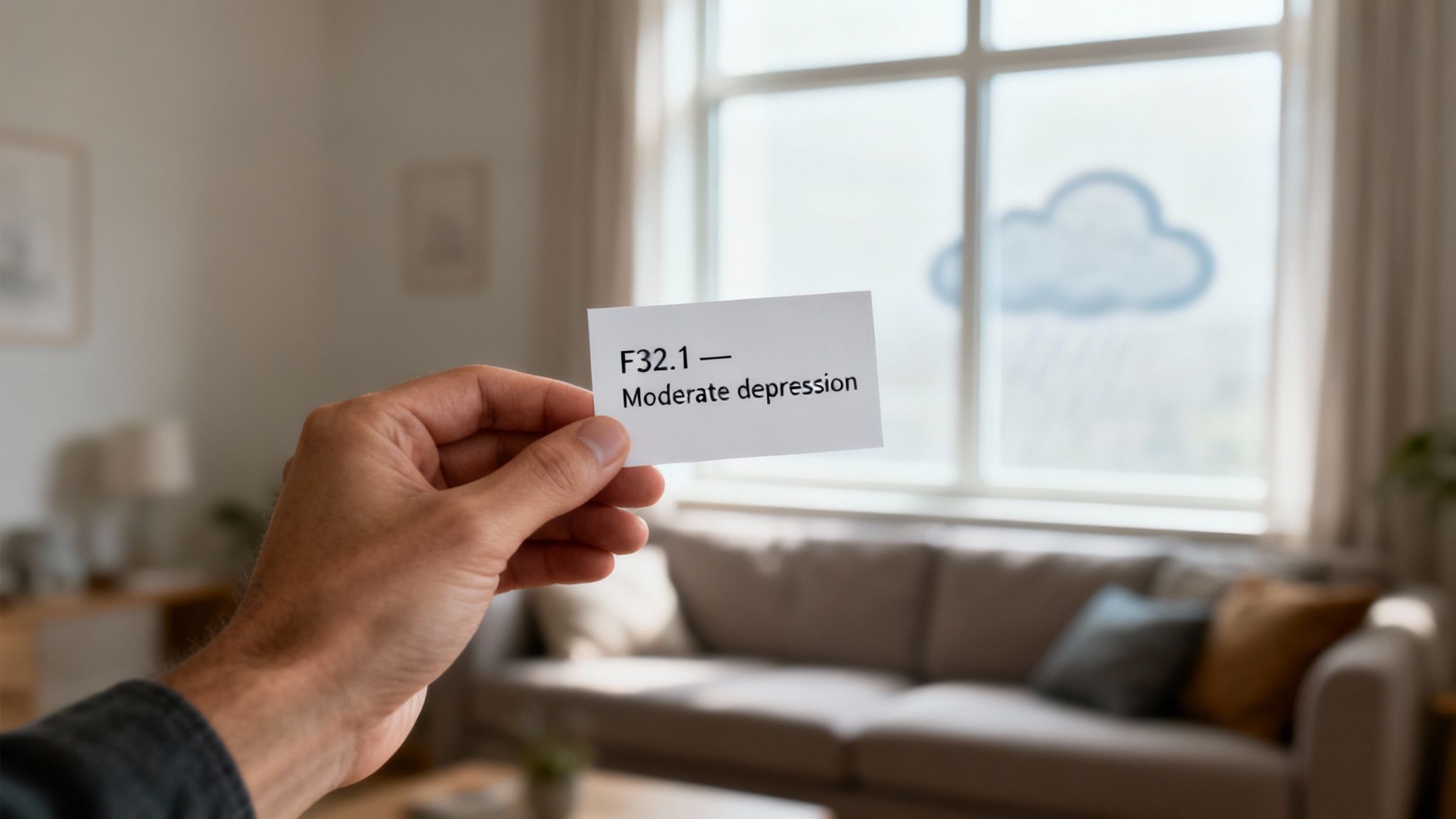
    Hand holding a card displaying 'F32.1 – Moderate depression' against a blurry background with a window showing a rain cloud.

    A phrase like "moderate depression ICD 10" might sound intimidating, but it's just a tool to bring clarity to your feelings. The International Classification of Diseases, 10th Revision (ICD-10) is a global system that helps doctors and therapists speak the same language about health conditions.

    Think of it like a weather report. Knowing a "moderate storm" is expected helps you prepare better than just hearing "it might rain." Similarly, the code F32.1 helps a professional understand the intensity of the challenges you're facing, including feelings of anxiety or stress.

    To give you a clearer picture, here’s a quick breakdown of how the ICD-10 system categorises single depressive episodes.

    A Simple Guide to Depression Levels in ICD-10

    Severity Level ICD-10 Code General Description
    Mild F32.0 Symptoms are present but often manageable. Daily activities can be done, though with some difficulty.
    Moderate F32.1 Symptoms are more pronounced and cause significant trouble with work, social life, or home duties.
    Severe F32.2 / F32.3 Symptoms can feel overwhelming, making it nearly impossible to continue with daily routines.

    This table helps show where F32.1 fits, creating a shared understanding between you and your care provider.

    A Tool for Understanding, Not a Label

    It is so important to remember that a diagnostic code is not a permanent label. It is a snapshot in time—an informational starting point that guides conversations about therapy and counselling. It describes what you are going through right now, not who you are.

    In India, conversations around mental health and well-being are growing. With millions of people experiencing depressive disorders, codes like F32.1 are vital for ensuring people get the right kind of support. This clarity is the first step toward building resilience and finding effective ways to feel better.

    An assessment offers a shared language between you and your healthcare provider. It transforms a vague feeling of being unwell into a recognised condition with established pathways for support.

    This structured approach allows professionals to tailor support for challenges like workplace stress and anxiety. Staying informed about latest ICD-10 coding updates helps them provide accurate care. By demystifying these terms, we can focus on what truly matters: your journey toward compassion, happiness, and lasting well-being.

    Recognising the Signs of a Moderate Depressive Episode

    A thoughtful young man sips a steaming hot drink at his desk beside a laptop.

    Understanding what a moderate depressive episode feels like is a meaningful step toward seeking support. It is more than a bad day; it’s a persistent cloud that can make every part of life feel heavier. Learning to see these signs, in yourself or a loved one, is an act of strength.

    While everyone's experience with depression is unique, there are common patterns that clinicians look for. These signs often affect your thoughts, feelings, and even your physical health. Gently taking stock of them can bring much-needed clarity.

    Core Emotional and Mental Signs

    At the heart of a depressive episode are two key experiences: a persistent low mood and a loss of interest in things you once enjoyed. This is a deep feeling of emptiness or hopelessness that lasts for weeks. It can feel like the colour has drained from your world, making it hard to find joy.

    For example, a young professional in Delhi who loves meeting friends might suddenly find the thought exhausting. This loss of interest is a significant sign that something more than everyday stress or anxiety is happening.

    Physical and Behavioural Changes

    Depression doesn’t just stay in your head; it often shows up in your body and actions. These physical shifts can be some of the most disruptive parts of a moderate depressive episode.

    Common physical signs include:

    • Sleep Disturbances: You might struggle with sleeplessness or find yourself sleeping far more than usual without feeling rested.
    • Appetite and Weight Changes: You could lose your appetite and weight, or you might turn to food for comfort, leading to weight gain.
    • Pervasive Fatigue: This is a deep exhaustion that sleep doesn't seem to fix, making even small tasks feel difficult.
    • Difficulty Concentrating: Trouble focusing at work or making decisions is very common and can add to workplace stress.

    Noticing these changes is not about finding fault. It's about compassionately acknowledging that your mind and body are signalling a need for support, a courageous first step toward building resilience.

    Research from India highlights how common these experiences are. One study using the moderate depression ICD 10 classification noted that many patients experienced physical symptoms that worsened their fatigue. You can learn more in this study on Indian patients with depression.

    Acknowledging these signs opens the door to seeking professional help. Through therapy or counselling, you can find the tools and support needed to navigate these challenges and move toward a greater sense of well-being.

    How Professionals Assess Moderate Depression

    An assessment might sound clinical, but it's really a compassionate conversation to understand what's going on. It's not about judging a bad day but about exploring a pattern of feelings you've had for at least two consecutive weeks. This timeframe helps distinguish a temporary reaction to stress from a more persistent challenge.

    A mental health professional, like a counsellor or therapist, will listen to your story in a safe space. They are trained to gently explore your experiences to understand your overall well-being. Please remember that any assessment is for informational purposes and is not a final diagnosis.

    A Collaborative Conversation

    Think of the assessment as a partnership, not an interrogation. A clinician’s goal is to get a full picture of your well-being, including workplace stress or personal struggles. This open dialogue is the foundation for creating a support plan that truly fits you.

    They will gently ask about your mood, energy levels, sleep, and how these are impacting your daily life. It is a completely confidential space for you to share honestly without fear of judgement.

    Differentiating Depression from Other Challenges

    A key part of a professional’s role is to distinguish moderate depression from other common experiences. Many challenges, like burnout or anxiety, can look similar on the surface. Getting this right is crucial for ensuring you receive the best support.

    Here’s how they might differentiate them:

    • Depression vs. Burnout: Burnout is almost always linked to your job and often improves with a break from that environment. Depression, however, tends to cast a shadow over all areas of life and doesn’t disappear with a holiday.
    • Depression vs. Anxiety: These two often appear together, but they are different. Anxiety is typically driven by intense worry about the future, while depression is rooted in a persistent low mood and loss of interest in the present.
    • Depression vs. Grief: Grief is a natural response to loss that comes in waves, with moments of happiness still possible. Depression is more like a constant, heavy blanket that makes it hard to feel anything positive.

    An accurate assessment isn't about putting you in a box. It's about unlocking the right door to effective therapy and counselling, creating a clear path toward building resilience and reclaiming your well-being.

    Ultimately, this careful process builds trust and ensures the support you receive is right for your journey. It is the first, most important step toward feeling heard, understood, and ready to move forward.

    Pathways to Managing Your Mental Well-being

    A serene counseling room with two light-colored armchairs, a wooden table, and a green plant.

    Recognising that you might be dealing with a moderate depressive episode is a huge first step. While the journey is personal, you don't have to walk it alone. There are effective approaches that offer support, hope, and practical tools for managing your mental health.

    Choosing to speak with a professional is a powerful act of self-care. It creates a safe space to explore your feelings and learn new ways to cope with pressures like workplace stress or anxiety.

    The Role of Psychotherapy and Counselling

    Psychotherapy, often called talk therapy or counselling, is a cornerstone of managing depression. It’s a collaborative partnership where you work with a trained therapist to understand your thoughts, feelings, and behaviours.

    A well-researched approach is Cognitive Behavioural Therapy (CBT). CBT helps you identify and challenge unhelpful thought patterns that can fuel depression. By reframing thoughts, you can build resilience and find more compassionate ways of relating to yourself.

    Other effective therapies include:

    • Interpersonal Therapy (IPT): This focuses on your relationships, helping you improve communication and build a stronger support network.
    • Mindfulness-Based Cognitive Therapy (MBCT): This blends CBT with mindfulness, teaching you to observe your thoughts without getting carried away by them.

    Therapy isn't about "fixing" something broken. It's about learning new skills and gaining fresh perspectives to navigate life’s challenges with greater ease and compassion.

    Considering Medication as Part of a Plan

    For some, medication prescribed by a psychiatrist can be a helpful part of a broader care plan. It isn't a quick fix, but a tool that can help lift symptoms, giving you the energy to engage fully in therapy and other positive changes.

    This is always a decision made carefully with a qualified doctor who can explain the potential benefits. The most effective strategy often involves a combination of therapy for skill-building and medication for symptom management.

    Building Resilience with Positive Psychology

    Beyond formal treatment, you can actively support your well-being by incorporating principles of positive psychology. These practices focus on building your strengths and fostering positive emotions like happiness and resilience.

    Learning strategies for cultivating self-compassion can be a powerful starting point. Simple habits like mindfulness, gratitude journaling, or gentle physical activity can create small but significant shifts in your daily experience. These practices are powerful additions to professional support, empowering you on your journey.

    Your Active Role in the Healing Journey

    Overhead shot of hands writing 'Self-care notes' in a journal, with a small plant and tea on a sunny table.

    While professional support from a therapist or counsellor is vital for managing moderate depression, the small steps you take each day build the foundation for your well-being. Self-care isn't another chore; it's about making gentle, kind choices for yourself.

    Your therapist helps plant the seeds of recovery, but you tend to the soil. Simple lifestyle adjustments can create an environment where the work you do in therapy can grow, giving you a sense of agency on your path to feeling better.

    Building Resilience with Small Daily Actions

    You don't need to change your entire life overnight. Real power lies in small, consistent habits that can ease the weight of workplace stress and anxiety.

    Consider these simple adjustments:

    • Gentle Physical Activity: A short walk, a few minutes of stretching, or dancing to a favourite song can release endorphins and lift your mood.
    • Balanced Nutrition: Eating regular, nourishing meals can help stabilise your energy and mood throughout the day.
    • Prioritising Sleep: A calming bedtime routine can signal to your body it’s time to wind down, promoting more restful sleep.

    Each of these small acts is a way of showing yourself compassion and care.

    Recovery is not a race to a finish line. It is a gradual process of building resilience, one small, compassionate step at a time, contributing to your overall well-being.

    The Importance of Your Support System

    Depression can make you feel isolated, but it is important to remember you don't have to carry this alone. Leaning on trusted friends, family, or a support group can be a lifeline.

    Sharing what you're going through with people who care can make the load feel lighter. Reaching out is an act of bravery that reinforces your connection to others and supports your journey toward happiness and health.

    Supportive Takeaways for Your Path Forward

    Navigating mental health can feel confusing, but understanding terms like moderate depression ICD 10 can bring clarity. This is not a label but a tool that helps you and your care provider map out a path toward well-being. Recognising the signs in yourself is a brave first step.

    This single moment of awareness can shift everything. It moves you from a place of confusion to a space where you can start making positive changes in your life.

    Embracing Your Unique Journey

    Healing is not a straight line; it is a personal journey with its own ups and downs. Some days will feel easier than others, and that is completely normal. The most important thing is to treat yourself with kindness and compassion through it all, which builds true resilience.

    Seeking support through therapy or counselling is one of the most powerful ways to care for yourself. It is a safe space to learn practical ways to cope with challenges like workplace stress or persistent anxiety.

    Remember, you do not have to walk this path alone. Reaching out for help is a sign of incredible strength and an investment in your well-being.

    Your journey forward is about taking small, manageable steps. Every positive choice—a nourishing meal, a five-minute walk, or booking a therapy session—is a step in the right direction. Be patient and kind with yourself as you move toward a brighter future.

    When you're ready, resources like DeTalks can connect you with qualified therapists. Finding a professional who understands your experience can guide you with empathy on your path to emotional well-being.

    Frequently Asked Questions

    It's normal to have questions as you learn more about mental health. Here are some common queries about moderate depression to help bring some clarity.

    Can I feel better from moderate depression without therapy?

    While self-care practices like exercise and mindfulness are helpful, moderate depression often involves patterns that are difficult to navigate alone. Professional counselling offers a supportive space to understand your feelings and build lasting coping skills for challenges like anxiety and depression.

    Is an ICD-10 code a permanent label?

    Not at all. A moderate depression ICD 10 code like F32.1 is an informational tool for your healthcare provider. It helps them create the best plan for you right now and is not a permanent part of your identity. As you heal, this information may change or no longer apply.

    Remember, a diagnostic code is a snapshot in time, not a life sentence. It is the starting point for a supportive conversation about your well-being and recovery.

    How can I tell if it’s moderate depression or burnout?

    This can be tricky, as they feel similar. The key difference is often scope: burnout is usually tied to workplace stress and tends to improve with a break. Depression is more pervasive, affecting all areas of your life, from work to relationships. A mental health professional can provide an assessment for clarity.

    What’s the first step to getting help in India?

    Taking that first step is simpler than you might think. You can speak to a trusted general practitioner for a referral or reach out directly to a qualified mental health professional for therapy. Online platforms are great resources for finding therapists who specialise in challenges like depression and anxiety.


    If you feel ready to take that next step, DeTalks is here to help. Our platform simplifies the process of finding and connecting with qualified therapists and counsellors across India. You can explore our directory and book a session that works for you today at https://detalks.com.

  • Affordable Online Therapy in India: Your Guide to Accessible Mental Health Support

    Affordable Online Therapy in India: Your Guide to Accessible Mental Health Support

    Finding quality online therapy in India that fits your budget is more possible now than ever. With sessions typically ranging from ₹500 to ₹3,000, professional support for your mental well-being is a real option for many people navigating stress, anxiety, or personal growth—all from home.

    Finding Your Path to Accessible Mental Wellness

    Smiling young Indian man using laptop by a bright window, enjoying tea.

    Taking the first step toward caring for your mental well-being is a sign of strength, and you are not alone on this journey. Many of us feel the pressures of modern life, from workplace stress and burnout to feelings of anxiety or depression. This guide is here to help you find quality online therapy that respects your budget.

    Our goal is to help you find tools to build resilience, practice compassion, and create a more fulfilling life. We'll show you how to find trusted, affordable counselling and give you the confidence to begin.

    The Growing Accessibility of Online Counselling

    The conversation around mental health in India is changing for the better. Improved internet access has opened up professional counselling to many who were held back by distance or stigma. This is a positive shift as more of us recognize that our emotional health is just as vital as our physical health.

    This change is supported by data, showing that seeking help is becoming more common. India's online mental health market is growing, expected to reach about USD 133.47 million in 2024, with online consultations increasing by over 90% since 2020. You can explore these trends in this detailed market analysis.

    What to Expect from This Guide

    Think of this guide as a warm, practical roadmap for your well-being journey. We will break down everything you need to know to feel empowered and informed.

    Here’s what we’ll cover:

    • Understanding Costs: We’ll provide a clear picture of what "affordable" means for online therapy in India.
    • Finding Support: You'll get actionable tips for finding skilled and low-cost therapists.
    • Building Skills: The focus is not just on managing challenges but also on cultivating lasting well-being and resilience.

    A quick note: If you come across online assessments or quizzes, please view them as informational tools for self-reflection. They can offer useful insights but are not a substitute for a formal diagnosis from a qualified professional.

    Your path is unique, and finding the right person to support you is a crucial first step. Let's begin.

    Decoding the Cost of Online Therapy in India

    Let's talk about the financial side of therapy. Understanding what 'affordable' means in an India-first context is key to feeling in control of your well-being journey. The cost of support shouldn't add to the stress you may already be feeling from challenges like anxiety or burnout.

    One of the biggest advantages of online therapy is its cost-effectiveness. By connecting with a counsellor from home, you eliminate travel time and expenses. These savings can make consistent therapy much more manageable for your budget.

    Additionally, many online platforms offer flexible pricing that traditional clinics often don't. You may find subscription plans or package deals that lower the per-session cost. This makes it easier to plan for your mental wellness expenses.

    Understanding the Price Spectrum

    When you start your search, you'll notice that online therapy prices vary. This is often linked to a therapist's experience, their qualifications, and the type of counselling offered. Knowing what to expect helps you find a good match for your needs and your wallet.

    So, what are the different formats you'll come across?

    • Individual Video Sessions: This is a classic one-on-one session with a therapist, ideal for personalized support for concerns like depression, relationship issues, or workplace stress.
    • Text-Based Support: Some services offer counselling through chat or messaging, which can be a lower-cost way to get ongoing support whenever you need it.
    • Group Therapy Sessions: Joining a professionally-led group session can be very powerful. It is a budget-friendly way to connect with others facing similar challenges, share experiences, and build resilience together.

    It can be helpful to see therapy as an investment in your long-term well-being, rather than just an expense. Finding the right financial fit makes that investment sustainable.

    What You Can Expect to Pay

    Now, let's look at the actual numbers. Online platforms have made mental healthcare much more accessible across India.

    Here is a quick comparison to give you a clearer picture of what you might find.

    A Look at Online Therapy Costs in India

    Therapy Format Typical Price Range (per session/month) Best Suited For
    Individual Video/Audio Session ₹600 – ₹3,500 Personalised, in-depth work on specific issues.
    Text-Based/Chat Therapy ₹1,500 – ₹4,000 (monthly plans) Ongoing, flexible support and daily check-ins.
    Group Therapy Session ₹500 – ₹1,500 Shared experiences, peer support, and specific focus areas.
    NGO/Subsidised Services ₹300 – ₹1,150 Those on a very tight budget needing foundational support.

    While prices vary, a typical online session generally falls between ₹600 to ₹3,500. For those needing more budget-friendly options, services from NGOs can lower that cost to ₹300–₹1,150 per session. You can explore this detailed cost analysis of therapy in India for more insights.

    This means professional support is no longer out of reach due to high clinic fees. It empowers you to prioritize your mental health without financial strain, making the path to building resilience and happiness clearer.

    How to Find High-Quality, Low-Cost Therapy

    Finding mental health support that feels right and fits your budget is absolutely possible. This section is your practical guide to finding great, affordable counselling in India.

    The key is not just finding the cheapest option, but knowing where to look. Many therapists and organizations are committed to making mental healthcare more accessible. Let's explore the different ways you can find therapy that supports your emotional well-being without straining your finances.

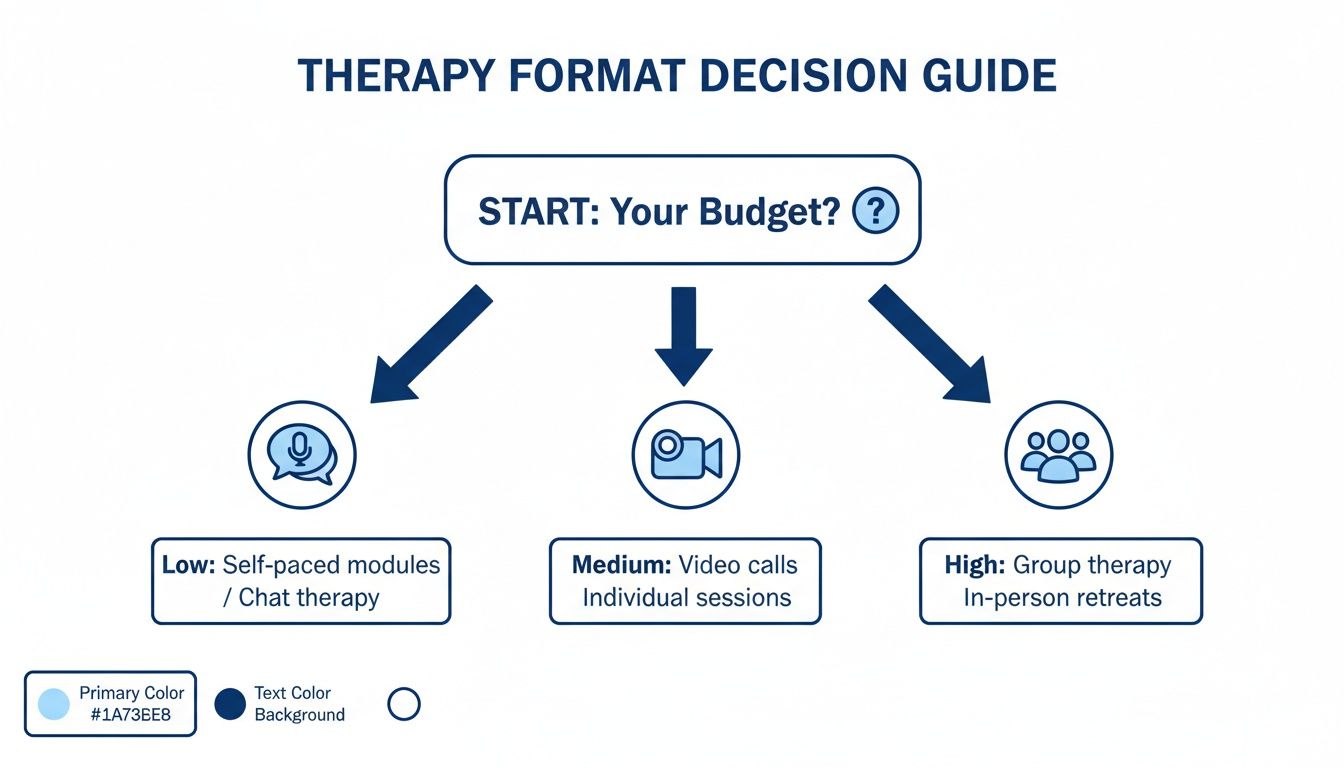
    This chart can help you see which therapy formats might work best for your budget.

    A therapy format decision guide flow chart showing options based on budget: low, medium, and high.

    As you can see, there is a path forward for every budget, from simple text-based check-ins to dedicated one-on-one sessions.

    Explore Therapists Offering Sliding Scale Fees

    One of the best ways to access affordable therapy is by finding a professional who offers a sliding scale. This is a compassionate system where the session fee is adjusted based on your income. This ensures quality care is available to everyone, not just those with high earnings.

    Don't hesitate to ask a therapist if they offer a sliding scale during your first contact. It's about finding a price point you can manage consistently. Many independent therapists see this as a core part of their mission to serve the community.

    Consider the Power of Group Therapy

    Group therapy is another fantastic, budget-friendly option. In these sessions, a small group of people facing similar issues—like anxiety, grief, or workplace stress—meet with a trained therapist. The cost is shared, making it more affordable than individual counselling.

    The benefits go beyond the price. There is incredible power in realizing you’re not alone. Sharing your story with others who understand can be deeply validating and helps build a sense of community and compassion.

    Remember, therapy is not about finding a quick cure. It's about building skills to handle life's challenges. Finding an affordable option allows you to stick with the process long enough to see real, lasting change.

    Look into NGOs and University Clinics

    Don’t overlook non-governmental organizations (NGOs) and university psychology departments. Many of these institutions are committed to providing low-cost or even free counselling services.

    University clinics are a hidden gem. You may work with postgraduate psychology students who are supervised by experienced, licensed faculty. They are equipped with the latest knowledge and provide thoughtful, high-quality care.

    Indian startups and NGOs are also making a difference. Some offer text-based support for under ₹500 per month, while others provide one-on-one sessions between ₹500–₹800. You can discover more about these affordable mental health initiatives in India to see what's available.

    Ensuring Quality and Safety in Online Therapy

    Finding affordable online therapy in India is a huge step, but it is crucial that it doesn't compromise quality or safety. Your peace of mind is the ultimate goal.

    Think of this section as your checklist for connecting with a qualified professional. Let's walk through how to ensure your online therapy experience is secure, supportive, and effective.

    Verifying a Therapist’s Credentials

    Before you book a session, it is a good idea to check the therapist’s qualifications. Any credible professional will be transparent about their education and training.

    Most qualified therapists in India hold at least a Master’s degree in Psychology (M.A. or M.Sc.) or an M.Phil in Clinical Psychology. Many are also registered with bodies like the Rehabilitation Council of India (RCI), which indicates adherence to ethical standards.

    Feel free to ask about their credentials during your initial consultation. A good therapist expects and welcomes these questions; it shows you are taking an active role in your well-being.

    Assessing the Right Fit for You

    Finding the right therapist is about personal connection. Your first call or chat is a two-way conversation to see if you feel comfortable with their style.

    Pay attention to your gut feeling during that first interaction. Do you feel heard and understood? Does their approach make sense to you? This initial sense of safety is the foundation for the trust needed for effective therapy.

    Remember, therapy is a partnership. The goal is to find someone you feel comfortable working with—someone who empowers you to build resilience and self-awareness.

    Protecting Your Privacy and Confidentiality

    Confidentiality is the cornerstone of therapy, especially when sharing personal information online. Any reputable service will have a clear and accessible privacy policy.

    Before signing up, take a moment to read the platform's terms of service. Look for clear statements on data encryption and confirmation that your information will not be shared without your permission. This ensures your private conversations about anxiety or depression remain private.

    As you explore digital mental health tools, you may also find various online mental health assessment options. These can be helpful starting points, but it's important to remember they are informational guides, not a clinical diagnosis.

    Preparing for Your First Therapy Session

    A woman with short dark hair works focused on a laptop at a wooden desk, illuminated by natural light.

    Starting therapy can feel a bit nerve-wracking, which is completely normal. A little preparation can help calm your nerves and make you feel more in control. This is about setting the stage to ease into the process.

    Think of your first session as a simple conversation. It's a chance for you and your therapist to meet and see if it feels like a good fit. There is no pressure to say the "right" thing; this is your time.

    Setting Up Your Space and Mindset

    To get the most out of online counselling, your environment matters. Find a quiet, private space where you won’t be disturbed. This could be any place where you feel comfortable speaking freely.

    Do a quick tech check before your session begins. Ensure your internet is stable and your device is charged. Testing your camera and mic beforehand helps you focus entirely on the conversation.

    Your first therapy session is a brave step forward. It's not about having all the answers but being open to exploring the questions. This is your dedicated time for personal growth and well-being.

    Thinking About Your Goals

    It's perfectly fine to show up without knowing exactly what you want to work on. Many people start therapy because they feel stuck, anxious, or not like themselves. This could be due to workplace stress, sadness, or relationship challenges.

    If it helps, you could jot down a few thoughts beforehand. Simple prompts can get you started:

    • What feelings or situations have been on your mind lately?
    • When did you first start noticing these challenges?
    • Have you tried anything on your own to feel better?
    • What does a "good day" look and feel like for you?

    These notes are just for you and can serve as a starting point. Sharing these initial thoughts helps your therapist understand your needs and begin creating a supportive plan. It’s a key part of making sure the affordable online therapy you’ve found in India is genuinely effective.

    A Final Word: Your Path Forward

    As we conclude, please hold onto this key thought: reaching out for therapy is a sign of strength. It is an active investment in yourself and your resilience for whatever life brings. Think of it as building a stronger foundation for your emotional well-being.

    We've covered how to find affordable, quality online therapy in India that you can trust. The goal is to leave you feeling confident that support for challenges like anxiety, depression, or workplace stress is within your reach.

    It’s a Journey, Not a Quick Fix

    It's natural to want instant results, but therapy is a gradual process. There will be sessions that feel like a breakthrough and others that feel more challenging. This is a normal part of the journey toward understanding yourself better and finding a healthier balance.

    Therapy isn't about finding a magic solution. It is about building a connection with a professional who helps you tap into your own inner strength and develop tools to navigate life with more confidence and self-compassion.

    As you move forward, keep these supportive takeaways in mind:

    • You're in control: You have the power to choose a therapist and a plan that works for you.
    • Every small step counts: Reading this guide is a positive step for your mental health.
    • Help is available: Quality, affordable counselling in India is accessible. You don’t have to do this alone.

    Frequently Asked Questions

    It’s normal to have questions when you’re considering therapy. It shows you are taking this step seriously. Here are straightforward answers to some common questions about affordable online therapy in India.

    What’s the Difference Between a Therapist and a Counsellor?

    In India, the terms "therapist" and "counsellor" are often used interchangeably. While there is overlap, there can be a slight difference.

    A counsellor often helps you navigate specific life challenges, like workplace stress or relationship difficulties, usually over a shorter term. This process focuses on building resilience and practical coping skills.

    A therapist, particularly a clinical psychologist, is typically equipped to work with more deep-rooted mental health conditions like chronic anxiety or depression. This work may take longer. The best choice depends on your current needs.

    How Do I Know if Online Therapy Is Right for Me?

    Online therapy is a fantastic option for many people, especially if you prefer the comfort of your own space. It is effective for working through common issues like anxiety, stress, mild to moderate depression, and personal growth goals.

    However, it is not the right fit for every situation. If you are experiencing a severe mental health crisis or having thoughts of self-harm, please seek immediate, in-person help. Online therapy is for support, not a replacement for emergency care.

    A helpful reminder: The self-assessment tools you see online can be great for reflection, but they are informational, not diagnostic. Only a qualified professional can provide a formal diagnosis.

    How Long Does Therapy Usually Take?

    This is a common question, and the answer is that it's different for everyone. There is no set number of sessions.

    Some people feel they achieve their goals in just a few appointments. Others find long-term therapy beneficial for ongoing personal growth and well-being. It's a journey that moves at your pace.

    You and your therapist will set goals together and check in on your progress along the way. For more general information on how online health services work, this general telehealth FAQ is a helpful resource.


    Ready to find someone you can connect with? At DeTalks, we make it easy to find qualified, caring professionals all over India. You can start exploring our directory right now to find the support that feels right for you at https://detalks.com.

  • A Compassionate Guide to Internet Addiction Treatment

    A Compassionate Guide to Internet Addiction Treatment

    Finding a healthy balance with technology often combines professional support with practical self-help strategies, strengthened by a strong support system. The goal isn't to eliminate the internet from your life, which isn't realistic in today's world. It's about regaining control of your digital habits for better overall well-being.

    Understanding When Internet Use Becomes a Problem

    A person sitting in a dimly lit room, illuminated only by the glow of their smartphone screen, looking tired and disconnected.

    We all spend a lot of time online. In a vast and connected country like India, the internet is essential for work, learning, and staying in touch with loved ones. It is a powerful and necessary tool.

    The challenge arises when this connection slowly becomes a dependency. It's a gradual shift that can happen quietly, where the hours spent online begin to negatively affect your real life.

    The Journey from Habit to Dependence

    A simple habit, like checking social media, can become a dominant part of your day. The constant urge to check notifications or engage online can start to drain your mental and emotional energy.

    This growing dependence can lead to feeling mentally exhausted and make it hard to focus. This is often when challenges like workplace stress, anxiety, and even feelings of depression can begin to surface, impacting key areas of your life.

    • Mental Well-being: Feeling restless or moody when you can't get online.
    • Relationships: Being physically present but mentally distant from family and friends.
    • Professional Life: Struggling with deadlines and feeling your focus is scattered.

    Building Resilience and Self-Compassion

    Noticing these patterns is a positive first step toward building a healthier relationship with technology. Approaching this with self-compassion, rather than guilt, allows you to understand the challenge with curiosity.

    The goal of any internet addiction treatment is not to assign labels. It's about building self-awareness and developing the resilience you need to use the digital world on your terms, so you can reconnect with what brings you happiness.

    This understanding is a solid foundation for seeking support. Professional therapy and counselling offer tools to reclaim your time and attention, putting your well-being first and helping technology work for you.

    Recognising the Signs of Internet Addiction

    It can be difficult to tell when "a lot of time online" becomes too much. Since being connected is part of modern life in India and globally, the signs of a problem can be subtle.

    The real indicator isn't the number of hours you spend online, but how those hours affect you. Noticing shifts in your mood, responsibilities, and relationships is a crucial first step in self-awareness.

    Common Indicators of Problematic Internet Use

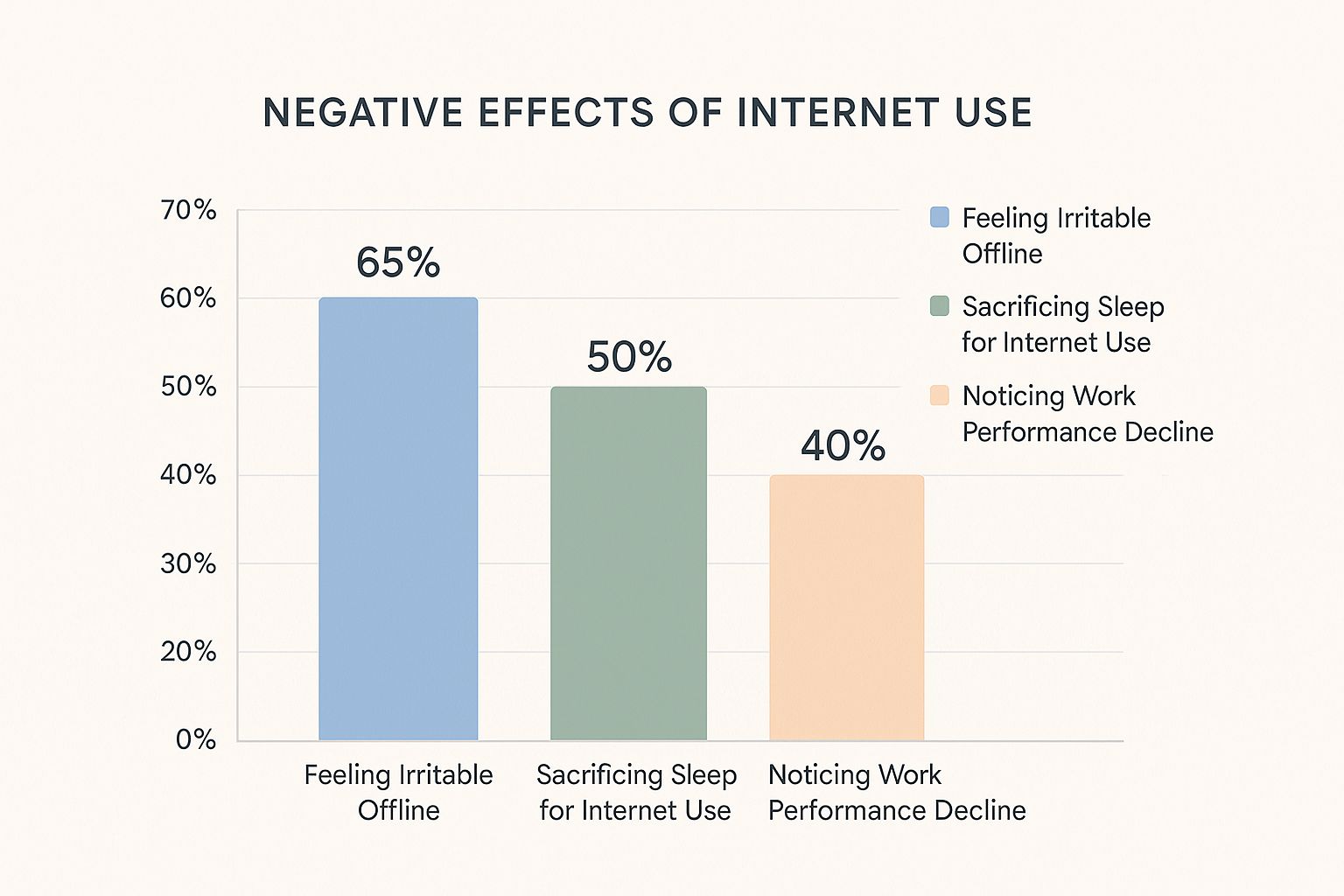
    These signs often appear gradually and can vary from person to person. They generally fall into three areas: changes in your behaviour, your emotions, and your physical health. This infographic highlights a few common impacts.

    Infographic bar chart showing that 65% of people feel irritable offline, 50% sacrifice sleep for internet use, and 40% notice a decline in work performance.

    Our emotional state and basic needs like sleep are often the first to be affected when our internet use becomes unbalanced. To help you reflect on your own habits, consider the following informational guide, which is not intended for diagnosis.

    Common Signs of Problematic Internet Use

    Category Example Signs
    Behavioural Neglecting work, studies, or home responsibilities. You may lose interest in hobbies and social events or find yourself hiding how much time you're online.
    Emotional Feeling anxious, lonely, or irritable when offline. You might experience mood swings, feeling happy online but down when you log off, or use the internet to avoid feelings of stress or depression.
    Physical Experiencing frequent headaches, eye strain, or back pain. Your sleep patterns may be disrupted, and you might notice changes in your weight due to different eating habits.

    If you see these signs in yourself, it's important to remember you are not alone.

    A Growing Concern in India

    This is a widespread issue, especially among young people. Studies on internet addiction in India show it's a growing concern for adolescents and young adults.

    Recognizing these signs is an opportunity to pause and reflect. It's a chance to consider supportive counselling or therapy to reclaim your digital well-being and build lasting resilience.

    How Professional Therapy Can Help

    Seeking professional help is a positive and courageous step toward regaining control. Therapy offers a safe, confidential space to explore your internet habits and discover healthier ways to navigate life's challenges.

    A compassionate therapist sitting opposite a person in a comfortable, sunlit room, engaged in a supportive conversation.

    A therapist acts as a supportive guide, helping you unpack your thoughts without judgment. The goal is to build your inner resilience and improve your overall well-being, so you're in charge of your online time.

    Understanding Cognitive Behavioural Therapy

    Cognitive Behavioural Therapy (CBT) is a practical and effective approach used in internet addiction treatment. This type of counselling focuses on the connection between your thoughts, feelings, and actions.

    For example, if you instinctively reach for your phone when you feel lonely or anxious, CBT helps you identify that trigger. You can then work with your therapist to develop healthier responses, empowering you to choose a new path. Research on CBT for internet addiction in India highlights its effectiveness.

    What a Therapy Session Feels Like

    Therapy is a partnership where you and your therapist set achievable goals together. You will learn practical skills for managing urges, dealing with workplace stress, and addressing underlying anxiety or depression.

    Therapy provides tools and understanding to create lasting change. The aim is to help you build a life that feels more present, connected, and genuinely fulfilling.

    Exploring other supportive methods, like understanding how acupuncture for stress and anxiety can help manage emotional strain, can also be beneficial.

    The Role of Family Counselling

    Problematic internet use often affects the entire family. Family counselling can help repair communication and build a stronger support network at home.

    These sessions provide a space for family members to understand your experience and learn how to offer support. Working together helps reinforce the positive changes you're making, creating a home environment that promotes digital well-being.

    Exploring Inpatient and Digital Detox Programmes

    A serene, nature-filled retreat centre with comfortable seating areas, suggesting a calm space for reflection and healing.

    For some, stepping away from technology is a necessary step. Inpatient programmes and digital detoxes offer a supportive space away from daily digital triggers.

    This break allows your mind to rest and recalibrate without constant notifications. It's an opportunity to rediscover offline joys, build real connections, and develop resilience without a screen.

    What to Expect from Intensive Treatment

    Inpatient internet addiction treatment offers immersive, round-the-clock support. These programs blend individual therapy, group counselling, and activities to improve overall well-being.

    A typical program might include:

    • Structured Daily Routines: Creating a new schedule with productive, calming activities.
    • Mindfulness and Relaxation: Learning to manage stress without relying on a device.
    • Skill-Building Workshops: Focusing on communication, problem-solving, and healthy coping skills.

    This structured environment helps you form new habits in a place of understanding and support.

    A Realistic Look at the Journey

    In India, dedicated inpatient centres offer controlled settings for a digital detox. However, it's important to have realistic expectations and a strong plan for ongoing support after leaving.

    Understanding broader social media addiction statistics can provide helpful context for this journey.

    Choosing an intensive programme is a significant investment in your long-term happiness. These programmes are a catalyst for change, providing tools and guidance for a more balanced life.

    The journey is rooted in self-compassion and a commitment to sustained well-being long after the programme ends.

    Practical Strategies for Everyday Digital Wellness

    Regaining control over your digital life happens through small, consistent changes. The goal is to mindfully introduce practices that help you feel more present and improve your daily well-being.

    These strategies are tools for self-care, designed to help you build resilience and find more joy away from the screen.

    Creating Mindful Boundaries with Technology

    Setting clear boundaries for device use is an effective first step. This is about reclaiming parts of your day for focus and real connection, not about punishment.

    Designating certain areas, like the dining table or bedroom, as tech-free zones can be helpful. This physical separation helps your brain switch off and signals that these spaces are for rest and connection. Following practical tips for limiting screen time can also support these efforts.

    Cultivating Offline Resilience and Joy

    A key part of any internet addiction treatment is rediscovering life offline. Making a conscious effort to reconnect with hobbies and interests is essential for building a fulfilling life beyond the screen.

    Here are a few gentle ways to begin:

    • Reconnect with Old Hobbies: Set aside 30 minutes a few times a week for an activity you once enjoyed.
    • Embrace Mindful Moments: When you feel the urge to scroll, try a simple mindfulness exercise like taking five deep breaths.
    • Schedule Social Time: Make intentional plans to see friends or family in person to counter the anxiety that can fuel excessive internet use.

    These activities are the building blocks of emotional resilience. Each time you choose an offline activity, you reinforce that you don't need a screen to manage boredom, stress, or sadness.

    Remember to be patient and compassionate with yourself. Every small step towards digital wellness is a success.

    Finding the Right Professional Support in India

    Taking the first step to get help is a courageous move. The conversation around mental health in India is growing, and there are many skilled professionals ready to support you.

    Finding a therapist is about starting a partnership. It's important to find someone who makes you feel safe and heard, as the connection you build is key to making lasting change.

    Therapy vs. Counselling: What’s the Difference?

    The terms 'therapy' and 'counselling' are often used interchangeably, but they have slightly different focuses. Counselling is often shorter-term and targets a specific issue, like workplace stress.

    Therapy may take a deeper look at long-standing patterns related to challenges like anxiety or depression. Platforms like DeTalks make it easier to find qualified professionals across India, reducing barriers to getting help.

    Questions to Ask a Potential Therapist

    Your first meeting is a chance to see if a therapist is a good fit for you. Having a few questions ready can help you make an informed decision.

    • Do you have experience helping people with their internet use?
    • What is your approach in a typical session?
    • How will we work together to set goals?

    Remember, the goal is to build a supportive relationship. This alliance can equip you with tools for self-compassion, build your resilience, and empower you to create a life that feels balanced and fulfilling.

    Frequently Asked Questions

    It's normal to have questions as you explore your relationship with technology. Getting clear, supportive answers can make a significant difference on your journey.

    Is Internet Addiction a Real Medical Condition?

    While 'Internet Gaming Disorder' is noted for further study in diagnostic manuals, most mental health professionals recognize problematic internet use as a behavioral challenge.

    The focus of internet addiction treatment is less on a formal label and more on the compulsive behaviors and their real-world impact. Addressing the resulting anxiety, depression, or isolation is what truly matters.

    Can I Overcome This on My Own?

    Many people successfully manage their digital habits through self-help strategies and support from friends and family. Building personal resilience and having a strong support system is powerful.

    However, if your internet use is causing serious issues like constant workplace stress, professional counselling can provide structured guidance. Reaching out for help is a sign of strength.

    When approaching a loved one, use compassionate 'I' statements, like, "I've been feeling worried about you." This opens a door for communication and offers support, reframing the conversation around their well-being.

    This shift creates a sense of partnership, making it easier for them to hear your concerns and consider getting help.


    Ready to take the next step towards a more balanced life? The team at DeTalks can connect you with qualified therapists who understand the complexities of digital wellness. Explore our directory and find the right support for your journey at https://detalks.com.