Tag: mental health support

  • Therapist vs Psychiatrist: Your Guide to the Right Mental Health Support

    Therapist vs Psychiatrist: Your Guide to the Right Mental Health Support

    When you're starting your journey to better mental health, one of the first questions is often who to see. The terms 'therapist' and 'psychiatrist' are often used interchangeably, but they represent two different paths to well-being. Knowing the difference helps you find the right support from the start.

    The simplest way to think about it is this: Psychiatrists are medical doctors who specialize in mental health, allowing them to provide medical assessments and prescribe medication. Therapists use talk therapy and counselling to guide you through challenges, helping you build coping skills for greater resilience and happiness.

    Understanding Your Path to Well-Being

    A man stands at a fork in a path, facing signs pointing to 'Therapist' and 'Psychiatrist'.

    Taking that first step toward mental well-being is an act of courage. Whether you're navigating workplace stress, managing anxiety, or seeking to build resilience, understanding your options is empowering. The goal is to find a supportive, confidential space where you feel truly heard.

    This guide is here to clarify the roles of therapists and psychiatrists. We'll explore their training, the methods they use, and the kind of support you can expect, helping you make an informed decision that feels right for you.

    Therapist vs Psychiatrist at a Glance

    To cut through the confusion, it helps to see the core differences side-by-side. The main distinction lies in their education and how they support your well-being. A psychiatrist approaches mental health from a medical perspective, while a therapist uses psychological and conversational frameworks.

    This table offers a clear, side-by-side summary, helping you quickly understand each professional's role.

    Key Aspect Therapist (Psychologist, Counselor) Psychiatrist (Medical Doctor)
    Primary Focus Explores thoughts, feelings, and behaviours through talk therapy (psychotherapy). Provides medical assessments for mental health conditions and manages treatment, often with medication.
    Education Master's or Doctoral degree (e.g., M.Phil, PhD, PsyD) in psychology, counselling, or social work. Medical degree (MBBS, MD) followed by specialised training in psychiatry.
    Can Prescribe Medication? No, they cannot prescribe medication in India. Yes, they are licensed medical doctors who can prescribe and manage medication.
    Typical Concerns Addressed Workplace stress, relationship issues, anxiety, mild depression, building resilience, and personal growth. Severe depression, bipolar disorder, schizophrenia, and other conditions where medication may be helpful.

    If you feel your challenges stem from thought patterns or life events, a therapist is an excellent starting point for therapy or counselling. If you suspect a biological component that might benefit from medication, a psychiatrist can provide the right medical support.

    Why This Distinction Matters in India

    Understanding this difference is particularly vital in the Indian context. Here, psychiatrists are medical doctors who provide assessments, prescribe medication, and sometimes offer therapy. Therapists and psychologists are the primary providers of psychotherapy, also known as 'talk therapy' or counselling.

    The need for both is immense, as India has a significant shortage of mental health professionals, with only about 0.75 psychiatrists per 100,000 people. This highlights how vital each role is. Psychiatrists often manage complex conditions medically, while therapists provide crucial psychological support to help people build lasting resilience. You can read more in this study about the mental health workforce in India.

    A Key Takeaway: The question isn't "which one is better?" but "which one is the right fit for me right now?" One helps you build skills through conversation, while the other provides medical assessment and treatment.

    Ultimately, both professionals aim to improve your mental well-being. Many people see both at the same time, combining therapy insights with medication management for a powerful, collaborative approach.

    The Role of a Therapist in Your Journey

    Two women having a conversation in a modern, well-lit therapy or counseling office.

    Your journey to better well-being often begins with a meaningful conversation, which is where a therapist comes in. A therapist, such as a psychologist or counsellor, is trained to listen, understand, and guide you through life’s difficulties in a safe, confidential setting.

    A therapist’s main tool is psychotherapy, or what most of us call 'talk therapy'. The process is designed to help you explore your thoughts, feelings, and behaviours to understand yourself better and build healthier ways to cope with challenges like stress or anxiety.

    What Happens in Therapy

    Therapy is a collaborative partnership built on trust. It’s about more than just talking about problems; it’s about actively finding solutions and developing skills like resilience that will serve you long after your sessions end.

    A good therapist helps you spot recurring patterns that may be holding you back, offering a fresh, non-judgmental perspective. This partnership is the foundation for creating real, lasting change in your life.

    Common Approaches Therapists Use

    Therapists use various proven methods, adapting them to your unique needs. These are flexible frameworks designed to help you find what truly works for you, whether you're facing burnout or seeking greater happiness.

    Here are a few common therapeutic approaches:

    • Cognitive Behavioural Therapy (CBT): A practical, hands-on approach that helps you identify and reframe unhelpful thought patterns and behaviours. It's effective for managing anxiety, depression, and workplace stress.
    • Mindfulness-Based Therapies: These techniques teach you to ground yourself in the present moment, observing thoughts without judgment. It's a fantastic way to build emotional regulation and reduce stress.
    • Psychodynamic Therapy: This approach explores how past experiences might be shaping your current feelings and actions. It can lead to profound insights and deep healing.

    A skilled therapist often blends techniques to create a plan tailored to your goals. This could mean overcoming a specific challenge or cultivating more compassion and joy in your life.

    Therapy is a space where you learn to become your own emotional expert. The goal is not just to solve immediate problems but to build inner resilience and self-compassion to handle future challenges with confidence.

    Beyond Challenges Toward Growth

    While therapy is an incredible resource for navigating issues like anxiety or burnout, it’s not just for when you're struggling. It's also a powerful tool for personal growth, helping you nurture qualities like gratitude, emotional intelligence, and compassion. Many people seek counselling to build stronger relationships or connect with a deeper sense of purpose.

    When considering your options, a crucial first step is finding a mental health therapist who is the right fit for you. Remember that any assessments a therapist might use are informational tools to guide your sessions, not formal medical diagnoses. The process is about understanding, not labelling, putting you in charge of your well-being journey.

    The Psychiatrist’s Role in Your Treatment

    While a therapist guides you through conversation, a psychiatrist approaches your mental health from a medical perspective. A psychiatrist is a medical doctor who has specialised in psychiatry, which is the crucial difference between a therapist and a psychiatrist.

    Their medical training (MBBS or MD) means they understand the complex connections between your mind and body. They view mental health through a biological lens, considering factors like brain chemistry and genetics to get a complete picture of your well-being.

    A Medical Approach to Mental Well-being

    Because they are medical doctors, psychiatrists can provide a formal medical assessment of mental health conditions. They conduct in-depth evaluations, which often include discussing your personal and family medical history.

    This medical assessment creates a clear roadmap for treatment. It is not about labelling you but about understanding the root causes of your distress so you can get the most effective support possible.

    A psychiatrist’s work typically includes:

    • Medical Assessment: Identifying specific conditions like major depressive disorder, bipolar disorder, or anxiety disorders.
    • Medication Management: Prescribing and adjusting medications to help manage symptoms related to brain chemistry.
    • Comprehensive Evaluations: Examining your overall health to understand the interplay between physical and mental well-being.

    When Medication Becomes Part of the Plan

    One of a psychiatrist’s most important roles is medication management. For certain conditions, medication can be a key support, stabilizing symptoms to create the mental space needed for healing and growth. It often allows you to get more out of other treatments like therapy.

    A psychiatrist's medical expertise is often essential for conditions such as:

    • Severe Depression: Medication can help lift the heavy fog when symptoms make daily life difficult.
    • Bipolar Disorder: Medication is a primary tool for managing the extreme shifts between mania and depression.
    • Schizophrenia and Psychotic Disorders: Antipsychotic medications are key to managing symptoms and improving quality of life.
    • Severe Anxiety and OCD: Medication can reduce the intensity of overwhelming anxiety, making therapeutic work more approachable.

    The decision to start medication is a partnership between you and your psychiatrist. They will walk you through the options, potential benefits, and side effects in a clear, supportive way, ensuring you feel comfortable and in control.

    Psychiatrists Can Also Offer Counselling

    It’s a common myth that psychiatrists only prescribe medication. Many are also trained in psychotherapy and offer counselling alongside medical treatment, creating a combined approach that can be very effective.

    This means a psychiatrist might not only manage your medication but also provide talk therapy to help you build coping skills. Their ability to blend both medical and therapeutic support makes them uniquely suited to handle complex mental health situations.

    Making the Right Choice for Your Needs

    Starting your mental health journey can feel like standing at a fork in the road. Therapist or psychiatrist? The truth is, it’s less about picking the "better" path and more about choosing the best starting point for you.

    Let's look at some real-life situations to see how these roles play out. This clarity can give you the confidence to take that first step toward better well-being.

    When to Start with a Therapist

    Think of a therapist as your first point of contact for a wide range of life’s challenges. Their focus is on helping you build skills, explore your thoughts, and find new ways to navigate difficulties through therapy or counselling.

    Consider reaching out to a therapist first if you're dealing with things like:

    • Workplace Stress and Burnout: A therapist can provide practical strategies to manage stress, set healthy boundaries, and build genuine resilience.
    • Relationship Issues: Counselling offers a space to improve communication, understand different perspectives, and work through conflict constructively.
    • Mild to Moderate Anxiety or Depression: Therapy provides concrete coping mechanisms to manage persistent feelings of worry or sadness effectively.
    • Personal Growth and Self-Esteem: A therapist acts as an invaluable guide if you want to understand yourself better, build confidence, or find a clearer sense of purpose.

    If therapy feels like the right direction, this guide on choosing a therapist that's the right fit for you is an excellent resource.

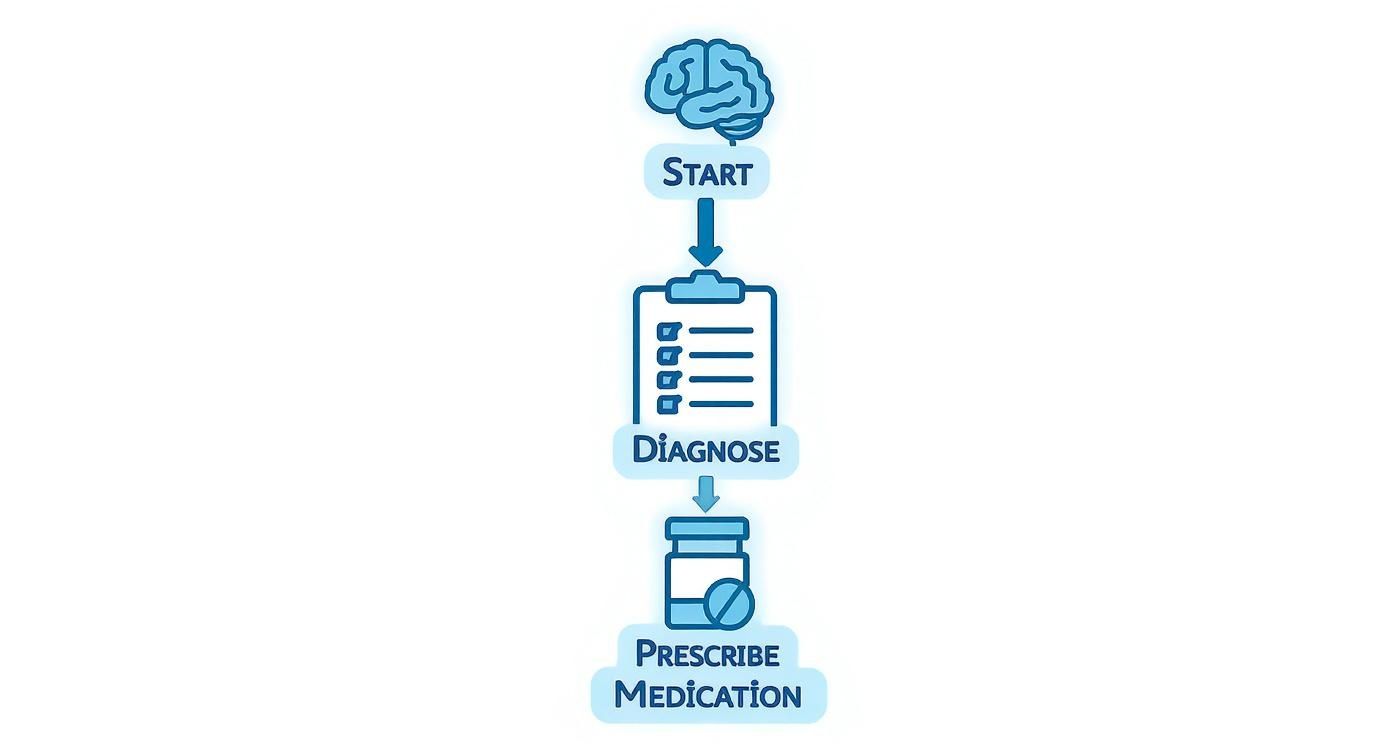
    This flowchart gives a clear picture of the psychiatrist's medical-focused process.

    A flowchart illustrating the medical process from initial start (brain) to diagnosis (clipboard) and prescribing medication (pill bottle).

    It highlights the core medical functions—providing an assessment and prescribing medication—that set psychiatrists apart.

    When to Consider a Psychiatrist

    A psychiatrist's medical background becomes essential when symptoms are more severe or seem to have a strong biological component. Their ability to conduct a medical evaluation and prescribe medication can provide stability for recovery.

    You might want to see a psychiatrist if you're experiencing:

    • Severe or Overwhelming Symptoms: If anxiety or depression makes it difficult to function at work, school, or home, a medical evaluation is a wise step.
    • Intense Mood Swings: Experiencing extreme highs and lows could be a sign of a condition like bipolar disorder, which often benefits from medication management.
    • Thoughts of Self-Harm: If you are having thoughts of harming yourself, it is critical to seek immediate help from a medical professional like a psychiatrist.
    • Symptoms of Psychosis: Hearing or seeing things that aren't there, or holding beliefs that don’t align with reality, requires a psychiatric evaluation.

    It’s important to remember that any assessment from a professional is a tool to guide your treatment. It is meant to help you understand what's happening, not to put you in a box.

    A Supportive Takeaway: When in doubt, starting with a therapist is almost always a great first move. They are trained to assess your situation and will refer you to a psychiatrist if they feel medication could be a helpful part of your plan.

    You Do Not Have to Choose Just One

    The paths of therapy and psychiatry are not mutually exclusive. In fact, they often work together to create a stronger and more effective support system for your well-being.

    For instance, a psychiatrist might prescribe medication to help lift the fog of severe depression. This can provide enough relief for you to have the energy and focus to fully engage in your therapy sessions.

    This collaborative care ensures that both the biological and psychological sides of your well-being are addressed. It gives you a well-rounded foundation for healing, and that's what truly matters.

    Which Professional to See Based on Your Concerns

    Sometimes, a simple scenario-based guide can make all the difference. Use this table to get a clearer idea of whether a therapist or a psychiatrist might be the better initial contact for your specific goals.

    Your Primary Goal or Concern A Therapist Is a Good Starting Point If… A Psychiatrist May Be Necessary If…
    Managing Stress & Burnout You need coping strategies, want to set better boundaries, and build resilience to daily pressures. Your stress has led to severe physical symptoms, panic attacks, or an inability to function at all.
    Navigating Relationship Problems You're looking to improve communication, resolve conflicts, or work through family dynamics. The relationship stress is triggering severe depression, anxiety, or thoughts of self-harm.
    Feeling Depressed or Anxious Your symptoms are mild to moderate, and you're ready to learn new thought patterns and coping skills. Your symptoms are so severe you can't get out of bed, go to work, or manage basic daily tasks.
    Improving Self-Esteem You want to explore your past, challenge negative self-talk, and build confidence in a supportive setting. Your low self-esteem is part of a larger, more complex mental health condition needing assessment.
    Dealing with Trauma You need to process past events in a safe space and learn to manage triggers through specialised talk therapy. Your trauma symptoms (like flashbacks or severe dissociation) are debilitating and preventing you from engaging in therapy.
    Exploring Identity or Purpose You're seeking clarity on life goals, personal values, or identity questions in a reflective environment. N/A – This is almost always best suited for a therapist.

    Remember, this is just a starting point. The most important thing is to reach out to someone, as a good professional will always help guide you to the right type of care.

    How Therapists and Psychiatrists Collaborate for You

    A female doctor and a male patient are sitting on a couch, discussing information on a digital tablet.

    Choosing between a therapist and a psychiatrist often isn't an either-or decision. Some of the best mental health outcomes happen when these professionals team up, creating a robust support system designed specifically for you. This collaborative model ensures every angle of your well-being is covered.

    This integrated approach brings together the best of both worlds. The psychiatrist handles the biological side, including medication and physical health, while the therapist works with you on the psychological and emotional components.

    A Partnership for Your Well-being

    Think of this partnership like building a house. A psychiatrist can lay the foundation, perhaps using medication to manage severe symptoms of depression or anxiety. This creates stability for you to work with a therapist, who helps you build the life you want on that solid ground.

    The synergy here is incredibly powerful. Medication from a psychiatrist can quiet the noise of anxiety, making it possible to fully engage in therapy. In those sessions, you can then learn practical skills to manage thoughts and build long-term resilience.

    Medication can offer the stability needed for the deeper, transformative work of therapy to truly take root. It’s not about choosing one over the other; it's about how they can work in harmony for your benefit.

    This two-pronged approach is a hallmark of high-quality mental healthcare, both in India and globally. It's built on the understanding that our minds and bodies are deeply connected.

    How Collaboration Works in Practice

    So, what does this teamwork actually look like? It’s a coordinated effort where both professionals communicate (always with your consent) to ensure your treatment is aligned and effective. This makes the experience feel seamless, so you never feel stuck in the middle.

    Here’s a common scenario:

    1. Initial Consultation: You might start by seeing a therapist for workplace stress. They might then refer you to a psychiatrist if they feel medication could help manage underlying severe anxiety.
    2. Shared Goals: With your permission, your therapist and psychiatrist can share insights. Your psychiatrist gets a better picture of the challenges you’re tackling in therapy, and your therapist understands how medication might be affecting your mood.
    3. Adjusting Your Plan: As you make progress, your team fine-tunes your care. For instance, as you build strong coping skills in therapy, your psychiatrist might discuss gradually reducing medication over time.

    This teamwork ensures you are at the centre of your own care. It looks beyond the basic difference between therapist and psychiatrist and focuses on their combined strength.

    Supportive Takeaways for Your Journey

    This collaborative model is all about empowering you. It provides a comprehensive safety net, addressing both immediate symptoms and the root causes of your difficulties.

    Ultimately, this partnership offers a path to not just healing but thriving. It combines medical support with the skill-building of counselling, fostering a greater sense of happiness and self-compassion.

    What to Expect in Your First Appointment

    https://www.youtube.com/embed/RiGIvbHpluE

    Booking that first appointment is a huge step and a real act of self-care. It’s completely normal to feel a bit nervous, so let’s pull back the curtain on what a first meeting with a therapist or a psychiatrist usually looks like.

    Knowing what’s coming can make the process feel less mysterious. Remember, this first meeting is as much about you figuring out if they're a good fit as it is about them getting to know you.

    Your First Session with a Therapist

    Your first therapy session is really just a conversation to see if you connect. It's not an interrogation; think of it more as two people getting to know each other in a supportive space.

    You'll have a chance to talk about what brought you in, whether it's anxiety, depression, or workplace stress. Your therapist will listen and ask thoughtful questions, and they’ll also explain how their approach to counselling works.

    This initial appointment is all about building rapport. The most important thing is that you leave feeling heard, respected, and safe enough to be yourself.

    There's no pressure to say the "right" thing. It’s simply a space for you to share your story and start thinking about what you’d like to achieve on your journey to better well-being.

    Your First Appointment with a Psychiatrist

    A first visit with a psychiatrist will feel more like a doctor's appointment because they are medical doctors. Their main objective is to conduct a thorough evaluation of your mental and physical health.

    They'll ask specific questions about your symptoms: what they are and how they affect your daily life. You can also expect to discuss your family’s medical history, sleep habits, and appetite, helping them understand the biological side of what you're experiencing.

    This initial meeting is more structured and informational than a therapy session. Afterward, the psychiatrist might discuss whether medication could be a useful part of your treatment, explaining the options so you can make an informed decision together.

    A few things to remember:

    • You're in control: Both appointments are a two-way street. You have every right to ask questions.
    • Honesty is your best tool: Being open helps them understand how to support you best.
    • It’s all about the fit: Trust is everything in both therapy and psychiatric care. If it doesn’t feel right, it is okay to find someone else.

    Making that first call is often the hardest part. Now that you know what to expect, you can walk in feeling more prepared to start building resilience for a healthier, happier life.

    Common Questions About Therapists and Psychiatrists

    It’s completely normal to have questions when you’re trying to find the right mental health support. Getting straight answers can help you feel more confident about taking the next step.

    Think of this as a practical guide. Understanding things like referrals and assessments means you can start your journey smoothly.

    Do I Need a Referral to See a Psychiatrist?

    This depends on where you are in India and your healthcare plan. For the most part, you can book an appointment directly with a psychiatrist.

    However, some insurance providers or hospital networks may require a referral from your general physician (GP) first. It’s always a good idea to check their policy before booking.

    Can a Therapist Give a Formal Diagnosis?

    This is where the difference between a therapist and psychiatrist really stands out. A clinical psychologist, who is a type of therapist, is qualified to provide a formal medical diagnosis for conditions like anxiety or depression.

    Other therapists and counsellors focus on assessing your symptoms to create an effective therapy plan. They help you understand your challenges and equip you with coping skills, but a formal medical diagnosis usually comes from a psychiatrist or a clinical psychologist.

    Remember, any assessment you receive is an informational tool to guide your treatment. It’s about understanding what you need, not about being stuck with a label.

    How Do I Know if Medication Is Right for Me?

    The decision to take medication is a personal one, made in conversation with a qualified professional like a psychiatrist. They will look at your symptoms, health history, and goals to determine if medication would be a useful part of your plan.

    Often, therapy is suggested as the first step, or is used alongside medication for the best results. A good professional will always lay out all the options, ensuring you feel in control of your journey.

    Who Is Better for Workplace Stress or Burnout?

    If you’re dealing with workplace stress, burnout, or need to learn better coping mechanisms, a therapist is a fantastic starting point. Their expertise in counselling can help you build the resilience and practical strategies you need to handle professional pressures.

    If that stress leads to severe anxiety or depression, your therapist might recommend you also see a psychiatrist. A psychiatrist can then assess whether medication might offer some much-needed relief to help you function again.


    Finding the right professional is a key step in your mental health journey. At DeTalks, we make it easier to connect with qualified therapists and access scientifically validated assessments to understand your needs better. Explore our directory and take the first step towards clarity and well-being today at https://detalks.com.
  • A Warm Guide to Finding a Therapist Near Me

    A Warm Guide to Finding a Therapist Near Me

    Taking the first step to find a therapist near me is a powerful act of self-care. It's a quiet acknowledgment that you are ready for growth, and that is something to be proud of.

    Whether you're navigating challenges like workplace stress or seeking to build more happiness and resilience, therapy offers a safe, confidential space. This initial decision is often the most courageous part of the journey toward improved well-being.

    Why Consider Therapy for Your Well-Being

    Starting therapy is a personal choice, often driven by a desire for support or a sense that things could feel better. Counselling is not just for crises; it supports you through life's challenges and helps foster lasting personal growth.

    A person sitting on a comfortable couch, looking thoughtfully out a window, representing a moment of self-reflection before starting therapy.

    In India and around the world, many people seek support for common hurdles. This could be persistent anxiety, a low mood that dampens your joy, or the strain of burnout. A good therapist provides practical strategies to navigate these feelings.

    Recognising the Signs

    The signs that you might benefit from therapy are often subtle, not loud alarms. You might feel stuck, a bit lost, or simply unfulfilled. Acknowledging these feelings is a vital first step toward positive change.

    Do any of these feel familiar?

    • Persistent Stress or Burnout: You feel drained by work or family life, and rest doesn't seem to recharge you. This is a common experience in today's demanding environments.
    • Relationship Difficulties: You find yourself in repeating arguments with a partner, family, or colleagues. Therapy can help you build healthier communication skills.
    • A Desire for Growth: Things may be fine, but you want more. You are looking to understand yourself better, develop resilience, or cultivate more compassion and happiness.

    Beyond Challenges Toward Growth

    Therapy is not just about addressing problems; it's a powerful space for building on your strengths. It helps you become more resilient, enabling you to bounce back from life's setbacks with greater ease.

    Taking that first step towards counselling is an investment in your well-being. It’s about giving yourself the space to understand your mind, develop healthy coping skills, and build a kinder relationship with yourself.

    This journey is about equipping yourself with the tools to handle life's complexities. It focuses on nurturing your own well-being for the long term, rather than seeking a quick cure.

    Understanding Different Types of Therapy

    Exploring therapy can feel like learning a new language with its various terms and titles. The good news is that you don't need to be an expert to understand the basics.

    Think of therapeutic approaches as different ways to view your life. Some are practical and focused on specific issues, while others take a broader approach to foster overall personal growth.

    Getting to Grips with Therapeutic Approaches

    You have likely heard of Cognitive Behavioural Therapy (CBT). It's a practical approach that helps you identify and change unhelpful thought patterns and behaviours, making it excellent for managing anxiety, depression, or workplace stress.

    Psychodynamic therapy takes a different route, gently exploring your past to understand its influence on your present. It's a good fit if you notice recurring patterns in your relationships and want to explore their roots, like understanding attachment styles in relationships.

    Other common methods include:

    • Humanistic Therapy: This focuses on self-discovery and realising your full potential, supporting your personal journey of growth.
    • Mindfulness-Based Therapies: These blend traditional therapy with mindfulness, teaching you to stay present and regulate your emotions.
    • Family Systems Therapy: This approach views your challenges within the context of your relationships to improve communication and resolve conflict.

    Who's Who? Decoding Professional Titles

    You'll see titles like psychologist, psychiatrist, and counsellor. In India, a psychologist has a Master's or PhD and provides therapy and assessments. A psychiatrist is a medical doctor who can diagnose conditions and prescribe medication.

    A counsellor or therapist typically holds a Master's degree and specialises in talk therapy. The most important factor is finding someone qualified and experienced in the areas you want to work on, like building resilience or navigating life changes.

    A quick note on online assessments: Many platforms offer tools to help you understand yourself better. These assessments are informational and can be great starting points, but they are not a substitute for a formal diagnosis from a qualified professional.

    Ultimately, the "best" approach is the one that resonates with you. The connection and trust you build with your therapist are far more important than any specific label or technique.

    Finding a Therapist: Local and Online Options

    You are ready to find a therapist, which is a significant and positive step. Having a clear plan can make the search process feel much more manageable.

    It's helpful to understand the local context, which can have its challenges. For example, a report on Indiana's mental health workforce highlights shortages in some areas, a situation familiar in many parts of the world, including regions in India.

    But please don't let this discourage you. Many dedicated professionals are available, and with the right strategy, you can find someone who fits your needs.

    Expanding Your Search Beyond Your Postcode

    One of the most effective strategies is to embrace online therapy. Online counselling opens up access to a wide pool of licensed professionals, regardless of your location. This is especially helpful if you need a specialist who isn't available nearby.

    Community health clinics and university counselling centres are also valuable resources. They often provide services on a sliding scale, making therapy more affordable. While some may have a waitlist, getting your name on it is a proactive step.

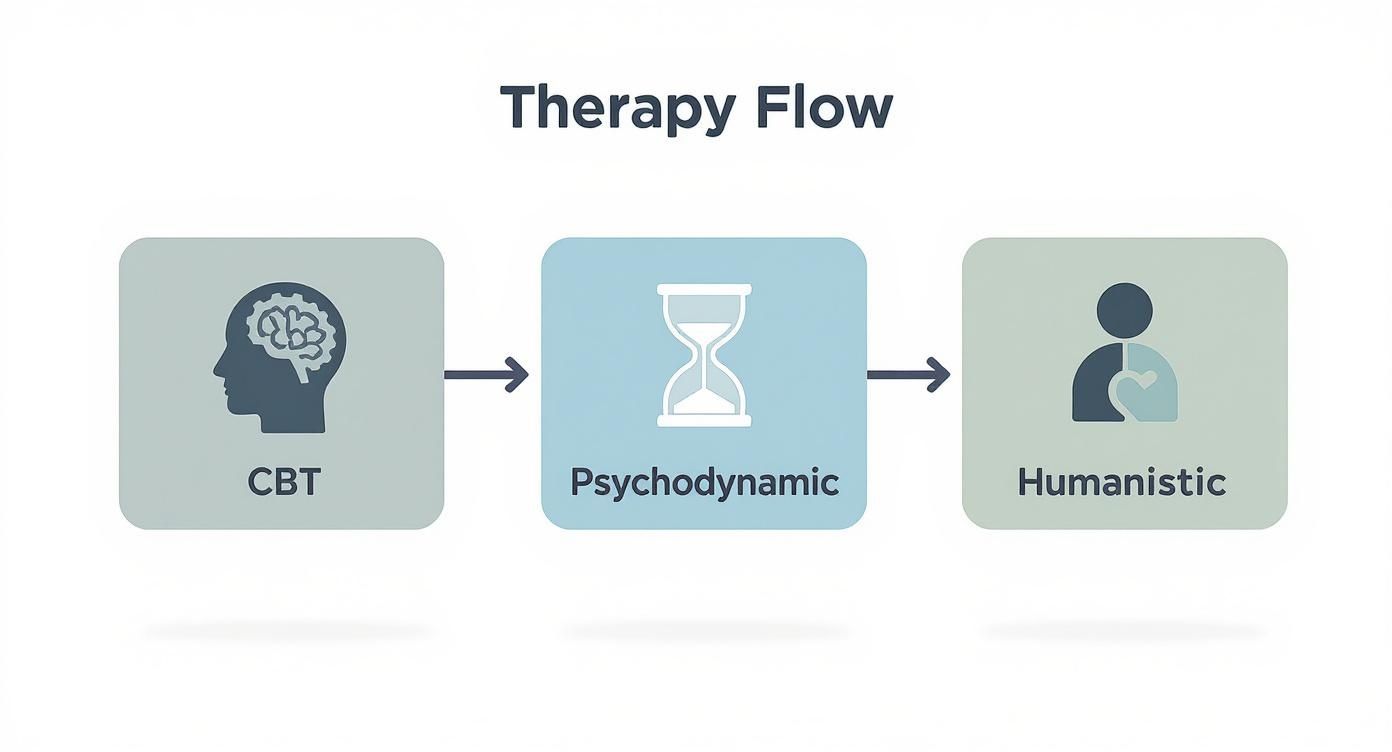
    This infographic gives you a quick look at some of the most common therapy types you'll come across.

    Infographic about find a therapist near me

    Familiarising yourself with different approaches will help you refine your search. It's about finding a professional whose methods align with your goals for well-being.

    Navigating the search requires persistence and a smart approach. Here’s a breakdown of practical steps you can take to find the support you need.

    Strategies for Finding a Therapist Amidst Workforce Shortages

    Strategy How It Helps Where to Start
    Embrace Telehealth Expands your search nationally or statewide, beyond just your local area. Use online directories with filters for "telehealth" or "online therapy."
    Check Waitlists Secures a potential spot with a provider, even if it's not immediate. Call local community health centres, university clinics, or private practices.
    Contact Your Insurer Provides a list of in-network therapists, helping manage costs. Call the member services number on your insurance card or check their online portal.
    Explore Online Directories Allows you to filter by specialisation, insurance, and availability to narrow options. Visit reputable platforms like DeTalks.
    Ask Your GP for a Referral Your doctor often has a trusted network of mental health professionals. Schedule a check-up and mention you are looking for a mental health provider.

    These strategies are about being proactive and casting a wider net. The right fit is out there; it just might take a few extra steps to find them.

    Practical Steps to Navigate the Search

    Staying organised can make this process much less overwhelming. A simple notebook or spreadsheet can help you track who you have contacted and any notes from your conversations.

    Here are a few actionable first moves:

    • Start with your insurance provider: Getting a list of in-network therapists is a logical first step for keeping costs predictable.
    • Use trusted online directories: Platforms like DeTalks are designed to help you filter by location, concerns, and availability.
    • Talk to your doctor: Your General Practitioner can be a great resource, often having professional connections to recommend.

    Remember, this is about finding the right connection, not just the first available appointment. Be patient with the process and, most importantly, be kind to yourself.

    Managing the Costs of Therapy

    Thinking about how to pay for therapy is a normal and important part of the process. It's essential to find a sustainable path to well-being without adding financial stress, especially when dealing with anxiety, depression, or burnout.

    Navigating the financial side of mental healthcare can feel complex. Cost is a significant barrier for many people. Data from a detailed report from NAMI shows that affordability is a major challenge, a reality that resonates globally.

    This highlights the importance of having a clear financial plan. Understanding your options before you begin your search can make a significant difference.

    First, Figure Out Your Insurance

    If you have health insurance, your first step is to understand your mental health coverage. Contact your insurance provider to get clear information about your therapy and counselling benefits.

    When you call, have a few specific questions ready. This will help you get the answers you need and avoid surprises later.

    Here’s what you should ask:

    • Is therapy or counselling covered by my plan?
    • Do I need a referral from my primary care doctor?
    • What’s my copay (the flat fee you pay per session)?
    • What’s my deductible (the amount you pay before insurance starts to cover costs)?
    • Is there a limit on the number of sessions covered each year?

    Getting this information upfront puts you in control. It allows you to focus your search on therapists within your network, which is often the most cost-effective option.

    Exploring More Affordable Options

    If you don't have insurance or your coverage is limited, you still have excellent options. Many therapists and clinics are committed to making mental healthcare accessible.

    Look for a therapist who offers a sliding-scale fee. This means they adjust their session rates based on your income to make therapy more affordable. You can often find this information on directories like DeTalks or by asking them directly.

    Never feel awkward about discussing fees. It is a standard, professional conversation, and a compassionate therapist will be open to finding a solution that works for you.

    Here are a few other resources for lower-cost care:

    • University Counselling Centres: If you're a student, your college likely offers free or low-cost counselling services.
    • Community Mental Health Clinics: These non-profit organisations often provide services with sliding-scale fees.
    • Training Institutes: These facilities offer high-quality therapy from supervised trainees at a significantly lower rate.

    Investing in your mental health is one of the best decisions you can make. By exploring these avenues, you can find the support you need without adding financial strain.

    Choosing the Right Therapist for You

    Finding the right professional is more about a genuine human connection than just credentials. The relationship you build with your therapist is a key factor in your journey's success.

    Two people sitting across from each other in a calm, welcoming room, having a warm and empathetic conversation.

    This connection, called the ‘therapeutic alliance’, begins with the first conversation. Most therapists offer a brief, free consultation call, which is your chance to see if you feel a click.

    Questions to Ask in Your First Conversation

    Having a few questions ready for your initial call can help you understand a therapist's style and experience. This is about seeing how they can support you, whether it's with workplace stress or building personal resilience.

    Here are a few things you might want to ask:

    • What is your therapeutic approach? This helps you know if they use practical strategies (like CBT) or a more exploratory style.
    • Do you have experience with [your specific concern]? Whether it’s anxiety or personal growth, it’s good to know they've helped others with similar goals.
    • How do you create a safe space for clients from different backgrounds? This is vital in a diverse context like India, ensuring your experiences will be respected.
    • What can I expect in our first few sessions? This sets clear expectations and can ease any nerves about starting counselling.

    Trusting Your Gut Feeling

    After asking practical questions, take a moment to check in with yourself. How did the conversation feel? Your intuition is a valuable guide, so pay attention to it.

    It's perfectly normal if the first person you speak with isn't the right fit. Finding the right therapist can take a few tries, and that's okay. The goal is to find someone you can build a strong, trusting relationship with.

    Remember, therapy is your dedicated space. It’s a professional relationship built on trust and empathy, designed to support your journey toward greater well-being.

    Take your time to find a therapist near me who feels like a true ally. This initial effort pays off as you begin the rewarding work of self-discovery and growth.

    Your Path Forward to Mental Well-Being

    Deciding to find a therapist is a significant step toward taking care of yourself. This journey is about building a toolkit for lasting mental wellness, not searching for a quick fix. Be kind to yourself as you begin.

    This is your personal journey, and it will unfold at its own pace. It is a space to address challenges like workplace stress and anxiety, and also a place to foster growth, self-compassion, and resilience.

    A More Hopeful Outlook

    It's encouraging that getting help is becoming more accessible and accepted. The 2025 State of Mental Health report shows positive progress in some regions, reflecting a global trend toward better support systems.

    This progress points to a future where reaching out for help with depression or burnout is met with reliable care. As you move forward, exploring effective ways to clear your head and find calm can beautifully complement professional therapy.

    Supportive Takeaways for Your Journey

    Keep these gentle reminders with you as you move forward on your path.

    • Patience is key. Healing and growth are not linear; there will be ups and downs, and that is completely normal.
    • The right fit matters most. Your connection with your therapist is the foundation for progress. Trust your intuition.
    • You are in control. This is your journey. You set the pace and define what success feels like for you.

    Starting counselling is a profound sign of strength. It’s an investment in your own happiness and well-being, equipping you with skills and insight to thrive.

    This process is about arming yourself with understanding and self-compassion. The tools you gain will support you long after your sessions, helping you build a life of greater emotional balance.


    At DeTalks, we're here to help you connect with the right professional to guide you. Take a look at our directory to find qualified therapists and use our scientifically validated assessments to get a clearer picture of your path forward. Your first step starts here: https://detalks.com.

  • Your Guide to Mental Health First Aid Training

    Your Guide to Mental Health First Aid Training

    Mental Health First Aid (MHFA) training gives you the skills to be a compassionate first responder when someone faces a mental health challenge. It’s not about becoming a therapist, but about knowing how to offer immediate, kind support until professional help is available.

    Think of it as CPR for mental well-being—a practical skill that anyone can learn to support others with confidence and care.

    What Exactly Is Mental Health First Aid Training?

    A group of diverse individuals sitting in a circle during a supportive training session.

    If you saw someone with a physical injury, you would likely know a few basic steps to help them feel safe. Mental Health First Aid training gives you a similar, practical toolkit for emotional and psychological distress.

    This training is for everyone, not just healthcare workers. Whether you're a manager in a bustling Indian city, a student, or a friend, you'll learn to notice early signs of mental health challenges and provide initial support without judgement.

    Bridging the Gap to Professional Help

    A common misunderstanding is that this training teaches you to provide therapy or counselling. The real goal is to bridge the gap between when someone starts struggling and when they receive professional care.

    This role is vital, especially in a country like India where conversations around mental health are becoming more open. A trained first aider can make it feel safer for someone dealing with anxiety or depression to take that brave first step toward professional help.

    Building Skills for Real-Life Situations

    The training is practical and hands-on, designed to give you real-world skills for navigating sensitive conversations. It focuses on building both your ability to help and your own emotional resilience and compassion.

    Here's a look at the abilities you'll develop in a Mental Health First Aid course.

    Skill Area What You Will Learn
    Recognising Early Signs How to notice subtle changes in behaviour that may signal challenges like burnout or workplace stress.
    Providing Initial Support The fundamentals of active listening and offering genuine reassurance in a supportive, non-judgemental way.
    Guiding to Professional Help How to gently encourage someone to connect with resources like therapy or counselling services.
    Crisis Intervention Basics Essential skills to assist someone in a mental health crisis until professional support arrives.

    This training provides a clear framework for responding effectively and safely.

    The core principle is that your role as a first aider is to observe and support, never to diagnose. The goal is not to label someone, but to create a safe space where they feel comfortable opening up and seeking help.

    Ultimately, MHFA training strengthens your own emotional literacy. It gives you the confidence to be there for your community, helping to build a culture where well-being truly matters.

    Why Mental Health First Aid is So Crucial in India Right Now

    In India, there's often a gap between the number of people struggling with their mental health and the professional help available. For a long time, it has been difficult to talk about challenges like anxiety and depression. This silence can prevent people from considering therapy or counselling, leaving them feeling isolated.

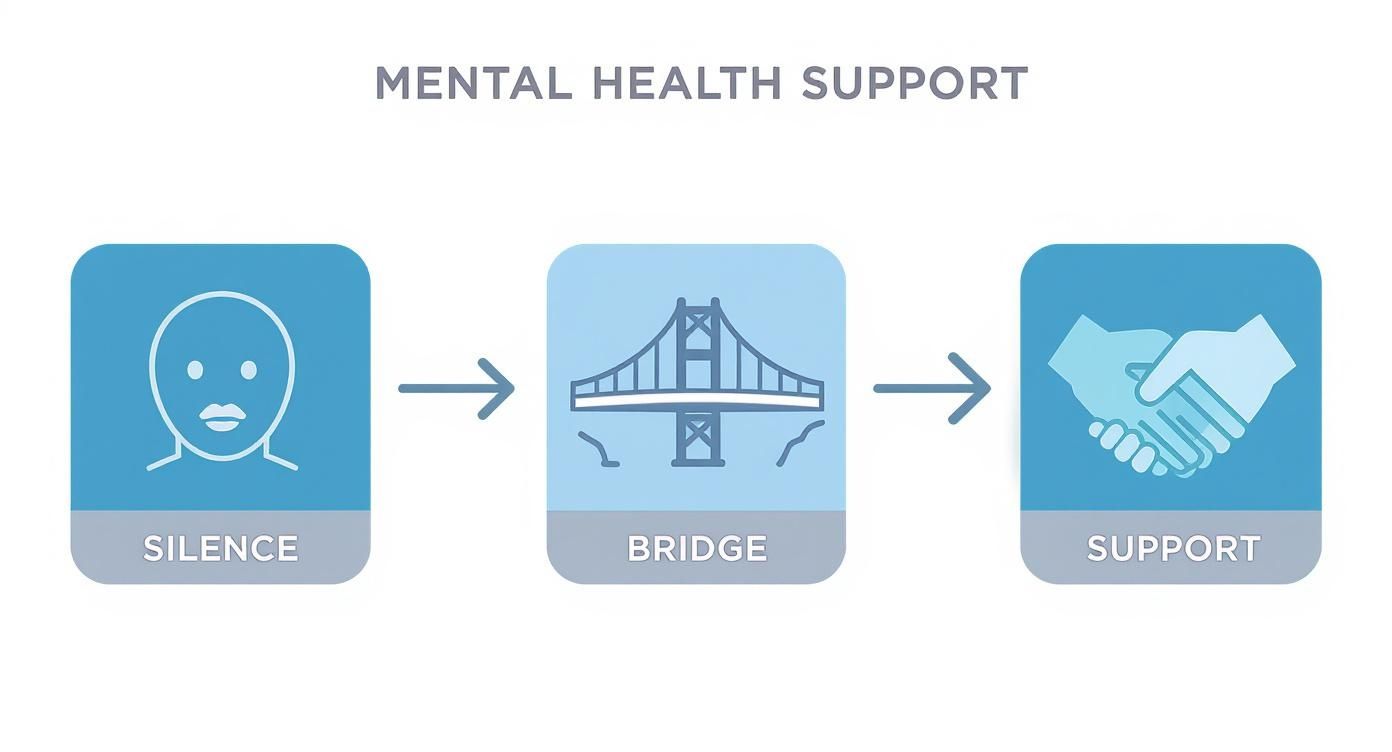
    This is where mental health first aid training makes a difference. It creates allies—friends, family, and colleagues who have the skills and compassion to offer that first crucial bit of support. A trained first aider can be the bridge that helps someone move from silent struggle toward getting help.

    By teaching practical listening skills and a clear action plan, this training helps build communities of care. It makes it easier to have open conversations about mental health, one person at a time.

    Closing the Preparedness Gap

    This training is vital because many people feel unprepared to help someone in a mental health crisis. When Mental Health First Aid guidelines were first developed for India, a key focus was on suicide prevention. Research showed a stark contrast: while professionals felt confident helping, the general public felt 'not at all' or only 'somewhat prepared.' You can explore the full research on these findings to see this gap.

    This isn't just a statistic; it's a call to action. Mental Health First Aid training directly addresses this need, giving people the confidence to step in safely and effectively.

    Building More Resilient Workplaces

    The modern workplace can be a source of significant pressure, where workplace stress and burnout affect both employee well-being and company performance. When employees don't feel supported, morale and productivity can suffer.

    A manager or colleague with mental health first aid skills can spot early signs that someone is struggling. By offering a non-judgemental ear and guiding them toward professional help, they create a psychologically safer work environment where people feel seen and valued.

    Remember, a mental health first aider's role is supportive, not diagnostic. The assessment of a situation is for informational purposes only. The goal is to start a caring conversation and help someone find professional help, never to label their experience.

    Moving from Stigma to Supportive Action

    That first conversation can be a turning point for someone on their path to recovery. This training shifts our culture from silence to support in several key ways:

    • Building Compassion: It teaches you to listen without judgement, replacing misunderstanding with empathy and genuine care.
    • Encouraging Early Help-Seeking: People are more likely to seek help for anxiety or depression when they have trained allies who understand.
    • Promoting Positive Psychology: The training also fosters positive concepts like resilience, happiness, and greater well-being in yourself and others.

    Ultimately, the aim is to weave a strong safety net of support through our communities. The supportive takeaways from this training offer something very practical: the ability to care in a meaningful way.

    Your Practical Toolkit for Providing Support

    At its core, mental health first aid training equips you with practical, real-world skills. It moves you beyond good intentions, providing a structured way to respond when you see someone struggling.

    The training gives you tools to break the silence that often surrounds challenges like anxiety or depression. You learn how to start a supportive conversation, listen with empathy, and create a safe space for someone to open up without fear.

    Infographic about mental health first aid training

    This visual captures the journey from isolation to connection, showing how a trained first aider can guide someone toward the help they need.

    Introducing the ALGEE Action Plan

    To give you a reliable framework, most mental health first aid training courses are built around a simple yet powerful action plan. One of the most widely used models is the ALGEE action plan.

    Each letter represents a clear step, giving you a logical sequence to follow. This structure helps reduce anxiety about what to do next, allowing you to focus on the person in front of you.

    The plan involves these steps:

    1. Assess for risk of suicide or self-harm.
    2. Listen non-judgementally.
    3. Give reassurance and information.
    4. Encourage appropriate professional help.
    5. Encourage self-help and other support strategies.

    This is a flexible guide that you can adapt to any situation, helping you stay grounded and cover the most important steps.

    Listening Without Judgement

    One of the most valuable skills you’ll gain is the art of listening without judgement. This means setting aside your own assumptions and simply being present for the other person. You learn to hear what they are truly saying, creating a powerful sense of connection and trust.

    Effective communication is key to providing support. To dive deeper into these abilities, you might find value in resources on effective communication skills training. These skills are essential for showing genuine empathy and ensuring the person feels truly heard.

    It’s important to remember that any assessments you learn are for informational purposes, never for diagnosis. Your role is to understand the immediate situation and ensure safety, not to apply a clinical label to someone's experience.

    This approach empowers the person who is struggling by validating their feelings. It sends a clear message that their experience is real and that they are not alone.

    Guiding Toward Professional Support

    A key part of your role as a mental health first aider is acting as a bridge to professional care. The training teaches you how to discuss therapy and counselling in a supportive, non-intimidating way.

    For instance, you might learn gentle ways to suggest professional support, like, "It sounds like you're going through a lot right now. Have you considered talking to someone trained to help with these feelings?" This approach respects their autonomy while opening a door to new possibilities.

    The toolkit you gain is built on both skill and compassion. It prepares you to handle difficult conversations with grace and helps deepen your own emotional intelligence and resilience.

    Learning to See the Early Signs of Distress

    A person looking out a window with a thoughtful expression, suggesting introspection and observation.

    One of the most valuable skills from mental health first aid training is learning to see what often goes unnoticed. It’s not about mind-reading, but about developing a gentle awareness of the people around you. You learn to recognise subtle shifts that might signal someone is struggling before they find the words to say so.

    This is a skill of observation, not assumption. The training helps you notice real-world changes, like a colleague becoming withdrawn due to workplace stress, or a friend who seems constantly on edge, a common sign of anxiety.

    Looking Beyond the Obvious

    Distress doesn’t always appear as sadness or frustration. Often, it's quieter, showing up in small changes to a person's daily patterns. Your training will help you see these subtle cues as a call for support.

    Think about these less obvious signs:

    • Changes in Social Habits: A friend who loves social events suddenly starts avoiding them.
    • Shifts in Communication: Someone who was once responsive now seems distant or takes days to reply.
    • Neglecting Personal Care: A noticeable change in personal grooming or appearance that is out of character.
    • Increased Irritability: Small frustrations now trigger an unexpectedly sharp reaction.

    Noticing these shifts is the first step. The goal is not to jump to conclusions, but to know when it might be time to gently check in.

    Understanding Workplace Stress and Burnout

    The modern Indian workplace can be a high-pressure environment where chronic workplace stress can lead to burnout. A key part of mental health first aid training is learning to identify these signs in a professional setting.

    You might notice a team member missing deadlines or seeming disengaged in meetings. These are often signs that someone is overwhelmed, not that they lack a good work ethic. As a trained first aider, you learn to see these behaviours through a lens of compassion.

    It’s vital to remember that these observations are informational, not diagnostic. Your role is never to diagnose someone with depression or an anxiety disorder. It is simply to notice a change and care enough to ask if they are okay.

    This distinction is empowering. It frees you from the pressure of having all the answers and lets you focus on providing a safe, non-judgemental space for someone to feel heard.

    From Challenges to Positive Psychology

    While the training focuses on identifying difficulties, it also includes principles of positive psychology. You will learn to recognise the foundations of well-being, such as resilience, compassion, and connection. Understanding what helps people thrive makes it easier to spot when those foundations are weakening.

    This balanced view helps you frame your support more constructively. Rather than only focusing on the problem, you can also help someone reconnect with their own strengths and inner resilience.

    This training sharpens your emotional intelligence. By learning to see early signs of challenges like anxiety or depression, you are better prepared to offer timely support until they can connect with professional therapy or counselling.


    What You Really Gain from the Training

    Becoming a Mental Health First Aider creates a positive ripple effect in your life. You gain the confidence to approach tough conversations with empathy, cutting through the fear that often stops us from discussing mental health.

    This training also boosts your own well-being. As you learn to spot signs of distress and support others, you build your own emotional toolkit, becoming more self-aware and resilient.

    Creating a Better Place to Work

    In your professional life, these skills make you a valuable asset. You become someone who actively builds a workplace culture where people feel safe and supported, which is crucial with rising workplace stress and burnout.

    For managers, this training is a game-changer. It provides practical skills to look after your team's well-being, handle issues like anxiety before they grow, and foster a more human and engaged work environment.

    One supportive conversation can truly change a life. The training empowers you to start that conversation, knowing your role is to offer initial help and guide someone toward professional therapy or counselling, not to provide a cure.

    A single trained person can start to shift a company's culture from silence to open support, making it normal to talk about mental health.

    Building Stronger Communities and Breaking Down Stigma

    The ripple effect extends beyond the workplace. Every person trained as a Mental Health First Aider helps break down the stigma surrounding challenges like depression. This is a crucial step toward creating more connected and understanding communities across India.

    When you're trained, you encourage people to get help sooner. By responding with empathy, you create a safe space for friends and family to share what they're going through. This act can be the bridge that connects someone to the professional support they need.

    The benefits build on each other:

    • For You: You'll feel more confident, emotionally intelligent, and better equipped to handle life's challenges.
    • For Your Workplace: It helps create a supportive atmosphere, reduces workplace stress, and boosts team well-being.
    • For Your Community: It chips away at stigma, encourages early help-seeking, and weaves a stronger, more compassionate social fabric.

    At its heart, mental health first aid training is an investment in human connection. It nurtures compassion and understanding, helping to build a world where we all feel a little more seen and supported.

    How to Find and Enrol in an MHFA Course

    Deciding to get trained in Mental Health First Aid is a wonderful step. A quick online search for certified providers in your city is a great place to start, as many organisations across India now offer accredited mental health first aid training.

    As you look at different providers, consider what kind of learning environment suits you. Do you prefer an interactive classroom setting, or does the flexibility of an online course better fit your life?

    Choosing the Right Training Format

    The choice between online or in-person courses depends on your learning style. Each format offers unique benefits for learning how to support someone experiencing anxiety or depression.

    • In-Person Workshops: These are highly interactive and often use role-playing to build real-world confidence. The direct contact with instructors and peers creates a strong sense of community.
    • Online Courses: For those with busy schedules, online training offers incredible flexibility. You can learn at your own pace from anywhere with an internet connection.
    • Blended Learning: This hybrid approach combines the convenience of online modules with live, instructor-led sessions to practice your skills.

    What to Look for in a Provider

    It’s important to choose an accredited provider to ensure the course material is evidence-based and your certification is respected. Also, review the instructors' qualifications and the course outline to make sure it aligns with your goals for improving community well-being.

    Remember, the aim of any assessment within these courses is purely informational—to build your awareness. It is never about making a clinical diagnosis; your role is to offer initial support and guide someone toward professional counselling or therapy.

    The availability of formal first aid training that includes mental health is still growing in India. A study found that training for first responders was often infrequent, showing a need to expand these vital programs. You can read more on the state of first aid training in India to see why it matters.

    By enrolling, you’re joining a growing movement of compassion and helping to build a more supportive community, one conversation at a time.

    Common Questions About MHFA Training

    Stepping into mental health first aid training is a big step, and it's natural to have questions. Let's clear up some common queries to help you feel confident about getting started.

    People often wonder, "Am I qualified enough to do this?" The answer is yes. This training is designed for everyone, not just clinicians, giving everyday people the tools to offer compassionate support.

    Will This Training Let Me Diagnose or Provide Therapy?

    No, and this is a crucial point. MHFA training does not teach you to diagnose conditions like anxiety or depression, nor does it turn you into a therapist or counsellor. The goal is to help you spot signs of distress, offer immediate support, and guide someone toward professional help.

    Think of it like physical first aid. You learn to apply a bandage to prevent things from getting worse, but you wouldn't perform surgery. Your role is to be a bridge to proper care.

    Is This Training Only for Healthcare Professionals?

    Not at all. Mental Health First Aid is for teachers, managers, parents, and community leaders. The skills you learn are for everyday situations, helping to create communities where more people feel equipped to look out for one another.

    It's worth repeating: any assessments you learn are purely for understanding the situation to provide safe, initial help. They are not diagnostic tools and are never about putting a label on what someone is going through.

    How Long Does a Typical Course Take?

    The time commitment can vary. A face-to-face course often takes place over two full days. Blended or online options might spread the learning over a few weeks with self-study modules and live sessions.

    It's always best to check with accredited providers to see their schedules. This will help you find a format that fits into your life.

    What if I Say the Wrong Thing When Trying to Help?

    This is a common fear, and the training addresses it directly. You'll learn simple frameworks for conversations and practice active listening skills to build your confidence. A key takeaway is that showing you care and listening without judgement is more important than finding the "perfect" words.

    The training helps you build your own resilience and shifts your mindset from a fear of making mistakes to a focus on compassion. It empowers you to be a genuine, supportive presence in someone's life.


    Feeling inspired to find the right support for yourself or someone you know? At DeTalks, we connect you with qualified therapists and provide science-backed assessments to guide your journey toward greater well-being. Explore professional help at DeTalks.