Tag: mental wellness

  • When to See a Psychiatrist: A Compassionate Guide

    When to See a Psychiatrist: A Compassionate Guide

    Deciding to see a psychiatrist is a positive step toward taking care of yourself, much like seeing any other medical specialist. If you had a persistent cough, you'd see a doctor. In the same way, when you're struggling with your mental health, a psychiatrist is an expert who can help.

    Taking this step is a proactive choice for your well-being, especially when you feel overwhelmed, stuck, or simply sense that something isn't right. It’s about creating a safe space to understand your thoughts and feelings, and find a clear path forward.

    This conversation is particularly important in India, where stigma and lack of awareness often prevent people from seeking help. The National Mental Health Survey found that about 150 million people need mental health care, yet very few receive it. This treatment gap means many navigate challenges like depression and anxiety alone. You can explore India’s mental health landscape to understand this better.

    Knowing When It's Time to Reach Out

    Thinking about professional help for your mental health is a sign of strength. It shows you're ready to understand yourself better and learn new ways to improve your well-being. Taking this step can help you explore what’s on your mind without judgment.

    Who to Turn to on Your Wellness Journey

    The world of mental health includes different specialists, and knowing their roles can make your decision easier. While their approaches may vary, they all share a common goal: to support you in leading a healthier, more fulfilling life.

    Here’s a quick guide to help you understand the differences.

    Quick Guide: Psychiatrist vs. Psychologist vs. Counsellor

    Choosing the right professional is the first step. This table breaks down the key differences to help you decide who might be the best fit for your needs.

    Professional Primary Focus Can Prescribe Medication?
    Psychiatrist Medical doctors (MDs) who diagnose and treat mental health conditions, often using a combination of medication and therapy. Yes
    Psychologist Experts with a doctorate (Ph.D. or Psy.D.) who specialise in talk therapy and psychological testing. They help you understand your thoughts and behaviours. No
    Counsellor Trained professionals who offer guidance and talk therapy for specific life issues, like relationship problems or workplace stress. No

    Each professional offers a unique form of support. Sometimes, they work together to provide comprehensive care tailored to your needs.

    It's Not Just About Problems—It's About Growth

    Seeking professional help isn't just for managing challenges; it's also a powerful way to build positive qualities and live a more meaningful life. This idea is central to positive psychology, which focuses on strengths rather than just difficulties.

    A professional can guide you in developing key life skills, such as:

    • Resilience: The ability to bounce back from setbacks, whether it’s a personal challenge or workplace stress.
    • Compassion: Learning to be kinder to yourself and others, which can improve your relationships and overall well-being.
    • Happiness: Discovering what brings you joy and purpose, helping you build a life that feels authentic.

    Please remember, any assessment is informational, not diagnostic. It’s a collaborative conversation to help you gain insight and explore supportive strategies together.

    Ultimately, seeing a psychiatrist is an investment in your long-term health. It’s about understanding yourself more deeply and building a balanced, resilient future.

    Key Signs It May Be Time for a Consultation

    Knowing when to seek support is a crucial part of self-care. The signs can be subtle at first, but may become more noticeable over time. This isn’t about self-diagnosis, but about recognizing patterns that are affecting your well-being.

    The key is to consider both the intensity and duration of what you're feeling. A tough week is normal, but when that week turns into months and impacts your work, relationships, or joy, it might be time to talk to someone.

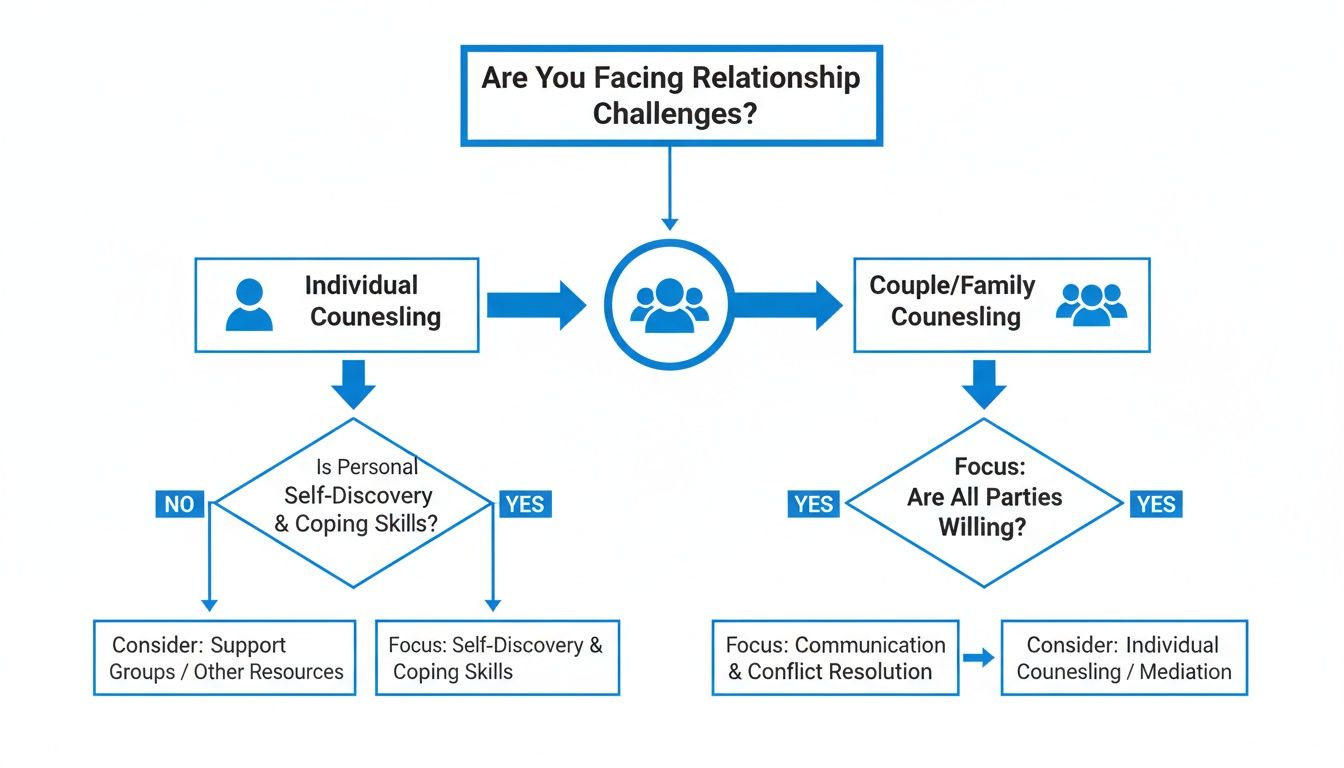
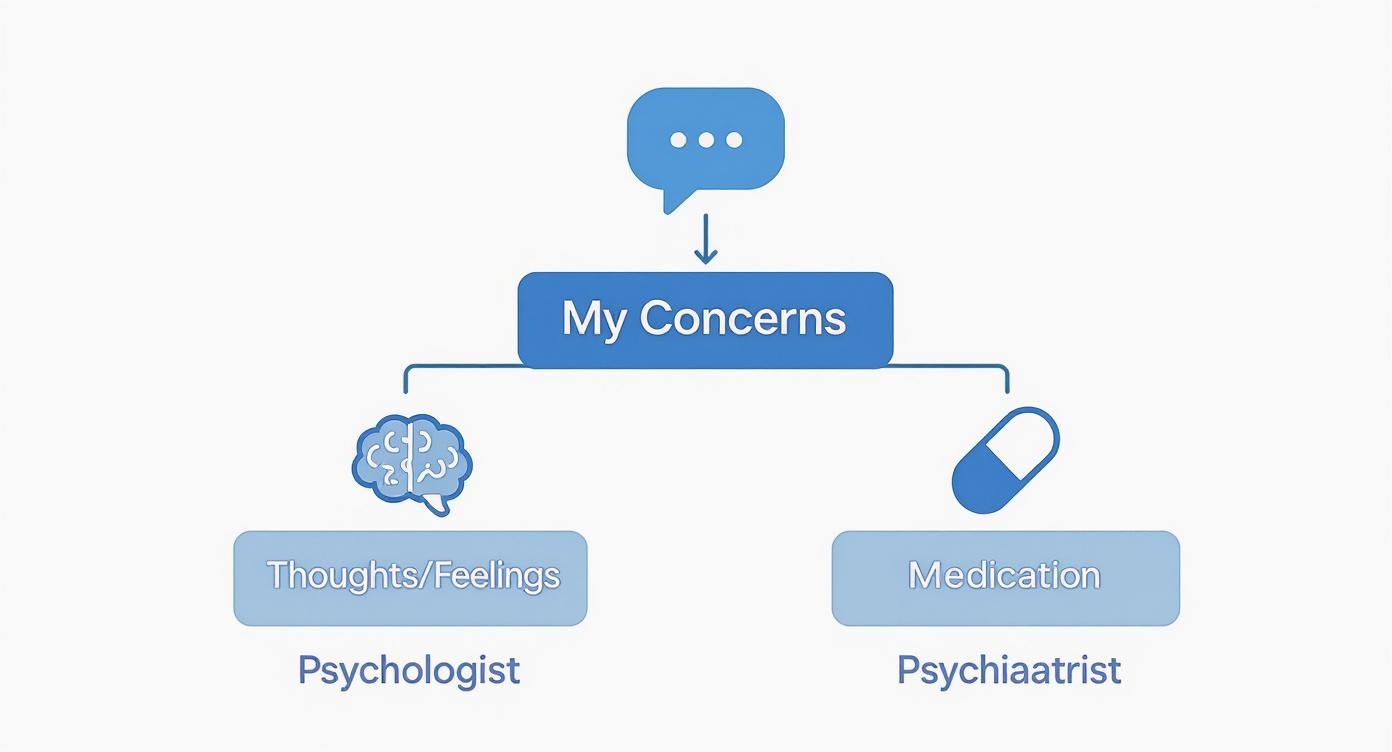
    This simple decision tree can help you visualise which path of support might be the best fit for what you're going through right now.

    Infographic about when to see a psychiatrist

    As you can see, your specific needs—whether they're centred on your thoughts and feelings or you're considering medication—can point you toward the right professional.

    Emotional and Cognitive Shifts to Notice

    Your emotional state offers important clues about your overall health. While everyone's mood fluctuates, certain persistent changes are worth paying attention to. These shifts are often the first signal that your mind could use some support.

    See if any of these common signals feel familiar:

    • A Stubborn Low Mood or Sadness: This is a heavy, lingering feeling of hopelessness that lasts for weeks, making it hard to enjoy things you once loved. This is often associated with depression.
    • Extreme Mood Swings: If you find yourself shifting between extreme highs and crushing lows for no clear reason, it could be a sign of an underlying condition.
    • Overwhelming Anxiety or Worry: Constant, uncontrollable worry that interferes with daily life is a key sign of anxiety. It's a persistent feeling of dread that disrupts your peace.
    • Difficulty Concentrating: If you're struggling to focus, remember things, or make simple decisions, and this is new for you, it’s worth exploring.

    These changes can feel isolating, but they are very common. A professional can help you make sense of what's happening and find effective ways to manage these feelings.

    Changes in Behaviour and Daily Functioning

    Sometimes, the clearest signs are in your actions, not just your feelings. Changes in your daily routines can reflect your internal state, even if you can't put it into words.

    Remember, a consultation is just a conversation to gather information, not a final diagnosis. It’s a safe space to share what’s on your mind and get an expert's help in connecting the dots between your symptoms and your overall well-being.

    Consider if you've noticed any of these patterns:

    • Social Withdrawal: You might avoid calls, skip social events, or pull away from your support system. This can be a sign that you're struggling.
    • Changes in Sleep or Appetite: Significant shifts in your sleep patterns or eating habits are often linked to mental health challenges.
    • Loss of Interest in Hobbies: When activities that once brought you joy now feel like a chore, it can be a sign of something deeper, like burnout or depression.
    • Increased Substance Use: Relying more on alcohol or other substances to cope may indicate a need for healthier strategies.

    Noticing these changes is a proactive step. Support from a psychiatrist or through counselling can provide tools to build resilience and improve your quality of life. The goal is to find supportive takeaways that empower you.

    Navigating Workplace Stress and Burnout

    The demands of modern work can be intense. We all experience stress before a deadline, but it becomes a concern when that pressure is constant and overwhelming.

    This sustained strain can affect your mental well-being. It’s important to distinguish between temporary stress and chronic workplace stress that leads to burnout. Stress often feels like being over-engaged, while burnout is a state of being completely drained and disconnected.

    A person sitting at a desk looking tired and overwhelmed by work.

    From Pressure to Burnout: The Tipping Point

    Recognizing when work pressure has become a mental health concern is an act of self-care. Burnout often develops slowly, especially in demanding work cultures common in India and globally. Ignoring the signs can impact both your professional and personal life.

    The broader impact is significant. Untreated mental illness is projected to cost the Indian economy over $1 trillion between 2012 and 2030, largely due to lost productivity. Many people with common conditions like depression and anxiety never get treatment. You can read the full report on India's mental health burden to learn more.

    Key Indicators of Professional Burnout

    Burnout typically appears in three main ways. Watching for these signs can help you address it early.

    • Emotional Exhaustion: A deep feeling of being mentally and physically drained, where rest doesn't seem to help.
    • Cynicism and Detachment: Becoming increasingly negative about your job, feeling irritable with colleagues, and emotionally distancing yourself from your work.
    • Reduced Professional Accomplishment: Feeling ineffective and that your work doesn't matter, even if you're working harder than ever.

    An assessment with a professional is simply a way to gain clarity, not a final judgement. It’s an informational conversation to help you understand what you're experiencing and explore supportive strategies that can help you feel better.

    How a Psychiatrist Can Help You Thrive Professionally

    Deciding when to see a psychiatrist for work-related issues is a significant step. Their expertise can provide a thorough assessment to understand the root causes of burnout. They often collaborate with therapy or counselling professionals to help you develop practical coping skills.

    This support is about learning to thrive in your career, not just survive it. A psychiatrist can help you build resilience, enabling you to handle professional challenges in a healthier way. The goal is to equip you with tools and insights for long-term professional well-being.

    When Therapy Alone Isn't Enough

    Starting therapy or counselling is a wonderful step for your mental well-being. For many, it provides the necessary skills and perspective to manage life's challenges. But sometimes, you might feel like your progress has stalled, or certain symptoms persist.

    If this sounds familiar, it doesn't mean therapy isn't working. It may simply indicate that another layer of support could be beneficial. Psychiatry and therapy can be seen as partners working together for your health.

    A Partnership for Your Well-being

    Think of your mental health care like a fitness plan. Your therapist is like a personal trainer, helping you build emotional strength and flexibility. But sometimes, an underlying issue might prevent you from seeing results.

    A psychiatrist is like a specialist who can identify that underlying factor. They bring medical expertise to understand the biological aspects of what you're experiencing. Adding their support complements the work you're doing in therapy.

    When Symptoms Get in the Way of Therapy

    It may be time to see a psychiatrist when symptoms of depression or anxiety are so intense they interfere with your therapy. It’s hard to do the reflective work of therapy when all your energy is spent just getting through the day.

    Here are a few situations where a psychiatric evaluation could be helpful:

    • Persistent Low Energy: Severe fatigue and lack of motivation make it difficult to attend or engage in sessions.
    • Overwhelming Anxiety: Constant worry or panic attacks make it hard to focus during therapy.
    • Deep-Seated Hopelessness: Pervasive feelings of despair make it hard to believe that improvement is possible.

    In these cases, medication can sometimes provide stability, allowing you to get the full benefit from your work in therapy.

    Bringing a psychiatrist onto your support team is an act of empowerment. You're simply adding another powerful tool to your wellness toolkit, creating a more comprehensive and robust approach to your mental health.

    Exploring the Full Picture

    A psychiatrist's role extends beyond prescribing medication. As medical doctors, they conduct a thorough assessment to get a complete picture of your health. This includes looking at biological factors, family history, and how your physical health may be influencing your emotional state.

    This evaluation is an informational process, not about applying a label. The goal is to give you a clear understanding of all contributing factors. A psychiatrist can then discuss various options, with medication being just one possibility within a personalized plan. This integrated approach often leads to the best outcomes for your long-term well-being and resilience.

    How to Prepare for Your First Appointment

    A person sitting calmly in a sunlit room, looking out the window while holding a notebook and pen.

    Booking your first appointment with a psychiatrist is a great achievement for your well-being. It's also normal to feel a little nervous about it. A little preparation can help ease your mind and make the meeting a productive, supportive conversation.

    The goal isn't to have everything figured out beforehand. It's about gathering your thoughts so you can share your story clearly, making the session a solid starting point.

    Finding the Right Professional in India

    Finding a qualified professional you trust can be challenging in India. A recent report highlighted a shortage, with only about 0.75 psychiatrists for every 100,000 people. This can mean long waits, making it even more important to be prepared for your appointment. You can read about India's mental health support system to understand the landscape.

    Platforms like DeTalks are helping to bridge this gap. They make it easier to connect with vetted professionals for therapy and counselling, so you can find the right support.

    What to Expect During Your Assessment

    Your first appointment is a conversation, not an exam. The psychiatrist will want to get to know you and understand what you've been experiencing. They'll likely ask about your feelings, background, and any struggles you're facing, such as anxiety or depression.

    Keep in mind, this initial meeting is about gathering information, not stamping you with a final diagnosis. It’s a collaborative effort to build a clear picture of your needs so that any plan forward is truly right for you.

    Being open and honest will help your psychiatrist create a plan that genuinely supports you. They are your partner in this journey.

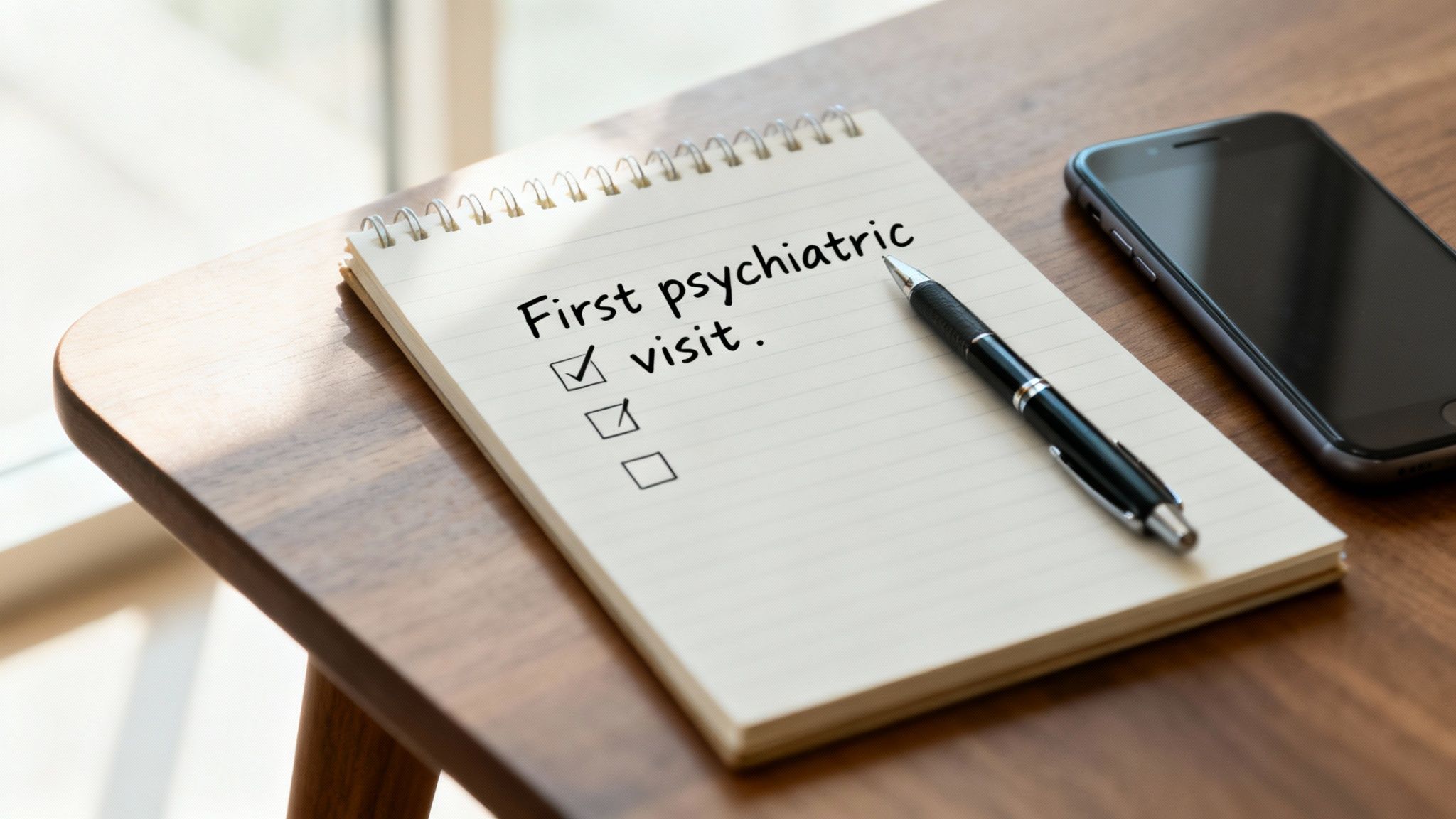
    Creating Your Personal Checklist

    Jotting down a few notes before your appointment is a great idea. This can help you remember important points you want to discuss during the session.

    Here’s a quick table to help you organize your thoughts.

    Your First Appointment Checklist

    Item to Prepare Why It's Helpful Example
    List of Symptoms It helps you articulate what you’ve been feeling, especially if it’s hard to find the right words on the spot. "Feeling exhausted all the time, can't sleep through the night, no longer enjoy my usual hobbies."
    Key Life Events This provides crucial context around major changes or stressors, such as workplace stress, that could be impacting you. "I started a demanding new job six months ago and moved to a new city where I don't know anyone."
    Questions for the Doctor Asking questions empowers you to be an active participant in your own care and ensures your worries are heard. "What do you think the next steps are? How does therapy fit into the treatment plan you're suggesting?"

    Walking in with these notes can help you feel more confident. It shows you're ready to build a strong partnership, strengthening your resilience from day one.

    Common Questions About Seeing a Psychiatrist

    Taking the step to see a psychiatrist is a positive move for your mental health. It’s also completely normal to have questions. Let's walk through some common ones to help you feel more at ease with the process.

    Thinking about when to see a psychiatrist often brings up practical concerns. My goal is to provide clear, reassuring answers and remind you that seeking help is a sign of strength.

    Will I Have to Take Medication?

    This is a very common worry, and the answer is not necessarily. A psychiatrist's role is much broader than just prescribing. Their first step is always to get a complete picture of your overall health.

    Medication is just one of many tools they can use. Your treatment plan will be created with you. For some, medication can be very helpful for managing symptoms of depression or anxiety, making therapy more effective. For others, the focus might be on counselling, lifestyle changes, and new coping skills.

    How Is a Psychiatrist Different from a Therapist?

    While both aim to help you, their training and approaches differ. A therapist or counsellor specializes in talk therapy. They help you explore your thoughts, feelings, and behaviors through conversation.

    A psychiatrist is a medical doctor who specializes in mental health. This allows them to look at things from a biological perspective, diagnose conditions, and prescribe medication if needed. They often work together with therapists to provide comprehensive care.

    The best mental health support often comes from a team. A psychiatrist can handle the medical side of things, while a therapist provides that consistent support through counselling. It's a powerful combination for growth.

    What If I'm Afraid of Being Judged?

    The fear of judgment is real, especially in places like India where mental health is often misunderstood. It’s important to know that psychiatrists are bound by strict confidentiality and non-judgment. Their office is a safe space.

    Your conversations are private, and their only goal is to understand and help you. The key is to find a professional you feel comfortable with. They have dedicated their careers to helping people with these exact challenges.

    How Long Will I Need to See a Psychiatrist?

    There is no one-size-fits-all answer. The duration depends on your individual needs and goals. Some people may only need a few sessions for an assessment and treatment plan.

    Others with long-term conditions might have ongoing appointments to maintain their well-being. Your psychiatrist will discuss this with you, and your plan will adapt as you progress. The goal is always to empower you with the resilience and skills to manage your health.

    Can a Psychiatrist Help with More Than Just Illness?

    Absolutely. While psychiatrists are experts in treating mental health conditions, they can also support personal growth and positive psychology. They can be a valuable partner in building a more fulfilling life.

    This support can help you with:

    • Building Resilience: Learning to bounce back from life’s challenges, from workplace stress to personal setbacks.
    • Enhancing Self-Compassion: Learning to treat yourself with kindness, which is essential for self-esteem.
    • Cultivating Happiness: Identifying what truly matters to you and creating a life that feels authentic and meaningful.

    A consultation can be a proactive step towards understanding yourself better and unlocking your potential.

    Final Supportive Takeaways

    Deciding when to see a psychiatrist is a personal choice that puts you in control of your mental health journey. It’s not about a quick fix, but about finding a supportive partner who can offer new perspectives and practical strategies for a more balanced life.

    As you consider your next steps, keep these points in mind:

    1. Seeking Help Is Strength: Reaching out is a powerful, proactive step towards a healthier and more resilient you.
    2. You Are in Control: Your treatment is a partnership. Your voice and comfort are always the top priority.
    3. Support Is a Spectrum: Whether it’s therapy, medication, or lifestyle changes, there are many paths to well-being. A psychiatrist helps you find the one that’s right for you.

    This journey is about understanding and empowerment. With the right support, you can navigate your challenges and build a strong foundation for lasting mental wellness.


    At DeTalks, we're committed to making that first step as easy as possible. Our platform connects you with a network of vetted therapists and offers science-backed assessments to help you understand your needs. Find the right support for your journey toward well-being by visiting us at DeTalks.

  • A Compassionate Guide to Online Therapy in India

    A Compassionate Guide to Online Therapy in India

    Deciding to start therapy is a courageous step toward prioritizing your well-being. If you're looking into online therapy in India, you’ve found a path that is flexible, private, and genuinely supportive. Think of this guide as a warm conversation, designed to help you confidently find the right support.

    Starting Your Online Therapy Journey in India

    Choosing to seek support is a powerful first move toward better mental health. It’s an act of acknowledging that everyone needs a safe space to explore their thoughts and feelings. Online therapy makes getting that support simpler and more discreet than ever before.

    This modern approach to counselling brings a qualified professional to you, on your terms. Instead of commuting, you can connect with a therapist from wherever you feel most comfortable. It removes traditional barriers like distance, busy schedules, and the hesitation some feel about seeking help.

    A New Era of Accessible Well-being

    The shift to digital mental health support is growing quickly. In India, the online mental health market was valued at around USD 133.47 million and is projected to reach USD 451.73 million by 2033. This growth is driven by better internet access and a welcome cultural shift where talking about mental health is becoming more common. You can read more about the growth of India's online mental health market.

    This expansion means more options and easier access for everyone. It shows we are moving toward a future where seeking help is seen as a proactive step toward a stronger, more resilient life.

    Here is a quick summary of what online therapy in India offers.

    Aspect Key Benefit
    Accessibility Connect with a therapist from anywhere, removing geographical barriers.
    Convenience Sessions fit into your schedule, saving you travel time and hassle.
    Privacy Discuss personal matters from the comfort and confidentiality of your own space.
    Choice Access a wider pool of therapists with diverse specialisations.

    Ultimately, online therapy makes professional support a practical and realistic option for more people across the country.

    What Can Online Therapy Help With?

    Online counselling is a valuable tool for personal growth, helping you build resilience for life's ups and downs. It provides a confidential space to explore a wide range of concerns, from everyday challenges to personal development.

    Here are a few areas where therapy can make a real difference:

    • Managing Daily Challenges: Learn effective ways to handle workplace stress, anxiety, and burnout, creating a healthier work-life balance.
    • Navigating Emotional Difficulties: A professional can guide you through feelings of depression, grief, or difficult experiences with empathy and practical support.
    • Fostering Positive Growth: Therapy isn't just about problems; it helps you cultivate more happiness, self-compassion, and resilience so you can thrive.
    • Improving Relationships: Understand communication patterns and build stronger, healthier connections with your partner, family, and friends.

    A friendly reminder: If you come across online mental health assessments, please remember they are for informational purposes only. They can offer useful insights to discuss with a therapist, but they are not a substitute for a professional diagnosis.

    At its core, online therapy is about empowering you to take charge of your own well-being. It gives you the tools, support, and understanding to navigate life with more confidence and clarity.

    Why Online Counselling Is Gaining Trust in India

    More people across India are choosing online counselling as a practical and empowering way to care for their mental health. This modern approach is breaking down long-standing barriers, making professional support more accessible. It’s like having a trusted guide for your personal journey, available from the comfort of your home.

    Online therapy directly addresses common hurdles, like the difficulty of finding a qualified therapist in a smaller town. It also respects the discomfort many feel about visiting a clinic in person.

    Image

    This shift is particularly important in India, where there's a significant need for mental health support. Online counselling acts as a crucial bridge, connecting people to help while offering a level of privacy that helps overcome hesitation. You can learn more about this and understand more about this treatment gap.

    Overcoming Traditional Barriers with Ease

    A major benefit of online therapy is that it removes geographical boundaries. Living outside a major Indian city can make finding a specialist difficult. Online platforms open up a vast network of professionals from across the country.

    This means you can connect with a therapist who has the right qualifications and understands your cultural background. Whether you're navigating workplace stress, anxiety, or relationship issues, technology gives you choices to find a genuine connection.

    The convenience is also a significant advantage. Online sessions can fit into a lunch break or evening, making consistent support a realistic part of a busy routine.

    A Focus on Privacy and Comfort

    For many, the thought of being seen at a therapist's office is a barrier. Online counselling offers a level of confidentiality that makes taking the first step feel much safer. Your sessions take place in your own secure space.

    This sense of privacy encourages more open and honest conversations. When you feel at ease, it's easier to talk about sensitive topics, whether it's feelings of depression or personal insecurities.

    Online therapy isn’t just about talking through problems; it’s a proactive step toward building a healthier, more balanced life. It empowers you to invest in your own well-being on your own terms.

    Cultivating Resilience and Positive Growth

    While therapy is invaluable for managing challenges like anxiety and depression, its benefits extend much further. It is also a powerful space for personal development and building a positive mindset. Online counselling provides a dedicated space to learn skills that help you flourish.

    You can work with a therapist to strengthen your emotional resilience, making you better equipped to handle life's challenges. Sessions can focus on learning self-compassion, practising mindfulness, or finding more joy in daily life.

    • Building Resilience: Learn how to bounce back from setbacks with greater strength.
    • Enhancing Self-Awareness: Gain a clearer understanding of your thoughts, feelings, and actions.
    • Improving Relationships: Develop healthier ways to communicate and connect with others.
    • Finding Purpose: Explore what truly matters to you and work toward a more meaningful life.

    The growing trust in online therapy in India comes from its people-first approach. It meets you where you are, respects your privacy, and gives you tools not just to cope, but to thrive.

    Navigating Costs and Platform Features

    Thinking about therapy is a big step, and it's natural to wonder about the cost. Investing in your mental health is one of the best things you can do. Let's walk through what to expect financially and what to look for in an online platform.

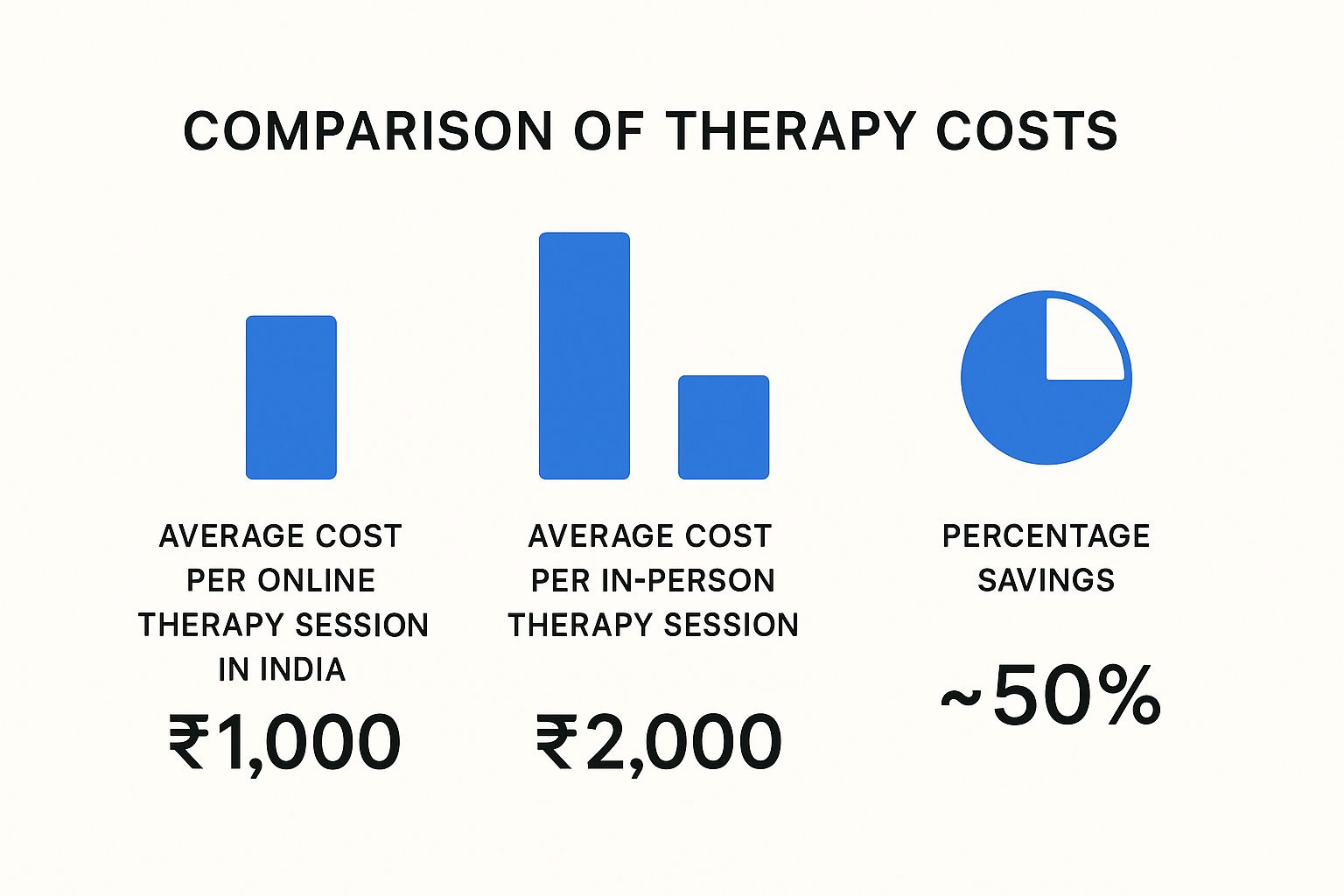
    The good news is that online therapy often has clear pricing. In India, you can typically expect to pay between ₹1,200 and ₹2,500 per session. This is often more affordable than traditional therapy, as online platforms have lower overhead costs. Reputable platforms use encrypted systems to protect your privacy, following Indian legal standards. You can explore the legal requirements for online therapy in India.

    Image

    Understanding the Pricing Models

    As you explore different platforms, you'll find a few payment structures. These options are designed to fit your budget and your well-being goals.

    Here are the three most common models:

    • Pay-Per-Session: This is the most straightforward option, where you pay for one session at a time. It’s perfect for flexibility if you're not ready to commit to a fixed schedule.
    • Monthly Subscriptions: Many services offer a monthly plan with a set number of sessions for a flat fee. This is often more economical if you plan on regular weekly sessions.
    • Package Deals: Some platforms let you buy a bundle of sessions upfront at a discounted rate. This is a great middle ground if you want to commit to a few months of therapy.

    The cost may also reflect the therapist's experience. A seasoned psychologist will naturally have different rates than a counsellor who is newer to the field.

    Key Platform Features to Look For

    While price is important, the platform's features will shape your experience. A great platform is more than a video chat tool; it's a supportive environment built to help you feel safe.

    Think of these features as the support system for your therapy. They make the process smoother and more secure, so you can focus on your growth and healing.

    When comparing options, keep an eye out for these essentials. They are what separate a high-quality service from a basic one, especially when you're exploring topics like anxiety, workplace stress, or building resilience.

    Essential Tools for a Better Experience

    A well-designed platform should feel easy and intuitive. The right tools make a big difference in your comfort and progress.

    Make sure the platform includes:

    • Secure Video and Messaging: End-to-end encryption is essential for privacy. A secure chat feature is also a plus for connecting with your therapist between sessions.
    • Easy Scheduling and Reminders: A simple interface for booking appointments makes life easier. Automatic reminders are also helpful for busy schedules.
    • Resource Libraries: Many platforms offer articles, worksheets, or guided meditations on topics like depression or mindfulness, which can support your sessions.
    • Digital Journaling Tools: Some services have a private in-app journal. This is a great feature for noting down thoughts to share with your therapist.

    Choosing the right online therapy in India comes down to balancing cost, therapist fit, and platform features. Knowing what to look for will help you make a confident choice.

    How to Find the Right Therapist for You

    Finding the right therapist is the most important part of your journey. The connection you build with your counsellor is the foundation for your progress. The goal is to find the best therapist for you, based on your unique needs and personality.

    This is a personal decision, so let's walk through how to check qualifications and what to ask. Considering the cultural context is also a key part of finding a good fit in India.

    Start with Qualifications and Specialisations

    First, ensure the professional you choose is properly qualified. Look for counsellors with at least a master's degree in psychology, counselling, or a related field. Reputable platforms like DeTalks vet their professionals, but it's always good practice to check credentials.

    Next, consider their area of specialisation. Therapists often focus on specific concerns. If you're dealing with workplace stress and burnout, a counsellor who specialises in career-related issues will be a better fit.

    Most platforms have filters to help you search by:

    • Issues Addressed: Look for keywords that resonate with you, like anxiety, depression, relationship troubles, or grief.
    • Therapeutic Approach: You might see terms like CBT (Cognitive Behavioural Therapy). A quick search can help you see if their style aligns with your needs.
    • Experience Level: Decide if you'd prefer someone with decades of experience or a newer therapist with fresh perspectives.

    The Importance of Cultural and Linguistic Connection

    In a country as diverse as India, feeling understood is crucial. A therapist who gets the cultural nuances of your life can offer more relevant guidance. This shared understanding helps build trust faster.

    Language is another important factor. Expressing complex emotions is easier without a language barrier. Most online therapy in India platforms let you filter for therapists who speak your preferred language, whether it's Hindi, Tamil, Bengali, or English.

    Choosing a therapist who understands your world, both culturally and linguistically, helps create a safe and effective therapeutic space. It means you don't have to spend your sessions explaining the context of your life.

    Cost is also a practical consideration. As this chart shows, online therapy can be a more affordable and accessible option.

    Image

    The data here shows that online sessions can be up to 50% more affordable, which makes consistent support possible for more people.

    Questions to Ask in Your First Consultation

    Most platforms offer a brief initial consultation, often for free. This is your chance to see if you connect with the therapist. Remember, it's a two-way conversation.

    Don't hesitate to ask questions. A good therapist will welcome them and provide the clarity you need.

    Here’s a quick checklist to help you choose the right therapist.

    Checklist for Choosing Your Therapist

    Factor to Consider What to Look For
    Credentials & Education At least a master's degree in psychology or a related field. Licensed and registered with a professional body.
    Specialisation Experience and training in the specific issues you're facing (e.g., anxiety, relationships, trauma).
    Therapeutic Approach A style that resonates with you. Do you prefer a structured, goal-oriented approach like CBT, or something more exploratory?
    Cultural & Linguistic Fit Someone who understands your cultural background and speaks your preferred language fluently.
    Communication Style Do they sound warm, empathetic, and non-judgemental? Do you feel heard and respected during the initial consultation?
    Logistics & Policies Clear policies on session length, fees, cancellations, and how to communicate between sessions.
    Your Gut Feeling Do you feel a sense of comfort and safety talking to them? This is often the most important factor.

    After reviewing your options, you should have a clearer idea of who is the best fit for your mental health journey.

    Listen to how you feel during the conversation. Do you feel seen, respected, and comfortable? Trust your intuition. A warm, non-judgemental presence is just as important as qualifications.

    Preparing for Your First Online Session

    It’s completely normal to feel a little nervous before your first therapy session. Taking this step is an act of self-care, and it's natural to wonder what it will be like. Let's walk through what to expect so you can feel more at ease.

    Think of this first meeting as a conversation. It's a chance for the therapist to understand what brought you to them, and for you to see if their style feels right. The goal is to make a connection and set the stage for your work together.

    Image

    Setting the Stage for a Successful Session

    A little preparation can make a big difference. The most important step is creating a comfortable, private environment. This is your safe space to speak freely without worry, which is essential for building trust.

    Before your session, run through this quick checklist:

    • Find a Quiet Spot: Choose a room where you can be alone. Using headphones can increase privacy and improve sound quality.
    • Check Your Tech: A few minutes beforehand, make sure your internet, camera, and microphone are working well.
    • Minimise Distractions: Silence your phone and close other tabs on your computer. Giving the session your full attention honors the time you've set aside for your well-being.

    What to Expect During the Conversation

    Your therapist will likely start by introducing themselves and explaining how they work, including confidentiality. They will then gently guide the conversation to get to know you better. You are always in control of what you choose to share.

    The conversation may cover areas such as:

    • What prompted you to seek therapy now.
    • The challenges you're currently facing, like workplace stress or anxiety.
    • A little about your personal history.
    • What you hope to achieve through counselling.

    The first session is a two-way street. It’s as much about you seeing if the therapist is a good fit as it is about them getting to know you. Pay attention to how you feel—are you heard, respected, and understood?

    Making the Most of Your First Meeting

    To feel even more prepared, you might jot down a few thoughts beforehand. This is just a simple way to gather your thoughts. There's no pressure to have it all figured out; your therapist is there to help you connect the dots.

    You could think about:

    1. What are my main concerns? List the key things you want to work on, like a specific feeling such as depression or a difficult situation.
    2. What are my goals? Think about what change you'd like to see, such as learning new coping skills or building more resilience.
    3. What questions do I have? You can ask your therapist about their experience, their approach, or what future sessions might look like.

    Remember, any assessments you've taken on a platform like DeTalks are informational tools, not a diagnosis. You can bring up the results as a starting point for discussion.

    Preparing for your first online therapy in India session is about creating a space for honesty and openness. These small steps set you up for a positive, empowering experience.

    Common Questions About Online Therapy

    Taking the first step into online therapy in India is a significant one. It’s natural to have questions as you consider a new way to support your well-being.

    To help provide clarity, here are some straightforward answers to common questions. This can help quiet any doubts so you can move forward with confidence.

    Is Online Therapy as Effective as In-Person Therapy?

    This is a common question, and for many people, the answer is yes. Research shows that for issues like anxiety, stress, and mild-to-moderate depression, online counselling is just as effective as meeting in person.

    The key to successful therapy is the relationship you build with your counsellor. For many, the convenience of online sessions means they can attend more consistently, which is a major factor in making progress. The best option is always what feels right for you and fits into your life.

    How Is My Privacy Protected During Online Sessions?

    Your privacy is the foundation of good therapy. Reputable online platforms in India use end-to-end encryption for all communications. This means your conversation is secure between you and your therapist.

    These platforms are also bound by data protection laws like the Mental Healthcare Act. It's always a good idea to review a platform's privacy policy. On your end, finding a private space for your sessions adds another layer of confidentiality.

    "Confidentiality is the cornerstone of effective therapy. A secure digital environment isn't just a feature; it's a promise that allows individuals to be vulnerable, explore their deepest concerns, and engage in the healing process with complete trust."

    Knowing a platform is secure helps you relax and open up, which is essential for building trust with your therapist.

    What if I Don’t Connect With My Therapist?

    It happens, and it is completely okay. Finding the right therapist is personal, and sometimes the connection isn't there. A strong therapeutic relationship is vital for progress.

    Most online platforms understand this and make it easy to switch to a new counsellor. Don't be discouraged if the first one isn't the right fit. See it as part of the process of finding the best person to support your mental health journey.
    Is Online Therapy Suitable for Severe Mental Health Issues?

    Online therapy is a fantastic tool for a wide range of challenges. It is excellent for navigating workplace stress, relationship issues, or managing symptoms of anxiety and depression. It provides accessible support to build emotional resilience.

    However, it is not a one-size-fits-all solution. For severe conditions like psychosis or active suicidal thoughts, in-person care is often the safer choice. A professional online therapist will recognize this and help guide you to appropriate in-person resources if needed.

    How Does Online Therapy Promote Positive Psychology?

    Therapy is not just about addressing difficulties; it's also a powerful space for building on your strengths. It’s about learning to thrive. Online platforms make this proactive side of mental well-being very accessible.

    A therapist can guide you in positive psychology, helping you cultivate a happier, more meaningful life.

    • Building Resilience: Learn skills to bounce back from setbacks with a flexible mindset.
    • Practising Self-Compassion: Work on developing a kinder inner voice, which is fundamental to emotional health.
    • Cultivating Happiness: Discover practical techniques to focus on what's good and find more joy in the everyday.

    Therapy is not a promise of a cure. Instead, it offers a supportive space and a toolkit of skills to help you navigate your own mind with more confidence and clarity.


    At DeTalks, we're here to help you find the right support for your unique path. Our platform gives you access to a wide network of qualified professionals and scientifically validated assessments to guide you toward greater self-awareness and emotional balance. Take the next step today by exploring our resources and connecting with a therapist who understands your needs at https://detalks.com.

    Article created using Outrank