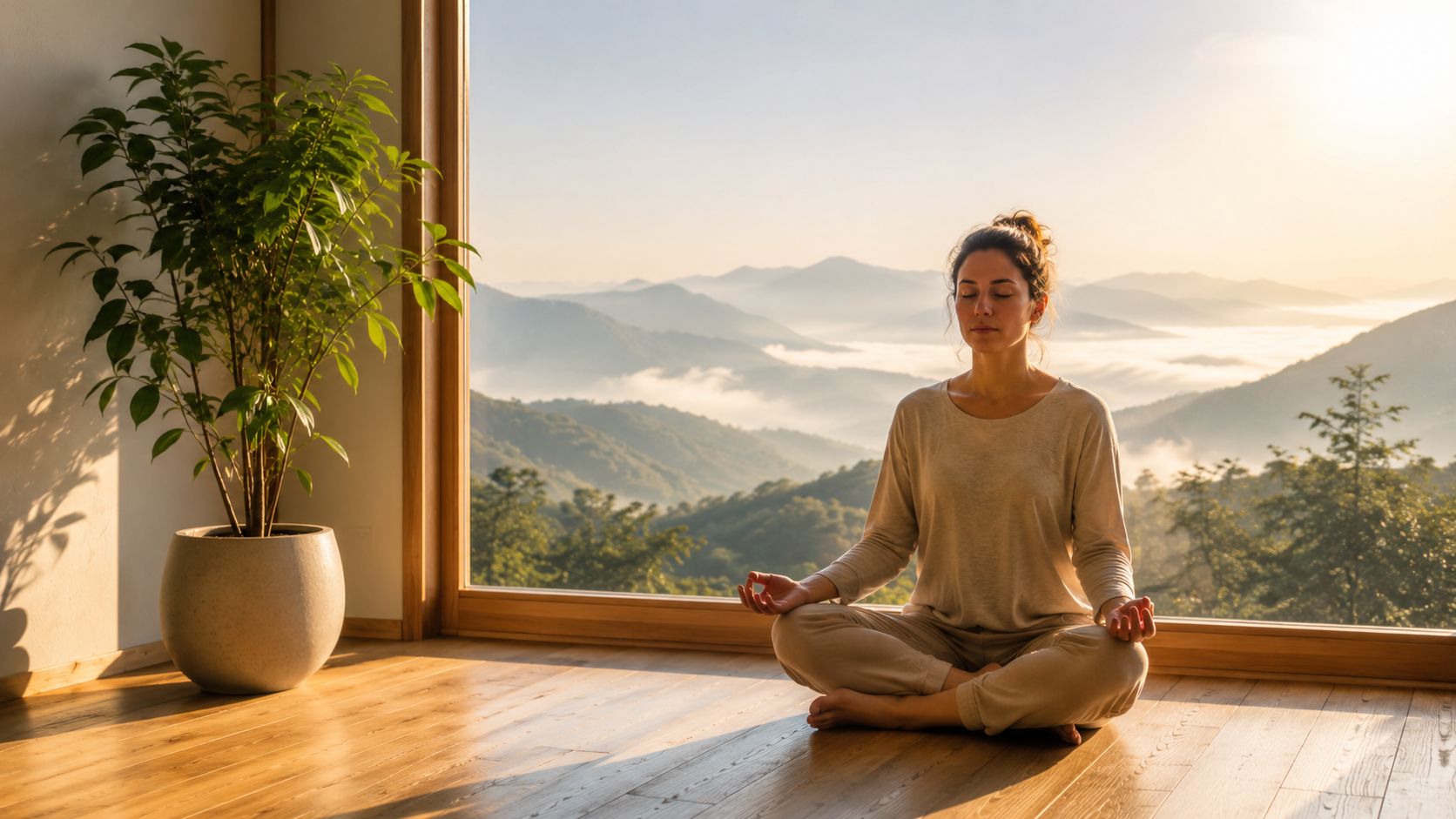
Your mind may be busy right now. You might be reading this between meetings, after an argument at home, or during one of those quiet moments when your body is still but your thoughts won't stop moving.
That's often when people ask, what is mindfulness, really. Is it meditation? Is it spiritual? Is it just sitting still and trying not to think? If you've felt sceptical, you're not alone. Most people don't need another vague wellness idea. They need something practical that helps with stress, anxiety, burnout, and everyday emotional overload.
Feeling Overwhelmed? An Introduction to Mindfulness
A common scene looks like this. You open your laptop to finish one task, then a message arrives, then another, then an email marked urgent. Your shoulders tighten, lunch becomes an afterthought, and by evening you feel drained without being sure what you completed.

Mindfulness begins in moments like that. Not in a mountain retreat, and not only on a yoga mat. It starts when you notice, “I'm overwhelmed,” and choose to pay attention to what's happening inside you instead of running on autopilot.
What mindfulness means in ordinary life
In simple language, mindfulness is the skill of noticing the present moment with a bit more care. That includes your breath, your body, your thoughts, your emotions, and the world around you. You're not trying to force calm. You're learning to see clearly.
That can sound small, but it changes a lot. When you notice tension early, you're more likely to pause before snapping at a colleague. When you notice worry building, you may catch yourself before spiralling into ten worst-case scenarios.
Practical rule: Mindfulness isn't about becoming a different person. It's about becoming more aware of what's happening while it's happening.
Why this matters in India right now
This topic feels especially relevant in India, where traditional practices and modern mental health needs often meet. India has the highest number of meditators globally, with approximately 80.7 million people practising, and over 14% of urban Indian adults actively incorporate mindfulness into their weekly routines, according to research published in Nature Scientific Reports.
That tells us two things. First, mindfulness already feels familiar to many people. Second, interest in it is growing not just as a spiritual habit, but as a tool for well-being in busy, digital, high-pressure lives.
What mindfulness is not
People often confuse mindfulness with a blank mind, constant calm, or instant happiness. It isn't any of those. You can be mindful and still feel upset, distracted, or tired.
Mindfulness helps you relate to your inner experience in a steadier way. That's why it can support both difficult moments, such as workplace stress or low mood, and positive ones, such as gratitude, compassion, resilience, and happiness.
Understanding the Core Principles of Mindfulness
Mindfulness becomes easier to understand when we break it into a few simple ideas. You don't need complicated language for it. You need a way to recognise it in real life.

Paying attention to now
The first principle is present-moment awareness. Your mind naturally jumps to yesterday's regret or tomorrow's worry. Mindfulness gently brings your attention back to what is happening now.
That might mean noticing the feeling of your feet on the floor while waiting for a difficult phone call. It might mean realising that your jaw is clenched while reading a message from your boss. The point is not to make the moment perfect. The point is to be in contact with it.
Watching thoughts without getting pulled in
The second principle is non-judgmental awareness. Many people get confused about this. They think mindfulness means having only calm or positive thoughts. It doesn't.
A better image is this. Thoughts are like clouds moving across the sky. Some are light, some are dark, some are loud and dramatic. Mindfulness asks you to notice the cloud without climbing into it.
You don't have to believe every thought just because it appeared in your mind.
If your mind says, “I'm failing,” mindfulness helps you recognise, “That's a thought.” That small shift creates space. And space is often where better choices begin.
Here's a short visual guide if you'd like to watch the idea rather than read it.
Noticing and accepting
Two more principles complete the picture.
- Observation means noticing what's happening in your body, thoughts, and emotions.
- Acceptance means acknowledging reality as it is, even if you don't like it.
Acceptance doesn't mean giving up. It means dropping the extra struggle of pretending you're not stressed when you are, or shaming yourself for feeling anxious. Once you stop fighting the fact of your experience, you can respond more wisely to it.
Ancient roots and modern research
In India, mindfulness doesn't arrive as a foreign idea. It connects with traditions such as Vedic self-inquiry, where observing the mind has long been part of inner work. At the same time, current research gives this practice a modern frame. A review of Indian evidence notes neurocognitive benefits such as improved attention and emotional regulation, and reports that Mindfulness-Based Stress Reduction had a moderate, consistent effect on anxiety with a Cohen's d of 0.38 after 8 weeks in meta-analytic data from Indian studies, as discussed in this review on mindfulness meditation in Indian contexts.
If you enjoy reading about the philosophical side of mindfulness in a calm, accessible way, this piece on cultivating peace through mindfulness offers a useful companion perspective.
How Mindfulness Boosts Resilience and Reduces Stress
People often don't start mindfulness because they want a new hobby. They start because something feels too heavy. Stress keeps leaking into sleep. Anxiety shows up before presentations. Burnout makes even small tasks feel effortful.
That's where mindfulness becomes more than a nice idea. It can support how you regulate pressure, recover from setbacks, and stay connected to your values when life feels crowded.

What the evidence suggests
Indian research gives this conversation some helpful grounding. In one study, participants in an online mindfulness programme reported a significant decrease in stress scores with P < 0.0001, and among Indian medical students, some facets of mindfulness were linked with lower depression, anxiety, and stress. The same paper also notes that 40% of working professionals in India aged 30 to 45 identified mindfulness as a key strategy to manage stress during the COVID lockdown period, as reported in this open-access review on mindfulness interventions in India.
The benefits aren't limited to one group. Students, professionals, and people juggling care work all face different forms of pressure. Mindfulness gives them a way to notice strain earlier and respond with more steadiness.
How resilience grows in practice
Resilience doesn't mean never getting upset. It means returning to balance with less self-attack and less panic. Mindfulness can help build that by changing your relationship with stress.
Consider how this looks day to day:
- During workplace stress, you notice your breathing has become shallow before the meeting starts. You slow it slightly instead of pushing through until you feel flooded.
- During anxiety, you recognise the story your mind is telling and anchor yourself in what's happening right now.
- During low mood or burnout, you become less likely to judge yourself harshly for not functioning at your usual level.
Mindfulness often helps not by removing difficulty, but by reducing the friction you add to difficulty.
It can also support positive psychology. As people practise noticing with less judgment, many become more aware of small sources of stability such as rest, connection, gratitude, kindness, and moments of genuine pleasure. That's part of why mindfulness is often linked with compassion, emotional balance, and a stronger sense of well-being.
Where it may also help
Mindfulness isn't only discussed in stress management. It's also being used in broader recovery settings where people are trying to pause before automatic reactions. For readers interested in that application, this article on mindfulness for addiction recovery shows how mindful awareness can support people who are working to respond differently to painful urges and patterns.
That doesn't make mindfulness magic. It makes it useful. And usefulness is often what people need most.
Starting Your Practice with Simple Mindfulness Exercises
The best way to understand mindfulness is to try it in small doses. You don't need an hour, special music, or perfect focus. In fact, shorter practice is often better for beginners because it feels doable.
If your mind wanders, that doesn't mean you're bad at it. Noticing that your mind wandered is part of the practice.
A few easy ways to begin
Here's a simple guide you can return to when you want something practical.
| Exercise | Best For | Duration |
|---|---|---|
| Mindful breathing | Busy moments, workplace stress, resetting between tasks | 1 minute |
| Body scan | Physical tension, bedtime winding down, emotional overload | 3 to 5 minutes |
| 5-4-3-2-1 grounding | Anxiety, feeling scattered, difficult emotions | 2 to 3 minutes |
| Mindful tea or water break | Building daily awareness without adding another task | 1 to 2 minutes |
One-minute mindful breathing
Sit or stand in a way that feels steady. You don't need to sit cross-legged unless you want to. Let your shoulders soften.
Now try this:
- Notice one full inhale.
- Notice one full exhale.
- Repeat for a minute.
- When thoughts interrupt, gently return to the next breath.
You're not controlling the mind. You're training attention to come back kindly.
A short body scan
This exercise helps when stress lives in the body but you haven't fully noticed it yet. Many people realise only halfway through the day that they've been clenching their stomach, jaw, or hands.
Move your attention slowly through these areas:
Face and jaw
Notice whether you're holding tension.Neck and shoulders
See if they can drop even a little.Chest and stomach
Observe the rhythm of breathing without forcing it.Legs and feet
Feel contact with the chair or floor.
If you notice discomfort, name it to yourself. “Tightness.” “Warmth.” “Restlessness.” Naming creates a little distance from the feeling.
The 5-4-3-2-1 grounding technique
This one is especially useful when anxiety pulls you out of the present. It brings you back through the senses.
Notice:
- 5 things you can see
- 4 things you can feel
- 3 things you can hear
- 2 things you can smell
- 1 thing you can taste
This exercise won't erase distress, but it can interrupt the spiral long enough for your nervous system to settle a bit.
Gentle reminder: You don't have to feel calm for a practice to “count”. If you showed up and noticed your experience, you practised mindfulness.
A mindful sip
Choose one ordinary action, such as drinking tea, coffee, or water. For a minute, do only that. Notice temperature, smell, taste, and the movement of swallowing.
This is helpful because it teaches your brain that mindfulness doesn't need a separate corner of life. It can happen inside life as it already is.
Integrating Mindfulness into Your Daily Routine
For many people, the hardest part isn't learning mindfulness. It's remembering it when the day gets busy. That's why informal practice matters so much.
Instead of asking, “When will I find time to do mindfulness?” try asking, “Where is mindfulness already possible in my day?” That question changes everything.
Small moments count
Your morning cup of chai can become a pause instead of a rush. Feel the warmth in your hands. Notice the first sip before checking your phone. That's mindfulness.
During your commute, you can pay attention to the contact between your back and the seat, or the sensation of walking from one place to another. At lunch, you can taste the food instead of eating while reading emails and planning the next meeting.
Mindfulness in relationships and work
One of the most powerful places to practise is conversation. When a family member speaks, notice the urge to prepare your reply before they've finished. Then come back to listening.
At work, mindfulness can look very ordinary:
- Before opening a message, take one breath.
- Before entering a meeting, notice your posture.
- After a tense interaction, ask yourself what you're feeling before moving to the next task.
These tiny check-ins reduce reactivity. They also support counselling and therapy goals because they help you catch patterns in real time.
Linking mindfulness with other forms of care
Mindfulness often works best when it sits alongside other supports. That may include sleep routines, movement, good boundaries, supportive relationships, or professional help. For some readers, body-based practices such as yoga also feel accessible. If that overlap interests you, this discussion of yoga and integrative psychiatry in Philadelphia offers one example of how mind-body approaches can complement mental health care.
You don't need to do everything at once. Pick one routine you already have and bring more awareness to it. Consistency grows more easily from something simple than from something ambitious.
When to Seek Professional Support for Your Well-being
Mindfulness is helpful. It can support resilience, awareness, emotional balance, and healthier responses to stress. But it isn't a cure-all, and saying otherwise can do real harm.

The mindfulness-only myth
A common misconception is that if you meditate enough, every problem will soften. That may sound comforting, but it's not always responsible advice. Research has warned that in India, misinformation that “mindfulness alone is sufficient” can delay critical clinical intervention for moderate-to-severe conditions, and that mindfulness is less effective than mindfulness combined with therapy for problems such as depression. It also notes that practising the wrong type of mindfulness can increase distress for some people, as discussed in this Frontiers in Psychology article on the limits of mindfulness-only approaches.
That doesn't mean mindfulness is bad. It means fit matters. The right tool depends on the situation.
Signs you may need more than self-help
If any of the following feels familiar, professional support may be the better next step:
Your distress is persistent
Stress, anxiety, or sadness keeps returning and is affecting sleep, work, studies, or relationships.You feel stuck in burnout
Rest doesn't seem to restore you, and even basic tasks feel hard to start or finish.You're dealing with depression or intense anxiety
Mindfulness may still help, but many people need structured therapy or counselling as part of care.Past experiences keep intruding
Trauma, grief, panic, or painful memories often need more support than solo practice can offer.You've started using mindfulness to avoid
Sometimes people meditate to suppress emotions rather than understand them. If practice becomes another way to disconnect, that's worth exploring with a professional.
Seeking help doesn't mean you've failed at mindfulness. It means you're responding wisely to what your mind and body are telling you.
Where assessments fit in
Some people want clarity before they reach out. That's understandable. Psychological assessments and screening tools can help you reflect on symptoms, patterns, strengths, and resilience factors.
They can be useful starting points, but it's important to stay clear about their role. Assessments are informational, not diagnostic. They can guide self-understanding and help you decide whether therapy, counselling, coaching, or psychiatric care might be useful. They don't replace a qualified mental health professional.
A balanced takeaway
If mindfulness helps you pause, breathe, and notice yourself with more compassion, that's meaningful. If you also need therapy, that's meaningful too. Mental well-being rarely depends on one single practice.
The healthiest approach is often an integrated one. Use mindfulness as a skill. Use support when support is needed. Let both work together in service of your resilience, well-being, and a life that feels more manageable.
If you're ready to take the next step, DeTalks can help you explore mental health support in one place. You can browse therapists and counsellors, learn through self-help resources, and use scientifically validated psychological assessments for insight into your patterns and well-being. Those assessments are informational, not diagnostic, but they can help you decide what kind of support fits best. Whether you're dealing with anxiety, depression, workplace stress, burnout, relationship strain, or want to build resilience and emotional clarity, DeTalks offers a safe place to begin.