Tag: mindfulness techniques

  • What Is Natural Acceptance? A Guide to Finding Calm and Resilience

    What Is Natural Acceptance? A Guide to Finding Calm and Resilience

    Have you ever felt exhausted from fighting your own feelings? We often push away sadness or try to fix anxious thoughts, but this internal battle can be draining. What if there was a gentler way to relate to our inner world?

    This is where natural acceptance comes in. It is the simple, innate ability to allow your thoughts and feelings to exist without judging them or needing to change them. This shift can be the first step toward greater inner peace and a stronger sense of well-being.

    Finding Calm in a Hectic World

    A person sits on a bench, eyes closed, basking in golden sunlight amidst city blur.

    Life, especially in a fast-paced environment like modern India, can feel relentless. The pressure to succeed and juggle countless responsibilities often leads to workplace stress, anxiety, and even burnout.

    Many of us learn early on to treat difficult emotions as problems to solve. This creates a constant struggle within our minds, which can deepen feelings of depression and overwhelm. Natural acceptance offers a more compassionate and intuitive path forward.

    "Our natural acceptance is aligned with what we truly desire to be. That is our intention. It is a fundamental aspect of human existence. Although we may not be aware of it right now, it is constantly present."

    What Natural Acceptance Truly Means

    At its heart, natural acceptance is about observing your inner world—thoughts, emotions, and sensations—without needing to change anything. It means creating space for all your experiences, whether they bring you joy or pain.

    This practice is built on a few core ideas that help us understand it better.

    Natural Acceptance At a Glance

    Core Principle What It Means in Practice
    Non-Judgement Observing thoughts and feelings without labelling them as "good" or "bad."
    Allowance Letting emotions come and go naturally, without suppressing or fighting them.
    Mindfulness Staying present with your experience without getting carried away by it.
    Self-Compassion Treating yourself with kindness, especially during difficult moments.

    This isn't about resigning yourself to hardship. It's a wise way to save your mental energy for what truly matters, rather than using it up in an internal struggle.

    Building Resilience and Compassion

    When you stop wrestling with your own mind, you can respond to life’s challenges with greater clarity and calm. Natural acceptance helps you build a healthier, more compassionate relationship with yourself.

    This gentle shift offers powerful benefits for your mental health and overall happiness.

    • Reduces Stress: By not fighting your feelings, you naturally lower your internal stress levels.
    • Builds Resilience: You learn to navigate challenges without being overwhelmed by your emotions.
    • Fosters Happiness: Accepting where you are is a vital first step toward genuine, lasting happiness.

    It’s important to clarify that while tools like psychological assessments can offer valuable insights, they are for informational purposes only and are not a substitute for a professional diagnosis. They are simply there to support your journey toward greater well-being.

    Distinguishing Acceptance from Resignation

    To fully grasp natural acceptance, it's important to understand what it isn't. The word "acceptance" is sometimes misunderstood as giving up or passively letting bad things happen. That's not acceptance; that's resignation.

    Resignation is a heavy, helpless feeling that drains your energy and leaves you feeling stuck. Natural acceptance is an active, empowering choice.

    Imagine you're caught in a traffic jam in Delhi. Resignation is slumping over the wheel and thinking, "My day is ruined." Natural acceptance is taking a breath and thinking, "Okay, I'm in a traffic jam. Raging won't move the cars. What can I do now?" This small shift moves you from feeling like a victim to someone who can act wisely within their circumstances.

    Acceptance Is an Active Choice, Not a Passive State

    It’s easy to think of acceptance as doing nothing, but it's an active decision to stop fighting reality. This constant internal battle often fuels feelings of anxiety and overwhelming workplace stress.

    Natural acceptance means consciously allowing your feelings—frustration, sadness, disappointment—to be there without letting them control you. This is a key part of building true resilience, as it frees you to respond to life with a clear head.

    "Finding inner harmony leads to happiness. Unhappiness arises from internal contradictions and that is what natural acceptance of human values is about."

    This practice doesn't mean you have to like difficult emotions. It just means you stop struggling with them, which ironically is what often makes feelings of depression or stress more intense.

    Natural Acceptance vs Resignation vs Radical Acceptance

    To make this clearer, let's compare natural acceptance with related ideas you might hear in therapy or counselling. They may sound similar, but their impact on your well-being is very different.

    The table below breaks down these subtle but crucial differences.

    Concept Core Idea Typical Feeling
    Natural Acceptance Acknowledging your inner reality (thoughts and feelings) without judgement to respond wisely. Calm, clear, and empowered.
    Resignation Giving up on a situation with a sense of defeat and hopelessness. Powerless, stuck, and drained.
    Radical Acceptance An active skill, often taught in therapy, of completely accepting reality, especially painful events you cannot change. Grounded, but can be difficult.

    Understanding these distinctions is key to your well-being. Natural acceptance is an intuitive, gentle process of making peace with what's happening inside you. This gives you the strength and clarity to handle whatever is happening outside.

    The Benefits of Accepting Your Inner World

    Constantly fighting your thoughts and feelings is exhausting and is often the real source of chronic stress, anxiety, and burnout. Cultivating natural acceptance offers a gentler path that can profoundly improve your mental and emotional well-being.

    When you learn to allow difficult feelings to be present without struggling, you change your relationship with pressure. This shift is especially helpful for managing workplace stress. Instead of resisting that overwhelmed feeling, you simply acknowledge it, which often lessens its power.

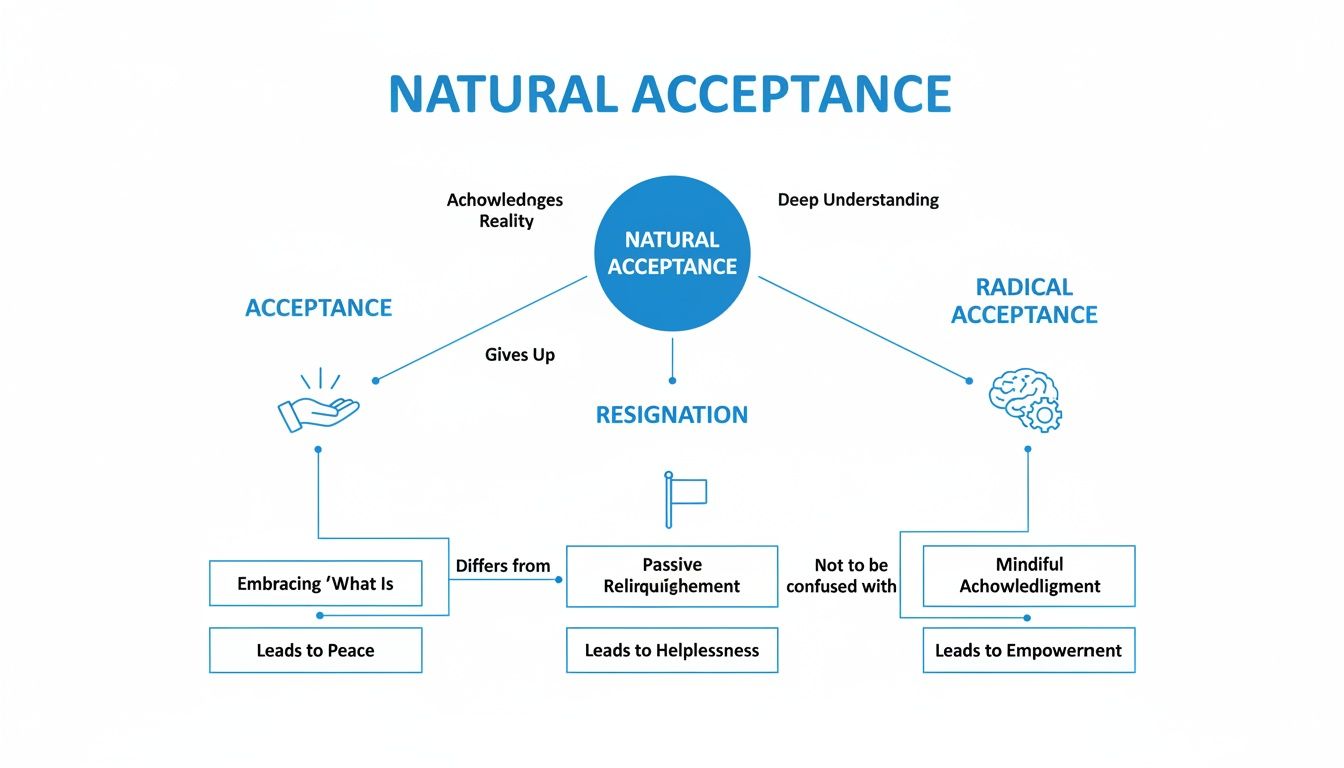
    Diagram illustrating natural acceptance, distinguishing it from resignation, and relating it to radical acceptance.

    As this illustrates, natural acceptance is an empowering stance, not a passive one. It's a practice that leads to positive action and inner strength.

    Building Authentic Resilience and Compassion

    True resilience isn't about being tough or emotionless; it's about navigating life with flexibility and inner strength. When you stop wasting energy fighting your own mind, you can redirect it toward what truly matters.

    This approach also nurtures self-compassion. Instead of criticizing yourself for feeling anxious or sad, you learn to treat yourself with the kindness you'd offer a friend. This compassionate stance is a cornerstone of healing and long-term well-being.

    Natural acceptance is not about getting rid of difficult feelings. It’s about creating space for them, which frees you to live a fuller, more meaningful life alongside them.

    This practice helps break the cycle where feelings of anxiety or depression are made worse by the struggle against them. To support this journey, some find complementary tools, like this guide to crystals for peace and serenity, helpful in finding balance.

    A New Perspective on Happiness

    Many of us believe that happiness means the absence of negative feelings. Natural acceptance offers a different view: genuine happiness comes from embracing the full range of human experience. This creates a stable foundation for well-being that doesn't depend on life's ups and downs.

    It’s important to remember this psychological concept of acceptance is very different from its use in other fields. For example, in statistics, an "acceptance region" is a technical term in hypothesis testing that has nothing to do with emotional well-being.

    Ultimately, this journey isn't about reaching a perfect, problem-free state. It's about building a kinder, more honest relationship with yourself, which can be a valuable step to take before or during therapy or counselling.

    How Natural Acceptance Looks in Real Life

    Theory is one thing, but seeing a concept in action makes it real. Natural acceptance is a practical way to handle everyday challenges. Let's look at how this subtle shift can transform our reactions in common situations, guiding us from stress to calm.

    These examples show the difference between fighting a feeling and simply allowing it to be—which is the heart of natural acceptance.

    A young man meditating with closed eyes at a desk with books and a pen.

    Scenario 1: Facing Exam Nerves in Mumbai

    Meet Priya, a university student in Mumbai facing the pressure of final exams. A familiar knot of anxiety is building in her stomach, and her mind is racing with "what if I fail?" scenarios.

    A typical response is to fight it by scolding herself: "I can't be anxious, I have to focus!" This internal struggle only makes the anxiety louder and often leads to more stress and procrastination.

    Natural acceptance offers a different path. Priya can pause, take a deep breath, and acknowledge, "Okay, anxiety is here." By allowing the feeling to exist without judgment, she stops adding fuel to the fire.

    This small shift frees up her mental energy. While the anxiety may linger, it no longer has her in a chokehold. From this clearer space, she can decide to study for 30 minutes and then take a break, responding with wisdom instead of panic.

    Scenario 2: Handling Workplace Pressure in Bengaluru

    Now, consider Arjun, a tech professional in Bengaluru facing an impossible project deadline. The wave of workplace stress is instant and overwhelming, making his shoulders tense and his thoughts race.

    His first instinct might be to push the stress down and carry on. This resistance is a fast track to irritability, sleepless nights, and burnout, and can intensify feelings of anxiety or even depression.

    Here’s how natural acceptance helps:

    • Acknowledge the Feeling: Arjun can notice the physical signs of stress and name them without judgment: "This is stress."
    • Create Some Space: By not fighting it, he creates breathing room. He sees the stress as an experience, not as his entire identity.
    • Respond with Intention: From this calmer place, he can break the project into smaller steps and communicate with his team about the timeline.

    This approach changes everything. Instead of being frozen by stress, Arjun channels his energy into constructive action, building resilience by navigating pressure without being consumed by it. These stories show that this practice, supported when needed by counselling or therapy, helps us use our inner resources wisely.

    Simple Practices to Cultivate Natural Acceptance

    You don't need complicated techniques to begin your journey with natural acceptance. It starts with small, gentle steps you can weave into your daily routine. Think of these as invitations to build a kinder relationship with yourself, one moment at a time.

    A calm Asian woman meditates with closed eyes, hands on belly, beside tea and a plant.

    The goal isn't to erase difficult feelings but to change your relationship with them. By meeting your experiences with curiosity and care, you take a huge step toward greater well-being and emotional resilience.

    The Notice and Name Technique

    One of the simplest ways to start is to 'Notice and Name'. The next time a strong feeling like anxiety or frustration arises, just pause. Without judging it, simply observe it and silently label it: “Ah, here is anxiety,” or “This is sadness.”

    This simple act creates a little space between you and the emotion. It helps you realize that you are experiencing a feeling, not that you are the feeling. This can reduce the overwhelming power of difficult emotions tied to workplace stress or personal challenges.

    This isn’t about analyzing or fixing the feeling. It's simply a moment of quiet acknowledgement of what's happening in your inner world right now.

    Mindful Breathing and Allowing

    Mindful breathing is another wonderfully effective practice. Find a quiet spot to sit comfortably for a few minutes. Gently bring your attention to your breath, noticing the sensation of air moving in and out of your body.

    When thoughts and feelings arise, your only job is to let them float by like clouds. There's no need to engage with them or push them away. Just notice them, and then gently guide your attention back to your breath.

    • Observe Without Attachment: See thoughts as temporary mental events, not absolute truths.
    • Stay Grounded: Use the physical sensation of your breath to anchor you in the present moment.
    • Practice Self-Compassion: When your mind wanders, kindly and gently bring your focus back without any self-criticism.

    This exercise slowly trains your mind to be less reactive, helping you build resilience against challenges like anxiety and depression.

    It's interesting that "acceptance" can mean different things in different fields. In statistics, for example, you can learn about acceptance and rejection regions here, a technical concept unrelated to emotional well-being.

    Remember, these practices are not a quick fix. If your feelings consistently feel too big to handle, seeking professional therapy or counselling is a sign of strength and a great way to deepen your journey.

    Recognising When to Seek Professional Support

    Practicing natural acceptance is a powerful skill for building a healthier relationship with your inner world. However, some challenges are too heavy to carry alone, and that is completely okay.

    Reaching out for professional support from a therapist or counsellor is not a sign of failure. It is a courageous act of self-care and a true sign of strength.

    If you find that feelings of anxiety or sadness consistently get in the way of your daily life, it may be time to talk to a professional. Their guidance can offer structure and support that self-practice alone cannot always provide.

    Signs It Might Be Time for Therapy

    Knowing when to ask for help is a key part of your well-being journey. While this is not a diagnostic checklist, these signs may suggest that professional counselling or therapy could make a real difference.

    Consider reaching out if you are experiencing any of these:

    • Persistent Overwhelm: You constantly feel that life’s demands, including workplace stress, are too much to handle.
    • Difficulty Functioning: Your emotional state makes it hard to keep up with responsibilities at work, home, or school.
    • Loss of Interest: You have lost interest in activities and hobbies you once enjoyed.
    • Unhealthy Coping: You notice you're relying on unhealthy habits to manage difficult feelings.

    Therapy provides a safe, confidential space to explore what you're feeling without judgment. A trained professional can help you understand underlying patterns and build practical strategies for managing challenges like anxiety and depression.

    It's also helpful to remember that tools like the psychological assessments offered by DeTalks are designed to provide insights, not a diagnosis. Think of them as a supportive starting point for better understanding your needs.

    Taking the step to seek help is a powerful, proactive investment in your long-term resilience and happiness.

    Supportive Takeaways

    It’s completely normal to have questions when exploring a new way of thinking. The goal of natural acceptance is not to achieve a perfect, painless state but to build a kinder, more honest relationship with yourself. This journey is about progress, not perfection.

    Does Natural Acceptance Mean I Have to Like My Negative Feelings?

    Not at all. This is a common misunderstanding. Natural acceptance isn't about forcing yourself to like feeling sad or anxious.

    It is more like acknowledging the weather. You don’t have to enjoy a rainy day, but fighting it is pointless. By simply noticing your feelings are there, without the struggle, you often find they have less of a grip on you.

    How Is It Different from Ignoring My Problems?

    This is a very important distinction. Ignoring a problem is avoidance—actively pushing it away. This can worsen challenges like workplace stress and lead to burnout.

    Natural acceptance is the opposite. It's about turning toward your inner experience with gentle awareness. This gives you the clarity to see the issue for what it is and respond from a place of strength.

    Can I Still Have Goals if I Practise Natural Acceptance?

    Absolutely. In fact, natural acceptance can be a great asset for personal growth. It helps you relate to your inner experience differently, not your external circumstances.

    By accepting your current feelings—perhaps frustration or dissatisfaction—without judgment, you stop wasting energy fighting yourself. This allows you to channel that energy more effectively toward achieving your goals, starting from a place of reality.

    If you’re looking for more information, you might find answers to additional frequently asked questions on similar topics. And if difficult feelings consistently get in your way, remember that professional therapy and counselling provide a supportive space to work through them.


    Ready to better understand your own path to resilience and well-being? DeTalks offers confidential, science-backed psychological assessments to provide you with valuable insights. Explore our assessments today and take the next step on your journey.

  • How to Control Your Mind and Thoughts: A Practical Guide to Inner Calm

    How to Control Your Mind and Thoughts: A Practical Guide to Inner Calm

    Learning to guide your mind is not about forcing your thoughts into silence. It's a much gentler process of becoming a kind observer, noticing your thoughts without getting lost in them, and then choosing how you want to respond. This simple shift can transform your inner world from a source of stress into a space of peace and intention.

    Understanding the Chatter in Your Mind

    A person sitting peacefully with eyes closed, representing mental calm and control.

    Does your mind sometimes feel like it has a life of its own, replaying old worries or creating new ones? This constant mental chatter is a shared human experience. The secret to learning how to control your mind and thoughts isn't to fight the noise, but to first understand it with curiosity.

    A helpful starting point is to realise you are not your thoughts. Imagine sitting on a quiet riverbank as your thoughts float by like leaves on the water. Your role is simply to watch them pass, creating a peaceful distance between you and the current of your mind.

    Why Is It So Hard to Quiet the Mind?

    Our brains are designed to solve problems, which is helpful until they start treating every small worry as an urgent threat. This can lead to persistent feelings of anxiety and even burnout, especially with the demands of modern life.

    Consider these common challenges:

    • Workplace Stress: You might find yourself mentally replaying a difficult conversation with a manager, draining your energy long after the workday has ended.
    • Anxiety and Worry: A minor disagreement can trigger a wave of negative thoughts, making it hard to see the bigger picture in your relationships.
    • The Inner Critic: Many of us have a harsh internal voice that highlights mistakes, which can contribute to feelings of depression and low self-worth.

    This constant mental activity impacts our well-being, straining relationships and affecting our happiness. Writing these thoughts down can be a powerful first step; you might try learning how to journal for self-discovery and mental clarity to better understand them.

    It's Okay to Find It Hard

    If you feel overwhelmed by your thoughts, please know you are not alone. In India, this is a significant challenge, with studies showing that nearly one in seven people may experience a mental health concern. The journey toward mental well-being is a common one.

    Acknowledging your struggles with self-compassion is the first step toward building emotional resilience and lasting well-being. The goal isn't to silence your mind, but to learn its language.

    This guide offers practical, gentle techniques to help you navigate your inner world. These are not quick fixes but skills that build a healthier relationship with your mind. Remember, seeking support through therapy or counselling is a sign of strength on the path to lasting change.

    Practical Mindfulness for a Quieter Mind

    A person sitting peacefully with eyes closed, representing mental calm and control.

    Mindfulness is not about sitting in a silent room trying to empty your mind, which can feel intimidating. It’s simply the practice of paying attention to the present moment without judgment. This is a powerful way to manage the mental chatter that fuels workplace stress and anxiety.

    Think of it as gently training your mind. When it wanders, you simply guide it back to the present moment. The goal is not to erase your thoughts but to observe them without getting carried away, building your inner resilience and peace.

    A Simple Breathing Exercise for When You're Under Pressure

    Imagine you're minutes away from a big presentation and your heart is racing. Instead of letting panic take over, try this simple three-minute breathing exercise. It can help calm your nervous system and clear your mind.

    Find a comfortable place to sit and close your eyes if you feel comfortable. Breathe in slowly through your nose for a count of four, hold for two, and then breathe out slowly through your mouth for a count of six. Repeat this for a few minutes, focusing only on the rhythm of your breath.

    The 5-4-3-2-1 Grounding Technique for Anxious Moments

    When thoughts race and feelings of anxiety become overwhelming, the 5-4-3-2-1 technique can be a helpful anchor. It pulls your attention out of your head and back into the world around you, breaking the cycle of worry.

    Wherever you are, gently pause and notice:

    • 5 things you can see: Look around and name five objects, like your desk, a pen, or a plant.
    • 4 things you can feel: Bring your attention to physical sensations, like the texture of your chair or the feeling of your feet on the floor.
    • 3 things you can hear: Listen closely for three distinct sounds, such as typing, birds outside, or the hum of a fan.
    • 2 things you can smell: Notice any scents in the air, like coffee or fresh air from a window.
    • 1 thing you can taste: Focus on one taste, perhaps by taking a sip of water or just noticing the current taste in your mouth.

    This sensory scan grounds you in the present moment, making it harder for anxious thoughts to hold their grip. It's a wonderful tool for regaining a sense of control.

    To give you a few more ideas, here are some other quick and easy mindfulness exercises you can slot into your day.

    Simple Mindfulness Exercises You Can Do Anywhere

    This table offers a quick-reference guide to practical exercises for calming the mind and grounding yourself in the present moment.

    Technique When to Use How It Helps
    Mindful Walking During a break, on your way to a meeting Focus on the sensation of your feet hitting the ground. This breaks you out of autopilot and connects your mind and body.
    Body Scan At your desk, before sleep Mentally scan your body from toes to head, noticing any tension or sensation without judgement. This releases physical stress.
    Mindful Listening In a conversation, during a commute Choose one sound (like a clock ticking or a bird) and focus all your attention on it. This sharpens your focus and calms the mind.
    Single-Tasking When you feel scattered and overwhelmed Pick one task (e.g., replying to one email) and do only that. It stops the mental juggling and reduces feelings of being overwhelmed.

    These small, consistent actions train your brain over time.

    By practising these small acts of mindfulness, you are not just managing stress in the moment; you are training your brain to be more present and less reactive, contributing to your long-term well-being.

    For a more structured approach, programs like Mindfulness-Based Stress Reduction (MBSR) offer a deeper exploration of these principles. Each mindful moment is a step toward navigating your inner world with more calm and kindness.

    Reshape Your Thoughts with Cognitive Reframing

    A person looking at their reflection in a puddle, symbolizing a change in perspective.

    Often, it’s not a situation that causes distress, but our interpretation of it. Cognitive reframing is a technique that helps you change your perspective to change how you feel. This is a core skill when learning how to control mind and thoughts.

    This isn't about ignoring reality or forcing positivity. It's about finding a more balanced and helpful way to see things, building your resilience and improving your overall well-being.

    First, Catch the Automatic Negative Thought

    The process begins with awareness. It's important to notice unhelpful, automatic thoughts as they arise, especially in response to stressors like workplace stress or family expectations. These thoughts can be self-critical and drain your energy.

    For example, if you make a mistake on a report, your automatic thought might be, "I'm so incompetent." This thought can trigger feelings of anxiety and shame. The first step is to simply notice this thought without judging yourself for having it.

    Next, Gently Question That Thought

    Once you spot a negative thought, gently challenge it. Automatic thoughts are often exaggerations, not facts. Questioning them helps loosen their grip and see the situation more clearly.

    Ask yourself simple questions:

    • Is there evidence for this thought? Did anyone actually call me incompetent, or am I assuming?
    • Is there another way to look at this? Could this mistake be a learning opportunity?
    • What would I tell a friend in this situation? We are often kinder to others than we are to ourselves.

    This gentle questioning helps you find a more balanced view. It is an essential skill for managing your thoughts and feelings.

    Finally, Find a More Balanced Alternative

    The last step is to replace the unhelpful thought with one that is more realistic and constructive. This new thought should feel believable and move you away from black-and-white thinking.

    Let's go back to our example:

    • Original Thought: "I'm so incompetent. Now everyone will think I'm terrible at my job."
    • Reframed Thought: "I made a mistake, and I feel disappointed. I can learn from this and remember to double-check next time. One mistake doesn't cancel out all my hard work."

    This reframed perspective acknowledges what happened without spiraling into a personal attack. It's a compassionate approach that empowers you to respond constructively.

    If you find that these negative patterns are deeply ingrained and contributing to feelings of depression or anxiety, working with a professional through therapy or counselling can provide the guidance you need.

    How to Build Your Emotional Resilience

    A plant growing through a crack in a concrete sidewalk, symbolizing resilience.

    When we talk about how to control mind and thoughts, the goal is to nurture your resilience. This is the inner strength that helps you bounce back from challenges with greater wisdom. Resilience is a skill you develop through conscious effort.

    This skill is your ally for navigating everything from daily frustrations to more significant setbacks. By focusing on small, consistent actions, you strengthen your capacity to cope and protect your well-being.

    Cultivate Self-Compassion

    Practising self-compassion is one of the kindest and most effective ways to build resilience. It means treating yourself with the same care you would offer a good friend during a tough time. It helps you acknowledge your feelings without adding harsh self-criticism.

    When your inner critic becomes loud, it can fuel feelings of anxiety or even depression. Try placing a hand over your heart and telling yourself, "This is a difficult moment." This simple act can calm your nervous system and shift your perspective from self-blame to self-support.

    Build Your Support System

    You don't have to navigate life’s challenges alone. A strong support system—family, friends, or a professional offering counselling—is a cornerstone of resilience. Sharing your struggles reminds you that you are part of a larger human experience.

    In India, deep community and family bonds can be a powerful source of strength. Leaning on your support system is not a weakness; it's a brave and powerful act that reinforces your ability to cope.

    Building resilience is a journey of small, intentional steps. It’s about learning to support yourself through difficult moments and remembering that every challenge overcome adds to your strength and promotes happiness.

    Find Meaning in Your Experiences

    Resilient people often find a sense of purpose, even in adversity. This isn't about forcing a "silver lining" on a painful event. It's about reflecting on what the experience taught you about yourself and your values.

    Ask yourself honest questions:

    • What did I learn from this situation?
    • Did this experience clarify what matters most to me?
    • How can I use this knowledge to move forward?

    This reflection helps you integrate difficult experiences into your life story in a way that fosters growth. If you're struggling to find meaning, professional therapy offers a safe space to explore these feelings and find a path toward healing.

    Knowing When to Seek Professional Support

    The techniques in this guide are helpful for building mental resilience, but sometimes self-help isn't enough. Realising you might need more support is an act of strength and self-awareness. The journey of learning how to control your mind and thoughts is one you don't have to take alone.

    It may be time to seek support if negative thoughts persistently disrupt your daily life, making it hard to work, sleep, or connect with others.

    Consider reaching out if you're experiencing:

    • Persistent feelings of hopelessness or dread.
    • Overwhelming anxiety that you can't seem to manage.
    • A loss of interest in activities you once enjoyed.

    Choosing to get help is a powerful, proactive step toward reclaiming your well-being.

    Understanding Therapy and Counselling

    Therapy and counselling provide a safe, confidential space to explore your thoughts and feelings without judgment. A qualified professional can help you understand the root of your challenges, whether related to workplace stress, past experiences, or symptoms of depression. They offer personalised strategies and support you in navigating your inner world.

    Unfortunately, many who could benefit from this support don't seek it. In India, a significant treatment gap exists, with studies showing 70% to 92% of individuals with mental health concerns receive no formal care due to stigma, cost, or lack of access. You can learn more about India's mental health imperatives on visionias.in.

    Deciding to seek professional support is a courageous and empowering step. It’s an investment in yourself and a commitment to living a more balanced, fulfilling life.

    How to Take the First Step

    Taking the first step can feel daunting, but it can be simple. You can start by talking to someone you trust, like a close friend or family member. Voicing your feelings can be a great relief.

    Another option is to research online platforms that connect you with qualified therapists, putting you in control of the process. The goal is to begin a journey of understanding and healing. The right therapist will walk alongside you, offering tools and insights to help you build a healthier relationship with your mind.

    Got Questions? We’ve Got Answers

    It’s natural to have questions as you begin to work with your mind. Asking questions is a wonderful sign that you are on the right path to greater self-awareness. Here are answers to some common inquiries.

    Can You Really Control Every Thought?

    No, and that’s perfectly okay. The goal is not to become a mental dictator, which is exhausting and unrealistic. Instead, the aim is to change your relationship with your thoughts.

    Think of it as learning to watch clouds pass by without getting caught in a storm. You learn to observe your thoughts, decide which ones deserve your attention, and let the unhelpful ones drift away. It's less about control and more about influence.

    How Long Until I Start Seeing a Difference?

    There is no magic timeline, as everyone's journey is unique. Some people notice a small shift in awareness or calm within a few days of practising mindfulness.

    For more deeply ingrained thought patterns, it may take several weeks of consistent practice to see a significant change. Patience and self-compassion are key.

    Your mind is like a garden; you can't force flowers to bloom overnight. Consistent, gentle care is what brings results, and every garden grows at its own pace.

    This process is about progress, not perfection. Every small effort contributes to long-term well-being and builds resilience to life's challenges, including workplace stress.

    Can I Use These Tips to Manage Serious Anxiety by Myself?

    These techniques are excellent for everyday stress and can help with mild to moderate anxiety. However, they are not a substitute for professional medical advice or therapy. Assessments mentioned in this context are for informational purposes only and are not diagnostic.

    If your thoughts are causing significant distress or interfering with your daily life, please reach out to a qualified mental health professional. These tools can then become a valuable part of a broader, expert-guided support plan.

    What If I Try These Techniques and They Don't Work?

    First, please don't be discouraged. It's normal for one technique to resonate more than another. Feel free to try a different approach or adapt one to better suit your needs.

    If you have been trying for a while and feel stuck, that is a clear sign that it may be time to speak with a therapist or counsellor. They can offer personalised strategies and explore what might work best for you. Professional counselling is about finding a path that is uniquely yours.


    If you're looking for that professional guidance, DeTalks is a great place to start. They can connect you with qualified therapists and offer science-backed assessments to help you get a clearer picture of your mental health. Explore the professional support available and take the next step toward a more balanced life by visiting https://detalks.com.

  • How to Calm Your Mind from Overthinking

    How to Calm Your Mind from Overthinking

    If you've ever found yourself replaying a conversation in your mind or getting lost in "what-if" scenarios, you're not alone. Understanding how to calm your mind from overthinking isn't about fighting your thoughts; it's about gently guiding them. This is a very human response to stress and uncertainty, and learning to manage it is the first step toward finding peace.

    Why We Get Stuck in Overthinking Loops

    A person sitting calmly on a windowsill, looking out over a city at dusk, representing a moment of quiet reflection.

    Thinking deeply is normal, but overthinking is when your thoughts spin in circles without finding a solution. It’s not a personal failing; it's often the brain's attempt to protect you from future unknowns or potential pain.

    This cycle can be common in high-pressure environments, like in cases of workplace stress, where the need to be constantly available fuels endless analysis. This isn't productive problem-solving; it’s a direct path to burnout and can harm your overall well-being.

    The Impact on Your Well-being

    When your mind gets caught in a loop, it can take a real toll on your mental and emotional health. This constant mental activity often triggers anxiety and can contribute to feelings of depression, keeping your nervous system on high alert.

    This experience is common. In India, a recent study revealed that 81% of people spend over three hours a day overthinking. For many, it's a constant habit tied to daily choices and major life events, showing how deeply this pattern can affect us. You can discover more insights from the India Overthinking Report to understand the full scope.

    Moving from Awareness to Action

    Recognising that overthinking is a common response is a powerful first step. It allows you to approach these thoughts with compassion rather than self-criticism. This awareness isn't about labeling yourself, but about preparing to make a positive change.

    Please remember, this guide provides informational tools to support your journey toward a calmer mind. It is not a substitute for a professional diagnosis from a qualified healthcare provider.

    Acknowledging these thought loops as they happen allows you to try practical strategies to build mental resilience. The goal is to shift your relationship with your thoughts—to observe them without being controlled by them. That is where the path to a quieter mind begins.

    Ground Yourself with Practical Mindfulness Techniques

    A person practicing a calming breathing exercise by a window, with soft light filtering in, creating a serene and focused atmosphere.

    When your thoughts are spiralling, bringing yourself back to the present moment can be incredibly powerful. This is the core of mindfulness. It isn't about forcing your mind to be empty, but about giving it a gentle anchor.

    These simple techniques can be used anywhere, whether at your desk or on a crowded train. The idea is to shift your focus from the storm inside your head to the world around you, helping to calm your body’s stress response.

    Use the 5-4-3-2-1 Grounding Method

    This technique is a discreet way to stop a thought spiral by engaging your five senses. It pulls your mind out of past regrets or future worries and plants it firmly in the here and now.

    You can try it right now. Silently, go through this checklist:

    • See 5 things: Look around and name five objects without judgement. Notice their colour, shape, and texture.
    • Feel 4 things: Bring attention to physical sensations, like the feeling of your chair or the fabric of your clothes.
    • Hear 3 things: Listen for background sounds you might have been tuning out, such as traffic or your own breathing.
    • Smell 2 things: Focus on what you can smell in the air. Even noticing the absence of a scent is helpful.
    • Taste 1 thing: Acknowledge what you can taste, whether it’s a lingering flavour or just the natural taste in your mouth.

    This sensory scan is a wonderful first step in learning how to calm your mind from overthinking. It short-circuits internal chatter and reminds you that you are more than your thoughts.

    Practise Simple Box Breathing

    Box breathing is another great tool for calming your nervous system. It works by regulating your breath, which sends a direct signal to your brain that you are safe. This helps turn off the fight-or-flight response that overthinking often triggers.

    By intentionally slowing your breathing, you can create a sense of calm and mental space, easing feelings of stress and anxiety.

    It's beautifully simple. Picture a square and follow these steps, with each side lasting for a count of four:

    1. Breathe in slowly through your nose for four seconds.
    2. Hold your breath gently for four seconds.
    3. Breathe out slowly through your mouth for four seconds.
    4. Hold your breath at the end for four seconds.

    Repeat this cycle for a minute or two until you feel more settled. The steady, rhythmic nature of this practice gives your racing mind something positive to focus on.

    Simple Techniques to Interrupt Overthinking

    Technique How It Works When to Use It
    5-4-3-2-1 Grounding Engages all five senses to pull your focus out of your head and into the present physical environment. When you feel detached or are caught in a loop of "what-if" scenarios and past regrets. Excellent for public spaces.
    Box Breathing Regulates your breathing pattern to calm the body's physiological stress response (fight-or-flight). When you feel the physical symptoms of anxiety—a racing heart, shallow breathing, or tension. Great before a stressful event.

    These are immediate, practical actions you can take the next time you feel overwhelmed. Integrating these small practices into your day builds mental resilience and gives you back a sense of control.

    Change Your Relationship with Your Thoughts

    A person looking at their own reflection in a puddle, symbolizing self-reflection and changing one's perspective on their thoughts.

    While grounding techniques are helpful in the moment, a long-term strategy involves changing how you relate to your thoughts. It’s about learning to see them as mental events, like clouds passing in the sky—temporary and not always true.

    Many of these strategies come from approaches used in therapy and counselling. The goal is not to suppress your thoughts, which often makes them stronger, but to get curious and gently loosen their hold on you. This builds lasting mental resilience and promotes happiness.

    Question Your Automatic Thoughts

    Our brains often jump to conclusions, especially when we feel pressure from workplace stress or general anxiety. For example, a short email from your boss might trigger a spiral of worry that you've done something wrong.

    Instead of accepting that first negative thought, pause and question it.

    Ask yourself these questions:

    • Is there another way to look at this? Perhaps your manager was just busy. It might not be about you at all.
    • What's the actual evidence for my fear? Often, you'll find there’s no real proof for the worst-case scenario.
    • What would I tell a friend in this situation? Applying the same compassion to yourself can change your perspective.

    This is not about ignoring problems but about creating space to consider more balanced possibilities. Practicing this can help rewire your brain to be less reactive, which is a big step toward greater well-being.

    Schedule a Time to Worry

    This may sound unusual, but setting aside a specific time to worry can be very effective. By scheduling a "worry window," you contain the thoughts instead of letting them take over your entire day.

    Dedicate a short period, like 15 minutes each evening, to your worries. If a concern pops up earlier, you can gently tell yourself, "I'll think about that at 6 PM," and redirect your focus.

    This works because it stops worries from constantly interrupting you. When you do sit down for your worry session, you may find that many of those thoughts now seem less urgent or important.

    Learning how to calm your mind from overthinking is a skill built over time. If these patterns feel too difficult to manage alone, seeking support through counselling can make a significant difference, especially if you are facing challenges like anxiety or depression.

    Build a Lifestyle That Supports a Calm Mind

    A person incorporating healthy lifestyle changes, such as enjoying a quiet cup of tea and a nutritious meal, creating a peaceful and supportive home environment.

    While in-the-moment techniques are useful, a lifestyle that supports calm is key to long-term well-being. Your daily habits can either fuel overthinking or build a strong foundation for peace.

    This isn’t about a complete overhaul. Small, intentional choices can create a powerful buffer against workplace stress, anxiety, and burnout.

    Set Healthy Digital Boundaries

    We are surrounded by a constant flow of information that can easily put our minds into overdrive. Setting digital boundaries helps you reclaim your mental space.

    Try these simple habits:

    • Schedule 'no-phone' times, like the first hour of your day or during meals, to give your brain a break.
    • Curate your digital world. Unfollow accounts that make you feel anxious or drained and focus on content that inspires you.
    • Silence non-essential notifications. Constant alerts can keep your nervous system on high alert, so turn them off.

    Connect Your Body and Mind

    Your physical and mental health are deeply connected. When you take care of your body, your mind is better equipped to handle stress. It's also worth understanding the intricate link between your gut and brain health, as your diet can directly impact your mood.

    Simple activities, like a short walk, can help clear your head and improve your sleep. The goal is not perfection but gentle, consistent care for your whole self.

    Remember, consistency is more important than intensity. A gentle 20-minute walk each day is more beneficial for long-term well-being than an intense workout once a week.

    Finally, protect your sleep. A tired brain is more likely to fall into patterns of rumination that can contribute to feelings of anxiety or depression. A simple, relaxing bedtime routine can signal to your body that it’s time to wind down.

    Know When to Seek Professional Support

    While self-help strategies are valuable, sometimes overthinking can be too much to handle alone. Recognising you need extra support is a sign of strength and self-awareness, an important step toward improving your mental well-being.

    If racing thoughts are disrupting your sleep, work, or relationships, it may be time to speak with someone. Persistent feelings of hopelessness or an inability to switch off your worries are also signs that professional help could be beneficial.

    When overthinking feels like your default state, it could be related to an underlying condition like anxiety or depression. Reaching out for help through therapy or counselling provides a safe space to explore these patterns.

    What to Expect from Therapy

    Starting therapy can feel like a big step, but it is a collaborative process. A therapist can act as a guide, helping you understand the roots of your overthinking and providing you with personalised tools to build resilience.

    In India, accessing mental healthcare can be challenging. The country faces a significant mental health burden of 2443 DALYs per 100,000 population, with only 0.75 psychiatrists per 100,000 people. You can read the full report on India's mental health imperatives for more context.

    Despite these gaps, support is becoming more accessible through online platforms and helplines. The goal of therapy isn't to eliminate all worries, but to help you build a healthier relationship with your thoughts so they no longer control your life.

    Taking the First Step

    Acknowledging that you might need help is the most important move. If overthinking is affecting your quality of life, exploring comprehensive mental health assessment services could offer helpful insights. It's important to remember these assessments are informational, not diagnostic.

    Here are a few signs that professional guidance could be helpful:

    • Constant Fatigue: Feeling mentally and emotionally exhausted most of the time.
    • Avoiding Situations: Dodging activities you once enjoyed due to anxiety.
    • Physical Symptoms: Regular headaches, stomach issues, or muscle tension without a clear medical cause.
    • Impact on Relationships: Your worrying is causing strain with loved ones.

    The journey to a calmer mind is about building a supportive toolkit for the long haul. A professional can provide the structure and expertise to guide you with compassion.

    Your mental health is just as important as your physical health. Seeking professional support is a powerful investment in your happiness and resilience.

    Your Questions, Answered

    It's natural to have questions as you learn to manage overthinking. Here are answers to some common concerns to help you feel more confident on your journey.

    How Can I Stop My Brain from Racing at Night?

    The quiet of nighttime can often amplify our thoughts. Creating a gentle buffer between your day and bedtime can help. A simple wind-down routine, like reading a book or listening to calm music, signals to your brain that it's time to rest.

    A helpful tip is to keep a notepad by your bed. If a worry pops into your head, write it down. This simple act tells your brain that the thought is captured and can be addressed tomorrow, allowing you to let it go for now.

    What's the Difference Between Overthinking and Anxiety?

    This is a great question. Overthinking is a pattern of thought—the repetitive, unproductive loop. Anxiety is a broader emotional and physical response that often includes physical symptoms like a racing heart or a feeling of dread.

    While they are not the same, they are closely linked. Chronic overthinking can intensify anxiety, and feeling anxious can make you more prone to overthinking. If you feel overwhelmed by either, speaking with a professional through counselling can help clarify what you're experiencing.

    Remember, this information is for educational purposes and is not a substitute for a professional diagnosis. A therapist can provide a clear assessment based on your unique situation.

    How Can I Help a Friend Who's Stuck in Overthinking?

    It's hard to watch someone you care about struggle. Instead of telling them to "just stop worrying," which can feel dismissive, try simply listening with compassion.

    Validating their feelings with a phrase like, "That sounds really stressful," can make a world of difference. You can also gently guide them to the present moment by suggesting a shared activity, like a walk or watching a movie. Sometimes, a supportive presence is the most helpful gift you can offer, promoting their own resilience.

    Are There Good Mental Health Resources in India?

    Yes, access to mental health support in India is improving. The Tele MANAS helpline, launched in 2022, is a wonderful initiative that has provided over 1.81 million mental health consultations. It's free, available 24/7, and offers support in multiple Indian languages.

    Services like these make it easier for people to get the initial support they need in a confidential way. You can learn more about Tele MANAS and its impact on mental health care to see the progress being made.


    At DeTalks, we believe everyone deserves the right support for their mental well-being. Our platform is designed to connect you with qualified therapists and provide science-backed tools to help you understand your thoughts and build a more resilient, peaceful mind. Take the first step toward clarity and find the support you need at https://detalks.com.