Tag: mindfulness tips

  • How to Live in the Present and Reclaim Your Peace

    How to Live in the Present and Reclaim Your Peace

    Life can feel like a constant pull between past regrets and future worries. Choosing to live in the present means anchoring yourself in the here and now, which is the only moment you truly have. It's a gentle shift from "what if" to "what is."

    Why Is It So Hard to Live in the Present?

    Does your mind ever replay a past mistake while you’re trying to enjoy the moment? Or perhaps you're with loved ones, but your thoughts are lost in anxiety about a future deadline. This mental time travel is very common and can leave us feeling scattered and drained.

    Young man meditating with closed eyes, surrounded by a clock and an old photograph.

    Our brains are naturally built to wander, learning from the past and planning for the future. The challenge begins when this internal chatter becomes overwhelming, pulling us away from our actual lives and contributing to stress.

    The Impact of a Wandering Mind

    When our minds are constantly elsewhere, our well-being can be affected. Dwelling on past events can lead to feelings of sadness, while fixating on future unknowns can fuel anxiety and burnout.

    • Heightened Stress: Worrying about the future can trigger your body's stress response, keeping you in a state of high alert. This constant tension can contribute to both physical and emotional exhaustion.
    • Burnout: Mental distraction makes it difficult to engage fully with work and personal life, leading to emotional exhaustion and a sense of disconnect.
    • Missed Connections: You can't truly connect with the people around you if your mind is far away, causing you to miss out on meaningful moments.

    Learning to live in the present isn’t about ignoring the past or future. It's about learning to guide your attention back to where you are, fostering compassion for yourself along the way.

    By developing practical skills to ground yourself, you can build genuine resilience and improve your mental well-being, moving from a state of constant reaction to one of intentional calm.

    This guide offers simple techniques to help you feel more connected to your life. Remember, support like therapy and counselling is also available to help you on your journey toward greater happiness.

    Understanding What Pulls You from the Present

    To learn how to live in the present, it helps to first understand what pulls us away. Often, our minds drift into two common patterns: replaying the past (rumination) or anxiously rehearsing the future (worry). Both can take us out of the current moment.

    Consider a young professional in Bengaluru, worried about an upcoming performance review. Instead of focusing on today's tasks, she replays a small mistake from last month, a pattern known as rumination. This keeps the past alive and can magnify feelings of regret.

    Now, picture a student in Delhi who just finished exams and is consumed by "what if" scenarios about his results. This is worry—a cycle of anxious thoughts about a future that hasn't happened. This habit can increase feelings of anxiety and stress.

    Rumination vs. Worry: Two Common Thought Patterns

    These mental habits can feel like problem-solving, but they often do the opposite. Rumination can intensify sadness, while worry is a direct path to anxiety. Both are draining and prevent us from experiencing the life right in front of us.

    When your mind wanders, you are never truly where you are. This can cause you to miss the small joys and meaningful connections that come with being fully present.

    Simply noticing these patterns is the first step toward change. It’s not about judging your thoughts, but gently acknowledging them. This self-awareness is a foundation for strong mental well-being and resilience, helping to counter workplace stress and unhappiness.

    Before moving on, it’s useful to see the differences between these thought patterns. Knowing whether your mind is in the past or future is key to guiding it back to now.

    Rumination vs Worry: Understanding Your Thought Patterns

    Characteristic Rumination (Past-Focused) Worry (Future-Focused)
    Time Focus Fixated on past events, conversations, or mistakes. Focused on potential future events and "what if" scenarios.
    Emotional Tone Often linked to sadness, regret, guilt, or anger. Primarily driven by anxiety, fear, and uncertainty.
    Key Question "Why did that happen?" or "If only I had…" "What if this happens?" or "How will I handle…?"
    Perceived Goal Trying to understand or "solve" a past event. Trying to prevent a negative outcome or prepare for danger.
    Common Outcome Can lead to feelings of helplessness and depression. Often results in heightened anxiety and physical tension.

    Seeing your thoughts laid out this way can be helpful. When you can name what’s happening—"That’s worry," or "I'm ruminating again"—you regain a sense of control.

    The Real Impact on Our Well-being

    Living outside the present moment can take a toll on our mental health. This constant mental time travel is closely linked to experiences of anxiety and depression, creating a persistent sense of unease.

    In India, this is a significant concern, with a reported 10.6% of adults experiencing mental health conditions, and rates are higher in urban areas. You can learn more from the National Mental Health Survey findings on pib.gov.in. Anchoring ourselves in the now is a powerful way to support our overall well-being.

    Recognising these thought patterns is an act of self-compassion. By identifying if you're lost in the past or future, you can gently guide your attention back to the present moment, reclaiming your peace.

    Practical Mindfulness Exercises to Anchor You in the Now

    Knowing your mind wanders is the first step; gently guiding it back is the next. The goal isn't to force your thoughts away, but to build a toolkit of simple ways to ground yourself. These are practical skills you can use anywhere to find your centre.

    These practices can be anchors during challenging times. Whether you're feeling workplace stress before a meeting or the familiar hum of anxiety, these exercises offer a lifeline back to a moment of calm. They are an invitation to reconnect with yourself.

    The need for accessible tools is clearer than ever when we look at the mental health landscape in India.
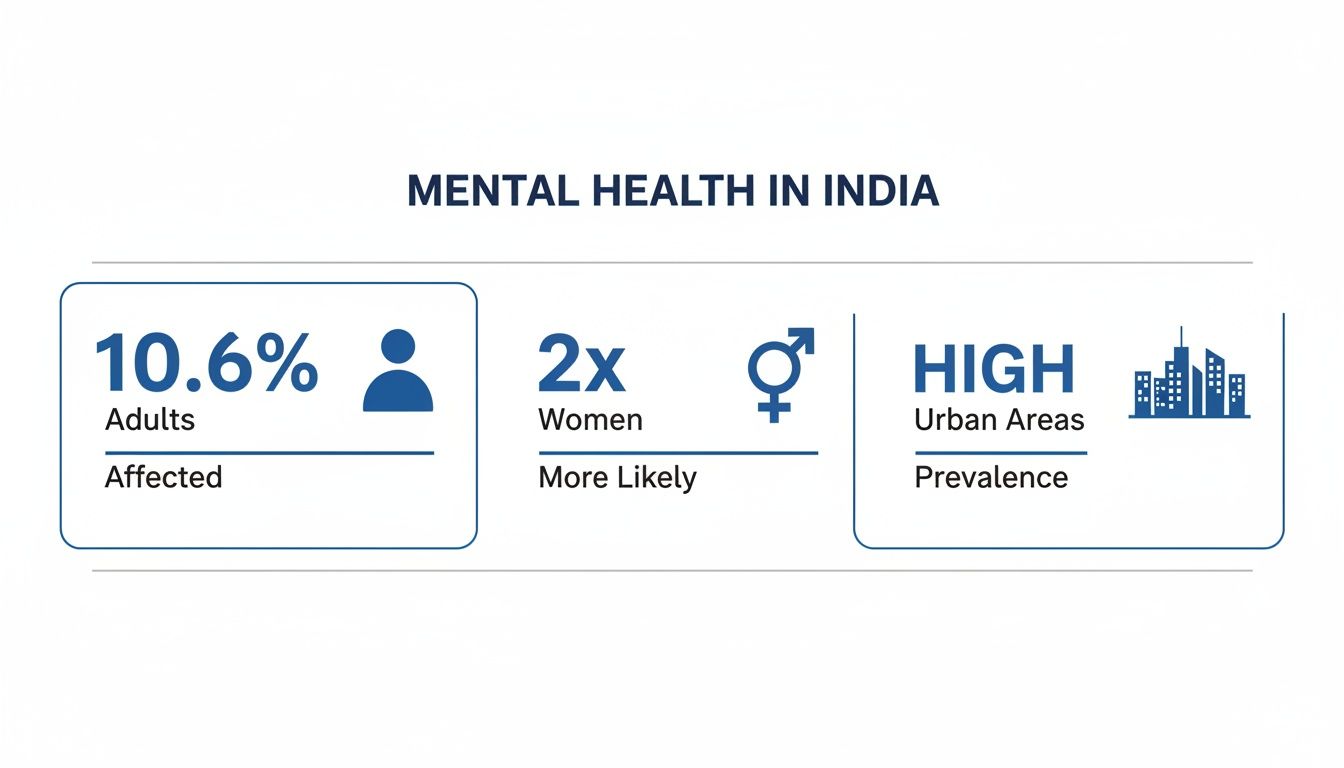
    Infographic showing mental health statistics in India: 10.6% adults affected, women 2x more likely, high prevalence in urban areas.

    This data tells a story about our communities. Mental health challenges are common, especially for women and those in busy urban centres, making practical well-being strategies vital.

    The Three-Minute Breathing Space

    Think of this as your mental reset button. It’s a simple way to pull yourself out of autopilot when you feel overwhelmed and plant your feet firmly in the present. It has three stages.

    • First Minute (Acknowledge): Tune in and notice what’s going on inside. What thoughts and emotions are present? Simply acknowledge them without judgment.
    • Second Minute (Gather): Gently bring your full attention to the physical sensation of your breath. Feel the air moving in and out, letting its steady rhythm be your anchor.
    • Third Minute (Expand): Finally, expand your awareness from your breath to your whole body. Notice your posture, the space you're in, and any physical sensations.

    This brief exercise can shift your state of mind and break the cycle of stressful thoughts. It's a small investment of time that builds tremendous resilience.

    The Body Scan Meditation

    Much of our daily stress is stored in our bodies, often without our realising it. The body scan is a practice for reconnecting with your physical self, one part at a time. This encourages relaxation and deepens self-awareness.

    You can do this lying down or sitting comfortably. Start by bringing your attention to your feet, noticing any sensations without trying to change them. Slowly, guide your awareness up through your body, to your torso, arms, and head.

    This isn't about fixing what you find; it's about listening. By offering your body this kind, curious attention, you create space for stored tension to release on its own.

    If your mind wanders, that's completely normal. Just notice where it went and gently guide it back. This practice is especially helpful for soothing the physical symptoms of anxiety and improving your overall sense of well-being.

    The 5-4-3-2-1 Grounding Technique

    When your thoughts are racing, this technique uses your five senses to pull you back into the present moment. It helps interrupt patterns of worry by focusing your brain on the tangible world around you.

    Take a slow, deep breath, and then begin to identify:

    • 5 things you can see: Look for small details, like the texture of a wall or the colour of a pen.
    • 4 things you can feel: Notice physical sensations, like the fabric of your clothes or the chair beneath you.
    • 3 things you can hear: Listen for sounds both near and far, such as a fan humming or birds outside.
    • 2 things you can smell: Notice scents in the air, like coffee or the smell of rain.
    • 1 thing you can taste: Take a sip of water or simply notice the current taste in your mouth.

    Each exercise is a practical step toward building a stronger relationship with the present moment. They are real tools for managing daily stress and feelings linked with depression. For those wanting to dive deeper, exploring options like yoga retreats can offer a supportive environment.

    Weaving Mindful Moments into Your Daily Routine

    Mindfulness exercises are helpful, but the real impact comes when you make them a consistent part of your day. Learning to live in present moments is not about adding another task to your list. It's about weaving small, intentional habits into your existing routine.

    This approach makes mindfulness feel like a quiet act of kindness to yourself. It’s about creating pockets of peace amid the daily rush, whether you're navigating a chaotic commute in Mumbai or managing tasks at home. These tiny pauses build resilience against workplace stress and emotional burnout.

    Young man walking on a sunny, tree-lined street, holding a phone in his hand.

    Transform Everyday Actions into Mindful Pauses

    You don’t need a special cushion or a silent room to be present. Your day is already full of opportunities to ground yourself. The key is to bring gentle, curious awareness to one thing at a time.

    Here are a few simple ways to start:

    • Mindful Eating: During your next meal, put your phone down and pay attention to your food. Notice the colours, smells, textures, and flavours. This simple shift can reduce stress and improve digestion.
    • The Digital Detox Walk: Take a five-minute walk and leave your phone behind. Feel the ground under your feet, the air on your skin, and observe the world around you without a screen.
    • Conscious Commuting: Instead of scrolling or letting your thoughts race, use your commute to tune in. What can you hear and see? You could even focus on the rhythm of your own breathing.

    These small changes don't take extra time but require a shift in focus. They are surprisingly powerful ways to pause anxiety and reconnect with the here and now.

    Cultivating Gratitude to Stay Grounded

    Focusing on what is good in this moment is a powerful way to shift your mind away from worry. A simple gratitude practice can change your perspective and boost your overall well-being. It also fosters happiness and compassion.

    A gratitude practice is not about ignoring life's challenges. It's about intentionally choosing to also see the good, which trains your brain to notice positive experiences and builds emotional strength.

    It doesn’t have to be complicated. At the end of the day, jot down three specific things you were grateful for. Instead of a general "my family," try "the kind words my colleague shared" or "the ten quiet minutes I had for my morning chai." Specificity makes the feeling more real.

    This simple habit counters our brain’s tendency to focus on what’s wrong, which can be linked to feelings of depression. By consistently noticing the good, you reinforce a more balanced, present-focused mindset. It’s a small daily investment with huge returns for your mental health.

    Knowing When to Seek Professional Support

    While self-help techniques are effective, sometimes the pull away from the present is too strong to manage alone. If deep-seated anxiety or a persistent low mood makes it feel impossible to stay grounded, reaching out is a sign of strength. It is a proactive step toward improving your well-being.

    Deciding when to seek professional help can feel challenging, but certain signs can make it clearer. If worry is consistently interfering with your work, relationships, or ability to enjoy life, that's more than everyday stress. Professional guidance can offer a path forward.

    Recognising the Signs It’s Time for Support

    Often, it’s not one major event but a gradual build-up of smaller struggles that signals the need for help. Noticing these signs is the first step and an act of self-compassion.

    Ask yourself if any of these feel familiar:

    • Overwhelming Emotions: You feel a constant current of sadness, anger, or anxiety that is difficult to manage day-to-day.
    • Disrupted Daily Life: Your sleep, appetite, or ability to focus have significantly changed, making simple tasks feel overwhelming.
    • Unhealthy Coping Habits: You find yourself relying on coping mechanisms that you know are not helpful in the long run.
    • Feeling Stuck: You've tried self-help strategies but still feel caught in the same loop of negative thoughts or behaviours.

    If you recognise these signs, know that you are not alone. Platforms like DeTalks can connect you with qualified therapists who provide a safe space to explore these challenges. Professional counselling and therapy are about building lasting resilience with personalised strategies.

    A Guided Path to Understanding Yourself

    In India, the need for accessible mental health support is more urgent than ever. Learning to live in present moments can be a powerful buffer against distress. Tragically, between 2018 and 2022, mental health-related suicides increased, with a high number among young adults aged 18-45. You can explore the full report on mental health trends at IndiaSpend.

    Seeking help is not about admitting defeat; it is about choosing a different future. It is an investment in your own happiness and long-term well-being.

    DeTalks also offers scientifically validated psychological assessments. It is important to remember that these are informational tools, not diagnostic ones. They will not give you a label, but they can offer valuable insights into your emotional patterns and personal strengths. Think of them as a compass to help you and your therapist understand your starting point.

    Your Path Forward to a More Present Life

    The journey to live in present moments is a gentle, ongoing practice, not a destination. Your mind will wander—that's what minds do. The real skill is kindly and repeatedly guiding it back home, without judgment.

    Each time you notice your thoughts have drifted and you bring them back, you are strengthening your resilience muscle. It grows stronger with each return.

    Embracing Progress Over Perfection

    This process is built on self-compassion, so it's important to celebrate small victories. The one mindful breath you took during a chaotic meeting is a win. The five minutes you spent noticing the trees on your walk is a huge accomplishment.

    These moments are the building blocks of a more present life. They are powerful antidotes to the burnout and anxiety that can feel overwhelming.

    Your well-being is a relationship to be nurtured, not a problem to be solved. Be patient with yourself, especially on days when your focus feels distant. Remember, the goal is not to silence your mind, but to change your relationship with it, fostering inner calm.

    This path is about adding small, intentional pauses to your day, creating pockets of peace that build lasting emotional strength and support your happiness.

    Creating an environment that supports your practice can also make a difference. Consider how you can physically carve out a space for peace and well-being in your daily life.

    If past regrets or future worries still feel too heavy, remember that professional support is an incredible resource. Reaching out for therapy or counselling is a courageous step toward building a life with greater ease and connection.

    Your Questions, Answered

    As you explore how to live more in the present, some practical questions may arise. Here are a few common ones.

    Is It Really Possible to Stop My Mind from Wandering?

    The goal is not to stop your mind from wandering, as that is a natural brain function. The practice is about gently noticing when your mind has drifted and kindly guiding it back to the present moment. Each time you do this, you strengthen your ability to be present.

    How Long Until I Actually Feel a Difference?

    Many people report a flicker of calm almost immediately after a brief exercise like the Three-Minute Breathing Space. However, the deeper, more lasting benefits—such as lower anxiety and greater resilience—come from consistent practice over weeks and months. The key is gentle consistency.

    Can This Genuinely Help with Serious Anxiety or Depression?

    Yes, mindfulness is a well-researched tool that can make a real difference in managing symptoms of anxiety and depression. It is a core component of many modern therapeutic approaches.

    For diagnosed conditions, these practices are most effective as part of a comprehensive treatment plan guided by a professional. If you are dealing with persistent low mood or worry, these exercises can be a wonderful support, but they are not a replacement for professional care.

    This journey is about changing your relationship with your thoughts, not eliminating them. By weaving these small, mindful moments into your life, you lay the groundwork for more emotional balance and a more peaceful existence. Your path forward is yours to shape, one present moment at a time.


    Ready to take the next step towards better mental well-being? At DeTalks, we can connect you with qualified therapists and provide scientifically validated assessments to help you understand your needs more clearly. Find the right support for your journey today at DeTalks.


  • Living in the Moment: Practical Mindfulness Tips for a Calmer Mind

    Living in the Moment: Practical Mindfulness Tips for a Calmer Mind

    We've all heard the phrase "live in the moment," but what does it really mean? It’s about paying attention to the here and now, on purpose. It means truly feeling the sun on your skin or tasting your morning tea, instead of being lost in past regrets or future worries.

    Living in the moment is a gentle, non-judgemental awareness of what's happening right now, both inside you and around you.

    Understanding the Power of Presence

    A young person sits on a park bench, eyes closed, smiling peacefully in warm sunlight.

    Our modern lives are filled with notifications, deadlines, and social pressures. It's no wonder our minds are often everywhere but in the present. We might replay a difficult conversation or get tangled in worries about a future meeting, while life quietly unfolds unnoticed.

    This constant mental time-travel is a common source of workplace stress and personal anxiety.

    Living in the moment isn't about ignoring your problems. Instead, it’s about grounding yourself in the present to face challenges with a clearer head and calmer spirit. This sense of presence helps you respond to life thoughtfully rather than reactively.

    Building Resilience One Moment at a Time

    Practising mindful awareness is a powerful way to support your mental well-being. When you gently bring your focus back to the now, you can interrupt the loops of thought that fuel anxiety and depression. This simple shift helps build emotional resilience, making you better equipped to handle life's ups and downs.

    Here’s a closer look at the benefits:

    • It Cuts Down on Overwhelm: By focusing on just this one moment, life can feel much more manageable.
    • It Encourages Self-Compassion: You learn to notice your thoughts without immediate self-criticism, helping you build a kinder inner voice and greater happiness.
    • It Sharpens Your Focus: Training your attention to stay present is like a workout for your brain, boosting concentration in all areas of life.

    The table below highlights the mental shift that occurs when you move from distraction to presence.

    Living in the Moment vs Dwelling on Past or Future

    Focus Area Living in the Moment (Present and Aware) Dwelling on Past or Future (Distracted and Anxious)
    Attention Focused on the current task, conversation, or sensation. Scattered, replaying past events or worrying about what's next.
    Emotions Experiencing feelings as they arise, without judgement. Stuck in regret, guilt, fear, or anticipatory anxiety.
    Thoughts Observing thoughts as they pass, like clouds in the sky. Caught in a cycle of rumination or "what if" scenarios.
    Response Calm, intentional, and thoughtful actions. Reactive, impulsive, or avoidant behaviour.

    Shifting your focus to the present empowers you to engage with your life directly.

    Cultivating presence is a foundational step toward lasting happiness and mental balance. It’s an invitation to engage with your life directly, fostering a sense of peace that doesn't depend on external circumstances.

    If you find yourself constantly overwhelmed, professional help is available. Talking with a therapist through counselling or therapy can offer personalised tools to manage stress and build a more present, fulfilling life.

    Why Staying Present Feels So Hard

    If you find it difficult to live in the moment, you are not alone. It’s a deeply human experience for the mind to wander. Our brains are wired to scan the future for potential threats and review the past for lessons, which was a helpful survival instinct.

    In today's world, this instinct often goes into overdrive, fuelled by constant notifications and the fast pace of modern life. This can create a state of near-constant mental chatter, making it feel almost impossible to stay present.

    The Brain's Default Mode

    Trying to focus on the present can feel like listening to calm music while someone next to you blasts a chaotic playlist. Your mind's "default mode" is often a mix of planning, remembering, and worrying that runs on a loop.

    This internal noise is a major contributor to workplace stress, anxiety, and burnout. Figuring out how to calm an overactive mind is a crucial step toward being present, but it's important to remember this isn't a personal failing; it's just how our minds work.

    Understanding that a wandering mind is natural is the first step toward self-compassion. The goal isn’t to silence your thoughts but to gently guide your attention back to the present, again and again, with kindness.

    Common Barriers to Staying Present

    On top of our brain's natural tendencies, several modern challenges make it harder to stay in the now. These pressures constantly pull our attention in different directions.

    • Information Overload: We encounter more information in a single day than our ancestors might have in a lifetime, making it hard for our brains to focus.
    • The Pressure to Multitask: In many Indian workplaces and homes, juggling multiple tasks is seen as a strength. However, research shows it often increases stress and prevents deep engagement.
    • Emotional Avoidance: Sometimes the present moment holds difficult feelings like sadness or anxiety. It can feel easier to dwell on the past or worry about the future than to sit with that discomfort.

    These barriers can contribute to cycles of anxiety and even depression. Professional support like therapy or counselling can be invaluable in helping you identify your triggers and build the resilience to navigate them.

    The Science-Backed Benefits for Your Well-Being

    Shifting your focus to the present moment does more than just help you feel calmer; it can create real, measurable changes in your mind and body. The practice of living in the moment is strongly linked to better mental and physical health, boosting your overall quality of life.

    This practice gives your nervous system a chance to switch off the constant "fight or flight" mode that fuels much of our daily stress.

    When you ground yourself in the present, your body can slow its production of the stress hormone cortisol. By consciously bringing your attention to the here and now, you actively help regulate your body’s stress response. This is a fundamental step in building genuine resilience and protecting your long-term health.

    Strengthening Your Emotional Core

    One of the most significant benefits of this practice is improved emotional regulation. Instead of getting swept away by an intense feeling, you learn to observe it with calm detachment. This skill is incredibly helpful for managing experiences related to anxiety and depression, creating space between a trigger and your reaction.

    This practice also encourages a kinder, more compassionate relationship with yourself. You start to notice your internal patterns without harsh self-judgement, which is a key part of emotional healing and contributes to greater happiness.

    By observing your thoughts and feelings as they are, rather than what you fear they might become, you reclaim your power over them. This is the heart of building emotional resilience and finding inner peace.

    Enhancing Focus and Building Resilience

    In a world full of distractions, the ability to focus is a valuable skill. Living in the moment is how you can train that mental muscle.

    Every time you notice your mind wandering and gently guide it back, you strengthen your attention span. This improved focus not only helps with productivity but also deepens your connections with others and allows you to be fully present in your own life. This consistent practice builds mental fortitude, helping you navigate challenges with greater stability and resilience.

    Understanding your unique mental health needs is an important part of your well-being journey. Informational assessments can offer valuable insights into your patterns of stress or resilience. Please remember, these are tools for self-discovery and are not diagnostic, but they can be a helpful first step before considering professional therapy or counselling.

    Simple Mindfulness Exercises You Can Start Today

    A moment of calm with an hourglass, steaming tea, and a smartphone on a sunlit wooden table.

    Knowing the benefits of living in the moment is one thing, but practising it is another. The good news is that you don’t need a lot of time to get started. The most powerful mindfulness exercises are often the simplest ones, designed to fit into a busy day.

    Think of these practices as small experiments in awareness. They are practical tools that can break the cycle of workplace stress and anxiety, offering a quick way to find calm whenever you need it.

    The Mindful Minute

    This is a powerful, 60-second exercise you can do at your desk, while waiting in line, or anytime you feel your mind racing. It acts as a reset button for your nervous system.

    1. Settle In: Find a comfortable posture. You can close your eyes or simply lower your gaze.
    2. Focus on Your Breath: Turn your attention to the physical sensation of breathing. Notice the air coming in, the rise and fall of your chest, and the release as you exhale.
    3. Count the Breaths: Silently count each out-breath up to ten. When your mind wanders, gently and without judgement, bring it back to your breath and start again from one.

    This simple exercise anchors you in the present, showing that even a minute of focused attention can support your mental well-being. Exploring different forms of Meditation Guided Breathing can also offer helpful techniques for finding calm.

    The 5-4-3-2-1 Grounding Technique

    When feelings of anxiety begin to build, this technique can be a great help. It uses your senses to pull you out of spiralling thoughts and back into the present moment by connecting you to the world around you.

    • 5 Things You Can See: Look around and name five objects. Notice their color, shape, and texture.
    • 4 Things You Can Feel: Shift your awareness to four things you can physically feel, like the texture of your clothes or the chair beneath you.
    • 3 Things You Can Hear: Listen closely and identify three distinct sounds, such as the hum of a fan or traffic outside.
    • 2 Things You Can Smell: Notice two scents in the air, perhaps the smell of coffee or fresh air from a window.
    • 1 Thing You Can Taste: Finally, focus on one thing you can taste, like the lingering flavor of your last meal or a sip of water.

    Mindful Listening

    This practice turns a normal activity into an opportunity to be present. Instead of just hearing sounds, you actively listen. This can be a deeply calming experience that sharpens your focus and builds resilience.

    “Step by step in the dark, I have found the next stone.” This piece of Zen wisdom is a perfect reminder that progress in mindfulness isn't about giant leaps; it's about taking one small, present step at a time.

    You can practise mindful listening with music or the sounds of nature. Give the sounds your complete attention, noticing the different tones and rhythms without letting your mind create stories about them. This creates a powerful bridge back to the here and now.

    In India, often called the birthplace of meditation, these practices are deeply rooted in culture. It’s no surprise that nearly 48% of Indian adults meditate at least once a week, highlighting how vital present-moment awareness is for mental well-being.

    When It’s Time to Seek Professional Support

    Practising mindfulness is a wonderful act of self-care that can build resilience and boost your well-being. However, it's important to remember that it's a tool, not a cure-all. Sometimes, we face challenges that require more specialised support, and recognising this is a sign of strength.

    If you find that your attempts to stay present consistently leave you feeling more distressed, it might be time to consider professional help. While mindfulness is helpful for managing feelings related to anxiety and depression, it may not address the deeper roots of these experiences.

    Knowing When Self-Help Isn't Quite Enough

    It can be difficult to know when to reach out, especially when you're already struggling. Noticing when your self-help practices alone aren't bringing relief is a courageous first step.

    Consider seeking professional guidance if any of the following feel familiar:

    • Persistent Overwhelm: Feelings of anxiety, sadness, or workplace stress are constant and interfere with your daily life, work, or relationships.
    • Worsening Symptoms: Trying to sit with your thoughts during mindfulness practice consistently makes your feelings of distress feel worse.
    • Unresolved Trauma: You are dealing with past events that continue to cause significant emotional pain and impact your present life.
    • Burnout That Won’t Budge: Despite trying to rest, you feel emotionally and physically exhausted with no sense of relief.

    Seeing these signs doesn’t mean you've failed at living in the moment. It may simply suggest that there are underlying issues that could benefit from the focused support that professional therapy or counselling provides.

    Acknowledging that you need support is the first and most powerful step towards feeling better. It's about adding a skilled, compassionate guide to your team as you navigate your well-being journey.

    How Therapy and Mindfulness Work Together

    Therapy offers a safe, confidential space to explore the roots of your struggles. A trained professional can provide strategies tailored to you, which can work alongside your mindfulness practice to help you build lasting resilience.

    A therapist can help you understand the complex thoughts and emotions that mindfulness brings to the surface, offering context and new coping skills. This partnership ensures you're using tools like mindfulness effectively to manage mental health challenges related to anxiety and depression.

    If you're unsure where to begin, our informational assessments can offer initial insights into your emotional well-being. Please remember, these are for guidance and self-discovery, not a diagnosis, but they can be a helpful first step in understanding what you need.

    Embracing Your Journey Toward Presence

    A lone figure walks into bright light on a forest path, surrounded by tall trees and mist.

    Learning to live in the moment is a gentle practice, not a destination you need to reach. Think of it as a path you walk, where the journey itself is the point. It's about nurturing a kinder relationship with your own mind through small, consistent steps.

    When your mind drifts—and it will—the goal isn't to force it back. The real practice is to simply notice where it went and then, with compassion, gently guide it back to the here and now. This small act, repeated over time, is where meaningful change begins.

    This path is your own, but you don't have to walk it alone. Building resilience against workplace stress, anxiety, or depression takes time and patience, so be kind to yourself along the way.

    Your Supportive Takeaways

    As you move forward, keep these gentle reminders with you. They are not strict rules but helpful anchors to bring you back to the present moment.

    • Progress Over Perfection: Every time you intentionally bring your focus back to the present is a victory. It’s important to acknowledge and celebrate these small wins.
    • Self-Compassion is Key: Talk to yourself with the same kindness you would offer a good friend. There is no place for harsh self-judgement on this path.
    • Start Small and Simple: You don't need to set aside hours for meditation. A single mindful breath or a moment spent noticing the world around you is a powerful start.

    Your mind isn't the enemy. The goal is to shift your relationship with your thoughts—to observe them with curiosity rather than letting them pull you into their drama. This shift is the heart of finding a more lasting sense of peace and well-being.

    If you ever feel that what you're facing is too heavy to carry alone, remember that professional counselling and therapy offer a safe, supportive space. Embracing this journey is about honouring your needs, one present moment at a time.

    Got Questions About Living in the Moment?

    It's completely normal to have questions as you explore what it means to be more present. Let’s look at some common ones to help you move forward with more clarity and kindness toward yourself.

    Does Living in the Moment Mean I Should Just Ignore My Problems?

    That’s a great question, and the answer is no. Being present actually helps you see your challenges for what they are, right here and now, without the added weight of past regrets or future fears.

    It equips you to deal with problems more effectively by allowing you to respond with a clear mind, rather than reacting out of stress.

    How Quickly Will I Feel a Difference?

    Many people feel a sense of calm after their first mindfulness practice. However, lasting changes—like building resilience to stress or feeling less overwhelmed by anxiety—come from regular practice over time.

    Think of it like building a new muscle. It takes consistency, but the strength you gain in your well-being is well worth the effort.

    I Tried Mindfulness, and It Seemed to Make My Anxiety Worse. Is That Normal?

    For some people, tuning into their inner world can feel intense at first. If this happens, it doesn't mean you've done something wrong.

    Try starting with shorter, guided exercises. If the feeling of distress continues, it could be a sign that professional support from counselling would be a helpful and safe way to navigate those emotions.

    Remember, the point of mindfulness isn't to force your mind to go blank. It's about changing your relationship with what's going on inside it—learning to observe your thoughts with curiosity instead of getting swept away by them.

    This journey is about progress, not perfection. Every time you gently guide your attention back to the here and now, you are taking a positive step for your well-being.


    If you feel overwhelmed by challenges like workplace stress, anxiety, or depression, you don’t have to go it alone. DeTalks is here to support you. Explore our confidential, science-backed assessments or connect with one of our qualified therapists to find your path to a more present, fulfilling life.