
Ever feel like some days are full of opportunity, while others are overshadowed by a grey cloud? That shift often comes down to the stories we tell ourselves. This is the heart of positive and negative thinking—the mental habits that colour how we see the world.
Positive thinking isn't about ignoring life's challenges; it's about approaching them with a focus on solutions and your own strengths. On the other hand, negative thinking tends to zoom in on problems and limitations, which can deeply affect your mood, well-being, and actions.
How Your Thoughts Shape Your Reality
Your mindset acts like a filter, shaping how you interpret everything from a casual comment to a major life event. In many ways, it's the lens through which you experience life. Whether facing workplace stress in a bustling city like Mumbai or navigating personal challenges, your thoughts guide your emotional response.
Imagine you have two pairs of glasses. With the 'negative' pair on, small hurdles can seem like impossible mountains, and you might fixate on what could go wrong. Switch to the 'positive' pair, and you begin to spot possibilities, see your own resilience, and feel more equipped to handle what comes your way.
The Power of Your Internal Narrative
The ongoing conversation inside your head is incredibly powerful and shapes your mental well-being. A balanced inner story builds resilience, helping you bounce back from setbacks and manage daily pressures with greater ease. This is a core aspect of positive psychology.
When that inner voice is constantly critical, it can fuel feelings of stress, anxiety, or even burnout. This internal dialogue doesn't just stay in your head; it directly influences your actions. Our thoughts can even impact our eating habits, a connection you can explore by understanding emotional eating.
Your mind is a powerful thing. When you fill it with positive thoughts, your life will start to change.
To give you a clearer picture, let's break down how these two thinking styles show up in real life.
Positive vs Negative Thinking at a Glance
This table offers a quick comparison of how a positive, growth-oriented mindset differs from a negative, fixed one in everyday situations.
| Aspect | Positive Thinking Approach (Growth Mindset) | Negative Thinking Approach (Fixed Mindset) |
|---|---|---|
| Facing a Challenge | "This is tough, but it's a chance to learn something new." | "I can't do this. I'm going to fail." |
| Receiving Feedback | "Okay, this is useful. How can I improve?" | "They think I'm incompetent. I did a terrible job." |
| Making a Mistake | "Oops, that didn't work. Let me try a different approach." | "I'm such an idiot. I always mess things up." |
| Thinking About the Future | "I'm excited to see what I can achieve." | "I'm worried about what could go wrong." |
| Comparing to Others | "Their success is inspiring! What can I learn from them?" | "Everyone is so much better than me. I'll never catch up." |
As you can see, it's not about the event itself, but the interpretation that makes all the difference.
The First Step is Awareness
Recognising your own thought patterns is the first step toward building genuine mental wellness. This isn't about forcing happiness but about developing the self-awareness to gently guide your thoughts in a way that truly supports you.
When you notice these patterns, you empower yourself to take supportive action. Persistent negative thinking can sometimes be an early sign of challenges like anxiety or depression. Catching these habits allows you to seek support, such as therapy or counselling, before they feel overwhelming.
The Science Behind Your Thinking Patterns
Have you ever wondered why certain thoughts seem to appear on autopilot? This isn't a personal flaw; it’s a reflection of how our brains are wired for efficiency. Our experiences create mental pathways, and the ones we use most often become our default responses.
Think of your mind like a forest. The more you travel down a particular path—say, one of self-doubt—the more defined it becomes. Soon enough, it’s your brain’s go-to route, making negative thinking feel automatic and difficult to change.
Unpacking Cognitive Distortions
Many automatic negative thoughts are rooted in common mental traps called cognitive distortions. These are not signs that something is wrong with you; they are universal habits that can filter our perception of reality without us realising it.
For instance, if minor criticism at work leads you to think, "I'm definitely getting fired," you've experienced catastrophising. This pattern can fuel anxiety and workplace stress. Another common one is all-or-nothing thinking, where anything less than perfect feels like a total failure, which can contribute to feelings of depression.
Understanding these mental shortcuts is the first step toward reclaiming control. Recognising a pattern as a cognitive distortion, rather than an objective truth, removes its power over your emotions.
This simple visual shows how our brain can default to seeing either an opportunity or a threat, depending on which thought patterns are strongest.
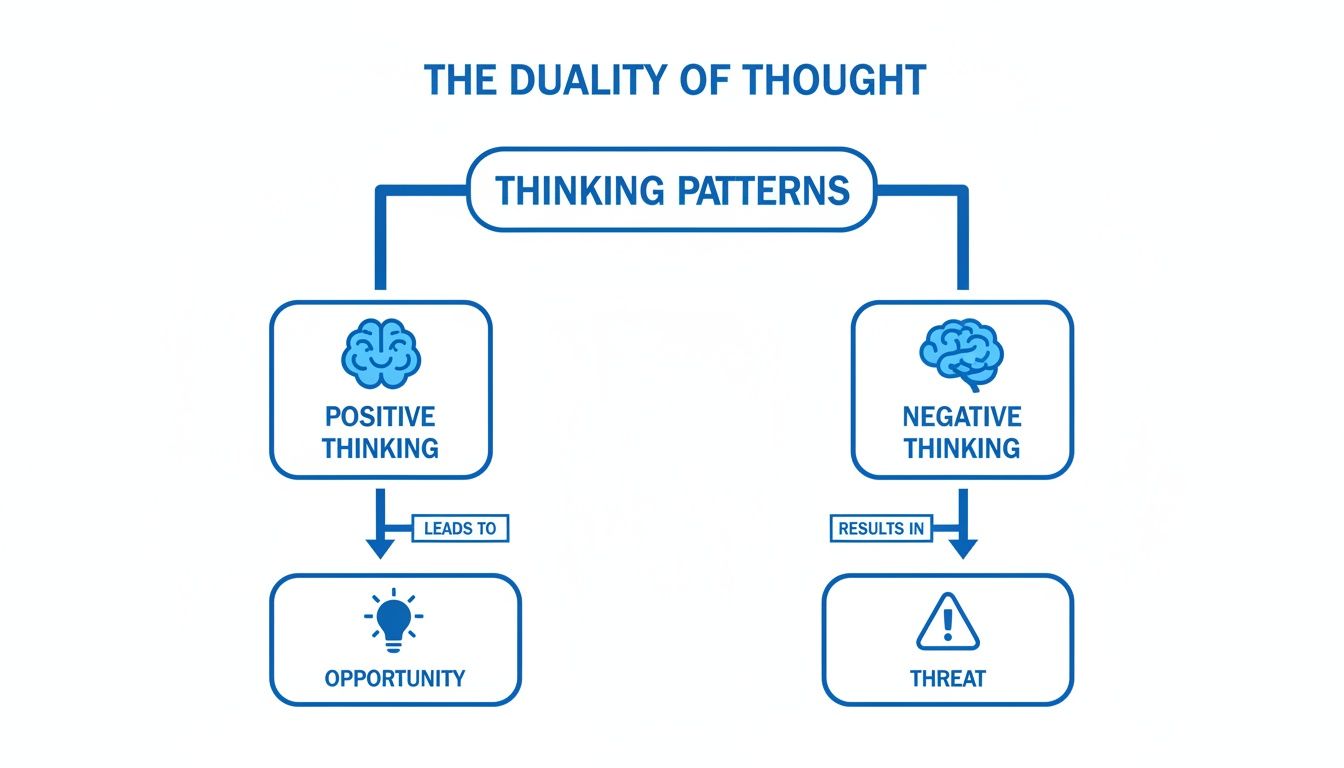
The key is that both pathways are always there. It’s our repeated thoughts that decide which one becomes our go-to response.
How Thought Loops Strengthen Over Time
Every time you repeat a thought, you reinforce the neural connections in your brain, a process known as neuroplasticity. This is why negative thinking can feel so persistent—it’s a habit literally wired into your brain chemistry.
This cycle shows the powerful link between our thoughts, feelings, and actions. The good news is that this same process can be used to build healthier mental habits. The science of neuroplasticity shows we have the power to consciously build new, more supportive mental pathways.
Shifting From Judgement to Curiosity
A crucial step is to approach your thoughts with curiosity, not judgement. Instead of criticising yourself for having a negative thought, simply notice it. Gently ask yourself, "Is this thought helpful?" or "Is there another way to see this?"
This shift in perspective is the foundation of mental resilience, moving you from a passive recipient of your thoughts to an active participant in your own well-being. Professional support through therapy or counselling can provide a structured toolkit to identify these patterns and build healthier ones.
How Your Thoughts Genuinely Impact Your Health

It's easy to see our mindset as separate from our bodies, but our thoughts send powerful signals that shape our physical and mental health. When your mind is frequently focused on stress or fear, your body responds as if it's under threat.
This state of high alert, if sustained, can wear you down, showing how deeply our mental and physical well-being are connected. Understanding this link is key to managing challenges like stress, anxiety, and burnout.
The Physical Toll of Negative Thinking
When you're caught in a negative thinking cycle, your body’s stress response is constantly activated, releasing hormones like cortisol. While helpful in short bursts, a continuous flow can be harmful to your health.
This chronic stress can lead to various physical and mental challenges, including poor sleep, a weaker immune system, and increased blood pressure. It creates a fertile ground for anxiety and can be a major contributor to burnout or, in some cases, depression.
Here’s how chronic negative thinking often shows up:
- Increased Physical Tension: Persistent muscle aches, headaches, or stomach issues from a body locked in "fight-or-flight" mode.
- Weakened Immune Response: Studies show chronic stress can make you more susceptible to common illnesses.
- Strained Relationships: A negative outlook can make it hard to connect with others, leading to social withdrawal and isolation.
- Disrupted Sleep: Worrying thoughts often make it difficult to rest, leading to fatigue that worsens your mood and ability to cope.
It is also important to acknowledge that certain life stages, such as new motherhood, come with unique pressures. To learn more, you can read about the state of maternal mental health on policycentermmh.org. This highlights the need for compassionate, targeted support.
The Power of a Balanced Mindset
Cultivating a more balanced mindset offers incredible health benefits. This is not about pretending difficulties don't exist, but about building the resilience to handle them more effectively.
A more positive outlook helps quiet the body's stress response, allowing it to rest and repair. This shift can improve heart health, strengthen your immune system, and lead to better sleep. Mentally, it fosters compassion, sharpens problem-solving skills, and helps build a stronger sense of self-worth.
"The greatest weapon against stress is our ability to choose one thought over another." – William James
Learning to manage the pressures of modern life, from workplace stress to family expectations, is a cornerstone of good mental health. Professional guidance through counselling or therapy can be an excellent way to build these crucial skills.
Building Resilience, One Thought at a Time
The mind-body connection is a two-way street. Just as negative thoughts can harm your health, balanced thinking can actively nurture it. The goal isn't to eliminate every negative thought—an impossible aim—but to find a better balance.
By learning to gently challenge unhelpful thoughts, you build both mental and physical resilience. This supportive mindset doesn't promise a life free of challenges, but it does equip you with the inner resources to face them with more strength and clarity.
Practical Strategies to Build a Balanced Mindset
Knowing how your thoughts shape your world is one thing; putting that knowledge into practice is where real change happens. This section offers actionable, evidence-based techniques you can start using today.
Think of these strategies as skills you develop over time. Just like building physical muscle, strengthening your mental resilience takes consistent, gentle effort. The goal is to build self-awareness and find a more balanced, compassionate relationship with your own mind.
Catch and Challenge Your Thoughts
A powerful tool from Cognitive Behavioural Therapy (CBT) is learning to spot and question your unhelpful thoughts. By doing so, you can change how you feel and react. This is a core technique used in modern therapy.
A great way to start is by keeping a simple "thought record" to see the links between situations, thoughts, and feelings. To actively reshape these patterns, you can utilize a Cognitive Therapy Thought Record, which walks you through the process. This practice helps you see that thoughts are just mental events, not facts.
Practise Mindful Observation
Mindfulness is the art of paying attention to the present moment without judgement. It's a fantastic tool for managing both positive and negative thinking because it creates space between you and your thoughts.
Instead of getting swept away by worry about workplace stress, you can learn to simply observe it like a cloud passing in the sky. This simple act slowly trains your brain to be less reactive and helps you stay centred.
Here’s a simple mindfulness exercise you can try right now:
- Find a comfortable spot to sit, and gently close your eyes.
- Turn your attention to your breath, noticing the sensation of air moving in and out.
- When your mind wanders, gently and kindly guide your focus back to your breath.
- Continue for just two or three minutes. The aim is not to empty your mind, but to practice returning to the present.
Cultivate Gratitude and Positive Focus
Our brains are naturally wired to spot threats. To create a more balanced outlook, we need to consciously train our attention to also notice what's going right. A simple gratitude practice can be a profound way to do this.
This isn't about ignoring difficulties; it's about ensuring the good things in your life get attention too. This small shift has been shown to improve mood, happiness, and overall well-being.
A simple daily practice, like noting three good things that happened, can slowly retrain your brain to scan for the positive, building a foundation of resilience and compassion for yourself and others.
At the end of your day, take a minute to reflect on these prompts:
- Three Good Things: What are three things that went well today? It could be a warm cup of chai, a kind word, or finishing a task.
- Your Role in It: For one of those good things, consider what you did to help make it happen. This helps you recognise your own agency.
This exercise isn't about finding life-changing events; it's about appreciating ordinary moments. Over time, this small shift can have a massive impact on your emotional well-being. Professional counselling can also provide a space to build these and other coping skills.
Knowing When to Seek Professional Support
Self-help strategies are wonderful tools, but it's equally important to recognise when you might need professional support. Reaching out for therapy or counselling is not a sign of failure; it is an act of self-respect and a courageous step toward feeling better.
Sometimes, persistent negative thinking is more than a habit and may be a symptom of deeper challenges like anxiety or depression. If your thoughts feel overwhelming and make it hard to manage your day, it may be time to talk with a professional.
Recognising the Signs
Knowing what to look for is the first step. While everyone's experience is unique, some common signs suggest that professional support could be beneficial.
See if any of the following feel familiar:
- A Persistent Low Mood: You feel sad, empty, or hopeless most days, and the feeling doesn't lift.
- Loss of Interest or Pleasure: Activities you once enjoyed now feel like a chore or bring you no joy.
- Difficulty Managing Daily Life: Simple tasks at work or home feel overwhelming, adding to workplace stress.
- Changes in Sleep or Appetite: You're sleeping much more or less than usual, or your eating habits have changed significantly.
- Feeling Overwhelmed or Constantly on Edge: A constant feeling of worry or panic makes it almost impossible to relax.
If these points resonate, exploring therapy or counselling can provide a safe space to understand what you're going through and find a way forward.
How Professional Support Can Help
Working with a mental health professional offers a supportive space for you to heal and grow. A therapist can help you untangle thought patterns, develop effective coping strategies, and build lasting resilience.
Important Note: Please remember that any online assessments are for informational purposes only. They are not a substitute for a formal diagnosis from a qualified healthcare professional.
A therapist can help you get to the root of your thinking habits and introduce you to proven techniques tailored to your needs. Platforms like DeTalks are designed to connect you with qualified professionals and offer assessments that can bring clarity to your experience. Taking that first step is a powerful move toward reclaiming your well-being.
Your Path Forward to a Resilient Mind

Exploring the balance of positive and negative thinking is a personal journey, not a destination. The goal is not to eliminate every negative thought, but to build self-awareness and learn to work with your mind.
Think of your thought patterns as habits you can gently reshape with patience and consistent effort. You have the power to cultivate a mindset that truly supports your well-being and helps you navigate whatever comes your way.
Building Resilience with Small Steps
Lasting change is the result of small, conscious choices that add up over time. Trying to transform your mindset overnight can lead to burnout. Focusing on one small practice at a time makes growth feel achievable and sustainable.
Every time you gently question a negative thought or practice mindfulness, you strengthen a new mental path. This is how you build resilience.
Remember, progress isn't a straight line. You'll have days where negative thoughts feel overwhelming, and that is completely okay. Real strength is found in your ability to gently guide yourself back to your practices, without any harsh judgement.
Key Supportive Takeaways
As you continue on this path, hold onto these gentle reminders of your ability to grow. They are not promises of a cure, but supportive ideas for your journey.
- Awareness is your greatest tool. Simply noticing your thoughts without criticism is a powerful first step.
- Self-compassion is non-negotiable. Treat yourself with the same kindness you would offer a friend, especially when dealing with workplace stress or anxiety.
- Consistency trumps intensity. A few minutes of daily practice will do more than a long, infrequent session.
- Professional support is a sign of strength. If you feel stuck, reaching out for therapy or counselling is a brave, proactive step in caring for yourself.
Ultimately, this journey is about empowering yourself. By understanding your own mind and committing to small, kind actions, you can cultivate a more balanced and resilient inner world.
Frequently Asked Questions
As you explore your own thought patterns, it's natural to have questions. Here are answers to a few common queries about the journey to a more balanced mindset.
Is It Bad to Have Negative Thoughts?
Not at all. Having negative thoughts is a normal part of being human. Think of them as your brain's alarm system, flagging potential problems. They aren't a sign of personal failure.
The goal isn't to silence these thoughts, but to learn how to respond with perspective rather than reacting automatically. This skill is a cornerstone of emotional well-being.
How Long Does It Take to Change My Thinking Patterns?
This is a journey, not a race. Changing deeply ingrained thinking habits takes time, consistency, and patience. Some people notice small shifts in their outlook within a few weeks of practice.
For most, building lasting resilience is an ongoing process. There is no finish line. The key is to acknowledge small wins and be kind to yourself during setbacks.
Can Positive Thinking Cure Anxiety or Depression?
While shifting your mindset is a powerful tool for improving well-being, it is not a standalone cure for clinical anxiety or depression. These are complex conditions that typically require a structured, professional approach.
Positive thinking techniques can be a helpful part of a recovery plan, but they should complement, not replace, professional treatment. Reaching out for therapy or counselling is a critical step toward genuine, long-term healing.
Ready to take the next step on your path to mental well-being? At DeTalks, we connect you with qualified therapists and provide scientifically validated assessments to help you understand your thoughts and feelings better. Find the right support for your journey at https://detalks.com.