
A teenager in Pune sits down to finish homework, but the page keeps losing their attention. Before dinner, they wash their hands again and again because a worrying thought says they haven't cleaned them properly. For the family, both patterns can be confusing and tiring, especially when it's unclear what's driving each one.
ADHD and OCD can affect the same day in very different ways. ADHD can make it hard to direct attention, manage activity or pause before acting. OCD involves unwanted, distressing thoughts or urges and repeated actions or mental rituals that may ease distress briefly, but don't resolve it for long. When both patterns appear, understanding the reason behind each behaviour matters more than judging it from the outside.
Why ADHD and OCD Often Appear Together
ADHD is a pattern of attention, activity and impulse-control difficulties that can get in the way of everyday tasks, such as following instructions, finishing homework or waiting for a turn. OCD involves intrusive thoughts, fears or urges that feel hard to dismiss, alongside compulsions such as repeated washing, checking or counting. Someone might look distracted because of ADHD, because an OCD thought has taken over their attention, or because both are happening.
In the Pune example, a student may lose track of a maths problem because nearby sounds keep pulling their attention away. The handwashing may have a different purpose: trying to reduce distress about contamination or uncertainty. The behaviour alone doesn't explain the cause, so it helps to ask what the person is experiencing before and during it.
A 2025 systematic review and meta-analysis of Indian ADHD studies identified 19 studies and estimated a pooled ADHD prevalence of 6.32% among children aged 4–19. The estimate was higher in school-based studies, at 7.51%, than in community-based studies, at 1.86%. Those figures describe different study settings, not a child's chance of having ADHD based on one screening result.
Why estimates differ
The gap between school and community estimates shows why prevalence figures need context. Researchers may use different screening instruments or diagnostic thresholds, and the people included may come from schools, communities, hospitals or specialist clinics. A hospital or clinic sample may include more people who were referred for assessment, so it can't automatically represent the wider population.
It's also important to separate symptoms from diagnosis. A screening questionnaire can help identify patterns worth discussing, but a qualified clinician must consider a person's history, the duration of difficulties and their impact across daily life. If you're looking for a clear introduction to the practical and educational rights questions that can arise, ADHD rights explained by Queens Online School may help you prepare questions for a school or professional.
Co-occurrence is important enough to ask about, but a screening result isn't a label. Treat it as a prompt for professional evaluation, not proof that either condition is present.
Telling ADHD, OCD and Overlapping Symptoms Apart
When two behaviours look alike, focus on the motive behind the behaviour, not only what someone does. The table offers common patterns to discuss, not a way to diagnose yourself or another person.
| Symptom area | ADHD pattern | OCD pattern | Where they overlap |
|---|---|---|---|
| Attention | Drifts off, loses track of tasks, forgets steps | Attention is pulled by intrusive thoughts; it's hard to focus while distressed | Both can cause poor concentration in class or at work |
| Repetition | Repeats actions out of restlessness or impulse | Repeats checking, counting or reassurance seeking to ease distress | Repeated behaviour looks similar; the motive differs |
| Thoughts | Mind races, with few unwanted or sticky thoughts | Unwanted, distressing thoughts the person tries to suppress or neutralise | Mental overload can disrupt focus in both |
| Order and symmetry | Disorganised, often misplaces items | Needs things to feel “just right”; has a strong urge for symmetry | Both can affect organisation at school or work |
| Impulsivity | Acts before thinking, interrupts others | Usually deliberate, slow rituals rather than impulsive acts | There's little direct overlap; assess carefully for both |
| Sleep | Trouble settling, restless at night | Night-time worry or rituals delay sleep | Poor sleep can worsen both conditions |
| Worry | Worry tied to missed tasks or deadlines | Worry tied to harm, contamination or morality | Anxiety can appear in both and needs attention |
Repetition is a common source of confusion. A person with ADHD might repeat a step because they got distracted, forgot whether they did it or are restless; a person with OCD might repeat it to ease a specific fear or feel certain. The outward action may look alike, but the reason and the distress around stopping can be different.
Thoughts and attention also need context. A fast-moving mind or difficulty staying on a task can occur with ADHD, while an intrusive thought or a checking ritual can occupy attention in OCD. For more language around this distinction, Jan Kutschera's guide to ADHD thought loops can offer a starting point for reflecting on what a thought feels like, without replacing an assessment.
What the overlap evidence tells us
In a Kerala school-based study of 7,380 adolescents aged 12–18, 0.8% met criteria for OCD. Among adolescents with OCD, ADHD symptoms or diagnosis were reported in 28%, compared with 4% among peers without OCD, a sevenfold difference. Because the study was cross-sectional, it shows an association, not that one condition causes the other.
When symptoms are hard to sort out, make a short note of what the person says is driving the behaviour, when it happens, how long it has lasted and what it interrupts. A clinician can use those details to explore the pattern across home, school and work.
Why Diagnosis Is Hard and What Clinicians Check
Attention problems don't point to one condition on their own. Anxiety, depression, poor sleep, trauma and some medical causes can also affect concentration, energy or daily functioning, and a person can have more than one difficulty at once.
A clinician usually asks when the symptoms began, how long they've been present, where they show up and what they make harder. With a child, information from parents or teachers can help show whether a pattern appears in more than one setting. The clinician may also consider sleep, medical factors, previous treatment and whether attention is being pulled away by intrusive thoughts or rituals.
That distinction matters because someone who can't focus during a distressing obsession may look inattentive, even if their difficulties don't fit ADHD. Conversely, someone may have long-standing attention and organisation challenges alongside OCD symptoms. Looking only at the most visible behaviour can miss one part of the picture.
What Indian guidance and research add
Three Indian paediatric studies have reported ADHD rates of 3% to 18% among young people with OCD, while international juvenile-OCD studies have reported rates of 26% to 57%, according to an Indian review of OCD and ADHD comorbidity. The estimates differ by age, referral setting and assessment methods, among other factors. They also depend on whether clinicians can distinguish inattention related to obsessions from primary ADHD-related difficulties.
Indian Psychiatric Society guidance recommends a thorough assessment of OCD symptoms, insight, co-occurring conditions and prior treatment. For children, ADHD should be assessed explicitly. The purpose isn't to collect labels, but to understand which experiences are present and what support may help.
| Route | What it can show | What it cannot show |
|---|---|---|
| Online self-screen | Whether attention or obsessive symptoms are worth exploring | Whether ADHD or OCD is present |
| DeTalks informational assessment | Patterns to bring into a counselling or therapy conversation | A diagnosis of ADHD, OCD or anxiety |
| School or workplace screening | Who may need a fuller evaluation | The cause of symptoms or the full impairment picture |
| Clinician evaluation | Differential diagnosis across ADHD, OCD, anxiety, depression and sleep | A reliable conclusion without a full interview |
| Medical or sleep check | Thyroid problems, sleep apnoea or substance effects that can mimic symptoms | A psychiatric diagnosis on its own |
Assessments are informational, not diagnostic. A DeTalks assessment can help organise questions for a counselling or therapy conversation, but it can't establish a diagnosis. If symptoms interfere with school, work, relationships, sleep or daily routines, bring the results and your notes to a qualified clinician.
Evidence-Based Treatments for Each Condition
Treatment depends on what a person is experiencing, how much it affects daily life and what other needs are present. A plan for OCD may look different from a plan for ADHD, even when both conditions occur together.
OCD treatment
Exposure and response prevention (ERP) is a form of cognitive behavioural therapy used to help people face a feared thought or situation without carrying out the usual compulsion. A therapist works with the person to develop a manageable plan, rather than telling them to stop rituals abruptly or pushing them into overwhelming situations.
A psychiatrist may also recommend an SSRI, such as sertraline or fluoxetine, depending on the person's situation. Medication decisions and follow-up belong with a qualified prescriber. A person shouldn't start, stop or change medication without discussing it with that professional.
ADHD support
For children, support may include behavioural parent training and adjustments at school. Extra time, a seat with fewer distractions and written instructions can make tasks easier to follow without changing what the child is expected to learn.
For some people, medication is part of care. Options can include stimulants such as methylphenidate, or non-stimulants such as atomoxetine or guanfacine. A psychiatrist or paediatrician should make that decision and monitor the response, taking sleep, tic history and other conditions into account.
Adults may benefit from CBT-based coaching, organisational routines and workplace adjustments. A written task list, clear priorities and a predictable start to the workday can help turn a large task into steps that are easier to begin.
Supportive care works alongside treatment: It can make daily life more manageable, but it doesn't replace clinical care when that's needed.
- Family psychoeducation: Learn how ADHD and OCD may affect behaviour so support feels less like blame.
- Counselling for stress or low mood: Make space to talk about anxiety, depression or burnout alongside assessment and treatment.
- Mindfulness and self-compassion: Practise noticing distress without judging yourself; use these as additions, not substitutes for recommended care.
Treatment responses differ from person to person. Regular follow-up gives the patient and clinician a chance to review what's helping and adjust the plan.
Choosing What to Treat First When Both Co-occur
Generic advice often says to use ERP or medication and behavioural support, without explaining how to choose an order when ADHD and OCD affect each other. In practice, untreated ADHD can make it harder to complete ERP homework, while untreated OCD can make focus-enhancing medication harder to use well if distress and rituals continue to dominate the day.
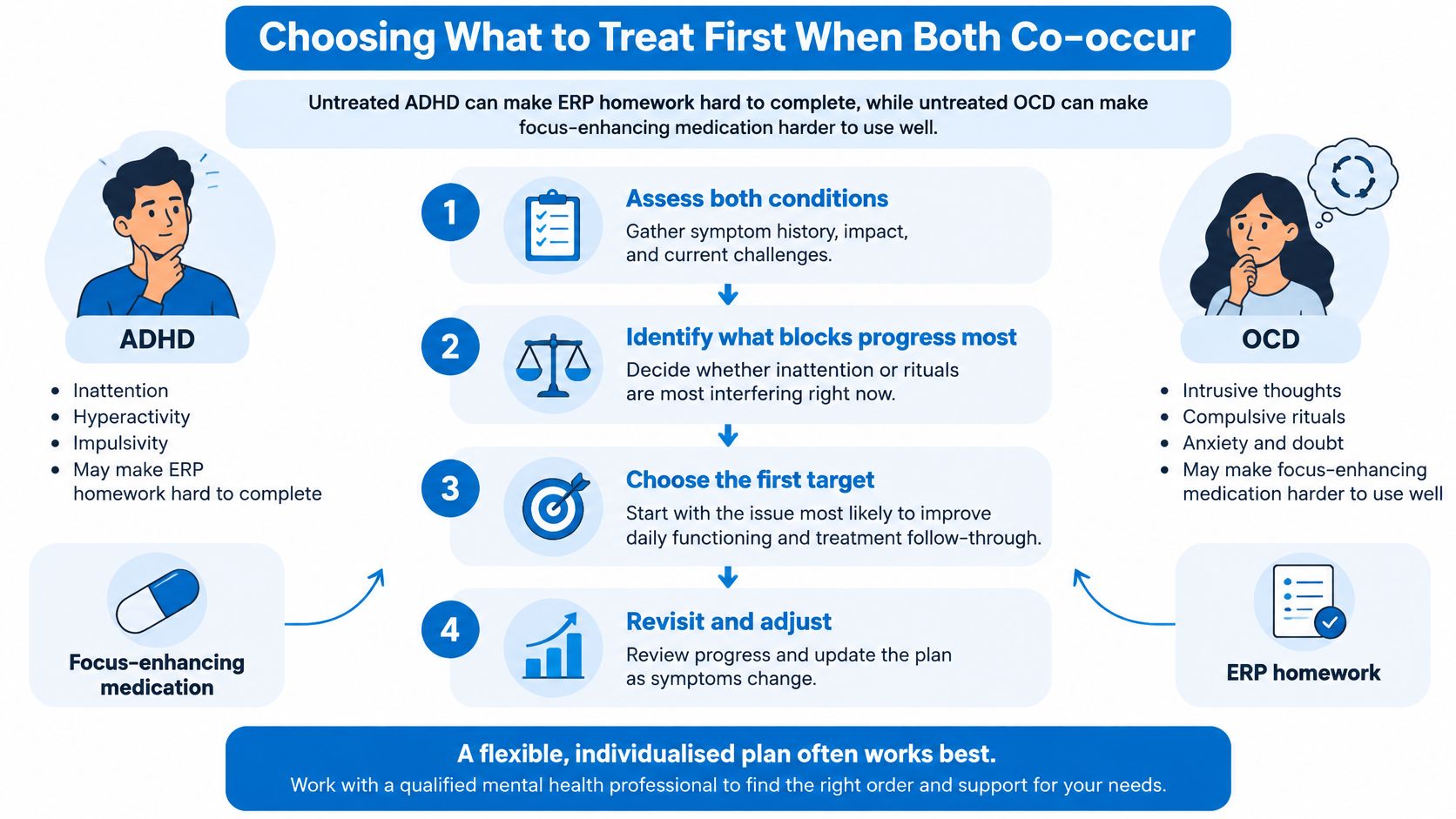
The first priority is safety. After that, the clinician and patient can consider which symptoms are causing the most disruption, whether sleep has become difficult, and whether daily functioning is at risk.
| Situation | Usually prioritise | Why it comes first |
|---|---|---|
| Suicidal thoughts, self-harm or safety concerns | Urgent psychiatric assessment and a safety plan | Safety outranks every other goal |
| Compulsions take several hours a day | ERP-based OCD care early, with clinician oversight | Rituals block study, work and sleep |
| Severe inattention failing school or work, OCD stable | ADHD assessment and treatment first | Untreated ADHD can undermine ERP homework |
| Sleep disrupted for weeks | Address sleep alongside either treatment | Poor sleep can worsen focus and anxiety |
| Both moderate but impairing daily life | Coordinated parallel care with one lead clinician | Monitor anxiety and compulsions once ADHD treatment starts |
A New Delhi observational study of 92 people diagnosed with OCD, conducted from February 2024 to June 2025, found an association between ADHD symptom severity and OCD severity (ρ = 0.456, p < 0.001). ADHD symptoms also showed predictive value for severe OCD (AUC = 0.738). The sample was small and predominantly urban, so the findings don't establish which treatment should come first or whether one condition drives the other.
Make the order fit the person
Indian research doesn't yet offer comparative trials that establish one treatment sequence for everyone. A practical plan starts with a coordinated assessment, then reviews whether symptoms are changing and whether the next step is helping the person function.
If ADHD treatment begins, the clinician can monitor anxiety and compulsions as part of follow-up. Family psychoeducation can help people understand why treatment may need adjustment, while a clear escalation plan matters if suicidal thinking appears. Access to specialists may be limited, and family concerns about psychiatric medication or school pressure can affect what feels possible, so care should include these realities rather than assume they don't exist.
Real-World Impact at School, Work and Home
A student may miss homework because they can't stay with the task, then lose more time worrying about an imperfect answer. A professional may understand a meeting but keep checking the follow-up email for fear of making a mistake. At home, a parent's difficulty keeping routines organised can clash with another family member's need for order, adding tension to an already busy day.
Sustained overload may intensify executive-function challenges, worry and emotional exhaustion. But stress doesn't prove that someone has ADHD or OCD, and these conditions don't explain every difficult week. A clinician needs to consider the wider pattern, including sleep, health, mood and the person's circumstances.
A 2024 study of 282 bank employees in Kollam, Kerala, found moderate-to-high burnout in 82.2% of participants and mild-to-extremely severe anxiety in 47.9%. Employees working longer daily hours had higher odds of burnout and stress, with adjusted odds ratios of 2.391 for burnout and 3.37 for stress. The study didn't diagnose ADHD or OCD, so these findings are workplace context, not evidence that either condition caused the distress.
Practical support at home and work
Helpful changes don't need to be complicated. At work, a manager might agree on realistic deadlines, share instructions in writing and discuss workload respectfully. At school or home, predictable routines, planned breaks and one clear next step can reduce the effort of getting started.
Counselling or therapy may help someone separate workplace stress from symptoms and decide what support to request. Rest, workload changes and well-being practices can sit alongside appropriate clinical care, not replace it.
Positive psychology can also make room for strengths without pretending distress isn't real. Indian studies have examined links between nature, resilience and life satisfaction, and a study of women recovering from a suicide attempt found positive psychotherapy was associated with less depression, greater resilience and improved quality of life. Those findings don't mean positive psychology treats ADHD or OCD; they point to possible strengths-based goals, such as self-compassion, supportive relationships and meaningful routines, alongside care when needed.
Your Next Steps for Getting Support
A short record can make a difficult conversation with a clinician more specific. Note when a difficulty occurs, how long it lasts and what it interrupts. Include both attention challenges and repeated thoughts or actions, even if you aren't sure what they mean.
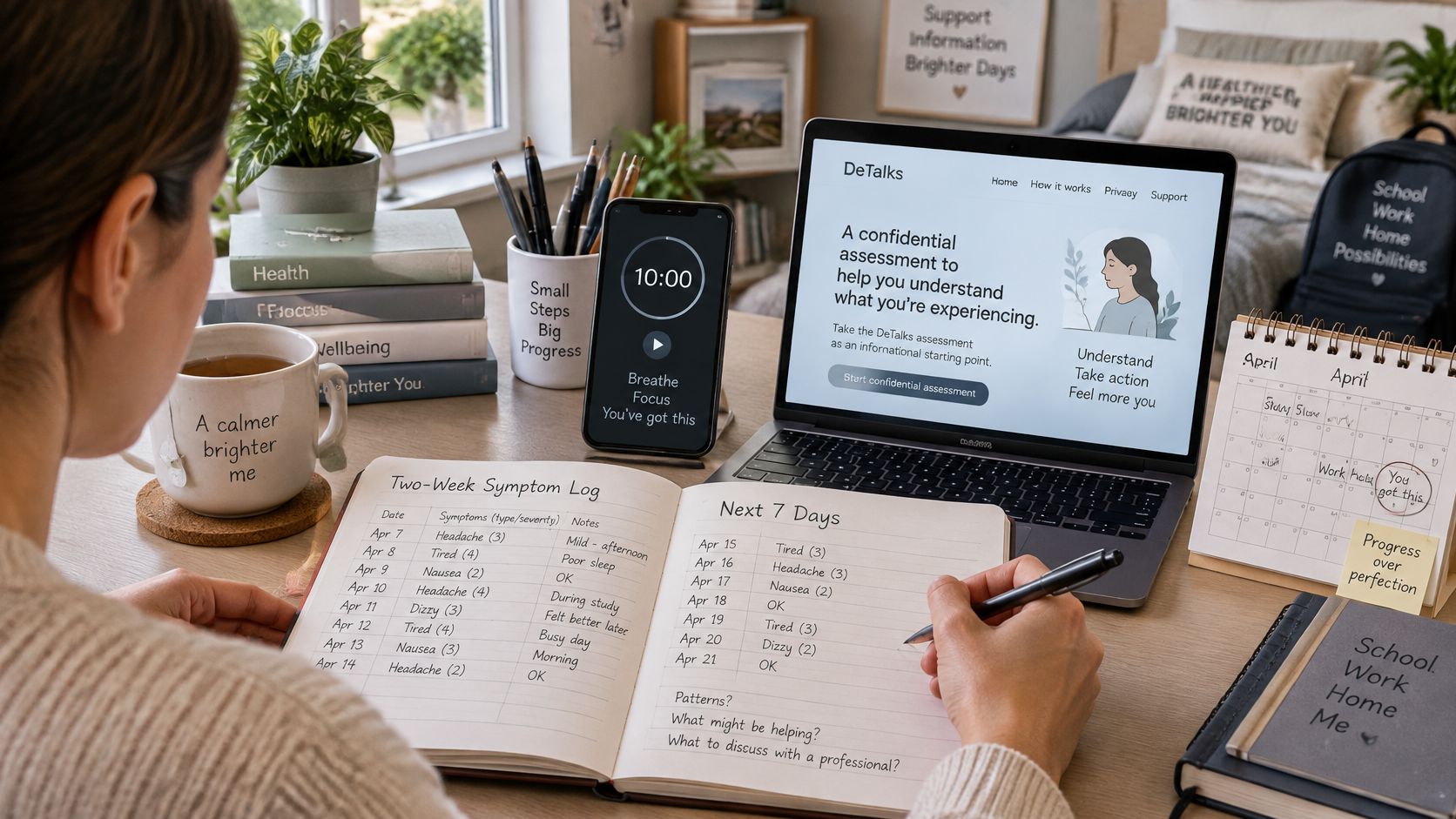
- Keep a simple symptom log. Track what happens at school, work or home, and what the behaviour or thought interrupts.
- Use screening as a starting point. A confidential DeTalks assessment can help you organise concerns, but it's informational, not diagnostic.
- Book a professional evaluation. Ask a psychiatrist or clinical psychologist to assess both ADHD and OCD, especially for a child or teenager.
- Ask about support while you wait. Counselling or therapy may help with anxiety, low mood or stress during the evaluation process.
- Request practical adjustments. Consider extra time, written instructions or flexible deadlines at school or work. For families learning at home, ADHD-friendly homeschool lesson plans may offer ideas for structuring learning in manageable steps.
- Protect everyday well-being. Keep a steady sleep routine where possible, make room for rest and small pleasures, and stay connected to people who support you.
In India, a starting point can be a government district mental health programme clinic, a psychiatry department at a government medical college or a teaching hospital. Ask whether a child psychiatrist or clinical psychologist is available; if cost is a concern, ask private counselling providers about sliding-fee options. If suicidal thoughts appear, contact emergency services or Tele-MANAS on 14416 without delay.
For a clearer record, you can use this video as a prompt for what to note and discuss:
Assessments can help you prepare, but they can't make a diagnosis. Persistent symptoms deserve professional care, and self-compassion, gratitude, supportive relationships and achievable routines can help build resilience alongside treatment.
DeTalks offers informational mental-health assessments and a directory of psychologists, therapists and counsellors, including support pathways relevant to ADHD and OCD. If you're ready to discuss overlapping symptoms or explore well-being support, visit DeTalks to find a next step that fits your needs.