Tag: online counselling

  • Your Guide to Mental Health Consultation: A First Step Towards Well-being

    Your Guide to Mental Health Consultation: A First Step Towards Well-being

    A mental health consultation is a supportive conversation designed to help you understand your thoughts and feelings. Taking this step is a sign of strength, creating a safe space to explore your well-being with a professional. It's a confidential chat focused on your unique journey.

    This first meeting is a judgement-free zone. A trained professional listens to your concerns, challenges, and goals, helping you find clarity and a path forward.

    What a Mental Health Consultation Really Is

    Silhouettes of two individuals, possibly therapist and client, in a bright, sunlit room.

    A mental health consultation is an empowering step toward personal growth and a healthier mind. It's dedicated time to speak openly with an expert about anything on your mind, from everyday stress to deeper feelings of sadness or anxiety.

    This initial conversation is not about diagnosis. Its purpose is to bring clarity, making you feel heard and understood in a supportive setting. The professional is there to listen, ask thoughtful questions, and help you map out what comes next.

    More Than Just Talking About Problems

    While addressing challenges like workplace stress is important, a consultation also helps you discover your strengths. It's not just about managing difficulties; it’s about building skills for a more fulfilling life. It’s a proactive way to invest in your long-term well-being.

    Think of it as exploring ways to:

    • Build Resilience: Learn to bounce back from life’s setbacks with greater ease.
    • Cultivate Compassion: Develop more kindness toward yourself and others.
    • Find Happiness: Discover what brings you genuine joy and a sense of purpose.

    This balanced approach shows that therapy and counselling are for everyone. They are tools to help you not only overcome challenges but also to truly thrive.

    Understanding the Indian Context

    In India, conversations about mental health can feel difficult due to social stigma. Many worry about judgement from family, friends, or colleagues. A mental health consultation should be seen as a proactive investment in your well-being, much like a regular physical check-up.

    This hesitation has led to a significant treatment gap. A national survey revealed that a large majority of people with mental health conditions in India do not receive the care they need, often due to cultural beliefs that misunderstand issues like depression or anxiety. You can learn more about these important mental health findings in India.

    A mental health consultation is simply a conversation. It's a safe space where your feelings are validated and your concerns are met with empathy and professional guidance, helping you build resilience and find clarity.

    By choosing to have a consultation, you are taking a courageous step for yourself. It is an act of strength that can lead to powerful personal insights and positive change.

    Recognising the Signs: When Is It Time to Talk to Someone?

    Knowing when to seek help isn't always obvious. The signs can be subtle—a quiet feeling of unease rather than a loud alarm. Learning to recognise these whispers is the first step toward feeling better.

    Sometimes, the clues are emotional. It might be a persistent sadness you can't shake or a constant feeling of being overwhelmed. For others, it shows up as losing interest in hobbies that once brought joy.

    At other times, the signs are in your actions. Your sleep patterns might be off, or you may find yourself withdrawing from friends and family. Choosing to be alone can feel less exhausting than pretending everything is okay.

    Listening to What Your Mind and Body Are Telling You

    Mental strain is also common, especially in high-pressure work and academic environments in India and globally. You might find it hard to concentrate, with your mind constantly wandering. It can also feel like you're stuck in a loop of negative thoughts, affecting your self-esteem.

    These experiences are human. They are not signs of weakness but signals that you're carrying too much.

    Consider these examples where a supportive conversation can help:

    • Workplace Stress: Constant pressure from deadlines or a difficult work environment can lead to burnout.
    • Exam Pressure: The overwhelming stress of academic expectations can trigger intense anxiety.
    • Relationship Difficulties: Ongoing conflict or emotional distance can take a huge toll on your well-being.
    • Major Life Changes: Events like moving, starting a new job, or losing someone can leave you feeling adrift.

    A mental health consultation isn't just for a crisis. It’s a proactive step for anyone who feels stuck, is navigating a tough time, or simply wants to build more resilience for the future.

    It’s Okay to Not Be Okay

    Acknowledging these feelings is an act of strength. Recent studies show a rise in mental health challenges, with a high percentage of people in India reporting experiences with stress and anxiety. This makes accessible support more important than ever. You can read more about these important findings on mental health trends.

    It's also important to remember that distress looks different for everyone. For example, understanding the hidden signs of depression in men can help spot when someone needs support, even if they aren't showing it in typical ways.

    A mental health consultation offers a safe, confidential space to explore what you're feeling without judgement. Reaching out is a healthy, responsible choice. The goal is supportive guidance to help you build resilience and find a clearer way forward.

    Navigating the Different Types of Consultations

    Not all mental health consultations are the same, and knowing the differences can make the process feel less intimidating. Understanding the purpose of each type of session helps you feel more prepared and confident. Whether you're just starting out or facing a specific challenge, there's a conversation designed to help.

    This simple guide can help you decide when it might be the right time to reach out and talk to someone.

    A decision tree flowchart for mental health, guiding whether to seek support when feeling overwhelmed.

    The key takeaway here is that you don't need to be in a crisis to take action. Simply feeling overwhelmed is more than enough reason to seek a supportive conversation.

    The Initial Intake Session

    Your first meeting is often called an initial intake session. Think of it as a mutual introduction where a professional gets to know you and listens to what brought you to them. It is also your chance to get a feel for the therapist and their approach.

    During this session, you’ll likely discuss your personal history and current struggles, like workplace stress or feelings of anxiety. It's a safe space to share your story and what you hope to achieve. The goal is to gather information to build a supportive plan together.

    Ongoing Therapy or Counselling

    After the first meeting, you may move into ongoing therapy or counselling sessions. These are regular appointments where deeper work happens. Here, you and your therapist explore patterns, develop new coping strategies, and work toward your well-being goals.

    These sessions are dedicated time to build resilience, process emotions, and make lasting positive changes. You might focus on managing symptoms of depression, improving relationships, or building a stronger sense of self. Consistency is key to building the trust needed for progress.

    Understanding Assessments

    A professional might suggest an assessment at some point. It’s important to see these as informational tools, not a formal diagnosis. They use structured questions to provide insights into patterns of thought or behavior that might be causing difficulty.

    An assessment is like a map highlighting the unique terrain of your inner world. It doesn’t define who you are, but it can offer valuable direction on the best route forward for your mental well-being.

    An assessment can help clarify why you're struggling with focus or worry. This information helps your therapist tailor their approach specifically to you. Remember, these tools are just one part of understanding your unique human experience.

    Comparing Consultation Types

    To help you visualise which path might be right for you, here’s a quick comparison of the most common types of consultations.

    Consultation Type Primary Goal Who It's For
    Initial Intake Session To gather information, understand your needs, and establish a therapeutic relationship. Anyone new to therapy or starting with a new provider.
    Ongoing Therapy/Counselling To work through challenges, develop coping skills, and achieve long-term well-being goals. Individuals seeking consistent support for personal growth or managing mental health conditions.
    Diagnostic Assessment To gain clarity on specific symptoms or patterns and inform a precise treatment plan. People who need a clearer understanding of their mental health challenges (e.g., ADHD, anxiety disorders).
    Medication Review To evaluate, prescribe, and manage psychiatric medications as part of a treatment plan. Individuals considering or currently using medication for mental health.
    Crisis Assessment To provide immediate support and ensure safety during an acute mental health crisis. Anyone experiencing severe distress, suicidal thoughts, or a risk of harm to themselves or others.

    Each consultation type is a tool in the toolbox, designed for a specific purpose. Knowing which one you need is the first step toward getting the right kind of help.

    Other Important Consultations

    Beyond these common types, a few other specialised consultations are worth knowing about. Each serves a distinct purpose in a holistic approach to mental well-being.

    • Medication Review: If medication is being considered, a psychiatrist can assess if it's a helpful part of your plan. They can discuss options and monitor its effects to ensure it’s working for you.

    • Crisis Assessment: This is for urgent situations where someone needs immediate support to stay safe. It’s a focused intervention to stabilise a crisis and connect the person with the right level of care.

    Understanding these options empowers you to make informed decisions. You might also want to explore the benefits of art therapy as a creative path to wellness. The most important thing is that support is available, no matter what you're facing.

    How to Prepare for Your First Therapy Session

    A cozy, sunlit workspace with a laptop, headphones, steaming mug, and notebook by a window.

    Feeling nervous before your first mental health consultation is completely normal. It takes courage to open up, but a little preparation can make the experience feel more comfortable and productive.

    This is your time, and there's no right or wrong thing to say. The goal is to start a conversation focused on your well-being. Your therapist is a trained guide, there to listen with compassion.

    Thinking Ahead: What to Reflect On

    You don't need a prepared speech, but taking a moment to reflect can help the conversation flow. This can make you feel more grounded, especially if you're nervous.

    Here are a few gentle prompts to get you started:

    • What’s on your mind? Think about what prompted you to seek support now. It could be a specific issue like workplace stress, a feeling of anxiety, or a general sense that something is off.
    • How have you been feeling? Check in with your emotions. Have you been more irritable, sad, or overwhelmed? No feeling is too small to mention.
    • What are your hopes? Consider what you'd like to change. Perhaps you want to build resilience, improve a relationship, or simply feel more at peace.

    Jotting down a few notes can be helpful but isn't necessary. The most important preparation is giving yourself permission to be honest.

    Setting Up Your Space for Success

    For an online session, your environment makes a big difference. Creating a comfortable, private space is a practical way to prepare for your first therapy session.

    Find a quiet room where you won’t be disturbed, and let family or flatmates know you need uninterrupted time. Using headphones can enhance privacy and help you focus on the conversation.

    Your first therapy session is not a test. It is an invitation to be seen, heard, and supported, exactly as you are. The bravest step is simply showing up.

    Also, check your internet connection and make sure your device is charged. Simple comforts like a glass of water can help you feel more relaxed. The goal is to create a secure space so you can be fully present for your counselling session.

    What to Remember During the Session

    Your therapist will gently guide the conversation, likely starting with what brought you to them. Share what feels comfortable; you don't have to tell your whole life story at once.

    Keep these things in mind:

    1. It’s a two-way street. You are also getting a feel for the therapist. Notice if you feel respected and heard.
    2. You can ask questions, too. Feel free to ask about their approach, their experience, or what future sessions might look like.
    3. It’s okay to be emotional. Tears, frustration, and silence are all natural. Your therapist is trained to support you through it all.

    The first session is about building a connection and laying the groundwork. Your only job is to be yourself. This first mental health consultation is a powerful act of self-care.

    Finding the Right Therapist for You

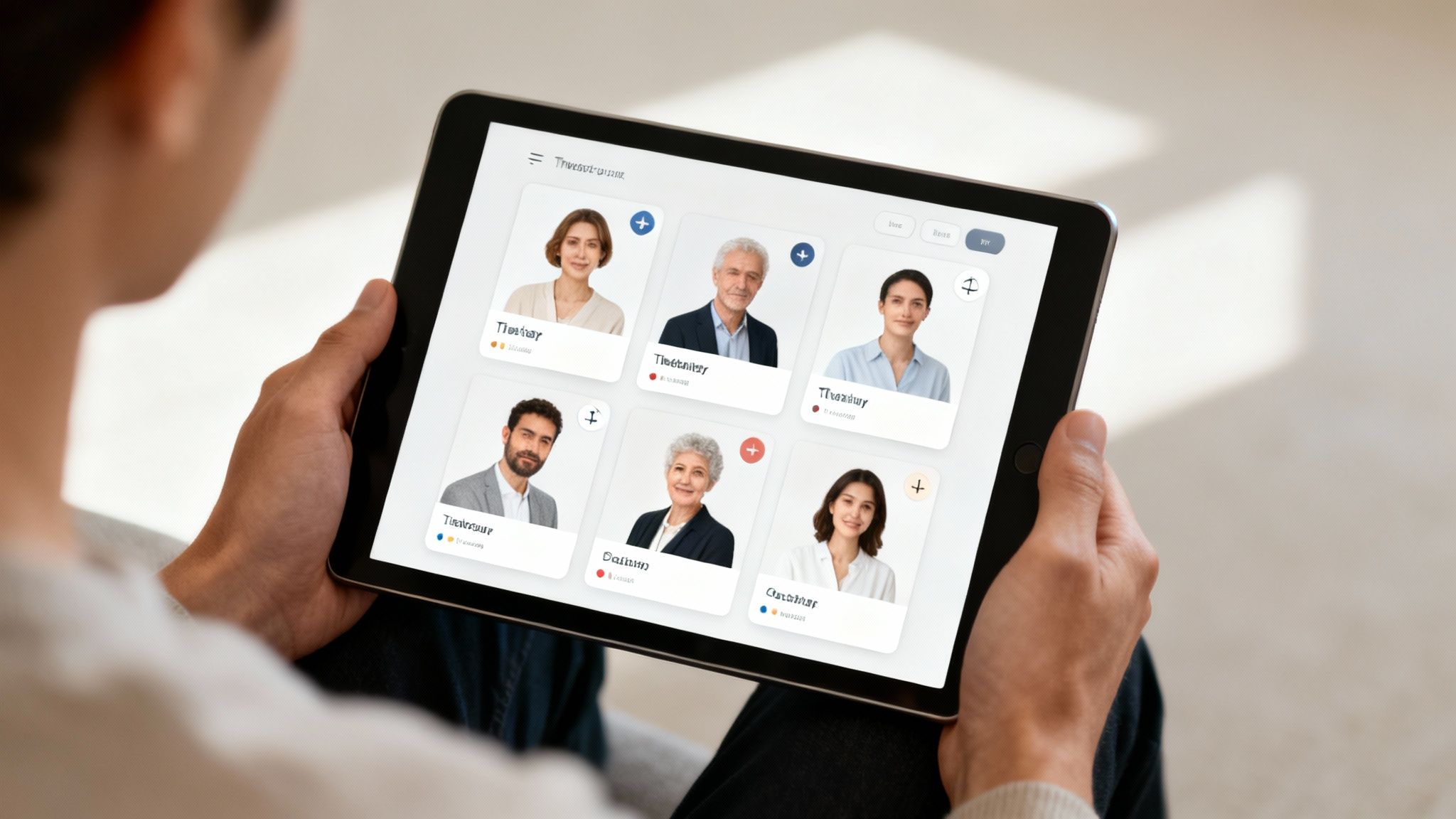
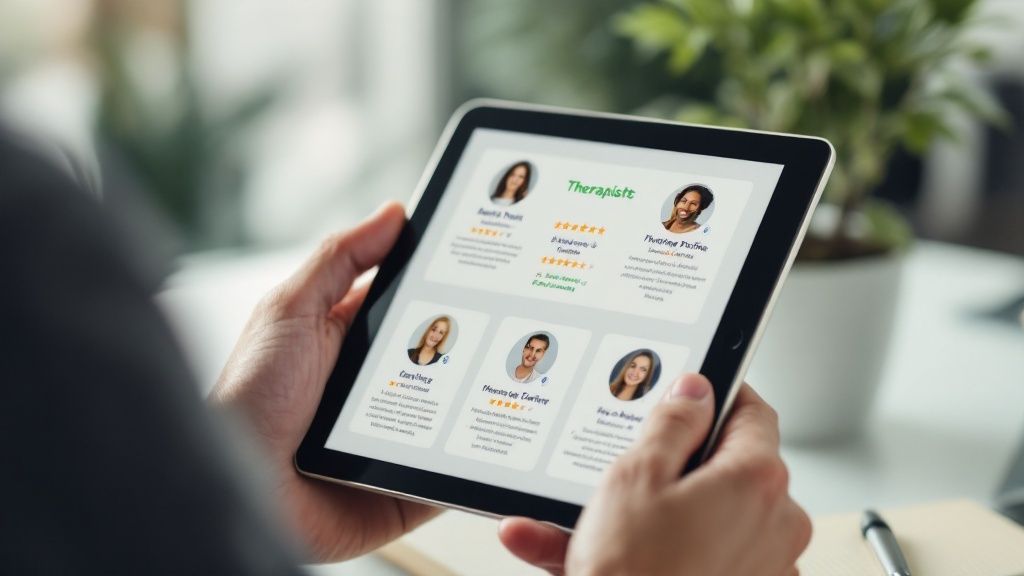
    A person holds a digital tablet displaying a grid of diverse professional people profiles.

    Starting a mental health consultation is a courageous step, and who you take that journey with matters. The bond you form with your therapist is a key factor in your progress. Finding someone you connect with can make all the difference.

    The search for the right professional can feel overwhelming, but modern platforms have made it much simpler. They help you find someone who understands your unique needs, allowing you to start your path to better well-being with confidence.

    Matching Your Needs with the Right Expertise

    Just as you'd see a specialist for a specific physical condition, the same applies to mental health. Therapists often have areas of focus, and finding someone who specializes in what you're facing—whether it's anxiety, depression, or workplace stress—is vital for effective support.

    Platforms like DeTalks simplify this by allowing you to filter by a therapist's specialization. This helps you quickly find a professional with the right background and tools. It's a smart approach that saves time and emotional energy.

    In a diverse country like India, being understood goes beyond words. Expressing yourself in your native language can make counselling feel more accessible and relatable. Filtering by language and cultural background is an important feature that can help you feel more comfortable.

    Using Assessments to Guide Your Search

    Many platforms now offer psychological assessments to give you a head start. These are informational tools, not a formal diagnosis. Think of them as a compass, offering a clearer picture of your emotional state and pointing you toward the right kind of support.

    For example, an assessment might highlight patterns related to anxiety or difficulty concentrating. This insight helps you search for professionals who are experts in those areas. This self-knowledge empowers you to choose a therapist with more confidence.

    It’s vital to remember that these assessments are informational, not diagnostic. They offer valuable insights to help guide your journey, but they can't replace a full evaluation from a qualified mental health professional.

    Their purpose is to illuminate, not to label. They provide a solid starting point for you and your potential therapist, creating a foundation for a personalised plan for your mental health consultation.

    Making Professional Support Accessible

    Finding the right person is also about availability. India faces a shortage of mental health professionals, making timely help challenging. Technology is helping to bridge this gap. You can discover more insights about India's mental health landscape.

    Platforms like DeTalks connect people with a network of qualified therapists, making professional support easier to find. By being transparent about costs, availability, and specializations, they remove many traditional barriers to getting help. This transforms a daunting task into a guided, supportive process.

    The goal is to find a trusted partner for your well-being journey. A good therapist meets you where you are, listens without judgement, and helps you build the resilience to handle life's challenges.

    Embracing Your Journey Toward Well-Being

    Deciding to explore a mental health consultation is a brave and self-aware choice. It’s not about finding an instant cure, but about acknowledging your feelings and investing in your well-being. This path is your own, and seeking support is a powerful way to walk it with more clarity.

    Remember, therapy isn’t just for crisis moments. It's also a tool for personal growth, helping you build skills that will serve you throughout your life. This journey is about nurturing resilience to better handle challenges, from workplace stress to feelings of anxiety and depression.

    From Surviving to Thriving

    A consultation can be the start of a new chapter focused on positive change and feeling more in control. It's an opportunity to shift from just getting through the day to creating a life that feels more meaningful.

    This process can help you:

    • Learn to treat yourself with more compassion and kindness.
    • Improve your relationships and communication with others.
    • Discover what brings you a sense of purpose and happiness.

    These are the foundations of a fulfilling life. Each session is a step toward understanding yourself better and establishing healthier habits.

    Your mental health journey is a marathon, not a sprint. Every step, no matter how small, is a victory. The courage to begin is the most important part of the process.

    Supportive Takeaways for Your Path Forward

    A mental health consultation is a safe, confidential space where your experiences are heard and valued. Think of it as a partnership where a professional walks alongside you, offering guidance while respecting your choices. The goal is to empower you, not to fix you.

    There is so much hope in taking this first step. Whether you're exploring options or sharing this article with a friend, you are helping build a culture of openness and support. Your courage sends a powerful message: your well-being matters.

    Frequently Asked Questions

    It's completely normal to have a few questions when you're thinking about starting your mental health journey. Let's walk through some of the most common ones to help put your mind at ease.

    Is My Mental Health Consultation Kept Confidential?

    Absolutely. Confidentiality is the foundation of effective therapy and counselling. What you share with your mental health professional stays between you, in a secure and private space.

    This trust is protected by strict ethical codes. The only rare exception is if there's an immediate, serious risk of harm to yourself or someone else, where professionals are legally required to ensure safety.

    What if I Don't Connect With My First Therapist?

    This is a common concern, and it is perfectly okay if it happens. The connection with your therapist is one of the biggest factors in making progress. Finding the right fit is crucial.

    If the first person doesn't feel right, please don't be discouraged. You have every right to find a professional who makes you feel comfortable, heard, and understood.

    Finding the right therapist is a bit like finding a good friend—sometimes it takes a few conversations to find someone you click with. Your comfort and trust are the top priorities.

    Platforms like DeTalks are designed to help with this. You can explore different profiles until you find someone who feels like the right partner for your journey. The choice is always yours.

    How Do I Know if I Need Counselling or a Psychiatrist?

    This is a great question. Counsellors and psychologists focus on "talk therapy," helping you work through challenges like workplace stress, relationship issues, or feelings of anxiety by building healthier coping skills.

    A psychiatrist is a medical doctor who specialises in mental health. They can diagnose conditions and are the only professionals who can prescribe medication. An initial mental health consultation with a counsellor is a great starting point, and they can refer you to a psychiatrist if needed.

    Are Online Mental Health Assessments a Formal Diagnosis?

    No, and this is a very important distinction. Online assessments are excellent informational tools. They can offer valuable insights into your emotional state and help you understand what you're feeling.

    These tools are great for self-reflection and can point you toward the right support, whether that's working on resilience or addressing symptoms of depression. However, they are not a substitute for a formal diagnosis from a qualified professional.


    Ready to take that next step? DeTalks makes it easy to find support that feels right for you. You can browse our directory of qualified therapists, take a confidential assessment, and book your first session whenever you're ready. Visit https://detalks.com to get started.

  • Affordable Online Therapy in India: Your Guide to Accessible Mental Health Support

    Affordable Online Therapy in India: Your Guide to Accessible Mental Health Support

    Finding quality online therapy in India that fits your budget is more possible now than ever. With sessions typically ranging from ₹500 to ₹3,000, professional support for your mental well-being is a real option for many people navigating stress, anxiety, or personal growth—all from home.

    Finding Your Path to Accessible Mental Wellness

    Smiling young Indian man using laptop by a bright window, enjoying tea.

    Taking the first step toward caring for your mental well-being is a sign of strength, and you are not alone on this journey. Many of us feel the pressures of modern life, from workplace stress and burnout to feelings of anxiety or depression. This guide is here to help you find quality online therapy that respects your budget.

    Our goal is to help you find tools to build resilience, practice compassion, and create a more fulfilling life. We'll show you how to find trusted, affordable counselling and give you the confidence to begin.

    The Growing Accessibility of Online Counselling

    The conversation around mental health in India is changing for the better. Improved internet access has opened up professional counselling to many who were held back by distance or stigma. This is a positive shift as more of us recognize that our emotional health is just as vital as our physical health.

    This change is supported by data, showing that seeking help is becoming more common. India's online mental health market is growing, expected to reach about USD 133.47 million in 2024, with online consultations increasing by over 90% since 2020. You can explore these trends in this detailed market analysis.

    What to Expect from This Guide

    Think of this guide as a warm, practical roadmap for your well-being journey. We will break down everything you need to know to feel empowered and informed.

    Here’s what we’ll cover:

    • Understanding Costs: We’ll provide a clear picture of what "affordable" means for online therapy in India.
    • Finding Support: You'll get actionable tips for finding skilled and low-cost therapists.
    • Building Skills: The focus is not just on managing challenges but also on cultivating lasting well-being and resilience.

    A quick note: If you come across online assessments or quizzes, please view them as informational tools for self-reflection. They can offer useful insights but are not a substitute for a formal diagnosis from a qualified professional.

    Your path is unique, and finding the right person to support you is a crucial first step. Let's begin.

    Decoding the Cost of Online Therapy in India

    Let's talk about the financial side of therapy. Understanding what 'affordable' means in an India-first context is key to feeling in control of your well-being journey. The cost of support shouldn't add to the stress you may already be feeling from challenges like anxiety or burnout.

    One of the biggest advantages of online therapy is its cost-effectiveness. By connecting with a counsellor from home, you eliminate travel time and expenses. These savings can make consistent therapy much more manageable for your budget.

    Additionally, many online platforms offer flexible pricing that traditional clinics often don't. You may find subscription plans or package deals that lower the per-session cost. This makes it easier to plan for your mental wellness expenses.

    Understanding the Price Spectrum

    When you start your search, you'll notice that online therapy prices vary. This is often linked to a therapist's experience, their qualifications, and the type of counselling offered. Knowing what to expect helps you find a good match for your needs and your wallet.

    So, what are the different formats you'll come across?

    • Individual Video Sessions: This is a classic one-on-one session with a therapist, ideal for personalized support for concerns like depression, relationship issues, or workplace stress.
    • Text-Based Support: Some services offer counselling through chat or messaging, which can be a lower-cost way to get ongoing support whenever you need it.
    • Group Therapy Sessions: Joining a professionally-led group session can be very powerful. It is a budget-friendly way to connect with others facing similar challenges, share experiences, and build resilience together.

    It can be helpful to see therapy as an investment in your long-term well-being, rather than just an expense. Finding the right financial fit makes that investment sustainable.

    What You Can Expect to Pay

    Now, let's look at the actual numbers. Online platforms have made mental healthcare much more accessible across India.

    Here is a quick comparison to give you a clearer picture of what you might find.

    A Look at Online Therapy Costs in India

    Therapy Format Typical Price Range (per session/month) Best Suited For
    Individual Video/Audio Session ₹600 – ₹3,500 Personalised, in-depth work on specific issues.
    Text-Based/Chat Therapy ₹1,500 – ₹4,000 (monthly plans) Ongoing, flexible support and daily check-ins.
    Group Therapy Session ₹500 – ₹1,500 Shared experiences, peer support, and specific focus areas.
    NGO/Subsidised Services ₹300 – ₹1,150 Those on a very tight budget needing foundational support.

    While prices vary, a typical online session generally falls between ₹600 to ₹3,500. For those needing more budget-friendly options, services from NGOs can lower that cost to ₹300–₹1,150 per session. You can explore this detailed cost analysis of therapy in India for more insights.

    This means professional support is no longer out of reach due to high clinic fees. It empowers you to prioritize your mental health without financial strain, making the path to building resilience and happiness clearer.

    How to Find High-Quality, Low-Cost Therapy

    Finding mental health support that feels right and fits your budget is absolutely possible. This section is your practical guide to finding great, affordable counselling in India.

    The key is not just finding the cheapest option, but knowing where to look. Many therapists and organizations are committed to making mental healthcare more accessible. Let's explore the different ways you can find therapy that supports your emotional well-being without straining your finances.

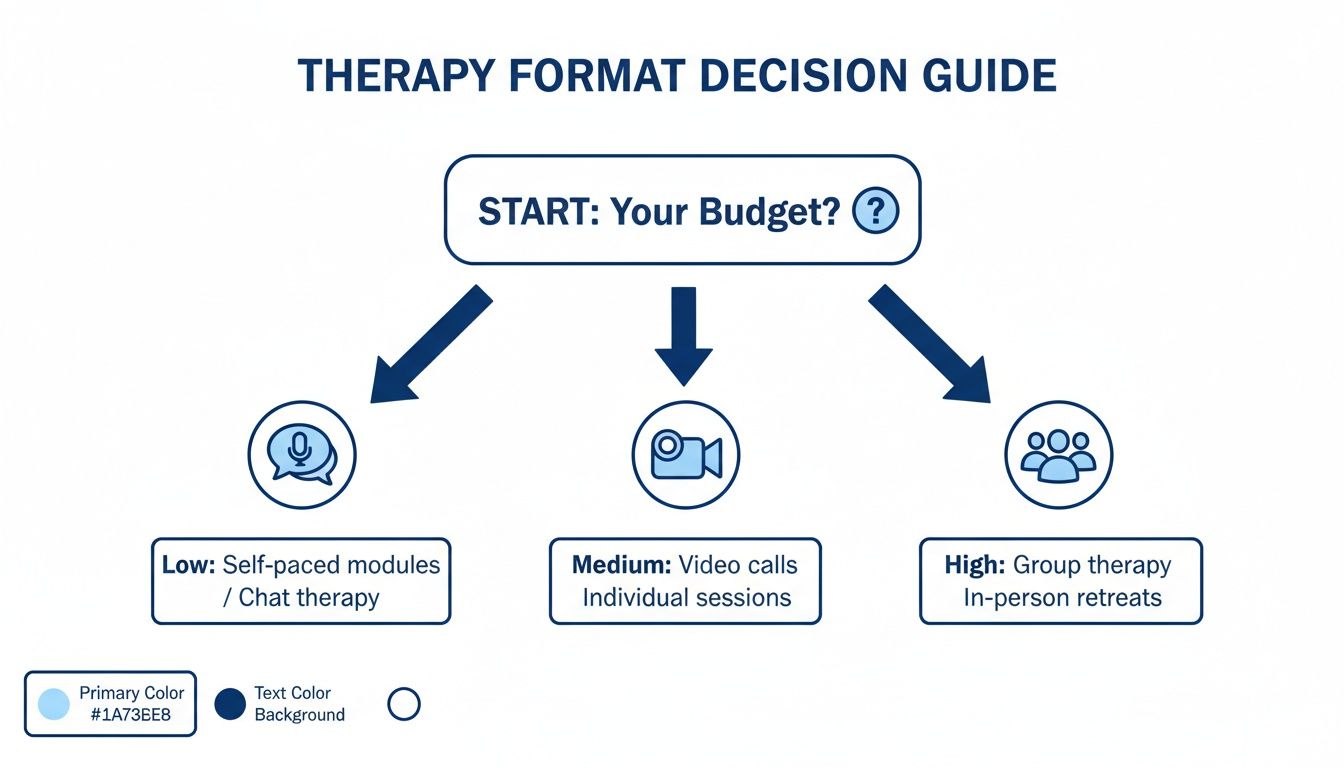
    This chart can help you see which therapy formats might work best for your budget.

    A therapy format decision guide flow chart showing options based on budget: low, medium, and high.

    As you can see, there is a path forward for every budget, from simple text-based check-ins to dedicated one-on-one sessions.

    Explore Therapists Offering Sliding Scale Fees

    One of the best ways to access affordable therapy is by finding a professional who offers a sliding scale. This is a compassionate system where the session fee is adjusted based on your income. This ensures quality care is available to everyone, not just those with high earnings.

    Don't hesitate to ask a therapist if they offer a sliding scale during your first contact. It's about finding a price point you can manage consistently. Many independent therapists see this as a core part of their mission to serve the community.

    Consider the Power of Group Therapy

    Group therapy is another fantastic, budget-friendly option. In these sessions, a small group of people facing similar issues—like anxiety, grief, or workplace stress—meet with a trained therapist. The cost is shared, making it more affordable than individual counselling.

    The benefits go beyond the price. There is incredible power in realizing you’re not alone. Sharing your story with others who understand can be deeply validating and helps build a sense of community and compassion.

    Remember, therapy is not about finding a quick cure. It's about building skills to handle life's challenges. Finding an affordable option allows you to stick with the process long enough to see real, lasting change.

    Look into NGOs and University Clinics

    Don’t overlook non-governmental organizations (NGOs) and university psychology departments. Many of these institutions are committed to providing low-cost or even free counselling services.

    University clinics are a hidden gem. You may work with postgraduate psychology students who are supervised by experienced, licensed faculty. They are equipped with the latest knowledge and provide thoughtful, high-quality care.

    Indian startups and NGOs are also making a difference. Some offer text-based support for under ₹500 per month, while others provide one-on-one sessions between ₹500–₹800. You can discover more about these affordable mental health initiatives in India to see what's available.

    Ensuring Quality and Safety in Online Therapy

    Finding affordable online therapy in India is a huge step, but it is crucial that it doesn't compromise quality or safety. Your peace of mind is the ultimate goal.

    Think of this section as your checklist for connecting with a qualified professional. Let's walk through how to ensure your online therapy experience is secure, supportive, and effective.

    Verifying a Therapist’s Credentials

    Before you book a session, it is a good idea to check the therapist’s qualifications. Any credible professional will be transparent about their education and training.

    Most qualified therapists in India hold at least a Master’s degree in Psychology (M.A. or M.Sc.) or an M.Phil in Clinical Psychology. Many are also registered with bodies like the Rehabilitation Council of India (RCI), which indicates adherence to ethical standards.

    Feel free to ask about their credentials during your initial consultation. A good therapist expects and welcomes these questions; it shows you are taking an active role in your well-being.

    Assessing the Right Fit for You

    Finding the right therapist is about personal connection. Your first call or chat is a two-way conversation to see if you feel comfortable with their style.

    Pay attention to your gut feeling during that first interaction. Do you feel heard and understood? Does their approach make sense to you? This initial sense of safety is the foundation for the trust needed for effective therapy.

    Remember, therapy is a partnership. The goal is to find someone you feel comfortable working with—someone who empowers you to build resilience and self-awareness.

    Protecting Your Privacy and Confidentiality

    Confidentiality is the cornerstone of therapy, especially when sharing personal information online. Any reputable service will have a clear and accessible privacy policy.

    Before signing up, take a moment to read the platform's terms of service. Look for clear statements on data encryption and confirmation that your information will not be shared without your permission. This ensures your private conversations about anxiety or depression remain private.

    As you explore digital mental health tools, you may also find various online mental health assessment options. These can be helpful starting points, but it's important to remember they are informational guides, not a clinical diagnosis.

    Preparing for Your First Therapy Session

    A woman with short dark hair works focused on a laptop at a wooden desk, illuminated by natural light.

    Starting therapy can feel a bit nerve-wracking, which is completely normal. A little preparation can help calm your nerves and make you feel more in control. This is about setting the stage to ease into the process.

    Think of your first session as a simple conversation. It's a chance for you and your therapist to meet and see if it feels like a good fit. There is no pressure to say the "right" thing; this is your time.

    Setting Up Your Space and Mindset

    To get the most out of online counselling, your environment matters. Find a quiet, private space where you won’t be disturbed. This could be any place where you feel comfortable speaking freely.

    Do a quick tech check before your session begins. Ensure your internet is stable and your device is charged. Testing your camera and mic beforehand helps you focus entirely on the conversation.

    Your first therapy session is a brave step forward. It's not about having all the answers but being open to exploring the questions. This is your dedicated time for personal growth and well-being.

    Thinking About Your Goals

    It's perfectly fine to show up without knowing exactly what you want to work on. Many people start therapy because they feel stuck, anxious, or not like themselves. This could be due to workplace stress, sadness, or relationship challenges.

    If it helps, you could jot down a few thoughts beforehand. Simple prompts can get you started:

    • What feelings or situations have been on your mind lately?
    • When did you first start noticing these challenges?
    • Have you tried anything on your own to feel better?
    • What does a "good day" look and feel like for you?

    These notes are just for you and can serve as a starting point. Sharing these initial thoughts helps your therapist understand your needs and begin creating a supportive plan. It’s a key part of making sure the affordable online therapy you’ve found in India is genuinely effective.

    A Final Word: Your Path Forward

    As we conclude, please hold onto this key thought: reaching out for therapy is a sign of strength. It is an active investment in yourself and your resilience for whatever life brings. Think of it as building a stronger foundation for your emotional well-being.

    We've covered how to find affordable, quality online therapy in India that you can trust. The goal is to leave you feeling confident that support for challenges like anxiety, depression, or workplace stress is within your reach.

    It’s a Journey, Not a Quick Fix

    It's natural to want instant results, but therapy is a gradual process. There will be sessions that feel like a breakthrough and others that feel more challenging. This is a normal part of the journey toward understanding yourself better and finding a healthier balance.

    Therapy isn't about finding a magic solution. It is about building a connection with a professional who helps you tap into your own inner strength and develop tools to navigate life with more confidence and self-compassion.

    As you move forward, keep these supportive takeaways in mind:

    • You're in control: You have the power to choose a therapist and a plan that works for you.
    • Every small step counts: Reading this guide is a positive step for your mental health.
    • Help is available: Quality, affordable counselling in India is accessible. You don’t have to do this alone.

    Frequently Asked Questions

    It’s normal to have questions when you’re considering therapy. It shows you are taking this step seriously. Here are straightforward answers to some common questions about affordable online therapy in India.

    What’s the Difference Between a Therapist and a Counsellor?

    In India, the terms "therapist" and "counsellor" are often used interchangeably. While there is overlap, there can be a slight difference.

    A counsellor often helps you navigate specific life challenges, like workplace stress or relationship difficulties, usually over a shorter term. This process focuses on building resilience and practical coping skills.

    A therapist, particularly a clinical psychologist, is typically equipped to work with more deep-rooted mental health conditions like chronic anxiety or depression. This work may take longer. The best choice depends on your current needs.

    How Do I Know if Online Therapy Is Right for Me?

    Online therapy is a fantastic option for many people, especially if you prefer the comfort of your own space. It is effective for working through common issues like anxiety, stress, mild to moderate depression, and personal growth goals.

    However, it is not the right fit for every situation. If you are experiencing a severe mental health crisis or having thoughts of self-harm, please seek immediate, in-person help. Online therapy is for support, not a replacement for emergency care.

    A helpful reminder: The self-assessment tools you see online can be great for reflection, but they are informational, not diagnostic. Only a qualified professional can provide a formal diagnosis.

    How Long Does Therapy Usually Take?

    This is a common question, and the answer is that it's different for everyone. There is no set number of sessions.

    Some people feel they achieve their goals in just a few appointments. Others find long-term therapy beneficial for ongoing personal growth and well-being. It's a journey that moves at your pace.

    You and your therapist will set goals together and check in on your progress along the way. For more general information on how online health services work, this general telehealth FAQ is a helpful resource.


    Ready to find someone you can connect with? At DeTalks, we make it easy to find qualified, caring professionals all over India. You can start exploring our directory right now to find the support that feels right for you at https://detalks.com.

  • A Guide to Online Treatment for Depression in India

    A Guide to Online Treatment for Depression in India

    Recognising you might need support is a brave and important step. If you're exploring your options, this guide offers a clear, gentle path through online treatment for depression. Think of it as a helpful map for finding your way to feeling better, with a special focus on the context in India.

    A New Path to Mental Well-Being in India

    Taking the first step toward mental wellness can feel big, but you are not alone on this journey. In India, conversations about mental health are becoming more open, creating new ways to find professional, confidential help. Online therapy offers a private and flexible way to get support from your own comfortable space.

    This guide is designed to be a supportive companion on your path. We will explore how online treatment for depression can provide you with tools to manage difficult emotions and build a stronger, more resilient you.

    Navigating Life's Modern Pressures

    Modern life can be demanding, whether you're in a bustling city or a quiet town. Juggling a career, family, and personal goals can leave anyone feeling overwhelmed and stretched thin.

    This constant pressure can show up in different ways, making everyday tasks feel like a challenge. Recognising these signs is the first step toward feeling more in control of your well-being.

    • Workplace Stress: Feeling overwhelmed by deadlines or a tough work environment can lead to burnout.
    • Anxiety: This can feel like a persistent worry or restlessness that makes it hard to focus.
    • Depression: This often shows up as a heavy sadness, loss of interest in things you once enjoyed, or feeling tired all the time.

    Online counselling provides a safe, non-judgemental space to work through these feelings. A therapist can help you understand the roots of these challenges and develop practical strategies to manage them.

    Building a Foundation of Well-Being

    Support isn't just about managing tough times; it's about building a life that feels good and meaningful. This is where positive psychology can help by focusing on our strengths, like resilience and compassion.

    "Therapy is not about becoming a new person. It’s about becoming more of who you truly are, with tools to navigate life’s ups and downs more effectively."

    It’s a shift from just getting by to truly thriving. Online therapy can be a wonderful guide in this process, helping you lay a solid foundation for your overall well-being and happiness.

    • Resilience: This is your ability to bounce back from challenges and adapt to change.
    • Compassion: Learning to be kinder to yourself can quiet your inner critic and improve your relationships.
    • Happiness: It's about discovering what brings you joy and purpose to build a more fulfilling life.

    Please remember, the information here is for guidance and understanding. It is not a substitute for a formal evaluation by a qualified healthcare professional.

    Understanding Online Depression Treatment

    Online therapy is much like a traditional therapy session, but it happens in a secure, private digital space. Instead of travelling to an office, you receive professional support for challenges like depression and anxiety from wherever you feel most comfortable.

    Online treatment for depression offers a variety of care options, from live video calls to structured self-paced programs. This flexibility is making professional mental health support more approachable and accessible for many people.

    Bridging a Critical Gap in Mental Health Care

    In India, accessing quality mental health care can be difficult due to distance, schedules, or stigma. Online platforms are helping to close this gap by connecting people with the support they need, wherever they are.

    The need for this is clear. India has just 0.75 psychiatrists for every 100,000 people, which is far below the recommended number. This makes finding in-person help a challenge for many, positioning online therapy not just as a convenience but as a vital solution. You can read more about India's mental health landscape and how technology is helping.

    This improved access means expert care for depression or workplace stress is now within reach for many more people.

    More Than Just Managing Symptoms

    Good online counselling does more than help with the symptoms of depression or anxiety. It aims to build a strong foundation for your long-term mental well-being by giving you practical skills and a deeper understanding of yourself.

    This often involves a blend of proven therapeutic methods and principles from positive psychology. The goal is to equip you with the tools you need to face future challenges with greater strength and confidence.

    At its core, therapy is about building resilience—that inner capacity to navigate life's inevitable ups and downs without getting swept away. It's about strengthening your own resources so you can face challenges from a place of calm and control.

    How It Fosters Growth and Resilience

    Online treatment provides a supportive space to work on personal growth. Your therapist acts as a guide, helping you identify unhelpful thought patterns that may contribute to feelings of sadness, stress, or burnout.

    Together, you can build healthier ways of coping. This process might involve:

    • Building Self-Compassion: Learning to be as kind to yourself as you would be to a friend.
    • Developing Emotional Regulation: Gaining skills to better understand and manage your emotions so they feel less overwhelming.
    • Finding Purpose and Happiness: Exploring what gives your life meaning to create a more fulfilling future.

    While tools like online assessments can offer useful insights into your emotional state, they are informational, not diagnostic. They serve as a starting point for a meaningful conversation with a qualified professional.

    Exploring Different Types of Online Therapy

    When you look into online treatment for depression, you'll find several options. The best approach is the one that fits your personality, schedule, and comfort level.

    Think of it as a menu of services, each offering a unique way to get support. Let’s look at the most common formats to help you understand how they work.

    Live Video and Audio Sessions (Teletherapy)

    This is what most people picture when they think of online counselling. You schedule live appointments with a therapist and meet through a secure video or audio call for a real-time conversation.

    This format is great if you value direct interaction and want to build a strong connection with your therapist. It provides dedicated time to work through feelings related to depression, anxiety, or workplace stress.

    Internet-Delivered CBT Programmes

    Internet-delivered Cognitive Behavioural Therapy (iCBT) is a structured, educational approach. You work through online modules that teach you the core skills of CBT, a powerful method for managing depression.

    A therapist often guides you, checking in with messages or short calls to offer support. This blend of self-paced learning and professional guidance is ideal if you prefer a clear curriculum. You can also explore best Cognitive Behavioural Therapy (CBT) apps that use a similar model.

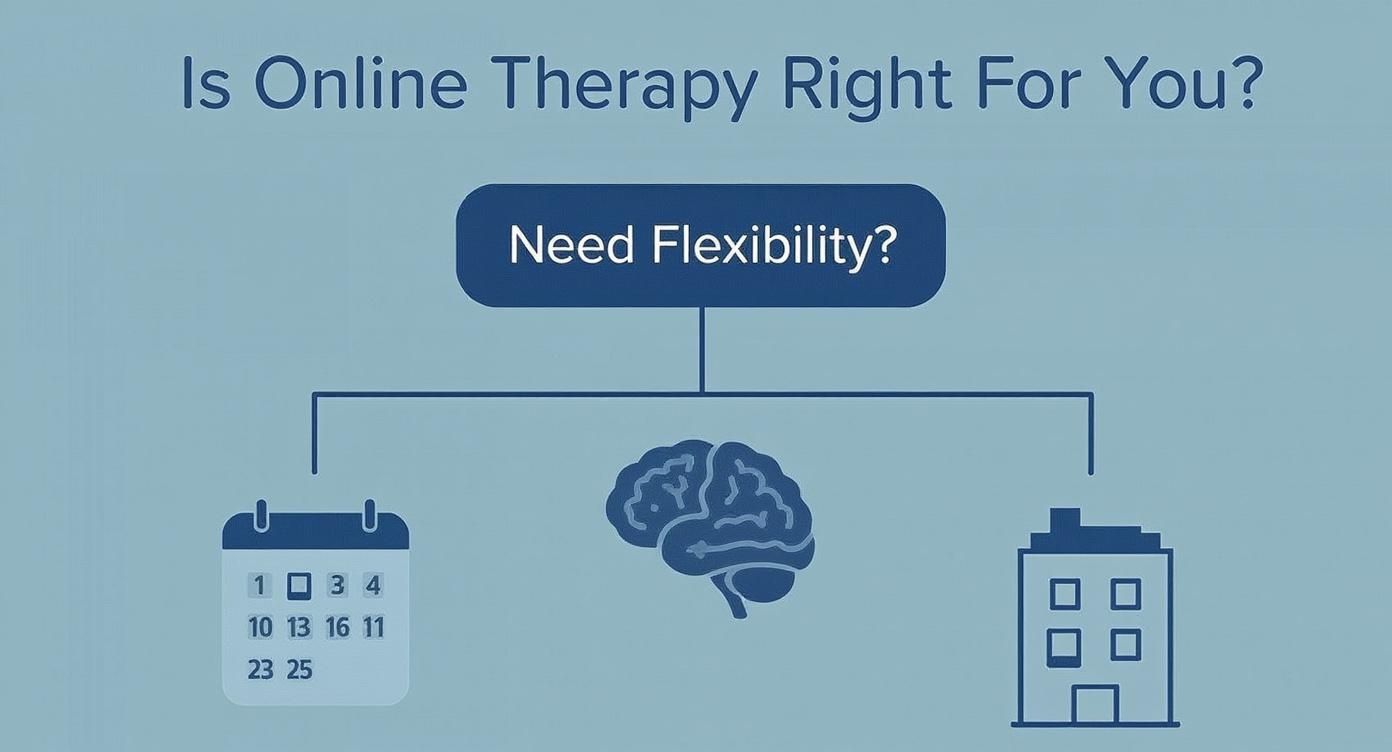
    This flowchart can help you think about whether the flexibility of online care is a good fit for you.

    Flowchart asking if online therapy is right, showcasing flexibility with time, mental health, and location.

    As you can see, factors like a busy schedule or the comfort of home can make online therapy an excellent choice for your mental well-being.

    Medication Management (Telepsychiatry)

    For many, an effective path for managing depression includes both therapy and medication. Telepsychiatry makes this process seamless online by connecting you with a qualified psychiatrist through video consultations.

    It's important to know that only medical doctors, like psychiatrists, can prescribe medication. Therapists provide talk therapy but cannot write prescriptions, making telepsychiatry a vital part of online care.

    This service is a game-changer if you need medication but find it hard to get an in-person appointment. It brings expert medical care into your home, ensuring your treatment plan is complete and well-managed.

    Comparing Online Therapy Formats

    How do you choose the right format? It depends on what you're looking for in terms of interaction, structure, and support. The table below outlines the key differences to help you decide.

    Therapy Type Best For Level of Interaction Typical Structure
    Live Teletherapy Those who want a strong, direct connection with a therapist and real-time conversation. High Weekly or bi-weekly scheduled sessions (video or audio).
    Internet-Delivered CBT Individuals who prefer a structured, educational approach and self-paced learning. Low to Medium Sequential modules with exercises, often with periodic therapist check-ins.
    Guided Self-Help Apps People looking for introductory tools to build resilience and manage mild symptoms. Low Daily check-ins, guided meditations, mood tracking, and educational articles.
    Telepsychiatry Those needing a medical evaluation for medication to complement their therapy. High (Medical Focus) Initial consultation followed by regular follow-up appointments for management.

    Ultimately, the best online treatment for depression is the one that feels right for you. Whether you prefer direct interaction or self-paced learning, there is an online path that can help you build resilience.

    Online vs. In-Person Therapy: Which Is Right for You?

    When considering therapy, you might wonder whether to choose an online or in-person setting. Research shows that for many people, especially those with mild to moderate depression, online support can be just as effective.

    There is no single "better" option. The right choice depends on your lifestyle, comfort with technology, and personal preferences for your therapy journey.

    Convenience and Access: Therapy on Your Terms

    The biggest advantage of online therapy is its convenience. It eliminates travel time, which is a huge benefit whether you live in a busy city or a remote area.

    This means you can connect with a professional from a place where you feel completely comfortable, like your own home. Feeling safe can make it easier to open up and discuss what’s on your mind.

    The Client-Therapist Connection

    The bond you build with your therapist is a key part of successful therapy. Many people wonder if this connection can be as strong through a screen, and experience shows that it absolutely can.

    A strong therapeutic relationship is built on trust, empathy, and feeling truly heard. These human qualities come through a screen just as powerfully as they do in person.

    While in-person sessions offer the benefit of seeing body language, a skilled online therapist is trained to listen closely to build a deep connection. The chemistry between you and your therapist matters most, not the medium you use.

    Weighing Up the Cost and Effectiveness

    Effectiveness and cost are important considerations. Studies have shown that online Cognitive Behavioural Therapy (CBT) is as effective as face-to-face therapy for managing depression and anxiety.

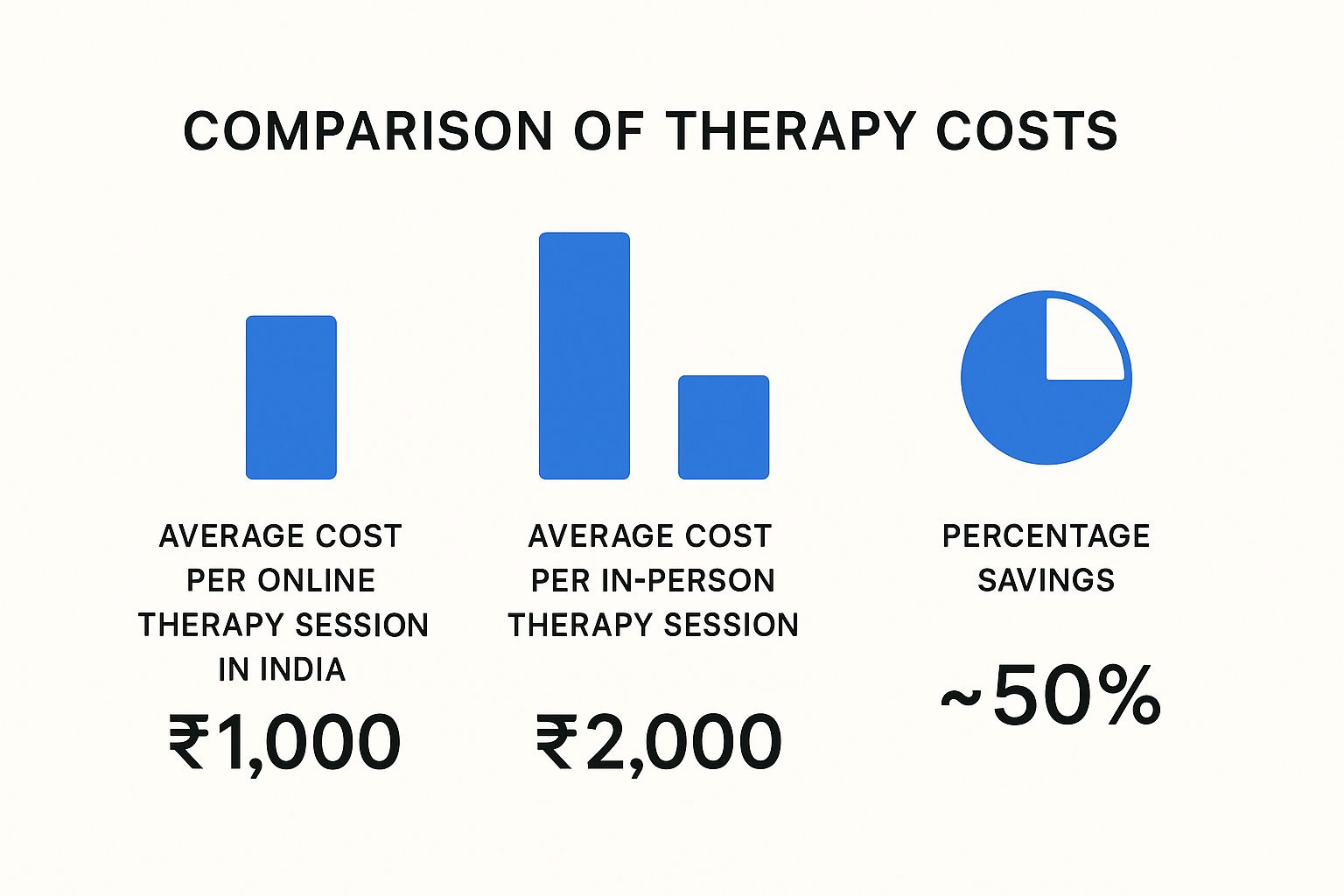
    In India, the demand for mental health support has grown, with a 40% jump in people seeking help since the pandemic. Online therapy is often 20–30% less expensive than traditional sessions, making care more accessible. You can learn more about the rise of online therapy packages in India and their effectiveness.

    This blend of effectiveness and affordability makes online treatment for depression a powerful and practical choice for improving your well-being.

    How to Choose the Right Online Therapist for You

    Finding the right person to talk to is the most important step in your therapy journey. The connection you build with your therapist is the foundation for growth, so it's worth choosing thoughtfully.

    This guide will walk you through what qualifications to look for and the best questions to ask. Making an informed choice helps you start your online treatment for depression feeling confident.

    Checking Qualifications and Specialisations

    First, ensure you're speaking with a qualified professional. In India, look for credentials like a Master's degree in Psychology (M.A./M.Sc.), an M.Phil in Clinical Psychology, or a PhD in Psychology.

    Also, consider their areas of expertise. A therapist specializing in depression, anxiety, or workplace stress will have a deeper understanding of your challenges. Platforms like DeTalks make this easy by listing each therapist's credentials and specialities.

    Questions to Ask in Your First Consultation

    Most online services offer an initial consultation, which is a great chance to see if you connect. Think of it as a conversation to see if the therapist feels like a good fit for you.

    Having a few questions ready can help you make the most of this chat. It's about understanding their approach and seeing if it aligns with your needs.

    Here are a few ideas:

    • What's your approach to helping with challenges like depression?
    • How do you help clients build skills for resilience and self-compassion?
    • What does a typical therapy session with you look like?
    • How will we work together and track progress toward my goals?

    Pay attention to how the conversation feels. The best therapist for you is someone you feel you can be open and honest with.

    Understanding Costs and Payment in India

    The cost of online counselling in India is generally more affordable than in-person sessions. Most services charge per session, and some offer discounted packages for booking multiple sessions.

    Before you commit, get a clear understanding of the payment process and cancellation policy. Feeling clear about the financial side removes a potential source of stress, allowing you to focus on your well-being.

    Choosing a therapist is a personal decision, so take your time. Finding someone who feels like a true partner for your journey can make all the difference.

    Final Thoughts on Your Path Forward

    Exploring therapy is a courageous act of self-care and an investment in your well-being. This journey is not about finding a quick fix but about discovering new ways to cope and uncovering your inner resilience.

    Online treatment for depression offers a safe space to process your experiences and practical tools for the road ahead. It’s about building resilience to handle life's challenges and learning to show yourself compassion along the way.

    How to Make Online Therapy Work for You

    A little preparation can make a big difference in your online counselling sessions. Creating a focused and secure space helps you open up and engage fully with your therapist.

    Here are a few tips to get the most out of every session:

    • Find a private space: Choose a quiet spot where you won't be disturbed to help you focus.
    • Be open and honest: The more you share, the better your therapist can support you.
    • Apply what you learn: The real progress happens when you practice new skills in your daily life.

    The effort you put in is a direct investment in your long-term well-being.

    It's a Marathon, Not a Sprint

    Therapy is a partnership where you are the expert on your life, and your therapist is a guide. They have the tools to help you navigate challenges like anxiety, workplace stress, or depression.

    I often tell my clients to think of therapy like tending to a garden. It takes patience, consistent care, and the right environment to thrive. Some days will be bright and sunny, while others might bring rain. But every single day of tending to it helps something beautiful grow.

    Progress isn't always a straight line, so celebrate small wins and be kind to yourself on tough days. Exploring strategies to reduce brain fog can also be a helpful addition to your toolkit. Remember that online assessments are informational starting points, not diagnoses. Help is more accessible than ever, and you can take the next step whenever you're ready.

    Your Questions About Online Depression Treatment, Answered

    It's natural to have questions when starting something new, especially regarding your mental health. We've gathered answers to some common questions about online treatment for depression to help you feel more comfortable.

    Getting your questions answered is an important part of feeling ready. This can help you make a choice that feels right for you on your journey toward building greater resilience.

    Is My Information Kept Confidential in Online Therapy?

    Yes, absolutely. Reputable online therapy platforms in India follow the same strict confidentiality rules as in-person therapists. They use secure, encrypted technology to ensure your conversations remain private.

    It's always a good idea to review a platform's privacy policy before signing up. This will help you feel secure and focus on your well-being.

    What if I Don’t Click with My First Online Therapist?

    This can happen, and it's perfectly okay. The connection with your therapist is vital for successful therapy, and it might take time to find the right match.

    Most online services make it easy to switch to a new therapist if the first one doesn't feel right. Finding someone who understands you is a key step in feeling supported with challenges like anxiety or depression.

    "Finding the right therapist is like finding the right key for a lock. It's not about the key being 'bad' if it doesn't fit the first time—it's about finding the one that turns smoothly."

    Can I Get Medication Through Online Treatment?

    Yes, through a service called telepsychiatry. While counsellors provide talk therapy, only a psychiatrist, who is a medical doctor, can prescribe and manage medication.

    Many platforms now offer access to online psychiatrists for evaluation and prescription management. This allows you to receive both therapy and medical treatment conveniently, supporting your overall well-being.

    What Technology Do I Need for Online Therapy?

    You likely already have what you need: a smartphone, tablet, or computer with a camera and a stable internet connection.

    Just as important is your environment. Finding a quiet, private space where you can speak openly is essential for making the most of your counselling sessions.


    Taking steps towards better mental health is a personal and brave decision. If you feel ready to connect with a professional who can guide you, DeTalks provides a safe, trusted space with qualified therapists and science-backed assessments. Begin your journey to resilience and well-being today at https://detalks.com.

  • Depression Treatment Online: Hope & Support from Home

    Depression Treatment Online: Hope & Support from Home

    Feeling overwhelmed is a natural part of life, but you don't have to navigate it alone. Exploring depression treatment online is a courageous first step toward feeling better, offering professional support in a space where you feel safe and comfortable.

    Finding Support from the Comfort of Your Home

    Taking the first step toward mental well-being requires courage, and it's a journey where you deserve to feel supported. Life's challenges, like workplace stress, burnout, or persistent feelings of sadness and anxiety, can feel isolating. Simply acknowledging these feelings is an act of self-awareness.

    Fortunately, technology makes getting professional help more accessible than ever. Online therapy provides a confidential space to explore your thoughts and feelings with a trained professional, right from your home. This removes practical barriers like travel and scheduling, allowing you to focus on your well-being.

    A Path Toward Resilience and Well-Being

    Online counselling is about more than managing difficult moments; it's about building a stronger, more resilient you. The process focuses on developing practical skills to navigate life's ups and downs with greater confidence. It's a journey toward rediscovering a sense of purpose and joy.

    Therapists often draw from positive psychology to help you focus on your strengths, cultivate resilience, and foster happiness. You might learn skills like self-compassion or mindfulness, which are tools for lasting well-being.

    "The curious paradox is that when I accept myself just as I am, then I can change." – Carl Rogers

    This quote captures the essence of healing: it begins with self-acceptance. Therapy offers a judgment-free space to explore who you are, fostering the self-compassion needed for growth and helping you understand that your struggles don't define you.

    What to Expect from This Guide

    This guide will walk you through the world of online depression treatment in a clear, straightforward way. We'll cover what online therapy looks like, the types of services available, and how to find a professional who feels right for you. Our goal is to empower you to make an informed choice for your mental health.

    We will explore these key areas:

    • Understanding Online Therapy: What is it, and how does it help with challenges like anxiety and depression?
    • Building Resilience: Practical ways to cope with workplace stress and other life challenges.
    • The Role of Assessments: How certain tools offer useful insights, remembering they are informational, not diagnostic.
    • Finding Your Path: How to choose a therapist and begin your journey toward greater happiness and balance.

    Think of this guide as a supportive companion on your path to well-being. It's designed to give you the knowledge and confidence to take a meaningful step toward a healthier life.

    What Online Depression Treatment Really Means

    A person sitting comfortably at home and using a laptop for an online therapy session, looking calm and engaged.

    So, what does depression treatment online actually involve? It means having professional mental health support that fits into your life, whether you're at home, at work, or traveling.

    This approach removes the hassle of travel and waiting rooms, creating a direct, private connection to a qualified therapist through your device. This is structured, professional counselling designed to help you address real challenges. Whether it's a low mood, feelings of anxiety, or workplace stress, online therapy offers a dedicated space to learn practical coping skills with an expert's guidance.

    The Core of Online Counselling

    At its heart, online therapy is a partnership built on a trusting relationship with your counsellor. Together, you can explore thought and behavior patterns that may contribute to feelings of depression.

    The process is collaborative and tailored to you. A therapist might use methods like Cognitive Behavioural Therapy (CBT) to help reframe unhelpful thoughts or teach mindfulness to manage stress. The goal is to equip you with tools to enhance your overall well-being and build lasting resilience.

    Online therapy offers more than just a listening ear; it provides a structured framework for personal growth, helping you build self-compassion and develop the strength to navigate life's challenges with greater confidence.

    This framework supports sustainable change by helping you understand the connections between your thoughts, feelings, and actions. This empowers you to make conscious choices that lead to a healthier, more fulfilling life.

    Making Support Accessible in India

    Online therapy is transforming accessibility, especially in India, where an estimated 56 million people are affected by depression. Digital platforms bridge this gap by offering a convenient and often more affordable alternative to traditional therapy. You can learn more about the role of online therapy in India and its growing impact.

    Online therapy effectively removes common barriers to getting help:

    • Geographical Distance: Connect with a skilled therapist from anywhere, whether in a major city or a remote town.
    • Scheduling Conflicts: Flexible scheduling, including evenings and weekends, accommodates busy lives.
    • Privacy and Comfort: Discussing personal matters from a safe space can make it easier to open up and reduce stigma.

    Building Resilience and Well-Being

    The journey of online therapy is not just about managing challenges; it’s about actively cultivating positive mental health. This means shifting focus from merely surviving to truly thriving. A key part of this is developing resilience—the ability to bounce back from life's difficulties.

    Your therapist can help you recognize your strengths and values, fostering self-compassion and teaching you to be kind to yourself. This process lays a foundation for long-term emotional well-being and a life filled with meaning. It's important to remember that any online assessments are informational tools to start a conversation, not a substitute for a professional diagnosis.

    Exploring Different Online Therapy Formats

    Online therapy offers a range of approaches designed to fit your needs and comfort level. The goal is to find a communication style that feels natural and allows you to be open with your therapist.

    For some, the direct connection of a video call feels most like traditional therapy. For others who experience anxiety with live conversation, text-based therapy provides space to reflect and write. Let's explore these formats.

    Comparing Online Therapy Formats

    Choosing the right format can significantly impact your experience. Here’s a comparison of common online therapy methods to help you decide what works best for you.

    Therapy Format How It Works Best For Considerations
    Live Video/Voice Calls Scheduled, real-time sessions with a therapist via secure video or voice chat. It’s a direct, face-to-face conversation. Building a strong therapist relationship, picking up on non-verbal cues, and having a structured, dedicated appointment time. Requires a private space and a stable internet connection. Can feel intense for those anxious about live interaction.
    Text & Messaging Therapy You send messages (text, audio, or video clips) to your therapist anytime. They reply at scheduled times. It's asynchronous. People with busy schedules, those who express themselves better in writing, or anyone needing ongoing, in-the-moment support. Lacks the immediacy of a live chat and misses non-verbal cues. The connection can feel less personal for some.

    Ultimately, there is no single "best" format—only the one that is best for you. Your choice shapes your interaction, so consider what would make you feel most supported.

    The Therapeutic Techniques Behind the Screen

    The format is the how, but the therapeutic technique is the what. Online therapists use the same evidence-based methods as in-person clinicians to help you navigate depression and anxiety.

    One of the most widely used methods is Cognitive Behavioural Therapy (CBT). CBT helps you identify, challenge, and change unhelpful thought patterns and behaviors. For example, you might work with your therapist to reframe an automatic negative thought into a more constructive one.

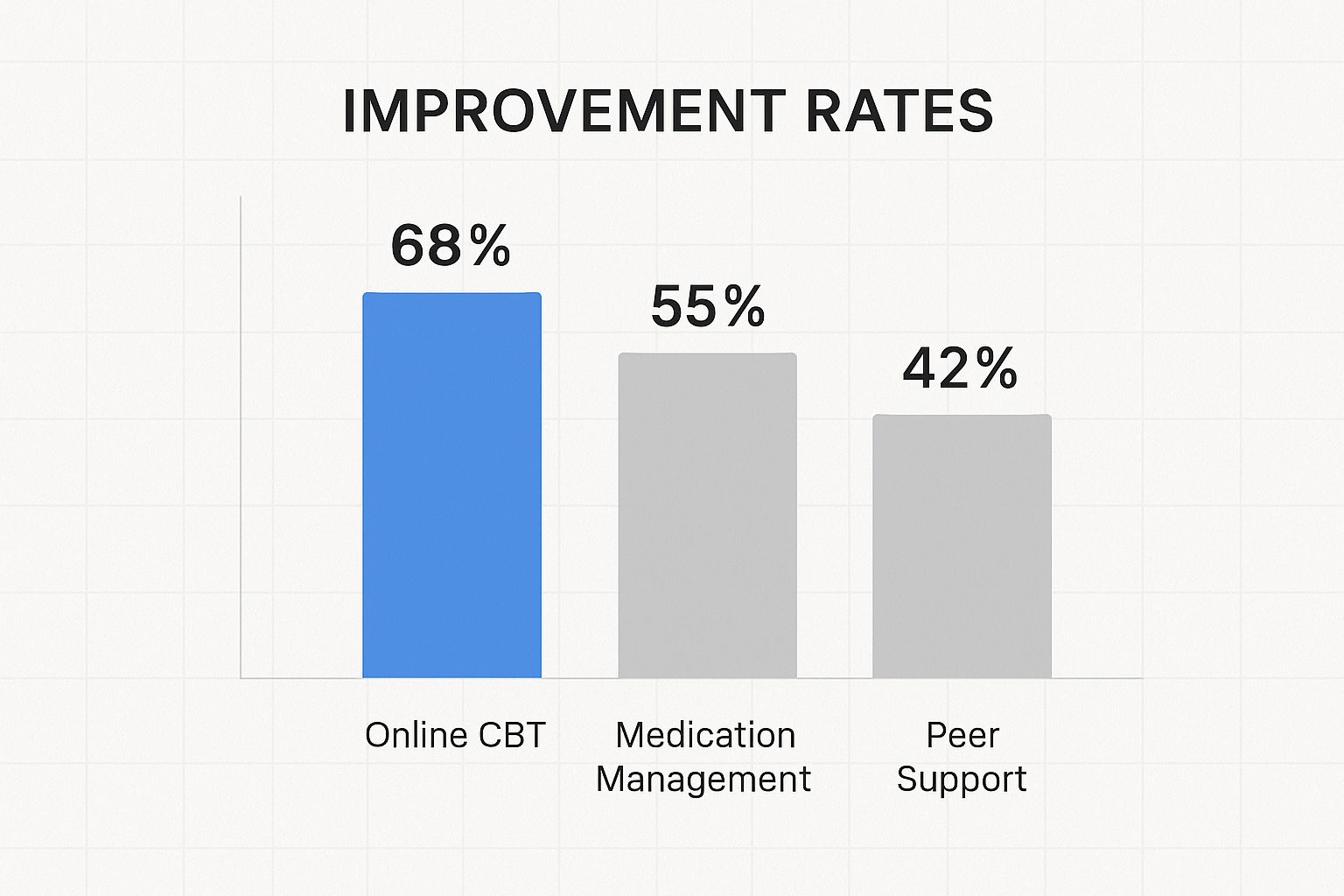
    Evidence shows these structured online methods deliver real results.

    A bar chart comparing the improvement rates of Online CBT (68%), Medication Management (55%), and Peer Support (42%) for depression treatment.

    As you can see, structured therapy like online CBT often leads to significant improvements for people seeking support.

    Therapists also integrate other powerful techniques during online counselling, including:

    • Mindfulness-Based Practices: These teach you to stay in the present moment without judgment, such as through guided breathing exercises.
    • Psychodynamic Therapy: This approach explores how past experiences may shape your present feelings, leading to self-awareness.
    • Positive Psychology Interventions: This technique focuses on building your strengths and practicing gratitude to cultivate resilience.

    A quick reminder: any assessments your therapist uses are informational tools to guide your sessions. They are not a formal diagnosis but a compass to point you in the right direction.

    The Rise of Digital Mental Health Support

    A person smiling while participating in an online therapy session on their tablet, feeling supported and understood.

    The conversation around mental health in India is changing for the better as stigma fades. More people now recognize that caring for emotional well-being is a sign of strength.

    Technology has been a major driver of this shift, breaking down barriers that made professional help feel out of reach. With online platforms, a meaningful conversation with a qualified therapist is now just a click away. Choosing depression treatment online is a modern, practical way to invest in yourself.

    Overcoming Traditional Barriers with Technology

    For years, accessing mental health support involved overcoming many obstacles. Finding a nearby therapist, scheduling appointments, and managing social anxiety were common challenges.

    Online therapy eliminates these problems. It allows you to connect with a professional from your own space, making it easier to attend sessions consistently. This convenience lets you focus on what truly matters: your healing journey.

    Online therapy creates a bridge to support, ensuring that compassionate, professional care is available to anyone, regardless of their location or circumstances. It democratises access to well-being.

    This accessibility is especially helpful when dealing with depression or anxiety, as it brings support directly to you. This makes taking that crucial first step feel much more manageable.

    A Growing Acceptance and a Strong Legal Framework

    The shift to digital mental healthcare is supported by a strong foundation. The online mental health market in India was valued at USD 133.47 million and is expected to reach USD 451.73 million by 2033, showing a growing demand for accessible teletherapy.

    India's Mental Healthcare Act, 2017, gives every person the right to access mental healthcare with dignity. This legislation gives online therapy legitimacy, assuring you receive recognized, professional support. This blend of social acceptance and legal backing confirms that online counselling is an effective path for managing workplace stress or building emotional resilience. Technologies like voice software in healthcare are also improving support services behind the scenes.

    Empowering You on Your Journey

    Ultimately, the rise of digital mental health is about putting you in control. It empowers you to find a therapist and therapy style that fits your life, where you can focus on building positive habits like managing stress and cultivating self-compassion.

    Remember that online assessments are conversation starters, providing initial insights to discuss with a professional. They are not a formal diagnosis. Real, effective help is closer than ever, and choosing online support is a powerful step toward a healthier, more balanced life.

    How to Choose the Right Online Therapist

    A diverse group of professional therapists' profile pictures arranged in a grid, conveying choice and accessibility.

    Finding a therapist you connect with is one of the most important parts of your therapy journey. This therapeutic relationship creates a safe space to open up and begin healing. A good online counsellor brings expertise, empathy, and understanding to your sessions.

    This connection is vital for successful depression treatment online. When you feel seen and heard, you are more likely to build the trust needed for real progress. Choosing a therapist is a personal decision, so take your time to find someone who feels right for you.

    Look for the Right Qualifications and Specialisations

    First, ensure your therapist is properly qualified with credentials like a Master’s degree in psychology or social work. Reputable platforms like DeTalks simplify this by vetting all therapists in their network.

    Consider their specializations. Finding a professional with experience in what you're facing—whether it's depression, anxiety, or workplace stress—can make a significant difference. Reading their profiles can help you see if their expertise aligns with your needs.

    Understanding Their Therapeutic Approach

    Every therapist has a unique style or therapeutic approach. Some use Cognitive Behavioural Therapy (CBT) to reframe thoughts, while others use mindfulness to build resilience. The most important thing is finding an approach that resonates with you.

    Think about what you hope to achieve in your sessions. Are you looking for practical strategies or a deeper exploration of your past? Answering this will help you find a therapist whose methods align with your goals for improving your well-being.

    The goal isn’t to find a perfect therapist, but to find a therapist who is perfect for you—someone whose approach makes you feel supported, understood, and hopeful about the journey ahead.

    This mindset transforms the search from a task into an empowering choice. You are selecting a partner for your mental health journey.

    Use the Initial Consultation Wisely

    Most platforms offer an initial consultation, which is a great opportunity to see if a therapist is a good fit. Use this low-pressure meeting to ask questions and get a feel for their communication style.

    Here are a few questions you might ask:

    • What is your experience helping people with challenges like mine?
    • Could you explain your therapeutic approach in simple terms?
    • What can I expect in our first few sessions together?

    It's okay if the first person you speak with isn't the right one. Trust your intuition. Finding the right therapeutic relationship is a crucial step toward building resilience and finding a path to greater self-compassion and happiness. Remember, assessments are for guidance, not diagnosis.

    Your Next Steps Toward a Healthier Mind

    Taking the first step is a powerful act of self-care. Choosing depression treatment online is a courageous decision to prioritize your well-being.

    The path to feeling better is personal, and the goal is not an overnight fix. It’s about gradually building skills to support your long-term mental health. Online therapy offers a supportive space to learn and practice these skills at your own pace.

    Embracing a Path of Self-Compassion

    As you begin, remember to be kind to yourself. Progress isn't always linear, and some days will be harder than others.

    Celebrate small wins, like showing up for a session or trying a new coping technique. These moments are the building blocks of resilience. Online counselling provides a non-judgmental space to explore your feelings and understand that struggling with anxiety or workplace stress is part of being human.

    True well-being comes not from the absence of problems, but from the confidence that you have the tools to handle them. Online therapy is about empowering you with those very tools.

    This sense of empowerment is at the core of therapy. It helps shift your perspective from feeling overwhelmed to feeling capable and ready to navigate life's challenges.

    The Growing Accessibility of Online Support

    If you're considering online support, you are not alone. In India, technology has made seeking mental health help more accessible and accepted than ever.

    One survey showed that about 61% of female and 55% of male respondents have used digital wellness tools. You can learn more about technology's role in mental health statistics to see how it's improving access to support. This growing acceptance means quality care is within reach for many. Platforms like DeTalks offer a safe starting point to browse professionals and find someone you connect with.

    Remember, any initial questionnaires or assessments are simply tools to start the conversation, not a final diagnosis. Taking this step is an act of hope and an investment in your happiness and a more resilient life.

    Frequently Asked Questions About Online Therapy

    It's normal to have questions when considering online therapy. You're taking an important step, and you deserve to feel clear about how it works. Here are answers to some common queries to help you feel more empowered.

    Is Online Therapy as Effective as In-Person Therapy?

    Yes, for many people, research shows that online therapy is just as effective as in-person sessions, especially for mild to moderate depression and anxiety.

    Therapeutic methods like Cognitive Behavioural Therapy (CBT) translate well to a digital format. The success of counselling depends on your connection with the therapist, which is entirely possible to build online. For more answers, you can check out Buddypro's FAQ section.

    How Is My Privacy Protected in Online Counselling?

    Reputable platforms use bank-level encryption and secure technology to ensure your conversations remain confidential. Therapists are also bound by the same strict professional codes of confidentiality as in a physical office.

    To protect your privacy, find a quiet space for your sessions where you won't be interrupted.

    Choosing a platform that is upfront and transparent about its privacy policies is crucial. It lets you relax and focus on what truly matters: your journey toward building resilience and self-compassion, without a second thought about your data.

    What Should I Expect from My First Session?

    Your first session is a low-pressure conversation for you and your therapist to get to know each other. You'll discuss what brought you to therapy, the challenges you're facing (like workplace stress), and your goals.

    Your therapist will ask about your background to better understand your situation. This is also your time to ask them questions and see if their approach feels like a good fit. The goal is to create a safe foundation to build upon. Remember, any initial screening tools are informational and not a formal diagnosis.


    Ready to take the next step in a supportive, confidential space? At DeTalks, you can connect with qualified professionals who can help you navigate life's challenges and build a path toward greater well-being. Explore our network of therapists and begin your journey today at https://detalks.com.

  • A Compassionate Guide to Online Therapy in India

    A Compassionate Guide to Online Therapy in India

    Deciding to start therapy is a courageous step toward prioritizing your well-being. If you're looking into online therapy in India, you’ve found a path that is flexible, private, and genuinely supportive. Think of this guide as a warm conversation, designed to help you confidently find the right support.

    Starting Your Online Therapy Journey in India

    Choosing to seek support is a powerful first move toward better mental health. It’s an act of acknowledging that everyone needs a safe space to explore their thoughts and feelings. Online therapy makes getting that support simpler and more discreet than ever before.

    This modern approach to counselling brings a qualified professional to you, on your terms. Instead of commuting, you can connect with a therapist from wherever you feel most comfortable. It removes traditional barriers like distance, busy schedules, and the hesitation some feel about seeking help.

    A New Era of Accessible Well-being

    The shift to digital mental health support is growing quickly. In India, the online mental health market was valued at around USD 133.47 million and is projected to reach USD 451.73 million by 2033. This growth is driven by better internet access and a welcome cultural shift where talking about mental health is becoming more common. You can read more about the growth of India's online mental health market.

    This expansion means more options and easier access for everyone. It shows we are moving toward a future where seeking help is seen as a proactive step toward a stronger, more resilient life.

    Here is a quick summary of what online therapy in India offers.

    Aspect Key Benefit
    Accessibility Connect with a therapist from anywhere, removing geographical barriers.
    Convenience Sessions fit into your schedule, saving you travel time and hassle.
    Privacy Discuss personal matters from the comfort and confidentiality of your own space.
    Choice Access a wider pool of therapists with diverse specialisations.

    Ultimately, online therapy makes professional support a practical and realistic option for more people across the country.

    What Can Online Therapy Help With?

    Online counselling is a valuable tool for personal growth, helping you build resilience for life's ups and downs. It provides a confidential space to explore a wide range of concerns, from everyday challenges to personal development.

    Here are a few areas where therapy can make a real difference:

    • Managing Daily Challenges: Learn effective ways to handle workplace stress, anxiety, and burnout, creating a healthier work-life balance.
    • Navigating Emotional Difficulties: A professional can guide you through feelings of depression, grief, or difficult experiences with empathy and practical support.
    • Fostering Positive Growth: Therapy isn't just about problems; it helps you cultivate more happiness, self-compassion, and resilience so you can thrive.
    • Improving Relationships: Understand communication patterns and build stronger, healthier connections with your partner, family, and friends.

    A friendly reminder: If you come across online mental health assessments, please remember they are for informational purposes only. They can offer useful insights to discuss with a therapist, but they are not a substitute for a professional diagnosis.

    At its core, online therapy is about empowering you to take charge of your own well-being. It gives you the tools, support, and understanding to navigate life with more confidence and clarity.

    Why Online Counselling Is Gaining Trust in India

    More people across India are choosing online counselling as a practical and empowering way to care for their mental health. This modern approach is breaking down long-standing barriers, making professional support more accessible. It’s like having a trusted guide for your personal journey, available from the comfort of your home.

    Online therapy directly addresses common hurdles, like the difficulty of finding a qualified therapist in a smaller town. It also respects the discomfort many feel about visiting a clinic in person.

    Image

    This shift is particularly important in India, where there's a significant need for mental health support. Online counselling acts as a crucial bridge, connecting people to help while offering a level of privacy that helps overcome hesitation. You can learn more about this and understand more about this treatment gap.

    Overcoming Traditional Barriers with Ease

    A major benefit of online therapy is that it removes geographical boundaries. Living outside a major Indian city can make finding a specialist difficult. Online platforms open up a vast network of professionals from across the country.

    This means you can connect with a therapist who has the right qualifications and understands your cultural background. Whether you're navigating workplace stress, anxiety, or relationship issues, technology gives you choices to find a genuine connection.

    The convenience is also a significant advantage. Online sessions can fit into a lunch break or evening, making consistent support a realistic part of a busy routine.

    A Focus on Privacy and Comfort

    For many, the thought of being seen at a therapist's office is a barrier. Online counselling offers a level of confidentiality that makes taking the first step feel much safer. Your sessions take place in your own secure space.

    This sense of privacy encourages more open and honest conversations. When you feel at ease, it's easier to talk about sensitive topics, whether it's feelings of depression or personal insecurities.

    Online therapy isn’t just about talking through problems; it’s a proactive step toward building a healthier, more balanced life. It empowers you to invest in your own well-being on your own terms.

    Cultivating Resilience and Positive Growth

    While therapy is invaluable for managing challenges like anxiety and depression, its benefits extend much further. It is also a powerful space for personal development and building a positive mindset. Online counselling provides a dedicated space to learn skills that help you flourish.

    You can work with a therapist to strengthen your emotional resilience, making you better equipped to handle life's challenges. Sessions can focus on learning self-compassion, practising mindfulness, or finding more joy in daily life.

    • Building Resilience: Learn how to bounce back from setbacks with greater strength.
    • Enhancing Self-Awareness: Gain a clearer understanding of your thoughts, feelings, and actions.
    • Improving Relationships: Develop healthier ways to communicate and connect with others.
    • Finding Purpose: Explore what truly matters to you and work toward a more meaningful life.

    The growing trust in online therapy in India comes from its people-first approach. It meets you where you are, respects your privacy, and gives you tools not just to cope, but to thrive.

    Navigating Costs and Platform Features

    Thinking about therapy is a big step, and it's natural to wonder about the cost. Investing in your mental health is one of the best things you can do. Let's walk through what to expect financially and what to look for in an online platform.

    The good news is that online therapy often has clear pricing. In India, you can typically expect to pay between ₹1,200 and ₹2,500 per session. This is often more affordable than traditional therapy, as online platforms have lower overhead costs. Reputable platforms use encrypted systems to protect your privacy, following Indian legal standards. You can explore the legal requirements for online therapy in India.

    Image

    Understanding the Pricing Models

    As you explore different platforms, you'll find a few payment structures. These options are designed to fit your budget and your well-being goals.

    Here are the three most common models:

    • Pay-Per-Session: This is the most straightforward option, where you pay for one session at a time. It’s perfect for flexibility if you're not ready to commit to a fixed schedule.
    • Monthly Subscriptions: Many services offer a monthly plan with a set number of sessions for a flat fee. This is often more economical if you plan on regular weekly sessions.
    • Package Deals: Some platforms let you buy a bundle of sessions upfront at a discounted rate. This is a great middle ground if you want to commit to a few months of therapy.

    The cost may also reflect the therapist's experience. A seasoned psychologist will naturally have different rates than a counsellor who is newer to the field.

    Key Platform Features to Look For

    While price is important, the platform's features will shape your experience. A great platform is more than a video chat tool; it's a supportive environment built to help you feel safe.

    Think of these features as the support system for your therapy. They make the process smoother and more secure, so you can focus on your growth and healing.

    When comparing options, keep an eye out for these essentials. They are what separate a high-quality service from a basic one, especially when you're exploring topics like anxiety, workplace stress, or building resilience.

    Essential Tools for a Better Experience

    A well-designed platform should feel easy and intuitive. The right tools make a big difference in your comfort and progress.

    Make sure the platform includes:

    • Secure Video and Messaging: End-to-end encryption is essential for privacy. A secure chat feature is also a plus for connecting with your therapist between sessions.
    • Easy Scheduling and Reminders: A simple interface for booking appointments makes life easier. Automatic reminders are also helpful for busy schedules.
    • Resource Libraries: Many platforms offer articles, worksheets, or guided meditations on topics like depression or mindfulness, which can support your sessions.
    • Digital Journaling Tools: Some services have a private in-app journal. This is a great feature for noting down thoughts to share with your therapist.

    Choosing the right online therapy in India comes down to balancing cost, therapist fit, and platform features. Knowing what to look for will help you make a confident choice.

    How to Find the Right Therapist for You

    Finding the right therapist is the most important part of your journey. The connection you build with your counsellor is the foundation for your progress. The goal is to find the best therapist for you, based on your unique needs and personality.

    This is a personal decision, so let's walk through how to check qualifications and what to ask. Considering the cultural context is also a key part of finding a good fit in India.

    Start with Qualifications and Specialisations

    First, ensure the professional you choose is properly qualified. Look for counsellors with at least a master's degree in psychology, counselling, or a related field. Reputable platforms like DeTalks vet their professionals, but it's always good practice to check credentials.

    Next, consider their area of specialisation. Therapists often focus on specific concerns. If you're dealing with workplace stress and burnout, a counsellor who specialises in career-related issues will be a better fit.

    Most platforms have filters to help you search by:

    • Issues Addressed: Look for keywords that resonate with you, like anxiety, depression, relationship troubles, or grief.
    • Therapeutic Approach: You might see terms like CBT (Cognitive Behavioural Therapy). A quick search can help you see if their style aligns with your needs.
    • Experience Level: Decide if you'd prefer someone with decades of experience or a newer therapist with fresh perspectives.

    The Importance of Cultural and Linguistic Connection

    In a country as diverse as India, feeling understood is crucial. A therapist who gets the cultural nuances of your life can offer more relevant guidance. This shared understanding helps build trust faster.

    Language is another important factor. Expressing complex emotions is easier without a language barrier. Most online therapy in India platforms let you filter for therapists who speak your preferred language, whether it's Hindi, Tamil, Bengali, or English.

    Choosing a therapist who understands your world, both culturally and linguistically, helps create a safe and effective therapeutic space. It means you don't have to spend your sessions explaining the context of your life.

    Cost is also a practical consideration. As this chart shows, online therapy can be a more affordable and accessible option.

    Image

    The data here shows that online sessions can be up to 50% more affordable, which makes consistent support possible for more people.

    Questions to Ask in Your First Consultation

    Most platforms offer a brief initial consultation, often for free. This is your chance to see if you connect with the therapist. Remember, it's a two-way conversation.

    Don't hesitate to ask questions. A good therapist will welcome them and provide the clarity you need.

    Here’s a quick checklist to help you choose the right therapist.

    Checklist for Choosing Your Therapist

    Factor to Consider What to Look For
    Credentials & Education At least a master's degree in psychology or a related field. Licensed and registered with a professional body.
    Specialisation Experience and training in the specific issues you're facing (e.g., anxiety, relationships, trauma).
    Therapeutic Approach A style that resonates with you. Do you prefer a structured, goal-oriented approach like CBT, or something more exploratory?
    Cultural & Linguistic Fit Someone who understands your cultural background and speaks your preferred language fluently.
    Communication Style Do they sound warm, empathetic, and non-judgemental? Do you feel heard and respected during the initial consultation?
    Logistics & Policies Clear policies on session length, fees, cancellations, and how to communicate between sessions.
    Your Gut Feeling Do you feel a sense of comfort and safety talking to them? This is often the most important factor.

    After reviewing your options, you should have a clearer idea of who is the best fit for your mental health journey.

    Listen to how you feel during the conversation. Do you feel seen, respected, and comfortable? Trust your intuition. A warm, non-judgemental presence is just as important as qualifications.

    Preparing for Your First Online Session

    It’s completely normal to feel a little nervous before your first therapy session. Taking this step is an act of self-care, and it's natural to wonder what it will be like. Let's walk through what to expect so you can feel more at ease.

    Think of this first meeting as a conversation. It's a chance for the therapist to understand what brought you to them, and for you to see if their style feels right. The goal is to make a connection and set the stage for your work together.

    Image

    Setting the Stage for a Successful Session

    A little preparation can make a big difference. The most important step is creating a comfortable, private environment. This is your safe space to speak freely without worry, which is essential for building trust.

    Before your session, run through this quick checklist:

    • Find a Quiet Spot: Choose a room where you can be alone. Using headphones can increase privacy and improve sound quality.
    • Check Your Tech: A few minutes beforehand, make sure your internet, camera, and microphone are working well.
    • Minimise Distractions: Silence your phone and close other tabs on your computer. Giving the session your full attention honors the time you've set aside for your well-being.

    What to Expect During the Conversation

    Your therapist will likely start by introducing themselves and explaining how they work, including confidentiality. They will then gently guide the conversation to get to know you better. You are always in control of what you choose to share.

    The conversation may cover areas such as:

    • What prompted you to seek therapy now.
    • The challenges you're currently facing, like workplace stress or anxiety.
    • A little about your personal history.
    • What you hope to achieve through counselling.

    The first session is a two-way street. It’s as much about you seeing if the therapist is a good fit as it is about them getting to know you. Pay attention to how you feel—are you heard, respected, and understood?

    Making the Most of Your First Meeting

    To feel even more prepared, you might jot down a few thoughts beforehand. This is just a simple way to gather your thoughts. There's no pressure to have it all figured out; your therapist is there to help you connect the dots.

    You could think about:

    1. What are my main concerns? List the key things you want to work on, like a specific feeling such as depression or a difficult situation.
    2. What are my goals? Think about what change you'd like to see, such as learning new coping skills or building more resilience.
    3. What questions do I have? You can ask your therapist about their experience, their approach, or what future sessions might look like.

    Remember, any assessments you've taken on a platform like DeTalks are informational tools, not a diagnosis. You can bring up the results as a starting point for discussion.

    Preparing for your first online therapy in India session is about creating a space for honesty and openness. These small steps set you up for a positive, empowering experience.

    Common Questions About Online Therapy

    Taking the first step into online therapy in India is a significant one. It’s natural to have questions as you consider a new way to support your well-being.

    To help provide clarity, here are some straightforward answers to common questions. This can help quiet any doubts so you can move forward with confidence.

    Is Online Therapy as Effective as In-Person Therapy?

    This is a common question, and for many people, the answer is yes. Research shows that for issues like anxiety, stress, and mild-to-moderate depression, online counselling is just as effective as meeting in person.

    The key to successful therapy is the relationship you build with your counsellor. For many, the convenience of online sessions means they can attend more consistently, which is a major factor in making progress. The best option is always what feels right for you and fits into your life.

    How Is My Privacy Protected During Online Sessions?

    Your privacy is the foundation of good therapy. Reputable online platforms in India use end-to-end encryption for all communications. This means your conversation is secure between you and your therapist.

    These platforms are also bound by data protection laws like the Mental Healthcare Act. It's always a good idea to review a platform's privacy policy. On your end, finding a private space for your sessions adds another layer of confidentiality.

    "Confidentiality is the cornerstone of effective therapy. A secure digital environment isn't just a feature; it's a promise that allows individuals to be vulnerable, explore their deepest concerns, and engage in the healing process with complete trust."

    Knowing a platform is secure helps you relax and open up, which is essential for building trust with your therapist.

    What if I Don’t Connect With My Therapist?

    It happens, and it is completely okay. Finding the right therapist is personal, and sometimes the connection isn't there. A strong therapeutic relationship is vital for progress.

    Most online platforms understand this and make it easy to switch to a new counsellor. Don't be discouraged if the first one isn't the right fit. See it as part of the process of finding the best person to support your mental health journey.

    Is Online Therapy Suitable for Severe Mental Health Issues?

    Online therapy is a fantastic tool for a wide range of challenges. It is excellent for navigating workplace stress, relationship issues, or managing symptoms of anxiety and depression. It provides accessible support to build emotional resilience.

    However, it is not a one-size-fits-all solution. For severe conditions like psychosis or active suicidal thoughts, in-person care is often the safer choice. A professional online therapist will recognize this and help guide you to appropriate in-person resources if needed.

    How Does Online Therapy Promote Positive Psychology?

    Therapy is not just about addressing difficulties; it's also a powerful space for building on your strengths. It’s about learning to thrive. Online platforms make this proactive side of mental well-being very accessible.

    A therapist can guide you in positive psychology, helping you cultivate a happier, more meaningful life.

    • Building Resilience: Learn skills to bounce back from setbacks with a flexible mindset.
    • Practising Self-Compassion: Work on developing a kinder inner voice, which is fundamental to emotional health.
    • Cultivating Happiness: Discover practical techniques to focus on what's good and find more joy in the everyday.

    Therapy is not a promise of a cure. Instead, it offers a supportive space and a toolkit of skills to help you navigate your own mind with more confidence and clarity.


    At DeTalks, we're here to help you find the right support for your unique path. Our platform gives you access to a wide network of qualified professionals and scientifically validated assessments to guide you toward greater self-awareness and emotional balance. Take the next step today by exploring our resources and connecting with a therapist who understands your needs at https://detalks.com.

    Article created using Outrank