Tag: online couples therapy

  • How to Choose a Couples Therapist Online

    How to Choose a Couples Therapist Online

    You're sitting at the kitchen table with your phone in one hand and your partner's laptop open between you. One tab says “couples therapist online”, another says “in-person”, and neither of you is fully sure whether booking now will help or just open a harder conversation.

    That hesitation is normal. Couples counselling asks both people to show up, be honest, and tolerate a little discomfort, so it never feels as simple as scheduling a solo appointment.

    In India, that decision lands inside a real access problem, not just a relationship question. The National Mental Health Survey (2015 to 16) estimated that roughly 150 million Indians needed active mental-health interventions, and the treatment gap ranged from 70% to 92% depending on the condition (National Mental Health Survey context). That makes online therapy more than a convenience. For many couples, it's the first realistic door into well-being, resilience, and steadier communication.

    A Familiar Moment at the Kitchen Table

    A couple doesn't usually arrive at therapy as a dramatic declaration. More often, they arrive after the same argument has repeated itself for months, after the silence has gotten louder, or after workplace stress has started spilling into the relationship at home. One person is ready to book. The other is still asking whether this is really necessary.

    That pause matters. Choosing a couples therapist online feels heavier than booking individual therapy because the decision is shared, and the relationship itself is the subject. You're not only asking, “Can I talk to someone?” You're also asking, “Can we sit with a third person and stay honest without making things worse?”

    The real question under the booking tab

    Most hesitant partners are not resisting help. They're resisting uncertainty. They want to know whether the format will feel awkward, whether the therapist will understand both people, and whether online counselling can handle real conflict without flattening it.

    In India, that question is practical as well as emotional. Government-backed tele-mental health through Tele-MANAS, launched on 10 October 2022, and the formal Telemedicine Practice Guidelines issued in 2020 have made remote care more normal and more workable (tele-mental health and telemedicine framework). The point isn't that online therapy is automatically right. The point is that it's no longer fringe.

    Practical rule: if both of you are asking whether this is worth trying, that's usually enough reason to explore it. If one of you is being pushed into it, slow down and sort that out first.

    The rest of the decision should be grounded, not romantic. You're not looking for a miracle. You're looking for a format, a therapist, and a pace that both partners can sustain.

    What Online Couples Therapy Actually Is

    An infographic titled What Online Couples Therapy Actually Is, highlighting four key components of the service.

    Online couples therapy is structured counselling delivered over secure video, with both partners and a licensed therapist present. The work focuses on the relationship, not on one person alone, even though either partner may also have individual stress, anxiety, or depression in the background.

    How it differs from other kinds of support

    Individual therapy is built around one person's inner life, history, and coping. Couples work is built around the interaction between two people, how they argue, repair, withdraw, reconnect, and make decisions. In-person couples work has the same goal as online couples work, but it happens in a shared room rather than on a screen.

    It is also important to be precise about what it is not. It is not a chatbot, not a self-help course, not a crisis hotline, and not a substitute for psychiatric care when someone needs medical treatment. If you're looking for emotional support, communication help, or a structured space to work on trust, intimacy, or conflict, you're in the right place. If you need emergency help, that's a different path.

    India's broader mental-health burden helps explain why this format matters. A national study in The Lancet Psychiatry estimated that about 197.3 million people were living with mental disorders in India in 2017, including roughly 45.7 million with depressive disorders and 44.9 million with anxiety disorders (India mental-disorders burden). Couples often seek help when relationship strain sits beside anxiety, depression, sleep problems, or burnout, so the relationship issue rarely stands alone.

    What makes it a legitimate service

    The service is legitimate because the work is real. Therapists use it to help partners slow down, hear each other more clearly, and build better patterns around daily stress, conflict, and affection.

    That doesn't mean every screen-based session is equal. It means online couples therapy is a serious care format, not a lesser substitute by default.

    Benefits and Honest Limits of the Online Format

    A comparison chart outlining the key benefits and limitations of using online teletherapy services for mental health.

    Online sessions remove friction that stops many couples before they even start. No commute. No hunting for a parking spot. No taking half a day off work just to sit in a waiting room and then rush home again.

    For couples spread across cities, working odd hours, or juggling caregiving, that matters. A familiar home setting can also lower the first-wave anxiety that comes with opening up to a stranger, especially for the partner who already feels reluctant.

    What the screen helps with

    A screen can make therapy more accessible without making it trivial. It lets couples access specialists outside their own neighbourhood, which is valuable in a country where mental-health supply is limited relative to need. It also helps partners who travel, live temporarily apart, or struggle to coordinate schedules because of workplace stress.

    What changes in the room

    The trade-off is real. Therapists have a harder time reading body language, emotional pacing can get knocked around by lag, and a screen can make co-presence feel thinner than a shared room. Research on online couple therapy points to recurring concerns about emotional closeness versus space, reduced access to body language, and the therapist's limited ability to offer comfort and security in the moment (online couple therapy challenges).

    If a couple already escalates quickly, a weak setup makes things worse. Good technology doesn't fix conflict, but bad technology can interrupt repair.

    That's why the format should be treated with integrity. Online couples therapy is strong because it is accessible, not because it magically copies the in-person experience. The best fit is usually a couple that wants genuine work, has basic tech stability, and can tolerate some awkwardness while the therapist helps them find better rhythm.

    Is Online Couples Therapy Right for Your Situation

    A checklist infographic titled Is It Right for You listing requirements for successful online couples therapy.

    Use this as a reality check, not a test you can fail. Online therapy tends to fit when both people want to be there, the conflict is painful but still manageable, and the main issues involve communication, trust repair, life transitions, intimacy concerns, anxiety, depression, or burnout that are affecting the relationship.

    It's also a sensible option when logistics get in the way of in-person counselling. Different work schedules, long commutes, travel, and privacy concerns at home can all push couples towards a video format.

    When online usually works

    • Both partners are willing: One person can't carry couples work alone.
    • Conflict is heated but not unsafe: The goal is repair, not crisis containment.
    • Privacy is possible: Each person can speak without being overheard.
    • Basic tech is stable: Camera, sound, and internet are reliable enough for a real conversation.

    When it's a poor fit

    Online couples therapy is not the right first step when there is active intimate partner violence, coercive control, severe untreated mental illness, or active substance withdrawal. Those situations need specialised, often in-person or crisis-based pathways.

    A careful therapist should screen for safety from the start. Peer-reviewed guidance recommends separate screening for each partner, direct questions about IPV, and collecting a physical address and backup contact details before sessions begin (safety screening guidance). If a provider skips that, take it seriously.

    How to answer the private question

    If you're asking, “Is this too much for video?” your answer should be simple. If the problem is conflict, disconnection, or stress, online may be enough to start. If the problem includes fear, control, or physical safety, it isn't the right place to begin.

    That distinction matters more than convenience. A therapy format should fit the situation, not force the situation into the format.

    How to Choose the Right Online Couples Therapist

    Start with credentials, then move to fit. A calm, skilled therapist who understands couples work is more important than a polished profile page.

    Look for someone who is licensed, clearly experienced with couples, and specific about how they work. Modalities such as Emotionally Focused Therapy, Gottman-informed work, and other evidence-based relationship approaches are worth asking about, because couples need a therapist who knows how to manage two people in the room, not just one.

    A quick comparison for sorting profiles

    Criterion What to Look For Why It Matters
    Credentials Clear licence, registration, and couples-specific experience You need someone trained for relationship work, not general advice
    Modality A stated approach such as EFT or Gottman-informed practice Different methods fit different communication styles
    Cultural fit Comfortable with your language, values, and family context Couples work often involves family, marriage, and social pressure
    Scheduling Availability that works for both partners Missed sessions weaken momentum
    Privacy design Secure video, waiting room, and clear consent process Sensitive disclosures need proper confidentiality

    If you want to compare a few providers without getting lost in marketing language, you can browse articles on therapy selection and directory use through Secta Labs' articles and then apply the same practical filter here.

    Cost is part of the decision, too, but don't let price be the only filter. Fees on Indian platforms vary by therapist experience and city, and the key question is whether the therapist can hold the relationship well enough for the work to be useful.

    Ask in a first call how they handle conflict, privacy, and safety screening. If the answer is vague, that's not a small issue.

    A good introductory call should leave you with three answers. Can this therapist work with both of you? Do they understand your concerns? And do you feel respected enough to continue?

    What to Expect in Intake and Your First Sessions

    The first step is usually separate intake forms. Each partner fills in relationship history, goals, background, and basic safety information before the joint session begins.

    That matters because the therapist needs a view of the relationship from both sides. In the first shared session, the therapist usually listens, clarifies the main concerns, and outlines a working plan. The tone may feel careful at first, because good therapists do not rush past what each person needs to say.

    The practical setup

    A private room is essential. A laptop or desktop is better than a phone, and an HD webcam with at least 720p helps the therapist read faces and pause at the right moments. For standard video sessions, multiple teletherapy guides point to a practical baseline of at least 10 Mbps stable internet, with 25 Mbps recommended for higher-quality HD calls (technical setup guidance).

    The most useful habit is simple. Test the camera, sound, and connection before the session, not after the therapist is already waiting.

    The emotional pacing

    The first session often feels awkward. That doesn't mean it's going badly, it usually means the couple is telling the truth in front of someone new. The second session often brings more clarity, because the therapist has already heard the patterns and can start working more directly with them.

    Meaningful change rarely arrives in one visit. It takes repeated attendance, honest feedback, and enough patience to let new habits replace old ones.

    First stage What usually happens
    Intake Forms, history, goals, safety review
    First joint session Main concerns, structure, and a first plan
    Follow-ups Pattern work, repair, and gradual progress

    If your first appointment feels clumsy, that's normal. The key question is whether the therapist helps both people feel safer, clearer, and more able to speak.

    Privacy, Tech, and Red Flags to Watch For

    Confidentiality isn't a vague promise. It's a system choice. Legitimate online couples therapy should use secure, encrypted video tools with access controls, waiting rooms, and a clear explanation of how the platform protects sensitive information.

    That matters because couples sessions often touch relationship conflict, sex, money, family pressure, and safety concerns. If the setup leaks privacy, the process gets shakier fast.

    What should make you pause

    • Vague credentials: If you can't verify training or registration, stop there.
    • No IPV screening: A therapist who never asks about safety is not doing careful couples work.
    • Consumer apps only: Therapy offered only through unsecured general apps is a bad sign.
    • No cancellation terms: A clear policy shows the practice is organised.
    • Pressure for big prepaid packages: That usually serves the seller, not the couple.

    A good explainer on what an intake form should collect and why it matters can help you see how much structure a serious practice uses before the first session even begins.

    What to do if something feels off

    If a session feels unsafe, unethical, or poorly run, say so directly. Ask the therapist to explain the process, the privacy protections, and the safety checks. If the answer stays unclear, leave.

    You do not owe a second chance to a provider who ignores the basics. Online therapy should feel contained, not careless.

    Booking Through DeTalks and What to Do Next

    Start small. Open the DeTalks directory, filter for couples and relationship concerns, and shortlist two or three therapists whose language, experience, and availability fit both of your schedules. DeTalks also lets users browse and book support confidentially, which fits the privacy concerns many couples have when they're just beginning to look.

    Then make one short introductory call. Use it to ask about their approach, how they handle safety screening, and whether they've worked with concerns like conflict, anxiety, depression, burnout, or life transitions that spill into the relationship.

    Before the first session, sort out one practical thing each. Pick a private room, test the internet, and agree on the main issue you want to name first. After one trial session, check in with each other openly. Stay only if both of you feel heard enough to continue.

    Choosing a couples therapist online is not a pledge to fix everything. It's a decision to start talking differently, with more structure, more care, and more room for resilience, compassion, and a steadier kind of happiness.


    If you're ready to compare therapists without turning the process into a guessing game, visit DeTalks and start with a short, confidential search. You can review options for couples counselling, shortlist a few profiles, and take the first step at a pace that feels workable for both of you.

  • A Guide to Marriage Counseling Online for Indian Couples

    A Guide to Marriage Counseling Online for Indian Couples

    Taking the first step to support your relationship is a sign of great strength. Think of marriage counselling online as a modern way for you and your partner to reconnect and work through challenges, all from the comfort and privacy of your home. It's about building a stronger, more resilient partnership for the future.

    Starting Your Journey with Online Marriage Counselling

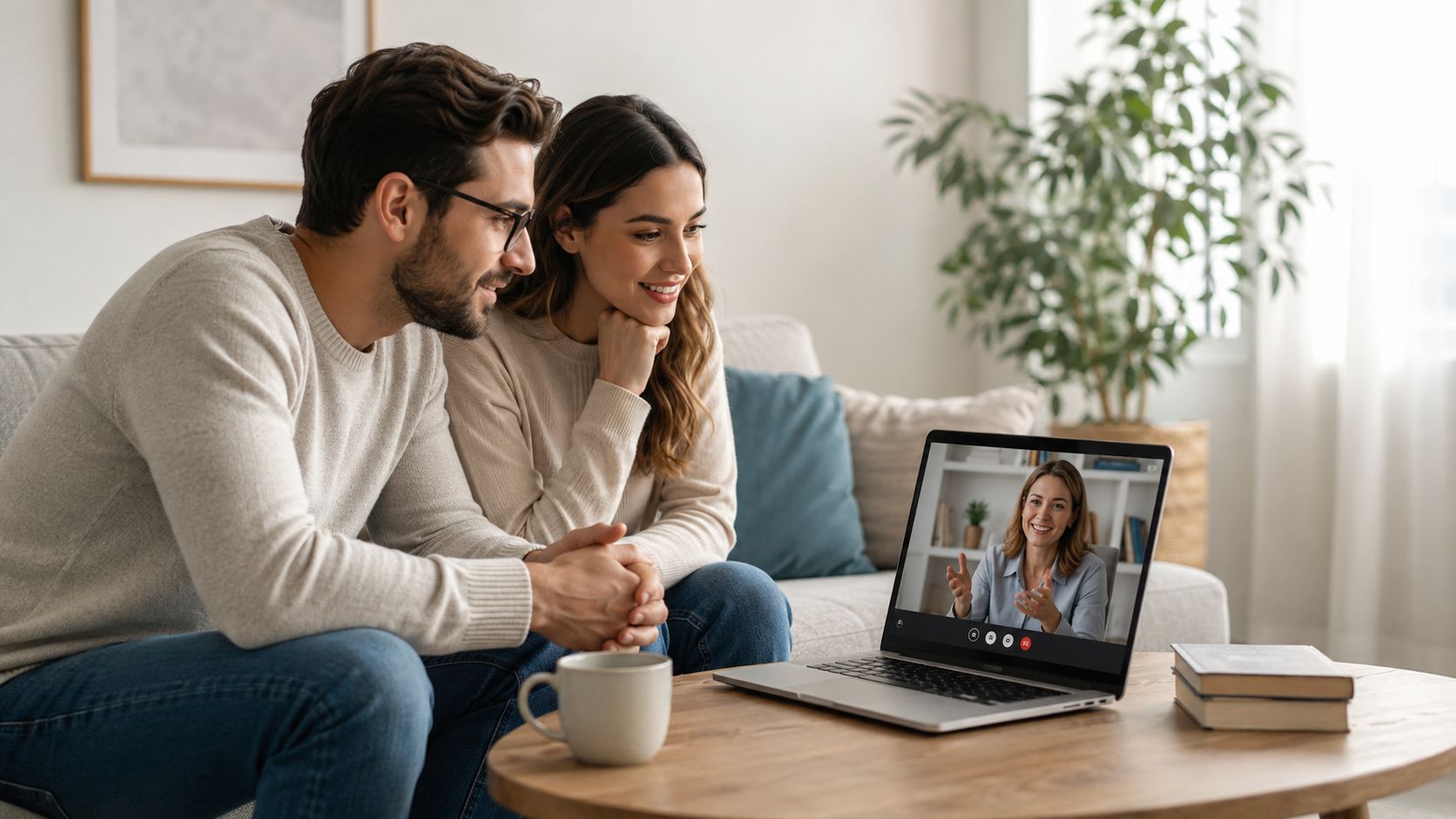
    A smiling couple sits on a couch, watching an online counseling session on a laptop.

    Welcome. Just by being here, you have taken a positive step forward. In India, life moves fast, and the pressures of work and family can strain even the strongest relationships. Seeking guidance to navigate these challenges is becoming a healthy, common choice.

    Online therapy offers a confidential, judgement-free space to talk things through. It solves practical problems like traffic and mismatched schedules, making it much easier to prioritise your relationship's well-being. This convenience helps you fit this important work into your real lives.

    What Does Online Therapy Actually Focus On?

    Good counselling helps you build a stronger foundation for the long run. It provides a dedicated time and space to work on what truly matters in a partnership. This helps you move forward with more understanding and compassion for each other.

    The process often helps you with:

    • Managing Stress and Anxiety: Learn healthier ways to handle outside pressures like workplace stress, so they don’t create friction at home.
    • Improving Communication: You will learn practical skills to express your needs and truly hear your partner, which helps reduce misunderstandings.
    • Building Resilience: Life brings unexpected challenges. Therapy helps you learn to face them as a team, turning tough times into opportunities to grow closer.
    • Enhancing Emotional Well-being: Explore ways to bring more happiness, gratitude, and genuine connection into your daily life.

    It’s important to clarify that any assessments or questionnaires your therapist uses are informational tools to start a conversation. They are not diagnostic tests. Their purpose is simply to offer insight into your relationship patterns and guide the sessions.

    Starting marriage counselling online is a powerful investment in your shared future. It’s about creating a partnership where you both feel seen, heard, and respected. This guide offers supportive takeaways so you can begin this journey feeling confident and prepared.

    Why More Couples Are Turning to Relationship Support

    Life today can feel like a constant juggle. Between work deadlines and family commitments, it’s understandable why many couples feel their connection starting to fade. The pressure can create distance, which is why so many are now using marriage counselling online to protect their bond.

    This is a proactive and positive shift in mindset. Instead of waiting for small issues to become bigger problems, couples are choosing to build a stronger foundation together. This shows a growing awareness that caring for your relationship's health is a sign of strength.

    A Cultural Shift Towards Personal Well-being

    In India, the way we think about marriage and relationships is evolving. People are increasingly taking charge of their own decisions, moving away from older models. This sense of personal ownership means we are also more invested in making sure our partnerships are truly happy and supportive.

    You can see this trend in recent data. A Jeevansathi report, for instance, highlighted a 43% rise in people seeking remarriage over the last decade. More telling is that self-managed profiles have jumped to 77%, showing that as people take charge, they also seek professional help through counselling to navigate relationship complexities.

    The privacy offered by online therapy is a significant reason for its growing popularity. It allows couples to get help without stigma or logistical headaches, which is especially helpful for those in smaller towns or with demanding jobs.

    Seeking support is not about admitting failure; it’s about choosing to invest in your shared happiness and well-being. It is a powerful statement that your relationship is a priority worth nurturing with the right tools and guidance.

    Addressing Modern Relationship Challenges

    For many couples, the search for help begins when they feel stuck in a cycle of arguments. They find it hard to stop arguing in relationships and reconnect on a deeper level. This is a very common starting point and the right time to bring in a professional.

    Online counselling creates a safe, structured space to understand these conflicts. A therapist can help you both see what is really driving the arguments—whether it is underlying anxiety, unresolved issues, or even symptoms of depression affecting your interactions.

    The goal is not to assign blame but to find kinder, more effective ways to communicate. By learning new skills, you can turn conflict into an opportunity for growth and build a stronger, more understanding bond. These tools help you create positive, lasting change.

    How a Typical Online Counselling Session Unfolds

    It’s natural to wonder what happens during an online couples therapy session. The process is designed to be straightforward and supportive. Think of it as a guided conversation in a safe, private space that just happens to be online.

    It starts with getting comfortable in a quiet spot where you won't be interrupted. You and your partner will log in at your scheduled time and meet your therapist on screen. The first few minutes are usually about helping you both feel at ease and building a sense of trust.

    Your therapist will likely start by asking what brought you to counselling and what you hope to achieve. This initial conversation sets a positive tone for your work together.

    The Structure of the Conversation

    During the session, the therapist acts as a neutral guide. Their role is not to take sides but to help you both see your communication patterns and recurring issues more clearly.

    This guided dialogue helps you to:

    • Talk to each other constructively: The therapist creates a space where you can express yourselves without the conversation escalating into an argument.
    • Understand the root of the problem: You’ll move past surface-level disagreements to uncover the real emotions and needs underneath.
    • Learn new tools: Your therapist might teach you practical skills, like how to listen with more empathy, that you can start using right away.

    These sessions take place on secure and reliable platforms. Therapists use professional tools, like HIPAA Compliant Video Conferencing Platforms, to protect your privacy. This ensures your discussions about sensitive topics like anxiety or workplace stress remain completely confidential.

    Focusing on Positive Growth and Well-being

    While addressing challenges is important, marriage counselling online also celebrates what is already good in your relationship. Your therapist will help you identify your strengths as a couple and find ways to build on them. The approach is grounded in fostering resilience, compassion, and your emotional well-being.

    The goal is not just to resolve conflict, but to actively bring more joy, understanding, and connection back into your partnership. Each session aims to leave you with something concrete to work on, helping you build a stronger relationship one step at a time.

    Sometimes, the therapist might suggest a brief individual check-in with each of you. Remember, any assessments used are for informational purposes only. They are not diagnoses but simply tools to help make your conversations more focused and productive.

    The Real Benefits of Choosing Online Therapy

    Choosing marriage counselling online comes with practical advantages that can make the entire process feel more approachable. For many couples, the greatest benefit is convenience. You can avoid traffic, arranging childcare, or rushing to an appointment after a long day.

    You and your partner can log in from your own home, a place where you already feel safe and comfortable. This familiar environment can reduce the anxiety that sometimes comes with discussing sensitive topics. When you are more relaxed, it is easier to be open and honest.

    Greater Accessibility and Choice

    Online therapy gives you access to a much wider range of experts. You are no longer limited to therapists in your immediate area. This means you can find someone who truly understands your specific challenges, whether it's navigating workplace stress or rebuilding trust.

    This broader selection allows you to find a professional whose style and expertise genuinely match your needs as a couple. Building this connection is key to feeling supported and making progress in therapy.

    The path through online therapy is designed to be clear and supportive, helping you build practical skills for a stronger, healthier relationship.

    Diagram illustrating the online therapy journey with steps: Consultation, Session, and Skills & Growth.

    As you can see, the process is a structured journey focused on giving you tools to create lasting change and improve your overall well-being.

    A Comparison to In-Person Counselling

    Deciding between online and in-person therapy comes down to what fits your life and relationship best. To help you weigh your options, here is a straightforward comparison.

    Online vs In-Person Marriage Counseling at a Glance

    This table breaks down the key differences between online and traditional in-person marriage counselling, helping you see which format might be the right fit for you.

    Feature Online Counseling In-Person Counseling
    Convenience Sessions from home, flexible scheduling. Requires travel to an office, fixed hours.
    Accessibility Wider choice of therapists, regardless of location. Limited to professionals in your local area.
    Comfort Familiar home environment can reduce stress. A neutral, professional setting may feel more focused for some.
    Privacy High level of privacy with no waiting rooms. Potential for running into others in a waiting room.

    Ultimately, both methods can be highly effective. The best format is the one you and your partner will consistently attend. Online therapy removes common barriers, making it easier to put your relationship first and build the resilience to handle challenges together.

    Finding Your Way Back to a Stronger Partnership

    It's common to love your partner deeply yet still feel that something is missing in the relationship. This is not a sign of failure but often a reflection of modern pressures. The demands of workplace stress, financial worries, and family dynamics can create distance between even the most loving couples.

    This is where professional support can make a real difference. Marriage counselling online creates a dedicated space to close that gap, focusing on your well-being as both individuals and a couple. It is a proactive step to nurture your bond and improve your connection.

    What's Behind the "Satisfaction Gap"?

    Recent studies highlight this challenge. An Ipsos survey found that while 67% of Indians describe their relationships as loving, the country ranked last out of 29 for partner satisfaction. This is a reminder that love alone does not always guarantee a happy partnership, which is why the demand for therapy is growing, as detailed in this report on online couples therapy counseling services from researchandmarkets.com.

    This gap between love and satisfaction is often where chronic anxiety and burnout can begin. Online therapy offers practical tools to address these issues directly. It helps you turn vague feelings of unhappiness into clear, manageable steps toward a more fulfilling connection.

    Building a More Resilient, Emotionally Close Relationship

    Good counselling is about building a foundation of resilience so you can face future challenges as a team. A therapist can help you find your way back to compassion for one another. This is especially important during times when you both feel drained or overwhelmed.

    Therapy is not about finding fault. It is a team effort to understand each other’s perspective, communicate more effectively, and intentionally create more positive, connected moments together. This focus on compassion and happiness is central to the process.

    Your sessions become a safe space to explore the real roots of conflict, whether they relate to money, parenting, or underlying symptoms of depression. By talking without fear of judgement, you can replace old arguments with genuine understanding. This process helps you build lasting emotional closeness and the kind of partnership you both truly want.

    How to Find the Right Therapist for You

    Hands holding a tablet displaying a profile screen with multiple user photos and star ratings.

    Finding the right person to guide you is the most important part of your marriage counselling online journey. The connection you build with your therapist is the foundation for making progress. It is crucial that you both feel comfortable and safe with the person you choose.

    A great place to start is by looking at a therapist’s areas of focus. Do they have experience with the challenges you want to work on, such as communication, intimacy, or navigating workplace stress? A therapist's profile should give you a clear picture of their expertise.

    Understanding Therapeutic Approaches

    Next, consider the therapist's approach. You might see terms like the Gottman Method, which focuses on friendship and conflict management, or Emotionally Focused Therapy (EFT), which centers on strengthening emotional bonds. A quick read about their methods can help you see if their style feels right for you.

    Here are a few things to look for in a therapist’s profile:

    • Specialisations: Do they have experience with the issues you're facing, like anxiety or depression?
    • Therapeutic Style: Does their approach sound like something you and your partner would be open to trying?
    • Experience: How long have they been practising? What’s their professional background?
    • Personal Fit: From their introduction, do they seem warm, professional, and approachable?

    This careful approach reflects a wider trend. India’s matrimony market is now an INR 1.2-1.4k crore industry where 90% of people say finding the ‘right person’ is their top priority, as detailed in India’s evolving matrimony market on redseer.com. That same desire for genuine compatibility is now shaping how we seek professional support.

    Remember, initial consultations and any assessments are for informational purposes, not for diagnosis. They help the therapist understand your situation and, just as importantly, help you decide if you have found the right fit. It is a two-way conversation.

    Platforms like DeTalks are designed to make this process simpler. You can filter professionals by their expertise, helping you find the right match to guide you toward better well-being and resilience. The goal is to feel empowered as you take this positive step for your relationship.

    Common Questions About Online Marriage Counselling

    Deciding to start marriage counselling online is a significant step, and it is natural to have questions. Feeling curious or even a bit hesitant is perfectly normal. Let's walk through some of the most common thoughts couples have before they begin.

    Getting a clearer picture of what to expect can help ease any anxiety and make you both feel more prepared. Our goal is to provide clarity so you can feel confident about this positive choice for your relationship's well-being.

    Is Online Marriage Counselling Really Confidential?

    Yes, it is. Reputable online platforms use secure, encrypted video technology to protect your privacy. Your conversations are kept completely private. Additionally, your therapist is bound by the same professional codes of confidentiality as they would be in a physical office.

    This commitment to security is what creates the safe, trusted environment needed for effective therapy. You can feel comfortable opening up about personal challenges without worrying about your privacy.

    What if My Partner Is Hesitant to Try Counselling?

    This is a very common challenge, so you are not alone. The key is often how you frame the conversation. Instead of focusing on problems, present it as a positive, proactive step—something you do for the relationship, together.

    A gentle approach often works best. You could suggest trying just one introductory session to see what it is like, with no pressure to continue. A good counsellor knows how to create a welcoming space that helps even a reluctant partner feel comfortable and heard.

    The most important factor for successful counselling is the connection you build with your therapist. The goal of the first session is simply to see if you have found a good fit for you both.

    Is Online Counselling as Effective as In-Person Therapy?

    Yes. A growing body of research shows that for most relationship issues, online therapy is just as effective as traditional sessions. What truly matters for success is the therapeutic relationship—the trusting bond you form with your counsellor—which can absolutely be built through a screen.

    Many couples find that being in their own home helps them relax and speak more freely. This can lead to more open conversations, helping them build resilience and improve their communication skills effectively.

    What Should We Expect in Our First Online Session?

    Your first session is best viewed as a relaxed introduction. It is a chance for the therapist to get to know you both, hear your story, and understand what you hope to gain from counselling. It is a supportive, non-judgmental starting point.

    It is also your time to get a feel for the therapist’s approach and ask questions. The aim is not to solve everything at once but to lay a foundation of trust and map out a supportive path forward for your shared well-being. This is the first step toward building a stronger, happier partnership.


    Ready to find a professional who can support your relationship journey? At DeTalks, we make it simple to browse and connect with qualified therapists who specialise in couples counselling. Find the right support for you and your partner on detalks.com.