Tag: online therapy india

  • Online Counselling for Students: Your Guide to Accessible Mental Health Support

    Online Counselling for Students: Your Guide to Accessible Mental Health Support

    Online counselling for students is mental health support that happens over the internet. It's like having a confidential chat with a professional via video call or messaging, designed to fit your busy university schedule. This approach to therapy gives you guidance on your own terms, from anywhere you feel comfortable.

    Why Online Counselling Is a Lifeline for Students

    Student life is an exciting time of growth, but it can also be filled with academic pressure and social challenges. Many students quietly navigate stress and burnout, trying to balance their studies with their personal lives. It's common to feel overwhelmed by it all.

    A smiling young man studies on his laptop while sitting cross-legged on a bunk bed in a dorm.

    This is where online counselling can be incredibly helpful. It provides a practical, private space to talk about feelings of stress, anxiety, or whatever is on your mind. You can connect from your phone or laptop without worrying about judgment.

    A Modern Solution for Today’s Challenges

    Imagine a student in a city like Pune, feeling panicked about upcoming exams. They know talking to someone could help but feel hesitant to reach out. This is a very common experience in India and around the world.

    Online therapy removes these barriers by offering a discreet first step toward support. It allows you to prioritise your mental health from the comfort of your own space.

    Seeking support is a sign of strength and self-awareness. It’s about giving yourself the tools to not just get through your academic years, but to truly thrive.

    More Than Just Managing Problems

    While online counselling is excellent for navigating challenges like anxiety and depression, its benefits don't stop there. It's also a space for proactive growth, helping you build skills that will last a lifetime.

    Think of it as building a personal toolkit for your well-being. You can work on:

    • Building Resilience: Learning to bounce back from academic or personal setbacks.
    • Developing Self-Compassion: Treating yourself with the same kindness you would offer a friend.
    • Enhancing Happiness: Discovering what brings you a genuine sense of joy and purpose.

    Counselling is an investment in your overall well-being. For those needing urgent help, other services are available, and some even provide Lifeline student discounts to make care more affordable.

    How Online Counselling Actually Works

    So, what does online counselling for students really look like? It's a private, supportive conversation with a trained professional without the need to travel to an office. You can connect from your dorm, the library, or anywhere you feel comfortable.

    These are structured, confidential sessions designed to help you understand what's going on in your life. You can use secure video calls, phone calls, or messaging, depending on what works best for you. The goal is to create a safe space where you can be yourself.

    A Partnership for Your Growth

    It's helpful to see therapy as a collaborative journey. A counsellor is there to guide you and ask thoughtful questions, helping you find your own answers. It's a partnership focused on your growth.

    Together, you can identify patterns, build healthier coping skills, and find practical ways to manage everything from deadlines to relationships. Whether you're dealing with anxiety or the early signs of burnout, counselling empowers you to build your own resilience.

    This approach helps with common student experiences like:

    • Managing Academic Pressure: Developing healthy ways to handle exam stress.
    • Improving Relationships: Learning to communicate more effectively with others.
    • Building Self-Confidence: Quieting your inner critic and learning to trust your abilities.
    • Navigating Life Transitions: Adjusting to new environments and figuring out what’s next.

    It’s Not Just About Solving Problems

    Online counselling isn't only for tough times, like dealing with workplace stress (or its academic equivalent) and depression. A big part of it is about building on your strengths through positive psychology. Sessions can be a space to become more resilient, learn self-compassion, and actively create a more fulfilling life.

    The goal isn’t just to feel less overwhelmed—it’s to genuinely feel better. It’s a proactive step toward creating a life that feels balanced and authentic.

    If you complete any initial assessments, remember they are simply informational tools. They are not a formal diagnosis but a starting point to help guide your conversation. The focus is always on supportive takeaways and building skills for the future.

    2. The Real Benefits of Choosing Online Therapy

    As a student, much of your life is already online, so it makes sense for mental health support to be there too. The biggest advantage of online counselling is convenience. You can have a session between classes or from your room without any travel time.

    This flexibility is a game-changer, meaning you don’t have to choose between your studies and your well-being. For students in areas with fewer mental health professionals, online platforms make expert help accessible.

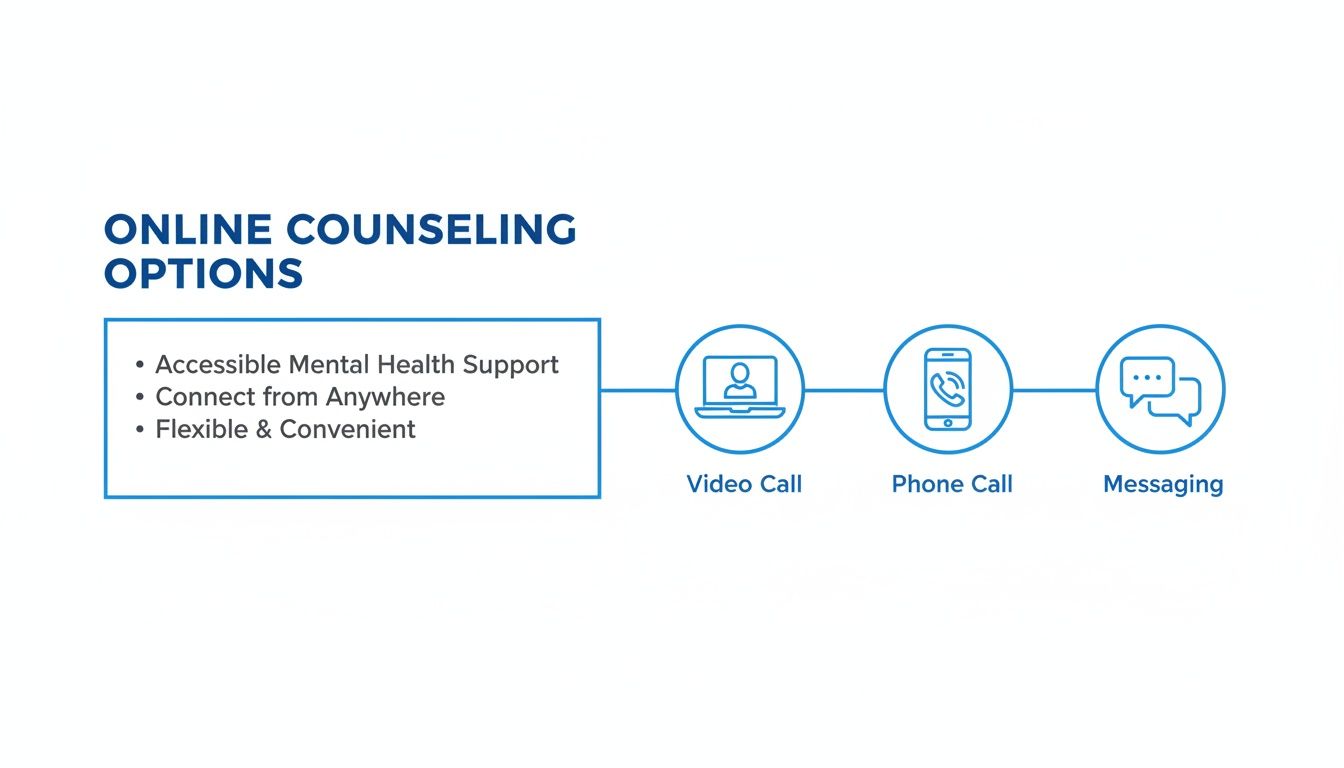
    You also have choices in how you connect with your counsellor. Most services offer secure and comfortable options.

    Online counseling options offering accessible, flexible mental health support via video call, phone call, or messaging.

    Whether you prefer a video call, a phone conversation, or messaging, you can find a format that feels right for you.

    Privacy and Affordability: A Student’s Best Friend

    Many students hesitate to seek help because of privacy concerns. Online counselling removes this barrier, allowing you to have a confidential conversation from your own room. This makes taking that first step much easier.

    Cost is another important factor. In India's competitive academic environment, accessible support is crucial. A 2024 study found that 40% of teenagers named anxiety as a major issue, highlighting a widespread need. Online platforms often have sessions priced between ₹500 and ₹1,500, making consistent help more affordable. You can learn more about these student mental health findings to understand the context.

    Building Skills That Last a Lifetime

    Getting support for immediate concerns like anxiety or depression is important, but therapy also helps you build a foundation for your future. It's like a gym for your mind, where you develop skills that will serve you long after graduation.

    The real power of online therapy is in building the resilience and self-awareness needed to navigate future challenges, from workplace stress to personal relationships.

    Through your sessions, you’ll develop a practical toolkit for life. This includes skills like:

    • Greater Resilience: Learning how to bounce back from setbacks without letting them derail you.
    • Self-Compassion: Learning to be kinder to yourself, especially during stressful times.
    • Emotional Regulation: Understanding and managing your feelings in a constructive way.

    This kind of support empowers you to do more than just cope—it helps you thrive. Ultimately, online counselling for students is an investment in your long-term happiness.

    How to Find the Right Online Counsellor for You

    Finding a counsellor you connect with is one of the most important parts of the journey. The relationship you build is what creates a safe space for growth. It’s about finding someone who understands you.

    Think of it like finding a great mentor. You need to feel comfortable and heard. Taking the time to choose the right person is an important act of self-care.

    What to Look for in a Counsellor’s Profile

    When browsing profiles, it helps to know what to look for to find someone who supports student well-being. A good profile will give you a sense of the person and their approach.

    First, check their qualifications and specialisations. Are they experienced in helping with academic stress, anxiety, or feelings of depression? Most counsellors list their areas of expertise, making it easier to find a match.

    Next, look at their therapeutic approach. Some use cognitive-behavioural techniques, while others may take a different path. There is no "best" method—it’s about finding a style that resonates with you and your goals for counselling.

    Using Platforms to Find Your Match

    Modern platforms make it easier to find the right professional for you. You can use filters to narrow your search, making the process of finding online counselling for students less daunting.

    Try using filters to specify what's important to you:

    • Specialisation: Look for experts in student issues, exam stress, or building resilience.
    • Language and Gender: Choose someone you feel you can communicate with openly.
    • Availability: Find a counsellor whose schedule aligns with your academic timetable.

    Some students may need broader services, and platforms can help you find online clinics, including those specializing in ADHD. The goal is to use these tools to create a shortlist of potential counsellors.

    Remember, you are in control of this process. It’s okay to take your time to find someone who feels like a genuine partner in your journey toward better well-being.

    Don't hesitate to ask questions during an introductory chat. A brief call can tell you a lot about a counsellor's style. Prepare a few simple questions to see if you connect with them.

    For example, you could ask:

    • "How do you usually work with students feeling burnt out?"
    • "What is your approach to helping someone build confidence?"
    • "Can you tell me what a first session with you is like?"

    Their answers will give you a feel for their warmth and expertise. This helps you make a confident choice about who to trust with your thoughts and feelings.

    How to Prepare for Your First Online Session

    It’s completely normal to feel a little nervous before your first therapy session. A little preparation can help calm those nerves and ensure you get the most out of the conversation. The goal is simply to set yourself up for an open and productive chat.

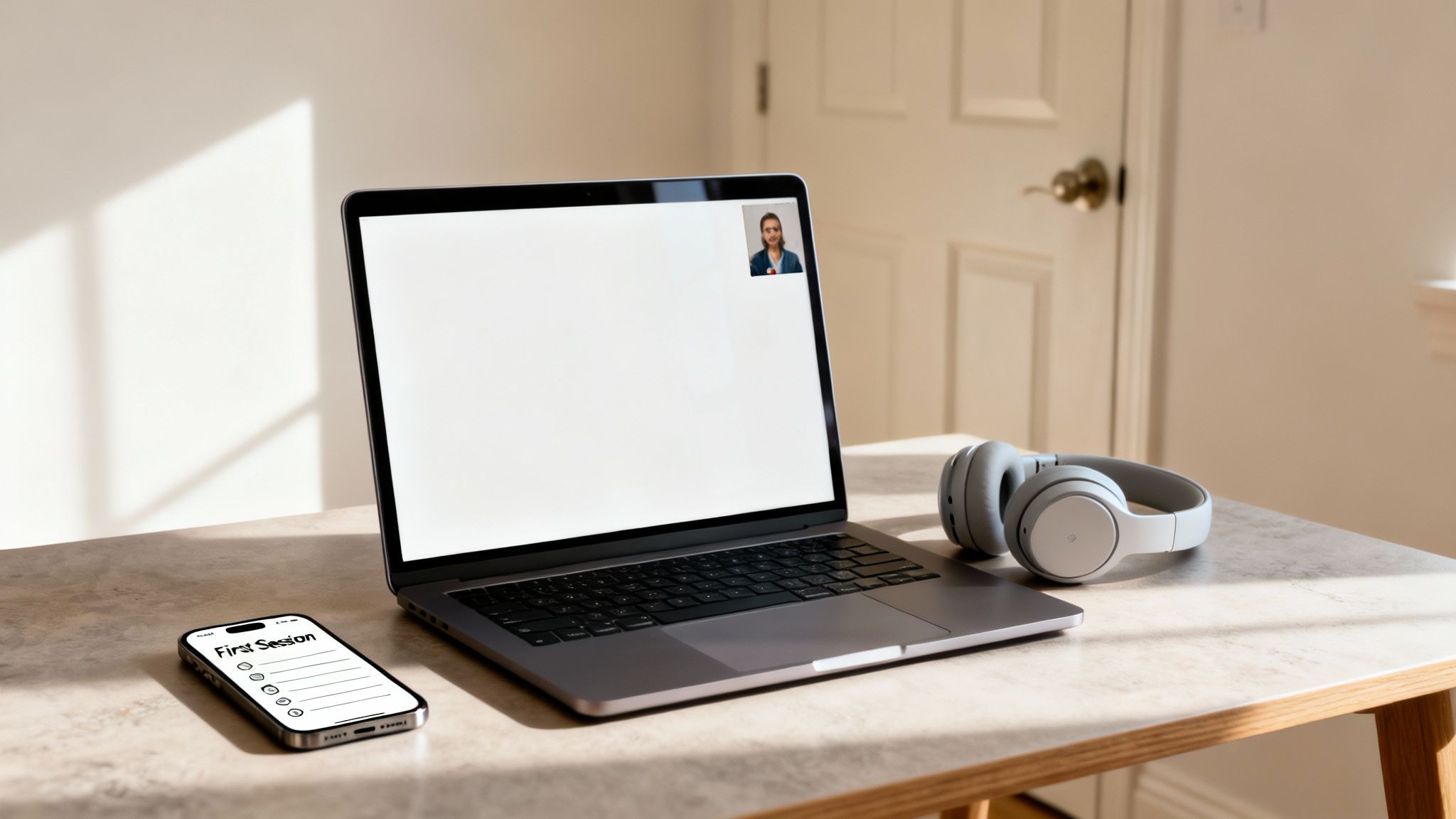
    A laptop showing a video call with a woman, a smartphone with a checklist, and headphones on a desk.

    A few simple steps can make a big difference in your first experience with online counselling for students. Preparing your space and your thoughts helps you begin this journey with more confidence.

    Creating Your Safe Space

    Your physical environment can impact how comfortable you feel mentally. Before your session, find a quiet, private spot where you won't be interrupted. This could be your dorm room, a quiet corner at home, or anywhere you can speak freely.

    Using headphones can enhance privacy and help you focus on the conversation. Confidentiality is key to good therapy, and securing your physical space is the first step in building that trust.

    Next, do a quick technology check a few minutes before you begin:

    • Check Your Connection: Ensure your Wi-Fi is stable to avoid interruptions.
    • Test Your Tech: Check your camera and microphone to make sure they're working properly.
    • Minimise Distractions: Close unnecessary tabs and silence your phone.

    Thinking About What to Discuss

    It can be helpful to think about what brought you to counselling. You don't need a prepared speech, but having a few notes can provide a starting point. Consider any stress, anxiety, or feelings about your well-being you've recently noticed.

    It's okay if you don't know where to start. Your counsellor is trained to guide the conversation in a gentle and supportive way.

    Your first session is about getting to know each other and seeing if it’s a good fit. There’s no pressure to share anything you’re not ready to discuss. The goal is to start a conversation that can lead to greater resilience and clarity.

    Building Your Toolkit for Resilience and Well-Being

    Think of online counselling as a workshop for your mind, not just a quick fix. It’s a space where you actively build a personal toolkit for life. The focus is on creating lasting, positive change.

    The goal is to equip you with essential skills for your future, like resilience—the inner strength to bounce back from setbacks. It also involves fostering self-compassion, which means treating yourself with the kindness you'd show a friend.

    From Coping to Thriving

    It’s easy to fall into unhelpful coping habits, especially under student pressure. A student in Mumbai might stay up all night gaming to avoid thinking about exams. Research shows that over 40% of Indian students cope by isolating themselves, while less than 15% choose healthier outlets like counselling or exercise. You can read the full report on student stress management to learn more.

    Online counselling for students offers a constructive alternative, helping you replace avoidance with proactive strategies. You learn to see challenges as opportunities to grow and apply new skills. It's about building a purposeful life with stronger relationships and a greater sense of well-being.

    Remember, progress is a journey. Each session is a step toward building a stronger, more balanced you, and seeking support is a powerful investment in your future.

    The tools you gain in counselling will prepare you for future pressures and help you create a more fulfilling life. It is one of the most meaningful investments you can make in your long-term emotional health.

    A Few Common Questions We Hear

    It's natural to have questions before starting therapy. Asking them is a great sign that you're taking this step seriously. Let's address some common queries students have about online counselling.

    Many students wonder if online therapy is as effective as meeting in person. For common student challenges like stress, anxiety, and mild depression, the answer is yes. Research shows online therapy can be just as impactful, as the connection with your counsellor is what matters most.

    Is Online Counselling as Effective as In-Person Therapy?

    Yes, for many student challenges, online counselling is a highly effective option. It delivers professional support in a way that fits a busy schedule. Feeling heard and understood by your therapist is the most important part of the process.

    For more complex mental health conditions, a therapist might suggest a blend of online and in-person care. But for managing exam pressure or feeling overwhelmed, online counselling is a proven way to build resilience.

    How Is My Privacy Protected During Online Sessions?

    Your privacy is a top priority. Reputable online counselling platforms in India follow strict confidentiality laws. They use secure, encrypted technology for all communications to ensure your conversations remain private.

    You can also take steps to protect your privacy. Check the platform's privacy policy before signing up. During your session, find a quiet space and use a secure internet connection.

    “That is perfectly fine and very common. You don't need to have everything figured out before you start. Your counsellor is trained to guide the conversation.”

    Many students worry about what to talk about in their first session. You don't need to have a script prepared. Your counsellor is skilled at guiding the conversation and will help you open up in a comfortable way. The first meeting is simply a chance to get to know each other.


    Ready to find a professional who gets it? DeTalks helps you connect with qualified counsellors and therapists who specialise in the pressures and challenges of student life. Take a look at our directory and start your journey towards feeling more balanced and in control at https://detalks.com.

  • A Compassionate Guide to Online Therapy in India

    A Compassionate Guide to Online Therapy in India

    Deciding to start therapy is a courageous step toward prioritizing your well-being. If you're looking into online therapy in India, you’ve found a path that is flexible, private, and genuinely supportive. Think of this guide as a warm conversation, designed to help you confidently find the right support.

    Starting Your Online Therapy Journey in India

    Choosing to seek support is a powerful first move toward better mental health. It’s an act of acknowledging that everyone needs a safe space to explore their thoughts and feelings. Online therapy makes getting that support simpler and more discreet than ever before.

    This modern approach to counselling brings a qualified professional to you, on your terms. Instead of commuting, you can connect with a therapist from wherever you feel most comfortable. It removes traditional barriers like distance, busy schedules, and the hesitation some feel about seeking help.

    A New Era of Accessible Well-being

    The shift to digital mental health support is growing quickly. In India, the online mental health market was valued at around USD 133.47 million and is projected to reach USD 451.73 million by 2033. This growth is driven by better internet access and a welcome cultural shift where talking about mental health is becoming more common. You can read more about the growth of India's online mental health market.

    This expansion means more options and easier access for everyone. It shows we are moving toward a future where seeking help is seen as a proactive step toward a stronger, more resilient life.

    Here is a quick summary of what online therapy in India offers.

    Aspect Key Benefit
    Accessibility Connect with a therapist from anywhere, removing geographical barriers.
    Convenience Sessions fit into your schedule, saving you travel time and hassle.
    Privacy Discuss personal matters from the comfort and confidentiality of your own space.
    Choice Access a wider pool of therapists with diverse specialisations.

    Ultimately, online therapy makes professional support a practical and realistic option for more people across the country.

    What Can Online Therapy Help With?

    Online counselling is a valuable tool for personal growth, helping you build resilience for life's ups and downs. It provides a confidential space to explore a wide range of concerns, from everyday challenges to personal development.

    Here are a few areas where therapy can make a real difference:

    • Managing Daily Challenges: Learn effective ways to handle workplace stress, anxiety, and burnout, creating a healthier work-life balance.
    • Navigating Emotional Difficulties: A professional can guide you through feelings of depression, grief, or difficult experiences with empathy and practical support.
    • Fostering Positive Growth: Therapy isn't just about problems; it helps you cultivate more happiness, self-compassion, and resilience so you can thrive.
    • Improving Relationships: Understand communication patterns and build stronger, healthier connections with your partner, family, and friends.

    A friendly reminder: If you come across online mental health assessments, please remember they are for informational purposes only. They can offer useful insights to discuss with a therapist, but they are not a substitute for a professional diagnosis.

    At its core, online therapy is about empowering you to take charge of your own well-being. It gives you the tools, support, and understanding to navigate life with more confidence and clarity.

    Why Online Counselling Is Gaining Trust in India

    More people across India are choosing online counselling as a practical and empowering way to care for their mental health. This modern approach is breaking down long-standing barriers, making professional support more accessible. It’s like having a trusted guide for your personal journey, available from the comfort of your home.

    Online therapy directly addresses common hurdles, like the difficulty of finding a qualified therapist in a smaller town. It also respects the discomfort many feel about visiting a clinic in person.

    Image

    This shift is particularly important in India, where there's a significant need for mental health support. Online counselling acts as a crucial bridge, connecting people to help while offering a level of privacy that helps overcome hesitation. You can learn more about this and understand more about this treatment gap.

    Overcoming Traditional Barriers with Ease

    A major benefit of online therapy is that it removes geographical boundaries. Living outside a major Indian city can make finding a specialist difficult. Online platforms open up a vast network of professionals from across the country.

    This means you can connect with a therapist who has the right qualifications and understands your cultural background. Whether you're navigating workplace stress, anxiety, or relationship issues, technology gives you choices to find a genuine connection.

    The convenience is also a significant advantage. Online sessions can fit into a lunch break or evening, making consistent support a realistic part of a busy routine.

    A Focus on Privacy and Comfort

    For many, the thought of being seen at a therapist's office is a barrier. Online counselling offers a level of confidentiality that makes taking the first step feel much safer. Your sessions take place in your own secure space.

    This sense of privacy encourages more open and honest conversations. When you feel at ease, it's easier to talk about sensitive topics, whether it's feelings of depression or personal insecurities.

    Online therapy isn’t just about talking through problems; it’s a proactive step toward building a healthier, more balanced life. It empowers you to invest in your own well-being on your own terms.

    Cultivating Resilience and Positive Growth

    While therapy is invaluable for managing challenges like anxiety and depression, its benefits extend much further. It is also a powerful space for personal development and building a positive mindset. Online counselling provides a dedicated space to learn skills that help you flourish.

    You can work with a therapist to strengthen your emotional resilience, making you better equipped to handle life's challenges. Sessions can focus on learning self-compassion, practising mindfulness, or finding more joy in daily life.

    • Building Resilience: Learn how to bounce back from setbacks with greater strength.
    • Enhancing Self-Awareness: Gain a clearer understanding of your thoughts, feelings, and actions.
    • Improving Relationships: Develop healthier ways to communicate and connect with others.
    • Finding Purpose: Explore what truly matters to you and work toward a more meaningful life.

    The growing trust in online therapy in India comes from its people-first approach. It meets you where you are, respects your privacy, and gives you tools not just to cope, but to thrive.

    Navigating Costs and Platform Features

    Thinking about therapy is a big step, and it's natural to wonder about the cost. Investing in your mental health is one of the best things you can do. Let's walk through what to expect financially and what to look for in an online platform.

    The good news is that online therapy often has clear pricing. In India, you can typically expect to pay between ₹1,200 and ₹2,500 per session. This is often more affordable than traditional therapy, as online platforms have lower overhead costs. Reputable platforms use encrypted systems to protect your privacy, following Indian legal standards. You can explore the legal requirements for online therapy in India.

    Image

    Understanding the Pricing Models

    As you explore different platforms, you'll find a few payment structures. These options are designed to fit your budget and your well-being goals.

    Here are the three most common models:

    • Pay-Per-Session: This is the most straightforward option, where you pay for one session at a time. It’s perfect for flexibility if you're not ready to commit to a fixed schedule.
    • Monthly Subscriptions: Many services offer a monthly plan with a set number of sessions for a flat fee. This is often more economical if you plan on regular weekly sessions.
    • Package Deals: Some platforms let you buy a bundle of sessions upfront at a discounted rate. This is a great middle ground if you want to commit to a few months of therapy.

    The cost may also reflect the therapist's experience. A seasoned psychologist will naturally have different rates than a counsellor who is newer to the field.

    Key Platform Features to Look For

    While price is important, the platform's features will shape your experience. A great platform is more than a video chat tool; it's a supportive environment built to help you feel safe.

    Think of these features as the support system for your therapy. They make the process smoother and more secure, so you can focus on your growth and healing.

    When comparing options, keep an eye out for these essentials. They are what separate a high-quality service from a basic one, especially when you're exploring topics like anxiety, workplace stress, or building resilience.

    Essential Tools for a Better Experience

    A well-designed platform should feel easy and intuitive. The right tools make a big difference in your comfort and progress.

    Make sure the platform includes:

    • Secure Video and Messaging: End-to-end encryption is essential for privacy. A secure chat feature is also a plus for connecting with your therapist between sessions.
    • Easy Scheduling and Reminders: A simple interface for booking appointments makes life easier. Automatic reminders are also helpful for busy schedules.
    • Resource Libraries: Many platforms offer articles, worksheets, or guided meditations on topics like depression or mindfulness, which can support your sessions.
    • Digital Journaling Tools: Some services have a private in-app journal. This is a great feature for noting down thoughts to share with your therapist.

    Choosing the right online therapy in India comes down to balancing cost, therapist fit, and platform features. Knowing what to look for will help you make a confident choice.

    How to Find the Right Therapist for You

    Finding the right therapist is the most important part of your journey. The connection you build with your counsellor is the foundation for your progress. The goal is to find the best therapist for you, based on your unique needs and personality.

    This is a personal decision, so let's walk through how to check qualifications and what to ask. Considering the cultural context is also a key part of finding a good fit in India.

    Start with Qualifications and Specialisations

    First, ensure the professional you choose is properly qualified. Look for counsellors with at least a master's degree in psychology, counselling, or a related field. Reputable platforms like DeTalks vet their professionals, but it's always good practice to check credentials.

    Next, consider their area of specialisation. Therapists often focus on specific concerns. If you're dealing with workplace stress and burnout, a counsellor who specialises in career-related issues will be a better fit.

    Most platforms have filters to help you search by:

    • Issues Addressed: Look for keywords that resonate with you, like anxiety, depression, relationship troubles, or grief.
    • Therapeutic Approach: You might see terms like CBT (Cognitive Behavioural Therapy). A quick search can help you see if their style aligns with your needs.
    • Experience Level: Decide if you'd prefer someone with decades of experience or a newer therapist with fresh perspectives.

    The Importance of Cultural and Linguistic Connection

    In a country as diverse as India, feeling understood is crucial. A therapist who gets the cultural nuances of your life can offer more relevant guidance. This shared understanding helps build trust faster.

    Language is another important factor. Expressing complex emotions is easier without a language barrier. Most online therapy in India platforms let you filter for therapists who speak your preferred language, whether it's Hindi, Tamil, Bengali, or English.

    Choosing a therapist who understands your world, both culturally and linguistically, helps create a safe and effective therapeutic space. It means you don't have to spend your sessions explaining the context of your life.

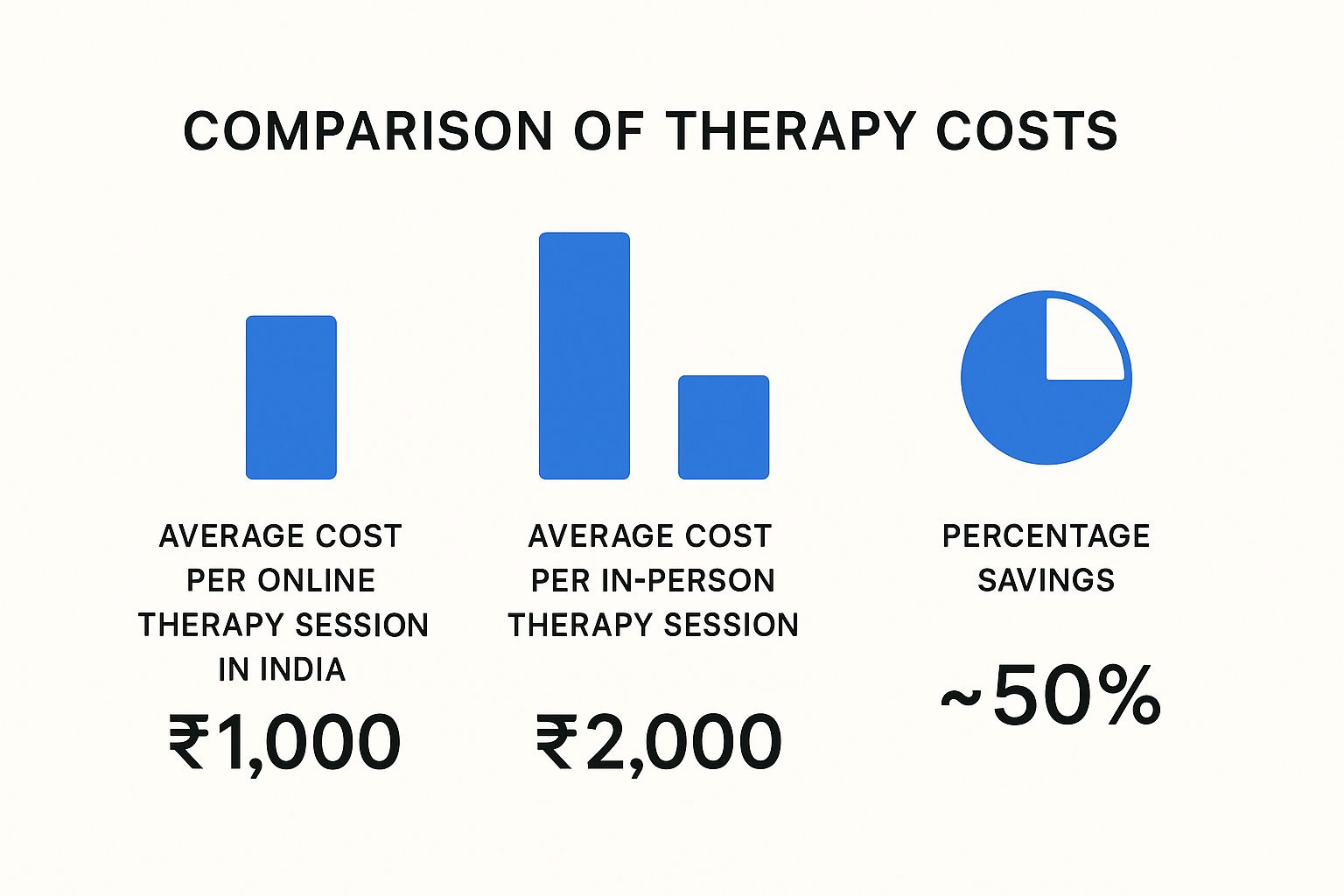
    Cost is also a practical consideration. As this chart shows, online therapy can be a more affordable and accessible option.

    Image

    The data here shows that online sessions can be up to 50% more affordable, which makes consistent support possible for more people.

    Questions to Ask in Your First Consultation

    Most platforms offer a brief initial consultation, often for free. This is your chance to see if you connect with the therapist. Remember, it's a two-way conversation.

    Don't hesitate to ask questions. A good therapist will welcome them and provide the clarity you need.

    Here’s a quick checklist to help you choose the right therapist.

    Checklist for Choosing Your Therapist

    Factor to Consider What to Look For
    Credentials & Education At least a master's degree in psychology or a related field. Licensed and registered with a professional body.
    Specialisation Experience and training in the specific issues you're facing (e.g., anxiety, relationships, trauma).
    Therapeutic Approach A style that resonates with you. Do you prefer a structured, goal-oriented approach like CBT, or something more exploratory?
    Cultural & Linguistic Fit Someone who understands your cultural background and speaks your preferred language fluently.
    Communication Style Do they sound warm, empathetic, and non-judgemental? Do you feel heard and respected during the initial consultation?
    Logistics & Policies Clear policies on session length, fees, cancellations, and how to communicate between sessions.
    Your Gut Feeling Do you feel a sense of comfort and safety talking to them? This is often the most important factor.

    After reviewing your options, you should have a clearer idea of who is the best fit for your mental health journey.

    Listen to how you feel during the conversation. Do you feel seen, respected, and comfortable? Trust your intuition. A warm, non-judgemental presence is just as important as qualifications.

    Preparing for Your First Online Session

    It’s completely normal to feel a little nervous before your first therapy session. Taking this step is an act of self-care, and it's natural to wonder what it will be like. Let's walk through what to expect so you can feel more at ease.

    Think of this first meeting as a conversation. It's a chance for the therapist to understand what brought you to them, and for you to see if their style feels right. The goal is to make a connection and set the stage for your work together.

    Image

    Setting the Stage for a Successful Session

    A little preparation can make a big difference. The most important step is creating a comfortable, private environment. This is your safe space to speak freely without worry, which is essential for building trust.

    Before your session, run through this quick checklist:

    • Find a Quiet Spot: Choose a room where you can be alone. Using headphones can increase privacy and improve sound quality.
    • Check Your Tech: A few minutes beforehand, make sure your internet, camera, and microphone are working well.
    • Minimise Distractions: Silence your phone and close other tabs on your computer. Giving the session your full attention honors the time you've set aside for your well-being.

    What to Expect During the Conversation

    Your therapist will likely start by introducing themselves and explaining how they work, including confidentiality. They will then gently guide the conversation to get to know you better. You are always in control of what you choose to share.

    The conversation may cover areas such as:

    • What prompted you to seek therapy now.
    • The challenges you're currently facing, like workplace stress or anxiety.
    • A little about your personal history.
    • What you hope to achieve through counselling.

    The first session is a two-way street. It’s as much about you seeing if the therapist is a good fit as it is about them getting to know you. Pay attention to how you feel—are you heard, respected, and understood?

    Making the Most of Your First Meeting

    To feel even more prepared, you might jot down a few thoughts beforehand. This is just a simple way to gather your thoughts. There's no pressure to have it all figured out; your therapist is there to help you connect the dots.

    You could think about:

    1. What are my main concerns? List the key things you want to work on, like a specific feeling such as depression or a difficult situation.
    2. What are my goals? Think about what change you'd like to see, such as learning new coping skills or building more resilience.
    3. What questions do I have? You can ask your therapist about their experience, their approach, or what future sessions might look like.

    Remember, any assessments you've taken on a platform like DeTalks are informational tools, not a diagnosis. You can bring up the results as a starting point for discussion.

    Preparing for your first online therapy in India session is about creating a space for honesty and openness. These small steps set you up for a positive, empowering experience.

    Common Questions About Online Therapy

    Taking the first step into online therapy in India is a significant one. It’s natural to have questions as you consider a new way to support your well-being.

    To help provide clarity, here are some straightforward answers to common questions. This can help quiet any doubts so you can move forward with confidence.

    Is Online Therapy as Effective as In-Person Therapy?

    This is a common question, and for many people, the answer is yes. Research shows that for issues like anxiety, stress, and mild-to-moderate depression, online counselling is just as effective as meeting in person.

    The key to successful therapy is the relationship you build with your counsellor. For many, the convenience of online sessions means they can attend more consistently, which is a major factor in making progress. The best option is always what feels right for you and fits into your life.

    How Is My Privacy Protected During Online Sessions?

    Your privacy is the foundation of good therapy. Reputable online platforms in India use end-to-end encryption for all communications. This means your conversation is secure between you and your therapist.

    These platforms are also bound by data protection laws like the Mental Healthcare Act. It's always a good idea to review a platform's privacy policy. On your end, finding a private space for your sessions adds another layer of confidentiality.

    "Confidentiality is the cornerstone of effective therapy. A secure digital environment isn't just a feature; it's a promise that allows individuals to be vulnerable, explore their deepest concerns, and engage in the healing process with complete trust."

    Knowing a platform is secure helps you relax and open up, which is essential for building trust with your therapist.

    What if I Don’t Connect With My Therapist?

    It happens, and it is completely okay. Finding the right therapist is personal, and sometimes the connection isn't there. A strong therapeutic relationship is vital for progress.

    Most online platforms understand this and make it easy to switch to a new counsellor. Don't be discouraged if the first one isn't the right fit. See it as part of the process of finding the best person to support your mental health journey.

    Is Online Therapy Suitable for Severe Mental Health Issues?

    Online therapy is a fantastic tool for a wide range of challenges. It is excellent for navigating workplace stress, relationship issues, or managing symptoms of anxiety and depression. It provides accessible support to build emotional resilience.

    However, it is not a one-size-fits-all solution. For severe conditions like psychosis or active suicidal thoughts, in-person care is often the safer choice. A professional online therapist will recognize this and help guide you to appropriate in-person resources if needed.

    How Does Online Therapy Promote Positive Psychology?

    Therapy is not just about addressing difficulties; it's also a powerful space for building on your strengths. It’s about learning to thrive. Online platforms make this proactive side of mental well-being very accessible.

    A therapist can guide you in positive psychology, helping you cultivate a happier, more meaningful life.

    • Building Resilience: Learn skills to bounce back from setbacks with a flexible mindset.
    • Practising Self-Compassion: Work on developing a kinder inner voice, which is fundamental to emotional health.
    • Cultivating Happiness: Discover practical techniques to focus on what's good and find more joy in the everyday.

    Therapy is not a promise of a cure. Instead, it offers a supportive space and a toolkit of skills to help you navigate your own mind with more confidence and clarity.


    At DeTalks, we're here to help you find the right support for your unique path. Our platform gives you access to a wide network of qualified professionals and scientifically validated assessments to guide you toward greater self-awareness and emotional balance. Take the next step today by exploring our resources and connecting with a therapist who understands your needs at https://detalks.com.

    Article created using Outrank