
Your sister says her colleagues are exchanging messages about her. Your father has stopped sharing personal details because he fears relatives may use them against him. You want to help, but any suggestion of therapy seems to confirm that you're taking someone else's side. If this feels familiar, it can be frightening and exhausting for everyone involved.
Paranoid personality disorder (PPD) involves a lasting pattern of mistrust and suspicion. It isn't a character flaw, and support is possible, but treatment usually begins with listening and careful assessment rather than arguing about what the person believes. In India, where access to mental-health care can be difficult, families may also need practical ways to seek guidance even when their loved one isn't ready to attend.
Understanding Paranoid Personality Disorder Treatment
Someone experiencing persistent mistrust might interpret a colleague's brief reply as hostility or feel unsafe sharing ordinary personal information with a close relative. To them, these concerns can feel real and urgent. Telling them they're being irrational or demanding that they “just trust” others may increase distress rather than open a conversation.
Paranoid personality disorder treatment generally starts by understanding the person's experiences and checking what may be contributing to them. A qualified clinician can assess whether the pattern fits PPD or whether another concern, such as depression, anxiety, substance use, or a psychosis-spectrum condition, needs attention. Only a qualified clinician can diagnose PPD.
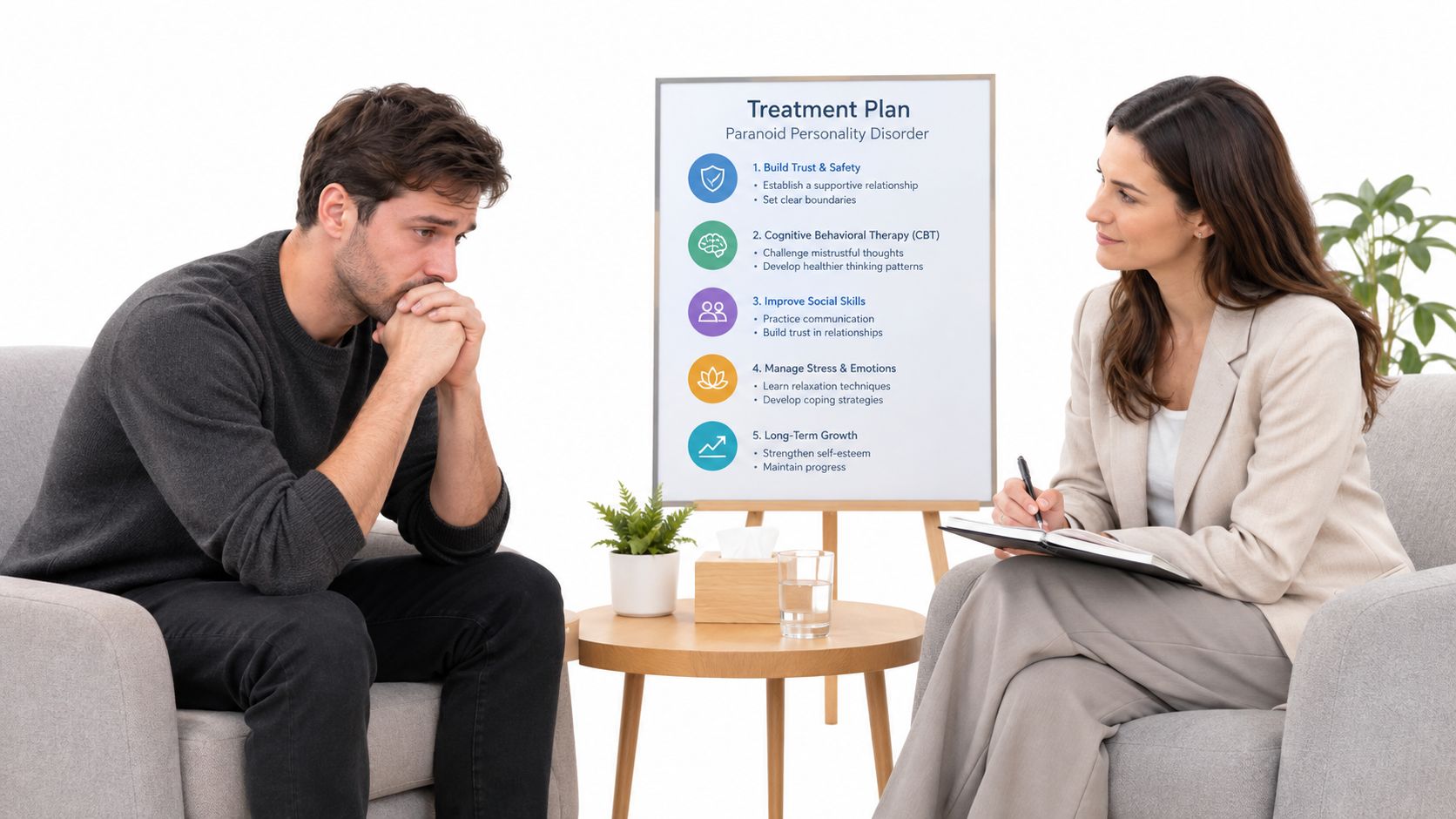
What treatment may involve
Psychotherapy is the main treatment approach. It can offer a steady place to examine stressful interactions, practise coping strategies, and build a working relationship at a pace the person can tolerate. Trust may take time, so consistent, respectful communication is part of the work, not a hurdle the person should be expected to overcome immediately.
Medication isn't usually used to treat the underlying personality pattern. A psychiatrist may consider it for specific symptoms, a short-term crisis, or a coexisting condition. Family support can also help, provided the person consents and confidentiality is respected.
Online assessments and screening tools can help someone organise questions or notice concerns worth discussing. They're informational, not diagnostic, and a score cannot confirm PPD. A clinician's assessment is needed to understand the person's history, current symptoms, safety, and circumstances.
Treatment doesn't promise that every suspicion will disappear or that relationships will become easy. It can help people find ways to manage distress, respond more flexibly, and protect their well-being. The next step is often not persuading someone to accept a label, but making professional support feel safer and less like a confrontation.
What Paranoid Personality Disorder Actually Is
PPD is a long-standing pattern of mistrust and suspicion that affects how someone interprets other people's actions. A person may assume that others intend harm, deceive them, or plan to take advantage of them, even when there isn't clear evidence. The experience can interfere with relationships and work, and it may leave the person feeling guarded or isolated.
A useful analogy is a smoke alarm that goes off when there's no fire. The alarm is real, and the person's fear deserves care, but the alarm may be responding to an ordinary event as though it signals danger. That differs from occasional suspicion, which people feel at times, and from paranoia that appears in episodes linked to another mental-health condition or circumstance.
Why assessment needs care
Cultural context matters, too. Caution may be understandable in response to a real experience or social situation, so clinicians need to understand the person's circumstances rather than mistake every expression of mistrust for a disorder. Suspiciousness can also overlap with symptoms of depression, anxiety, substance-use problems, or psychosis-spectrum conditions, which may call for different care.
Indian research illustrates why screening alone isn't enough. In a feasibility study of psychiatric outpatients, researchers used the Standardized Assessment of Personality–Abbreviated Scale (SAPAS) and then the International Personality Disorder Examination. At the recommended SAPAS cutoff score of 4, its positive predictive value was 26.3%: roughly one in four people who screened positive were confirmed as having a personality disorder through diagnostic interviewing. The study estimated personality-disorder prevalence at 11.1% in the assessed outpatient sample, while cautioning that the estimate was probably low because diagnostic interviews focused on people identified as high risk (the Indian outpatient assessment study).
The practical lesson is simple. A screening result can guide a conversation, but it can't settle a diagnosis. Assessments are informational, not diagnostic; a clinician should consider the person's history, symptoms, daily functioning, and possible coexisting conditions before recommending treatment.
Why Psychotherapy Comes First
After a tense conversation, a person with paranoid personality disorder (PPD) may remain convinced that someone intended harm. Therapy can help them examine what happened and consider other ways to understand it, at a pace that feels safe. It addresses patterns in thinking and relationships that medication alone does not change.
India's National Academy of Medical Sciences guidance recommends psychotherapy as a first-line treatment for personality disorders, including PPD (India's National Academy of Medical Sciences guidance). The guidance describes treatment as ideally long-term, consistent in its approach, connected with other services when needed, and focused on helping the person engage with care. The strength of evidence for specific approaches can vary, so treatment should be individualized rather than treated as a guaranteed fix.
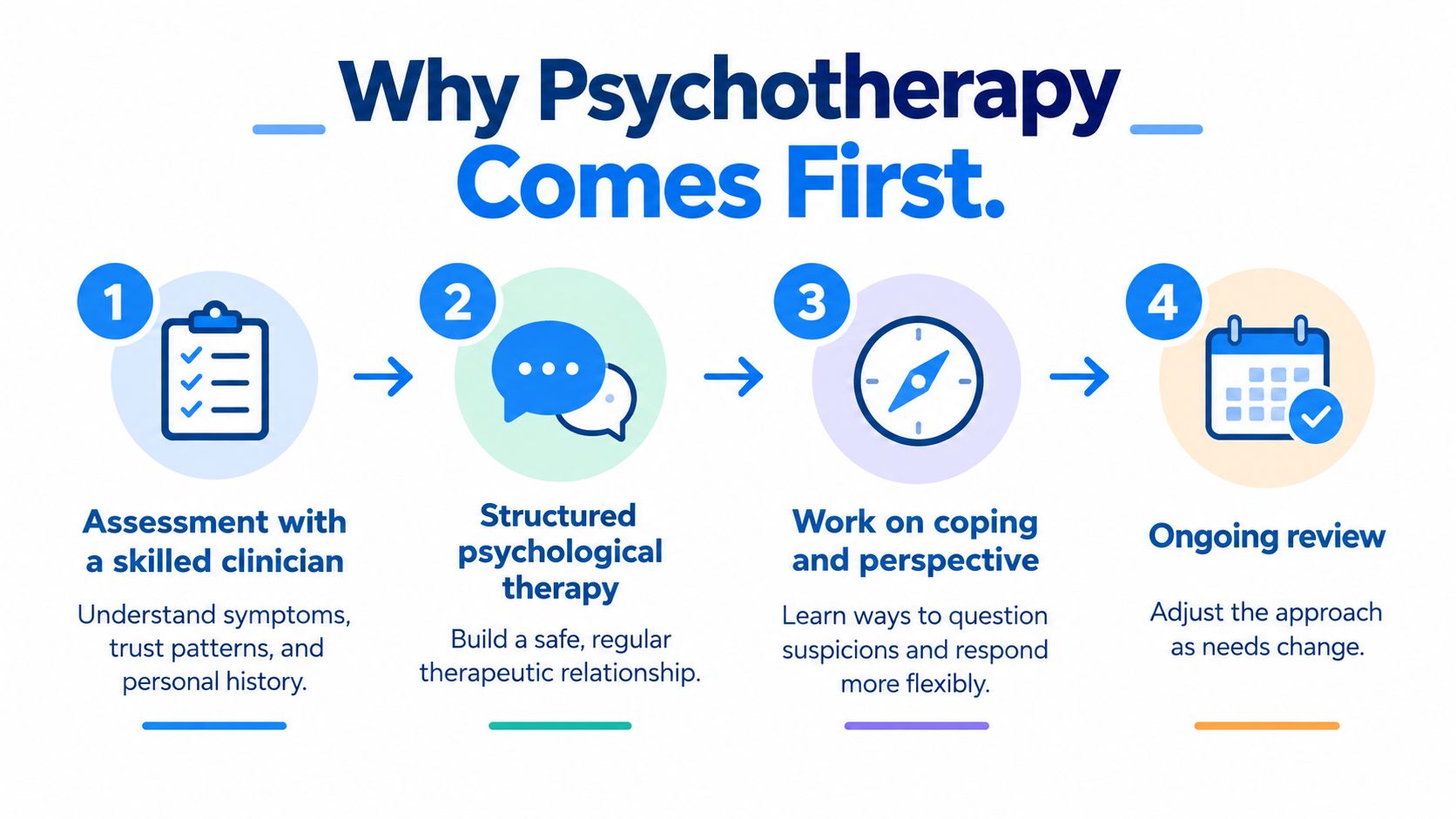
A careful, direct approach
Trust may take time to build. A therapist can be clear about confidentiality, appointment routines, and treatment goals, while responding to suspicions calmly and without ridicule or confrontation. Early interpretations of a person's motives or private needs may feel intrusive if the relationship is still new.
A practical principle: Take the person's distress seriously while staying open to different explanations for what happened.
For developing-country settings, the guidance names supportive therapy, straightforward cognitive-behavioural techniques, and lifestyle management when appropriate. In a session, a therapist might help someone separate what they know from what they fear after a tense exchange, then consider other possible explanations. The aim is not to force agreement, but to support choices that improve daily life and well-being.
One-to-one therapy may feel less exposing than a group setting for someone who is highly suspicious. Families or clients comparing options can ask a therapist how long appointments usually last, what happens in a first session, and whether the format can be adjusted. A US resource on choosing the correct psychotherapy billing code explains how billing codes relate to appointment length. The therapist can explain the format and costs that apply to their own care.
When Medication Helps and What It Targets
Medication isn't routinely advised for PPD or other personality disorders, and it doesn't treat the underlying personality pattern. Indian guidance instead recommends considering medication for clearly defined symptoms or symptom clusters, short-term crisis management, or coexisting psychiatric conditions. A psychiatric evaluation can still be useful when therapy is the main plan, especially if depression, anxiety, substance use, or psychosis-spectrum symptoms may also be present.
The guidance lists risperidone and quetiapine as weak-evidence options for symptoms such as paranoid ideation, cognitive inflexibility, anger, and affective instability. These are clinician decisions, not suggestions for self-treatment. Whether medication is appropriate depends on the person's symptoms, health, and overall assessment.
Symptom-targeted medication options in Indian guidance
| Medication | Dose range cited | Symptoms targeted | Evidence strength |
|---|---|---|---|
| Risperidone | 0.5–8 mg | Paranoid ideation, cognitive inflexibility, anger, and affective instability | Weak |
| Quetiapine | 25–600 mg | Paranoid ideation, cognitive inflexibility, anger, and affective instability | Weak |
A person or family member can ask the psychiatrist what specific symptom the medicine is intended to address, what changes to monitor, and how follow-up will work. It's also reasonable to ask how medication fits alongside psychotherapy and what to do if the person experiences unwanted effects. Those questions make the purpose of treatment clearer without assuming that medication is always needed.
Symptom-targeted prescribing is different from treating PPD itself. A medicine may be considered for a particular difficulty or coexisting condition, while psychological treatment focuses on patterns of mistrust, coping, and relationships. Only a qualified prescriber can advise whether a medicine or dose is appropriate for an individual.
Choosing the Right Therapist and Care Option
A person who feels wary of strangers may need time before sharing personal details with a therapist. The first appointment can focus on practical concerns, such as what has been difficult lately and what the person hopes might change. Treatment can build gradually from there.
| Care option | May fit when | What to ask |
|---|---|---|
| Individual psychotherapy | The person wants help with mistrust, distress, or relationship strain | Has the therapist worked with personality difficulties? How do they build trust at the person's pace? |
| Psychiatric consultation | A clinician needs to assess symptoms or consider other health concerns | What will the evaluation involve, and how will the findings guide care? |
| Combined care | Therapy and medical input may both be helpful | With the person's consent, how will the clinicians coordinate? |
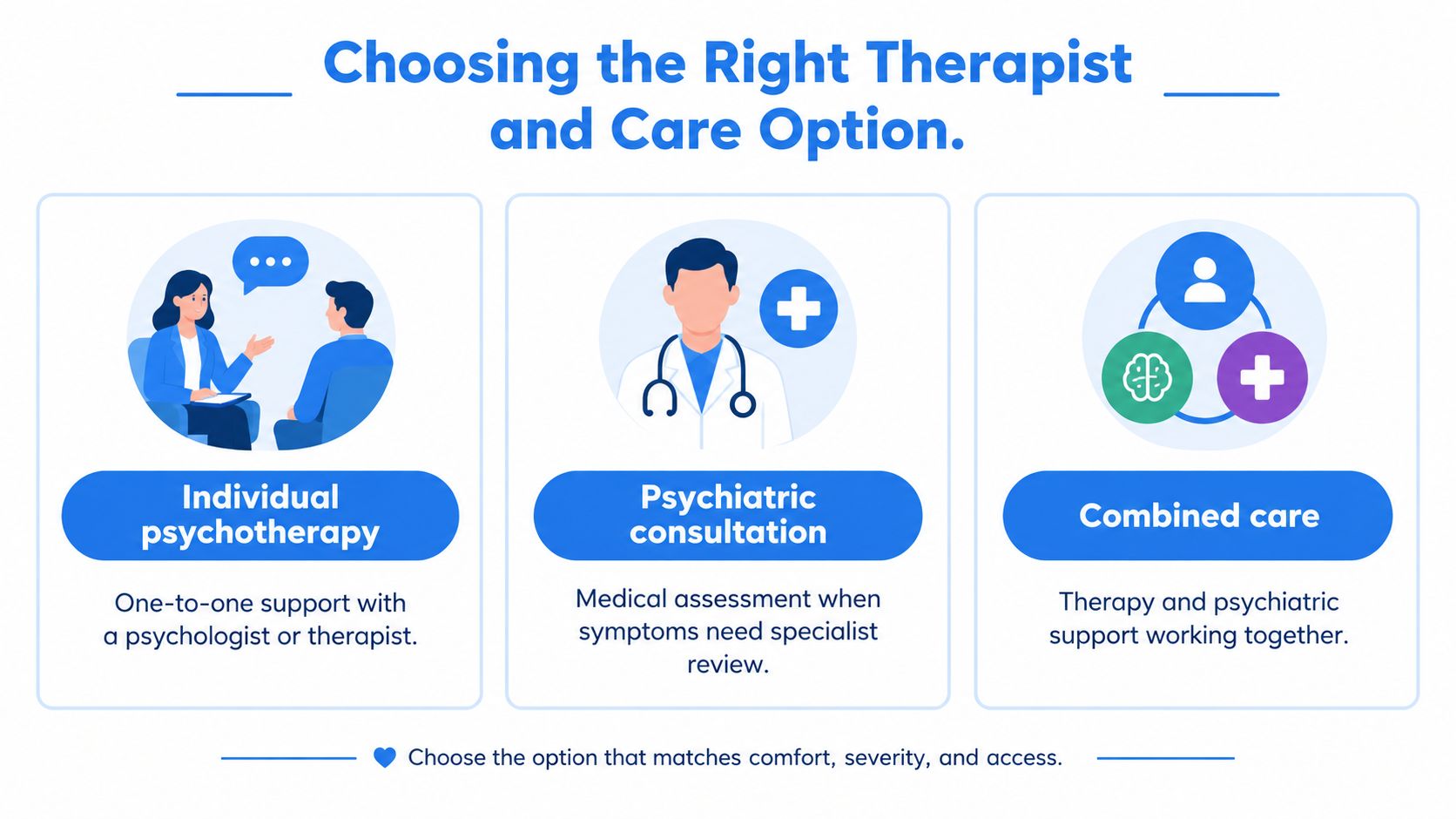
A good fit is a therapist who communicates respectfully, explains their approach clearly, and can discuss differences without becoming dismissive or defensive. Ask how they set therapy goals, protect confidentiality, and respond to missed appointments. These practical details can make the first steps feel more predictable.
In India, Tele-MANAS can offer a first point of contact if local services are difficult to reach or a person is unsure where to begin. Government information reports that the free service had handled over 1.81 million calls by February 7, 2025, and operated through 53 cells across all 36 states and union territories, with services in 20 languages (government information about Tele-MANAS). It provides counselling and professional guidance for concerns such as emotional distress, anxiety, stress, and sleep difficulties.
Online directories can help compare clinicians and available services, but an online assessment cannot diagnose PPD. Check a clinician's mental-health qualifications and ask about their experience with personality disorders. Specialist searches for unrelated concerns, such as how to find care for jaw pain, won't help identify PPD care.
How Families Can Help Without Becoming the Threat
When someone suspects relatives of having harmful intentions, a family's wish to help can be misread as pressure. Try to keep the first conversation calm and practical. Instead of arguing over whether a suspicion is true, acknowledge the distress and ask what kind of support the person might accept.
Offer support without forcing agreement
- Avoid secret medication. Don't hide medicine in food or drinks. It can undermine trust and may be unsafe; medication decisions belong with a qualified prescriber.
- Skip confrontation and ultimatums. A heated argument about whether someone's belief is real may increase fear or defensiveness.
- Use neutral language. You might say, “You seem under a lot of strain. Would you be open to speaking with someone about how stressful this feels?”
- Offer choices. Ask whether the person would prefer to call a service, speak with a doctor, or look for a therapist. Choices can feel less coercive than demands.
- Keep track of concrete concerns. Note specific changes, risks, or events that you can describe to a clinician. Avoid turning family notes into a list of accusations.
A relative can seek professional advice even if the person they're worried about won't attend. That conversation can help the family think through communication, confidentiality, and what support is available. Involvement in the person's care should happen with consent and respect for privacy wherever possible.
Know when the situation needs urgent help
Mistrust alone doesn't mean that someone is about to harm themselves or another person. Respond urgently if there are threats or violence, signs of self-harm risk, or an inability to manage basic needs. Contact local emergency services or seek urgent psychiatric care rather than trying to manage an immediate danger alone.
A 2025 study of 100 family members of people diagnosed with PPD at a psychiatric hospital in Indore reported moderate knowledge and identified family psychoeducation as a management gap. The findings support brief, practical education about communication, boundaries, warning signs, and when to seek urgent psychiatric care (the Indore family psychoeducation study). India's treatment gap makes family guidance especially relevant: national data indicate that 70%–92% of people with mental disorders don't receive proper treatment, while India has approximately 0.75 psychiatrists per 100,000 people, compared with a WHO-referenced benchmark of 3 per 100,000, as discussed in that study.
Prognosis, Resilience, and Your Next Step
PPD is a long-term pattern, so progress may be gradual rather than dramatic. Treatment outcomes depend on factors such as available services, therapist expertise, social support, coexisting conditions, and the person's current circumstances. A slow start doesn't mean support is pointless, and the right pace may differ from one person to another.
Care can also make room for strengths. Resilience, compassion, emotional awareness, and healthier ways to manage workplace stress, anxiety, and burnout can support well-being. These positive-psychology goals complement clinical care; they don't replace assessment or treatment.
In India, the National Mental Health Survey estimated that nearly 150 million people needed active mental-health interventions, while fewer than 30 million were receiving any form of care (an overview of India's Tele-MANAS programme and mental-health care needs). Finding the right support can take persistence, particularly when access is limited. Start by contacting a qualified therapist or psychiatrist, involve a trusted person when it's safe, and address depression, anxiety, or burnout early. Treat any screening result as a starting point for a conversation, not a verdict.
DeTalks brings together a directory of psychologists, therapists, and mental-health professionals, alongside confidential assessments and self-help resources that can help you prepare questions for care. If you're looking for support with PPD-related concerns, anxiety, workplace stress, or well-being, visit DeTalks to explore your options.