
Tag: personal development

  • How to Find Your Passion Without Feeling Lost

    How to Find Your Passion Without Feeling Lost

    The journey to find your passion is a personal one, focusing on a few key ideas. It involves getting to know yourself, trying new interests through small experiments, and thinking about your career more flexibly. It's all about exploration and self-discovery, not forcing a perfect answer overnight.

    Why The Search For Passion Feels So Overwhelming

    A pensive young man sits on a window sill, looking out at a city sunset with a mug and notebook.

    If asking "how to find your passion" feels overwhelming, you are not alone. Society often presents passion as a single, grand purpose you must find to live a meaningful life. This pressure can turn a joyful exploration into a source of stress and anxiety.

    This expectation can lead to feeling down when your daily life doesn't match this ideal, a common experience in India and globally. The key is to see the journey differently. It's not a quest for a magical answer but a gentle process of understanding yourself better.

    Moving From Pressure to Curiosity

    Instead of chasing one big 'thing', try approaching this with genuine curiosity and self-compassion. This simple shift in mindset can make a significant difference to your well-being. It transforms a daunting task into small, manageable steps toward discovering what truly energises you.

    If the idea feels too big, remember there are practical strategies to break down tasks and beat overwhelm that can help. By breaking the journey into smaller actions, it becomes far less intimidating. This can be as simple as noticing what you enjoy in a day or trying something new for an hour a week.

    "The goal is not to find a singular, life-defining passion overnight. It's to build a life rich with activities and pursuits that bring you a sense of engagement, meaning, and joy."

    The Role of Professional Support

    Sometimes, the challenges in finding our passion are deeper than just not knowing what to try. Feelings of stress, burnout, or anxiety can drain the energy needed for exploration. In these moments, professional support can be a powerful resource for building back your resilience.

    Talking to a therapist through counselling provides a safe space to navigate these challenges. A professional can help you understand your thoughts and feelings, develop healthy coping skills, and clear the mental fog. It's important to remember that any assessments are informational tools for your growth, not diagnostic labels.

    This guide offers a supportive framework for your journey, designed to help you:

    • Reduce the pressure that comes with the search for a ‘purpose’.
    • Build self-awareness through practical, down-to-earth exercises.
    • Improve your overall well-being by focusing on personal growth and happiness.
    • Recognise when to seek support to foster a healthier mindset and resilience.

    Ultimately, this isn't a race with a finish line. It’s an ongoing practice of aligning your life with what feels authentic to you, one small step at a time.

    Start By Understanding Who You Are Right Now

    Before you can know where you're going, it helps to have a clear picture of where you are. This isn't about a grand quest, but simply about paying attention. The clues to your passion are already present in your everyday life, waiting to be noticed.

    Think of yourself as a detective investigating your own life with kindness. The goal is to gather small pieces of information about what makes you feel engaged and alive. This self-awareness is the foundation you'll build everything else on.

    Look Back to Find Clues for the Future

    Your past holds many valuable hints about what truly brings you joy. Think back to what you loved doing as a child, before you worried about careers or others' opinions. Tapping into these early interests can point you toward your natural inclinations.

    Spend a little time with these questions:

    • What were you drawn to as a child? Were you always building things, telling stories, or organising games?
    • Which school subjects genuinely fascinated you? Forget about your grades; what made you curious to learn more?
    • When do you lose track of time now? This feeling of being completely absorbed in an activity, known as a 'flow state', is a powerful clue.

    These memories are more than just nostalgia; they are data points about where your energy naturally flows. Noticing these patterns is a major step toward building a life that feels more meaningful and boosts your overall well-being.

    Understand Your Core Values

    Your values are your personal compass, guiding your decisions and defining what's important to you. When your life aligns with your values, you often feel a sense of purpose. When it doesn't, it can contribute to workplace stress and feeling stuck.

    To clarify your values, think about what matters most to you in life, relationships, and the impact you want to have. Knowing what you stand for makes it easier to make choices that feel right, both big and small.

    This alignment is becoming increasingly important in India and around the world. A survey highlighted that 78% of Indian employees plan to prioritise family over careers in 2025. This shows a powerful shift toward a more balanced life, which can open the door to discovering new passions. You can learn more about the future of work-life balance in India.

    An honest self-assessment isn't about judging yourself. It's an act of self-compassion that gives you the clarity to move forward with intention and build resilience.

    A Note on Assessments and Professional Support

    You may come across personality tests and career assessments on your journey. These can be helpful for offering a new perspective on your strengths, but remember they are guides, not definitive truths. These tools are for informational purposes only and are not diagnostic.

    Sometimes, progress can be blocked by mental health challenges like anxiety or feelings of depression. If you feel stuck or overwhelmed, seeking support through therapy or counselling is a sign of strength. A therapist can provide a safe space to explore what's holding you back and help clear the way for personal growth.

    This first phase is all about creating an honest snapshot of yourself. By understanding your past joys, current values, and emotional state, you gather the clues you need to start exploring what could become your next passion.

    Test Your Interests With Low-Stakes Experiments

    The idea of "finding your one true passion" can feel heavy and create pressure that stops you from starting. Let's set that idea aside.

    Instead of waiting for a life-changing moment, let's start testing. We can do this with micro-experiments – small, manageable actions that let you explore an interest without a big commitment. This approach takes the pressure off and lets you gather real-world feedback on what you genuinely enjoy.

    Why This Approach Actually Works

    Big life changes can feel scary and trigger anxiety, often leading to inaction. Micro-experiments work by keeping the steps small and the risk low, bypassing that fear response. For example, instead of quitting your job to become a photographer, you could try a weekend smartphone photography workshop.

    This process also builds psychological resilience and supports your well-being. When an experiment doesn't spark joy, it’s not a failure; it’s simply new information you've learned about yourself. Reframing 'mistakes' as 'lessons' is a powerful way to manage challenges like workplace stress or burnout.

    Designing Your First Few Experiments

    To begin, lean into curiosity, not commitment. Brainstorm a list of things you can try that fit into your current schedule, no matter how small they seem.

    Here are a few ideas to get started:

    • Curious about coding? Try a free, two-hour introductory online course one evening.
    • Want to give back? Sign up for a one-day community event or volunteer for a few hours at a local shelter.
    • Feeling a creative itch? Find a local studio that offers a one-time "try it" class in pottery or painting.
    • Intrigued by a career path? Ask someone in that field for a brief, 15-minute virtual chat to hear about their journey.

    The point of these experiments isn’t to immediately land on a lifelong passion. It's to learn what you enjoy, what you really don't, and what you might want to explore a little more deeply. Every test is a clue.

    A Simple Framework for Action and Reflection

    Trying new things is only half the process; the real learning happens when you pause to reflect. Before you start, ask yourself what you hope to learn from the experience.

    Afterward, take five minutes to write down your thoughts. Did you feel energised or drained? This conscious reflection helps turn your experiments into powerful self-discovery.

    Your Micro-Experiment Planner

    This simple template can help you structure your experiments, clarifying what you’re doing and what you learn.

    Area of Curiosity Micro-Experiment Idea (Low-cost & Low-risk) Time Commitment What I Hope to Learn Reflection After
    Example: Graphic Design Watch a 1-hour tutorial on Canva and design a social media post. 2 hours total If I enjoy the creative process of visual design. Felt energised and lost track of time! Want to try a more advanced tool next.
    Example: Social Impact Volunteer at the local food bank for one Saturday morning shift. 4 hours If I find hands-on community work fulfilling. It was rewarding but emotionally draining. Maybe I prefer advocacy work.
    Example: Writing Write a 500-word blog post on a topic I enjoy and share it with a friend. 3 hours If I enjoy structuring my thoughts and writing for an audience. Loved the writing part, but felt anxious about sharing. Something to explore in counselling.

    Using a framework like this helps create a positive feedback loop of trying, learning, and adjusting. This gradual process is more effective and less stressful than trying to figure it all out at once. It can also offer a sense of control when navigating feelings of uncertainty or mild depression.

    Adopt a Modern Mindset For Career Fulfilment

    The traditional idea of a career as a straight, predictable ladder is outdated. Today, especially in India and around the world, the focus is shifting. It’s no longer just about a stable job; it’s about growth, purpose, and work that feels authentic.

    This modern approach blends creativity, technology, and an entrepreneurial spirit. It means seeing your career not as a rigid path, but as a dynamic space to explore interests and make an impact. A great resource on this is this guide on following your passion.

    Tune Into Today's Opportunities

    The world of work is always changing, bringing new opportunities to do what you love. High-growth sectors like digital media, e-commerce, and technology are not just creating jobs; they are creating platforms for creativity and innovation. These fields often reward curiosity and continuous learning, making them great places to align your profession with your interests.

    Keeping an eye on these areas can open you to paths you hadn't considered. It’s about being strategic and looking for the overlap between what the world needs and what genuinely excites you. That is where a fulfilling professional life can begin.

    A passion-first approach isn't about ignoring practical realities. It’s about strategically positioning yourself for long-term fulfilment by building in-demand skills in areas that genuinely energise you, creating a powerful career advantage.

    Learn From the Next Generation's Playbook

    Younger professionals are redefining work, and their approach offers valuable lessons. They seek roles that offer mentorship, skill development, and a sense of purpose that aligns with their personal values. This shift signals the future of work for everyone.

    This new mindset is visible across India, where Gen Z is leading a passion-driven career revolution. A recent study found 24% aspire to start their own businesses within five years of starting work. This generation prioritises career growth (78%), blended training (73%), and mentorship (70%) over just salary, showing a clear desire for work that serves as a canvas for their passions.

    Adopting this way of thinking can be a powerful antidote to workplace stress and a boost to your well-being. It involves asking different questions about your work:

    • Does this role allow me to learn and grow?
    • Do I feel connected to the company's mission?
    • Are there people here who can support my development?

    Create a Cycle of Exploration

    Embracing this modern approach means getting comfortable with experimentation. You don't need a perfect five-year plan. Instead, create a simple cycle to test potential interests: ideate, experiment, and reflect.

    This simple flow helps you turn curiosity into action through small, manageable steps.
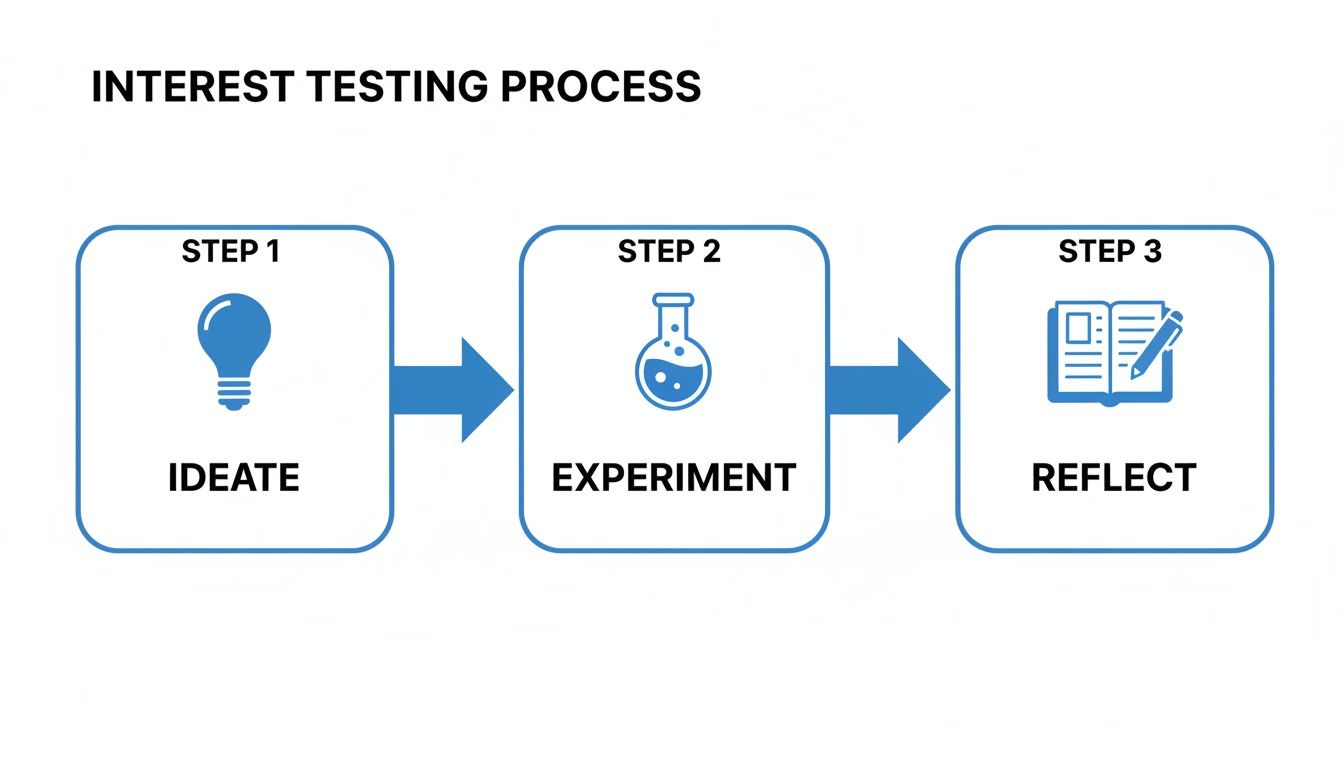
    A diagram illustrating a three-step interest testing process: ideate, experiment, and reflect.

    This process is not about finding a final answer overnight. It is about gathering real-world information on what you enjoy before making big decisions, building incredible resilience along the way.

    Thinking about your career in this flexible, curious way is a form of self-compassion. It removes the pressure to have it all figured out and gives you permission to evolve. If feelings of anxiety or being stuck arise, remember that therapy or counselling can offer valuable tools to navigate that uncertainty.

    Build Confidence By Building Relevant Skills

    Smiling person learning online, watching a teacher on a laptop with a checklist and books.

    Often, the biggest obstacle to finding your passion isn't a lack of ideas but a lack of confidence. The thought of trying something new can bring up feelings of inadequacy or self-doubt. These feelings can stop you before you even start.

    The good news is that confidence is a skill you can build. One of the best ways to strengthen it is by learning new things. Every small skill you learn becomes a building block, creating a foundation of self-belief that empowers you to explore more freely.

    This shifts the goal from "finding your passion" to an actionable plan of expanding your abilities. This proactive approach is a fantastic way to boost your overall well-being.

    Identify Your Skill Gaps With Curiosity

    Start by looking at the interests you've already identified. What small, practical skills could help you explore them more deeply? Frame this as an exciting investigation, not a critique of what you lack.

    For example, if you're curious about storytelling, maybe learning basic video editing is the next step. If you're drawn to community work, a short public speaking course could help you feel more comfortable. The goal is to identify a few key skills that bridge the gap between where you are and where you want to go.

    In today's work environment, this is especially important. A recent report found only 37% of Indian workers feel confident they have the skills for career advancement. By learning future-proof skills like emotional intelligence or data literacy, you can turn this gap into an opportunity for growth and discovery. You can read more about these insights on worker confidence in India.

    Find Accessible Ways to Learn

    Upskilling doesn't have to mean enrolling in an expensive, time-consuming degree. Today, countless accessible resources are available.

    • Online Learning Platforms: Sites like Coursera, Udemy, and Skillshare offer thousands of courses you can explore.
    • Workshops and Webinars: Look for local or virtual workshops for hands-on experience in anything from coding to creative writing.
    • Mentorship: Connecting with someone who has mastered a skill you want to learn can be an invaluable part of your journey.

    The very act of learning builds resilience. It teaches you to embrace challenges, learn from mistakes, and celebrate small victories—all crucial mindsets for the journey towards a more passionate life.

    Celebrate Small Wins and Build Momentum

    As you learn, it is essential to acknowledge your progress. Did you finish an online module or apply a new technique? Celebrate it. These small wins provide the fuel to keep you going, especially when you face challenges.

    This process helps counter the self-critical voice that can accompany anxiety or depression. By focusing on progress, not perfection, you create a positive cycle that strengthens both confidence and motivation. If these feelings become overwhelming, remember that counselling or therapy can offer powerful tools to help you manage them.

    Ultimately, building skills is about more than becoming more capable. It's a proactive strategy for building the self-trust and resilience you need to step outside your comfort zone.

    Create a Personal Action Plan for the Next 90 Days

    Self-reflection and experimentation are most effective when they lead to a clear path forward. This is where we translate your insights into a gentle, practical plan.

    Forget about creating a rigid, high-pressure to-do list, which is a recipe for burnout and stress. The goal is to build small, sustainable habits over the next 30 to 90 days. This is a commitment to a journey of learning and adapting, not a race to a finish line.

    Your First 30 Days: Focus on Consistency

    The first month is about getting into a rhythm of exploration. The main goal is simple: make curiosity a regular part of your week. Concentrate on showing up for yourself without worrying about the outcomes.

    A simple plan could look like this:

    • Weekly Micro-Experiment: Set aside two hours each week for one small experiment, like watching a documentary on a new topic or taking a free online mini-class.
    • Daily Reflection: Spend five minutes each evening writing in a journal. Note what sparked your interest or drained your energy. This tiny habit is a powerful tool for self-awareness.

    This gentle approach is designed to prevent overwhelm and build motivation. It helps you slowly weave new habits into your life, which is essential for long-term well-being and resilience.

    Finding your passion is a marathon, not a sprint. Your 90-day plan is your training schedule—designed to build endurance and self-compassion, not to win a prize.

    Your 90-Day Outlook: Broaden Your Horizons

    After a month of consistent exploration, you can start to broaden your scope based on what you’ve learned. If certain experiments were particularly energising, now is the time to go a little deeper. You might consider a weekend workshop or start a small personal project.

    This is also a perfect time to lean on your support systems. Navigating the emotional side of this journey, especially when dealing with anxiety or feeling stuck, is easier with help. Professional therapy or counselling can offer a safe, confidential space to explore these feelings without judgment.

    Remember, this plan is not about finding a final answer by day 90. It’s about creating a sustainable practice of self-discovery. The real takeaway is the confidence you build by taking consistent, thoughtful action toward a life that feels truly yours.

    Got Questions? We've Got Answers

    It's completely normal to have questions as you start exploring what drives you. This path isn't always a straight line. Here are answers to some common challenges.

    "I Have Way Too Many Interests—How Do I Possibly Choose Just One?"

    Having many interests is a sign of a curious mind, not a problem. Instead of feeling pressure to choose one, use the micro-experiment approach. You can dip your toes into a few different areas to see what feels right.

    You might find a way to blend them, or you might enjoy having several fulfilling hobbies. The goal is to build a life rich with activities that energise you, not to narrow it down to one thing.

    "How Can I Find My Passion When I’m Completely Burnt Out?"

    When you're dealing with burnout, anxiety, or depression, your energy is low, and it's natural that nothing seems appealing. It is important to pause the search and focus on your well-being first.

    Prioritise rest and practice self-compassion. This is a time for kindness toward yourself, not for pushing harder.

    Working with a professional through therapy or counselling can be very helpful, providing a safe space to heal and rebuild your strength. Only when you feel more like yourself should you gently reintroduce small, low-pressure activities that might bring a little joy.

    Your mental health is the bedrock of everything else. The passion quest can wait until you're standing on solid ground again.

    "Should I Turn My Passion Into My Job, Or Keep It As a Hobby?"

    There is no single right answer to this question; it is deeply personal. For some, turning a passion into a career is the ultimate goal. For others, the pressure of monetising something they love can diminish the joy it brings.

    A smart approach is to start it as a side project or hobby. This allows you to explore it without financial stress. It’s a low-risk way to see if making it a full-time job aligns with your long-term well-being.


    If you feel you could use a guide on your journey, connecting with a professional can make all the difference. DeTalks provides a trusted space to find qualified therapists and science-backed assessments, helping you build clarity, resilience, and a life with more meaning. Find out more about how DeTalks can help.


  • How to Increase Self Motivation and Reignite Your Drive

    How to Increase Self Motivation and Reignite Your Drive

    Figuring out how to increase self-motivation is not about forcing yourself to feel better. It’s about taking a gentle, honest look at why your drive may have faded. This journey begins with understanding the roots of your feelings without judgment.

    Why Your Motivation Fades and How to Recognise It

    It's completely normal for your inner drive to dip sometimes. Life is full of challenges that can drain our energy and enthusiasm. Before you can rebuild that fire, it helps to understand what might be dampening it.

    This process is an act of self-compassion, not self-blame. It’s about taking a moment to listen to what your mind and body are telling you. Often, a lack of motivation is a signal that something deeper needs your attention.

    Common Roots of Low Motivation

    A persistent feeling of being drained is rarely just "laziness." It's usually a sign of bigger challenges affecting your overall well-being. Sometimes the cause is clear, but often it builds slowly from different sources.

    Here are a few common reasons your motivation might be low:

    • Workplace Stress and Burnout: Constant pressure or long hours can lead to emotional and physical exhaustion. When this happens, it's hard to feel motivated about anything, both at work and at home.
    • Underlying Anxiety: If you are constantly worried, your mind uses a lot of energy just to manage those feelings. This leaves very little mental space for pursuing goals or being proactive.
    • Feelings of Depression: A persistent low mood can make even small tasks feel overwhelming. This is a real challenge that can significantly sap your drive and is not a matter of choice.

    Spotting these triggers is a key first step toward regaining your energy. This simple flow can help you visualise the path from feeling stuck to taking meaningful action.

    This visual reminds us that building motivation is a process. It begins with recognising your feelings, moves to identifying the cause, and finally leads to real, tangible action.

    To help you with the recognition phase, here are some common motivation blockers and what they might look like in your daily life.

    | Common Motivation Blockers and Their Signs |
    | :— | :— |
    | Motivation Blocker | Common Signs to Look For |
    | Burnout | Feeling cynical about your job, chronic fatigue, a sense of ineffectiveness. |
    | Lack of Clarity | Feeling overwhelmed, procrastinating on tasks, unsure where to start. |
    | Fear of Failure | Avoiding new challenges, perfectionism, self-sabotaging behaviour. |
    | Depression | Persistent sadness, loss of interest in hobbies, changes in sleep or appetite. |
    | Physical Exhaustion | Poor sleep, bad diet, or lack of exercise leading to low energy levels. |

    Please remember, this table is informational and not a diagnostic tool. It can simply be a starting point for understanding what might be happening under the surface.

    Building Self-Awareness

    The goal here is to gently figure out if this is just a tough day or a more persistent pattern. Ask yourself: have you been feeling this way for a few days, or has it stretched into weeks or months? Acknowledging the duration can bring a lot of clarity.

    Remember, this self-reflection is purely for your own information and awareness. It is not a diagnostic tool but an empowering first step to better understand your emotional landscape and improve your well-being.

    Taking time for this self-assessment helps you pinpoint your personal triggers. You might notice your motivation drops after a stressful project or during certain family events. These small insights are incredibly valuable for building resilience.

    If you find that these feelings are sticking around and affecting your life, seeking professional support through therapy or counselling can be a courageous and helpful step. It offers a safe space to explore what’s really going on.

    Setting Goals That Actually Inspire Action

    Do you ever feel like you're spinning your wheels with a vague desire to "do better" but no clear map? This feeling is one of the quickest ways to lose motivation. A wish isn't a plan; the key is to turn big ambitions into clear, actionable steps that feel exciting, not exhausting.

    This is where setting goals becomes a powerful tool for your well-being. It’s not about adding pressure, but about creating a personal roadmap that gives you direction and purpose. When you know where you're going and why, your goals start to pull you forward.

    A thoughtful young man with a pen and notebook, looking out a window, questioning 'Why?'.

    Making Your Goals SMART

    A brilliant way to create clarity is by setting SMART goals. This simple framework helps make your objectives clear, grounded, and genuinely achievable. It helps you avoid the trap of vague goals that often lead to procrastination.

    Here’s the breakdown:

    • Specific: What, exactly, do you want to achieve? Instead of "get fit," aim to "join a yoga class and go twice a week."
    • Measurable: How will you track your progress? For "learn a new skill," a measurable goal is to "complete three online modules and build a small project."
    • Achievable: Is this goal realistic for you right now? Setting a goal you can reach builds confidence and happiness.
    • Relevant: Does this goal truly matter to you? When it aligns with your personal values, your motivation to see it through will be much higher.
    • Time-bound: When will you complete this? A deadline creates a healthy sense of urgency and prevents the goal from being pushed to "someday."

    Think of it this way: "Upskill for a better job" is a nice idea. A SMART goal transforms it into a plan: "I will complete a certified digital marketing course online (Specific, Achievable) by finishing one module per week (Measurable, Time-bound) so I can qualify for a promotion in the next six months (Relevant)." Suddenly, you know exactly what to do first.

    Breaking Down Big Ambitions

    Even a perfect SMART goal can feel overwhelming if it's large. The trick is to break it down into the smallest possible chunks. This simple strategy helps manage the feeling of being overwhelmed, a common trigger for workplace stress and anxiety.

    If your goal is to write a book, the first step isn't "write chapter one." It could be "open a document and write one paragraph." These small wins create momentum and give you a sense of accomplishment, fuelling your motivation for the next step.

    This is especially helpful for career goals. For many young professionals in India, skill development is a major motivator. The India Skills Report 2025 highlights a significant rise in graduate employability, showing that building tangible skills boosts career prospects and drive.

    With so many students actively seeking practical experience, the link between action and motivation is clear. You can learn more about these trends shaping career motivation in India. By setting small, skill-focused goals, you build your competence and confidence, which is the foundation of long-term drive and the resilience needed in any career.

    Practical Techniques to Rewire Your Mindset

    Your thoughts shape your reality. When you feel stuck, figuring out how to increase self-motivation often starts with changing the inner voice in your head. With a few simple techniques, you can build a mindset that is more positive, resilient, and ready for action.

    This isn’t about pretending challenges don’t exist; it's about learning to view them from a more empowering perspective. Shifting your outlook can break a cycle of self-doubt and free up the mental energy needed to move forward. These strategies give you a real sense of control over your goals and life.

    Overhead shot of a person writing SMART goals in a notebook with coffee and a timer.

    Practice Cognitive Reframing

    Have you ever found yourself spiralling after a setback? Cognitive reframing is the skill of changing how you look at a situation to find the opportunity within the obstacle. It's a game-changer for managing difficult emotions that come with workplace stress or personal disappointments.

    So, instead of thinking, "I failed that interview, I’m not good enough," you could reframe it to: "That was excellent practice. Now I know what to prepare for next time." This small mental shift moves you from defeat to a mode of learning and growth, keeping your motivation intact.

    Use Implementation Intentions

    A goal without a plan is just a wish. Implementation intentions create a bridge between wanting to do something and actually doing it. The technique involves creating a specific "if-then" plan that decides your actions in advance.

    The formula is simple: "If situation X happens, then I will perform action Y."

    • For exercise: If my alarm goes off at 7 a.m., then I will immediately put on my workout clothes.
    • For work boundaries: If a colleague asks for help when I'm on a deadline, then I will say, "I can help you with that after I finish this task at 3 p.m."

    This pre-planning automates your response and removes the need for in-the-moment decision-making. It helps you stay on track even when your motivation is low.

    This strategy is effective because it cuts out the "should I or shouldn't I" debate that can lead to procrastination and anxiety. With a plan in place, you simply follow the script.

    Design a Personal Rewards System

    Celebrating your progress is essential for staying motivated, no matter how small the win. A personal rewards system reinforces positive behaviour and makes the journey towards your goals more enjoyable.

    Choose rewards that you find meaningful and that match the achievement. Finishing a difficult report could earn you an hour to read a book you love. Hitting your workout goals for a week might be rewarded with your favourite takeaway.

    This system trains your brain to connect effort with positive feelings, creating a sustainable cycle of motivation and boosting your overall sense of well-being. Alongside rewiring your mindset, you can explore other ways to improve your mental wellbeing through practical lifestyle changes.

    Creating an Environment That Fuels Your Drive

    Your motivation is constantly shaped by your surroundings. Your physical space, the people you talk to, and your work culture all play a part in either firing you up or draining your energy. Taking control of your environment is a powerful way to keep your ambition alive.

    Think of your surroundings as the soil for your goals. If the soil is supportive, motivation grows strong. This means creating a space that reduces distractions and fills your view with positive cues and reminders of what you're working toward.

    The Power of a Supportive Workplace

    For most of us, work is where we spend a huge portion of our time. A positive workplace culture is essential for staying motivated. When you feel you belong and are trusted to do your work, your engagement naturally increases.

    Recent data from India highlights this point. While workplace engagement has seen a dip, employees with more control over where they work show much higher engagement. This is a clear signal that empowerment is directly linked to motivation.

    Flexibility and trust are not just perks; they are fundamental for preventing the kind of workplace stress that leads to burnout. A company culture that trusts its people builds the resilience we all need to stay driven.

    Building Your Accountability System

    Trying to achieve big goals alone is incredibly difficult. An accountability system can provide the structure and support needed to stick with it, especially on days when your internal drive is low.

    This system can look different for everyone. Here are a few ideas:

    • Find a Mentor or Coach: This is someone who has been where you want to go and can offer guidance and perspective.
    • Get an Accountability Partner: Team up with a friend or colleague for regular check-ins. Knowing someone will ask about your progress can be a powerful push.
    • Consider Professional Therapy: A therapist offers a safe space to work through deeper roadblocks like anxiety or depression and develop helpful coping strategies.

    Accountability is about creating a compassionate support structure for yourself. It’s a reminder that you’re not in this alone and that your efforts matter.

    To keep that fire lit long-term, you have to build an environment that supports your overall well-being. This includes fundamental habits like improving sleep quality naturally. When your mind and body are rested, every challenge feels more manageable.

    When It’s Time to Call in Professional Support for Your Well-Being

    The journey to boost your self-motivation is a personal one. Sometimes, the bravest and most effective step is admitting you don't have to figure it all out alone. Reaching out for support is a powerful act of self-awareness and strength.

    The idea of professional support may seem intimidating, but it just means adding an expert to your corner. A therapist or counsellor can help when feelings of low motivation, anxiety, or sadness become constant and get in the way of your life.

    A bright workspace with a laptop displaying a calendar, a potted plant, and a 'Start Small' framed note.

    Is It Just a Slump or Something More?

    We all have off days or even off weeks. That's perfectly normal. The key is to recognise when a temporary dip in motivation might be hinting at a deeper issue.

    Consider these signs as signals that it might be time to get a professional perspective:

    • Duration: The feeling of being unmotivated has been dragging on for several weeks or more.
    • Impact: It’s affecting your work, straining your relationships, or making self-care feel impossible.
    • Other Feelings: Your lack of motivation is paired with persistent sadness, irritability, or overwhelming anxiety.
    • Loss of Interest: You've stopped caring about hobbies and activities that used to bring you happiness.

    What Actually Happens in Therapy or Counselling?

    Taking the first step into therapy or counselling can feel daunting. In India, thankfully, the conversation around mental health is opening up, and support is more accessible. At its core, a session is a confidential chat with a trained professional focused on your well-being.

    Your first session is usually about telling your story in a safe, non-judgmental space. The therapist will listen to understand your challenges and work with you to create a practical plan for building resilience.

    This kind of collaborative guidance is becoming more common. The personal development market in India, which includes coaching and self-motivation training, is growing rapidly. This shows how much people value structured support. You can read more about this growing trend toward self-improvement.

    Using Assessments for Insight, Not Diagnosis

    If you're trying to make sense of your feelings, informational assessments can be a great starting point. Platforms like DeTalks offer scientifically validated tools that provide a snapshot of things like depression, workplace stress, or anxiety levels.

    It’s crucial to remember that these are for your information only—they are not a diagnosis. Think of them as a compass that can point you in the right direction. Armed with this insight, you can have a more focused conversation with a mental health professional.

    Common Questions About Finding Your Motivation Again

    It's completely normal for questions to pop up when you're working on how to increase self-motivation. You might wonder how long it will take or what to do when you hit a wall. Let's tackle some of the most common questions.

    How Long Does It Take to Feel Motivated Again?

    There’s no one-size-fits-all answer, as the journey is deeply personal. Some people feel small sparks of motivation within a couple of weeks of trying new habits. For others, especially if the root cause is burnout or ongoing workplace stress, it can take more time.

    The key is to focus on consistency, not speed. Celebrate the small wins, as they build the momentum you need for bigger steps. Think of it as a long-term investment in your well-being and personal happiness.

    Can I Boost Motivation While Dealing with Anxiety?

    Yes, absolutely, but it requires a great deal of self-compassion. Challenges like anxiety and depression can drain your energy, making simple tasks feel difficult. The strategies in this guide can be helpful, especially when paired with professional support from a therapist.

    Start with the smallest, most manageable step you can think of. On some days, just getting through the day is a massive win, and that is more than okay. Professional counselling can provide a structured, safe space to work through these complex feelings.

    It can be disheartening when you put in the effort but don't see immediate results. This is not a sign of failure. It often means the root issue may benefit from a different approach, which is a perfect time to bring a professional onto your team.

    What if I Try These Techniques and Still Feel Stuck?

    Feeling stuck after trying new strategies is frustrating, but it’s not a personal failing. It’s a common experience that usually means the underlying cause needs a different approach.

    This is a good time to consider outside support. A counsellor can help you explore things you might not be aware of, like lingering stress or old thought patterns. You’ve already done the hard work of trying on your own; getting professional guidance is just the next smart, logical step.

    How Can I Stay Motivated in a Stressful Work Environment?

    A high-pressure job can drain motivation quickly. While you might not be able to change the company culture, you can work on what’s within your control to build resilience.

    Start by setting firm boundaries to protect yourself from burnout. Try to focus on the parts of your job that you find meaningful. Finally, don't underestimate the power of leaning on a few trusted colleagues for support and connection.


    Navigating your mental health is a journey, and you don’t have to do it alone. DeTalks offers a safe space to find the right therapist or explore scientifically-backed assessments to better understand what you're feeling. Take the next step toward clarity and resilience by visiting the DeTalks website.

  • How to Develop a Growth Mindset for Real Resilience

    How to Develop a Growth Mindset for Real Resilience

    Developing a growth mindset begins with a simple but powerful idea: your abilities aren't set in stone. They can grow with deliberate effort and consistent practice.

    Instead of seeing a challenge as a threat, you can view it as an opportunity. It becomes a chance to learn, stretch your skills, and improve. This small shift in perspective is the first step toward building resilience and a stronger sense of well-being.

    Your Path to a Growth Mindset Starts Here

    If you’ve found this guide, you may be facing a hurdle or simply feel a pull to grow. That curiosity is the perfect place to start. The journey from a fixed mindset—believing our talents are unchangeable—to a growth mindset is about embracing your ability to develop through dedication.

    This isn’t about chasing an unrealistic idea of perfection. It’s about valuing the process and celebrating progress, not just the final outcome. Think of it as a practical tool for managing everyday pressures, like workplace stress or anxiety, and improving your overall well-being.

    Fixed vs. Growth Mindset: What's the Real Difference?

    The distinction between these two mindsets comes down to how you see your own abilities. Are they static traits you were born with, or can you actively develop them over time? Your answer shapes how you react to almost everything, from feedback to setbacks.

    A fixed mindset can feel limiting, while a growth mindset is dynamic and ready to learn. This isn't just a positive concept; it's a fundamental principle for building resilience and navigating challenges like stress and anxiety. To make this clearer, let's look at how these mindsets appear in daily life.

    Fixed Mindset vs Growth Mindset at a Glance

    Situation Fixed Mindset Response Growth Mindset Response
    Facing a Challenge "I'm not good at this. I should avoid it." "This is tough, but it's a chance to learn."
    Putting in Effort "If I have to try hard, it means I'm not smart." "Effort is the path to mastery."
    Receiving Feedback "This feels like a personal criticism." "This is useful information. How can I improve?"
    Success of Others "Their success makes me feel inadequate." "Their success is inspiring. What can I learn?"

    As you can see, it's not the situation but the internal response that defines the mindset.

    Why Nurturing a Growth Mindset is Worth the Effort

    Making this mental shift can have a positive impact on your well-being and personal growth. It gives you the power to approach difficulties with curiosity instead of fear. This is a vital skill for handling life's complexities with more compassion and happiness.

    Just think about the tangible benefits:

    • Deeper Resilience: You bounce back from setbacks faster because you see them as lessons, not judgments.
    • Stronger Motivation: When you believe your effort makes a difference, you're more likely to stay engaged.
    • Better Relationships: A growth mindset helps you communicate more openly and work through conflicts.
    • Less Stress and Anxiety: Focusing on the learning journey reduces pressure and feelings of being overwhelmed.

    This emphasis on development is being recognised at a national level in India. The 2020 National Education Policy (NEP) is built around fostering growth mindsets in students. It shifts the focus from rote memorisation to experiential learning to build curiosity and resilience. You can learn more about how these principles are shaping education in India.

    Adopting a growth mindset isn't about becoming a different person. It's about unlocking your potential by changing how you think about challenges, effort, and growth.

    Get to Know Your Fixed Mindset Triggers

    Before building a growth mindset, it helps to get familiar with what activates your fixed mindset. This isn’t about self-judgment; it’s about becoming a curious observer of your thoughts and feelings. These triggers are the specific moments or thoughts that lead you to believe your abilities are static.

    This often happens when we feel vulnerable, like getting unexpected feedback or facing a new challenge. These situations can bring up feelings of inadequacy or fear, causing our minds to revert to a defensive state. Spotting this pattern is your first move toward making a change.

    What Puts Your Fixed Mindset on High Alert?

    Triggers are incredibly personal, often tied to past experiences or beliefs about success and failure. When you encounter one, your mind might jump to conclusions like, "I'm not smart enough for this," or "I knew I would fail." This is a normal human reaction—our brain's way of protecting us from disappointment.

    The goal isn't to ignore these feelings but to simply notice them. This simple act of awareness is how you start to regain control of your inner narrative and ease feelings of anxiety. Common triggers include facing criticism, hitting a roadblock, comparing yourself to others, or stepping into the unknown.

    A Simple Exercise in Self-Awareness

    One of the best ways to pinpoint your triggers is through quiet reflection, perhaps with a journal. This is for informational purposes, not to diagnose a problem. You're just gathering information to understand yourself better.

    Think back to a time you felt defensive, discouraged, or stuck. What was happening? What thoughts were running through your mind? Don't analyze or fix anything yet; just observe. This is how you start building the self-compassion needed for real growth.

    "The first step toward change is awareness. The second step is acceptance."
    – Nathaniel Branden

    You can't change what you don't see, and you can't see it clearly if you're constantly criticizing yourself. This mindful approach is a fantastic tool for managing workplace stress and building the kind of resilience that helps you thrive.

    The Inner Voices of a Fixed Mindset

    When a fixed mindset is triggered, it often has a distinct voice—usually critical and focused on limitations. Learning to recognize this voice is a game-changer. For instance, you might hear a voice of judgment ("You're just not a natural at this") or a voice of fear ("Don't try; you'll only embarrass yourself").

    By naming these voices, you create space between you and the thought. That gap is where you can choose a different response. If these thoughts feel overwhelming and contribute to feelings of depression or severe anxiety, professional counselling can provide supportive strategies. Remember, reaching out for therapy is a proactive step toward caring for your well-being.

    Practical Ways to Reframe Your Inner Dialogue

    Once you start noticing your fixed mindset triggers, you can learn to challenge the thoughts that follow. This is where you can make tangible changes, gently guiding your mind from "I can't" toward "How can I?" This isn't about fake positivity; it’s about acknowledging your first reaction and then consciously choosing a more constructive perspective.

    This practice is central to building the mental well-being you need to handle life's challenges with more grace. Acknowledging your effort and showing self-compassion are key.

    A person writing 'Triggers' in a notebook, with a 'Feedback' sticky note and a coffee cup.

    Embrace the Power of "Yet"

    One of the simplest, most profound shifts you can make involves adding one small word: "yet." Tacking it onto the end of a self-critical thought instantly turns a dead-end statement into a bridge toward future growth. For example, "I can't handle this project" becomes "I can't handle this project yet."

    This subtle addition opens up space for curiosity and prompts the question, "What do I need to learn to get there?" It honours where you are now without accepting it as your final destination. It turns a feeling of inadequacy into a practical roadmap.

    From Failure to Feedback

    With a fixed mindset, failure can feel like a final verdict, sometimes leading to feelings of shame or depression. A growth mindset, however, sees failure as data. It’s valuable information that shows what didn't work so you can try a different approach.

    When a project hits a wall, resist the urge to self-criticize. Instead, get curious and ask learning-focused questions like, "What's the key lesson here?" or "What would I do differently next time?" This pulls you out of self-judgment and into active problem-solving—a crucial skill for building resilience.

    Focus on Process Over Perfection

    The pressure to be perfect can be paralyzing and is a major source of anxiety. A healthier approach is to shift your focus from the final result to the process of getting there. Celebrate the effort, consistency, and small steps you take along the way.

    A powerful example of this is visible in cultural shifts across India. A Columbia Business School assessment noted a growing cultural move towards growth mindset principles, especially among young people. This focus on the journey, despite challenges, is driving real change and is a brilliant example of how focusing on process creates powerful outcomes.

    Catch and Rephrase Your Fixed Mindset Voice

    Your inner dialogue shapes your reality. A practical skill is learning to catch your critical voice and rephrase its message. This requires mindfulness—noticing your thoughts without immediately judging them. Think of it as gently translating your thoughts into a more helpful language.

    If Your Fixed Mindset Says… Try This Growth Mindset Reframe…
    "I'm not smart enough for this." "What can I do to learn more about this?"
    "This is too difficult." "This will take time and effort."
    "I made a mistake. I'm a failure." "Mistakes are proof I'm trying. What can I learn?"
    "I'll never be as good as them." "I admire their skills. What steps can I take?"

    If this process feels overwhelming, working with a professional through therapy or counselling can offer a safe space to explore these patterns. These techniques are tools for your mental toolkit. The goal is always progress, not perfection.

    Build Growth Mindset Habits into Your Daily Life

    A growth mindset is like a muscle you build over time through small, consistent actions. The goal is to move from knowing what a growth mindset is to actually living it. This is how you build the kind of resilience that helps you handle life’s challenges with more confidence and compassion.

    It starts with reframing your goals. Instead of chasing a perfect outcome, focus on the learning process. For example, rather than saying, "I have to master this software by Friday," try, "This week, I want to get comfortable with its main features." This shift reduces pressure and can ease workplace stress.

    Weave Learning into Your Everyday

    You don't need to overhaul your life to integrate these habits. Look for small opportunities for learning and reflection in your existing schedule. For instance, end each day by asking, "What did I learn today?" This trains your brain to find lessons, even on tough days.

    Another powerful habit is to actively seek constructive feedback. It can feel vulnerable, but it's one of the fastest ways to grow. Approaching feedback with genuine curiosity instead of fear is a practical way to live the growth mindset and improve your well-being.

    Celebrate Effort and Practice Self-Compassion

    We often celebrate only big wins, but a growth mindset honours the entire journey. Acknowledge your effort, especially when things are tough. This builds the internal motivation you need to keep going and is a powerful way to cultivate happiness.

    This is where self-compassion is vital. Setbacks will happen; how you talk to yourself in those moments matters. Treating yourself with the same kindness you'd show a friend creates the psychological safety needed to learn and try again. It’s a crucial defense against burnout.

    The goal is not to be perfect but to be a little better today than you were yesterday. Self-compassion is the fuel for this journey, helping manage feelings of anxiety and self-doubt.

    Create a Supportive Daily Environment

    Your daily routines have a massive impact on your mindset. Foundational habits can create the mental space you need for growth. While not mindset exercises themselves, they are critical for helping your brain adapt.

    • Mindful Moments: Start with five minutes of quiet time to set a calm, intentional tone.
    • Physical Movement: Regular exercise can lower stress and sharpen your thinking.
    • Prioritise Rest: A tired brain often defaults to fixed-mindset thinking. Learning how to improve your sleep hygiene is essential.

    If sticking to these habits is difficult, or if setbacks lead to persistent feelings of depression, professional support can help. Therapy and counselling provide a structured space to build these skills. Remember, any assessments used are informational tools to better understand your patterns, not a final verdict.

    Navigating Challenges and Finding Your Support System

    This growth mindset journey can be tough. When you’re already managing life’s pressures, stress, or anxiety, adding more "work" can feel overwhelming. If you're struggling, that's completely normal and okay.

    The road to growth is not always straight. You will hit roadblocks, like perfectionism or fear of failure. These are not signs you're failing; they're just part of the process of building resilience.

    When Self-Help Isn't Cutting It

    There are times when reading articles and trying strategies on your own isn't enough. This is especially true if you're dealing with persistent feelings of depression or you're feeling burnt out. Realising this is a sign of self-awareness and strength.

    It takes courage to admit you need more support. This is where professional help like therapy or counselling can be a game-changer for your well-being. It's a proactive, powerful step toward building the life you want.

    Seeking support isn't about "fixing" a flaw. It's about partnering with a trained professional who can offer fresh perspectives, practical tools, and a safe space to explore the patterns holding you back.

    A therapist can act as a guide for your inner world. They can help you build genuine resilience and navigate your mind with more compassion.

    The Role of Professional Support

    Working with a mental health professional provides targeted support that goes beyond generic advice. They can help you understand your fixed mindset triggers and create personalized strategies for handling things like workplace stress. A counsellor might use therapeutic techniques to help you reframe negative beliefs or manage the physical symptoms of anxiety.

    It's also important to remember that a growth mindset is one piece of a larger puzzle. A recent study of 73 countries, including India, found that socioeconomic factors play a significant role in achievement. This reminds us why robust support systems are so essential. You can read the full research about these findings on Nature.com.

    Using Assessments as a Starting Point

    Psychological assessments and screening tools can be helpful, but it's important to see them for what they are: informational guides, not diagnoses. They are designed to give you insights into your thought patterns and emotional habits. They are not meant to be stigmatizing.

    Think of an assessment as a map of your inner landscape. It can show you where your strengths are and point out potential challenges, giving you a clearer starting point.

    • For Informational Purposes Only: These tools are for self-knowledge and should not replace a professional evaluation.
    • A Starting Point for Conversation: You can use the results to start a more focused conversation with a therapist.
    • Empowerment Through Understanding: Gaining clarity on your patterns can empower you to take the next best step for your well-being.

    In the end, whether you're using self-help resources or working with a therapist, the goal is the same. It's about building a supportive ecosystem for yourself—one that fosters compassion, encourages learning, and helps you thrive.

    Got Questions About Growth Mindset? Let's Talk.

    As you begin to work with these ideas, questions will naturally come up. This isn't a one-size-fits-all process. Wondering if you're "doing it right" is a common and valid part of the experience.

    Here are some honest answers to frequently asked questions. Think of this as a friendly guide for moments of uncertainty. Just by asking these questions, you're already engaging with the process—and that's a win for your well-being.

    How Long Does It Take to Develop a Growth Mindset?

    Think of it less like a race and more like building a fitness habit. There's no set timeline. Some people notice small shifts in a few weeks, while for others, it might take longer. Both paths are perfectly okay.

    The most important ingredients are consistency and self-compassion. Focus on making small, sustainable tweaks to your inner monologue. Celebrating your effort is key to making it stick and building happiness.

    A growth mindset isn't a final destination. It’s a continuous, evolving way of meeting life's challenges. The real win is in the daily practice of choosing curiosity, which builds true resilience over time.

    Can You Have a Growth Mindset in Some Areas but Not Others?

    Yes, absolutely. This is incredibly common. You might have a growth mindset about your career but a fixed view of your creative talents or relationships. Our beliefs are often shaped by past experiences.

    The first step is to notice these differences without judgment. Where do you feel flexible and open? Where do you feel stuck? Recognizing these patterns is a huge insight. From there, you can gently apply reframing techniques to those specific areas.

    What If My Workplace Has a Very Fixed Mindset Culture?

    This is a tough situation. Working in an environment that punishes mistakes can be challenging. While you can't change the culture on your own, you can control how you respond and nurture your own mindset.

    Focus on what is within your influence. Model the behaviour you want to see by talking openly about what you're learning. Acknowledge the workplace stress and make self-compassion a priority. Seek out colleagues who also value learning.

    If the environment leads to serious anxiety or burnout, professional counselling can be a vital support. A therapist can equip you with robust strategies to manage external pressures. Your mental health and growth are important.

    Ultimately, this journey is about building a more compassionate and empowered relationship with yourself. It's about giving yourself permission to be a work in progress—to learn, stumble, and get back up.


    If you're looking for guidance on your mental health journey, DeTalks offers a safe and trusted platform to connect with qualified therapists and explore confidential, science-backed assessments. Start building resilience and clarity by finding the right support for you.