Tag: personal growth

  • A Practical Guide on How to Self Love Daily

    A Practical Guide on How to Self Love Daily

    Learning how to self love isn't a single decision but a gentle, daily practice. It means choosing to treat yourself with kindness, making peace with your imperfections, and consistently prioritising your own well-being. At its heart, it’s about building resilience and compassion from the inside out, so your sense of worth comes from within.

    What Self-Love Actually Means and Why It Matters

    Self-love is often mistaken for bubble baths and spa days, but it goes much deeper. It is the foundational respect you have for yourself that shapes your thoughts, feelings, and actions every day.

    It’s about shifting away from a harsh inner critic and learning to speak to yourself with the warmth you would offer a friend. In a culture like India, where community needs often come first, prioritising yourself can feel unfamiliar. But it's not selfish; it's essential for building the emotional strength needed to navigate life.

    The Connection to Your Well-Being

    A lack of self-love can make you more vulnerable to life's challenges. It can turn a simple mistake into a source of spiralling anxiety or transform workplace stress into burnout. A consistently critical inner voice can erode your confidence, leaving you susceptible to sadness and even depression.

    Conversely, cultivating self-love helps build an internal support system. It equips you with the tools to manage stress, bounce back from setbacks, and maintain a healthier perspective. For a deeper look, understanding what self-compassion is offers a practical framework for your mental wellness.

    A Look at Self-Love in India

    Globally, India's Self-Love Index score is 52, just one point below the global average of 53, according to a report from The Body Shop and Ipsos. This suggests many in India are on this journey, but there is still room for growth in nurturing our inner well-being.

    To understand this better, let's explore the key components of a self-love practice.

    Core Pillars of Self-Love

    Pillar What It Means in Practice
    Self-Compassion Treating yourself with kindness when you fail or feel inadequate, instead of self-criticism.
    Boundaries Saying "no" to things that drain your energy and protecting your mental and emotional space.
    Self-Acceptance Embracing all parts of yourself—the good, the bad, and the messy—without judgement.
    Prioritising Needs Recognising and honouring your own needs for rest, nourishment, and joy.
    Mindfulness Staying present with your thoughts and feelings without getting carried away by them.

    Each pillar works with the others to create a strong, supportive relationship with yourself.

    Self-love is not a final destination but a continuous practice. It's about choosing to show up for yourself with kindness, especially on the days when it feels the most difficult. This commitment is a powerful step toward lasting well-being.

    Committing to this journey can genuinely improve your life. Here are some of the benefits:

    • Improved Resilience: You can handle life's ups and downs with greater emotional balance.
    • Healthier Relationships: Valuing yourself helps you nurture respectful and supportive connections with others.
    • Reduced Anxiety and Stress: A kind inner voice is a powerful tool for soothing anxiety and managing daily stress.
    • Greater Happiness: Accepting yourself fully creates space for a more authentic and lasting sense of joy.

    This guide provides practical, actionable steps for your journey. While therapy is a valuable resource, the small habits you build daily are the true cornerstones of a healthy relationship with yourself.

    Understanding the Barriers to Loving Yourself

    Have you ever wondered why being kind to yourself can feel so difficult? The journey to self-love starts not with forcing positive thoughts, but with gently understanding what stands in the way.

    Often, the biggest roadblocks are internal, like old thought patterns and painful memories. Others come from external pressures and expectations. The goal isn't to judge these barriers, but to see them clearly, as awareness is the first step toward compassion.

    The Harsh Inner Critic

    We all have that nagging inner voice that is quick to point out mistakes and dismiss successes. This inner critic often echoes critical messages we heard from others long ago.

    It's the voice that whispers you’re not smart enough after an error at work or not attractive enough when you see your reflection. Living with this constant commentary is exhausting, fuelling feelings of anxiety and inadequacy that can lead to burnout. Learning how to self love means learning to see this voice as a misguided attempt to protect you.

    The Weight of Societal and Family Expectations

    In India, cultural and family pressure to follow specific life paths is strong. We are often measured by external benchmarks like academic success, career choices, or marriage. When our lives don't match that blueprint, it's easy to see it as a personal failure.

    This can take a heavy toll, especially on young people, contributing to rising rates of depression and other emotional challenges. You can read more about the findings on adolescent mental health in India to understand this issue better.

    Self-love involves gently separating your self-worth from the expectations of others. It’s about learning to define success and happiness on your own terms.

    Lingering Effects of Past Experiences

    Our pasts shape us in ways we don't always realise. Painful events can create limiting beliefs that run in the background of our minds, such as "I am not worthy of love."

    These old wounds can become major barriers, causing us to self-sabotage or avoid taking chances. Acknowledging this pain is a courageous act of self-love. For many, a safe space like therapy or counselling is key to processing these experiences and writing a kinder story for themselves.

    Common Roadblocks to Watch For

    Identifying specific patterns can be incredibly helpful. Here are a few common ones you might recognise:

    • Perfectionism: The belief that you must be flawless to be worthy of love, which creates an intense fear of making mistakes.
    • Comparison: Constantly measuring your life, body, or career against others, especially on social media.
    • Unresolved Guilt or Shame: Holding on to past mistakes and letting them define who you are today.
    • Neglecting Your Needs: A habit of putting everyone else first, which often leads to feeling drained and resentful.

    Remember, identifying these patterns isn't about finding more flaws. It's about gathering information to know which areas of your life need more gentleness and attention. This is the foundation for building lasting resilience and well-being.

    Cultivating Daily Self-Compassion Practices

    Young Asian man meditating peacefully at a desk in a bright room, practicing self-love.

    The real work of self-love begins with actively practising kindness toward yourself. This isn't about grand gestures but about the small, consistent choices you make every day to build a more supportive inner voice.

    Self-compassion means responding to your own mistakes and imperfections with the kindness you’d offer a friend. Building this skill creates an internal source of strength, helping you navigate everything from workplace stress to personal setbacks with greater resilience.

    From Self-Criticism to Self-Kindness

    The first step is simply to notice how you talk to yourself. When you make a mistake, do you immediately call yourself "lazy" or an "idiot"? Awareness is the crucial starting point for change.

    Once you catch that critical voice, gently reframe the thought. Instead of, "I can’t believe I said that," try, "That wasn’t my most articulate moment, but everyone has off-days." This shift removes the harsh judgment that fuels anxiety.

    Mindful Self-Compassion in Action

    Mindfulness is a powerful tool for paying attention to the present moment without judgment. When paired with compassion, it helps you acknowledge difficult feelings without letting them take over your day.

    Here’s a simple two-minute breathing exercise you can do anywhere:

    • Settle into your chair with your feet flat on the floor. Gently close your eyes or lower your gaze.
    • Take three slow, deep breaths, in through your nose and out through your mouth.
    • Place a hand over your heart or on your lap, feeling its warmth and gentle pressure.
    • Acknowledge whatever you're feeling by silently saying, "This is a moment of stress."
    • Offer yourself a phrase of kindness, like, "May I be kind to myself," or, "It’s okay."
    • Take one last deep breath and slowly bring your awareness back to the room.

    Practices like this help build new neural pathways for self-compassion, improving your overall well-being.

    Rewriting Your Inner Story with Journaling

    Journaling is another effective way to challenge negative self-talk in a private, judgment-free space. The simple act of writing can bring clarity to overwhelming emotions, like anxiety or feelings linked to depression.

    Don't worry about writing perfectly; just five minutes a day is a great start. If you feel stuck, try one of these prompts:

    • What’s one thing I did today that I can feel proud of, no matter how small?
    • If my best friend were going through this, what kind words would I offer them?
    • What is one of my needs that I’ve been ignoring? How can I honour it this week?
    • Write a letter of forgiveness to yourself for a past mistake you've been holding onto.

    Your inner world is like a garden. Journaling helps you pull out the weeds of self-criticism and plant the seeds of self-compassion. With consistent care, a kinder, more resilient version of you will begin to grow.

    Using Affirmations That Actually Feel Genuine

    Positive affirmations can feel inauthentic if you're struggling with deep-seated inadequacy. The secret is to craft affirmations that feel believable to you right now.

    Instead of making a huge leap, try using "bridge" statements. These acknowledge where you are while gently pointing you toward where you want to go.

    Instead of This (If It Feels Fake) Try This More Believable Affirmation
    "I love my body completely." "I am learning to appreciate my body for what it can do."
    "I am a confident person." "I am open to building more confidence in myself."
    "I am completely free from anxiety." "I am capable of handling my anxiety with kindness."

    These gentler statements make the practice feel more honest and effective. They are a practical step in learning how to self love without feeling like you are pretending. Remember, this journey is about progress, not perfection.

    If negative beliefs feel deeply entrenched, these practices may not be enough on their own. When workplace stress, anxiety, or low self-worth feel too heavy to carry alone, seeking professional counselling or therapy is a courageous act of self-care.

    How to Set Boundaries for Better Well-Being

    Setting boundaries is one of the most practical ways to show yourself love. It isn't about building walls but about defining your personal space to protect your energy and mental health.

    Many of us, especially in India where community ties are central, struggle with saying "no." However, constantly prioritising others' needs can lead to resentment, anxiety, and burnout. Setting a boundary is an act of self-respect that strengthens relationships in the long run.

    Understanding Different Types of Boundaries

    Boundaries appear in nearly every area of our lives, and getting good at setting healthy boundaries is key to protecting your energy. The first step is to notice where you need them most.

    Here are the main types:

    • Emotional Boundaries: These protect your feelings, allowing you to empathise without absorbing others' stress.
    • Physical Boundaries: This relates to your personal space, privacy, and comfort with physical touch.
    • Digital Boundaries: This involves managing your online life, such as not checking work emails after hours or limiting social media.

    Weak boundaries are a fast track to workplace stress and exhaustion. Every boundary you set sends a powerful message: "My well-being matters."

    Practical Phrases for Setting Boundaries Politely

    Saying the words out loud is often the hardest part because we fear conflict. The key is to be clear, kind, and firm without needing to over-explain or apologise.

    Here are a few real-life examples:

    Scenario 1: At Work
    Your boss assigns another project when you're already overwhelmed.

    • Try: "Thank you for trusting me with this. My plate is full right now, and I couldn't give this the focus it deserves. Can we discuss priorities?"

    Scenario 2: With Family
    A relative gives unsolicited advice that is starting to wear on you.

    • Try: "I appreciate that you care so much. For this, though, I need to figure it out for myself. I'd rather we talk about something else."

    Scenario 3: With Friends
    A friend calls to vent for hours, leaving you drained.

    • Try: "I can tell this is weighing heavily on you. I only have about 15 minutes before I have to go, but you have my full attention until then."

    A boundary isn't a rejection of someone else. It's an acceptance of yourself and your own limits. This is foundational for building resilience and preventing the kind of burnout that can lead to feelings of depression.

    Navigating the Aftermath of Setting a Boundary

    When you first start setting boundaries, some people may not like it, especially if they are used to you always saying "yes." This is a normal reaction, but it doesn't mean you've done anything wrong.

    Hold your ground with compassion and calmly repeat your boundary if needed. Over time, the people who respect you will adjust. You are teaching others how to treat you, which is a cornerstone of self-love and long-term happiness.

    If setting boundaries consistently fills you with extreme anxiety, or if people repeatedly violate them, it might be worth exploring this in therapy. A counsellor can provide tools and a safe space to build this vital skill.

    Knowing When to Seek Professional Support

    The journey toward self-love is deeply personal, often built through daily practices. But sometimes, these tools may not feel like enough, and that's perfectly okay.

    Reaching out for professional support isn’t a sign of failure. In fact, it’s one of the most courageous acts of self-care you can take.

    Recognising you need help is a profound expression of self-love. It means you value your well-being enough to seek guidance when challenges like persistent workplace stress or sadness feel too heavy. A therapist or counsellor offers a safe, confidential space to explore these feelings without judgment. This assessment is for informational purposes and not a clinical diagnosis.

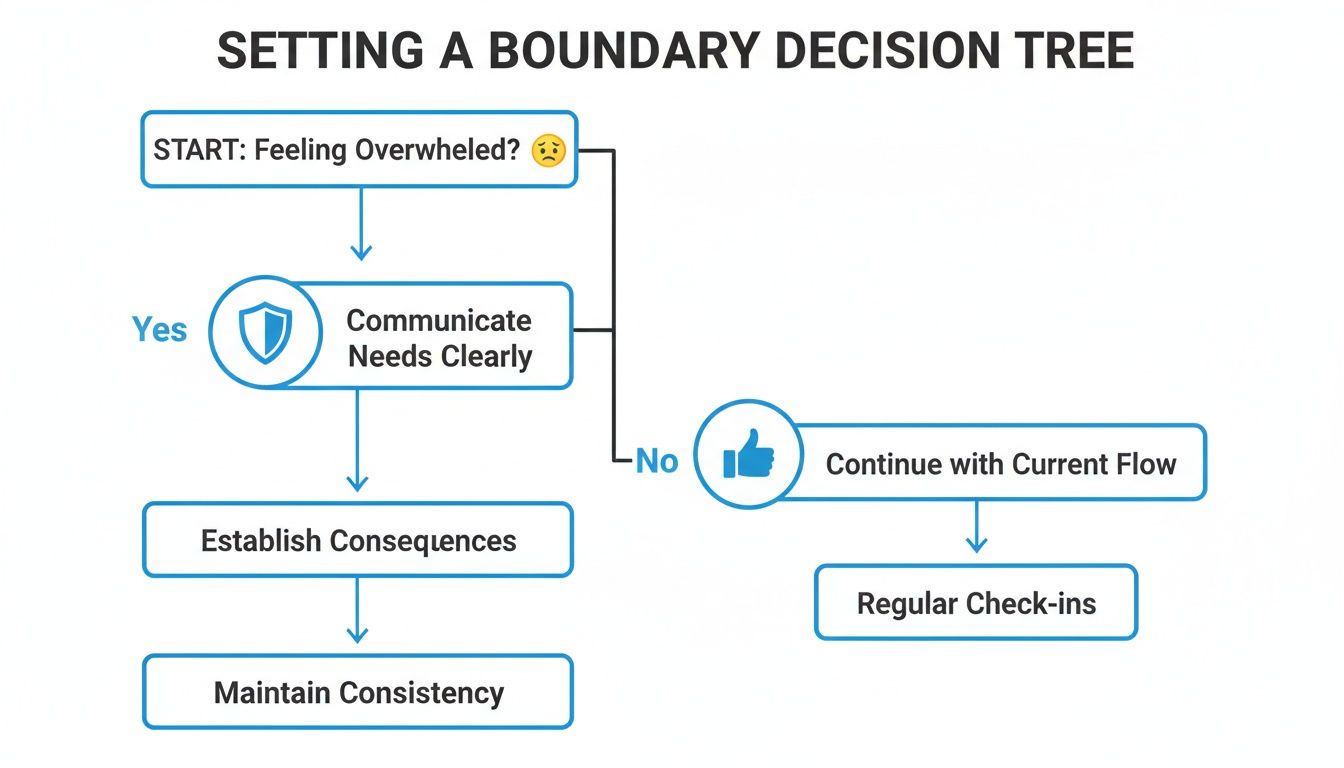
    This decision tree can help you map out how to communicate your needs when you're feeling overwhelmed—a crucial skill for protecting your mental health.

    A decision tree illustrating how to set boundaries when feeling overwhelmed, offering two paths based on needs communication.

    As the visual guide shows, simply acknowledging that you're overwhelmed is the first step toward taking action to support yourself.

    Signs It Might Be Time for Counselling

    How do you know when it’s time to seek support? If certain patterns persist, professional help could make a real difference. Here are a few common indicators to look for:

    • Persistent Low Mood: Feeling sad, empty, or hopeless most days for more than a couple of weeks, which can sometimes be a sign of depression.
    • Overwhelming Anxiety: Worry and fear are interfering with your work, relationships, or daily routine.
    • Difficulty Coping: Feeling consistently overwhelmed by life and struggling to manage stress.
    • Relationship Strain: Your personal struggles are creating conflict or distance in your relationships.

    What to Expect from Therapy

    The idea of therapy can feel intimidating, especially with the misconceptions that still exist in India. A therapy session is simply a dedicated time for you to talk through your thoughts and feelings with a trained professional.

    A good therapist listens with empathy, helps you spot unhelpful patterns, and gives you practical strategies to build resilience. It's a collaborative process aimed at empowering you to navigate life with greater self-awareness and compassion.

    Seeking therapy is not about "fixing" something that is broken. It's about investing in your own well-being, learning new skills for living, and building a stronger, more compassionate relationship with yourself.

    The Proven Impact of Professional Guidance

    This kind of structured support has a real, measurable impact. For example, research on targeted programmes in India has shown how effective they can be.

    One study in Gujarat found that after an assertiveness training programme, adolescents' average self-esteem scores jumped from 11.33 to 21.16. This highlights the power of guided intervention. You can learn more about these encouraging research findings and see the data for yourself.

    This shows that working with a professional can provide the tools needed to build a stronger sense of self-worth and genuine happiness. Whether you’re navigating anxiety, depression, or simply want to learn how to self love on a deeper level, counselling is an invaluable resource.

    Got Questions About Self-Love? Let's Talk.

    When you first start exploring how to love yourself, it's normal for questions to arise. This path is personal and can feel complex at times. Here are some honest answers to common questions we hear.

    Isn't Focusing on Myself a Bit… Selfish?

    This is a common concern, especially in cultures that prioritise family and community. But the answer is a firm no.

    Genuine self-love isn’t about shutting others out; it’s about ensuring your own cup is full so you have something left to give. When you're running on empty, it's impossible to be the patient, present, and resilient person you want to be for others. Looking after your well-being isn't selfish—it's the foundation that allows you to be a supportive partner, parent, or friend.

    How Long Until I "Get" This Self-Love Thing?

    Self-love is more of a lifelong practice than a destination. There’s no final exam to pass.

    That said, you can start feeling small but powerful shifts quickly. After a few weeks of consistent effort, you might notice you’re catching your inner critic faster or that it’s easier to challenge a negative thought. Deeper work, like building solid boundaries or healing old wounds, naturally takes more time, so be patient with yourself through the process.

    The goal here is consistency, not perfection. Every tiny step forward counts. Each moment of self-kindness is a win on your journey toward accepting and loving yourself more fully.

    These Positive Affirmations Just Feel Fake. Am I Doing It Wrong?

    This is a completely valid feeling. When your self-worth has taken a hit, repeating "I am worthy" can feel like a lie. The trick is to start with statements that feel more believable right now.

    Instead of making a big leap, use "bridge statements" that honour where you are while gently nudging you in a kinder direction.

    • Instead of "I am worthy," try: "I am willing to believe I could be worthy."
    • Instead of "I love myself," try: "I am learning to be kinder to myself."
    • Instead of "I am a confident person," try: "I am taking small steps to build my confidence."

    This softer approach makes the practice feel more genuine and less like a chore.

    Can I Really Practice Self-Love When I'm Dealing with Depression or Anxiety?

    Yes, absolutely. In fact, self-compassion practices can be a powerful support when navigating challenges like anxiety or depression. Being kind to yourself in a tough moment can help soothe your nervous system and interrupt the cycle of self-blame.

    However, it’s crucial to remember that these practices are a support system, not a substitute for professional help. If you're struggling, please reach out for professional support through therapy or counselling. A good therapist can give you personalised tools and a safe space to heal.


    At DeTalks, we know that taking that first step can feel daunting. Our platform is designed to make it easier, connecting you with qualified therapists and offering scientifically validated assessments to help you understand what you need. These assessments are for informational purposes only and are not a substitute for a clinical diagnosis. Find the right support for your journey today at DeTalks.

  • How can I overcome shyness: Practical steps to confident living

    How can I overcome shyness: Practical steps to confident living

    If you've ever found yourself wondering, “how can I overcome shyness?” know that it's a shared human experience, not a permanent trait. The path to confidence involves learning new skills and gently challenging your fears, much like strengthening a muscle you haven't used in a while.

    This journey begins when you see shyness not as a flaw, but as an opportunity for building self-awareness and resilience. Your well-being is a priority, and this is a positive step forward.

    Understanding The Roots Of Shyness

    A pensive young man sits on a bench, looking out a window, with a faint child's image nearby.

    That shy feeling is common, yet it can feel incredibly isolating. It often appears physically—a racing heart before a presentation or sweaty palms before meeting someone new. This reaction isn't a lack of desire to connect; it's a deep-seated fear of social judgment.

    Understanding this is the first step toward managing it. Shyness isn't who you are; it's a pattern of feelings that surface in certain situations, which means you can learn to influence it.

    Shyness Is Not A Character Flaw

    It's easy to confuse shyness with other traits, but clarifying the definitions can bring a sense of relief. Many mistake it for introversion or social anxiety, but they are quite different. Knowing the distinction provides a clearer path forward.

    • Shyness: This is the fear of being judged negatively in social settings. You might want to join a conversation but hesitate due to worry about what others will think.
    • Introversion: This is about energy. Introverts recharge through solitude, and social interaction can be draining for them, even if they aren't afraid of it.
    • Social Anxiety: This is a more intense and persistent fear of social situations that can interfere with daily life, sometimes leading to avoidance of work, school, or events.

    It’s possible to be a shy extrovert who loves being around people but feels anxious about it. Understanding where you fit helps you tailor your approach to building confidence that feels authentic to you.

    How Shyness Can Impact Your Life

    When unaddressed, shyness can create significant roadblocks in your personal and professional life. The constant worry about others' opinions can become a source of workplace stress, holding you back from career growth. You might avoid speaking in meetings or networking events.

    This internal conflict can affect personal relationships, making it harder to form friendships or be vulnerable with a partner. Over time, this avoidance can lead to feelings of loneliness and, in some cases, contribute to symptoms of depression.

    Shyness is not about being anti-social; it’s about a strong desire to connect that gets blocked by fear. The goal is to learn how to act despite this feeling, building your resilience and happiness one step at a time.

    Reframing Your Perspective For Growth

    The journey past shyness starts with self-compassion. Instead of viewing it as a weakness, see it as a signal from your brain trying to protect you from a perceived social threat. This shift from self-criticism to gentle curiosity is powerful.

    Professional support, like therapy or counselling, offers a safe space to explore these feelings without judgment. A therapist can help you understand the roots of your shyness and develop personalized strategies to build your social skills and self-esteem. The process is about removing barriers so you can express your true self with confidence.

    Your Toolkit for Managing Anxious Moments

    When that wave of shyness hits, it can feel overwhelming. Your heart pounds and your mind goes blank. In these moments, you need practical, in-the-moment tools to ground yourself.

    Think of these techniques as a first-aid kit for anxiety. They help you ride the wave instead of letting it pull you under. These small, powerful actions can help you regain control and build real resilience.

    Ground Yourself with Mindful Breathing

    One of the quickest ways to calm your nervous system is through your breath. When we experience stress, our breathing becomes shallow, signaling danger to our brain. Deliberately slowing it down sends a message of safety.

    A powerful technique from Indian tradition is pranayama, or yogic breathing, which you can use anywhere.

    • Box Breathing: This is simple and discreet. Inhale slowly for four counts, hold for four, exhale for four, and hold again for four. Repeat this cycle a few times.
    • 4-7-8 Breathing: Inhale through your nose for four seconds, hold your breath for seven, and exhale through your mouth for eight. The long exhale is key to triggering your body's relaxation response.

    Just a minute of these exercises can interrupt the anxiety spiral. This gives you a moment of clarity to decide what to do next, rather than reacting from fear.

    Challenge Your Inner Critic with Cognitive Reframing

    Shyness is often fueled by an inner critic whispering worst-case scenarios. "Everyone thinks I'm awkward," or "If I say something stupid, they’ll judge me forever." Cognitive reframing is the practice of catching and gently challenging that voice.

    This isn’t about forced positivity, but about finding a more balanced and realistic perspective. The goal is to question the automatic negative thought and replace it with something kinder and more accurate.

    For example, when a critical thought appears, you can challenge it:

    • Instead of: "Everyone is watching me and waiting for me to mess up."
    • Try: "Most people are focused on their own conversations and worries, not me."

    The power of this technique is in realizing that your thoughts are not facts. They are just mental events. With practice, you can choose not to buy into them, which can significantly dial down the intensity of your anxiety and stress.

    This is a core principle in many forms of therapy. In India, where social anxiety is a real issue, evidence-based approaches like Cognitive Behavioural Therapy (CBT) are effective. Explore more on these findings about mental health trends in India.

    Small Steps for Immediate Relief

    When you feel intense shyness, even a small action can break the spell. The idea is to shift your focus from your internal storm to the world around you. These are manageable steps to find your footing.

    Next time you feel overwhelmed, try one of these:

    1. Focus on Your Senses: Name five things you can see, four you can feel, three you can hear, two you can smell, and one you can taste. This 5-4-3-2-1 technique pulls your attention out of your anxious thoughts.
    2. Take a Small Action: Get a glass of water or step outside for fresh air. A simple change of scenery can disrupt the anxiety loop.
    3. Offer a Compliment: Find something you genuinely appreciate about someone and tell them. This shifts your focus outward, takes the spotlight off you, and can open up a conversation naturally.

    These tools are your first line of defense. They are supportive, actionable ways to build your resilience and sense of well-being, one moment at a time.

    Building Lasting Confidence, One Small Step at a Time

    Real, lasting confidence is built quietly from many small, consistent wins. A powerful technique from cognitive behavioural therapy is the exposure hierarchy.

    Think of it as a personalized roadmap, turning the big goal of "overcoming shyness" into a series of manageable steps. It's about celebrating every bit of progress, which in turn builds genuine, resilient self-belief.

    Create Your Personal Confidence Ladder

    Imagine climbing a ladder—you wouldn’t leap straight to the top. Your confidence ladder works the same way. List social situations that trigger your anxiety and rank them from least to most scary.

    This journey is completely personal. The goal is to be honest with yourself and create a ladder that respects your own pace, ensuring each step is a gentle push, not a terrifying shove.

    When you're about to take a new step, anxiety can spike. This simple framework can help you manage it.

    A flowchart illustrates a 3-step process for managing anxiety: Breathe, Reframe, and Act.

    As the visual shows, the flow is straightforward: first, calm your body with your breath. Then, challenge the anxious thoughts. Finally, take that small, planned action.

    Designing Your Hierarchy: A Practical Example

    Let's say your goal is to speak up in your weekly team meeting, which feels like a 10/10 on your fear scale. Instead of jumping straight to that, we break it down into smaller pieces.

    Here is what a sample hierarchy might look like, starting from the easiest step.

    Your Personalised Exposure Hierarchy A Sample Plan

    Use this sample table to create your own step-by-step plan. Start with the easiest task (Fear Rating 1) and slowly work your way up as you build confidence.

    Social Goal Fear Rating (1-10) Action Step
    Make eye contact with a colleague in the hallway. 2 Smile and give a small nod.
    Start a one-on-one chat with a trusted coworker. 3 Ask them a simple, work-related question.
    Contribute to a small group meeting (3-4 people). 5 Share a brief, positive comment about someone else's idea.
    Ask a question in the large weekly team meeting. 7 Ask for clarification on a point that was made.
    Share an original idea in the large team meeting. 10 Proactively state one of your own ideas during the discussion.

    The key is to stick with each step until the anxiety lessens before moving to the next. This gradual process retrains your brain, teaching it through experience that these situations aren't threats.

    This gentle, step-by-step approach is at the heart of building sustainable well-being. It’s about cultivating courage through repeated, manageable experiences of success, fostering happiness and compassion for yourself.

    This method is globally effective. In India, for instance, where social anxiety is prevalent among students, psychologists recommend gradual social immersion, like joining a club, to build resilience. Similar gradual exposure techniques have proven successful in reducing reported shyness.

    Putting Your Plan into Action

    Once your ladder is mapped out, start climbing with the first rung. Maybe it's asking a shopkeeper for the time. Afterward, take a moment to notice how you feel; that sense of accomplishment is powerful fuel.

    Remember, this is not a race. If a step feels too big, break it down further. For practical tips, you can explore how to build confidence in your speaking.

    This journey is about self-compassion, not perfection. You will have good days and more challenging ones. The goal is to build momentum and prove to yourself that you are more capable than your shyness suggests, managing not just shyness but all kinds of stress and anxiety in life.

    Mastering Everyday Conversations

    Knowing what to say can feel like the biggest hurdle when you're working through shyness. Any social situation can cause stress and anxiety. But conversation is a skill you build, not a talent you’re born with.

    With the right tools, you can turn nerve-wracking moments into opportunities to connect. This section offers practical ways to navigate chats with more confidence.

    Smiling couple enjoying coffee and conversation at a cafe table with sunny window.

    Simple Conversation Starters That Actually Work

    The hardest part is just starting. The fear of saying the wrong thing can be paralyzing. The good news is that a few reliable openers can make all the difference, and they are usually observant and open-ended.

    Forget trying to be clever. Just try one of these context-based icebreakers.

    • At a work event: "This is a great turnout. Which team are you with?"
    • At a party: "This food is amazing! Have you tried the biryani?" or a simple, "How do you know the hosts?"
    • In a casual queue: "That looks like a great book. Is it any good?"

    These questions are low-pressure. They give the other person an easy way to respond and shift the focus off you, easing that initial anxiety.

    The Art of Listening and Asking Better Questions

    Once the ice is broken, the secret to keeping a conversation flowing isn't having clever things to say; it’s becoming a better listener. When you truly listen, you take the pressure off yourself and make the other person feel heard.

    Active listening involves small nods or affirmations like, "I see." Paired with open-ended questions—those that can’t be answered with a simple 'yes' or 'no'—you create a natural dialogue.

    True connection comes from curiosity, not performance. When you shift your focus to genuinely understanding the other person, your own self-consciousness begins to fade.

    For example, if someone mentions a trip, a closed question like "Did you have a good time?" can stop the flow.

    Try an open-ended one instead:

    • "That sounds amazing! What was the most memorable part of your trip?"
    • "Oh, brilliant. What made you choose that destination?"
    • "How did you find the local culture there?"

    These kinds of questions invite stories, not just facts. They turn small talk into a real, meaningful exchange.

    How to Gracefully End a Conversation

    Knowing how to end a conversation without feeling awkward is just as crucial as starting one. It gives you a sense of control and reduces the fear of getting "trapped."

    You don't need a complicated excuse. A simple, polite closing line is all it takes.

    • "It was really great chatting with you. I need to go catch up with a colleague, but hopefully we can talk again soon."
    • "Well, I should let you get back to your friends. Thanks for the lovely conversation!"
    • "I have to head off, but it was a pleasure meeting you. Enjoy the rest of the event."

    Practicing these skills builds social resilience. Every small interaction reinforces that you can handle these situations. For some, a safe way to practice is by engaging in acting classes.

    Mastering conversations is about learning strategies that allow your true self to emerge, helping you build connections without the weight of social anxiety. If these feelings are persistent, remember that therapy or counselling can offer fantastic, personalized support.

    Knowing When to Seek Professional Support

    While self-help strategies are effective, it's important to know when to seek professional support. Reaching out to a professional isn't a sign of weakness; it's a brave, proactive step toward prioritizing your well-being.

    Think of it as adding an expert navigator to your team, someone who knows the terrain and can help you find the best path forward. A therapist or counsellor can provide a safe, non-judgmental space to unpack what’s going on.

    Is it Time to Talk to Someone?

    How do you know when you've crossed from manageable shyness to something needing more support? The line between shyness and more persistent social anxiety can be fuzzy.

    Here are a few signs it might be time to consider professional help:

    • You're constantly avoiding things. You say "no" to social events or important meetings at work because of fear.
    • The physical symptoms are intense. Social situations regularly trigger a racing heart, dizziness, or shortness of breath.
    • Your relationships are suffering. Shyness makes it tough to build the connections you crave, leading to feelings of isolation.
    • It's holding you back at work. Your career has stalled because you can't speak up, network, or take on leadership roles, leading to significant workplace stress.

    If any of this sounds familiar, please know you don't have to figure it out alone.

    What Therapy is Actually Like

    The thought of therapy can be daunting. A therapy session is simply a confidential conversation focused on you. It’s a safe space to explore your feelings and build a path toward better well-being.

    A good therapist or counsellor is a trained, impartial guide. They listen with empathy and help you see the connections between your thoughts, feelings, and actions. Together, you'll build practical strategies to boost your social resilience and self-worth.

    Seeking support isn't about "fixing" a part of you that's broken. It's about learning skillful ways to manage your thoughts and emotions so shyness no longer controls your life. It is an act of profound self-compassion.

    This is backed by evidence. For instance, a 2023 study found that many secondary school students in India struggled with moderate shyness, and professional counselling made a significant impact.

    Other research shows that the right support can help individuals move toward more social career paths, boosting their long-term earnings. For a deeper dive, you can explore the full research about shyness among students.

    Taking That First Step

    Deciding to get help is a powerful choice and an investment in your own happiness and resilience. It can help you manage feelings tied to anxiety or even depression. The goal is to become a more confident, authentic version of yourself.

    Platforms like DeTalks can make that first step less intimidating by connecting you with qualified professionals. You can explore their science-backed psychological assessments for insight, but please remember these are informational tools, not a formal diagnosis. This journey is about building a happier, more connected life.

    Got Questions About Shyness? Let's Talk.

    As you start this journey, questions will naturally arise. Here are some common ones with straightforward answers to provide more clarity.

    Can I Ever Stop Being Shy for Good?

    The goal isn't to completely erase shyness from your personality. Even the most outgoing person feels shy now and then. It’s a normal human feeling.

    The real win is reaching a point where shyness no longer controls your actions. It's about feeling that fear but having the tools and resilience to act anyway. You’re learning to turn down the volume on that nervous voice, not eliminate it entirely.

    Realistically, How Long Will This Take?

    There's no magic timeline, as everyone's starting point is different. You can start seeing small, encouraging changes quickly. Within a few weeks of consistent practice, you might notice that asking for help doesn’t trigger the same level of anxiety.

    Bigger challenges will naturally take more time. The key is to focus on consistency, not speed. Be kind to yourself and celebrate every small victory along the way, fostering your own well-being.

    Remember, every time you face a situation that scares you, you are doing something incredible. You are rewiring your brain and building a more confident, resilient foundation for the person you are becoming.

    Wait, Isn't Being Shy the Same as Being an Introvert?

    This is a common point of confusion. These terms describe two different experiences.

    Here’s a simple way to think about it:

    • Introversion is about energy. Introverts recharge with solitude and may find social events draining, even if they enjoy them.
    • Shyness is about a fear of being judged. A shy person (who could be an introvert or an extrovert) avoids social situations due to anxiety over what others might think.

    An introvert might pass on a party because they prefer a quiet night in. A shy person might want to go but stays home because the fear of saying something awkward is too overwhelming.

    My Family Just Says "Get Over It." How Do I Explain What's Really Going On?

    Hearing "just get over it" can feel invalidating, even if meant well. It overlooks that shyness can trigger a real physical fear response.

    Instead of saying "I'm shy," try describing the experience. You could say, "When I walk into a room full of people, my mind goes blank and I feel a lot of pressure, which makes it hard for me to talk to anyone." This frames it as a specific challenge, not a flaw.

    It can also help to let them know you’re actively working on it. Mentioning that you’re practicing specific strategies shows you are taking proactive steps toward personal growth, which often earns more empathy and support.

    Ultimately, this journey is for you. Whether you use self-help strategies or seek professional counselling, what matters most is your commitment to building a life where fear doesn't hold you back.


    At DeTalks, we're committed to connecting people with the right support for their mental well-being. Our platform helps you find qualified therapists and provides science-backed tools to understand yourself better. Start building a more resilient, fulfilling life by finding the right professional for you at https://detalks.com.

  • How to Respect Yourself: A Guide to Building Lasting Confidence

    How to Respect Yourself: A Guide to Building Lasting Confidence

    Learning how to respect yourself means honouring your own needs, values, and boundaries. It isn't built on grand gestures but through small, consistent actions that form the foundation of genuine well-being. This quiet inner confidence helps you handle everything from workplace stress to personal challenges with greater resilience.

    Understanding What Self-Respect Truly Means

    A person sitting peacefully on a rock, looking out over a misty valley at sunrise, symbolizing self-reflection and well-being.

    Self-respect has nothing to do with arrogance; it is a core part of your mental health. It shapes how you see the world and provides a deep, internal validation that anchors you, regardless of external praise or criticism. This inner strength helps you navigate life's inevitable challenges, from daily frustrations to significant hurdles like anxiety and depression.

    When self-respect is low, you might constantly seek others' approval, struggle to say "no," or fall into a cycle of harsh self-criticism. These patterns can lead to burnout and reduce your happiness. Building self-respect involves unlearning these habits and cultivating a kinder, more compassionate inner voice.

    The Connection Between Respect and Resilience

    Resilience is the ability to bounce back from adversity, and it is built on a foundation of self-respect. When you value yourself, you are more likely to protect your well-being during stressful times. This could mean taking a needed break when you feel overwhelmed by workplace stress or seeking counselling to work through difficult emotions.

    This connection is supported by research. A study highlighted that individuals with lower self-respect were more likely to report symptoms of depression. This shows the protective role that feeling valued and assertive plays in our emotional balance.

    Core Pillars of Self-Respect

    To build this inner strength, it's helpful to understand its key components. Exploring topics like How to Be a Confident Man can offer insights, as genuine self-esteem is built from the inside out. Let's look at the areas that create a strong sense of self.

    Core Pillars of Self-Respect

    A quick look at the fundamental components of self-respect we'll explore in this guide.

    Pillar What It Means for You
    Setting Boundaries Protecting your time, energy, and emotional well-being without guilt.
    Self-Compassion Treating yourself with the same kindness you'd offer a good friend.
    Personal Growth Actively investing in your skills, health, and what makes you happy.
    Supportive Environment Surrounding yourself with people who uplift and validate you for who you are.

    Fostering self-respect is an ongoing commitment to honouring yourself. It is a journey that empowers you to build a more authentic, balanced, and fulfilling life.

    Setting Healthy Boundaries to Honour Yourself

    A person's hands gently pushing away a tangled mess of strings, symbolizing the creation of clear personal space and boundaries.

    Learning how to respect yourself often comes down to setting healthy boundaries. Think of a boundary not as a wall, but as a way to protect your time, energy, and peace of mind. In doing so, you teach others how you expect to be treated.

    This can feel difficult at first, especially in cultures where saying 'no' might be seen as unhelpful. However, consistently failing to set limits can lead to workplace stress and personal burnout, which can harm your mental health over time.

    What Healthy Boundaries Look Like in Daily Life

    Boundaries are often small, quiet choices you make every day to prioritise your needs. It's about recognising these moments and acting on them.

    For instance, a healthy boundary could be:

    • Politely declining an extra project when your schedule is already full.
    • Telling a friend, "I'd love to support you, but I don't have the emotional capacity for a heavy conversation right now."
    • Stepping away from negative office gossip.
    • Leaving work on time to protect your personal life.

    These are not aggressive actions. They are calm, clear statements about what you need to stay balanced and well.

    "When you speak to yourself with the utmost respect, I promise you that your life…will quickly improve. The energy of the words you use permeates your experiences and influences your self-worth and behaviour."

    This gets to the heart of it—boundaries start internally. They begin with respecting your own needs enough to communicate them.

    How to Communicate Your Needs with Confidence

    The fear of setting a boundary is often about how the other person will react. The key is to be firm yet kind, focusing on your needs rather than their behaviour. This simple shift can ease tension and lead to a more understanding conversation.

    Try this simple, three-part framework:

    1. State the situation factually: Start with a neutral observation. "I've noticed I'm taking on projects that are pushing my deadlines back."
    2. Explain how it affects you: Use "I" statements to share your feelings. "I feel overwhelmed and stressed when my workload gets this high."
    3. Clearly define what you need: Be direct about the necessary change. "From now on, I need to complete my current tasks before I can consider taking on anything new."

    Using this structure turns a potentially difficult exchange into a constructive one. It’s a skill that builds resilience and helps you feel less anxious.

    If setting boundaries consistently feels challenging, exploring it through counselling can provide personalised tools and support. Remember, this is a practice that becomes more natural with time.

    Choosing Self-Compassion Over Self-Criticism

    A person sitting in a comfortable chair by a window, journaling in a notebook with a warm cup of tea beside them, illustrating a moment of quiet self-compassion.

    Many of us have a persistent inner critic that focuses on every mistake and dismisses accomplishments. Over time, this can lead to feelings of inadequacy, anxiety, and even depression. A key part of learning how to respect yourself is to consciously replace that critical voice with a kinder, more supportive one.

    This is the essence of self-compassion. It's about treating yourself with the same warmth you would offer a friend during a hard time. It means accepting that being human involves imperfection, and that is okay.

    Understanding Your Inner Dialogue

    The first step is to simply listen to how you talk to yourself. When you make a mistake, is your reaction harsh or forgiving? This internal voice has a significant impact on your overall well-being.

    A study in India noted that while many people have stable self-esteem, a significant portion struggles with low levels. This suggests many are dealing with a harsh inner critic, making the path to self-respect challenging. You can explore the findings on self-esteem fluctuations and mental health for more context.

    Practical Ways to Cultivate Self-Compassion

    Shifting from self-criticism to self-compassion is a gradual practice. It requires patience and a commitment to building new, supportive mental habits.

    Here are a few ways to get started:

    • Reframe Your Thoughts: When you catch yourself in a negative spiral, pause and challenge the thought. Instead of, "I failed that presentation," try, "That was tough, but I did my best and I know how to improve."
    • Practise Mindful Self-Kindness: When you feel overwhelmed, place a hand over your heart and breathe. Offer yourself gentle words like, "This is a difficult moment. I will be kind to myself."
    • Journal Your Feelings: Writing without judgment can be a powerful release. It helps you process difficult emotions and gain a clearer, more compassionate perspective.

    By practising radical self-respect, you lighten your energy field and emotional state. You then can give much-deserved unconditional love to your body-confidence journey… and yourself.

    Choosing self-compassion is a profound act of self-respect. It strengthens your mental health, giving you the resilience to handle workplace stress with more grace. If your inner critic feels too overwhelming, seeking therapy or counselling can offer a supportive space to learn these skills.

    Investing in Your Personal Growth and Well-being

    A person watering a small plant that is growing in a pot on their windowsill, signifying nurturing personal growth.

    Actively investing in yourself is one of the most powerful ways to build self-respect. This means intentionally nurturing your mind, body, and spirit. It is a quiet affirmation to yourself that you are worthy of your own time and care.

    You don't need to make grand changes; lasting growth often comes from small, consistent daily actions. It's about carving out moments in your life for things that truly fulfil you. For example, finding just 20 minutes a day for a hobby or taking a short walk at lunchtime can significantly improve your well-being.

    Nurturing Your Mind and Emotional Health

    Prioritising your mental health is a fundamental part of respecting yourself. This involves being honest about your feelings and taking deliberate steps to support your well-being.

    Here are a few practical places to start:

    • Mindfulness and Meditation: A few minutes of mindfulness each day can help manage anxiety and stress. Many apps offer guided sessions for beginners.
    • Journaling for Clarity: Writing down your thoughts can help you untangle them. Journaling provides a private space to explore emotions and gain perspective.
    • Learning Something New: Engaging your brain by learning a new skill builds confidence and fosters a growth-oriented mindset.

    This commitment to personal growth often benefits your professional life. Learning how to build confidence at work can make you feel more empowered and valued in your career.

    Seeking Professional Support is an Act of Strength

    Sometimes, we need guidance on our growth journey. Reaching out for therapy or counselling is a courageous move toward becoming healthier. Recognising you need support and seeking it is a profound act of self-respect. A therapist provides a safe space to work through challenges like workplace stress, anxiety, or depression.

    While online assessments can offer initial insights, they are for informational purposes only and are not a substitute for a professional diagnosis. They can be a starting point for self-awareness, not the final word. Every step you take to invest in your growth sends a powerful message: you are valuable and worthy of care.

    Shape an Environment That Feeds Your Self-Worth

    Self-respect doesn't grow in isolation; it thrives or withers based on your environment. The people you surround yourself with and the spaces you inhabit can either nurture your confidence or subtly damage it. Take an honest look at your relationships and surroundings to see what supports your well-being.

    A significant part of learning how to respect yourself is making deliberate choices about who gets your time and energy. Move towards people who energise and validate you, and create distance from those who leave you feeling drained or insecure.

    Choose Your Company Wisely

    Intentionally spend time with friends, family, and colleagues who listen and celebrate your successes. It also means creating healthy distance from those who are persistently critical or dismissive. This isn't about cutting people off, but about managing your exposure to negativity.

    This could mean:

    • Making more time for a supportive friend.
    • Politely limiting time with a critical relative.
    • Collaborating with positive, team-oriented colleagues.

    These small changes can reduce background anxiety and create mental space for self-worth to grow. You are simply protecting your peace.

    An environment of respect and validation isn't a luxury; it’s a fundamental need for building lasting resilience and happiness. When you surround yourself with positivity, you give yourself the best possible chance to thrive.

    Interestingly, a supportive environment can be found in unexpected places. Research in East Midnapore, India, found that rural students reported slightly higher self-esteem than their urban peers. This suggests strong community ties can be incredibly powerful. You can explore how social factors influence self-worth in this research if you're curious.

    Craft a Physical Space That Respects You

    Your physical surroundings are as important as your social ones. A cluttered, chaotic space can reflect and amplify feelings of workplace stress or being overwhelmed. Creating a calm, organised space that feels like you is a powerful act of self-care.

    You don't need a major overhaul. Start small by clearing your desk, adding a plant to your room, or hanging art you love. When your external world feels orderly, it sends a strong message to your inner world that you are in control and you matter.

    If your environment is a source of distress, talking to a professional can help. Therapy or counselling offers a safe space to develop strategies for building a life that truly supports you. Please remember, any information here is for guidance and not a substitute for a professional diagnosis.

    The Road Ahead: Making Self-Respect a Daily Practice

    Building self-respect is a continuous practice, much like tending a garden. It requires consistent, conscious choices every day to honour who you are and what you need. This journey is deeply personal, and every small step is a genuine victory.

    The tools we've discussed—setting boundaries, practising self-compassion, and investing in your growth—are your allies. These are not just ideas; they are skills that build real emotional resilience.

    It is also vital to consider your surroundings. Chronic workplace stress or draining relationships can erode your self-worth. Protecting your peace is a fundamental part of learning how to respect yourself.

    Your journey to self-respect is a process of commitment, not perfection. Be patient with yourself, embrace the learning curve, and know that you are deeply worthy of your own respect, every single day.

    If you find yourself wrestling with anxiety or the heavy weight of depression, reaching out for help is a sign of strength. Professional support through therapy or counselling is an investment in your relationship with the most important person in your life: you. These are supportive takeaways, not promises of a cure.

    Got Questions? Let's Talk About Self-Respect

    As you begin this journey, some common questions may arise. These answers are meant to offer clarity and support along the way.

    Isn't Self-Respect Just the Same as Self-Esteem?

    That's a great question. While they sound similar, there's a key difference. Self-esteem is often tied to your performance and achievements; it can fluctuate with successes and failures.

    Self-respect is steadier. It is an underlying sense of honour for who you are, your values, and your needs, regardless of external circumstances. This stable foundation is what truly supports your long-term well-being.

    Is It Even Possible to Build Self-Respect in a Toxic or Difficult Situation?

    Yes, it absolutely is. In fact, challenging environments are often where self-respect becomes your most powerful tool for managing workplace stress and preventing burnout. The key is to focus on what you can control.

    You can start small by setting one manageable boundary, practising a moment of self-compassion, or giving yourself credit for navigating a tough day. These internal shifts build incredible resilience over time.

    Building self-respect in a tough situation isn’t about changing everything at once. It’s about reclaiming your power, one small, consistent act of self-care and boundary-setting at a time.

    So, How Long Does This Whole Self-Respect Thing Take?

    There is no finish line. Building self-respect is not a project to complete but a lifelong practice. It is a conscious choice you make every day.

    Instead of focusing on a timeline, focus on the daily process. You will notice gradual shifts as you consistently apply these ideas. Celebrating small wins reinforces your foundation of self-worth and can be a powerful way to manage feelings of anxiety or depression.

  • How to Find Purpose in Life: Your Practical Guide

    How to Find Purpose in Life: Your Practical Guide

    Finding your purpose isn't about a single, grand revelation. It's a gentle process of looking inward to understand what truly matters to you—your values, passions, and strengths—and weaving them into your daily life.

    This is an ongoing journey, a continuous conversation between who you are and what you do. It’s about building a life that feels authentic and meaningful to you.

    Starting Your Search for Meaning

    If you've ever asked yourself, "what is my purpose?", you are not alone. This question often comes up during times of change, or when challenges like workplace stress and anxiety begin to feel overwhelming.

    Feeling a bit lost is often the first step toward meaningful personal growth. It's a sign that you are ready to connect with yourself on a deeper level.

    Understanding the Search for Purpose

    Searching for meaning doesn't mean something is wrong; it's a natural part of human growth. The pressures of modern life can lead to burnout or a sense of disconnection, and this guide is here to help you reconnect with your inner voice.

    We will explore ideas from positive psychology, focusing on building skills like resilience and self-compassion to help navigate life's challenges. It's important to clarify that these exercises are for self-discovery and are not a substitute for professional diagnosis or treatment of conditions like anxiety or depression.

    "Purpose is not something you discover, but something you build. It is created in the small moments of choice, in the commitments you keep, and in the connections you nurture every day."

    An India-First Perspective on a Global Journey

    While the search for purpose is a universal human experience, our cultural context shapes this journey. In India, a strong sense of purpose is deeply linked to overall well-being and is often nurtured through community and family bonds.

    The Voluntās Foundation's Global Meaningfulness Index recently ranked India 4th globally, highlighting how purpose and belonging contribute to a meaningful life. You can discover more about how Indians find purpose in the full report.

    This guide uses an India-first context while offering insights that are globally relatable. The goal is to provide supportive takeaways that bring more clarity and well-being into your life.

    What Are Your Core Values, Really?

    Your core values are like a personal compass, guiding your decisions and behaviours. Understanding them is the first step toward building a life that feels truly yours.

    When your daily actions don't align with your deepest beliefs, it can create a sense of unease. This disconnect is a common source of workplace stress and anxiety, making it vital to identify what truly matters for your well-being.

    A Practical Way to Uncover What Matters

    The best way to identify your values is through honest self-reflection. This isn't a test; it's about listening to the wisdom of your own experiences.

    Grab a journal or open a document and explore these prompts without judgment:

    • Think of a time you felt genuinely happy. What was happening? Who was with you? Pinpoint what made that moment special—was it connection, challenge, or freedom?
    • Recall a time you were deeply proud of yourself. What did you do, and what principle did that action reflect? Perhaps it was integrity, courage, or creativity.
    • Now, consider a time you felt angry or frustrated. What injustice or broken rule triggered that feeling? Anger often points directly to a core value that has been challenged.

    This exercise is designed to connect you with what you genuinely value, not what you think you should value.

    Connecting with your fundamental beliefs gives you a solid foundation for making decisions that align with your true self. This alignment is essential for building resilience and improving your overall mental health.

    Turning Your Reflections Into a Clear Guide

    After reflecting, look for recurring themes in your writing. Words like "community," "freedom," "creativity," "security," or "kindness" may appear often.

    Try to create a list of your top five core values to bring focus and clarity to your decisions. This makes it easier to say "no" to things that drain you and "yes" to what energizes you.

    This clarity is a key step in learning how to find purpose in life. If you feel persistently stuck or are navigating challenges like depression, professional therapy or counselling can provide a supportive space to explore these ideas further.

    Connecting Passions to Your Strengths

    Purpose often emerges where your passions and natural talents meet. This is about exploring with curiosity, not pressure, to see where your energy flows most freely.

    Think about activities that make you lose track of time—these are powerful clues to your passions. Leaning into them is an effective way to manage workplace stress and prevent burnout.

    Identifying What You Genuinely Love

    A passion is something that energizes you, something you would do even without external reward. To uncover yours, reflect on these questions:

    • What topics could you discuss or read about for hours? No subject is too big or small, from sustainable farming to cinematic history.
    • If you had a free afternoon with no obligations, what would you choose to do? Let your mind wander past your to-do list.
    • What brought you joy as a child? Our earliest interests often hold a pure reflection of our authentic selves.

    This is about reconnecting with parts of yourself that feel most alive. This self-awareness is a cornerstone of strong mental well-being.

    Purpose isn’t a destination you arrive at. It's the meaning you create in your actions, day by day, by connecting with who you truly are.

    Recognising Your Natural Talents

    Your strengths are the things you do with natural ease, perhaps so easily that you don't even see them as special skills. What do others consistently ask for your help with?

    Using your talents provides a sense of competence and accomplishment, which can counter feelings of helplessness that may accompany anxiety or depression. This reinforces a positive sense of self and builds incredible resilience.

    This self-assessment is informational, not diagnostic. If feelings of inadequacy are persistent, professional counselling or therapy can offer a supportive space to explore them with compassion.

    Mapping Your Personal Purpose Drivers

    This self-reflection tool can help you see where your passions, strengths, and contributions overlap.

    My Passions (What I Love) My Strengths (What I'm Good At) My Contribution (How I Can Help Others)
    Example: Cooking traditional family recipes Example: Organising events and bringing people together Example: Hosting small potluck dinners to foster community
    Example: Mentoring junior colleagues at work Example: Explaining complex ideas in a simple, patient way Example: Volunteering to tutor students in my area of expertise
    Example: Spending time in nature and gardening Example: Planning long-term projects and staying consistent Example: Starting a small community garden in my neighbourhood

    Jot down the first things that come to mind. Seeing these areas together can spark powerful insights and offer a clearer direction.

    Turning Purpose into Actionable Goals

    Purpose comes to life through action. This is where your inner values meet the real world, turning ideas into tangible steps that shape your days.

    The key is to avoid feeling overwhelmed by breaking down your purpose into small, achievable goals. This approach creates momentum without adding pressure.

    From Vague Ideas to Concrete Steps

    Let's make this practical. If a core value is "community connection," an actionable goal moves beyond the idea and becomes a specific, doable task.

    For example, this value could become one of these goals:

    • Mentoring: Spend one hour every two weeks mentoring a junior colleague.
    • Volunteering: Commit to two hours a month with a local charity.
    • Neighbourhood Initiative: Organise a small seasonal get-together for neighbours.

    These small, consistent actions are the building blocks of a purposeful life. They provide a sense of accomplishment and reinforce your values, which is key for building resilience and improving your well-being.

    The journey toward a purpose-driven life is built on small, consistent actions, not grand gestures. Progress, no matter how small, is more important than perfection.

    Setting Goals That Nurture Your Purpose

    This practical mindset is growing in India, with many seeing life goals as a path to purpose. A recent study found that 71% of Indians view providing financial security for family as a primary life goal, reflecting a collective desire for more fulfilling lives.

    If your purpose involves your career, a guide to career promotion may be a helpful resource. The most important thing is to ensure your goals are truly your own.

    If goal-setting brings up feelings of anxiety or depression, remember that professional counselling offers a supportive space to navigate these challenges. The aim is to create a sustainable and meaningful path forward.

    How to Navigate Setbacks with Resilience

    The journey of exploring how to find purpose in life is rarely a straight line. You will encounter setbacks and moments of self-doubt along the way.

    These challenges are not signs of failure; they are part of the discovery process. Building resilience is the key to navigating these moments.

    Resilience is the inner strength that helps you bounce back, learn, and keep moving forward. It's like a muscle that you can strengthen with practice and self-compassion.

    Practising Self-Compassion in Tough Times

    When things don't go as planned, our first reaction is often self-criticism. Practicing self-compassion—treating yourself with the kindness you would offer a friend—is a healthier way to build resilience.

    This practice can reduce feelings of anxiety and prevent negative thought cycles. It begins by acknowledging your feelings without judgment.

    Here are a few ways to practice self-compassion:

    • Mindful Pauses: When you feel overwhelmed, stop and take a few deep breaths. Notice your feelings without needing to "fix" them.
    • Positive Self-Talk: Gently reframe harsh inner criticism. Instead of "I failed," try, "This was a learning experience."
    • Supportive Journaling: Write about your struggles as if you were talking to a friend, then write a kind, understanding response back to yourself.

    Seeking Support and Gaining Perspective

    Remember, you don't have to navigate this journey alone; reaching out is a sign of strength. Professional therapy or counselling provides a safe space to discuss challenges like workplace stress, anxiety, or depression.

    A therapist can offer tools to reframe negative thoughts and develop healthier coping strategies. These services are here to provide support and encourage growth.

    The ability to navigate setbacks is a crucial part of living a purposeful life. It teaches us that our purpose isn't defined by uninterrupted success, but by our capacity to grow through challenges with grace and self-kindness.

    Research in India supports this idea, showing a strong link between purpose and life satisfaction in older adults. Their well-being was tied to factors like health and living situation, showing how purpose evolves and strengthens as we age. You can learn more in the World Happiness Report.

    Building resilience is an ongoing practice. Each challenge navigated with compassion makes you stronger for the next, keeping you connected to your unique journey.

    Still Have Questions About Finding Your Purpose?

    It is completely normal for questions to arise as you explore what gives your life meaning. This is a sign that you are engaging deeply with the process.

    Let's address some common questions that come up on this path. Think of these as supportive guideposts for your personal journey.

    "What If I Don't Have One Big Passion?"

    Many of us believe purpose must be a single, grand passion, but this is rarely the case. Purpose is often found in the small, consistent ways we live our values.

    Your purpose might be expressed through being a reliable friend, a patient parent, or a supportive colleague. A collection of small, meaningful actions can boost your well-being and build powerful resilience.

    Purpose isn’t something you just find, fully formed. It’s something you build, piece by piece. You create it in the small choices you make, the promises you keep, and the relationships you nurture day in and day out.

    "Is It Okay for My Purpose to Change?"

    Yes, it is not only okay for your purpose to change, but it is expected. The priorities and insights you have at 20 will be different from those you have at 40 or 60.

    Major life events naturally shift what you find meaningful, which is a sign of healthy growth. Embracing this evolution allows you to ensure your life reflects who you are now.

    "What Should I Do If I Feel Stuck or Overwhelmed?"

    Feeling stuck is a normal part of this journey. When deep reflection stirs up difficult feelings like anxiety, it's important to pause and simplify.

    • Pick one small thing. Focus on one small action you can take today that aligns with your values.
    • Talk it out. Sharing your thoughts with someone you trust can offer a fresh perspective and reduce feelings of isolation.
    • Reach out for support. If feeling stuck persists and is linked to challenges like depression or severe workplace stress, consider professional help. Therapy or counselling is a proactive step toward getting the support you deserve.

    These assessments are informational, not diagnostic. A safe, dedicated space can help you untangle your thoughts and find clarity on your path.


    At DeTalks, we believe that everyone should have access to the right mental health support. Our platform can connect you with qualified therapists and provides scientifically-backed assessments to help you understand yourself better. It’s all about building a more resilient, meaningful life. Start your journey with DeTalks today.

  • How to Ignore Someone Who Hurt You and Heal

    How to Ignore Someone Who Hurt You and Heal

    Choosing to ignore someone who hurt you is a powerful step towards protecting your peace. It’s a conscious decision to reclaim your emotional energy and focus on your own healing, rather than getting caught in a cycle of pain.

    This approach isn’t about avoiding conflict, but about prioritizing your mental well-being. By stepping back from a hurtful situation, you create the space needed to move forward with clarity and strength.

    Why Ignoring Someone Can Be a Powerful Act of Self-Care

    When someone causes us pain, our first instinct might be to confront them or seek an apology. While these feelings are valid, staying engaged can sometimes lead to prolonged stress, anxiety, and emotional burnout.

    Learning to ignore someone who hurt you is an act of self-preservation, not weakness. It's a choice to stop investing your energy into a situation that brings you down, allowing you to focus on your own well-being.

    The Psychology Behind Strategic Disengagement

    Ignoring someone is more than just silence; it's a psychological tool for creating an emotional buffer. This distance helps prevent their actions from continuing to affect your inner peace and mental health.

    This act of disengagement can break the cycle of replaying hurtful memories, which often contributes to feelings of anxiety and sometimes depression. It is a practical strategy for building emotional resilience.

    In India, this approach is a common way to manage emotional distress and regain stability. You can find more information about these coping strategies on this mental health resource.

    By choosing to ignore someone, you are not saying the hurt didn't happen. You are saying that your peace is more important than the conflict, and your future is more valuable than your past pain.

    Protecting Your Mental Energy

    Every interaction and thought consumes emotional energy. Constantly focusing on someone who has hurt you drains this energy, leaving you with less for your own happiness, goals, and well-being.

    Image

    Strategically ignoring someone helps you conserve your energy in several ways:

    • It Reduces Rumination: You stop obsessively replaying the hurtful situation, freeing up mental space.
    • It Lowers Emotional Reactivity: With less engagement, the person has less power to trigger an emotional response from you.
    • It Builds Self-Compassion: This choice reinforces the message that you deserve peace and that protecting your well-being is a priority.

    This shift in focus from them to you is a vital part of healing. Exploring this further through professional counselling or therapy can provide additional support and guidance.

    Here are some practical ways to create the emotional distance you need to heal.

    Ignoring someone who hurt you isn't just about silence; it's about creating space for your own recovery. Think of it as building a protective boundary to reduce their influence over your emotional state.

    This act of self-preservation helps you regain a sense of calm and control. When you learn to disengage emotionally, you reduce the daily anxiety and stress that can come from difficult relationships.

    Try the Grey Rock Method

    When you can't completely avoid someone, like a colleague or family member, the 'grey rock method' is useful. The idea is to become as uninteresting as a grey rock in your interactions.

    You remain emotionally non-responsive, keeping answers short and factual. By not sharing personal feelings, you remove the emotional reaction they may be seeking.

    For example, if a difficult colleague asks about your weekend, a simple, "It was quiet, thanks," is enough. Over time, the lack of engagement often causes them to lose interest.

    Set Your Digital Boundaries

    In today's connected world, protecting your peace means setting digital boundaries too. Social media can be a source of painful reminders, making it difficult to move on and protect your mental well-being.

    Here are a few steps you can take to protect your online space:

    • Mute or Unfollow: This allows you to stop seeing their content without the potential drama of blocking them.
    • Restrict or Block: For a firmer boundary, blocking them prevents all contact and creates clear separation.
    • Be Mindful of Mutual Friends: You might need to temporarily mute mutual contacts if their posts frequently feature the person.

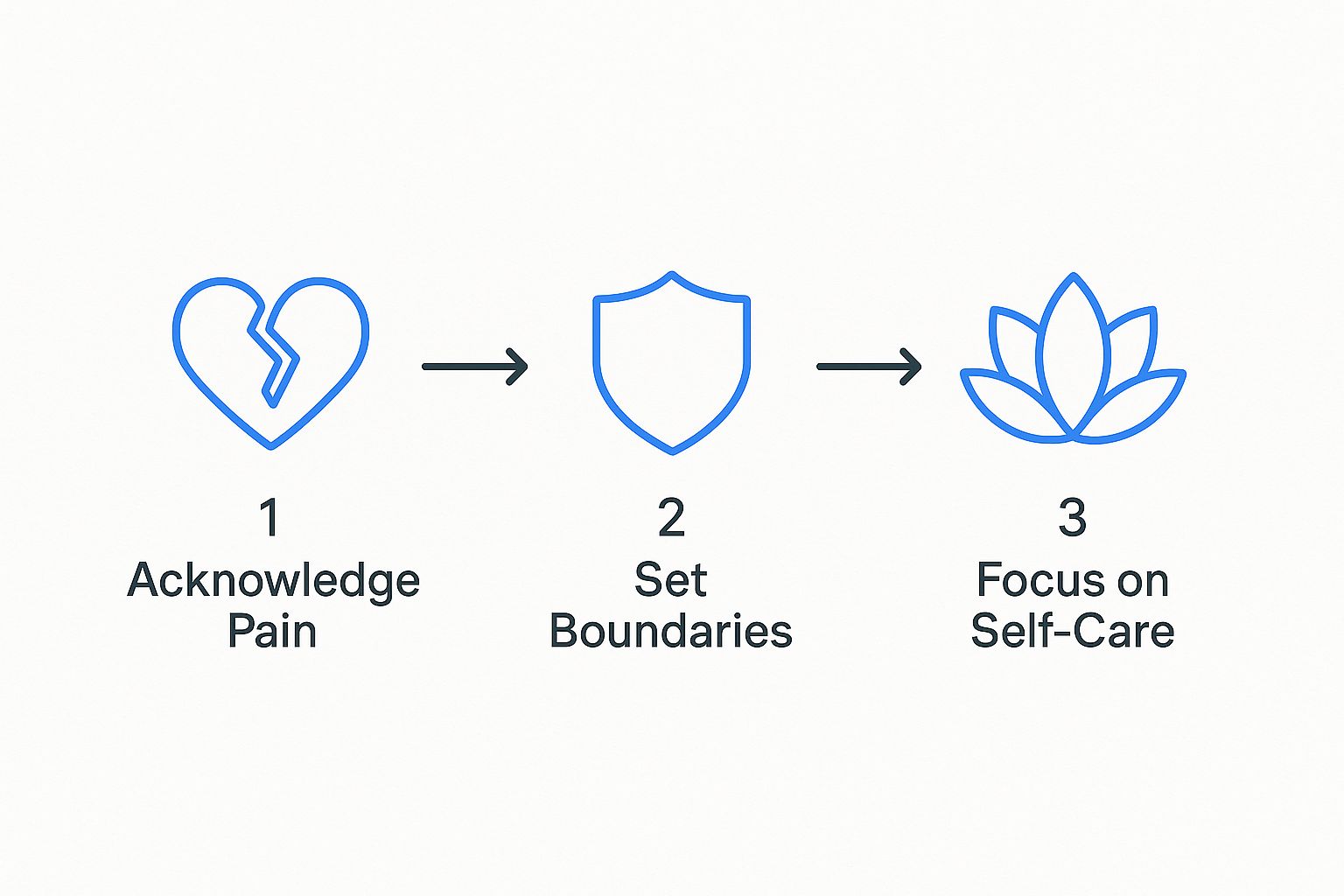
    This visual guide breaks down the core steps for creating emotional distance and protecting your mental health.

    Infographic about how to ignore someone who hurt you

    As the infographic shows, the journey begins by acknowledging your feelings, then moves to setting boundaries, and finally shifts the focus back to your own healing and growth.

    Practice Mindfulness to Manage Your Thoughts

    One of the biggest challenges is managing intrusive thoughts about the person or situation. These thoughts are common and can feel powerful because they often relate to things we care about.

    Mindfulness can help you observe these thoughts without getting carried away by them. It teaches you to acknowledge their presence and then gently guide your focus back to the present moment.

    When a thought about the person arises, simply notice it without judgment and let it pass. This practice is a key skill for building emotional resilience and is often taught in therapy.

    Remember, a thought is just a thought. You don't have to engage with it, believe it, or act on it. Letting it pass without judgement is a skill that strengthens over time.

    This technique, often used in counselling, helps you stop investing energy in past hurts. It empowers you to redirect that focus towards your own happiness and well-being.

    How to Set and Enforce Clear Boundaries

    A person setting a boundary by holding their hand up in a stop gesture, with a calm expression.

    Boundaries are essential when you're moving on from someone who has hurt you. They are the clear lines you draw to protect your emotional energy and support your well-being.

    Setting boundaries is an act of self-respect. It reinforces your decision to prioritize your own peace and communicates that you are committed to your healing journey.

    Figure Out Your Personal Lines in the Sand

    Before you can enforce a boundary, you need to know what your limits are. Take some time to reflect on what leaves you feeling drained, anxious, or disrespected in interactions.

    Identifying specific triggers—like certain topics of conversation or unwanted contact—helps you understand where a boundary is needed. This clarity is the first step toward protecting yourself.

    "A boundary is a clear statement of what is okay for you and what is not okay. It's not a request; it's a declaration of your needs and limits, crucial for maintaining emotional balance."

    Establishing these lines is vital for your mental health. You can find helpful strategies for setting boundaries and practicing self-care to prevent burnout for more guidance.

    How to Communicate Your Boundaries Without a Fight

    Communicating boundaries doesn't require a confrontation. A simple, direct, and calm approach is often the most effective way to express your needs.

    You don't need to provide a lengthy explanation; a simple 'no' is a complete sentence. Having a few phrases ready can help you respond confidently without feeling flustered.

    Here are a few examples you can adapt:

    • For unwanted requests: "I'm not able to help with that right now."
    • For intrusive questions: "I'd prefer not to discuss my personal life, thank you."
    • To stop contact: "I need some space right now and won't be responding to messages."

    These statements are polite but firm, helping you avoid additional anxiety or conflict.

    Dealing With Mutual Friends and Awkward Social Events

    Navigating relationships with mutual friends can be challenging. They may not understand your need for distance and might try to mediate, which can be draining.

    You don't have to share all the details with them. A simple and consistent response is often the best approach to maintain your boundary respectfully.

    Try saying something like, "I appreciate your concern, but this is a personal matter I'm handling privately." This respects their friendship while reinforcing your decision and building your own resilience. Professional counselling can also offer a supportive space to navigate these social challenges.

    Navigating Social and Workplace Situations

    Knowing how to ignore someone who hurt you is one thing, but it can be difficult when you can't avoid them. Encounters at work or social events can create stress and anxiety.

    With a clear plan, you can handle these moments gracefully and protect your peace. The goal is to be polite but firm in your boundaries, managing any awkwardness without adding to your workplace stress.

    Strategies for Group Settings

    When in a group with this person, aim for polite but distant interactions. You can acknowledge their presence without engaging in a deep conversation, keeping any necessary communication brief and neutral.

    For example, on a work project, keep all discussions focused strictly on the task. If they ask a direct question, provide a short, factual answer to maintain a professional boundary.

    This is a common coping mechanism. Research has shown that many professionals choose to minimize contact with those who have caused them emotional pain, often feeling an immediate reduction in stress. You can explore the research about these mental health findings for more insight.

    Handling Questions from Others

    It's likely that friends, family, or colleagues may notice the distance and ask questions. Remember, you are not obligated to explain your personal life to anyone.

    Having a simple, prepared response can help you feel more in control. This allows you to set a boundary without feeling put on the spot.

    Your boundaries are for your protection, not for others' understanding. A simple, consistent response is often more effective than a detailed explanation.

    You could say something calm like, "I'm focusing on my own well-being right now and choosing to keep some distance." This is an honest reply that politely signals you don't wish to discuss it further, which can help reduce follow-up anxiety.

    Here are a few phrases you can adjust to your situation:

    • For a curious coworker: "I prefer to keep my focus on our work."
    • For a well-meaning friend: "I appreciate your care, but I'm handling this in my own way."
    • For a family member: "I'm being civil, but for my own peace, I'm choosing not to engage more than I have to."

    Handling these situations is about reinforcing your decision to prioritize your mental health. If the emotional weight feels too heavy, professional counselling or therapy can offer a safe space to develop coping skills and build resilience.

    Turning Your Focus to Healing and Growth

    A person journaling in a notebook with a calm, natural background.

    Ultimately, this process is about your healing, not about them. Learning to ignore someone who hurt you frees up significant emotional energy that you can now invest back into yourself.

    This experience, while painful, can be a catalyst for positive change. By turning your focus inward, you can transform hurt into an opportunity for building resilience, practicing self-compassion, and moving forward with a renewed sense of purpose.

    Rechanneling Your Emotional Energy

    Consider the energy spent replaying conversations or worrying about future interactions. That energy is now yours to redirect toward things that bring you joy and fulfillment.

    This is a conscious choice to invest in your own growth and happiness. It's a crucial step in recovering from the emotional impact of anxiety and moving toward a healthier state of mind.

    This mindset is becoming more common, especially among young adults in India. Recent studies, like the India Youth Mental Health Survey findings, show that ignoring as a coping strategy is often linked to lower levels of immediate distress.

    Practical Steps for Self-Investment

    Investing in yourself doesn't require grand gestures. Small, consistent actions can lead to significant healing and help you rebuild your sense of self-worth.

    Here are a few tangible things you can start doing today:

    • Journal to Process Feelings: Writing down your thoughts and emotions can be a powerful way to process them without judgment.
    • Rediscover Your Passions: Reconnect with hobbies you love or explore new interests that spark your curiosity and excitement.
    • Connect with Nature: Spending time outdoors, even for a short walk, can reduce stress and improve your mood.

    These actions are not just distractions; they are deliberate acts of self-care. They remind you of your own value and support your journey toward well-being.

    "Healing doesn't mean the damage never existed. It means the damage no longer controls our lives."

    This is a powerful reminder that your past does not have to define your future. Every step you take toward your own well-being is a victory.

    Building Resilience for the Future

    This challenging experience has taught you valuable lessons in emotional resilience. You have learned how to protect your peace, set boundaries, and prioritize your mental health—skills that will serve you throughout your life.

    This journey is a testament to your strength. Choosing to grow from hurt is an empowering act, and remember, professional counselling can offer valuable support if you feel stuck.

    Knowing When It’s Time to Ask for Help

    Ignoring someone who hurt you is a powerful strategy for self-protection. However, some pain is too deep or complex to navigate alone, and seeking professional help is a sign of strength.

    If you find that feelings of sadness, anger, or anxiety are persistent and affecting your daily life, it may be time to talk to a professional. Struggling with sleep, changes in appetite, or a loss of interest in activities you once enjoyed are all signs that support could be beneficial.

    What Therapy and Counselling Can Truly Offer

    A therapist or counsellor provides a safe, confidential, and non-judgmental space to explore your feelings. They can help you understand the root of your pain, develop healthy coping skills, and build lasting emotional resilience.

    Please note: the information here is for educational purposes and is not a substitute for professional diagnosis. Your mental health journey is unique, and expert guidance is always recommended.

    In therapy, you can learn to identify and change unhelpful thought patterns that keep you feeling stuck. Just as you might consult an expert for other challenges, like finding a behaviorist for a pet, professional support for your own well-being offers specialized guidance to help you heal.

    Taking That First Step Towards Healing

    Often, the most challenging step is deciding to seek help. Fortunately, conversations around mental health are becoming more open in India, making it easier to find qualified support.

    Starting counselling can help you heal from this specific hurt and equip you with tools to handle future challenges. If you're experiencing signs of depression or significant workplace stress, a professional can provide the guidance you need to move forward. You do not have to carry this burden alone.


    At DeTalks, we're firm believers that the right support is essential for a healthier, more resilient life. Our platform is designed to connect you with qualified therapists and provides scientifically validated assessments to help you understand your needs and start your healing journey. Take the first step with DeTalks today.